An Interview with Karen Ranney

24 Mar
Karen Ranney is the bestselling author romance novels. Her most recent book is An American in Scotland.

Karen Ranney is the bestselling romance author whose most recent book, An American in Scotlandtakes place during the American Civil War.

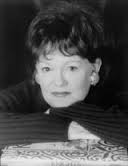
Karen Ranney wanted to be a writer from the time she was five years old and filled her Big Chief tablet with stories. People in stories did amazing things and she was too shy to do anything amazing. Years spent in Japan, Paris, and Italy, however, not only fueled her imagination but proved she wasn’t that shy after all. Now a New York Times and USA Today bestseller, she lives in San Antonio, Texas.

To read an exercise on giving characters the opportunity to change and act dramatically and an excerpt from An American in Scotland, click here.

In this interview, Ranney discusses setting as character, the difference between love and sex scenes, and straddling the needs of historical narratives and contemporary readers.

Michael Noll

I want to say up front that Romance isn’t a genre I know very well, and so I was excited to read your novel because I wanted to learn how it works. To that end, I was surprised at how much the novel contained beyond what the cover might suggest: shirtless guy and beautiful woman. Or, to put it another way, the term romance is a lot bigger than I imagined. Setting is as important as love. For lack of a better word, there is something romantic about place, which I guess should make sense given that the title suggests more about place than anything else. What’s your approach to the setting and world of your novels? Are you trying to make readers fall in love with them as much as with the characters?

Karen Ranney

Place is very important to me. In some books it has a greater impact on me than on others. For example, A Scotsman in Love was set in a once deserted manor house that intrigued me. Another example is the MacIain trilogy that revolves around a house outside Edinburgh. In those books the setting was almost another character.

I enjoy placing my books in Victorian Scotland because, to me, it was the era of inventions and scientific achievement.

In An American in Scotland, I had to give readers a flavor of each locale, but I had three major settings, so I couldn’t linger too long in any one place. (Why make it easy on myself when I could visit Scotland, Nassau, and America all in one book?)

Michael Noll

The novel is quite chaste. The prelude to the kiss seems to be much more important than the kiss itself—and it takes up a great many pages. How do you maintain and gradually increase the tension between two characters who we know will eventually fall into each other’s arms?

Karen Ranney

I have always maintained that it’s easier to write a sex scene than it is a love scene. I always try to have the characters fall in love with each other before they actually consummate that love. It seems to me that emotions are more important than physical activity.

Also, putting sex in the context of 19th century mores, even kissing someone was a great moral leap. Each step toward the journey to bed is a form of commitment.

Michael Noll

Along those same lines, I admire the way that the novel draws out its sex scenes. For example, there’s a scene when Rose and Duncan bathe together, which leads toward what such baths tend to lead to, but then something interrupts them—Duncan sees something that distracts him. How do you know how much you can draw out such as scene before readers begin skimming to get to the stuff they know is coming and really want to read?

Karen Ranney

Again, it’s a love scene as opposed to a sex scene—or at least that’s how I hope the reader interprets it. Everything that goes on in that scene is both an act of revelation and one of commitment. The characters give of themselves not just physically but emotionally. Maybe even spiritually if I write it correctly. You can’t skip through the scene because it’s pivotal in the give and take between the characters. It shows why they’re falling in love and how.

Michael Noll

Karen Ranney's novel An American in Scotland follows an American woman who sails through the Union blockade of Charleston in order to pursue a sale and romance in Scotland.

Karen Ranney’s novel An American in Scotland follows an American woman who sails through the Union blockade of Charleston in order to pursue a sale and romance in Scotland.

The novel contains a fair bit of language about sin and virtue, and because it’s set in the mid-1800s, there are some time-appropriate ideas about gender. I bring this up because I heard a review the other day of the Downton Abbey finale, and the reviewer said that historical dramas are always more about the audience than the age and characters they’re portraying. Do you think this is true of your novel as well?

Karen Ranney

If I understand what you’re asking, let me answer this way: Robert Burns wrote poetry in the vernacular Scots. If I wrote a book like that today no one could understand it. Consequently, I interpret Scottish English with an ear/eye toward my readers. They’re 21st century women. Similarly, interpreting the mores of the 19th century means I have to straddle a line. I have to correctly depict the customs/manners/thinking of the day while interjecting some viewpoints that might be more acceptable to a 21st century reader.

For example, in An American in Scotland, Rose does a lot of things that would have horrified her neighbors in New York and scandalized her neighbors in South Carolina. She would probably have been ostracized in both communities for her abolitionist views. Yet we, being 21st century people, wish she went farther to oppose slavery.

A reviewer chided me for writing about mills in Scotland that were pro-slavery. No, they weren’t pro-slavery. It’s that American slavery was “just business”. They might have personally abhorred it, but they tolerated doing business with the American South because they needed their cotton. That review was a case of our 21st century values colliding with history.

March 2016

Michael Noll Michael Noll is the Editor of Read to Write Stories.

How to Create a Window of Opportunity

22 Mar
Karen Ranney's novel An American in Scotland follows an American woman who sails through the Union blockade of Charleston in order to pursue a sale and romance in Scotland.

Karen Ranney’s novel An American in Scotland follows an American woman with a secret who sails through a Union blockade during the Civil War in order to pursue business and romance in Scotland.

When I was a kid, my dad liked to joke that the devil came out after midnight, which is actually good advice for writers. Crucial moments (positive and negative) in life and in writing often require a window of opportunity. Under normal circumstances, we simply go about our lives; drama occurs only when our routine has been upended. After midnight, in other words, we have the opportunity to make decisions that aren’t open to us at other times.

In stories, whether they’re fiction or nonfiction, we need to find those windows of opportunity when the devil can show his face, when characters can act in ways they otherwise wouldn’t. A great place to study such moments is in romance novels, and there’s no better place to look than in Karen Ranney’s latest novel An American in Scotland. You can read the opening pages here.

How the Novel Works

An American in Scotland is a romance novel, and like most genre novels, it has a fairly predictable plot when boiled down to basics: two people will fall in love, and that love will eventually be consummated. Before the consummation, though, the characters must overcome obstacles, and it is this overcoming that gives the novel its appeal. (It’s the same with detective and espionage novels and certain kinds of monster novels: the reader knows the basic plot arc before reading a single page, and so it’s the particular obstacles that provide pleasure.) In this case, there are a variety of obstacles that would normally prevent Duncan and Rose from falling into each other’s arms. Or, as the back cover puts it: “Rose MacIain is a beautiful woman with a secret. Desperate and at her wits’ end, she crafts  a fake identity for herself, one that Duncan MacIain will be unable to resist…Duncan is determined to resist the tempting Rose, no matter how much he admires her arresting beauty and headstrong spirit.”

So, it’s clear that, first, Duncan will resist, but then he’ll give in. Then, the secret identity will be revealed and that will drive them apart—until they find a way to be together again. With each major obstacle (resisting, revelation of secret), the characters are set onto tracks that do not converge. Duncan can resist Rose’s charms forever unless something happens to knock him off his routine. In short, he needs a moment when the devil comes out, a window of opportunity to act in ways that he normally would resist.

One of those moments comes aboard a ship. Duncan and Rose are sailing to the Bahamas for a business deal. There’s tension between them, but Duncan tells himself, “She was simply his relative who was accompanying him to Nassau.”  But then the merchant ship gets caught in a storm off the coast of Ireland:

He clamped his hands on the end of the chair arms and stared at the door leading to the stateroom. He hadn’t heard anything from Rose since they separated after dinner. He sincerely hoped he hadn’t agreed to take her to Nassau only to have her drown on the voyage there. Perhaps she would have been safer on a commercial vessel, something designed to handle passengers. No doubt they would have stewards running throughout the ship, reassuring passengers that all was well, they weren’t in danger of plunging to the bottom of the ocean.

He couldn’t reassure anyone right at the moment.

That final line highlights the window of opportunity: He’s been determined to resist her, but now he fears for her safety and fears that he is the one who’s put her in danger. His self-confidence has been shaken. It’s not so different from the half hour before closing time at a bar; people’s usual logic has been diminished, and so they make decisions they normally wouldn’t. Duncan’s logic (I’m in charge, my will is strong) has been diminished.

As a result, he begins thinking dangerous thoughts:

What a pity he hadn’t taken advantage of the moment in the garden when she’d been reading Burns. He could have gently put the book aside, leaned over and kissed her.

As most readers will guess, the kissing isn’t long to come. The window of opportunity has opened, and he’s going to jump through it.

The Writing Exercise 

Let’s open a window of opportunity, using An American in Scotland by Karen Ranney as a model:

  1. Create the temptation. In a romance novel like An American in Scotland, the temptation is clear: love and sex. But there are many other temptations available to characters: money, power, attention, security, or any object that offers or symbolizes those things. What drives your character? What occupies your character’s mind while doing other things?
  2. Put the character on a track that leads away from it. The track can simply be a character’s intention, like when I tell myself that I’m not going to eat jelly beans this year. Life is full of such intentions: we’re not going to call that person, go to that place, consume that substance. The track can also be anything that keeps a character otherwise occupied: work, friends, family. Or it can be some convention (sense of propriety, rules) that doesn’t allow certain activities. You can also use geography (the temptation is kept physically distant).
  3. Find the character’s weakness. In An American in Scotland, part of Duncan’s weakness is his sense of his own power and will. Many famous characters contain such weaknesses: Achilles in The Iliad, Sampson in the Old Testament. The weakness doesn’t need to be a fatal flaw, as with Achilles. It only needs to make the character susceptible to the temptation, the way that going outside on a winter day without a hat (according to some) makes you susceptible to catching cold. What weakens your character, even a little?
  4. Create the window of opportunity. Find a set of circumstances that does two things: weakens the character and brings the temptation close. In An American in Scotland, the ship/storm confines the characters together in a limited space and also frightens Duncan, weakening him. Very often, the window of opportunity is a literal disruption: a storm, a power outage, a natural disaster, a flat tire, a missed connection. So, figure out your character’s routine. What would disrupt it? What unexpected delay or interruption would knock the character off his or her track? The disruption can be catastrophic, but it can also be something subtle that doesn’t at first even seem like a problem.
  5. Let your character act. Once the character is weakened and the temptation has been brought near, let the character think about the temptation. And, of course, once the thought enters the character’s head, action is soon to follow.

The goal is to create drama by giving a character the opportunity to do something he or she normally wouldn’t.

Good luck.

An Interview with Chinelo Okparanta

17 Mar
Chinelo Okparanta is the author of the novel Under the Udala Trees and the story collection Happiness, Like Water

Chinelo Okparanta is the author of the novel Under the Udala Trees and the story collection Happiness, Like Water.

Chinelo Okparanta is the author of the story collection Happiness, Like Water and the novel Under the Udala Trees. Her stories have appeared in The New Yorker, Granta, Tin House, The Kenyon Review, among others, and she was short-listed for the 2013 Caine Prize in African Writing. She won the 2014 O. Henry Award and the 2014 Lambda Literary Award for Lesbian Fiction. She has been awarded fellowships and residencies by Bread Loaf, the Jentel Foundation, the Hermitage Foundation, the Civitella Ranieri Foundation, and Hedgebrook. She was born and raised in Port Harcourt, Nigeria.

To read an exercise on manipulating chronology in order to create character, click here.

In this interview, Okparanta discusses finding the emotional heart of a story, writing within an omnipresent past, and whether a writer’s present location affects her writing.

Michael Noll

The novel has an interesting sentence in its first chapter: “So, the story begins even before the story, on June 23, 1968.” It comes after a quick overview of the war and is accompanied by this sentence: “There is no way to tell the story of what happened with Amina without first telling the story of Mama’s sending me off.” And this: “If I had not met Amina, who knows, there might be no story at all to tell.”

It seems that you’re directly addressing a problem that a lot of writers have with novel drafts: where to begin the story? Were these sentences the result of your own process of finding the story, or were they designed for readers, to help guide them from war in general to a particular story about particular individuals?

Chinelo Okparanta

I already knew where the story would begin, and those sentences were simply a natural aspect of the storytelling. Back in the day when my mother used to tell us folktales, sometimes she grounded the folktales in this sort of language, just a natural set up to the story, and perhaps also a signal for us children to know what we should be listening for (i.e. the emotional heart of the story). In the case of Under the Udala Trees, these sentences do signal to the readers where the emotional heart of the story lies.

Michael Noll

I’m curious about your sense of the novel’s audience and how it affects the story you tell. Obviously, the book was published in the United States, where you live, and in English. Some Igbo words and phrases appear, but they’re often translated, either directly, like this (Chineke bi n’eli! God in Heaven! How can this be?) or through context. How aware are you of audience, that it’s primarily American/Western? Can the novel be separated from this audience? In other words, how different would it be if you were writing for a Nigerian or Igbo audience?

Chinelo Okparanta

While writing the novel, I kept in mind various possible audiences, but my main audience was not American/Western. My main audience was my fellow Nigerians. In some ways it was just incidental that it got published in the West first. The truth is that current physical location is oftentimes irrelevant to the story that a writer tells. I have written about Nigeria from Nigeria. But I have also written about Nigeria from Greece, the Philippines, the USA, France, Italy, Uzbekistan and Turkmenistan. When I write many of my stories, regardless of where I am, my mind very often is back home in Nigeria.

Chinelo Okparanta's novel Under the Udala Trees tells the story of a young girl displaced by the Nigerian Civil War and the love affair that she begins.

Chinelo Okparanta’s novel Under the Udala Trees tells the story of a young girl displaced by the Nigerian Civil War and the love affair that she begins.

Which is all just to say that the book is exactly what it is—and exactly what it should be—for having been written primarily for a Nigerian audience. We Nigerians speak in a natural mélange/interspersing of our traditional languages and English. This is exactly what the book does. It’s important to keep in mind that Nigeria is a country in which hundreds of languages are spoken. The purpose of the book is to open conversation amongst all ethnic groups within the country, so it would have made no sense for me to write the entire thing in Igbo, with no context clues at all, thereby alienating quite a large segment of the nation’s population. There are also Hausa words in the book, and of course, there is Pidgin. But English is Nigeria’s lingua Franca. As such, it also the novel’s lingua Franca, and the language that best serves the purpose of the book: unity, rather than division.

By extension, because the purpose of the book is to be accessible to all of Nigeria, it also winds up being accessible to Western audiences, and hopefully to audiences all over the world. Sure, I wanted to write a book that invited Nigerians to have this LGBTQ conversation amongst themselves. But of course, it’s a good thing that the book is accessible to non-Nigerians. It’s always a good thing when literature speaks to universal human experiences, but it is an even better thing when the language of the literature facilitates a reader’s engagement with those human experiences.

Michael Noll

The chapters in the novel are fairly short, often a few pages long. It seems that some revolve around particular scenes, but there are many that move through time or move beyond scenes in various ways. What was your approach to chapter structure?

Chinelo Okparanta

I was going through a phase where I enjoyed reading books with shorter and more straightforward chapters. I decided to write the kind of book I enjoyed reading. Maybe for my next project I’ll be enjoying a different kind of book–the kinds with long, sprawling chapters, or those with no chapters at all. If that winds up being the case, I might also write that sort of book.

Michael Noll

The novel begins with the Biafran War, which ended 45 years ago, but now there are new protests in the region, to the point that, at least in the news outlets that I read and listen to, there’s some concern that they might lead to another civil war. Is this something that you thought about as you wrote the novel? Does the past of the novel seem truly past to you? Or were you trying to capture tensions that remain?

Chinelo Okparanta

Look at the United States and its history of slavery. That history haunts all Americans even today–at least, it haunts any socially aware American with an active conscience. Recently in the US, racial tensions have triggered worries of civil unrest. The past always leaves its stamp and oftentimes the stamp is waterproof. Maybe it fades a bit, but it is still there. So, yes, our past is the past, but it is also the present, and it will likely affect the decisions we make for the future. Which is why I’m always thinking about the nation and ways in which to flip our history of colonialism, and ways in which to better deal with the division caused by the British geo-political division of the country. We don’t have to be beholden to the past. We don’t forget—and perhaps we should not forget—but we certainly owe it to ourselves to rise above it. It seems to me that all of us have the power to flip unfortunate aspects of our pasts and use them positively, constructively, to make ourselves stronger. It’s just a matter of how. A united body people who are sincerely in it for the common good. Good leadership. A well thought out and thoroughly outlined plan. Expert organizational skills. These are some of what all healthy nations need.

March 2016

Michael Noll Michael Noll is the Editor of Read to Write Stories.

How to Manipulate Chronology to Build Character

15 Mar
Chinelo Okparanta's novel Under the Udala Trees tells the story of a young girl displaced by the Nigerian Civil War and the love affair that she begins.

Chinelo Okparanta’s novel Under the Udala Trees tells the story of a young girl displaced by the Nigerian Civil War and the love affair that she begins.

Chronology is something most writers and readers take for granted. Time moves forward, and so does narrative. There are exceptions, of course. Memory isn’t constrained by the inexorable march of time. It can leap backward at will, or against it—and can even get stuck in the past. But we understand memory to be unusual, unlike the rest of our lives, which move forward. This fact highlights the extraordinary achievement of fictions that move differently. Charles Baxter’s novel First Light, for example, starts at the end and moves toward the beginning. And Nicholson Baker’s novel The Mezzanine takes place completely within the time required to ride an escalator. Most writers will never attempt such ambitious structures. But it can be useful to try them in miniature.

An  example of this kind of chronological experiment can be found in Chinelo Okparanta’s novel Under the Udala Trees. You can read the opening pages here.

How the Novel Works

Then novel is set in Nigeria during its civil war in the late 1960s. It begins with a Star Wars-like summary:

But in 1967, the war barged in and installed itself all over the place. By 1968, the whole of Ojoto had begun pulsing with the ruckus of armored cars and shelling machines, bomber planes and their loud engines sending shock waves through our ears.

By 1968, our men had begun slinging guns across their shoulders and carrying axes and machetes, blades glistening in the sun; and out on the streets, every hour or two in the afternoons and evenings, their chanting could be heard, loud voices pouring out like libations from their mouths: “Biafra, win the war!”

It was that same year, 1968 — the second year of the war — that Mama sent me off.

If this was Star Wars, the story would proceed from that moment—the narrator’s mother sending her away. The novel would zoom in on the narrator leaving her home, and a scene would begin. But that’s not what happens. Instead, the novel reverses its chronology:

There is no way to tell the story of what happened with Amina without first telling the story of Mama’s sending me off. Likewise, there is no way to tell the story of Mama’s sending me off without also telling of Papa’s refusal to go to the bunker.

Then, the passage reverses what it’s just done:

Without his refusal, the sending away might never have occurred, and if the sending away had not occurred, then I might never have met Amina.

Finally, we learn why this zig-zag in chronology matters:

If I had not met Amina, who knows, there might be no story at all to tell.

At this point, the novel really begins—but it does so before the mother sends the narrator away:

So, the story begins even before the story, on June 23, 1968. Ubosi chi ji ehihe jie: the day night fell in the afternoon, as the saying goes. Or as Mama sometimes puts it, the day that night overtook day: the day that Papa took his leave from us.

The novel eventually returns to the moment when the narrator’s mother sends her away, but it takes about 40 pages. So what does this brief reversal of chronology achieve?

There are probably two answers. First, it lets the novel convey some essential information (when, where, what). That information is interesting (war stories have and always will hold our attention), but it’s also general, and as a result it could be a difficult place to begin building an idiosyncratic character. Writing about wars and other societal conflicts can be a bit like wheeling a sofa sleeper down a set of stairs with a hand truck—there’s considerable risk of getting rolled over and flattened. So, rather than beginning the novel with a character who is a kind of refugee (a status that can have a flattening effect), the novel goes back in time to a point when she was simply a character, creating space to give her and the rest of her family a set of developed, complex personalities.

The war is coming, of course, and the narrator will be sent away, but when she is, we’ll have a better appreciation for what it means.

The Writing Exercise 

Let’s jump back in time, using Under the Udala Trees by Chinelo Okparanta as a model:

  1. Decide what information a reader requires to begin the story. This is usually some version of Who, When, Where, and What: the basic elements of setting and situation. Star Wars famously summed up this information at the beginning of each film in the series. Most novels do something similar: showing the place in general (country, state, city, geography) and in particular (this street, house, room). It’s a bit like the wide-panning shots at the start of many films. Write a simple passage that conveys this information, especially the big What. For Okparanta, it’s the war. What is the big conflict (divorce, death, moving) at the heart of your story?
  2. Step the reader back in time. Okparanta does this methodically: “There is no way to tell the story of what happened with ____(1) without first telling the story of _____(2)” and “Likewise, there is no way to tell the story of ____(2) without also telling of ____(3).” The first blank is something that will happen eventually in the story. The next blanks are all points that lead up to that first one. Try using these phrases to step your story back in time from its eventual end point.
  3. Explain why these points matter. Okparanta’s narrator says a version of this: “If ___ hadn’t happened, who knows, there might be no story at all to tell.” You can use this construction to start with. Make it clear that the story hinges upon a particular moment.
  4. Start the story. Again, here’s Okparanta’s narrator: “So, the story begins even before the story, on ____.” She zooms in on a particular moment, a good moment to begin showing and developing the characters. We know where everything is headed, and so the story can take its time (to some extent) in making us care about the people involved. Find a moment for your story to do this, a moment with the big conflict in the background but without the extreme urgency of points further into the story, a moment when the characters can be themselves and not pawns in a conflict.

The goal is to present essential information about setting and situation and also carve out space to create and develop character.

Good luck.

How to Skip Over Implausibility

8 Mar
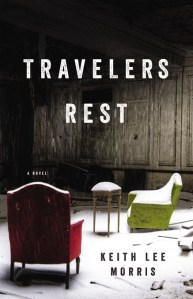
Keith Lee Morris builds upon the long tradition of haunted hotels with his spooky, unsettling novel Travelers Rest.

Keith Lee Morris builds upon the long tradition of stories about haunted hotels with his spooky, unsettling novel Travelers Rest.

In most writing workshops, someone will eventually say about a story, “I just don’t believe the character would do that.” As a piece of criticism, the statement is almost always true. Most real people would not do the most interesting things characters do in fiction. Of course, someone will also argue, “Well, I know someone who did exactly that.” But that is besides the point. Both statements mistakenly accept the premise that fiction and real life are connected in all ways. They are connected, of course, in that by reading about fictional characters, we often discover things about ourselves that we previously could not put our finger on. Writers have a knack for defining readers’ sense of their own identities. Nonetheless, the plausibility of something in real life isn’t relevant to fiction. All that matters is that readers believe that something is plausible. Richard Ford likes to say that fiction makes the impossible possible. I’d further this notion: in fiction, anything is plausible and possible if the writer wants it to be.

A great example of creating plausibility can be found in Keith Lee Morris’s new novel Travelers Rest. You can read an excerpt here.

How the Novel Works

Anyone who reads Travelers Rest will immediately think, “This is sort of like The Shining.” A family driving from Seattle to Charleston gets caught in a snowstorm and stays the night in a creepy hotel just off the highway in the emptiness of Idaho. A series of increasingly unsettling things occur in the hotel, with no guarantee that the characters will escape. As readers, many of you may be giggling in excitement over this summary, and for good reason: creepy hotels make for awesome stories. But for writers, a supernatural hotel poses a big problem.

Here’s why: Imagine that you’ve pulled off the road and walked into a hotel in utter disrepair, run by a man who looked “as if he’d been stored in a crate of mothballs and tipped up onto his feet just moments before their arrival.” Would you stay? Probably not. And if you found out the hotel had no electricity? You’d be out the door in a flash, right?

That’s real life. Fiction has different goals; it doesn’t want to keep its inhabitants safe.

So, Travelers Rest needs its characters to say, “Sure, we’ll stay in this weird place.” It needs, in other words, for the implausible to occur, for characters to do something most of us wouldn’t do. So, how does the novel make this implausible thing plausible? Here’s the passage where it happens:

While Tonio asked about a room, she got her bearings and surveyed the hotel’s interior. The first impression was one of disorder. In the dim and rather dusty light of the lobby she saw ladders and toolboxes and paint cans and drop cloths and sawhorses—clearly the place was under renovation. Maybe the hotel wasn’t even open, and they wouldn’t be staying here after all. That would be disappointing. Why? She studied the room more closely. An enormous fireplace that, if it contained a roaring fire, would have dispelled every shred of the hotel’s gloom. Beautiful old gas lamps on the walls, tasteful (although awfully faded) wallpaper, elaborate moldings in the corners of the room, a high ceiling with a breathtaking chandelier that spanned almost half the lobby, a grand wooden staircase ascending to a second-floor landing, solid over-stuffed chairs (Dewey was sitting in one of them and wiping dust from the arm), a huge circular ottoman directly beneath the chandelier. It must have been a stunningly opulent place at one time—what could it possibly be doing in this little town?

Several things are going on here. First, the details are peculiar, but they exist within a realm of what might be tolerated. The word murder isn’t spelled backward on the wall, and young twin girls don’t appear and disappear. (Though, of course, these things don’t happen in The Shining right away, either.) The place is very dusty and under construction—weird, by real-world standards, but not clearly supernatural. And yet, something is obviously wrong. The character at the heart of the scene isn’t sure the hotel is even open. She isn’t sure it’s possible to stay the night. In short, she’s voicing the warnings that most of us would heed in real life.

So what makes her stay? The answer is in a buried line: “That would be disappointing.” She considers the possibility of leaving and responds with a desire to stay. She’s intrigued by the place—but note that it doesn’t actually say that. A sentence like this—”She was weirdly excited by the place”—might tip the writer’s hand too much. The character would become a puppet, not a character with (the illusion of) free will. The beauty of “That would be disappointing” is that it slips an implausible character decision past us. By the time we finish the paragraph (which continues on a bit longer), we’re already sold on the hotel. We want to understand what it’s doing out in the middle of nowhere.

The line has given readers permission to do exactly what we want: follow the characters into a place they—and we—should not enter.

The Writing Exercise 

Let’s create plausibility, using Travelers Rest by Keith Lee Morris as a model:

  1. Identify the decision that the novel depends upon. If Morris’ characters walk out of the hotel, the novel ceases to exist. It’s true that some novels don’t rely on implausible character decisions. But many—including novels with “realistic” plots—do: characters associate with people they shouldn’t, go places they shouldn’t, get angry when they should know better, and stay a little longer than is wise. From there, the plot takes off. What is that moment in your story? (It happens in stories as well as novels.)
  2. Provide an initial description of the situation. Morris’ character notices the hotel’s sawhorses and drop cloths and her son wiping dust off the chair. These details are odd—but they do not scream, “Run!” How can you describe the situation at the heart of the crucial decision in the same way? Let a character notice details that raise a flag of warning—but make the details within a realm of might be tolerated.
  3. Raise the possibility of making a good choice. Morris’ character wonders if they’ll stay at the hotel, if it’s even open. The door is open for her to leave. If you’ve ever made a poor decision in real life, you probably went into it with eyes wide open (or so you thought). You probably had a moment where you thought, “You know, I probably shouldn’t do this” or “This probably isn’t a good idea.” Give your character a subtle version of that moment.
  4. Make the character want to make a bad choice. This happens all the time in stories about marital affairs. We instinctually understand bad decisions about sex—or alcohol or drugs or money. We also understand on a instinctual level the lure of curiosity, the possibility of adventure. It’s why we buy lottery tickets. So, in other words, readers are primed to accept the implausible as long as you don’t make them think about it too hard. So, sneak the implausible decision past them. Morris does this by suggesting that his character would be disappointed not to stay in the hotel. She hasn’t actually decided anything yet, but her pump has been primed. You can use a version of Morris’ line: When the character considers the door out of the situation, let them respond with “That would be disappointing.”
  5. Describe the situation again in evocative terms. Now that you’ve made your character curious, feed the curiosity. Give details that are intriguing, that deserve to be studied.

The goal is handle implausibility not by dwelling on it but by skipping as quickly over it as possible

Good luck.

An Interview with Daniel Oppenheimer

3 Mar
Daniel Oppenheimer's book Exit Right has received glowing reviews, like this one from the Washington Post: "This book proves so satisfying precisely because it leaves you wanting much more."

Daniel Oppenheimer’s book Exit Right has received rapturous reviews, like this one from the Washington Post: “This book proves so satisfying precisely because it leaves you wanting much more.”

Daniel Oppenheimer’s articles and videos have been featured in The New York Times, The Atlantic, Tablet Magazine, and Salon.com. He earned a BA in religious studies from Yale and an MFA in nonfiction writing from Columbia. He lives in Austin with his wife, the historian and psychotherapist Jessica Grogan, and his kids Jolie and Asa. He is Director of Strategic Communications for the Division of Diversity and Community Engagement at the University of Texas at Austin. Exit Right: The People Who Left the Left and Reshaped the American Century is his first book.

To read an exercise about revealing tension indirectly, inspired by Exit Right, click here.

In this interview, Oppenheimer discusses quoting versus paraphrasing, the most under-recognized tool in the nonfiction writer’s trade, and the most insightful comparison of Donald Trump and Ted Cruz I’ve seen yet.

Michael Noll

I love the passage about Whittaker Chambers’ parents, the way they used everything in the world as a proxy battle for their mutual dislike of each other: the house that Chambers’ father allowed to go into disrepair, the way they treated their kids. You quote Chambers on this subject, but you also write about it in your own words. How did you know what to quote and what to summarize, what to footnote and what to pass by un-noted?

Daniel Oppenheimer

When it comes to quoting vs. paraphrasing or characterizing, I’m always trying to balance a few considerations. I like quoting, and particularly with someone like Whittaker Chambers, who was such an evocative writer, there’s great value in quoting him directly. He gives a good quote.

At the same time I think readers, for whatever reason, tend to zone out and begin to skim if you quote at too great length. I don’t usually love it, as a reader, when I encounter too many or too lengthy quotations. It feels like the writer fell too much in love with the material and lost sight of the reader—maybe also like they’re wanting the quotes to do their work for them. There are exceptions to that generalization. I think of someone like Janet Malcolm, who will quote from her interviews for pages, or of WG Sebald, who will also quote for pages. I’ll follow them anywhere, including into incredibly long quotations.

But they’re brilliant, and there’s also something about what they’re trying to do, as writers, that’s well served by their techniques. Malcolm is fascinated by the stories people tell about themselves, and so it makes sense that she shows that process at length. Sebald is trying to blur boundaries between himself and others, and the present and the past, so it serves that end for him, particularly since (if memory serves) he usually doesn’t even use quotation marks to signal that he’s begun quoting. It all kind of blends together.

I haven’t yet hit upon a method that feels organic that allows me to quote at great length, so I treat quotations in a more conventional way, and in general try to be somewhat sparing. In practice, I tend to include more quotes in the early drafts and then pare away as I revise, leaving only the ones that really work and seem really necessary in terms of giving a flavor of who the person was and how they saw the world.

I also like summarizing, paraphrasing, and distilling for their own sakes. Or at least I like having done it well. Some of my best writing happens, I think, when I’m trying to sum up what someone else thinks or has said. I’m trying to inhabit them, and at the same time to overlay in a subtle way the additional perspective that I bring to their story. In truth it can be a pretty sneaky thing to do, when I pull it off. I make it seem like I’m just paraphrasing or summarizing, but I’m actually inflecting the readers’ interpretation of what’s going on in a rather manipulative way.

In terms of footnoting, it’s less complex. I’m not an academic, so I don’t feel the need to footnote everything or list every source. I needed to do some of it for a few reasons: to legitimize myself, to serve that academic purpose at a basic level, and also to occasionally draw attention to other books or articles or writing that deserve to be read. I also, like a lot of writers, use the footnotes as a basin of last resort for passages that it made sense to cut from the main text, for reasons of flow and space, but that feel too good to just get rid of entirely.

Michael Noll

Many of the reviews (New Yorker, AtlanticNew Republic, Washington Post, Barnes & Noble) of the book have noted its terrific prose, and I agree. For example, you write this about the 1920s: “Any kind of sickness—an infected hangnail, a fever, a cough—might be the first domino in a short cascade that led to death. Epidemics and pandemics rolled across the populace like stampedes. Fires took out cities.” This is such vivid language, active and compelling for what is essentially a passage with a mechanical role: give the reader a sense for Chambers’ world. What was your process for writing the book? Did you research and take notes and then write? Or did you write as you researched? I guess I’m wondering at the head space that passages like this one came out of.

Daniel Oppenheimer

I’m glad you like that passage. I’m happy with myself every time I read it. My wife will laugh when she sees you quoting that, and will probably make an obscene joke about how happy it must have made me.

Daniel Oppenheimer's political biography, Exit Right, tells the story of six men who converted from the American left to American Conservatism—with an eye toward what the history and experience that set the stage for their conversions.

Daniel Oppenheimer’s political biography, Exit Right, tells the story of six men who converted from the American left to American Conservatism—with an eye toward what the history and experience that set the stage for their conversions.

I think I have a few other passages in the book that do that same kind of thing, distilling a lot of historical or social background into a few tight, evocative paragraphs, and I’m excessively proud of them. This kind of distillation has to be among the most under-recognized and under-theorized tools of the nonfiction writer’s trade. There should be entire craft classes on how to do this, because you need that background in a lot of historical and journalistic writing, and yet it’s so tempting to do it in a half-assed way, to knock it out in workman-like prose so you can get back to the sexy stuff. And I get it. It’s hard work, and when you do it well it’s pretty self-effacing. You’ll rarely be recognized for doing it well (unless you get interviewed by Michael Noll, apparently). But it’s so important. And if you do it poorly, it just slows the narrative down so much.

In answer to your specific questions, I started out the book doing a whole bunch of research before I began writing. That was a good way to go, in terms of writing passages like that one, but it was a bad way to go in terms of finishing the book in anywhere near a reasonable amount of time. So for Hitchens (which I wrote first even though it’s the last chapter chronologically), Chambers, and Burnham, I did it that way. Then I realized I needed to speed up if I was ever going to finish the book, so with Reagan, Podhoretz, and Horowitz it was more the latter strategy, researching and writing at the same time. I’d do a bit of reading in advance, usually the main biographies and autobiographies, and then I’d begin writing while also delving into the rest of the material (their writings from the time, what their colleagues had to say, other people’s memoirs, etc.). My guess is that these latter three chapters have fewer of the kinds of passages you quoted, which is too bad. At the same time I think they’re lighter and more fluid in some appealing ways. Research can sometimes weigh you down. So I honestly don’t know which strategy worked best for me, purely in terms of the quality of the book.

Michael Noll

You write this about Chambers: “There are different ways of reading the arc of Chambers.” This is probably true about all of the men you profile. About Christopher Hitchens, who abandoned the left several decades after Chambers, you summarize the view of his conversion from the left, from the right, and from his own eyes. These different ways of reading these men can make it difficult to see them with fresh eyes, but you can hardly avoid the filters and spin. How did you find your own way of seeing the men?

Daniel Oppenheimer

I was talking to my brother the other day about why it is that no one has written this book before, about people who’ve gone from the left to the right. In a way it seems like an obvious book to write. My theory, which he liked, and which touches on this question, is that I brought to the project a rare mix of humility and arrogance (or at least confidence).

What’s humble is that I’m just taking what everyone else has already written and said on the subject and synthesizing and summarizing and distilling it. I’m not venturing any great theses about history. I’m not uncovering any new material on these people. I’m not even offering radical new takes on them. Most writers who could pull off something like this have too much ego and ambition to be so self-effacing.

The arrogance is that I trusted that there was something about the way I write, and the way my brain works, that was going to produce writing that felt fresh even though I was going over territory that has been so thoroughly gone over before. A lot of writers, I suspect, would it find it daunting to have to say something new about folks like Whittaker Chambers and Ronald Reagan and Christopher Hitchens, who’ve been written about so many times over so many years. I didn’t worry about it so much. I trusted my voice.

Michael Noll

The book is remarkably understanding of its subjects, several of whom were often not viewed charitably by the people who knew them best. In the introduction, you write, “We can make judgments—we can’t not make judgements—but they should be made with an awareness of how hard it is to be a person in the world, period, and how much more confusing that task can become when you take on responsibility for repairing or redeeming it.” As you researched and thought about these men in this humanizing light, you must have found yourself identifying with them. That is the goal of humanizing people, right? If you did identify with them, could you begin to identify with their political conversions and beliefs? In the words, did the book affect your own political views at all?

Daniel Oppenheimer

I did find myself identifying with these men. In a sense that was the method of the book. Let’s see what it looks like when I try to see as deeply into their stories as possible, through their eyes, and then complement that with the perspective I can bring to their lives as someone who is not them, who can see certain things about them more clearly because I’m not them.

Daniel Oppenheimer's essay, "What Donald Trump Learned from Ronald Reagan's Flip-Flops," appeared in the Washington Post.

Daniel Oppenheimer’s essay, “What Donald Trump Learned from Ronald Reagan’s Flip-Flops,” appeared in the Washington Post.

I was writing an essay recently on Donald Trump, whose views I find truly awful, and the more I read about him the more sympathetic I became, to the point where there’s a part of me that kind of wants him to win the Republican nomination, simply because he’s the only one to whom I’ve cathected in that basic way. I watch him up on stage, at the debates, and I feel for him when he loses control. That’s just how my brain works. It would be interesting to do an experiment in which I spent a lot of time researching Ted Cruz just to see if the same thing would happen. I suspect not. I think Cruz is empathy-proof. I think he’s done such a good job of polishing off anything in him that’s vulnerable that there are no visible cracks left. I need the cracks to get access. Donald is almost all cracks.

So does this process of identification influence my politics? Well, yes I’m sure it does, but not in a very linear way, any more than a novelist is likely to be influenced in a linear way by writing with empathy about characters who are evil, or who do evil. The novelist doesn’t become more evil as a result of that, or more likely to do evil. What they become is more able to comprehend why someone might do evil. I’m sure that could lead to more evil, depending on the novelist’s character, but my guess is that it’s more likely to result in the opposite, in a deepening of the empathizer’s humanity and capacity for goodness. I haven’t become more conservative, but I like to think that I’ve become more understanding of why someone might leave the left, and why they might embrace conservatism.

If anything, I’ve probably gotten more ruthless as a leftist. It doesn’t feel as personal anymore. It’s about power, and who wields it, and how to change the balance of power to better achieve the ends I’d like to see achieved. I have empathy for the people on the other side. I don’t think they’re bad people just because they don’t share my political priorities. If I were super rich, for instance, I’d probably persuade myself that my wealth was a manifestation of my virtue, and that a healthy society is one that celebrates the wealthy and recognizes them as the natural leaders of their fellow men and women. I can imagine that. But I think it’s a toxic perspective when it acquires too much influence in the polity, and that that’s the best reason to do what we can to diminish the power and influence of the wealthy. It’s not personal. In fact, in that project making it too personal can obscure the best strategies. I don’t need them to be evil. I just need them to lose.

I read Saul Alinsky not too long ago, and what struck me about him was how pragmatic and non-moralizing he was about what he did. He wanted the world to be a certain way. The other side wanted it to be a different way. Both sides were going to do what they could to win, and he was going to be as clever and rude and tough and sneaky as he could be to increase the odds that his side won. Of course he cared deeply, and could get angry, but he had a real ability to see his political opponents with empathy and detachment, and to imagine the world through their eyes, and that helped him enormously in defeating them.

I’m no Saul Alinsky, but I think I have some of that in me. Honestly, someone should hire me to devise strategies to take down conservative politicians. I think I’d be a brilliant, ruthless, empathetic bastard.

March 2016

Michael Noll Michael Noll is the Editor of Read to Write Stories.

How to Reveal Tension Indirectly

1 Mar
Daniel Oppenheimer's political biography, Exit Right, tells the story of six men who converted from the American left to American Conservatism—with an eye toward what the history and experience that set the stage for their conversions.

Daniel Oppenheimer’s political biography, Exit Right, tells the story of six men who converted from the American left to American Conservatism—with an eye toward what the history and experience that set the stage for their conversions.

One of the most famous writing exercises is John Gardner’s barn assignment from The Art of Fiction: “Describe a barn as seen by a man whose son has just been killed in a war. Do not mention the son, or war, or death.” The goal is to write a passage that does not address its main subject directly, head on. In some ways, the exercise is the ultimate statement about the purpose of craft. In first drafts, we attempt to figure out what we want to write (a man’s son died in the war), but in revision, we find the best way to write it (by describing a barn, with no reference to anything on the man’s mind).

Indirectness isn’t only important in description. The best writers can surprise us at any moment, in any type of passage. A terrific example of artful indirectness can be found in Daniel Oppenheimer’s new book Exit Right: The People Who Left the Left and Reshaped the American Century. It’s a biography of six liberals who converted to conservatism.

You can read the first pages here by clicking on Google Preview icon beneath the image of the book.

How the Book Works

One of the men profiled by Oppenheimer is Whittaker Chambers, a Communist and spy who, after his conversion to Christianity and Conservatism, would testify against famed-spy Alger Hiss. In writing about Chambers, Oppenheimer begins with his childhood and, particularly, with his complicated parents. Here is how Oppenheimer describes Chambers’ father:

Chambers’s father, Jay, was a talented illustrator and half-closed gay man whose passion, as his son eventually came to realize, was compressed into a sublimely choked obsession with “ornament, costume, scenery…” Jay spent months every year hand-making the gorgeously embellished Christmas cards he sent out to a select group of appreciative friends.

And here is Chambers’ mother:

She declaimed poetry and dramatic monologues, sang sad songs in three languages, instructed her sons in the glories of music and theater and literature.

And here is their relationship:

She was overemotional where he was severely contained. Her craving for affection and affirmation was met by him with, at best, an effortful formality, and at worst by emotional and occasionally physical torment.

These descriptions are quite direct and informational, but they don’t accomplish Oppenheimer’s goal, which is to get the reader inside Chambers’ head and feel the textures of the conflict that would direct him first into Communism and then into American Conservatism. In other words, yes, Chambers’ parents were “badly suited to each other,” but so what?

Oppenheimer answers that question with indirectness. Rather than immediately formulating an explanation (because his parents had a poor marriage, Chambers became a Communist), Oppenheimer puts the reader inside the Chambers house. He does this by showing how the awful marriage infected every object and interaction.

First, we learn that the Chambers moved from Manhattan to Long Island, which Chambers’ father resented. As a result, he refused to spend money on the house’s upkeep, to the extent that a “piece of the ceiling in the dining room fell down, and because Jay wouldn’t give her the money to hire someone to repair it, Laha covered it over with a cheesecloth that remained there, ruefully patching the hole, for more than a decade.”

Young Whittaker was treated the same as the house: “Laha would drench [him] in a performative affection that was implicitly reproachful of her husband, and…Jay would treat [him] with a cool contempt that was meant to reflect onto his wife (and back onto himself).”

Even the boy’s name was contested. His mother called him “by his girlish middle name, Vivian” and his father called him by the nickname “Beadle.”

The brilliance of this passage is not that what we learn about Chambers but the emotional impact of what we already know about him. This is precisely what Gardner was getting at with his exercise about the barn. In a story about a man whose son has died in a war existed, the reader wold likely learn about the dead son early on. The barn passage would follow that information, to help the reader feel the man’s emotions.

In prose—whether it’s fiction or nonfiction—it’s important to look beyond the basic information and its most obvious consequences. The emotional impact often lies in moments and objects that don’t seem to be directly connected to the information.

The Writing Exercise 

Let’s reveal emotional impact with indirectness, using Exit Right by Daniel Oppenheimer as a model:

  1. Start with a direct statement. Oppenheimer states that Chambers’ parents were badly suited for each other. It’s a statement that contains a great deal of tension, but all of it is latent: not yet developed to an active state. It’s potential tension, which is exactly what you’re trying to give your narrative. So, write a basic statement about something in relationship with something else: two people in a relationship (partners, spouses, siblings, parent/sibling, friends, coworkers, etc), a person in a relationship with an inhuman thing (house, landscape), or two things in relationship with each other (like the fabled house build on sand).
  2. Reveal the source of tension. Oppenheimer gives each of Chambers’ parents a passage of description. Then he brings them together in the statement that they were not well suited as a couple. So, write a passage about each of the elements in your relationship from earlier. They don’t need to be complete opposites. In Exit Right, Chambers’ parents are both artistic and erudite. The problem is that they’re incompatible in other ways. So, don’t worry so much about the conflict as you write. Instead, give each element in the relationship a fair description. Then, bring them together to show why they’re mismatched.
  3. Turn the source of tension into a black hole. Black holes suck everything into them. Only very, very distant objects are safe. This is what Oppenheimer does with Chambers’ parents’ marriage. Its dysfunction sucks in everything that is nearby: the house where they live and the kids. So, look around the tension/conflict you’ve created. How can you make every object and person close to it part of it. Think back to when you were a kid and your parents fought: you learned to pick up subtle clues (how they ate their eggs in the morning, how they changed channels on the TV) about the state of their argument. Every interaction can become part of the conflict. Give yourself objects and interactions (with the mailman, with a piece of mail, anything) and write a passage in which that object or interaction becomes part of the tension.

The goal is to reveal the emotional impact of a conflict by showing how it affects every part of a character’s life.

Good luck.

An Interview with Mo Daviau

25 Feb
Mo Daviau's novel Every Anxious Wave has been called a "bittersweet, century-hopping odyssey of love, laced with weird science, music geekery, and heart-wrenching laughs" by NPR.

Mo Daviau’s novel Every Anxious Wave has been called a “bittersweet, century-hopping odyssey of love, laced with weird science, music geekery, and heart-wrenching laughs” by NPR.

Mo Daviau has performed at storytelling shows such as Bedpost Confessions and The Soundtrack Series. She is a graduate of Smith College and the Helen Zell Writers’ Program at the University of Michigan, where she won a Hopwood Award. Daviau lives in Portland, Oregon. Every Anxious Wave is her first novel.

To read an exercise about explaining away implausibility, inspired by Every Anxious Wave, click here.

In this interview, Daviau discusses making implausible stories believable, the litmus test for whether personal tastes are shared by readers, and where plot twists come from.

Michael Noll

The novel presents you with a pretty significant problem. The characters need to travel through time. How do you they do it? And how do you explain it? You tackle those exact questions in a couple of paragraphs after the time travel device is discovered. What was your approach to those paragraphs? I love how fast they move, basically telling the reader, “Some stuff with computers happens and–boom. Time travel.” But a quick look at some online reviews reveals that sci-fi purists don’t agree. Of course, this isn’t a sci-fi novel. Was this an issue you faced writing it?

Mo Daviau

This is something I worried about, that I would be displeasing hardcore sci-fi fans by not going hard and deep into the science of the wormhole. There is actual science behind the mechanics of time travel as I’ve written it in the book—it’s based on the theory of the Einstein-Rosen Bridge, which was explained to me by a post-doc in physics at the University of Michigan who I met while I was there doing my MFA. But since the novel is told from the first person perspective of Karl, who has no knowledge or interest in physics, the burden of understanding the wormhole’s mechanics fully is on Wayne and Lena, whose voices we are not privy to. Was this a cheat-out? Maybe, but I never intended the novel to be sci-fi. To me, it’s magical realism. I did not build a new world—I only added one fantastical element to the existing one.

Michael Noll

The premise of the novel (time travel to great concerts) allows you to namedrop a lot of bands and a lot of particular concerts. In terms of reader appeal, this would seem to be on the level of Ready Player One, which was adored by pretty much anyone with a particular pop culture sensibility. Did you think about this (how readers might respond to the bands) as you wrote it? Or did you simply write what you liked?

Mo Daviau

I worried that since I chose to write towards my own musical tastes, and to pay tribute to, and in some cases, satirize, the indie scene of which I was a fan in the late ‘90s, that since the vast majority of readers wouldn’t have heard of those bands, they wouldn’t really connect with the work. No one up my chain of command—agent, editorial staff at St. Martin’s Press—is a fan of the bands I name in the book, or had much knowledge of that particular scene, yet they still connected with the themes in the novel. So that was my litmus test for being able to write a novel around obscure music that bore or alienate the non-indie-fan reader.

Michael Noll

You currently live in Portland, and, before that, you lived in Austin–so, two cities with strong live music sensibilities. Did these cities have any impact on the novel?

Mo Daviau

Mo Daviau's novel Every Anxious Wave follows a bar owner who time travels to historical indie rock concerts.

Mo Daviau’s novel Every Anxious Wave follows a bar owner who time travels to historical indie rock concerts.

The short answer is no. And I feel like a jerk saying that, but it’s true. Portland more than Austin-the novel was mostly finished when I moved to Portland in 2014, and although Portland gets a few mentions, and Austin gets no mentions (there were references to clubs in Austin but they ended up getting cut in the end) I’d say that there is no true sense of place. Every Anxious Wave takes place largely in Chicago, but only in Karl’s bar and in his head. It also takes place in Seattle, though not the Seattle we currently know and love. I was writing more about time than place.

Michael Noll

My favorite thing about this book is the fact that a character accidentally travels to 10th-century Manhattan. This is just so weird and wonderful, a bit like the section in The Amazing Adventures of Kavalier and Clay when a character spends an entire section in Antarctica. In both cases, the story is doing something totally outside the bounds of what the reader probably expects given the frame of the novel. Did you always know this would happen? Or was this the result of a moment of inspiration?

Mo Daviau

I don’t remember how or why I came up with the idea of Karl leaving the number 1 off his transmission entry sending him back to 980, but that was a pretty early idea that I had in my head, the first problem Karl would face. I’d just read the book Sex at Dawn when I started writing what would become Every Anxious Wave, and the idea that among early hunter/gatherers, there was no concept of personal property and that everything was shared communally was one that I found fascinating. I’ve always enjoyed communal living, something that our society frowns upon once college is over.  When I was trying to figure out under what circumstances Wayne would return to modern times, my personal inner impulse was “I wouldn’t. I would want to stay in hunter/gatherer society.” It’s a mild social commentary, I guess, and maybe one I didn’t punch very hard, looking back on it. But that’s where that idea came from.

February 2016

Michael Noll Michael Noll is the Editor of Read to Write Stories.

How to Explain Away Implausibility

23 Feb
Mo Daviau's novel Every Anxious Wave follows a bar owner who time travels to historical indie rock concerts.

Mo Daviau’s novel Every Anxious Wave follows a bar owner who time travels to historical indie rock concerts.

All superheroes have origin stories: Superman came from another planet, Spiderman got bitten by a radioactive spider, and Batman saw his parents murdered and so became a vigilante. Such character explanations are expected in comic books, but they are, in fact, part of almost every story with a fantastic plot.

A great example of an origin story can be found in Mo Daviau’s novel Every Anxious Wave. You can read the first pages of the novel at her publisher, St. Martin’s, website.

How the Novel Works

The first line of the novel gives away the plot: “About a year before the time traveling began, before I lost Wayne and found Lena, Wayne DeMint stumbled into my bar for the first time.”

It’s a novel about time travel, which poses a basic problem: How to introduce the mechanism that allows the characters to travel through time. The answer depends on the novel’s genre. A sci-fi novel would likely be interested in the actual science behind time travel and would include a lot of mechanics, explanations, and even, perhaps, equations. An adventure or thriller novel would include much less science. My favorite example of a non-scientific answer is the film Inception, in which characters enter people’s dreams. How do they get into the dreams? There’s a box and some tubes that get connected to the characters and—voila—into the dreams they go. The solution contains zero science. The point is simply to get the characters—and the audience—into the dream as quickly as possible so that the plot can move along.

Mo Daviau does the same thing in Every Anxious Wave.

Karl is crawling around on the floor of his bar when, suddenly, he falls through a hole and lands in another time and place. His friend explains that the hole is a wormhole and then builds a mechanism to control travel through it. Watch how fast that mechanism is explained:

He went home to his fifteen computers and wrote the software program, an astonishing time-bending navigational system that harnesses the directional pulls of the wormhole and allows you to choose when and where you’d like to land. Two laptops, three generators, and a series of wires now occupy the desk next to my closet. On the laptop screen there is a Google map with a grid over it. You type in the coordinates of where you want to go, physically.

How does it work? Some computers and wires and a Google map. As an explanation, it’s roughly similar to Peabody’s Wayback Machine—and that is exactly the point. The book’s interest lies in what happens after time travel is made possible, and so it needs to get there quickly. In case a skeptical reader wants more science, Daviau gives them this:

If pressed to explain his scientific understanding of our portal to the past, Wayne would describe Carl Sagan’s theory of the wormhole: that it is totally possible to travel from point A to point B on an unseen plane C.

Carl Sagan does, in fact, have a theory of wormholes, but this is the fastest possible summary of it. Again, audience is key. If this were a sci-fi book, the explanation (and, indeed, the entire book) would be quite different. But the novel is more of an adventure story, and so a bone is tossed to scientifically-minded readers, and then off we go into the past.

These passages create an origin story for the novel’s time travel. They establish its plausibility and allow the story to move forward.

The Writing Exercise

Let’s create an origin story, using Every Anxious Wave by Mo Daviau as a model:

  1. Identify the moment of implausibility. Almost every story has one, not just stories with fantastic premises like superheroes and time travel. Most love stories involve unlikely love; otherwise, they’d be boring. Even that great literary genre, coming-of-age stories, has implausible moments. In The Catcher in the Rye, for example, Holden Caulfield escapes from his boarding school, a difficult challenge in real life. In Every Anxious Wave, the implausibility is time travel for a bar owner. In short, the implausible moment is anything the reader might balk at.
  2. Offer a plausible explanation. This is the origin story, but it doesn’t need to completely and totally explain away all implausibility. It only needs to keep the reader reading. In The Catcher in the Rye, the novel is careful to point out that Holden’s roommate doesn’t wake up and that Holden’s grandmother has recently sent a wad of cash—just enough luck to get him on the train. In Every Anxious Wave, Daviau throws some tech at the reader. Is her explanation actually plausible? Who knows? The point is that it says to the reader, hey, there is an explanation. It’s also short and sweet, like Spiderman’s radioactive spider. If it was too long, the reader might begin to doubt it. So, consider what details can you give the reader to make your story plausible. Try explaining the implausible thing in a single breath—or to someone about to answer a phone call. You have until they pick up their ringing phone. What can you say in that short period of time that will make them say, “Oh, okay, got it. That makes sense?”
  3. Answer the skeptics. If someone were to doubt your explanation, what would they say? On what question would their doubt rest? The best answer is not to give more details. Instead, you can try one of three approaches. First, you can have a character or the narrator ask the same question and someone else answer it. Even if the answer isn’t great, asking the question lets your reader off the hook. Secondly, you can let a character confirm the implausible thing, something like “That sure was crazy, getting bit by that spider.” The more characters who see something, the more plausible it becomes. Finally, you can lean on authority. This is Daviau’s approach: she namedrops Carl Sagan, saying, in effect, that her rationale is supported by a famous scientist, an expert. Your expert could be someone from the outside world, like Sagan, or someone who’s an expert within the world of your novel.
  4. Move on. Once you’ve addressed the plausibility issue, don’t belabor it. Move on with your story. Ideally, this means introducing some problem related to the premise. Daviau’s novel sends one of its characters back to a time the character didn’t expect. As a result, the reader is too busy wondering what will happen next to worry about the plausibility of the wormhole.

The goal is to let your readers off the hook, to let them enjoy your story without worrying about the plausibility of it.

Good luck.

An Interview with Selin Gökçesu

18 Feb
Selin Gökçesu's essay "Under the Aegean Moon" appeared in the Tin House blog "Open Bar."

Selin Gökçesu’s essay “Under the Aegean Moon” appeared in the Tin House blog “The Open Bar.”

Selin Gökçesu is a Brooklyn-based writer with an M.F.A. in Nonfiction from Columbia University. Her work has appeared on the Tin House blog, Asymptote Journal’s Translation Tuesdays and in Gingerbread Literary Magazine.

To read an exercise about creating character amid conflict, inspired by Gökçesu’s essay “Under the Aegean Moon,” click here.

In this interview, Gökçesu discusses the challenge of writing about current events before readers lose interest, not holding back on personal feelings, and knowing how much analysis to provide in an essay.

Michael Noll

I’m fascinated by essays like this one because they’re not really about a story or anecdote—or, the anecdote at the heart of them is very quick. In this case, you honeymooned in Turkey and saw, from a distance, a dinghy full of Syrian refugees. The essay is mostly setup for this moment and a meditation on understanding your experience of it. How soon after your trip did you write this? Did you need to digest the experience for a while, or were you able to quickly organize your thoughts and feelings into this essay?

Selin Gökçesu

I wrote this essay about two months after the trip. Normally, I like to let my experiences sink in longer, but when you are writing about current events, waiting is not always a good strategy. When the topic no longer seems relevant, both the writer and the audience might lose interest in it.

At first, the essay was a chronicle of all my encounters with Syrian refugees in Turkey through the summers of the past few years and my reflections on how people react to the “crisis.” The first draft was more than four times as long as the final essay. As I edited the original version, I found that the moment of watching the boat take off was the highlight of the piece. It was a surreal moment, I liked how I had written it, and I felt that it was symbolic of what I was interested in: separate lives in geographic proximity. After I decided that the essay would build up to that moment, I trimmed everything else.

Michael Noll

The essay achieves something that I think is awfully difficult to do: it captures the moment when something large that is happening in the world overtakes our private experience of day-to-day life. To that end, I’m interested in how you created that private experience. You seem to do it, in part, with a line like this:

“Because I had recently watched a video on Facebook of a plastic straw being pulled out of a turtle’s nose, every time a plastic object flew past me, I begrudgingly left my chaise longue in pursuit of it.”

The refugee crisis was happening, but you were thinking about something quite different. As you wrote the essay, were you conscious of trying to convey that gap between what you thought about versus what was happening around you?

Selin Gökçesu

A personal essay has to start at a private point because that is what the writer understands or can hope to understand. The duality of the personal and non-personal emerges as the narrative shifts from showing to telling—you can only “show” what you have experienced first-hand.

The emotional gap between myself and what was happening around me was the heart of the essay. Emotionally isolating yourself from other people’s tragedy is both a callous way of evading negative emotions and an inevitable human response when your own life is not struck by disaster. Your day-to-day commitments, events that you are personally engaged in gain precedence over events that you are simply witnessing from the outside. I think of the essay as a partial analysis of the factors that contributed to this dissociation.

Michael Noll

You take a risk in the essay. It’s about something awful—the horrible plight of the Syrian refugees—and so I would think it might be tempting to portray yourself as caring deeply about it. And you do that, but you also do something else. For example, you write, “My mind and my body conspired to keep my honeymoon normal, one by being willfully unimaginative and the other by holding back the emotions that it so readily displays at home.” An Internet-troll type of reader might say, “Oh, well, your honeymoon was more important than the refugees.” But I don’t think that’s what saying. Instead, you seem to be writing about the complex way we interact with such news, which is usually safely at a distance. Did you worry about how people might read this essay?

Selin Gökçesu

I don’t think that goody-two-shoes, self-protective personas serve the personal essay very well. Although readers might not pick up on it when a writer fudges facts, emotional and intellectual dishonesty are very easy to detect. When I find that I am holding back in my writing to protect my ego or my privacy, I take it as a sign that I’m not ready to handle that particular topic yet.

I also don’t find predictable responses to events intellectually appealing—“I saw something tragic and I was really sad” is not an interesting premise for an essay. No matter what the topic is, I’m more interested in the unpleasant things that crawl under rocks. Especially when it comes to human nature.

Michael Noll

The essay in intensely personal, except for one paragraph, this one:

When large scale violence strikes, it’s a given that the victims suffer and die where they are; involvement of the nonvictims is usually optional.  The order of the things was disturbed this summer when Syrians fleeing the war in their country spread out into the world and started appearing on the Aegean coast—the affordable and sufficiently exotic vacation spot of choice for many Europeans.

It’s the one moment where you pull back and try to give context to your experience. Was this passage ever longer? Did you have more than you wanted to say (clearly, you’ve given the experience in the essay a great deal of thought), or did you always know how much explanation was needed?

Selin Gökçesu

This passage was longer, and there were more passages like it in the original version of the essay. Having gone through the nonfiction workshop in an MFA program, I know that most readers don’t care for the passages where the narrator steps back and analyzes her experience. So, I’ve learned to self-censor and keep these to a minimum. My strategy in this particular essay was to keep sight of the fact that I was building up to a specific point and eliminate everything that didn’t serve my purpose.

February 2016

Michael Noll Michael Noll is the Editor of Read to Write Stories.