How to Write Multifaceted Characters

28 Jul
Herpreet Singh's essay,

Herpreet Singh’s essay, “Choking Out the Natives,” appeared in The Bitter Southerner and tells the story of a mixed marriage in Louisiana.

There are two ways of thinking about personality. In one, personality is a coherent thing that allows us to make definitive statements about someone, like, “He’s a bitter person” or “She always undermines her own happiness” or “She just makes you feel good about life.” In the other view, personality is sliced up, and so a person can be bitter at times, happy at times, and can be both cruel and loving. In this version, you might say to someone, “He’s such a jerk,” and have that person say, in response, “But he’s always been so nice when I’m around.”

Contradictory and seemingly mysterious behavior can be fodder for great writing, and nowhere is this more true than in Herpreet Singh’s essay, “Choking Out the Natives.” It was published at The Bitter Southerner, where you can read it now.

How the Essay Works

The essay begin with a description of Singh’s father-in-law, introduced this way:

When I started dating Chris, a friend asked, and then many friends asked, bemused, “Do you know he’s Honest Abe’s son?”

Honest Abe, as it turns out, is both a person and a character. He owns a tire shop, and his commercials, in which he starts, are famous in his hometown. We’re given a glimpse of several:

Him, slim and 6 feet 2 inches, a workhorse of a man, wearing gigantic prosthetic ears, shouting to the camera, “Hi, folks! Honest Abe ear — I mean here! I still have WAY too much inventory. I’m not kiddin. HELP! I HAVE A WHOLE BUNCHA TIRES COMIN OUT MY EARS!”

We learn something else about Abe, too:

He is also the man who legally adopted and raised Chris with Chris’s biological mother when Chris was 2 or 3, not that Chris has ever thought of any other person as his dad.

This early portrait of Abe is funny and sympathetic. We like the guy, in part because he’s impossible not to like, a colorful local celebrity, the stuff of great Southern writing. But, of course, it’s not enough to drive an essay. What makes this essay so good is what else we learn about Honest Abe. I won’t spoil it for you, but when it arrives on the page, it’s stunning. (Read it here.)

The Writing Exercise

Let’s write a multifaceted character using “Choking Out the Natives” by Herpreet Singh as a model:

  1. Identify the overriding trait of the character’s personality. This works, incidentally, for fictional and nonfictional characters. For either, think about the character in terms of your emotional reaction. Sure, we can say that somebody is a good person, but if we get incensed thinking about them, then their overriding trait, for us anyway, is something other than goodness. For example, Singh makes her emotional reaction to her father-in-law clear later in the essay, and it’s probably that reaction that prompted the essay. Sum up that trait in a sentence or two.
  2. Identify other traits. Again, follow the emotion—but this time, follow someone else’s emotional reaction. Singh does this at the beginning of the essay, when a friend asks, “Do you know he’s Honest Abe’s son?” For the friend, Honest Abe is an entirely different person than he is to Singh, and her positive reaction reflects that difference. So, how would someone else view the character? Do this as many times as you need. Move through the character’s day and life: childhood and adulthood, work and at home, in public and in private. Find as many traits as you can. Sum each up in a sentence or two.
  3. Start with a trait that seem contradictory to your own reaction. Buy into this trait—don’t give it a half effort. Make the reader believe that this is really how the character is. Singh does this by giving examples—showing the character being the way others perceive him. You’re setting the reader up so that when another, contradictory trait (the more important trait, perhaps, or simply another trait) the reader will be surprised. The contradiction can also drive the story or essay forward as it gives the writing something to chew on: how can a person act in such different ways? That question can be unanswerable, and that’s why it’s worth writing about.

Good luck and have fun.

An Interview with Sarah Layden

23 Jul
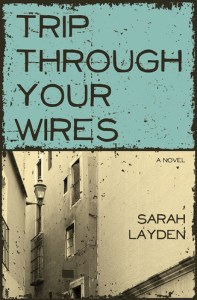
Sarah Layden's novel Trip the Wires has been called "compulsively readable" and "a welcome antidote to despair."

Sarah Layden’s novel Trip Through Your Wires has been called “compulsively readable” and “a welcome antidote to despair.”

Sarah Layden is the author of the novel Trip Through Your Wires and the winner of the Allen and Nirelle Galson Prize for fiction and an AWP Intro Award. Her short fiction can be found in Boston Review, Stone Canoe, Blackbird, Artful Dodge, The Evansville Review, Booth, PANK, and the anthology Sudden Flash Youth. A two-time Society of Professional Journalists award winner, her recent essays, interviews and articles have appeared in Ladies’ Home Journal, The Writer’s Chronicle, NUVO, and The Humanist. She teaches writing at Indiana University-Purdue University Indianapolis and the Indiana Writers Center.

To read Layden’s story “Bad Enough With Genghis Khan” and an exercise on withholding plot information, click here.

In this interview, Layden discusses crime fiction and Gone Girl, lyric versus story impulses, and plot twists that cause readers to make Scooby Doo noises.

Michael Noll

The story begins with “The week after my husband’s retrial and acquittal,” but we don’t learn what he was accused of until much later, almost at the end. When that information arrives, it’s stunning. In fact, I’d completely forgotten about the retrial–the opening paragraph moves on from the trial so quickly. I think I may have made a Scooby Doo noise when I realized what I’d just read. So, I’m fascinated by this strategy of delaying the info. Did you always do that in the story? How did you approach the structure?

Sarah Layden

I know exactly the Scooby Doo noise you mean, and couldn’t be happier that the story elicited it from you. The structure of this piece was always in short vignettes, I think starting with three or four. Initially I’d numbered them, though the numbering was discarded later. Each vignette initially had some sort of tie to Genghis Khan, even if it was a distant link. It took several drafts before I started seeing what some of the connections were between the different parts. That first sentence about the retrial and acquittal was built into the last revision I did: I finally had a sense of the characters and what had –or had not—happened, and I realized that because the narrator had that information prominently in mind, that it should be prominent in the beginning, too.

Michael Noll

The story is doing something really interesting with Genghis Khan. At times, past and present blur together, as they do here: “We don huge fur hats and pound our utensils on the table. Bring us all that we desire, we growl, even if we don’t know what it is. We stab our meat with sharpened knives I pull from my purse.” I’ll admit that when I first read these lines, I was confused. But it was a good confusion. It was such an odd shift that I wanted to keep reading to figure out what was going on. But it’s a strategy with risks. How do you know when a passage is confusing in the good way as opposed to the bad way?

Sarah Layden

Having good readers is crucial to me for this very thing. When I began writing this, I was experimenting: I didn’t know what it would become. My friend Bryan Furuness, also a writer and editor, gave me early feedback that helped me see places where it was confusing rather than mysterious. Part of our conversation was about the lyric impulse versus the story impulse, and how they can work together. Early on, I was probably writing more toward the lyrical. As I revised, it turned more narrative. It’s funny that you mention past and present and the blurring of boundaries, because that does seem to be something that crops up in my work. My novel, Trip Through Your Wires, alternates between past and present, and concerns itself with memory. That interests me in fiction: a character wondering, in the Talking Heads song sense of the line, “How did I get here?” (By the way, one of my all-time favorite songs, “This Must Be the Place,” just came on. Talking Heads asks, Talking Heads answers.)

Michael Noll

In general, there are some amazing shifts of tone in the story. At one point, a paragraph moves from “flecks of charred flesh between his teeth” to “Genghis didn’t give a fuck about floss” to “Jengis was a guy who conquered and then didn’t call because he was high and playing Xbox and just, like, forgot.” I love this. Is it simply the stuff your creative mind is spitting out? Or is there a method to the madness? If not, how do you put yourself in the right mind frame to write prose that seems, at first glance, to move in idiosyncratic rather than linear ways?

Sarah Layden

Thank you. It’s definitely associative. The title, in fact, does come from a line I overhead in a café: “It was bad enough with Genghis Khan.” From there, I started thinking up links and connections and was writing in sections. Those sections took on their own voices, and at first I wondered if I was writing different characters. Instead, the story pointed to a narrator across different moments in her life. At times she’s mimicking the person she describes, as if trying to take on his perspective, to be the conqueror rather than the conquest.

I’ve always been a little bit of a mimic, and as demonstrated, a big eavesdropper. I love trying to recreate different voices and train my ear. I used to be a reporter and I strove to quote people accurately. What’s fun about fiction is stretching accuracy into a shape that fits a story. Or making it weirder, more complicated, and multi-layered than the thing that was actually said, such as an offhand remark about Genghis Khan.

Michael Noll

In Trip Through Your Wires, a new clue causes a woman to retrace the mystery of her boyfriend's death.

In Trip Through Your Wires, a new clue causes a woman to retrace the mystery of her boyfriend’s death.

You’ve published a novel, Trip Through Your Wires, that involves a murder and some uncertainty about a character’s culpability. Now, you have a story about an unsolved murder/disappearance. You’re working over material that is the heart and soul of the thriller genre. Do you ever consider going “full thriller?” Or, what’s the difference between your stories and those?

Sarah Layden

Unexpectedly, this does seem to be the material I’ve been returning to. I’ve read a little in the thriller genre, and it’s so intricately plotted and painstakingly resolved. I hesitate putting my work in with that type of craft, because I’m definitely a novice there. Someone described my novel as a “literary thriller” or “literary mystery.” I like that a lot, maybe because it gives me some wiggle room to focus on place, character, and scenes that drive the story forward, but not necessarily at a breakneck pace. Moments of being or reflection or ambiguity are definitely more characteristic of literary fiction than something shelved under Mystery, and I’ve been learning that mystery readers definitely want closure. And may be a little upset if you don’t give it to them.

Michael Noll

Out of curiosity, what’s your verdict of Gone Girl? At a writer’s conference last weekend, I heard two very different opinions about the book from people I respect. Care to weigh in?

Sarah Layden

I thought it was a terrifically entertaining read. The writing was fun, lively, and engaging. My sister passed it on to me when we were on vacation a few years back and kept asking me where I was in the story. I’d tell her what I thought was about to happen and usually was right or at least close. There’s a little reading thrill in confirming your predictions.

There’s been lots of criticism about the book and how it portrays women, and I’d like to reread it with that in mind. You certainly don’t want to reaffirm stereotypes of women as fakers and man-trappers (I’m trying not to spoil it for the three people who haven’t read it yet.) But as I remember it, both the male and female leads behaved with equal awfulness, thus leveling the playing field.

July 2015

Michael Noll Michael Noll is the Editor of Read to Write Stories.

How to Withhold Crucial Plot Information

21 Jul
Sarah Layden's story, "Bad Enough With Genghis Khan," appeared in Boston Review.

Sarah Layden’s story, “Bad Enough With Genghis Khan,” appeared in Boston Review.

When I was a kid, I devoured Agatha Christie novels, sleuthing along with Hercule Poirot, determined to solve the mystery before he did. I figured out pretty quickly that Christie was holding out on me, not showing me everything I needed to put the pieces together. But instead of getting frustrated, my inability to outwit her detective actually made me love the books more. I was in the hands of someone smarter than me, and I knew that not only would all would become clear by the final page, but it would also be a little bit shocking.

As writers, we sometimes want to withhold information in order to create a surprise ending, but it’s not easy to do. Many times, the readers know we’re messing with them and can see the strings being pulled. The best shock is the one that seems to come out of nowhere, and this is exactly what Sarah Layden pulls off in her story, “Bad Enough With Genghis Khan,” which you can read now at Boston Review.

How the Story Works

The ending is suggested, though we don’t know it yet, in the story’s first sentence:

The week after my husband’s retrial and acquittal, we went to a Mongolian barbecue restaurant for a celebration dinner with another couple.

Notice how smoothly that sentence operates. It begins with a trial and verdict and ends with Mongolian barbecue and a celebration. The rest of the paragraph is ostensibly about the meal and what happens to the other couple in the future (they get divorced). There is an emotional undercurrent present—the narrator gets drunk and starts to cry—but it’s not clear why she’s upset. (Remember, the trial only received half a sentence and hasn’t been mentioned again.) The next paragraph, which is its own section, moves onto a different situation. The trial is behind us.

The middle of the story uses different scenes and situations to develop a connection between sexual encounters and Genghis Khan, the infamous conqueror who raped and pillaged his way through Asia. Each of these scenes is compelling, but the relationship between them isn’t clear. We’re not sure where we’re headed, but lines like these have us intrigued:

Blushing, I delete the history from my browser but forget to delete it from my secret backup location, in case I want to remember the things we’ve deleted. My husband throws something away and thinks it disappears. Images I can never erase.

Then, in the second to last second, we encounter this (spoiler alert):

When a young woman has lived an unharmed life, she is not so much naïve as incredulous at the threat of harm. No way will she wind up like the kidnapped and presumed-murdered girl who was about to inform on drug dealers; or the girlfriend knocked down the stairs in a fight and then dismembered, her limbs, head, and torso hidden in the walls; or the very young girl secreted to the hills above her family’s home, enduring daily rape by a man old enough to be her grandfather; or the teen runaway kept as a sex slave in the secret compartment of one man’s basement. I sat beside the judge’s bench and typed these words, transcribed these testimonies, remembering meeting my husband in the same courtroom: his arm in a sling over his police officer’s uniform, the gold wedding band on his finger both remnant and reminder, his eyes hooded. His missing wife’s body never turned up.

The passage seals the connection between sex and violence and then, in the middle of a sentence, finally returns to the trial we saw briefly at the beginning of the story. We finally learn what the narrator might have discovered in her husband’s Internet browsing history. It’s an effective move. When I first read the story, I actually gasped when I finished the line and realized what it meant. What else could a story possibly hope to achieve?

What makes the story great, though, is that it doesn’t stop there. In the final section, our discovery is given emotional resonance. The narrator is talking to a friend who says, “Never get divorced…it’s cold out here.”

The distance between that piece of advice and what we’ve learned about the narrator’s marriage is what gives the story the evil chill of great crime fiction.

The Writing Exercise

Let’s withhold crucial information using “Bad Enough With Genghis Khan” by Sarah Layden as a model:

  1. Figure out the effect you want the story to have. In the case of “Bad Enough With Genghis Khan,” the effect is the shock of realizing that a woman has married a man who may have murdered his wife. The obvious way to approach this revelation would be to put the reader in the room with the narrator when she first learns that her lover’s wife has disappeared—or when she discovers clues to his misdeeds on his computer. But if the point is to shock the reader (and not the narrator), then the revelation doesn’t need to occur in the moment that it happens for the narrator. In fact, because it happens in a passage about something else, it becomes that much more shocking. So, what will your readers find shocking or funny or heartwarming or poignant in your story? That’s the moment we’re going to surprise them with.
  2. Write a sentence that clearly states the shocking/funny/poignant moment. For example, Layden could have written this: “The week after my husband’s retrial and acquittal for murdering his wife, we went to a Mongolian barbecue.” Notice how the sentence doesn’t end with the shocking thing but uses it as the catalyst for something else: This, then this. You can use this structure for any situation, for instance this one: “The week after I farted loudly during my own wedding, people cheered and high-fived me when they saw me around town.” Try it. Write a sentence that states the shocking/funny/poignant thing and then moves on to whatever comes next.
  3. Edit out the best part of the sentence. In Layden’s case, this is the fact that the guy was on trial for murdering his wife. In my example, I’d cut the fart and leave this: “The week after my wedding, people cheered…” The sentence operates just fine without the excised information. We’re being shown the same scene, just without one detail.
  4. Find a moment to slip the detail back into the story. Because you’ve already shown the readers the scene, you’re relieved of the obligation to convey the detail in scene. Instead, it can show up anywhere. This is what Layden does so masterfully. She writes a passage about other instances of sexual violence and then adds another to the list—which just happens to be connected to her. I could do the same thing with my example: write a passage about other farts or other embarrassing moments and then add in this particular moment. So, give it a try. Write a passage that lists moments (not necessarily experienced by the same people, just connected in some way) and then add in the detail that you’ve been withholding.

Good luck and have fun.

An Interview with Sequoia Nagamatsu

16 Jul
Sequoia Nagamatsu's forthcoming debut collection, Where We Go When All We Were Is Gone, is a collection of twelve fabulist and genre-bending stories inspired by Japanese folklore, historical events, and pop culture.

Sequoia Nagamatsu’s forthcoming debut collection, Where We Go When All We Were Is Gone, is a collection of twelve fabulist and genre-bending stories inspired by Japanese folklore, historical events, and pop culture.

Sequoia Nagamatsu is the author of the forthcoming Japanese folktale and pop-culture inspired story collection, Where We Go When All We Were Is Gone (Black Lawrence Press, 2016). His work has appeared or is forthcoming in Conjunctions, ZYZZYVA, Bat City Review, Fairy Tale Review, and Copper Nickel, among others. He is the managing editor of Psychopomp Magazine and a visiting assistant professor at The College of Idaho.

To read Nagamatsu’s story “Placentophagy” and an exercise on defamiliarizing the familiar, click here. In this interview, Nagamatsu discusses first lines, his process for outlining stories, and why realism sometimes falls short.

Michael Noll

The story starts with a solid impact: “My doctor always asked how I would prepare it, the placenta.” I’m curious about the genesis of that line. For some writers, first lines simply appear and the challenge is finding the story that follows, but I know others who start with a scene or an idea and then need to find a line to kick it all off. Was this first line always present in the story?

Sequoia Nagamatsu

For me, I like to do a lot of “writing” in my head long before I actually put any words down. I knew I wanted to write a story about Placentophagy but it took another week or so of thinking about the idea to attach a grieving couple to the practice vs. the story focusing on folk medicine and celebrity mothers who have eaten their placenta (i.e. Alicia Silverstone). Once I had the grieving couple tied to pieces of folklore, I knew I had the necessary emotional tension plus the fun facts that interested me to begin writing.

I believe first lines (and first paragraphs) are crucial to pretty much any story (but especially so for flash pieces where you need to draw the reader in, provide some kind of map of what the story will be about (even if only via tone), and establish character and world building in short order. As an editor, I want a story to provide the central characters, introduce a central tension, and do something unexpected and interesting within the first few lines. Don’t reveal all your cards certainly, but I don’t believe in messing with readers too much. Give them a map of an unfamiliar town. Give the reader something they can navigate as more information is revealed.

As a writer, I don’t continue with a story until I’m satisfied with at least the first few sentences. For this story, the first lines came pretty quickly (with other stories, it can be more of a slog . . . and sometimes I’ll think I have a first line I’m happy with until I finish the story and realize my first line is actually buried somewhere else b/c, as a writer, I was navigating to a destination just askew from where I thought I was going when I started).

This question has made me revisit many of my first lines. A few from my forthcoming collection:

Mayu called me from the train car that Godzilla had grabbed hold of––no screaming or sobbing, no confessions of great regrets, no final professions of love.

Our daughter, Kaede, has returned to us five years after the police fished her out of the community pool, her body sodden and distended like the carcass of a baby seal when I identified her in the morgue.

On our wedding day, you weighed 115 lbs. When you died, you weighed 97. You are now 8.7 cups of ash, and I figure I can make enough 1:25 scale figurines of you from what you’ve left behind, so we can see the world.

Michael Noll

Where We Go When All We Were Is Gone is "an exhilarating debut that serves up every guilty-pleasure pop-culture satisfaction one could hope for while simultaneously reframing and refashioning those familiar low-art joys into something singular, unanticipated, and entirely original," according to Pinckney Benedict.

Where We Go When All We Were Is Gone is “an exhilarating debut that serves up every guilty-pleasure pop-culture satisfaction one could hope for while simultaneously reframing and refashioning those familiar low-art joys into something singular, unanticipated, and entirely original,” according to Pinckney Benedict.

Backstory is crucial to the present action in this story, but it’s handled in a quick, compact line: “Somewhere in the building Ayu’s tiny body, caught in the strained expression of her first and last cry, rests in drawer, waiting for someone to fetch her.” Again, I’m curious how much revision was required to achieve such efficiency. Many of your other stories are quite long, which would seem to require a different process than a piece of flash fiction like this.

Sequoia Nagamatsu

When I conceive of a story or a character or a place that I think could contain some kind of world, I start with sketches and summaries. For a longer short story, this might take the form of a rough synopsis. For the novel I’m working on, these sketches might take the form of bulleted points which represent important scenes within an act. I knew from the get go that Placentophagy would most likely be a flash piece, so instead of thinking about my initial sketches as guidelines to be fleshed out later, I made more of a concerted effort to make my notes resemble lines that could potentially be included in the story. The line in question was born from knowing that I needed to capture the loss of a child. Instead of noting “enter scene of miscarriage,” I immediately played around with a couple of variations that captured the essence of this plot point. In other words, when I’m writing smaller and shorter, I inhabit the atoms that make up the molecules of a larger story’s architecture. I need to capture what’s going on at that level.

Michael Noll

I love the essay-ish section about the practice of eating placentas, but I can also imagine workshop readers advocating for it to be cut—because that’s the sort of thing that workshops do. How did you approach that section so that it moved the story forward?

Sequoia Nagamatsu

Whenever I become fascinated with something and consider treating the topic in a story, I tend to be cautious b/c there’s a real danger that I might dilute forward motion and character with unnecessary minutiae. With that said, I don’t think there is anything inherently wrong with tracts of reportage and “essay-ish” writing in fiction so long as 1) the conventions of the story have been firmly established to allow for such asides (esp. if they are lengthy and a bit more detached from character) and/ or  2) the momentum for characters and the overall story are not completely lost or forgotten. For this section, considering the length of the piece, I knew I would have to pick and choose a couple of interesting facts, tie them to the emotional tension of my narrator, and quickly move on. The facts in this story, while certainly stepping outside of my main character, illuminate her research, as well as her relationship to her children and to her body, so if I chose, I probably could have added a line or two more without much lost momentum.

Michael Noll

When I first read this story, it seemed like a piece of horror fiction. Then, I read some of your other work, which involves science fiction situations and characters, and it all seemed to cohere as a single vision. Horror and sci-fi are obviously different genres, but both depend, to some extent, on defamiliarizing the familiar. Is that what attracts you to these types of stories?

Sequoia Nagamatsu

Defamiliarizing the familiar is something present in pretty much all fiction. But to the degree of horror and fantasy and sci-fi (and its genre-bending cousins by various names: magical realism, slipstream, fabulism), the defamiliarizing is often illuminating aspects of reality whether that be racism or rampant consumerism via what many might consider obviously unrealistic, surreal, or fantastic.

I’ve long been a fan of literature and film that forces me to suspend my disbelief, that takes me to other worlds. I love these kinds of stories because I find them entertaining and imaginative. I love these stories because the primal part of me wants to be afraid, wants to use that fear. I love these kinds of stories because they force me to consider the gadgets around me and how they factor into who I am and who I’ll be 10, 20, 50 or more years from now. To quote the title of a Chan-Wook Park film (of Oldboy notoriety): I’m a cyborg, but that’s okay.

These kinds of stories are important and increasingly necessary because we live in complex times and sometimes “realism” falls far short of what we need to comprehend how fast we are evolving, how we process information, and how we define personal, cultural, and geographic borders and spaces. What we consider fantastical fiction used to simply fall in the realm of story or religion. Our stone age ancestors needed a way to understand and process the world around them. For countries who have had to deal with colonial and post-war transitions, the fantastical has become a vehicle where the distant native past and the unhinged identities of the present intermingle. Today we’re compounding these past relationships born from colonialism and warfare with globalization and technology.

Many of my stories are set in Japan. And for me, Japan is a unique case b/c it is a country that has had to reinvent itself multiple times over a short amount of time (notably in the 1800s when there was a push to westernize and again after WWII when the country shifted from military empire to technological and commercial super power). These shifts occurred so rapidly that Japanese culture & identity couldn’t keep pace, and you’ll note that creatures of Japanese folklore often share the stage with technology or modern society gone awry in anime, showcasing the tenuous relationship between the past and present. Akira was released nearly thirty years ago but has never been more relevant for Japan and the rest of the world.

In short, I’m drawn to and write in the realm of the fantastic because, for me, they are the stories that help me navigate the many spheres constituting who we are.

July 2015

Michael Noll Michael Noll is the Editor of Read to Write Stories.

How to Make the Familiar Seem Strange

14 Jul
Sequoia Nagamatsu's story, "Placentophagy," was published at Tin House and will be included in his forthcoming collection, Where We Go When All We Were is Gone.

Sequoia Nagamatsu’s story, “Placentophagy,” was published at Tin House and will be included in his forthcoming collection, Where We Go When All We Were is Gone.

Any discussion of writing horror, sci-fi, or fantasy fiction will inevitably arrive at the phrase “defamiliarize the familiar.” What this means, in short, is that those stories aim to make readers pay attention to something they’d normally not give a second glance. Think about the film The Shining. It transformed a kid on a tricycle into the stuff of nightmares. Of course, all writing can do this, not just genre fiction.

A creepy example of a straight realism that does this is Sequoia Nagamatsu’s story, “Placentophagy.” It was published as part of Tin House‘s blog series “Flash Fridays,” where you can read it now.

How the Story Works

For some readers, the story’s title, Placentophagy, will give away the plot. But, I suspect most readers won’t immediately recognize or know the term, and so the moment of surprise happens a few seconds later, after reading the first sentence:

My doctor always asked how I would prepare it, the placenta.

In that single sentence, Nagamatsu manages to defamiliarize the familiar. The familiar: a body part (and, thus, something as familiar as can be). The unfamiliar: preparing the body part in order to eat it. It’s as simple as that: apply an unfamiliar context or action to something familiar. If you’re like me, there’s no way you won’t read the next sentence and the one after it. We’re hooked.

But now what? The story has made us pay attention to something we’d normally give no thought to: a placenta. How does it advance the premise?

First, it suggests ways to prepare the placenta:

Powdered and encapsulated for my Yuki—two, three, four or more a day depending on my level of sadness and how much I believed the vitamins and hormones within the tissue would make me whole again. Pan fried and stuffed into dumplings for Toru. A smoothie and two yakitori for Keiko.

Then, the story adds a moment of doubt: will the characters eat it? The husband introduces the doubt:

“We don’t have to do it this time—just because we have it.”

That doubt gets extended into the preparation:

I write down daal and naan. I write cumin and cardamom. But I’m not sure if I want to do Indian.

The story now has different directions it can go: eat it or not. Prepare it this way or that way. But that’s not enough. It’s not until the next section that the story really advances the premise into something beyond shock value.

First, Nagamatsu introduces the medical rationale for eating a placenta:

Despite being regarded as unusual, eating the placenta (placentophagy), can help women restore hormonal balance after labor and provide much needed vitamins and nutrients: Iron, B6, B12, Estrogen, Progesterone.

So, he’s made the unfamiliar into something as familiar as the medical text at the end of commercials for medication. He then takes this rationale and the fact that eating placentas is something that does, in fact, happen, and makes it unfamiliar again:

The Baganda of Uganda believe the placenta is a spirit double and plant the organ beneath a fruit tree.

The story has advanced. It’s not simply a matter of will the character eat the placenta and, if so, how it will be prepared. Now it’s a question of will she eat the placenta and, if so, what will that action mean?

That final question of meaning makes the story so much more satisfying. It’s not simply trying to shock us but, rather, grappling with the eternal issue of how to be in the world, which is the question behind all great fiction.

The Writing Exercise

Let’s make the familiar seem strange using “Placentophagy” by Sequoia Nagamatsu as a model:

  1. Pair something familiar with an unfamiliar context or action. You can do with this with absolutely anything. Here are some examples you’ve seen before: intelligent car (Herbie), flying car (The Absent-Minded Professor), killer car (Christine), and talking car (Knight Rider). In all of these, something familiar as a car is made unfamiliar with an adjective. The film Men in Black did this with Tommy Lee Jones’ car. It suddenly began driving on the roof of a tunnel, and Jones’ character put on a song by Elvis. The song, then, became defamiliarized. So, try this: pair a noun with either an adjective or a verb (eat) that wouldn’t normally be paired with that mount.
  2. Play with the possibilities of the premise. Nagamatsu does this by listing the ways the placenta could be prepared. If you’re using “flying car,” think of all the things a flying car could do. Yes, it can fly, but once it’s flying, then what? Where can it fly? What do the characters do while flying it? Utterly normal things like listening to music or looking out the window suddenly become strange.
  3. Re-familiarize the unfamiliar. Just as Nagamatsu uses medical terminology to make eating a placenta not so strange, you can make your premise less strange and more familiar. After all, if you fly a car enough, you get used to it. It’s not a big deal anymore. So, what would make your premise mundane again? Frequency? Social acceptability?
  4. Make it strange again. Nagamatsu adds the element of folklore: the idea that a placenta might be a spirit double. So, we’ve gotten used to one way of viewing the eating of a placenta. Then he introduces a new way of viewing it. So, what are other ways to view your premise. A flying car is awesome, for instance, until the atmosphere above one hundred feet becomes toxic. Or, a flying car gains new meaning if the ocean level rises and covers all of the land. Notice how this works: you’re shifting the background of the premise—the context. Nagamatsu shifts the context to Uganda, and suddenly the premise doesn’t look the same anymore. How can you shift the context of your story?

Good luck and have fun.

An Interview with Natashia Deón

9 Jul
Natashia Deón's debut novel will be published in 2016 by Counterpoint Press.

Natashia Deón’s debut novel will be published in 2016 by Counterpoint Press.

Natashia Deón is a Los Angeles attorney, writer, and law professor. She is the creator of the reading series Dirty Laundry Lit and was named one of L.A.’s “Most Fascinating People” in L.A. Weekly’s 2013 People Issue. A 2010 PEN Center USA Emerging Voices Fellow, her writing has appeared side-by-side with Pulitzer Prize winning writer, Yousef Komunyakaa in The Rattling Wall, in B O D Y, The Rumpus, The Feminist Wire, and Asian American Lit Review. Deón has been awarded fellowships and residencies at Yale, Bread Loaf Writer’s Conference, Prague’s Creative Writing Program, Dickinson House in Belgium, and the Virginia Center for Creative Arts. Deón’s debut novel is due out in the summer of 2016 from Counterpoint Press.

To read two of Deón’s Facebook posts that were republished as stand-alone pieces, plus an exercise on writing artful sentences, click here. In this interview, Deón discusses Facebook’s positive effect on her fiction, the benefit of reading your work aloud, and the importance of being a generous writer.

Michael Noll

What role does Facebook play in your creative life as a writer? Do you have a rhetorical strategy to writing posts? Does the personal aspect of Facebook posts serve as a relief from your fiction writing? I ask because your forthcoming novel is set after the Civil War and so would seem to be at quite a remove from your life.

Natashia Deón

I spend way too much time on Facebook like most people. By too much time, I mean, I know that there are other things I could be doing but I often find myself multitasking in my real life and on social media. Between work and family and volunteering, I’m rarely sitting at home on a computer or somewhere where I can quietly contemplate a post, so my posts are things that randomly strike me in the day, things that I think other people might think are funny or poignant or helpful or sometimes there’s no point, I’m just venting or sharing a day. Is that a strategy?

Honestly, my FB behavior hasn’t really changed since my first sign-on to Facebook years ago after having my first baby and I thought, if I post these photos here, I don’t have to talk to grandma right now. I’ll text her and say, “SEE MY POST!”

Sometimes I say too much. Like having a drink at a bar and talking to a stranger. I’m sure there’s a hazard to this “strategy”–online footprint and all–and I’ve been known to delete posts, but for me, making mistakes matter less to me than connecting with people.

I do think I’ve gotten better at writing short-short stories because of Facebook. You have to get to the point, be clear, or get the dialog right. But that said, I still post long paragraphs that annoy people. But sometimes, that long post is the one that gets the most attention. I try to keep it interesting.

Sometimes I wish I could be like friends who only share other people’s posts, or Bible verses, or encouraging words, but I’m not that girl. I’m the one who’s tapping the microphone saying, “Is this thing on?”

It’s not that I think my thoughts are any more important than anyone else’s but what I’m beginning to understand is that people are afraid. Especially when it comes to social issues, topics that artists for centuries have represented in their work and have been the central voices in positive change. People today, even artists, are afraid of their thoughts and questions and not having the answers or fear that they’ll come to the wrong conclusions.

So I speak for them sometimes. To show people, especially artists, that I don’t know either and it’s O.K. It’s the conversation that matters. There’s still a lot more convincing to do because the trolls will always regulate as they do, convincing people that they shouldn’t have a voice and that we don’t have anything in common.

And yes, breaking away to post on social media is relief. Writing, in general, is relief. It’s emptying out old thoughts and replacing them with new ones. The same as I would in my fiction. And in my debut novel SWEET TEA AND HONEY—the title is about to change—I get to traverse time and through research am reminded that human beings are still the same. We all have hungered, loved, laughed, hurt, are born, die. I’ve read somewhere before that every person alive is the result of thousands of years of love or painful interactions. I’m privileged to live in this time and imagine some of those stories.

Michael Noll

You organize the Dirty Laundry Lit reading series. How important is it for writers to perform or read their work publicly? Do you think it benefits the work that eventually winds up on the page?

Natashia Deón

The Dirty Laundry Lit reading series was called a "raucous, all-inclusive party" by L.A. Weekly.

The Dirty Laundry Lit reading series was called a “raucous, all-inclusive party” by L.A. Weekly.

In the last five years or so as I’ve run Dirty Laundry Lit, I’ve seen over a hundred writers take our stage and some are incredible readers and some are so-so readers. So-so is rare on our stage. Both of these “classes” of writers, if you will, are all tremendously talented writers. But sometimes what I hear about the great reader is that he or she is “a great performer” and that’s why he or she did a great job reading, where another reader who might be so-so, is considered to have work that “stands on the page.” It’s one of those double-sided compliments that imply if you’re a great reader, your work does not equally stand.

What I believe and what I have seen is that great work stands when it’s played aloud. Period. Great work stands even when the writer is not a good reader and shines even more when the writer is a good reader.

Readings build confidence in the work. It’s the difference. Not just on the stage but before, as we prepare to take the stage and sometimes while we’re in the throes of reading it. We edit ourselves and armed with the honesty that voice gives our pieces, we become our best editor-selves. We skip things—sentences, words—we make new word choices as we read, playing the sentences aloud. We hear the pacing problems, the unneeded repetition, we become better judges of ourselves, our work. We discover how we can deliver our stories better. Make them more clear. Sometimes we see new things that we hadn’t seen on the page. The solitary side of the writer needs to get dressed and go outside some days. Reading publicly is one of those days. We make ourselves better for the crowd.

Michael Noll

As an organizer of a reading series, you are, in a way, playing a role in the publishing and book industry: you’re giving a voice to writers, giving them a chance to promote themselves and become known and advance their craft. This is an industry that is sometimes criticized for the voices it promotes. In response to that criticism, the small press And Other Stories recently announced that it would publish only women authors in 2018. Given Los Angeles’ rich diversity, it would seem like you could play a similar role with Dirty Laundry Lit, pushing against tendencies within the publishing industry? How do you find readers for the series?

Natashia Deón

When I created Dirty Laundry Lit, diversity was one of my three main goals. And by diversity, I do mean race and gender, and also other larger categories like economic diversity, religious, sexual preference and identity, age, physical ability, etc. This diversity isn’t the exclusion of anyone. It’s the inclusion of all. Or, as many as we can get. Diversity has to be intentional. And without a lot of money, creating diversity means we have to give a lot of personal time and effort to seek and find people, not waiting for them to find us. Our goal for each show is that any person can walk into a Dirty Laundry Lit event and see themselves on the stage; their experience represented. And if not this time, the next, or the next.

This aspect is important to me because when I became part of the literary community here in L.A. that’s not what I saw. Black writers were with Black writers, White with White, Asian with Asian, women with women, most experienced writers with the same, etc. We put ourselves into these ghettos of sameness for protection, support, for encouragement, to even have a space, and I get it. I need that, too. There is richness there but there’s magic when we put our differences together. I believe in creating the world I want to see. We all have a role. Where one repairs, another builds up, and so on as the saying goes. It’s community. The magic is in discovering what’s out there, smoking out the wonder. I believe that’s what we’re doing at Dirty Laundry Lit. And by doing this, we are telling people, you belong here, too.

I choose readers based on diversity, recommendations, and their involvement in the literary community. Dirty Laundry Lit goes hard in promoting writers and we do it with more passion than a paid publicist. We do it because we love it. We truly celebrate writers which is a rare experience for most writers. I was lucky to have first felt “celebrated” as a PEN Emerging Voices Fellow. There were six of us and for the eight months of the fellowship, we were treated like literary rock stars. That’s what I want to share with every writer who signs on to be on the slate of a Dirty Laundry Lit event.

And because we’ve been successful in doing this, there is a wait list to become one of our readers. Writers of all levels come to us and essentially say, “Celebrate me. I’m good.” We want to, but there’s limited time and space. So we tend to choose writers who are generous as we are generous. Writers who are giving back to the literary community already through volunteer work and other ways, and are also making space for other writers. This writing journey is impossible without community.

July 2015

Michael Noll Michael Noll is the Editor of Read to Write Stories.

How to Write Sentences that Offer Unexpected Views

7 Jul
Natashia Deón is a Los Angeles writer who directs the Dirty Laundry Lit reading series. Her Facebook posts about her son were republished in Rockwell's Camera Phone.

Natashia Deón is a Los Angeles writer who directs the Dirty Laundry Lit reading series. Her Facebook posts about her son were republished in Rockwell’s Camera Phone.

I recently heard a discussion on a panel of writers, editors, and agents about the difference between literary and non-literary fiction. Someone said, as they always do when this question is posed, that literary fiction puts more focus on sentences, that it’s more interested in language. I agree with this statement, mostly, but it’s also vague. What does it mean to be interested in language? What do great sentences look like? The answer isn’t as clear as we’d like to think. Does language mean big words, as my freshman composition students like to think? Does it mean “poetic” language (whatever that means), as I often heard as a MFA student? Here’s another possibility: literary language is active on a sentence level. The very structure of the sentences elicits a response from the reader—not an intellectual response, though that may be the case as well, but an uncontrolled grunt or gasp. Good sentences catch our attention. Some of the most interesting sentences I’ve read lately were written by Natashia Deón. They were originally written as Facebook posts but were republished as stand-alone pieces in Rockwell’s Camera Phone, where you can read them here and here.

How the Sentences Work

Here is the first post, containing four sentences:

People will ask, “If your son uses more sign language than you know and doesn’t speak, how do you know what he wants?” This, just now, means, “Don’t go to the post office, mom, unless you leave your cell phone with me and another bowl of Cheerios. Dry. No milk.”

I’m claiming these are beautiful, interesting sentences, and perhaps you find this surprising. The language is straightforward, not lyric, and describes mundane things: sign language, post office, Cheerios. So what makes it noteworthy? The answer, in my view: The way the sentences pivot. The first sentence (“People will ask…”) asks a simple question. The second sentence answers it, and that answer is given in a direct way: “This, just now, means.” And what it means it something simple and clear: “leave your cell phone with me and another bowl of Cheerios.” But then something happens in the third and fourth sentences. The answer in the second sentence is clarified: “Dry. No milk.” Again, the language is simple and clear, but it has also moved in an unexpected direction. Remember, this information is being communicated from son to mother through sign language that only one of them knows. In other words, the first sentence has set up a problem: the speaker can’t understand the language her son speaks. But when we’re told what he’s saying, it’s incredibly specific. The incongruence between the problem and the answer isn’t clear until “Dry. No milk.” In that moment, the sentences pivot. They’ve been moving along in one direction and then, like a hinge, they swing open to offer a new view: the speaker intuits what her son wants because she loves and knows him well, not because of his literal ability to communicate. Here is another post, containing two sentences. Watch for the pivot:

There’s a tiny square of light that comes through our living room window in the morning at about 7:45 a.m. and stays for only about 5 minutes. Big Boy waits for it every day.

Again, the first sentence is clear and straightforward. So is the second sentence. But the connection is unexpected. The square of light is mundane and momentary, barely worth notice—except to the speaker’s son. The sentences are constructed and paired to highlight this unexpected connection. There is a pivot point, and the second sentence swings open.

The Writing Exercise

Let’s structure sentences around a pivot point, using the posts by Natashia Deón as a model. We’ll use two different approaches. Here’s the first:

  1. Pose a question. Make it something straightforward but not too simple, answerable with yes or no. Make it require explanation. Try beginning with “How do you…”
  2. Answer the question (Part 1). Make your answer just as straightforward as the question: “”Like this. Be specific. Imagine that you’re actually speaking to someone. If you answered them with metaphor or abstraction, they’d probably look at you funny. End the sentence with closure so that it can be read as a stand-alone answer. How do you ____? Like this: _____.
  3. Answer the question (Part 2). Add a clarifying note to the answer. This is your pivot. Add a detail that is unexpectedly specific or that shifts the answer in some way. For instance, if the answer takes place within a particular frame (day/night/in a house/in a park), use the pivot to shift the answer out of that frame. Here’s an example: “How do learn to keep your balance on a skateboard? Like this: Stand on it, every day. On the edge of your bathtub.” I don’t make any claim for these sentences’ greatness. But I hope that you can see the construction, the pivot.

Here’s a second approach:

  1. Make a statement about something that exists or happens in the world. It doesn’t really matter what the statement is about. The subject can be small (Water is dripping from the ceiling) or large (Greece is an island in Europe). It can even be vague (Love is kind).
  2. Make a second statement about the subject that contains a word or idea that isn’t implicit in the first statement. In Deón’s sentences about the light, the word wait isn’t implied by the first statement; the light is just predictably there. But when the second sentence introduces wait, we see the light in a new way, as something fleeting and worth seeing. That’s the power of the pivot. Here are two examples. Water is dripping from the ceiling. My brother won’t get out of the shower. The first sentence suggests urgency. The second sentence (and I make no claim for its artfulness) introduces the idea that someone could ignore the emergency. Greece is an island in Europe. When it’s underwater, the entire continent could go under. Again, this is not particularly artful, yet the second sentence does flip the relationships implicit in the first sentence. In the first, Greece is small, but in the second, it’s powerful. (And that is the extent of my political wisdom.) So, think about the relationships or attitudes present in the first sentence. How can you write a second sentence that introduces a contradictory or unexpected relationship or attitude?

Good luck and have fun.

An Interview with Christine Grimes

2 Jul
Christine Grimes' story, "The Window," appeared in 2 Bridges Review.

Christine Grimes is a Texas-born writer living in upstate New York. Her story, “The Window,” appeared in 2 Bridges Review.

Christine Grimes teaches at SUNY Jefferson and has led writing workshops and craft seminars for Black River Writers and Fort Drum’s women’s conference. Grimes’ work has been included in From Where You Dream, a collection of craft lectures by Robert Olen Butler. She also hosts the North Country Writers Festival in Watertown, NY, annually, as well as the monthly reading and performance series, First Fridays, in Sackets Harbor, NY. Her stories have been published in journals such as Harpur Palate, Cutthroat, Passages North, and 2 Bridges Review. She is currently at work on a collection of stories and a supernatural thriller set in Sackets Harbor, NY.

To read “The Window” by Christine Grimes and an exercise on structuring a plot around a character’s lack of change, click here. In this interview, Grimes discusses the ten-year road to publication for “The Window,” the problem of where to begin a story, and the legal issues of using real-world references in a fictional story.

Michael Noll

I know that “The Window” has had a long life between first draft and publication (ten years?). How did it change in that time? Or, what revisions finally got it to the final draft?

Christine Grimes

I first drafted this story for a Texas State University MFA workshop in 2004 and it finally found a home when it was published in 2015 with 2 Bridges Review. Remarkably, the story’s structure and who the character was didn’t change drastically during those eleven years. A lot of my stories are rooted in working-class monotony that stretches into the weird and absurd. I wanted to portray a woman who truly believes she’s destined for greatness and is stuck in a dead-end job that moves from unpleasant and slides into a surreal nightmare without her quite realizing that it’s occurring until it does.

Like many MFA students, I revised shortly after workshop and sent it out into the world for rejection. I submitted a couple times a year and when I’d hear back from journals, sometimes there would be an encouraging note, but mainly it was those little scraps of paper (in the days before Duotrope) saying thanks, but no thanks. Every time it came back, I’d read it through again and cut some words, some lines, some paragraphs. I’d rework a passage or two. Then I’d send it out during the next 3-day weekend or block of vacation time I had. I landed a few other stories I’d written for Tim O’Brien’s workshop at journals during those years and that, coupled with the encouraging rejections, was enough to keep me still sending this one. 

When I wrote newer stories, I sent those instead, but something always drew me back to this one, so I kept tinkering. I removed filters, cut some more words, and sent again. When I compare the 2004 draft to the 2015 published version, many of the original lines are still included, but they are cleaner and the chaff has dropped away. I also have added lines to each key scene that either roots it in sensory description, calls back to something else in the story, and/or transitions between ideas. In the final paragraph for instance, the middle of the paragraph was added: “The cloudy smear shrinks as the impression from his hot breath fades until the window is clear.” Before that sentence was added, the paragraph moved too quickly and the beats didn’t effectively root the reader with the narrator in that final, isolated moment. When I look through the story, there are sentences like this throughout, but I doubt I ever would have gotten to those without the cuts that made the space and air for them to arrive.

Michael Noll

I really like the opening scene at the bar, where the narrator gets embarrassed by the guy she met. It’s an interesting scene to begin the story with because it’s set outside of the chip factory, where the entire story is basically set. It also happens outside the time frame of the day that the story is mostly set in. Did the story always begin with this scene? Or, did you add it to achieve a particular effect?

Christine Grimes

The story always included this scene, but it wasn’t until I revised the story several times over that I realized its importance to the narrative. Originally, I’d written it to set her in small town ambiance, show her life outside of work wasn’t much better, and make her late to work. While it did create that effect, I thought of cutting it and starting in the chip factory during revisions. Then I realized that it’s important that she has the man’s attention and hopes for romance until his friends mock him for his interest. It sets up a parallel for the final scene where she is on display and falls at the mercy of several guys together. Although she is able to convince herself the first event doesn’t matter, her willingness to hope for some connection with the final guy who exposes himself leaves her in an even more vulnerable position. Her inability to recognize the reality of a situation repeats throughout the story.

Michael Noll

I also love the daydream about becoming a food critic. I remember this part from all those years ago in workshop. Since this an internal moment for the narrator (as opposed to a present-tense scene), it probably has the ability to move about the story until it finds its right location and size. Was this the case? Or was this daydream always present in the story in basically this same place, in the same way?

Christine Grimes

Christine Grimes' story, The Window, appeared in 2 Bridges Review, Vol. 4.

Christine Grimes’ story, The Window, appeared in 2 Bridges Review, Vol. 4.

Thanks. It was something I had a lot of fun with, particularly because her idea of becoming a food critic is vastly different from what many would imagine. She isn’t cooking up exciting dishes at home and no one is coming to her for restaurant recommendations. The daydream always appeared in this format and was one of the few things I decided not to tinker with in the story.

Surprisingly, one of the most difficult challenges with revision to this story was centered around food. I’d named the factory after a well-known corn chip company and used it throughout. Sometimes it was a benefit I suppose – a kind editor at Carve wrote to tell me the story had made it through the  early rounds for their contest but didn’t make it to the finals, then noted she was a sucker for those chips and any story that featured them. However, ultimately, when I worked with Rita Ciresi at 2 Bridges Review, she accepted the story noting that I’d have to take the name out for the sake of liability. I agreed and immediately brainstormed 15-20 names that conjured up the same type of oily corn chip sound with my favorites at the top.  When I began researching those, I found Mexican restaurants, East and West coast chips companies, vegan chips, and weight loss companies, until I finally landed on Gornitos. While I’d seen different writers debate whether or not to use companies for the sake of verisimilitude, I never expected to have to change it for liability purposes.

Michael Noll

I cringed at the fact that the narrator eats ten bags of chips a day. I mean, I love to eat and I can pretty easily eat way too much food, but that is a lot of chips. It’s an interesting thing for the narrator to know about herself—she seems aware of her own actions yet also unable to change them. That seems like it would be a difficult balance to find. How did you make her aware but not so aware that the reader wouldn’t believe that she was still stuck in a job she felt was beneath her?

Christine Grimes

Two for lunch, two for dinner, a few in the afternoon? Nope, you’re right. That is a ton of chips. One of things that fascinates me about people are the disconnects they are able to have in their own lives. That’s certainly one of the things I wanted to explore with this character. She’s overweight, unhappy, and stuck, but doesn’t see that eating all of these bags, and even logging more tastings than she’s supposed to, could be detrimental. And she’s proud of her work and her work ethic, even though she shows up late and sabotages her boss. So I tried to illustrate her goals and dreams, the reality of her life, and the disconnect between the two. That was something I really wanted to capture – the ways in which we are woefully short of the visions we keep of ourselves. Of course, it’s easier to see in others, particularly people who might seem so different from ourselves.

July 2015

Michael Noll Michael Noll is the Editor of Read to Write Stories.

How to Structure Plot around Lack of Change

1 Jul
Christine Grimes' story, The Window, appeared in 2 Bridges Review, Vol. 4.

Christine Grimes’ story, “The Window,” appeared in 2 Bridges Review, Vol. 4.

Most stories are about change. A character goes about her business, and then an asteroid, dead body, love interest, child, or zombie shows up and everything changes. As a basic narrative structure, the change story is hard to escape. Politics revolves around game changers. At the coffee shop where I write this, KT Tunstall is singing “Suddenly I See,” which suggests that she didn’t see it before, meaning something has changed.

But what about those people who never really change? The wonderful poet Edna St. Vincent Millay once said, “It’s not true that life is one damn thing after another; it is one damn thing over and over.” If this is true, and if we want to write stories about people trapped in that one damn thing over and over, then we need a new structure.

A story that demonstrates how that structure might look is Christine Grimes’ “The Window.” It was published at 2 Bridges Review, where you can read it now.

How the Story Works

The story begins in a bar, where the narrator is at a bar, celebrating a birthday:

I flirted with this beer drinking, pool playing, divorced guy, Eddie, who made eyes at me while I played darts. His shaggy brown hair hung in his eyes and when he laughed, his shoulders shook. I maneuvered over to the bar, where he asked my name, then said Gloria sounded pretty. By the end of my darts game, his buddies showed up. I went over to his table to buy him a beer and one of his friends snickered and elbowed him. Couldn’t appreciate the lovin’ a big woman can offer. Eddie just shook his head and said no thanks. I left the beer there anyway. I took a couple shots with Judy, slept on her scratchy old couch, and overslept. So this morning, I borrowed her largest pair of sweat pants and threw on my dirt shirt before driving like an idiot to get to work.

If this was a story about change, then something would happen at work to push the narrator onto a different storyline than she was previously on. And, in fact, this is what happens. Gloria works at a chip factory as a taste tester, assessing chip quality, and on this day her supervisor announces that the factory will begin hosting public tours and Gloria will be featured. In a story about change, this would be an opportunity for something new to happen. Instead, though, the story essentially repeats the structure of the opening scene over and over, with the same result: Gloria gets her hopes up or tries to make the best of a bad situation but eventually gets humiliated. This is how the story ends. So, why isn’t this boring? After all, it’s the same thing over and over. Why does it work?

The answer in how the story makes us buy into the narrator’s point of view. She keeps believing things will be different, and so do we, even at the story’s end. Three boys take the tour and watch Gloria eat chips. Two of the boys make fun of her weight and then walk away. The third boy, one with a crooked nose, doesn’t make fun of her, and we suspect that perhaps he’s different:

His face has a little smile. We make eye contact. He gets me. Maybe he’s interested, maybe impressed, maybe he likes Gornitos. I showboat a little and chew slowly, rubbing the grains against my palate and swallow. The chip’s a little stale, too oily. When I open my mouth for another taste, Crooked Nose unzips his pants and pulls out his limp dick, waving it at me. He sticks out his tongue and licks the glass before he walks out.

The story isn’t about change but, instead, about believing change can happen when it almost certainly will not. This is a key concept to remember. Plot is about confounding a reader’s expectations, not about change.

The Writing Exercise

Let’s structure a story around lack of change, using “The Window” by Christine Grimes as a model:

  1. Write a scene that sums up a character. You’re looking for a moment that makes a character (either the person involved or someone who knows him or her) say “That’s me/him/her in a nutshell.” To write the scene, try thinking about the character in terms of winner or loser. Does the character always succeed? Or not? What is a small moment when the character either gets what she wants or does not get it?
  2. Find new ways to repeat the scene. The key is to think about your character’s motivations. What does he or she want? Don’t worry about what they want most. Instead, just list all of the things they want. Either item on your list offers an opportunity for a scene in which the character will or will not get that desired thing.
  3. Create the expectation that this time is different. The character needs to believe this, of course, but so do the readers. We need to see evidence that something is about to change. Someone is going to give the character the benefit of the doubt or, conversely, not give him what he wants. If you make us believe this time is different, then we’ll be surprised when the scene goes exactly as every other scene has gone.

Good luck and have fun.

An Interview with Katherine Fawcett

25 Jun
Katherine Fawcett's debut story collection, The Little Washer of Sorrows, has been compared to the work of Kelly Link and Donald Barthelme.

Katherine Fawcett’s debut story collection, The Little Washer of Sorrows, has been compared to the work of Kelly Link and Donald Barthelme.

Katherine Fawcett is a Canadian writer living in Pemberton, British Columbia. Her short fiction has been published in Wordworks, Event, Freefall, subTerrain, and Other Voices, and her plays have been performed by several community theatre groups. She teaches music at the Whistler Waldorf School, plays violin with the Sea to Sky Orchestra, and fiddle whenever possible. Her debut story collection, The Little Washer of Sorrows, includes stories about banshees, mermaids, and half-feral boys coming of age.

To read “Dire Consequences” by Katherine Fawcett and an exercise on increasing tension by shifting gears, click here. In this interview, Fawcett discusses writing fables, humor mixed with horror, and Stephen King’s Night Shift.

Michael Noll

When I read the story’s final line, I laughed and gasped at the same time. In a way, the story is structured like a well-told joke. The end is almost like a punchline. How did you find this structure? Did it simply occur to you as you wrote, or did you have the ending in mind when you began the story?

Katherine Fawcett

I’m delighted that the ending made you laugh and gasp. I do enjoy going for goosebumps. I think the horror of inevitability is really powerful. To be funny and devastating at the same time reflects the inescapable reality of being human.

The structure of this particular story did fall into place as I wrote it. I knew it was a fable, and that in telling it the loss of the girl would have to somehow come around again. But no, I didn’t plan the ending in advance. When I neared the ending, I had no choice in how to finish.

Michael Noll

I also love the quick pacing. This is something I’m seeing a lot of lately, in stories by Sheila Heiti, Amelia Gray, and Dina Guidubaldi, to name a few writers. The stories don’t really descend into scene and stay there. Instead, they zoom along over a series of events, as this story does, with the result being a story that feels a bit like a fable. Does this seem like a fair description of the story? What attracts you to this form?

Katherine Fawcett

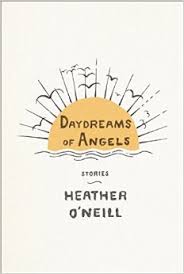
Daydreams for Angels is the first story collection from Heather O'Neill, the bestselling author of Lullabies for Little Criminals.

Daydreams for Angels is the first story collection from Heather O’Neill, the bestselling author of Lullabies for Little Criminals.

I recently read Heather O’Neill’s collection Daydreams of Angels, another Canadian author whose short stories often trip quickly along with gorgeous images and snapshots of events. I like how this style can feel intense–almost dream-like. I think the short story lends itself to this form very well. I love a story that is organized in such a way that readers feel they are swinging Tarzan-style from vine to vine with every turn of the page.

Michael Noll

This story was originally published as part of a series titled “Thrilling Tales of Torment.” As such, I guess it’s a kind of horror story, which makes sense—after all, two children die. But it’s a peculiar kind of horror story in that it’s funny. (At least, I laughed at the end.) But it’s also a weird kind of humor since the thing that is funny is also horrible, and so as I was laughing, I was also feeling a lot of empathy for the characters, especially the boy. Was this story intended as horror? Is that a genre you’re drawn to?

Katherine Fawcett

To be honest, I didn’t write this as a “Thrilling Tales of Torment” story, but when I was asked to submit a Halloween story, it was the most suitable one I had at the time. It certainly isn’t horror in the traditional sense, but you’re right–a couple of dead kids is a pretty nasty and no one wants to laugh at that, so it’s kind of a blend of bad, distasteful humour and weird, funny horror.

I do like reading horror–although I sometimes find it too disturbing to read at night. The first short story collection I ever read was Stephen King’s Night Shift. I must have been 11 or so–I remember being terrified and thrilled, and sharing the stories around campfires to scare my friends.

Michael Noll

One review of the book uses the term “fabulist” and compares you to Kelly Link, the incomparable giant of the weird stories that seem to now officially fall under that label. What do you think of that term: fabulist? It’s relatively new, and so it seems that the definition of what belongs is a bit fuzzy. Does it seem like an appropriate category for your work?

Katherine Fawcett

I am honored to be spoken of in the same breath as Kelly Link. I’d never defined myself as such before, but if the Link is a fabulist and NPR says I’m following in her tradition, then yup, you can call me a happy fabulist too. The word is appealing because it is like “fantastic” and “beautiful” and “marvelous” going out for drinks together.
But to properly answer your question, I looked it up and found out that fabulist has two meanings:

  1. Someone who recounts fables.
  2. A liar.

I suppose all fiction is lying by definition, but a fable is something that brings to light a truth. So yes, lying to find truth would be a great category for my work.

I read somewhere that fiction is simply a craft that arranges letters and spaces and punctuation in a way that makes us empathize with the fake struggles of pretend people. It seems to me the whole process of categorization (fabulist, magical realist, satirist, sci-fi writer etc) has more to do with marketing than actually sitting down and telling stories–lying to find truth. But if lumping me into a category will pique readers’ interest, lump away.

June 2015

Michael Noll Michael Noll is the Editor of Read to Write Stories.