An Interview with Michael McGriff and J. M. Tyree

6 Nov
Our Secret Life in the Movies by Michael McGriff and J. M. Tyree was the subject of this interview at NPR's Morning Edition.

Our Secret Life in the Movies by Michael McGriff and J. M. Tyree was the subject of this interview at NPR’s Weekend Edition.

Michael McGriff and J. M. Tyree are the authors of Our Secret Life in the Movies, a collection of stories written through the lens of the films from the Criterion Collection.

McGriff is an author, translator, and editor. His most recent book, Home Burial, was a New York Times Book Review Editors’ Choice selection. He is also the author of Dismantling the Hills, a translation of Tomas Tranströmer’s The Sorrow Gondola, and an edition of David Wevill’s essential writing, To Build My Shadow a Fire.

Tyree was a Truman Capote–Wallace Stegner Fellow and Jones Lecturer in Fiction at Stanford University. He works as an associate editor of The New England Review and is the author of BFI Film Classics: Salesman and the coauthor, with Ben Walters, of BFI Film Classics: The Big Lebowski, from the British Film Institute.

To read their story, “Yuri Gagarin Explores Outer Space” and an exercise on writing sentences that push past expected endings, click here.

Michael Noll

The version of “Yuri Gagarin Explores Outer Space” in Our Secret Life in the Movies is slightly different than the version published in Tin House. The girl becomes a kid, who we learn, through pronouns, is a boy. A line of dialogue is cut (“I’m seventeen and a half,” she said. “My dad’s a cop down in the hills. He didn’t like my boyfriend. I guess that sums it up.”), as is a line in the last paragraph (I ripped the pom-pom off my ski hat and used it to clean up her face.) I’m curious about your thoughts behind the revisions. To some extent, the scene can be read quite differently depending on the kid’s gender and how we view that act of the characters sharing a sleeping bag in an abandoned mansion. The final version is more fraternal, less potentially creepy. Was that purposeful?

Michael McGriff and J. M. Tyree

As readers, we tend to assume that a story is done because it has been published. As writers, we know better, because we stay awake at night worrying about all the ways we got it wrong. The important point to keep in mind is that publication is only one part of the creative process. In this case, the ending seemed better when the genders were reversed because that way you could never rule out the possibility that this character was actually alone the entire time, or that he had run into his doppelganger. Something along those lines. There are at least four kinds of stories – the kind you never get around to writing, the kind you write and abandon, the kind that come out right the first time, and the kind that come at great cost after a struggle and too many drafts to mention. This story was one of the last kind.

Michael Noll

In the book’s introduction, you write that the book began as sketches written while you watched films from the Criterion Collection. At a certain point, you figured out that these sketches were part of a narrative. How did you turn those early sketches into a coherent book? The process of free writing for fun and the process of revising for narrative coherence would seem to be very different. Was there a point at which you created a timeline or outline to follow? Did you discuss in advance of watching certain films or writing certain pieces what direction you might go with them?

Michael McGriff and J. M. Tyree

We never had an outline or a timeline. I think we were both surprised as the book gained momentum, almost of its own accord, to look less like a smaller “cycle” of sketches and more like a book. A pile of sketches began to look like it had a trajectory, showing the parallel lives of characters growing up during the last days of the Cold War. It was honestly more a matter of subtraction, of removing material from the book so that the linkages of the stories made more sense and a sense of continuity could be inferred or imagined. The book wound up as something more like a fragmented novel, or a mosaic with some of its pieces missing. The painful thing about working the way we did is that a lot of good material got left on the cutting room floor. Like any film! As with so much writing, paring things down often makes things clearer.

Michael Noll

Our Secret Life in the Movies was inspired, in part, by Wu-Tang Clan's GZA's album Liquid Swords. GZA discusses the album here.

Our Secret Life in the Movies was inspired, in part, by Wu-Tang Clan’s GZA’s album Liquid Swords. GZA discussed the album at WaxPoetics.

It’s exciting to me that this book wears its inspirations so clearly on its sleeves. Many writers work out of homage to or inspiration from another artist, but that influence is not often made explicit in fiction. It’s much more common (it seems to me, anyway) in poetry, music, and, to some extent, film. Do you think the fact that one of you is a poet and the other is a film critic (in addition to being a fiction writer) allowed you the freedom to create this particular narrative structure?

Michael McGriff and J. M. Tyree

It’s funny, but we never thought of not mentioning the movies. We could have left them out but we did want to expose the mechanism a little bit, as well as to relate the parts to the whole. We wanted the stories to be accessible to any reader, whether they had seen the movies or not. But we wanted to lead interested parties deeper into the maze with us. One of the influences on the book’s overall structure was the hip-hop album Liquid Swords. How certain snippets of dialogue from the Kung-Fu movies on that album – “I see you are using an old style” or “special technique of shadowboxing” – got repurposed and suddenly made a new kind of sense. We wanted to emulate the way sampling works in music.

Michael Noll

Many of the stories reference Ronald Reagan and the economic disillusionment that much of the country was feeling at the time. For instance, the early piece, “Boxcars,” pairs these two passages:

  • “Bodies without work permits, addicts, drunk high-school kids come down from the valley to slum through the rhythms of the rural American night. Dead bodies, dumped bodies, bodies alive with fear, bodies of elation, bodies that should have known better. A one-day notice in the Bay River Gazette, then the ten-mile stretch of industrial waterfront was closed.”
  • “In the paper, on AM talk radio, at the State Capitol, the regulators blamed the deregulators, the state the country, the county the wood beams collapsing in the rail tunnels, the loggers the environmentalists, and the end-of-days folks blamed our perpetual slipping from grace.”

There’s a pretty clear moral vision at work here, not laying blame, exactly, but clearly articulating a situation that we’ve tended to gloss over with some happy political speech. Did this image of an America in decline arise naturally in the course of viewing the films and writing, or was it something that you discussed and wanted to write about?

Michael McGriff and J. M. Tyree

What we’ve both found is that a lot of writing is just luck. You stumble around in the dark, rely on your instincts, and try to stick to your impulses, no matter how strange those impulses might be (in one of our stories the speaker’s child is an invisible boy, in another the speaker’s father marries an egg). All the leitmotifs and connections and echoes in Our Secret Life in the Movies are there because we both wrote stories rooted in our own experiences, which happened to parallel each other in unexpected ways. This isn’t a work of autobiography by any stretch, but it does reflect some facets of the experiences of working-class life for folks in our generation. In one sense, we got lucky that there was so much overlap in the book. But, as writers, it was our job to craft a book and tell good stories, not just rely on luck. We highlighted many of these overlaps and themes in the revision process, and we had some great help from trusted readers, friends, and our editors at A Strange Object. I think the important point here is that we didn’t set out to move from A to B and specifically hit on themes X,Y, and Z. Instead, we had faith that the interesting and worthwhile would surface in our writing if we kept exploring our shared love for the movies and our desire to be connected to them.

November 2014

Michael Noll

Michael Noll is the Editor of Read to Write Stories.

How to Write Sentences That Surprise the Reader

4 Nov
Our Secret Life in the Movies, by Michael McGriff and J. M. Tyree, is a collection of linked stories inspired by films from the Criterion Collection such as Bladerunner and Devilfish.

Our Secret Life in the Movies by Michael McGriff and J. M. Tyree is a collection of linked stories inspired by films from the Criterion Collection such as Bladerunner and Devilfish.

The novelist Hanif Kureishi recently made news when he complained to the British newspaper The Guardian that his writing students lacked the necessary focus to become writers: “They worry about the writing and the prose and you think: ‘Fuck the prose, no one’s going to read your book for the writing, all they want to do is find out what happens in the story next.'” It’s undoubtedly true that sentences don’t make much sense without a story to hang them on, but it’s also true that stories are built out of sentences. Almost everything that happens on a story level (plot twists and reversals, slow-building suspense) also happens at the sentence level. So, it pays to study good sentences and try to imitate them.

You won’t find better sentences than those in Our Secret Life in the Movies, a new collection of stories by Michael McGriff and J. M. Tyree. The writers (a poet and a fiction writer/film scholar) attempted to watch the entire Criterion Collection of films while writing short fictions inspired by the films. The collaboration eventually took shape as one of the most beautiful and idiosyncratic books you’ll ever read. One of the stories, “Yuri Gagarin Explores Outer Space,” written after Vagabond by Agnès Varda, was published at Tin House, where you can read it now.

How the Story Works

A staple of film is the twist ending or sudden reversal. Some films like Memento feed the audience a steady diet of these reversals so that every time we think we’ve found solid ground, the bottom is snatched out from under us again. Classic films use reversals as well (just watch Alfred Hitchcock’s Vertigo). One way that reversals and unexpected twists work is by pushing a scene past the point where we’d normally expect it to stop. The same is true of novels and stories—and it’s also true of sentences. You can see this at work in the first sentence from “Yuri Gagarin Explores Outer Space”:

When she discovered the little bottle of morphine—the secret stash under the kitchen sink that I had lied about throwing away—she was so angry that she took off her blue Nikes and threw them at me, one after the other, the second one clonking off the back of my head and clattering into the unwashed dishes.

The sentence could have ended with “threw them at me” or “one after the other.” Instead, it adds that last clause about where the shoe lands. Even then, the sentence keeps pushing past the expected ending, past “back of my head,” where it could have stopped for comic effect. When all is said and done, the sentence has moved past three potential endings to finish with “unwashed dishes.”

So, why does this matter? It’s not as if we’re stunned by the realization that someone who hides morphine under the sink also does not wash his plates. There are two answers, I think: 1) The additions fill out a scene that might feel sensational without them. It’s easy to turn fictional addicts into something that borders on caricature. The dishes ground the scene in detail. 2) The additions set up the structure for subsequent sentences in the story, which continue to push past expected endings.

For instance, here is the next sentence:

She unfolded her knife and stabbed the bottle on the counter as if the poor thing were a possessed child’s toy in a horror movie.

Again, the sentence could have ended with “on the counter.” The addition of the comparison adds humor and a manic energy. Again, these aren’t shocking reversals of the information that came before, but they color and deepen the reader’s perception of the scene. The next two sentences keep with the trend:

Then she tried to set fire to it with her Zippo, leaving a mangled and melted heap, while screaming, “Happy Birthday!” It was like watching someone burn down a forest or kill a kitten.

The first sentence did not need to add “while screaming, ‘Happy Birthday,'” in order to make sense, and the second didn’t need “kill a kitten” to complete the image. The sentences could function without those phrases, but their presence helps set the tone and even change it suddenly. (I’m willing to bet no reader expected the “Happy Birthday” song in that moment.) After all, it’s not initially clear how we ought to view these events: an addict getting kicked out of the house by his girlfriend, licking up some leftover morphine after she burns the bottle, and spending the night in an abandoned mansion. Are the events tragic? Comic? Both? Should we feel sorry for the character? Angry at him? The additions to the sentences actual prevent us from settling onto a simplistic reading of the scene—and it’s this uncertainty that is key to the story.

For contrast, here’s a sentence from a novel that runs away from uncertainty and toward absolute certainty: Ayn Rand’s The Fountainhead. This sentence is on the second page and describes Howard Roark’s face:

“It had high cheekbones over gaunt, hollow cheeks; gray eyes, cold and steady; a contemptuous mouth, shut tight, the mouth of an executioner or a saint.”

This sentence, too, could have ended earlier than it does—with “hollow cheeks” or even with “cheekbones.” Instead, it keeps adding descriptors, finishing with two options for how to understand the face: “executioner or saint.” Unlike the sentences from Our Secret Life in the Movies, however, this sentence does not deepen our understanding of the character. Instead, it points us in a firm direction. Executioner and saint are more or less complete opposites of each other. As a result, the character is limited to two black-and-white options. If you’re at all familiar with Rand’s work, you’ll recognize how this sentence sets up the novel’s didactic message: you’re either an individual or a collectivist.

But literary fiction like Our Secret Life in the Movies isn’t interested in a message, at least not one that can be easily distilled into a political motto. Instead, the prose tends to open possibilities, rather than limit them. Because McGriff and Tyree’s sentences continually add details that complicate the initial details, the story gains richness and texture and keeps the readers on their toes. The final lines are beautiful but not easily categorized within the moral dimensions that we’re often tempted to read into stories of drugs and addiction.

The Writing Exercise

Let’s write sentences that move past expected endings using “Yuri Gagarin Explores Outer Space” from Our Secret Life in the Movies by Michael McGriff and J. M. Tyree as a model:

  1. Choose a scene. Stylish, complex sentences can be written in any scene. What is necessary is a knowledge of who and what is involved. So, fix the scene in your mind. What’s going on? Where is it set? Who is present?
  2. Write a two-part sentence. This happened, and then this happened. McGriff and Tyree write that a woman finds a morphine bottle and then throws her shoe. Scenes often begin this way: something happens that causes a character to act. That happening and its resulting action are the reason for the scene’s existence. Focus on the logical sequence: this happened, and so this other thing happened.
  3. Add to the first part of the sentence. The sentence from “Yuri Gagarin Explores Outer Space” adds a description of the bottle of morphine mentioned at the beginning of the sentence: “the secret stash under the kitchen sink that I had lied about throwing away.” This addition is actually quite crucial to the understanding of everything else that takes place in the story. The fact that it’s given as an aside suggests a kind of shrugging reaction by the narrator, who could have led with the fact that he’d hid a serious narcotic under the sink. Instead, he mentions this fact casually, which tells us something important about him. So, try adding an essential description of the first part of the sentence in an aside that is set off by m-dashes. Doing so can give your character or narrator layers: a layer that understands the immediate events of the scene and a layer that has unspoken opinions about what is happening.
  4. Add to the second part of the sentence. This doesn’t mean adding a third part: this happened, and then this and this. Rather, you’re adding to the reader’s understanding of the second part. The sentence from “Yuri Gagarin Explores Outer Space” adds to our understanding of the thrown shoe with “the second one clonking off the back of my head and clattering into the unwashed dishes.” So, stay with the image or detail that is introduced in the second part of the sentence. What does it do? How does it look? How do the characters react to it? Or, if you’ve already stated these things, what else does it do? How else does it look? How else do the characters react to it?

Remember you’re moving beyond the first and most obvious details in order to discover what else is present in the moment. It’s this exploration that will reveal the scene’s complexity, and it’s this complexity that we tend to pass by when writing sentences that end at the first opportunity.

Good luck and have fun!

An Interview with David Gordon

30 Oct
David Gordon's novel The Serialist swept a series of major Japanese literary awards and was turned into a major motion picture in Japan. His new story collection is White Tiger on Snow Mountain.

Photo Credit: Michael Sharkey               David Gordon’s novel The Serialist swept a series of major Japanese literary awards and was turned into a major motion picture in Japan. His new story collection is White Tiger on Snow Mountain.

David Gordon’s first novel, The Serialist, was made into a major motion picture in Japan. It also won the VCU/Cabell First Novel Award and was a finalist for an Edgar Award. He is also the author of the novel, Mystery Girl, and, most recently, the story collection, White Tiger on Snow Mountain. His work has also appeared in The Paris Review, The New York Times, Purple, and Fence. Gordon was born in New York City, attended Sarah Lawrence College, and holds an MA in English and Comparative Literature and an MFA in Writing, both from Columbia University. He has worked in film, fashion, publishing and pornography.

To read his story “Man-Boob Summer” and an exercise on writing sex scenes, click here.

Michael Noll

I’m curious about the sex scene in “Man-Boob Summer.” It contains actual sex, not just a reference to it, and it’s both realistic and sexy. This is notable because there’s so much awful sex writing in fiction (notably Tom Wolfe’s attempt in I Am Charlotte Simmons: “the flood in her loins washed morals, despair and all other abstract assessments away in a cloud of some sort of divine cologne of his”). So, I guess the key to a good sex scene is no metaphors or abstract language. What else do you keep in mind as you approach a scene like this?

David Gordon

Yikes, that is a choice example. And, as so often with bad metaphors, it is impossible to really picture: A  cloud that floods loins? A cologne flushing out morals and despair? Poor Charlotte!

I think your rule of thumb is good, and while I hope I never cross that line, I might crank up the intensity of the language, depending on the mood of the scene. I think that is my real rule: Treat a sex scene like any other scene. And the first step of writing any scene at all is to ask do I even need it? Is it essential to the story? Most lame sex scenes, whether cringe-inducing or just boring and generic (cut to slo-mo heaving) share the characteristic of being unnecessary. So, just like a scene of dinner or walking home or anything else, why is it essential? Why can’t we just say, “They had sex” or “They had dinner,” or “After dinner, they had sex then walked home.” If it is necessary, it is adding something vital that moves us forward, not always plot maybe, but telling us something, about these people, their relationship, their world: something is revealed. Then, all my stylistic or tonal choices, the amount of “cologne,” is based on that. In other words, I want to write a good scene, not necessarily a “sexy” one. In the end whether it turns romantic or erotic or awkward or sad depends on the people and the moment. After all, every kiss is different.

Michael Noll

You describe characters’ bodies a lot in the collection. In this story, there’s the description of the man with “one pendulous female breast” and the lifeguard, whose “legs were long and slender, and…kept folding and unfolding, rubbing against each other like cats in the warmth of the sun.” What I love about these descriptions is that they’re in motion, as opposed to static, and they lead to drama (especially the legs). Is this something that comes to you naturally or the product of revision?

David Gordon

Hmmm, good question. This is not something I have really thought about before, so I suppose it is “natural” in the sense of intuitive. But, that said, those specific wordings often come during revision, which is to say they come out of the process of trying as best I can to make the story feel real and alive, to myself and to the reader. For me, this does often mean trying to get at as much movement and physical or sensual information as I can. I tend to think that the way people sit and move, the light in the window and the smell of their coffee is as important as what they’re saying or thinking. I don’t mean necessarily being very detailed or longer, since some these descriptions are quite short, but to try as best I can to make something really happen in language, the way you can say a sculpture of person walking is happening in stone. Even if it is just one verb, I want the right verb.

Michael Noll

How did you know where to end the story? It ends after a sex scene and just before, the last sentence seems to suggest, another sex scene is about to begin. There’s a sense that the characters are beginning some kind of relationship, however fleeting. Were you tempted to write about that relationship, or did you always know where the story ended?

David Gordon

David Gordon's new story collection, White Tiger on Snow Mountain, features sex, murder, ghosts, and frauds. Its opening story, "Man-Boob Summer," was published in The Paris Review.

David Gordon’s new story collection, White Tiger on Snow Mountain, features sex, murder, ghosts, and frauds. Its opening story, “Man-Boob Summer,” was published in The Paris Review.

I knew that scene was the last scene. I actually had a very strong sense of that moment, the turn where things change between them after sex—I wanted that feeling of a sudden slap in the face, a sudden chill—and I began to wonder, who are these people and how did they get there? So I had that in mind and I sort of wrote toward it. But at first it ended a bit sooner, on the more dark or melancholy imagery. Then later on—I think I might have even already shown the story to some people who found it really sad and heavy—I just felt like I wanted to let a little bit more light or air in at the end. Just a little though…Really, it sounds strange but it is like I’d gotten to know this non-existent person in my mind and I thought, yes, this is what she would do.

I agree with you that the relationship feels like it will go on but maybe just for another day or week or hour even. I wasn’t thinking about continuing the story, not at all, I knew this was the end, but about finding the right tone or mix of colors to express how I saw them right then, if that makes sense. That was the feeling I was trying to find all along—that scene. Think of it as a painting: I was trying to just paint in every emotional facet I could to show what was going on between these two people and who they were separately and together, and to me anyway, that felt like the last little touch. Maybe I’d write it differently today. Who knows?

Michael Noll

Your work plays with genre quite a bit—not just your novel The Serialist, about a ghostwriter writing the memoir of a serial killer who may still be actively killing—but also the last story in this collection, “The Amateur,” which is a hard-boiled story about organized crime and murder. What draws you to these kinds of stories? I’ve recently heard several writers try to explain the difference between genre and literary fiction, and I wasn’t entirely convinced by their answers. What do you thinks separates the two—if anything does?

David Gordon

I think it is one of those things where the more you try to define it more mixed up it gets. Which is fine, since as a reader there is little difference to me—I like what I like—and as a writer I am just happy to have what I think is a good idea. I will really do anything that works or helps me get it written. Sometimes in these stories I have also drawn on horror and sci-fi—for imagery and for structuring devices that I think help make a scene feel exciting or tense or surprising. I mean, certainly scholars can talk about a genre like crime or sci-fi having its own historical development, but as a writer, I think about genre as form. These are forms I can explore, use, change or ignore the same way a poet can write free verse or rhymed, use a sonnet or a haiku—and to think of one as inherently better than the others seems absurd. In The Serialist I found that having that form—a detective story—shaped the narrative but also sort of focused and drove it forward, but “The Amateur” is almost the opposite: I had that idea for years, but could not figure out how to write it until I found myself thinking about Borges and those really brief stories he has that contain a novel’s worth of material in eight pages, and then about classic sort of framed tales like those by Conrad or James. So there you see some very high-brow literary teachers helped me write my pulpy New Jersey crime story.

October 2014

Michael Noll

Michael Noll is the Editor of Read to Write Stories.

How to Write a Sex Scene

28 Oct
David Gordon's new story collection, White Tiger on Snow Mountain, features sex, murder, ghosts, and frauds. Its opening story, "Man-Boob Summer," was published in The Paris Review.

David Gordon’s new story collection, White Tiger on Snow Mountain, features sex, murder, ghosts, and frauds. Its opening story, “Man-Boob Summer,” was published in The Paris Review.

Every year, the British journal Literary Review announces its Bad Sex in Fiction Award for the year’s worst sex writing in a novel. This year’s winning passages are, as usual, notable for both their physiological specificity (areolae) and vagueness (hole) and their awkward use of metaphor and simile (“the hard pearls of her nipples, like tiny secrets”). The authors of these prizes are not unknown; this year’s list contains two of the best-known and most respected writers in the English-speaking world, Philip Roth and John Banville.

Such passages can lead to despair: if even good writers write bad sex scenes, what chance do the rest of us have? One solution is to find good writing about sex, such as can be found in David Gordon’s new story collection White Tiger on Snow Mountain. The sex scenes manage to be both erotic (or not, depending on the situation) and literary. The first story in the collection, “Man-Boob Summer,” appeared in The Paris Review, and you can read it here.

How the Story Works

The work necessary to make a sex scene believable often begins before the scene takes place. One way to set up the scene is by setting up the possibility of sex. Sometimes this can be literal; for instance, Mary Gaitskill’s story “A Romantic Weekend” establishes very early on that the characters are taking a weekend getaway to have sex (and a particular kind of sex). Other times, the setup is more subtle. For example, “Man-Boob Summer” is about a down-and-out writer who spends time at his apartment complex’s swimming pool. He watches the swimmers and, quite naturally, notices their bodies.

At first, the descriptions of the swimmers have no hint of sexuality. For example, here is a “blond and stocky” woman:

“thighs were scored with the plastic pattern of her chair.”

Here is her son:

“blond and wan, and no matter what he was doing—floating in the man’s arms and practice-kicking, jumping into the pool, eating a cookie—he screeched incessantly in this high, petulant squeal that set my teeth on edge.”

And finally, there was the woman’s husband, whose body inspired the story’s title:

“there he was, rising from the pool, mustache drooping, water streaming through his body hair like rushes along a sandbank, and I saw it, one flat male breast and one pendulous female breast.”

In short, Gordon uses the family to create a standard of beauty for this particular place, and then he introduces a character who breaks that standard. Notice the difference in this description of a lifeguard:

In fact, her legs were long and slender, and they kept folding and unfolding, rubbing against each other like cats in the warmth of the sun.

This difference in appearance—the difference in the details that the man notices—drives his behavior. He begins to flirt:

“Hey,” I asked, “do you think if you had to, you could really lift me out of the pool? You’re kind of little. Don’t they have some kind of height requirement?”

She stuck her tongue out at me. “Try it and see.”

At this point, the story has focused our attention on the lifeguard’s body, especially her legs, and created a kind of sexual momentum. We’re not surprised when the sex scene arrives:

We undressed quickly, peeling off her shoulder straps and slipping her suit down her legs, pulling off my T-shirt and trunks. She climbed onto my lap, and we jostled a bit until I was inside her, and then we just sat there like that for a while, mouths together, chest to chest, not moving, except for our breath. She stopped kissing me and spit in her hand, then reached down in between us, making a serious face. Then she began to move against me, and grip me harder, and I took her in my arms and pushed her onto her back as her breathing raced and she put her nails into my chest and I brushed back the hair from her eyes. Later, after it was over, we both lay on my towel and she smoked. Again, it was silent, but this time the quiet felt uneasy, and when I tried to put my arm around her, she shrugged me off.

Notice how quickly the scene happens and how little their bodies are described. We’ve already seen the bodies, and so now the focus can be on the sex itself, on movement: peeling, slipping, climbing, jostling, breathing, kissing, spitting, moving, gripping, pushing, brushing. This focus on movement is important because a) it avoids forced, eroticized descriptions of body parts and b) it allows the sex to take place in only four sentences. Finally, the movement uses commonplace verbs and not clichéd, sexual verbs like thrusting or throbbing.

The Writing Exercise

Let’s set up and write a sex scene using “Man-Boob Summer” by David Gordon as a model:

  1. Establish a standard of beauty. In stories, as in life, sex usually starts with noticing someone and finding them attractive. This person may or not be classically beautiful. What’s more important is that he or she stand out from the other people in the room (as Flight of the Concords made clear). So, start by describing the other people in the room. The descriptions should carry some sexual charge: neutral, negative, or positive. The setting matters. At a community pool, as in Gordon’s story, regular people are almost naked and looking like real, almost-naked people. At a public function (work, party, church), people are generally dressed to look their best. At certain kinds of parties (night clubs), people are dressed to accentuate their sexual appeal. Therefore, your standard of beauty ought to reflect the setting. The standard also raises or lowers the bar for the person who breaks the standard: it’s easier to be the best-looking person in the room in some places than others. Regardless of the standard, show the bodies in close, physical detail.
  2. Break that standard. Make someone stand out, either because everyone finds them more beautiful or because one person finds them more attractive. Again, focus on close, physical detail. However, it’s not enough to say that so-and-so has a better butt or better legs or a prettier face. You need to sensualize the descriptions. It’s the difference between “water streaming through his body hair like rushes along a sandbank” and legs “rubbing against each other like cats in the warmth of the sun.” Focus on movement, but unlike the action of sex, you’re focusing on more subtle movements. Imagine that your narrator or character is trying not to look at someone but every time he or she moves, the narrator’s eye is drawn back to him/her. What small, perhaps unconscious movements attract the eye?
  3. Act on the attraction. In other words, flirt. If sex is going to take place, then an initial encounter must happen first. If the encounter is successful (i.e. if the attention is desired by both people), then the words become as sexualized as the movement: “She stuck her tongue out at me. ‘Try it and see.'”
  4. Write the sex scene. If the previous passages do their work, the reader believes that the characters will have sex. Therefore, very little setup is needed. We don’t need to see the bodies in great detail. We don’t need to see the foreplay. In other words, the scene can happen quickly and consist primarily of sex (action) rather than looking. So, write sentences that are active, rather than static. Use verbs that you’d normally use in any scene, not verbs that have become sexualized by pornography. Keep the prose flowing. Avoid abrupt stops of punctuation (unless they mimic the action of the sex). Get to the end of the sex since what happens afterward will tell us a great deal about how to understand what just happened: “this time the quiet felt uneasy.”

When you read “Man-Boob Summer,” you’ll see that even though the story is about two characters who have sex, most of the story is setting up the sex and then showing what comes after. In other words, the most important parts of a sex scene are not the actual sex but everything else around it.

Good luck!

An Interview with Shannon A. Thompson

23 Oct
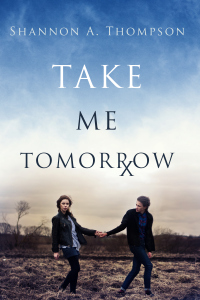
Shannon A. Thompson's novel Take Me Tomorrow features a drug that makes its users temporarily clairvoyant. You can read the opening chapters here.

Shannon A. Thompson’s novel Take Me Tomorrow features a drug that makes its users temporarily clairvoyant. You can read the opening chapters here.

Shannon A. Thompson is the author of the Timely Death Trilogy, a YA paranormal romance series. The first novel in the series, Minutes Before Sunset, was a Goodreads Book of the Month selection. Her most recent novel is Take Me Tomorrow, a YA dystopian thriller.

In this interview, Thompson discusses her growth as a writer since publishing her first novel at the age of 16, stretching the conventions of the YA dystopian genre, and the role of The Odyssey in her new novel.

(To read the opening chapters of Take Me Tomorrow and an exercise on how to begin and end chapters, click here.)

Michael Noll

The chapters have real dramatic punch. Each begins in a moment of tension and ends with that moment ends. As a result, the chapters are often short and focused on a single scene. Do you structure them that way consciously?

Shannon A. Thompson

I never structure chapters to be a certain way. The breaks might change during editing, but I mainly focus on simply telling the story honestly and in the best way possible. In fact, I didn’t even realize that about the chapters until you said it. Perhaps that is just the way Sophia’s mind works.

Michael Noll

This is your fourth novel. The first one, November Snow, was written (I believe) while you were still a teenager. I’m sure it’s easy to see how you’ve developed as a writer since then. I’m curious what you think is the most significant way your writing has grown.

Shannon A. Thompson

I believe my writing has grown dramatically. It’s funny you bring November Snow up because it is currently being re-written for re-release in November of 2015, and even I can confess to the embarrassing moments (the endless moments) I’ve had evaluating the changes I want to make. My voice has become more concise, and my characters have grown in maturity and depth. I am very excited to see how far my stories have come over the past seven years, and I hope to continue growing for the rest of my writing life.

Michael Noll

The novel begins in the woods, with a female narrator running and throwing knives into trees. In other words, we’re in a world that owes some of its existence to The Hunger Games. Its dystopian world (with a tyrannical state apparatus) also sits firmly within the genre of dystopian YA literature. I’m curious how you view yourself as a writer in these genres. Some writers, like Tolkien and J.K. Rowling, take inherited creatures and stories and re-imagine them. Other writers—Suzanne Collins, to some extent—write within the genre without feeling the need to stretch it. What sort of writer do you consider yourself? Are you pushing at the conventions or working comfortably within them?

Shannon A. Thompson

Shannon S. Thompson's YA dystopian novel, Take Me Tomorrow, features a clairvoyant drug and an uprising against the oppressive State.

Shannon A. Thompson’s YA dystopian novel, Take Me Tomorrow, is set in a region around Topeka, Kansas.

Well, to be honest, I based the beginning off of my real life. I used to live on a couple hundred acres with my husky, Shadow (the inspiration for Argos) and I collect knives in my spare time. That being said, I strived for a more realistic viewpoint in my dystopian novel. The genre is saturated with almost unrelatable worlds, and although those are fantastically entertaining, I wanted Take Me Tomorrow to have a very close relationship with our current world because the themes very much coincide with societal issues of today, and I didn’t want the topics to be buried under a fantasy. Perhaps that is working comfortably within today’s lines, but maybe – in all honesty – it is pushing the conventions since the approach isn’t in dystopian literature as often. I leave that for the reader to decide. That being said, the sequel – Take Me Yesterday — reveals more about the world than the first book, and I am hoping it receives a contract in the near future. Too bad I don’t have tomo to know.

Michael Noll

The Iliad and The Odyssey are mentioned often in this book. To what extent do you look to those books and their monsters and plots, all of which remain freshly contemporary?

Shannon A. Thompson

Both of those stories are mentioned because Sophia really enjoys them. She has a daring soul and an adventurous heart, but the extent of their mention is explained more so in the sequel. That being said, I will point out one particular scene, which is a bit of spoiler, but in Noah’s bedroom, she comes across a statue, but she doesn’t recognize it. This has to do with Greek culture, and it also shows that – although Sophia reads – the government has censored a lot, especially in terms of photographs (hence why Sophia is fascinated by the paintings in Phelps’ mansion) so she doesn’t recognize what she is looking at despite the fact that she would be aware of it if she were alive in our world. Those are very small details that I inserted specifically for the readers who experience novels more than once and for the rest of the series because Sophia ends up on her own odyssey, and the adventure exposes – like you said – many monsters.

October 2014


Michael NollMichael Noll is the editor of Read to Write.

How to Begin and End Chapters

21 Oct
Shannon S. Thompson's YA dystopian novel, Take Me Tomorrow, features a clairvoyant drug and an uprising against the oppressive State.

Shannon A. Thompson’s YA dystopian novel, Take Me Tomorrow, features a clairvoyant drug and an uprising against the oppressive State.

Most writers have a sense for how a novel is structured. But what about chapters? We tend to make a few common mistakes, like beginning a chapter with a character waking up and ending it with the character going to bed (or getting knocked unconscious). In other words, the chapter doesn’t know where to begin and when to end, and so as long as the character is awake, the chapter keeps going.

Different kinds of novels handle chapters differently, but it’s usually the case that genre novels contain short chapters. A great example of this kind of chapter—and a great example for how these short chapters are structured—can be found in Shannon A. Thompson’s new Young Adult Dystopian novel, Take Me Tomorrow. You can read the opening chapters here at Smashwords.

How the Novel Works

Let’s look at the first two chapters of the novel, which are quite different in terms of setting and content but which use a similar structure. In the first chapter, the narrator, a teenager named Sophia, meets an unexpected person. The chapter begins with Sophia running through the woods with her dog. She’s checking on her father’s land while he’s away and clearly feeling at home:

Spring was the best season − when everything smelled of moss, alive and wet. But it was August. The muggy air sucked all the life out of the plants, leaving them dry, disheveled, and dead. Today, the forest smelled of burnt grass and dried mud. Among the pivots, the creek bed, and the broken logs, I followed the trail, and my dependable dog ran in front of me.

Then, she runs into a stranger:

a boy whose “tone was sarcastically carefree, his stare was intense, shadowed by the setting sun. I recognized the stillness in his expression. It was a predatory look, the expression of an animal preparing an attack.”

But by the end of the scene, the boy’s tone has shifted:

“‘Am I near the park?’ His quiet tone was rushed. ‘That’s where I meant to go.’ His shoulders slumped in defeat. ‘Really.'”

That tone isn’t the only major shift. The boy hurries away because someone else has arrived, and that arrival causes a change in the narrator:

“My usually goofy friend was a mess. His mop of brown curls sprung into his widened eyes, and he wheezed from the run. His alarmed expression ruined any lasting comfort I maintained. Something was wrong. Seriously wrong.”

One of the smartest things I ever heard about crafting scenes was from writer and screenwriter Owen Egerton. He shared with me the screenwriting tip that scenes should almost always contain a reversal (a “flip” of a situation) or a change in tone. So, if a scene starts out happy, it should end with sadness. Of course, the best scenes will end in ways that don’t change the tone 180 degrees but instead change it in a way that is less predictable. This is precisely what Thompson does in her first chapter. The chapter begins with the character’s confidence in her own knowledge of her surroundings and ends with that confidence disrupted.

The next chapter does something similar. It begins with a risky encounter with the police, who are enforcing a State-mandated curfew. The encounter goes smoothly, according to the expectations of one character:

“Everything is a scare tactic with these people. They don’t check everything.”

The chapter ends with the knowledge that another encounter with the State is coming, and this one will be more serious and more dangerous: “I need you to bring me a bag of food, water, and one of your dad’s knives to school.”

Though the scene ends on a similar note as it began, the stakes have been dramatically increased.

The Writing Exercise

Let’s structure chapters using the novel Take Me Tomorrow by Shannon A. Thompson as a model:

  1. Choose the scene(s) at the heart of the chapter. I’m using the word scene because it’s sometimes a more helpful organizational unit than chapter. Most of us know what a scene is even if we have no idea what a chapter should look like. Scenes also appear in stories, whereas chapters do not. So, start by outlining a scene that you know will appear in the story/novel. There may be passages that come before or after it, but you should focus on the drama that you know will occur.
  2. Identify and clarify the tone or situation at the beginning of the scene(s). You can think about this in two ways. One, what is the situation at the beginning of the scene? Think broadly. What problem is the character facing? What approach is the character using? What is the character’s attitude? What is the balance of power? Two, what is the tone at the beginning of the scene? Is it serious? Comic? Goofy? Casual? Think about the scene as a whole, not necessarily the character’s emotions. For instance, a birthday party is casual, but a waiting room at a hospital is likely serious.
  3. Reverse or shift the tone or situation at the end of the scene(s). When you reverse or change any of these situations, you can go for a full reversal (happy to sad, birthday party to cancer), or you can go for a change in degree. So, if someone has more power, that person’s power could be amplified or reinforced rather than diminished or taken away. When you change the tone, you can keep the setting the same but introduce an element that changes the way we view it. For instance, if an ambulance shows up to a birthday party, the tone has changed from fun and casual to serious and formal. (As a general rule, if a scene contains people in uniform, then it’s probably formal.) You can also produce a change in degree: mildly happy to incredibly happy. For instance, birthday parties are mildly happy, but if you’re given a gift of a lottery ticket, and you scratch it and win a million dollars, the party just got a lot happier.

The key to all of these steps is to identify what you establish at the beginning of a scene. By the end of that scene, at least one of the basic building blocks of the scene should have changed. If you’re trying to decide where to end a chapter or scene, consider picking a moment immediately after something essential has changed.

Good luck!

An Interview with Michael Yang

16 Oct
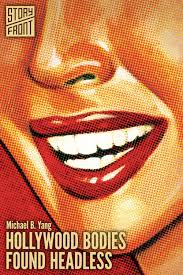
Michael Yang's story, "Hollywood Bodies Found Headless," tells the story of an aspiring child actress and her mother living in the shadow of a serial killer.

Michael Yang’s story, “Hollywood Bodies Found Headless,” tells the story of an aspiring child actress and her mother living in the shadow of a serial killer.

Michael B. Yang’s stories have appeared in Ploughshares, Michigan Quarterly Review, and The Seattle Review. He lives in Austin, Texas, where he is currently working on a novel.

To read his story “Hollywood Bodies Found Headless” and an exercise on using setting and backdrop to heighten the tension in small, intimate dramas, click here.

Michael Noll

Ron Carlson has said that a story has two parts: the story and the world the story comes into. I usually read that to mean that there’s the dramatic thing that happens and the more mundane context that lends the drama meaning. But you seem to have reversed the roles in this story. The story about the child actress and her struggling mother is, in some ways, more mundane than the background world of a serial killer on the loose. Did you ever play around with making the serial killer more physically present in the story? I’m curious how the story found its eventual form.

Michael Yang

Okay, here’s my confession. I just checked and the first draft of the story was written in 2007. That’s seven years since I began writing it until it got published. Seven years. I don’t know how many drafts there have been in the interim.

Strangely, in all those drafts I don’t think that the serial killer was ever present in the story. This was for a number of reasons. First of all, and this might seem odd, but I thought it would be more realistic. Even if you’re in the same time and place where there is a mass murderer, I think it would be pretty unlikely that you’ll be their victim. It’s more likely that you will run into them by chance and nothing happens. Afterwards, you might say that they were nice people who quiet and kept to themselves (of course), but it’s more likely that you would survive the encounter. Second, I wanted to create a feeling of unease and fear in living in the same city as a serial killer. I imagine the sense of danger would color every interaction, and that was the backdrop I wanted in the story.

Michael Noll

The story is set in Los Angeles, which has been used as a setting countless times and, as a result, brings its own fictional weight to a story. I mean, it’s possible to talk about L.A. stories in a way that you can’t talk about Kansas City stories or El Paso stories. Yet, I really felt that I was seeing the world for the first time. In part, the freshness is likely from the niche that you portray: acting tryouts for children appearing in commercials. The characters also spend time in an apartment, which is something that you, as the writer, can create from scratch, rather than relying on tropes that already exist. Still, was it difficult to set a story in a place that has been written about so many times?

Michael Yang

Michael Yang's story "Hollywood Bodies Found Headless" appeared in Amazon's literary series, "Day One."

Michael Yang’s story “Hollywood Bodies Found Headless” appeared in Amazon’s literary series, “Day One.”

I know, you’re right. The location is very familiar and there was some pressure in writing about a known place. On top of that, it has auditions and struggling actors, not exactly the freshest take on an L.A. story. I do think that in the very first drafts the story might have taken place in another city, but Sara was too ambitious to remain there and I thought it would heighten the stakes if her dreams were in reach, with the reality of failure more palpable.

I’ve always been fascinated by the entire, difficult process of creating movies, but it seemed interesting to write about it from the perspective of someone experiencing the day-to-day grind. And really, the constant failure and rejection of the actors seemed familiar. It reminded me of being a writer. There’s also a grotesque element in the process of child acting and the pursuit of fame, but I wanted to flip it slightly on its head by making the child the propulsive force instead of the stage mother. When I sent out the story, I had a few comments that Sara seemed to act too old for her age, but I think it fit her character. A very ambitious child can seem older and more business-savvy than someone else her age. I hoped it worked out.

Sara is a product of Hollywood, a place where her ambitions have taken her, so the topic defined the location which helped define the characters.

Michael Noll

The story is remarkably tight given how much exists just off the page. For instance, we know that the narrator has left her husband and her home in Texas to take her daughter to Los Angeles, but the husband appears only in the briefest of scenes, and even then, the focus is on the daughter, not him. Texas is referenced in passing. Did those parts of the story ever push themselves onto the page more fully? Did you have to revise them out, or were they always just in the background?

Michael Yang

This is also strange, but in all those drafts I don’t think that I ever wrote the scenes with both parents. I knew what the relationship was like between the mother and the father and why they broke up, but I wanted the story to take place as close to the ending as possible and I really wanted the fun of writing the commercials. By the way, if you have the chance to write a scene with a made-up advertisements for a fictional product, I highly recommend it.

I first drafted the story when I was examining my own writing process. It was around this time that I decided to think and plot less in the first draft. Even though I might have a general idea of the story’s direction, I wanted to follow where my subconscious took me, hoping that the turns would be surprising and make sense as I was typing. There’s a danger to this – where the wheels of the story might fall into familiar ruts, whether into cliches or into my own habits and proclivities – but the flashes of discovery, when they come, can be exciting.

Michael Noll

Robert Boswell, one of the best-known writing teachers in America, argues in The Half-Known World that writers should not know their characters too well.

Robert Boswell, one of the best-known writing teachers in America, argues in The Half-Known World that writers should not know their characters too well.

The story is playing around with the genre of tabloid sensationalism—the title is “Hollywood Bodies Found Headless.” As a result, I found it interesting how you develop the tension in the novel. When Frank appears, and when the narrator tells him off and then when he shows up at her apartment, I (and probably all readers) thought, “Uh oh.” We expected something awful to happen. And it may eventually happen, but not yet, not within the frame of this story. That must have been a difficult temptation to resist—to not fulfill the bloody expectations of the title, even though the way the story does end is a lot more unsettling than murder. How many drafts it took you to find that ending?

Michael Yang

I’m not certain how many drafts it took for me before I came up with the ending, but I’m pretty happy with it. For me, the appearance of the chicken man seems strange and unexpected, and right.

I was inspired by the essay “Narrative Spandrels” by the writer Robert Boswell in his craft book The Half-Known World. In the essay, he talks about how as we write, there can be an unintended image that recur throughout the story. It’s not planned and may seem inessential, a byproduct of our writing the primary scenes, but if we pay attention, it can shape the story, supply a sub-text, or gesture to the heart of our meaning.

As I worked on the many drafts of my story, at some point I noticed how many times chickens made an appearance, from the mother’s distaste of how live chickens look and act (my niece told me a story about how her pet chickens nearly pecked another, injured chicken to death), how they feed her child, how the old jingle from Chicken Tonight was a bonding experience during better days with her daughter. I also realized that the general feeling in the story was the same as touching raw chicken skin, which is a little disgusting and is also the same creeping sensation the mother feels towards L.A.

By the way, my fantastic editors asked me if the chicken man was entirely necessary, and I said, yes, yes he is.

October 2014

Michael Noll

Michael Noll is the Editor of Read to Write Stories.

How to Make Small, Intimate Stories into Page Turners

14 Oct
Michael Yang's story "Hollywood Bodies Found Headless" appeared in Amazon's literary series, "Day One."

Michael Yang’s story “Hollywood Bodies Found Headless” appeared in Amazon’s literary series, “Day One.”

When we think about drama, it’s tempting to believe that bigger is better. A story about a marriage on the rocks is good, but a story with married characters throwing rocks at each other is even better, right? Not necessarily. There’s a reason that some journal editors ban stories about characters who die. It’s important to explore the range of dramatic possibilities that exist between morning coffee and evening murder.

For an example of how domestic dramas can be made exciting, check out Michael Yang’s story, “Hollywood Bodies Found Headless.” The lurid sensationalism of the title draws you in, but the drama that holds you is smaller and more intimate than a tabloid headline. The story was published as part of Amazon’s “Day One” literary series, and you can read the first pages and buy the story for $1 at Amazon.

How the Story Works

I’ve mentioned a number of times on this blog the Ron Carlson quote about a story having two parts: the story and the world that the story enters. Usually, this means that a dramatic plot (ninja fights dragon in cage match) is given depth and resonance by the nuances of the story’s world (ninja can’t pass final ninja qualifying test, can’t get the girl, can’t make his parents happy, can’t get along with his more successful brother and sister). The world, then, gives the story texture.

But what if the opposite is also true? What if small, intimate plots can benefit from exciting worlds? What difference would the world make to a story about two characters working in a restaurant and trying to pay bills—one story is set in Kansas City, and the other is set in Pompeii just before Mt. Vesuvius erupts. Context matters—and that is exactly the truth that Yang uses in his story, “Hollywood Bodies Found Headless.”

The story is about a woman who has moved to Los Angeles so that her 9-year-old can pursue her dream of becoming an actress. It might seem odd to view a Hollywood story as mundane, but Yang sets the story in the grind-it-out world of television commercials: standing in line to audition, dealing with directors and other parents, and eating (and not eating) in order to look the part. Plus, the story isn’t concerned with a make-or-break moment for the girl, Sara. Something happens, of course, and it may or may not determine Sara’s future, but the immediate impact is felt most acutely by her mother. In other words, it’s a domestic story with small, intimate stakes.

So, look what Yang inserts into the story’s world: On the first page, the mother buys a grocery story tabloid magazine with the headline, “Hollywood Bodies Found Headless.” After she feeds her daughter dinner, she reads the article:

I open the glossy pages. The first body was discovered off a Sacramento highway a decade ago, a homeless man. There was hardly any press, only a small article in the back pages, but two years later the second body, a well-known former prostitute for celebrities, lapped up on the shore of the Los Angeles River, wrists and ankles bound. The only connection between the two crimes was the headless nature of their bodies. For a while, the Hollywood Lopper had been an LA secret, because of how infrequently he struck, but the killings ramped up as he began garnering news. The latest murder was a month ago: a ubiquitous character actor who always played the weaselly, cocksure best friend— the one who tries to steal the hero’s girl, only to get humiliated in the end.

After we learn the dramatic, Vesuvius-erupts part of the world, we learn about its personal ramifications:

On TV the news anchors prattle on about a besieged Los Angeles, with celebrities blinking under bright lights, stars turned into martyrs now that the Hollywood Lopper has moved up the entertainment food chain, while we no-names, the real victims, the people on the edges who had been enticed and promised celebrity, toil in obscurity through our ordinary lives.

In short, Yang has taken a small, intimate story and set it against a backdrop of 1) murder and 2) celebrities versus ordinary people. There  is a serial killer on the loose, but no one will care unless he kills someone notable. His murders have ascended the Hollywood social ladder, but there’s no guarantee that he won’t kill an unknown person next, like a certain nine-year-old trying out for commercials—or her mother. What makes the story beautiful is that it keeps the serial killer in the background (as part of the world) and foregrounds the story about a mostly oblivious girl chafing at the limits placed on her by her concerned mother.

That is how you can use a dramatic world to make an intimate story more exciting.

The Writing Exercise

Let’s make a small, intimate story more exciting by giving it a dramatic world, using “Hollywood Bodies Found Headless” by Michael Yang as a model:

  1. Choose a mundane story. Perhaps it’s one you’ve already written. Or, you could choose one of the many usual domestic plot lines: marriage drama, relationship drama, parent/child drama, money drama, extended-family drama. Regardless, you’re looking for a story that makes you worry that it’s not exciting/dramatic/sexy enough. Setting aside issues of fiction written by men vs women (and the tendency to dismiss domestic stories), this is a worry that most writers have: is our story interesting enough. Why should anyone read our story?
  2. Choose a dramatic backdrop. If you’re writing a short story, this might mean choosing something to exist in the background: noise that’s buzzing in the characters’ heads. It could be something unusual and threatening like a serial killer on the loose. It could be a significant election or a historical moment like the first moon landing. If you’re writing a novel, you might use the larger arc of the story (throw the ring into Mt. Doom, return the painting The Goldfinch) as a backdrop for an intimate moment or minor arc. Even though the action may be small, it’s cast against a much larger story that gives it weight.
  3. Watch for a moment to unite the story and backdrop. Michael Yang does this when he writes that “we no-names, the real victims, the people on the edges who had been enticed and promised celebrity, toil in obscurity through our ordinary lives.” Give your characters a chance to notice the backdrop, just as the mother in Yang’s story reads about celebrities in the tabloid newspaper. That moment can have many emotional angles. In a story set in Pompeii, one character could look out her window while eating dinner with her children and think, “Oh no.” Another character could glance away from her cheating husband, see the smoke, and think, “Thank god.” This moment will likely be brief. It may happen more than once, just as the mother in Yang’s story thinks about the serial killer more than once, but when she does, it’s to refocus our attention on the importance of the intimate drama in front of her.

Good luck!

An Interview with Jess Stoner

9 Oct
Jess Stoner's essay, "Blues on Wheels," about illegal labor practices at the US Post Office has inspired hundreds of postal workers to write her with their stories.

Jess Stoner’s essay, “Blues on Wheels,” about illegal labor practices at the US Post Office has inspired many postal workers to write her with their stories.

Jess Stoner is the author of the novel I Have Blinded Myself Writing This. Her work has been published in The Morning News, The Rumpus, Burnt Orange Report, and Caketrain, among others. She lives in Colorado and previously lived in Austin, where she worked for the United States Postal Service. Stoner wrote about the illegal and abusive labor practices that she experienced as a postal carrier in the essay “Blues on Wheels.”

To read “Blues on Wheels” and an exercise on writing for a hostile audience, click here.

Michael Noll

The essay contains so many stories of abuse and working conditions that are not only unsafe but illegal. How did you know where to begin telling them? When there is so much to tell, how do you figure out what to put in the essay, what to leave out, and how to organize the stories and details that you choose to include?

Jess Stoner

The most important thing I did, for myself, was wait a few months after I quit to even think about putting anything coherent together. I needed some emotional distance, because I knew it had to be bigger than just “The Post Office is the worst! Feel bad for me!”

Once we moved from Texas to Colorado, I had even more breathing room, and I started researching the history of the USPS.  It wasn’t until after I had read hundreds of posts on postal worker forums and a few books, including Mailman, USA, written by a former president of the National Association of Letter Carriers, that I started to truly understand my experience as a part of a larger narrative.

One thing I knew for certain was that no one outside the USPS understands what the job is like—that’s such a lonely space to inhabit seven days a week. In addition, a fantastic editor I worked with at The Morning News, Rosecrans Baldwin, encouraged me to include not just the micro details (like what a typical morning looks like) but the macro (the historical and political) as well.

I was finally ready to finish the essay after telling a friend about the 40,000 words I had written. His response was: “That’s not an essay, that’s a book.” And that simple answer was so freeing. So maybe I wouldn’t talk about how letter carriers see and feel a city changing in unique ways (a house is torn down and three duplexes are built in its space—multiplying by six the amount of mail and packages you have to deliver); but it could still be a chapter in the book.

Michael Noll

The Dallas Morning News reported that "one in three construction workers in Dallas doesn’t get a break during the work day, no matter the time of day or temperature."

The Dallas Morning News reported that “one in three construction workers in Dallas doesn’t get a break during the work day, no matter the time of day or temperature.”

You mention that Texas, where you worked, is a right-to-work state, which means the power of unions is severely limited. Texas is not alone; it’s one of 24 states with right-to-work laws, which is not surprising. Generally speaking, Americans are not particularly sympathetic to issues of worker safety or abuse. Perhaps it’s due to that old Protestant work ethic: work hard, don’t complain. Or perhaps it’s a result of the poor economy; when so many people are out of work or underemployed, they may have little interest in hearing complains from people with jobs. It seemed that you had these attitudes in mind as you wrote. For instance, you mention your work ethic, which was instilled by your lower middle class background. You remind readers that you could have quit if you wanted to; the job wasn’t a matter of avoiding destitution. I’m curious when these passages entered the essay. Where they always present? Did you have the readers’ skepticism in mind from the beginning? Or did you add them later after getting some initial feedback?

Jess Stoner

It wasn’t just the reader’s skepticism I was worried about; I was worried the entire time I worked at the Post Office that my colleagues would think I wasn’t cut out for the job. It meant everything to me to work hard and earn their respect.

And I was even more worried, from the very first day of training, that if my colleagues knew my background, they would think I accepted the position as an experiment, as fodder for something I’d write about later. In reality, I was proud to deliver the mail, and for the first two months or so, I naively hoped that it would be the last job I ever had.

You know, we hear a lot about the dignity of work. Politicians from the left and right, including President Obama, talk about how a job gives you dignity. I call bullshit. The people I worked with at the Post Office were good parents and grandparents; they were veterans; some of them talked about their strong faith—they all have an innate dignity that has nothing to do with how they earn a paycheck. From them, from my own experiences, and from the experiences of my friends who work at chain restaurants or are sales clerks at big box retailers, I have learned an incredibly important lesson: Work is just what millions of Americans do, despite the indignity.

The Texas Tribune's series "Hurting for Work" reveals the injuries and deaths to Texas workers in the midst of the economic growth nicknamed "The Texas Miracle."

The Texas Tribune’s series “Hurting for Work” reveals the injuries and deaths to Texas workers in the midst of the economic growth nicknamed “The Texas Miracle.”

I mean, for Christ’s sake, the Austin City Council had to pass an ordinance requiring employers to give construction workers rest breaks. According to The Dallas Morning News, one out of every three construction workers in Dallas isn’t allowed to take a water break—even when it’s 110 degrees outside. The Texas Tribune did an excellent, and, I think, award-deserving series called “Hurting for Work,” that details the terrible conditions workers face throughout the state. That more people aren’t horrified and publicly demanding change makes me wonder what the hell is wrong with our country.

Michael Noll

At one point, you describe getting bit by a dog (unleashed, unfenced), and your supervisor’s reaction was, “You’re probably going to get fired.” I can only imagine how incensed and upset you must have been at this. How were you able to control those emotions to write about the incident? Was it a matter of letting some time pass? Or did you use some other strategy to direct your anger?

Jess Stoner

In the moment I was blown away—my vision and mind went white—I felt like I had Saramago’s blindness. I had known, mostly only theoretically, of workman’s comp laws, of OSHA rules—they don’t exactly come up in faculty meetings and I hadn’t worked outside of a university, the state government, or a non-profit in years. I assumed that these laws existed and they were respected. Beyond my initial bewilderment and subsequent anger, I felt, more than anything, beaten down and depressed.

For weeks and months after I quit, I felt a strangling guilt over the fact that I had given up, that I could give up, that I abandoned the carriers and CCAs I worked with who had been so kind and supportive. I had to shake that off though. I had the privilege of walking away. Now what was I going to do with it?

Michael Noll

This essay falls into the long tradition of muckraker journalism: from Upton Sinclair’s expose of the meat packing industry to Barbara Ehrenreich’s book, Nickel and Dimed, about the conditions faced by the working poor. As such, it’s making highly critical claims about not only the USPS as a whole but also individual employees who behaved badly. Did you have concerns about legal repercussions of publishing the essay—libel, for instance? I know that you changed the names of the people involved, but I’m curious what other steps you may have taken to protect yourself from lawsuits or other legal retribution.

Jess Stoner

I’m beyond flattered that you consider my essay in concert with Ehrenreich—whose book I, coincidentally, re-read when I was writing the essay—the margins are full of my notes (like that part about why many low-paid workers get real pleasure from their short cigarette breaks: “Work is what you do for others; smoking is what you do for yourself.”). Nickle and Dimed, in so many ways, is even more depressing to read now; since its publication in 2001, workers are barely making more per hour, and, as we approach a divisive midterm election and are heading into 2016, so few are talking about the burden of affordable housing—which is a huge part of the book.

I have heard from a number of supervisors since the essay was published, and I realize that in my book, I need to include their experiences—because they’re under terrible pressure as well. One thing I regret is cutting a few lines about my supervisor. While I couldn’t predict when the day would go bad, we started each day off with a hospitable “Good Morning,” and no matter what happened afterward, I appreciated that. On my last day, when I had to come back early from a route because my back was so messed up I couldn’t breathe, she happened to be in the office, visiting from her new station, and she was phenomenal—didn’t yell at me, recognized that I needed immediate medical attention. I was so grateful she was there and not the district supervisor.

As for libel, while I’m not thinking, “Come at me bro,” everything I wrote was true, and if I were threatened with legal action, I think the USPS might have to deal with the Streisand Effect. Since the article was published, I’ve received hundreds of emails, tweets, and Facebook messages from carriers, clerks, maintenance workers, and even people who work in upper management, who wrote to thank me for sharing my story, because theirs are all too similar. Many have signed their emails, “Too afraid to give my name,” and while I understand why they would do so, it both breaks my heart and encourages me to continue my work.

October 2014

Michael Noll

Michael Noll is the Editor of Read to Write Stories.

How to Reach Out to Hostile Readers

7 Oct
Jess Stoner thought being a postal carrier could be her dream job. It turned out to be a nightmare.

Jess Stoner thought being a postal carrier could be her dream job. It turned out to be a nightmare. She wrote about the experience in “Blues on Wheels.”

Everyone has a story to tell, but sometimes not everyone wants to hear it. What happens when this is your story? How do you get skeptical, or even hostile, readers to pay attention?

Jess Stoner faced this problem in her essay, “Blues On Wheels,” about her experience with illegal and abusive labor practices as a mail carrier for the United States Postal Service. The essay is one of the most powerful and disturbing pieces of writing that I’ve read in a long time. It was published at The Morning News, where you can read it now.

How the Story Works

Stoner writes about the systematic abuse that she and other carriers faced at the USPS. She was screamed at and threatened, forced to work off the clock, and required to work as many as 12 days in a row without a day off. When she was bitten by a dog (off-leash, unfenced), her supervisor told her she’d likely be fired—because getting bitten was her fault. All of these abuses are unethical, and some of them are illegal. It would seem reasonable to assume that Stoner could tell these things to anyone and find a sympathetic ear. But that isn’t the case.

Stoner was working in Texas, which is a right-to-work state, which means it has laws that reduce the power of labor unions. Unions, of course, are a politically charged topic, but they aren’t the primary reason that some readers may object to Stoner’s story. Instead, the problem for many readers would be that Stoner is telling the story at all. Americans’ resistance to unions is just the beginning of our reluctance to listen to stories about workplace problems. We tend to believe in working hard and not complaining, perhaps because of that old Protestant work ethic and almost certainly because of the recent economic recession. When many people don’t have any job at all, it’s natural to resent someone who complain about the job they do have, no matter how unfair or illegal its practices.

So, in writing this essay, Stoner needed to find a way to convince the reader from walking away. Given that need, watch how she begins the second section of the essay:

I wanted to be a letter carrier because I have always loved checking the mail. It has been one of the highlights of my day since I was a kid, when my favorite aunt, who lived more than 1,000 miles away, would send me letters and packages. I had also been underemployed, temping and volunteering for the last six months. I wanted to work outside, to tire out my body and my mind. I wanted a paycheck.

Everyone I knew was happy for me when I was hired; many said that delivering the mail was their secret dream job. They told me about the letter carriers they grew up with, whose names they knew.

Stoner makes clear that she wanted the job and understood the physical nature of it (“I wanted to work outside, to tire out my body and my mind.”) In other words, she removes the potential objection by readers who may have believed she wasn’t up to the demands of the job in the first place. Stoner also makes clear that she was struggling in the same difficult economy as everyone else (“underemployed, temping and volunteering for the last six months”)—an important distinction for readers who’ve been similarly beaten down and, as a result, are alert to the first whiffs of elitism or privilege.

Stoner continues with these attempts to reach out to the reader, making clear (again) that she’s not afraid of hard work:

I’m a Type-A person who grew up as a member of the lower middle class; I’ve always been driven to work hard, no matter where I was employed: the warehouses, convenience stores and restaurants before and during college, and after graduating, the nonprofits, the universities where I taught.

But Stoner is also careful to note that the job is not a matter of life or death—she won’t starve without it.

I constantly reminded myself: You have chosen to work for the USPS. You can quit…I had the privilege of walking away, something my husband begged me to do on a daily basis. We are a childless couple; we could survive a few months of my unemployment.

Of course, even with these caveats, it’s possible that some readers will dismiss Stoner’s very legitimate complaints as mere whining. You can’t convince those who aren’t willing to listen. But it’s likely that these caveats allow the essay to reach readers who might otherwise have ignored it, which is all that any writer can hope for.

The Writing Exercise

Let’s reach out to hostile readers using “Blues on Wheels” by Jess Stoner as a model:

  1. Identify the hostile readers. In our partisan climate, it’s not difficult to anger some readers even with seemingly innocuous material. But if you’re writing about sex, dating, parenting, healthcare, dietary preferences, entertainment choices (TV, movies, video games, hiking, hunting, target practice), death and dying, cultural mores and idiosyncrasies, inequality, or work, you’re likely to run into objections. In other words, unless you’re writing about your favorite ice cream flavor, there’s likely a partisan perspective on your topic. But we often aren’t aware of these objections because we tend to surround ourselves with like-minded people. So, imagine yourself in a community that isn’t your own. If you were to begin telling your story, what would people say?
  2. Give those readers the benefit of the doubt. It’s easy to demonize people who disagree with you. But it’s not a great rhetorical strategy, no matter how righteous your cause. (Remember how Martin Luther King, Jr. began his letter, written from Birmingham Jail, to the white preachers who criticized his nonviolent actions: “But since I feel that you are men of genuine good will and your criticisms are sincerely set forth, I would like to answer your statement in what I hope will be patient and reasonable terms.”) In other words, don’t be condescending—or at least hide your condescension the best that you can.
  3. Make your biases clear. We rarely come to an issue with no preconceived notions. Sometimes they’re positive, sometimes they’re negative, and other times they simply exist. Be careful not to reserve expressions of shock for when they’re most warranted. This is, perhaps, why Stoner makes it clear that she always wanted to be a postal carrier. She knew something about the job and valued its importance. In other words, show your familiarity with the subject you’re writing about.
  4. If possible, relate to the readers. If the hostility is a matter of class (real or perceived), try to narrow that distance. Politicians do this with varied success by holding guns and wearing Carhartt jackets. This is easier done if the connections are real. Stoner grew up working class and says so. She was struggling to find full employment and says so. So, ask yourself, “How am I like my hostile readers?”
  5. If necessary, admit your privilege. There are limits to how much you can relate to certain readers—overdo it, and you’ll appear to be insincere. So, be honest. If not everyone can make the choices you’ve made, say so. If your choices or beliefs are influenced by cultural factors that aren’t present everywhere, admit it. If there are many positions one can take on an issue, don’t write as if there are only two (yours and mine). If you once believed differently than you do now, say so and give your reader the chance to make the same philosophical journey as you.

Remember, the goal isn’t to dilute your point but to make it heard by as many people as possible.

Good luck!