An Interview with Caeli Widger

20 Feb
Caeli Widger's essay, "X" appeared in the "Lives" section of The New York Times Magazine. Her first novel, Real Happy Family, will be released by Amazon in March.

Caeli Widger’s essay, “Why I Silence Your Call, Even When I’m Free,” appeared in the “Lives” section of The New York Times Magazine. Her first novel, Real Happy Family, will be released by Amazon in March.

Caeli Widger’s debut novel, Real Happy Family, will be released by Amazon in March. Her work has appeared in The New York Times Magazine, Another Chicago Magazine, and the Madison Review, as well as on NPR and CBS Radio. She currently teaches for Writing Workshops Los Angeles, and has taught in the past for Brooklyn’s Sackett Street Workshop and at University College London.

In this interview, Widger discusses rage against digital culture, what The New York Times will fact check (text messages!), and moving from novel writing to working within an 800-word limit.

To read “Why I Silence Your Call, Even When I’m Free” and an exercise on using context to discover what a story or essay is about, click here.

Michael Noll

A lot has been written about the way social media and technology are impacting our lives, and I suspect that most of us feel as though our own behavior has been changed—I know mine has. However, I’m not sure that I could pinpoint a moment that illustrates that impact. But that’s precisely what you do in this essay. The simple act of not answering your phone becomes an opportunity to discuss the emotional consequences of how you use technology. How did you choose that moment to use as the basis of your essay? Was it immediately after the missed-call and subsequent follow-up occurred—a lightning strike of understanding? Or did you start with a general feeling about technology and then search for a moment to illustrate it?

Caeli Widger

The call with Stacey actually was not the trigger for the original essay. Her voicemail and our follow-up exchanges occurred a full month before I sat down to write the first draft. My initial motivation came from anger and resentment over how digital culture works against all the elements required to sustain a writing life: silence, contemplation, solitude. Unimpeded focus, minimal distraction, etc. As a writer with young children and a day job, I must stay vigilantly protective of my writing time. I was revising my first novel at the time, and had maybe an hour a day to work on it. And I found that unless I wrote at the crack of dawn, it was nearly impossible to “unplug” mentally and fully inhabit my writing mind in a short amount of time. As soon as I began to engage with the digital world, I always felt it breathing on me. I’d run Freedom (internet-crippling software) on my laptop and then cheat and check my phone for messages five minutes later. Or, even if I didn’t check, some little portion of my brain would still be attuned to the possibility of something happening on some technology platform. And every time I caved to the possibility and turned away from my work, I ended up feeling gross and disingenuous. Disgusted with myself. It felt like a low-grade addiction—and I’m a total social media lightweight compared to most people! I don’t use Facebook or Instagram. But the infringement of texting and email and Twitter on my writing life finally sent me into something of a rage one afternoon (after a lame revision session) and I wrote a spontaneous 2000+-word essay on how technology is anti-art and anti-relationship. The relationship part is where the Stacey situation worked itself into that first draft, but it was a minor part. The original essay was a high-level, “our culture’s going to hell” sort of rant-piece. Really, it was an act of catharsis and I didn’t have submitting to The New York Times or any particular publication in mind. I was just feeling disgusted and emotional about everyone being glued to their stupid smart phones, myself included, and needed to blow off steam.

I revised it over the next few days and decided to submit it to the NYT Mag’s “Riff” page. I hit send and forgot about it. A few weeks later Adam Sternbergh, the mag’s culture editor, wrote and said he liked the piece, but that it wasn’t right as a “Riff”. He asked if he could send it over to Jillian Dunham who ran the “Lives” page. Jillian liked it, but said I would need to 1) cut it down by two-thirds (Yikes!) 2) make the piece a personal essay instead of a cultural-criticism piece. She suggested starting over with the Stacey anecdote at the core, so that’s what I did. And I ended up getting to a deeper truth than I originally had in the long rant. It just took me a long time to get there.

Michael Noll

The essay begins with the story and then, in the fourth paragraph, provides context for that story by explaining your phone habits. This is a common structure in magazine essays (begin in scene or with an anecdote, then provide context), but it can also be difficult to get right. There are usually several ways to talk about the same incident, and so providing context means choosing one and, perhaps, disregarding the others. How did you approach this paragraph? Was it difficult to distill your phone/social media habits down to five sentences?

Caeli Widger

Some iteration of that graph was always in the piece. I don’t think I consciously chose to explain my phone habits that way, but one of my original inspirations for writing it—part of what fueled that first burst of culture-rage—was the viscera of digitial communciation. The swooshes and pings and tinkling glass and other nine million noises that can come from a little machine had become way too present—and desired—in my daily life. Even the way my fingers feel on the glass of iPhone, tapping out a text, or the particular swiping motion I make with my thumb to enter my home screen—these are noises and actions that never existed until recently, and here they were, the gateways to NOT writing my book and NOT talking to people I love! So those sensory details organically worked themselves into the “example” paragraph supporting the opening graph, and then in revision I distilled the language into a succinct portrait of my phone habits.

 Michael Noll

The essay moves through time with incredible efficiency. These lines are a perfect example:

“I’ll call you at 2!” I replied.

“You didn’t listen to my voice mail last week, did you?” she asked when we finally spoke.

Was that transition between conversations always so quick, or did you need to revise out some mechanical explanation?

Caeli Widger

The 800-word limit is incredibly restricting. No room whatsover for mechanical explanation! This felt totally unnatural to me. I’m longwinded by nature. Novel-writing suits me—no parameters! But I simply had no choice with this essay. The original graph you cite was originally MUCH longer. I had to pare down every single inessential word. The NYT’s incredibly diligent fact-checking system also helped impose limits. I had to supply screen shots of my text conversations with Stacey and use them verbatim in the essay—no paraphrasing allowed!

Michael Noll

In her debut novel, family drama leads to a public intervention on a TV reality show and in a seedy Reno motel room.

In Caeli Widger’s debut novel, Real Happy Family, family drama leads to a public intervention on a TV reality show and in a seedy Reno motel room.

Your first novel, Real Happy Family, will be released next month. Outside of poetry or highly academic work, there’s probably not a form that is more different than a novel than a personal essay. One is long, digressive, and invented, and the other is short, narrowly-focused, and true. Was it difficult to move from novel-writing to essay-writing?

Caeli Widger

In ways yes, but in others, writing this essay felt like a reprieve from the open-endedness of my usual genre. I’d never really written a personal essay before, outside of one workshop back in grad school. I’d spent years writing short fiction, and when my stories began to creep beyond 10k words, I decided it was time to take the plunge and commit to a novel. And it was totally liberating. But also overwhelmingly free, if that makes sense. You can go anywhere in a novel: into any character’s head, anywhere in time. You can indulge in descriptive language, you can digress for chapters at a time. Of course, in the end, you must impose control and revise endlessly, but there is a Wild West feeling to the early drafts that was pleasantly minimal in the crafting of my essay. Even in that very first “rant draft,” I was fueled by specific subject matter and knew I couldn’t go on too long. This is not to say that I found the form easier—certainly not! Not only did the prose require strict discipline, but it took a long time to tease what I truly wanted to stay out of the piece while staying within 800 words. The piece must have had 30 different endings. Jillian kept sending it back to me saying, Try again. I kept trying to force a transformation on the end. I was avoiding (subconsciously) being honest and facing the fact that what I learned from the experience is that probably won’t change. And that was an uncomfortable, if painful, realization. In this respect, the two forms (novel and short essay) are similar: both require a great amount of patience and openness on the part of the author in order for the true subject to “reveal” itself.

February 2014

Michael NollMichael Noll is the Editor of Read to Write Stories.

How to Use Context to Discover a Story’s Aboutness

18 Feb
Caeli Widger's essay, "Why I Silence Your Call, Even When I'm Free" appeared in the "Lives" section in The New York Times Magazine.

Caeli Widger’s essay, “Why I Silence Your Call, Even When I’m Free” appeared in the “Lives” section of the October 4 edition of The New York Times Magazine.

Perhaps you’ve had this experience: you write a true story, one that’s been on your mind for a while, and then wonder, “What’s the point?” The answer often isn’t simple. A single story can be part of multiple arcs. The question is, which arc is the right one for this particular telling? One way to find out is with a short passage about context.

Caeli Widger illustrates how this kind of passage works in her essay, “Why I Silence Your Call, Even When I’m Free.” It appeared in the “Lives” section of the October 4 edition of The New York Times Magazine, where you can read it now.

How the Story Works

The essay’s inciting event (to use film terminology) is one of the most common occurrences of daily life: a phone call. Widger didn’t answer and didn’t listen to the voicemail. She “fired off a text instead,” a decision that she would later regret—but not because something awful and life-changing happened as a result. At worst, Widger was guilty of a small lack of kindness that would have significant consequences, the sort of selfish act everyone commits on a more regular basis than we might like to admit. So where’s the story? What’s at stake? Why did this essay appear in the prestigious New York Times Magazine?

The answer is context. In this passage early in the essay, Widger explains why she sent a text rather than listening to the voicemail or even answering the call:

I had time to talk. I had the privacy and quietude I rarely have at my home full of little children and happy chaos. Some of my best conversations of all time have been with Stacey. But my reflex was to avoid her call.

These days, I hardly ever pick up. Most of my daily phone-based exchanges are conducted via text and messaging on social-media platforms. With those, I’m rapid-fire on the turnaround. Every ping signaling a text or swoosh alerting me to a Twitter direct message feels like a tiny gift in waiting. The trill of an unexpected incoming call, on the other hand, feels like a potential demand on my time and attention.

The context does three things:

  1. It turns a one-time act into a pattern of behavior: “These days, I hardly ever pick up.”
  2. It makes that pattern run counter to both logic (“I had time to talk”) and the author’s own sense of her best interest (“Some of my best conversations of all time have been with Stacy.”)
  3. It explains why this established pattern has overwhelmed everything else: texts and Twitter messages feel “like a tiny gift in waiting” but “an unexpected incoming call…feels like a potential demand on my time and attention.”

The anecdote about the missed call could have been about anything: enduring friendship despite faults, the healing passage of time, etc. But, as this context makes clear, the anecdote is about the way technology affects how we interact with the world, even people we love.

The Writing Exercise

Let’s write a passage of context about an anecdote/story in order to discover what it’s about. We’ll use the passage from Caeli Widger’s essay, “Why I Silence Your Call, Even When I’m Free,” as a model:

  1. Choose a story. It can be something small like a missed phone call or huge like dropping a winning lottery ticket into the toilet. The important thing is that the story impacted you somehow. So, take a few minutes to sit and think. What stories have you written about in the past? Which stories are part of unfinished essays sitting in a drawer or in a buried folder on your computer? In other words, which stories have meaning that is unresolved?
  2. Turn the one-time act into a pattern of behavior. It’s true that there are essays about events that arise from nowhere and leave the participants stunned. But I’d guess the majority of essays are about patterns. It’s in our nature to view life as a series of patterns and recurring moments. We tend to ask, “What did I do to deserve this?” or “Why didn’t I see this coming?” The question now is this: What pattern is your story part of? It could be a very specific pattern like Widger’s (not answering calls) or something more general (a tendency toward forgetfulness or selfishness, a habit of choosing the easy over the good).
  3. Make the pattern run counter to logic and your own best interest. In general, this is the story of modern literature, from Dostoyevsky’s Notes from Underground and Poe’s “The Imp of the Perverse” to the memoirs of Mary Karr. The behaviors that we return to in our thoughts have trumped our general sense of what was good for us or even what made sense—if not in the moment, then in the long run. For an essay, it’s useful to articulate the logic and best-interest that the action/behavior has veered away from.
  4. Explain why this established pattern has overwhelmed everything else. The reasons can be elements of behavioral psychology (like the effects of technology) or explained through religion, socioeconomics, geography, family history, or genetics. A common self-help trick is to ask yourself what attitudes you have inherited; in other words, what would your parents or the people you grew up have said about money, pleasure, fault, health, etc. The idea (in self-help and in this exercise) is to uncover the sometimes hidden rationales for our own behavior.

These steps may seem like they will require the bulk of an essay to explain, but your goal should be to condense them to a paragraph or two (or more, depending on the length of your essay). Once you have the context in hand, you can move on to the work of a storyteller: what happened, what happened next, the decisions you and others made, and what came of those decisions.

Good luck!

An Interview with Nicholas Grider

13 Feb
Nicholas Grider's debut story collection, Misadventure, has just been published by A Strange object and called "vital" by Publisher's Weekly.

Nicholas Grider’s debut story collection, Misadventure, has just been published by A Strange object and called “vital” by Publisher’s Weekly.

Nicholas Grider is a writer and artist living in Milwaukee. He received an interschool MFA from California Institute of the Arts. His photography has been exhibited internationally, and his writing has appeared in Caketrain, The Collagist, Conjunctions, Guernica, and Hobart, among others. His first book, the story collection Misadventure, has just been published by A Strange Object.

In this interview, Grider discusses OuLiPo writing rules, the delight of breaking rules, and his attempt at writing at story without making editorial judgement.

To read “Millions of Americans are Strange” and an exercise on point of view, click here.

To start our conversation, here is how Grider explains the writing process behind “Millions of Americans Are Strange”:

Nicholas Grider

“Millions” is the newest story in the collection and is indicative of where my writing, at least in short fiction, is headed for the next batch of stories. As I was finishing up the manuscript I started getting really interested in the OuLiPo, and still am, with books by Perec and Mathews on my desk as I write this. I made up a simple rule to begin the story, then: Sentence one must be related to sentence two, and sentence two should be related to sentence three, but sentences one and three should be unrelated. That got me off to a start but I realized that I kept inadvertently breaking the rule, so I introduced the stock phrase “Millions of Americans do X or Y” as a bridge, but then decided that wasn’t working well either so I slowly increased their volume until every sentence was a “Millions” sentence and I approached the end of the story more like a prose poem than a narrative.

Michael Noll

The American OuLiPo writer Harry Mathews wrote this essay about Georges Perec's novel La Vie mode d’emploi after it was translated and published in America as Life A User's Manual.

The American OuLiPo writer Harry Mathews wrote this essay about Georges Perec’s novel La Vie mode d’emploi after it was translated and published in America as Life A User’s Manual.

My favorite moment from any OuLiPo work is from Georges Perec’s La Dispiration. As you know, the text contains no letter e’s. There’s a scene where a character orders a drink at a bar, and the lack of e’s becomes crucial. This is what Harry Mathews said about the scene: 

“Perec took this absurdly confining idea and made of it a way of creating incident, situation, and plot. Eggs (oeufs) are declared to be taboo because they sound like e. And so a barman drops dead when asked to concoct a porto flip, a cocktail requiring port wine and eggs.” 

As you’ve experimented with OuLiPo-type limitations, have you found that the limits “create incident, situation, and plot?”

Nicholas Grider

This has a bit to do with being reserved and shy person, but in my art and writing I often start with the questions: what boundaries can I push and what can I get away with? Meaning, how many rules can I break, what can I talk my way into, etc. And breaking all the usual rules means making up my own, which applies not just to this story but to most of my art and writing. I’ll make up a set of rules, then follow them or break them as I see fit. The rules in “Millions” were an attempt to write a story that does not move forward in any way—it slides laterally through dozens of characters too briefly for anything to develop and ends up piling into an anaphora of generalities at the end. When it came to writing the story, though, making a good aesthetic choice always outweighed (and outweighs) following my rule or someone else’s. For me, the rules are less about developing content and more a way to do an end-run around a well-told “beginning, middle, end, character develops” kind of story. I’m currently writing a new collection and there are even more self-made rules, and more complex ones, but rule-making is part of the enjoyment of writing for me.

Michael Noll

When I was in graduate school, we studied a few OuLiPo writers—plus, Italo Calvino was pretty popular in the U.S. at the time—and I remember that the few experiments people tried with the methods often failed because the limitations ended up being too inflexible. I’m curious how you handled this problem. I know that you adjusted or added to your rules once you began. Did you ever break your rules in order to let the story do what it needed to do?

Nicholas Grider

I got ahead of myself and explained this already, but yes: I delight in breaking other peoples’ rules and will break my own as I see fit. A compelling story is always more important than strict adherence to any rules.

Michael Noll

The story never settles into a single plot line or character’s point of view. If anything, the character of the story is those millions of Americans in the title.  Were you temped to follow Gary or George and Allen or Hannah and make the story about them? Was it difficult to maintain a forward momentum without an individual to use as the focus of tension and suspense?

Nicholas Grider

There are snippets in the story that I think would make for interesting stories, and some of those incidents are real things that people have told me about being involved in, but I was more invested in trying to keep the story moving laterally very quickly to want to linger over any individual character. What I can say, though, is that a lot of the obsessions, indecision, illness and weirdness in “Millions” had been explored earlier in a different form in the other stories that comprise Misadventure, so if anything, the incidents in the story serve as a very weird kind of precis for what later happens with other characters in other situations.

Michael Noll

The story’s tone at times seems to mimic the language of certain kinds of news sources, or even Wikipedia. Here’s one example:

“Millions of Americans are suffering due to the current economic climate. Sometimes persons without jobs receive unemployment insurance while they look for new jobs. Jason receives unemployment insurance because he was laid off when the plant closed.”

In this passage, especially the first two sentences, there’s an intentional vagueness that seems common to cable news segments (those 15 second headline readings that anchors do). Generally, as writers, we try to avoid that kind of language, but you really embrace it, and throughout the story, the language develops a sharp edge. How did you approach the tone and language? Did it appear through luck and experiment, or did you have something in mind when you began the story?

Nicholas Grider

Drunken Boat interviewed Nicholas Grider about his art and art projects, which are weird, thoughtful, and amazing. You can read the interview here.

Drunken Boat interviewed Nicholas Grider about his art and art projects, which are weird, thoughtful, and amazing. You can read the interview here.

The generality and bluntness of the style was something I had in mind at the start, for two reasons: first, I wanted the story to seem to have a veneer of scientific or academic detachment, where the story is simply a collection of facts presented in a particular order—an effort to try to decrease narratorial presence, and second because so much of what gets referenced is so bizarre or extreme that I wanted to deliberately underplay people having themselves kidnapped or firing shotguns in malls—trying to avoid sensationalizing anything in an effort to let the incidents do the sensationalizing themselves, so to speak. In other words, I didn’t want to make it seem as if I had any editorial opinion over what I was recounting, but emphasize instead that one character firing a shotgun in a mall and another character being described as three years old bear an equivalent amount of narrative weight.

February 2014

Michael NollMichael Noll is the Editor of Read to Write Stories.

How to Write a Story Whose Main Character is Everyone

11 Feb
Nicholas Grider's story, "Millions of Americans are Strange," was published by Guernica and is included in his new collection, Misadventure.

Nicholas Grider’s story, “Millions of Americans are Strange,” was published by Guernica and is included in his new collection, Misadventure, now available from A Strange Object.

The traditional novel and story are biased toward individual experience. This claim may sound odd, but it’s true. In most stories, the world and everything in it is filtered through the point of view of one character at a time. Even if the POV is omniscient, it doesn’t convey all that it knows on every page. Instead, the voice comes down from the skies to narrate what is happening to this character or that one. But what if you wanted to write a story from a larger perspective? Is it possible to write a story whose main character is everyone in the world? In America?

Nicholas Grider has done exactly that in his story, “Millions of Americans are Strange.” It’s included in his debut collection, Misadventure, which is the second book from the independent Austin publisher A Strange Object. You can read it now at Guernica.

(If you’re in Austin: The book release party for Misadventure is happening tonight at Big Medium, 916 Springdale Rd, Bldg 2, Suite 101.)

How the Story Works

If you want to portray an entire civilization at once, there are a couple of ways to go about it. One is to depict people as a single mass, which is Don DeLillo did in his novella Pafko at the Wall, which was also the first chapter of Underworld. This early passage shows how such a perspective works:

Longing on a large scale is what makes history. This is just a kid with a local yearning but he is part of an assembling crowd, anonymous thousands off the buses and trains, people in narrow columns tramping over the swing bridge above the river, and even if they are not a migration or a revolution, some vast shaking of the soul, they bring with them the body heat of a great city and their own small reveries and desperations, the unseen something that haunts the day—men in fedoras and sailors on shore leave, the stray tumble of their thoughts going to a game.

A few paragraphs later, DeLillo describes a group of boys rushing all at once into Ebbets Field, and from then on the novella moves back and forth among the perspectives of the boy and a few other characters and the crowd as a whole.

The other approach to portraying a large group of people is to fly overhead like those military jets that used to buzz my house when I was a kid. From the ground, the roar of the engines would rush over you out of nowhere, and you’d jerk your head up, see the face of the pilot looking down at you, and then the plane would be gone. This is the method used by Grider, though told from the pilot’s perspective. He zooms along, low enough to identify individuals but high enough to leave them quickly behind. Here’s the result:

Frank is a heating and cooling sales rep with an unknowing wife and daughter. Frank pays John to meet him at a hotel when Frank is in town so John can tie him up and leave him alone like that for eight to ten hours. Frank knows John from bumping into him a few times at sales strategies seminars and then talking a little bit over drinks. John lives with his boyfriend, Frederick. Frederick is strikingly handsome.

The story continues to move like this, swiftly jumping from character to character, none of whom are seen again after the continues on its way. The effect is not unlike watching Richard Linklater’s film Slacker. But while Grider’s story establishes this pattern of moving from one character to another, it also sees them as a mass and makes sociological statements about that mass. Here’s a good example that follows immediately after the previous passage:

Men who are strikingly handsome have been found to be more financially successful at work than plain or ugly men. Harold is a plain man who invests a lot of money in clothing, including tailored suits, shirts, ties, pocket squares, tie bars and cuff links, as well as shoes and socks. After a period during which formal business wear was on the wane, millions of Americans are returning to suits and ties in an effort to look more polished and confident.

The story switches between snapshots of individuals and statements about Americans as a whole until the end, when it finishes with a series of statements about Americans. It’s a powerful conclusion, and, if you haven’t read it yet, you should check it out.

The Writing Exercise

Let’s try writing about a large group of people, using both “Millions of Americans are Strange” by Nicholas Grider and Pafko at the Wall by Don DeLillo as models:

The DeLillo Model: The Sentient Crowd

  1. Choose a place where people gather in large numbers. DeLillo chose a baseball game, but you might consider any type of event (wedding, funeral) or venue (school, church, parade, protest, battleground). You could even choose an act that is repeated so many times that the act itself takes on a meaning larger than the individuals involved (migrants crossing borders, war refugees fleeing their homes, Congressional leaders voting or holding press conferences). The goal is to find an opportunity to see both individuals and groups.
  2. Write a sentence that begins with an individual but transitions to the group. DeLillo writes, “This is just a kid with a local yearning but he is part of an assembling crowd…” You can make the transition, as Delillo does, between individual to crowd, or, in the case of an act, you can transition from individual to the act/movement that the individual is part of.
  3. Write a series of sentences that describe the group, act, or movement as an entity to itself. Taken as a whole, how does the group behave? How does the recurring act come to seem like an intelligent being or a computer program that has begun to act independently of its creator? This strategy is often used in journalism and novels about war (The Things They Carried, the opening pages of The Yellow Birds), but it can be used for any situation or group.

The Grider Model: The Low-Flying Plane

  1. Choose a grow of people and a way to characterize them. Grider begins his story with this sentence: “Millions of Americans do strange or extreme things without quite being able to articulate why.” If you wanted to bite off a smaller chunk than America, you might choose a city or town, a school or church. At some point, everyone has made a statement like “Those people are such _____.” This sentence is simply a variation on that common judgment. So, you could write something like this: “In Hiawatha, Kansas, most people _____.”
  2. Write flyover sentences. Grider makes one-sentence summaries of individuals’ behavior or situation, always moving to some new person in the next sentence. You can do the same thing. Pick a handful of people in the group you’ve chosen and describe them in terms of the characterization you made. Don’t think too hard about the descriptions. Let them go where they will, even if it’s away from your original idea.
  3. Write a sentence that describes the group as a whole. Now that you’ve showed the reader a few individuals, zoom out and show those same individuals as a group. What statement can be made about them? Are there trends or changes in behavior? Grider writes, “After a period during which formal business wear was on the wane, millions of Americans are returning to suits and ties in an effort to look more polished and confident.” If you can write a sentence that interesting and weird about a group, then you consider yourself pleased.

Good luck!

An Interview with Jennifer duBois

6 Feb
Jennifer Dubois' latest novel, Cartwheel, was included on multiple best-of-the-year lists in 2013. Photo credit: Ilana Panich-Linsman

Jennifer Dubois’ latest novel, Cartwheel, was included on multiple best-of-the-year lists in 2013. Photo credit: Ilana Panich-Linsman

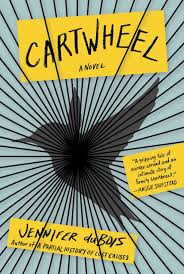
Jennifer duBois’ latest novel, Cartwheel, was included in at least eight best-of-the-year lists in 2013. Her debut novel, A Partial History of Lost Causes, was the winner of the California Book Award for First Fiction and the Northern California Book Award for Fiction and a finalist for the PEN/Hemingway Prize for Debut Fiction. Dubois attended the Iowa Writer’s Workshop and completed a Stegnor Fellowship at Stanford University. Her writing has appeared in The New York Times, The Wall Street Journal, Playboy, The Missouri Review, Salon, The Kenyon Review, Cosmopolitan, Narrative, ZYZZYVA, and others. She was the recipient of a 2013 Whiting Writer’s Award and a 2012 National Book Foundation 5 Under 35 award, and she currently teaches in the MFA program at Texas State University.

In this interview, duBois discusses sentence structure and style, her reason for telling a story from multiple points of view, and how she chose Buenos Aires as the setting for Cartwheel.

To read the opening pages of Cartwheel and an exercise on controlling narrative pace with sentence structure, click here.

Michael Noll

The book is a whodunit thriller, and yet the sentences move at a deliberative, almost stately pace. The sentences rarely move in a smooth, straight line. In the first paragraph, for instance, four out of the five sentences contain a phrase that is literally offset by punctuation: commas, dashes, or hyphens. The same thing happens throughout the novel, and, as a result, I was forced to slow down instead of racing ahead to see what happened on the next page–which was a pleasurable relief. Anxious page flipping always causes me to feel as though I’m blindly devouring a jumbo bag of Doritos. I’m curious how aware you were of this sentence style. Was the pace purposeful or simply the way your voice appears on the page? Or was it something that began naturally but fine-tuned through revision?

Jennifer duBois

I never thought of the book as a whodunit, or even really as a thriller. To me Cartwheel is more of a whoisit than a whodunit, I guess you could say: I wanted readers to experience a sense of suspense regarding the question of who Lily Hayes really was, and what they thought she was capable of; I wanted the plot’s twists and turns to stem not only from events, but from readers’ shifting interpretations of those events. And so the sentence structure wasn’t really a conscious effort to slow down the pace; I think I probably do tend to write long sentences anyway—and I definitely get a lot of mileage out of the em dash (case in point). And that tendency was probably amplified by the fact that each chapter is embedded so deeply in each character’s perspective. I really hoped that readers would be persuaded by the logic of each character’s thinking while they were with them, so I tried to capture that thinking in as much detail as I could—there’s a lot of time spent in each of their heads.

Michael Noll

The novel is told from four different points of view: the accused murderer, her father, her boyfriend, and the prosecuting attorney. As a finished product, the novel seems whole and complete, but I imagine that in the early stage of writing it, you were unsure of basic things such as whose point of view to follow. There are other important characters in the novel, but their actions take place mostly off the page. Was it difficult to decide on these four viewpoints? Did you ever try writing from the POV of any other characters?

Jennifer duBois

I knew from the beginning that I would include the prosecutor’s and Lily’s father’s point of view, since it seemed natural to hear from a character totally convinced of Lily’s guilt and a character totally convinced of her innocence. I also knew I’d include Lily’s point of view, but that her sections would end the night of the murder—I wanted her chapters to offer psychological revelations about her character, but not factual revelations about the crime itself. The fourth point of view, Sebastien’s, was the last addition. I liked the idea of hearing from a character whose sympathies weren’t necessarily so pre-ordained as the prosecutor’s or Lily’s father’s were. I also liked the idea of introducing another character whose behavior inspires wildly different reactions, and whose interiority doesn’t always match the way he’s externally perceived. I didn’t think Lily should be the only character in the book who is at the mercy of other people’s interpretations—because in real life, we all are. To misquote St. Francis, I wanted Lily not only to be misunderstood, but to misunderstand.

 Michael Noll

The novel has an interesting sense of place. It’s set in Buenos Aires, but most of the action takes place in a series of closed spaces, not just houses but rooms in houses: Lily’s bedroom, the parlor in her boyfriend’s house, the prosecutor’s bedroom, the rooms in the jail cell where Lily is allowed to talk to her family and lawyers, and the inside of a restaurant where Lily worked. The rest of Buenos Aires appears only briefly, through Lily’s photographs (or as she tours the city, photographing it) or the travels of the other characters to and from the prison. I can imagine beginning this novel and feeling the need to capture the city, to do a kind of travel-show introduction. But this never happens. Were those passages cut, or did you know from the beginning how to approach descriptions of the city?

Jennifer duBois

In her debut novel, Dubois matches a former Russian chess champion intent on challenging Vladimir Putin's political power with a young American college lecturer who, fearing that she has inherited the genes for Huntington's Disease, travels to Russia to find out answers about her dead father.

In her debut novel, Dubois matches a former Russian chess champion intent on challenging Vladimir Putin’s political power with a young American college lecturer who, fearing that she has inherited the genes for Huntington’s Disease, travels to Russia to find out answers about her dead father.

That’s such an interesting observation and question—I never really thought about the number of closed spaces in the book, but you’re totally right. I think it relates to my sense of the book as being “set” in a hazy sphere of personal perception much more than in an objective external reality. There were a few reasons I selected Buenos Aires—I needed a city an American study abroad student might fall in love with, in a country with a judicial system similar enough to our own that said student might not be aware of some key differences. I wanted a country with a language that an American college student might have mastered sufficiently to feel overly confident in. I thought that setting the book in a Catholic country could provide an interesting dimension to its exploration of misogyny/ideas about female sexuality, and that setting the book in a country with such a fraught history with the U.S. could add an interesting angle to the questions about American entitlement/anti-American resentment. But ultimately I didn’t see Cartwheel as trying to depict a particular place as much as trying to depict four different characters’ minds. In a very fundamental way I think Cartwheel is a story that could have been set anywhere—this was very different from my first book, A Partial History of Lost Causes, in which the Russian setting is, in many ways, the book’s soul. And so that’s probably partly why Cartwheel doesn’t linger in the Argentinean setting very much; I hope that readers believe Buenos Aires as the book’s backdrop, but I think its real setting is in the characters’ heads (talk about enclosed spaces).

Michael Noll

 A lot of young writers tend to stick close to home with their work, but this isn’t the case for you. So far, your novels have been about characters who seem, at least on the surface, pretty different than yourself: an American exchange student charged with murder, a father, an Argentinean prosecutor, a Russian chess champion and political dissident. Plus, your novels have mostly been set in countries other than the United States. What draws your imagination to these characters and places? Are you drawing on the books that you read as a child? Were you a news and Time magazine junky as a kid?

Jennifer duBois

I don’t think my own life has really been interesting enough to generate a ton of material for fiction—but even if it had been, I’m not sure writing about it would appeal to me very much. I’m in my own life and memories every day anyway, and there is a real limit to my curiosity about myself. For me, the fun of fiction writing is in imagining lives and experiences that are very different from my own, and in getting to explore ideas or situations that I think are interesting. And because I’ve always been interested in other countries–and in international politics in particular (I was a political science major in college)—that interest winds up showing up in my fiction, along with assorted other preoccupations and hobbies and fun facts and jokes and pet conspiracy theories, etc. If I’m curious about it, it’s going in.

February 2014

Michael NollMichael Noll is the Editor of Read to Write Stories.

How to Control Narrative Pace with Sentence Structure

4 Feb
Jennifer Dubois' novel Cartwheel has been called...

The writing in Jennifer Dubois’ novel Cartwheel was described in The New York Times as “a pleasure: electric, fine-tuned, intelligent, conflicted.”

Maybe you’ve had this experience: you’re deep into a gripping novel, hooked by the plot and dying to know what happens next, when you realize that you aren’t actually reading the book anymore. Instead, you’re skimming pages. The writing is still strong; you’d like to slow down and enjoy the sentences, but you can’t. You need to find out what comes next right now.

As a writer, this might seem like a victory: you’ve written a page-turner. But this type of reading also makes many of the actual words in the book superfluous. Wouldn’t it be nice to set an intriguing plot into motion and keep the reader’s attention on each sentence and detail?

This is precisely the feat that Jennifer duBois has pulled off in her novel Cartwheel. It was inspired by, though not based on, the Amanda Knox trial, and has been called a “tabloid tragedy elevated to high art,” by Entertainment Weekly. You can read the opening pages here (click on “Look Inside”).

How the Story Works

If the plot of Cartwheel pushes us forward, making us want to turn the page, the sentences slow us down, directing our attention to nuances. The sentences are not long or difficult to read, but they are structurally complex, filled with interruptions and asides. Notice how many of the sentences in the first paragraph do not move in a straight line:

Andrew’s plane landed at EZE, as promised, at seven a.m. local time. Outside the window, the sun was a hideous orb, bleeding orange light through wavering heat. Andrew was still woozy from his two Valiums and two glasses of wine, the bare minimum that he needed to fly these days—to anywhere, for anything, though especially for here, for this. The irony of being a professor of international relations who was terrified of international travel was not lost on him (no irony was lost on him, ever), but it would not be helped. Neither could it be mitigated by the knowledge—always understood but now finally believed—that the things that go wrong are rarely the things you’ve thought to worry about.

The sentences use punctuation (commas, dashes, and parentheses) like detour signs. Some of these detours are long (“no irony was lost on him ever”), some are short (“as promised”), and some are a string of short detours (“to anywhere, for anything, though especially here, for this). The information they deliver varies widely. The phrase “no irony was lost on him ever” tells us a great deal about character. “Always understood but now finally believed” neatly lays out an eternal, psychological truth.

But what about the first one: “as promised”?

Planes land according to schedule all the time. Or they don’t, and no one is put out except in minor ways. Or the consequences are serious (missed connections, overnight stays in unfamiliar cities) but so common that they’re rarely noteworthy. If this paragraph was being discussed in a workshop, someone would almost certainly suggest cutting the phrase. And yet those two words—”as promised—perform an essential function. They force the reader to slow down, if only a little, and this is important because subsequent sentences will ask the reader to slow down even more. To some extent, the entire novel is about slowing down. It’s told from the point of view of multiple characters, each perspective often correcting or complicating the others. As much as the story moves forward, it also moves downward, deepening our understanding of the characters. If we’re racing along, flipping pages, we might miss most of what the novel offers. And so the sentences slow the reader to the pace required to truly enjoy the book.

The Writing Exercise

Let’s try writing three short sentences that contain detours, using the opening paragraph from Cartwheel by Jennifer duBois as a model:

Sentence 1: Taking nothing for granted

  1. Write a sentence about a character entering a scene. This kind of sentence tends to drive writers crazy: walking characters through doors or into rooms, moving them from one place to another, sitting them down to a meeting or dinner or date. It’s a mechanical part of any story. Keep it simple, and then we’ll add to it.
  2. Suggest that some part of that sentence could have happened (or did happen) differently. Here is what duBois writes: “Andrew’s plane landed at EZE, as promised, at seven a.m. local time.” The “as promised” suggests that the plan could have arrived late or early. It’s a small detail, but it makes a mechanical, dull sentence take the reader by surprise and, perhaps, a bit uneasy. So, if your sentence is “He walked into the room,” you could change it to “He walked—tripped, really—into the room.” Notice what a difference this makes, how it catches your attention.

Sentence 2: Adding a postscript about desire

  1. Write a sentence about something a character needs or wants. The desire could be for anything: a Coke, a different job, somebody to love. It might be helpful to locate the character in a place, like this: “The sun was shining down on the stadium, and she desperately needed a Coke.”
  2. Add a note at the end about the desired thing. Here is what duBois writes: “Andrew was still woozy from his two Valiums and two glasses of wine, the bare minimum that he needed to fly these days—to anywhere, for anything, though especially for here, for this.” The passage after the hyphen makes it clear how much he needs the Valium and wine. So, if your sentence is “She needed a Coke,” you could add, “She needed a Coke—right here, right now, even if it cost her twenty dollars.” This kind of postscript mimics the way we often talk in real life—children and adults alike.

Sentence 3: Interrupting your own train of thought

  1. Write a sentence about a character’s personality. You might identify a trait or a tendency that exists despite the difficulties it causes: “Another drink would cause him to start shooting off his mouth, but he walked to the bar anyway” or “She’d been told that correcting people in public was unbecoming, but Afghanistan and Iraq were definitely not neighbors.”
  2. Add an aside that interrupts the flow of the sentence entirely. duBois writes, “The irony of being a professor of international relations who was terrified of international travel was not lost on him (no irony was lost on him, ever), but it would not be helped.” The parenthetical aside gives the character a measure of self-awareness, which can be useful later in a story when the character must make an important decision. An easy way to add an aside is to let the character comment on his/her own trait or tendency. So, my sentence about correcting people in public might become “She’d been told that correcting people in public was unbecoming (those twerps who worked as aids to powerful men were always insisting on manners), but Afghanistan and Iraq were definitely not neighbors.”

By writing sentences with detours, you may find that your story becomes looser, with room for characters to move about and think and forget, even momentarily, about the plot you’ve put them in. Perhaps you’ll write a page-turner that makes the reader stick to every word out of fear of missing something great.

Good luck!

How to Let the Story Speak for Itself

30 Jan
Kiese Laymon's collection of essays, "How to Slowly Kill Yourself and Others in America" stunned the writer Roxane Gay "into stillness."

Kiese Laymon’s collection of essays, “How to Slowly Kill Yourself and Others in America,” stunned the writer Roxane Gay “into stillness.”

If you recall anything about your composition classes in high school or college, it may be the requirement that every example be explained or analyzed. As an instructor for these classes, I feel a professional obligation to say that, yes, this is mostly true. But, on the other hand, sometimes the example or story can speak for itself.

Kiese Laymon’s essay, “How to Slowly Kill Yourself and Others in America: A Remembrance,” illustrates not only that some stories do not need to be explained but also that some efforts to explain add a layer that can, at times, falsify the story itself. As Laymon writes, “I wish I could get my Yoda on right now and surmise all this shit into a clean sociopolitical pull-quote that shows supreme knowledge and absolute emotional transformation, but I don’t want to lie.”

The essay is included in the new collection How to Slowly Kill Yourself and Others in America and was originally published at Gawker, where you can read it now.

How the Story Works

The first paragraph of the essay lays out what will follow:

I’ve had guns pulled on me by four people under Central Mississippi skies — once by a white undercover cop, once by a young brother trying to rob me for the leftovers of a weak work-study check, once by my mother and twice by myself. Not sure how or if I’ve helped many folks say yes to life but I’ve definitely aided in few folks dying slowly in America, all without the aid of a gun.

The bulk of the essay is the stories about these four incidents with guns. There is almost no transition between them except a sentence like, “16 months later, I’m 18, three years older than Edward Evans will be when he is shot in the head behind an abandoned home in Jackson” or “I don’t know what’s wrong with him but a few months later, I have a gun.”

This lack of transition and explanation/analysis accomplishes two things:

  1. It lets the stories pile up against one another. To some extent, the point is not that one of these stories happened but that they all happened. The references to similar stories that made the news make it clear that not only did all of these stories happen to one person, they happen to people like him all of the time.
  2. They keep the reader in the moment with the writer as he experiences these stories. Very often, we’re tempted to add a layer of distance, to write, “Long ago, when I was young, these things happened.” While it’s true that by the time we sit down to write about something, we’ve given it years of thought, it’s also the case that the act of reflection can distort or veil the thing we are reflecting upon. This reflection protects the writer against judgement or scorn (a way of saying to the reader, “Yeah, I was part of something that makes you and me uncomfortable, but see how much smarter I am now?). Sometimes it’s important to cut straight to the memory itself.

Instead of trying to write statements that show “supreme knowledge and absolute emotional transformation,” Laymon saves his moments of analysis and explanation for the points in the essay where his thoughts at the time might not be immediately clear. Here is one example:

I pick up my gun and think about my Grandma. I think not only about what she’d feel if I went back out there with a gun. I think about how if Grandma walked out of that room with a gun in hand, she’d use it. No question.

I am her grandson.

In this instance, Laymon is explaining a thought process that led to a decision. What follows—the effects of the decision—speak for themselves. At the end of the piece, Laymon does step away from the stories to reflect a bit, but his reflection actually points us back to the stories. Here’s a typical line:

I want to say and mean that remembering starts not with predictable punditry, or bullshit blogs, or slick art that really ask nothing of us; I want to say that it starts with all of us willing ourselves to remember, tell and accept those complicated, muffled truths of our lives and deaths and the lives and deaths of folks all around us over and over again.

In a way, Laymon is making the same point as Tim O’Brien in The Things They Carried: “A true war story, if truly told, makes the stomach believe.” In this essay, by letting the story speak without added explanation, Laymon is aiming for the stomach as much as the head.

The Writing Exercise

Let’s try structuring an essay so that no big explanations are needed, using “How to Slowly Kill Yourself and Others: A Remembrance” by Kiese Laymon as a model:

  1. Let the stories pile up against one another. This kind of structure works best with an essay about a recurring event. Each successive version emphasizes both the similarities (here we go again) and the variations (this time, however, was different). In order to find your stories, it might be helpful to think of them as leaves on a stem. What is the single line of causation? In Laymon’s essay, it’s the experience of being black in Mississippi. This is vague and simplistic, of course, but it’s also a place to begin. One way to advance such a simple idea is to ask a basic question: “What does it mean to be ______?” Then, choose an image that resonates with you on an emotional level. Laymon chose the image of a gun. The successive stories become different perspectives of that image, filtered through the basic question of meaning. Choose the right stories and the right image, and the meaning will make itself clear.
  2. Keep the reader in the story as you, the writer, experience it again. In other words, tell the story straight, in present tense if necessary. Focus any explanation on moments of decision making. This might require leaving the moment and writing something like, “My whole life, I’d been ______, but now I ______.” The goal is to portray the complex processes that our minds quickly distill to a snap decision: “So, I ______.” The next paragraphs will show the reader the events or actions that proceed from that decision and the consequences of those actions. The consequences can be stated simply. Less is sometimes more, as Laymon writes here:

The young brother keeps looking back to the car, unsure what he’s supposed to do. Shonda and her friends are screaming when he takes the gun off my chest and trots goofily back to the car.

I don’t know what’s wrong with him but a few months later, I have a gun.

Sometimes, no explanation is needed. The image, the story, and the decision are enough.

Good luck!

How to Find the Right Plot for Your Character

28 Jan
Long Division by Kiese Laymon has been compared to the novels of Haruki Murakami and called, by the Atlanta Journal-Constitution, "a little fantasy, a little mystery and a lot hilarious."

Long Division by Kiese Laymon has been compared to the novels of Haruki Murakami and called, by the Atlanta Journal-Constitution, “a little fantasy, a little mystery and a lot hilarious.”

I was talking to a writer the other day who said that, if it was up to her, she’d write nothing but character development. Her characters would talk to each other and occasionally wind up in interesting circumstances, but not much would happen. Her solution was to create a detailed outline—the kind that takes several weeks to create. This is a terrific idea, even if many writers are initially opposed to it. But what if you can’t find the right plot for the outline?

One of the best novels I’ve read lately also has a plot that perfectly fits its narrator. Long Division by Kiese Laymon is one of the competitors in the The Morning News Tournament of Books, and you can read an excerpt from the novel at Gawker.

How the Story Works

Long Division is about a teenager who gets the opportunity to compete in a national competition. Even from that vague description, it’s clear how the plot fits the character. Teenage kids all over America are dreaming about one day competing in the Super Bowl, World Series, or in March Madness. Almost all of our biggest celebrities are athletes; every two years at the Olympics, athletes from sports that exist on the fringe suddenly become the center of our national attention, setting themselves up for a brief moment of fame and corporate sponsorship. But this kind of competition isn’t confined to sports. It turns academic study into contests of knowledge like Jeopardy! and the Scripts National Spelling Bee. Every high school kid who takes the SAT or ACT is given a score and ranked against the other test takers, and those rankings help feed the competition for spots in select universities.

In short, any plot about a contest provides a good story for a teenage character. The trick is to find a contest that taps into the character’s hopes and fears.

In Long Division, Kiese Laymon has created a character named Citoyen (City) Coldson, a teenage African-American boy from Jackson, Mississippi. Keep that description in mind as you read this paragraph about the contest he faces:

“We’d like to welcome you to the fifth annual Can You Use That Word in a Sentence National Competition,” the voice behind the light said. “We’re so proud to be coming to you from historic Jackson, Mississippi. The state of Mississippi has loomed large in the history of civil rights and the English language. Maybe our next John Grisham, Richard Wright, Margaret Walker Alexander, William Faulkner, or Oprah Winfrey is in this contest. The rules of the contest are simple. I will give the contestant a word and he or she will have two minutes to use that word in a dynamic sentence. All three judges must agree upon the correct usage, appropriateness, and dynamism of the sentence. We guarantee you that this year’s contest will be must-see TV.

The passage immediately conflates “civil rights and the English language.” The competition is about word usage rather than spelling because (as stated earlier in the novel) the Scripts Spelling Bee was deemed racially and geographically biased. In this novel, and in this new competition, race is impossible to avoid. In fact, it’s put at the center of the story and televised to the world.

Watch how the first contestant, Coldson’s best friend, handles the word lascivious:

“If lascivious photographs of Amber Rose were found on Mr. White’s office computer,” LaVander began, “then the odds are higher than the poverty rate in the Mississippi Delta that Mr. Jay White would still keep his job at the college his great-great-grandfather founded.”

Coldson gets the next word:

“Your first word, Citoyen, is…‘niggardly.’”

Without uttering a syllable, I ran back to our dressing room and got my brush. “I just think better with this in my hand,” I told the voice when I got back.

“No problem. ‘Niggardly,’ Citoyen.”

“For real? It’s no problem?” I looked out into the white lights hoping somebody would demand they give me another word—not because I didn’t know how to use it, but because it just didn’t seem right that any kid like me should have to use a word like that, not in front of all those white folks.

“Etymology, please?” I asked him.

“From Old Norse nigla.”

Nigla? That’s funny. Am I pronouncing the word right? ‘Nigga’dly.’ Pronunciation, please.”

“Nig-gard-ly,” he said. “Citoyen, you have 30 more seconds.”

The beauty of this moment is that the contest has been made intensely personal for the character. Broadly speaking, its very existence is meant to serve kids like him. So, he’s already in the spotlight, simply because of who he is. The contest becomes acutely personal, though, when he’s given a word that he doesn’t know. He’s set up to look and feel inadequate. Finally, the broader issues of the contest meet the personal aspects because the word has racial overtones due to its similarity to another word. Given the nature of the contest and the character, it’s the perfect word to create tension and suspense and to force the character to act in ways that not only move the plot forward to reveal depth of character.

If you’re wondering what happens next, you can find out here.

The Writing Exercise

Let’s try finding the right plot for a character, using the excerpt from Long Divison by Kiese Laymon as a model:

  1. Choose a general plot vehicle that is appropriate for your character. Describe your character in the vaguest way possible (the way people are described in personal ads or by the police)—40-year-old white male, 16-year-old Hispanic female, middle class mother of three, retired widower living on a pension. What life events does that character typically (or stereotypically) encounter? Common examples that often find their way into stories include contests, marriage, divorce, coming-of-age, starting over, searching for someone (relative, someone to love), caring for elderly parent or child or dog, escaping something bad (war, old friends, neighborhood, family), making the grade, getting the promotion, etc.
  2. Summarize why the plot vehicle is particularly suited (generally speaking) to your character. This is where you begin to tie the plot to a few particulars of character: Getting laid off is particularly painful for a 50-year-old woman because she’s forced to compete for a job with younger people in an age-ist society. Tracking down your birth parents in rural Nevada is particularly difficult for someone who lives in New York and doesn’t have a driver’s license.
  3. Make the plot vehicle acutely personal. This can be done by accentuating the mechanics of the plot. In the excerpt from Long Division, the mechanics of the contest (contestants are given a word to use in a sentence) become accentuated when the character doesn’t know the word. That’s why the novel shows the mechanics of the contest: the back-and-forth between contestant and moderator, the question about etymological origin, the pushing against the rules when City runs to his dressing room to get his brush. Each of these mechanical details about the contest heightens the tension. In my examples, the 50-year-old woman interviewing for a job might be put into a group interview with a room full of recent college graduates. The person tracking down his birth parents in rural Nevada might arrange a ride from a friend-of-a-friend who doesn’t show up, leaving the character stranded.
  4. Connect the personal with the general. The key is to make the plot obstacles reflect or tap into the character’s hopes and fears. In Long Division, the plot taps into City’s complex feelings about race. When he’s given his word, he thinks that “it just didn’t seem right that any kid like me should have to use a word like that, not in front of all those white folks.” For him, it’s one thing to have the limits of his knowledge clearly defined, but it’s another thing entirely to have them defined in front of white people. In my examples, perhaps the 50-year-old job seeker has a college-grad child who wouldn’t fit in with the group interviewers, either. Or maybe the birth-parent seeker feels that he’s  been protected or insulated from certain harsher realities of the world.

As writers, we often resist thinking about character and plot at such a schematic level, but in any story—but especially a novel—this sort of clarity is often required to keep the plot from running out of steam. If you know the mechanics of the plot, you can manipulate them to keep the plot running.

Good luck!

How to Let Characters Reveal Their Feelings

21 Jan
Philadelphia was released in 1993, starring Tom Hanks and Denzel Washington, and was one of the first mainstream films about HIV/AIDS. It won two Academy Awards and nominated for two others, including best screenplay.

Philadelphia, released in 1993 and starring Tom Hanks and Denzel Washington, was one of the first mainstream films about HIV/AIDS. It won two Academy Awards and was nominated for three others, including best screenplay.

Some of the most powerful moments in any story come when a character unexpectedly reveals his or her innermost feelings. In film, these are often the scenes that become famous: Jack Nicholson shouting, “You can’t handle the truth,” in A Few Good Men; in The Wizard of Oz, Judy Garland standing beside a pig pen and singing, “Somewhere Over the Rainbow.” So, as a writer, how do you capture such intension emotion?

The 1993 film Philadelphia contains one such scene. Tom Hanks’ character, Andrew, has been fired from his law firm because he has AIDS, and so he sues the firm. The moment comes when Andrew is conferring with his attorney, Joe, played by Denzel Washington. He turns on the stereo, plays an aria sung by Maria Callas, and translates it, ending with the words “I am love.” The result is a scene that likely was the reason that Hanks won that year’s Oscar for Best Actor.

You can read the script by Ron Nyswaner here (just search for the word aria) or watch the scene (which is slightly different than the screenplay) here.

How the Story Works

As readers and viewers, we crave those moments when characters let down their guard. To the audience, those moments often feel as though they’ve come out of nowhere. We’re stunned when they happen. But, of course, that isn’t the case. It’s important—but not easy—to get the character into a state of mind that allows such statements. In A Few Good Men, Nicholson’s character is trapped by the prosecuting attorney and badgered until he breaks. In The Wizard of Oz, Judy Garland’s Dorothy falls into a pig pen and, after being rescued by the farmhands, is alone in black-and-white rural Kansas. It’s no wonder she dreams of escaping.

In both examples, a confrontation leads to the moment when the character reveals his or her truest thoughts. The confrontation can be between people (prosecutor vs defendant) or with a representative of a problem (the pigs are a representative of drab, boring Kansas).

In Philadelphia, the screenwriter Ron Nyswaner sets up a different sort of confrontation. Tom Hanks’ character, Andrew, has just come home from a party. He’s laughing and talking with his attorney, who was at the same party but less comfortable because of his preconceptions about gay people. The attorney begins asking Andrew questions as practice for his testimony at court, but Andrew is distracted. The film has juxtaposed (for Andrew, in a way he cannot ignore) the extremes of his life: his high-spirited social life and the lawsuit that stems from his AIDS diagnosis. He says, “There’s a possibility I won’t be around for the end of this trial.” Then, he asks his attorney if he likes opera, if he wants to hear Andrew’s favorite aria, which Andrew proceeds to play, translating the lyrics. Here’s how the aria and translation end:

"It was during that sorrow that love came to me!

A voice filled with harmony
That said...
Live still, I am Life!"

"I am the god that descends
From the heavens to the earth
To make of the earth
A heaven!"

The camera shifts to the attorney, who looks uncomfortable. Andrew continues translating:

"I am Oblivion!
I am Glory!
I am Love, Love, Love!"

Andrew has essentially said that he doesn’t want to die, that he loves being alive, that he loves the feeling of being in love. It’s as direct and intense a statement as a person can make, and the scene works because the film has given Andrew the ability to speak in this way. Without the setup, the same statement would ring false.

In any story, it’s important to present a character with challenges that force him or her to act, but it’s just as important to give the character a moment to reflect on what is happening. This is what Ron Nyswaner did in the screenplay for Philadelphia.

The Writing Exercise

Let’s set the stage to allow a character to reveal his/her innermost feelings, using Ron Nyswaner’s screenplay for Philadelphia as a model:

  1. Identify the extremes of the character’s dilemma. In Philadelphia, the extremes are life and death. In A Few Good Men, the juxtaposition is between honor/duty and justice. The Wizard of Oz juxtaposes the drab familiar with the beautiful unknown. Every story, whether in film or literature, captures this sort of juxtaposition. In short stories, Stuart Dybek’s “We Didn’t” pits sex and death. In Andre Dubus’ “A Father’s Story,” the conflict is between duty to God/law and love for one’s children. What are the sides in your story’s conflict?
  2. Write a back-to-back scenes, each dedicated to one side of the conflict. In Philadelphia, the costume party is followed by practice for the trial. The scenes can be fairly long or short and quick-hitting. The important thing is to  make your character aware of the juxtaposition. For each scene, think about a dramatic action that illustrates each side of the conflict. Don’t be literal (if one of your sides is death, don’t put your character at a funeral). If possible, make the scenes take place outside of the conflict (in other words, in the character’s life). Ask yourself, “Where does the character experience Side X at home, at work, or with family, etc?” Then, ask yourself, “Where does the character experience Side Y at home, at work, or with family, etc?” Let this second dramatic experience impinge on the first. In Philadelphia, Andrew is still basking in his enjoyment of the party when his attorney begins peppering him with questions.
  3. Let the character realize the juxtaposition. In short, let the character think about the conflict. In early drafts, we almost always do this. Our characters talk about what the conflict means to them. The problem is often that they’re talking about it in ways that are too obvious. The key is to ground the conflict in the tangible experiences and actions of the character’s world. The result is that the character is reacting against those tangible things. There’s a huge difference in a character saying, “I am Love, Love, Love,” totally out of the blue and saying it after coming home late from a party. Context is everything, and it is what these scenes aim to provide.

Good luck and have fun.

An Interview with Justin Carroll

16 Jan
Justin Carroll's story, "Darryl Strawberry," appeared in Gulf Coast.

Justin Carroll was born in California but often writes about Montana, where he spent his formative years. His Montana story, “Darryl Strawberry,” appeared in Gulf Coast.

Justin Carroll was born in California, raised in Montana, and now lives in Texas. He has an MFA from Texas State University and is an assistant editor for the Austin-based literary journal Unstuck. His work has been previously published in Juked, Saltgrass, and Brink.

In this interview, Carroll talks about the necessity of palpable detail, the greatness of Andre Dubus, and revising toward what feels organic.

To read an excerpt from “Darryl Strawberry” and an exercise on descriptive passages, click here.

Michael Noll

This is a story about waiting—and as such, it means that much of the story is dominated by characters thinking and talking (or not talking) about the thing they are waiting for. One risk that seems inherent in this kind of story is that there won’t be enough action or forward movement to keep the reader interested. The note that Kidd Fenner finds under his windshield wiper (“I’m sorry. Can you meet me tomorrow at american legion field at six?”) seems to solve that problem by giving the reader something specific to anticipate. Was this note always part of the draft?

Justin Carroll

This story, like most, has seen its fair share of revisions. The first one did have a note, but it was given in passing, as back story. I was given the idea of putting the note into a scene in a workshop with Debra Monroe at Texas State University. It was in that workshop that I realized readers need a break from interior matters. They need something palpable to grip onto, something that breathes new life into the narrative. In Andre Dubus’s “A Father’s Story,” after a few pages of the narrator summarizing his views on faith, Dubus introduces the reader to his narrator’s daughter, who has just left the narrator’s horse ranch after a visit and who, later, become the catalyst for the story’s climax. We need this; without this introduction, the narrator’s views on faith (which, for the record, are wise, interesting, and entertaining) would begin to seem too one-note. Dubus introduces this different aspect of the story at just the right time. Without this break, stories begin to drag. In the beginning, “Darryl Strawberry” was frustratingly slow; the note was able to enliven this story’s step.

Andre Dubus' short story, "A Father's Story," was reprinted in Narrative Magazine, where you can read it bowl

Andre Dubus’ short story, “A Father’s Story,” was reprinted in Narrative Magazine. If you’re not familiar Dubus, you should set aside half an hour and read this.

Michael Noll

The story begins with a scene that isn’t directly related to the conflict between Kidd Fenner and his son, but by the end of the first paragraph, the conflict insinuates itself into the scene (“Wasn’t as good as Henry, but no one in Hamilton was. This, of course, was before the trouble.”) I can imagine writing a story like this and beginning by discussing the conflict directly, laying out its terms for the reader (The kid’s in trouble again, and his parents aren’t sure what to do this time.) Did you ever try such a direct opening?

Justin Carroll

In the first few drafts, Henry’s issues were revealed too clumsily: “This, of course, was before the meth fiasco,” or something equally cringe-worthy. That was too transparent, obviously. Then I erased any obvious hints of the Henry’s problems until Nora goes to the support group meeting. I think I settled with the line after I discovered that “the trouble” was in Fenner’s own language—this is the only way he’d be able to describe Henry’s status (in the beginning of the story, at least). I still got conflicting views on this matter from some of my colleagues, but in the end “the trouble” felt organic.

 Michael Noll

One of my favorite paragraphs is this one:

The radio plays the same songs Fenner’s heard for twenty years or more: Allman Brothers’ “Ramblin’ Man,” “Big Shot,” by Billy Joel. He’s parked with his back to Safeway’s brightly-lit parking lot; all he can see are the shadowy outlines of the bleachers, the dugout blocked by clumps of snow, the skeletal cyclone fence that runs parallel with the first base line.

It tells the reader that Fenner is at the baseball field without ever saying, “He’s at the baseball field.” Was this intentional? It certainly made me pay closer attention to the language. If you’d identified the field right away, I probably would have skimmed over the details: bleachers, dugout, cyclone fence.

Justin Carroll

Yes, this emphasis on language was intentional. Fenner needed to experience the baseball field in the emptiness of winter. To see the field in direct contrast to the way he’d seen it when Henry had been in tip-top shape seemed important to me.

Michael Noll

This story is full of details that situate it pretty firmly in a particular place, not just details about snow and landscape but also specific proper nouns: Sapphire Mountains, Daly Mansion, Whitman’s Towing, Ravalli County, Chinook Winds, Chapter One Bookstore, Safeway, Town Pump. The effect is that story feels like it occurs in a real place–but, ironically, those specific details also make it relatable. So, even though I’m from rural Kansas, I found myself recognizing aspects of my own hometown in Hamilton, Montana. I’ve heard other writers say that they try to make the places in their story vague so that it seems as though the story could be anywhere. But that’s not what you do. What’s your philosophy toward specific place details like these?

Justin Carroll

Thanks for the compliment! I think specificity of detail is crucial for this story—for all stories, really. I want to be able to walk down the streets of a story, much like I want to feel a beer bottle in a character’s hand. If I can’t access the place of a story, then I probably won’t remember it fifteen minutes after I read the story. My favorite stories build towns and landscapes I can revisit long after experiencing them for the first time; specificity of detail is responsible for this effect.

January 2014

Michael NollMichael Noll is the Editor of Read to Write Stories.