How to Describe a Thing Without Naming It

14 Jan
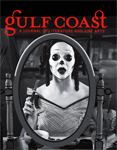
Justin Carroll's story "Darryl Strawberry" was published in Gulf Coast 26.1. The story is about neither the Mets nor Darryl Strawberry.

Justin Carroll’s story “Darryl Strawberry” was published in Gulf Coast 26.1.

The smartest thing I ever heard in a writing workshop was Tim O’Brien’s exhortation to avoid unintentional repetition: never repeat a word on a page unless you mean to do it. This sounds obvious but can, in fact, be incredibly difficult. It’s not enough to find good synonyms. The solution often involves the complete rethinking of sentences and passages. That may sound intimidating, but it can sometimes be as simple as finding the right place for a character to stand.

A perfect example of the effect of viewpoint on prose style is Justin Carroll’s story, “Darryl Strawberry.” It was published in Gulf Coast, and you can read the first pages here.

How the Story Works

Every story contains a moment of necessary description: of a room, a table, a character. The way we often begin the passage is by identifying the thing being described: kitchen, table, the person’s name. This direct approach has two potential problems, though. First, it can be boring. Second, it aligns with our preconceived ideas of a kitchen, table, or what we already know about the character. Because it’s predictable, the passage can have a tendency to hew to and repeat predictable words. So, to write lively, unexpected prose, we need to find a less direct approach.

The following passage from Justin Carroll’s story “Darryl Strawberry” illustrates this less direct approach. This passage comes after the main character, Kidd Fenner, has found a note from his son that says, “I’m sorry. Can you meet me tomorrow at american legion field at six?” Fenner then gets in the car, and this is the scene that follows: (Notice the important, even necessary, words that Carroll avoids.)

The radio plays the same songs Fenner’s heard for twenty years or more: Allman Brothers’ “Ramblin’ Man,” “Big Shot,” by Billy Joel. He’s parked with his back to Safeway’s brightly-lit parking lot; all he can see are the shadowy outlines of the bleachers, the dugout blocked by clumps of snow, the skeletal cyclone fence that runs parallel with the first base line. On nice days, he and Nora picnicked by the fence and gave Henry encouraging fist pumps before he stepped onto the mound. Christ, Fenner wonders, how long since then? No more than two years ago, which might as well have been forever.

The words that he avoids, of course, are baseball and field. In short, Carroll has avoided naming the thing that he is describing. The result of this, at least in my reading, is that I was momentarily disoriented. (Since when does a Safeway parking lot have bleachers? But the details quickly oriented me. Dugout is pretty place-specific.) Because of that initial confusion, I paid closer attention. If Carroll had written baseball field in the first sentence, I would’ve scanned the rest, thinking, “Of course a baseball field has bleachers and a dugout.” An editor might have encouraged Carroll to cut those details and skip right to the line about encouraging fist pumps. If that had happened, what would be lost? Perhaps a sense of intimacy. The details draw us into a small but important moment. If the prose had just barreled onto the field, we might not appreciate or even notice that moment because we wouldn’t be paying attention.

The Writing Exercise

Let’s try writing a description that makes the reader pay attention, using “Darryl Strawberry” by Justin Carroll as a model:

  1. Choose the place. It can anywhere: indoors or outdoors, a room in a house or the house itself, a public place such as a store or a particular part of that place such as an aisle or the parking lot.
  2. Write a sentence that names the place. Be direct and simple: “The parking lot was full,” or “The kitchen was warm and full of inviting smells.”
  3. Ban yourself from using any of the words (minus articles and linking verbs) in that sentence. You’ve established the most predictable words that can be used to describe your place. Now, you can find better words.
  4. Decide where your narrator or observer will stand and write a sentence that states this. Even if your novel is in third person, even if it doesn’t privilege the point of view of one character, you can still position the point of origin of the description. If the observer is in the middle of your place, the description will read differently than if the observer is standing at the side or edge or watching from a distance. In “Darryl Strawberry,” the observer, Kidd Fenner, is “parked with his back to Safeway’s brightly-lit parking lot.”
  5. List, with brief descriptions, the most outstanding elements of the place. By outstanding, I mean, literally, the elements that stand out. Choosing those elements will depend on the limits placed on your observer. In “Darryl Strawberry,” the observer is limited by lack of light. But not all limits must be physical. They could also be emotional or mental: in other words, give your observer a pair of rose or other-colored glasses. Don’t dwell too long on any particular element of the description. Keep listing and describing new elements until you feel the urge to comment upon one.
  6. Comment on a description. In “Darryl Strawberry,” after the observer notices the mound, base paths, and fence, he remembers giving his son fist pumps before he pitched. Then, he thinks, “Christ…how long since then?” It’s memories and comments like those that are the description’s entire reason for being. They advance both the story and our understanding of the characters and their conflicts. That advancement can only happen, though, if the prose forces the reader to pay attention.

This same process can be used for describing a person—or anything, in fact. The goal is the same: avoiding predictable sentences in order to write unexpected ones. You may find that you’ve written at least one sentence that surprises you. If it surprises you, it will likely surprise the reader as well.

Good luck!

An Interview with Victor Giannini

9 Jan
Vic G Bio Pic 07

Victor Giannini is the author of Scott Too, which has been compared to “the best speculative fiction of Philip K. Dick, and the magical realism of Jose Saramago” by novelist Kaylie Jones.

Victor Giannini is the author of the novella Scott Too and the forthcoming novel Counselor. His writing has appeared at Carrier Pigeon, The Southampton Review, Narratively, (a)Bonac, and Silverthought Press’ IPPY winning anthologies: Silverthought: Ignition and Thank You Death Robot. His art has been featured by various magazines, clothing companies, and skateboard shops.

In this interview, Giannini talks about finding the right frame for a story, the role of pain in writing a personal essay, and why not all facts are necessary to convey the truth.

To read “His Living Room’s a Jungle” and an exercise on using transitions to move through time, click here.

Michael Noll

“His Living Room’s a Jungle” tells a story that spans your entire lifetime and, really, reaches back before you were born. A story that like presents certain challenges, such as how do you, in terms of pure mechanics, move between and link events that occurred in very different time periods. What was your approach to this problem?

Victor Giannini

My first and only idea was this: My father is the center of the story, and I wanted to approach him through my subjective experience. This allowed me an honesty and self-deprecation that balanced out factual errors or emotional wounds.

So I needed to nail the mechanics before I fleshed out the narrative, and it took a few days of writing in my head to find the right flow, like a song with the verses and chorus in the correct places. Memory was the greatest advantage, because at their core, memories are stories. I could slip in and out of memory to find the thematic thread for this story, but that took a few revisions.

The biggest challenge was how to get to the end, which was already set from the moment I pitched the article. The end became the beginning, so it framed the story as a circular piece with nearly linear sequences broken up by flashes to ‘now’ as transitions. The storms and rain were key, and once I moved that idea up front, it allowed me to continue in a more or less linear fashion with the memories.

Handpicking the most dense and condensed memories, with appropriate transitions, became the final puzzle to solve. My memory is highly evocative, if not perfect, meaning I can remember a moment, relive it, even who I was and how I perceived life at the time.

It’s a funny map in my head…start with a scene that sets theme, jump to a scene establishing my narrative reliability (emotionally honest at best), and then, since I was the lens to see my father, jump to the earliest moment I could remember regarding his time in Vietnam, and then work my way back to the opening scene, revealing far more along the way. Throughout the many revisions, which were based on my editor’s questions and suggestions, the framing remained intact as I wrote, rewrote, rewrote, revised, and then cut, cut, cut, all the while keeping that vital key: the framing device, which I view as the frame of a house. When that is confidently set, then it came time to sit down and fill the rooms, so to speak.

Michael Noll

How did you find this framing device (you and your father watching a storm that happened recently, which reminds you of another storm that happened when you were thirteen years old and discovered something about your father)? On one hand, it works the way that our memories really do work, sliding back and forth between past and present. On the other hand, there were probably other intimate, in-scene moments that you could started with–including the scene that you remember when you learn that storms always bring your father vivid reminders of his time in Vietnam. How did you figure out which opening would work best?

Victor Giannini

From the start, I always knew I’d start “today”, me 30 years old and my father at 70.

The theme of rain and storms, making my father slip back in time, and my knowledge of that, gave me the structure I needed to leap back and forth in time as needed. It was an intuitive thing, one of those ideas that wake you up in the night and you just feel confident in it. That was my initial pitch to Narratively.

Victor Giannini with his father, Joe Giannini.

Victor Giannini with his father, Joe Giannini, a relationship that is the subject of “His Living Room’s a Jungle”

Starting “today”, with the storms as a device to link memories across time to “today”, allowed me to hook the reader in with just a bit of mystery and drama, and then slip into that night of interaction and revelation, and back to “today’s storm”, where there is no overt interaction. Now the reader knew that the main subject, my father, would be seen from a lens that can be factually shaky, but emotionally true.

The transitions between these scenes, past to present, memory to now, back again, are the most vital technical aspect. They needed to work on three levels: Functional to the frame as a whole, factual regarding what needs to be known at that narrative moment, and most importantly, emotionally: the transitions making sense that I would take you from “here” to “today” without breaking the flow. If I couldn’t nail the transitions in a very natural way, one that engaged the reader to continue without becoming a road bump, it’d all fall apart. I began to think of them as the last sentence of each chapter. One that gives closure to the section, and a hook to the next.

The only way to figure those out was revision. Thankfully I had a great editor to look at three of the eight versions I wrote. It took constant revision, keeping the focus on my father while still going back into my own mind, finding the most honest way to weave our lives together in service to the main theme, while maintaining emotional honesty.

 Michael Noll

How long have you been thinking about this essay—either working on it or just thinking about how you’d approach it? It seems like a story you might have been shaping and thinking about for a long time, and I wonder what finally clicked and allowed you to write it.

Victor Giannini

What finally clicked … fear. And pain.

Pain for every “character” in the article became the shared theme in which to view every event: Myself as naïve, selfish, expressive, the aftermath for my father and my family … I knew that I was on the right path when I became afraid to publish it. When I became truly afraid, not for portraying myself as imperfect, but for my father, who I treasure deeply, I knew I’d nailed it. Becoming afraid to accidentally misrepresent us was when I knew this story NEEDED to be told, rather than just me wanting to impress people. I was terrified right up until publication. But it was the right kind of fear. It meant I was honest with my reader, myself … and my father.

Victor Giannini's novella, Scott, Too, "echoes the best speculative fiction of Philip K. Dick and the magical realism of Jose Saramago."

Victor Giannini’s novella, Scott Too, from Silverthoght Press, “echoes the best speculative fiction of Philip K. Dick and the magical realism of Jose Saramago.”

As for how long it took…ever since I started writing at 15, I knew someday some aspect of his story must be told. So this particular essay was written for Narratively, and the editor wanted a “veteran story” that was unlike any he’d seen before. Given the non-fiction genre (I write fiction primarily), the greatest challenge was not what to put in, but rather what content to cut out. So I forgot about word count, took off all the restraints, off and wrote a version that was three times as long.

That allowed me to cut, cut, move, revise, which I believe are the key aspects to writing. Well, at least for me. Just let it all out. Be human. Then become an author, go back and revise everything to embrace the narrative. So the initial idea was always there for over a decade, the structural one was immediate, something from my subconscious, and the task of writing actually writing it took over a month. Actually, the context of it being a public article with a set word count was a great constraint during the entire process, even though I initially broke that constraint. Thankfully, my editor provided helpful questions and comments which led me down the path of what to cut, and what tiny parts to put in that weren’t there.

Michael Noll

Your father is publishing a memoir that will, presumably, cover some of this same material. How did that affect your writing of this essay. You’re using your perspective on your father as the lens for understanding him, and sometimes when writers do this, they worry that the lens is too strong–that they’re, in fact, writing more about themselves than about the other person. Did you ever find yourself checking to see if your memories were accurate? Or did the fact that your father was writing his own story free you up to write yours?

Victor Giannini

Bit of a mixture. Knowing my father was writing his own memoir allowed me to leave many facts, many amazing stories, for him to tell. That memoir is his life, his story. That was a huge burden taken off my shoulders, so I could focus on a subjective view of a veteran rather than a historical view.

I allowed myself to write about myself because, in a way, as long as my thoughts were focused on him, he is the main character, and I remain the narrator. This article is still about him but from my perspective. His own writing fills in all of the things I merely list. In a way they compliment each other, so a massive amount of information about his time in Vietnam was “allowed” to be truncated for me. I knew he’d reveal it all, in his own words. At times I did feel I was writing more about myself, but I waited for the revision process, when I had a break and a clear set of eyes to steer my way back towards him. That often meant cutting any ponderings or flowery prose, however pleased I was, that were merely my reactions to my own memories. Then focus the lens back on him.

As for fact checking … I was afraid to do so until the very final draft. To find out what I was right or wrong about outside my experience would skew my memories and emotions. Much of what I learned from my mother was at the last minute. Things that aren’t in the article, regarding my half-brother, my mother, and so on. But it’d be dishonest to force them into the final draft.

My father knew of the project, but I never showed him it. I was afraid it would taint the embarrassing, brutal, honesty that I’d finally cut the piece down to. New information about the past didn’t enhance the narrative at all. It castrated it, because from my point of view…those things didn’t happen. Knowing my father is writing his own memoir absolutely freed me to write honestly, “right or wrong”. Looking back…I’d say that’s actually the most important aspect. I could never write this article, showing him as both a veteran and a man, without the real life assurance that he’d be showing himself through his own memoirs. A strange case of life impacting art, and art reflecting life. This was a true challenge to write, and I’m happy and grateful that I was given the chance.

January 2014

Michael NollMichael Noll is the Editor of Read to Write Stories.

How to Use Transitions to Move Through Time

7 Jan
Victor Giannini's essay about his father's struggles with PTSD, "His Room's a Jungle," was published at Narratively.

Victor Giannini’s essay about his father’s struggles with PTSD, “His Room’s a Jungle,” was published at Narratively.

Every writer struggles at some point with transitions: how to move from one moment in time or idea to another moment. If the piece spans many years, these transitions become even more important because the writer is clumping together time: a moment here, a moment there, some context here. The transitions between these clumps can be simple (“And then…”), but how do you make them simple and also keeps the reader hooked?

Victor Giannini demonstrates how to use transitions in this beautiful essay about his father’s struggles with PTSD after serving in Vietnam. “His Room’s a Jungle” was published at Narratively, where you can read it now.

How the Story Works

There are hundreds of ways to transition from one moment in time to another, but in almost all of them, the transition works like a chain link: the transitional phrase touches upon a phrase or idea that precedes it and also a phrase or idea that follows it.

In “His Room’s a Jungle,” Victor Giannini uses at least three different kinds of chain link:

  • A link between one specific moment in time to another similar moment in time. The essay begins with the writer sitting in his father’s living room, watching a storm through the window. The transition works by directly linking this storm with another storm. Notice how quickly this happens:

I love how the sun showers create black clouds framed in gold, but before I can crack a smile, the rain takes my memory back to another storm. It was just like today, in this very room, just the two of us. He was fifty-three; I was thirteen. The power went out. I cursed life, furious that my video game had been interrupted. Then Dad said, “It’s like I’m back.

  • A link between an attitude/belief and a moment that changes that attitude/belief. The essay is, in part, a bildungsroman—a story about a young person learning some elemental truth that forever changes his life. The following passage demonstrates how to distill the belief that will change and the event that changes it:

When I was a young child in Brooklyn, for me, war had no veterans. War was scrambling around the public park, shouting “Bang! Bang! I got you, you’re dead!” and then fighting with Seth over whether he actually got shot or not.

War was abstract, perhaps scary, but always fun. Then one day, I was rolling around on the carpet, turning a table and couch into a secret mountain base for my army of plastic men, when Ron, my older half-brother, came to visit. He whispered to me, revealing a cool new secret about the father who had left his family and come to live with mine.

  • A link between a particular moment and a new attitude/belief. This link is the opposite of the previous one, and, as a result, the two are often used in tandem, as is the case in “His Room’s a Jungle”:

Ron left smirking. I was left with a weird mix of jealousy, sadness, and awe. My father was never the same again, not in my eyes. From then on, when my friends had sleepovers, watching “G.I. Joe” or a VHS of “Predator” that I stole from Ron, I felt special. I felt better than my friends. My father used to be a soldier. And even better, a special one. A marine!

Transitions become more difficult if you’re not sure what you’re linking: in other words, what is each passage about? The answer should be more than what happened. You’re also developing an idea: this happened, and this is the change that occurred as a result.

The Writing Exercise

Let’s try out some transitions, using “His Room’s a Jungle” by Victor Giannini as a model:

  1. Pick a true story to tell. Choose one that has personal importance, one that you’ve thought about a lot, one that gives you the sense that all was not the same after the events occurred.
  2. A link between one specific moment in time to another similar moment in time. In essence, this is the “This reminds me of a time…” link. When do you find yourself thinking about this story? Are there particular triggers? You can choose something timely (something from today’s news) or something routine (walking the dog, watching football, washing dishes). Keep in mind that the thing you remember is more important than the trigger—so just like a real trigger, the mechanics of it should happen quickly. Get the reader into the moment as fast as possible. Giannini does like this: “It was just like today, in this very room, just the two of us.”
  3. A link between an attitude/belief and a moment that changes that attitude/belief. In short, how did you once feel about the thing you are writing about? Which moment really began to change that belief? This is an old storytelling technique—think about the New Testament’s Saul getting knocked off his horse by lightning and becoming the evangelist Paul. Your moment might be less dramatic than a lightning strike, but it should start a chain of events that will lead to a new way of thinking. To make this work, summarize the belief and then transition quickly to the moment. Giannini uses three words: “Then, one day…”
  4. A link between a particular moment and a new attitude/belief. This is your chance to tell the reader how your ideas changed. While this could come at the end of the essay, it’s probably better to put it nearer the beginning. Ideally, the new attitude will complicate matters. Think about it this way: Now that the wool has been pulled away from your eyes, what do you see? It’s probably something a little unsettling. The transitional phrase can be simple. Giannini uses this: “From then on…”

Good luck and have fun!

7 Craft Lessons Every Writer Must Learn

31 Dec

Every writer must, at some point, come to terms with certain aspects of writing craft. Here are lessons drawn from seven excellent stories featured at Read to Write Stories in 2013.

1. Make Setting Do More Than Describe a Place

photo-1-300x300

Esmé-Michelle Watkins is an attorney based in Los Angeles and co-fiction editor of BLACKBERRY: A Magazine. Her writing has appeared in Boston Review, Word Riot, Voices de la Luna, and 4’33”.

If you’ve ever gotten bored while reading, the parts that you skimmed were probably descriptions of places. It’s not enough, as a writer, to use description to show what a place looks like. Try to convey the narrator’s or character’s attitude toward the thing you are describing. For an example, read this excerpt from Esmé-Michelle Watkins’s story “Xochimilco,” published in Boston Review:

There was nothing to see. Gone were the Stay Away drapes tall as street lights, whose heavy fabric Mammì flew all the way from our house in Pasadena to Nonna’s in Bivona to have custom-made; the Go Sit Down oil fresco of clustered villas hugging crags along a turquoise sea; the Knock You Into Next Tuesday French-legged dining table and high backed chairs, formerly below the Go Ahead and Try It chandelier; the Touch and Lose Your Life crystal bowls, where Mammì kept my favorite Sorrento lemons sweet like oranges, and the Cabinet of Doom wide as two hall closets, which housed the finest of Mammì’s That’s a No-No clique: tableware from Baccarat, Tiffany, and JL Coquet. (From “Xochimilco” by Esmé-Michelle Watkins)

2. Develop a Character’s Interior Life

Kelli Ford's story, "Walking Stick," was published in Drunken Boat.

Kelli Ford has been a Dobie Paisano Fellow and is finishing a collection of short stories.

It may seem obvious, but books are not movies. A reader’s relationship with a character is primarily with the character’s thoughts and feelings, not physical appearance. Yet, a simple description of who a character is and how she looks can be an entry into her interior life. Kelli Ford illustrates this perfectly in her story “Walking Stick,” published at Drunken Boat:

At sixty-seven, Anna Maria did not hurry with much these days. She was still stout and round, but a bone spur on her right ankle forced her foot out at an odd angle. That shoe always wore thin on the inside before the other. She could feel the gravel poking through. (From “Walking Stick” by Kelli Ford)

3. Write a Thrilling Action Sequence

Kevin Grauke's new story collection, Shadows of Men, was published by Queens Ferry Press and has been called X.

Kevin Grauke won the 2013 Texas Institute of Letters Steven Turner Award for Best First Book of Fiction for his short story collection, Shadows of Men.

I grew up reading Hardy Boys mysteries and Louis L’Amour cowboy adventures, which means I read a lot of fight scenes. Yet I’ve found that writing similar scenes–or any action sequence, for that matter–often turns into a boring choreography of movement: hit, punch, kick, grunt, etc. Good fight scenes must do more. The key is to interpret or comment upon the actions. Kevin Grauke shows how in this excerpt from his story “Bullies,” published at FiveChapters:

He grabbed Mr. Shelley’s tie and gave it a quick yank. He meant this only to be a sign, a signal that this was over for now–a period, not an exclamation point–but he pulled harder than he’d meant to, and Mr. Shelley, caught off-guard, stumbled forward, knocking into him. Off balance, Dennis staggered backwards from the low height of the porch, pulling Mr. Shelley with him in an awkward dance, and as they fell together and rolled, he understood that there was no way to turn back now, or to end this peacefully, no matter how clownish and clumsy it had to look. (From “Bullies” by Kevin Grauke)

4. Build Suspense

628x471

Manuel Gonzales is the author of the story collection, The Miniature Wife, and the forthcoming novel The Regional Office Is Under Attack!

In his famous essay “Psychology and Form,” Kenneth Burke explains how suspense is built by giving readers something to desire (“creation of an appetite,” he calls it) and then delaying the satisfaction of that desire. The easiest way to do this is with a distraction, or, as Burke writes, “a temporary set of frustrations.” In other words, promise the readers something and then wave something shiny to make them forget the thing you promised–so that when you finally produce what you originally promise, the readers are surprised. You can find a clear example of this strategy in Manuel Gonzales’ story “Farewell, Africa,” published at Guernica. If you read the entire story, you’ll see how long Gonzales is able to delay showing us what happened to the pool:

No one, apparently, had thought to test the pool before the party to see that it worked. The pool, which was the size of a comfortable Brooklyn or Queens apartment, had been designed by Harold Cornish and had been commissioned as a memorial installation for the Memorial Museum of Continents Lost. It was the centerpiece of the museum as well as the party celebrating the museum’s opening. In the center of the long, wide pool was a large, detailed model of the African continent. According to Cornish, the pool, an infinity pool, would be able to recreate the event of Africa sinking into the sea. “Not entirely accurately,” he told me early into the party, before anyone knew the installation wouldn’t work. “But enough to give a good idea of how it might have looked when it happened.” (From “Farewell, Africa” by Manuel Gonzales)

5. Use Dialogue to Create Conflict

images

Rene Perez is the author of Along These Highways, a story collection that won the Alfredo Cisneros Del Moral Foundation prize.

Close your eyes and listen to people talk, and you’ll quickly realize that they have different speaking styles–their own particular diction and phrasing. Dig a little deeper and I suspect you’ll find that those differences are tied to differences of personality. Our diction and phrasing are integral to our conception of our identity. So, to create conflict in a story, trap together two characters who have different speaking styles. The personality differences will soon emerge. A good example of this can be found in Rene Pérez II’s story, “Lost Days,” published in The Acentos Review:

“I don’t mean to disparage the whole of Corpus as being ‘ghetto,’ because that connotes a certain socioeconomic status,” he said, trying to backpedal as delicately as he could out of a comment he’d made at the dinner table that offended Beto, her husband, his father. He had always spoken that way; Stanford didn’t do that to him. “It’s just that there’s a culture here which is such that one can’t be challenged or even stimulated intellectually. There’s no art, no progress toward it or high culture. It’s a city of… of… philistines.”It would have hurt less if he’d just stuck with calling the place ‘ghetto.’ Rose knew what she did and didn’t have, and that she raised her son where and how she and Beto could afford to. So their neighbors were a little shady. They were still good neighbors. So their neighborhood was down-run and their house a little small. It was still their home. (From “Lost Days” by Rene S. Perez II)

6. Avoid the Chronology Trap

Roxane Gay

Roxane Gay is the author of Ayiti and the forthcoming novel An Untamed State.

Stories and novels don’t move through time. Instead, they gather time into chunks, organizing minutes and hours into miniature stories within a story. Think of each paragraph as a stand-alone unit–with its own arc, theme, and organization. This should help avoid those tedious passages that plod minute-by-minute through chronology. To demonstrate how this works, check out this paragraph from Roxane Gay’s story “Contrapasso,” published at Mixed FruitThe story is formatted like a restaurant menu. Each paragraph is a description of a dish. Notice how much time is collapsed into one short passage:

Filet Mignon $51.95 They saw specialists. There were accusations. They tried treatments, all of which failed. They tried adoption but she had a past and they had no future. And then it was just the two of them in their big house straining at the seams with all the things she bought and all the things they would never have. One day she came home. All of it was gone. (From “Contrapasso” by Roxane Gay)

7. Write Short, Stylish Sentences

kelly luce

Kelly Luce is the author of the story collection, Three Scenarios In Which Hana Sasaki Grows a Trail.

People often claim that a story’s language is poetic. But what does that mean? Sometimes it means that the writer uses lush, lyric descriptions. But not always. Great sentences–and great lines of poetry–often work the same way. They strive for leaps in logic, for the unexpected juxtaposition of images. Readers are expected to keep up, to make the connections without the aid of explanation. Therefore, a stylish sentence often dashes forward. The best writers can do this in two words, as Vladimir Nabokov did in his famous parenthetical aside “(picnic, lightning).” Other writers, like Kelly Luce, leap from one short, direct sentence to the next. For example, here is the opening paragraph from her story “Rooey” in The Literary ReviewNotice how far and fast the story moves using phrases of less than ten words each:

Since Rooey died, I’m no longer myself. Foods I’ve hated my entire life, I crave. Different things are funny. I’ve stopped wearing a bra. I bet they’re thinking about firing me here at work, but they must feel bad, my brother so recently dead and all. Plus, I’m cheap labor, fresh out of college. And let’s face it, the Sweetwater Weekly doesn’t have the most demanding readership or publishing standards. (From “Rooey” by Kelly Luce)

An Interview with Owen Egerton

28 Dec
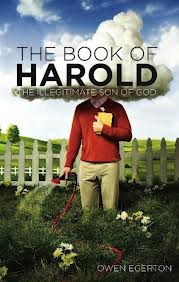
Owen Egerton's novel The Book of Harold has been called...

Owen Egerton’s novel Everyone Says That at the End of the World prompted the novelist Charles Yu to write, “People at the coffee shop were actually staring at me—I don’t think they fully believed that a book could make a person laugh that hard.”

Owen Egerton is the author of Everyone Says That at the End of the WorldThe Book of Harold: The Illegitimate Son of God, and the forthcoming story collection How to Avoid Dying, which was recently named by The New York Times as having one of the best book covers of 2013.

In this interview, Egerton talks about theme and variation in fiction, how to write a scene as well-known as a Christmas pageant, and the role of Christianity in literature.

To read the first chapter of The Book of Harold: The Illegitimate Son of God and an exercise on the expectations of sequence, click here.

Michael Noll

The chapter shows us the basic events of the Christmas pageant multiple times. It’s almost like you’re using dress rehearsals to make the reader familiar with how the scene will play out–only to surprise them with the actual events. Was this repetition intentional, or did you find that the practice runs through the pageant wrote themselves onto the page?

Owen Egerton

I’m a fan of theme and variation, of establishing what should be and then sharing what is. We see it in jazz, in comedy and in narratives. As Robert McKee likes to say, story is found in the gap between expectation and actuality. Your buddy Jim comes over for dinner every Friday at 7 pm. He always brings a bottle of wine and bag of day old donuts. 6:55 pm on Friday there’s a knock on the door. You open it expecting Jim. Instead a beautiful woman in a long black dress stands with a severely cut hand. There’s a story there. We are more aware of the gap – the space where the story lives – when we have some detail of the expectations.

Michael Noll

Most of your readers have likely seen a Christmas pageant—and perhaps appeared in them—and most of those pageants probably followed a similar storyline. All pageants are basically the same, in other words. That sameness would not seem like a great premise for a story, yet the every element of this novel’s pageant seems fresh and new. How did you approach telling the pageant story so that it escaped our expectations for pageants-past.

Owen Egerton

Point of view and characterization are keys to making the familiar fresh. Every wedding looks the same, basically. But it’s not the same old wedding for the secretly pregnant bride or the jilted lover in the back row or the groom who is in love with bride’s mother.

You can even get away with describing monotony if you allow at least one character to be passionate about the monotony.

It also helps if you hint or tell the reader that this is going somewhere. In my chapter, the narrator shares that the event he’ll be describing led him to believe God was hunting him down like a “pissed off loan shark.” The reader is willing to wait through some of the less fascinating details because they feel it building towards something. We’ve promised a payoff. Now we must deliever.

I’m also eluding to those all too familiar pageants for a reason that touches on the novel as a whole. The novel, like the pageant, is a story they do not know based on a story they do know. I’m retelling the gospel—I even begin with a nativity, but the nativity goes wonderfully astray. Hopefully this tells us that the story we’ll be reading will continue to surprise us. But also that the story we know – that pageant we’ve seen or participated in – is as different from the actual birth of a impoverished baby to unmarried parents in Roman-occupied Israel two thousand years ago as it is from the series of missteps in the story. We think we know the story, but we don’t.

 Michael Noll

In his New York Times essay "Has Fiction Lost Its Faith?" Paul Elie compares Christian belief in American fiction to "a dead language or a hangover."

In his New York Times essay “Has Fiction Lost Its Faith?” Paul Elie compares Christian belief in American fiction to “a dead language or a hangover.” Owen Egerton disagrees.

In a New York Times piece, Paul Elie argued that religion (especially Christianity) no longer plays a role in American literature. In Elie’s words, the role of Christian belief in fiction is “something between a dead language and a hangover…if any patch of our culture can be said to be post-Christian, it is literature.” Your novel would seem to refute this claim. Do you see questions of Christian or religious belief reflected in much of the literature you read? Is Elie simply reading the wrong books, or does he have a point?

Owen Egerton

I love reading Paul Elie. Amazing insight and warm passion. But I think he is mistaking a change in religious focus for death. Elie correctly recognizes that fewer and fewer “believers” populate modern literature. And that there appear to be fewer writers with Flannery O’Conner’s goal to “make belief believable.” Elie’s conclusion that religion no longer plays a role in American literature is based on the premise that the center of religion is belief. He feels one’s beliefs – not one’s actions or the tradition in which one participates – define one’s religious identity. But a Passover Seder can be impacting even if one doesn’t believe in a literal God sending plagues to ancient Egypt. And the power of the passion and death of Jesus is not limited to only those who believe in a historical, literal resurrection.

What Elie’s sees as a shrinking of religious themes, I see as an expansion past a narrower definition of religious devotion. I’d argue that we’ve lost some interest in the dogmatic discussion and distinctions, which for O’Conner and Percy Walker separated the saved and unsaved. We are less concerned in what a person or character believes and more interested in what they do. The beauty of a Catholic mass and the themes of community, sacrifice, and transcendence are not dependent on the doctrine of transubstantiation. More and more of us recognize this. Many moderns have a religious life free of belief.

And literature is a perfect vehicle for pondering the questions of religion without being moored on the dichotomy of belief and disbelief. We are moved by the characters and story and images of a novel without ever having to declare that we believe the events of the novel to be factually true. In fact, we recognize that our fiction by definition is not fact, but it no way limits the power.

The stories and rituals of faith traditions – whether you hold them to be history, myth, or both – are still often the language we use to wrestle with themes of mortality, morality, and meaning. Whether in James Reich’s dark, poetic 2012 novel I, Judas or the Christ imagery rampant in the final Harry Potter book, religion is still very much a living language.

I am not a believer, but I return again and again to religious themes in my writing. I see the shared power of these stories, the universal appeal to these themes, and perhaps I’m searching – and my readers along with me – for something beyond belief.

Michael Noll

In addition to writing, you’ve built a reputation as an improv-comedy performer. In some ways, improv seems like an imperfect match with writing. One requires spontaneity, and the other favors revision. Do you find that improv has influenced, and perhaps even helped, your writing?

Owen Egerton

Improv and writing are wonderful bedfellows. Long before I revise, I must create! In that place – that hot cauldron of creating, that hunt for self-surprise – the revising mind is an enemy. That part of my mind questioning my choices, correcting my spelling or simply asking “what are you doing here?” – that part must be shut up if I’m to thrill the page. I leave the revising for tomorrow. It’s the same in improv comedy. In improv we train ourselves to say “yes” to the wild, untested, unwritten ideas. We do not stop to ask, is this the best idea? It is the idea! So we play with it, we build upon it. So when I write, I tap into this mode. I splatter my pages with messy ideas and fractured sentences and fantastic surprises! Fire doesn’t think. It burns. Lovers don’t plan. They fuck.

First published in February 2013

Michael Noll

Michael Noll is the Editor of Read to Write Stories.

How to Use Theme and Variation in a Story—Christmas Edition

24 Dec
images-2

“The Book of Harold” by Owen Egerton is out in paperback from Soft Skull Press. You can read the first chapter here.

The success of a story is often determined by how well it goes off the tracks. In order for that to happen, though, the story must first lay those tracks. A great example of derailing a story can be found in the opening chapter of Owen Egerton’s novel, The Book of Harold: The Illegitimate Son of God. You can read that chapter, titled “Nativity,” on Amazon here. (Look inside and read the first pages.)

How the Chapter Works

One of the oldest ways to create suspense in a story is to create a repeating sequence of events. So, in “The Three Little Pigs,” we watch the wolf blow down two houses before going to the third—where his plan goes awry. In a more contemporary example, the film Oceans Eleven, plus every heist movie ever made, first shows the thieves planning the heist and then practicing the heist, and when they finally put their plan into action, something goes wrong. Both of those stories—the fairy tale and the blockbuster film—spend time establishing how events should go so that they can go wrong.

With that strategy in mind, count how many times Egerton shows us the Christmas pageant in “Nativity”:

  1. We’re told that the pageant “was a Christmas tradition for our church.”
  2. Next, we’re shown the casting and introduced to the doll that will play Baby Jesus.
  3. Then, we’re shown the children practicing the pageant, running through the entire show.
  4. Next, we’re given a quick description of the first two nights of the pageant.
  5. Finally, the last performance is upon us. We know the drill by heart, and so do the characters. Notice how they begin to alter the routine: the donkey drop “balls of dung every other step,” a Wise Man slips on the dung, and chaos ensues.

Notice how each telling involves a bit of irregularity: the introduction of the drummer boy, the casting of the narrator as Joseph, the drummer boy mis-delivering his line, angels crying, and finally donkeys pooping. Yet, even though the reader expects an unexpected turn of events, there is no way to foresee what actually happens. The thrill, for the reader, is in waiting for the predicted, yet unpredictable, twist. 

In addition to repeating the pageant, the passage contains words that clearly cue the reader into where things will go wrong. For instance, Egerton writes, “We practiced for two weeks. My part was simple enough.” The word simple is similar to Chekhov’s proverbial “gun on the wall.” If you show a gun in the first act, it must go off by the third. If you use the word simple in the beginning of a story, the story had better complicate that simplicity.

The Writing Exercise

Let’s create a sequence of events that will repeat itself, using Owen Egerton’s “Nativity” chapter as a model:

  1. Choose a scene that will repeat itself. The scene could be one that involves planning and practice (a wedding, shouting “Surprise!” at a birthday party). Or it could center around someone involved in a routine activity (door-to-door salesman).
  2. People the scene with characters. For instance, a wedding or party will have guests. A door-to-door salesman will visit homeowners.
  3. Tell the reader how the scene will play out. Be detailed. First, X will happen. Then X. Then X. Finally, X. The more detailed steps you provide, the more opportunities you have to make things go wrong.
  4. Show the scene once or twice. In each of the tellings, something should go slightly wrong but not so wrong that the characters can’t deal with it.
  5. Finally, show the scene a final time, adding big, unexpected challenges. Ideally, you’ll let the challenges build on one another. So, something goes wrong in the first step of the sequence, and that problem creates a slightly larger problem in the next step, and so on, until the final step, when the sequence has devolved into chaos.

It helps if you give the main character a sense that something might go wrong—or if you generally introduce the idea that all might not go according to plan. You can introduce the idea subtly or in an obvious way. The point is to show the sequence of events while hinting at a twist in the sequence.

Be inventive with this exercise. Remember, you want to surprise an expectant reader.

Good luck and have fun.

An Interview with Daniel José Older

19 Dec
Daniel

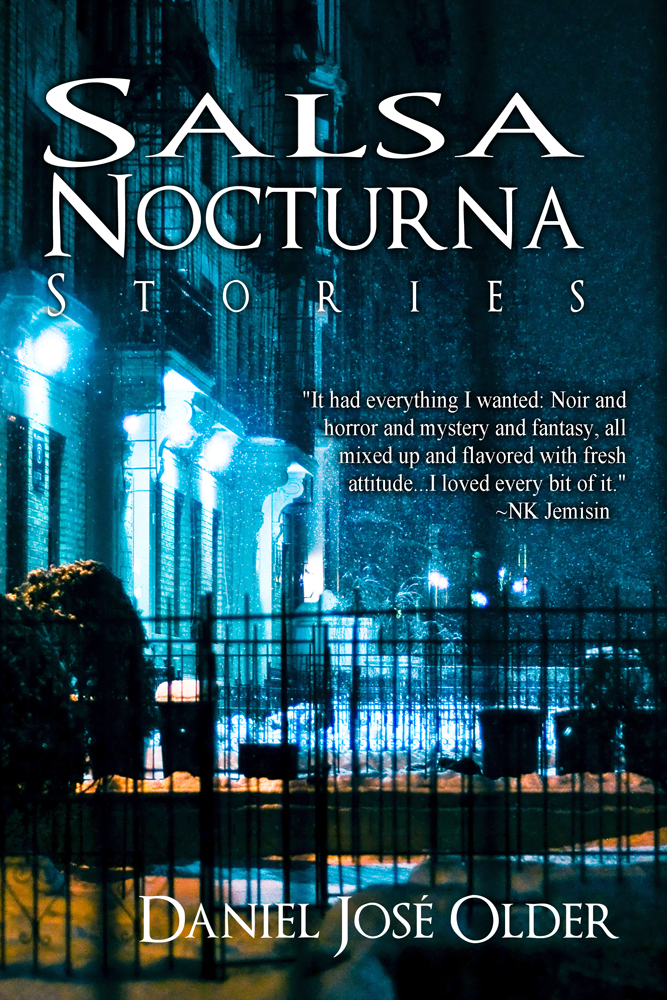
Daniel José Older is the author of Salsa Nocturna, a collection of ghost stories that Publisher’s Weekly called a “delicate mix of horror and humor” that secures Older “a place among the rising stars of the genre.”

Daniel José Older is the author of Salsa Nocturna, a collection of ghost stories. He’s also a composer and paramedic living in Brooklyn, New York. He has facilitated workshops on music and anti-oppression organizing at public schools, religious houses, universities, and prisons all over the east coast. His soul band Ghost Star regularly performs original multimedia theater productions about New York history around the city. His stories have appeared in Strange Horizons, Flash Fiction, Crossed Genres, and The Innsmouth Free Press and The Subversion Anthology, among others. He’s been a featured reader in Sheree Renée Thomas’ Black Pot Mojo Reading Series and at The New York Review Of Science Fiction.

In this interview, Older discusses ghosts and stories and why we love to combine the two.

(To read Older’s story “Victory Music” and an exercise on introducing genre elements into literary fiction, click here.)

Michael Noll

This is a ghost story, and it begins appropriately, with the narrator telling a dead person that “you’ve saved my life at least twice. And once was after you died.” But I was still surprised when the ghost actually arrived, not only because it’s not the ghost we expect but because I’d gotten so engaged in the scene with the narrator’s parents that I’d forgotten that there was supposed to be a ghost at all. I was reminded of Kenneth Burke’s essay, “Psychology and Form.” To explain how suspense is created, he uses the scene from Hamlet when Hamlet is waiting for his father’s ghost but then gets distracted by this uncle’s drunken entourage. Hamlet, and the audience, get so wrapped up in his uncle that we forget all about the ghost and so are surprised when it arrives. I wonder if you had this basic idea in mind when you wrote the story: promise something and then delay its arrival.

Daniel José Older

Great question. I’ve always been fascinated by the letters we write and never send, or write in our heads but never put on paper. I think this is one way we interact with the dead without meaning to or realizing it sometimes, that internal dialogue. The idea of the things we never had a change to say to someone is so heartbreaking and so real. So on the process tip, that was my starting point. In this case, I wasn’t thinking of Krys as a foreshadow so much as an emotional center that Wes anchors to for support even after Krys is dead. Memories are powerful, more powerful than ghosts maybe, and the subtext to this story, in my head, is that Krys—who does show up as a ghost in my book Salsa Nocturna—is never actually present in this story; Wes uses the memory of Krys to access a sense of their own power and sense of self.

Michael Noll

Salsa Nocturna is a collection of 13 ghost stories, published by Crossed Genres Publications.

Salsa Nocturna is a collection of 13 ghost stories, published by Crossed Genres Publications.

Your first book, Salsa Nocturna, is a collection of ghost stories. On one hand, when I read the description of the book, I thought, “Oh, that’d be fun to focus every story on ghosts.” But then I realized that you’d have to make each ghost and the approach to each ghost different. To that end, the ghost in this story isn’t really a ghost. He’s someone who can vanish at will–but, he still seems like a ghost. So, to some extent, it seems like you’re expanding the definition of ghost and ghost story. Is that simply out of necessity–there are only so many ghosts?

Daniel José Older

Ha! I really hadn’t thought of it that way. Once the underworld, or parallel world really, of ghosts became clear in my mind, the stories all came very smoothly. In some sense there’s truth in what you say though, as artists we always need to be pushing at the borders of our genre and comfort zones, and with “Victory Music” I was interested in how we are haunted sometimes more by the living than the dead. It’s a concept I’ve played with before, though never quite in these terms, and as I said, the healing power of memory plays a major role here. Niles just showed up in my imagination as is—he was born from the necessity of having an eerie, emotionally resonant conflict for Wes. And the act of disappearing is so rich, so layered when complicated by power and privilege…it’s a natural fit for the story.

Michael Noll

In this interview at the New York Times, Victor LaValle (The Devil in Silver), says, "The best monsters are our anxieties given form. They make sense on the level of a dream, or a nightmare."

In this interview at The New York Times, Victor LaValle (The Devil in Silver), says, “The best monsters are our anxieties given form. They make sense on the level of a dream, or a nightmare.”

The writer Victor LaValle said in a New York Times interview, “The best monsters are our anxieties given form. They make sense on the level of a dream, or a nightmare.” The ghost in your story seems to fit this description. The narrator is concerned with identity–her Sikh-ness, her gender–and then, appropriately enough, here comes a guy who can empty out his identity until he literally vanishes. Do you think about the meaning of your ghosts, the particular anxieties that are manifested in them?

Daniel José Older

Surely—the ghost is a crossroads. Past and present, life and death, healing and destruction all have the potential of meeting in the figure of the ghost. When we spend so much time focusing on the simple concept of ghost as evil spirit, it’s just a profound missed opportunity. Writing Salsa Nocturna really taught me that ghost stories are really about life, not death.

Michael Noll

I know a horror writer, Scott Johnson, who, in his free time, investigates ghosts and has encountered them many, many times. Those encounters have ranged from terrifying to quirky to sweet. I love hearing his stories—and other true ghost stories. Though I’m not sure I “believe” them in the factual sense, I find them utterly compelling. So, while I’m curious whether you believe in ghosts, I’m more interested in your take on ghost stories: Why do we tell them so often? What is the appeal of ghost stories?

Daniel José Older

How we view ghosts is about our connection to our own histories. Do we have something lurking back there, waiting to pounce? Do we lament an idealized day gone by? Have we found balance or are we still at war with our past? On a national sense, there’s so much undealt with baggage in the founding and maintaining of this frail, corrupt democracy and we’ve never really confronted what that means. So the idea of a shadow from history materializing in our modern world and causing havoc resonates, on a level that touches on both anxiety and empowerment.

December 2013

Profile pic

Michael Noll is the editor of Read to Write Stories.

How to Introduce Genre Elements into a Literary Story

17 Dec
Daniel José Older's story, "Victory Music" was first published in PANK 8.06 and republished as part of Necessary Fiction's RePrint series.

Daniel José Older’s story, “Victory Music” was first published in PANK 8.06 and republished as part of Necessary Fiction‘s RePrint series.

How do you introduce genre elements into a literary story without also feeling beholden to the genre’s usual structure? For instance, not every story with ghosts is a ghost story. Anyone reading the first lines of a ghost story has certain expectations for what will happen. But if that same person begins a story about a young woman who tells her parents that she’s no longer a girl, the expectations are different. It’s the old genre vs literary divide.

One way to handle this balancing act can be found in Daniel José Older’s story “Victory Music.” It was originally published in PANK 8.06, and was selected as a RePrint by Necessary Fiction Writer-in-Residence Ashley Ford. You can read it now at Necessary Fiction.

How the Story Works

Any story that wants to use genre elements but not genre structure must toe a fine line. If it drops the genre element (in this case, a ghost) into the story out of nowhere, the reader is likely to be confused or thrown for too much of a loop. But if the story introduces the genre element too firmly, the reader is going to expect a genre structure. The trick, then, is to hint at the genre element without settling too firmly into the structure. Let’s look at how Daniel José Older does this in “Victory Music.”

He hints at the genre element (the ghost) by letting the narrator address a dead person named Krys. The opening section ends this way:

I wanted to tell you that you’ve saved my life at least twice. And once was after you died.

Notice how the statement is vague enough to be read several ways, only one of which requires a ghost. But even that lack of specificity might be too much—which is why the story begins with a paragraph that has nothing to do with ghosts:

One of my favorite moments ever was when the boy called me an Arab and you said, “She’s Sikh, fucknut” and then when he said “Oh, like hide and go-“ you broke his nose. I heard music playing, I swear to God, and it was victory music, your music: A dusty, unflinching beat, lowdown and grinding. It didn’t matter that my family’s not even technically Sikh anymore since my parents went born-again and I’m just whatever. I smiled for days after that moment, Krys. Days.

The first section ends with a hint of a ghost but a lot of non-ghost potential conflict. The next section can go two ways: It can develop the “saved my life…after you died” idea or one of the non-ghost ideas from the first paragraph. Older chooses the latter, reintroducing the narrator’s parents:

[M]y dad sent the twins to bed with a growl and then said to me, “What do you mean you’re not a girl?”

Imagine how different the story would be if it began the first section with something ghostly. In order to continue to increase the suspense further, the story would have no choice but to further develop the ghost—and as the possibilities for development narrowed, that is when the story would likely adopt the usual structure of a genre ghost story.

Instead, because the story introduces the conflict around the narrator’s gender identity, the story is given a new conflict to develop—and, in this story, that conflict climaxes with the appearance of a ghost. To some extent, the difference between a story with ghosts and a ghost story is when the ghost appears. The earlier it appears, the more likely it becomes that the story adopts a genre structure. (I’ll admit that there are exceptions to this rule, as shown by this story about a monster.)

The Writing Exercise

Let’s introduce a genre element into our stories, experimenting with placement, using “Victory Music” as a model:

  1. Choose the genre element. Pick your favorite genre story and borrow something from it: ghosts, zombies, vampires, monsters, detectives, cowboys, aliens, giant squid, playboy millionaires, heiresses with squandered fortunes, wizards, middle-aged women looking for sex in a city, 20-something actors with entourages of hometown friends.
  2. Hint at the genre element. Write a sentence or two that suggests to the reader which genre element is coming. Don’t be too specific (“There were werewolves somewhere in this city.”) Instead, try to hint at the element in a way that lends itself to multiple interpretations. Remember Older’s line from “Victory Music”: “I wanted to tell you that you’ve saved my life at least twice. And once was after you died.”
  3. Lead up to your hint with something unrelated to the element. Keep in mind the writer Ron Carlson’s advice that every story contains two parts: the story and the world that the story enters. Create a character or world that exists independently of the genre element that you’re introducing. Give that character or world the seeds of a conflict(s) that have nothing to do with the genre element.
  4. Figure out the relationship between conflict and genre element. Your story is necessarily going to move between two elements: the character’s original conflict and the genre element. To make this move, it’s helpful to know where each is located. Do they exist in the same space? In Older’s story, the ghosts are in one place and the conflict with the father is in another place.
  5. Develop one of those conflicts. Keep in mind where you’re going. If the genre elements waits elsewhere, the conflict should develop so that the character is required to leave one place and go to another.
  6. Introduce the genre element. Remember that most transitions are not clean breaks. Make the character preoccupied with the conflict he/she just left. That way, when the genre element appears, it will come as a surprise to both the reader and the character.

Good luck!

An Interview with Benjamin Rosenbaum

12 Dec
Benjamin Rosenbaum's story "Feature Development for Social Media" was published at Tor.com. You can find a complete list of his stories here.

Benjamin Rosenbaum’s story “Feature Development for Social Media” was published at Tor.com. You can find a complete list of his stories here.

Benjamin Rosenbaum is the author of The Ant King and Other Stories. His stories have been published in Nature, Harper’s, F&SF, Asimov’s, McSweeney’s, and Strange Horizons, translated into 23 languages, and nominated for Hugo, Nebula, BSFA, Locus, World Fantasy, and Sturgeon Awards. He lives near Basel, Switzerland.

In this interview, Rosenbaum discusses social media in fiction, our ability to grow accustomed to anything (even zombies), the phrase first world problems, and a tabletop roleplaying game about teenage monsters.

(To read Rosenbaum’s story “Feature Development for Social Networking” and an exercise on story tone, click here.)

Michael Noll

I’ve been struck by the absence of social media in new stories and novels. In fact, the only social-media story I can think of is Jennifer Egan’s “Black Box,” which was written as a series of tweets. So, I love the sections of your story that are written as Facebook messages. What were the challenges you faced in using this form? Was it tempting to treat the medium ironically—to exaggerate or spoof the way people communicate via Facebook. Even though the scenario is far-fetched (zombie attack), the way the characters communicate seems authentic and real.

Benjamin Rosenbaum

I feel like there’s a certain amount of use of social media, instant messaging, etc, particularly in YA fiction. M.T. Anderson’s brilliant novel Feed comes to mind (not written exactly in an epistolary style, but in which the equivalent of IM’ing and tweeting is heavily foregrounded and substitutes for much of the dialogue), or Lauren Myracle’s ttyl.

Interestingly, the direction of my revisions was to tone down the realism of the Facebook usage. It’s not so much that I was tempted to exaggerate and spoof, as that my initial draft was very closely emulating real Facebook usage — for instance, the fact that the responses to a comment do not follow the comment immediately, but occur after a certain lag time during which other comments have intervened. In revision I simplified and threw away some of the peculiarities that are part of real Facebook interactions, but which weren’t thematically central and which made it harder to read smoothly as fiction.

I tried to be pretty naturalistic, rather than broad, because I thought the humor would mostly come from the contrast of the realistic, everyday style of discourse and the fantastical situation. I was going to say “familiar style of discourse” and “unfamiliar, dramatic situation”, but of course it’s really two familiarities — the everyday, real-world familiarity of social networking and the pop-culture familiarity of the zombie outbreak.

If anything, in revision, I made the satire sharper and the characters more distinct. Jewell got bubblier and more committed to lower-case abbreviations, Buster more self-serving and insensitive, etc. In that sense it actually became less naturalistic — the characters moved closer to being types, the way Dickens’s or Austen’s minor characters are. There’s always a balance to be struck between naturalistic and stylized.

Michael Noll

The actual zombie action takes place off the page, referenced but never seen directly. Even when the story’s characters see zombies, they don’t describe them with great detail. In a way, this seems to cut across the zombie genre, which almost always shows gore and carnage eventually. For instance, in this exchange between Facebook employees, one of them writes: “Suresh, you should check out the 2nd floor webcam. There’s not a lot of Grief and Loss Counseling going on up there right now. Nor do I recommend a massage.” I love that this detail is delivered as a literal P.S. to an email about the feature development from the story’s title. This particular exchange ends with one character writing, “Let’s not get distracted people!” On one hand, this is funny. On the other hand, it seems like it keeps the zombie-biting-people stuff from taking over the story. Were plot details like this one always dropped into the story so casually? Did they ever occupy a more direct space?

Benjamin Rosenbaum

So partly, I was going for a humorous deflation of the zombie story. If I’m juxtaposing the mundane detail of the everyday with the horrific detail of the apocalypse, and they are described with equal focus, the horrific details are going to take over emotionally.

Blood and gore are sensational: they force the reader to pay attention, demand an emotional reaction. On the other hand, if you demand an emotional reaction when you haven’t really earned one — when the reader isn’t sufficiently invested in the characters and the action — you get sentimentalism or melodrama rather than a real emotional response. The reader pulls back, because you’re rubbing their face into extreme stimuli without having won them over.

Kelly Link's collection of stories, Stranger Things Happen, includes the brilliant story "The Specialist's Hat."

Kelly Link’s collection of stories, Stranger Things Happen, includes the brilliant story “The Specialist’s Hat.”

So in a way, distancing the carnage is a double win: primarily, it’s funnier, because it allows the juxtaposition of mundane and extreme to be a balanced juxtaposition. But also, I think it may actually be scarier too, because the little details of what’s going on sort of slip in to the narrative. Something that’s just offstage is often scarier than something in the center of the screen. The end of the movie Blair Witch Project is far scarier than most horror movies where there’s an onscreen monster, because so much is implied, evoked in your imagination. However good the CGI or the rubber suit is, it’s never going to be as frightening as what your brain can project into the unknown. Kelly Link is an absolute master of this; I think “The Specialist’s Hat” is an exquisitely scary story, for instance, precisely because of what we don’t know.

In writing this, funny was more important to me than scary, but the little bit of scary helps bring the funny into relief, and makes it sharper.

There’s another related thing going on here, too, which is that I wanted to talk about habituation, which I think of as one of the most powerful mechanisms of the human mind. It’s like we can get used to anything. Like, in the first decades of aviation, flying was this incredible, awesome, unbelievably thrilling achievement. Human beings could fly — like birds! We had conquered gravity! To ascend to the heavens in a plane was mindblowing, it was this rush of absolute wonder and power. Now we get on a plane and we’re like, security sucks, my seat is uncomfortable, why do I have to put my tray table up, damnit my laptop battery is down and the inflight magazine is boring, what do they expect me to do, spend my time looking out at the clouds? This is actually hilarious when you think about it. And at the same time, people in horrific situations habituate to them too. I just re-read the Diary of Anne Frank, the new edition where they restored a bunch of stuff that had been cut out for propriety’s sake in the 50s. Anne Frank spends very little time on the Nazis. She occasionally remarks that it sucks that they have to hide, and that she’s worried about her schoolmates who didn’t hide in time, and that they’re following the progress of the war. But 90% of the time she’s pissed off at her mother, and at Peter’s mother, and at the guy she has to share a room with. Somebody’s not peeling enough potatoes and someone else is hogging the radio. That’s what life is composed of, whether you are an internet billionaire or a hidden Jew in occupied Holland during the Holocaust. Occasionally you stick your head up and think “hey, I could buy a small country!” or “hey, I’m probably going to be killed soon!” but most of the time you’re like “goddamnit, these potatoes are too salty” or “omg I think he might like me like me.”

That’s what’s deeply wrong, by the way, with this whole #firstworldproblems meme, you know that one? It’s supposedly an excercise in humility and perspective, but in fact it’s an exercise in arrogance. You know, like “my underwear is itchy #firstworldproblems” or “there’s too much goat cheese in my salad #firstworldproblems” or “I can’t get my favorite show on my cell phone #firstworldproblems”. You think people in Bangladesh don’t complain if their underwear is itchy? You think people in the dystopian industrial sprawl of China don’t bitch about their cell phones? There are 1.2 billion cell phones in China, four times as many as there are in the US, 89 per 100 citizens (in the US it’s 103 per 100 citizens). I just read the graphic novel of Waltz with Bashir — there’s this scene where there’s a firefight on the beach in Beruit, and the locals are coming out onto the balconies of their highrise beachside condo apartments to watch the gunfight like it’s a movie, leaning on their railings, smoking and kibitzing. Humans can get used to anything. Our focus is local. I grew up during the crack and AIDS epidemics, with most experts telling us that global nuclear annihilation was immanent, and I knew all that, but still I was mainly interested in playing D&D and going to 7-11, right? So it seems very clear to me that if there’s a zombie apocalypse, a lot of people are going to feel like that’s security’s job to deal with, and they need to get the next feature out. I mean we are currently dealing with the longest-running war in U.S. history, the irreversible melting of the polar ice caps, antibiotic resistant tuberculosis, and looming government financial default, but we’re still mainly interested in watching videos of cats. Why would zombies change anything?

I went back and looked at an early draft of the story — this dynamic, the foregrounded mundane and the offstage carnage, was in it from the beginning. Mostly what changed in revisions were plot and structure things. The story has a better ending now; it just kind of trailed off in earlier drafts.

Michael Noll

Zombie stories and other monster stories, especially vampire stories, are everywhere you look right now–and have been for a few years. They’re scary and thrilling, of course, but I wonder if their appeal runs deeper than just thrills and goosebumps. More than a few people have pointed out that zombies and vampires tend to reflect our fears as a culture (fear of outsiders, certain kinds of sexuality, fear of death). But I wonder, given the present wars and political violence, if monster stories don’t somehow put mass violence at a remove–in other words, putting our fear of such violence into a form that we can consume without being overwhelmed with fear or terror or grief. What do you think? What’s the power or appeal of zombies?

Benjamin Rosenbaum

I think this is a very good insight. It’s certainly one main job of the fantastic, in general, to put things at a remove where we can deal with them. When we think directly about dangers that really exist, we can get caught up in despair or anxiety, and sink. Adding an element of the impossible is one way of freeing up our minds, so that we relate to the danger with playful creativity. Often, this kind of distancing can make the emotional impact of a story greater. We’re less likely to get overwhelmed and shut down if there’s a balance between the absurd or imaginative and the horrific.

There are other techniques that can do this in realistic narratives. I recently read Ishmael Beah’s A Long Way Gone, his memoir of being a child soldier in Sierra Leone. What happened in his life was, he had this relatively idyllic, calm, rural childhood, and then the war came and first he was fleeing and starving as a refugee, and then he was brutalized and drugged and forced to murder people, and then he got out and was rehabilitated. If he told it in strict chronological order, it would start out pleasant and slow, and then descend into just unbearable awfulness, and then level out into a long and difficult and slow, if hopeful, recovery. That would be really hard for the reader to take. When you got to the part with twelve-year olds killing and mutilating people, you wouldn’t be able to go on without checking out emotionally. So what he does is very sophisticated and wise. He starts out chronologically, but as it gets worse — in the part where they are wandering around starving and being chased away from villages and seeing people die — he salts it with flashbacks. You’ll be in some truly horrific scene and he’ll say “oh, and this reminds me of the story my uncle used to tell back in the village” and he’ll give you something whimsical or sweet. And it’s not cheap or gimmicky, because he’s not just doing it to protect you from being overwhelmed. He’s also honoring the village that was lost, he’s sharing with you the whole reality of where he came from, which is not just the horror of the civil war but also the humane, pleasant ordinariness of the lives it intruded into. He’s showing you that Sierra Leone is not just child soldiers killing people, but also uncles telling stories at dinner. And when he gets to the worst part — where he actually becomes a soldier — he gives us very little of it, before skipping ahead to the story of rehabilitation, and then gradually feeds us the horror in small flashbacks, interleaved with things getting better. The treatment of chronology is very deft. He’s protecting the reader, not in order to insulate the reader from what happened so that the reader doesn’t care, but rather so that the reader will care — so that we won’t get overwhelmed and start reading it as just a story of terrible people in some terrible place. He’s resisting being sensationalized, resisting the role of the victim, insisting on constantly putting forward his own and his people’s humanity and agency and ordinariness.

So that’s one thing. Fantastic elements can serve the same kind of purpose, of distancing us enough so we can connect.

Mass violence is one thing zombies can stand for. Pandemics are another — this is definitely a zombie story in the spirit of 28 Days Later, where it’s a grittily real medical catastrophe that’s going on. A related thing that interests me about zombies is that they’re about dehumanization. Someone is infected with something that makes them dangerous and violent — do you see them as a monster, or as a person with an illness? There’s a way in which the apocalypse is often used to grant the characters, and the readers, license to escape a world in which we’re expected to deal responsibly with other people, to tolerate difference, to resolve conflicting needs; if everything falls apart enough, we have permission to just chop off the heads of people who we find difficult. Zombie stories are also about isolation. When I moved to Switzerland the most recent time, and was feeling very disconnected, I found myself having obsessive daydreams about pandemic flu clearing the streets, about having to subsist on what was in my apartment, to bar my door.

Monsterhearts is a roleplaying game where players explore the confusion that comes both from growing up and feeling like a monster.

Monsterhearts is a roleplaying game where players explore the confusion that comes both from growing up and feeling like a monster.

Monsters can stand for a lot of things. There’s a really brilliant tabletop roleplaying game, probably the best-designed roleplaying game I’ve ever played, called Monsterhearts, about the messy lives of teenaged monsters. One thing that’s amazing about it is how the game explicitly instructs you to create fiction that operates on both literal and metaphorical levels, simultaneously. Your Werewolf feels out of control of his body, which is changing without his consent — like every teenager’s, but also like a werewolf. Your Ghost feels invisible and lost, trapped by the past and like no one can even see, much less understand her, plus she actually can walk through walls. Your Vampire is about temptation and emotional manipulation and dangerous desire and also bites people. The game captures the balance that fantastic fiction strikes at it best — the fantastic elements evoke emotionally real things without being reducible to them. It’s not allegory, it’s symbol, which means it doesn’t collapse into a hidden meaning like a code, rather it radiates out meanings, generating echoes of echoes.

December 2013

Profile pic

Michael Noll is the editor of Read to Write Stories.

How to Find a Story’s Tone

10 Dec
Benjamin Rosenbaum's story XXX appeared at Tor.com

Benjamin Rosenbaum’s zombie story “Feature Development for Social Networking” appeared at Tor.com. (Illustraton by Scott Bakal)

Some stories have been told countless times. Yet, as writers, we often feel compelled to take another crack at them. So how do we make our stories different? Sometimes the answer is to find an unexpected tone.

Benjamin Rosenbaum does exactly that in his zombie story “Feature Development for Social Networking.” I guarantee that even if you’ve read a thousand zombie stories, you’ve never read one like this. You can read it now at Tor.com.

How the Story Works

Playing with tone in a story is a bit like improvising in music. A simple melody is easier to improvise than one that requires concentration just to play straight. So, when you’re thinking about tone, it’s helpful to make everything else simple. Here’s the opening of “Feature Development for Social Networking.” Notice how simple it is. (If you haven’t read the story yet, it’s written as a series of Facebook posts and comments).

Marsha Shirksy Got bitten . . .

Roland Wu wtf? Are you kidding?

Buster Day that is so not funny

Emily Carter omg Marsha are you serious?

Marsha Shirksy I’m not kidding, you guys! There was a rager at the supermarket. I could tell he was acting weird & I know I was totally stupid not to just drop my stuff and run! I’d just been in line forever & they had this terrific local asparagus on sale. Yes, I may have just sacrificed myself for asparagus.

The first two words of the story (after the character’s name) provide everything the reader needs to know about the plot (“Got bitten…”). Anyone who’s ever read a zombie story knows how this one will end. So, instead of focusing on the plot, Rosenbaum can play with tone. He finds his tone by doing a couple of simple things:

  • He chooses a place with a particular style of communication. In this case, it’s Facebook, with its users’ tendency to exaggerate the emotion in all statements (omg, wtf, exclamation marks galore) in order to not be misunderstood.
  • He gives himself room to play with tone. The first line introduces the plot, but then that plot is not explained or developed in any way until Marsha Shirksy speaks up again. In that lull, there’s space to play with tone. Notice how Roland, Buster, and Emily all say basically the same thing in slightly different ways—but also in ways that reinforce a kind of philosophy toward communication (or tone): informal, intimate, and performative (wtf, omg).
  • He uses the tone to convey an important piece of story information. After the Facebook tone is set, Rosenbaum uses it to tell the story of the zombie attack. Notice how that paragraph uses all of the traits established in the previous three lines: it’s informal (the ampersand, “totally stupid”), intimate (“you guys”), and performative (“Yes, I may have just sacrificed myself for asparagus).

Once the tone is set, the story is off and running. If you read the entire piece, you’ll see how Rosenbaum introduces a second set of characters and a slightly different form of communication goes through this process all over again.

The Writing Exercise

Let’s play with tone, using “Feature Development for Social Networking” as a model:

  1. Choose the oft-told story that you want to tell. Make it as simple as possible: zombie attack, quest, boy/girl falls in love with boy/girl and has to woo him/her, ghostly apparition, relationship goes sour.
  2. Choose a place with a particular style of communication. Think about the places where characters code switch (adapt to a language that is particular to one group): a bar, a workplace, a church, a classroom, or the hallway or space immediately outside the classroom or church or office or bar, a dinner table, a restaurant.
  3. Introduce the plot immediately. I got bit. I had to find the key, document, Easter egg, baby. I had to make him love me. The ghost handed me the shampoo. I used to love her, but now I don’t.
  4. Give yourself room to play with tone. Establish the communication style. You can do this by putting your character into conversation, having him/her tell the story to someone else. Or, you can simply adopt the tone of the place/group and use it in what is essentially a monologue. Think about the language’s phrasings, idioms, approaches to emotion (exaggerated, muted), use or avoidance of literal or figures of speech, directness or roundabout-ness. Think about speed. How fast or slow do the character talk? Play with the voice until you begin to hear it in your head, almost as if the voice is speaking to you.
  5. Use the tone to convey an important piece of information. How I got bit. Why I need to find the key, document, Easter egg, baby. Why it’s not easy to make him love me, or why I love him. What the ghost looks like. Why I don’t love her anymore.

Once you find the tone, you may find that the most enjoyable part of writing the story is the tone itself. Keep playing with it. Drop in a plot clue or reference now and then to keep the story moving forward.

Have fun.