An Interview with Ethan Rutherford

26 Sep
Ethan Rutherford's story collection The Peripatetic Coffin was X

Ethan Rutherford’s story collection The Peripatetic Coffin was long-listed for the Frank O’Connor International Short Story Prize and was called “a revelation” by National Book Critics Circle Award Winner Ben Fountain.

The stories collected in Ethan Rutherford’s debut book The Peripatetic Coffin aren’t afraid to tackle big, novelistic premises.  The title story is about the crew of a Confederate submarine during the Civil War. In “Dirwhals!” a whaling ship in the future sails about the sands of an emptied-out Gulf of Mexico, hunting a new kind of whale. And in “The Santa Anna,” the crew members of a Russian ship trapped in Arctic ice slowly succumbs to the inevitability of their situation. The fact that Rutherford pulls off such ambitious stories is a testament to his talent. It’s no surprise that The Peripatetic Coffin was long-listed for the Frank O’Connor International Short Story Prize.

In this interview, Rutherford discusses his approach to plot, the horrible allure of whaling, and rock and roll as the antidote to the isolation of being a writer.

(To read Rutherford’s story “Dirwhals!” and an exercise based on plot development, click here.)

Michael Noll

I really admire how you up the major plot elements in “Dirwhals!” For instance, when Capt. Tonker warns the crew about the Firsties, you write this: “So, his order: spot the Firsties, and report them, but under no circumstances were we to engage, even if provoked. They had cameras, they wanted us to fire on them, and they would stop at nothing to manufacture an incident, even if it came at great cost to their organization.” This is the proverbial gun on the wall. We know there will be an encounter with the Firsties, and the crew will not follow orders. Some writers are afraid to be so direct, but when I read that scene above, I got excited. It gave me confidence that there would be a payoff for reading to the end. There’s nothing worse than finishing a story and thinking, “Well, what was that all about?” Were you always so direct in the early drafts (and did you always know about the encounter with the Firsties) or was this was the result of revision?

Ethan Rutherford

That’s a great question. I always knew that there would be a confrontation with the Firsties at the end of the story; things always pulled strong in that direction when I stepped back to think about what should—or had to—happen in order to put pressure on the narrator’s sense of who he was, and what he was supposed to be doing out there in the sand. John Gardner has written that in order for an ending to be successful it ought to be both “surprising and inevitable.” That seems like a straightforward assertion, but I’ve spent many a sleepless night, tossing and turning, thinking: what exactly does that mean? The truth is, I always know where a story is headed—I have to know that, or I cannot write it. And so in a story about people who are trying to hunt an endangered, but commercially lucrative, species and the organization trying to save that species, a confrontation struck me as inevitable, and was always the moment I was writing toward. And that, as you point out, was telegraphed from the beginning of the story (the “gun on the wall”). So then what to do about the surprise? I’ve come to understand “surprise” in a story as having less to do with What Happens than with a character’s emotional response to the role he/she has played in bringing these events about. And the surprising part, to me, is that the narrator of this story—who over the course of their hunting voyage has come to glimpse the full, devastating effect of what they are doing—accepts and even embraces his role in this one-sided confrontation, rather than rejecting it. He’s horrified by what he’s doing, but not horrified enough to stop, an emotional shift that should hit him harder than it does.

You don’t want to telegraph too much, but the “gun on the wall” is a great way to create tension, and plot-tension is one way to keep people reading. In the first paragraph of Lolita, we’re told that you can always count on a murderer for a fancy prose style, and you go: wait, there’s going to be a murder! And so you keep reading just long enough for that book to cast its complete linguistic spell, and you don’t care how sucker-hooked you were from the start (in fact, that’s one of the pleasures of that book).

So, finally, to your question: I tried to hide the moving pieces in this story a little more in the early drafts, but it wasn’t working. Finally I just said: well, I’m not pulling this off. What happens if the stakes are laid out directly, and then I can get on with the more interesting work in the story? And in this particular case, in this story, that happened to work best. I always forget just how long that story is. And since most of the story is just this futuristic sand-mobile cruising around in a desert, not seeing anything at all, it seemed important to let the reader know that if they hung in there until the end, that patience would be rewarded in a devastating way.

Michael Noll

I’ve read stories about the experience of sailing across the ocean and feeling hopelessly lost, but while reading “DIRWHALS!” it was as if I finally understood what it must have been like for the crew of a whaling ship to see a whale leap out of the water. Perhaps it’s an effect of the strangeness of ocean being replaced with sand—that’s what science fiction is all about, right? The defamiliarizing of the familiar? I’m curious if you started out with the premise intact (the futuristic world) or if you wanted to write about whaling but needed a fresh entry to the story.

Ethan Rutherford

I’d wanted to write about “actual” whaling, originally. I spent a summer doing nothing but research on the American whaling industry, and I had two Great Ideas for my Big Novel. The first was that it would be Moby Dick II, picking up where that book stopped, an historical novel that continued the story of the whaling industry, and followed it through to its death-rattle at the end of the 19th century. The second idea was that I’d write a Moby Dick-ish story, but replace the great white whale with a huge giant squid, who was opposed to the laying of the Trans-Atlantic telegraph cable (1854-58) and made his displeasure known. I have a poster depicting such a scenario, and I thought: Ding! Both of those ideas bottomed out on the shoals for one reason or another—mostly, though, because I re-read Moby Dick and thought: well, there’s no topping this.

If you've never read Moby Dick, you can check out the entire text online at The Literature Network. The book's known for its length and lengthy discourses about knot tying, but the first chapter is an old-fashioned adventure yarn.

If you’ve never read Moby Dick, you can check out the entire text online at The Literature Network. The book’s known for its length and lengthy discourses about knot tying, but the first chapter is an old-fashioned adventure yarn.

But what had always interested/horrified me about whaling, though, was the ruthlessness of the enterprise, the shortsightedness of it: that people either didn’t see or didn’t care that what they were doing—or, more specifically, the way they were doing it—all of it only moves one way, and that’s toward extinction. Add to that, near the end of the nineteenth century, if you are a whaler, you are going on expeditions that begin to take years at a time, push you into some seriously forbidding territory—and somewhere in your head you begin to realize your only purpose on the water is the depletion of an increasingly devalued (commercially speaking) natural resource, for which you won’t even be compensated fairly, since all of the money that is to be made is done so by the wealthy people ashore who have financed the expedition. And then, you know, petroleum enters the picture, and renders the entire industry obsolete. Meanwhile, the ocean is just awash in blood, and for what?

Whaling, drilling, fracking, etc. It’s not all the same, but there’s some thematic rhyming going on there, and things are getting much worse, as far as what we are willing to put up with in order to keep things running in a way we find convenient. And science fiction isn’t only about rendering the familiar less so (as you so nicely say above), it’s also about taking the social/economic/theoretical problems inherent in the way we live now and running them, logically—with a little extra juice added, a little exaggeration—to the end of the line. So, long and drifting answer to your question: yes, I wanted to write about whaling, and I think, in the end, I did (the basics of the hunt are the same, the terminology is largely the same). But shifting the story into the future allowed me skew the setting, and allowed me to wrap the story around the themes I found interesting, rather than the other way around. Lighter note? Writing science fiction, the world building that occurs, is just really, really fun. And you are right, this was, at least at first, just a way to write about whaling without having to get too far into the ring with Melville.

Michael Noll

The story is written as a journal-in-letters–a form that is nearly extinct in our social media age. We have personal blogs, of course, but they are written with the knowledge that each post will be read immediately. But the letters in this story won’t be read for months, if ever. As a result, the narrator’s voice sounds almost pre-modern. The sentences are long and carefully phrased, as if the narrator has plenty of time to think before putting the words to paper. For instance, here’s a description of the first Dirwhal sighing: “This creature was enormousness itself, more viscerally alive and mobile than I’d thought possible. We watched as it surfaced again: a dark stain against the sand, winding its rounded bulk across the basin floor, rolling sideways rather than cutting in a straight line as I had always imagined it would move.” This is not a description that was scribbled quickly. It’s deliberative. Did you think consciously about the voice–about how someone in this situation might sound in a letter? Or did the voice simply occur to you?

Ethan Rutherford

I did think about the voice, a lot. In the first draft of the story, it was written more traditionally: linear narrative, first person, present tense. But those choices eventually presented a huge problem for the story I wanted to tell, which was a story that spans a number of years. Time management in short stories can be really difficult—or, I should say, I find it difficult—and I found that each paragraph would open with something like “Five weeks later…”. You can do that once, or twice, three times in a story, perhaps. But in “Dirwhals!” it was getting repetitive, and it became clear that the narrative choices I’d made—the way I was telling the story—was getting in the way of the story I wanted to tell. It wasn’t coming out right at all. Form was determining content, in a bad, bad way.

I’d read a lot of ship’s logs while researching the afore-mentioned Moby Dick II, and it seemed, in many ways, like the perfect way to solve the time issues in the story. I don’t know how many ship’s logs you’ve read, but they’re really wonderful and harrowing in the way they compress time, and lay the mundane next to the extraordinary. You know, one entry will read: “August 14: Good wind today. Corrected course. Everyone in high spirits.” And two entries later it’s something like: “October 2: Ship now fully encased in ice. Four men lost overboard in rough crossing. Polar bears becoming a problem. Cabin lamps performing well.” So I took a week, and put the whole thing into a ship’s log of sorts, and was thrilled by that. It solved all of my time problems, and also moved a lot of drama that was necessary to the story off-stage, and into exposition (another way to compress your story). The story still wasn’t working, though.

Then my editor at Ecco, Libby Edelson, read the story and said: you know, it’s a fine ship’s log, but who cares? His relationship with his sister is the emotional heart of the thing for me, and you’re ignoring it. Why don’t you see if you can make this log, somehow, into letters for her? And that snapped the entire story into shape for me. I’ll never be able to thank her enough. That suggestion also gave the voice a chance to stretch out a little: to formalize, to set scenes, to become baroque and self-conscious. A ship’s log is exclusively detail. When you are writing a letter—to someone you miss, and feel, perhaps, you’ve wronged—you try, a little harder, to bring scenes to life, you chose your words a little more carefully; you try to explain your actions—to yourself, to another person—and ask for love and forgiveness in return.

Michael Noll

Every writer I know secretly wishes they were a musician. I guess the experience of playing music live, of watching the audience absorb and react to your art, sounds good when you’re locked away by yourself, writing. There’s no comparable experience for a writer. At live readings, you have to pay attention to the words that you’re reading. You can’t look up and watch the audience for more than a few seconds. But you get to do both! (I’ll include a link to Pennyroyal’s website.) How does the life of a writer mesh with the writing life? Do they feed each other? Compete?

Ethan Rutherford
Ethan Rutherford is a member of Pennyroyal, a 4-piece rock band based in Minneapolis. The band's latest album is Baby I'm Against It.

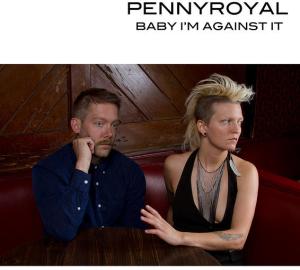
Ethan Rutherford is a member of Pennyroyal, a 4-piece rock band based in Minneapolis. The band’s latest album is Baby I’m Against It.

Ha! Right. And when you do look up at a reading, it’s not like you’re not making anyone dance, no matter how much they might be enjoying your version of a “radio voice” (unless, of course, they’ve put the podium directly in front of the bathroom, which I have seen with my own eyes). To a certain degree, though, performance is performance, you’re trying to get something across, and it’s wonderful and thrilling and scary to get up in front of any size crowd and share something you’ve worked hard on. I get the flop-sweats to exactly the same degree before readings and concerts. The difference for me comes, I suppose, in the composition. When you’re writing a song, or ironing out the kinks, you are doing it with three other people, in real time, and you just know if it’s working or not. You know the sour notes as you hit them. When writing, I’ve found that it can take me years to figure out where the sour notes are. What I like about the process of creating music is exactly the opposite of what I like about writing. Being in a band, for me, is about camaraderie, compromise (in a good way! Perhaps teamwork is a better way to put it), and immediacy. Writing requires a great deal of patience, determination, and the weird desire to project a world of your own making. Writing also requires a particular and pleasurable kind of solitude that can veer, quickly, into loneliness. So you can see how the writing/music split is, in some ways, self-medication. When I’ve spent too much time alone, music can pull me out of that. And when I’ve had enough of being around other people, I know it’s time to go back to the writing desk. I’m a recent father, though, so this last year has really put that creative theory to the test, in the best way possible. My time isn’t my own anymore, not the way it once was. So I’m getting better at doing a little bit here, and a little bit there, and seeing where it all lands at the end of the week.

September 2013

Profile pic

Michael Noll is the editor of Read to Write.

How to Put the Gun on the Wall

24 Sep
Ethan Rutherford's story "Dirwhals!" was published at FiveChapters and included in his debut collection The Peripatetic Coffin.

Ethan Rutherford’s story “Dirwhals!” was published at FiveChapters and included in his debut collection The Peripatetic Coffin.

By now, everyone knows the Russian story writer Anton Chekhov’s suggestion, “If you say in the first chapter that there is a rifle hanging on the wall, in the second or third chapter it absolutely must go off.” In workshop, if a story needs more tension, it’s not uncommon for someone to say, “Put a gun on the wall.” Students tend to take this advice literally and hang up not only guns but knives, axes, chain saws, and mean dogs.

So, what if you want to set up plot without literally hanging something on your story’s wall? The writer Ethan Rutherford demonstrates another method in his futuristic whaling story, “Dirwhals!” It’s included in his debut collection The Peripatetic Coffin, and you can read it now at FiveChapters.

How the Story Works

The story is about a whaling ship in the Gulf of Mexico–except that the Gulf has been drained of water, and the whales are large whale-like beasts that burrow through the sand. Most of the dirwhals have already been killed, and so the ships hunting them must travel into unknown areas. In this scene, a ship’s captain is speaking to his crew, and what he says will set up a plot point as neatly as putting a gun on the wall:

“But what he had come to tell us was now that we were moving further and further into the basin, those on watch were to be spotting for two things: dirwhals, and other shipper-tanks, which, given our current location, would most likely belong to the Firsties. A collective groan, followed by hissing, went up among the crew. Protection kooks, someone explained to me when I asked who the Firsties were. Bushard added: kamikaze environmentalists; degenerates; cultists; criminals. Capt. Tonker held up his hand for silence.

Their aim, he said, is to put us out of a job.”

The captain’s speech neatly lays out the stakes, not only the crew versus the Firsties but also the forces that are pushing them into a confrontation. Now watch how Rutherford uses these stakes to set the crew on a course that will determine the plot for the rest of the story:

“So, his order: spot the Firsties, and report them, but under no circumstances were we to engage, even if provoked. They had cameras, they wanted us to fire on them, and they would stop at nothing to manufacture an incident, even if it came at great cost to their organization. He asked us if we understood. We answered: yes, of course.”

As savvy readers, we know that the crew will run into the Firsties and things will not go according to plan. The certainty of that encounter is the gun on the wall. The decisions that lead the crew into that inevitable encounter is the story’s plot.

The Writing Exercise

Let’s use the captain’s speech in “Dirwhals!” as a model for how to set up plot:

  1. Choose a resource that can be exhausted. In “Dirwhals!” that resource is the whale-like creatures. But most things in the world exist in limited quantities: time, money, and jobs but also less tangible things like patience and endurance.
  2. For most resources, there is one side that wants to deplete the resource and another side that wants to conserve it. For the resource that you chose, what are those sides?
  3. Let a spokesperson for one of the sides explain the situation that will lead to an inevitable confrontation with the other side. So, if the story is about a woman who works 50 hours a week and in her off-hours takes care of her kids and maintains the integrity of the house and family, she will feel that her time is limited. If her brother calls and says that their mom can’t take care of herself and so should move in with the woman, the woman will obviously not feel that such an arrangement is possible. But, let’s say her brother is in the army and about to be deployed overseas. Now, you have two sides: one (the brother) pushing to deplete an already limited resource (the woman’s time), and another (the woman) trying to conserve what little time she has left to herself. Imagine the rant she might deliver to her husband or kids about the situation–imagine if that rant ends with “One of these days, my brother and I are going to have it out, and that will be the end of things.” What follows–the events that lead to that confrontation–is the story’s plot.
  4. If you want, you can outline those events.

Good luck with this exercise. You may find that a plot outline is not necessary. Knowing where the story is headed can sometimes guide you as much as any outline.

An Interview with Jamie Quatro

19 Sep

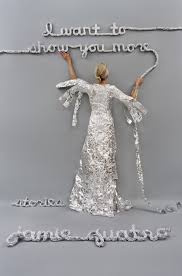
Jamie Quatro’s collection I Want to Show You More was called the “most engaging literary treatment of Christianity since [Flannery] O’Connor,” by J. Robert Lennon in The New York Times Book Review

When you read Jamie Quatro‘s biography, it becomes clear that talent is not divvied up equally. She is the daughter of a physician father and classical pianist mother, and was herself trained as a classical pianist until the time that she left for college. She graduated from Pepperdine at age 20, knocked out a MA in English at William and Mary, and was then awarded a Presidential Fellowship from Princeton for doctoral studies in British Romantic Poetry.

She left Princeton when she found out that she and her husband were expecting the first of their four children. Since then, she has earned her MFA in Fiction from the Bennington College Writing Seminars, published fiction in numerous journals, published the story collection I Want to Show You More to wide acclaim, and most recently had a story chosen for the 2013 O. Henry Prize Stories anthology.

In this interview, Quatro discusses her revision process, her approach to writing backstory, and the moment in her story “The Anointing” that took her by surprise.

(To read “The Anointing” and an exercise based on its use of detail, click here.)

Michael Noll

One difficulty in writing about religious experience is translating the immediacy and intimacy of the experience to readers who do not share the character’s beliefs. You solve this problem in a single sentence. You write, “Anointings were eleventh-hour efforts—what you asked for after you’d asked for everything else.” In the story, Diane knows that the anointing is a long shot, and yet she’s desperate for a positive signs, any change for the good. It’s almost as if the story is saying to the reader, “Look, this anointing probably isn’t going to work, but it sure would be great it it did.” The religious element is understood through universal human feelings of hope, desire, love, and desperation. I’m curious if this sentence was always present in the story. Did you worry in early drafts that readers would not be sympathetic to Diane?

Jamie Quatro

Funny you should ask about that line — it was indeed a late addition to the piece. In fact, I rewrote the entire opening, right up to that line, almost five years after I finished the story. Originally I’d written “last-ditch efforts,” but when my editor and I began working together, she wondered if we might come up with a less cliche, more immediate phrase. “Eleventh-hour” felt like something Diane herself would think, as the term is used, of course, in the gospel of Matthew, the parable of the laborers in the vineyard. And no, I didn’t worry about readers being unsympathetic. I don’t think about readers, or publication in general, when I’m drafting. For personal reasons, this story stayed in the proverbial drawer for a long time. I didn’t think I’d ever publish it. It was the last piece accepted by a magazine before the book went to press. Cathy Chung — Guernica’s brilliant fiction editor — bought it.

Michael Noll

The first part of the story is spent with backstory—how a successful marriage and life got the point that a last-ditch effort was made to rescue it from ruin. The rest of the story is spent, essentially, in scene–in the moments prior to and following the anointing. One of the cliches of workshop is that writers should avoid clumps of backstory–always integrate it into the fabric of the scene, students are told. And yet you do precisely the opposite, and it works beautifully. The backstory held me to the page as much as the in-scene portions. What was your approach to the backstory?

Jamie Quatro

It’s difficult to talk about “approach” to backstory — as I mentioned, I don’t think about such things when I draft. I think each story comes to an artist with its own structure, its own cadence and music, and that the artist’s first responsibility is to listen. For me, drafting is very much like listening to a piece of music or watching a film. You simply let the work rush on and do what it wants to do, take the shape it wants to take. That might involve “clumps” of backstory, as you say; or it might involve interspersing the backstory throughout the piece; or it might involve using no backstory at all. To be honest, I’ve never heard the workshop rule you mention above. I’m always skeptical of rules. An upfront “tell” at the opening of a story — here’s what’s happened in the past to get us where we are — can be used to great effect. Look at some of the stories in Joyce’s Dubliners: “A Little Cloud” begins with “Eight years before he had seen his friend off at the North Wall and wished him godspeed.” Or “Araby,” which begins with the backstory of the priest’s death: “The former tenant of our house, a priest, had died in the back drawing room.” Even if you end up cutting the backstory, it can be a useful exercise, to spell out precisely what has happened in the past before entering the first scene.

Michael Noll

The story begins with the characters at the edge of a precipice–perhaps Mitch will kill himself, perhaps Diane no longer believes in God—and immediately offers a solution to both of these problems: the anointing. As a result, I expected a conclusion that resolved one or both of those problems. Mitch would be saved or become worse. Diane would be strengthened in her faith, or she’d give it up completely. But neither really happens. The situation remains mostly the same. The primary change is that Diane despairs, whereas at the beginning she was hopeful. I’ll admit that I was taken aback by the ending. But as I thought about it, the ending seemed truthful in a way that a neat ending wouldn’t have. In life, there are very few dramatic shifts. Was this ending always present? Did you consider ending the story differently?

Jamie Quatro

Yes, this has always been the story’s ending. In a way, that hand pressing on Diane’s head is an anointing of a very different kind, a more radical and truthful version of the oiled thumbprint on the woman’s forehead at the beginning of the piece. To me a it’s a redemptive moment: Diane has been deceiving Ellie about Mitch’s true condition, even as she’s been deceived by Ellie and Mitch. Neither of those deceptions will be possible from this point forward. The only path open to any of them will be one of honesty. What took me by surprise, as I drafted, wasn’t the ending, but the moment Diane discovers that her daughter has been hiding the pills in her little purse. That was a devastating realization. I didn’t want it to be true, but there it was.

Michael Noll

What are you working on now? Many short story writers are also working on a novel. Is that the case for you as well? Quite a few of the stories in your collection are very short, a few pages or so, and they’re so masterfully written that I wonder if a novel is even something you’re interested in.

Jamie Quatro

Ah, the novel question. You know, I love the story form, and I’m at work on a second collection right now, but I will say this: one of the pieces I thought was a short story is threatening to become something bigger. For now I’m pitching it to myself as a novella. Time will tell. I do write poetry and essays, and lately have been doing some longer book reviews. I also just wrote a film treatment. So who knows? Maybe a play is next.

September 2013

Profile pic

Michael Noll is the editor of Read to Write.

How to Write about an Unearthly Experience

17 Sep
Jamie Quatro's story collection I Want to Show You More made New York Times reviewer Dwight Garner "laugh and gasp at the same time."

Jamie Quatro’s story collection I Want to Show You More made New York Times reviewer Dwight Garner “laugh and gasp at the same time.” You can read “The Anointing,” a story from the collection, at Guernica.

When writing about religion, it’s easy to fall into the trap of trying to find language or images that match the intensity of the believer’s experience. The problem is that this language almost always requires comparison and metaphor: “it felt like a strong wind” or “it was like there was a fire in my chest”. Such writing is fine for an audience inclined to believe, but it almost always fails with skeptics.

One writer who succeeds in finding a language to describe religious experience is Jamie Quatro. Her story, “The Anointing,” from her debut collection I Want to Show You More, is a perfect example of a successful description of what can seem like an indescribable miracle. It was published at Guernica, where you can read it now.

How the Story Works

In the Bible, most of Jesus’ miracles are described simply. The focus is almost always on the physical items involved, not on the experience. The apostles passed out the handful of loaves and fish, and the food never ran out. The water-from-wine at the wedding in Cannae tasted better than the wine from the original casks.

This is the same strategy used by Quatro in “The Anointing.” In the story, Diane’s husband is so depressed that he refuses to get out of bed. She has begun to fear for his life, and so she requests an anointing from the church elders. Here is how Quatro describes the kind of miracle that Diane has in mind:

“During evening worship—held in a makeshift auditorium beneath a stained canvas tarp—a boy with braces on his legs was brought forward by his mother, his wheelchair leaving tracks in the sawdust. The camp’s pastor removed the braces, knelt in front of the chair, and rubbed oil all over the boy’s white calves as if he were applying sunscreen. The following summer the boy came back to camp still wearing the braces, though now he used crutches with metal cuffs around the wrists.”

Notice the details that Quatro provides: the stained canvas tarp, tracks in the sawdust, oil applied like sunscreen. These are the mundane details of the physical world, not the language of spirituality. The result is that readers are more likely to set aside their natural skepticism.

Here is how Quatro describes the arrival of the church elders, the source of the miracle she hopes for:

“She thought they’d have a small phial, like a test tube—maybe something crystal—but Pastor Murray stepped in carrying a family-sized bottle of Wesson Oil. Diane was startled, not just by the oil (would something from Sam’s Club work?), but by the image of Florence Henderson that popped into her head, wearing padded mittens and frying up a mess of chicken.”

Because of the specific plainness of that description, we are engaged in the scene. We want to see the unearthly miracle that will (or will not) begin with that practical bottle of oil.

The Writing Exercise

Let’s write about an unearthly experience using “The Anointing” as a model:

  1. Think of an experience that is either unearthly (a miracle or encounter with something unearthly like God, a ghost, or an alien). Or think of any experience that has a hard-to-explain effect on a character.
  2. List the items involved: the room, the furnishings, the personal items. Be specific in your list: not just oil but “a family-sized bottle of Wesson Oil.”
  3. Now, set the stage for the experience. Assume that your audience is skeptical and ready to dismiss the first inklings of something unearthly. (This is always the assumption made by magicians, and the next few steps you will follow are the same steps they follow as well.)
  4. State what is about to happen (the miracle or unearthly experience).
  5. Show the items that will be involved, both directly and indirectly. (In Quatro’s miracle with the boy in the wheelchair, oil is used directly but the tracks in the sawdust are indirectly involved.) Make the reader believe in the physical reality of the scene. (This is why everyone knows the passage in the Bible where Jesus asks Thomas to probe his wounds with his fingers. We’re struck by the physical reality of the physically impossible.)
  6. State and show someone’s skepticism: the narrator or another character. (In Quatro’s story, Diane sees the oil and wonders if “something from Sam’s Club” will work.)
  7. Draw the curtain. Remove the object of the experience from sight, either literally (the narrator or main character leaves the room) or briefly (the narrator or main character looks away for a moment or becomes distracted). Make the audience forget for even a few seconds what is anticipated.
  8. Show the miracle or unearthly experience. State it simply. If the experience is truly remarkable, no loaded language is necessary.

Good luck and have fun.

7 Craft Lessons Every Writer Must Learn

13 Sep
Check out my craft essay, "7 Craft Lessons Every Write Must Learn" at the Huffington Post Books blog.

Check out my craft essay, “7 Craft Lessons Every Write Must Learn” at the Huffington Post Books blog.

The Huffington Post has published my essay, “7 Craft Lessons Every Writer Must Learn.” I use excerpts from seven stories to illustrate the ways that writers approach issues of setting, character, dialogue, language, structure, and scene. Check it out!

How to Add Historical Context to a Short Story

10 Sep
East of the West, the story collection from Bulgarian-born writer Miroslav Penkov, was called, by the Boston Glove, one of the most exciting debut collections in recent memory.

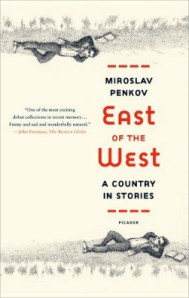
East of the West, the story collection from Bulgarian-born writer Miroslav Penkov, was called, by the Boston Globe, one of the most exciting debut collections in recent memory. The storoy “Makedonija” is included in the collection, and you can read it here at FiveChapters.

Stories are different than novels–obviously. They’re shorter, generally with fewer characters who face fewer complications within a more narrow scope. Novels that take place over the course of a day and stories that encompass decades are the anomaly, not the rule. And yet there are writers whose stories seem more like novels. Alice Munro is one.  Her recent story, “Axis,” (published in The New Yorker and The Best American Short Stories 2012), plays out over roughly half a century.

Another writer who accomplishes the same feat is Miroslav Penkov. The title story from his debut collection, East of the West, recently won the BBC International Short Story Award. It uses a love story to give a fierce portrayal of the geography of war. Another story from the collection, “Makedonija,” traces the effects of war over a person’s lifetime, a novel’s work in a single story. “Makedonija” was published at FiveChapters, where you can read it now.

How the Story Works

A man discovers the love letters sent to his wife by her old lover and reads them in a nursing home while offering advice to his daughter, whose husband is cheating on her. The story flips back and forth between the present and the past—the stories in the letters and the stories he remembers. As a result, he sees the present events against the backdrop of both personal and world history. The results are powerful.

For instance, here is a passage from the end of “Makedonija.” The old man is talking to his wife after sitting on a bench with his daughter’s husband. This is what he tells her:

“I’ve never told you this,” I say. “We never buried Brother. That was a lie. We never took him off the rope. I’d heard rumors, stories from people in our mountain, of how when mothers recognized their gunned-down children the tsarists pulled them aside and shot them on the spot. And so I told Mother, ‘I beseech you in your daughters’ blood, keep walking. Don’t say a word.’ And Mother was so shocked then she stood before my brother and didn’t even reach to touch his feet. We walked right past.”

In any work of fiction, it’s useful to ask what experience most haunts a character or narrator. That experience will likely shape, in subtle or obvious ways, the character’s decisions and reactions for the rest of his or her life. Here is a paragraph from Penkov’s story that does exactly that:

My brother came back from the war without a scratch. We never spoke of what he’d seen or done. I was ashamed to ask, and he was ashamed to say. We’d lost the war, of course, like all other recent wars, which was regrettable, since we never really lost our battles; we just picked the wrong allies. Or rather, our soldiers never lost their battles. Because what did I know? I herded sheep. So Brother joined me, up on the hills.

Of course, what happens next in the paragraph is that the war comes back for the brother.

The Writing Exercise

Let’s explore our characters’ pasts, using Penkov’s paragraph about his brother as a model:

  1. People often have multiple ways of thinking about their past: a view for when they’re feeling upbeat and a view for when they’re feeling down. How does your main character or narrator think about the past when he/she is feeling happy? What is the best version of the character’s personal history? The answer could relate to family or place, something small and intimate or large and cultural.
  2. What is the sad or pessimistic version of your character’s personal history? How does the character think about his/her personal past when he/she is feeling low?
  3. What is the main conflict from both versions of this past? What obstacle was overcome (or not overcome)?
  4. Fast forward to some point in the future. What sort of conflict would force the character to think about either version of this past? Possibilities include conflicts over love, children, property, money, and work. Ideally, the conflict should correspond in some way (though often unexpectedly) to the past conflict.

The past can affect the present in surprising ways. For instance, a happy version of the past could haunt a character who feels that she cannot live up to the standard set by previous generations. A dark version of the past could feel like an anchor on an otherwise buoyantly happy person. The point is to explore the ways that, as Faulkner famously wrote, “The past is never dead. It’s not even past.”

Good luck.

The Read to Write Craft Seminar

8 Sep
Michael Noll

Join Michael Noll for the Read to Write Craft Seminar: Sept. 21, 2-6 p.m. at The Writing Barn in South Austin. Priced at a sliding scale of $85-150. Choose the price that fits your budget. To register, click here.

Do these writing problems sound familiar?

  • You start a story but quit after three pages. Or quit a novel after 70 pages.
  • Your characters never seem to find themselves in a conflict. They seem flat, no matter how much you write about them.
  • Your dialogue goes nowhere. Your characters all sound the same and agree agree with each other too much.
  • Your stories or chapters all begin in the morning, with the character waking up. Your narratives are chained to the minute-by-minute progression of time.

Even great writers work at these challenges every day–the difference is that have learned strategies to deal with them. In this class, you can find out how they do it. We’ll look at excerpts from stories and novels from four different writers, with an eye toward discovering how they solve these problems.

The class is on Saturday, September 21, from 2-6 pm at the idyllic Writing Barn in South Austin.

To read a recap of a previous class, click here.

I hope you can join us for this practical, fun class.

Click here to sign up for the Read to Write Craft Seminar: September 21, 2-6 p.m. at the Writing Barn in South Austin. Priced at a sliding scale of $85-150. Or for more information, email Michael Noll at michaelnoll1@gmail.com.

Click here to sign up for the Read to Write Craft Seminar. Priced at a sliding scale of $85-150. Choose the price that fits your budget. Or for more information, email Michael Noll at michaelnoll1@gmail.com.

An Interview with Joe Lansdale

5 Sep
Joe Landale is the author of many novels and stories, including the Hap and Leonard mystery novels and the novella Bubba Ho-Tep. His latest novel The Thicket will be released on September 10.

Joe Landale latest novel The Thicket will be released on September 10. If you’re in Austin, you can see Lansdale in person at BookPeople on September 12.

Joe Lansdale is one of the most versatile and peculiar writers in American literature. He’s written a popular mystery series (Hap and Leonard) whose detectives are a white East Texas rose picker who spent time in prison as a conscientious objector and his best friend, a gay, black veteran. Lansdale has won the Bram Stoker Award from the Horror Writers Association eight times. He’s also written for comic books, television, and movies, and his work has been turned into the films Bubba Ho-Tep (which, if you haven’t seen it, you need to watch tonight) and, coming soon, Cold in July. His latest novel is The Thicket, a suspense novel set in The Big Thicket in East Texas. If you live in Austin, you can see him read from the book in person on Tuesday, Sept. 12, at BookPeople.

In this interview, Lansdale discusses voice, writing “historical” fiction, and what it means to write about East Texas.

(To read an excerpt from Lansdale’s new novel The Thicket and an exercise on voice and first sentences, click here.)

Michael Noll

The first sentence of the novel lists all the things that will happen in the story. I’ve seen a lot of beginning writers try something similar, and the sentences rarely work because they feel manipulative, like the language is trying too hard to get my attention. But this sentence is wonderful. It’s such an absurd list of events, and they’re related so matter-of-factly. How did you approach this sentence?

Joe Lansdale

I’m not overly conscious of it and mostly just try to write something from the subconcious where the story is hidden. But the subconscious mind knows, and I let it be my guide.

Michael Noll

I’m from rural Kansas, where people, especially old farmers, tend to have a colorful way of talking. My siblings and I actually play a game, trying to think of all the crazy lines we’ve heard our dad or grandfather say. So, that’s why I love this line from your novel: “Daddy always said Grandpa was so tight that when he blinked the skin on his pecker rolled back.” That’s maybe the funniest thing I’ve read in a novel in a long time. I’m curious if you made that line up, or if it’s something you’ve heard. In general, you’re so good at writing that rural voice. How much work does it take to maintain it for an entire novel?

Joe Lansdale

It’s a saying I heard growing up. People here, especially generations previous, spoke that way naturally. I’m very comparison-oriented as a writer and speaker. I pay attention even when I don’t know I am. I absorb more than I collect.

Michael Noll

The novel is set one hundred years ago–which seems like a risky move as a writer. So many books set in the past are stifling to read. The characters don’t seem like fresh creations, or the writers try to mimic an old-fashioned way of talking. How did you avoid those problems? At one point, I forgot the time period and thought I was reading something set in the present.

Joe Lansdale

I tried to capture the period without it capturing me. I did allow an old style of speaking to seep in, but I never let it own the story. Shorty has a very stylized way of speaking, and even his contemporaries find it odd.

Michael Noll

You’re a Texas writer–born in Texas, live there, and set many of your books there. As a literary setting, Texas often gets used as a platform for big, sweeping sagas about America. Your work doesn’t really do that, though. It’s funny, where often those books aren’t, and the characters are intensely idiosyncratic, rather than symbols for some larger idea–even though, as in the case of The Thicket, the story is set at a time of significant change. Is this because you write about East Texas, which lacks some of the mythic quality of the Old West and West Texas? Or does it have to do with your conception of how to tell a story? What do you think?

Joe Lansdale

I think East Texas is mythic, but more in an Old South way, mixed with some Western, and cajun, black, and more recently, Hispanic culture. I write out of the mythic and tall tale tradition, actually. Love it. Greek myths are a big part of my background.

September 2013

Profile pic

Michael Noll is the editor of Read to Write.

How to Create Your Narrator’s Voice

3 Sep
Joe Lansdale's new novel The Thicket is about X. You can read a free excerpt on Facebook.

Joe R. Lansdale’s new novel The Thicket follows a band of unlikely heroes on an adventure in turn-of-the-century East Texas. You can read a free excerpt on Facebook.

No aspect of writing fiction is more mysterious than creating a unique voice for the narrator. We often begin by imitating a voice that we love–Huck Finn, Holden Caulfield, or any of the voices dreamed up by Jonathan Safran Foer, Nicole Kraus, or Gary Shteyngart. Or we try to write the way that someone we know talks. As we fail, the elusive voice becomes like a magic trick that we should know how to perform but have forgotten. So what do we do?

One writer who consistently creates compelling narrators is Joe R. Lansdale. His new novel, The Thicket (to be released September 10) is set in East Texas at the turn of the century and narrated in a voice that catches your eye before the first sentence is over. The writer Ron Carlson said that The Thicket is “told in a voice so alluring and deadpan that it makes you smile and then look around to see who saw you smile.” You can read a preview of the first chapter here.

How the Story Works

First sentences are notoriously difficult to write. Stephen King recently claimed that he cannot write a novel until he’s gotten the first sentence right, and that sometimes doing so takes years. So it’s interesting to see how Lansdale approaches the first sentence of his novel. Notice how quickly he establishes the narrator’s voice:

“I didn’t suspect the day Grandfather came out and got me and my sister, Lula, and hauled us off toward the ferry that I’d soon end up with worse things happening than had already come upon us or that I’d take up with a gun-shooting dwarf, the son of a slave, and a big angry hog, let alone find true love and kill someone, but that’s exactly how it was.”

In that sentence, Lansdale falls back on a tried-and-true strategy. If you don’t know how to start a story, just tell the reader what will happen. It may sound simplistic, but this face-value approach is key to establishing the narrator’s voice for two reasons:

  1. We learn that the narrator is a tell-it-like-it-is kind of guy. He’s not going to play around with us. If you’re trying to develop a character, it’s useful to have a couple of hard-and-fast personality traits to rely upon.
  2. Because the statement is so factual, Lansdale has the luxury of playing with the words. He doesn’t have to worry about finding something interesting to say; he just needs to let the narrator find an interesting way to say a basic thing. This is exactly the strategy used here by Mark Twain in The Adventures of Huckleberry Finn (notice how it’s stating basic information):

“The Widow Douglas she took me for her son, and allowed she would sivilize me; but it was rough living in the house all the time, considering how dismal regular and decent the widow was in all her ways; and so when I couldn’t stand it no longer I lit out.”

A final point to consider: It’s easy to fall into the trap of believing that great voices are highly elaborate or deeply folksy, but the phrasings that make them memorable are often subtle. Lansdale’s three-part phrase “gun-shooting dwarf, the son of a slave, and a big angry hog” simply adds a few eye-catching adjectives. (This is another reason you shouldn’t abide by all “rules for writers.” Adjectives, when used well, can make a story sparkle.)

The Writing Exercise

Let’s create a voice, using Joe Lansdale’s The Thicket as a model:

  1. Using a story you’ve been working on, write a new first sentence(s). State outright, in the first person, what will happen. Use your plainest language. You’re giving yourself a frame to hang the narration on.
  2. Think about your narrator. Would he or she make such a up-front statement? If not, what parts would the narrator want to hide or soften? How would the simple statements be rephrased in order to make the narrator more comfortable? Make those changes.
  3. If the narrator had a captive audience, how would he/she change the remaining phrases in order to make them more interesting? In other words, what is the narrator’s storytelling voice? Because that is what narrators are doing: telling a story. Pick two or three words or phrases and make some simple changes: add adjectives, replace nouns with different nouns, or cut words to create surprising juxtapositions (“true love and kill someone”).

Play with your sentence(s) and see what you get. If you’re having fun, it’s a good sign.

Good luck.

An Interview with Mary Helen Specht

29 Aug
Mary Helen Specht

Mary Helen Specht was recently the writer-in-residence at Necessary Fiction, where she posted excerpts of her novel-in-progress, Migratory Animalsas well as interviews with the writers Sarah Bird and Rotimi Babatunde.

Mary Helen Specht might have been born and raised in Abilene, Texas, but after graduating from high school, she’s barely stopped moving. She’s studied at Rice University and Emerson College; worked in Santiago, Chile and Quito, Ecuador, and lived in Nigeria on a Fulbright grant. Most recently, she was a Fellow at the Dobie Paisano Ranch outside of Austin, and she’s now an assistant professor at St. Edward’s University in Austin.  A two-time Pushcart Prize nominee, her work has been published in numerous journals and literary magazines. She is currently working on a novel.

In this interview, Specht discusses introducing characters, the challenges of writing global fiction from an American perspective, and why she chose to use her experiences in Nigeria as the basis for a novel rather than a memoir.

(To read an excerpt from Specht’s novel-in-progress Migratory Animals and an exercise based on how she adeptly introduces two characters, click here.)

Michael Noll

One of the hardest things for beginning writers to do–and even for me–is to introduce characters to each other. So, I admire how easily you introduce Flannery and Kunle. You manage to cover the basics: where, when, and how and how they were dressed. But you also move on quickly. The introduction sets up the story rather than delaying it. Was this introduction always so smooth? Or did it become that way through revision?

Mary Helen Specht

The prologue has been the most worked over part of my novel. Each time I changed anything major about the rest of the book during a revision, the prologue would suddenly seem off. I’d lost the right emphasis or tone for what came next—a reverse domino effect. The fact that the prologue is set in Nigeria while much of the rest of the novel is set in the United States was another challenge—I felt that I had to give both the big picture trajectory of Flannery’s time there while also rooting the readers in scene. I ended up looking for guidance in the short story form for this, particularly in Jhumpa Lahiri’s most recent collection Unaccustomed Earth, which inspired me to start on a large scale and then zoom in to the “meet cute” between Flannery and Kunle. I also tried to use concrete physical objects (like palm wine) to transition quickly through time while remaining in scene throughout. For me, introducing characters and places is all about allowing the physical environment to do double duty by standing in for (or at least echoing) the interior lives or relationships of the characters.

Michael Noll

The novel is set in Nigeria, and so, obviously, place plays an important role in the novel. And because you’re writing for an audience that likely hasn’t been to Nigeria, you’re writing about cities and a landscape that most of us don’t know. So I’m curious how you approached the descriptions of place. How did you balance the need to show enough details to locate the reader but also the need to keep the story moving?

Mary Helen Specht

Great question. This has been tremendously complicated, and like the prologue, I’ve spent a lot of time thinking about and revising the Nigeria sections. In particular, I didn’t want to portray Nigeria one-dimensionally, when in reality it is a country with rural huts and modern houses, dirt roads and concrete flyovers. I had notebooks full of descriptions of Nigeria from my time living there after graduate school, and I combed through them, looking for details that would do the most work in terms of demonstrating the country’s complexity. Instead of spending a paragraph explicating the strange mix of modernity and degradation at the university, for example, I used an image of a woman wearing a traditional wrapper while carrying a computer monitor on her head across campus.

Michael Noll

As the writer-in-residence at Necessary Fiction, you wrote an essay, “The Challenges of Writing Global Fiction in the West.” In it, you talk about traveling to Nigeria for a Fulbright and knowing that you would write about the experience. And, yet, you wondered, “How could I use this setting, use my experiences with the people there, to write in a way that didn’t patronize, exoticize, or simplify the complex world of West Africa?” This is a significant problem with Western stories set outside of the West. Just recently, I saw the film The Best Exotic Marigold Hotel, which is about a group of British retirees who settle in India. In it, the Indians really only serve the purpose of enlightening the Brits. Yet, the film seemed well-intentioned. Is it possible to step outside of your Western influences when writing about places like India and Africa? Is there a way to somehow embrace your alien status and also honestly represent the people who are from that place?

Mary Helen Specht

The Nigerian writer Chimamanda Ngozi Adichi delivered this talk about the dangers of reducing a place to a single narrative at TED Global. The talk is 20 minutes and definitely worth checking out.

The Nigerian writer Chimamanda Ngozi Adichi delivered this talk about the dangers of reducing a place to a single narrative at TED Global. The talk is 20 minutes and definitely worth checking out.

I’ve spent a lot of time studying and writing about this question and my answer is this: I don’t know; but I won’t let myself off that easily. I certainly think there is an opportunity for writers from the developed world to write about the developing world in a way that is productive, especially when these writers use the opportunity to explore their own privilege and maybe even culpability. That said, I think it is almost impossible to entirely escape being part of the “western gaze” when writing about other cultures. I think the most important action writers like myself can take to make this situation less uncomfortable is to support—by reading, reviewing, promoting, assigning to our students etc.—international fiction written by non-western writers. As Chimamanda Ngozi Adichie discusses in her TED talk (which you MUST watch if you haven’t—she’s amazing), the danger is perpetuating a “single story” about any given place. If there is a multiplicity of voices, native and non-native, all writing about a country or culture, then there isn’t the same pressure to provide some impossible “objective” viewpoint. The beauty of fiction, after all, is in the opposite, in its subjectivity and ability to refract the world through many prisms.

Michael Noll

You published an essay about falling in love with a Nigerian man in Nigeria for The New York Times. It’s a really great essay. It also shares some of the same details as Migratory Animals. What went into your decision to write the story as a novel rather than as a memoir? What did fictionalizing the story allow you to do that wasn’t possible in nonfiction?

Mary Helen Specht

People connected to the publishing industry convinced me to work on a memoir based on my time in Nigeria, and I tried. However, it ended up more of a collection of essays (and is where the NYT piece came from), than one story with a strong arc. So, I returned to what I’d always really wanted to do in the first place, which was write a novel using my time there as a loose inspiration. Fictionalizing allows me to imagine what might have been—if I’d been a different person with different desires and challenges, and if I’d made different choices or been born into a different situation. In the real world, we only get to live one life; writing fiction allows me, for a time, to embody other possibilities.

August 2013

Profile pic

Michael Noll is the editor of Read to Write.