How to Introduce Characters to Each Other

27 Aug
Mary Helen Specht was the writer-in-residence at Necessary Fiction, where the prologue to her novel Migratory Animals was published.

Mary Helen Specht was the writer-in-residence at Necessary Fiction, where the prologue to her novel Migratory Animals was published.

Sometimes the simplest things are the most difficult. For instance, how do you introduce two characters for the first time? A lot rides on the encounter. It’s not so different than dreaming about that guy or girl in middle school and worrying about how you’d ask him or her to the dance. The problem vexed F. Scott Fitzgerald—how to introduce Gatsby to Nick— so much that he slipped the great man in the back door. We meet him without knowing it.

If you want an easier way to introduce two characters, check out Mary Helen Specht’s great novel-in-progress Migratory Animals. The prologue was published at Necessary Fiction, where you can read it now.

How the Story Works

Here’s how Specht introduces the novel’s main characters: Flannery, a white American woman in her 20s visiting Nigeria, and Kunle, a Nigerian man in graduate school:

“She met Kunle at an outdoor canteen at the Nigerian university where she had been posted on what was supposed to be a brief data-collecting trip. Sitting at an adjacent table with a soda and a worn textbook, he leaned over and said, “You should try the palm wine.” Kunle wore slacks and a blue button-down Oxford, both ironed within an inch of their lives. Trim and preppy, he looked like one of those idealized husbands in films, usually too straight-laced to be Flannery’s type, the kind of man who kissed a beautiful wife before leaving for the office.”

Notice what Specht does not do: she doesn’t let the characters say, “Hi.” They don’t shake hands or make chit-chat. They don’t eye each other from across the room. The introduction just happens. Here’s a breakdown of how it works:

  1. When and where she met the man
  2. The initial encounter boiled down to a single spoken phrase and action
  3. What the man was wearing
  4. What his appearance reminder her of

If you used this template for every introduction in every story and novel, you’d be set for life. It’s an easy, efficient way to get two characters together.

The Writing Exercise

Let’s introduce two characters using Mary Helen Specht’s novel as a model:

  1. Pick a setting: Why is the character/narrator there? In what specific place did the characters meet? Be explicit when starting the passage: He/She/I met So-and-so in this place.
  2. Pick a moment: Boil the initial encounter down to a single spoken phrase and action. When the main character/narrator leaves the encounter, what words of the other person will he/she remember and dream about?
  3. PIck the clothes: What is the person wearing? Be specific.
  4. Describe the clothes/style/appearance more generally: From one character’s perspective, describe the other character. What does he/she reminder her/him of? What feeling does he/she get when meeting the person?

That’s it. The encounter is over, and you can transition next to the next encounter. Mechanically speaking, all you need to do is get the characters onto the page together. The scene doesn’t need to be long, like the initial encounter in Henry James’ The Beast in the Jungle. Be brief and efficient and move on.

Good luck and have fun.

How to Write a Dream Sequence

20 Aug
Paul Yoon's novel, Snow Hunters, was published by Simon and Schuster. It follows the travels of Yohan, a Korean who leaves his country after the Korean War to start over in Brazil.

Paul Yoon’s novel, Snow Hunters, follows the travels of Yohan, a man who leaves his country after the Korean War to start over in Brazil. The novel prompted a New York Times reviewer to write, “One of the gratifications of literature is to know a character in a book more completely than we can know people in real life.”

Some writing teachers make a rule for stories submitted in workshop: No dreams. No dream sequences. They make this rule because badly written dreams are all the same. They “show” a character’s inner torments/thoughts rather than artfully imbedding them into the narrative. But if fiction is, in any way, supposed to imitate life, then dreams are fair game. The question is how to write them well.

Paul Yoon has written one of the best dream sequences I’ve ever read in his new novel Snow Hunters. You can read the first chapter here. The dream begins at the bottom of page 16.

How the Story Works

The passage begin with Yohan falling asleep and hearing sounds through the open window:

“the tapping of the rain and voices and a car and then a ship’s horn. A single chime of a church bell. a door opening. A song on the radio. The steady punches of a sewing machine. He heard aircraft and the dust spraying from trucks and the wind against the tents”

We get a short reflection on this noise from Yohan (“it was faint and calm and he did not mind”), and then the dream begins.

“He was riding a bicycle. He felt a hand on the small of his back. Someone familiar spoke to him and he said, —I can go a little longer, and he lifted a shovel and sank it into the earth. A group of children whistled and clapped. And then he was running his hands through a girl’s hair and she took his wrist and they moved through a corridor where rows of dresses hung from the ceiling. Those dresses turned into the sea.”

Then the dream ends. So why does this dream work? First, it has no clear message. It’s not telegraphing crucial information about Yohan’s interior life. At best, the message is mixed: the desire and need to push himself and the desire for friendship and love. The images are not accidental. They reflect encounters and experiences from waking life. Second, the dream does not predict the future. It doesn’t attempt to move the plot forward.  Though dreams sometimes cause us to act (dreaming that someone has an accident and then, upon waking, contacting that person), we tend to be skeptical of someone who claims that valuable information was gained in a dream.

So why does the dream work? Here are four reasons (and lessons to keep in mind):

  1. It’s so beautifully and simply written.
  2. It glides from image to image, never dwelling too long in one place.
  3. It’s short.
  4. The images reflect things we’ve already seen in the novel. The dream feels to us, the readers, the same as it does to Yohan. In other words, the dream feels like a real dream. And that is rare in fiction.

The Writing Exercise

Let’s practice writing a dream sequence, using Paul Yoon’s Snow Hunters as a model:

  1. Choose a character whom you’ve already created and written about.
  2. Bring the character home, to bed, after a long day—not after a life-changing event but simply a day in which things seem to be on the cusp of happening.
  3. When the characters’ eyes are closed, let the sounds of the world drift in. Be specific and precise. You’re describing that odd state in which the mind is both idle and resting and also alert and aware of its surroundings.
  4. Ease into the dream. If you’ve ever heard the voice/sound from the waking world in your dream (a spouse or child talking to you, a professor speaking, the alarm clock), then you know how permeable dreams can be.
  5. Make the dream a reflection of the images of the waking world. Treat the dream’s reflective power like that of an almost-still lake. Remember, the mind is not directing traffic any longer but instead letting images trickle through unfiltered. Move from image to image. End on one that best seems to fit the mood of the day.

Now you have a dream sequence. If it seems inconsequential, that’s good. Beware dreams of great import—unless you’re writing about the Virgin Mary. Let the dream become part of the character’s fabric and, thus, the fabric of the novel.

Good luck and have fun.

An Interview with Shannon A. Thompson

15 Aug
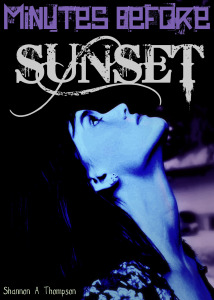
Shannon A. Thompson's novel Minutes Before Sunset was a Goodreads Book of the Month for July. You can read the first chapter here.

Shannon A. Thompson’s novel Minutes Before Sunset was a Goodreads Book of the Month for July. You can read the first chapter here.

Shannon A. Thompson is a 21-year-old with two novels under her belt. Her first, a YA sci-fi thriller November Snow, was published when she was 16. Her latest work, the YA paranormal novel Minutes Before Sunset, was voted a Goodreads Book of the Month for July. Currently, she is finishing her senior year at the University of Kansas with a bachelor’s degree in English (with a creative writing focus).

In this interview, Thompson discusses the idea of prophecy, what it takes for a college student to publish a book, and her strategy for using social media as a promotional tool.

(To read the first chapter of Minutes Before Sunset and an exercise based on how she sets the rules of the novel’s world, click here.)

Michael Noll

You very deliberately set up the rules of the novel’s world in the first chapter: The town is in denial of very plain truths, and yet the narrator would like to join the townspeople’s simple lives–but something prevents him. How did you approach this chapter? Did you set out to establish the mentality of the town and the main character, or did you write the novel and work those things into the first chapter through revision?

Shannon A. Thompson

The first chapter is actually one of the parts that remained remarkably the same during the editing process. I purposely set up the rules so quickly, because they end up being very different from what they seem. As many readers have found out, the “prophecy” idea is not a preordained fate but rather a twisted illusion of choice, identity, and questionable fate. Because of this ultimate change, the beginning was initially set up. In regards to the protagonist, Eric, he is probably more rigid in the ultimate version–a little harsher on the world than he originally was–but I enjoyed it, because his changing from the beginning to the end meant more with his extremities being stretched even further.

Michael Noll

We also learn the basic mechanics of the world’s supernatural elements: the characters can appear and vanish and move quickly across distances. Young members of this community are given guards, either to protect them or protect the world from them (it’s not yet clear in the first chapter). These are crucial details for readers to understand, and it’s important to establish them early, but it’s also important not to stop the story in order to explain these things. You avoid this problem by working the details into the narrative. How did you balance the need to get the story moving with the need to show the reader what the characters can do (which is likely a big part of the book’s appeal)?

Shannon A. Thompson

I balanced them more in the editing process than in the originally writing process. This happened because I had a better understanding after I’d spent so much time with the world and the characters living within it. A good example of this is reflecting on the word count: the first version was 136,000 words, but the published version is less than 80,000 words. This is important, because I was still discovering some of those rules while I wrote the first version. In the editing process, I was able to incorporate those elements sooner.

Michael Noll

Many high school and college students dream of being writers, but you’ve actually published two novels. How were you able to make the jump ambition to actually completing and publishing your work? How do you make time among all the things that typically distract young writers: social life, social media, school, family?

Shannon A. Thompson

Shannon Thompson's novel "Minutes Before Sunset" was a Goodreads Book of the Month in July.

Shannon Thompson’s novel Minutes Before Sunset

Honestly, I believe anyone can make the jump, as you put it, but it requires a lot of sacrifice. I don’t go out on the weekends or watch a lot of T.V. I write–but I also love writing, so this is a beautiful opportunity for me. In terms of making the decision to do this, I’d have to talk about my past. I started writing, because my mother was a writer, and she encouraged me to in order to cope with nightmares and night terrors. She suddenly died when I was 11, and I faced mortality at a young age. I realized that I had to spend my life chasing my dream, so I began immediately, and I had my first novel published in three years. November Snow is dedicated to her, but Minutes Before Sunset is dedicated to my late roommate, Kristine Andersen, who died in October of last year and our other roommate, Megan Paustian. In a way you could say that my passion pushes me forward, but deaths in my life have caused the first shove that turned into the momentum that began it all. However, if I had to give advice, I’d share my mantra: write with passion; succeed with self-discipline.

Michael Noll

I teach at a university, and I often hear faculty lamenting and/or praising our students’ use of social media. The lamenters believe that students are wasting their lives on tiny screens. The praisers believe that students may one day translate their online connections into beneficial ends. I’m curious about your use of social media. It seems like you’ve been successful in creating an online presence for yourself not just as a person but as a writer. Your blog has more than 8000 followers, and Minutes Before Sunset was a Goodreads Book of the Month in July. What’s your social media strategy?

Shannon A. Thompson

I like to believe my social media strategy is simple: be available and help others. My website provides a lot of writing, editing, and publishing tips, because I want to help other writers, but I also want to help other artists in general. My ultimate dream isn’t to be a famous author. My dream is to be able to open an affordable art school that connects students with innovative artists within their media. I believe I have connected with so many others over the Internet, because I try to help them, and I’m always reminding people they can email me at any time if they have any questions about the industry.

August 2013

Profile pic

Michael Noll is the editor of Read to Write.

How to Set the Rules Your Characters Must Live By

13 Aug
Shannon Thompson's novel "Minutes Before Sunset" was a Goodreads Book of the Month in July.

Shannon A. Thompson’s novel Minutes Before Sunset was a Goodreads Book of the Month in July and tells the story of two young adults trying to balance their supernatural gifts with a desire to live in the human world.

Every story has rules. In comic books, the superheroes have certain powers and not others. In horror stories, monsters can be killed only with silver bullets or certain chants. In romances, the heroine falls for certain kinds of men and not others. Pam Houston wrote a novel titled Cowboys are My Weakness. The rules of the novel are announced before you even open the book. Every story ever written or told must announce the rules it will play by.

The trick, as a writer, is to show those rules without disrupting the narrative. Shannon A. Thompson sets the rules clearly and quickly in her Young Adult/Paranormal novel Minutes Before Sunset. You can read the first chapter here. 

How the Story Works

Once you’re aware of how stories set the rules that their characters must live by, you can’t avoid seeing it’s done. Whether the fiction is genre or literary, the need to impose boundaries and limitations on characters is the same.

Here’s an example from the title story of Ethan Rutherford’s excellent new collection The Peripatetic Coffin. The story’s about the crew of a Confederate submarine trying to break the Union blockade of the port of Charleston:

“On deck, we had an unobstructed view of what Augustus had dubbed our Tableau of Lessening Odds. The Federal blockade was stupefyingly effective. Union canonships patrolled the mouth of the harbor, just out of range, and sank anything we tried to send through with the insouciance of a bull swatting blackflies. At night, they resumed the bombardment of the city. High, arching incendiaries, numbering in the thousands, painted the sky. You felt the concussion in your chest.”

The world is imposing clear boundaries on the characters: literally, a blockade with cannon balls and bombs. At no point in the story will the characters be able to act as if these impediments do not exist.

But the boundaries and rules can be mental as well as physical. To see how, read these two excerpts from Shannon A. Thompson’s novel, Minutes Before Sunset:

“It was Independence Day, and I stood with my family on Willow Tree Mountain. They called it Willow Tree Mountain, but, in reality, it was Willow Tree Hill, and the town denied that reality.”

Here’s the second excerpt:

“I moved my foot closer to the edge of the hill. I wanted to ride the wind down to the crowd. I wanted to dance and smile. I wanted to throw my arms in the air and listen to the exploding fireworks. I wanted to run around in endless circles until I fell down from exhaustion. I wanted to enjoy everything.

But that couldn’t happen. It was impossible.”

In these two passages, we learn the fundamentals of the story: the town has an Ignorance-is-bliss attitude. The narrator would like to join the smiling townspeople, but, for a reason that will be revealed later, he’s prevented from doing so. This mental and physical limitation defines his character and determines how the story will move forward.

The Writing Exercise

Let’s practice setting the rules, using Minutes Before Sunset as a model:

  1. Choose a character and a world for that character to inhabit.
  2. Define the world with a single adjective: happy, sad, fearful, proud, bored, etc.
  3. Free write about that adjective. Your goal is to find an image of the world or the people in it that demonstrates the adjective, if possible without actually stating it. The image will set the rules for the world. Future descriptions of the world should adhere to this early image in some way. So, in Minutes Before Sunset, the town’s denial of the supernatural elements in its midst is suggested by the fact that it calls a hill a mountain. In Gone in 60 Seconds, the stovetop burns out of control to suggest Kip’s lack of control.
  4. Now, free write about the character. How does he/she feel about the image you just created? Try to find an action that suggests the character’s attitude toward the world. For instance, in The Hunger Games, the fact that Katniss sneaks through the fence in order to hunt suggests that she’s willing to break the rules to protect her family. Thus, the big event at the end of the first chapter—volunteering for the Games in place of her sister—feels like a natural extension of her character, of the attitude that we’ve already witnessed.

Good luck and have fun.

An Interview with Kelli Ford

8 Aug
Kelli Ford's story, "Walking Stick," was published in Drunken Boat.

Kelli Ford’s story, “Walking Stick,” was published in Drunken Boat, and you can read it here.

Kelli Ford was born in Tahlequah, the capital of the Cherokee Nation, and grew up in North Texas. She was the first in her family to graduate from college, and she went on to earn an M.F.A. at George Mason University. She was awarded a 2012-13 Dobie Paisano Fellowship through the University of Texas and the Texas Institute of Letters. While a fellow, she put the finishing touches on Crooked Hallelujah, a collection of linked stories that takes place in Eastern Oklahoma’s Indian Country and along the banks of the Red River.

In this interview, Ford discusses her process for describing characters, what it means to write about characters from low-income areas, and her solution to the tricky question of how to portray a character’s spoken language if the reader doesn’t understand it.

(To read Kelli’s story “Walking Stick” and an exercise based on her character descriptions, click here.)

Michael Noll

I admire your character descriptions. They’re quick and detailed, moving from the general (old lady) to the idiosyncratic (the fact that the sole of one of her shoes wears faster than the other) in just a few sentences. They’re also nestled within the story, so that the description leads directly into action or thought. How do you approach these descriptions? It can be difficult to fully visualize an invented character, but you make it look so easy.

Kelli Ford

Well, thank you, first of all. To answer this question, which is a nice, concise question about character descriptions, I think I need to take a step back. “Walking Stick” is one of my “origin obsession” stories. Some of us are blessed/cursed with the obsession of our origins and end up coming back again and again. I often think of this as a fault of mine, but try to both stretch myself to invent more and accept it as a gift with as much grace as I can muster.

So this is a roundabout way of answering your wonderful question with a terrible answer: I don’t know. These characters are inspired by my mom, her sisters, my grandmother, and great-grandmother. Of course—and as I always protest to my mom (too much?)—the people in the stories truly do become characters and take on a life of their own. They look ways, say things, and do things as they live on the page that their inspirational, real-life counterparts would never do.

I don’t know where the one worn shoe comes from. I don’t think my great-grandmother always wore out one shoe before the other, but the Anna Maria character does. Why or how? I think this is a character I know very well. It’s one that, perhaps, came easy. When I was writing the story, I didn’t find myself searching around for what she looks like or how she walks.

Other characters, and I’d imagine especially those who are wholly inventions, I have to search for, maybe, what he would wear or how he may respond to a fly crawling across his arm. (Does he wave it away distractedly, smash its guts on his arm, try but fail to Mr. Miyagi it in the air with chopsticks?) In the early pages of a story, descriptions can sometimes be a struggle with a character I am creating, or just beginning to know. I usually find myself more sure of these choices toward the end of the story. So much so, in fact, that maybe things once again begin to feel mysterious and not like choices at all. By the time I’m nearing the end of the story, I have a much better sense of that character, and it’s simply a matter of making sure I let go of early stuff, worked over as it may be, and truly start anew so this knowledge can be incorporated into the early stuff. On a purely nuts and bolts level, for me, that often means retyping each new draft each day so I’m not just tinkering and my subconscious is free to take off. Probably the invented characters require more cutting because I describe and describe trying to get it right, trying to know things for myself.

Michael Noll

This is a story about people who live without a lot of money. There’s a tendency in American fiction to portray these kinds of characters as either ennobled by poverty or as bloodthirsty and devolved. Your story does neither. Even though it’s about an old woman limping down to the tracks to carve up a cow hit by the train, the story never becomes cartoonish or cliched. Is this something you think about in your work?

Kelli Ford

I worry about sentimentality in my work, perhaps because so much comes back to the characters I write. For many of my characters, and especially Anna Maria and Lula, I feel so much for them. I really do. I feel the weight of their choices, the weight of the way the world acts upon them. Sometimes, you come across a character that can make you cry at your keyboard. So maybe the key, a key, is to be honest about them. Shit. We’re all saints and sinners, and poverty, or near-poverty, isn’t ennobling. Do you pay the light bill or buy the school clothes or do both and skip the car payment? Living with those kinds of choices doesn’t make you somehow more dignified than those around you. To write as if it does is dishonest, at best. Poor people are shitty all the time but, perhaps, have less agency to be shitty on a grander scale. If you work to create fully realized characters, and you aren’t setting out to ennoble or bloodthirst-ify a character, then characters are allowed to become either if that’s what the story demands, or rather what the character demands of the story.

Michael Noll
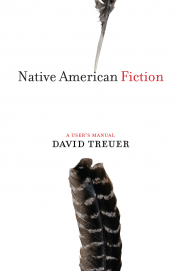
David Treuer essay collection, Native American Fiction: A User's Manual, challenges some of the popular notions about the influences behind and critical approaches to literature by Native American writers.

David Treuer essay collection, Native American Fiction: A User’s Manual, challenges some of the popular notions about the influences behind and critical approaches to literature by Native American writers. To read an excerpt about language and identity, click here.

I’m interested in the story’s use of the Cherokee language. In David Treuer’s essay “Smartberries” from his book Native American Fiction: A User’s Manual, he criticizes Louise Erdrich for misrepresenting and slighting the Ojibwe language in her novel The Antelope Wife. He claims that she slights the language in choosing mostly nouns when Ojibwe is a verb-based language and in almost always translating the Ojibwe into English. He says this:

“Erdrich adheres to the most popular conventions that govern the use of foreign words in English…the reader is left with sentiments about the Ojibwe language and instances in which Ojibwe functions as an ornament, not as a working part of the novel’s machinery…As with many other Native American novels, the use of lexical nuggets ends up feeling more like display, with language itself a museum piece.”

What are your thoughts about this problem: how to portray a character’s spoken language if the reader doesn’t understand it. In “Walking Stick,” the characters talk to one another in Cherokee, and their words are not translated. You seem to be honoring the integrity of the language. Is this an intentional move?

Kelli Ford

This is a great question! I’ve thought a lot about it, and to be honest, I don’t think I do a good job of “honoring the integrity of the language.” There’s nothing particularly Indian about the story aside from content, the characters and the tiny Oklahoma town they live in. Anna Maria is living in two worlds. She’s seeing her family become more white with each generation. Her daughter has moved in and has her own set of expectations and needs. Their religion is becoming the most important part of their identity. Anna Maria speaks her native language when she sees the Cheaters, and it’s a comfort, almost a sadness.

In “Smartberries,” Treuer says of the Ojibwe in Love Medicine (a book I’m more familiar with), “Strangely, the use of…words—though done seldom—highlights the longing for culture, not its presence” (64). He criticizes not just Erdrich’s mishandling of Ojibwe, but critics’ discussion of her work as particularly Native American in structure, in narrative approach, etc.

Having Anna Maria speak Cherokee is similar, I suppose, to writing her with a limp and one crappy shoe. I don’t think of these choices as “ornamental,” any more than I think having one of Erdrich’s characters speak Ojibwe is ornamental. These choices are integral to the characters as they are written.

That’s not to excuse mishandling the language. Erdrich didn’t grow up speaking the language. Neither did I, though like her I grew up hearing it. So should that preclude me from writing a character who speaks the language? Because Love Medicine is such a powerful and beautiful piece of literature, I say definitely not. (To be clear, I’m not comparing my work to hers—that would be nuts—I’m only comparing the use of language.) Should I work harder to do a better job and make the Cherokee I may happen to use better, more accurate, more complex? For sure. In “Walking Stick,” Anna Maria uses very basic greetings. It was a conscious choice not to translate the language for the most part, but she’s using simple greetings. It wasn’t really a difficult choice, though I suppose I could have taken it a bit further and used the actual Cherokee syllabary, which would have added another level of distance and work for readers who don’t speak the language. As it’s written, not much was a stake, but you know, she’s limited by my own limitations. That’s a real drag. You never want your character to be limited by your own ignorance, but when you are talking about a language, you can’t really sit down in the library for a couple weeks of research and be good.

This story is many years old. I am not sure I would try to use the language now, but you know, I hope I would. I hope I would simply work harder to get it right, to make it better, understanding that I’m going to get some things wrong. For this one, I used memory and books. I called the Cherokee Nation and talked to someone who was a cultural liaison of sorts to get a-do-la-nv-ss-di, but I don’t know if someone would really use this word as a nickname. I sent the story to a cousin to take a look at the language.

Erdrich is continually revising. In The Paris Review interview published a couple of years ago, she says that improving her use of Ojibwe is one reason she’s always revising, even Love Medicine, which is sort of a holy grail for me, as you can probably tell. It’s a great fear of mine that a native speaker will happen across one of my stories, or one of my cousins will follow a Facebook link, and see faults with the language. That simply means I have to work harder if I have another character that needs to speak the language. I don’t want to shy away from a story. I want my allegiance first to be to the character.

Michael Noll

This is an old story, but it was picked up recently by Drunken Boat. What is your process for sending work out? How did this story find its way to publication?

Kelli Ford

Well, I started out, like many of us do, with the Dick Cheney hunting birds process of submission. Send it out everywhere, hope you hit something, anything. But gradually, I think I’ve gotten a bit more focused. It’s hard, though. On a budget you can’t really subscribe to all the magazines and journals you’d like to, despite your best intentions. I find a few contemporary writers doing stuff I like and look at who is accepting their work, get subscriptions where I can, and send a story into the slush-ether with fingers crossed. If a writer I like edits a magazine, I send something there. I always have my dream magazines like The Southern Review or Oxford American.

This publication came about because Drunken Boat had a Native issue a while back. I submitted something that wasn’t quite right but got a nice note back that essentially said no really, send us something again and do it quickly! So I did. Even so, there was a new fiction editor in place by the time I sent “Walking Stick.” So that’s a small bit of advice to students and folks early in the process of submissions. When you get those nice rejections, act quickly. Send something else if you think you have something better suited for the magazine. Editors move on, and if one asks for more work, I think he or she generally really means it.

August 2013

Profile pic

Michael Noll is the editor of Read to Write.

How to Describe A Character

6 Aug
Kelli Ford's story, "Walking Stick" appeared in Drunken Boat.

Kelli Ford’s story, “Walking Stick” appeared in Drunken Boat. She recently served as the fellow at the Dobie Paisano Ranch near Austin, where she worked on finishing a story collection, Crooked Hallelujah.

When people call Anton Chekhov the greatest short story writer, they often talk about how quickly he develops characters. In “The Lady with the Dog,” for instance, he sums up a gentleman in Moscow this way: After the main character reveals the tiniest bit of his feelings about a woman to a friend at a dinner club, the friend says, “You were quite right, you know—the sturgeon was just a leetle off.” An entire social dynamic is revealed in those few words.

The best character descriptions do more than only show the reader a character. They reveal something about the way the world works or the way a character interacts with that world. Kelli Ford writes those kind of descriptions. To see how she does it, check out her story “Walking Stick.” You can read it now at Drunken Boat.

How the Story Works

Here’s how Kelli Ford describes one character:

“At sixty-seven, Anna Maria did not hurry with much these days. She was still stout and round, but a bone spur on her right ankle forced her foot out at an odd angle. That shoe always wore thin on the inside before the other. She could feel the gravel poking through.”

We learn not only that Anna Maria is poor and old, that she’s overweight with a limp, and that she lives in a place with gravel roads. But we also learn about how she faces a world that isn’t easy for a poor, old, overweight woman with a limp. We understand her mentality through the simple, matter of fact description of the shoes and the fact that she can feel the gravel. One of the most important words in the passage is always. Thin shoes and poky gravel are facts of Anna Maria’s existence, and she does not complain. A lesser writer would call her stoic, but a description like this one, because it shows us the character so thoroughly, makes us believe that she exists.

The Writing Exercise

Let’s describe a character, using Kelli Ford’s description of Anna Maria as a model:

  1. Start with the character’s age: “At — years old, So-and-so did (did not) _______.”
  2. Describe the character in terms of how he/she has always been: “He was still ______”
  3. But then add a recent change: “But (some new thing) made her ______.”
  4. Describe the affect this change has on the character: “As a result…”
  5. Describe the world from the character’s POV. Given the recent change, how does the character see the world? What does the character notice or do?

The idea is to move beyond basic physicality or mentality (short, tall, skinny, fat, smart, dumb, happy, sad) to a sense of interaction with the world. This means creating pressure on both sides: the pressure the world applies to the character and the way the character pushes back.

Good luck and have f un.

An Interview with Matt Bell

1 Aug
Matt Bell's novel In the House Upon the Dirt Between the Lake and the Woods has been called not "just a joy to read, it's also one of the smartest meditations on the subjects of love, family and marriage in recent years."

Matt Bell’s novel In the House Upon the Dirt Between the Lake and the Woods has been called not “just a joy to read, it’s also one of the smartest meditations on the subjects of love, family and marriage in recent years.”

Matt Bell is the author of the new novel In the House Upon the Dirt Between the Lake and the Woods from Soho Press, which has received the kind of positive reviews that writers dream about. He’s also written Cataclysm Baby, a novella, and How They Were Found, a collection of fiction.  He is the Senior Editor at Dzanc Books, where he also edits the literary magazine The Collagist, and he teaches creative writing at Northern Michigan University.

In this interview, Bell discusses conveying emotion in fiction, his revision process, and words of wisdom from great writers.

(To read excerpts from his novel, and to find exercises based on them, click here and here.)

Michael Noll

In the excerpt of the novel that appears at The Good Men Project, every paragraph begins with the phrase “And in this room.” It’s a powerful piece. Each time the phrase “In this room” appears, it hits with greater impact. The effect is not unlike reading a forceful essay or listening to a speech. Did you have something like that in mind? What drew you to this device/strategy?

Matt Bell

Thank you: I think the part of the book that section is from is the heart of the book, in many ways, and I was lucky to discover it as I was writing. I’m not sure exactly when I first found the form of that section, but in a lot of my work there are similar constructs, some kind of structure or system by which emotion can be organized and then interacted with. My characters often externalize their emotions in order to deal with them, and in this case it’s the wife who creates the deep house, so that her husband might be able to experience their marriage and its component parts anew, one by one, room after room.

Michael Noll

The sentence structure in both excerpts is very formal: long sentences, often structured around a series of repetitions. Here is one example: “And then, in another, the first time, long after those first times, when I realized she’d done this to herself.”

And here is another: “The genes of a killer, the genes of someone killed; half of what her parents had, but which half?”

And a final example: “And what bruises accompanied these words. What burns and shallow cuts. What years those wounds lasted, scabbed over, healed, replaced, scarred white.”

Sentences like these have the effect of fixing the reader’s gaze, of expanding the space for reflection. How much revision is required to make these sentences work? Is the rhythm of these sentences in your head from the start, or do you tease it out through the drafting process?

Matt Bell

The amount of revision required was fairly staggering. There’s rarely a sentence that appears whole and then remains untouched over the years it takes to finish the book. I’d say that an approximation of the rhythm appears early on—I can’t begin without the voice, or at least a version of it—but the fuller, final version of the voice takes a long time to emerge. The first draft of the book contained a sketch of the husband’s voice, but it took years of rewriting to get it into this final form.

Michael Noll

Both excerpts use unlikely vocabulary: exhalations, immolations, sequestered. What draws you to words like these?

Matt Bell

In this book, the diction is somewhat determined by the voice, which has a certain archaic feel to it. I’d say that some of the words are suggested by the setting of the book, which has mythic and biblical overtones, and others are determined by sentence acoustics, by the other words of the sentences. There’s a little King James Version here, a little Greek myth, a little Old Norwegian folklore, a smattering of words gleaned from 19th-century American dictionaries. All together, these words perhaps allow the book to exist outside any specific time or place, which allows it to be its own kind of myth, without overdetermining any particular association.

Michael Noll

Matt Bell's website offers quotes from writers about craft and the writing life.

Matt Bell’s website offers quotes from writers about craft and the writing life.

Every day on your website and Facebook page, you post a quote from a writer. They’re often about the mentality required to be a writer, the need for persistence and doggedness and self-criticism. Now that you have three books out, I wonder what these quotes mean to you now as compared to when you were

Matt Bell

If anything, they mean more to me than ever. The career of a writer is long, not short. Nothing is finished, nothing is good enough, nothing lasts. All of the publication and reviews and so on won’t sustain me in the same way the work will. I knew that before I had a book, and I know it more now. So I’ll take inspiration wherever I can find it. Anyone that can push me to get up everyday and hit the keys again is someone worth listening to and learning from.

August 2013

Profile pic

Michael Noll is the editor of Read to Write.

How to Use Unusual Words

31 Jul
Matt Bell's novel

Matt Bell’s novel, In the House Upon the Dirt Between the Lake and the Woods, has been called “fiercely original” and “a gut punch.” It’s also the only novel you’ll read this year where one of the conflicts is Man vs. Bear.

Ernest Hemingway didn’t mince words about style. About William Faulkner’s, he wrote, ““Poor Faulkner. Does he really think big emotions come from big words? He thinks I don’t know the ten-dollar words. I know them all right. But there are older and simpler and better words, and those are the ones I use.” But what if the two sides are not exclusive? What if you can use ten-dollar words that are also old and simple?

Matt Bell offers a lesson in using unusual vocabulary in his new novel In the House Upon the Dirt Between the Lake and the Woods. You can read a few of those words in this excerpt published at Guernica.

How the Story Works

Here are a few of the words used in the excerpt:

kith, kin, circumscribing, exhalations, remove (used as a noun), rankled (used as an adjective), sequestered.

Some of these words belong to languages other than fiction’s: sequestered is now a political word. Exhalations belongs to biology, physiology, and yoga. Circumscribing comes from geometry, mapmaking, and travel. Kith and kin belong to another age. To see just how specific our ideas can be about when certain words are appropriate, try this simple experiment: Use any of these words in casual conversation. Example: What were you doing this weekend? Oh, just hanging with my kith and kin. You’ll get some odd looks. Someone might ask, “Why are you talking that way?” But you would have accomplished a sometimes-difficult feat. That person would paying attention to you, trying to figure out, “Why is he talking that way?” or “Who is she that she uses words like that?” Part of the battle of fiction is just to get the reader to wake up and pay attention. Using unusual words can do that.

The Writing Exercise

Let’s practice using unusual words:

  1. Find your source. Words seem unusual only when they’re used outside of their usual contexts. So, pick up a trade magazine or one that caters to a hobby or special interest. Or visit a website that serves the same purpose. Write down all the words that you understand but would never use in conversation.
  2. Create a character who would use those words. The easiest way is to write a character who is part of the words’ trade or special interest; obviously, doctors don’t talk like studio engineers. But you can also shoot for idiosyncrasy. Ask yourself, what kind of person would use these words casually in a sentence outside of their usual context? Try to hear the person’s voice as he or she speaks.
  3. Write a passage in which the character discusses something mundane: eating dinner, walking the dog, going on a date, putting the kids to bed. If it’s a character with a specific job or interest, make him/her discuss the topic with someone else from that job/interest. If it’s an idiosyncratic character, just let him/her talk. Try to use as many of the unusual words from your list as possible. Some won’t make any sense, or they’ll feel forced. But others will surprise you. They’ll become part of the fabric of the character’s speech, and when that happens, you may discover that you’ve created a character with a voice you’ve never heard before.

Good luck and have fun.

How to Write about Remembering

30 Jul
Matt Bell's novel

Matt Bell’s novel was published by Soho Press and has been called, by the New York Times, “a gripping, grisly tale of a husband’s descent into and ultimate emergency from some kind of personal hell.”

A novel that’s getting some well-deserved attention is Matt Bell’s In the House Upon the Dirt Between the Lake and the Woods. If you’re not yet familiar with it, the synopsis will give you some sense of this novel’s ambition:

In this epic, mythical debut novel, a newly-wed couple escapes the busy confusion of their homeland for a distant and almost-uninhabited lakeshore. They plan to live there simply, to fish the lake, to trap the nearby woods, and build a house upon the dirt between where they can raise a family. But as their every pregnancy fails, the child-obsessed husband begins to rage at this new world: the song-spun objects somehow created by his wife’s beautiful singing voice, the giant and sentient bear that rules the beasts of the woods, the second moon weighing down the fabric of their starless sky, and the labyrinth of memory dug into the earth beneath their house.

Think about that phrase: the labyrinth of memory. Many novels—and certainly memoirs—feature narrators telling stories from memory. But what if the novel seeks to represent the act of remembering? It’s not an easy task. In a way, storytelling and memory are incompatible. Fiction moves forward while memory tends to return endlessly to an image or moment. So, it takes a gifted writer to reconcile the two.

Matt Bell is one of those writers. Find out how he writes about remembering in this excerpt from his novel In the House Upon the Dirt Between the Lake and the Woods at The Good Men Project.

How the Story Works

Every paragraph from the excerpt begins with the same four words: And in this room. The effect is powerful and clear. The passage is drilling down into a room, into and through moments, details, revelations that might otherwise have been forgotten.

The first two encounters with memory may seem familiar: “The love letters we wrote to each other” and “the moment of our first lovemaking.” But then comes the third encounter:

“And in this room: a moment even earlier, the first time my wife raised her dress to me, exposing her battered shins. And then in another the first time I saw the bruises that blacked her knees and tendered the skin of her thighs. And then, in another, the first time, long after those first times, when I realized she’d done this to herself.”

As the passage develops, the phrase “And in this room” continues to be repeated, leaving the narrator no choice to not only confront the darkest memories from his marriage but see them from every angle. He (and through him, the reader) begins to see fully a life that was lived in the rush of real time and initially recalled only in snapshots. That is the beauty of a strategy of repetition: And in this room. The character or narrator can’t leave until all has been revealed or confronted.

The Writing Exercise

Let’s encounter a memory without looking away. (This exercise works for both fiction and nonfiction.)

  1. Choose a powerful memory to write about (yours or the character/narrator’s). It could be something funny or sad, happy or tragic. The best memories often cannot be easily labeled; that is why we remember deaths and births. They’re some of the few times that we, as adults, will encounter something that is wholly and completely outside of our experience.
  2. Let’s borrow from Matt Bell and use the phrase “And in this room.” If the memory takes place outside, substitute the appropriate noun for room.
  3. Write a series of paragraphs that begin with “And in this room.” You’ll write about the obvious things, of course, but don’t stop there. Keep going. Exhaust your memory; excavate the contents. Discover things that you thought you’d forgotten or that the character never realized she knew. Focus on objects in the room and their role in the memory. Think about relationships that define the room and the objects that were picked up or leaned against or sat on by the people in that relationship.
  4. Once you’ve written about a moment, try to remember the moment that occurred immediately before or afterward. You can worry about arranging and rearranging the details later. For now, let your mind surprise you.

Good luck and have fun.

An Interview with Marc Watkins

25 Jul
Marc Watkins

Marc Watkins’ story “Two Midnights in a Jug” won Boulevard’s 2008 “Short Fiction Contest for Emerging Writers” and was included in Pushcart Prize XXXV: Best of the Small Presses.

If you liked Daniel Woodrell’s novel Winter’s Bone or the movie based on the book, then you’ll want to keep an eye on Marc Watkins. He was born and raised in Missouri and writes about the down and out of the Ozarks. He currently lives in Oxford, Mississippi, with his wife, the writer Emily Howorth. His stories have appeared in Pushcart Prize XXXV: Best of the Small PressesBoulevardThird CoastTexas ReviewStoryQuarterly, and elsewhere. Recently, he served as a guest fiction editor for the 2012 Pushcart Prize Anthology. In his spare time he edits a website,The Rankings.

In this interview, Watkins discusses the challenge of creating hopeful characters in a hopeless place, the influence of Biblical language, and what it means to be a highly literate high school dropout.

(For an exercise based on his story “Two Midnights in a Jug” click here.)

Michael Noll

The story has an interesting line early on: “Here is where you’re born and here is what you are.” There’s a lot of fatalism and futility wrapped up in a line like that. It suggests that the people who reside in that place will not change. How do you create suspense in a story when the setting is resistant to the ingredient necessary for suspense: the possibility of change? I’m curious how you approached setting a story in such a place.

Marc Watkins

Even though the structure of the story is punctuated by fatalism, it is hope, even in its slightest form, which drives the story. Stories that are essentially static in surface action have to rely on the sublet conflicts to develop tension and create suspense. Each character in the story latches onto a sort of absurd personal fantasy as a means of escape: Margret Jean thinks that a pill will save her broken marriage; Cordell believes that keeping the family together on the land that he lost is key to getting it back, even when a fire rains down ash and kills all the crops; and then there’s Abe, who believes his key to escaping his family is going to work for the very company that caused the fire to destroy the land.

I finished the story before I added the first graph. I like framing stories, especially those that use place as a major part of their structure, and trying to explain the environment by describing its rituals and cultures.

Michael Noll

The story’s point of view borders on omniscient, which is rare for any contemporary American work, let alone a short story. What led you to use that POV?

Marc Watkins

“Two Midnights in a Jug” was inspired by the biblical story of Job, and it was also the first time I’d ever written a third-person omniscient type of story. The voice basically fit the narrative, so I went with it as one of those crazy experiments that you’re supposed to engage in when tackling something wholly alien and new. The voice may have its roots in a church pew. I was raised Catholic and went to a Catholic school for several years. They’d send us to two or three masses each week, and I guess that voice from the pulpit, that sort of weird Bible voice stuck in my brain, even when all other aspects of my faith faded.

Michael Noll

The source of the title "Two Midnights in a Jar"

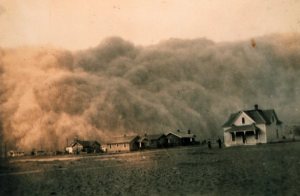
A saying from the Dust Bowl inspired the title “Two Midnights in a Jug.” You can read about an editor who hated the title at Marc Watkins’ website.

On your blog, you wrote about a journal editor who disliked the title because it didn’t make literal sense. In your blog post, you revealed that the phrase “Two midnights in a jug” comes from a Dust-Bowl era description of the blackness of the sky during a storm. There is no mention of this in the story. Do you think it’s necessary for writers to cue readers into the meanings behind the allusions in a work? In other words, are you okay with readers wondering what the title means?

Marc Watkins

The story’s title was actually the last phrase in the final sentence of the story, but it changed because one good piece of advice I picked up from Debra Monroe was to never repeat a title within the confines of a story. The title should encapsulate the world of the story, and when it’s told more than once it risks falling flat like a joke with a punch line told twice. I’m fine with readers left wondering what the title means. I think we all read for challenges and for curiosity, grand or small.

Michael Noll

This story is set in a real place—Eminence, Missouri. Frankly, when I googled the town, I was surprised to find that it was real. Your portrayal of it in the story is so bleak that I assumed that you’d made it up. Obviously the characters in this story don’t seem like the type who might encounter a story in a literary journal, but what about Eminence’s more educated residents? The internet has made the world a small place. Do you worry about what people might think of the way they’ve been portrayed?

Marc Watkins

I’m a walking contradiction; I have a Master’s degree and a G.E.D. In its own private way “Two Midnights in a Jug” manages to convey a level of honesty about how I felt after dropping out of high school. I never grew up in a trailer, but the moment I told people that I was from Missouri and had dropped out, someone asked if I’d been raised in one, and I felt ostracized by the stereotype, so I decided to follow that stereotype down a rabbit hole in the story. The narrative’s bleakness also had to do with my father. He had entered into the final stage of a disease that would claim his life in less than a year.

Even though Eminence, Missouri, is a real town, with real people, “Two Midnights in a Jug” is fiction. As writers we live in conjured spaces that are just as “real” to us emotionally as any physical event or place, and this emotional truth, or as Tim O’Brien calls it “story truth,” matters most. It’s the magic we seek.

July 2013

Profile pic

Michael Noll is the editor of Read to Write.