How to Make Setting Striking to All and Personal to One

7 Jun

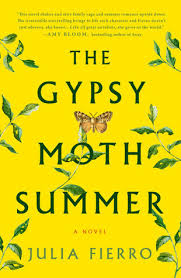
Julia Fierro’s novel The Gypsy Moth Summer is one of the most anticipated books of the summer.

Some stories are blessed with great settings, such as shadowy mansions with secret gardens and skeletons in the closets. This is a description of many great novels and also a brand new one: The Gypsy Moth Summer by Julia Fierro. One of the things she does so well in the book is play up this great location. But it’s not enough to make a mansion very very shadowy and its gardens very very secret. A novel must also personalize the setting so that its importance becomes acutely attached to one character in particular. That attachment is often what will drive the story forward, and it’s the case in The Gypsy Moth Summer.

You can read an excerpt of the novel here.

How the Novel Works

The novel follows Leslie Day Marshall as she returns to her home off the coast of Long Island, bringing her African-American husband, Jules, and their children. Leslie’s the daughter of the most prominent family on an island full of them, and so we’re quickly introduced to their estate, as seen through the eyes of Jules:

He had no language to describe the Castle then. It took a few days for the archaic terms he had studied in required architectural courses at Harvard to return to him. Turrets and finials and gables. But studying glossy photos in a textbook was nothing like the real thing. Of course Leslie’s parents had named it The Castle. It was the stuff of fairy tales, a white marble palace rising out of the trees, built to protect a royal clan from marauding villagers, raping and pillaging hordes. From war. From the undesirables—what his pops had called the kids in their hood who spent their days slinging dope, lounging on stoops like the sun had melted them there.

These are the details that are supposed to impress pretty much any reader. It’s literally a castle, but it’s also something out of a fairy tale. The house is not just big and fancy; it’s the stuff of legend. A couple of paragraphs later, we learn that the doors weigh a ton each and also that the house is a literal copy of a French castle and resort.

But you can also see the novel beginning to personalize it, with the way that Jules connects the word undesirables to his own background. The novel continues on in that direction:

If there had been a chance left for him to hate the island, to refuse Leslie’s and Brooks’s demands that they move, it died when Jules entered the maze that led to the Castle’s gardens. Leslie, not one to keep anything under wraps, had managed to keep it a surprise, and as Jules ran into the maze, ignoring Leslie’s cries, “Wait, you’ll get lose! You need the directions!” there was nothing he wanted more than to lose himself between the tall (at least eight or nine feet, he guessed) fragrant corridors. It was his personal amusement park—the funny mirror glass replaced with living, breathing, CO2-releasing walls.

We later learn that even the word fragrant is personal. The corridors are formed from boxwood, which “smelled like cat piss,” a scent that Jules is unusual in loving.

This personal connection is important because it will give Jules a reason to stay when things go south—as they inevitably will. It’s a bit like the horror movies, where you scream, “Get out of there,” but the characters never leave. In this novel, Fierro has created an intense attachment that will keep Jules in the Castle, even after he should have gotten out of there.

The Writing Exercise

Let’s make setting striking to all readers but personal to one character, using The Gypsy Moth Summer by Julia Fierro as a model:

  1. Name your setting. Fierro names hers “The Castle.” Your name doesn’t actually need to appear in the story or be used by the characters, but it will help define the setting: the town, the farm, the yard, the school. When you’re able to think of the setting as a single entity or place, it’s easier to begin to give it a sensibility—a mood.
  2. Describe the setting in terms from some other story. All books are read in the context of other books that came before them. It’s why we can think in terms of genres and why a castle off the coast of Long Island is more than simply a great big house. Ezra Pound said to make it to new, and that’s all well and good, but you should also take advantage of the literary traditions that have shaped your reader. If you’ve got a castle, make it more than a big house. So, find some counterpart for your setting in another story—not just old ones like fairy tales but anything people might be familiar with. For example, a small house could be described in terms appropriate to the submarine in Das Boot. As soon as you tap into the connotations and memories that readers have retained from that other story, your own setting takes on a life that is, to some extent, larger than the page its written on.
  3. Connect the setting so one particular character. This can be a literal connection (I, too, once lived in a castle). Or it can be primarily in the character’s head, as it is with Jules, who connects what the castle seems to keep out with the undesirables of his own youth. This connection doesn’t need to be belabored. It’s simply a bridge to connect setting and character beyond mere presence (I’m in a castle). Try using this basic phrase: “The place reminded him/her/me of ____.”
  4. Deepen the connection. Jules sees the garden, and even without knowing much about him, we can already sense that the guy’s got a serious thing for nature and landscaping. So, give your character an “Oh my god” moment, as in “Oh, my god, did you see this ___?” The ____ should be something more remarkable to that character than to the others around him or her. Then, keep going. Focus on some particular aspect of the ____ (like the boxwoods) and make the character respond to it differently than the other characters. This might seem forced at first, but play with it. Dig into the idiosyncrasies of your character or the things in his/her background not shared by anyone else—or simply the weird stuff he or she likes. Use those traits to make the connection with the place intensely personal to that character.

The goal is to set up plot points later in the story by strengthening the connection between one particular character and the story’s setting.

Good luck.
How to Know What’s Worth Showing

30 May
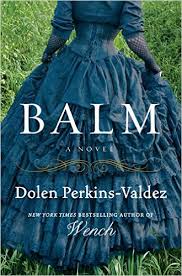
Dolen Perkins-Valdez's New York Times bestselling novel Balm follows three African-American characters who have moved to Chicago after the Civil War.

Dolen Perkins-Valdez’s New York Times bestselling novel Balm follows three African-American characters who have moved to Chicago after the Civil War.

When I was a writing student, a teacher in my program was famous for leaning back after a workshop discussion and saying, “Just tell me a story.” As a piece of advice, it’s almost absurdly on point. “Just tell me a story” is what readers across the country are thinking when they pick up a book. They are rarely interested in matters of craft and language. The problem for writers is that short stories and novels are far different from the stories we tell at bars: they’re much longer. Even if you transcribed the tale of that person you know who goes on and on, the result would be much less than 4000 words, the length of a medium-sized story. So what are all those words doing? That’s probably the biggest question that beginning writers ask. The answer is found in learning what information advances the story and what does not.

One of the clearest examples you’ll ever see of the distinction between story-advancing information and details that should be quickly summarized can be found in Dolen Perkins-Valdez’s novel Balm. You can read the opening pages of the New York Times bestseller at the HarperCollins website.

How the Novel Works

Early in the novel, there is a scene in which one of the main characters, Hemp, has moved to Chicago to search for his wife. He’s introduced to Mrs. Jenkins, a woman who takes boarders, and we’re shown their initial conversation:

She narrowed her eyes, wrinkling a scar across her face that had taken some of the bridge of her nose with it. “I don’t allow no riffraff in my house. That include liars and cheats and no counts, the don’t-want and the can’t-do. My husband and me is God-fearing people.”

“Yes, ma’am.”

This dialogue and scene serves two clear purposes. First, it tells the story: how Hemp found a room. But it also shows the reader a character, Mrs. Jenkins, in all her glory. The dialogue is terrific (“I don’t allow no riffraff in my house. That include liars and cheats and no counts, the don’t-want and the can’t-do”) and brings her character to life, so to speak. We can hear her voice. The rest of the scene continues that process of bringing-to-life for both characters:

“I cook once a day. In the morning before you go off to work, you and the mens sit down with my husband. You got to fend for your other eats.”

“Yes, ma’am.”

“Course I don’t allow for no loafing. You can’t sit round here all day.”

“Yes, ma’am.”

“Come on eat. It’s some hoecakes left. You look hungry as a mule. Then get yourself on out in them streets and get some work.”

“Yes, thank you,  ma’am.”

“You don’t say much, do you? That’s good. Ain’t room but for one talker round here. Haw!”

The conversation ends with Hemp explaining that he’s looking for his wife and Mrs. Jenkins promising to keep “an ear on it.” As a scene, it makes sense. We’ve been introduced to the characters and given a feel for their personalities; we’ve been drawn into their lives. We’ve also been introduced to the stakes of the story: Will Hemp find his wife? But look at what the novel does next:

Hemp got work loading ship a week later and earned his first wages as a free man. He bought a sack, shoes, pants, but even his first paying job could not help him shake the sadness. He asked everyone he met, but no one knew of a woman fitting Annie’s description. He decided it would be better for him to stay in one place. It did not make sense for both him and Annie to be moving around.

Before the month was out he knew that as nice as Mr. Jenkins was, he could not go on sleeping in that tight, dark room.

While the novel dramatizes and puts in-scene the initial conversation with Mrs. Jenkins, it summarizes a month of conflict: Hemp’s search for a job, his fruitless search for his wife, and his decision to find a new place to live. All of that could have been the subject of engrossing scenes, yet Perkins-Valdez summarized it. Why? The answer could tell us something about what is important in a story. In this case, what was important was establishing the characters, their voices, their desires. Once we understand those things—once we get a feel for the characters—we don’t need to see their every move. We intuitively understand how those summarized scenes might have played out, and we can skip ahead to another pivotal moment.

The Writing Exercise

Let’s dramatize character and voice and summarize action, using Balm by Dolen Perkins-Valdez as a model:

  1. Choose a pivotal moment in your story. By pivotal, I mean that someone acts, something changes, or a decision gets made. Our usual approach is often to put this moment in scene, but we’re going to try a different approach.
  2. Find or create an interaction that occurs before the pivotal moment. As in Balm, the interaction can be between two characters: a conversation or any moment that requires the characters to work together or against each other or do something at the same time. But the interaction can also be between the character and an object or place: think about Jack London’s famous story “To Build a Fire” and its scene with the man interacting with the wood that he’s trying to burn.
  3. Use that interaction to show off a character. The scene from Balm could easily come with a title: “This is what Mrs. Perkins is like and how newly-arrived Hemp reacts to her.” All of the dialogue and descriptions (“narrowed her eyes, wrinkling a scar”) actively build our sense of Mrs. Perkins. Hemp’s simple dialogue (“Yes, ma’am”) does the same thing. The goal is to give the reader an understanding of who these characters are. Once we have that, we will usually understand their actions. So, choose a moment that allows you, through dialogue or action, to show off the characters, to give the reader a sense for who they are.
  4. Give the scene purpose. In Balm, Hemp is looking for a room and for his wife. He’s not simply shooting the breeze with Mrs. Jenkins. In your scene, something needs to be at stake. The stakes can easily be resolved, as they are in Balm: Hemp gets a room but doesn’t find out anything about his wife. Not every scene needs a pulsing, Hans Zimmer drumbeat in the background. But every scene needs a reason to exist.
  5. After the scene is over, summarize the pivotal moment. Balm summarizes Hemp’s search for a job and his wife and his decision to find a new place to live. After seeing his conversation with Mrs. Jenkins, we can imagine him doing these things, and so it’s not necessary to show them. In the same way, you can dramatize a character-building moment and then trust that the traits you established will be clear enough to make sense during a quick summary of events.

The goal is to build a story that relies more on character and voice (which are inherently interesting) and less on minute-to-minute action (which can become tedious).

An Interview with Alexandria Marzano-Lesnevich

25 May

A review in Vogue called Alexandria Marzano-Lesnevich’s The Fact of a Body: A Murder and a Memoir a “true crime masterpiece.”

Alexandria Marzano-Lesnevich is the author of The Fact of a Body: A Murder and a Memoir, named an Indie Next Pick and one of the most anticipated books of 2017 by Buzzfeed, BookRiot, and the Huffington Post as well as a must-read for May by Goodreads, Audible.com, Entertainment Weekly, and Real Simple. The recipient of fellowships from The National Endowment for the Arts, MacDowell, and Yaddo, and a Rona Jaffe Award, Marzano-Lesnevich lives in Boston, where she teaches at Grub Street and Harvard’s Kennedy School of Government.

To read an exercise on giving a character description context, inspired by Marzano-Lesnevich’s book The Fact of a Body: A Murder and a Memoirclick here.

Michael Noll

The book took ten years to write—and over that ten years, you inevitably grew and changed as a person. I often find when I read work that I wrote years ago that I want to totally rewrite it. Did you do any of that with this book? I’m thinking of a moment like the one where you write, “When I began writing this story I thought it was because of the man on the tape” but then go on to write, “But I think now that I write because of Lorilei.” Did you have to, at times, resist the temptation to rewrite older sections so that they fit the sense of things that existed at that moment in your mind?

Alexandria Marzano-Lesnevich

Oh, I rewrote this book so many times! That’s just the way I work. It’s a quirk of the book that though the idea’s been ten years in the making, and I’m been flat-out working on this conception of it for the past seven years, about half the book was written in the last year before I turned it in to my publisher. The way I thought about shaping the book was that while there’s a consistent narrator, she’s not narrating from a place where she has figured it all out already. She knows approximately where she’s going—the work I did before this draft let me know that—but there’s still a lot to figure out. So she’s telling herself a story about the past—both her past and what she understands and imagines from the records about Ricky Langley’s past—to try to understand why she’s so drawn to this story. Joseph Epstein calls personal narrative “the genre of discovery,” and that’s always felt true to me. The narrator is telling herself and the reader the stories of the past to try to discover the hold they have over her—and the structure of the book is meant to dramatize or re-enact that discovery, to induce that experience in the reader.

Michael Noll

How did you approach the sections about Ricky and his family. I can imagine how even a small detail like “Alicide driving the whole way back like a dog with his tail between his legs” could prove problematic from a journalistic perspective, prompting questions like “Did someone say this about him? How did you know?” How much license did you take in fleshing out scenes that must have occurred.

Alexandria Marzano-Lesnevich

The book is written from research conducted on some 30,000 pages of court records and other documents, and at first, when I started writing from that research, I tried to do so in a more straightforwardly journalistic way. But there were several problems with that. First, the records contradict themselves in many places. They have holes and ellipses. In many cases, the legal narratives elided the contradictions, gliding right over them into a pretense of certainty—yet in my telling, I wanted to actually highlight the ellipses, and highlight that the legal narrative was constructed. Second, when I read the records, I found them incredibly vivid. I couldn’t help but see the scenes unfold in front of me. I decided that I need a more active narrator who was explicitly telling herself this story and could highlight imagining and speculate and muse on discrepancies. For example, in the scene you’re referencing, Ricky Langley’s father, Alcide, is driving. I begin the scene this way, talking about the car: “I imagine the station wagon my parents had when I was a child, but that was the early 1980s, so subtract, now, the faux-wood paneling, the power steering.” It was very important to me that the reader understand that I was telling myself a story based on the records of the past. The book is a record of one mind—mine—trying to piece the past together into a story. So the imagining is only done in service of that aim, to try to put the pieces together. That means no invented events or dialogue, just taking what’s already in the records and trying to imagine them into color, the way we all do when we hear or read something that feels real to us. As it says in the source note that precedes the text: the book became a story not just about what happened in the past, but even more than that, about the stories we make from it. It’s a true crime book and a memoir, yes—but it’s also a story about how we tell ourselves stories.

Michael Noll

This is partly a coincidence of timing, but as I read this book, I couldn’t help thinking about the podcast S-Town, which starts with the narrow frame of a possible crime and then explodes to a much broader frame, with people and storylines that weren’t there in the beginning. Your book does something similar as it digs into the history of the people involved. How did you figure out the frame for each section of the book and what to include and what to leave out?

Alexandria Marzano-Lesnevich

Alexandria Marzano-Lesnevich’s The Fact of a Body: A Murder and a Memoir was named one of Entertainment Weekly’s “Books You Have to Read in May.”

The structure of this book was one of the things that took the longest. I thought about it in a couple of ways: first, I knew pretty early on that it would have to be a braid that alternated between my life and Ricky Langley’s life, if I were going to capture the way these stories had seemed linked in my subconscious. Two, those braids couldn’t strictly remain separate over the course of the book, or I wouldn’t capture the powerful sense of how entwined they sometimes became in my mind—I wouldn’t capture the sense of being haunted that so drove me. And finally, I knew that in a book that’s largely about the way we make stories out of the past, and which concerns two crimes—Jeremy Guillory’s murder and my grandfather’s abuse of me and y siblings—stories about which have already been told many different ways, I had to have a structure that would allow me to tell and re-tell and complicate the telling of the same events without losing forward my momentum. I thought about suspense as though it were a baton in a relay race—which strand of the book was carrying it at any given moment, and how could I hand it off between sections?

Michael Noll

You’re going on tour for this book, which makes me curious how you’ll read from it. It’s one thing, I suppose, to write about painful personal details from the safety of your home and desk, but it might be quite another to read from those sections in front of strangers. How do you handle the emotional aspect of reading from this book?

Alexandria Marzano-Lesnevich

One of the good things about how long this book took me to write is that I had many years to get used to reading from it. And to my surprise, I found that I absolutely love giving readings. After so many years of working, as you say, alone at my desk, it’s such a gift to bring these stories to people and experience the emotional connection that happens when you share your story. Yes, there are parts of the book that can feel vulnerable to share. For those, reading the audiobook of The Fact of a Body let me practice. But I’m mindful that we all have private stories hidden away inside of us, and if I can offer mine forth to help create connection between people—well, isn’t that the role of the writer?

May 2017

Michael Noll Michael Noll is the Editor of Read to Write Stories.

How to Give Depth to Character Descriptions

23 May

Alexandria Marzano-Lesnevich’s The Fact of a Body: A Murder and a Memoir was named one of Entertainment Weekly‘s “Books You Have to Read in May.”

Beginning writers tend to approach character descriptions in a pretty straightforward way: what does he look like? Is she tall, short? What is a distinguishing characteristic? A nose? Teeth? The result often resembles a police or personal ad description—and that’s fine. It’s a place to begin. But as a writer’s craft grows, so does the ability to do more with character descriptions.

A great example of what is possible can be found at the beginning of Alexandria Marzano-Lesnevich’s book, The Fact of a Body: A Murder and a Memoir. You can read the opening pages here.

How the Book Works

The book tells two different kinds of stories. One is about a murder. The other is about the author’s realization that she has a personal connection with the people involved in the crime. To make this double narrative work, we need to pretty quickly feel connected to the crime—to see the murderer and the victim as people who exist independently of those identities. This means, of course, making them appear complex and sympathetic. But it’s more than that. They ought to feel apart of a world. Take any person you know, and I suspect that it’s difficult, if not impossible, to think of them outside of the world they inhabit (or the world they share with you). This is why we’re so often befuddled when we encounter someone outside of their normal context. We can’t place them. In life and in our minds, people exist in relation to everything around them. So, a good description will capture those myriad complex relationships. Marzano-Lesnevich does that in the book’s first chapter:

Louisiana, 1992

The boy wears sweatpants the color of a Louisiana lake. Later, the police report will note them as blue, though in every description his mother gives thereafter she will always insist on calling them aqua or teal. On his feet are the muddy hiking boots every boy wears in this part of the state, perfect for playing in the woods. In one small fist, he grips a BB gun half as tall as he is. The BB gun is the Daisy brand, with a long, brown plastic barrel the boy keeps as shiny as if it were real metal. The only child of a single mother, Jeremy Guillory is used to moving often, sleeping in bedrooms that aren’t his. His mother’s friends all rent houses along the same deadens street the landlord calls Watson Road whenever he wants to charge higher rent, though it doesn’t really have a name and even the town police department will need directions to find it.

The paragraph continues, but you can already see so many ways that Jeremy Guillory has been placed in relation to his world:

  • The particular blue of his sweatpants draws a local comparison (Louisiana lake) and also different names from different sets of characters. Even with a minor detail, we’ve glimpsed setting and many different characters.
  • The boots place him not just in muddy woods but in a community of people who interact with those woods in a particular way.
  • We see his size in relation to his gun.
  • We see his care for the gun.
  • We see his mother and their family unit in relation to his mother’s friends and the street where they all live. We see the landlord who charges them all too much.
  • We see the street in relation to the community that doesn’t even know where it is.

When writing teachers talk about synchronicity or simultaneity, this is what they’re talking about: the ability of a single passage to show readers multiple things at once. In this case, it’s a character description that holds all of those things together—and also brings the character to three-dimensional life in our imaginations.

The Writing Exercise

Let’s describe a character in relation to his or her surroundings, using The Fact of a Body: A Murder and a Memoir by Alexandria Marzano-Lesnevich as a model:

  1. Choose a detail that cannot be agreed upon. This is how Marzano-Lesnevich begins, though it’s not necessarily the way you must begin. But, we’ll go in the same order that she does. She picks a seemingly innocuous detail (the color of the boy’s sweatpants) and then gives a neutral description (her own) and then two different takes on it (the mother’s and the police’s). This gives the reader a clearer sense of the disputed issue, of course, but it also allows the writer to bring in other characters. In a purely mechanical way, it opens up the narrative to characters beyond the one being described.
  2.  Give the character a trait that many others like him/her possess. She uses his shoes. We do this constantly in narratives, and the way point of view often matters. When done from an outsider’s perspective, these kinds of details can potentially veer into stereotypes. (Think about the way that baggy pants and Carhartt jackets are used by politicians as shorthand for entire communities.) In a story, those stereotypes can reveal a lot about the character who holds them. But when done from an insider perspective, as Marzano-Lesnevich uses here, the detail can reveal a trait (societal, geographic) that is so strong that it bends the behavior of the people who encounter it.
  3. Show the character next to easily identifiable objects. We know how long a BB gun is (or at least readers with a certain background will). So, we don’t need to learn exactly how tall the boy is. Numbers are almost always less interesting and compelling than comparisons.
  4. Show the character interact with some object. Jeremy polishes the barrel of his BB gun. What does your character take great care with–or what does he neglect?
  5. Show the other people in the character’s world. Think about friends, family, coworkers—or just “their people.” What do they have in common?
  6. Investigate the power imbalances. The landlord has power over everyone who lives on the street or needs a house. The community has power over the street, or seems to based on its not caring enough to find out where it is. Or, to flip the perspective, the street has a kind of power over the community because it’s able to remain hidden—or, at least, certain individuals on the street will be able to take advantage of this hidden nature.

The goal is to explore a character in relation to everything around him. It creates a better description and the opportunity to advance the narrative beyond what the character looks like.

Good luck.

An Interview with Joseph Scapellato

18 May

Joseph Scapellato’s debut collection, Big Lonesome, has been called “unlike anything else you’ve ever read” by Robert Boswell.

Joseph Scapellato was born in the suburbs of Chicago and earned his MFA in Fiction at New Mexico State University.  His fiction has appeared in Kenyon Review OnlineGulf CoastPost RoadPANKUnsaid, and other literary magazines, and has been anthologized in Harper Perennial’s Forty Stories, Gigantic Books’ Gigantic Worlds: An Anthology of Science Flash Fiction, and &NOW’s The Best Innovative Writing. Joseph is an assistant professor of English in the Creative Writing Program at Bucknell University.  His lives in Lewisburg, PA, with his wife, daughter, and dog.

To read the story “One of the Days I Nearly Died” from Big Lonesome and an exercise on finding the right emotion for a story’s beginning, click here.

Michael Noll

This story is able to fit a tremendous amount of information into a small space. For example, there’s this bit from one sentence: 

“I didn’t think of my brother who didn’t at the time go to our family’s weekly Family Dinner Nights because he was way away in another state (Texas) with a woman we all liked (she liked him) and he for some reason didn’t…”

Another writer in a different story might have slowed down and given Texas its own sentence (Texas’ ego certainly believes it’s worth its own sentence!), but you blast past that piece of info—and then do the same thing again with “she liked him.” Did this sentence actually come out in a rush, or did you condense it from many sentences?

Joseph Scapellato


I happen to have one of the first drafts of this story!  Here’s that same passage, early on:

I didn’t think of my brother who didn’t go to weekly family dinner nights because at the time he was in Texas with a woman we all liked and he for some reason didn’t…

It looks like that part of the sentence definitely began in a rush.  But as you can see, it’s a blurry rush—it’s not doing much to tag its separate parts in a trackable manner.  There’s a greater risk of the reader missing things.  In later drafts, I tried to add more clarity while still preserving the crowdedness.  My goal was to enact the verbal spillage of a narrator telling a brush-with-death story, and at the same time, to suggest the “everything happening at once” experiential density of a car crash/near-car-crash.

Michael Noll

The story contains a lot of specific detail about place and people but leaves out at least one really important detail: what the narrator and his wife were arguing about when they said all those big ugly things. In this story, those left-out details don’t matter, but I’m curious about the process that led to this story. What’s your internal guide for what details to include and which to leave out?

Joseph Scapellato

This is such a great question.  It’s also a tough one to answer accurately, I think.  For me, I’m always trying to include details that firmly root the reader in the world of the work, so that the reader can see, feel, and smell where the character is at, coming from, and headed; however, I also want to include details (or half-details) that move the reader into the openness of the world of the work, an openness that is the same thing as mystery, the sort of mystery that permits the reader to understand the story on their own terms.

It’s almost as if there are two separate but complimentary ways for a reader to be immersed in a work: immersion through knowing, and immersion through mystery.

Practically speaking, this means that I read a draft over and over, imagining what it would be like to be a reader.  Would a reader be intrigued?  Would a reader be lost?

Michael Noll

You have published a lot of pieces, both fiction and nonfiction. When it was time to put this collection together, how did you figure out which stories would go into it and which would not?

Joseph Scapellato

Joseph Scapellato’s debut collection, Big Lonesome, has been called “gobsmackingly original prophecy” by Claire Vaye Watkins.

Kevin McIlvoy, an amazingly gifted writer and teacher, once told me that he thought of story collections as being somewhere on a greatest hits album/concept album continuum.  On the “greatest hits album” side are the collections that are made up of the writer’s very best stories at that moment in the writer’s life.  There’s going to be thematic resonation between these stories—they’re going to speak to one another—but this isn’t necessarily the most important guiding principle when the writer is putting together the collection.

On the “concept album” side are the collections where thematic resonation is the most important guiding principle—the stories very consciously complement and complicate one another.  They seem to have sprung from each other, like songs in a concept album.

I tried to put Big Lonesome on the concept album side of the spectrum, to make it so that the stories, when considered together, go on a journey: they begin in a mythic west (a centaur cowboy, a cowboy who encounters a filthy monster-boy in a laundromat, a cowboy who can sing animals into easy dying), move to a contemporary west (a mother who buries her son’s gun in a desert, a hike that results in a snakebite), and migrate to the contemporary midwest (two troubled brothers in Chicago, an old man forced into a retirement home by his son).  Along the way, the stories shift from the non-realistic to the realistic and from the rural to the urban.  And certain ideas (American mythology, masculinity, lonesomeness) are returned to and riffed on in different ways.

At a certain point, I looked for thematic gaps (aspects of the American West that the stories weren’t investigating) and for possible pairings (ways to connect stories, directly or indirectly).  For example, the story “Cowgirl,” which is about a human girl born out of a cow, is a sister story to “Horseman Cowboy,” which is about a centaur cowboy who goes around smashing things and having sex.  Initially, I wrote “Cowgirl” to be in conversation with “Horseman Cowboy,” to explore the same brand of damaging hypermasculinity from a different point of view.  It very quickly became its own story—with its own set of intentions—but it grew out of the thematic center of “Horseman Cowboy.”

“One of the Days I Nearly Died” is in conversation with “It Meant There Would Be More,” the story that immediately precedes it, in an even more direct way: the narrators are brothers.  They refer to each other in their respective stories.  After finishing “It Meant There Would Be More,” which is one of the longest stories in the book, I thought it might be fun to follow it up with a very short one—to shade one story with the world of another story, and to play with “dynamics.”

May 2017

Michael Noll Michael Noll is the Editor of Read to Write Stories.

How to Turn Emotions into an Existential Threat

16 May

Joseph Scapellato’s debut collection, Big Lonesome, was called “gobsmackingly original prophecy” by Claire Vaye Watkins.

Writing teachers have a lot of ways of saying basically one important thing about story beginnings: set the stakes and break the routine and put a gun on the wall and show your character’s desire. All of these instructions are trying to get you to give your story the sense, from the first lines, that something big is about to happen—the literary equivalent of basketball players setting up for an inbounds play with the game on the line, or sprinters lowering into their stances as the starting gun is raised. The audience knows something is about to happen, something intense and worth pausing everything else to watch. That’s the kind of opening a story needs. You can find plot ways to do this—putting a gun on the wall or starting in medias res during an airplane crash—but there are other methods as well.

A great example of one of them can be found in Joseph Scapellato’s story “One of the Days I Nearly Died.” It appears in his new collection Big Lonesome, and was first published in Green Mountains Review, where you can read it now.

How the Story Works

As the title indicates, the story is using the same sort of plot hook as, say, the television show Lost. Something really is about to happen. But that’s not really what draws us in—or, it’s not the only thing. Here is how the story begin:

When it was happening I was alone. I didn’t think of my wife, of how her and I suspected she was pregnant (she wasn’t, but by the time the period came we’d both said a brace of big ugly honest things that had made the other think, These big ugly honest things you’ve said are who you Really Are, when really the big ugly honest things were only who we’d clubbed each other into becoming for a one-month spell inside a six-year spell that up until then had us living on Logan Boulevard in Logan Square thinking we’d be local, organic, and happy right up until we died blissful simultaneous deaths in the final scene of the epic film of our active old age, or at least that’s how I remember it out loud when I apologize, and when I see my ring on my finger in a mirror, and when I slam dishwasher drawers and shout, Listen! You aren’t listening!), and I didn’t think of…

What the story really begins with is an argument, a bad one full of “big ugly honest things” and the word clubbed and slamming drawers. It’s an argument that gives its participants the sense that “These big ugly honest things you’ve said are who you Really Are,” which suggests that this newly discovered reality isn’t desirable. Maybe they’d be better off somewhere else, with someone else. In short, it’s an existential argument. The way that it’s resolved will determine basic, essential details about the characters’ lives. These emotions matter. This isn’t to say that some emotions don’t matter; of course they do—in life. But in stories (in narratives, no matter the genre), everything, whether it’s setting or plot or character, must be geared toward wrenching the story forward. This is why we immediately suspect happy characters of being like chickens who don’t see the farmer walking up with is axe. It’s why Tolstoy wrote his famous line about happy and unhappy families. One makes for a better story.

If you read all of “One of the Days I Nearly Died,” you’ll find that the entire story isn’t about that opening argument, at least not directly. It’s about a series of potentially life-changing moments. The opening argument sets the stage for them, telling the reader, “This is the mental space this story will inhabit.” Once that space is created, the story moves forward.

The Writing Exercise

Let’s create existential emotions using “One of the Days I Nearly Died” by Joseph Scapellato as a model:

  1.  Set up a particular moment. Scapellato’s a sophisticated writer, and so he actually does this in multiple ways. There’s the literal moment of the story (the day the character nearly died) and also the general frame of the thing he remembers (the potential pregnancy) and then the immediate moment of the argument. If that seems overwhelming to attempt, don’t. Instead, shoot for one moment. Start with a basic phrase like “It was the day that…” Or start general and move to the specific, like this: “It was those days when…and it all came to a head when…”
  2. Give the moment a particular conflict. Scapellato gives his character a potential pregnancy. It’s the reason they’re arguing. But the pregnancy isn’t actually the key issue; it’s simply the key that unlocks the door where they’ve been keeping all their troubles. So, give your characters a conflict, but the resolution of this conflict shouldn’t necessarily resolve the troubles they’re having.
  3. Move from the conflict into the bigger issue. This is what the characters are actually feeling emotional about. Notice that we don’t actually know what the characters say in this story. We only know that they say terrible things. You can keep it vague, as Scapellato does, or you can dig into the details. Either way, you’re aiming for a moment when a character is so wound up that he or she slams a drawer and says, “You know what?” and what follows is the sort of statement that is very difficult to take back, a statement that can change the course of a life. Of course, we all make these sorts of statements at some point or another and manage to recover, but there’s always a split second where you think, maybe this is it. Find the emotion—the stress, the trouble, the inner conflict—that would push your character into saying something that might be a deal breaker, whatever the deal is.

The goal is to hook your readers by showing them something that might be broken by the characters holding it.

Good luck.

How to Defy Readers’ Expectations with Paragraph Structure

9 May

Samuel Peterson’s memoir, Trunky (Transgender Junky) tells the story of the author’s stay in an all-male drug and alcohol rehab facility in the South.

There are probably more personal essays published today than at any other point in history—in part because we’re hungry for authenticity, which we believe we find in “real” stories, as opposed to “reality” programming, but also because it’s easier than ever to publish them. Seneca and Montaigne, the great inventors of the personal essay, didn’t have the luxury of a thousand websites seeking essays or social media opportunities to simply publish whatever you want. It’s difficult to separate the modern personal essay from the medium where we most often find it: online. We read essays the way that we read anything online—with short attention spans and itchy mouse pointers poised over the back button. As always, writers are consciously or unconsciously shaping their essays for their readers, which means that successful essayists are building a kind of constant surprise into their form. Move in any one direction for too long, and readers are likely to get bored. This might seem frustrating (can’t people just pay attention longer?), but there is actually a way to seem to change subjects while also making a larger point.

Samuel Peterson does exactly that in his memoir Trunky (Transgender Junky).

How the Memoir Works

In a personal essay and memoir, there inevitably comes a moment when the writer is called to be smart—to say something wise, spot-on, and on point. You might think that readers would be hooked during these moments, that nothing could distract them. But I think we all understand that’s not true. (How many times have you been talking to someone you love and, while listening, felt your phone n and checked the text or email or notification? Distraction comes naturally to us, even when we ought to, or even want to, be paying attention.)

What’s needed is a way to avoid falling into any kind of rut—of moving in the same direction or making the same point—for too long, leaving readers susceptible to distraction. Of course, good narrative requires that we make larger points and tell longer stories. Something’s got to give, right?

In this passage from later in the book, Samuel Peterson manages to do both. (The book is about his time spent in an all-men’s wing of a drug and alcohol rehab facility. One of the workers is named Jordan.)

The institution was full of remarkable people; he couldn’t imagine himself in any one job maintaining any sort of cool. He had seen Jordan post-cry; if he worked here his eyes would be red all the time too from being a piñata for the men’s suffering, or he would be arrested for actually piñata-ing someone else. the men often were abusive, and it took a special personality (combined with rigorous training, he reflected) to be able to constantly deflect, and then use that moment to condition the men in socially appropriate response.

The masculine ego took poorly to discipline—which made him consider the number of institutions geared towards “breaking a man down to build him up.” He marveled at the way the world treated men, from his father, whose drunken flirtations and general boundary-pushing had been stonily sanctioned, and his brother, who had never been told his endless commentary was less than fascinating. He was both revolted and envious of the kind of clueless and simple confidence men carried because not enough people told them they were assholes and boring.

He understood men would resist this diagnosis, and he appreciated the intense scrutiny masculinity was subjected to, but he knew firsthand that men could never understand what it was like to always be a paler version of yourself because of the assumption of your opinion’s lesser value.

The passage uses topic sentences: “The institution was full of remarkable people…” and “The masculine ego took poorly to discipline…” But only one of the paragraphs actually follows its topic sentence in a straightforward way. “The institution was full of remarkable people” is followed by an example of one of those people—Jordan—and a reflection on his actions. This straightforwardness is important. If writing never moves in a straight line, readers will have a difficult time following it.

The second paragraph breaks this rule. Its first sentence (“The masculine ego took poorly to discipline…the number of institutions geared toward ‘breaking a man down to build him up'”) sets up the expectation that what will follow is examples of one of these points: the ego not responding to discipline or breaking a man down. But that’s not what happens. Instead, the rest of the paragraph gives examples of men’s ego not being disciplined or broken down. It ends with an observation that is both brilliant and obvious (and brilliant because it’s so obvious): “the kind of clueless and simple confidence men carried because not enough people told them they were assholes and boring.”

The paragraph is great because it’s smart but also because it doesn’t give us what we expect. It breaks the logical structure set up by the previous paragraph (point, illustration, explanation—the infamous PIE from college composition classes). As a result, readers are more apt to pay attention. We can’t fall into a lull as we read. We’re jolted into reading more carefully. Peterson’s observation about men’s confidence would is great no matter where it’s placed, but if we read over it without really seeing it, then we’ve missed his point.

The Writing Exercise

Let’s surprise a reader into paying attention, using Trunky (Transgender Junky) by Samuel Peterson as a model:

  1. Find a moment in your essay where you’re talking about something, not what happened. In other words, the narrative of the essay has paused momentarily for you to make a point. You often know this has happened when you start writing sentences that begin, “The thing is…” or “What’s really important…” or “What people don’t realize…”
  2. Give yourself a topic sentence. You might use any of these sentences that start with phrases like “The thing is…” Or you might start with a basic statement, as Peterson does: “The institution was full of remarkable people.” In short, write something that leads to examples.
  3. Give those examples—in a logical way. If you’ve ever written a five-paragraph essay, you know how to do this. If you write, “The food was terrible,” then you’re going to give examples of how terrible it was.
  4. Keep the flow going with another, related topic sentence. I use the word flow grudgingly here. When I taught college composition, my students used it all the time to describe their vague feeling that an essay had gotten off track. “You know,” they’d say, “it just doesn’t flow.” From a craft standpoint, this was not helpful to them. And yet we all know what flow means: a piece of writing continues moving in one direction. So, keep making the same point in the same way. Peterson does this with the sentence that begins “The masculine ego took poorly to discipline…” He just finished talking about people whose job it was to shape men’s responses, so this makes sense. He keeps the flow going.
  5. Break the structure. Instead of giving examples of men’s egos resisting discipline, he instead gives examples of the opposite—of egos unrestrained, subject to no discipline at all. A college comp instructor might advise changing the topic sentence. But that would be boring (and, thus, appropriate for a college comp essay; but this is a personal essay, meant to be interesting). Everything Peterson writes in this paragraph is smart and sharply observed; it just don’t quite flow in the way we expect. The paragraph isn’t completely scattered, though. The word discipline holds together. So, in your paragraph, pick one word from your topic sentence and riff on it in any way that comes to mind. Don’t worry about following logically—about flow. As long as you’re in the ballpark, readers will stay with you. But by moving away from the logical flow, you’ll hold their attention.

The goal is to create and break structure within paragraphs and passages in order to keep readers paying attention.

Good luck.

An Interview with Maria Pinto

4 May

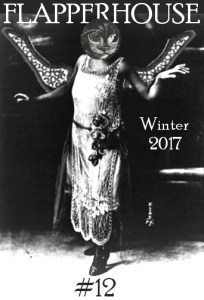
Maria Pinto’s story, “Love Song of a Femme Fatale on Scholarship” was published in Flapperhouse.

Maria Pinto‘s work has appeared in Word Riot, Pinball, The Butter, Cleaver, Menacing Hedge, and Flapperhouse, among others. She was an Ivan Gold Fellow at The Writers’ Room of Boston, in the city where she walks dogs, grows a veggie garden, and does Karaoke. Her debut novel is in search of a home. She’s working on the next.

To read Maria’s story “Love Song of a Femme Fatale on Scholarship” and an exercise on creating character desire, click here.

In this interview, Pinto discusses the light brush strokes of flash fiction, framing narratives, and how language connects novels and much shorter forms.

Michael Noll

The opening paragraph introduces the character’s desire—to sleep with her professor—but the description of the professor depicts him as, shall we say, having less than the classic male beauty. You admit this up front: “She did not interrogate why. She was a freshman; there was only the urgent press of do, do, do.” I can imagine this piece in workshop, someone saying, “Yes, but why would she be attracted to him?” Or “What does she look like?” Were you ever tempted to answer those questions?

Maria Pinto

I’m rarely tempted to answer questions like that in shorter form pieces. One reason I love flash fiction is that its brevity allows for light brush-strokes. If this story works it’s because it reflects what life is really like–people are mysterious and their motivations are mysterious, so often even to themselves. I don’t think the protagonist’s feelings are wrapped up in any deep affection, and I’m not sure it truly matters whether she’s attractive, but I do think her willingness to see “past” her professor’s looks speaks to something we do all the time without necessarily being conscious of it, and that’s surrender to invisible forces. In this student’s case, that invisible force is chemistry. Or is it physics? Sometimes the big cartoon magnet in each of us just starts working towards another person’s magnet; attraction doesn’t only happen between supermodels, right? I’m fascinated by the idiosyncratic ways lust works, and by how some people feel freer to engage with their lust even when it rears up in inconvenient or even ugly places. The fact that we have no idea whether this “chemistry” is one-sided is part of the fun.

Michael Noll

This story is almost entirely composed of the character’s thoughts. Her only interaction with the professor is incidental, entering a unisex bathroom as he steps out. Other interactions might be entirely in her head—imagining that he notices her. Did you ever try to write an actual interaction? Was this story always focused on her imagining thinking about him and what that interaction might look like?

Maria Pinto

I never did try to write an actual interaction, no. Things would have gotten a little too steamy! I think this student has been enjoying that space in between “what if” and “I’m actually doing this,” unlike Prufrock, who will go through a hundred indecisions and revisions before breakfast. For her, all that imagining amounts to a kind of foreplay, and for the reader, I hope, it reminds them of the last time they watched and wanted and it was good. At the end of this piece I hope people wonder whether the professor will be able to maintain his institutional standard of ethics in the face of his student’s brazenness, but I also hope they see her fantasy as a world in itself, complete and silly and hot and mildly funny.

Michael Noll

One of my professors in grad school talked often about a narrative clock, and this story has one. She sees her professor on the bus, and we know that eventually both of them will have to get off the bus. I find that rough drafts often suffer from one of two problems: they don’t have that natural timer ticking in the background, or they have the timer but nothing else going on. Which came first in this story? The bus or the lust?

Maria Pinto

They came at the same time! Public transportation is such an odd environment–if you haven’t pressed your nose against a device or a book for your ride’s duration, chances are good you’ll make eye contact with someone. And then your relationship with that person is cemented until one of you gets off. Either you’ll look at each other again or you won’t. When you look again (and lord help you, if you smile), no matter whether you’re attracted to that person, a frisson is born. I wanted to write something that took place in that interval of a bus ride with that frisson, and the not-quite-stranger dynamic of teacher and student was the frame that immediately presented itself to me.

Michael Noll

You’re working on a novel, which is about as far away from flash fiction as one can get. Is there anything that you’ve done in a piece like this that transfers to the novel form?

Maria Pinto

This is a really interesting question. I guess it depends on what you mean by “anything.” If you mean “is there a premise in one of your pieces that could have been a novel,” I’d say that I once wrote about a grieving widow living in the sort of future where she’s able to make a suit from her dead husband’s skin and experience the world through his literal eye sockets. That could maybe get the novel treatment. And if you’re asking another type of question, I’d say that even though novels and flash fiction are worlds apart, they’re both so much better when an author is surgical and economical and cares about the poetry of her word choice–if her love of all that can be done within a single sentence shines through on the page.

May 2017

Michael Noll Michael Noll is the Editor of Read to Write Stories.

How to Create Desire with Opportunity

2 May

Maria Pinto’s story “Love Song of a Femme Fatale on Scholarship” appears in the Winter 2017 issue of Flapperhouse.

When I was a kid, my dad once claimed that if you left your car running while you ran into a store, it would be your fault if someone stole the car. It was an attractive nuisance, he said, a phrase that is usually applied to things that might prove both tempting and dangerous to children, like trampolines and pools. I’ve been skeptical of my dad’s claim for years, but sure enough, a Google search for “attractive nuisance laws” pulled up this stat: According to a study by the National Insurance Crime Bureau, from 2012-2014, 126,603 vehicles were reported stolen with the keys left in the vehicle. Did the people who owned those cars get blamed for their theft? I don’t know. But the principle is a great one for writers to keep in mind. Instead of asking why a character has a particular desire, it’s sometimes better to simply put a desirable thing in front of them.

Maria Pinto does exactly that in the first paragraph of her flash short story, “Love Song of a Femme Fatale on Scholarship.” It was published in the Winter 2017 issue of Flapperhouse, and you can read it online here.

How the Story Works

Here is the story’s first paragraph:

Something about seeing teacher on the bus, under the yellow light, the ridges of his brown corduroys flaccid, the finger upon which she’d always assumed she would find a gold band if she bothered to look, how the finger tapped at his bony knee, something about the way the finger had a gold band-shaped stripe on it, the stripe pale, a little indented, the way the knuckle hairs had a practiced wither there, how the stripe rendered him vulnerable as a midair-poised ass, hot, pink from slapping, something about all these things taken together made her want to push the moment, to fuck him. She did not interrogate why. She was a freshman; there was only the urgent press of do, do, do.

Notice how vague the rationale for the desire is: “Something about seeing teacher on the bus.” The character can’t really explain her attraction to her teacher; she just knows that she can’t take her eyes off of him. Nothing about the scene or the man is even particularly attractive: the yellow light, his flaccid pants, his bony knee and hairy knuckles. And yet the woman begins to fantasize about having sex with him. Why?

The answer is, mostly, because he’s there to fantasize about: “the finger upon which she’d always assumed she would find a gold band” turns out to have “a gold band-shaped stripe on it.” Her teacher was married, but now he isn’t. Which means he’s available. And that is all the woman needs to fire up her fantasies—and also basic human nature, “the urgent press of dododo.”

It’s almost identical to a moment in the most recent episode of Veep. A character walks into a hotel hallway, sees a half-eaten room-service sandwich on a tray in the hall, and takes a bite. Why? Because he’s hungry? Maybe. Or maybe he does it because that’s what you do with sandwiches. It’s an attractive nuisance, just like the college instructor with his empty ring finger. Further explanation is not required.

The Writing Exercise

Let’s create an attractive nuisance, using “Love Song of a Femme Fatale on Scholarship” by Maria Pinto as a model:

  1. Identify the aspect of human nature at work. Pinto uses sexuality—people want and need to have sex—but that’s not the only aspect available to writers. To find them, think about the advertisements we see on television, almost all of which appeal to basic human nature: fast food, big trucks, fast cars, cars that sense danger before you do, smiling families, partners who hold your hand as you walk toward a hand-carved wooden hot tub on a cliff overlooking a beach, pharmaceuticals that make you well again. We don’t want these things for logical reasons; we want them because of something deep and essential to our being. Pinto begins her story with “Something about…” Find that something for your character. It’s a broad exercise, but if you can narrow the essential desire down to, say, safety rather than sex, then you’ve got a start.
  2. Create the attractive nuisance. Put something in front of your desiring character. The thing doesn’t even need to be particularly great. Fast food is a good example. It’s disgusting and makes me feel sick afterward, but if I’m in riding in a car that goes through a drive-thru, you’d better believe I’m ordering a value meal. The man that Pinto puts in front of her character isn’t desirable, but he’s there, and so she desires him. In fact, the story is more interesting because he isn’t attractive. If we felt sure that an encounter between would go well, we wouldn’t want to know what happens next.
  3. Reaffirm human nature. If you’ve ever made a regrettable choice in life, someone (perhaps yourself) has asked you, “Why did you do it?” Pinto senses this question looming in the reader’s mind, and so she writes, “She was a freshman; there was only the urgent press of dododo.” In short, she’s made human nature a function of age. She’s created an excuse. Plenty of older people have sex with people they probably shouldn’t, too, but that’s not important. The excuse allows the story to move forward. So, give your character an excuse: she’s young, she hasn’t eaten in a few hours and her blood sugar is low, she just had a fight with her friend. The details of the excuse don’t really matter; what’s important is letting the character (and therefore the reader) off the hook.

The goal is to create story and plot by giving a character something that he or she cannot resist.

Good luck.

How to Warm Your Imagination Up for Metaphor

25 Apr

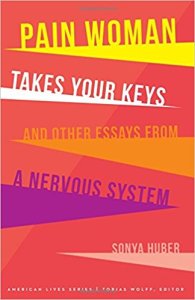
Sonya Huber’s essay, “The Lava Lamp of Pain” is included in her collection, Pain Woman Takes Your Keys and Other Essays from a Nervous System.

When I was starting out as a writer, I would sit at my computer and think, “Okay, now it’s time for a metaphor.” I didn’t know what the image would be, but I had the strong sense that some kind of cool language thing was needed in that moment on the page. So I’d start brainstorming, something like this: “He was so angry. He was a…gorilla…tornado…freight train.” And so on. Metaphor was not my strong suit. Later, in grad school, I would read poetry by the Surrealists and understand that I had, until then, chained my imagination too tightly to the thing I was trying to describe. My metaphors were either too predictable or not actually metaphors (He was so angry…he was a really angry guy). I needed a way of thinking about metaphoric language that could give me enough energy to break away from the most immediate connotations of an image in order to explore less obvious aspects of it.

Sonya Huber does exactly that in her essay, “The Lava Lamp of Pain.” It’s included in her collection, Pain Woman Takes Your Keys and Other Essays from a Nervous System. You can also read the essay online at The Rumpus.

How the Essay Works

The opening paragraph sets up the essays premise and the general direction that its metaphors will take:

Pain moved into my body five years ago. It wasn’t the whack of an anvil or the burn of a scraped knee. This pain sat warmly on the surface of my hands, and reached up to my elbows like evil pink evening gloves. It was a sort of swimming cap clenched on my head with blue plastic flowers at the base of the neck, and a nauseating blur in the eyes. At other times the pain was a cold ache at the knuckles, with a frazzle in the stomach and a steady and oblong ache from hip to hip across the pelvis. It was a rigid curled twang in the toes like the talons of a predatory bird.

This language is pretty straightforward, mixing similes (“like pink evening gloves”) with metaphor (pain in her head was “a sort of swimming cap” and pain made her toes “like the talons of a predatory bird”). The passage culminates in this image:

I didn’t know then that I had become a lava lamp of curling invisible storm clouds, filled with a surge of mute motion that might be its own kind of fierce beauty.

This image isn’t so literal. There isn’t the same kind of one-to-one connection between body of pain and lava lamp the way there is with rigid toes and bird talons. It’s the sort of great image that makes readers despair and think, “I could never write something that good.” But Huber didn’t write that image right off the bat. She worked up to it. In fact, the entire essay is filled with sentences that are continually working their way toward something, the way that a car stuck in snow will rock back and forth until it finally breaks free.

Here is another example:

I was the bitchy patient, crying after each doctor’s appointment, crying with fear when they told me they didn’t know what next. I was desperate to be the woman I’d been before. I wanted to claw my way back to the body I knew.

Instead, I was a slave to the sky. I noticed that an impending storm could knock me flat.

The first sentence (“I was the bitchy patient”) isn’t even a metaphor. But it takes the same syntactic form: I was… She uses that form again and again (“I was desperate” and “I wanted to”) until she hits up on “I was a slave to the sky,” an image that isn’t literal and that gets carried on for an entire beautiful paragraph.

She also uses a different syntax. Instead of “I was,” she uses a comma to create the opportunity to riff on an image, becoming less and less literal. Here’s an example:

In place of that quiet physical body, I would have to adapt to a noisy one, a body with the city-buzz of pain always in the background, a chatty zinging body with a thousand-signal radio-buzz jackhammer snatches-of-an-infomercial baby-crying Vincent-Price-ghoulish-laugh violin-cymbals.

When people (and you still hear this sometimes) say that writing can’t be taught, what they really mean is that raw imaginative power can’t be taught. Either your mind can come up with something as great as “lava lamp of pain” or it can’t (or it will come up with something in between can’t and great). But what can be taught is the creative process that creates the opportunity for an imagination to be as great as it can be. This is what Huber does again and again in this essay.

The Writing Exercise 

Let’s create the opportunity for imaginative language and metaphor, using “The Lava Lamp of Pain” by Sonya Huber as a model:

  1. Lay out the basic outlines of the subject. Huber does this at the start of her essay by describing what happened (“Pain moved into my body”) and what it felt like. Metaphor and simile only work if you know exactly what you’re talking about, whether it’s a particular person or place or event or state of being. Start with the practical.
  2. Take first steps into metaphor and simile. Don’t swing for the fences right away. Take a few practice cuts at easy pitches. Huber does this when she compares her pain to a swim cap. Try using this sentence starter: “It was sort of like…” We do this in conversation all of the time. Don’t worry about being literary. Just use whatever image comes naturally.
  3. Attempt a bigger image. Huber writes the lava lamp image. But notice that she approaches it from a place of uncertainty: “I didn’t know then that I had become…” Sometimes, when you try to write, “It was exactly this way,” it sets the stakes so high that your imagination shuts down. Use the “It was sort of like” phrase for as long as seems necessary.
  4. Get into a rhythm. Huber writes some version of “I was…” over and over. Yes, in workshop this sort of repetition is often discouraged, but that’s why it’s important to remember that workshop isn’t the real world. Real readers don’t care about workshop rules. She repeats that syntax until something brilliant pops out.
  5. Riff on an image. Huber gives herself the image of a noisy body and then runs with it. You can do this with any metaphor or simile that you write. Simply add a comma at the end and play a kind of game with yourself, like you do with kids (everyone name a fruit that starts with the letter A). How much stuff can you associate with the image you’ve written?

The goal is to warm up your imagination and let it run for a while.

Good luck.