Archive | Character Development RSS feed for this section

How to Begin and End Chapters

21 Oct
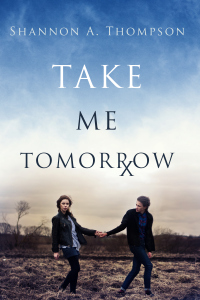
Shannon S. Thompson's YA dystopian novel, Take Me Tomorrow, features a clairvoyant drug and an uprising against the oppressive State.

Shannon A. Thompson’s YA dystopian novel, Take Me Tomorrow, features a clairvoyant drug and an uprising against the oppressive State.

Most writers have a sense for how a novel is structured. But what about chapters? We tend to make a few common mistakes, like beginning a chapter with a character waking up and ending it with the character going to bed (or getting knocked unconscious). In other words, the chapter doesn’t know where to begin and when to end, and so as long as the character is awake, the chapter keeps going.

Different kinds of novels handle chapters differently, but it’s usually the case that genre novels contain short chapters. A great example of this kind of chapter—and a great example for how these short chapters are structured—can be found in Shannon A. Thompson’s new Young Adult Dystopian novel, Take Me Tomorrow. You can read the opening chapters here at Smashwords.

How the Novel Works

Let’s look at the first two chapters of the novel, which are quite different in terms of setting and content but which use a similar structure. In the first chapter, the narrator, a teenager named Sophia, meets an unexpected person. The chapter begins with Sophia running through the woods with her dog. She’s checking on her father’s land while he’s away and clearly feeling at home:

Spring was the best season − when everything smelled of moss, alive and wet. But it was August. The muggy air sucked all the life out of the plants, leaving them dry, disheveled, and dead. Today, the forest smelled of burnt grass and dried mud. Among the pivots, the creek bed, and the broken logs, I followed the trail, and my dependable dog ran in front of me.

Then, she runs into a stranger:

a boy whose “tone was sarcastically carefree, his stare was intense, shadowed by the setting sun. I recognized the stillness in his expression. It was a predatory look, the expression of an animal preparing an attack.”

But by the end of the scene, the boy’s tone has shifted:

“‘Am I near the park?’ His quiet tone was rushed. ‘That’s where I meant to go.’ His shoulders slumped in defeat. ‘Really.'”

That tone isn’t the only major shift. The boy hurries away because someone else has arrived, and that arrival causes a change in the narrator:

“My usually goofy friend was a mess. His mop of brown curls sprung into his widened eyes, and he wheezed from the run. His alarmed expression ruined any lasting comfort I maintained. Something was wrong. Seriously wrong.”

One of the smartest things I ever heard about crafting scenes was from writer and screenwriter Owen Egerton. He shared with me the screenwriting tip that scenes should almost always contain a reversal (a “flip” of a situation) or a change in tone. So, if a scene starts out happy, it should end with sadness. Of course, the best scenes will end in ways that don’t change the tone 180 degrees but instead change it in a way that is less predictable. This is precisely what Thompson does in her first chapter. The chapter begins with the character’s confidence in her own knowledge of her surroundings and ends with that confidence disrupted.

The next chapter does something similar. It begins with a risky encounter with the police, who are enforcing a State-mandated curfew. The encounter goes smoothly, according to the expectations of one character:

“Everything is a scare tactic with these people. They don’t check everything.”

The chapter ends with the knowledge that another encounter with the State is coming, and this one will be more serious and more dangerous: “I need you to bring me a bag of food, water, and one of your dad’s knives to school.”

Though the scene ends on a similar note as it began, the stakes have been dramatically increased.

The Writing Exercise

Let’s structure chapters using the novel Take Me Tomorrow by Shannon A. Thompson as a model:

  1. Choose the scene(s) at the heart of the chapter. I’m using the word scene because it’s sometimes a more helpful organizational unit than chapter. Most of us know what a scene is even if we have no idea what a chapter should look like. Scenes also appear in stories, whereas chapters do not. So, start by outlining a scene that you know will appear in the story/novel. There may be passages that come before or after it, but you should focus on the drama that you know will occur.
  2. Identify and clarify the tone or situation at the beginning of the scene(s). You can think about this in two ways. One, what is the situation at the beginning of the scene? Think broadly. What problem is the character facing? What approach is the character using? What is the character’s attitude? What is the balance of power? Two, what is the tone at the beginning of the scene? Is it serious? Comic? Goofy? Casual? Think about the scene as a whole, not necessarily the character’s emotions. For instance, a birthday party is casual, but a waiting room at a hospital is likely serious.
  3. Reverse or shift the tone or situation at the end of the scene(s). When you reverse or change any of these situations, you can go for a full reversal (happy to sad, birthday party to cancer), or you can go for a change in degree. So, if someone has more power, that person’s power could be amplified or reinforced rather than diminished or taken away. When you change the tone, you can keep the setting the same but introduce an element that changes the way we view it. For instance, if an ambulance shows up to a birthday party, the tone has changed from fun and casual to serious and formal. (As a general rule, if a scene contains people in uniform, then it’s probably formal.) You can also produce a change in degree: mildly happy to incredibly happy. For instance, birthday parties are mildly happy, but if you’re given a gift of a lottery ticket, and you scratch it and win a million dollars, the party just got a lot happier.

The key to all of these steps is to identify what you establish at the beginning of a scene. By the end of that scene, at least one of the basic building blocks of the scene should have changed. If you’re trying to decide where to end a chapter or scene, consider picking a moment immediately after something essential has changed.

Good luck!
How to Make Small, Intimate Stories into Page Turners

14 Oct
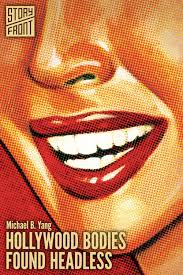
Michael Yang's story "Hollywood Bodies Found Headless" appeared in Amazon's literary series, "Day One."

Michael Yang’s story “Hollywood Bodies Found Headless” appeared in Amazon’s literary series, “Day One.”

When we think about drama, it’s tempting to believe that bigger is better. A story about a marriage on the rocks is good, but a story with married characters throwing rocks at each other is even better, right? Not necessarily. There’s a reason that some journal editors ban stories about characters who die. It’s important to explore the range of dramatic possibilities that exist between morning coffee and evening murder.

For an example of how domestic dramas can be made exciting, check out Michael Yang’s story, “Hollywood Bodies Found Headless.” The lurid sensationalism of the title draws you in, but the drama that holds you is smaller and more intimate than a tabloid headline. The story was published as part of Amazon’s “Day One” literary series, and you can read the first pages and buy the story for $1 at Amazon.

How the Story Works

I’ve mentioned a number of times on this blog the Ron Carlson quote about a story having two parts: the story and the world that the story enters. Usually, this means that a dramatic plot (ninja fights dragon in cage match) is given depth and resonance by the nuances of the story’s world (ninja can’t pass final ninja qualifying test, can’t get the girl, can’t make his parents happy, can’t get along with his more successful brother and sister). The world, then, gives the story texture.

But what if the opposite is also true? What if small, intimate plots can benefit from exciting worlds? What difference would the world make to a story about two characters working in a restaurant and trying to pay bills—one story is set in Kansas City, and the other is set in Pompeii just before Mt. Vesuvius erupts. Context matters—and that is exactly the truth that Yang uses in his story, “Hollywood Bodies Found Headless.”

The story is about a woman who has moved to Los Angeles so that her 9-year-old can pursue her dream of becoming an actress. It might seem odd to view a Hollywood story as mundane, but Yang sets the story in the grind-it-out world of television commercials: standing in line to audition, dealing with directors and other parents, and eating (and not eating) in order to look the part. Plus, the story isn’t concerned with a make-or-break moment for the girl, Sara. Something happens, of course, and it may or may not determine Sara’s future, but the immediate impact is felt most acutely by her mother. In other words, it’s a domestic story with small, intimate stakes.

So, look what Yang inserts into the story’s world: On the first page, the mother buys a grocery story tabloid magazine with the headline, “Hollywood Bodies Found Headless.” After she feeds her daughter dinner, she reads the article:

I open the glossy pages. The first body was discovered off a Sacramento highway a decade ago, a homeless man. There was hardly any press, only a small article in the back pages, but two years later the second body, a well-known former prostitute for celebrities, lapped up on the shore of the Los Angeles River, wrists and ankles bound. The only connection between the two crimes was the headless nature of their bodies. For a while, the Hollywood Lopper had been an LA secret, because of how infrequently he struck, but the killings ramped up as he began garnering news. The latest murder was a month ago: a ubiquitous character actor who always played the weaselly, cocksure best friend— the one who tries to steal the hero’s girl, only to get humiliated in the end.

After we learn the dramatic, Vesuvius-erupts part of the world, we learn about its personal ramifications:

On TV the news anchors prattle on about a besieged Los Angeles, with celebrities blinking under bright lights, stars turned into martyrs now that the Hollywood Lopper has moved up the entertainment food chain, while we no-names, the real victims, the people on the edges who had been enticed and promised celebrity, toil in obscurity through our ordinary lives.

In short, Yang has taken a small, intimate story and set it against a backdrop of 1) murder and 2) celebrities versus ordinary people. There  is a serial killer on the loose, but no one will care unless he kills someone notable. His murders have ascended the Hollywood social ladder, but there’s no guarantee that he won’t kill an unknown person next, like a certain nine-year-old trying out for commercials—or her mother. What makes the story beautiful is that it keeps the serial killer in the background (as part of the world) and foregrounds the story about a mostly oblivious girl chafing at the limits placed on her by her concerned mother.

That is how you can use a dramatic world to make an intimate story more exciting.

The Writing Exercise

Let’s make a small, intimate story more exciting by giving it a dramatic world, using “Hollywood Bodies Found Headless” by Michael Yang as a model:

  1. Choose a mundane story. Perhaps it’s one you’ve already written. Or, you could choose one of the many usual domestic plot lines: marriage drama, relationship drama, parent/child drama, money drama, extended-family drama. Regardless, you’re looking for a story that makes you worry that it’s not exciting/dramatic/sexy enough. Setting aside issues of fiction written by men vs women (and the tendency to dismiss domestic stories), this is a worry that most writers have: is our story interesting enough. Why should anyone read our story?
  2. Choose a dramatic backdrop. If you’re writing a short story, this might mean choosing something to exist in the background: noise that’s buzzing in the characters’ heads. It could be something unusual and threatening like a serial killer on the loose. It could be a significant election or a historical moment like the first moon landing. If you’re writing a novel, you might use the larger arc of the story (throw the ring into Mt. Doom, return the painting The Goldfinch) as a backdrop for an intimate moment or minor arc. Even though the action may be small, it’s cast against a much larger story that gives it weight.
  3. Watch for a moment to unite the story and backdrop. Michael Yang does this when he writes that “we no-names, the real victims, the people on the edges who had been enticed and promised celebrity, toil in obscurity through our ordinary lives.” Give your characters a chance to notice the backdrop, just as the mother in Yang’s story reads about celebrities in the tabloid newspaper. That moment can have many emotional angles. In a story set in Pompeii, one character could look out her window while eating dinner with her children and think, “Oh no.” Another character could glance away from her cheating husband, see the smoke, and think, “Thank god.” This moment will likely be brief. It may happen more than once, just as the mother in Yang’s story thinks about the serial killer more than once, but when she does, it’s to refocus our attention on the importance of the intimate drama in front of her.

Good luck!

How to Reach Out to Hostile Readers

7 Oct
Jess Stoner thought being a postal carrier could be her dream job. It turned out to be a nightmare.

Jess Stoner thought being a postal carrier could be her dream job. It turned out to be a nightmare. She wrote about the experience in “Blues on Wheels.”

Everyone has a story to tell, but sometimes not everyone wants to hear it. What happens when this is your story? How do you get skeptical, or even hostile, readers to pay attention?

Jess Stoner faced this problem in her essay, “Blues On Wheels,” about her experience with illegal and abusive labor practices as a mail carrier for the United States Postal Service. The essay is one of the most powerful and disturbing pieces of writing that I’ve read in a long time. It was published at The Morning News, where you can read it now.

How the Story Works

Stoner writes about the systematic abuse that she and other carriers faced at the USPS. She was screamed at and threatened, forced to work off the clock, and required to work as many as 12 days in a row without a day off. When she was bitten by a dog (off-leash, unfenced), her supervisor told her she’d likely be fired—because getting bitten was her fault. All of these abuses are unethical, and some of them are illegal. It would seem reasonable to assume that Stoner could tell these things to anyone and find a sympathetic ear. But that isn’t the case.

Stoner was working in Texas, which is a right-to-work state, which means it has laws that reduce the power of labor unions. Unions, of course, are a politically charged topic, but they aren’t the primary reason that some readers may object to Stoner’s story. Instead, the problem for many readers would be that Stoner is telling the story at all. Americans’ resistance to unions is just the beginning of our reluctance to listen to stories about workplace problems. We tend to believe in working hard and not complaining, perhaps because of that old Protestant work ethic and almost certainly because of the recent economic recession. When many people don’t have any job at all, it’s natural to resent someone who complain about the job they do have, no matter how unfair or illegal its practices.

So, in writing this essay, Stoner needed to find a way to convince the reader from walking away. Given that need, watch how she begins the second section of the essay:

I wanted to be a letter carrier because I have always loved checking the mail. It has been one of the highlights of my day since I was a kid, when my favorite aunt, who lived more than 1,000 miles away, would send me letters and packages. I had also been underemployed, temping and volunteering for the last six months. I wanted to work outside, to tire out my body and my mind. I wanted a paycheck.

Everyone I knew was happy for me when I was hired; many said that delivering the mail was their secret dream job. They told me about the letter carriers they grew up with, whose names they knew.

Stoner makes clear that she wanted the job and understood the physical nature of it (“I wanted to work outside, to tire out my body and my mind.”) In other words, she removes the potential objection by readers who may have believed she wasn’t up to the demands of the job in the first place. Stoner also makes clear that she was struggling in the same difficult economy as everyone else (“underemployed, temping and volunteering for the last six months”)—an important distinction for readers who’ve been similarly beaten down and, as a result, are alert to the first whiffs of elitism or privilege.

Stoner continues with these attempts to reach out to the reader, making clear (again) that she’s not afraid of hard work:

I’m a Type-A person who grew up as a member of the lower middle class; I’ve always been driven to work hard, no matter where I was employed: the warehouses, convenience stores and restaurants before and during college, and after graduating, the nonprofits, the universities where I taught.

But Stoner is also careful to note that the job is not a matter of life or death—she won’t starve without it.

I constantly reminded myself: You have chosen to work for the USPS. You can quit…I had the privilege of walking away, something my husband begged me to do on a daily basis. We are a childless couple; we could survive a few months of my unemployment.

Of course, even with these caveats, it’s possible that some readers will dismiss Stoner’s very legitimate complaints as mere whining. You can’t convince those who aren’t willing to listen. But it’s likely that these caveats allow the essay to reach readers who might otherwise have ignored it, which is all that any writer can hope for.

The Writing Exercise

Let’s reach out to hostile readers using “Blues on Wheels” by Jess Stoner as a model:

  1. Identify the hostile readers. In our partisan climate, it’s not difficult to anger some readers even with seemingly innocuous material. But if you’re writing about sex, dating, parenting, healthcare, dietary preferences, entertainment choices (TV, movies, video games, hiking, hunting, target practice), death and dying, cultural mores and idiosyncrasies, inequality, or work, you’re likely to run into objections. In other words, unless you’re writing about your favorite ice cream flavor, there’s likely a partisan perspective on your topic. But we often aren’t aware of these objections because we tend to surround ourselves with like-minded people. So, imagine yourself in a community that isn’t your own. If you were to begin telling your story, what would people say?
  2. Give those readers the benefit of the doubt. It’s easy to demonize people who disagree with you. But it’s not a great rhetorical strategy, no matter how righteous your cause. (Remember how Martin Luther King, Jr. began his letter, written from Birmingham Jail, to the white preachers who criticized his nonviolent actions: “But since I feel that you are men of genuine good will and your criticisms are sincerely set forth, I would like to answer your statement in what I hope will be patient and reasonable terms.”) In other words, don’t be condescending—or at least hide your condescension the best that you can.
  3. Make your biases clear. We rarely come to an issue with no preconceived notions. Sometimes they’re positive, sometimes they’re negative, and other times they simply exist. Be careful not to reserve expressions of shock for when they’re most warranted. This is, perhaps, why Stoner makes it clear that she always wanted to be a postal carrier. She knew something about the job and valued its importance. In other words, show your familiarity with the subject you’re writing about.
  4. If possible, relate to the readers. If the hostility is a matter of class (real or perceived), try to narrow that distance. Politicians do this with varied success by holding guns and wearing Carhartt jackets. This is easier done if the connections are real. Stoner grew up working class and says so. She was struggling to find full employment and says so. So, ask yourself, “How am I like my hostile readers?”
  5. If necessary, admit your privilege. There are limits to how much you can relate to certain readers—overdo it, and you’ll appear to be insincere. So, be honest. If not everyone can make the choices you’ve made, say so. If your choices or beliefs are influenced by cultural factors that aren’t present everywhere, admit it. If there are many positions one can take on an issue, don’t write as if there are only two (yours and mine). If you once believed differently than you do now, say so and give your reader the chance to make the same philosophical journey as you.

Remember, the goal isn’t to dilute your point but to make it heard by as many people as possible.

Good luck!

How to Create Meaningful Spaces in Stories

30 Sep
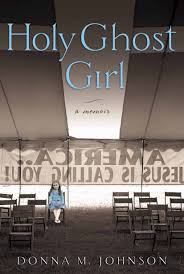
Holy Ghost Girl by Donna Johnson portrays the author's experience growing up on the trail of a revivalist preacher who would eventually be sentenced to prison time.

Holy Ghost Girl by Donna Johnson portrays the author’s experience growing up as part of the inner circle of a revivalist preacher.

Every writer has heard this piece of advice: Don’t write a scene in a vacuum. Choose a setting that will impact the characters’ decisions. Not all settings are created equal. Force two characters to have an argument in the bathroom, and the result will be different than if they have it at the dinner table.

In theory, this advice should be easy to follow, but I can remember my days as a MFA student when I would spin my wheels for days puzzling out which setting would be best and worrying that I was choosing the wrong one. Like most writing “rules,” the theory is easier than the application. So, how can we create setting without driving ourselves crazy?

Donna Johnson’s memoir, Holy Ghost Girl, was published in 2011 to rave reviews. The New York Times called it “enthralling” and “a sure bet.” The book is about Johnson’s experience growing up in a family that followed a traveling tent revival led by the preacher David Terrell. The sense of place is vividly palpable in the book, as the first pages of the opening chapter make clear. You can read them here.

How the Story Works

One reason that setting often feels difficult to write is that the places we’re considering feel random, as though drawn from a hat of Places to Set a Scene. Sometimes, the solution is to find a place that the characters find meaningful. As real people, we travel through a variety of places every day, but all of us have a handful of places that feel like home, where we are our best or truest selves. Watch how Johnson sets up such a place in the first chapter of the memoir:

The tent waited for us, her canvas wings hovering over a field of stubble that sprouted rusty cans, A&P flyers, bits of glass bottles, and the rolling tatter of trash that migrated through town to settle in an empty lot just beyond the city limits. At dusk, the refuse receded, leaving only the tent, lighted from within, a long golden glow stretched out against a darkening sky. She gathered and sheltered us from a world that told us we were too poor, too white trash, too black, too uneducated, too much of everything that didn’t matter and not enough of anything that did. Society, or at least the respectable chunk of it, saw the tent and those of us who traveled with it as a freak show, a rolling asylum that hit town and stirred the local Holy Rollers, along with a few Baptists, Methodists, and even a Presbyterian or two, into a frenzy.

This passage establishes the tent as special in a couple of ways. First, it stresses how unremarkable the setting is: a field of trash at the edge of town. Yet that trash is appropriate because the people who gather there feel “too poor, too white trash, too black, too uneducated, too much of everything that didn’t matter and not enough of anything that did.” This is an example of characters finding meaning in the things that surround them. Real people do this all the time. They develop attachments to the places they live: small towns, big cities, flat plains, mountains, deserts, rainy places, blue states, and red states. In all likelihood, they didn’t consciously choose the place where they live. They were born there and stayed or arrived there out of some necessity. Yet they often appropriate aspects of the place as statements of personal character—the people who live here are good/hardworking/smart/real/whatever. This is exactly what Johnson is doing in this passage.

Secondly, the passage shows the people creating a space that demonstrates some quality about them: “At dusk, the refuse receded, leaving only the tent, lighted from within, a long golden glow stretched out against a darkening sky. She gathered and sheltered us…” It’s a cliche that you can learn a lot about people by stepping into their homes, and this passage reveals the truth in the cliche.

Once the memoir establishes the importance of the tent, it spends several paragraphs showing how the tent was put up, the effort and mechanics involved. Because the place matters, so does the upkeep of the place, and it’s in these passages that we learn crucial information about the people who gather there:

Local churches sent out volunteers, but most of the work was done by families who followed Brother Terrell from town to town, happy to do the Lord’s work for little more than a blessing and whatever Brother Terrell could afford to pass along to them. When he had extra money, they shared in it. He had a reputation as a generous man who “pinched the buffalo off every nickel” that passed through his hands. He employed only two to four “professional” tent men, a fraction of the number employed by organizations of a similar size. The number of employees remained the same over the years even as the size of the tents grew larger. “World’s largest tent. World smallest tent crew,” was the joke.

Because the tent is so central to the people’s identities, it’s also central to the story. One chapter begins with unwanted visitors to the tent (the Klan). Another chapter offers some children, including Johnson, the opportunity to escape from the tent for a while and swim in a local pool. In both scenes, the tension results from the changes to setting. The rules—the usual way of being—are upended, which produces a story to tell.

The Writing Exercise

Let’s create a meaningful space using Holy Ghost Girl by Donna Johnson as a model:

  1. Choose a character. It’s tempting to start with the setting itself, but unless you’re writing a story like Jack London’s “To Build a Fire” where setting is the entire point, the place is only as important as the character believes it to be. So, choose a character that you’ve already created, and let’s figure out what that character believes is important about the setting.
  2. Locate the character in his/her surroundings. Start with the general. Where does the character spend his/her time? Think about neighborhood, work, commute, church—the basic settings of our lives.
  3. Identify what is unremarkable about those surroundings. We tend to start with what is remarkable or unusual. But it’s often the case that people become inured to the peculiarities of where they live—they see them every day and take them for granted. Instead, try listing the things that the character sees or notices every day. What are the things that irritate the character about his/her setting?
  4. Let the character appropriate those aspects as personal qualities. Ironically, it’s the little, irritating things in our worlds that we often feel the most attachment to. Johnson writes about how the people who gathered in the tent identified with the trash strewn around them. Try writing a sentence that begins this way: “We were the kind of people” or “They were the kind of people” or “She was the kind of person who…” Can you connect that kind of people they are to those irritating, commonplace parts of their surroundings? Here’s an easy example of this: “We were the kind of people who didn’t need a lot of money.”
  5. Allow the character to create a personal space in those surroundings. In Johnson’s memoir, the worshippers construct a sacred place in the midst of the trash, and that place shines into the darkness. In other words, the place makes manifest the hidden, interior parts of the people who gather in it. People do this all the time. Sometimes we literally build shrines to the things that are closest to our hearts. Other times, we build dens or interior spaces that allow us to be our truest selves: they’re full of books or NFL gear or Precious Moments figurines. What shelter does your character build to protect against the elements—physical, emotional, and spiritual?

Good luck!

How to Create a Character Foil

23 Sep
Kalpana Narayanan won Boston Review's Aura Estrada Short Story Prize with her story, "Aviator on the Prowl."

Kalpana Narayanan won Boston Review‘s Aura Estrada Short Story Prize with her story, “Aviator on the Prowl.”

In high school literature classes, students are often taught about character foils—a yin-and-yang concept in which characters tend to be polar opposites of each other, as in the nursery rhyme, “Jack Sprat could eat no fat, his wife could eat no lean.” As a story device, an opposites-attract approach often works. But it isn’t the only way to develop character conflicts.

In her story, “Aviator on the Prowl,” Kalpana Narayanan creates two characters who are remarkably alike rather than different. The result is a story that won Boston Review‘s 2011 Aura Estrada Short Story Contest. The judge, Francisco Goldman, wrote that the story “makes you laugh a lot, makes you feel great affection, and breaks your heart. I have to admit, I finished it with tears in my eyes.” You can read “Aviator on the Prowl” here.

How the Story Works

There are many ways to establish a character (physical traits, social position, job), but one of the most memorable to the reader is through the character’s attitude toward the world around her. In this first paragraph of “Aviator on the Prowl,” notice how prominent the narrator’s voice is. It could have been made transparent, like a clear window for us to see the events of her past, but, instead, the voice colors our view:

That summer I broke it up and down and got a job because I was tired of thinking. Each night I came home I peeled off my shirt and pants that smelled of the juice of a thousand pigs, and I stood outside my room. My brother Aalap had hanged there the year before, the starched, yellow fold of his karate-class belt rounding his neck like a scarf. I’d been at college, and my mother had made it clear it was the belt and not her own strangle that had writhed small Aalap purple. You could still see the hole where the nail had been. It was just above my bedroom door and everyone had remembered everything but no one had remembered it.

This is a tough, jaded narrator. Her brother has committed suicide, and she’s developed a kind of emotional scab over her still-raw feelings about his death. This attitude becomes clear as she’s put into an interaction with her mother:

My mother said it wasn’t nice how I stripped outside my room like that, that my father might see my triangle bra and shriveled-up breasts and then what. (Buchu, put your breasts back in your buttons!) I said maybe you shouldn’t stick your sad face in my business like that or maybe I just said it in my head.

This clear attitude makes it easier to create a foil for the narrator; the usual way would produce a character who has an opposite attitude toward life, a sort of bleeding heart. But Narayanan does the complete opposite and creates a character who shares the narrator’s combative attitude—and shares it in an exaggerated way. The character is her boss at the restaurant where she works. The similarity of their attitudes becomes clear as soon as he’s introduced:

I told an Asian girl that came in the restaurant our beer was from Japan. My boss screamed I was a humiliation, that it was from Okinawa and if I didn’t get it straight he’d really do something bad. I told the girl it was from Okinawa and gave her the bottle for free. She mouthed an apology when my boss wasn’t looking, but I didn’t care.

The story wastes no time before the boss’s attitude is applied to the central event of the narrator’s life: her brother’s suicide. In this scene, the narrator has come into work even though it’s her off day. She likes working in the kitchen, and so she helps the sous-chef cut some garlic. But, she does it badly, and her boss notices and digs the cut ends out of the trash:

His hand opened to show the end of the bulb I’d just tossed. His fingers rolled the end like mucus then threw it at my face. I twitched.

I don’t fucking care who’s dead and who’s not, he continued, if you waste my money like this again you’re out.

In a way, the story has taken the narrator’s tough attitude toward her brother’s death and, through the character of her boss, exaggerated it into a grotesque version of itself. It becomes a kind of contest between the character’s: how desensitized can they become? As you read the rest of the story, you’ll see how Narayanan steers this contest in a surprising direction and how the final scene offers a release from this contest of wills.

By creating this particular character foil—two characters who are similar rather than opposites—Narayanan creates a framework in which the story’s emotional tension (how does she grieve her brother’s death) can play out.

The Writing Exercise

Let’s create a character foil using “Aviator on the Prowl” by Kalpana Narayanan as a model:

  1. Create a character and a problem that will not go away quickly. The character can be anyone, but the problem should be persistent, as opposed to one that can be solved with a decision (to leave or stay, to take this job or that one). A problem like this tends to be in the background of everything else in the character’s life. So, think about big issues: love, death, or existential dilemmas (what kind of person am I?).
  2. Clearly define the character’s attitude toward that problem. If you’ve ever listened to people talk about themselves in the midst of a significant difficulty (death of a loved one, career change, big move, or some other dramatic life transition), you’ve likely noticed that the stories they tell often change, depending on how they’re feeling about the situation. In other words, we tell ourselves stories that support our basic view of the world and ourselves. So, think about the character’s attitude as a thing he or she has created. How has the character chosen to approach the problem that won’t go away?
  3. Create a second character, one whom the first character cannot avoid. Our lives are full of such people: bosses, coworkers, spouses, children, parents, neighbors, and friends. Particular situations also bring unavoidable people into our lives. If the toilet is backed up, you’re stuck with a plumber. If a storm has blown a tree over onto your house, you’re stuck with a contractor and team of workers. Hospitals have doctors and nurses. Schools have teachers and administrators. In short, think about your character’s situation and choose a character who is an inevitable part of it.
  4. Give this new character the same attitude as the first character. You don’t need to know why the character has this attitude, only that it exists. So, if your first character is tough, make this new character tougher. If your first character is highly rational, make the new character even more logical. Once you know the attitude, you can find ways for it to be expressed. Be practical. If the new character is a nurse who copes with all difficulty with laughter, there will be plenty of difficulties in a nurse’s routine to prompt that laughter.
  5. Find opportunities for these attitudes to collide. You have already created characters who cannot avoid each other. Now, create scenes that force them onto different sides of a problem. Both characters will address the problem in the same way, and that similar approach may produce conflict.

Good luck!

How to Make Characters Uncomfortable

16 Sep
Ted Thompson's novel, The Land of Steady habits, has earned comparisons to Richard Yates and John Updike.

Ted Thompson’s novel, The Land of Steady Habits, has earned comparisons to Richard Yates and John Updike.

Fiction should not be nice to its characters. As soon as a character reveals some preference (I like this but hate that), the story has an obligation to force the character into that hated thing. It’s a tried and true strategy that can produce some of the best moments in a story, regardless of genre (remember snake-fearing Indiana Jones facing a pit of snakes?). So, how do you set up a situation in which a character must face the thing he or she detests most?

Ted Thompson begins his novel The Land of Steady Habits with exactly this kind of moment. The novel was published by Hatchette Book Group, and you can read the opening chapter at Hatchette’s website.

How the Story Works

The first line of the novel establishes the hated thing:

One of the great advantages of Anders’s divorce—besides, of course, the end of the squabbling, and the sudden guiltless thrill of freedom—was that he no longer had to attend the Ashbys’ holiday party. The party, like all the parties he’d attended in his marriage, was his wife’s domain, and he was relieved to no longer have to show up only to be a disappointment to her friends.

The novel wastes no time forcing Anders to confront the thing he thought he’d left behind: “a card arrived from the Ashbys, as if with the season, inviting him once again to their holiday party.”

Of course, the invitation shouldn’t matter. Anders should simply toss it in the trash—the advantage of divorce. This seems to be his plan, and at first he treats it as curiosity—”the only invitation he’d received”—and tries “to decide if it was a peace offering of if they’d simply forgotten to take him off their list.”

But there’s a complication. As part of the divorce agreement, Anders agreed to give his wife the house (with its expensive mortgage), but he can’t afford to retire on what remains of their wealth and has, out of necessity and spite, quit paying the mortgage. The problem with this solution becomes clear with a second piece of mail: a note from his wife’s lawyers also comes in the mail that makes clear that he has “until the end of the year before the bank brought in a judge.”

To solve this problem, Anders must talk with his ex-wife—and that is why he decided to attend the party.

Thus, in the span of only a couple of pages, the novel creates a situation that Anders should absolutely avoid and a reason for him to necessarily confront it. As one might expect, his appearance begins uncomfortably and ends with disaster.

Side note: This novel was recently optioned by director Nicole Holofcener, whose films (Please GiveFriends with MoneyEnough Said) excel at putting characters into uncomfortable situations. When you read the opening chapter of Thompson’s novel, its appeal to a filmmaker will make a lot of sense.

The Writing Exercise

Let’s put a character into an uncomfortable situation using the excerpt from The Land of Steady Habits by Ted Thompson as a model:

  1. Create a character and a reasonable dislike/hatred. You might actually use Thompson’s first line as a model: “One of the great pleasures of _____ was that he/she no longer had to ______.” Life is full of situations like this. Parents look forward to no longer changing diapers, people in apartments look forward to no longer carrying groceries up flights of stairs, people who’ve changed jobs look forward to no longer commuting or sitting next to So-and-so. And, of course, most of us know what it’s like to expect that something is over—and then it isn’t. So, imagine what life change your character has recently gone through and the annoying things this change has left behind.
  2. Create an opportunity to encounter that dislike. Thompson uses an invitation in the mail, which is, in a larger sense, a visit from somebody he used to know but now no longer encounters. So, imagine all the ways that your character’s dislike could return in the form of an unexpected encounter: running into someone in the grocery store, an event (wedding, funeral, graduation) that forces them together, a merger at work. We like to believe that the world is large and that we can make our own place in it, but the truth is that our places overlap more than we often acknowledge. How can you make your character’s worlds overlap in order to bring him/her into an encounter with some unpleasant thing that has been left behind?
  3. Create a reason for the character to seek out that encounter. Thompson gives his character no choice, really, but to attend the party (Anders has quit paying the mortgage on the house that his wife won in the divorce, and he needs to explain himself). As Thompson demonstrates, a good way to force a character’s hand is to make him/her do something that will have negative consequences. So, imagine an act that your character could commit that would force him/her to face some unpleasantness that has been left behind. Or, imagine a circumstance that is beyond the character’s control (layoffs, illness) that could turn the character back to a place that’s been left behind. The result will likely be a scene that the character wants desperately to avoid but has no choice but to enter.

Have fun!

How to Write Surprising Descriptions

9 Sep
One reviewer said of the essays in Amy Leach's Things That Are, "If Donald Barthelme had made nature documentaries, the commentary might have sounded like this."

One reviewer said this about the essays in Amy Leach’s Things That Are: “If Donald Barthelme had made nature documentaries, the commentary might have sounded like this.”

At some point in your story or novel or essay, you’ll need to write a memorable description, something better than red or big or happy. So, you start free writing and brainstorming to find the right words, but they’re all variations on the usual and expected. You want to find something new and startling, but how?

For essayist Amy Leach, writing eye-opening descriptions seems almost as natural as breathing. Her essay, “In Which the River Makes Off With Three Stationary Characters,” is, in a way, one long description that develops and moves in surprising ways. It was published in The Iowa Review and included in her collection, Things That Are. You can read it here as a sample of the book or here at JSTOR.

How the Essay Works

As we grow older, we fall into patterns of seeing. We perceive not the thing itself but our expectation (built on years of seeing) of what the thing should look like and what it is. A good description, then, wipes away those years of seeing and allows us to see the world the way we saw it as babies and children: for the first time. Watch how Leach strips away the usual ways of perceiving in the first paragraph of “In Which the River Makes Off With Three Stationary Characters”:

In the seventeenth century, his Holiness the Pope adjudged beavers to be fish. In retrospect, that was a zoologically illogical decision, but beavers were not miffed at being changed into fish. They decided not to truckle to their new specification, not to be perfect fish, textbook fish; instead they became fanciful fish, the first to have furry babies, the first to breathe air and the first fish to build for themselves commodious conical fortresses in the water. If Prince Maximilian, traveling up the Missouri River, had taken it in mind to categorize them as Druids or flamingos, beavers would have become toothy Druids, or portly brown industrious flamingos.

The last phrase of the paragraph (“portly brown industrious flamingos”) would have been an inconceivable string of words without the rest of the paragraph. But, by introducing the idea that beavers might not actually be beavers, Leach removes the usual way of viewing the animal and gives herself the opportunity to see them as something totally new. The same thing is true of the description that ends this next two sentences:

The beavers’ reaction to their papal renaming highlights two of their especial qualities: their affability and their unyieldingness. They affably yield not. If they are deemed fishes, they respond by becoming lumberjack fishes.

How amazing is that phrase: lumberjack fishes? And how impossible it would be to pair those words in a passage that looks at beavers in the usual way.

Despite the inventiveness of the descriptions, Leach actually arrives at them in methodical ways:

  1. First, she introduces a wrong way of viewing something: the Pope says beavers are fish.
  2. Then, rather than correcting the wrong idea, she accepts it as a fact: okay, if beavers are fish, then these are the kind of fish they are.
  3. Finally, she introduces more wrong ways of viewing the beavers (if they’re already fish, why not make them flamingos?).
  4. This last, previously inconceivable way of viewing beavers creates the opportunity to describe them in new ways.

It might be tempting to think that these descriptions (lumberjack fishes, portly brown industrious flamingos) are simply cute, but Leach uses them to set up alternate ways to view not just beavers but nature as a whole and our place within it. In fact, the collection of essays as a whole repeatedly offers new ways of thinking about basic human experience—and these new ways are almost always tied to descriptions that scramble the usual order of things.

The Writing Exercise

Let’s write surprising descriptions using “In Which the River Makes Off With Three Stationary Characters” by Amy Leach as a model:

  1. Introduce a wrong way of viewing something. This happens in real life on a daily basis. Two people witness the same event and describe it in different ways. The resulting miscommunication can turn tragic or comic. But there are simpler ways to introduce an odd perspective. Take any common human interaction (lovers meeting or fighting, workers conferring, cashier checking out a customer) and label it as something that it clearly isn’t. In other words, write a scene in which two people kiss and then suggest that it’s a fight. Or, show two people shaking hands or passing money and suggest that they’re in love. This mashup challenges the ideas of loving and fighting and the typical way that we view these common scenes. You can actually do this with any interaction that you’ve already written in a story. Simply label it as something that it isn’t.
  2. Accept the error and write as if it applies. What if the people kissing really are fighting? What if the people shaking hands are in love? What would that mean? Are they pretending? Acting a certain way in public, for show? Fulfilling an obligation? Or, does love mean something different than we think it means? For instance, there are office wives and husbands—think about how odd that pairing and description is. Try to explain how the scene you’ve chosen can look one way but be called something that it doesn’t seem, at first glance, to be.
  3. Introduce more wrong ways of viewing the same thing. If we can have office wives or husbands, what other kinds of wives and husbands can we have? Bar spouses? Church spouses? Internet spouses? Or, if a coworker can be an office wife, what else can they be? An office sister? An office mother? An office lieutenant? An office gravedigger? If you’re going to break the bond between words and bind them to new, unusual words, don’t stop. Keep going to see how far you can push the idea.
  4. Describe the encounter or person or thing. What is a handshake between lovers? A pillow handshake? A spooning handshake? What is a kiss between people who are fighting? A blistering peck? A wolfish smooch? You can do better than these example. Play around. Try to surprise yourself. The immediate goal is to find an interesting description, but doing so may require creating an entirely new way to view an essential part of the story. 

Have fun!

How to Make the Impossible Possible in Stories

2 Sep
Sarah Frisch's story, "Housebreaking," appeared in The Paris Review.

Sarah Frisch’s story, “Housebreaking,” appeared in the Winter 2012 issue of The Paris Review.

If a story is to keep its readers from walking away, it must do something unexpected, something that makes the reader say, “I didn’t see that coming.” These moments of surprise are what almost all stories are about—if we know how it will play out, why keep reading? The writer Richard Ford once put it this way: The job of fiction is to make the impossible possible. That’s fine to say, of course, but how do we do that?

Sarah Frisch offers a kind of textbook model for how to put Ford’s maxim into practice in her story, “Housebreaking.” It was published in The Paris Review, where you can read it now.

How the Story Works

The story is about two strangers who move in together after a chance encounter. It’s the sort of story that would cause a listener in real life to say, “Wait—you did what?” Most people don’t move in with perfect strangers for a lot of good reasons. As a result, any story in which this happens must overcome a great deal of skepticism on the reader’s part. Frisch begins to do this in the first paragraph:

Seamus lived in Wheaton, Maryland, in the last house on a quiet street that dead-ended at a county park. He’d bought the entire property, including a rental unit out back, at a decent price. This was after the housing market crashed but before people knew how bad it would get—back when he was still a practicing Christian Scientist, still had a job and a girlfriend he’d assumed he would marry. Now, two years later, he was single, faithless, and unemployed. The money his mother had loaned him for a down payment was starting to look more like a gift, as were the checks she’d been sending for the last year to help him cover the mortgage. His life was in disrepair, but for the first time in months he wasn’t thinking about any of that: he was sitting out back on a warm spring day with a woman. Her name was Charity, and she was a stranger.

Notice how Frisch skips over their initial encounter. By the time we meet the woman, Charity, the story has already begun. The next paragraph fills in some of the details about the encounter but also continues to skip over a great deal:

Earlier that afternoon Seamus had been weeding by the driveway, and she’d stopped to ask him if the cottage in the backyard was available to rent. It was already rented, but soon they were on his deck, talking and sharing a six-pack Charity had been carrying and that she confessed she’d planned on drinking alone.

Both paragraphs use a similar technique, one that’s not unlike the famous yada-yada from Seinfeld: “His life was in disrepair” yada-yada “he was sitting out back on a warm spring day with a woman.” “It was already rented” yada-yada “they were on his deck, talking and sharing a six-pack.” In both cases, if the story had shown that first encounter in great detail, those details would have needed to explain the thought processes behind both characters’ decisions to continue the encounter. Imagine trying to write dialogue for such a scene. Even in real life, we tend to skip over such details; we sometimes don’t even know exactly how we get into situations. The being-there is more important than the how. Yet in fiction, in early drafts, we tend to write those scenes out, and then we get lost.

Even when Frisch uses dialogue, she works fast, making the scene happen quickly so that we don’t have time to object:

“My ex’s house has the gravitational pull of a black hole,” Charity said. “I can’t believe I’m still here.”

“Congratulations,” Seamus said. Then he asked her to stay for dinner.

Something big happens in that moment, internally for Seamus, but we don’t get any details about it. The story doesn’t show us his thoughts, though the next passage does explain how he was unprepared for this moment: his kitchen is a mess, and he has no food ready except “package of ground beef rotting in the crisper.”

A few lines later, the story gives Charity a similar moment:

“I don’t want to go back to that hellhole,” she said.

“Stay here till you find a place,” Seamus heard himself say.

“I didn’t mean it like that.” She looked embarrassed, as if he had accused her of something.

“Everybody needs help.”

“It seems like a bad idea,” she said, quietly.

Seamus said he was trying to be more open to bad ideas.

When she accepted, it was with such obvious relief that he wished he’d offered the instant they’d met.

Notice how matter-of-factly the story skips over the internal struggle: “Then he asked her to stay” and “When she accepted.” If the story had shown that struggle, it likely could have gotten bogged down, taking longer to get to the real story, which is what happens when these two people move in together.

The Writing Exercise

Let’s overcome unlikely plot scenarios using “Housebreaking” by Sarah Frisch as a model:

Before you can use this exercise, you need to Identify the problematic plot point. It could be the scenario itself (two strangers move in together). It could also be a decision that a character makes deeper into the story. The point is to know which points you’re having trouble defending or explaining. Where is the explanation of a character’s thoughts or psychology bogging down the narrative? Once you’ve identified the sticking point, you can figure out how to yada-yada over the parts that don’t matter—in other words, you can skip to the good stuff.

  1. Skip over an unlikely initial encounter. Frisch begins the story by explaining Seamus’ situation and then saying, essentially, “but all that went out the window because now he was doing something totally unlike what was just described.” This can serve as a good model for any opening: Here’s a description of a character that suggests he/she is a particular way, but one day he/she found him/herself doing something totally out of character. This opening not only skips over difficult details but also creates tension: how did this unlikely thing happen?
  2. Use a transition to glide across time. Sometimes the right word or phrase can help the story leap over a few minutes to a more interesting moment in a scene. Look at the word soon in this sentence: ” It was already rented, but soon they were on his deck, talking and sharing a six-pack.” That word skips over the conversation about the rental unit, which is not only less interesting but also tricky to write since it involves a conversation about doing things the characters wouldn’t normally do. So, try introducing something that would normally end a scene (“It was already rented”) and then use the word soon to keep the scene going (“but soon they were on his deck.”
  3. State a character’s action or decision outright, with no explanation. There are statements that we consider making or actions that we consider doing for days (or for a few tortured seconds) before we actually make or do them. That mental state is hard to describe and often not particularly interesting. But if you’ve set up a character and the way he/she tends to act, it can be jarring (in a good say) to state that he/she did something totally out of character (“Then he asked her to stay for dinner”). So, if you’ve tried to describe that mental state and crisis, cut it completely and just state the result as quickly as possible. Once you’ve surprised the reader, you can give details (as Frisch does) for how the character is totally unprepared for this decision.
  4. Use a dependent clause to make a decision seem inevitable. Another mental state that we often try to describe is a moment of waiting: I just said this, and now I’m waiting to see how she’ll respond. It’s a really hard thing to describe, and often it’s better to just skip the response entirely and get to the result. You can do this with two basic pieces of grammar: a subjective conjunction (when, after, although) and a dependent clause (the string of words that usually accompanies these words). Like the word soon, these words skip over time (“When she accepted”). You can do something almost identical with many scenes. Skip over the conversation or waiting period and use when or after to get to the thing being discussed or waited for.

Good luck and have fun!

How to Use Plot Spoilers in a Story

26 Aug
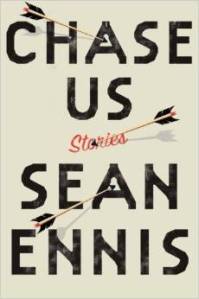
Sean Ennis' debut story collection, Chase Us, follows the lives of boys living on the outskirts of Philadelphia.

Sean Ennis’ debut story collection, Chase Us, follows the lives of boys living on the outskirts of Philadelphia.

Every writer will likely at some point begin a story with a spoiler—by giving away a major plot point. The novelist Paul Murray actually did this with the title of his book: Skippy Dies. It’s an effective strategy. The reader wants to know what happened—how did Skippy die? But it can also be a surprisingly difficult strategy to pull off. You can give away too much, or you can reveal an ending that the reader isn’t interested in. So, how do you make it work?

Sean Ennis does an excellent job of using this kind of opening in his story, “Saint Roger of Fox Chase.” It was included in his collection of linked stories Chase Us, and you can read it now at The Good Men Project.

How the Story Works

The first seven words of the story give away the ending: “The night Roger was beaten to death.” That’s the plot spoiler. A lesser story might depend on that spoiler alone to generate suspense. After all, it’s a powerful statement: Roger wasn’t killed but beaten to death. It’s natural for the reader to want to know what happened. Who was Roger? How did he arrive at such an awful ending?

But those seven words are just the beginning of passage that build suspense in a variety of ways. Here are the first two paragraphs in their entirety:

The night Roger was beaten to death, I was out there running, too. For weeks, he had been trying to convince Clip and me to hang out at the Fox Chase playground on Friday nights. The older kids were buying beer and selling cups for a buck. The girls that came were getting wild, dancing to the music blasting out of car stereos, and flashing their chests.

I was skeptical. The guys that hung around the playground at night were not my friends; they got in fights, smoked. I knew some of them from soccer, and we had a tenuous truce because I could play, but I didn’t want to tempt things and didn’t care much about drinking beer. Seventh grade is a tenuous time.

The initial pulse of suspense comes from “beaten to death,” but that suspense is heightened by the incongruity and mystery of what comes next: “I was out there running, too.” What does this mean? Running away? But what about that word too? He was running with Roger? The sentence makes perfect grammatical sense but leaves a great deal unclear in terms of the scene and what was happening. So, now the reader not only wants to know how and why Roger died but also what was going on in the background. Then, the next sentence introduces the word playground, which we don’t normally associate with beaten to death or beer and wild nudity. Again, it’s important to note that there is nothing literally  confusing about the paragraph. The sentences are not purposefully obscuring the facts. The confusion or mystery comes from not seeing only a glimpse of the entire picture. The narrator cannot explain everything in a few words, in part because it is first-person and therefore imperfect in the ways that all people are imperfect, rather than third-person and capable of omniscience.

The second paragraph continues the incongruity of playground/beaten to death by stringing together kids who “got in fights, smoked” with soccer and the idea that “Seventh grade is a tenuous time.” These are just kids, we realize. They’re playing at being adults but still stuck with the trappings of childhood—playgrounds and soccer.

So, even though the first sentence contains an enormous plot spoiler, the rest of the opening two paragraphs introduce a complexity and confusion that the reader wants to unravel and understand. If you read the entire story (which you most definitely should), you’ll likely find that the plot point of Roger’s death is less important than everything that was going on around it. In other words, the spoiler isn’t really a spoiler at all but a way of directing the reader’s attention toward what is truly important.

The Writing Exercise

Let’s introduce a plot spoiler into the beginning of a story using “Saint Roger of Fox Chase” by Sean Ennis as a model:

  1. Identify the most important thing that happens in your story. There are, of course, likely several important points, and the biggest of them might be internal—but internal plot points don’t really work as spoilers. Part of the problem is that even the deepest moments of realization for a character can sound, when distilled to a sentence, like the sentiments of a Hallmark card (“The Things They Carried”: Don’t let grief get you down.). To make a spoiler work, you need plot, which almost always means action and often means the external consequence of some internal turning point. So, identify the biggest plot point in the story.
  2. Write a sentence that states the spoiler plainly. You can’t get much plainer than “The night Roger was beaten to death.” But notice what else that sentence does: it suggest that other things are happening. It’s even a good idea to use Ennis’ first sentence as a template: On the _____ that ____ happened… You want to hint to the reader that though you’re revealing some parts of the story, there are others yet to be found out.
  3. Surround the plot spoiler with incongruities. Some spoilers aren’t really spoiler (A man went to war and died. A couple met in Vegas and got married and a year later they were divorced.) No one is going to wonder how those things happened because of course they happened. You want to provide details that make the spoiler not quite make sense. Ennis pairs “beaten to death” with a playground and wild parties and, eventually, seventh grade. These are things that don’t usually appear alongside a brutal murder. So, fill your first paragraph with details that one wouldn’t normally expect to find alongside the plot point that you’ve revealed. Keep in mind, though, that you’re not searching for opposites. Don’t be blatantly thematic (He died in a maternity ward). Be weird. Be unexpected. Here’s a sentence from the first paragraph of Stuart Dybek’s famous story “We Didn’t”: “We didn’t in your room on the canopy bed you slept in, the bed you’d slept in as a child, or in the backseat of my father’s rusted Rambler, which smelled of the smoked chubs and kielbasa he delivered on weekends from my uncle Vincent’s meat market.” Nobody expects to find smoked chubs in a sentence about sex. Allow your imagination to roam. What detail would make the reader sit up and say, “Huh?”
  4. Run with those details. Once you’ve got the plot spoiler in the story (and if it’s a good one), then there’s no doubt that you’ll return to it eventually. It’s also almost inevitable that it will press its face against the pane of your story over and over again. You won’t be able to get rid of it. So don’t feel the need to remind your readers that it’s there. Instead, elaborate on the incongruous details you’ve discovered. Ennis puts a playground and soccer in a paragraph with murder, and it’s the playground and the soccer that the story focuses on for a very long time—except that they’re not just soccer and a playground. They’re soccer and a playground that are accessories to murder. As a result, we pay attention. We want to know how the incongruous details will be brought together.

Good luck and have fun!

How to Bring Other Voices into Your Writing

19 Aug
Janet Stickmon's book, Midnight Peaches, Two O'Clock Patience, is a collection of poems, stories, and essays about the creative power of women.

Janet Stickmon’s book, Midnight Peaches, Two O’Clock Patience, is a collection of poems, stories, and essays about the creative power of women.

When creating a narrator’s voice, either for a story or our own voice in an essay, we often struggle to find the right voice. Writers talk about this all the time—they struggled with their work until that moment when they finally discovered their voice. It’s tempting to believe that this voice is a single vein of consciousness and diction and that we’re just hacking away at the rock of our exteriors until we uncover it. But sometimes there is no single consciousness. Sometimes the best or most authentic voice contains different kinds of diction and syntax. If that’s the case, what do you do?

Janet Stickmon demonstrates how to handle multiple voices in her essay, “Blackapina,” about her multiethnic background as an African-American Filipina. The first part of the essay was published as ““Barack Obama: Embracing Multiplicity—Being a Catalyst for Change” in Race, Gender, and the Obama Phenomenon: Toward a More Perfect Union?, co-edited by G. Reginald Daniel and Hettie Williams. It was later incorporated into a larger essay, “Blackapina,” in Stickmon’s book Midnight Peaches, Two O’Clock Patience. You can read it here.

How the Essay Works

In her famous essay, “Mother Tongue,” Amy Tan writes about a lecture that she had given many times but never in front of her mother. Only then, with her immigrant mother in the audience, did she realize that it was “a speech filled with carefully wrought grammatical phrases, burdened, it suddenly seemed to me, with nominalized forms, past perfect tenses, conditional phrases, all the forms of standard English that I had learned in school and through books, the forms of English I did not use at home with my mother.”

That is the kind of English that Stickmon uses for this essay. An excerpt was published in a scholarly book. As anyone who’s written an academic, scholarly essay knows, there are expectations for the kind of language that will be used. Here is Stickmon’s first sentence:

People of multiethnic backgrounds are accustomed to existing at the intersections of multiple worlds and multiple identities, holding and juggling those spaces in tension.

This is Stickmon’s academic voice, and it would seem that it leaves no room for the diction and syntax that Stickmon might use outside the classroom or lecture hall—just as the voices we create for any piece of writing often seem narrow (purely serious with no room for humor or too smart or too naive or too whatever to leave room for sentences that contradict the dominant voice). Yet Stickmon manages to include other voices.

She starts by inserting other languages. The first is Filipino:

Momma was from the barangay of Labangon in Cebu and left a clerical job to come to the United States—the country she considered the “land of milk and honey.”

The second is a form of English:

Da’y (Daddy for short) was from Shreveport, LA and hopped freight trains to California—one of approximately six million African-Americans who fled the oppression of the South during what came to be known as the Great Migration.

With those proper names (barangay of Labangon in Cebu) and (Da’y (Daddy for short) was from Shreveport, LA) comes an entire dictionary of words that are rarely found in academic texts:

My biracial experience began with the very basic influences of food and language, eating Momma’s biko and bijon and Da’y’s hoe cakes and hot cakes, hearing Da’y sound “country” and Momma speak Cebuano.

The presence of these new voices has a marked impact on the dominant academic voice. Here’s the next paragraph:

It was 1989 when Momma died and Da’y was put in a convalescent hospital; I was 15 years old. Three years later, Da’y died, and I officially became an orphan, continuing to juggle my dual heritage along with the meaning of life in the absence of parental love. I was tossed around from one social worker to the next, telling my story over and over again, becoming attached to no one. Though the most immediate lifelines to my history were gone, my sense of self was informed by the memories my parents left behind, the Filipino relatives I moved in with, the holidays spent with my African-American relatives, and close high school and college friends.

The language is still addressing the “intersections of multiple worlds and multiple identities” from the essay’s first sentence, but it’s now doing so in language that isn’t necessarily more colloquial but certainly more understandable to non-academic readers (“tossed around from one social worker to the next”).

The essay even begins to gain a sense of humor (something that scholarly writing is not at all known for). Here is an example:

I had to “turn on” my Black side (whatever that meant) and leave behind or downplay my Filipino side; when I was in an all Filipino environment I felt that I had to “turn on” my Filipino-ness (whatever that meant) and downplay my Black side.

Those parenthetical asides—”(whatever that meant)”—almost seem like the commentary of another voice on a sentence that puts turn on in quotation marks. In short, because Stickmon has introduced these different voices in the essay, they begin to form a kind of dialogue with each other—that dialogue, as Chimamanda Adichie has explained in her popular TED talk, is far better than listening to a single, dominant voice.

The Writing Exercise

Let’s introduce and use different voices, using “Blackapina” by Janet Stickmon as a model:

  1. Choose a piece of writing whose voice feels too homogenized. It can be a story or essay sitting in a drawer or in a folder on your computer. Sometimes when we get stuck in a draft, the problem is that we haven’t given ourselves enough to work with. We had an idea that made us begin the story/essay in the first place, and we took it as far as we could. Introducing more voices can provide more grist for our imaginations.
  2. Introduce a piece of information that can’t be told in the dominant voice. This might be something from another culture or language, like the Filipino places and foods referenced by Stickmon. But that other culture/language doesn’t need to from some foreign land. In America, there are particular Englishes for different regions and professions, and with those Englishes come different vocabularies. You can’t talk about tort law or raising hogs or heart surgery or road construction without using the dictions of those fields.
  3. Expand the reference. Stickmon references her parents’ origins in the Phillipines and Louisiana and then builds on those references by talking about everyday experiences (like food) that are associated with them. In your writing, every reference to something outside the frame of the narration is an opportunity to let in other voices—if you’ll let them speak. So, stay with a reference for a paragraph. Give more details about it.
  4. Mesh the reference with the primary voice. We usually reference something because it carries some weight or importance. Use that importance to make the reference a crucial part of the primary narrative. For example, once Stickmon introduces Da’y, she’s able to tell a story about him that connects to the very academic idea of “intersections of multiple worlds and multiple identities.” Because Da’y is from a difference linguistic world that intersections, the language of that story and its analysis becomes a different language that previously existed—not less academic, as some people sometimes argue, but a hybrid of pure academic language (whatever that means) and something non-academic that is essential to the narrative. Another way of looking at this is as a lens. Very often we start a piece of writing by looking through a particular lens. If you change the lens slightly (by adding characters or changing setting), you also change the story and voice.

This can be a fun exercise. Like Amy Tan, you might realize that you’re speaking different languages or forms of a language without knowing it.

Good luck!