Archive | Character Development RSS feed for this section

How to Set Up a Happy Ending

3 May
The Curious Charms of Arthur Pepper is Phaedra Patrick's first novel, and it's been called "tender, insightful, and surprising."

The Curious Charms of Arthur Pepper is Phaedra Patrick’s first novel, and it’s been called “tender, insightful, and surprising.”

In a workshop I teach, a student recently pointed out that a lot of stories we’d read had sad endings. This prompted a discussion of whether it’s possible to write a happy ending; it is, of course, but it’s not necessarily easy. Some writers are not temperamentally inclined toward uplifting or positive conclusions. Some are. But what if your nature runs toward difficult endings but you want to send your characters and readers away from the last page with joy in the hearts? How can you tilt a narrative in favor of a happy ending?

A great example of a novel that begins and ends this way is Phaedra Patrick’s novel The Curious Charms of Arthur Pepper. You can listen to the opening pages at Mira Harlequin’s website.

How the Novel Works

We meet the novel’s main character, Arthur Pepper, on the one-year anniversary of his wife’s death. He begins sorting through her things and discovers a charm bracelet that he’s never seen before. He decides to track down the source of each charm, and this quest provides the plot of the novel. Arthur is British, as is his creator, Phaedra Patrick, and so astute readers may sense similarities with the recent British novels The Unlikely Pilgrimage of Harold Fry and These Foolish Things, which inspired the film The Best Exotic Marigold Hotel. Both are about older characters on quests, and both end happily. Certainly, the title of Patrick’s novel suggests a happy ending. The word charm has positive connotations, as does curious. And yet the novel’s premise doesn’t automatically guarantee a happy ending. After all, Arthur has learned that his wife led a life that he knew nothing about. There is plenty he could discover about her that would make him miserable.

So, why does the reader feel quite certain, after reading a short ways into the novel, that things will turn out all right? The answer, in part, is in the way the conflict and mystery are framed.

When Arthur tracks down the person who gave his wife the first charm, a nice guy in India who had a crush on Arthur’s wife, here is Arthur’s reaction:

Arthur knew nothing about this part of his wife’s life. But he knew this was the same woman that they had both loved. Miriam’s laughter did sound like tiny bells. She did have a bag of marbles, which she gave to Dan. He was still reeling from astonishment, but he could hear the longing in Mr. Mehra’s voice.

The news that another man had desired his wife could lead to a lot of reactions, many of them not so pleasant. Yet Arthur immediately “felt a glow in his stomach.” This is important: the revelation adds to Arthur’s sense of the world—the basic nature of the place where he lives and the people he’s trusted. The revelation doesn’t cause him to lose all sense of certainty. Of course, it could do that later. Arthur could find out that his wife kept men on every continent and lied to him every day. But (not really a spoiler), that’s not what happens. Arthur’s mental landscape of the world remains intact; in fact, it’s been enlarged and given new areas to explore.

The second part of the novel’s frame shapes how Arthur acts on this news:

Arthur was surprised to feel a tiny kernel of excitement taking root in his stomach. He had found out something about his wife’s past life and his inquisitive nature was compelling him to find out more. The only feelings he experienced these days were sadness, disappointment and melancholy, so this felt new.

Shortly after this passage, Arthur decides to take a trip—and that trip begins the story of the novel.

At this point in the novel, this reaction seems of a piece with what we expect. But, again, it’s not the only possible reaction. Arthur could be momentarily astonished at the news—and then sink back into melancholy. Or he could feel excited and decide to take a trip—only to break his hip or get his credit card hacked. In the other words, the world isn’t required to play along. But, in this case, it does. That’s the nature of the world of this novel.

I suppose a skeptic could say, “But that’s not how life is,” but a great many people are happy, which means the world does, in fact, play along with our hopes and dreams sometimes.

The Writing Exercise

Let’s set up a happy ending, using The Curious Charms of Arthur Pepper by Phaedra Patrick as a model:

  1. Give your character a problem. Arthur’s wife has died, and it’s the anniversary of her death. That’s a situation that would be problematic for anyone—a big problem, more severe than, say, a stubbed toe. Don’t take it easy on your character. Give him or her something that is difficult to grapple with.
  2. Introduce revelatory news. The goal is to make your character see the problem in a new way. Arthur finds the charm bracelet, makes a phone call, and learns that his wife had a completely unknown life before he met her. What piece of news or information would cause your character to suddenly view the problem in a different, unexpected way?
  3. Make the news affirm the character’s basic sense of the world. Arthur doesn’t suddenly suspect that his wife was an imposter in their marriage. The woman he knew is the same woman he learns about; the identity is consistent throughout. So, don’t scramble the character’s understanding of the world or the people in it. Let the character maintain a basic sense of how things work. This lets readers see the character as wise and trustworthy. That said, the character’s sense of the world doesn’t need to be positive (for example, the belief that people are good and things will work out). Every character’s happy ending will be different.
  4. Instead, let the news expand that sense of the world. Arthur doesn’t question essential things about his wife, but he does learn that there are unknown dimensions to her. How can you use the revelation to suggest that there is something a character doesn’t know—but will want to know?
  5. Let the character act on the revelation, and let the world cooperate. Arthur pursues the thing he doesn’t know. How can your character pursue his or her own mystery? Because the world plays along, readers begin to suspect that the character will find answers to the mystery. Of course, it’s always possible for the story to take a permanent turn for the worse, but the longer that the character’s sense of the world is confirmed and the world cooperates, it becomes more and more likely that the character will get what he or she desires—and for most characters, this means a happy ending.

The goal is to set up an ending by framing the story’s conflict and world in a way that makes a happy ending more likely than a disturbing one.

Good luck.

How to Avoid the Mirror in Character Descriptions

26 Apr
Kelli Jo Ford's story, "You Will Miss Me When I Burn," was published in Virginia Quarterly Review.

Kelli Jo Ford’s story, “You Will Miss Me When I Burn,” was published in Virginia Quarterly Review.

We’ve all written this type of character description: the character walks past a mirror, stops, and examines the face and person it reveals. It’s a simple strategy that allows the story to tell the reader, “Here is what this person looks like.” The problem is that it’s overused. People really do look in mirrors, of course, and sometimes it’s necessary in fiction. I’m not suggesting that mirrors should never appear in our writing. But they shouldn’t be used as a crutch. There are other ways to describe characters, and some of them can feel so active that we don’t even realize a description has occurred.

An excellent example of an active character description can be found in Kelli Jo Ford’s story, “You Will Miss Me When I Burn,” published in Virginia Quarterly Review, where you can read it now.

How the Story Works

The story is about a North Texas rancher whose home lies in the potential path of a wildfire. He has a fatalistic attitude toward this disaster and drives to his son’s house, not with the intention to try to save the place but to help his horse. Here is the beginning of the scene. Pay attention to how the characters are described:

At my boy, Pitch’s, house, I clamped my hat down on my head and intended on walking straight to the door but ended up going around his truck because that’s where the wind blew me. I banged on the front door once and pushed it open. “Fat Mare needs shoeing, Pitch,” I yelled, going on in. I knew him and that wife of his would be sleeping because they work the night shift at the factory down the road. I called for him again, and he came out of the bedroom, pulling a long-handle shirt over his head and stomping his foot down into his boot.

“You’ll break the back of your boot like that,” I said, but you can’t tell that boy nothing. I tossed him a sausage biscuit I brought, and he grabbed a Dr Pepper from the fridge, opened it up, and took three long swallows without coming up for air. With his head tilted back like that, I could see where my boy was losing the hair on his head, and I felt proud to have a full head of my own, proud I didn’t work indoors under fake lighting on another man’s schedule. But it got me antsy.

We learn a great deal about the narrator and his son, even though the passage mostly contains action rather than an extended statement of what the characters look like. Here’s how it works:

  • The narrator enters the scene with resistance to his arrival. The wind literally blows him off his path, but he keeps going. This doesn’t mean that you need a stiff wind blowing throughout every scene of your work, but it is useful to create some sort of friction. After all, would The Lord of the Rings still feel as tense if Boromir’s line was, “Yes, one simply walks into Mordor”?
  • The narrator has a plan. He wants his horse shoed, and this is why he doesn’t bother with niceties when he walks in the door. Because he knows what he wants, he can pursue it immediately and directly: “I banged on the front door once and pushed it open. “Fat Mare needs shoeing, Pitch,” I yelled, going on in.”
  • The narrator acts based on particular knowledge, which lets him predict certain aspects of the scene he’s entering: “I knew him and that wife of his would be sleeping.”
  • When the second character appears, there’s no dilly-dally, only his first relevant act: “he came out of the bedroom, pulling a long-handle shirt over his head and stomping his foot down into his boot.”
  • The narrator comments on this action, and his comments reveal two things: his son doesn’t know how to put on a boot, and the narrator does; the narrator is willing to call him out on it, but his son doesn’t care.
  • Some basic mechanics (eating, drinking) are handled quickly and efficiently, boiled down to a single detail that captures something essential about the characters’ personalities: “I tossed him a sausage biscuit I brought, and he grabbed a Dr Pepper from the fridge, opened it up, and took three long swallows without coming up for air.”
  • We’re finally given a physical description (the son is going bald), and it’s delivered in a kind of looking-in-the-mirror moment. What makes it work is how quickly the description gives way to something else: the narrator’s attitude about what he sees (“I felt proud to have a full head of my own”).
  • The passage ends with a bridge to the next thing: “it got me antsy.” This is important. All prose is, generally, about propelling the reader into the next sentence, paragraph, scene, and page. You want to avoid endings (even the end of a paragraph is an ending) that do not suggest something further.

The result is a descriptive passage that feels active and pushes the reader into wondering what will happen next.

The Writing Exercise

Let’s write an active descriptive passage, using “You Will Miss Me When I Burn” by Kelli Jo Ford as a model:

  1. Create resistance to your character’s entry to a scene. Ford uses wind (which is important given the fire that looms on the horizon), but you can use anything at your disposal: some physical object or piece of geography or the knowledge of what is to come, which might lead to dread or fear or worry.
  2. Give the character a plan. If you find yourself writing a scene where characters simply wander aimlessly, beware. It can be done, of course, but it’s risky to write scenes hoping something will happen. Let the character’s entry to the scene be the precipitating action. What does your character intend to accomplish?
  3. Give the character knowledge and the ability to predict the future. The character ought to know something about the scene she’s entering. In the absence of knowledge, create suspicion. After all, lack of knowledge never stopped anyone from guessing, even wildly inaccurately.
  4. Let the second character enter with a bang. Lead with an action that sums up that character, the sort of thing that might cause others to say, “Well, of course he did.”
  5. Let the first character comment on this action. It should bug the character, or the character should find fault with it—or appreciate it mightily. In short, make the action positive or negative, something that causes a reaction. Neutral is bad for narrative.
  6. Boil mechanics down to essential elements. If a character moves, speaks, eats, drinks, or does anything else, don’t try to capture the entire movement. Instead, choose one part of it that reveals something about the character. Imagine that the scene takes place in the dark—and then a camera flashes. What does the sudden light reveal?
  7. Transition quickly from description to attitude. If a character observes something, make the observation prompt a reaction, one with attitude (good or bad, it doesn’t matter). For bonus points, turn the observation inward. The best characters tend to be self-centered, and so everything they see prompts them to think about themselves.
  8. End on a positive or negative note. Tilt the deck so that the marbles you’ve placed on it roll one direction or another.

The goal is to convey basic information about characters in a way that seems active and compelling.

Good luck.

How to Use Showing and Telling in a Personal Essay

19 Apr
In this essay at the Washington Post, Melissa Stephenson tells the story of how running helped her cope with being a single mom

In her essay at the Washington Post, Melissa Stephenson tells the story of how running helped her cope with the stress of being a single mom.

The personal essay genre can be found across the Internet and in print magazines, and because of these many outlets, the form has given writers from many different backgrounds and experiences the chance to tell their stories. These many voices have led to a lot of innovation within the genre, yet when I teach structure in the personal essay, I try to show how almost every essay contains certain elements: a narrative, sure, but also passages revealing context (explaining how the reader should understand the narrative) and emotional importance (showing why the narrative matters to the people involved). The question becomes this: How does a writer weight each of these elements and arrange them? What is the focus of the essay?

A great place to find one answer to these questions is Melissa Stephenson’s essay, “As a mom, I couldn’t afford to fall apart after my divorce. Then running saved me.” It was published in The Washington Post, where you can read it now.

How the Essay Works

The essay begins by introducing two clear problems: 1) the writer is a newly single mom and in need of a way to manage the stress of the situation, and 2) her preferred coping mechanism, running, has become difficult due to knee pain. Then, the essay gives context for this situation. In the past, she dealt with problems in a particular way (“I drank too much, stayed up late listening to music, cried when I wanted and left the house for hours on a whim.”). Now, though, that approach isn’t possible because she has kids. She doesn’t have “the luxury of falling apart.”

We’re mostly not shown this information but, rather, told it. This runs counter to one of the basic workshop lessons: show, don’t tell. Yet this is impractical advice. Telling is essential to storytelling (see what I did there?). The opening of the essay grabs our attention through statements of fact—facts that that reveal the conflict faced by the writer.

The essay continues telling us things, most importantly that Stephenson continues running but also seeks medical care, eventually entering and finishing a half marathon. It’s a moment that reveals the emotional importance of the essay: “No one came to meet me at the finish line. Perhaps it’s the lesson I needed: You’re in this by yourself. Single. Solo. Alone.”

But this moment comes only a third of the way into the essay. Most of the attention is paid to Stephenson’s second marathon and the successes and challenges she encounters during it. Here’s why this is interesting from a craft standpoint: for the most part, we don’t learn anything in the course of the race that don’t already know. She needs to run, experiences pain, and fights through it, all of which we’ve already been told. What the race does, then, is show us Stephenson’s experience of these things. It’s one thing to tell a reader that you need to run and are willing to fight through pain and sorrow to do it, but it’s quite another to show it.

And what gets shown? Details of the pain and race but also details of Stephenson’s thoughts during the pain:

That familiar tightening seized my right knee — a pain I’d spent three years eradicating. For an entire mile I processed a single, circular thought: Is that my knee? No. It’s just a glitch. I’m just settling in. But wait. That is my knee. Is that my hip? And my knee?

Showing doesn’t only mean descriptions of setting and character. It can also mean simply slowing down, settling into a moment.

Stephenson uses telling to set up the conflict that she intends to show the reader. Without the telling, the reader might not care as much about the marathon, and without the showing, the essay would lose a great deal of emotional punch. Both are necessary.

The Writing Exercise

Let’s use showing and telling to set up and dramatize a narrative:

  1. Introduce a problem and solution. Stephenson does this in both her title and first paragraph. Try using her title as a model: “As a ___, I couldn’t ____ (or needed to ____). ___ saved me.” While Stephenson was writing a personal essay, this exercise can work with fiction as well, even third-person stories.
  2. Introduce a problem with the solution. Stephenson’s solution is running, but her knee hurts. We don’t get a lot of details about it at the beginning, only that it involves arthritic pain. More detail—showing the reader this pain—wouldn’t really advance the essay at this point. The point is that the pain makes it difficult to run. So, introduce something that makes your solution difficult to pursue. Don’t worry about describing it in detail.
  3. Introduce emotional importance. Stephenson does this with a statement of fact—”No one came to meet me at the finish line”—and a direct statement of what that fact meant to her: “Perhaps it’s the lesson I needed: You’re in this by yourself. Single. Solo. Alone.” So, find a moment or fact that clearly conveys a clear emotion. Stephenson felt alone. The feeling was so profound that she was forced to grapple with it. How do you—or your character—grapple with the emotional fact?
  4. Use a narrative to show everything you’ve introduced. So far, we’ve been telling the reader things. Now it’s time to show the reader. Stephenson does this with a blow-by-blow account of her second marathon. It presents the problem and solution and obstacle (pain) in detail and also gives her thought process as she experienced each one. Earlier, she was telling the reader what the situation is, but now she is showing what the situation felt like. So, find a narrative (an extended story or an anecdote) that can be told with descriptions of exterior and interior details that will show your readers everything you just told them.

The goal is to use telling to establish a situation (problem, solution, obstacles) and then to use showing to reveal the what the situation felt like—the experience of it.

Good luck.

How to Build Character within Action Scenes

12 Apr
Manuel Gonzales' novel The Regional Office Is Under Attack! is the much-anticipated follow-up to his terrific story collection, The Miniature Wife.

Manuel Gonzales’ novel The Regional Office Is Under Attack! is the much-anticipated follow-up to his terrific story collection, The Miniature Wife.

The most boring prose is often supposed to be the most exciting: action scenes. No matter how exquisitely detailed and choreographed a scene’s punches, kicks, shouts, commands, charges, and retreats, the reader can bear only so much. After more than a few sentences—or perhaps a paragraph or two at most—it simply washes over us, unseen. Our eyes glaze over. So, good writers will mix something into their action sequences, and usually that something builds character.

One of the best at this strategy is Manuel Gonzales, who does it again and again in his weird and wonderful new novel The Regional Office Is Under Attack!. You can read first pages of the book here

How the Novel Works

Action scenes can be some of the most difficult moments to write because the action draws the eye. Once someone is fighting or running or whatever, it’s hard to look away. But that is exactly what action sequences need. They must offer more than choreographed motion. Watch how Gonzales avoid that trap in this early scene from the novel. In it, the leader of one group has just given the sign to begin an attack on the headquarters of another group:

Finally she gave that signal and the fucking mercs were off, pouring out of their vans like mechanized roaches, and then they were gone, and Colleen, jog-walking right behind the mercs as they charged into the offices of the Morrison World Travel Concern, patted Rose on her ass and gave her a peck on the cheek and told her, “Nice work, kid,” and then waved casually over her shoulder and called out, “See you on the other side,” as she ran to catch up with the grunts, leaving Rose standing on the sidewalk feeling like she felt that one summer she agreed to help out with the pre-K kids at church camp, how relieved she’d felt every fucking day when it was recess and all those little shits had run screaming and hitting and shoving out of the multipurpose room and into the play yard and all she’d wanted to do was sit down and revel in the peace and quiet for one goddamn minute.

The passage begins with a series of actions but ends with the memory of a pre-K kids church camp. It’s a significant jump. What makes it work? The less-polished version of this jump, which most of us have written, is this: action action action, which made her think about that time… It’s the same thing that Gonzales has written, with one big exception: it includes the phrase “which made her think.” Other versions of this include “which reminded her” and “which transported her” and “which made her feel.”  The difference between these and what Gonzales writes is that his version is faster (“feeling like she felt that one summer…”) and doesn’t necessarily imply that the character herself is stopping in the middle of a battle to think, “Oh, this is just like that one time at church camp.”

We tend to value realism, but in action scenes, verisimilitude can get in the way. If a writer tries too hard to recreate action as it’s experienced by a character, the result isn’t automatically good prose. Would this character think about church camp in this moment? Maybe not. But she has a feeling, and the writer is pausing to tell us, the readers, what that feeling is—a feeling that the character perhaps understands without thinking about it.

Gonzales steps out of the immediate action with another strategy as well. This passage comes shortly after the first one:

Rose dropped twenty or thirty feet and then caught hold of the rope, threw her feet against the aluminum of the vent shaft, leaving deep boot marks in it, almost breaking the shaft off its column. She should have been wearing gloves. She hated wearing gloves, though, hated the way they constricted her hands, the way she couldn’t grip things as well as she liked…

Again, the passage starts with action and then moves out of it into a short meditation on gloves. Is the character actually thinking about gloves in this moment? Sort of, as you’ll see when you continue reading the scene. But she’s not thinking, “I hate gloves, the way they constrict my hands.” Why would she? She understands this hatred and doesn’t need to state it explicitly, even to herself. The moment is meant for the readers alone, an attempt to reveal something about the character based on what she’s doing at that moment: hanging on a rope without gloves.

The Writing Exercise 

Let’s create space to build character within an action sequence, using The Regional Office Is Under Attack! by Manuel Gonzales as a model:

  1. Choose an action sequence. It can be anything from attacking a building to preparing dinner. Your characters are doing something.
  2. Write the basic action as a list. Gonzales actually puts his action in the first example into a single sentence. Try doing the same thing. You can always add more detail later. Get the essential parts of the movement: where it takes place, who is involved, and which objects are used.
  3. Step away from the action (Method 1). Make a comparison. Gonzales does it with the word feeling. The way his character feels in the midst of this action is like the way she felt in this other, very different moment. To do this, you can drop the word feeling into almost any point in the list of actions, like this: She spread peanut butter on the slice of bread, feeling like she felt that one…. Or, don’t use feeling at all. The action itself, not the way it feels but the actual movement, can be similar to something else, like this: She spread peanut butter on the slice of bread the way masons apply mortar to bricks. 
  4. Move into the comparison. Gonzales moves his character out of the attack and into church camp. In my examples, the character could move into whatever spreading peanut butter feels like or into her past as a bricklayer. You’ve opened the door into someplace other than the present moment; now walk through it.
  5. Step away from the action (Method 2). Select one of the objects you mentioned in the list of actions. Comment on it. Gonzales does this through absence: no gloves. Then he tells the reader something about the character’s relationship to that object (or its absence). Try doing the same thing. Make a statement about your character’s relationship to an object in the scene. Then, as with the previous method, step through the door you’ve opened. What else is connected to that object or the character’s experience of it?
  6. Return to the action. Once you’ve shown or told us what you wanted to show or tell, walk back through the door and into the present moment. The action resumes.

The goal is to create simultaneity in action scenes by adding other moments, times, and experiences to the present moment of action.

Good luck.

How to Introduce a Character with Misdirection

5 Apr
Kaitlyn Greenidge's highly anticipated debut novel, We Love You, Charlie Freeman, tells the story of an African-American family who moves to a research institute to live with a chimpanzee.

Kaitlyn Greenidge’s highly anticipated debut novel, We Love You, Charlie Freeman, tells the story of the Freemans, an African-American family that moves into a research institute to live with a chimpanzee.

The introduction of one of the most famous characters in literature happens without the reader’s knowledge. In The Great Gatsby, Nick Carraway attends a party at Gatsby’s house but nobody’s seen Gatsby. People are trading rumors (“I’ll bet he killed a man”), and so Nick goes searching—into Gatsby’s mansion, into his library—before finding himself outside again, talking to a guy about the army. Someone asks if he’s having a good time, and Nick says, “I haven’t even seen the host.” That’s when the introduction happens: “I’m Gatsby,” the other man says.

This is an important piece of strategy on Fitzgerald’s part because the reader badly wants to see Gatsby. In a way, he’s the entire point of the novel, as the title indicates. But if Fitzgerald had introduced this great character directly, the reader might have been disappointed. No description would have matched the hype. So Fitzgerald snuck him onto the page.

Kaitlyn Greenidge does something similar in her novel We Love You, Charlie Freeman. The novel is named after a character who is surrounded, early on, by intrigue so substantial that any direct description might disappoint. You can read her approach to this problem in the novel’s opening pages.

How the Novel Works

The novel has a bold premise: The Freeman family is moving into a research institute in rural Massachusetts to be part of an experiment. They will live (and raise their daughters) alongside a chimpanzee named Charlie. The novel begins with the Freemans driving to this institute, where they meet some of the staff and then, finally, Charlie. The introduction is prefaced with this line: “Dr. Paulson thinks it’s best we all meet Charlie now.” It’s a dramatic moment, and here’s how Greenidge handles it:

Charlie lived behind a door in the living room. He had a large, oval-shaped space with low ceilings and no windows and no furniture. Instead, there were bundles of pastel-colored blankets heaped up on the scarred wooden floor. Even from where I stood, I could tell the blankets were the scratchy kind, cheap wool. The room was full of plants—house ferns and weak African violets and nodding painted ladies. “They’re here to simulate the natural world,” Dr. Paulson told us, but I thought it was an empty gesture. Charlie had never known any forests and yet Dr. Paulsen assumed some essential part of him pined for them.

Charlie sat beside a fern. A man knelt beside him. “That’s Max, my assistant,” Dr. Paulsen said.

Max was wearing jeans and a red T-shirt, his lab coat balled up on the floor. He was pale, with messy red hair. He was trying to grow a beard, probably just graduated from college a couple years earlier.

Charlie has taken Max’s glasses and is licking them, and Max is trying to distract Charlie so that he can get them back. We watch this “very gentle disagreement” for a bit, until Dr. Paulsen calls Max and he carries over Charlie. Finally, we see Charlie directly. It’s a good description, with strong, specific imagery. But it’s also clear that Charlie is just a chimpanzee—no more, no less—and quickly the novel returns to the other characters and their reactions to Charlie, ending with the narrator’s mother holding him with tears in her eyes.

So, what can we learn from this?

In this novel, as with The Great Gatsby, the title character isn’t actually as important as the supporting cast. The most interesting scenes take place around the title character, with other characters reacting to him. So, the introduction reflects this fact. In both novels, we’re first shown the people around the title character before the character himself.

The Writing Exercise 

Let’s add introduce a character through misdirection, using We Love You, Charlie Freeman by Kaitlyn Greenidge as a model:

  1. Bring the reader into a place where the character is present. The key is for the reader to know that in this place, somewhere, is the character. Horror stories do this all the time: somewhere in this spooky place is the monster, we’re just not sure where.
  2. Give the reader a reason to want to meet the character. Both Fitzgerald and Greenidge do this by putting the character in the title and making them the ostensible reason for the story to exist. Without rich, mysterious Gatsby living next door, there’s no novel. Without Charlie, there’s no experiment. So, give your reader a sense for what role this character will play in your story.
  3. Introduce the character through place. We see Charlie’s home behind the door before we see Charlie. The home is filled with details (the lack of windows, the blankets, the plants) that tell us a lot—not so much about Charlie but about the people around him at the institute. So, think about the place where your character is found. If people entered that place for the first time, eager to meet the character, what details would they notice? What would they discern from them?
  4. Introduce the character through other characters. Charlie is named, but we don’t see him. Instead, we’re shown Max. As with the details about place, the details about Max and how he interacts with Charlie reveal a lot about him. So, show the character interacting with someone else and then focus on that someone else. Again, what details would people notice, and what would they think about them?
  5. Finally, show the character. The details should be specific. Greenidge mentions Charlie’s smell, “old and sharp, like a bottle of witch hazel.”
  6. Return to the other characters or the place. Remember what is important. In Greenidge’s case, the real focus is the effect that Charlie has on the Freemans. With Fitzgerald, the focus is the effect that Gatsby has one everyone else. Show enough of the main character and then return to the effect that he or she has.

The goal is to introduce a character by revealing the world and characters around him or her.

Good luck.

How to Become a Better Reader

29 Mar
Daniel José Older wrote about the need to transform publishing his essay, "Diversity Is Not Enough: Race, Power, Publishing."

A new anthology of essays on publishing contains Daniel José Older’s excellent essay, “Diversity Is Not Enough: Race, Power, Publishing.”

A few weeks ago, in a university creative writing class that I teach, I was leading a discussion about a student’s story and someone asked, “Wait, is the narrator a man or a woman?” I realized that I wasn’t sure. I had assumed it was a man, but several students pointed out lines that clearly indicated it was a woman. So I began scanning the text, looking for words or phrases that might have pointed me in the wrong direction. There weren’t any. The language and details were clear. The confusion stemmed from the fact that the narrator slept with girls. Several students correctly pointed out that assuming that this character was a man was an example of heteronormative thinking. (If you’re not familiar with that term, as my spell checking software clearly isn’t, it’s the idea that heterosexuality is the baseline and everything else is different and unusual.) I felt pretty dumb. I had misread the story because of my own inherent bias.

This was a humbling experience and a reminder that I must continually monitor my perceptions. Just because I want to believe that I’m unbiased doesn’t mean that I actually am. And my biases almost certainly aren’t confined to gender.

Daniel José Older addresses such biases directly in his excellent essay “Diversity Is Not Enough: Race, Power, Publishing.” It was first published at BuzzFeed and included in the timely and necessary anthology from Milkweed Press, Literary Publishing in the Twenty-First Century.

Why We Need to Become Better Readers

Like most educated people, I like to think that I’m thoughtful and open-minded. As a reader, writer, and teacher, I’ve tried to educate myself about race, ethnicity, gender, and sexuality. And so my wrong assumption about the workshop story bothered me a lot. I came up with excuses for my mistake, like the fact that the student had turned in the story at the last minute—as a result, I’d read it much more quickly than I normally would. If I’d had more time, I would have caught and corrected my own bias.

But this is life, especially in publishing: from top to bottom, there isn’t enough time. Journal editors are flooded with manuscripts, as are agents and book editors and marketers and booksellers. We believe that our decisions are made based on aesthetics and craft, but, in my case, I’m still a straight white guy from rural Kansas. It’s not at all surprising that I make assumptions that are more grounded in bias than reality—and, for that (for leading a class discussion without understanding that the discussion was slanted based on my own biases), I owe my class an apology. I need to do better, and I’m not alone.

Most people in the publishing industry are, like me, white, and, like me, most probably carry with them unacknowledged bias.

Results from a study on diversity within the publishing industry, by

Results from a study on diversity within the publishing industry by the Cooperative Children’s Book Center.

Recent research by the Cooperative Children’s Book Center reveals just how white the industry is: nearly 80%. Whitest of all are book reviewers at nearly 90%. The decisions that these white industry professionals make about books inevitably reflect unacknowledged bias. This is precisely what Older talks about in “Diversity Is Not Enough: Race, Power, and Publishing.

Older tells a story about how “a few years ago, someone in the publishing industry crossed out a line I wrote in a novel.” In the scene, “a Latina character feeling uncomfortable in a shnitzy part of Brooklyn because all the other women of color had little white babies and all the white people were looking at her sideways. The note beside the crossout said: ‘Doesn’t happen in this day and age.’”

Older explains that his personal outrage isn’t the point. Instead, he writes, “I want to take a moment to recognize a more unspoken consequence of having a mostly white industry dictate mostly white standards to a mostly white author-base: the stories that won’t get told.”

Some agents and editors get it. But some don’t. Older describes a panel where agents were asked “what they could do to help shift the troubling lack of diversity.” One agent said, “I think the change is going to have to come from within those who are affected,” meaning writers of color. Another, when asked why “less than 1% of her submissions were from people of color,” said, “This seems like a question for an author to answer.”

Older succinctly puts the problem this way: “The question industry professionals need to ask themselves is: ‘How can I use my position to help create a literary world that is diverse, equitable, and doesn’t just represent the same segment of society it always has since its inception? What concrete actions can I take to make actual change and move beyond the tired conversation we’ve been having for decades?’”

It’s a terrific question, with a couple of surprisingly simple answers. First, the industry needs more diversity: in publishing houses, in agencies, in book reviewers and book buyers and marketers. Second, industry professionals (book editors, agents, journal editors, reviewers, and reading series coordinators) must go out and find diverse writers. This is something I’ve tried to do at Read to Write Stories. Early on, I realized that, when I was coming up with writers I wanted to feature, they were mostly white and mostly men. This was partly due to my own bias and partly due to the industry that I relied upon for book suggestions. I was almost certainly excited about authors that I’d been told to get excited about. I needed to be proactive—to search journals for writers and to return to journals, like Boston Review and Guernica, that seemed to be publishing more writers of color.

Does this search take work? Sure. But it’s been some of the most rewarding work I’ve ever done. (I say work, but, in truth, it’s a community effort. I’ve discovered many, many terrific authors just by paying attention to what books Roxane Gay and Nina Swamidoss McConigley are talking about on social media). I’ve read authors that I may have otherwise missed—Kiese Laymon, Dolen Perkins-Valdez, Michelle Serros, Bae Suah, and Daniel José Older to name just a few—but who I now find myself returning to again and again because of what they have to say and because of their astonishing craft.

As writing teachers and members of writing groups and workshops, we must read more diverse stories. It makes us better readers for our peers in workshop, better members of the literary community, and better writers because we are engaging with terrific work that will inspire and challenge us. Challenge is perhaps the key word. Because I love Kiese Laymon’s work, I teach it often, and the response is often mixed. Some people find the language difficult—or the structure or the plot. Certainly, everyone has different tastes, but it’s also the case that there are many “difficult” writers who have been canonized, not just deceased ones like Faulkner but also living, breathing, award-winning writers like Jennifer Egan, whose great, structurally-challenging novel A Visit from the Goon Squad was deservedly praised. And, of course, not all writers of color are writing “difficult” fiction. Some, like Daniel José Older, are smart, writing terrifically entertaining genre works. His novel Half-Resurrection Blues is a paranormal detective story and has one of the best monsters I’ve read in a long time.

So, start reading. Will it inoculate you from criticism, remove all biases, and make you always correct about matters of diversity? No. I can attest to this personally. But it’s a place to begin.

An Exercise in Better Reading 

Let’s expand our reading, using Daniel José Older’s essay “Diversity Is Not Enough: Race, Power, Publishing” as a primer:

  1. Find a book written by a person of color, a woman, a disabled person, or someone identifies as LGBTQ. There are many included here at Read to Write Stories. You can also look here: We Need Diverse Books, Lambda Literary, the Bailey’s Women’s Prize for Fiction, the Asian American Writers Workshop, The Mixed Experience, Huizache, and Authors of Color. If you’re a teacher or student, consider checking out VONA Voices. If you’re at AWP this week, here’s a panel that speaks to these concerns: Reimagining Literary Spaces.
  2. Read the entire book. Don’t give up, even if the book seems difficult or dull. Personal aesthetics are malleable. Our sense of what is good changes based on what we’ve read. We are, in effect, continually holding whatever we’re reading against the models in our head. So, in order to hone your aesthetic, you must add more models.
  3. Find another book by another writer who isn’t a straight, able-bodied, white man and read it. Don’t stop with just one book. Don’t make an author speak for his or her race/ethnicity/gender/sexuality. Don’t let one writer’s style become The Style for Everyone Who Looks Like Him or Her. Most of us are guilty of this. Whatever book has grabbed the nation’s attention overshadows many other excellent books. Give yourself the opportunity to find them.
  4. Recommend the books to others. Unless a book is getting the gold-standard marketing push from its publisher, its success will depend upon word of mouth. So, tell people about the book. Give it to people to read. Share reviews of the book on Facebook and Twitter. Review the book on Amazon. (Even if you don’t like Amazon’s business model, the presence or lack of reviews on its site affects a book’s sales in all venues.) Books only get read if people know about them, so spread the word.

The goal is to discover the many wonderful books that are being written today. By reading books we might otherwise not find, we become better readers for ourselves and for our fellow writers.

How to Create a Window of Opportunity

22 Mar
Karen Ranney's novel An American in Scotland follows an American woman who sails through the Union blockade of Charleston in order to pursue a sale and romance in Scotland.

Karen Ranney’s novel An American in Scotland follows an American woman with a secret who sails through a Union blockade during the Civil War in order to pursue business and romance in Scotland.

When I was a kid, my dad liked to joke that the devil came out after midnight, which is actually good advice for writers. Crucial moments (positive and negative) in life and in writing often require a window of opportunity. Under normal circumstances, we simply go about our lives; drama occurs only when our routine has been upended. After midnight, in other words, we have the opportunity to make decisions that aren’t open to us at other times.

In stories, whether they’re fiction or nonfiction, we need to find those windows of opportunity when the devil can show his face, when characters can act in ways they otherwise wouldn’t. A great place to study such moments is in romance novels, and there’s no better place to look than in Karen Ranney’s latest novel An American in Scotland. You can read the opening pages here.

How the Novel Works

An American in Scotland is a romance novel, and like most genre novels, it has a fairly predictable plot when boiled down to basics: two people will fall in love, and that love will eventually be consummated. Before the consummation, though, the characters must overcome obstacles, and it is this overcoming that gives the novel its appeal. (It’s the same with detective and espionage novels and certain kinds of monster novels: the reader knows the basic plot arc before reading a single page, and so it’s the particular obstacles that provide pleasure.) In this case, there are a variety of obstacles that would normally prevent Duncan and Rose from falling into each other’s arms. Or, as the back cover puts it: “Rose MacIain is a beautiful woman with a secret. Desperate and at her wits’ end, she crafts  a fake identity for herself, one that Duncan MacIain will be unable to resist…Duncan is determined to resist the tempting Rose, no matter how much he admires her arresting beauty and headstrong spirit.”

So, it’s clear that, first, Duncan will resist, but then he’ll give in. Then, the secret identity will be revealed and that will drive them apart—until they find a way to be together again. With each major obstacle (resisting, revelation of secret), the characters are set onto tracks that do not converge. Duncan can resist Rose’s charms forever unless something happens to knock him off his routine. In short, he needs a moment when the devil comes out, a window of opportunity to act in ways that he normally would resist.

One of those moments comes aboard a ship. Duncan and Rose are sailing to the Bahamas for a business deal. There’s tension between them, but Duncan tells himself, “She was simply his relative who was accompanying him to Nassau.”  But then the merchant ship gets caught in a storm off the coast of Ireland:

He clamped his hands on the end of the chair arms and stared at the door leading to the stateroom. He hadn’t heard anything from Rose since they separated after dinner. He sincerely hoped he hadn’t agreed to take her to Nassau only to have her drown on the voyage there. Perhaps she would have been safer on a commercial vessel, something designed to handle passengers. No doubt they would have stewards running throughout the ship, reassuring passengers that all was well, they weren’t in danger of plunging to the bottom of the ocean.

He couldn’t reassure anyone right at the moment.

That final line highlights the window of opportunity: He’s been determined to resist her, but now he fears for her safety and fears that he is the one who’s put her in danger. His self-confidence has been shaken. It’s not so different from the half hour before closing time at a bar; people’s usual logic has been diminished, and so they make decisions they normally wouldn’t. Duncan’s logic (I’m in charge, my will is strong) has been diminished.

As a result, he begins thinking dangerous thoughts:

What a pity he hadn’t taken advantage of the moment in the garden when she’d been reading Burns. He could have gently put the book aside, leaned over and kissed her.

As most readers will guess, the kissing isn’t long to come. The window of opportunity has opened, and he’s going to jump through it.

The Writing Exercise 

Let’s open a window of opportunity, using An American in Scotland by Karen Ranney as a model:

  1. Create the temptation. In a romance novel like An American in Scotland, the temptation is clear: love and sex. But there are many other temptations available to characters: money, power, attention, security, or any object that offers or symbolizes those things. What drives your character? What occupies your character’s mind while doing other things?
  2. Put the character on a track that leads away from it. The track can simply be a character’s intention, like when I tell myself that I’m not going to eat jelly beans this year. Life is full of such intentions: we’re not going to call that person, go to that place, consume that substance. The track can also be anything that keeps a character otherwise occupied: work, friends, family. Or it can be some convention (sense of propriety, rules) that doesn’t allow certain activities. You can also use geography (the temptation is kept physically distant).
  3. Find the character’s weakness. In An American in Scotland, part of Duncan’s weakness is his sense of his own power and will. Many famous characters contain such weaknesses: Achilles in The Iliad, Sampson in the Old Testament. The weakness doesn’t need to be a fatal flaw, as with Achilles. It only needs to make the character susceptible to the temptation, the way that going outside on a winter day without a hat (according to some) makes you susceptible to catching cold. What weakens your character, even a little?
  4. Create the window of opportunity. Find a set of circumstances that does two things: weakens the character and brings the temptation close. In An American in Scotland, the ship/storm confines the characters together in a limited space and also frightens Duncan, weakening him. Very often, the window of opportunity is a literal disruption: a storm, a power outage, a natural disaster, a flat tire, a missed connection. So, figure out your character’s routine. What would disrupt it? What unexpected delay or interruption would knock the character off his or her track? The disruption can be catastrophic, but it can also be something subtle that doesn’t at first even seem like a problem.
  5. Let your character act. Once the character is weakened and the temptation has been brought near, let the character think about the temptation. And, of course, once the thought enters the character’s head, action is soon to follow.

The goal is to create drama by giving a character the opportunity to do something he or she normally wouldn’t.

Good luck.

How to Manipulate Chronology to Build Character

15 Mar
Chinelo Okparanta's novel Under the Udala Trees tells the story of a young girl displaced by the Nigerian Civil War and the love affair that she begins.

Chinelo Okparanta’s novel Under the Udala Trees tells the story of a young girl displaced by the Nigerian Civil War and the love affair that she begins.

Chronology is something most writers and readers take for granted. Time moves forward, and so does narrative. There are exceptions, of course. Memory isn’t constrained by the inexorable march of time. It can leap backward at will, or against it—and can even get stuck in the past. But we understand memory to be unusual, unlike the rest of our lives, which move forward. This fact highlights the extraordinary achievement of fictions that move differently. Charles Baxter’s novel First Light, for example, starts at the end and moves toward the beginning. And Nicholson Baker’s novel The Mezzanine takes place completely within the time required to ride an escalator. Most writers will never attempt such ambitious structures. But it can be useful to try them in miniature.

An  example of this kind of chronological experiment can be found in Chinelo Okparanta’s novel Under the Udala Trees. You can read the opening pages here.

How the Novel Works

Then novel is set in Nigeria during its civil war in the late 1960s. It begins with a Star Wars-like summary:

But in 1967, the war barged in and installed itself all over the place. By 1968, the whole of Ojoto had begun pulsing with the ruckus of armored cars and shelling machines, bomber planes and their loud engines sending shock waves through our ears.

By 1968, our men had begun slinging guns across their shoulders and carrying axes and machetes, blades glistening in the sun; and out on the streets, every hour or two in the afternoons and evenings, their chanting could be heard, loud voices pouring out like libations from their mouths: “Biafra, win the war!”

It was that same year, 1968 — the second year of the war — that Mama sent me off.

If this was Star Wars, the story would proceed from that moment—the narrator’s mother sending her away. The novel would zoom in on the narrator leaving her home, and a scene would begin. But that’s not what happens. Instead, the novel reverses its chronology:

There is no way to tell the story of what happened with Amina without first telling the story of Mama’s sending me off. Likewise, there is no way to tell the story of Mama’s sending me off without also telling of Papa’s refusal to go to the bunker.

Then, the passage reverses what it’s just done:

Without his refusal, the sending away might never have occurred, and if the sending away had not occurred, then I might never have met Amina.

Finally, we learn why this zig-zag in chronology matters:

If I had not met Amina, who knows, there might be no story at all to tell.

At this point, the novel really begins—but it does so before the mother sends the narrator away:

So, the story begins even before the story, on June 23, 1968. Ubosi chi ji ehihe jie: the day night fell in the afternoon, as the saying goes. Or as Mama sometimes puts it, the day that night overtook day: the day that Papa took his leave from us.

The novel eventually returns to the moment when the narrator’s mother sends her away, but it takes about 40 pages. So what does this brief reversal of chronology achieve?

There are probably two answers. First, it lets the novel convey some essential information (when, where, what). That information is interesting (war stories have and always will hold our attention), but it’s also general, and as a result it could be a difficult place to begin building an idiosyncratic character. Writing about wars and other societal conflicts can be a bit like wheeling a sofa sleeper down a set of stairs with a hand truck—there’s considerable risk of getting rolled over and flattened. So, rather than beginning the novel with a character who is a kind of refugee (a status that can have a flattening effect), the novel goes back in time to a point when she was simply a character, creating space to give her and the rest of her family a set of developed, complex personalities.

The war is coming, of course, and the narrator will be sent away, but when she is, we’ll have a better appreciation for what it means.

The Writing Exercise 

Let’s jump back in time, using Under the Udala Trees by Chinelo Okparanta as a model:

  1. Decide what information a reader requires to begin the story. This is usually some version of Who, When, Where, and What: the basic elements of setting and situation. Star Wars famously summed up this information at the beginning of each film in the series. Most novels do something similar: showing the place in general (country, state, city, geography) and in particular (this street, house, room). It’s a bit like the wide-panning shots at the start of many films. Write a simple passage that conveys this information, especially the big What. For Okparanta, it’s the war. What is the big conflict (divorce, death, moving) at the heart of your story?
  2. Step the reader back in time. Okparanta does this methodically: “There is no way to tell the story of what happened with ____(1) without first telling the story of _____(2)” and “Likewise, there is no way to tell the story of ____(2) without also telling of ____(3).” The first blank is something that will happen eventually in the story. The next blanks are all points that lead up to that first one. Try using these phrases to step your story back in time from its eventual end point.
  3. Explain why these points matter. Okparanta’s narrator says a version of this: “If ___ hadn’t happened, who knows, there might be no story at all to tell.” You can use this construction to start with. Make it clear that the story hinges upon a particular moment.
  4. Start the story. Again, here’s Okparanta’s narrator: “So, the story begins even before the story, on ____.” She zooms in on a particular moment, a good moment to begin showing and developing the characters. We know where everything is headed, and so the story can take its time (to some extent) in making us care about the people involved. Find a moment for your story to do this, a moment with the big conflict in the background but without the extreme urgency of points further into the story, a moment when the characters can be themselves and not pawns in a conflict.

The goal is to present essential information about setting and situation and also carve out space to create and develop character.

Good luck.

How to Skip Over Implausibility

8 Mar
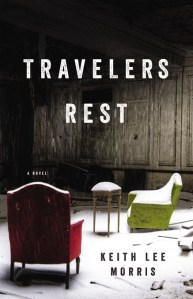
Keith Lee Morris builds upon the long tradition of haunted hotels with his spooky, unsettling novel Travelers Rest.

Keith Lee Morris builds upon the long tradition of stories about haunted hotels with his spooky, unsettling novel Travelers Rest.

In most writing workshops, someone will eventually say about a story, “I just don’t believe the character would do that.” As a piece of criticism, the statement is almost always true. Most real people would not do the most interesting things characters do in fiction. Of course, someone will also argue, “Well, I know someone who did exactly that.” But that is besides the point. Both statements mistakenly accept the premise that fiction and real life are connected in all ways. They are connected, of course, in that by reading about fictional characters, we often discover things about ourselves that we previously could not put our finger on. Writers have a knack for defining readers’ sense of their own identities. Nonetheless, the plausibility of something in real life isn’t relevant to fiction. All that matters is that readers believe that something is plausible. Richard Ford likes to say that fiction makes the impossible possible. I’d further this notion: in fiction, anything is plausible and possible if the writer wants it to be.

A great example of creating plausibility can be found in Keith Lee Morris’s new novel Travelers Rest. You can read an excerpt here.

How the Novel Works

Anyone who reads Travelers Rest will immediately think, “This is sort of like The Shining.” A family driving from Seattle to Charleston gets caught in a snowstorm and stays the night in a creepy hotel just off the highway in the emptiness of Idaho. A series of increasingly unsettling things occur in the hotel, with no guarantee that the characters will escape. As readers, many of you may be giggling in excitement over this summary, and for good reason: creepy hotels make for awesome stories. But for writers, a supernatural hotel poses a big problem.

Here’s why: Imagine that you’ve pulled off the road and walked into a hotel in utter disrepair, run by a man who looked “as if he’d been stored in a crate of mothballs and tipped up onto his feet just moments before their arrival.” Would you stay? Probably not. And if you found out the hotel had no electricity? You’d be out the door in a flash, right?

That’s real life. Fiction has different goals; it doesn’t want to keep its inhabitants safe.

So, Travelers Rest needs its characters to say, “Sure, we’ll stay in this weird place.” It needs, in other words, for the implausible to occur, for characters to do something most of us wouldn’t do. So, how does the novel make this implausible thing plausible? Here’s the passage where it happens:

While Tonio asked about a room, she got her bearings and surveyed the hotel’s interior. The first impression was one of disorder. In the dim and rather dusty light of the lobby she saw ladders and toolboxes and paint cans and drop cloths and sawhorses—clearly the place was under renovation. Maybe the hotel wasn’t even open, and they wouldn’t be staying here after all. That would be disappointing. Why? She studied the room more closely. An enormous fireplace that, if it contained a roaring fire, would have dispelled every shred of the hotel’s gloom. Beautiful old gas lamps on the walls, tasteful (although awfully faded) wallpaper, elaborate moldings in the corners of the room, a high ceiling with a breathtaking chandelier that spanned almost half the lobby, a grand wooden staircase ascending to a second-floor landing, solid over-stuffed chairs (Dewey was sitting in one of them and wiping dust from the arm), a huge circular ottoman directly beneath the chandelier. It must have been a stunningly opulent place at one time—what could it possibly be doing in this little town?

Several things are going on here. First, the details are peculiar, but they exist within a realm of what might be tolerated. The word murder isn’t spelled backward on the wall, and young twin girls don’t appear and disappear. (Though, of course, these things don’t happen in The Shining right away, either.) The place is very dusty and under construction—weird, by real-world standards, but not clearly supernatural. And yet, something is obviously wrong. The character at the heart of the scene isn’t sure the hotel is even open. She isn’t sure it’s possible to stay the night. In short, she’s voicing the warnings that most of us would heed in real life.

So what makes her stay? The answer is in a buried line: “That would be disappointing.” She considers the possibility of leaving and responds with a desire to stay. She’s intrigued by the place—but note that it doesn’t actually say that. A sentence like this—”She was weirdly excited by the place”—might tip the writer’s hand too much. The character would become a puppet, not a character with (the illusion of) free will. The beauty of “That would be disappointing” is that it slips an implausible character decision past us. By the time we finish the paragraph (which continues on a bit longer), we’re already sold on the hotel. We want to understand what it’s doing out in the middle of nowhere.

The line has given readers permission to do exactly what we want: follow the characters into a place they—and we—should not enter.

The Writing Exercise 

Let’s create plausibility, using Travelers Rest by Keith Lee Morris as a model:

  1. Identify the decision that the novel depends upon. If Morris’ characters walk out of the hotel, the novel ceases to exist. It’s true that some novels don’t rely on implausible character decisions. But many—including novels with “realistic” plots—do: characters associate with people they shouldn’t, go places they shouldn’t, get angry when they should know better, and stay a little longer than is wise. From there, the plot takes off. What is that moment in your story? (It happens in stories as well as novels.)
  2. Provide an initial description of the situation. Morris’ character notices the hotel’s sawhorses and drop cloths and her son wiping dust off the chair. These details are odd—but they do not scream, “Run!” How can you describe the situation at the heart of the crucial decision in the same way? Let a character notice details that raise a flag of warning—but make the details within a realm of might be tolerated.
  3. Raise the possibility of making a good choice. Morris’ character wonders if they’ll stay at the hotel, if it’s even open. The door is open for her to leave. If you’ve ever made a poor decision in real life, you probably went into it with eyes wide open (or so you thought). You probably had a moment where you thought, “You know, I probably shouldn’t do this” or “This probably isn’t a good idea.” Give your character a subtle version of that moment.
  4. Make the character want to make a bad choice. This happens all the time in stories about marital affairs. We instinctually understand bad decisions about sex—or alcohol or drugs or money. We also understand on a instinctual level the lure of curiosity, the possibility of adventure. It’s why we buy lottery tickets. So, in other words, readers are primed to accept the implausible as long as you don’t make them think about it too hard. So, sneak the implausible decision past them. Morris does this by suggesting that his character would be disappointed not to stay in the hotel. She hasn’t actually decided anything yet, but her pump has been primed. You can use a version of Morris’ line: When the character considers the door out of the situation, let them respond with “That would be disappointing.”
  5. Describe the situation again in evocative terms. Now that you’ve made your character curious, feed the curiosity. Give details that are intriguing, that deserve to be studied.

The goal is handle implausibility not by dwelling on it but by skipping as quickly over it as possible

Good luck.

How to Reveal Tension Indirectly

1 Mar
Daniel Oppenheimer's political biography, Exit Right, tells the story of six men who converted from the American left to American Conservatism—with an eye toward what the history and experience that set the stage for their conversions.

Daniel Oppenheimer’s political biography, Exit Right, tells the story of six men who converted from the American left to American Conservatism—with an eye toward what the history and experience that set the stage for their conversions.

One of the most famous writing exercises is John Gardner’s barn assignment from The Art of Fiction: “Describe a barn as seen by a man whose son has just been killed in a war. Do not mention the son, or war, or death.” The goal is to write a passage that does not address its main subject directly, head on. In some ways, the exercise is the ultimate statement about the purpose of craft. In first drafts, we attempt to figure out what we want to write (a man’s son died in the war), but in revision, we find the best way to write it (by describing a barn, with no reference to anything on the man’s mind).

Indirectness isn’t only important in description. The best writers can surprise us at any moment, in any type of passage. A terrific example of artful indirectness can be found in Daniel Oppenheimer’s new book Exit Right: The People Who Left the Left and Reshaped the American Century. It’s a biography of six liberals who converted to conservatism.

You can read the first pages here by clicking on Google Preview icon beneath the image of the book.

How the Book Works

One of the men profiled by Oppenheimer is Whittaker Chambers, a Communist and spy who, after his conversion to Christianity and Conservatism, would testify against famed-spy Alger Hiss. In writing about Chambers, Oppenheimer begins with his childhood and, particularly, with his complicated parents. Here is how Oppenheimer describes Chambers’ father:

Chambers’s father, Jay, was a talented illustrator and half-closed gay man whose passion, as his son eventually came to realize, was compressed into a sublimely choked obsession with “ornament, costume, scenery…” Jay spent months every year hand-making the gorgeously embellished Christmas cards he sent out to a select group of appreciative friends.

And here is Chambers’ mother:

She declaimed poetry and dramatic monologues, sang sad songs in three languages, instructed her sons in the glories of music and theater and literature.

And here is their relationship:

She was overemotional where he was severely contained. Her craving for affection and affirmation was met by him with, at best, an effortful formality, and at worst by emotional and occasionally physical torment.

These descriptions are quite direct and informational, but they don’t accomplish Oppenheimer’s goal, which is to get the reader inside Chambers’ head and feel the textures of the conflict that would direct him first into Communism and then into American Conservatism. In other words, yes, Chambers’ parents were “badly suited to each other,” but so what?

Oppenheimer answers that question with indirectness. Rather than immediately formulating an explanation (because his parents had a poor marriage, Chambers became a Communist), Oppenheimer puts the reader inside the Chambers house. He does this by showing how the awful marriage infected every object and interaction.

First, we learn that the Chambers moved from Manhattan to Long Island, which Chambers’ father resented. As a result, he refused to spend money on the house’s upkeep, to the extent that a “piece of the ceiling in the dining room fell down, and because Jay wouldn’t give her the money to hire someone to repair it, Laha covered it over with a cheesecloth that remained there, ruefully patching the hole, for more than a decade.”

Young Whittaker was treated the same as the house: “Laha would drench [him] in a performative affection that was implicitly reproachful of her husband, and…Jay would treat [him] with a cool contempt that was meant to reflect onto his wife (and back onto himself).”

Even the boy’s name was contested. His mother called him “by his girlish middle name, Vivian” and his father called him by the nickname “Beadle.”

The brilliance of this passage is not that what we learn about Chambers but the emotional impact of what we already know about him. This is precisely what Gardner was getting at with his exercise about the barn. In a story about a man whose son has died in a war existed, the reader wold likely learn about the dead son early on. The barn passage would follow that information, to help the reader feel the man’s emotions.

In prose—whether it’s fiction or nonfiction—it’s important to look beyond the basic information and its most obvious consequences. The emotional impact often lies in moments and objects that don’t seem to be directly connected to the information.

The Writing Exercise 

Let’s reveal emotional impact with indirectness, using Exit Right by Daniel Oppenheimer as a model:

  1. Start with a direct statement. Oppenheimer states that Chambers’ parents were badly suited for each other. It’s a statement that contains a great deal of tension, but all of it is latent: not yet developed to an active state. It’s potential tension, which is exactly what you’re trying to give your narrative. So, write a basic statement about something in relationship with something else: two people in a relationship (partners, spouses, siblings, parent/sibling, friends, coworkers, etc), a person in a relationship with an inhuman thing (house, landscape), or two things in relationship with each other (like the fabled house build on sand).
  2. Reveal the source of tension. Oppenheimer gives each of Chambers’ parents a passage of description. Then he brings them together in the statement that they were not well suited as a couple. So, write a passage about each of the elements in your relationship from earlier. They don’t need to be complete opposites. In Exit Right, Chambers’ parents are both artistic and erudite. The problem is that they’re incompatible in other ways. So, don’t worry so much about the conflict as you write. Instead, give each element in the relationship a fair description. Then, bring them together to show why they’re mismatched.
  3. Turn the source of tension into a black hole. Black holes suck everything into them. Only very, very distant objects are safe. This is what Oppenheimer does with Chambers’ parents’ marriage. Its dysfunction sucks in everything that is nearby: the house where they live and the kids. So, look around the tension/conflict you’ve created. How can you make every object and person close to it part of it. Think back to when you were a kid and your parents fought: you learned to pick up subtle clues (how they ate their eggs in the morning, how they changed channels on the TV) about the state of their argument. Every interaction can become part of the conflict. Give yourself objects and interactions (with the mailman, with a piece of mail, anything) and write a passage in which that object or interaction becomes part of the tension.

The goal is to reveal the emotional impact of a conflict by showing how it affects every part of a character’s life.

Good luck.