Archive | Descriptive Language RSS feed for this section

How to Control Narrative Pace with Sentence Structure

4 Feb
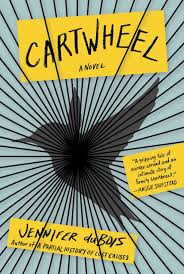
Jennifer Dubois' novel Cartwheel has been called...

The writing in Jennifer Dubois’ novel Cartwheel was described in The New York Times as “a pleasure: electric, fine-tuned, intelligent, conflicted.”

Maybe you’ve had this experience: you’re deep into a gripping novel, hooked by the plot and dying to know what happens next, when you realize that you aren’t actually reading the book anymore. Instead, you’re skimming pages. The writing is still strong; you’d like to slow down and enjoy the sentences, but you can’t. You need to find out what comes next right now.

As a writer, this might seem like a victory: you’ve written a page-turner. But this type of reading also makes many of the actual words in the book superfluous. Wouldn’t it be nice to set an intriguing plot into motion and keep the reader’s attention on each sentence and detail?

This is precisely the feat that Jennifer duBois has pulled off in her novel Cartwheel. It was inspired by, though not based on, the Amanda Knox trial, and has been called a “tabloid tragedy elevated to high art,” by Entertainment Weekly. You can read the opening pages here (click on “Look Inside”).

How the Story Works

If the plot of Cartwheel pushes us forward, making us want to turn the page, the sentences slow us down, directing our attention to nuances. The sentences are not long or difficult to read, but they are structurally complex, filled with interruptions and asides. Notice how many of the sentences in the first paragraph do not move in a straight line:

Andrew’s plane landed at EZE, as promised, at seven a.m. local time. Outside the window, the sun was a hideous orb, bleeding orange light through wavering heat. Andrew was still woozy from his two Valiums and two glasses of wine, the bare minimum that he needed to fly these days—to anywhere, for anything, though especially for here, for this. The irony of being a professor of international relations who was terrified of international travel was not lost on him (no irony was lost on him, ever), but it would not be helped. Neither could it be mitigated by the knowledge—always understood but now finally believed—that the things that go wrong are rarely the things you’ve thought to worry about.

The sentences use punctuation (commas, dashes, and parentheses) like detour signs. Some of these detours are long (“no irony was lost on him ever”), some are short (“as promised”), and some are a string of short detours (“to anywhere, for anything, though especially here, for this). The information they deliver varies widely. The phrase “no irony was lost on him ever” tells us a great deal about character. “Always understood but now finally believed” neatly lays out an eternal, psychological truth.

But what about the first one: “as promised”?

Planes land according to schedule all the time. Or they don’t, and no one is put out except in minor ways. Or the consequences are serious (missed connections, overnight stays in unfamiliar cities) but so common that they’re rarely noteworthy. If this paragraph was being discussed in a workshop, someone would almost certainly suggest cutting the phrase. And yet those two words—”as promised—perform an essential function. They force the reader to slow down, if only a little, and this is important because subsequent sentences will ask the reader to slow down even more. To some extent, the entire novel is about slowing down. It’s told from the point of view of multiple characters, each perspective often correcting or complicating the others. As much as the story moves forward, it also moves downward, deepening our understanding of the characters. If we’re racing along, flipping pages, we might miss most of what the novel offers. And so the sentences slow the reader to the pace required to truly enjoy the book.

The Writing Exercise

Let’s try writing three short sentences that contain detours, using the opening paragraph from Cartwheel by Jennifer duBois as a model:

Sentence 1: Taking nothing for granted

  1. Write a sentence about a character entering a scene. This kind of sentence tends to drive writers crazy: walking characters through doors or into rooms, moving them from one place to another, sitting them down to a meeting or dinner or date. It’s a mechanical part of any story. Keep it simple, and then we’ll add to it.
  2. Suggest that some part of that sentence could have happened (or did happen) differently. Here is what duBois writes: “Andrew’s plane landed at EZE, as promised, at seven a.m. local time.” The “as promised” suggests that the plan could have arrived late or early. It’s a small detail, but it makes a mechanical, dull sentence take the reader by surprise and, perhaps, a bit uneasy. So, if your sentence is “He walked into the room,” you could change it to “He walked—tripped, really—into the room.” Notice what a difference this makes, how it catches your attention.

Sentence 2: Adding a postscript about desire

  1. Write a sentence about something a character needs or wants. The desire could be for anything: a Coke, a different job, somebody to love. It might be helpful to locate the character in a place, like this: “The sun was shining down on the stadium, and she desperately needed a Coke.”
  2. Add a note at the end about the desired thing. Here is what duBois writes: “Andrew was still woozy from his two Valiums and two glasses of wine, the bare minimum that he needed to fly these days—to anywhere, for anything, though especially for here, for this.” The passage after the hyphen makes it clear how much he needs the Valium and wine. So, if your sentence is “She needed a Coke,” you could add, “She needed a Coke—right here, right now, even if it cost her twenty dollars.” This kind of postscript mimics the way we often talk in real life—children and adults alike.

Sentence 3: Interrupting your own train of thought

  1. Write a sentence about a character’s personality. You might identify a trait or a tendency that exists despite the difficulties it causes: “Another drink would cause him to start shooting off his mouth, but he walked to the bar anyway” or “She’d been told that correcting people in public was unbecoming, but Afghanistan and Iraq were definitely not neighbors.”
  2. Add an aside that interrupts the flow of the sentence entirely. duBois writes, “The irony of being a professor of international relations who was terrified of international travel was not lost on him (no irony was lost on him, ever), but it would not be helped.” The parenthetical aside gives the character a measure of self-awareness, which can be useful later in a story when the character must make an important decision. An easy way to add an aside is to let the character comment on his/her own trait or tendency. So, my sentence about correcting people in public might become “She’d been told that correcting people in public was unbecoming (those twerps who worked as aids to powerful men were always insisting on manners), but Afghanistan and Iraq were definitely not neighbors.”

By writing sentences with detours, you may find that your story becomes looser, with room for characters to move about and think and forget, even momentarily, about the plot you’ve put them in. Perhaps you’ll write a page-turner that makes the reader stick to every word out of fear of missing something great.

Good luck!
How to Describe a Thing Without Naming It

14 Jan
Justin Carroll's story "Darryl Strawberry" was published in Gulf Coast 26.1. The story is about neither the Mets nor Darryl Strawberry.

Justin Carroll’s story “Darryl Strawberry” was published in Gulf Coast 26.1.

The smartest thing I ever heard in a writing workshop was Tim O’Brien’s exhortation to avoid unintentional repetition: never repeat a word on a page unless you mean to do it. This sounds obvious but can, in fact, be incredibly difficult. It’s not enough to find good synonyms. The solution often involves the complete rethinking of sentences and passages. That may sound intimidating, but it can sometimes be as simple as finding the right place for a character to stand.

A perfect example of the effect of viewpoint on prose style is Justin Carroll’s story, “Darryl Strawberry.” It was published in Gulf Coast, and you can read the first pages here.

How the Story Works

Every story contains a moment of necessary description: of a room, a table, a character. The way we often begin the passage is by identifying the thing being described: kitchen, table, the person’s name. This direct approach has two potential problems, though. First, it can be boring. Second, it aligns with our preconceived ideas of a kitchen, table, or what we already know about the character. Because it’s predictable, the passage can have a tendency to hew to and repeat predictable words. So, to write lively, unexpected prose, we need to find a less direct approach.

The following passage from Justin Carroll’s story “Darryl Strawberry” illustrates this less direct approach. This passage comes after the main character, Kidd Fenner, has found a note from his son that says, “I’m sorry. Can you meet me tomorrow at american legion field at six?” Fenner then gets in the car, and this is the scene that follows: (Notice the important, even necessary, words that Carroll avoids.)

The radio plays the same songs Fenner’s heard for twenty years or more: Allman Brothers’ “Ramblin’ Man,” “Big Shot,” by Billy Joel. He’s parked with his back to Safeway’s brightly-lit parking lot; all he can see are the shadowy outlines of the bleachers, the dugout blocked by clumps of snow, the skeletal cyclone fence that runs parallel with the first base line. On nice days, he and Nora picnicked by the fence and gave Henry encouraging fist pumps before he stepped onto the mound. Christ, Fenner wonders, how long since then? No more than two years ago, which might as well have been forever.

The words that he avoids, of course, are baseball and field. In short, Carroll has avoided naming the thing that he is describing. The result of this, at least in my reading, is that I was momentarily disoriented. (Since when does a Safeway parking lot have bleachers? But the details quickly oriented me. Dugout is pretty place-specific.) Because of that initial confusion, I paid closer attention. If Carroll had written baseball field in the first sentence, I would’ve scanned the rest, thinking, “Of course a baseball field has bleachers and a dugout.” An editor might have encouraged Carroll to cut those details and skip right to the line about encouraging fist pumps. If that had happened, what would be lost? Perhaps a sense of intimacy. The details draw us into a small but important moment. If the prose had just barreled onto the field, we might not appreciate or even notice that moment because we wouldn’t be paying attention.

The Writing Exercise

Let’s try writing a description that makes the reader pay attention, using “Darryl Strawberry” by Justin Carroll as a model:

  1. Choose the place. It can anywhere: indoors or outdoors, a room in a house or the house itself, a public place such as a store or a particular part of that place such as an aisle or the parking lot.
  2. Write a sentence that names the place. Be direct and simple: “The parking lot was full,” or “The kitchen was warm and full of inviting smells.”
  3. Ban yourself from using any of the words (minus articles and linking verbs) in that sentence. You’ve established the most predictable words that can be used to describe your place. Now, you can find better words.
  4. Decide where your narrator or observer will stand and write a sentence that states this. Even if your novel is in third person, even if it doesn’t privilege the point of view of one character, you can still position the point of origin of the description. If the observer is in the middle of your place, the description will read differently than if the observer is standing at the side or edge or watching from a distance. In “Darryl Strawberry,” the observer, Kidd Fenner, is “parked with his back to Safeway’s brightly-lit parking lot.”
  5. List, with brief descriptions, the most outstanding elements of the place. By outstanding, I mean, literally, the elements that stand out. Choosing those elements will depend on the limits placed on your observer. In “Darryl Strawberry,” the observer is limited by lack of light. But not all limits must be physical. They could also be emotional or mental: in other words, give your observer a pair of rose or other-colored glasses. Don’t dwell too long on any particular element of the description. Keep listing and describing new elements until you feel the urge to comment upon one.
  6. Comment on a description. In “Darryl Strawberry,” after the observer notices the mound, base paths, and fence, he remembers giving his son fist pumps before he pitched. Then, he thinks, “Christ…how long since then?” It’s memories and comments like those that are the description’s entire reason for being. They advance both the story and our understanding of the characters and their conflicts. That advancement can only happen, though, if the prose forces the reader to pay attention.

This same process can be used for describing a person—or anything, in fact. The goal is the same: avoiding predictable sentences in order to write unexpected ones. You may find that you’ve written at least one sentence that surprises you. If it surprises you, it will likely surprise the reader as well.

Good luck!

7 Craft Lessons Every Writer Must Learn

31 Dec

Every writer must, at some point, come to terms with certain aspects of writing craft. Here are lessons drawn from seven excellent stories featured at Read to Write Stories in 2013.

1. Make Setting Do More Than Describe a Place

photo-1-300x300

Esmé-Michelle Watkins is an attorney based in Los Angeles and co-fiction editor of BLACKBERRY: A Magazine. Her writing has appeared in Boston Review, Word Riot, Voices de la Luna, and 4’33”.

If you’ve ever gotten bored while reading, the parts that you skimmed were probably descriptions of places. It’s not enough, as a writer, to use description to show what a place looks like. Try to convey the narrator’s or character’s attitude toward the thing you are describing. For an example, read this excerpt from Esmé-Michelle Watkins’s story “Xochimilco,” published in Boston Review:

There was nothing to see. Gone were the Stay Away drapes tall as street lights, whose heavy fabric Mammì flew all the way from our house in Pasadena to Nonna’s in Bivona to have custom-made; the Go Sit Down oil fresco of clustered villas hugging crags along a turquoise sea; the Knock You Into Next Tuesday French-legged dining table and high backed chairs, formerly below the Go Ahead and Try It chandelier; the Touch and Lose Your Life crystal bowls, where Mammì kept my favorite Sorrento lemons sweet like oranges, and the Cabinet of Doom wide as two hall closets, which housed the finest of Mammì’s That’s a No-No clique: tableware from Baccarat, Tiffany, and JL Coquet. (From “Xochimilco” by Esmé-Michelle Watkins)

2. Develop a Character’s Interior Life

Kelli Ford's story, "Walking Stick," was published in Drunken Boat.

Kelli Ford has been a Dobie Paisano Fellow and is finishing a collection of short stories.

It may seem obvious, but books are not movies. A reader’s relationship with a character is primarily with the character’s thoughts and feelings, not physical appearance. Yet, a simple description of who a character is and how she looks can be an entry into her interior life. Kelli Ford illustrates this perfectly in her story “Walking Stick,” published at Drunken Boat:

At sixty-seven, Anna Maria did not hurry with much these days. She was still stout and round, but a bone spur on her right ankle forced her foot out at an odd angle. That shoe always wore thin on the inside before the other. She could feel the gravel poking through. (From “Walking Stick” by Kelli Ford)

3. Write a Thrilling Action Sequence

Kevin Grauke's new story collection, Shadows of Men, was published by Queens Ferry Press and has been called X.

Kevin Grauke won the 2013 Texas Institute of Letters Steven Turner Award for Best First Book of Fiction for his short story collection, Shadows of Men.

I grew up reading Hardy Boys mysteries and Louis L’Amour cowboy adventures, which means I read a lot of fight scenes. Yet I’ve found that writing similar scenes–or any action sequence, for that matter–often turns into a boring choreography of movement: hit, punch, kick, grunt, etc. Good fight scenes must do more. The key is to interpret or comment upon the actions. Kevin Grauke shows how in this excerpt from his story “Bullies,” published at FiveChapters:

He grabbed Mr. Shelley’s tie and gave it a quick yank. He meant this only to be a sign, a signal that this was over for now–a period, not an exclamation point–but he pulled harder than he’d meant to, and Mr. Shelley, caught off-guard, stumbled forward, knocking into him. Off balance, Dennis staggered backwards from the low height of the porch, pulling Mr. Shelley with him in an awkward dance, and as they fell together and rolled, he understood that there was no way to turn back now, or to end this peacefully, no matter how clownish and clumsy it had to look. (From “Bullies” by Kevin Grauke)

4. Build Suspense

628x471

Manuel Gonzales is the author of the story collection, The Miniature Wife, and the forthcoming novel The Regional Office Is Under Attack!

In his famous essay “Psychology and Form,” Kenneth Burke explains how suspense is built by giving readers something to desire (“creation of an appetite,” he calls it) and then delaying the satisfaction of that desire. The easiest way to do this is with a distraction, or, as Burke writes, “a temporary set of frustrations.” In other words, promise the readers something and then wave something shiny to make them forget the thing you promised–so that when you finally produce what you originally promise, the readers are surprised. You can find a clear example of this strategy in Manuel Gonzales’ story “Farewell, Africa,” published at Guernica. If you read the entire story, you’ll see how long Gonzales is able to delay showing us what happened to the pool:

No one, apparently, had thought to test the pool before the party to see that it worked. The pool, which was the size of a comfortable Brooklyn or Queens apartment, had been designed by Harold Cornish and had been commissioned as a memorial installation for the Memorial Museum of Continents Lost. It was the centerpiece of the museum as well as the party celebrating the museum’s opening. In the center of the long, wide pool was a large, detailed model of the African continent. According to Cornish, the pool, an infinity pool, would be able to recreate the event of Africa sinking into the sea. “Not entirely accurately,” he told me early into the party, before anyone knew the installation wouldn’t work. “But enough to give a good idea of how it might have looked when it happened.” (From “Farewell, Africa” by Manuel Gonzales)

5. Use Dialogue to Create Conflict

images

Rene Perez is the author of Along These Highways, a story collection that won the Alfredo Cisneros Del Moral Foundation prize.

Close your eyes and listen to people talk, and you’ll quickly realize that they have different speaking styles–their own particular diction and phrasing. Dig a little deeper and I suspect you’ll find that those differences are tied to differences of personality. Our diction and phrasing are integral to our conception of our identity. So, to create conflict in a story, trap together two characters who have different speaking styles. The personality differences will soon emerge. A good example of this can be found in Rene Pérez II’s story, “Lost Days,” published in The Acentos Review:

“I don’t mean to disparage the whole of Corpus as being ‘ghetto,’ because that connotes a certain socioeconomic status,” he said, trying to backpedal as delicately as he could out of a comment he’d made at the dinner table that offended Beto, her husband, his father. He had always spoken that way; Stanford didn’t do that to him. “It’s just that there’s a culture here which is such that one can’t be challenged or even stimulated intellectually. There’s no art, no progress toward it or high culture. It’s a city of… of… philistines.”It would have hurt less if he’d just stuck with calling the place ‘ghetto.’ Rose knew what she did and didn’t have, and that she raised her son where and how she and Beto could afford to. So their neighbors were a little shady. They were still good neighbors. So their neighborhood was down-run and their house a little small. It was still their home. (From “Lost Days” by Rene S. Perez II)

6. Avoid the Chronology Trap

Roxane Gay

Roxane Gay is the author of Ayiti and the forthcoming novel An Untamed State.

Stories and novels don’t move through time. Instead, they gather time into chunks, organizing minutes and hours into miniature stories within a story. Think of each paragraph as a stand-alone unit–with its own arc, theme, and organization. This should help avoid those tedious passages that plod minute-by-minute through chronology. To demonstrate how this works, check out this paragraph from Roxane Gay’s story “Contrapasso,” published at Mixed FruitThe story is formatted like a restaurant menu. Each paragraph is a description of a dish. Notice how much time is collapsed into one short passage:

Filet Mignon $51.95 They saw specialists. There were accusations. They tried treatments, all of which failed. They tried adoption but she had a past and they had no future. And then it was just the two of them in their big house straining at the seams with all the things she bought and all the things they would never have. One day she came home. All of it was gone. (From “Contrapasso” by Roxane Gay)

7. Write Short, Stylish Sentences

kelly luce

Kelly Luce is the author of the story collection, Three Scenarios In Which Hana Sasaki Grows a Trail.

People often claim that a story’s language is poetic. But what does that mean? Sometimes it means that the writer uses lush, lyric descriptions. But not always. Great sentences–and great lines of poetry–often work the same way. They strive for leaps in logic, for the unexpected juxtaposition of images. Readers are expected to keep up, to make the connections without the aid of explanation. Therefore, a stylish sentence often dashes forward. The best writers can do this in two words, as Vladimir Nabokov did in his famous parenthetical aside “(picnic, lightning).” Other writers, like Kelly Luce, leap from one short, direct sentence to the next. For example, here is the opening paragraph from her story “Rooey” in The Literary ReviewNotice how far and fast the story moves using phrases of less than ten words each:

Since Rooey died, I’m no longer myself. Foods I’ve hated my entire life, I crave. Different things are funny. I’ve stopped wearing a bra. I bet they’re thinking about firing me here at work, but they must feel bad, my brother so recently dead and all. Plus, I’m cheap labor, fresh out of college. And let’s face it, the Sweetwater Weekly doesn’t have the most demanding readership or publishing standards. (From “Rooey” by Kelly Luce)

How to Convey Emotion Indirectly

22 Oct
Mũthoni Kiarie's story "What We Lost" appeared in Narrative Magazine as a Story of the Week.

Mũthoni Kiarie’s story “What We Left Behind” appeared in Narrative Magazine as a Story of the Week.

Sometimes the best way to approach important moments in a story is indirectly. To that end, the writer John Gardner gave his students this exercise: Write a paragraph about a farmer grieving after his son’s death. But you can’t mention the son or his death or any words that signal emotion. Instead, you must describe the barn and, in the details you choose, convey the farmer’s sense of loss.

This can be a difficult exercise because we realize how dependent we are on direct treatment of everything in a story. If you try to describe the barn, though, and if you continue to find indirect approaches to key information in fiction, you might be surprised at the effect on your writing. You’ll also begin to see the strategy everywhere in stories.

A great example is in the opening paragraph of Mũthoni Kiarie’s story “What We Left Behind.” It was a finalist in the Spring 2012 Story Contest from Narrative Magazine, where you can read it now. (Note: Sign-in is required, but it’s free.)

How the Story Works

The premise of the story is very simple. A Kenyan village is attacked by armed men, and the survivors flee. Notice how long the story waits to state the premise—not until the fourth paragraph. What precedes that paragraph is, in part, an indirect description that conveys the survivors’ depth of loss:

“In the beginning, the sandy ground was littered with the things that those who went before us had abandoned: sisal sleeping mats, many with the threads that bound the fibers together loosening as they flopped in the wind; suitcases; water troughs; beaded jewelry; tin cooking utensils; thin cotton dresses, skirts, shirts, and trousers; woven baskets, the kind that carried cassava crops from one home to another, and bigger, more elaborate baskets, the kind that were given to a new bride on her wedding day; rubber-soled sandals, ones for tall men and ones for smaller men, and thinner ones for women, flimsier ones for children, and all black, blacker than the people whose feet they had once adorned. But as the days went by and we continued to walk, there were fewer and fewer of these things, and instead we began to see a scattering of carcasses from animals left to die in the dry desert heat.”

At first, the description merely lists the objects that litter the ground. But as the list proceeds, it begins to offer greater detail. For instance, it distinguishes between baskets that “carried cassava crops from one home to another, and bigger, more elaborate baskets, the kind that were given to a new bride on her wedding day.” And between types of sandals: “ones for tall men and ones for smaller men, and thinner ones for women, flimsier ones for children, and all black, blacker than the people whose feet they had once adorned.”

The passage ends by upending the list: the items are gradually replaced with animal carcasses.

Though the paragraph never shows the people fleeing the village, we get a strong sense of their presence (and of the narrator’s emotions) through the attention given to the objects on the ground.

The Writing Exercise

Let’s try to convey important emotional information without approaching it directly. We’ll use Mũthoni Kiarie’s story as a model:

  1. Choose an event that produces strong emotion. Ideally, the emotion should last for a while, as opposed to a flash of anger or frustration that is quickly forgotten. Examples of events include these: death, marriage, divorce, birth, moving to another house or city, losing a job, changing jobs, professional disappointment, professional success, winning the lottery, or your team winning a big game.
  2. Try the John-Gardner exercise. Describe the contents of a room or place that is significant to your character. Don’t state the emotion or anything related to the event. (And no cheating with synonyms or giving animals or inanimate objects human dimensions—ducks skipping, walls smiling, that sort of thing.
  3. Add an element of time. How does the room or place change as the minutes/hours/days pass? This may be easier since it makes the description active rather than static.
  4. Optional: End the passage with a single line that states the emotion or something related to the event. Sometimes a line that bluntly states what has become obvious after an indirect description can shake the reader a little. For an example of this effect, read the last paragraph and sentence of Mũthoni Kiarie’s story.

Remember, the idea is to get inside the character’s head. Bad fiction tends to state what it cannot show. It tells the reader that a character is excited or sad or angry, and it’s no accident that the prose in such fiction is mechanical. But when you read good fiction, you’ll notice passages that are not directly related to plot or character development—they’re simply the book/narrator telling us about things in the character’s world. It’s the ability to write passages like these, without falling into dull description, that opens up the range and possibility of a prose voice.

Good luck and have fun.

How to Write about an Unearthly Experience

17 Sep
Jamie Quatro's story collection I Want to Show You More made New York Times reviewer Dwight Garner "laugh and gasp at the same time."

Jamie Quatro’s story collection I Want to Show You More made New York Times reviewer Dwight Garner “laugh and gasp at the same time.” You can read “The Anointing,” a story from the collection, at Guernica.

When writing about religion, it’s easy to fall into the trap of trying to find language or images that match the intensity of the believer’s experience. The problem is that this language almost always requires comparison and metaphor: “it felt like a strong wind” or “it was like there was a fire in my chest”. Such writing is fine for an audience inclined to believe, but it almost always fails with skeptics.

One writer who succeeds in finding a language to describe religious experience is Jamie Quatro. Her story, “The Anointing,” from her debut collection I Want to Show You More, is a perfect example of a successful description of what can seem like an indescribable miracle. It was published at Guernica, where you can read it now.

How the Story Works

In the Bible, most of Jesus’ miracles are described simply. The focus is almost always on the physical items involved, not on the experience. The apostles passed out the handful of loaves and fish, and the food never ran out. The water-from-wine at the wedding in Cannae tasted better than the wine from the original casks.

This is the same strategy used by Quatro in “The Anointing.” In the story, Diane’s husband is so depressed that he refuses to get out of bed. She has begun to fear for his life, and so she requests an anointing from the church elders. Here is how Quatro describes the kind of miracle that Diane has in mind:

“During evening worship—held in a makeshift auditorium beneath a stained canvas tarp—a boy with braces on his legs was brought forward by his mother, his wheelchair leaving tracks in the sawdust. The camp’s pastor removed the braces, knelt in front of the chair, and rubbed oil all over the boy’s white calves as if he were applying sunscreen. The following summer the boy came back to camp still wearing the braces, though now he used crutches with metal cuffs around the wrists.”

Notice the details that Quatro provides: the stained canvas tarp, tracks in the sawdust, oil applied like sunscreen. These are the mundane details of the physical world, not the language of spirituality. The result is that readers are more likely to set aside their natural skepticism.

Here is how Quatro describes the arrival of the church elders, the source of the miracle she hopes for:

“She thought they’d have a small phial, like a test tube—maybe something crystal—but Pastor Murray stepped in carrying a family-sized bottle of Wesson Oil. Diane was startled, not just by the oil (would something from Sam’s Club work?), but by the image of Florence Henderson that popped into her head, wearing padded mittens and frying up a mess of chicken.”

Because of the specific plainness of that description, we are engaged in the scene. We want to see the unearthly miracle that will (or will not) begin with that practical bottle of oil.

The Writing Exercise

Let’s write about an unearthly experience using “The Anointing” as a model:

  1. Think of an experience that is either unearthly (a miracle or encounter with something unearthly like God, a ghost, or an alien). Or think of any experience that has a hard-to-explain effect on a character.
  2. List the items involved: the room, the furnishings, the personal items. Be specific in your list: not just oil but “a family-sized bottle of Wesson Oil.”
  3. Now, set the stage for the experience. Assume that your audience is skeptical and ready to dismiss the first inklings of something unearthly. (This is always the assumption made by magicians, and the next few steps you will follow are the same steps they follow as well.)
  4. State what is about to happen (the miracle or unearthly experience).
  5. Show the items that will be involved, both directly and indirectly. (In Quatro’s miracle with the boy in the wheelchair, oil is used directly but the tracks in the sawdust are indirectly involved.) Make the reader believe in the physical reality of the scene. (This is why everyone knows the passage in the Bible where Jesus asks Thomas to probe his wounds with his fingers. We’re struck by the physical reality of the physically impossible.)
  6. State and show someone’s skepticism: the narrator or another character. (In Quatro’s story, Diane sees the oil and wonders if “something from Sam’s Club” will work.)
  7. Draw the curtain. Remove the object of the experience from sight, either literally (the narrator or main character leaves the room) or briefly (the narrator or main character looks away for a moment or becomes distracted). Make the audience forget for even a few seconds what is anticipated.
  8. Show the miracle or unearthly experience. State it simply. If the experience is truly remarkable, no loaded language is necessary.

Good luck and have fun.

How to Create Your Narrator’s Voice

3 Sep
Joe Lansdale's new novel The Thicket is about X. You can read a free excerpt on Facebook.

Joe R. Lansdale’s new novel The Thicket follows a band of unlikely heroes on an adventure in turn-of-the-century East Texas. You can read a free excerpt on Facebook.

No aspect of writing fiction is more mysterious than creating a unique voice for the narrator. We often begin by imitating a voice that we love–Huck Finn, Holden Caulfield, or any of the voices dreamed up by Jonathan Safran Foer, Nicole Kraus, or Gary Shteyngart. Or we try to write the way that someone we know talks. As we fail, the elusive voice becomes like a magic trick that we should know how to perform but have forgotten. So what do we do?

One writer who consistently creates compelling narrators is Joe R. Lansdale. His new novel, The Thicket (to be released September 10) is set in East Texas at the turn of the century and narrated in a voice that catches your eye before the first sentence is over. The writer Ron Carlson said that The Thicket is “told in a voice so alluring and deadpan that it makes you smile and then look around to see who saw you smile.” You can read a preview of the first chapter here.

How the Story Works

First sentences are notoriously difficult to write. Stephen King recently claimed that he cannot write a novel until he’s gotten the first sentence right, and that sometimes doing so takes years. So it’s interesting to see how Lansdale approaches the first sentence of his novel. Notice how quickly he establishes the narrator’s voice:

“I didn’t suspect the day Grandfather came out and got me and my sister, Lula, and hauled us off toward the ferry that I’d soon end up with worse things happening than had already come upon us or that I’d take up with a gun-shooting dwarf, the son of a slave, and a big angry hog, let alone find true love and kill someone, but that’s exactly how it was.”

In that sentence, Lansdale falls back on a tried-and-true strategy. If you don’t know how to start a story, just tell the reader what will happen. It may sound simplistic, but this face-value approach is key to establishing the narrator’s voice for two reasons:

  1. We learn that the narrator is a tell-it-like-it-is kind of guy. He’s not going to play around with us. If you’re trying to develop a character, it’s useful to have a couple of hard-and-fast personality traits to rely upon.
  2. Because the statement is so factual, Lansdale has the luxury of playing with the words. He doesn’t have to worry about finding something interesting to say; he just needs to let the narrator find an interesting way to say a basic thing. This is exactly the strategy used here by Mark Twain in The Adventures of Huckleberry Finn (notice how it’s stating basic information):

“The Widow Douglas she took me for her son, and allowed she would sivilize me; but it was rough living in the house all the time, considering how dismal regular and decent the widow was in all her ways; and so when I couldn’t stand it no longer I lit out.”

A final point to consider: It’s easy to fall into the trap of believing that great voices are highly elaborate or deeply folksy, but the phrasings that make them memorable are often subtle. Lansdale’s three-part phrase “gun-shooting dwarf, the son of a slave, and a big angry hog” simply adds a few eye-catching adjectives. (This is another reason you shouldn’t abide by all “rules for writers.” Adjectives, when used well, can make a story sparkle.)

The Writing Exercise

Let’s create a voice, using Joe Lansdale’s The Thicket as a model:

  1. Using a story you’ve been working on, write a new first sentence(s). State outright, in the first person, what will happen. Use your plainest language. You’re giving yourself a frame to hang the narration on.
  2. Think about your narrator. Would he or she make such a up-front statement? If not, what parts would the narrator want to hide or soften? How would the simple statements be rephrased in order to make the narrator more comfortable? Make those changes.
  3. If the narrator had a captive audience, how would he/she change the remaining phrases in order to make them more interesting? In other words, what is the narrator’s storytelling voice? Because that is what narrators are doing: telling a story. Pick two or three words or phrases and make some simple changes: add adjectives, replace nouns with different nouns, or cut words to create surprising juxtapositions (“true love and kill someone”).

Play with your sentence(s) and see what you get. If you’re having fun, it’s a good sign.

Good luck.

How to Introduce Characters to Each Other

27 Aug
Mary Helen Specht was the writer-in-residence at Necessary Fiction, where the prologue to her novel Migratory Animals was published.

Mary Helen Specht was the writer-in-residence at Necessary Fiction, where the prologue to her novel Migratory Animals was published.

Sometimes the simplest things are the most difficult. For instance, how do you introduce two characters for the first time? A lot rides on the encounter. It’s not so different than dreaming about that guy or girl in middle school and worrying about how you’d ask him or her to the dance. The problem vexed F. Scott Fitzgerald—how to introduce Gatsby to Nick— so much that he slipped the great man in the back door. We meet him without knowing it.

If you want an easier way to introduce two characters, check out Mary Helen Specht’s great novel-in-progress Migratory Animals. The prologue was published at Necessary Fiction, where you can read it now.

How the Story Works

Here’s how Specht introduces the novel’s main characters: Flannery, a white American woman in her 20s visiting Nigeria, and Kunle, a Nigerian man in graduate school:

“She met Kunle at an outdoor canteen at the Nigerian university where she had been posted on what was supposed to be a brief data-collecting trip. Sitting at an adjacent table with a soda and a worn textbook, he leaned over and said, “You should try the palm wine.” Kunle wore slacks and a blue button-down Oxford, both ironed within an inch of their lives. Trim and preppy, he looked like one of those idealized husbands in films, usually too straight-laced to be Flannery’s type, the kind of man who kissed a beautiful wife before leaving for the office.”

Notice what Specht does not do: she doesn’t let the characters say, “Hi.” They don’t shake hands or make chit-chat. They don’t eye each other from across the room. The introduction just happens. Here’s a breakdown of how it works:

  1. When and where she met the man
  2. The initial encounter boiled down to a single spoken phrase and action
  3. What the man was wearing
  4. What his appearance reminder her of

If you used this template for every introduction in every story and novel, you’d be set for life. It’s an easy, efficient way to get two characters together.

The Writing Exercise

Let’s introduce two characters using Mary Helen Specht’s novel as a model:

  1. Pick a setting: Why is the character/narrator there? In what specific place did the characters meet? Be explicit when starting the passage: He/She/I met So-and-so in this place.
  2. Pick a moment: Boil the initial encounter down to a single spoken phrase and action. When the main character/narrator leaves the encounter, what words of the other person will he/she remember and dream about?
  3. PIck the clothes: What is the person wearing? Be specific.
  4. Describe the clothes/style/appearance more generally: From one character’s perspective, describe the other character. What does he/she reminder her/him of? What feeling does he/she get when meeting the person?

That’s it. The encounter is over, and you can transition next to the next encounter. Mechanically speaking, all you need to do is get the characters onto the page together. The scene doesn’t need to be long, like the initial encounter in Henry James’ The Beast in the Jungle. Be brief and efficient and move on.

Good luck and have fun.

How to Write a Dream Sequence

20 Aug
Paul Yoon's novel, Snow Hunters, was published by Simon and Schuster. It follows the travels of Yohan, a Korean who leaves his country after the Korean War to start over in Brazil.

Paul Yoon’s novel, Snow Hunters, follows the travels of Yohan, a man who leaves his country after the Korean War to start over in Brazil. The novel prompted a New York Times reviewer to write, “One of the gratifications of literature is to know a character in a book more completely than we can know people in real life.”

Some writing teachers make a rule for stories submitted in workshop: No dreams. No dream sequences. They make this rule because badly written dreams are all the same. They “show” a character’s inner torments/thoughts rather than artfully imbedding them into the narrative. But if fiction is, in any way, supposed to imitate life, then dreams are fair game. The question is how to write them well.

Paul Yoon has written one of the best dream sequences I’ve ever read in his new novel Snow Hunters. You can read the first chapter here. The dream begins at the bottom of page 16.

How the Story Works

The passage begin with Yohan falling asleep and hearing sounds through the open window:

“the tapping of the rain and voices and a car and then a ship’s horn. A single chime of a church bell. a door opening. A song on the radio. The steady punches of a sewing machine. He heard aircraft and the dust spraying from trucks and the wind against the tents”

We get a short reflection on this noise from Yohan (“it was faint and calm and he did not mind”), and then the dream begins.

“He was riding a bicycle. He felt a hand on the small of his back. Someone familiar spoke to him and he said, —I can go a little longer, and he lifted a shovel and sank it into the earth. A group of children whistled and clapped. And then he was running his hands through a girl’s hair and she took his wrist and they moved through a corridor where rows of dresses hung from the ceiling. Those dresses turned into the sea.”

Then the dream ends. So why does this dream work? First, it has no clear message. It’s not telegraphing crucial information about Yohan’s interior life. At best, the message is mixed: the desire and need to push himself and the desire for friendship and love. The images are not accidental. They reflect encounters and experiences from waking life. Second, the dream does not predict the future. It doesn’t attempt to move the plot forward.  Though dreams sometimes cause us to act (dreaming that someone has an accident and then, upon waking, contacting that person), we tend to be skeptical of someone who claims that valuable information was gained in a dream.

So why does the dream work? Here are four reasons (and lessons to keep in mind):

  1. It’s so beautifully and simply written.
  2. It glides from image to image, never dwelling too long in one place.
  3. It’s short.
  4. The images reflect things we’ve already seen in the novel. The dream feels to us, the readers, the same as it does to Yohan. In other words, the dream feels like a real dream. And that is rare in fiction.

The Writing Exercise

Let’s practice writing a dream sequence, using Paul Yoon’s Snow Hunters as a model:

  1. Choose a character whom you’ve already created and written about.
  2. Bring the character home, to bed, after a long day—not after a life-changing event but simply a day in which things seem to be on the cusp of happening.
  3. When the characters’ eyes are closed, let the sounds of the world drift in. Be specific and precise. You’re describing that odd state in which the mind is both idle and resting and also alert and aware of its surroundings.
  4. Ease into the dream. If you’ve ever heard the voice/sound from the waking world in your dream (a spouse or child talking to you, a professor speaking, the alarm clock), then you know how permeable dreams can be.
  5. Make the dream a reflection of the images of the waking world. Treat the dream’s reflective power like that of an almost-still lake. Remember, the mind is not directing traffic any longer but instead letting images trickle through unfiltered. Move from image to image. End on one that best seems to fit the mood of the day.

Now you have a dream sequence. If it seems inconsequential, that’s good. Beware dreams of great import—unless you’re writing about the Virgin Mary. Let the dream become part of the character’s fabric and, thus, the fabric of the novel.

Good luck and have fun.

How to Describe A Character

6 Aug
Kelli Ford's story, "Walking Stick" appeared in Drunken Boat.

Kelli Ford’s story, “Walking Stick” appeared in Drunken Boat. She recently served as the fellow at the Dobie Paisano Ranch near Austin, where she worked on finishing a story collection, Crooked Hallelujah.

When people call Anton Chekhov the greatest short story writer, they often talk about how quickly he develops characters. In “The Lady with the Dog,” for instance, he sums up a gentleman in Moscow this way: After the main character reveals the tiniest bit of his feelings about a woman to a friend at a dinner club, the friend says, “You were quite right, you know—the sturgeon was just a leetle off.” An entire social dynamic is revealed in those few words.

The best character descriptions do more than only show the reader a character. They reveal something about the way the world works or the way a character interacts with that world. Kelli Ford writes those kind of descriptions. To see how she does it, check out her story “Walking Stick.” You can read it now at Drunken Boat.

How the Story Works

Here’s how Kelli Ford describes one character:

“At sixty-seven, Anna Maria did not hurry with much these days. She was still stout and round, but a bone spur on her right ankle forced her foot out at an odd angle. That shoe always wore thin on the inside before the other. She could feel the gravel poking through.”

We learn not only that Anna Maria is poor and old, that she’s overweight with a limp, and that she lives in a place with gravel roads. But we also learn about how she faces a world that isn’t easy for a poor, old, overweight woman with a limp. We understand her mentality through the simple, matter of fact description of the shoes and the fact that she can feel the gravel. One of the most important words in the passage is always. Thin shoes and poky gravel are facts of Anna Maria’s existence, and she does not complain. A lesser writer would call her stoic, but a description like this one, because it shows us the character so thoroughly, makes us believe that she exists.

The Writing Exercise

Let’s describe a character, using Kelli Ford’s description of Anna Maria as a model:

  1. Start with the character’s age: “At — years old, So-and-so did (did not) _______.”
  2. Describe the character in terms of how he/she has always been: “He was still ______”
  3. But then add a recent change: “But (some new thing) made her ______.”
  4. Describe the affect this change has on the character: “As a result…”
  5. Describe the world from the character’s POV. Given the recent change, how does the character see the world? What does the character notice or do?

The idea is to move beyond basic physicality or mentality (short, tall, skinny, fat, smart, dumb, happy, sad) to a sense of interaction with the world. This means creating pressure on both sides: the pressure the world applies to the character and the way the character pushes back.

Good luck and have f un.

How to Use Unusual Words

31 Jul
Matt Bell's novel

Matt Bell’s novel, In the House Upon the Dirt Between the Lake and the Woods, has been called “fiercely original” and “a gut punch.” It’s also the only novel you’ll read this year where one of the conflicts is Man vs. Bear.

Ernest Hemingway didn’t mince words about style. About William Faulkner’s, he wrote, ““Poor Faulkner. Does he really think big emotions come from big words? He thinks I don’t know the ten-dollar words. I know them all right. But there are older and simpler and better words, and those are the ones I use.” But what if the two sides are not exclusive? What if you can use ten-dollar words that are also old and simple?

Matt Bell offers a lesson in using unusual vocabulary in his new novel In the House Upon the Dirt Between the Lake and the Woods. You can read a few of those words in this excerpt published at Guernica.

How the Story Works

Here are a few of the words used in the excerpt:

kith, kin, circumscribing, exhalations, remove (used as a noun), rankled (used as an adjective), sequestered.

Some of these words belong to languages other than fiction’s: sequestered is now a political word. Exhalations belongs to biology, physiology, and yoga. Circumscribing comes from geometry, mapmaking, and travel. Kith and kin belong to another age. To see just how specific our ideas can be about when certain words are appropriate, try this simple experiment: Use any of these words in casual conversation. Example: What were you doing this weekend? Oh, just hanging with my kith and kin. You’ll get some odd looks. Someone might ask, “Why are you talking that way?” But you would have accomplished a sometimes-difficult feat. That person would paying attention to you, trying to figure out, “Why is he talking that way?” or “Who is she that she uses words like that?” Part of the battle of fiction is just to get the reader to wake up and pay attention. Using unusual words can do that.

The Writing Exercise

Let’s practice using unusual words:

  1. Find your source. Words seem unusual only when they’re used outside of their usual contexts. So, pick up a trade magazine or one that caters to a hobby or special interest. Or visit a website that serves the same purpose. Write down all the words that you understand but would never use in conversation.
  2. Create a character who would use those words. The easiest way is to write a character who is part of the words’ trade or special interest; obviously, doctors don’t talk like studio engineers. But you can also shoot for idiosyncrasy. Ask yourself, what kind of person would use these words casually in a sentence outside of their usual context? Try to hear the person’s voice as he or she speaks.
  3. Write a passage in which the character discusses something mundane: eating dinner, walking the dog, going on a date, putting the kids to bed. If it’s a character with a specific job or interest, make him/her discuss the topic with someone else from that job/interest. If it’s an idiosyncratic character, just let him/her talk. Try to use as many of the unusual words from your list as possible. Some won’t make any sense, or they’ll feel forced. But others will surprise you. They’ll become part of the fabric of the character’s speech, and when that happens, you may discover that you’ve created a character with a voice you’ve never heard before.

Good luck and have fun.