Archive | Setting the Stakes RSS feed for this section

How to Use Sensory Details

26 Nov
Syed Ali Haider's essay about food and religion, "Porkistan," appeared at The Butter, the new online journal edited by Roxane Gay.

Syed Ali Haider’s essay about food and religion, “Porkistan,” appeared at The Butter, the new online journal edited by Roxane Gay.

Beginning in elementary school, we’re taught to use the five senses in descriptive writing. By the time we’re writing as adults, it ought to seem like second nature, right? Too often, though, when we try to use all five senses, the sentences feel forced and unnatural. Some smells are difficult to explain. Or, the smell is easy, but to describe the other senses takes too much room on the page. So, how do we move beyond the descriptions that are easiest, that first come to mind? How do we move to descriptions that are more imaginative and interesting?

A really good example of using sensory details can be found in Syed Ali Haider’s essay, “Porkistan.” The essay combines those essential aspects of the first Thanksgiving: food and religion. It was published at Roxane Gay’s new online magazine, The Butter, where you can read it now.

How the Story Works

Haider writes about bacon, a food that is impossible to ignore, even if you don’t eat it. Here is how he describes it:

I ate bacon for the first time when I was eleven years old. My best friend Jorge lived a block from my house, and I practically lived at his house during the summer. Bacon was a fixture at breakfast, sizzling in a pan and drying on paper towels. Before I even knew what it was, I wanted it. Bacon is intoxicating. The sound of bacon cooking in its own grease is seductive. Fat popping in a hot pan. It even looks beautiful. Ribbons of red and yellow, tips charred and crispy. The word “bacon” is plump and satisfying.

Haider doesn’t use all five senses, but he does return to one particular sense over and over. He describes the sound of bacon cooking three different ways:

  1. “sizzling in a pan”
  2. “The sound of bacon cooking in its own grease”
  3. “Fat popping in a hot pan.”

Two of those lines (sizzling, popping) are onomatopoeia: words whose sound imitates the thing they are describing. The other line simply states the actual sound (bacon cooking in its own grease). Haider also describes the sight of the bacon: “drying on paper towels” and “Ribbons of red and yellow, tips charred and crispy.” Next, he describes the smell:

Jorge’s mom, doling out servings of bacon, asked me every morning if I wanted some. On one particular morning, I gave in and held out my plate. I wanted to lick the greasy paper towel. That afternoon I went home and ran past my parents, straight to the bathroom, where I brushed my teeth over and over, but the smell was still on my fingers.

I thought I would be found out. It was in my hair, my nails, and sweating through my pores.

Notice that Haider doesn’t try to describe what the smell is like. The smell of bacon is not comparable to anything else. Instead, he describes the way it sticks to everything (which is not helpful if you’re a Muslim, as Haider was, and trying to conceal your bacon consumption).

In two paragraphs, Haider has not only described bacon but attached those descriptions to story: the things he describes make life difficult for him.

The Writing Exercise

Let’s write a description with sensory details using “Porkistan” by Syed Ali Haider as a model:

  1. Identify the thing to describe. Keep it simple. It’s difficult to describe something that is diffuse or abstract. If possible, name the thing you want to describe.
  2. State what the thing does. Sometimes it’s not necessary to compare the smell or taste to something else. A clear statement of what the thing does (cooking in its own grease) can clearly evoke the thing—and sometimes it can suggest sensory details. So, explain in close detail what the thing does. When and where do you find it? How do you know it’s there? What is it doing? How do people react?
  3. Describe the thing with a few senses. Perhaps you can use more, or even all; if so, great. But, very often, it’s effective to choose one or two senses and explore the different ways to use them. Haider uses two different onomatopoeic words. He twice describes how the smell sticks to different parts of his body. He finds two different visual descriptions of bacon: color and texture. Try choosing a sense and finding different ways that the thing looks, sounds, feels, smells, or tastes.
  4. Connect the senses to story. You’re really just connecting the thing to story, which should be easy; why else would you be describing it in the first place? Think about the effect the thing has on you. How does it affect your behavior? As you consider this, remember the sensory details. The smell of bacon made it difficult for Haider to hide the fact that he’d eaten it. How does one of the sensory details you wrote make the thing difficult to ignore?

Good luck and have fun!

How to Create a Narrative Clock

18 Nov
If I Knew You Were Going to Be This Beautiful

If I Knew You Were Going to Be This Beautiful, I Never Would Have Let You Go, the new collection of linked stories by Judy Chicurel, tells the coming-of-age-story of a young woman on Long Island in 1972 in the midst of drugs and Vietnam.

If you had to boil my MFA experience down to one lesson about craft, it would be this: give every story a clock. That piece of advice came from the program’s director, Tom Grimes, who had been a close friend of the infamous director of the Iowa Writer’s Workshop, Frank Conroy, and so the advice had the feeling of something inescapably essential and true. The problem was that I had no idea how to do it. As a result, like many writers, I struggled to know when to end a story. So, it’s useful to pay attention to writers who know how to set the timer for their own work.

A great clock can be found in Judy Chicurel’s collection of linked stories, If I Knew You Were Going to Be This Beautiful, I Never Would Have Let You GoYou can read a sample chapter from the book here.

How the Novel Works

In this interview with Tom Grimes’ in The Austin Chronicle, he explains how the clock works: “it starts ticking when dramatic action happens” and the clock stops “when the dramatic action ends, regardless of what it is. The clock’s out of time, so you can’t add overtime.” So, the clock is connected to dramatic action, which seems obvious and easy until you try it.

Sometimes, what is needed is an artificial clock, one that you consciously set at the beginning of a story or chapter. Judy Chicurel does this at the very beginning of her chapter, “My Country Right or Wrong,” in the description of Mitch:

I had to talk quickly, though, because once Mitch reached a certain point in his drinking it would be useless to try and get his opinion on anything. The good thing was, the drunker he got, he wouldn’t remember most of what we’d talked about so he wouldn’t be able to repeat it to anyone else we knew. The trick was to get his wisdom on the subject before he reached “the click,” “that place between the last drink you should have had and the last drink you actually drank. You know, the one you’re still tasting the next morning, while your head’s exploding and you’re sitting around waiting for the room to blow up,” he once explained to me.

This is the type of clock that George Saunders has said he uses: “there is a clock ticking during internal monologue, and so you can’t just yap it up.” In this case, Chicurel’s narrator must finish her yapping—say what she needs to say—before Mitch becomes too drunk. The clock has started ticking.

We know the clock will stop ticking when Mitch is too drunk to talk or remember anything. The question is how do we get there? If Mitch simply sits and drinks until he becomes incoherent and then the narrator leaves, we’re likely to feel disappointed in the way that we’re often disappointed when expected things play out in expected ways.

So, it’s interesting to see how Chicurel interrupts an expected chain of events. About halfway through the chapter, her narrator is watching Mitch carefully: “He raised his glass and drained it. I stared into Mitch’s face. His eyes still looked okay.” Then Mitch “licked the dregs of his glass and signaled to Len for another.” He’s getting drunker and talking about awful things that happened to Vietnam vets, and that’s when Chicurel introduces something unexpected: a bunch of construction workers who tell Mitch they don’t appreciate the way he’s running down America. An argument ensues, which Mitch wins, but winning it involves getting off his bar stool in order to fight and rolling up his pant leg to reveal his wooden leg. The scene ends with the bartender settling everyone down and pouring a round of drinks:

When he began making Mitch’s boilermaker, Mitch put up his hand and shook his head, “no.” He threw some bills on the bar and picked up his jacket with the bottle of Gordon’s in the pocket and began walking toward the door that led to the rooms in the hotel.

The clock has stopped ticking. Mitch is about to drink himself beyond “the click,” as promised at the beginning of the chapter. What is unexpected is how he got to that point: leaving the bar after an argument and finishing his drinking alone, rather than yapping it up at the bar.

In short, Chicurel has not only set a clock, but she found a way to make it stop ticking in a surprising way.

The Writing Exercise

Let’s create a ticking clock using If I Knew You Were Going to Be This Beautiful, I Never Would Have Let You Go by Judy Chicurel as a model:

  1. Identify the ongoing action. A clock often involves something anticipated by the characters. This could be someone who walks in the door (or doesn’t, as in Waiting for Godot). It can also be a significant event (which is how every sporting event in the world works, with the audience waiting for the last great play). In both cases, the ongoing action is what happens in the meantime, what the characters are doing while waiting for the anticipated thing. This ongoing action could be purposeful and active, like someone trying to defuse a bomb before the timer runs out. The ongoing action can also be less purposeful and less active, like characters sitting around, talking.
  2. Set the clock. The clock is whatever will put an end to the ongoing action: someone arrives, an event occurs, a timer runs out. Inexperienced writers often use the timer that is most readily available: the course of a day. Their chapters and stories begin in the morning and end when the character goes to bed. The key is to find some other way of ending the action. Chicurel uses the effects of alcohol. In other words, the ongoing action ends when her character has had enough (or more than enough). How can you use that criteria for a clock: when will your character have had enough of whatever is happening?
  3. Notice the clock ticking. Chicurel does this by showing Mitch finishing his drink and ordering a new one. In a sporting event, we check the game clock to see how much time is left. If we’re waiting for someone, we watch the door. Make your characters aware that the clock is ticking, and give them an opportunity to check the time in whatever way is appropriate for your ongoing action.
  4. Introduce something unexpected. If your characters are watching the clock, find a way to make them forget it. We’ve all had the real-life experience of saying, “Oh, look at the time!” (and not in an ironic way). The key is to use the elements available to you given your ongoing action. Chicurel’s characters are drinking in a bar, and so she uses other patrons of the bar as interrupters. How can you identify some element of the ongoing action, some detail that exists in the background, and bring it to the foreground? When this happens, you may be able to distract your characters from the ticking clock.
  5. Stop the clock. No matter the distraction, the clock should still stop ticking. The alarm should ring. This moment becomes especially interesting when it interrupts something: the ongoing action or the unexpected interrupter of that action. Just because the characters have forgotten the clock doesn’t mean you, the writer, have. Experiment with ways to bring the clock back into the story.

Good luck!

How to Attribute and Describe Dialogue

11 Nov
Kerry Howley's "Cold Water in Texas" portrays the MMA fighter Charlie Ontiveros' attempt to fight in spite of a broken hand.

Kerry Howley’s “Cold Water in Texas” portrays the MMA fighter Charlie Ontiveros’ decision to enter a bout despite having a broken hand.

Here is my claim for the most difficult thing to do in writing: attribute and describe dialogue. The problem of who said what can seem impossible to solve. How often do you attribute a line of dialogue? Every line? Every other line? What words do you use? Only said? Screamed? How do the characters speak their lines? With dancing eyes? (Definitely not.) While looking intently or patiently at someone? (Preferably not.) And, what if the dialogue includes more than two people? What do you do then?

A great model for how to handle these problems can be found in Kerry Howley’s essay, “Cold Water in Texas.” The essay is an extension of her new book Thrown, about the three years she spent with a series of mixed martial arts fighters. The essay was published at Vice Magazine‘s Fightland, where you can read it now.

How the Story Works

The essay begins in the locker room with MMA fighter Charlie Ontiveros and a roomful of others:

a reticent black 260-pound heavyweight champion wearing a hat that says “Jesus Didn’t Tap,” his extremely gregarious black 275-pound friend Chris in the same, a chubby Hispanic coach named Mando currently absorbed in the wrapping of Charlie’s hands, and lithe, lily-white 170-pound Charlie himself.

All of these men are trying to keep the mood light before the fight begins. Imagine the challenges of writing such a scene: at least three speakers, two with the same build and clothing, plus some cornermen and officials who haven’t even been named. If you’re writing this scene, how do you keep everyone straight? Watch how Howley does it:

The joke in the room is that when Derrick, the slow-to-speak 275-pound heavyweight who will tonight successfully defend his belt, has mounted you, the best way to get out of the situation is to come onto him.

“I just pinch his butt,” says Chris. “He jump right up and say, ‘Stop with that gay shit.’”

“I lick his ear,” someone offers.

“He talk so low you can’t hear him,” someone says of Derrick.

“He don’t talk low,” says Chris. “He talk sexy.”

“That’s some Barry White shit.”

“Some of us grew up eating animal crackers. Derrick grew up eating animals with crackers.”

Chris glides about the room as he speaks. “Do a split,” someone demands, and the 275-pound superheavyweight does a to-the-ground straddle worthy of a Texas cheerleader.

“I ain’t acting too colored,” he says, apropos of nothing in particular. “I just watched Django before I came here is all.”

Charlie is laughing so hard he is crying, wiping tears from his cheeks.

So, how does Howley handle multiple speakers? Only one of them is named: Chris. Why? Because he’s more or less directing the banter. The other speakers are lumped into the tag someone, which puts the emphasis not on the speaker but on the subject of the dialogue: Derrick.

In other words, Chris is leading a rapid-fire conversation about Derrick, and so the focus is on Chris and Derrick. Notice how Howley, as the writer, stays out of the dialogue except to clarify things. The first sentence explains what the men are talking about. There is no other description until Chris does the splits—so, the action accompanying the dialogue has been stripped down to the most interesting moment. Howley steps in again in the next line—”I ain’t acting too colored”—in order to clarify since the conversation has jumped topics. Finally, she directs our gaze to the purpose of all this banter: Charlie and his reaction.

The Writing Exercise

Let’s write dialogue with more than two characters using “Cold Water in Texas” by Kerry Howley as a model:

  1. Summarize the dialogue. Think about the purpose and direction of the conversation as a whole. (If it’s an extended, even story-length piece of dialogue like Raymond Carver’s “What We Talk About When We Talk About Love,” summarize a section of dialogue.) Howley’s dialogue could be summarized this way: Chris tries to distract Charlie by leading a series of rapid-fire jokes about Derrick. Notice how the summary identifies a leader, a subject, a tone, and a purpose.
  2. Set up the subject of the dialogue with summary. A general rule for writing dialogue is to get to the good stuff as quickly as possible. One way to do that is to identify the good stuff and summarize what the reader needs to know in order to follow the dialogue. This is exactly what Howley does when she begins the dialogue by explaining the joke in the room—the thing that everyone is laughing about. So, tell the reader who is present and what they’re talking about. Then, write the dialogue.
  3. Identify only the character leading the dialogue. It’s almost never important to identify every speaker. If the readers understand the direction of the dialogue and who’s leading it, you can simply identify the leader’s words and use they or everyone for everything else that gets said. If you’re writing an argument, you can also divide the group into factions (men and women, kids and adults, etc) and identify the statements by faction rather than by individual.
  4. Describe only the most important or interesting action. If the only thing that a speaker does is look at the other speaker, then you probably don’t need any description; most people look at the person they’re talking to. If they’re not looking (if they’re driving, on the phone), then it can be useful to describe their actions more often. Usually, though, you can use one good description to describe the action in the scene as a whole. Howley does this by describing Chris generally (“glides about the room”) and then specifically (“does a to-the-ground straddle”). Compared to that moment, what else could be worth mentioning? The answer can be found in the final line: the reaction that the speaker is trying to get. In this case, Chris is trying to get Charlie to laugh, and the essay shows us that he succeeded. In your scene, what reaction is the speaker trying to get? Does he or she succeed? Give an answer with description.
  5. Clarify to help orient the reader. Dialogue doesn’t always move in a straight line; in fact, good dialogue often doesn’t move directly from Point A to Point B. When it switches subject or tone, it’s often necessary to cue the reader to the change by giving a brief description of what has changed. Howley does this when she writes that Chris has changed subject “apropos of nothing in particular.”

Once you summarize the dialogue and understand who is driving it forward and what their aim is, you may find it easier to identify who said what and how they said it.

Good luck!

How to Write Sentences That Surprise the Reader

4 Nov
Our Secret Life in the Movies, by Michael McGriff and J. M. Tyree, is a collection of linked stories inspired by films from the Criterion Collection such as Bladerunner and Devilfish.

Our Secret Life in the Movies by Michael McGriff and J. M. Tyree is a collection of linked stories inspired by films from the Criterion Collection such as Bladerunner and Devilfish.

The novelist Hanif Kureishi recently made news when he complained to the British newspaper The Guardian that his writing students lacked the necessary focus to become writers: “They worry about the writing and the prose and you think: ‘Fuck the prose, no one’s going to read your book for the writing, all they want to do is find out what happens in the story next.'” It’s undoubtedly true that sentences don’t make much sense without a story to hang them on, but it’s also true that stories are built out of sentences. Almost everything that happens on a story level (plot twists and reversals, slow-building suspense) also happens at the sentence level. So, it pays to study good sentences and try to imitate them.

You won’t find better sentences than those in Our Secret Life in the Movies, a new collection of stories by Michael McGriff and J. M. Tyree. The writers (a poet and a fiction writer/film scholar) attempted to watch the entire Criterion Collection of films while writing short fictions inspired by the films. The collaboration eventually took shape as one of the most beautiful and idiosyncratic books you’ll ever read. One of the stories, “Yuri Gagarin Explores Outer Space,” written after Vagabond by Agnès Varda, was published at Tin House, where you can read it now.

How the Story Works

A staple of film is the twist ending or sudden reversal. Some films like Memento feed the audience a steady diet of these reversals so that every time we think we’ve found solid ground, the bottom is snatched out from under us again. Classic films use reversals as well (just watch Alfred Hitchcock’s Vertigo). One way that reversals and unexpected twists work is by pushing a scene past the point where we’d normally expect it to stop. The same is true of novels and stories—and it’s also true of sentences. You can see this at work in the first sentence from “Yuri Gagarin Explores Outer Space”:

When she discovered the little bottle of morphine—the secret stash under the kitchen sink that I had lied about throwing away—she was so angry that she took off her blue Nikes and threw them at me, one after the other, the second one clonking off the back of my head and clattering into the unwashed dishes.

The sentence could have ended with “threw them at me” or “one after the other.” Instead, it adds that last clause about where the shoe lands. Even then, the sentence keeps pushing past the expected ending, past “back of my head,” where it could have stopped for comic effect. When all is said and done, the sentence has moved past three potential endings to finish with “unwashed dishes.”

So, why does this matter? It’s not as if we’re stunned by the realization that someone who hides morphine under the sink also does not wash his plates. There are two answers, I think: 1) The additions fill out a scene that might feel sensational without them. It’s easy to turn fictional addicts into something that borders on caricature. The dishes ground the scene in detail. 2) The additions set up the structure for subsequent sentences in the story, which continue to push past expected endings.

For instance, here is the next sentence:

She unfolded her knife and stabbed the bottle on the counter as if the poor thing were a possessed child’s toy in a horror movie.

Again, the sentence could have ended with “on the counter.” The addition of the comparison adds humor and a manic energy. Again, these aren’t shocking reversals of the information that came before, but they color and deepen the reader’s perception of the scene. The next two sentences keep with the trend:

Then she tried to set fire to it with her Zippo, leaving a mangled and melted heap, while screaming, “Happy Birthday!” It was like watching someone burn down a forest or kill a kitten.

The first sentence did not need to add “while screaming, ‘Happy Birthday,'” in order to make sense, and the second didn’t need “kill a kitten” to complete the image. The sentences could function without those phrases, but their presence helps set the tone and even change it suddenly. (I’m willing to bet no reader expected the “Happy Birthday” song in that moment.) After all, it’s not initially clear how we ought to view these events: an addict getting kicked out of the house by his girlfriend, licking up some leftover morphine after she burns the bottle, and spending the night in an abandoned mansion. Are the events tragic? Comic? Both? Should we feel sorry for the character? Angry at him? The additions to the sentences actual prevent us from settling onto a simplistic reading of the scene—and it’s this uncertainty that is key to the story.

For contrast, here’s a sentence from a novel that runs away from uncertainty and toward absolute certainty: Ayn Rand’s The Fountainhead. This sentence is on the second page and describes Howard Roark’s face:

“It had high cheekbones over gaunt, hollow cheeks; gray eyes, cold and steady; a contemptuous mouth, shut tight, the mouth of an executioner or a saint.”

This sentence, too, could have ended earlier than it does—with “hollow cheeks” or even with “cheekbones.” Instead, it keeps adding descriptors, finishing with two options for how to understand the face: “executioner or saint.” Unlike the sentences from Our Secret Life in the Movies, however, this sentence does not deepen our understanding of the character. Instead, it points us in a firm direction. Executioner and saint are more or less complete opposites of each other. As a result, the character is limited to two black-and-white options. If you’re at all familiar with Rand’s work, you’ll recognize how this sentence sets up the novel’s didactic message: you’re either an individual or a collectivist.

But literary fiction like Our Secret Life in the Movies isn’t interested in a message, at least not one that can be easily distilled into a political motto. Instead, the prose tends to open possibilities, rather than limit them. Because McGriff and Tyree’s sentences continually add details that complicate the initial details, the story gains richness and texture and keeps the readers on their toes. The final lines are beautiful but not easily categorized within the moral dimensions that we’re often tempted to read into stories of drugs and addiction.

The Writing Exercise

Let’s write sentences that move past expected endings using “Yuri Gagarin Explores Outer Space” from Our Secret Life in the Movies by Michael McGriff and J. M. Tyree as a model:

  1. Choose a scene. Stylish, complex sentences can be written in any scene. What is necessary is a knowledge of who and what is involved. So, fix the scene in your mind. What’s going on? Where is it set? Who is present?
  2. Write a two-part sentence. This happened, and then this happened. McGriff and Tyree write that a woman finds a morphine bottle and then throws her shoe. Scenes often begin this way: something happens that causes a character to act. That happening and its resulting action are the reason for the scene’s existence. Focus on the logical sequence: this happened, and so this other thing happened.
  3. Add to the first part of the sentence. The sentence from “Yuri Gagarin Explores Outer Space” adds a description of the bottle of morphine mentioned at the beginning of the sentence: “the secret stash under the kitchen sink that I had lied about throwing away.” This addition is actually quite crucial to the understanding of everything else that takes place in the story. The fact that it’s given as an aside suggests a kind of shrugging reaction by the narrator, who could have led with the fact that he’d hid a serious narcotic under the sink. Instead, he mentions this fact casually, which tells us something important about him. So, try adding an essential description of the first part of the sentence in an aside that is set off by m-dashes. Doing so can give your character or narrator layers: a layer that understands the immediate events of the scene and a layer that has unspoken opinions about what is happening.
  4. Add to the second part of the sentence. This doesn’t mean adding a third part: this happened, and then this and this. Rather, you’re adding to the reader’s understanding of the second part. The sentence from “Yuri Gagarin Explores Outer Space” adds to our understanding of the thrown shoe with “the second one clonking off the back of my head and clattering into the unwashed dishes.” So, stay with the image or detail that is introduced in the second part of the sentence. What does it do? How does it look? How do the characters react to it? Or, if you’ve already stated these things, what else does it do? How else does it look? How else do the characters react to it?

Remember you’re moving beyond the first and most obvious details in order to discover what else is present in the moment. It’s this exploration that will reveal the scene’s complexity, and it’s this complexity that we tend to pass by when writing sentences that end at the first opportunity.

Good luck and have fun!

How to Write a Sex Scene

28 Oct
David Gordon's new story collection, White Tiger on Snow Mountain, features sex, murder, ghosts, and frauds. Its opening story, "Man-Boob Summer," was published in The Paris Review.

David Gordon’s new story collection, White Tiger on Snow Mountain, features sex, murder, ghosts, and frauds. Its opening story, “Man-Boob Summer,” was published in The Paris Review.

Every year, the British journal Literary Review announces its Bad Sex in Fiction Award for the year’s worst sex writing in a novel. This year’s winning passages are, as usual, notable for both their physiological specificity (areolae) and vagueness (hole) and their awkward use of metaphor and simile (“the hard pearls of her nipples, like tiny secrets”). The authors of these prizes are not unknown; this year’s list contains two of the best-known and most respected writers in the English-speaking world, Philip Roth and John Banville.

Such passages can lead to despair: if even good writers write bad sex scenes, what chance do the rest of us have? One solution is to find good writing about sex, such as can be found in David Gordon’s new story collection White Tiger on Snow Mountain. The sex scenes manage to be both erotic (or not, depending on the situation) and literary. The first story in the collection, “Man-Boob Summer,” appeared in The Paris Review, and you can read it here.

How the Story Works

The work necessary to make a sex scene believable often begins before the scene takes place. One way to set up the scene is by setting up the possibility of sex. Sometimes this can be literal; for instance, Mary Gaitskill’s story “A Romantic Weekend” establishes very early on that the characters are taking a weekend getaway to have sex (and a particular kind of sex). Other times, the setup is more subtle. For example, “Man-Boob Summer” is about a down-and-out writer who spends time at his apartment complex’s swimming pool. He watches the swimmers and, quite naturally, notices their bodies.

At first, the descriptions of the swimmers have no hint of sexuality. For example, here is a “blond and stocky” woman:

“thighs were scored with the plastic pattern of her chair.”

Here is her son:

“blond and wan, and no matter what he was doing—floating in the man’s arms and practice-kicking, jumping into the pool, eating a cookie—he screeched incessantly in this high, petulant squeal that set my teeth on edge.”

And finally, there was the woman’s husband, whose body inspired the story’s title:

“there he was, rising from the pool, mustache drooping, water streaming through his body hair like rushes along a sandbank, and I saw it, one flat male breast and one pendulous female breast.”

In short, Gordon uses the family to create a standard of beauty for this particular place, and then he introduces a character who breaks that standard. Notice the difference in this description of a lifeguard:

In fact, her legs were long and slender, and they kept folding and unfolding, rubbing against each other like cats in the warmth of the sun.

This difference in appearance—the difference in the details that the man notices—drives his behavior. He begins to flirt:

“Hey,” I asked, “do you think if you had to, you could really lift me out of the pool? You’re kind of little. Don’t they have some kind of height requirement?”

She stuck her tongue out at me. “Try it and see.”

At this point, the story has focused our attention on the lifeguard’s body, especially her legs, and created a kind of sexual momentum. We’re not surprised when the sex scene arrives:

We undressed quickly, peeling off her shoulder straps and slipping her suit down her legs, pulling off my T-shirt and trunks. She climbed onto my lap, and we jostled a bit until I was inside her, and then we just sat there like that for a while, mouths together, chest to chest, not moving, except for our breath. She stopped kissing me and spit in her hand, then reached down in between us, making a serious face. Then she began to move against me, and grip me harder, and I took her in my arms and pushed her onto her back as her breathing raced and she put her nails into my chest and I brushed back the hair from her eyes. Later, after it was over, we both lay on my towel and she smoked. Again, it was silent, but this time the quiet felt uneasy, and when I tried to put my arm around her, she shrugged me off.

Notice how quickly the scene happens and how little their bodies are described. We’ve already seen the bodies, and so now the focus can be on the sex itself, on movement: peeling, slipping, climbing, jostling, breathing, kissing, spitting, moving, gripping, pushing, brushing. This focus on movement is important because a) it avoids forced, eroticized descriptions of body parts and b) it allows the sex to take place in only four sentences. Finally, the movement uses commonplace verbs and not clichéd, sexual verbs like thrusting or throbbing.

The Writing Exercise

Let’s set up and write a sex scene using “Man-Boob Summer” by David Gordon as a model:

  1. Establish a standard of beauty. In stories, as in life, sex usually starts with noticing someone and finding them attractive. This person may or not be classically beautiful. What’s more important is that he or she stand out from the other people in the room (as Flight of the Concords made clear). So, start by describing the other people in the room. The descriptions should carry some sexual charge: neutral, negative, or positive. The setting matters. At a community pool, as in Gordon’s story, regular people are almost naked and looking like real, almost-naked people. At a public function (work, party, church), people are generally dressed to look their best. At certain kinds of parties (night clubs), people are dressed to accentuate their sexual appeal. Therefore, your standard of beauty ought to reflect the setting. The standard also raises or lowers the bar for the person who breaks the standard: it’s easier to be the best-looking person in the room in some places than others. Regardless of the standard, show the bodies in close, physical detail.
  2. Break that standard. Make someone stand out, either because everyone finds them more beautiful or because one person finds them more attractive. Again, focus on close, physical detail. However, it’s not enough to say that so-and-so has a better butt or better legs or a prettier face. You need to sensualize the descriptions. It’s the difference between “water streaming through his body hair like rushes along a sandbank” and legs “rubbing against each other like cats in the warmth of the sun.” Focus on movement, but unlike the action of sex, you’re focusing on more subtle movements. Imagine that your narrator or character is trying not to look at someone but every time he or she moves, the narrator’s eye is drawn back to him/her. What small, perhaps unconscious movements attract the eye?
  3. Act on the attraction. In other words, flirt. If sex is going to take place, then an initial encounter must happen first. If the encounter is successful (i.e. if the attention is desired by both people), then the words become as sexualized as the movement: “She stuck her tongue out at me. ‘Try it and see.'”
  4. Write the sex scene. If the previous passages do their work, the reader believes that the characters will have sex. Therefore, very little setup is needed. We don’t need to see the bodies in great detail. We don’t need to see the foreplay. In other words, the scene can happen quickly and consist primarily of sex (action) rather than looking. So, write sentences that are active, rather than static. Use verbs that you’d normally use in any scene, not verbs that have become sexualized by pornography. Keep the prose flowing. Avoid abrupt stops of punctuation (unless they mimic the action of the sex). Get to the end of the sex since what happens afterward will tell us a great deal about how to understand what just happened: “this time the quiet felt uneasy.”

When you read “Man-Boob Summer,” you’ll see that even though the story is about two characters who have sex, most of the story is setting up the sex and then showing what comes after. In other words, the most important parts of a sex scene are not the actual sex but everything else around it.

Good luck!

How to Begin and End Chapters

21 Oct
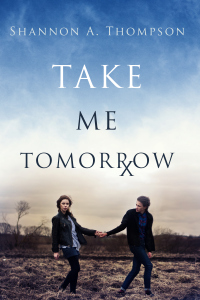
Shannon S. Thompson's YA dystopian novel, Take Me Tomorrow, features a clairvoyant drug and an uprising against the oppressive State.

Shannon A. Thompson’s YA dystopian novel, Take Me Tomorrow, features a clairvoyant drug and an uprising against the oppressive State.

Most writers have a sense for how a novel is structured. But what about chapters? We tend to make a few common mistakes, like beginning a chapter with a character waking up and ending it with the character going to bed (or getting knocked unconscious). In other words, the chapter doesn’t know where to begin and when to end, and so as long as the character is awake, the chapter keeps going.

Different kinds of novels handle chapters differently, but it’s usually the case that genre novels contain short chapters. A great example of this kind of chapter—and a great example for how these short chapters are structured—can be found in Shannon A. Thompson’s new Young Adult Dystopian novel, Take Me Tomorrow. You can read the opening chapters here at Smashwords.

How the Novel Works

Let’s look at the first two chapters of the novel, which are quite different in terms of setting and content but which use a similar structure. In the first chapter, the narrator, a teenager named Sophia, meets an unexpected person. The chapter begins with Sophia running through the woods with her dog. She’s checking on her father’s land while he’s away and clearly feeling at home:

Spring was the best season − when everything smelled of moss, alive and wet. But it was August. The muggy air sucked all the life out of the plants, leaving them dry, disheveled, and dead. Today, the forest smelled of burnt grass and dried mud. Among the pivots, the creek bed, and the broken logs, I followed the trail, and my dependable dog ran in front of me.

Then, she runs into a stranger:

a boy whose “tone was sarcastically carefree, his stare was intense, shadowed by the setting sun. I recognized the stillness in his expression. It was a predatory look, the expression of an animal preparing an attack.”

But by the end of the scene, the boy’s tone has shifted:

“‘Am I near the park?’ His quiet tone was rushed. ‘That’s where I meant to go.’ His shoulders slumped in defeat. ‘Really.'”

That tone isn’t the only major shift. The boy hurries away because someone else has arrived, and that arrival causes a change in the narrator:

“My usually goofy friend was a mess. His mop of brown curls sprung into his widened eyes, and he wheezed from the run. His alarmed expression ruined any lasting comfort I maintained. Something was wrong. Seriously wrong.”

One of the smartest things I ever heard about crafting scenes was from writer and screenwriter Owen Egerton. He shared with me the screenwriting tip that scenes should almost always contain a reversal (a “flip” of a situation) or a change in tone. So, if a scene starts out happy, it should end with sadness. Of course, the best scenes will end in ways that don’t change the tone 180 degrees but instead change it in a way that is less predictable. This is precisely what Thompson does in her first chapter. The chapter begins with the character’s confidence in her own knowledge of her surroundings and ends with that confidence disrupted.

The next chapter does something similar. It begins with a risky encounter with the police, who are enforcing a State-mandated curfew. The encounter goes smoothly, according to the expectations of one character:

“Everything is a scare tactic with these people. They don’t check everything.”

The chapter ends with the knowledge that another encounter with the State is coming, and this one will be more serious and more dangerous: “I need you to bring me a bag of food, water, and one of your dad’s knives to school.”

Though the scene ends on a similar note as it began, the stakes have been dramatically increased.

The Writing Exercise

Let’s structure chapters using the novel Take Me Tomorrow by Shannon A. Thompson as a model:

  1. Choose the scene(s) at the heart of the chapter. I’m using the word scene because it’s sometimes a more helpful organizational unit than chapter. Most of us know what a scene is even if we have no idea what a chapter should look like. Scenes also appear in stories, whereas chapters do not. So, start by outlining a scene that you know will appear in the story/novel. There may be passages that come before or after it, but you should focus on the drama that you know will occur.
  2. Identify and clarify the tone or situation at the beginning of the scene(s). You can think about this in two ways. One, what is the situation at the beginning of the scene? Think broadly. What problem is the character facing? What approach is the character using? What is the character’s attitude? What is the balance of power? Two, what is the tone at the beginning of the scene? Is it serious? Comic? Goofy? Casual? Think about the scene as a whole, not necessarily the character’s emotions. For instance, a birthday party is casual, but a waiting room at a hospital is likely serious.
  3. Reverse or shift the tone or situation at the end of the scene(s). When you reverse or change any of these situations, you can go for a full reversal (happy to sad, birthday party to cancer), or you can go for a change in degree. So, if someone has more power, that person’s power could be amplified or reinforced rather than diminished or taken away. When you change the tone, you can keep the setting the same but introduce an element that changes the way we view it. For instance, if an ambulance shows up to a birthday party, the tone has changed from fun and casual to serious and formal. (As a general rule, if a scene contains people in uniform, then it’s probably formal.) You can also produce a change in degree: mildly happy to incredibly happy. For instance, birthday parties are mildly happy, but if you’re given a gift of a lottery ticket, and you scratch it and win a million dollars, the party just got a lot happier.

The key to all of these steps is to identify what you establish at the beginning of a scene. By the end of that scene, at least one of the basic building blocks of the scene should have changed. If you’re trying to decide where to end a chapter or scene, consider picking a moment immediately after something essential has changed.

Good luck!

How to Make Small, Intimate Stories into Page Turners

14 Oct
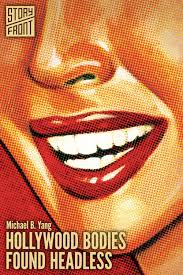
Michael Yang's story "Hollywood Bodies Found Headless" appeared in Amazon's literary series, "Day One."

Michael Yang’s story “Hollywood Bodies Found Headless” appeared in Amazon’s literary series, “Day One.”

When we think about drama, it’s tempting to believe that bigger is better. A story about a marriage on the rocks is good, but a story with married characters throwing rocks at each other is even better, right? Not necessarily. There’s a reason that some journal editors ban stories about characters who die. It’s important to explore the range of dramatic possibilities that exist between morning coffee and evening murder.

For an example of how domestic dramas can be made exciting, check out Michael Yang’s story, “Hollywood Bodies Found Headless.” The lurid sensationalism of the title draws you in, but the drama that holds you is smaller and more intimate than a tabloid headline. The story was published as part of Amazon’s “Day One” literary series, and you can read the first pages and buy the story for $1 at Amazon.

How the Story Works

I’ve mentioned a number of times on this blog the Ron Carlson quote about a story having two parts: the story and the world that the story enters. Usually, this means that a dramatic plot (ninja fights dragon in cage match) is given depth and resonance by the nuances of the story’s world (ninja can’t pass final ninja qualifying test, can’t get the girl, can’t make his parents happy, can’t get along with his more successful brother and sister). The world, then, gives the story texture.

But what if the opposite is also true? What if small, intimate plots can benefit from exciting worlds? What difference would the world make to a story about two characters working in a restaurant and trying to pay bills—one story is set in Kansas City, and the other is set in Pompeii just before Mt. Vesuvius erupts. Context matters—and that is exactly the truth that Yang uses in his story, “Hollywood Bodies Found Headless.”

The story is about a woman who has moved to Los Angeles so that her 9-year-old can pursue her dream of becoming an actress. It might seem odd to view a Hollywood story as mundane, but Yang sets the story in the grind-it-out world of television commercials: standing in line to audition, dealing with directors and other parents, and eating (and not eating) in order to look the part. Plus, the story isn’t concerned with a make-or-break moment for the girl, Sara. Something happens, of course, and it may or may not determine Sara’s future, but the immediate impact is felt most acutely by her mother. In other words, it’s a domestic story with small, intimate stakes.

So, look what Yang inserts into the story’s world: On the first page, the mother buys a grocery story tabloid magazine with the headline, “Hollywood Bodies Found Headless.” After she feeds her daughter dinner, she reads the article:

I open the glossy pages. The first body was discovered off a Sacramento highway a decade ago, a homeless man. There was hardly any press, only a small article in the back pages, but two years later the second body, a well-known former prostitute for celebrities, lapped up on the shore of the Los Angeles River, wrists and ankles bound. The only connection between the two crimes was the headless nature of their bodies. For a while, the Hollywood Lopper had been an LA secret, because of how infrequently he struck, but the killings ramped up as he began garnering news. The latest murder was a month ago: a ubiquitous character actor who always played the weaselly, cocksure best friend— the one who tries to steal the hero’s girl, only to get humiliated in the end.

After we learn the dramatic, Vesuvius-erupts part of the world, we learn about its personal ramifications:

On TV the news anchors prattle on about a besieged Los Angeles, with celebrities blinking under bright lights, stars turned into martyrs now that the Hollywood Lopper has moved up the entertainment food chain, while we no-names, the real victims, the people on the edges who had been enticed and promised celebrity, toil in obscurity through our ordinary lives.

In short, Yang has taken a small, intimate story and set it against a backdrop of 1) murder and 2) celebrities versus ordinary people. There  is a serial killer on the loose, but no one will care unless he kills someone notable. His murders have ascended the Hollywood social ladder, but there’s no guarantee that he won’t kill an unknown person next, like a certain nine-year-old trying out for commercials—or her mother. What makes the story beautiful is that it keeps the serial killer in the background (as part of the world) and foregrounds the story about a mostly oblivious girl chafing at the limits placed on her by her concerned mother.

That is how you can use a dramatic world to make an intimate story more exciting.

The Writing Exercise

Let’s make a small, intimate story more exciting by giving it a dramatic world, using “Hollywood Bodies Found Headless” by Michael Yang as a model:

  1. Choose a mundane story. Perhaps it’s one you’ve already written. Or, you could choose one of the many usual domestic plot lines: marriage drama, relationship drama, parent/child drama, money drama, extended-family drama. Regardless, you’re looking for a story that makes you worry that it’s not exciting/dramatic/sexy enough. Setting aside issues of fiction written by men vs women (and the tendency to dismiss domestic stories), this is a worry that most writers have: is our story interesting enough. Why should anyone read our story?
  2. Choose a dramatic backdrop. If you’re writing a short story, this might mean choosing something to exist in the background: noise that’s buzzing in the characters’ heads. It could be something unusual and threatening like a serial killer on the loose. It could be a significant election or a historical moment like the first moon landing. If you’re writing a novel, you might use the larger arc of the story (throw the ring into Mt. Doom, return the painting The Goldfinch) as a backdrop for an intimate moment or minor arc. Even though the action may be small, it’s cast against a much larger story that gives it weight.
  3. Watch for a moment to unite the story and backdrop. Michael Yang does this when he writes that “we no-names, the real victims, the people on the edges who had been enticed and promised celebrity, toil in obscurity through our ordinary lives.” Give your characters a chance to notice the backdrop, just as the mother in Yang’s story reads about celebrities in the tabloid newspaper. That moment can have many emotional angles. In a story set in Pompeii, one character could look out her window while eating dinner with her children and think, “Oh no.” Another character could glance away from her cheating husband, see the smoke, and think, “Thank god.” This moment will likely be brief. It may happen more than once, just as the mother in Yang’s story thinks about the serial killer more than once, but when she does, it’s to refocus our attention on the importance of the intimate drama in front of her.

Good luck!

How to Reach Out to Hostile Readers

7 Oct
Jess Stoner thought being a postal carrier could be her dream job. It turned out to be a nightmare.

Jess Stoner thought being a postal carrier could be her dream job. It turned out to be a nightmare. She wrote about the experience in “Blues on Wheels.”

Everyone has a story to tell, but sometimes not everyone wants to hear it. What happens when this is your story? How do you get skeptical, or even hostile, readers to pay attention?

Jess Stoner faced this problem in her essay, “Blues On Wheels,” about her experience with illegal and abusive labor practices as a mail carrier for the United States Postal Service. The essay is one of the most powerful and disturbing pieces of writing that I’ve read in a long time. It was published at The Morning News, where you can read it now.

How the Story Works

Stoner writes about the systematic abuse that she and other carriers faced at the USPS. She was screamed at and threatened, forced to work off the clock, and required to work as many as 12 days in a row without a day off. When she was bitten by a dog (off-leash, unfenced), her supervisor told her she’d likely be fired—because getting bitten was her fault. All of these abuses are unethical, and some of them are illegal. It would seem reasonable to assume that Stoner could tell these things to anyone and find a sympathetic ear. But that isn’t the case.

Stoner was working in Texas, which is a right-to-work state, which means it has laws that reduce the power of labor unions. Unions, of course, are a politically charged topic, but they aren’t the primary reason that some readers may object to Stoner’s story. Instead, the problem for many readers would be that Stoner is telling the story at all. Americans’ resistance to unions is just the beginning of our reluctance to listen to stories about workplace problems. We tend to believe in working hard and not complaining, perhaps because of that old Protestant work ethic and almost certainly because of the recent economic recession. When many people don’t have any job at all, it’s natural to resent someone who complain about the job they do have, no matter how unfair or illegal its practices.

So, in writing this essay, Stoner needed to find a way to convince the reader from walking away. Given that need, watch how she begins the second section of the essay:

I wanted to be a letter carrier because I have always loved checking the mail. It has been one of the highlights of my day since I was a kid, when my favorite aunt, who lived more than 1,000 miles away, would send me letters and packages. I had also been underemployed, temping and volunteering for the last six months. I wanted to work outside, to tire out my body and my mind. I wanted a paycheck.

Everyone I knew was happy for me when I was hired; many said that delivering the mail was their secret dream job. They told me about the letter carriers they grew up with, whose names they knew.

Stoner makes clear that she wanted the job and understood the physical nature of it (“I wanted to work outside, to tire out my body and my mind.”) In other words, she removes the potential objection by readers who may have believed she wasn’t up to the demands of the job in the first place. Stoner also makes clear that she was struggling in the same difficult economy as everyone else (“underemployed, temping and volunteering for the last six months”)—an important distinction for readers who’ve been similarly beaten down and, as a result, are alert to the first whiffs of elitism or privilege.

Stoner continues with these attempts to reach out to the reader, making clear (again) that she’s not afraid of hard work:

I’m a Type-A person who grew up as a member of the lower middle class; I’ve always been driven to work hard, no matter where I was employed: the warehouses, convenience stores and restaurants before and during college, and after graduating, the nonprofits, the universities where I taught.

But Stoner is also careful to note that the job is not a matter of life or death—she won’t starve without it.

I constantly reminded myself: You have chosen to work for the USPS. You can quit…I had the privilege of walking away, something my husband begged me to do on a daily basis. We are a childless couple; we could survive a few months of my unemployment.

Of course, even with these caveats, it’s possible that some readers will dismiss Stoner’s very legitimate complaints as mere whining. You can’t convince those who aren’t willing to listen. But it’s likely that these caveats allow the essay to reach readers who might otherwise have ignored it, which is all that any writer can hope for.

The Writing Exercise

Let’s reach out to hostile readers using “Blues on Wheels” by Jess Stoner as a model:

  1. Identify the hostile readers. In our partisan climate, it’s not difficult to anger some readers even with seemingly innocuous material. But if you’re writing about sex, dating, parenting, healthcare, dietary preferences, entertainment choices (TV, movies, video games, hiking, hunting, target practice), death and dying, cultural mores and idiosyncrasies, inequality, or work, you’re likely to run into objections. In other words, unless you’re writing about your favorite ice cream flavor, there’s likely a partisan perspective on your topic. But we often aren’t aware of these objections because we tend to surround ourselves with like-minded people. So, imagine yourself in a community that isn’t your own. If you were to begin telling your story, what would people say?
  2. Give those readers the benefit of the doubt. It’s easy to demonize people who disagree with you. But it’s not a great rhetorical strategy, no matter how righteous your cause. (Remember how Martin Luther King, Jr. began his letter, written from Birmingham Jail, to the white preachers who criticized his nonviolent actions: “But since I feel that you are men of genuine good will and your criticisms are sincerely set forth, I would like to answer your statement in what I hope will be patient and reasonable terms.”) In other words, don’t be condescending—or at least hide your condescension the best that you can.
  3. Make your biases clear. We rarely come to an issue with no preconceived notions. Sometimes they’re positive, sometimes they’re negative, and other times they simply exist. Be careful not to reserve expressions of shock for when they’re most warranted. This is, perhaps, why Stoner makes it clear that she always wanted to be a postal carrier. She knew something about the job and valued its importance. In other words, show your familiarity with the subject you’re writing about.
  4. If possible, relate to the readers. If the hostility is a matter of class (real or perceived), try to narrow that distance. Politicians do this with varied success by holding guns and wearing Carhartt jackets. This is easier done if the connections are real. Stoner grew up working class and says so. She was struggling to find full employment and says so. So, ask yourself, “How am I like my hostile readers?”
  5. If necessary, admit your privilege. There are limits to how much you can relate to certain readers—overdo it, and you’ll appear to be insincere. So, be honest. If not everyone can make the choices you’ve made, say so. If your choices or beliefs are influenced by cultural factors that aren’t present everywhere, admit it. If there are many positions one can take on an issue, don’t write as if there are only two (yours and mine). If you once believed differently than you do now, say so and give your reader the chance to make the same philosophical journey as you.

Remember, the goal isn’t to dilute your point but to make it heard by as many people as possible.

Good luck!

How to Create Meaningful Spaces in Stories

30 Sep
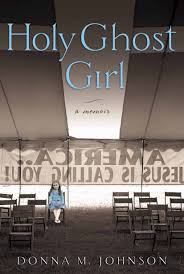
Holy Ghost Girl by Donna Johnson portrays the author's experience growing up on the trail of a revivalist preacher who would eventually be sentenced to prison time.

Holy Ghost Girl by Donna Johnson portrays the author’s experience growing up as part of the inner circle of a revivalist preacher.

Every writer has heard this piece of advice: Don’t write a scene in a vacuum. Choose a setting that will impact the characters’ decisions. Not all settings are created equal. Force two characters to have an argument in the bathroom, and the result will be different than if they have it at the dinner table.

In theory, this advice should be easy to follow, but I can remember my days as a MFA student when I would spin my wheels for days puzzling out which setting would be best and worrying that I was choosing the wrong one. Like most writing “rules,” the theory is easier than the application. So, how can we create setting without driving ourselves crazy?

Donna Johnson’s memoir, Holy Ghost Girl, was published in 2011 to rave reviews. The New York Times called it “enthralling” and “a sure bet.” The book is about Johnson’s experience growing up in a family that followed a traveling tent revival led by the preacher David Terrell. The sense of place is vividly palpable in the book, as the first pages of the opening chapter make clear. You can read them here.

How the Story Works

One reason that setting often feels difficult to write is that the places we’re considering feel random, as though drawn from a hat of Places to Set a Scene. Sometimes, the solution is to find a place that the characters find meaningful. As real people, we travel through a variety of places every day, but all of us have a handful of places that feel like home, where we are our best or truest selves. Watch how Johnson sets up such a place in the first chapter of the memoir:

The tent waited for us, her canvas wings hovering over a field of stubble that sprouted rusty cans, A&P flyers, bits of glass bottles, and the rolling tatter of trash that migrated through town to settle in an empty lot just beyond the city limits. At dusk, the refuse receded, leaving only the tent, lighted from within, a long golden glow stretched out against a darkening sky. She gathered and sheltered us from a world that told us we were too poor, too white trash, too black, too uneducated, too much of everything that didn’t matter and not enough of anything that did. Society, or at least the respectable chunk of it, saw the tent and those of us who traveled with it as a freak show, a rolling asylum that hit town and stirred the local Holy Rollers, along with a few Baptists, Methodists, and even a Presbyterian or two, into a frenzy.

This passage establishes the tent as special in a couple of ways. First, it stresses how unremarkable the setting is: a field of trash at the edge of town. Yet that trash is appropriate because the people who gather there feel “too poor, too white trash, too black, too uneducated, too much of everything that didn’t matter and not enough of anything that did.” This is an example of characters finding meaning in the things that surround them. Real people do this all the time. They develop attachments to the places they live: small towns, big cities, flat plains, mountains, deserts, rainy places, blue states, and red states. In all likelihood, they didn’t consciously choose the place where they live. They were born there and stayed or arrived there out of some necessity. Yet they often appropriate aspects of the place as statements of personal character—the people who live here are good/hardworking/smart/real/whatever. This is exactly what Johnson is doing in this passage.

Secondly, the passage shows the people creating a space that demonstrates some quality about them: “At dusk, the refuse receded, leaving only the tent, lighted from within, a long golden glow stretched out against a darkening sky. She gathered and sheltered us…” It’s a cliche that you can learn a lot about people by stepping into their homes, and this passage reveals the truth in the cliche.

Once the memoir establishes the importance of the tent, it spends several paragraphs showing how the tent was put up, the effort and mechanics involved. Because the place matters, so does the upkeep of the place, and it’s in these passages that we learn crucial information about the people who gather there:

Local churches sent out volunteers, but most of the work was done by families who followed Brother Terrell from town to town, happy to do the Lord’s work for little more than a blessing and whatever Brother Terrell could afford to pass along to them. When he had extra money, they shared in it. He had a reputation as a generous man who “pinched the buffalo off every nickel” that passed through his hands. He employed only two to four “professional” tent men, a fraction of the number employed by organizations of a similar size. The number of employees remained the same over the years even as the size of the tents grew larger. “World’s largest tent. World smallest tent crew,” was the joke.

Because the tent is so central to the people’s identities, it’s also central to the story. One chapter begins with unwanted visitors to the tent (the Klan). Another chapter offers some children, including Johnson, the opportunity to escape from the tent for a while and swim in a local pool. In both scenes, the tension results from the changes to setting. The rules—the usual way of being—are upended, which produces a story to tell.

The Writing Exercise

Let’s create a meaningful space using Holy Ghost Girl by Donna Johnson as a model:

  1. Choose a character. It’s tempting to start with the setting itself, but unless you’re writing a story like Jack London’s “To Build a Fire” where setting is the entire point, the place is only as important as the character believes it to be. So, choose a character that you’ve already created, and let’s figure out what that character believes is important about the setting.
  2. Locate the character in his/her surroundings. Start with the general. Where does the character spend his/her time? Think about neighborhood, work, commute, church—the basic settings of our lives.
  3. Identify what is unremarkable about those surroundings. We tend to start with what is remarkable or unusual. But it’s often the case that people become inured to the peculiarities of where they live—they see them every day and take them for granted. Instead, try listing the things that the character sees or notices every day. What are the things that irritate the character about his/her setting?
  4. Let the character appropriate those aspects as personal qualities. Ironically, it’s the little, irritating things in our worlds that we often feel the most attachment to. Johnson writes about how the people who gathered in the tent identified with the trash strewn around them. Try writing a sentence that begins this way: “We were the kind of people” or “They were the kind of people” or “She was the kind of person who…” Can you connect that kind of people they are to those irritating, commonplace parts of their surroundings? Here’s an easy example of this: “We were the kind of people who didn’t need a lot of money.”
  5. Allow the character to create a personal space in those surroundings. In Johnson’s memoir, the worshippers construct a sacred place in the midst of the trash, and that place shines into the darkness. In other words, the place makes manifest the hidden, interior parts of the people who gather in it. People do this all the time. Sometimes we literally build shrines to the things that are closest to our hearts. Other times, we build dens or interior spaces that allow us to be our truest selves: they’re full of books or NFL gear or Precious Moments figurines. What shelter does your character build to protect against the elements—physical, emotional, and spiritual?

Good luck!

How to Create a Character Foil

23 Sep
Kalpana Narayanan won Boston Review's Aura Estrada Short Story Prize with her story, "Aviator on the Prowl."

Kalpana Narayanan won Boston Review‘s Aura Estrada Short Story Prize with her story, “Aviator on the Prowl.”

In high school literature classes, students are often taught about character foils—a yin-and-yang concept in which characters tend to be polar opposites of each other, as in the nursery rhyme, “Jack Sprat could eat no fat, his wife could eat no lean.” As a story device, an opposites-attract approach often works. But it isn’t the only way to develop character conflicts.

In her story, “Aviator on the Prowl,” Kalpana Narayanan creates two characters who are remarkably alike rather than different. The result is a story that won Boston Review‘s 2011 Aura Estrada Short Story Contest. The judge, Francisco Goldman, wrote that the story “makes you laugh a lot, makes you feel great affection, and breaks your heart. I have to admit, I finished it with tears in my eyes.” You can read “Aviator on the Prowl” here.

How the Story Works

There are many ways to establish a character (physical traits, social position, job), but one of the most memorable to the reader is through the character’s attitude toward the world around her. In this first paragraph of “Aviator on the Prowl,” notice how prominent the narrator’s voice is. It could have been made transparent, like a clear window for us to see the events of her past, but, instead, the voice colors our view:

That summer I broke it up and down and got a job because I was tired of thinking. Each night I came home I peeled off my shirt and pants that smelled of the juice of a thousand pigs, and I stood outside my room. My brother Aalap had hanged there the year before, the starched, yellow fold of his karate-class belt rounding his neck like a scarf. I’d been at college, and my mother had made it clear it was the belt and not her own strangle that had writhed small Aalap purple. You could still see the hole where the nail had been. It was just above my bedroom door and everyone had remembered everything but no one had remembered it.

This is a tough, jaded narrator. Her brother has committed suicide, and she’s developed a kind of emotional scab over her still-raw feelings about his death. This attitude becomes clear as she’s put into an interaction with her mother:

My mother said it wasn’t nice how I stripped outside my room like that, that my father might see my triangle bra and shriveled-up breasts and then what. (Buchu, put your breasts back in your buttons!) I said maybe you shouldn’t stick your sad face in my business like that or maybe I just said it in my head.

This clear attitude makes it easier to create a foil for the narrator; the usual way would produce a character who has an opposite attitude toward life, a sort of bleeding heart. But Narayanan does the complete opposite and creates a character who shares the narrator’s combative attitude—and shares it in an exaggerated way. The character is her boss at the restaurant where she works. The similarity of their attitudes becomes clear as soon as he’s introduced:

I told an Asian girl that came in the restaurant our beer was from Japan. My boss screamed I was a humiliation, that it was from Okinawa and if I didn’t get it straight he’d really do something bad. I told the girl it was from Okinawa and gave her the bottle for free. She mouthed an apology when my boss wasn’t looking, but I didn’t care.

The story wastes no time before the boss’s attitude is applied to the central event of the narrator’s life: her brother’s suicide. In this scene, the narrator has come into work even though it’s her off day. She likes working in the kitchen, and so she helps the sous-chef cut some garlic. But, she does it badly, and her boss notices and digs the cut ends out of the trash:

His hand opened to show the end of the bulb I’d just tossed. His fingers rolled the end like mucus then threw it at my face. I twitched.

I don’t fucking care who’s dead and who’s not, he continued, if you waste my money like this again you’re out.

In a way, the story has taken the narrator’s tough attitude toward her brother’s death and, through the character of her boss, exaggerated it into a grotesque version of itself. It becomes a kind of contest between the character’s: how desensitized can they become? As you read the rest of the story, you’ll see how Narayanan steers this contest in a surprising direction and how the final scene offers a release from this contest of wills.

By creating this particular character foil—two characters who are similar rather than opposites—Narayanan creates a framework in which the story’s emotional tension (how does she grieve her brother’s death) can play out.

The Writing Exercise

Let’s create a character foil using “Aviator on the Prowl” by Kalpana Narayanan as a model:

  1. Create a character and a problem that will not go away quickly. The character can be anyone, but the problem should be persistent, as opposed to one that can be solved with a decision (to leave or stay, to take this job or that one). A problem like this tends to be in the background of everything else in the character’s life. So, think about big issues: love, death, or existential dilemmas (what kind of person am I?).
  2. Clearly define the character’s attitude toward that problem. If you’ve ever listened to people talk about themselves in the midst of a significant difficulty (death of a loved one, career change, big move, or some other dramatic life transition), you’ve likely noticed that the stories they tell often change, depending on how they’re feeling about the situation. In other words, we tell ourselves stories that support our basic view of the world and ourselves. So, think about the character’s attitude as a thing he or she has created. How has the character chosen to approach the problem that won’t go away?
  3. Create a second character, one whom the first character cannot avoid. Our lives are full of such people: bosses, coworkers, spouses, children, parents, neighbors, and friends. Particular situations also bring unavoidable people into our lives. If the toilet is backed up, you’re stuck with a plumber. If a storm has blown a tree over onto your house, you’re stuck with a contractor and team of workers. Hospitals have doctors and nurses. Schools have teachers and administrators. In short, think about your character’s situation and choose a character who is an inevitable part of it.
  4. Give this new character the same attitude as the first character. You don’t need to know why the character has this attitude, only that it exists. So, if your first character is tough, make this new character tougher. If your first character is highly rational, make the new character even more logical. Once you know the attitude, you can find ways for it to be expressed. Be practical. If the new character is a nurse who copes with all difficulty with laughter, there will be plenty of difficulties in a nurse’s routine to prompt that laughter.
  5. Find opportunities for these attitudes to collide. You have already created characters who cannot avoid each other. Now, create scenes that force them onto different sides of a problem. Both characters will address the problem in the same way, and that similar approach may produce conflict.

Good luck!