Archive | Setting the Stakes RSS feed for this section

How to Make Characters Uncomfortable

16 Sep
Ted Thompson's novel, The Land of Steady habits, has earned comparisons to Richard Yates and John Updike.

Ted Thompson’s novel, The Land of Steady Habits, has earned comparisons to Richard Yates and John Updike.

Fiction should not be nice to its characters. As soon as a character reveals some preference (I like this but hate that), the story has an obligation to force the character into that hated thing. It’s a tried and true strategy that can produce some of the best moments in a story, regardless of genre (remember snake-fearing Indiana Jones facing a pit of snakes?). So, how do you set up a situation in which a character must face the thing he or she detests most?

Ted Thompson begins his novel The Land of Steady Habits with exactly this kind of moment. The novel was published by Hatchette Book Group, and you can read the opening chapter at Hatchette’s website.

How the Story Works

The first line of the novel establishes the hated thing:

One of the great advantages of Anders’s divorce—besides, of course, the end of the squabbling, and the sudden guiltless thrill of freedom—was that he no longer had to attend the Ashbys’ holiday party. The party, like all the parties he’d attended in his marriage, was his wife’s domain, and he was relieved to no longer have to show up only to be a disappointment to her friends.

The novel wastes no time forcing Anders to confront the thing he thought he’d left behind: “a card arrived from the Ashbys, as if with the season, inviting him once again to their holiday party.”

Of course, the invitation shouldn’t matter. Anders should simply toss it in the trash—the advantage of divorce. This seems to be his plan, and at first he treats it as curiosity—”the only invitation he’d received”—and tries “to decide if it was a peace offering of if they’d simply forgotten to take him off their list.”

But there’s a complication. As part of the divorce agreement, Anders agreed to give his wife the house (with its expensive mortgage), but he can’t afford to retire on what remains of their wealth and has, out of necessity and spite, quit paying the mortgage. The problem with this solution becomes clear with a second piece of mail: a note from his wife’s lawyers also comes in the mail that makes clear that he has “until the end of the year before the bank brought in a judge.”

To solve this problem, Anders must talk with his ex-wife—and that is why he decided to attend the party.

Thus, in the span of only a couple of pages, the novel creates a situation that Anders should absolutely avoid and a reason for him to necessarily confront it. As one might expect, his appearance begins uncomfortably and ends with disaster.

Side note: This novel was recently optioned by director Nicole Holofcener, whose films (Please GiveFriends with MoneyEnough Said) excel at putting characters into uncomfortable situations. When you read the opening chapter of Thompson’s novel, its appeal to a filmmaker will make a lot of sense.

The Writing Exercise

Let’s put a character into an uncomfortable situation using the excerpt from The Land of Steady Habits by Ted Thompson as a model:

  1. Create a character and a reasonable dislike/hatred. You might actually use Thompson’s first line as a model: “One of the great pleasures of _____ was that he/she no longer had to ______.” Life is full of situations like this. Parents look forward to no longer changing diapers, people in apartments look forward to no longer carrying groceries up flights of stairs, people who’ve changed jobs look forward to no longer commuting or sitting next to So-and-so. And, of course, most of us know what it’s like to expect that something is over—and then it isn’t. So, imagine what life change your character has recently gone through and the annoying things this change has left behind.
  2. Create an opportunity to encounter that dislike. Thompson uses an invitation in the mail, which is, in a larger sense, a visit from somebody he used to know but now no longer encounters. So, imagine all the ways that your character’s dislike could return in the form of an unexpected encounter: running into someone in the grocery store, an event (wedding, funeral, graduation) that forces them together, a merger at work. We like to believe that the world is large and that we can make our own place in it, but the truth is that our places overlap more than we often acknowledge. How can you make your character’s worlds overlap in order to bring him/her into an encounter with some unpleasant thing that has been left behind?
  3. Create a reason for the character to seek out that encounter. Thompson gives his character no choice, really, but to attend the party (Anders has quit paying the mortgage on the house that his wife won in the divorce, and he needs to explain himself). As Thompson demonstrates, a good way to force a character’s hand is to make him/her do something that will have negative consequences. So, imagine an act that your character could commit that would force him/her to face some unpleasantness that has been left behind. Or, imagine a circumstance that is beyond the character’s control (layoffs, illness) that could turn the character back to a place that’s been left behind. The result will likely be a scene that the character wants desperately to avoid but has no choice but to enter.

Have fun!

How to Write Surprising Descriptions

9 Sep
One reviewer said of the essays in Amy Leach's Things That Are, "If Donald Barthelme had made nature documentaries, the commentary might have sounded like this."

One reviewer said this about the essays in Amy Leach’s Things That Are: “If Donald Barthelme had made nature documentaries, the commentary might have sounded like this.”

At some point in your story or novel or essay, you’ll need to write a memorable description, something better than red or big or happy. So, you start free writing and brainstorming to find the right words, but they’re all variations on the usual and expected. You want to find something new and startling, but how?

For essayist Amy Leach, writing eye-opening descriptions seems almost as natural as breathing. Her essay, “In Which the River Makes Off With Three Stationary Characters,” is, in a way, one long description that develops and moves in surprising ways. It was published in The Iowa Review and included in her collection, Things That Are. You can read it here as a sample of the book or here at JSTOR.

How the Essay Works

As we grow older, we fall into patterns of seeing. We perceive not the thing itself but our expectation (built on years of seeing) of what the thing should look like and what it is. A good description, then, wipes away those years of seeing and allows us to see the world the way we saw it as babies and children: for the first time. Watch how Leach strips away the usual ways of perceiving in the first paragraph of “In Which the River Makes Off With Three Stationary Characters”:

In the seventeenth century, his Holiness the Pope adjudged beavers to be fish. In retrospect, that was a zoologically illogical decision, but beavers were not miffed at being changed into fish. They decided not to truckle to their new specification, not to be perfect fish, textbook fish; instead they became fanciful fish, the first to have furry babies, the first to breathe air and the first fish to build for themselves commodious conical fortresses in the water. If Prince Maximilian, traveling up the Missouri River, had taken it in mind to categorize them as Druids or flamingos, beavers would have become toothy Druids, or portly brown industrious flamingos.

The last phrase of the paragraph (“portly brown industrious flamingos”) would have been an inconceivable string of words without the rest of the paragraph. But, by introducing the idea that beavers might not actually be beavers, Leach removes the usual way of viewing the animal and gives herself the opportunity to see them as something totally new. The same thing is true of the description that ends this next two sentences:

The beavers’ reaction to their papal renaming highlights two of their especial qualities: their affability and their unyieldingness. They affably yield not. If they are deemed fishes, they respond by becoming lumberjack fishes.

How amazing is that phrase: lumberjack fishes? And how impossible it would be to pair those words in a passage that looks at beavers in the usual way.

Despite the inventiveness of the descriptions, Leach actually arrives at them in methodical ways:

  1. First, she introduces a wrong way of viewing something: the Pope says beavers are fish.
  2. Then, rather than correcting the wrong idea, she accepts it as a fact: okay, if beavers are fish, then these are the kind of fish they are.
  3. Finally, she introduces more wrong ways of viewing the beavers (if they’re already fish, why not make them flamingos?).
  4. This last, previously inconceivable way of viewing beavers creates the opportunity to describe them in new ways.

It might be tempting to think that these descriptions (lumberjack fishes, portly brown industrious flamingos) are simply cute, but Leach uses them to set up alternate ways to view not just beavers but nature as a whole and our place within it. In fact, the collection of essays as a whole repeatedly offers new ways of thinking about basic human experience—and these new ways are almost always tied to descriptions that scramble the usual order of things.

The Writing Exercise

Let’s write surprising descriptions using “In Which the River Makes Off With Three Stationary Characters” by Amy Leach as a model:

  1. Introduce a wrong way of viewing something. This happens in real life on a daily basis. Two people witness the same event and describe it in different ways. The resulting miscommunication can turn tragic or comic. But there are simpler ways to introduce an odd perspective. Take any common human interaction (lovers meeting or fighting, workers conferring, cashier checking out a customer) and label it as something that it clearly isn’t. In other words, write a scene in which two people kiss and then suggest that it’s a fight. Or, show two people shaking hands or passing money and suggest that they’re in love. This mashup challenges the ideas of loving and fighting and the typical way that we view these common scenes. You can actually do this with any interaction that you’ve already written in a story. Simply label it as something that it isn’t.
  2. Accept the error and write as if it applies. What if the people kissing really are fighting? What if the people shaking hands are in love? What would that mean? Are they pretending? Acting a certain way in public, for show? Fulfilling an obligation? Or, does love mean something different than we think it means? For instance, there are office wives and husbands—think about how odd that pairing and description is. Try to explain how the scene you’ve chosen can look one way but be called something that it doesn’t seem, at first glance, to be.
  3. Introduce more wrong ways of viewing the same thing. If we can have office wives or husbands, what other kinds of wives and husbands can we have? Bar spouses? Church spouses? Internet spouses? Or, if a coworker can be an office wife, what else can they be? An office sister? An office mother? An office lieutenant? An office gravedigger? If you’re going to break the bond between words and bind them to new, unusual words, don’t stop. Keep going to see how far you can push the idea.
  4. Describe the encounter or person or thing. What is a handshake between lovers? A pillow handshake? A spooning handshake? What is a kiss between people who are fighting? A blistering peck? A wolfish smooch? You can do better than these example. Play around. Try to surprise yourself. The immediate goal is to find an interesting description, but doing so may require creating an entirely new way to view an essential part of the story. 

Have fun!

How to Make the Impossible Possible in Stories

2 Sep
Sarah Frisch's story, "Housebreaking," appeared in The Paris Review.

Sarah Frisch’s story, “Housebreaking,” appeared in the Winter 2012 issue of The Paris Review.

If a story is to keep its readers from walking away, it must do something unexpected, something that makes the reader say, “I didn’t see that coming.” These moments of surprise are what almost all stories are about—if we know how it will play out, why keep reading? The writer Richard Ford once put it this way: The job of fiction is to make the impossible possible. That’s fine to say, of course, but how do we do that?

Sarah Frisch offers a kind of textbook model for how to put Ford’s maxim into practice in her story, “Housebreaking.” It was published in The Paris Review, where you can read it now.

How the Story Works

The story is about two strangers who move in together after a chance encounter. It’s the sort of story that would cause a listener in real life to say, “Wait—you did what?” Most people don’t move in with perfect strangers for a lot of good reasons. As a result, any story in which this happens must overcome a great deal of skepticism on the reader’s part. Frisch begins to do this in the first paragraph:

Seamus lived in Wheaton, Maryland, in the last house on a quiet street that dead-ended at a county park. He’d bought the entire property, including a rental unit out back, at a decent price. This was after the housing market crashed but before people knew how bad it would get—back when he was still a practicing Christian Scientist, still had a job and a girlfriend he’d assumed he would marry. Now, two years later, he was single, faithless, and unemployed. The money his mother had loaned him for a down payment was starting to look more like a gift, as were the checks she’d been sending for the last year to help him cover the mortgage. His life was in disrepair, but for the first time in months he wasn’t thinking about any of that: he was sitting out back on a warm spring day with a woman. Her name was Charity, and she was a stranger.

Notice how Frisch skips over their initial encounter. By the time we meet the woman, Charity, the story has already begun. The next paragraph fills in some of the details about the encounter but also continues to skip over a great deal:

Earlier that afternoon Seamus had been weeding by the driveway, and she’d stopped to ask him if the cottage in the backyard was available to rent. It was already rented, but soon they were on his deck, talking and sharing a six-pack Charity had been carrying and that she confessed she’d planned on drinking alone.

Both paragraphs use a similar technique, one that’s not unlike the famous yada-yada from Seinfeld: “His life was in disrepair” yada-yada “he was sitting out back on a warm spring day with a woman.” “It was already rented” yada-yada “they were on his deck, talking and sharing a six-pack.” In both cases, if the story had shown that first encounter in great detail, those details would have needed to explain the thought processes behind both characters’ decisions to continue the encounter. Imagine trying to write dialogue for such a scene. Even in real life, we tend to skip over such details; we sometimes don’t even know exactly how we get into situations. The being-there is more important than the how. Yet in fiction, in early drafts, we tend to write those scenes out, and then we get lost.

Even when Frisch uses dialogue, she works fast, making the scene happen quickly so that we don’t have time to object:

“My ex’s house has the gravitational pull of a black hole,” Charity said. “I can’t believe I’m still here.”

“Congratulations,” Seamus said. Then he asked her to stay for dinner.

Something big happens in that moment, internally for Seamus, but we don’t get any details about it. The story doesn’t show us his thoughts, though the next passage does explain how he was unprepared for this moment: his kitchen is a mess, and he has no food ready except “package of ground beef rotting in the crisper.”

A few lines later, the story gives Charity a similar moment:

“I don’t want to go back to that hellhole,” she said.

“Stay here till you find a place,” Seamus heard himself say.

“I didn’t mean it like that.” She looked embarrassed, as if he had accused her of something.

“Everybody needs help.”

“It seems like a bad idea,” she said, quietly.

Seamus said he was trying to be more open to bad ideas.

When she accepted, it was with such obvious relief that he wished he’d offered the instant they’d met.

Notice how matter-of-factly the story skips over the internal struggle: “Then he asked her to stay” and “When she accepted.” If the story had shown that struggle, it likely could have gotten bogged down, taking longer to get to the real story, which is what happens when these two people move in together.

The Writing Exercise

Let’s overcome unlikely plot scenarios using “Housebreaking” by Sarah Frisch as a model:

Before you can use this exercise, you need to Identify the problematic plot point. It could be the scenario itself (two strangers move in together). It could also be a decision that a character makes deeper into the story. The point is to know which points you’re having trouble defending or explaining. Where is the explanation of a character’s thoughts or psychology bogging down the narrative? Once you’ve identified the sticking point, you can figure out how to yada-yada over the parts that don’t matter—in other words, you can skip to the good stuff.

  1. Skip over an unlikely initial encounter. Frisch begins the story by explaining Seamus’ situation and then saying, essentially, “but all that went out the window because now he was doing something totally unlike what was just described.” This can serve as a good model for any opening: Here’s a description of a character that suggests he/she is a particular way, but one day he/she found him/herself doing something totally out of character. This opening not only skips over difficult details but also creates tension: how did this unlikely thing happen?
  2. Use a transition to glide across time. Sometimes the right word or phrase can help the story leap over a few minutes to a more interesting moment in a scene. Look at the word soon in this sentence: ” It was already rented, but soon they were on his deck, talking and sharing a six-pack.” That word skips over the conversation about the rental unit, which is not only less interesting but also tricky to write since it involves a conversation about doing things the characters wouldn’t normally do. So, try introducing something that would normally end a scene (“It was already rented”) and then use the word soon to keep the scene going (“but soon they were on his deck.”
  3. State a character’s action or decision outright, with no explanation. There are statements that we consider making or actions that we consider doing for days (or for a few tortured seconds) before we actually make or do them. That mental state is hard to describe and often not particularly interesting. But if you’ve set up a character and the way he/she tends to act, it can be jarring (in a good say) to state that he/she did something totally out of character (“Then he asked her to stay for dinner”). So, if you’ve tried to describe that mental state and crisis, cut it completely and just state the result as quickly as possible. Once you’ve surprised the reader, you can give details (as Frisch does) for how the character is totally unprepared for this decision.
  4. Use a dependent clause to make a decision seem inevitable. Another mental state that we often try to describe is a moment of waiting: I just said this, and now I’m waiting to see how she’ll respond. It’s a really hard thing to describe, and often it’s better to just skip the response entirely and get to the result. You can do this with two basic pieces of grammar: a subjective conjunction (when, after, although) and a dependent clause (the string of words that usually accompanies these words). Like the word soon, these words skip over time (“When she accepted”). You can do something almost identical with many scenes. Skip over the conversation or waiting period and use when or after to get to the thing being discussed or waited for.

Good luck and have fun!

How to Use Plot Spoilers in a Story

26 Aug
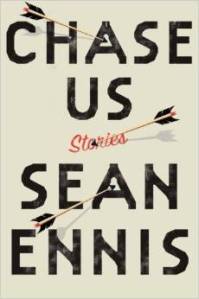
Sean Ennis' debut story collection, Chase Us, follows the lives of boys living on the outskirts of Philadelphia.

Sean Ennis’ debut story collection, Chase Us, follows the lives of boys living on the outskirts of Philadelphia.

Every writer will likely at some point begin a story with a spoiler—by giving away a major plot point. The novelist Paul Murray actually did this with the title of his book: Skippy Dies. It’s an effective strategy. The reader wants to know what happened—how did Skippy die? But it can also be a surprisingly difficult strategy to pull off. You can give away too much, or you can reveal an ending that the reader isn’t interested in. So, how do you make it work?

Sean Ennis does an excellent job of using this kind of opening in his story, “Saint Roger of Fox Chase.” It was included in his collection of linked stories Chase Us, and you can read it now at The Good Men Project.

How the Story Works

The first seven words of the story give away the ending: “The night Roger was beaten to death.” That’s the plot spoiler. A lesser story might depend on that spoiler alone to generate suspense. After all, it’s a powerful statement: Roger wasn’t killed but beaten to death. It’s natural for the reader to want to know what happened. Who was Roger? How did he arrive at such an awful ending?

But those seven words are just the beginning of passage that build suspense in a variety of ways. Here are the first two paragraphs in their entirety:

The night Roger was beaten to death, I was out there running, too. For weeks, he had been trying to convince Clip and me to hang out at the Fox Chase playground on Friday nights. The older kids were buying beer and selling cups for a buck. The girls that came were getting wild, dancing to the music blasting out of car stereos, and flashing their chests.

I was skeptical. The guys that hung around the playground at night were not my friends; they got in fights, smoked. I knew some of them from soccer, and we had a tenuous truce because I could play, but I didn’t want to tempt things and didn’t care much about drinking beer. Seventh grade is a tenuous time.

The initial pulse of suspense comes from “beaten to death,” but that suspense is heightened by the incongruity and mystery of what comes next: “I was out there running, too.” What does this mean? Running away? But what about that word too? He was running with Roger? The sentence makes perfect grammatical sense but leaves a great deal unclear in terms of the scene and what was happening. So, now the reader not only wants to know how and why Roger died but also what was going on in the background. Then, the next sentence introduces the word playground, which we don’t normally associate with beaten to death or beer and wild nudity. Again, it’s important to note that there is nothing literally  confusing about the paragraph. The sentences are not purposefully obscuring the facts. The confusion or mystery comes from not seeing only a glimpse of the entire picture. The narrator cannot explain everything in a few words, in part because it is first-person and therefore imperfect in the ways that all people are imperfect, rather than third-person and capable of omniscience.

The second paragraph continues the incongruity of playground/beaten to death by stringing together kids who “got in fights, smoked” with soccer and the idea that “Seventh grade is a tenuous time.” These are just kids, we realize. They’re playing at being adults but still stuck with the trappings of childhood—playgrounds and soccer.

So, even though the first sentence contains an enormous plot spoiler, the rest of the opening two paragraphs introduce a complexity and confusion that the reader wants to unravel and understand. If you read the entire story (which you most definitely should), you’ll likely find that the plot point of Roger’s death is less important than everything that was going on around it. In other words, the spoiler isn’t really a spoiler at all but a way of directing the reader’s attention toward what is truly important.

The Writing Exercise

Let’s introduce a plot spoiler into the beginning of a story using “Saint Roger of Fox Chase” by Sean Ennis as a model:

  1. Identify the most important thing that happens in your story. There are, of course, likely several important points, and the biggest of them might be internal—but internal plot points don’t really work as spoilers. Part of the problem is that even the deepest moments of realization for a character can sound, when distilled to a sentence, like the sentiments of a Hallmark card (“The Things They Carried”: Don’t let grief get you down.). To make a spoiler work, you need plot, which almost always means action and often means the external consequence of some internal turning point. So, identify the biggest plot point in the story.
  2. Write a sentence that states the spoiler plainly. You can’t get much plainer than “The night Roger was beaten to death.” But notice what else that sentence does: it suggest that other things are happening. It’s even a good idea to use Ennis’ first sentence as a template: On the _____ that ____ happened… You want to hint to the reader that though you’re revealing some parts of the story, there are others yet to be found out.
  3. Surround the plot spoiler with incongruities. Some spoilers aren’t really spoiler (A man went to war and died. A couple met in Vegas and got married and a year later they were divorced.) No one is going to wonder how those things happened because of course they happened. You want to provide details that make the spoiler not quite make sense. Ennis pairs “beaten to death” with a playground and wild parties and, eventually, seventh grade. These are things that don’t usually appear alongside a brutal murder. So, fill your first paragraph with details that one wouldn’t normally expect to find alongside the plot point that you’ve revealed. Keep in mind, though, that you’re not searching for opposites. Don’t be blatantly thematic (He died in a maternity ward). Be weird. Be unexpected. Here’s a sentence from the first paragraph of Stuart Dybek’s famous story “We Didn’t”: “We didn’t in your room on the canopy bed you slept in, the bed you’d slept in as a child, or in the backseat of my father’s rusted Rambler, which smelled of the smoked chubs and kielbasa he delivered on weekends from my uncle Vincent’s meat market.” Nobody expects to find smoked chubs in a sentence about sex. Allow your imagination to roam. What detail would make the reader sit up and say, “Huh?”
  4. Run with those details. Once you’ve got the plot spoiler in the story (and if it’s a good one), then there’s no doubt that you’ll return to it eventually. It’s also almost inevitable that it will press its face against the pane of your story over and over again. You won’t be able to get rid of it. So don’t feel the need to remind your readers that it’s there. Instead, elaborate on the incongruous details you’ve discovered. Ennis puts a playground and soccer in a paragraph with murder, and it’s the playground and the soccer that the story focuses on for a very long time—except that they’re not just soccer and a playground. They’re soccer and a playground that are accessories to murder. As a result, we pay attention. We want to know how the incongruous details will be brought together.

Good luck and have fun!

How to Bring Other Voices into Your Writing

19 Aug
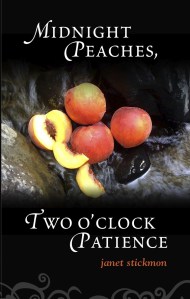
Janet Stickmon's book, Midnight Peaches, Two O'Clock Patience, is a collection of poems, stories, and essays about the creative power of women.

Janet Stickmon’s book, Midnight Peaches, Two O’Clock Patience, is a collection of poems, stories, and essays about the creative power of women.

When creating a narrator’s voice, either for a story or our own voice in an essay, we often struggle to find the right voice. Writers talk about this all the time—they struggled with their work until that moment when they finally discovered their voice. It’s tempting to believe that this voice is a single vein of consciousness and diction and that we’re just hacking away at the rock of our exteriors until we uncover it. But sometimes there is no single consciousness. Sometimes the best or most authentic voice contains different kinds of diction and syntax. If that’s the case, what do you do?

Janet Stickmon demonstrates how to handle multiple voices in her essay, “Blackapina,” about her multiethnic background as an African-American Filipina. The first part of the essay was published as ““Barack Obama: Embracing Multiplicity—Being a Catalyst for Change” in Race, Gender, and the Obama Phenomenon: Toward a More Perfect Union?, co-edited by G. Reginald Daniel and Hettie Williams. It was later incorporated into a larger essay, “Blackapina,” in Stickmon’s book Midnight Peaches, Two O’Clock Patience. You can read it here.

How the Essay Works

In her famous essay, “Mother Tongue,” Amy Tan writes about a lecture that she had given many times but never in front of her mother. Only then, with her immigrant mother in the audience, did she realize that it was “a speech filled with carefully wrought grammatical phrases, burdened, it suddenly seemed to me, with nominalized forms, past perfect tenses, conditional phrases, all the forms of standard English that I had learned in school and through books, the forms of English I did not use at home with my mother.”

That is the kind of English that Stickmon uses for this essay. An excerpt was published in a scholarly book. As anyone who’s written an academic, scholarly essay knows, there are expectations for the kind of language that will be used. Here is Stickmon’s first sentence:

People of multiethnic backgrounds are accustomed to existing at the intersections of multiple worlds and multiple identities, holding and juggling those spaces in tension.

This is Stickmon’s academic voice, and it would seem that it leaves no room for the diction and syntax that Stickmon might use outside the classroom or lecture hall—just as the voices we create for any piece of writing often seem narrow (purely serious with no room for humor or too smart or too naive or too whatever to leave room for sentences that contradict the dominant voice). Yet Stickmon manages to include other voices.

She starts by inserting other languages. The first is Filipino:

Momma was from the barangay of Labangon in Cebu and left a clerical job to come to the United States—the country she considered the “land of milk and honey.”

The second is a form of English:

Da’y (Daddy for short) was from Shreveport, LA and hopped freight trains to California—one of approximately six million African-Americans who fled the oppression of the South during what came to be known as the Great Migration.

With those proper names (barangay of Labangon in Cebu) and (Da’y (Daddy for short) was from Shreveport, LA) comes an entire dictionary of words that are rarely found in academic texts:

My biracial experience began with the very basic influences of food and language, eating Momma’s biko and bijon and Da’y’s hoe cakes and hot cakes, hearing Da’y sound “country” and Momma speak Cebuano.

The presence of these new voices has a marked impact on the dominant academic voice. Here’s the next paragraph:

It was 1989 when Momma died and Da’y was put in a convalescent hospital; I was 15 years old. Three years later, Da’y died, and I officially became an orphan, continuing to juggle my dual heritage along with the meaning of life in the absence of parental love. I was tossed around from one social worker to the next, telling my story over and over again, becoming attached to no one. Though the most immediate lifelines to my history were gone, my sense of self was informed by the memories my parents left behind, the Filipino relatives I moved in with, the holidays spent with my African-American relatives, and close high school and college friends.

The language is still addressing the “intersections of multiple worlds and multiple identities” from the essay’s first sentence, but it’s now doing so in language that isn’t necessarily more colloquial but certainly more understandable to non-academic readers (“tossed around from one social worker to the next”).

The essay even begins to gain a sense of humor (something that scholarly writing is not at all known for). Here is an example:

I had to “turn on” my Black side (whatever that meant) and leave behind or downplay my Filipino side; when I was in an all Filipino environment I felt that I had to “turn on” my Filipino-ness (whatever that meant) and downplay my Black side.

Those parenthetical asides—”(whatever that meant)”—almost seem like the commentary of another voice on a sentence that puts turn on in quotation marks. In short, because Stickmon has introduced these different voices in the essay, they begin to form a kind of dialogue with each other—that dialogue, as Chimamanda Adichie has explained in her popular TED talk, is far better than listening to a single, dominant voice.

The Writing Exercise

Let’s introduce and use different voices, using “Blackapina” by Janet Stickmon as a model:

  1. Choose a piece of writing whose voice feels too homogenized. It can be a story or essay sitting in a drawer or in a folder on your computer. Sometimes when we get stuck in a draft, the problem is that we haven’t given ourselves enough to work with. We had an idea that made us begin the story/essay in the first place, and we took it as far as we could. Introducing more voices can provide more grist for our imaginations.
  2. Introduce a piece of information that can’t be told in the dominant voice. This might be something from another culture or language, like the Filipino places and foods referenced by Stickmon. But that other culture/language doesn’t need to from some foreign land. In America, there are particular Englishes for different regions and professions, and with those Englishes come different vocabularies. You can’t talk about tort law or raising hogs or heart surgery or road construction without using the dictions of those fields.
  3. Expand the reference. Stickmon references her parents’ origins in the Phillipines and Louisiana and then builds on those references by talking about everyday experiences (like food) that are associated with them. In your writing, every reference to something outside the frame of the narration is an opportunity to let in other voices—if you’ll let them speak. So, stay with a reference for a paragraph. Give more details about it.
  4. Mesh the reference with the primary voice. We usually reference something because it carries some weight or importance. Use that importance to make the reference a crucial part of the primary narrative. For example, once Stickmon introduces Da’y, she’s able to tell a story about him that connects to the very academic idea of “intersections of multiple worlds and multiple identities.” Because Da’y is from a difference linguistic world that intersections, the language of that story and its analysis becomes a different language that previously existed—not less academic, as some people sometimes argue, but a hybrid of pure academic language (whatever that means) and something non-academic that is essential to the narrative. Another way of looking at this is as a lens. Very often we start a piece of writing by looking through a particular lens. If you change the lens slightly (by adding characters or changing setting), you also change the story and voice.

This can be a fun exercise. Like Amy Tan, you might realize that you’re speaking different languages or forms of a language without knowing it.

Good luck!

How to Use Theme to Create Structure

12 Aug
In her essay, "Strong Is The New Sexy," Kelly Davio argues that shifting the idea image of female beauty from thin to strong still leaves some people feeling like they're not real women.

In her essay, “Strong Is The New Sexy,” Kelly Davio argues that shifting the image of ideal female beauty from thin to curvy still leaves some women feeling unreal and unfeminine.  Art Credit: Mark Armstrong

For some writers, structure comes naturally. They have an innate compass that allows them to chart a course through the jumble of experiences and memories in their minds, forming a narrative arc from the chaos. Others of us, though, can spend all day writing and still find nothing but a mess on the page. No matter how interesting the individual paragraphs or sentences or story, until those things are placed within some structure, the essay won’t work. The question is this: How do we find that structure?

Kelly Davio’s recent essay, “Strong Is The New Sexy,” offers a primer in giving structure to our experiences and ideas. It appeared in The Rumpus, where you can read it now. 

How the Story Works

The essay plants several flags in the ground and moves back and forth between them. The first flag is found in the title, “Strong Is The New Sexy,” which clearly presents one idea that will recur within the essay: for a woman, being strong is desirable. It doesn’t take a lot of imagination to guess that this statement suggests another, different idea: for a woman, being thin is sexy and desirable. Davio makes this connection explicitly:

The product of a generation of girls who grew up with the specter of anorexia stalking our friends and siblings, I was told that “real women have curves” as though it were a mantra.

These two ideas alone are probably enough to fuel an essay. In fact, you’ve probably read an essay like that before. But Davio is interested in moving beyond binary positions of “strong vs skinny” because neither describes her, and she, of course, is a real woman. So she plants a third flag in the ground: “The name of my disease translates directly from the Greek and Latin to ‘grave weakness.'” Due to the nature of this disease, she’s lost the muscle memory required for eating and must relearn it with the help of a physical therapist:

The most important thing, she tells me, is that I don’t quit eating. Sometimes, people just give up, she says. She looks at my chart again, and asks how much weight I’ve lost in the past few months.

Davio has shifted the conversation from “strong vs skinny” to “Strong is the new sexy vs grave weakness.” In other words, what if a woman is thin not because she wants to be but because she has no choice? These are the flags (strong/sexy and grave weakness) that Davio moves between. Each section of the essay is focused on one or the other or on the tension between the two:

  • The first section introduces the image of Davio relearning to eat while looking out the window at hang gliders.
  • The second section introduces a Pinterest image of a curvy woman in a swimsuit and the idea that “being healthy and fit is so much more important than being skinny.”
  • The third section returns to Davio learning how to eat and adds the dimension of unwanted weight loss.
  • The fourth section explains the consequences of losing weight and, as a result, the markers of femininity: Davio feels that is becoming “less and less of a real woman.”
  • The fifth section gives details about the physical effects of the “grave weakness.”
  • The sixth section shows Davio trying to cover up these effects.
  • The next two sections finally make explicit the juxtaposition between strong and weak.
  • The final section returns to the hang gliders, with Davio admitting “that they are beautiful.”

By planting the thematic flags of the essay so clearly, Davio gives her imagination and memory a structure to work within. Everyone has sat in waiting rooms at doctor’s offices; those scenes in this essay could have been generic. But because Davio knows (or her unconscious knows) that she’s writing about strength and grave weakness, she focuses the waiting-room scene on images that touches on those ideas: particular images on her phone, the hang gliders outside the window.

By knowing what the essay is about, Davio also knows which details to use and which to leave out.

The Writing Exercise

Let’s create structure with theme using “Strong Is The New Sexy” by Kelly Davio as a model:

  1. Choose your topic. What are you going to write about? It might just be a story or memory that’s been running through your mind. You might not know what it’s about. That’s fine. The important thing is to have something definite in your mind, some concrete experience or detail.
  2. Identify what your essay seems to be about. If you told someone the story/memory/detail, what would they say it’s about? Or, to put it another way, what is the usual version of your essay? What would readers expect it to be about based on the title? Davio’s essay would seem, from the title, to be making a common argument about female body image: that strong/athletic/curvy is better than making oneself skinny through self-deprivation. Even though your essay might not be about this expected thing, it’s useful to know what is expected. It gives you something to react against.
  3. What is the essay really about? Perhaps you’ve had the experience of telling someone you’re story/memory/detail and they say, “Well, here’s what’s going on with you.” If they’re right, it’s enlightening. If they’re wrong, it’s infuriating. The best essays often develop from the need to correct an idea or fill in a missing gap. Davio’s essay is adding necessary dimensions to the strong vs skinny debate. What does your essay want to add to the ideas that readers already have? How can you say to your imaginary reader, “No, no, it’s not about that at all. It’s about this?”
  4. Plant your flags. Identify the different positions/ideas present in your essay (perhaps conflicting in your essay). Do it in a word or two. Davio uses “strong/sexy” and “grave weakness.” How can you distill your argument to a couple of words like that?
  5. Write scenes/sections around each flag. One way to think about structure is as “theme and variation.” How many different perspectives can you offer on the flags that you’ve planted. For strength, Davio 1) shows images of female beauty from her phone, 2) shows people who are healthy and actively flying hang gliders, and 3) gives context (“the specter of anorexia”). She does the same thing with grave weakness, showing various aspects of what that means in physical terms and their mental effect. For each of the flags you’ve planted (the one or two-word phrases that explain what the essay is about), write a scene from a story or build a paragraph using an image or detail. To change metaphors, how can you filter your memories through these phrases to see what comes out?

At some point, you’ll find that you have enough scenes and sections, and your job will be to order them. That will be easier if they share a similar focus and direction.

Good luck!

How to Set Up Illogical Character Choices

5 Aug
Laura Benedict's story "When I Make Love to the Bug Man" was published in PANK's Pulp Issue.

Laura Benedict’s story “When I Make Love to the Bug Man” was published in PANK’s Pulp Issue.

Almost every writer will have this experience: you’re sitting in workshop, listening to comments about your story, and someone says, “That part where ____? I just don’t get it. Why’d she do that? It makes no sense.” Maybe the workshopper will add, “I don’t know a single person who would do that.” Everyone will nod, some grudgingly. The worst part is that they’re right. Your character’s choice makes no sense. And yet that doesn’t you should revise that choice out of the story. Many great works of fiction are about characters doing things that are totally illogical—but they make sense in the story.

So how do you make an illogical choice make sense or at least keep the reader from thinking it doesn’t make sense? An almost-textbook example of this problem can be found in Laura Benedict’s story, “When I Make Love to the Bug Man.”  The story is creepy and unsettling and great—and it also features a character doing something that doesn’t make sense. Certainly, nobody you know would make the same choice. How does she pull it off? The story was published in PANK’s Pulp Issue, where you can read it now.

How the Story Works

The story is about a woman who has an affair—but not just any affair. She sleeps with the home exterminator, a man described this way:

You wouldn’t call the Bug Man handsome. Hair steely gray, push broom-mustache, mature belly straining confidently against the fifth button of his tidy uniform shirt.

But, of course, marital affairs are often the result of unhappiness in the marriage. In those situations, who knows who you’ll sleep with, right? But this narrator isn’t unhappy. Instead, she fled her “cheerful, shiny family for the Bug Man.” Her children are beautiful, and her husband is a good father and good in bed (“Even our sex was aggressively superior, like an Olympic relay event”). In other words, there is absolutely no reason for her to sleep with the Bug Man. Yet she does. It’s illogical. So why don’t we stop reading?

The reason that readers identify acts or choices as illogical is because they’re applying an agreed-upon logic. For instance, most of us would agree with this statement: Attractive, happy women with attractive children and an attractive, good husband do not sleep with unattractive random strangers. This logic may be problematic (judging people on appearances usually is), but it’s one that we believe on some level. As a result, in order to make the reader accept the illogical act, the story must introduce a new logic.

The most obvious way to introduce this logic would be to use a psychological disorder—if the narrator is a sex addict, for instance, then we change our expectations of her behavior. Another common way to change a story’s logic is to introduce an impactful event from the past. (This is what Aimee Bender did in her novel An Invisible Sign of My Own: after the character’s father becomes ill, she begins quitting things and compulsively knocking on wood.) But Benedict uses neither of these strategies in “When I Make Love to the Bug Man.”

Instead, she introduces an obsession. It begins logically. In fact, it’s not really an obsession at first, only a fact:

It didn’t seem fair that there should be so many spiders in one house. Wolf spiders, jumping spiders, daddy and granddaddy longlegs, cave cricket spiders (sure they’re a kind of cricket, but just take a look at one and tell me you don’t think, that’s the ugliest spider I’ve ever seen), orb spiders, brown recluse spiders. If I turned a lamp on in a dark room, I didn’t have to wait long to notice one fleeing for the threshold, or crouching motionless in the light, playing dead.

Any rationale person could become unnerved by a spider infestation (in Texas, we have cockroaches, and when they scuttle across the wall at night and drop onto your pillow, it’s hard to go back to sleep). Any rationale person might become a bit obsessed:

Oh, yes, I saw them. I heard them, too, as I lay in bed at night beside my husband, Robert. Robert pretended not to hear, but I’m not ashamed to say I heard them knocking softly, messaging each other.

“Are you there?”

“Yes, I am here.”

And when you become obsessed with something that deserves your undivided attention (like spiders), it’s perfectly logical to start focusing on it to an unhealthy degree:

Fact: you are never any farther than three feet from a spider. Fact: Wolf spiders–the females are the ones you’ll see–look furry, but that’s not fur on their backs. It’s their young. Hundreds of them. Mama carries them around with her as she explores her territory. Fact: You’ll rarely see a female brown recluse unless you rip into walls and crevices. They hide like reluctant royalty, hatching their young away from the light. Fact: Those are males crawling out of the guest bedroom pillow or the electric socket. There’s something about cardboard boxes that attracts them too, like perfect camouflage, their compact, angular bodies and bent legs gliding across the boxes’ bone-dry walls as though the walls were made of ice. Fact: Spiders have no capacity for vocal sound. Thus, the knocking. Not many spiders can communicate this way, but some do.

Look at what Benedict has done. She’s introduced a house with a common problem (spider infestation) and changed the logic of the story so that it makes sense to learn minutia about spiders. Once that new logic has been set, it makes sense (or at least seems less illogical) to make a statement like this:

I know these are Facts because the Bug Man whispers them to me when I’m in his embrace.

And this:

I am in love with the Bug Man. I cannot leave him.

It’s a purely illogical statement that the reader has been given freedom to believe. It’s not a case of temporarily setting aside logic (the fictive dream) so much as introducing a new kind of logic. If you read the story, you’ll find out that an even crazier, creepier twist lies in store.

The Writing Exercise

Let’s set up an illogical character choice using “When I Make Love to the Bug Man” by Laura Benedict as a model:

  1. Identify the illogical character choice. Odds are, you already know what this is. It’s probably the reason the story has screeched to a halt. Either someone read the draft and said, “Nope. Don’t believe it,” or you read your own story and could not figure out how to make it work. So, make sure you know what illogical thing is happening in your draft.
  2. Explain why it’s illogical. If you do want to make it work (rather than changing the choice the character makes), you need to not only write down the choice but also the reasons why it doesn’t make sense. In Benedict’s case, the narrator’s choice to sleep with an unattractive stranger doesn’t make sense because the narrator has it all: looks, youth, an attractive husband who is a good father, and beautiful kids. It’s possible that in the story you’ll need to come out and state these things outright. Benedict does this after she’s dropped the bomb about loving the Bug Man. The next four paragraphs describe the reasons her choice is crazy, which means that she’s not crazy, or at least it gives the reader permission to keep reading. The old saw about crazy people not knowing they’re crazy basically holds true for fictional characters as well.
  3. Find a way to introduce the choice. You can hint at the illogical choice from the beginning (as Benedict does, as Nabokov did in Lolita: “Lolita, light of my life, fire of my loins.”). But, to make it believable, you need to also introduce an alternative way of thinking that leads to the choice. Nabokov did this with the line, “You can always count on a murderer for a fancy prose style,” and the story of early love that follows. Benedict does this by introducing the spiders and the very rationale freaking out and obsessing that results. So, find something real and practical to hang your odd thoughts on: spiders, a lover, something that exists in every world. Then, give the character a reason to think about this thing a lot (infestation, love).
  4. Introduce an obsession. After you’ve got a character thinking about something a lot, it’s not hard to put those thoughts into full-blown obsession. You don’t really even need to explain the shift. It can just happen, as it does in Benedict’s story. The narrator moves from hearing spiders to listing a litany of facts about them. So, give your character a chance to demonstrate some specialized knowledge in the subject. We do this with love stories (and real-life love) all of the time; we know every last detail about the object of our affection or the object of our character’s affections. Love, of course, is not unlike obsession. So, treat the object at the center of your character’s obsession as if he/she loves it. Go into loving detail.
  5. Return to, or introduce, the illogical choice. People who are obsessed do not behave rationally. If you can convince the readers of the obsession, it’s only another short step to convince them of the choice. Or, to be more accurate, the choice will flash by them and they won’t notice; it will fit in with the obsession.

You may find that you need to arrange and rearrange these elements of introducing an illogical choice. The thing to remember is that you’re setting up the choice by creating a mindset—and the sneakiest way to create a mindset is to make it initially focused on something logical. Once it becomes obsession, then you push it into the bounds of what is normally illogical.

Good luck and have fun!

How to Make and Thwart Plans

29 Jul
Danish writer Mathilde Walter Clark's story, "The Disappearance of Things" appeared in The Chattahoochee review along with works by Roxane Gay and Aimee Bender.

Danish writer Mathilde Walter Clark’s story, “The Disappearance of Things” appeared in The Chattahoochee Review along with works by Roxane Gay and Aimee Bender.

In his poem, “To a Mouse,” the Scottish poet Robert Burns wrote the line—now famous as the source of the title of John Steinbeck’s novel Of Mice and Men—”The best-laid plans of mice and men/often go awry.” As a piece of advice for story writers, the line is as helpful today as it was in 1785. We often create a draft of a story or novel that has The Big Thing That Will Happen and The Way The Character Feels About It, but we don’t have any middle. In other words, we have no plot. To solve that problem, we can create plans and then let them go awry.

This is exactly what the writer Mathilde Walter Clark does in her story, “The Disappearance of Things.” Clark is Danish, and the story appeared in translation (by Martin Aitken) in The Chattahoochee Review, where you can read it now.

How the Story Works

The story is about a man whose possessions have begun to disappear: “a screw lid, a left sock.” It soon becomes clear that this isn’t a case of absent-mindedness. His shoes vanish, and the man realizes that his entire worldview is threatened.

That was not the way matter behaved. It could be obstructive, but it was an obstructiveness that came of existing, of having substance and shape. Of possessing hardness and inthewayness. He was under no illusion that he was a knowledgeable man, but the few things he did know were things to which he attached great importance. He knew, for example, that orderly surroundings make an orderly mind. And he knew that shoes don’t just disappear.

And so the premise is set, and we know how the man feels about it. We also know with some certainty that the disappearances will continue and that this will affect the man’s mental state. The question is now one of plot. The story can’t keep moving in the same way as it began: things disappearing, the man feeling confused. Resistance is needed. The man needs to push back. Something needs to happen. But how?

Here is Clark’s solution:

Following the disappearance of the rissole, he had drawn up a detailed list of all his possessions in order to help him navigate in what were habitually new and chaotic surroundings. The list ran initially to one hundred and forty-eight pages of yellow, lineated A4 paper.

The man creates a plan. He’s going to keep his things in a single room and consult his list to make sure all is accounted for. The temptation, now, would be to immediately thwart the plan. But that’s not what Clark does. Instead, she explains the logic behind the plan (“His possessions were ordered according to the following taxonomy”).

Okay, so now it’s time to thwart the plan, right?

Wrong. Instead, Clark adds to the plan:

He had yet to experience things disappearing in front of his eyes, so if he stayed awake long enough he thought he might be able to reduce his losses. He also took a chamber pot into the living room with him, since a number of his things seemed to be taking the opportunity to disappear during his visits to the bathroom.

This is how plot works. The character encounters a problem and comes up with a plan for dealing with it. The plan has a rationale. It’s personal to the character, and as the character thinks about it, she realizes holes in the plan. Perhaps those holes cause small problems, and so she adapts and closes the holes. Things are under control.

And that’s when you make the plan go awry:

It worked fine for a day or two until the lists disappeared.

Not only does the plan get thwarted, but that act—the disappearance of the list—feels personal:

[T]he leaves of yellow A4 were gone, with the exception of the one itemizing
temporary possessions belonging in the kitchen region. On the other hand,
the pile containing temporary possessions belonging in the kitchen region
was also gone, exactly as if matter had decided to play a very serious practical
joke on him.

The story has created a situation in which the character cannot defeat the problem. But the character himself isn’t defeated. And so the story continues. When all hope is lost, what comes next? That’s where plot must go.

The Writing Exercise

Let’s create and thwart plans to create plot, using the “The Disappearance of Things” by Mathilde Walter Clark as a model:

  1. Create a problem to be solved. The type of problem will depend on the type of story. Clark is writing (generally speaking) in the style of Fabulism (think of the writers Aimee Bender, George Saunders, Manuel Gonzales, Kelly Luce, or the filmmaker Michael Gondry), and so her problem isn’t realistic so much as a supernatural manifestation of some internal problem. The point is this: all genres create problems. Vampires must be killed, bills must be paid, cancer must be faced, and intergalactic nemeses must be defeated. The important thing is to create problems that can be addressed head on. In other words, the character must possess the power to solve the problem (serfs can’t defeat intergalactic villains, at least not on their own).
  2. Create a solution. Simple solutions tend to be better than complex solutions. In Star Wars, the good guys blow up the Death Star—pretty simple. It’s the complications to enacting the simple solution that make it interesting. In “The Disappearance of Things,” Clark has her character make a list of his possessions so that he can track the ones that go missing—again, a simple solution. The solution also fits his character because he’s detail-oriented. So, identify a trait of your character and ask yourself, “What kind of plan would that kind of person invent?”
  3. Give the solution a rationale. In part, this means to explain how it will work (the way a heist movie has its thieves rehearse the heist before actually enacting it). But it also means giving details about why the character knows the plan will work. The reader of the story or novel (or viewer of the heist movie) has suspicions that they’re being set up, but those suspicions need to be balanced out by the solidity of the plan. Readers need to believe that even if one or two things go wrong, the plan as a whole is solid. This is why Clark explains the taxonomy of the man’s possessions. She’s convincing us that the man is mentally fit and together. Even if one or two of his possessions goes missing, he’s still with it. He’ll be fine. Without this paragraph (this rationale for why his solution of creating a list is a good one), the readers will simply believe they’ve been given another plot point to be easily knocked over.
  4. Tweak the planShow your character in a state of reflection. There’s a scene at the end of Don Delillo’s novel White Noise when the novel’s main character, Jack Gladney, is driving to confront a man. As he drives, he repeats his plan to himself. But also, as he drives, he thinks about the plan and adds details to it. Any character, if they bear any semblance to real-life people, will try to anticipate the future and the things that might occur in it. So, let your character anticipate the ways the plan might go wrong or the obstacles it might encounter. Then, give the character room to adapt the plan to these potential problems. In so doing, the plan becomes more solid, more believable.
  5. Thwart the plan. The plan must go wrong. If something goes according to plan, readers will be disappointed. At the very least, the results must be different than expected (the old “Be careful what you wish for” thing). There are two ways that a plan can go wrong: the expected way (that the writer and character have anticipated) and the unexpected way. I don’t mean that a meteor appears from space. I mean that you can use any of the characters or things or trends that you’ve already established and reintroduce them in unexpected ways. Clark does this by returning to the disappearances that set the story in motion. The expected move would be to make things on the list disappear. The unexpected move is to make the list itself disappear. It’s also a move that renders the plan totally unworkable. As a plot point, this is useful because it forces the character into terrain that he could not (or refused to) anticipate. Once the character is in that situation, that’s when the story really takes off and the reader leans in. That’s when we see something we did not expect to see.

Good luck!

How to Take Your Characters for a Drive

6 May
Sarah Bird is the best-selling author of The Yokota Officers Club and, now, the much anticipated Above the East China Sea.

Sarah Bird is the best-selling author of The Yokota Officers Club and, now, the much anticipated Above the East China Sea.

At some point in almost every story, characters will move from one place to another. This change in scene ought to be simple, but it can be one of the most aggravating problems writers face. Too often, we try to mimic the actual experience of driving or walking, the way our minds wander across subject and time. Not infrequently, we use a car ride as an opportunity to insert backstory. Maybe this works—and if it does, that’s great. But if it doesn’t—if the reader begins to skim—then perhaps a more succinct strategy is required.

Sarah Bird’s new novel Above the East China Sea demonstrates perfectly how to quickly and effectively move a character through space. You can read an excerpt (and an interview with another great writer, Mary Helen Specht) at Necessary Fiction. You can also find a free sample at iBooks and Amazon.

How the Story Works

Moving from one place to another in fiction is an opportunity for something to happen, for something to change. If a character drives or walks somewhere, and the place she ends up is identical to the place she left and if the things that happen there are the same as the things that happened in the last place, then the move was not important. Unimportant moves should probably be cut from the story. Or, they should be made more impactful.

In this scene from Bird’s novel, notice how much changes along over the course of the drive. You don’t even need to know the plot to understand that something is about to happen:

He flips the photo back onto my lap and pulls into traffic. “I know exactly where and what that is.”

The rain has stopped by the time we leave the broad boulevards lined with royal palms and shops spilling out their glittering merchandise and turn onto narrower and narrower streets until we’re creeping along a nearly deserted back street. On either side are abandoned businesses with boarded-up windows and weeds growing through the concrete steps sporting signs so faded by the sun that I can barely make out the names: Club Kentucky. High Time Bar. The Manhattan. Girls Girls Girls. GI Welcome.

Suddenly, amidst all the gray buildings, we encounter one painted a vivid crimson. The shocking color frames a painting two stories high that depicts a beautiful woman in a red-and-lilac kimono sniffing a flower. A few blocks later there is another painted a shocking pink. A two-story poster depicts a pair of animé girls in French maid costumes, breasts overflowing laced bodices. An invisible fishing line hoists up the backs of ruffled skirts to reveal the clefts of their butts. With a weirdly sarcastic tone, Jake translates the caption beneath the girls: “‘Welcome home, Mr. Married Man. Your wife is out shopping for the day. Is there anything we can do for you before she gets back?’”

Two important things happen in this passage:

  1. The change in place corresponds to a change in something else. Obviously, the characters have driven to a different part of town. The streets look different, and this difference is an indicator that the people who live and work on those streets are different as well. They have less money and less opportunity. In short, this is the economic hinterland of the city. The things that happen here are not the same things that happen on the “broad boulevards lined with royal palms and shops spilling out their glittering merchandise.”
  2. The characters discover something unexpected. Yes, one of them is driving and knows what they’re going to find, but, for the narrator, the brightly painted buildings are new. At a very basic level, this discovery sets up suspense: What are these buildings? What happens inside them? Why has this person brought me here? This suspense is important because it forces the readers to recalibrate their expectations. We were led methodically down gradually narrowing streets, to a poorer, forgotten part of town, and then suddenly things have changed. The expectations we had for “abandoned businesses with boarded-up windows” are no longer useful.

In almost every kind of fiction, a trip usually indicates that something is about to happen. If you find yourself writing scenes that change locations aimlessly, it can be a sign that something deeper is wrong with the story. Those kind of “smart bombs” as one of my former teachers once called them can be immensely helpful; recognizing them helps you begin revising sooner.

The Writing Exercise

Let’s change locations in a story, using the passage from Sarah Bird’s novel Above the East China Sea as a model:

  1. Choose the point of origin. What kind of place is it? Is it a neighborhood, a business, a park? Is it private or public? What kind of area is it? Rural, urban, or suburban? Wealthy, poor, working class, or white collar? Are its fortunes rising or falling? Once you’ve got the place set in your mind, write a few descriptions of it that convey this information to the reader. Keep in mind Bird’s description of her point of origin: “broad boulevards lined with royal palms and shops spilling out their glittering merchandise.”
  2. Choose the new location. The same questions as before still apply. What kind of place is it? Once you’ve got it set in your mind, pick some descriptors that tell the readers what they need to know.
  3. Transition between locations. The easiest way to do this is to find a description from the point of origin that can be continued into the new location. Bird uses streets: their width and appearance and the buildings along them. This trailing description allows the reader to do what we all do in real life. As we drive somewhere, we mentally chart what is happening around us and make educated guesses about what those changes mean. So, look back at the descriptions you’ve written so far. Are any of them parallels? Can you easily connect a description from the point of origin to a description of the new location?
  4. Introduce something unexpected. The discovery can be totally unexpected (“Nobody expects the Spanish Inquisition”), or it can fit within the world you’ve brought your character into. Bird introduces brothels after taking us to an economically disadvantaged side of town. It’s not shocking that they’re there. Instead, the surprise is that any number of things are likely on that side of town, and this is the thing we’ve found. In other words, treat your new location like the backdrop on a stage. The scenery gives the audience a clue about what will come, but the actual scene must still surprise us. You’re creating expectations with the transition, and now you must both fulfill and scramble those expectations. One way to do this is with an abrupt shift in landscape. Interrupt the smooth transition with a quick change. Regardless of what you introduce with the change, the fact that things have shifted so quickly gets the reader’s attention.

You’ll notice that I haven’t talked about plot or story at all. Of course, you’ll need a story to go along with your change of location. But sometimes a change in location can inspire or prompt a story. Play around with different locations and see what happens.

Good luck!

How to Set Up a Power Imbalance

29 Apr
NoViolet Bulawayo's debut novel, We Need New Names, was shortlisted for the Man Booker prize.

NoViolet Bulawayo’s debut novel, We Need New Names, was shortlisted for the Man Booker prize.

A common writing tip is to create a power imbalance between characters. There are obvious ways to do this: give one character a gun. Or, create a structural imbalance (teacher/student, coach/player, rich family/servants). But what if these approaches don’t fit comfortably in your story, and you don’t want to shoehorn them in? You need something more nuanced.

NoViolet Bulawayo’s novel We Need New Names contains many rich, complex portraits of her native Zimbabwe, and one of the many things she does well is reveal imbalances of power. A terrific example can be found in this excerpt, “Blak Power,” published at Guernica, where you can read it now.

How the Story Works

The novel takes place in Zimbabwe during the land redistribution of the 1980s, after the transition to a government led by black, not white, leaders. The excerpt opens with an encounter between some kids, who are picking guavas from a rich neighborhood, and the guard, who has been hired to watch over the gate to one of the houses. The dialogue is funny and menacing. If you haven’t read the excerpt yet—or the novel—these pages of dialogue are worth the time by themselves.

That great dialogue, though, depends on a power imbalance between the guard and kids. Here is how Bulawayo describes the kids seeing the guard for the first time:

“We can tell from his uniform that he is a guard. We haven’t seen any guards in Budapest before so at first we are not so sure what to do with him. He beckons us with his black baton stick, and because we are too close to turn around and run we just walk towards him.”

Already, even though we know very little about the guard or even the kids, we sense the tone of the encounter. A guard ought to convey a sense of authority and power, but the kids are curious more than anything else. They approach him in the spirit of play (“we’re not sure what to do with him”), almost like he’s a caterpillar or some other amusement they’ve happened upon.

Now, watch how Bulawayo describes the guard through the kids’ eyes:

We’re right there with him but he is busy shouting like we are on Mount Everest. He looks us over with his dirty eyes, and we look him back, not answering, just watching him to see what he is all about.

I can’t figure out if he is frowning or it’s his general ugliness. He is tall and his navy uniform looks like it’s just been slapped on him. On his left arm is a discolored white patch with a picture of a gun and the word Security embossed in red letters, and on his breast is a ZCC church badge.

The trousers barely reach the ankles, and his boots are unpolished. He is wearing a black woolen hat and matching gloves, never mind the heat. Everything about him looks like a joke and we know he is a waste of time—if we weren’t this close we’d probably call him names and laugh and throw stones.

Imagine how differently the guard might have been described by someone impressed by or intimidated by his power. For instance, the badge with the picture of a gun might have seemed frightening rather than shabby. But because the kids are not afraid of the guard—because the power imbalance actually runs the other direction, with the kids possessing more than the guard—details that, from the guard’s point of view, are supposed to seem intimidating, are, instead, comical. By the time the narrator says that they’d “probably call him names and laugh and throw stones,” we already understand the power dynamic.

The great dialogue (“Where is your roger-over, can I see it?”) depends on this description to set the stage. (Incidentally, if you read the entire excerpt, you’ll see how the power imbalance plays an important role later on. The kids merely tease the guard, but others will take a more heavy-handed approach.)

The Writing Exercise

Let’s create a power imbalance with description, using the passage from NoViolet Bulawayo’s “Blak Power” as a model:

  1. Choose two characters from any story or vignette you’ve written (or are writing). It doesn’t matter which characters so long as they have an opportunity to interact with each other.
  2. Figure out the power balance. There isn’t an interaction that happens anywhere on Earth that doesn’t have some sort of power balance. Even conversations between friends are charged: who gets the last word? Who picks up the tab? Who determines where to meet, when to leave, or what to talk about? When a disagreement is broached, who politely keeps their mouth shut? Who doesn’t? If a character says something stupid, does the other one call him/her on it? The important thing is to think of power in terms of agency, not force. It’s not a question of one character forcing another to act but, rather, one character being more able to fully inhabit his or her agency. The character with less power censors him/herself or waits for permission or instructions before acting.
  3. Choose one character as a lens to view the other. It doesn’t matter if you choose the more or less powerful character. The key is to pick one. You’re trying to write a description that is conscious of the power imbalance.
  4. Describe the other character, charging each detail. The easiest way to do this is to use the phrase “looks like.” Bulawayo uses the phrase when she writes that the guard’s “navy uniform looks like it’s just been slapped on him.” The charge can also be more subtle. In the next sentence, Bulawayo writes, “On his left arm is a discolored white patch with a picture of a gun and the word Security embossed in red letters.” She could have focused on the gun, but she leads with the word “discolored.” As a result, everything that follows is less impressive. We make judgments like this every day. Someone will say, “Isn’t he great?” And we’ll respond, “Yes, but did you notice…” You might even look back at descriptions you’ve already written. What adjective (like “discolored”) could you add to convey the attitude of the character doing the describing?

The power imbalance doesn’t need to be gaping. Even the slightest imbalance can cause an otherwise uncharged scene to become much more interesting.

Good luck!