Archive | Setting the Stakes RSS feed for this section

Setting Up the Inevitable

4 Jun
"Crossing" by Mark Slouka was first published in The Paris Review.

“Crossing” by Mark Slouka was first published in The Paris Review.

Any hack with the smallest facility for plot can walk a character into a situation that cannot be escaped. But it takes skill and craft to make the reader feel the character’s desperation. This is exactly what Mark Slouka does in his story, “Crossing.” By the last paragraph, the tension is nearly unbearable. The ending is powerful: “There was nowhere to go. It didn’t matter. They had to go.”

To find out how Mark Slouka builds the tension so subtly and yet to such an incredible pitch, read “Crossing” at here at The Paris Review.

How “Crossing” Works

Slouka does two things at once in the story.

First, he takes the father back and forth across the river: with the backpacks and then with his son on his back, and then an identical set of return trips the next day. The first set of trips allows the story to show us the river and the care required to cross it. The details are not particularly subtle. For instance, the father remembers when he was a boy crossing the river with his own father and asking, “what do you do if you fall?” His father answered, “Don’t fuckin’ fall.” It becomes clear where this story is headed.

Yet we forget this inevitable end because of the second thing Slouka does. While the river takes a central place in the story, the focus is actually on the father’s memories and thoughts. In fact, the river doesn’t even appear until the fifth paragraph. The story opens in the house of the man’s ex-wife, where the man is picking up his son:

“He went inside, wiping his shoes and ducking his head like a visitor, and when the boy came running into the living room he threw him over his shoulder, careful not to hit his head on the corner of the TV, and at some point he saw her watching them, leaning against the kitchen counter in her bathrobe, and when he looked at her she shook her head and looked away and at that moment he thought, maybe—maybe he could make this right.”

Slouka uses this opening to set the stakes: the man is going to use this camping trip to make things right with his family. His thoughts circle this idea throughout the story, even as he’s crossing the river. And so he does not see a second set of story stakes appear. While the story starts out being about making this right with his family, it will end with both two lives in the balance.

The Writing Exercise

  1. Pick a place to which you have a strong emotional connection.
  2. Ask yourself: What is dangerous about that place? Or, what danger could the place pose to someone who feels about it the same as you do? The danger could be literal (drowning) or emotional (the end of a relationship). For instance, if I choose my current back yard, where I’m landscaping, the danger might be that a character such as myself spends so much time thinking about what trees to plant that he misses something more important (kids, spouse, etc.). The danger could also be literal: cutting off a finger with a saw.
  3. Create a character who will face the danger.
  4. Finally outline how he or she will end up facing the dangerous situation. What details are crucial to establishing the danger? Why doesn’t the character avoid the situation? You must decide where the story begins. Doing so will give you a timeframe and help determine how quickly or slowly to dole out information.

Many writers will feel reluctant to plan out a story this way or will be unable to stick to the outline once they begin writing. That’s okay. The point of this exercise is to develop a feel for how to parcel out information in order to create suspense.

Raising the Stakes in a Fragmented Narrative

7 May
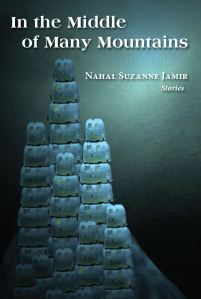
In the Middle of Many Mountains by Nahal Suzanne Jamir

Suzanne Jamir’s story “In the Middle of Many Mountains” was first published in Meridian and is the title story of a new collection, now out from Press 53, that has been called “a magic that is real.”

Stories are not true to life. Memoir writers quickly understand that they’re recreating moments from half-blind memory. They leave out as much as they put in. But even stories that make no claim for historical truth, that simply attempt to portray a life as it might be lived, tell a kind of lie. They offer a coherent storyline, a definite beginning and end, and a consistent narrative voice when life offers no such thing. As the writer Nahal Suzanne Jamir will say in Thursday’s interview, “We can’t expect the main character to have an inner conflict and insist that the form or approach of every story be neat or rigid.”

The problem is that readers want coherence. The  magic of stories is that they offer a clarity that is rarely present in life. Jamir’s story “In the Middle of Many Mountains,” finds a way to face this paradox. The story shares a title with Jamir’s new collection out from Press 53. An excerpt is available online at Meridian.

Or you can download their entire story here: “In the Middle of Many Mountains”

How the Story Works

The narrator is trying to understand how she has come to this present situation: her is dying, her father is living with another woman, and her sister is wasting away from an eating disorder. A once-tight family has unraveled for reasons that are not and may never be clear. As a result, the story is structured as a collection of fragments. Any other structure would force coherence upon the naturally incoherent.

And yet a story needs coherence in order to be read. Jamir manages this paradox with a simple strategy: Even though the narrative is fractured, the stakes are clear. Nowhere are they laid out more clearly than on page 5, when the sister, Marjan, says, “I need you to help me…but you’re not going to like it. You won’t want to hear.”

Though the form is fragmented, the characters retain a certain amount of wholeness. It’s possible to say what they want and do not want. These desires drive the plot. The narrator will be forced to do what seems impossible: to hear what she doesn’t want to hear and see what she does not want to see. Thus, the story uses the strategy used by all great stories. It pushes a character until the only option available is the one she never thought she’d choose.

The Writing Exercise

No matter how your story is structured—using some traditional plot or a shape invented on the spot—it’s important to make the stakes clear. It’s even more important when the story asks its readers to learn a new kind of storytelling.

So, let’s set the stakes. We’ll come at the problem from a couple of angles:

  1. Brainstorm the following: What do your main characters want more than anything? What do they avoid at all costs? What is the guiding principle of their lives? In your story, the characters’ desires will likely be tested. How badly do they want X? Will they be willing to do what they normally avoid? Will they even sacrifice their principles? It might help if you finish this sentence: X wants to…, and so he/she will be forced to… 
  2. Make the impossible possible. List the things in your story that seem permanent: relationships, geography, jobs, situations, existences, lives, etc. Now pick one or two and describe what it would take to make them impermanent; in other words, what force would be required to break an unbreakable thing? You can also flip this around and ask what force would be required to make permanent something that is either impermanent or not currently in existence.

Once you’re able to clearly answer any of these questions, you may find that your story comes into focus, both in shape and about-ness.

Good luck.