Archive | Writers on Writing RSS feed for this section

An Interview with Owen Egerton

28 Dec
Owen Egerton's novel The Book of Harold has been called...

Owen Egerton’s novel Everyone Says That at the End of the World prompted the novelist Charles Yu to write, “People at the coffee shop were actually staring at me—I don’t think they fully believed that a book could make a person laugh that hard.”

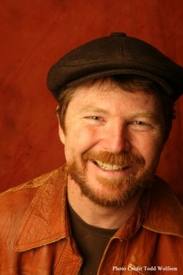
Owen Egerton is the author of Everyone Says That at the End of the WorldThe Book of Harold: The Illegitimate Son of God, and the forthcoming story collection How to Avoid Dying, which was recently named by The New York Times as having one of the best book covers of 2013.

In this interview, Egerton talks about theme and variation in fiction, how to write a scene as well-known as a Christmas pageant, and the role of Christianity in literature.

To read the first chapter of The Book of Harold: The Illegitimate Son of God and an exercise on the expectations of sequence, click here.

Michael Noll

The chapter shows us the basic events of the Christmas pageant multiple times. It’s almost like you’re using dress rehearsals to make the reader familiar with how the scene will play out–only to surprise them with the actual events. Was this repetition intentional, or did you find that the practice runs through the pageant wrote themselves onto the page?

Owen Egerton

I’m a fan of theme and variation, of establishing what should be and then sharing what is. We see it in jazz, in comedy and in narratives. As Robert McKee likes to say, story is found in the gap between expectation and actuality. Your buddy Jim comes over for dinner every Friday at 7 pm. He always brings a bottle of wine and bag of day old donuts. 6:55 pm on Friday there’s a knock on the door. You open it expecting Jim. Instead a beautiful woman in a long black dress stands with a severely cut hand. There’s a story there. We are more aware of the gap – the space where the story lives – when we have some detail of the expectations.

Michael Noll

Most of your readers have likely seen a Christmas pageant—and perhaps appeared in them—and most of those pageants probably followed a similar storyline. All pageants are basically the same, in other words. That sameness would not seem like a great premise for a story, yet the every element of this novel’s pageant seems fresh and new. How did you approach telling the pageant story so that it escaped our expectations for pageants-past.

Owen Egerton

Point of view and characterization are keys to making the familiar fresh. Every wedding looks the same, basically. But it’s not the same old wedding for the secretly pregnant bride or the jilted lover in the back row or the groom who is in love with bride’s mother.

You can even get away with describing monotony if you allow at least one character to be passionate about the monotony.

It also helps if you hint or tell the reader that this is going somewhere. In my chapter, the narrator shares that the event he’ll be describing led him to believe God was hunting him down like a “pissed off loan shark.” The reader is willing to wait through some of the less fascinating details because they feel it building towards something. We’ve promised a payoff. Now we must deliever.

I’m also eluding to those all too familiar pageants for a reason that touches on the novel as a whole. The novel, like the pageant, is a story they do not know based on a story they do know. I’m retelling the gospel—I even begin with a nativity, but the nativity goes wonderfully astray. Hopefully this tells us that the story we’ll be reading will continue to surprise us. But also that the story we know – that pageant we’ve seen or participated in – is as different from the actual birth of a impoverished baby to unmarried parents in Roman-occupied Israel two thousand years ago as it is from the series of missteps in the story. We think we know the story, but we don’t.

 Michael Noll

In his New York Times essay "Has Fiction Lost Its Faith?" Paul Elie compares Christian belief in American fiction to "a dead language or a hangover."

In his New York Times essay “Has Fiction Lost Its Faith?” Paul Elie compares Christian belief in American fiction to “a dead language or a hangover.” Owen Egerton disagrees.

In a New York Times piece, Paul Elie argued that religion (especially Christianity) no longer plays a role in American literature. In Elie’s words, the role of Christian belief in fiction is “something between a dead language and a hangover…if any patch of our culture can be said to be post-Christian, it is literature.” Your novel would seem to refute this claim. Do you see questions of Christian or religious belief reflected in much of the literature you read? Is Elie simply reading the wrong books, or does he have a point?

Owen Egerton

I love reading Paul Elie. Amazing insight and warm passion. But I think he is mistaking a change in religious focus for death. Elie correctly recognizes that fewer and fewer “believers” populate modern literature. And that there appear to be fewer writers with Flannery O’Conner’s goal to “make belief believable.” Elie’s conclusion that religion no longer plays a role in American literature is based on the premise that the center of religion is belief. He feels one’s beliefs – not one’s actions or the tradition in which one participates – define one’s religious identity. But a Passover Seder can be impacting even if one doesn’t believe in a literal God sending plagues to ancient Egypt. And the power of the passion and death of Jesus is not limited to only those who believe in a historical, literal resurrection.

What Elie’s sees as a shrinking of religious themes, I see as an expansion past a narrower definition of religious devotion. I’d argue that we’ve lost some interest in the dogmatic discussion and distinctions, which for O’Conner and Percy Walker separated the saved and unsaved. We are less concerned in what a person or character believes and more interested in what they do. The beauty of a Catholic mass and the themes of community, sacrifice, and transcendence are not dependent on the doctrine of transubstantiation. More and more of us recognize this. Many moderns have a religious life free of belief.

And literature is a perfect vehicle for pondering the questions of religion without being moored on the dichotomy of belief and disbelief. We are moved by the characters and story and images of a novel without ever having to declare that we believe the events of the novel to be factually true. In fact, we recognize that our fiction by definition is not fact, but it no way limits the power.

The stories and rituals of faith traditions – whether you hold them to be history, myth, or both – are still often the language we use to wrestle with themes of mortality, morality, and meaning. Whether in James Reich’s dark, poetic 2012 novel I, Judas or the Christ imagery rampant in the final Harry Potter book, religion is still very much a living language.

I am not a believer, but I return again and again to religious themes in my writing. I see the shared power of these stories, the universal appeal to these themes, and perhaps I’m searching – and my readers along with me – for something beyond belief.

Michael Noll

In addition to writing, you’ve built a reputation as an improv-comedy performer. In some ways, improv seems like an imperfect match with writing. One requires spontaneity, and the other favors revision. Do you find that improv has influenced, and perhaps even helped, your writing?

Owen Egerton

Improv and writing are wonderful bedfellows. Long before I revise, I must create! In that place – that hot cauldron of creating, that hunt for self-surprise – the revising mind is an enemy. That part of my mind questioning my choices, correcting my spelling or simply asking “what are you doing here?” – that part must be shut up if I’m to thrill the page. I leave the revising for tomorrow. It’s the same in improv comedy. In improv we train ourselves to say “yes” to the wild, untested, unwritten ideas. We do not stop to ask, is this the best idea? It is the idea! So we play with it, we build upon it. So when I write, I tap into this mode. I splatter my pages with messy ideas and fractured sentences and fantastic surprises! Fire doesn’t think. It burns. Lovers don’t plan. They fuck.

First published in February 2013

Michael Noll

Michael Noll is the Editor of Read to Write Stories.

An Interview with Daniel José Older

19 Dec
Daniel

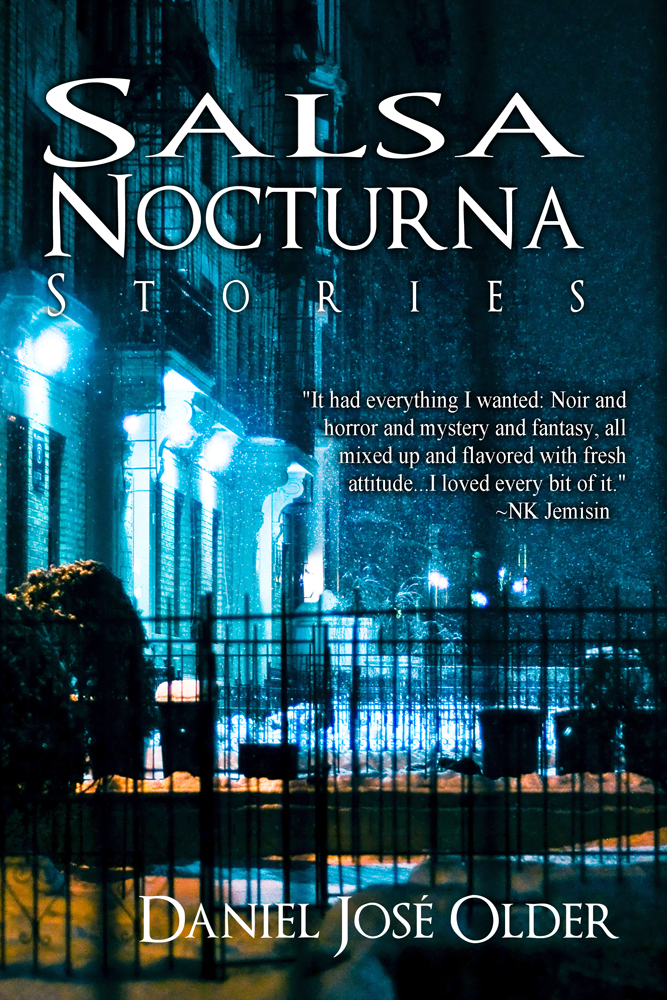
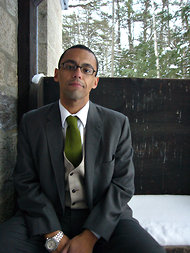
Daniel José Older is the author of Salsa Nocturna, a collection of ghost stories that Publisher’s Weekly called a “delicate mix of horror and humor” that secures Older “a place among the rising stars of the genre.”

Daniel José Older is the author of Salsa Nocturna, a collection of ghost stories. He’s also a composer and paramedic living in Brooklyn, New York. He has facilitated workshops on music and anti-oppression organizing at public schools, religious houses, universities, and prisons all over the east coast. His soul band Ghost Star regularly performs original multimedia theater productions about New York history around the city. His stories have appeared in Strange Horizons, Flash Fiction, Crossed Genres, and The Innsmouth Free Press and The Subversion Anthology, among others. He’s been a featured reader in Sheree Renée Thomas’ Black Pot Mojo Reading Series and at The New York Review Of Science Fiction.

In this interview, Older discusses ghosts and stories and why we love to combine the two.

(To read Older’s story “Victory Music” and an exercise on introducing genre elements into literary fiction, click here.)

Michael Noll

This is a ghost story, and it begins appropriately, with the narrator telling a dead person that “you’ve saved my life at least twice. And once was after you died.” But I was still surprised when the ghost actually arrived, not only because it’s not the ghost we expect but because I’d gotten so engaged in the scene with the narrator’s parents that I’d forgotten that there was supposed to be a ghost at all. I was reminded of Kenneth Burke’s essay, “Psychology and Form.” To explain how suspense is created, he uses the scene from Hamlet when Hamlet is waiting for his father’s ghost but then gets distracted by this uncle’s drunken entourage. Hamlet, and the audience, get so wrapped up in his uncle that we forget all about the ghost and so are surprised when it arrives. I wonder if you had this basic idea in mind when you wrote the story: promise something and then delay its arrival.

Daniel José Older

Great question. I’ve always been fascinated by the letters we write and never send, or write in our heads but never put on paper. I think this is one way we interact with the dead without meaning to or realizing it sometimes, that internal dialogue. The idea of the things we never had a change to say to someone is so heartbreaking and so real. So on the process tip, that was my starting point. In this case, I wasn’t thinking of Krys as a foreshadow so much as an emotional center that Wes anchors to for support even after Krys is dead. Memories are powerful, more powerful than ghosts maybe, and the subtext to this story, in my head, is that Krys—who does show up as a ghost in my book Salsa Nocturna—is never actually present in this story; Wes uses the memory of Krys to access a sense of their own power and sense of self.

Michael Noll

Salsa Nocturna is a collection of 13 ghost stories, published by Crossed Genres Publications.

Salsa Nocturna is a collection of 13 ghost stories, published by Crossed Genres Publications.

Your first book, Salsa Nocturna, is a collection of ghost stories. On one hand, when I read the description of the book, I thought, “Oh, that’d be fun to focus every story on ghosts.” But then I realized that you’d have to make each ghost and the approach to each ghost different. To that end, the ghost in this story isn’t really a ghost. He’s someone who can vanish at will–but, he still seems like a ghost. So, to some extent, it seems like you’re expanding the definition of ghost and ghost story. Is that simply out of necessity–there are only so many ghosts?

Daniel José Older

Ha! I really hadn’t thought of it that way. Once the underworld, or parallel world really, of ghosts became clear in my mind, the stories all came very smoothly. In some sense there’s truth in what you say though, as artists we always need to be pushing at the borders of our genre and comfort zones, and with “Victory Music” I was interested in how we are haunted sometimes more by the living than the dead. It’s a concept I’ve played with before, though never quite in these terms, and as I said, the healing power of memory plays a major role here. Niles just showed up in my imagination as is—he was born from the necessity of having an eerie, emotionally resonant conflict for Wes. And the act of disappearing is so rich, so layered when complicated by power and privilege…it’s a natural fit for the story.

Michael Noll

In this interview at the New York Times, Victor LaValle (The Devil in Silver), says, "The best monsters are our anxieties given form. They make sense on the level of a dream, or a nightmare."

In this interview at The New York Times, Victor LaValle (The Devil in Silver), says, “The best monsters are our anxieties given form. They make sense on the level of a dream, or a nightmare.”

The writer Victor LaValle said in a New York Times interview, “The best monsters are our anxieties given form. They make sense on the level of a dream, or a nightmare.” The ghost in your story seems to fit this description. The narrator is concerned with identity–her Sikh-ness, her gender–and then, appropriately enough, here comes a guy who can empty out his identity until he literally vanishes. Do you think about the meaning of your ghosts, the particular anxieties that are manifested in them?

Daniel José Older

Surely—the ghost is a crossroads. Past and present, life and death, healing and destruction all have the potential of meeting in the figure of the ghost. When we spend so much time focusing on the simple concept of ghost as evil spirit, it’s just a profound missed opportunity. Writing Salsa Nocturna really taught me that ghost stories are really about life, not death.

Michael Noll

I know a horror writer, Scott Johnson, who, in his free time, investigates ghosts and has encountered them many, many times. Those encounters have ranged from terrifying to quirky to sweet. I love hearing his stories—and other true ghost stories. Though I’m not sure I “believe” them in the factual sense, I find them utterly compelling. So, while I’m curious whether you believe in ghosts, I’m more interested in your take on ghost stories: Why do we tell them so often? What is the appeal of ghost stories?

Daniel José Older

How we view ghosts is about our connection to our own histories. Do we have something lurking back there, waiting to pounce? Do we lament an idealized day gone by? Have we found balance or are we still at war with our past? On a national sense, there’s so much undealt with baggage in the founding and maintaining of this frail, corrupt democracy and we’ve never really confronted what that means. So the idea of a shadow from history materializing in our modern world and causing havoc resonates, on a level that touches on both anxiety and empowerment.

December 2013

Profile pic

Michael Noll is the editor of Read to Write Stories.

An Interview with Benjamin Rosenbaum

12 Dec
Benjamin Rosenbaum's story "Feature Development for Social Media" was published at Tor.com. You can find a complete list of his stories here.

Benjamin Rosenbaum’s story “Feature Development for Social Media” was published at Tor.com. You can find a complete list of his stories here.

Benjamin Rosenbaum is the author of The Ant King and Other Stories. His stories have been published in Nature, Harper’s, F&SF, Asimov’s, McSweeney’s, and Strange Horizons, translated into 23 languages, and nominated for Hugo, Nebula, BSFA, Locus, World Fantasy, and Sturgeon Awards. He lives near Basel, Switzerland.

In this interview, Rosenbaum discusses social media in fiction, our ability to grow accustomed to anything (even zombies), the phrase first world problems, and a tabletop roleplaying game about teenage monsters.

(To read Rosenbaum’s story “Feature Development for Social Networking” and an exercise on story tone, click here.)

Michael Noll

I’ve been struck by the absence of social media in new stories and novels. In fact, the only social-media story I can think of is Jennifer Egan’s “Black Box,” which was written as a series of tweets. So, I love the sections of your story that are written as Facebook messages. What were the challenges you faced in using this form? Was it tempting to treat the medium ironically—to exaggerate or spoof the way people communicate via Facebook. Even though the scenario is far-fetched (zombie attack), the way the characters communicate seems authentic and real.

Benjamin Rosenbaum

I feel like there’s a certain amount of use of social media, instant messaging, etc, particularly in YA fiction. M.T. Anderson’s brilliant novel Feed comes to mind (not written exactly in an epistolary style, but in which the equivalent of IM’ing and tweeting is heavily foregrounded and substitutes for much of the dialogue), or Lauren Myracle’s ttyl.

Interestingly, the direction of my revisions was to tone down the realism of the Facebook usage. It’s not so much that I was tempted to exaggerate and spoof, as that my initial draft was very closely emulating real Facebook usage — for instance, the fact that the responses to a comment do not follow the comment immediately, but occur after a certain lag time during which other comments have intervened. In revision I simplified and threw away some of the peculiarities that are part of real Facebook interactions, but which weren’t thematically central and which made it harder to read smoothly as fiction.

I tried to be pretty naturalistic, rather than broad, because I thought the humor would mostly come from the contrast of the realistic, everyday style of discourse and the fantastical situation. I was going to say “familiar style of discourse” and “unfamiliar, dramatic situation”, but of course it’s really two familiarities — the everyday, real-world familiarity of social networking and the pop-culture familiarity of the zombie outbreak.

If anything, in revision, I made the satire sharper and the characters more distinct. Jewell got bubblier and more committed to lower-case abbreviations, Buster more self-serving and insensitive, etc. In that sense it actually became less naturalistic — the characters moved closer to being types, the way Dickens’s or Austen’s minor characters are. There’s always a balance to be struck between naturalistic and stylized.

Michael Noll

The actual zombie action takes place off the page, referenced but never seen directly. Even when the story’s characters see zombies, they don’t describe them with great detail. In a way, this seems to cut across the zombie genre, which almost always shows gore and carnage eventually. For instance, in this exchange between Facebook employees, one of them writes: “Suresh, you should check out the 2nd floor webcam. There’s not a lot of Grief and Loss Counseling going on up there right now. Nor do I recommend a massage.” I love that this detail is delivered as a literal P.S. to an email about the feature development from the story’s title. This particular exchange ends with one character writing, “Let’s not get distracted people!” On one hand, this is funny. On the other hand, it seems like it keeps the zombie-biting-people stuff from taking over the story. Were plot details like this one always dropped into the story so casually? Did they ever occupy a more direct space?

Benjamin Rosenbaum

So partly, I was going for a humorous deflation of the zombie story. If I’m juxtaposing the mundane detail of the everyday with the horrific detail of the apocalypse, and they are described with equal focus, the horrific details are going to take over emotionally.

Blood and gore are sensational: they force the reader to pay attention, demand an emotional reaction. On the other hand, if you demand an emotional reaction when you haven’t really earned one — when the reader isn’t sufficiently invested in the characters and the action — you get sentimentalism or melodrama rather than a real emotional response. The reader pulls back, because you’re rubbing their face into extreme stimuli without having won them over.

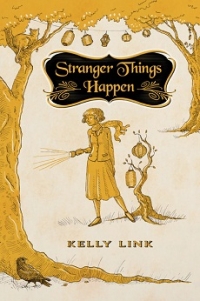
Kelly Link's collection of stories, Stranger Things Happen, includes the brilliant story "The Specialist's Hat."

Kelly Link’s collection of stories, Stranger Things Happen, includes the brilliant story “The Specialist’s Hat.”

So in a way, distancing the carnage is a double win: primarily, it’s funnier, because it allows the juxtaposition of mundane and extreme to be a balanced juxtaposition. But also, I think it may actually be scarier too, because the little details of what’s going on sort of slip in to the narrative. Something that’s just offstage is often scarier than something in the center of the screen. The end of the movie Blair Witch Project is far scarier than most horror movies where there’s an onscreen monster, because so much is implied, evoked in your imagination. However good the CGI or the rubber suit is, it’s never going to be as frightening as what your brain can project into the unknown. Kelly Link is an absolute master of this; I think “The Specialist’s Hat” is an exquisitely scary story, for instance, precisely because of what we don’t know.

In writing this, funny was more important to me than scary, but the little bit of scary helps bring the funny into relief, and makes it sharper.

There’s another related thing going on here, too, which is that I wanted to talk about habituation, which I think of as one of the most powerful mechanisms of the human mind. It’s like we can get used to anything. Like, in the first decades of aviation, flying was this incredible, awesome, unbelievably thrilling achievement. Human beings could fly — like birds! We had conquered gravity! To ascend to the heavens in a plane was mindblowing, it was this rush of absolute wonder and power. Now we get on a plane and we’re like, security sucks, my seat is uncomfortable, why do I have to put my tray table up, damnit my laptop battery is down and the inflight magazine is boring, what do they expect me to do, spend my time looking out at the clouds? This is actually hilarious when you think about it. And at the same time, people in horrific situations habituate to them too. I just re-read the Diary of Anne Frank, the new edition where they restored a bunch of stuff that had been cut out for propriety’s sake in the 50s. Anne Frank spends very little time on the Nazis. She occasionally remarks that it sucks that they have to hide, and that she’s worried about her schoolmates who didn’t hide in time, and that they’re following the progress of the war. But 90% of the time she’s pissed off at her mother, and at Peter’s mother, and at the guy she has to share a room with. Somebody’s not peeling enough potatoes and someone else is hogging the radio. That’s what life is composed of, whether you are an internet billionaire or a hidden Jew in occupied Holland during the Holocaust. Occasionally you stick your head up and think “hey, I could buy a small country!” or “hey, I’m probably going to be killed soon!” but most of the time you’re like “goddamnit, these potatoes are too salty” or “omg I think he might like me like me.”

That’s what’s deeply wrong, by the way, with this whole #firstworldproblems meme, you know that one? It’s supposedly an excercise in humility and perspective, but in fact it’s an exercise in arrogance. You know, like “my underwear is itchy #firstworldproblems” or “there’s too much goat cheese in my salad #firstworldproblems” or “I can’t get my favorite show on my cell phone #firstworldproblems”. You think people in Bangladesh don’t complain if their underwear is itchy? You think people in the dystopian industrial sprawl of China don’t bitch about their cell phones? There are 1.2 billion cell phones in China, four times as many as there are in the US, 89 per 100 citizens (in the US it’s 103 per 100 citizens). I just read the graphic novel of Waltz with Bashir — there’s this scene where there’s a firefight on the beach in Beruit, and the locals are coming out onto the balconies of their highrise beachside condo apartments to watch the gunfight like it’s a movie, leaning on their railings, smoking and kibitzing. Humans can get used to anything. Our focus is local. I grew up during the crack and AIDS epidemics, with most experts telling us that global nuclear annihilation was immanent, and I knew all that, but still I was mainly interested in playing D&D and going to 7-11, right? So it seems very clear to me that if there’s a zombie apocalypse, a lot of people are going to feel like that’s security’s job to deal with, and they need to get the next feature out. I mean we are currently dealing with the longest-running war in U.S. history, the irreversible melting of the polar ice caps, antibiotic resistant tuberculosis, and looming government financial default, but we’re still mainly interested in watching videos of cats. Why would zombies change anything?

I went back and looked at an early draft of the story — this dynamic, the foregrounded mundane and the offstage carnage, was in it from the beginning. Mostly what changed in revisions were plot and structure things. The story has a better ending now; it just kind of trailed off in earlier drafts.

Michael Noll

Zombie stories and other monster stories, especially vampire stories, are everywhere you look right now–and have been for a few years. They’re scary and thrilling, of course, but I wonder if their appeal runs deeper than just thrills and goosebumps. More than a few people have pointed out that zombies and vampires tend to reflect our fears as a culture (fear of outsiders, certain kinds of sexuality, fear of death). But I wonder, given the present wars and political violence, if monster stories don’t somehow put mass violence at a remove–in other words, putting our fear of such violence into a form that we can consume without being overwhelmed with fear or terror or grief. What do you think? What’s the power or appeal of zombies?

Benjamin Rosenbaum

I think this is a very good insight. It’s certainly one main job of the fantastic, in general, to put things at a remove where we can deal with them. When we think directly about dangers that really exist, we can get caught up in despair or anxiety, and sink. Adding an element of the impossible is one way of freeing up our minds, so that we relate to the danger with playful creativity. Often, this kind of distancing can make the emotional impact of a story greater. We’re less likely to get overwhelmed and shut down if there’s a balance between the absurd or imaginative and the horrific.

There are other techniques that can do this in realistic narratives. I recently read Ishmael Beah’s A Long Way Gone, his memoir of being a child soldier in Sierra Leone. What happened in his life was, he had this relatively idyllic, calm, rural childhood, and then the war came and first he was fleeing and starving as a refugee, and then he was brutalized and drugged and forced to murder people, and then he got out and was rehabilitated. If he told it in strict chronological order, it would start out pleasant and slow, and then descend into just unbearable awfulness, and then level out into a long and difficult and slow, if hopeful, recovery. That would be really hard for the reader to take. When you got to the part with twelve-year olds killing and mutilating people, you wouldn’t be able to go on without checking out emotionally. So what he does is very sophisticated and wise. He starts out chronologically, but as it gets worse — in the part where they are wandering around starving and being chased away from villages and seeing people die — he salts it with flashbacks. You’ll be in some truly horrific scene and he’ll say “oh, and this reminds me of the story my uncle used to tell back in the village” and he’ll give you something whimsical or sweet. And it’s not cheap or gimmicky, because he’s not just doing it to protect you from being overwhelmed. He’s also honoring the village that was lost, he’s sharing with you the whole reality of where he came from, which is not just the horror of the civil war but also the humane, pleasant ordinariness of the lives it intruded into. He’s showing you that Sierra Leone is not just child soldiers killing people, but also uncles telling stories at dinner. And when he gets to the worst part — where he actually becomes a soldier — he gives us very little of it, before skipping ahead to the story of rehabilitation, and then gradually feeds us the horror in small flashbacks, interleaved with things getting better. The treatment of chronology is very deft. He’s protecting the reader, not in order to insulate the reader from what happened so that the reader doesn’t care, but rather so that the reader will care — so that we won’t get overwhelmed and start reading it as just a story of terrible people in some terrible place. He’s resisting being sensationalized, resisting the role of the victim, insisting on constantly putting forward his own and his people’s humanity and agency and ordinariness.

So that’s one thing. Fantastic elements can serve the same kind of purpose, of distancing us enough so we can connect.

Mass violence is one thing zombies can stand for. Pandemics are another — this is definitely a zombie story in the spirit of 28 Days Later, where it’s a grittily real medical catastrophe that’s going on. A related thing that interests me about zombies is that they’re about dehumanization. Someone is infected with something that makes them dangerous and violent — do you see them as a monster, or as a person with an illness? There’s a way in which the apocalypse is often used to grant the characters, and the readers, license to escape a world in which we’re expected to deal responsibly with other people, to tolerate difference, to resolve conflicting needs; if everything falls apart enough, we have permission to just chop off the heads of people who we find difficult. Zombie stories are also about isolation. When I moved to Switzerland the most recent time, and was feeling very disconnected, I found myself having obsessive daydreams about pandemic flu clearing the streets, about having to subsist on what was in my apartment, to bar my door.

Monsterhearts is a roleplaying game where players explore the confusion that comes both from growing up and feeling like a monster.

Monsterhearts is a roleplaying game where players explore the confusion that comes both from growing up and feeling like a monster.

Monsters can stand for a lot of things. There’s a really brilliant tabletop roleplaying game, probably the best-designed roleplaying game I’ve ever played, called Monsterhearts, about the messy lives of teenaged monsters. One thing that’s amazing about it is how the game explicitly instructs you to create fiction that operates on both literal and metaphorical levels, simultaneously. Your Werewolf feels out of control of his body, which is changing without his consent — like every teenager’s, but also like a werewolf. Your Ghost feels invisible and lost, trapped by the past and like no one can even see, much less understand her, plus she actually can walk through walls. Your Vampire is about temptation and emotional manipulation and dangerous desire and also bites people. The game captures the balance that fantastic fiction strikes at it best — the fantastic elements evoke emotionally real things without being reducible to them. It’s not allegory, it’s symbol, which means it doesn’t collapse into a hidden meaning like a code, rather it radiates out meanings, generating echoes of echoes.

December 2013

Profile pic

Michael Noll is the editor of Read to Write Stories.

An Interview with Myfanwy Collins

5 Dec
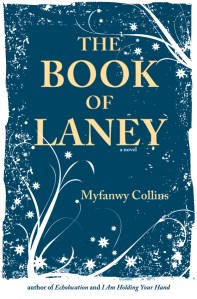
Myfanwy Collins work has been called "stark and stirring." Her forthcoming novel, The Book of Laney, will be released next year.

Myfanwy Collins work has been called “stark and stirring.” Her forthcoming novel, The Book of Laney, will be released next year.

Myfanwy Collins is the author of the novel Echolocation, the story collection I Am Holding Your Hand, and a very long list of stories, several of which have been nominated for the Pushcart Prize or Best of the Web awards. Next year, she will publish The Book of Laney, a Young Adult novel.

In this interview, Collins discusses the impetus behind first drafts, the difference between writing fiction for adults and for young adults, and palate cleansers for novelists.

(To read Collins’ story “Poinsettias” and an exercise on story endings, click here.)

Michael Noll

I’m curious about your process for writing this story. The story contains the term non sequitur, which seems to be the way the entire story operates. The jump from fresh breath to poinsettias isn’t logical. And while poinsettias and the rotting turkey are both Christmas-related, the introduction of the turkey still confounds our expectations (she goes to the store not to buy a turkey but to return a rotten one). The same thing happens with the jump from rotten turkey to dead mother. There’s clearly a connection, but it’s a sideways jump rather than a jump forward. I can’t imagine writing something like this with any sense of destination (of knowing how to get from peppermints to dead mother). How did this story take shape?

Myfanwy Collins

Great question. Your response to the story has really got me thinking. As with most short fiction I write, I wrote it as it came to me. The connections are as they came to me. The jumps, in my mind, have logic to them, but not everyone is in my mind and so I love that you have found this sense in them. I could not ask for more.

The impetus for the story were a couple of things on my mind the day I wrote the first draft.

The mundane things:

  • I have an altoids obsession and the tins are everywhere and I think this must really annoy my husband.
  • My husband insists on keeping poinsettias alive after the holiday. This drives me bananas.

The not so mundane things:

  • A few days before Christmas one year, there was a horrible smell in my fridge. We threw out everything we thought it might be. It still stank! Then I started googling the smell and realized it was the goddamned turkey that I was supposed to be cooking in a few days. I returned it to the store and they gave me a new one. They told me they would dispose of the old one for me. For some reason, this made me deeply sad. This bird had given its life for nothing.
  • The deep sadness I felt, made me think of my mother. Her last breath. The way we sent her off to the funeral home with her fuzzy blanket.

And now I’m crying.

Michael Noll

The ending reminded me of the ending to Alice Munro’s story “Friend of My Youth,” when she jumps, without any immediate logic, to a story about a Cameronian minister, who “in a mood of firm rejoicing at his own hanging, excommunicated all the other preachers in the world.” Even as I type those words, I get chills. There’s something thrilling about an ending that seems to come out of nowhere, as the ending to “Poinsettias” does. Was there a story that you had in mind as you wrote this? Or, if not, what’s your favorite non sequitur/out-of-nowhere ending?

Myfanwy Collins

Oh, this is so cool. I love it. Thank you.

No, there was no story I had in mind. I write from my own gut and experience. I write from the source of my pain or emotion. I write to release myself from something.

Michael Noll

Your forthcoming novel The Book of Laney is a young adult novel. On the surface, this is a bit startling given that your previous book, the story collection I Am Holding Your Hand, included a story that, according to the jacket description, is about “a woman has sex with her dead mother’s husband,” not exactly YA content. What made you want to write for a YA audience? What effect did this have on your approach to the novel?

Myfanwy Collins

Myfanwy Collins first YA novel, The Book of Laney, will be published by X in 2014.

Myfanwy Collins’ first YA novel, The Book of Laney, will be published by Lacewing Books in 2014.

The books of my youth (many of them written for young adults, but some were adult books) remain some of my favorite books. I think of authors like Judy Blume and Paul Zindel. They helped shape me. As did Salinger (I read the Catcher in the Rye when I was 12).

Then there are authors like Carson McCullers who write books that both young adults and adults are moved by. For example, The Member of the Wedding. In that book, McCullers was able to capture a sense of longing that is so pure and ferocious that one falls so easily into the longing with her.

When I was an undergraduate, I had a double major in Secondary Education/English and English Literature/Writing. For a very brief period of time before I started graduate school, I taught High School English. I did so because I enjoyed the age-group very much. Their insights, their emotions. I listened to them.

All this is to say, I have always felt a kinship to this age group. Often, I’ve written from the point-of-view of a young child or a young woman, so in terms of POV, it was not foreign to me.

As for my approach, I would say that the first drafts suffered the most from me trying to fit into some model I thought Young Adult books would be (even though I knew it wasn’t true). I was trying to reign myself in and not allow my character to be sexual or too adult or this or that. I thought I had to follow some rule about toning things down. Then after some time away, I realized that I was not being true to my writing self and the story was suffering as a result.

Then I had a wonderful editor (Andrew Scott at Lacewing Books) request to read the manuscript. I warned him that I wasn’t fully happy with it and that I wanted to make changes, but he bit the bullet and read it anyway.

Turns out he liked it and saw potential in it. He gave me some notes and I got back to work. But before I did, I ask him if there was anything I shouldn’t write in a YA book. He told me that pretty much everything was on the table except for bestiality and necrophilia.

I am extremely proud of the draft I turned in to him in October. I know there is still work to be done, but I feel the story is stronger for me unleashing myself a bit. I love my character Laney and I was honored to go on her journey with her. I hope the readers will feel the same way.

Michael Noll

Your list of publishing credits is astoundingly long, especially for someone who writes novels. Do you tend to work on multiple pieces at once? I’ve heard people say that novels are like black holes–they swallow up everything else that you’re working on. Everything gets incorporated into the novel. But that doesn’t seem to be the case with you. Do you take breaks from novel writing to work on shorter pieces?

Myfanwy Collins

In all things, there is nothing better than a good palate cleanser. So, yes, I do write lots of other stuff. I’ve even written some screenplays. They both suck but it was an incredibly good lesson in writing dialogue and action. I recommend it.

I love flash fiction and short stories, as a reader and a writer. I feel like short fiction takes up a different part of my brain than does a longer form, like a novel. With short fiction, I feel less attached to plot and more attached to an emotional response. Whereas with a novel, I absolutely insist that I give plot the respect it deserves.

I just (yesterday as a matter of fact) finished the first draft I’ve been working on for the past couple of years. I didn’t have time to focus on it until recently and it feels like such a relief to have the clay now that I can mold.

But now that I have that draft, I’m going to let it sit for a little while and write some shorter fiction. Most likely, I will go back to a project I’ve been posting on my web site. I call it vellum.

Basically, what I’ve been doing is writing these small pieces and posting them. If anyone reads them, great. If not, that’s okay, too. the reason I started doing it was to rediscover the joy of writing. Writing for no reason other than to hope a reader finds it and sees in it what I do.

December 2013

Profile pic

Michael Noll is the editor of Read to Write Stories.

An Interview with Liz Warren-Pederson

30 Nov
Liz Warren-Pederson's work has appeared in So To Speak, Paper Darts, Cutthroat and Terrain. She is based in Tucson.

Liz Warren-Pederson’s work has appeared in So To Speak, Paper Darts, Cutthroat and Terrain. She is based in Tucson.

Liz Warren-Pederson’s work has appeared in So To Speak, Paper Darts, Cutthroat and Terrain. She is based in Tucson, where she teaches writing and works in marketing at the University of Arizona.

In this interview, Warren-Pederson discusses dialogue, unlikable characters, and the moment when a narrator’s voice pops into your head.

(To read Warren-Pederson’s story “Paper Tiger” and an exercise on speeding up dialogue, click here.)

Michael Noll

Dialogue is normally structured with paragraph breaks every time the speaker changes. But that’s not what this story does. Instead, chunks of quick, back-and-forth dialogue are included in the same paragraph. I’m curious about why you chose this structure. It seems to have a few effect: 1) It makes each piece of the dialogue less important than the banter itself, 2) It makes the dialogue read faster than if it was broken into separate paragraphs and 3) It makes the dialogue (both speakers) part of the narrator’s voice. In other words, it’s not so much dialogue as a story being told by the narrator. Did you play around with different ways of writing this dialogue?

Liz Warren-Pederson

I actually didn’t play around with the structure of the dialogue; it just came out that way. This story emerged over a couple of weeks nearly fully formed – I had a sense of done-ness about it without my usual agonizing rounds of revision. The choice to not use hard returns in the dialogue was deliberate but also instinctive, if that makes sense. I’d been admiring run-together dialogue in other writers’ stories for exactly the effects you mention. I think a lot about how to influence the way the writing sounds to others when they read it, by which I mean, I want them to “hear” it how I am hearing it. I use AP style for my work writing, and have a strong allegiance to stylistic convention, so dialogue like this is about as close as I get to experimentation as a fiction writer, at least structurally. But then, paradoxically, I’m an intuitive grammarian, so I’m more interested in using commas to, say, control speed of reading than correctly manage the joining of dependent clauses or whatever. Gah, it was all I could do to even mention dependent clauses. I try to think of them as little as possible.

Michael Noll

I love this sentence: “Then she went out to the garden in her Holly Hobbie hat and spent five minutes getting down into a kneeling position on this geriatric-looking green foam “gardening aid” I found in a Lillian Vernon catalog one night when I was looking for something, anything to read while I took a dump.” The sentence covers so much ground: hat, gardening aid, catalogue, taking a dump. In terms of structure, it’s not unlike the chunks of dialogue in that it compresses a lot of information into a small, dense package. Does this voice and style come naturally to you, or is it something you achieve through revision?

Liz Warren-Pederson

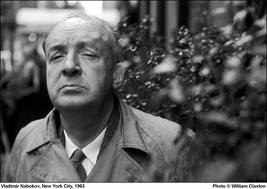
Check out this terrific interview with Vladimir Nabokov, published at The Paris Review.

Check out this terrific interview with Vladimir Nabokov, published at The Paris Review.

This voice and style came naturally to me for this story in particular. Sometimes I have heard or read writers talking about how their characters “won’t shut up” or practically write the stories themselves, and this has always sounded and seemed like hokum to me. The Paris Review interview with Nabokov had a question about characters taking over, to which he responded that his characters are galley slaves—I love this. …but does it sound like I’m protesting too much? Because truly, one day I was driving home from work and the first line of the story popped into my head and then another line, and I had to kind of chant them to myself until I could get to a place where I could write them down. I think a great deal of writing happens in the subconscious, and when it’s ready to emerge, it will. Sometimes it does all at once, other times in dribs and drabs.

Michael Noll

Some seemingly-crucial information is left out of the story: the characters’ ages, the exact nature of their relationship, the exact nature of Cynthia’s health problems. We can guess some of this–but not all of it. Why did you choose to not make this kind of information explicit?

Liz Warren-Pederson

Those things were not what the story was about to me. I think that someone probably mentioned the omissions to me in workshop, but I was listening for whether my fellow writers got from the story what I intended, and by and large they did. I remember cleaning up a couple points of confusion in a revision, but the particulars you mentioned didn’t matter to me. I mean, it’s not a story about the pathology of a particular disease, you know? In workshop situations, especially when we’re trying to be good and thorough readers, we reflexively point to this type of omission, and pointing it out seems tantamount to calling it a problem. Lack of detail is kind of an impressionistic technique, and if the right impression is conveying, then I don’t think everything needs to be spelled out. I hasten to point out here that I’m probably the worst judge of what can and should be spelled out in my own work; I left those things out of this story because the direction of my workshop validated that decision. If they spent the whole workshop talking about how old the characters were, I’d figure something was seriously amiss.

Michael Noll

This story is about a broke middle-aged man in a relationship with an older, ill woman. In other words, it’s about a character who could be pretty unlikable–but he’s not. But neither is he “likable,” whatever that means. He’s interesting. But as I read, I thought of Claire Messud’s recent comments in an interview with Publisher’s Weekly. The interviewer commented that she wouldn’t want to be friends with one of Messud’s characters, and Messud answered this way:

“If you’re reading to find friends, you’re in deep trouble. We read to find life, in all its possibilities. The relevant question isn’t “is this a potential friend for me?” but “is this character alive?”

How did you approach Gerald’s character? It seems like it’d be easy to make him purposefully unlikable and throw that in the reader’s face. Or, you could fill the story with trite, sentimental messages about growing old, dying, living, etc. Did you ever think, “Gee, I’m not sure how to write about this guy?”

Liz Warren-Pederson

Claire Messud’s gotten a lot of crap for having written an angry woman narrator, which I think is weird and limiting. In the same interview you mention, she said: “…it’s totally unacceptable for a woman to be angry. I wanted to write a voice that for me, as a reader, had been missing from the chorus: the voice of an angry woman.” I’ve never had a problem accessing rage as a writer, but that I’ve channeled that rage into the first person narration of a man is telling. What it tells, I’ll let you decide. I really love Gerald. He’s such an asshole. But he kind of has to be, generationally and socially and culturally: he’s boxed into a specific worldview. His defense mechanisms are airtight; he doesn’t even turn off the bravado in his own internal monologue. To turn it off would be to admit how deeply he loves Cynthia and open himself to the pain of not only losing her, but also bearing witness as she wastes away. One of the things I intuited about Gerald from the very beginning, when those first couple lines came out of nowhere when I was driving, was his genuine love for Cynthia and his awareness of how skeptical people would be of it. Knowing that made him an easy character to write.

November 2013

Profile pic

Michael Noll is the editor of Read to Write Stories.

An Interview with Charles Baxter

21 Nov
Charles Baxter's most recent book is Gryphon: New and Selected Stories. In her review of the book in The New York Times, Joyce Carol Oates wrote, "Beneath the shadowless equanimity of Norman Rockwell’s America, however, Baxter evokes something like the chilling starkness and human isolation of the work of Edward Hopper

Charles Baxter’s most recent book is Gryphon: New and Selected Stories. In her review of the book in The New York Times, Joyce Carol Oates wrote, “Beneath the shadowless equanimity of Norman Rockwell’s America, however, Baxter evokes something like the chilling starkness and human isolation of the work of Edward Hopper.”

Charles Baxter is probably as well known for his essays on craft as he is for his novels and stories, which is impressive given that his short story “Gryphon” is required reading for many students and his novel The Feast of Love was a finalist for the National Book Award and adapted as a film starring Morgan Freeman. His essays, though—especially the collection Burning Down the House—are a touchstone for almost everyone who has studied in a MFA program over the past 15 years.

Baxter’s most recent book of fiction is Gryphon: New and Selected Stories, which is now out in paperback.

In this interview, Baxter discusses entering the world of a wrongdoer, stumbling toward the write tone, and “rogue longings.”

(To read Baxter’s story “The Next Building I Plan to Bomb” and an exercise on raising the stakes in a story, click here.)

Michael Noll

The story is about a man who wants to be taken seriously, to be seen as someone with the potential to profoundly affect other people’s lives–essentially, to make his existence known and recognized. So, when he’s accused of being “harmless,” he sets out to prove that he isn’t. Here’s what I find fascinating about this story: The man wants to be recognized, but when he first walks into the police station to report the slip of paper he’s found, he chickens out. He fears that “if he showed what was in his pocket to the police he himself would become a prime suspect and an object of intense scrutiny, all privacy gone.” That’s a pretty serious contradiction. In some ways, it makes what follows seem less like a moral fable. The sequence of events is neatly laid out, but it’s less neat if we believe that the man at the center of it is unpredictable. Was this chickening out always part of the story?

Charles Baxter

Writers can’t always reconstruct what they were thinking while writing a story. Sometimes our thinking is so specific and so contextual and instinctive that we don’t know afterward why we did what we did. Anyway, here goes.

Many people in our society suffer from their own anonymity. This response is likely to occur in a culture built on celebrity, as ours is. Harry’s “harmlessness” is another word for a life that seems inconsequential, unimportant. But if you try to enter the world as a wrongdoer, or even someone who brings in the sign of wrongdoing (a slip of paper), you yourself may be judged, exposed. Think of Ted Kacynski. Notoriety is a double-edged sword. Everybody (or most people) carry around these contradictions in themselves. Fiction needs to point up those contradictions, to be honest to itself and its readers.

Michael Noll

After the man bristles at being called harmless, it’s not surprising that he acts out. But his preferred way to act out is unexpected. And then the scene proceeds through a series of unexpected moments: the kid’s guess at the drawing’s rendered location and the subsequent description of the kid as “slinky and warm, like a cat.” It would be so easy to write this scene toward what is expected, toward cliche: of course the societally-suffocated man is into boys. But in this case, the boy is not what we might expect, and the description is unexpectedly cuddly. Do you have, as you write, a kind of internal compass pointing you toward the unexpected, or do you stumble around a story, searching for the right detail?

Charles Baxter

Oh, I stumble. It’s all stumbling, all the time. But what you’re stumbling toward is a tone, an angle, that takes you by surprise. The slightly ‘wrong’ note in a scene is often the note that brings it to life. I keep listening for that note.

Michael Noll

I love this line of dialogue from the man’s wife: “You’re handsome and stable and you’re my sweetie, and I love you, and what else happened today?” The line clearly sets up the world that the man is acting out against. In other words, it’s a line that a literature teacher would pull out and read to students in order to illustrate the story’s theme, a word that probably makes makes most writers cringe. But it doesn’t seem theme-like on a first read because of the speed. Even on subsequent reads, it makes me laugh. I’m curious how you approached the line. Did you think, I need to have someone state the values of the world that the man is rebelling against–and then revise the line to achieve that speed? Or did it arise more accidentally?

Charles Baxter

I wasn’t thinking of the theme at all. I was just trying to imagine what Harry’s wife would say, in an effort to “normalize” everything within that marriage. Also, I like dialogue that changes direction within the same sentence–does a swerve–as that one did. So the line arose out of a combination of accident and calculation.

Michael Noll

As I write this, Tea Party politicians are shutting down the government and threatening to wreck the world’s economy so that the country will pay attention to them. In other words, they’re acting a bit like Harry Edmonds. The difference is that, unlike him, they’ve found a stage whose size is commensurate with the size of their fear of not being seen and heard. In your novels and stories, things generally don’t end well for these types of characters or for the people around them. Care to make any long-term predictions for our current set of characters? When people like Harry Edmonds begin to act out in order to be noticed–and when that need to be noticed stems from some internal deficit that can’t be filled with any amount of attention–are the only outcomes bad ones?

Charles Baxter

Someone, it may have been Christopher Lasch, once said that narcissists can’t negotiate. They suffer from insecurity and grandiosity simultaneously, a terrible combination. The other side of the Tea Party’s belligerence is fear, particularly a fear that the old world they knew is disappearing, and a world they don’t recognize is here. I didn’t think Harry Edmonds was a dangerous character, but just a guy who wanted to be more consequential than he actually was. Kafka would have recognized him. Standard married middle-class life is not enough for him. He has what I’d call “rogue subjectivity” or “rogue longings”–I think the Germans have a word for this: “sehnsucht.” Such people sometimes do free fall parachute jumping, or they do little protests against the settledness of their lives. You want a story to be “telling”–that is, to tell us about how people live now. And that was what I hoped that story would do.

November 2013

Profile pic

Michael Noll is the editor of Read to Write Stories.

An Interview with Ali Simpson

14 Nov
Ali Simpson is a recent graduate of the MFA program at SUNY Southampton and works for X.

Ali Simpson is a recent graduate of the MFA program at SUNY Southampton and is at work on a collection of speculative fiction.

Ali Simpson received her MFA in creative writing and literature from SUNY Stony Brook Southampton. In addition to The Southampton Review, her work has been published or is forthcoming in The First Line and Carrier Pigeon. She is currently working on a collection of speculative fiction, When Meat is Given a Second Chance. She works as a publishing assistant and lives in the forest.

In this interview, Simpson discusses maintaining the sense of enchantment, the heart in the story machine, and why a monster story can be more truthful than realistic fiction.

(To read Simpson’s story “The Monster” and an exercise about how to create that monster, click here.)

Michael Noll

In the story’s first line, you state that there’s a monster in the closet. In the next line, you write, “He shouldn’t have been there—she wasn’t a little girl; she was a grown woman with a full-time job and a roof over her head that she paid for herself with her full-time job.” The rest of the paragraph lists all the reasons why the monster shouldn’t exist, and then the next paragraph begins, “So the monster came at the right time in her life.” It’s a really masterful piece of writing. You’ve let the readers off the hook, telling them, essentially, that, no, monsters can’t exist, but there’s one in this story, and that’s okay. How long did it take you to get that opening paragraph right?

Ali Simpson

I had to look at the paragraph from my first draft and the final version in order to be able to honestly say this: Up until the last line, the paragraph stayed exactly the same. The last line was the only part that is different—mostly a matter of cutting and smoothing out that first draft clunkiness that makes you write things like “she turned her head at a 90 degree angle in puzzlement…” rather than “Confused, she…”

The beginning was easy. It felt like a perfectly natural thing to write. There are all sorts of things out there that shouldn’t exist—but they do all the same. People accept a loved one has cancer, they accept mass shootings, they accept freak accidents, they accept random acts of cruelty. Telling someone, “This shouldn’t happen, but today, it is happening,” is life-stuff (and the beginning of a lot of great stories).The idea of a monster in the closet isn’t so outlandish.

What took a couple of months to get right was the middle and the end. Those were brutal. Maintaining the sense of enchantment even when the reader knows how the trick works is incredibly difficult, I can only think of a few people who have mastered it (Marquez, Atwood).

Michael Noll

In that same paragraph, the story suggests that the monster is, in part, a manifestation of certain monstrous qualities possessed by the character: “She suspected she had a few scary stories lurking inside her and spent the better part of some nights guessing what they might be.” I’m curious if this parallel between the character’s personal issues and the real existence of the monster was always present. In other words, did you begin the story with the monster and discover the character’s issues, or did you have a sense of the character from the start and then discover the monster? As readers, we only get to see the final draft, in which all details seem serendipitously inevitable. But, of course, that’s not how a story begins. What was your process for developing the story?

Ali Simpson

By the way, the line in the question was the one that changed. It was originally this mess of three lines: “Those stories were just the ones outside of herself. Lauren told herself awful stories every night, some sad, some angry, some fretful and some far more humiliating than they should have been. The stories were her past and what she thought her future might be.” Awful, right?

As for the actual questions—I started with wanting to write about a monster in the closet. I like monsters, robots, mutants, apocalypses, utopias, and outer space. These things are fun, and they offer a candy store full of possibility. Unfortunately, the fun is a lie. You can’t get far writing about a monster in the closet without asking questions. Why is it there? Why isn’t the main character afraid of it? Why is she taking it in and caring for it? What sort of person is attracted to repellent things? Monsters, machines, extreme conditions—these are all vehicles for exploring what makes human beings tick. Inevitably, the ride turns scary. I developed the story through reflecting on the above sorts of questions. The monster showed up in this particular woman’s closet for a reason. In hashing out the first draft, I worked to discover that reason. Whenever Laura did something, the monster would have to react and vice versa—until the monster and Laura at last become “inseparable.”

Michael Noll

Your former writing teacher, Susan Merrell, recommended this story at Electric Literature. In explaining why, she wrote that, in this story, you figured out that “a story has to have a reason for being. And if a story’s why is understood by its author, then its how—the means, the mode, the POV, the structure, the characters—will fall into place.” What, would you say, is this story’s reason for being? How did you find out what its reason for being was?

Ali Simpson

Susie was very kind to me in that introduction. She is also a genius.

This story’s reason for being started out as something personal. Someone was very cruel to me a long time ago, and I felt as if I couldn’t do anything about it because, despite everything I had been told, I was a depressed ghost of a person. As I wrote, I understood that the events in the story did not happen to me, but to a woman named Laura, and, in reality, to millions of other people. The story is for other people who feel the same way I felt. Part of growing up and being human is recognizing that your feelings are not necessarily unique to you. Everyone has their monsters. And we all feed our gremlins after midnight.

I like to think of a story’s reason for being as “the heart in the machine.” The machine is all of the cold, moveable, sometimes interchangeable parts. The POV, the structure, the characters. The heart is whatever compelled you to sit down and stare at the blank page, to craft imaginary people who live in made up worlds, to construct emotion, desire, and conflict out of a few scraps of black and white.

You have to have a reason to attempt to do something so stupid. Generally, the reason is love.

Michael Noll

This story falls into a genre of story that is sometimes called “fabulist.” Its practitioners include writers like Manuel Gonzales, Karen Russell, and Kelly Luce. When I featured Kelly’s story “Rooey” on this site, I asked her why this type of story–one in which certain conventions of genre fiction are integrated into the worlds and language of realism–has become not only popular but esteemed. After all, Karen Russell just won a MacArthur, and she nearly won the Pulitzer. Here is what Kelly Luce said: “We all loved reading as kids, and kids’ books are often extremely imaginative. In this age of extended adolescence and “be yourself” messages, maybe those writers who wanted to play a bit more with fantasy/genre/supernatural stuff felt free enough to do so.” (The entire interview can be found here.) How would you explain the prominence of these kinds of stories? What inspired you to write about a literal monster and not a figurative one?

Ali Simpson

I don’t agree with what Luce said above (although I find her complete answer to the question quite interesting!) The whole concept of extended adolescence always seemed a bit silly. I’ve been in the adult world long enough to know that most people are still scared, confused, jealous and a little bit petty. Also, no one buys that “be yourself” crap. Even little kids know that being yourself earns immediate approbation from the group. I don’t think people write fantastical stories based on whimsy or because they enjoy being weird.

If I had to offer a guess, I would say the prominence of these stories dates to the post-modern movement that began in the 60s. Along with the subversion of traditional narratives, writers also worked at reclaiming folklore and fairytale for the purposes of new kinds of storytelling. For the past few decades, I think many writers have felt that that fantasy and fairytales are true because these stories “know” that they are stories, whereas mediocre realism can feel like an illusion that is denying it is an illusion.

For me, writing about fantastical things such as monsters helps me get at the truth of what I’m trying to say. I’ve never been able to manage writing realistic fiction because I find myself slipping into the dishonesty of everyday life. For me, I have to look a monster—something not of this world—in the face in order to understand the world I’m living in.

November 2013

Profile pic

Michael Noll is the editor of Read to Write Stories.

An Interview with Alex Perez

31 Oct
Alex Perez

Alex Perez’s story “Eggs” appeared in Subtropics, the literary magazine of the University of Florida.

Alex Perez is a graduate of the Iowa Writers’ Workshop. His stories have appeared in SubtropicsGuernica, and Esquire. He lives in Miami, where he recently completed a novel.

In this interview, Perez discusses writing about class and race, listening to characters, puzzling out how to integrate backstory, and his pick for the next Nobel Prize.

(To read Perez’s story “Eggs” and an exercise creating the world of the story, click here.)

Michael Noll

In student stories, dialogue tends to be focused on plot (what is going to happen, who is going to do what). As a result, the characters can sometimes seem lifeless, like props being shuffled around as the story dictates. What I immediately noticed about “Eggs” is that the boys have something to talk about. Even when they’re a few blocks away from the house that they’re about to vandalize, they’re not talking exclusively about their plan. Instead they’re talking about basketball goals with glass backboards and thinking about how the houses look like castles. The narrator thinks that he’ll never live in a house with such big staircases. Even at the story’s climax, he’s thinking about class differences–which is fascinating and tells us so much about him and his world. Was the story always about class in this way? Or did you have to write a few drafts and let the boys have some random conversations and observations before you figured out what their concerns were?

Alex Perez

The story was always about class, but it took me a couple of drafts to figure out what it was really about: the realization that class exists. The concern, of course, was that a socioeconomic “theme” would be too on the nose, or too writerly, which is why it was important that the two main characters be teenagers. They were never going to have a nuanced chat about economic theory or politics. It was simple: “Look, a glass blackboard. I want a glass blackboard. I can’t have a glass blackboard.” They were awed and angered—like most young men—so the dialogue, as well as the rest of the story, is dictated by that point of view. Basically, remove yourself as much as possible. Become your characters.

Michael Noll

The opening of the story makes clear that race/ethnicity will play a big role. The first section ends this way:

“So get ready to egg the hell out of him.”

“And the white lady?”

“The white lady too.”

But, for the most part, whiteness and Cuban-ness don’t really get talked about. Instead, they get wrapped up in discussions of class. By the end, it’s almost impossible to separate the two. Near the end, just before the boys start throwing eggs, the narrator thinks about his father this way:

He was in one of the biggest houses I had ever seen, and he’d become a certifiable bitch. I didn’t know why, but as I looked around the house, at the massive staircase and the leather couches, for one second, gave him the benefit of the doubt. Right then, I knew that I’d never make it to such a house. I wasn’t good enough for Harvard, and I certainly wasn’t about to massage feet for women who weren’t my wife.

This is a pretty powerful thought. It’s all about class and the narrator’s sense of his own worth and what he’s willing to do for money. It’s also, indirectly, about race/ethnicity. I’m curious how you developed this idea in the drafts. Was it a challenge to find the right way to approach tensions of race/ethnicity?

Alex Perez

Initially, race was going to play a big factor. Surely, I was thinking about writing a story that connects class and race and makes some grand statement. Thankfully, once the boys enter the neighborhood and notice the backboards and everything else, the story really hones in on what it wants to be. Once again, this is about point of view. The writer wanted to hammer together themes of race and class—searching for the proper balance or ratio—but the narrator was focused on glass backboards. I was smart enough to go along and allow the story to move in the direction it wanted to move in. I’ve learned the hard way that too much thinking—especially while writing—can destroy a story. Don’t question the choices a character makes. They know better. If it was up to me, I would’ve probably shoehorned more “race” into the story, but the characters were obsessed with “stuff” they didn’t have, which says everything that needs to be said about race and class and America, etc. They knew the proper ratio all along.

Michael Noll

The story takes place over a short period of time (the amount of time required to drive to a house and egg it). But the story does flash back to other moments in the boys’ lives (discovering their father’s affair, the day their father leaves home). Did the story always have that narrow frame? Or did earlier drafts try to span more time within the plot? In other words, did the story always begin with the boys in the car, on their way to the house, or did it begin earlier?

Alex Perez

I read a lot of stories that sputter along and take a few scenes to get going, so I always try to start a story with as much immediacy as possible. In “Eggs,” it seemed logical then to open with the boys in the car, the plan already in motion. We’re right there with them, listening in, wondering why they want to egg their father and this mysterious white lady. I also wanted the reader to feel like an accomplice, so trapping everyone in a car was the only way to go. The problem, as always, was what to do about the backstory. You can have chunks of backstory in a novel—such is the form—but short stories are all about forward progression. It was even trickier in “Eggs,” because the boys are in a car—literally moving forward—and I didn’t want the momentum deadened by the backstory. So the question was: to backstory or not to backstory? In the end, I realized that some history was indeed needed, so I had to write a couple of “background” scenes and somehow intersperse them into the narrative. Always a bastard, that backstory.

Michael Noll

In the spirit of the recent Novel Prize announcement, if you were able to give out an award for lifetime achievement in literature, who would you give it to? Which writer has most shaped both your conception of yourself as a writer and also your sense of what a good story/novel looks like?

Alex Perez

Philip Roth. Nobody does the combination of comedy and pathos better than Roth. I read Goodbye, Columbus, and that was it for me. His stories are fearless. He’s like Dylan in that they’re going to do whatever they want, and you either come along, or you don’t. That seems like the way to do it.

October 2013

Profile pic

Michael Noll is the editor of Read to Write Stories.

An Interview with Mũthoni Kiarie

24 Oct
Mũthoni Kiarie grew up in Nairobi, Kenya. She earned her MFA from Mills College and is an alumna of the Voices of Our Nations Arts Foundation. A finalist in the Spring 2012 Story Contest, she lives in Oakland, California.

Mũthoni Kiarie’s story, “What We Left Behind” was a finalist in the Narrative Magazine Spring 2012 Story Contest.

Mũthoni Kiarie grew up in Nairobi, Kenya. She earned her MFA from Mills College and is an alumna of the Voices of Our Nations Arts Foundation. She lives in Oakland, California.

In this interview, Kiarie discusses her approach to intensely emotional moments in a story.

(To read Kiarie’s story “What We Left Behind” and an exercise based on the story’s indirect treatment of emotion, click here.)

Michael Noll

This story is about a mother and her two children who flee their village after it’s violently attacked by armed men. Though the story describes the attack, it only focuses on certain parts. So, for instance, the mother’s torn dress and bloody lip are clearly and specifically described, but the body of the murdered father is described less directly as “painting the ground a lush red.” Did you make a conscious decision to show certain people and things in greater detail than others? In other words, how did you know what to describe clearly and what to suggest more indirectly?

Mũthoni Kiarie

When writing this, I knew the story was going to be focused more on the mother and that the father would sort of fade into the background. However, it was important to show that his was still an important role in the story. The way he died to me showed in a restrained way, how that community was decimated. I also wanted to make sure that his death was also lovingly portrayed, while still showing that it was a violent death. The mother’s details, the dress, the bloody lip I almost felt were even more subtle than the father’s because she underwent what was possibly an even more violent experience that I didn’t necessarily talk about but give my reader a strong sense of what may have happened.

Michael Noll

The story begins with a list of the items abandoned in the desert, and great care is taken to distinguish between the different types of baskets and different sizes of sandals. The list is powerful–and the power doesn’t abate even after several reads. The items that are shown reveal so much about the characters’ live, and the fact that we see these items and not the people who left them is chilling. It reminds me of one exhibit at the Holocaust Museum in Washington D.C. It’s a room filled with children’s shoes—for some reason, when I visited the museum, those shoes affected me more than any of the horrifying photographs that I saw. Why do you think personal items like shoes or baskets or sandals have this effect on us?

Mũthoni Kiarie

I think as human beings, the value that we attach to material possessions defines our existence. Like your example of seeing the children’s shoes in the Holocaust Museum, you attached a certain child and their life to those items. This is really where this story came from. Thinking about these material things that hold so much value to us when we are alive and all is well in our worlds. But then, what do you take with you when you have three seconds to get out of the house? Your child or your shoes? That’s kind of an obvious question, but you get what I mean. I imagine that at each step when my characters or others who’ve been faced with a similar journey, have to chose what to leave behind. And those decisions must be excruciating.

October 2013

Profile pic

Michael Noll is the editor of Read to Write Stories.

An Interview with Mary Miller

17 Oct
Mary Miller's debut novel, The Last Days of California, follows a 14-year-old girl whose father takes the family on a road trip from Montgomery to California in anticipation of the Rapture. A recent Publisher's Weekly review said that Miller has created a "narrator worthy of comparison with those of contemporaries such as Karen Thompson Walker and of greats such as Carson McCullers."

Mary Miller’s debut novel, The Last Days of California, follows a 14-year-old girl whose father takes the family on a road trip from Montgomery to California in anticipation of the Rapture.

Mary Miller’s debut novel, The Last Days of California, is finally out, and it’s already getting rave reviews. A reviewer for The New York Times wrote, “Why worry about labeling a book this good? Just read it.”

Miller grew up in Jackson, Mississippi. Her collection of stories, Big World, was published in 2009 by Short Flight/Long Drive Books. A graduate of the Michener Center for Writers at the University of Texas, she will return to Mississippi in the fall of 2014 to serve as the John and Renée Grisham Writer-in-Residence at Ole Miss. At this cool website, she discusses the stories she’s read lately.

In this interview, Miller discusses misunderstanding and subtext in dialogue and the challenge of transitioning from story writer to novelist.

(To read Miller’s story “I Won’t Get Lost” and an exercise based on the story’s dialogue, click here.)

Michael Noll

I love the dialogue in your story “I Won’t Get Lost.” The narrator has to explain gentrification to a man who’s never heard the term before. The basic premise of the conversation is weird–who hasn’t heard of gentrification. But instead of closing the distance between the two people (the man saying, “Oh, so that’s what gentrification is. Thanks for telling me”), the dialogue actually pushes them farther apart. By the end of this early portion, the man stops talking and takes out his phone to verify what he’s just been told. I’m curious how you approached this piece of dialogue. Our natural tendency is to make dialogue function as it does in the real world, which is toward understanding. Did you have to consciously make this dialogue work against that tendency, or did it move that way on its own?

Mary Miller

Thanks, Michael. This is a pretty much a conversation I had on the bus one day. I guess I thought it was odd, as well, because the gentrification discussion inspired me to write this story. And then it became more about the narrator, and how talking to this stranger made her feel exposed and self-conscious.

My natural tendency in writing is toward misunderstanding and confusion. When people speak to each other, particularly those who know each other well, there is typically a lot of subtext. I’m at home right now visiting my family, and when we talk I notice all of the things we aren’t saying, or how we’re saying one thing and meaning something completely different. In life, this kind of sucks, but it’s great for dialogue.

Michael Noll

The story’s title is “I Won’t Get Lost,” which is appropriate because every piece of dialogue, every internal thought, and every observation in the story is about dislocation and disconnection. Did you start with this theme in mind, or did it surface through various drafts of the story?

Mary Miller

I don’t think about theme when I write. I feel when something is coming together and creating a larger story, or when it’s not, but it’s not something I think about. I don’t ever want my writing to feel heavy-handed, for the reader to see me guiding him or her to some conclusion.

Michael Noll

Your first novel, The Last Days of California, will be published in January. It’s about a 15-year-old girl whose evangelical father takes her on a road trip across California to save as many souls as possible before the rapture. On one hand, a novel is always a big jump for a story writer, especially when the stories are often quite short, as yours sometimes are. On the other hand, a road trip novel has a unique structure: many short, sometimes disconnected scenes. Did you choose this structure on purpose? Was it a more manageable way to approach a novel for the first time? If so, that would seem like an awfully smart decision.

Mary Miller

Yes, yes, yes! I really don’t feel like I could have written a novel, at least not at the time, without this rigid structure. I had to keep moving the characters from Point A to Point B, which created a certain amount of tension. They’re behind schedule! They must keep going! They need to eat and use the bathroom and look at all of these odd things and people they’re coming into contact with… Each night, there’s a new motel, a new environment for them to explore. The structure certainly provided me a frame within which to work. It made it easier and more fun to write.

October 2013

Profile pic

Michael Noll is the editor of Read to Write Stories.