Archive | Writers on Writing RSS feed for this section

An Interview with Marcus Pactor

25 Apr
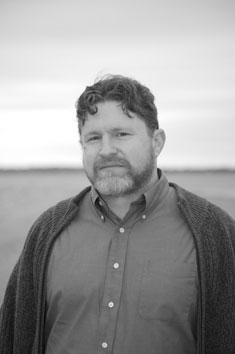
Marcus Pactor's debut collection of stories is vs. Death Noises.

Marcus Pactor‘s debut collection of stories, vs. Death Noises, has been called “nothing short of dazzling.”

If some writers would kill for a blurb from a literary icon, then maybe we should keep an eye on Padgett Powell. Here’s how the old Southern master recently answered a question about his pick for the most exciting author writing today: “There is a young twisted fellow from Jacksonville Florida named Marcus Pactor. It’s the best I’ve seen in some time.”

Marcus Pactor‘s debut story collection, vs. Death Noises, won the 2011 Subito Press Prize for Fiction. One review claimed that the book “cuts to the bone like a scalpel in the hands of a master surgeon.” Pactor received his MFA from Texas State University and currently teaches at the University of North Florida.

In this interview, Pactor discusses the development of narrative voice and the gap between our technologically-burdened world and the fiction that represents it.

Michael Noll

In some ways, the story resembles a TV detective drama like CSI. It’s about a search for truth that leads to the haunting last sentence: “Somewhere in this archive he said what he needed me to know.” But this isn’t the only way the story could have been written. Because it involves a dead body, the story could have directly traced the events that led to the death. Why did you choose to focus on the search?

Marcus Pactor

Steve by Marcus Pactor can be found online at this journal and also in his new collection of stories, vs. Death Noises.

Marcus Pactor’s debut collection of stories, vs. Death Noises, won the Subito Press Prize for Fiction.

I never thought of writing more about the events leading up to Steve’s death. I’m never thinking about the big picture of my approach, really, except upon reflection. I’m thinking about the next word, the next sentence. But now you’ve got me thinking about the CSI formula. Henry James insulted a writer by saying that he had treated his subject in a most straightforward manner. I don’t much care for James’ fiction, but I think the idea is solid. Besides, Steve is dead. The current approach works (and we’re stipulating that it does work) because it focuses less on what happened to Steve and more on what is happening to the narrator.

Michael Noll

The narrator is searching through the items left in Steve’s apartment, beginning with personal property but then moving to the ideas explored in his writing. As this shift occurs, the narrator’s voice begins to appear more clearly, even going so far as to address the reader: “You’ve read it before.” Did this shift appear naturally as you wrote the story, or did you discover it in revision?

Marcus Pactor

Naturally. Most people think about voice first—if they don’t have that fully formed voice from the get-go, then they’re sunk. Writers hear this voice that makes them go. The comparison of writer to psychic medium is pretty common. I understand. In general, I agree with it. But in this piece the voice seems to emerge more and more clearly over time. In a way, it seems as though I began to find the voice as I wrote, and the story is almost like a record of that voice’s discovery. That’s one way to read it. The more I think about it, the more I like it.

But I think it’s also true that the emergence of the voice supplements the more clearly emerging relationship between Steve and the narrator. Even the verb “supplements” is inadequate. I think that’s especially true if you like the theory of discovery. In that case, the voice and its development are inseparable from that content.

“Emergence” may also be the wrong term. Another way to read it is that the narrator has been detached from this sibling relationship in all kinds of ways for a lengthy period of time. The voice mirrors that detachment. As the piece builds toward the climax, he feels more and more strongly his regret. In that case, too, the inseparability argument still holds.

Now, this is my third crack at this question. Until you asked, I hadn’t thought about how the voice in particular works in this piece. This means that I might be wrong about all the organic nature of the voice. But I think it’s true of any valuable story: the manner in which it is told is as important as what is told.

Michael Noll

Most writers will, at some point, feel enslaved to the need to move characters through time and space. It’s why Virginia Woolf (I think) once complained that it took her all day to walk a character through a door. But you avoid this problem by focusing on what a character has left behind rather than the actual character. Did this choice of focus feel freeing? Did it open avenues for the narration that would be more challenging within a typical chronological focus?

Marcus Pactor

I’m not entirely sure it was a choice. This is the way the story came out of me. If anything, it was a constraint, a good kind of constraint, the kind of constraint that forced me to create a character in a way that wasn’t comfortable. I couldn’t describe Steve physically. Instead, Steve generally had to be described in a doubly or even triply mediated fashion. The papers and property make up the first mediation. The narrator’s reading of that stuff make up the second mediation. The language is the third mediation.

 Michael Noll

The narrator writes that “we suffer from a surplus of trivial choices. This new suffering cannot be compared to the old. It cannot be expressed by time-honored methods, either.” Do you think this is true? Will each culture’s differences require differently shaped stories—not just different kinds of characters and events but different ways of telling?

Marcus Pactor

The short answer is “yes.” I have been fool enough to mention Henry James. Now I invoke Saul Bellow. The suffering of the average member of modern civilization is different in kind and quality to the suffering anyone has suffered before. I’m not talking about rape and murder suffering here. I’m talking about the suffering imposed upon us by magic phones that do everything but wipe our noses. App upon app, channel upon channel of TV, etc. We have so many ways of wasting time. It is impossible to live the way people lived in the past. I’m okay with that. I certainly don’t want asbestos buildings child labor, segregation, and the rest. But they suffered from asbestos, child labor, segregation, etc. The average person had plenty more to cry about. Crying was an appropriate response to these impositions upon their health and freedom. It expressed a desire for better options. We have those options now. They are hard to deal with, and must be dealt with differently.

But how? The circumstances of our lives are changing must faster than we can change ourselves. Intellectually, I think it is easy to recognize that if the suffering is qualitatively different, then our responses to the suffering must also be qualitatively different. The problem is that we haven’t yet developed those responses. Who knows how long it will take to do so?
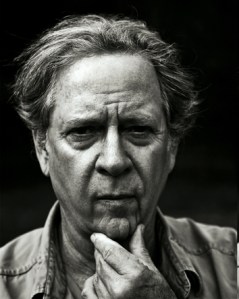
Padget Powell, a Southern literary master whose strange, brilliant stories rarely enter the pages of the Best American Short Stories, has called Marcus Pactor the most exciting writer working today.

Padgett Powell, a Southern literary master whose strange, brilliant stories rarely enter the pages of the Best American collections, has called Marcus Pactor the most exciting writer working today.

If you accept all that, it is easy to see that our literature must also be qualitatively different. It’s happening somewhat with the college and other independent presses, but not yet at the mass level I think it needs to happen. Consider that twenty years ago few houses had the internet, satellite TV, or cell phones. Our social relations have changed immensely since then, yet people write stories that hardly reflect the depth and scope of that change. Instead, Obama is named president rather than the first Bush. Characters text one another rather than call. This is just the Mad Libs approach to writing literature. It is, of course, popular, because most people really are conservative. In the midst of change, they hold on to what is comfortable. That explains, in part, the popularity of Best American Short Stories.

There is a significant percentage of people who seem to recognize that those stories, and the methods by which those stories are told, do not reveal anything new about the lives they are living, or maybe that the stories in that anthology can only capture a limited range of feeling and experience, and that range has not been tested or questioned in years. These people are searching around for a new thing. We could say that these people crave “experimental” literature but I hate that term. And, of course, a large amount of what is called experimental is also dreck.

Michael Noll

The ritual of Bar Mitzvah plays a crucial role in the story. On one hand, it’s an ancient introduction of a boy into social and spiritual manhood. On the other hand, it’s a modern celebration of consumerism, with families (in America, at least) battling to have the most ostentatious party and gifts. If the shape of our stories reveals aspects of our culture, do you think this shift in the Bar Mitzvah reveals a change in the way modern (American?) Jews define and encounter God?

Marcus Pactor

It might have occurred with the Jewish parents who came of age during or after World War II. My guess is that those parents found that a big celebration of achievement, replete with gifts, would help make their kids feel both American and secure. It might have been a statement about their own need for security and Americanness. It perhaps divided them from the old worship of God, though I’m guessing it was more a symptom of that division rather than an active element. A need to assimilate was definitely at work, but to me it seems the Bar Mitzvah is just a particular version of everybody’s general need for stuff, and our suffering of it.

Now, at the end, I can reveal my hypocrisy. My Bar Mitzvah was in 1988, and it was a present-fest. I got checks and savings bonds and fifty dollar bills. I received the now-traditional monogrammed pen. Three umbrellas! I can’t say I loved the actual stuff, but I loved to get it.

April 2013

Michael Noll, editor of Read to Write

Michael Noll is the editor of Read to Write Stories.
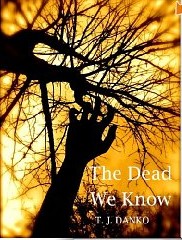
An Interview with TJ Danko

11 Apr
The Dead We Know is a zombie novel in the tradition of epics like The Walking Dead and Stephen King's The Stand

The Dead We Know by T. J. Danko is a zombie novel that follows in the tradition of The Walking Dead.

T. J. Danko’s novel The Dead We Know has been called “a smart twist on the usual zombie lore” and “gripping, tense, creepy, edge of your seat.” The Kindle-published e-book follows a pair of oil-field workers and two teenage girlfriends who set out in an apocalyptic zombie world where they must work together to survive.

In this interview, Danko discusses the tricks of genre fiction: dialogue, the rules of survival in a zombie world, and the reason why zombie stories always begin with the main character waking from a coma. A writing exercise inspired by the opening of the novel—especially how key information is parceled out through dialogue—can be found here.

Michael Noll

I love the dialogue that opens the novel. The banter between Nick and Eduardo is short and snappy and really establishes the dynamics of their friendship. A lot of writers would struggle with this opening scene. They know that something big must happen–a zombie encounter–and that they must somehow set the stage for the encounter. As a result, a lot rides on everything that comes prior to that encounter. How did you approach this scene?

T J Danko

Thanks! There were a few things I wanted to work out in the opening scene, but you’re right, it was a balance between providing what was necessary to establish character and set up the plot without telling too much. The priority of the release of information had to be in the scene itself, knowing there was plenty of time to tell how the epidemic began. Partly it’s a little easier on a zombie book because there’s a familiarity to the scenario.

But the opening scene was also a way to try new things by writing an unfamiliar type of story. In many ways, my zombie book was a reaction to my own dissatisfaction with pieces I’d been working on. When I read stories that could be classified as genre, whether it’s Gone Girl or the Stieg Larsson books, I often found myself compulsively flipping through the pages, eager to get to the next part. When I looked at my own stories, I worried that people wouldn’t read it with the same excitement. There sometimes was a static quality, a lack of forward propulsion, which bothered me. I wanted to study how those writers did it and try it out for myself.

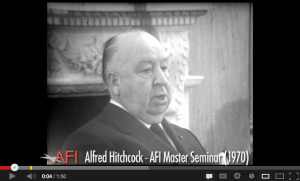
The dialogue was not only to establish character and hopefully be funny, it was a way to put off the zombies, to try to heighten the expectation of their introduction. My thoughts tied into Alfred Hitchcock’s famous idea of suspense versus surprise. He says that the difference can be illustrated by a story. You have two people at a table, talking. A little while passes, we listen in. And suddenly, a bomb goes off under the table. Surprise. Now

Alfred Hitchcock on Mastering Cinematic Tension

Click to watch video of Alfred Hitchcock discussing bombs and tension in an AFI Master Seminar.

if we take the same scene, a couple having a conversation, but this time the camera pans down to show the bomb, or we heard earlier about someone plotting to blow up the coffee shop and how the bomb will go off at 1 PM and we see it’s 12:45, and we show the couple talking about trivial matters, the audience will be watching tensely, waiting for the bomb to explode, wanting to warn them. That’s suspense.

In a similar fashion, I approached the initial dialogue as a way to stretch out the moment before the zombies appear. They’re going to make an appearance; we know that. But if we can extend the scene for as long as possible, there’s hopefully a chance to increase the sense of dread. And also, I thought there might be a chance that the tension would make the dialogue a little funnier by contrast.

Michael Noll

The opening scene also hews pretty closely to horror-story convention: two characters on the road, late at night, and a chance encounter that goes horribly wrong. If this scene was being discussed in workshop, people might advise you to find a less cliche way of entering the novel. But it seems to me that in a work of genre, cliche is important. First, as the writer, you know where to start the story, rather than needing to create a beginning out of the limitless possibilities. Second, the cliche/convention exists in the first place not only because it’s a convenient way to begin the story but also because it rings true to us. Driving at night in the middle of nowhere is a little scary, even under the best circumstances. Walking alone through the woods is scary. As a result, it seems to me that you must begin the novel this way. But, of course, you need to make the convention seem fresh, which you do. How did you choose this opening scenario?

T J Danko

It is a pretty standard scene in a horror movie. I wish I could say that it was some clever idea about fairy tales and how walking in the woods is a subtle message that we’re moving out of our world into something supernatural, or that I was deliberately tweaking the genre. But it was mostly because I had an image of a family of zombies illuminated by headlights on the side of the road, and I wanted it in the opening chapter.

Could I bring up another thought? The fact that Nick and Eduardo were ignorant of the sickness and were driving into a world where the zombie apocalypse was already going full-swing was due to a reluctance to begin with the first diagnoses of the first zombie. The spread of zombie-ism is like an epidemic: a slow rise before it reaches the tipping point and spreads rapidly. If you start at the first incident of the disease, it would take too long for the story to ramp up. I think that’s the reason why The Walking Dead and 28 Days Later begin with their main characters in comas, waking up to a world already overrun with the infected.

How important is a coma to The Walking Dead? Check out this official plot summary from the show's website.

How important is a coma to The Walking Dead? Check out this official plot summary from the show’s website.

For this reason, I tried to side-step this beginning of the epidemic by isolating Nick and Eduardo, having them hear the rumors but not believing them; I could save the spread of the sickness in a later scene through a short flashback. But how to isolate them? I had a news story I’d been holding onto for a long time. Have you ever found research just because it’s interesting and you thought you might be able to use it someday? I have a list of those. A year or so ago, I heard about temporary communities set up in North Dakota for oil drilling. They’re called “Man Camps,” where the workers are paid very well but stay in these sprawling camps, next to the oil fields, populated almost exclusively by men. I’d been holding onto this place, waiting patiently for a story to fit it in. Even though it only appears at the beginning of the book and I’m not sure it’s the most elegant solution in isolating the characters, I was happy to finally find a place for it.

While the cliché of the opening scene wasn’t necessarily a conscious decision, I did want to start in a familiar setting as a jumping off point to the rest of the book. In my mind, my real main character is the teenager Carly, who is introduced in the next chapter. This novel is her story: she’s the protagonist and the one who changes the most, moving from insecurity to the reluctant leader of the group. She turns from someone who is traumatized to a more action-orientated character. But the opening to her story wasn’t going to have the same immediacy or potential cinematic quality as Nick and Eduardo, alone in the woods being attacked by a family of zombies. Also, clichés are often clichés for a reason. They play to our fears, perhaps connect to something familiar that just feels right. My hope is that the opening is specific and individual enough to break out of the cliché.

Michael Noll

I once heard someone claim that horror stories tell us something about the national mood, our insecurities and fears. So, Godzilla came out of our fear of nuclear energy and the classic zombie films were born out of the Cold War. Also, in those early zombie movies, the zombies were always attacking teenagers parked on the edge of town, making out. In a way, the zombies were enforcing our threatened moral code. I often think about this claim whenever some natural disaster arrives, and someone like Jerry Falwell blames the death and destruction on homosexuals. Perhaps it’s in our genetic makeup to view disaster as God’s wrath and punishment. Have you ever thought about horror stories this way? Why did you choose zombie and not vampires, werewolves, witches, or mummies or any of the other standard monsters?

T J Danko

Those are good questions. When I started writing, I was thinking this exact thing, about how many monsters seem to be directly connected to cultural concerns. Zombies seem to have a strange place within the realms of monster stories. Vampires in the Western culture circle around transgression and sexual repression – Bram Stoker’s Dracula and the Twilight series, as far as I’ve heard – and werewolves are about our nature and our own animalism. The George Romero zombies are often used as a metaphor for larger societal issues, where the films tackled themes like racism or consumerism. But somewhere these concerns seemed to change, and now the underlying sub-text behind zombies is the apocalypse and survival. It seems to be a concern for everyone, no matter where you stand in the political spectrum. The world’s warming up. Meteors are crashing into Earth. Survivalists are building bunkers and hoarding supplies. Zombies represent the breakdown of order, the worry about how we would survive when social structures collapse. I don’t think it’s an accident that many modern zombie stories explore the idea that other survivors end up being more dangerous than the zombies.

I did start writing with a sense of dread for the future. But there was another idea for the book. I thought about the rules of survival in the movie Zombieland, not to mention the CDC of all places. I thought this was a clever way of pushing the zombie genre further, but part of me also thought how these lists wouldn’t help you survive, not really, and would probably kill you. You think you know what a disaster will look like, but it will never be exactly as you expect. In other words, when the zombies do come for us (and they will!), the tactics will probably be useless, simply because zombies will not behave like the zombies in movies or TV shows. That was one of the central notions I had when I started the story.

 Michael Noll

You’ve written literary short stories and now a genre novel. Were the experiences completely different, or have you found one feeding or influencing the other?

T J Danko

While really great writers have dabbled in genre work, I sensed they were often winking at the audience. I didn’t want to do that. There’s a real power to genre that shouldn’t be discounted. There were some good lessons that I learned by expanding the scope of my writing.

Still, writing genre is different from literary fiction, especially if you add the self-publishing, e-book aspect into the equation. A literary novel can generally take three years or so, often much longer. The e-book market thrives on quantity. From what I’ve learned, you’re probably not going to sell much or be as able to market yourself if you only have one e-book. In genre, on the Kindle, it’s not atypical to publish two or three books a year, sometimes more. The speed in writing has to mean less time spent agonizing over sentences or worrying over plot and characters. Since I’m neurotic, I found writing in a genre liberating, concerning myself mostly with establishing forward momentum and creating set pieces. That said, it was impossible to let go of the tendency to want to write the best sentence possible, and I really hope my sentences are well-crafted.

In the end, I do think writing both genre and literary stories has enriched my work. I talked about how The Dead We Know gave me a place to explore tension. It also made me think about pacing and my relationship with audience. Readers of the horror genre want to be scared; they want to be entertained. While there is a tendency in a literary book to turn the camera inwards, to search for truths and expand the mysteries, it’s also useful to think about how you can play with the audience, how they can be shocked or surprised, how they can be kept in suspense. And maybe it’s helped me a little in finding new ways to make them turn that page.

April 2013

Michael Noll is the editor of Read to Write.

An Interview with Stacey Swann

4 Apr
Stacey Swann's story "Pull" appeared in Freight Stories.

Stacey Swann’s story “Pull” appeared in Freight Stories.

Stacey Swann has been a Stegner Fellow at Stanford University and a contestant on Jeopardy!. Her fiction has appeared in Epoch, Memorious, Versal, The Saint Ann’s Review, and The Good Men Project, and she has served as editor of the journal American Short Fiction. She also edited the mixed-art project, The OwlsShe lives in Austin, Texas.

In this interview, Swann discusses her approach to “Pull,” which offers a contemporary Texan take on the age-old subject of unrequited love. A writing exercise inspired by the story—especially the way Swann traps together two incompatible characters—can be found here.

Michael Noll

Did you purposefully pair the characters from “Pull” to highlight their incompatibility? Or did Lou and Jo simply find their way to the page?

Stacey Swann

When it comes to drafting fiction, I always like to say that my subconscious is way smarter than my conscious brain. I didn’t set out to make Jo and Lou incompatible, but I suspect that my subconscious, after so many years of writing, tends to maximize tension when it can. I did intentionally want the relationship to make Jo feel trapped and limited, though. Can a person feel trapped and limited by someone they are essentially compatible with? I’m a pessimist by nature, so I’d probably say yes. I’d have to write another story, though, to figure out whether that scenario would have as much tension!

Michael Noll

The parallel between the human couple and dog couple—the dogs can’t help fighting—is very clear and seems intentional, and yet it’s not at all awkward or forced. Perhaps it’s the old saw about dog owners resembling their dogs, but I never thought, “Oh jeez, give me a break.” In fact, the story seems much richer because of the dogs’ presence. The beautiful final line couldn’t work otherwise. How did you make the parallel, highly literary and artificial by nature, seem so natural?

Stacey Swann

Jo’s dog Spider is actually based closely on my real dog (King) that I had as a child, right down to being shot by a neighbor. Funnily, he’s the only “real” character in the whole story. (Most of my settings are autobiographical in my fiction, but almost none of my characters are.) I’m glad you found the parallel natural! The naturalness probably stems from the fact that I didn’t start out with the dog/people parallel in mind. I started with Spider and this idea of Jo returning home to a depressed ex-boyfriend. I didn’t know yet how the story would end, that Jo’s actions would parallel Spider’s and Lou would suffer like his own dog. If I had, I fear the build-up might have been much more heavy handed.

Michael Noll

The first paragraph of the story is quite clear about how Jo feels about home. You write that Jo “doesn’t like what home turns her into. She’s less herself in the place where she should most be herself—if we are what we come from.” A lot of beginning writers would shy away from defining a characters’ feelings so clearly, yet you do it right away. How did this early, clear definition affect how you wrote the story?

Stacey Swann

The final version of that paragraph is actually not that different from how it came out on the first draft. It’s likely that I was nailing down the character for myself, as the writer, before I let her loose in a scene.  When I look at my short stories as a whole, I tend to think of them as pretty pared down and minimal. I suspect this is because of the short fiction I was reading at the time and the overall atmosphere of my MFA program, where I got my “training” as a short story writer. A lot of what was getting workshopped was dirty realism in the Raymond Carver vein. Always favor showing over telling. Now that I’m working on a novel, I find myself telling all over the place and those tend to be the sentences with the most heat.  Overtly dealing with my characters’ psychology is what I really want to write about, I just used to tamp it down more. I think that opening paragraph is an example of my natural inclinations. Of course, I still worry that once my novel is drafting, I’m going to have to edit down like Lish did to Carver. Maybe my natural inclinations are still wrong inclinations.

But I digress! As to the question of how it affected how I wrote the story, I think that by stating that Jo doesn’t feel like herself at home, it established a tension in the reader that Jo didn’t belong there. This tension is directly at odds with her stated intent to move back home, and so the engine of the story starts moving from that first page. Perhaps opening with “telling” is more effective if what the author is telling feeds straight into the central conflict of the story?

Michael Noll

In the story’s fourth section (the one that begins with “Lou’s depression started after they left for college”), you quickly sum up months and years of their relationship. Again, this is something that beginning writers often struggle with. How do you know what to summarize and what to dramatize?

Stacey Swann

I had a lot of trouble with the backstory in “Pull.” If you compare my earliest drafts to the final product, you’ll find much of the present day story is the same.  However, the backstory wound up changing quite a bit as I tried to make Lou a more sympathetic character. I knew I wanted the story to have two narrative arcs: Jo after she returns home alternating with the story of both their prior relationship and what happened to Spider. I like symmetry, so I wanted to balance those as equally as possible. Because the present day story was pretty short, covering just a day, I had to compress as much as possible of the backstory. I only put things in scene if they were hugely important. I think the key to good summary is still relying on specific details. It can almost trick you into thinking what you’ve read was really in scene. Stuart Dybek’s “We Didn’t” does this masterfully.

Michael Noll

I’m curious how editing other writers’ work affects your own work. Do you ever read a story and think, “Well, I won’t do that” or “That’s amazing, and I’m going to steal it?” It’s become a cliche that we should keep our editing brains and freewriting brains separate, but it also seems inevitable that the two will affect each other. What do you think?

Stacey Swann

I think my time at American Short Fiction had a huge impact on my learning curve as a writer. I started volunteering as a reader there while I was still in grad school and for the next seven or so years, I read dozens of submissions a month. For some reason, it is so much easier to see the flaws in our own work after we’ve seen them in someone else’s. And I likely picked up the good stuff simply by osmosis. My primary agenda was always whether or not I thought the story would be a good fit for ASF. But subconsciously, I was probably filing away plenty of things to steal.

I tell my writing students that while they are drafting, they should lock their internal critic in the trunk of their car and just drive. I find revision easier and more enjoyable than drafting, and that’s mostly because that internal critic is such a jerk while I draft. If I don’t put him in the damn trunk, he’ll drive me away from the computer. Of course, that also means my first drafts are huge messes, and it can take me multiple revisions to even pin down the basic plot arc. I used to think revision was 100% about the critical brain because that’s the only part I use when editing others. I certainly wouldn’t want to let my freewriting brain loose on someone else’s work, but I’m starting to think there may be room for it when I revise my own.

April 2013

Michael Noll is the editor of Read to Write.

An Interview with Brian Evenson

28 Mar
Brian Evenson's story

Brian Evenson’s story “Windeye” was published in PEN America 11 and selected for the 2010 PEN/O’Henry Prize Stories. It’s also the title story of this story collection.

Brian Evenson is the author of more than fifteen books of fiction, most recently the horror novel The Lords of Salem, co-written (as B.K. Evenson) with Rob Zombie. Such a book might seem like an unusual move since Evenson is also the chair of the Literary Arts program at Brown University, but his career hasn’t followed any typical literary path. On one hand, his novel Last Days won the American Library Association’s award for Best Horror Novel of 2009 and the novel The Open Curtain (Coffee House Press) was a finalist for an Edgar Award and an IHG Award. On the other hand, he’s won three O’Henry prizes and an NEA fellowship, and he has translated work by Christian Gailly, Jean Frémon, Claro, Jacques Jouet, Eric Chevillard, Antoine Volodine, and others. He was also named a finalist for the 2009 World Fantasy Award for the story collection Fugue State.

In this interview with Michael Noll, Evenson discusses his approach to “Windeye,” which mixes supernatural elements with the epistemological question of “How do we know what we know?” A writing exercise inspired by the story—especially the twist ending—can be found here.

Michael Noll

One of my favorite things about this story is how you set up the twist (the sister never existed). You could have dropped hints that she wasn’t real (not having her speak, not letting her interact with the world), but the story seems to take another approach, dropping hints that the world isn’t quite right. So, we’re introduced to the possibility that the house has a secret window not visible from the inside. We’re focused on this mystery—on the nature of the window/windeye— when, suddenly, the sister disappears. And then we’re focused on that mystery, on trying to understand what sort of world this is, when the mother says, “But you don’t have a sister,” suggesting that it’s the boy’s mind, not the world, that isn’t right. I’m curious if this misdirection was intentional? Did you know that the sister wasn’t real and so work to set up that revelation, or did you start with the mysterious window and discover that the sister wasn’t real?

Brian Evenson

I started with the window. The genesis of the story began when I was at a poetry reading and heard writer Dan Machlin speak about the old Norse word “vindauga”, meaning “windeye”, which our word for window comes from, and which still exists in slight variant form in Norwegian. That kind of percolated in my head for a while since the term windeye seemed so provocative to me. I actually didn’t realize that the sister would disappear until she did, and was surprised and a little exhilarated when I found myself writing those words, but then realized that there were subtle ways that that was prepared for and that the reader might not expect, so that my mind, while writing, was subconsciously directing things that way. And I didn’t end up revising that story much (unlike most of my stories)–there was a simplicity and elegance to the way that shift took place in the story that I was worried about compromising, and it felt nearly right in the initial draft.

Michael Noll

A lot of writers might shy away from a story with such a dramatic twist, believing that such a move is a cheap trick. (That was the criticism leveled against both The Sixth Sense and A Beautiful Mind, fair or not. On the other hand, Vertigo is ranked as one of the best films of all time.) Of course, the twist in “Windeye” isn’t cheap at all. But did you ever worry that you might not be able to make it work? What separates a “literary” twist from a hack’s trick?

Brian Evenson

There are things that I’ve done in stories that I worry about, but I think I mainly worry about them when I feel like I’m forcing them or trying to force a pre-existing idea onto the story. With this story, that twist just seemed right. I didn’t have to worry about making it work because it was there working before I almost knew it, so I felt like it had been given to me, so to speak. If I try to duplicate that effect deliberately while writing another story it rarely works. Still, I think my writing mind is both programmed to move toward moments where reality collapses and to be surprised when that happens, so that makes it possible for my subconscious to work through a series of thematic concerns that interest me but often to do so in a new way while my conscious mind is occupied with the language on the page–the sound and rhythm of the words, the patterns, etc. I think there’s a level of distraction I give the conscious mind that makes it possible for those things to work subconsciously. That may be the difference between “hack’s trick” and “effective trick” (I’m reluctant to call it “literary”): the first you consciously try to bring about, the other arrives organically in the development of the story, potentially surprising your conscious mind as much as it can surprise the reader.

Michael Noll

When thinking about the story, I remembered it as having a first-person narrator, and only when I reread the story did I see that I was wrong (it’s in third-person). The tone seems to waiver between the two points of view; one example of this is the end of the first section:

“So at first those games, if they were games, and then, later, something else, something worse, something decisive. What was it again? Why was it hard, now that he had grown, to remember? What was it called? Oh, yes, Windeye.”

The hesitation in the prose, the sense of a mind talking to itself, seems like a trait more often found in first-person narratives. And yet, if the story was told in first-person, it seems like it would be almost impossible to tell. The reader would expect the narrator to explain certain things that are never explained—or cannot be explained. How did you find the right perspective and tone for the story?

Brian Evenson

I love the ability of third person narrative to color itself with the ideas and feelings and words of a character within the story, giving you in effect the best of both first person and third person. It’s a way of both being close to the character and also continuing to see the character at least partly from the outside, of feeling an intimacy with him but also never being quite able to penetrate his head completely. It lets the narrative perspective slide just a little, which allows you to do a great deal. It can even have some of the characteristics of an unreliable first person voice, but still have narrative authority, which makes for a very unusual combination of authority and uncertainty. It’s a mode I use often for certain kinds of stories. I think I developed my own particularly usage of it when I wrote a story called “By Halves” (in a collection called Contagion) and initially wrote it in first person, but felt that it wasn’t quite right. In revision I ended up “translating” it into third person but tried to keep as much as I could, besides the pronouns, the same. That made me start to realize the possibilities of this sort of voice.

Michael Noll

In Scorcese’s documentary about Bob Dylan, Dylan (as I recall) says that he always knew he’d be successful and famous, but he couldn’t tell anybody. If he had, the dream would have just blown away. I’ve heard similar things from writers; they don’t like to talk about the projects they’re working on because their sense of what the project will become in no way matches its current state. They’re working on the book/story as a matter of faith. We admire this devotion to an idea in artists, but in other people (David Koresh, etc.), the sense of purpose or potential is viewed as dangerously delusional. It seems that this story is tackling this same idea. The boy sees his sister, and after she’s gone, he still feels that she existed. To believe otherwise condemns his life to dull meaninglessness. He struggles between accepting the world as it seems to others and believing in his own, personal, unsharable sense of the world. In order to portray this struggle, your story needs a supernatural element. Without it, the story would fall short of its aims. In other words, it seems to me that some stories cannot be told without elements of genre fiction. Is that a fair statement? What do you think?

Brian Evenson

I think that’s a fair statement. That’s of course nothing new in terms of literature—think for instance of the way that Henry James uses the ghost story or even the romance—so I feel like I’m in good company. At the same time, I do know that for some people these fantastical elements will make them wonder about whether a story counts as literature. More and more I feel that I want to read fiction that is lively and vibrant and intensive, and I’m not so worried as I once was about whether it is literature or genre: often the most interesting work is in a gray space between the two, taking advantage of tools that one mode or the other has forgotten or pushed aside and using it to reinvigorate a particular kind of writing. For instance, John Burnside’s The Glister is in a remarkable space where it feels very literary but it’s still drawing at least on the mood, and maybe more than that, of genre fiction. Or M. John Harrison’s Empty Space, which I’m in the middle of now, is unquestionably science fiction, but has a complexity and level of satisfaction that we more traditionally associate with literary texts. I’d much rather read either of those books than something that’s more firmly and defensively “literary” in a traditional way or that is committed to genre in predictable ways. The work that ends up revitalizing literature, I think, the most exciting work, exists on the edges.

March 2013

Michael Noll is the editor of Read to Write.

An Interview with Meghan McCarron

21 Mar
Meghan McCarron's story "Swift, Brutal Retaliation" won a 2013 Nebula Award. It was published at Tor.com.

Meghan McCarron’s story “Swift, Brutal Retaliation” was nominated for a 2013 Nebula Award. It was published at Tor.com.

Meghan McCarron is a writer based in Austin, TX. She grew up in the Philadelphia suburbs and has lived in Los Angeles, rural New Hampshire, and Brooklyn. A former Hollywood assistant, boarding school English teacher, and independent bookseller, she is one of the fiction editors at Interfictions and an assistant editor at Unstuck. She and her girlfriend live in the same neighborhood as the flying burger monster.

In this interview with Michael Noll, McCarron discusses her approach to “Swift, Brutal Retaliation,” which asks the surprising question, “Can you contact a dead person on Facebook?” A writing exercise inspired by the story—especially the way the supernatural premise is combined with a realistic world—can be found here.

Michael Noll

My favorite part of the story is when Sinead decides to send her ghost brother a message on Facebook. The sheer impossibility of it made my day—not just that it’s impossible for a ghost to log on to Facebook, but the fact that Sinead would even think to try. For me, it was the moment when the story left the stomping grounds of the traditional ghost story and became something fresh and new, something I’d never read before. What led you to write that scene?

Meghan McCarron

I have always been fascinated by the internet presence of the dead. Blogs that have gone dark and silent facebook walls seem to serve as a space where people leave messages that they hope will reach beyond the grave. It makes sense – on the internet we post words in the ether and miraculously, sometimes capriciously, they are received! As a result, these frozen internet spaces feel haunted to me, more so than, say, a room where someone died.

The internet shows up a lot in my fiction in general, especially when my protagonists are kids or teenagers. I spent a few years teaching at a boarding school in New Hampshire, and I was fascinated by how my students structured their lives between in-person and online interactions. I’ve had a social life split between the internet and IRL since I was twelve, but I was a dorky outlier. It was fascinating to see “popular” kids using social media as obsessively as everyone else.

Ian created a life outside of his home that he far preferred, and the internet was an essential part of it. Sinead’s instinct to contact him over Facebook seemed natural – he was never reachable in their home, but perhaps he could be reached online. I’m saying all of this as if I had it figured it out at the time. Really, picture me huddled in my old apartment in Brooklyn thinking, “Hmmm what now?”, my feet pressed against the space heater.

Michael Noll

Your story does such a wonderful job of giving the ghost objects to play with—the mirror, obviously, but also the lasagna and the Nair. The story pivots very cleanly from the mirror, which we’ve seen before and expect (the mirror almost allows us to settle in, to say, “Okay, I know this story, and I like it”) to details we’ve likely never seen in a ghost story. The details work—and become spooky—because they fit the living characters so well. The world makes perfect sense. It seems real. How did you create this world? Did you start with the characters and populate the house with objects they’d likely use? Or did you have a particular scene in mind and build the world around it?

Meghan McCarron

You know, I have no idea how I started this story. I knew I wanted to write a ghost story – I’d never written one before. I’d been reading a great deal of classic ghost stories, hence the mirror. I also really admire the way the writer Kelly Link makes mundane physical objects creepy and strange. Her story “The Hortlak” features pajamas of lovecraftian horror, and in “Stone Animals,” familiar objects become “haunted” and no one wants to touch them anymore. So perhaps I was thinking a little about that.

My mother had a dusty bottle of Nair hidden in a medicine cabinet, and once someone told me about the prank of putting it in someone’s shampoo. From that moment on, I was terrified of that bottle of Nair. It seemed like a gun on the mantlepiece of my life: sooner or later, someone was going to sneak it into MY shampoo and my hair would fall out. I have no idea why I was obsessed with this – something something fear of puberty?

The lasanga – well, lasanga is disgusting, and delicious because it is so disgusting. It just seemed obvious.

Michael Noll

I love ghost stories. I’ve been hearing them—actual encounters with actual ghosts—ever since I was a kid. As a literary genre, it’s one of the world’s oldest. Even Shakespeare uses ghosts (and witches), and not infrequently. Ghosts—and the supernatural in general—seems to be innately interesting to most of us, even though we’ll likely never encounter an actual ghost–and likely do not (if pressed) believe they exist. Why do you think we are we so attracted to the idea of ghosts?

Meghan McCarron

I recently finished John Crowley’s Little, Big, which has a big section devoted to the magic of memory palaces. Basically, there’s an ancient system of memorizing that involves “putting” pieces of information in various rooms of a remembered house. The memory palace is a perfect metaphor for how our imagination mirrors the physical world. Our memories are always haunted, aren’t they? Ghosts seem like a useful way of externalizing that haunted feeling, of expressing the obsession of grief. If we’ve all got houses in our minds full of wandering people, dead and alive, but only the living ones wander around in the physical world – well, wouldn’t the dead ones be there, too?

March 2013

Michael Noll is the editor of Read to Write.

An Interview with Nina McConigley

14 Mar
Nina McConigley's story "White Wedding" was first published in Memorius and will be included in her forthcoming debut short-story collection, Cowboys and East Indians.

Nina McConigley’s story “White Wedding” was first published in Memorious and is included in her debut short-story collection, Cowboys and East Indians, from Five Chapter Books.

The title of Nina McConigley‘s debut story collection, Cowboys and East Indians (Five Chapter Books), reflects her cross-cultural, well-traveled history. She was born in Singapore, grew up in Wyoming, and earned a bachelor’s and two master’s degrees from universities in three different states. This constant movement, perhaps, is what gives McConigley’s fiction its observant, thoughtful tone. Her narrators inhabit their worlds almost as curators, observing and explaining themselves to the audience. Appropriately enough, the title of another story, “Curating Your Life,” was a notable story in Best American Nonrequired Reading 2010 edited by Dave Eggers.

McConigley currently lives in Austin, TX, and is at work on a novel. She took time to answer a few questions about her story “White Wedding.”

Michael Noll

Toward the end of “White Wedding,” the narrator, Lucky, thinks, “When people asked me about being bi-racial, I had a pat answer.” She’s clearly aware of the insufficiency of the answer but doesn’t have a better one (at least not that she can articulate). On one hand, she feels increasingly disconnected from white Casper. On the other hand, Lucky doesn’t feel a strong connection to her Indian heritage, either. These are huge, existential questions, and yet the story never becomes ponderous. The narration is always rooted in particulars: the town, the mother’s sari, the bridesmaids in the wedding, the regulars at the coffee shop. How did you manage this balance—portraying a character’s deep-seated, internal uncertainty while keeping the story rooted in concrete detail?

Nina McConigley

Of all the stories in the collection, this was perhaps the most personal one. Many aspects of this story are autobiographical. So, I think in many ways, the story echoes my own uncertainty about questions I have about identity. For me, it’s hard to write about this subject without getting a little sentimental. But, I am a Wyoming girl through and through. Wyoming has a very live-and-let-live attitude. People lose cattle, oil prices drop and we go into a bust, weather is brutal – and people don’t complain. They just get on with it or cowboy up.

I wanted the story to reflect a bit of both attitudes. That Lucky was dealing with hard and big questions, but she also didn’t wallow in it. She got on with her life. Thanks for saying I managed a balance – I think I am always struggling with that. This was the very last story I wrote for the collection, and again, the most personal, so I really was working hard not to make death, not to make talking about identity in a way that was eliciting a lot of sympathy towards Lucky. I wanted to tell her story by her routines, by her actions.

Michael Noll

Many beginning writers can feel overwhelmed by the notion that every object in a story must have symbolic or emotional significance. How do you choose the details and imagery that recurs in a story? Is it luck? Do you place objects into a story and hope they will gather significance like a rock gathers moss? Or do you plant the images intentionally?

Nina McConigley

A bit of both! I wish I could say I was actually a lot deeper than I am and certain images or objects were so planned and planted. But, many things that carry weight in this story do occur in small town Wyoming life. The prairie dog (although I like that Lucky sits and thinks about all the other symbols she could have been) is something I see all the time, and I find their movements so intense and curious.

I knew I wanted saris to come in the story. Saris for Indian women hold such weight, and I wanted them at the wedding, I wanted them in a scene with the mother. They are a costume and they are an important cultural object. I realized when I was talking about saris in the past, they had to come up again in the present. But I always knew I was going to end the story with a prairie dog and the reader not knowing if she’d killed it or not. The rest were probably luck…

Michael Noll

I love the first paragraph of this story. It’s a list of all the ways the narrator encounters whiteness in her life–beginning with her sister “marrying white” and ending with “at the last Census, Wyoming was 93.9% white. We fell into the 1.5% that was Other.” What I find so amazing about this paragraph is how you move from the particular to the sociological. Not all writers would think to consider their character’s situation from such a broad perspective. What made you move in that direction? What did that perspective add to the story?

Nina McConigley

I think in many ways, for me, writing about race and about growing up in Wyoming has been hard for me. Also, I am bi-racial – so I think I’ve spent a lot of time thinking about identity. In some ways, just being factual, being matter-of-fact, helps me tell the story better.

Again, a lot of this story is autobiographical. I love Wyoming so very fiercely. It is my home in a way that is deep and strong. But, I also grew up seeing almost no reflection of myself beyond my mother and sister. It gets to you a little. But, I don’t want to seem like woe is me when I say that. Wyoming made me who I am. In my writing I want to acknowledge and praise the place, but also be honest about my experience of being different in a pretty profound way.

By listing the facts, I was hoping I could do that fairly.

Michael Noll

You’re a pretty varied writer. You’ve written stories, journalism articles, and a play. I gather from your website that you’re now at work on a novel. How does your experience with that form compare to the others?

Nina McConigley

Oh, I am feeling very adrift with novel writing. I have to admit, with stories, I think for a long time before I write, writing most of the story in my head. So, when I sit down to write, the first draft comes pretty quickly (I may think for months!). That has not been the case with this novel. It’s been so much slower. And I’ve had to plan so much more, and dare I say it – outline.

It also affects my reading. I can’t read a novel now without looking at the structure, the pacing, how information is released. It’s changed everything. I started a novel two years ago that went nowhere, and at that point, I thought I don’t have it in me to write a novel. But, then I had a story in my head that had too much business for a short story. It’s turned into the novel. I am almost done, and it’s been like no writing experience I’ve ever had. I haven’t really shown it to anyone yet, but I am kind of in love with it. It may go nowhere, but I feel really proud of writing a novel.

March 2013

Michael Noll edits Read to Write Stories.

To find a writing exercise based on “White Wedding,” click here.

Amelia Gray On the Origin of Threats

7 Mar
Amelia Gray's novel, Threats, was included in the --- best of year list.

Amelia Gray’s novel, Threats, has been called astonishing, bizarre, poetic, and jaw-slugging.

Amelia Gray‘s debut novel, Threats, has received so many glowing reviews that when it was left off The New York Times’ year-end list of notable books—along with books by Gillian Flynn and Salman Rushdie—people got angry. One website, Flavorwire, could only comprehend the snub this way: “We understand: Amelia Gray is just a little too cool for The New York Times. Or maybe they’re just intimidated by her weird greatness. Otherwise, how did this bizarre little wonder of a novel, which will tickle your spine with icy fingers and then pinch your cheek, not strike their fancy?” The judges of the PEN/Faulkner Award agreed, recently naming Threats as a finalist for the fiction award.

Gray lives in Los Angeles, where you can find her telling stories, teaching, and shouting quotes from her novel from the back of a moped. She slowed down long enough to explain the genesis of her novel.

On the origins of Threats

I remember I was doing the dishes when I had this image pop into my head, of a woman at the bottom of a long set of stairs, holding the rail, wearing a heavy jacket and a long skirt, and under the skirt, blood pooling. And in the course of considering the image, I felt myself as a person at the top of the stairs, holding the top rail, and how the two of us were connected by the rail. So that was very interesting and I decided to write it down. Over the course of writing it down—I chose a close third person point of view, because I didn’t know who the “I” would be—I saw that the other person was a man, the woman’s husband, and then the woman died, and so of course other people had to arrive and witness that. A firefighter arrived and by then I didn’t want to leave my main character, who I had named David, I didn’t want to leave his head, and so I thought about how to do it for a couple days and then realized that in his grief, David would like to leave his body and experience someone else’s life briefly. So I did that, and by then I was a few chapters in and we were off to the races.

On outlining (or not outlining) the novel:

I tried to create an outline, writing down all the plot events that had happened on a big poster board as a way to find patterns or wrap up loose ends, but it was a largely fruitless exercise. I would try outlining again, though. Right now I’m writing a historical fiction thing that kind of has a built-in outline going for it, but next time I’m in the woods with fiction I’m going to give planning a shot.

March 2013

For a writing exercise based on Threats, click here.

Also, if you’re at AWP, you can catch Amelia Gray every day of the conference. For a schedule of events featuring Amelia, click here.

An Interview with Owen Egerton

28 Feb
Owen Egerton's novel The Book of Harold has been called...

Owen Egerton’s novel The Book of Harold walks “the fine line between hilarity and heart” according to one reviewer.

Now that Lance Armstrong is disgraced, the title of Most Interesting Person in Austin may belong to Owen Egerton. Here are a few reasons why: His short film, Follow, is debuting at the South by Southwest Film Festival in March, he’s a regular performer in one of the most popular comedy tickets in town, and his book launches are standing-room only. It’s no wonder the Austin Chronicle routinely names him the city’s favorite local writer. With his most recent novel, The Book of Harold: The Illegitimate Son of God, and his soon-to-be-released Everyone Says That at the End of the World, the rest of the world is discovering what Austin has known for a long time.

Pick up any of Egerton’s books, and you’ll find the rare combination of humor and spirituality. As a result, The Book of Harold has been called beautifully-crafted, wise, and poignant, but it’s also very funny. The promotional video for the novel even caught the interest of late-night host Jimmy Fallon, who linked to it on his website.

Egerton was kind enough to answer a few questions about this comic-religious novel.

Michael Noll

The chapter shows us the basic events of the Christmas pageant multiple times. It’s almost like you’re using dress rehearsals to make the reader familiar with how the scene will play out–only to surprise them with the actual events. Was this repetition intentional, or did you find that the practice runs through the pageant wrote themselves onto the page?

Owen Egerton

I’m a fan of theme and variation, of establishing what should be and then sharing what is. We see it in jazz, in comedy and in narratives. As Robert McKee likes to say, story is found in the gap between expectation and actuality. Your buddy Jim comes over for dinner every Friday at 7 pm. He always brings a bottle of wine and bag of day old donuts. 6:55 pm on Friday there’s a knock on the door. You open it expecting Jim. Instead a beautiful woman in a long black dress stands with a severely cut hand. There’s a story there. We are more aware of the gap – the space where the story lives – when we have some detail of the expectations.

Michael Noll

Most of your readers have likely seen a Christmas pageant–and perhaps appeared in them–and most of those pageants probably followed a similar storyline. All pageants are basically the same, in other words. That sameness would not seem like a great premise for a story, yet the every element of this novel’s pageant seems fresh and new. How did you approach telling the pageant story so that it escaped our expectations for pageants-past.

Owen Egerton

Point of view and characterization are keys to making the familiar fresh. Every wedding looks the same, basically. But it’s not the same old wedding for the secretly pregnant bride or the jilted lover in the back row or the groom who is in love with bride’s mother.

You can even get away with describing monotony if you allow at least one character to be passionate about the monotony.

It also helps if you hint or tell the reader that this is going somewhere. In my chapter, the narrator shares that the event he’ll be describing led him to believe God was hunting him down like a “pissed off loan shark.” The reader is willing to wait through some of the less fascinating details because they feel it building towards something. We’ve promised a payoff. Now we must deliever.

I’m also eluding to those all too familiar pageants for a reason that touches on the novel as a whole. The novel, like the pageant, is a story they do not know based on a story they do know. I’m retelling the gospel—I even begin with a nativity, but the nativity goes wonderfully astray. Hopefully this tells us that the story we’ll be reading will continue to surprise us. But also that the story we know – that pageant we’ve seen or participated in – is as different from the actual birth of a impoverished baby to unmarried parents in Roman-occupied Israel two thousand years ago as it is from the series of missteps in the story. We think we know the story, but we don’t.

 Michael Noll

In his New York Times essay "Has Fiction Lost Its Faith?" Paul Elie compares Christian belief in American fiction to "a dead language or a hangover."

In his New York Times essay “Has Fiction Lost Its Faith?” Paul Elie compares Christian belief in American fiction to “a dead language or a hangover.” Owen Egerton disagrees.

In a recent New York Times piece, Paul Elie argued that religion (especially Christianity) no longer plays a role in American literature. In Elie’s words, the role of Christian belief in fiction is “something between a dead language and a hangover…if any patch of our culture can be said to be post-Christian, it is literature.” Your novel would seem to refute this claim. Do you see questions of Christian or religious belief reflected in much of the literature you read? Is Elie simply reading the wrong books, or does he have a point?

Owen Egerton

I love reading Paul Elie. Amazing insight and warm passion. But I think he is mistaking a change in religious focus for death. Elie correctly recognizes that fewer and fewer “believers” populate modern literature. And that there appear to be fewer writers with Flannery O’Conner’s goal to “make belief believable.” Elie’s conclusion that religion no longer plays a role in American literature is based on the premise that the center of religion is belief. He feels one’s beliefs – not one’s actions or the tradition in which one participates – define one’s religious identity. But a Passover Seder can be impacting even if one doesn’t believe in a literal God sending plagues to ancient Egypt. And the power of the passion and death of Jesus is not limited to only those who believe in a historical, literal resurrection.

What Elie’s sees as a shrinking of religious themes, I see as an expansion past a narrower definition of religious devotion. I’d argue that we’ve lost some interest in the dogmatic discussion and distinctions, which for O’Conner and Percy Walker separated the saved and unsaved. We are less concerned in what a person or character believes and more interested in what they do. The beauty of a Catholic mass and the themes of community, sacrifice, and transcendence are not dependent on the doctrine of transubstantiation. More and more of us recognize this. Many moderns have a religious life free of belief.

And literature is a perfect vehicle for pondering the questions of religion without being moored on the dichotomy of belief and disbelief. We are moved by the characters and story and images of a novel without ever having to declare that we believe the events of the novel to be factually true. In fact, we recognize that our fiction by definition is not fact, but it no way limits the power.

The stories and rituals of faith traditions – whether you hold them to be history, myth, or both – are still often the language we use to wrestle with themes of mortality, morality, and meaning. Whether in James Reich’s dark, poetic 2012 novel I, Judas or the Christ imagery rampant in the final Harry Potter book, religion is still very much a living language.

I am not a believer, but I return again and again to religious themes in my writing. I see the shared power of these stories, the universal appeal to these themes, and perhaps I’m searching – and my readers along with me – for something beyond belief.

Michael Noll

In addition to writing, you’ve built a reputation as an improv-comedy performer. In some ways, improv seems like an imperfect match with writing. One requires spontaneity, and the other favors revision. Do you find that improv has influenced, and perhaps even helped, your writing?

Owen Egerton

Improv and writing are wonderful bedfellows. Long before I revise, I must create! In that place – that hot cauldron of creating, that hunt for self-surprise – the revising mind is an enemy. That part of my mind questioning my choices, correcting my spelling or simply asking “what are you doing here?” – that part must be shut up if I’m to thrill the page. I leave the revising for tomorrow. It’s the same in improv comedy. In improv we train ourselves to say “yes” to the wild, untested, unwritten ideas. We do not stop to ask, is this the best idea? It is the idea! So we play with it, we build upon it. So when I write, I tap into this mode. I splatter my pages with messy ideas and fractured sentences and fantastic surprises! Fire doesn’t think. It burns. Lovers don’t plan. They fuck.

February 2013

Michael Noll edits Read to Write Stories. A writing exercise based on the first chapter of The Book of Harold is available here.

An Interview with Manuel Gonzales

21 Feb
Manuel Gonzalez's story "Farewell, Africa," was published in Guernica and the inspiration for this writing exercise. His new collection of stories, The Miniature Wife, is being mentioned in the same breath as George Saunders and A.M. Holmes.

Manuel Gonzales’s story “Farewell, Africa,” was published in Guernica and is included in The Miniature Wife, a new collection of stories that has been compared to the work of George Saunders and Aimee Bender.

Manuel Gonzales’s debut collection of stories, The Miniature Wife & Other Stories, has been called “extraordinary” by the LA Times. A review in The New York Times reveled in the stories’ “delightful freakishness.” His writing can also be found weekly on the 1000 Words project, where he writes and posts a weekly story inspired by an image created by the photographer Emily Raw. Gonzales serves as the Executive Director of Austin Bat Cave, a writing & tutoring center for kids located in Austin, Texas.

In this interview with Michael Noll, Gonzales discusses his approach to “Farewell, Africa,” which tells the unexpected story of a pool malfunction set against the backdrop of the destruction of the entire continent of Africa. A writing exercise inspired by the story—especially the immediate suspense created in the first line—can be found here.

Michael Noll

In the first sentence of the story, you introduce a problem (the pool didn’t work), but you don’t reveal what happens until several paragraphs later. Was this an intentional move on your part to create suspense in the reader, or did the opening paragraphs come about gradually, over the course of revision?

Manuel Gonzales

When I write these stories that have a sense of non-fiction to them, I always approach them with this idea in my head that the audience already knows the larger points of the story. So with this, I assumed that the imagined reading audience for this piece would already know that the African continent has sunk into the sea. So the world I created that would contain this essay had to be larger than the essay itself, because otherwise the essay wouldn’t work, and that world included an audience for the essay. And since everyone who was going to read this essay would already know about Africa, the starting point had to be something small and specific, this based on the kind of New Yorker article made popular by Talk of the Town contributors and Malcolm Gladwell that I had in mind as my model. So really, how I started the piece was determined as much by the structure of it as anything else, and the fact that this also developed a sense of tension in the real reading audience was a side-effect—a good one—of the early decisions I made about what kind of story I wanted to write.

Michael Noll

I’ve heard some writers claim that funny stories are impossible to write. But this obviously isn’t true for you. One of the best parts of this story is the weirdly detached tone the characters have toward the sinking of Africa. For instance, the first thing Owen Mitchell says about his famous speech “Farewell, Africa” is that it was fifteen minutes too long. But even the name of the speech itself seems oblivious to any sense of real tragedy. The disconnect works so well. Was it part of the story from the beginning, or did you have to figure out the right tone? Comedy (even black comedy) and the loss of civilizations wouldn’t seem like an obvious starting point for a story.

Manuel Gonzales

The comedy is generally there at the beginning all of my stories. I had this title in my head long before I wrote the story. I’d misread a NY Times headline (Farewell, Africa) as us saying goodbye to the African continent, as if it had gone away, and that made me think of the idea that we would have written a speech to work against the tragedy of the African continent sinking into the sea—because we turn to speeches in almost all times of crisis—and that struck me as sad and absurd and really funny because of the absurdity and futility of it. I think that comedy has to be paired with tragedy in order for both of them to achieve the effects you want them to achieve.

Michael Noll

At your book launch in Austin, you mentioned your love of stories that sound like nonfiction. This story seems to fit that description–journalistic in tone and approach. It’s almost possible to imagine this story appearing as a magazine profile. What draws you to the voice or style of the essay?

Manuel Gonzales

I really like reading essays, the New Yorker profile or a good GQ essay by Wells Tower or Rolling Stone piece by Mark Binelli or the old profiles and essays about New York written by Joseph Mitchell, and I liked the idea of using the techniques of a nonfiction piece in fiction. For one, you can get away with a lot of different things—exposition, for instance. You can load a nonfiction piece with exposition (telling instead of showing) without a lot of consequence, and then you also can use the tone and form to sidestep a number of obstacles that otherwise might gum you up when writing a piece of fiction. The tone gives you a certain kind of pre-set credibility, in fact, in the same way that medical language or legal language or scientific language can. Because when we read something in this tone and style, our expectations become set to ‘nonfiction’ almost subconsciously.

For this story specifically, I tried a few times to write about the guy who wrote the Farewell, Africa speech as a straightforward short story but found every time that the focus would become him and his small and narrow personal investments, and the story never achieved the tone or the largeness I wanted it to, never became the thing I wanted to read. So, after a few false starts, I decided to try writing a Talk of the Town piece about that guy, and that led me to the idea that what I would write about would be a fundraiser party for a museum dedicated to these continents that had sunk into the sea, and from there, everything else fell into place.

The other thing about using this kind of form is that you can break out of it and by breaking out of the form, for just a moment, in the middle of the piece, you create a space that’s a little surprising and potentially more emotional because of how and when it arrives.

Michael Noll

Here’s sort of a weird question: Lots of writers/people apparently send Bill Watterson their work, simply because they loved his comic strip Calvin and Hobbes. They don’t expect a response from him. They’re just happy knowing that he might see their work. If you could send your story or your collection to any writer, living or dead, just in the hope that he or she would read it, who would you send it to?

Manuel Gonzales

Joss Whedon. I could go on and on about his work and how he creates story and how he moves in and out of genres, uses various compelling and fascinating forms, and how he works from a very emotional and very relatable starting point with all of this, which is what makes the stories work the way they do. As a writer, he’s been one of my bigger influences. He was one of the first in television to create season-long story arcs. Buffy the Vampire Slayer and The X-Files (not a Joss Whedon show but the two overlap a little) you could say led to, ultimately, shows like The Sopranos, Alias, The Wire, and Lost—full of complicated storylines, deeply felt and inhabited characters. He also traffics in a mix of genres. He’s worked in horror and in space westerns and in sci-fi thrillers, but what makes them successful, when they are their most successful, is his investment in character-driven stories. He and his writing staff are great at plotting but the plots serve the characters and their growth, helps complicate our understanding of these people and the worlds they inhabit, which has always struck me as a literary approach to storytelling.

February 2013

Michael Noll is the editor of Read to Write.

An Interview with Esme-Michelle Watkins

14 Feb
image

Esme-Michelle Watkins’ story “Xochimilco” was published in Boston Review and the inspiration for this writing exercise.

Esme-Michelle Watkins is an attorney based in Los Angeles. Her work has appeared or is forthcoming in Boston Review, Word Riot, BLACKBERRY: A Magazine, Voices de la Luna, and elsewhere. Her work was recently featured at Mixed Roots Film & Literary Festival. Her story, “Xochimilco,” tells the story of two Los Angeles children who wake up one morning and discover that every item in their living room has been taken. A writing exercise inspired by the story—especially the masterful description of the empty room—can be found here.

In this interview with Michael Noll, Watkins discusses her approach to “Xochimilco.”

Michael Noll

I’m interested in the 6th paragraph of the story. You describe what is missing from the room, and in those descriptions we learn so much about the mother through the things that once filled the room. How did you approach this paragraph? Did you begin with the idea in place of giving each item a warning from the mother–Stay Away drapes and Go Ahead and Try It chandelier?

Esme-Michelle Watkins

One of the challenges in writing a story featuring a child narrator is remaining true to her without the intrusion or taint of an adult subconscious. This particular paragraph was with me from the first draft and survived every rewrite. It marked the moment that my visualization of the Don’t Touch Room merged with Aura’s, and in so doing, created an organic space from which to begin the retelling of La Viglia in the next section. Craft-wise, I hoped to accomplish a thoughtful rendering of the relationship Ellis and Aura had with their parents while giving voice to their formative sense of loss, home and identity. We take our cues from adults as children, and begin to see ourselves by way of a societal script passed down to us, often by seminal figures like parents. In writing Xochimilco, in making Aura come to life, I wanted to seam these ideas together within the confines of a short story– somewhat of a tall order! The most authentic and maybe the most efficient way to tackle each of those motivations was to speak about them simply, by way of Aura’s interpretation of the script handed down to her by Mammì and Daddy. Toward the end of the piece we see Aura reject this script in its entirety, and in turn, her evaluation of home, self and loss evolve with this rejection. Through Aura’s eyes we also come to understand certain of Mammì and Daddy’s complexities–as well as the dynamics of their relationship–without ceding the narrative over to their adult subconscious.

Michael Noll

One of the nice things about how the story begins is that we learn about Mammì through the kids’ eyes before we actually see her—and between their view of her and what we see, we get a rich picture of a complex character. In drafts of this story, did the character Mammì always make a late appearance? Or did you move her around into the story, trying out different entrances?

Esme-Michelle Watkins

Very kind, thank you! I definitely flirted with the idea of Mammì making an entrance before the kids ran outside to devise a plan. In the end I decided to preserve the natural order in favor of conveying important information about Daddy and his background prior to Mammì’s introduction. I wanted readers to start processing the enormity of the possibility that Daddy did this to his own family, that the family’s sense of home and permanence were inextricably tied to his actions. From that vantage point, I think it’s much easier to understand a character like Mammì. I also believe the placement of the scene helps us connect with some of her choices as the story progresses. Altering the sequence might have compromised her depth and vulnerability.

Michael Noll

I’m curious about the title and the decision to emphasize the importance of the Mexican restaurant. The narrator has an Italian mother and an African-American father, and the story boils down to what it means to be mulatto—not only mixed ethnic heritage but having mixed inherited traits—personality, vices. By the story’s end, the narrator will decide that “none of this was me.” Is the word Xochimilco tied to this idea?

Esme-Michelle Watkins

What a fantastic question. That particular choice is somewhat personal to me. Growing up biracial in the 80s and 90s in Los Angeles was somewhat of a crazy experience that I didn’t fully appreciate until I went away to school, tried my hand at living abroad. I grew up in this interesting tripartite relationship with Los Angeles: on the one hand there was this Hollywood aesthetic and huge emphasis placed on material and surface development; there was also a cartoonish, Disneyesque thing happening, where very serious events (take the 92 riot, for instance) were sort of repackaged and discussed among certain Angelinos through a toyish, fictive lens; finally, I came to know LA as a place deeply steeped in Latino culture and history. I’m certain I developed a sense of self through this tripartite amalgam and likely carry it with me today; it was absolutely critical for me to tell the story of a biracial family under the auspices of this relationship. A Mexican restaurant where an affluent family repackaged its truth (think of Mammì’s interaction with Nonna and Nonno at La Viglia) and sold the story to the reader via a youthful slant felt like the perfect way pay homage. It also gave Aura the creative space to reflect on her sense of permanence and all the ways her family dynamic had changed, and by extension, had change her. Also: Xochimilco happened to be a restaurant I went to with my family as a child and loved very much!

Michael Noll

My wife likes to say that we all have our Terry Gross moment—imagining ourselves interviewed on NPR’s Fresh Air. When you imagine yourself on that program (if you imagine yourself there), what do you say about this story? What aspect of it do you dwell on now that it’s written and published and new work has taken its place?

Esme-Michelle Watkins

Oh mien gott, your wife is hilarious! Love it! You know, funny thing is, the story was already discussed in brief by Heidi Durrow on NPR! Heidi is a beautiful writer and the co-founder of Mixed Roots Film & Literary Festival, an art festival dedicated to the stories of multicultural, multiracial folks. I happened to read Heidi’s first novel, The Girl Who Fell From the Sky, and promptly threw it against the wall when I finished because it was so good! In looking for more of her work, I discovered the festival and decided I wanted to become involved. Xochimilco was my first attempt at writing fiction and I passed it along to Heidi for use at the festival. I was subsequently invited to read it in person and decided to the story would be in the best hands possible at Boston Review. I’ve written several short stories since Xochimilco, and am glad to say I’m not finished with Aura and her family. I recently published a flash piece in Word Riot, which focuses on one of Aura’s college experiences and have three forthcoming pieces centered around Aura’s early adulthood. I find myself being pulled back to her voice time and again.

February 2013

Michael Noll is the editor of Read to Write.