Archive | Writers on Writing RSS feed for this section

An Interview with Sequoia Nagamatsu

7 Jul
Sequoia Nagamatsu's forthcoming debut collection, Where We Go When All We Were Is Gone, is a collection of twelve fabulist and genre-bending stories inspired by Japanese folklore, historical events, and pop culture.

Sequoia Nagamatsu’s forthcoming debut collection, Where We Go When All We Were Is Gone, is a collection of twelve fabulist and genre-bending stories inspired by Japanese folklore, historical events, and pop culture.

Sequoia Nagamatsu is the author of the Japanese folktale and pop-culture inspired story collection, Where We Go When All We Were Is Gone. His work has appeared or is forthcoming in Conjunctions, ZYZZYVA, Bat City Review, Fairy Tale Review, and Copper Nickel, among others. He is the managing editor of Psychopomp Magazine and an assistant professor of creative writing at St. Olaf College in Minnesota.

To read Nagamatsu’s story “Placentophagy” and an exercise on defamiliarizing the familiar, click here. In this interview, Nagamatsu discusses first lines, his process for outlining stories, and why realism sometimes falls short.

Michael Noll

The story starts with a solid impact: “My doctor always asked how I would prepare it, the placenta.” I’m curious about the genesis of that line. For some writers, first lines simply appear and the challenge is finding the story that follows, but I know others who start with a scene or an idea and then need to find a line to kick it all off. Was this first line always present in the story?

Sequoia Nagamatsu

For me, I like to do a lot of “writing” in my head long before I actually put any words down. I knew I wanted to write a story about Placentophagy but it took another week or so of thinking about the idea to attach a grieving couple to the practice vs. the story focusing on folk medicine and celebrity mothers who have eaten their placenta (i.e. Alicia Silverstone). Once I had the grieving couple tied to pieces of folklore, I knew I had the necessary emotional tension plus the fun facts that interested me to begin writing.

I believe first lines (and first paragraphs) are crucial to pretty much any story (but especially so for flash pieces where you need to draw the reader in, provide some kind of map of what the story will be about (even if only via tone), and establish character and world building in short order. As an editor, I want a story to provide the central characters, introduce a central tension, and do something unexpected and interesting within the first few lines. Don’t reveal all your cards certainly, but I don’t believe in messing with readers too much. Give them a map of an unfamiliar town. Give the reader something they can navigate as more information is revealed.

As a writer, I don’t continue with a story until I’m satisfied with at least the first few sentences. For this story, the first lines came pretty quickly (with other stories, it can be more of a slog . . . and sometimes I’ll think I have a first line I’m happy with until I finish the story and realize my first line is actually buried somewhere else b/c, as a writer, I was navigating to a destination just askew from where I thought I was going when I started).

This question has made me revisit many of my first lines. A few from my forthcoming collection:

Mayu called me from the train car that Godzilla had grabbed hold of––no screaming or sobbing, no confessions of great regrets, no final professions of love.

Our daughter, Kaede, has returned to us five years after the police fished her out of the community pool, her body sodden and distended like the carcass of a baby seal when I identified her in the morgue.

On our wedding day, you weighed 115 lbs. When you died, you weighed 97. You are now 8.7 cups of ash, and I figure I can make enough 1:25 scale figurines of you from what you’ve left behind, so we can see the world.

Michael Noll

Where We Go When All We Were Is Gone is "an exhilarating debut that serves up every guilty-pleasure pop-culture satisfaction one could hope for while simultaneously reframing and refashioning those familiar low-art joys into something singular, unanticipated, and entirely original," according to Pinckney Benedict.

Where We Go When All We Were Is Gone is “an exhilarating debut that serves up every guilty-pleasure pop-culture satisfaction one could hope for while simultaneously reframing and refashioning those familiar low-art joys into something singular, unanticipated, and entirely original,” according to Pinckney Benedict.

Backstory is crucial to the present action in this story, but it’s handled in a quick, compact line: “Somewhere in the building Ayu’s tiny body, caught in the strained expression of her first and last cry, rests in drawer, waiting for someone to fetch her.” Again, I’m curious how much revision was required to achieve such efficiency. Many of your other stories are quite long, which would seem to require a different process than a piece of flash fiction like this.

Sequoia Nagamatsu

When I conceive of a story or a character or a place that I think could contain some kind of world, I start with sketches and summaries. For a longer short story, this might take the form of a rough synopsis. For the novel I’m working on, these sketches might take the form of bulleted points which represent important scenes within an act. I knew from the get go that Placentophagy would most likely be a flash piece, so instead of thinking about my initial sketches as guidelines to be fleshed out later, I made more of a concerted effort to make my notes resemble lines that could potentially be included in the story. The line in question was born from knowing that I needed to capture the loss of a child. Instead of noting “enter scene of miscarriage,” I immediately played around with a couple of variations that captured the essence of this plot point. In other words, when I’m writing smaller and shorter, I inhabit the atoms that make up the molecules of a larger story’s architecture. I need to capture what’s going on at that level.

Michael Noll

I love the essay-ish section about the practice of eating placentas, but I can also imagine workshop readers advocating for it to be cut—because that’s the sort of thing that workshops do. How did you approach that section so that it moved the story forward?

Sequoia Nagamatsu

Whenever I become fascinated with something and consider treating the topic in a story, I tend to be cautious because there’s a real danger that I might dilute forward motion and character with unnecessary minutiae. With that said, I don’t think there is anything inherently wrong with tracts of reportage and “essay-ish” writing in fiction so long as 1) the conventions of the story have been firmly established to allow for such asides (esp. if they are lengthy and a bit more detached from character) and/ or  2) the momentum for characters and the overall story are not completely lost or forgotten. For this section, considering the length of the piece, I knew I would have to pick and choose a couple of interesting facts, tie them to the emotional tension of my narrator, and quickly move on. The facts in this story, while certainly stepping outside of my main character, illuminate her research, as well as her relationship to her children and to her body, so if I chose, I probably could have added a line or two more without much lost momentum.

Michael Noll

When I first read this story, it seemed like a piece of horror fiction. Then, I read some of your other work, which involves science fiction situations and characters, and it all seemed to cohere as a single vision. Horror and sci-fi are obviously different genres, but both depend, to some extent, on defamiliarizing the familiar. Is that what attracts you to these types of stories?

Sequoia Nagamatsu

Defamiliarizing the familiar is something present in pretty much all fiction. But to the degree of horror and fantasy and sci-fi (and its genre-bending cousins by various names: magical realism, slipstream, fabulism), the defamiliarizing is often illuminating aspects of reality whether that be racism or rampant consumerism via what many might consider obviously unrealistic, surreal, or fantastic.

I’ve long been a fan of literature and film that forces me to suspend my disbelief, that takes me to other worlds. I love these kinds of stories because I find them entertaining and imaginative. I love these stories because the primal part of me wants to be afraid, wants to use that fear. I love these kinds of stories because they force me to consider the gadgets around me and how they factor into who I am and who I’ll be 10, 20, 50 or more years from now. To quote the title of a Chan-Wook Park film (of Oldboy notoriety): I’m a cyborg, but that’s okay.

These kinds of stories are important and increasingly necessary because we live in complex times and sometimes “realism” falls far short of what we need to comprehend how fast we are evolving, how we process information, and how we define personal, cultural, and geographic borders and spaces. What we consider fantastical fiction used to simply fall in the realm of story or religion. Our stone age ancestors needed a way to understand and process the world around them. For countries who have had to deal with colonial and post-war transitions, the fantastical has become a vehicle where the distant native past and the unhinged identities of the present intermingle. Today we’re compounding these past relationships born from colonialism and warfare with globalization and technology.

Many of my stories are set in Japan. And for me, Japan is a unique case b/c it is a country that has had to reinvent itself multiple times over a short amount of time (notably in the 1800s when there was a push to westernize and again after WWII when the country shifted from military empire to technological and commercial super power). These shifts occurred so rapidly that Japanese culture & identity couldn’t keep pace, and you’ll note that creatures of Japanese folklore often share the stage with technology or modern society gone awry in anime, showcasing the tenuous relationship between the past and present. Akira was released nearly thirty years ago but has never been more relevant for Japan and the rest of the world.

In short, I’m drawn to and write in the realm of the fantastic because, for me, they are the stories that help me navigate the many spheres constituting who we are.

First published July 2015

Michael Noll Michael Noll is the Editor of Read to Write Stories.

An Interview with Robert Boswell

30 Jun
Robert Boswell has published 12 books, 2 plays, and more than 70 stories and essays and won more awards than can fit beneath a headshot.

Robert Boswell has published 12 books and more than 70 stories and essays and won some of the most prestigious literary awards in America.

Robert Boswell has published seven novels, three story collections, and two books of nonfiction. He has had two plays produced. His work has earned him two National Endowment for the Arts Fellowships, a Guggenheim Fellowship, the Iowa School of Letters Award for Fiction, a Lila Wallace/Woodrow Wilson Fellowship, the PEN West Award for Fiction, the John Gassner Prize for Playwriting, and the Evil Companions Award. His novels include The Heyday of the Insensitive Bastards, a finalist for the 2010 PEN USA Award in Fiction; Mystery Ride, named by the Chicago Tribune and Publisher’s Weekly as one of the best books of the year; The Geography of Desire, picked by The London Independent as one of the best books of the year; and Virtual Death, a finalist for the Philip K. Dick Award and named by the Science Fiction Chronicle as one of the best novels of the year. A New York Times review said that his most recent novel, Tumbledown, contains a “deft twining of irony and insight on nearly every page.”

Boswell has published more than 70 stories and essays, which have appeared in the New Yorker, Best American Short Stories, O. Henry Prize Stories, Pushcart Prize Stories, Esquire, Colorado Review, Epoch, Ploughshares, and many other magazines and anthologies. He holds the Cullen Endowed Chair in Creative Writing at the University of Houston. He lives in Houston, Texas; Las Cruces, New Mexico; and Telluride, Colorado. He also spends time in a ghost town high in the Rockies.

To read an exercise on dialogue based on Boswell’s story, “The House on Bony Lake,” click here.

In this interview, Boswell discusses the early drafts of “The House on Bony Lake” and his approach to withholding and revealing key information in the story.

Michael Noll

The story moves back and forth between the main character’s present and his family’s past. Did the idea for the story begin in the present—and then you added the family history? Or did the family history come first?

Robert Boswell

The story began with the idea of the house, built by a distant ancestor and improved upon by each generation until Paul inherits it; Paul’s carelessness causes the house to burn to the ground. This idea told me enough about Paul that I could begin to imagine him, and it also demanded that I picture the house and conceive the manner of its construction and the types of improvements that followed. The two threads were linked from the start.

Why I found this idea interesting or where the idea came from, I can’t say.

But I can guess.

Some years ago my wife and I bought a big hunk of a ghost town, and we’ve been fixing up the old post office, turning it into a cabin—a writing retreat, supposedly. I would guess that my subjecting that old building to my fiercely lousy carpentry had something to do with the origin of the story. (I have not burned the post office to the ground, but there’s time yet.)

Sidebar—it was actually a combination post office and tavern. Why didn’t that idea catch on?

Michael Noll

What was your approach to that back and forth between the story’s present and past? Both parts move chronologically, but I’m curious about your strategy for how to juxtapose the different sections.

Robert Boswell

Early drafts of the story opened with the grandfather building the house, and the narrative moved forward chronologically, generation by generation, until Paul finally took possession of the place. This strategy did not work. Characters were introduced, their lives were summarized, and then they died. By the time the narrative reached Paul, the reader (assuming she was still awake) would have been exhausted.

I decided to start with Paul and weave the history of the house into his narrative. My first draft after making this decision was purely mechanical. I scissored up the history and shuffled it into Paul’s story. With each subsequent draft, I experimented, eventually cutting roughly a third of Paul’s story and maybe half of the family history. I looked for logical points at which to break from the history, I rearranged the segments of Paul’s narrative, and I kept tinkering until things clicked into place. (Chris Cox at Harper’s made a number of good suggestions, as well.)

All of these decisions were matters of craft, meaning that I worked to apply to the decision-making all that I’ve studied over the years, and then I compared the result with my own intuitive sense of story. (This is something like choosing a mate by making lists of positive and negative traits; no matter how much you employ logic to solve the problem it will never trump irrational emotional attraction.) Craft permits me to align story elements, but it’s ultimately my own instincts about narrative that decide. I work a story until a mysterious something sends a spark along the narrative circuits in my mind. That’s about as close as I can come to honestly answering this question.

And, yes, even now, after working at it for decades, I find writing fiction as mysterious as falling in love. Fortunately, I also find it every bit as compelling. Ultimately, my fidelity is not to the craft of writing but to the mystery of living that literature relentlessly explores. I am not a fan of well-made stories that merely advertise the inventiveness of their architecture. The stories I love reek of life.

I am drawn to stories with multiple timeframes, but writing them exhausts me. The key, I believe, is that every movement between frames, regardless of chronology, has to feel like an acceleration of the narrative.

Easier said than done.

Michael Noll

There’s a big reveal in the story, and you keep it to hidden for a long time—in fact, we don’t really even know that it’s there to be found. We only know that his house burned down and that this was a significant event. Did you always know that you would wait to reveal what happened?

Robert Boswell

How a writer manages the release of information is crucial to any story’s success. As you point out, the reader of “Bony Lake” has no idea that a reveal is coming. To my way of thinking, this is the key to withholding information.

If a narrator alludes to a dramatic event without giving the reader enough information to feel settled, it will likely come off as coy. Imagine that you notice someone at a party and you ask the host about him. The host says, “He’s my new colleague, and he has a dark secret in his past. Catch you later.” You’ll no doubt find yourself annoyed with the host. But imagine that the host says, “He’s my new colleague. When he was a kid, he lost his parents in a hurricane.” While you may wonder if there’s more to the story, this information is not a tease. You now possess one solid tidbit about the person.

Time passes. You encounter the man, and the information about him that you possess colors your understanding of him. One evening in a bar, he tells you about the hurricane, and you discover that he was responsible for his mother going out in the storm to fetch something for him. His father then went out to retrieve her. The real secret is that he’s responsible for the deaths of his parents. Revealed in stages, the secret is not a tease and the writer is able to insert the information wherever it best serves the narrative.

Moreover, when a reader feels that she understands a situation and then realizes that the terms are larger or stranger than she conceived, the discovery is stimulating. It forces the reader to rethink all she thought she knew.

That’s more or less the effect that I’m striving for in “The House on Bony Lake.”

Michael Noll

This is a story where things end but not a door-slamming way—with an emotional resolution rather than a plot conclusion. I think this is something that story writers struggle with. When a character’s struggle is primarily interior, how do you dramatize the resolution (at least in terms of the story) of that struggle? When did you know how the story would end?

Robert Boswell

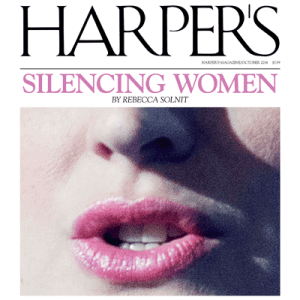
Robert Boswell's story, "The House on Bony Lake," appeared in the October 2014 issue of Harper's Magazine.

Robert Boswell’s story, “The House on Bony Lake,” appeared in the October 2014 issue of Harper’s Magazine.

I knew early on how the story would end, but I did not know why or how the narrative would get there. I had to discover all that while revising. Paul’s final act in the story is meant to, as you say, provide an emotional resolution; however, the ending is also meant to complete the narrative shape by suggesting that the there is another way of interpreting the family’s history.

Having avoided talking about the reveal in the reply above, I don’t think I should give away the end of the story with this response. So I’ll try to talk about it by referring to other stories—great stories—that make analogous narrative moves.

In Tolstoy’s “The Death of Ivan Ilych,” the end of the story reframes Ivan Ilych’s deathbed question from “Why me?” to “How should I have lived?” And then the question is answered in an astonishing manner. Until the very end, the character and the reader are engaged with the wrong mystery.

In Peter Taylor’s “A Wife of Nashville,” Helen’s behavior at the end can only be understood when the reader lets go of the terms by which he’s interpreted events (the racial divide among Southerners in the middle of the 20th century) and adopts a new set of terms (the gender divide in that same population).

NoViolet Bulawayo deftly orchestrates a similar narrative maneuver in the first story (“Hitting Budapest”) of her novel-in-stories We Need New Names. The final moments of the story complicates the reader’s natural desire to side with hungry children. Such a desire tends to sentimentalize characters, and Bulawayo refuses to let this happen. By denying the reader a romanticized vision of the children, Bulawayo insists on the characters’ full share of humanity.

I do not mean to suggest that my story belongs in the same category as these great stories; rather, that the ending, if it works, comes from an understanding of an elusive narrative strategy that I did not so much mimic as discover—a startling discovery made during the writing of the story. And it’s only later, of course, that I realized my discovery is a merely variation on the work of some writer on whose shoulders I have been for some time attempting to stand.

June 2016

Michael Noll Michael Noll is the Editor of Read to Write Stories.
An Interview with D Watkins

24 Jun
D Watkins' debut memoir, Cook Up, about growing up and selling drugs in East Baltimore, will be published by Grand Central Publishing in 2016.

D Watkins’ debut memoir, Cook Up, about growing up in East Baltimore, tells the story of his journey from drug dealer to writer.

D. Watkins is a columnist for Salon. His work has been published in the New York Times, Guardian, Rolling Stone, and other publications. He holds a master’s in Education from Johns Hopkins University and an MFA in Creative Writing from the University of Baltimore. He is a college professor at the University of Baltimore and founder of the BMORE Writers Project. Watkins has been the recipient of numerous awards including Ford’s Men of Courage and a BME Fellowship. Watkins is from and lives in East Baltimore. He is the author of The Cook Up: A Crack Rock Memoir and The Beast Side: Living (and Dying) While Black in America.

To read his essay “Too Poor for Pop Culture” and an exercise on writing complex characters and people, click here.

In this interview, Watkins discusses avoiding one-dimensional secondary people in memoir, what it means to write about a community that rarely appears in literary work, and the incredible reception his work has received.

Michael Noll

In some parts of our national discourse, we have a tendency to make symbols out of people—for instance, Chris Kyle, the “American Sniper.” In our hurry to make a point, the real person at the heart of the symbol gets lost. I can imagine that this might have been easy to do with “Too Poor for Pop Culture.” You could have flattened Miss Sheryl, Dontay, and Bucket-Head to be only symbols of poverty, but they seem like much more. For one, you allow them to be funny: “Whateva da fuk a selfie is! What’s a selfie, some type of bailout?” You also let them show their own awareness of how things are: “Put me on that Obamacare when you can, college boy!” Does the ability to show this complexity come naturally to you because you know these people well? Or, do you have to guard against turning them into symbols for a point?

D Watkins

I think it came natural because these are my friends. I wrote “Too Poor” out of a place of frustration, and the layers that my friends and I share just spilled out. We are funny and hurting and tuff and smart and crafty. Sometimes secondary people in memoir can be one-dimensional and that would never work in my writing because my friends make me and we are all complex in our own special way.

Michael Noll

This essay is a really complex piece of cultural criticism. You’re making an argument about the availability of technology but also about politics and economics. How did you keep your point straight? And, where did this essay begin? With any of the points you make or with the story of drinking vodka with your friends in a housing project?

D Watkins

It’s easy for me to keep my point straight because this story is older than me. Black people have been slighted in America since we jumped off of the boat. And really, “Too Poor” was cut short because I could have added more of the convo—we talk about crooked cops, gentrification and everything else that plagues east Baltimore, most of which never makes the news cycle.

Michael Noll

D Watkins was profiled in a long feature in Johns Hopkins Magazine about his evolution from drug dealer to university lecturer and author.

D Watkins was profiled in a long feature in Johns Hopkins Magazine about his evolution from drug dealer to university lecturer and author.

I read and loved the novel Long Division by Kiese Laymon, and in it, the narrator reads a book called Long Division that is set in the part of Mississippi that he’s from. He says this:

“I just loved and feared so much about the first chapter of that book. For example, I loved that someone with the last name ‘Crump’ was in a book. Sounds dumb, but I knew so many Crumps in Mississippi in my real life, but I had never seen one Crump in anything I’d read.”

I thought of this quote as I read the first sentence of your essay, where you name the people you’re with: Miss Sheryl, Dontay, and Bucket-Head (names you created to protect their identities). You go on to write, “Bucket’s no angel, but he’s also not a felon and doesn’t deserve to be excluded from pop culture no more than Miss Sheryl or Dontay.” You’re talking about access to technology and, therefore, access to the pop culture sites and news that most of us take for granted, but it occurs to me that you’re also talking about the absence of people like Miss Sheryl, Dontay, and Bucket-Head in the news and sites that we consume. Was this something on your mind as you wrote?

D Watkins

Initially no. I did not read a fraction of the articles that I do now. Now I consume everything from cable news to all of the popular online magazines. I’m also a columnist for Salon, so now it’s my job, and in my journey I learned that the perspectives of people from neighborhoods like mine are always ignored or written about by outsiders. I now feel obligated to be that voice and hopefully inspire others to do the same.

Michael Noll

Parts of the essay strike me as academic in tone. For instance, you write, “The idea of information being class-based as well became evident to me when I watched my friends talk about a weeks-old story as if it happened yesterday.” The first part of that sentence would fit neatly in any article in a scholarly journal. The second part, though, and the first-hand account that you provide in the essay, might not appear in that scholarly article, which makes me curious about your views of academia and the writing that it encourages. You write in the essay about feeling like an outside in academia—”Not the kind of professor that…”—and so I wonder if you feel that, as a writer, the kind of writing you do is valued by the academic world you work in.

D Watkins

My writing is valued in the academic world—since “Too Poor.” I’ve lectured at 20+ universities in graduate and undergraduate programs covering an array of topics that range from creative writing to public health. I think I have a unique opportunity to create a new lane in academia, a lane where street education is respected amongst the tweed coated scholars.

Originally published March 2015

Michael Noll Michael Noll is the Editor of Read to Write Stories.

An Interview with Callie Collins

16 Jun
Callie Collins is the co-editor of A Strange Object and, starting in the fall, a MFA student at the University of Michigan.

Callie Collins is the codirector of A Strange Object and, starting in the fall, a MFA student at the University of Michigan.

Callie Collins is a writer and editor in Austin, Texas. Her work has appeared in places like the Rumpus, the Toast, Midnight Breakfast, the Collagist, PANK, and NANOFiction, among other venues. She is the codirector of A Strange Object, a small press; the fiction editor of Covered with Fur, an online magazine; and the cohost of the Five Things reading series.

To read an exercise on sparking the imagination based on Collins’ story “Tropical Storm Bill Washes Up Alligator Gar in Corpus Christi, 2015,” click here.

In this interview, Collins discusses two pieces of flash fiction and linearity, titles, and listening to the sound of your sentences.

Michael Noll

When I read these stories, the thing that immediately caught my eye is the nonlinear jumps in the narration. Sometimes they’re on the content level, like when the gar arrive in the story or when we see the girl at the bar practicing her vowels. But they also happen on the sentence level, as with the line “They approximate well” in this passage: 

Hold the grip like you’re shaking a man’s hand, Billy instructs the boys, but who among them has really shaken a man’s hand, he thinks. They approximate well. He doesn’t have children. 

That line seems to arrive out of nowhere. It’s not a logical extension of “They approximate well.” Is this just the logic of your imagination, or do you have a kind of internal rule or approach that you follow for these sort of jumps?

Callie Collins

It’s strange; when I first read this question, I was surprised you pulled that line, cause it strikes me as a super linear extension of that thought, which now I realize it is not at all and I must be crazy. So yes, the logic of my imagination is maybe a bit more leapy than usual. I pay a lot of attention to rhythm and geometry when I write. In this particular case my logic worked a little like this.

“He doesn’t have children” seemed necessary for a couple reasons. The six syllables of “They approximate well” didn’t feel like enough rhythmically to stop the forward momentum of the multi-clausal sentence before it—I wanted a stronger wall. “He doesn’t have children” is really satisfying to me because of the internal symmetry of consonants and emphasis: (he) DOES-N’T (have) CHIL-DREN. Those two lines together sounded closed and tight because they’re syllabically equal. Also, “They approximate well” shifts the paragraph’s focus to the boys, so I wanted to extend a line back to Billy to balance the scale. I tried to jump back and forth from the boys to Billy almost sentence-by-sentence in order to both alienate them from each other and tie them together in this room while the storm rages outside. I also wanted to go one step further down into Billy, to reveal some new, personal knowledge of his character, before the last sentence of the paragraph zooms back out to an overhead view of the scene.

Yeah… it seems kind of nuts. Thankfully there’s another, parallel answer to this question, and that’s because this story comes out of a bigger project. Billy is the youngest of five siblings in a generation of a family, and he’s the only one who doesn’t have kids. It was a piece of information I wanted to fit in there somehow, and to my ear that was the right place to put it.

Michael Noll

Your titles are wonderful. They remind me of the chapter headings that you see in certain novels from the 1700s and 1800s. What’s your approach to titling stories? It’s something that most writers I know find so difficult.

Callie Collins

Once you've got your butt in the chair, how do you get your head in the right place? An exercise on sparking the imagination from Callie Collins' story, "Tropical Storm Bill Washes Up Alligator Gar in Corpus Christi, 2015."

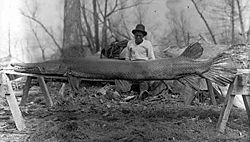
Callie Collins’ story, “Tropical Storm Bill Washes Up Alligator Gar in Corpus Christi, 2015” was published along with one other at Conflict of Interest.

Oh, thank you! I feel lucky when I land on serviceable, or at the very least somewhere near I-can-see-she’s-trying-to-move-me-and-am-not-entirely-repulsed.

I cheat a little. I’ll find a particular structure I like and adapt it in subtle ways to fit many pieces. I like the “something unsettling happens to a body, date” scheme for its simplicity. There’s room to make the first part as strange or noisy as I want, but the year provides stability, normalizes, maybe brings it down to earth. My hope is that each title alone will function pretty straightforwardly, but that using the structure repeatedly will help the stories accrete and flow differently—as variations on a theme. I can, of course, take this way too far. Currently I’m using the same exact title for at least five different stories and for the manuscript they all come out of—man, stop me—which has become inconvenient and messy.

But I like this sort of repetition. It’s how my brain works most naturally. There are pieces of language and slices of syntax that lodge in my mind, and I return to them compulsively but hopefully from new angles and alignments. And it’s one of the really big pros to writing page-long stories. It wouldn’t work if I had fewer pieces to title.

Michael Noll

Both of these stories have a kind of thematic structure. You could, if you wanted, distill them to their major images (for example, cocoons/butterflies, gar, the O shape the girl makes), and then it seems as if the purpose of the story is to connect these images in a way that makes sense. This makes me wonder: Do you start with the images and try to connect them or start with one image and write your way into the story, discovering new images as you go?

Callie Collins

Mostly I start with one image and write my way into the story. I think a lot about thematic structure and particularly the idea of thematic return, movement back toward the home of an original moment or sound. I used to study some music theory and composition a long time ago and was really pretty awful at it, but I found some comfort in the fact that our brains are kind of wired to find closure and satisfaction in music that returns to the tonic—the piece’s tonal center. There are certainly many ways to come home to the tonic, or to approach coming home and not make it all the way, or to refuse that closure entirely, and I think the same is true in fiction. I love endings for that reason; I’m attracted to the urgency of the choice whether or not to return.

I’ve written stories that come all the way goddamn home, middle C, climb back in the bed they were born in—there’s a horse story I read at readings sometimes that does this—but the gar story doesn’t. I tried to end it with a stand on the dominant: an anticipatory feeling, a settling in the front yard of the tonic and pointing at the door.

The tonic is usually an image. Here, the gar. I set the tonic and then work my way into other images that orbit it. I wanted the last note, the couple at the bar, to recall the gar in certain ways—to approach the ideas of foreignness, animal transformation, and alienation from a new perspective. What I really hope, though, is that none of my crazy scaffolding is visible—that the story reads cleanly and easily. Thinking about structure in these minute ways is, it turns out, the only way I know how to get anything done at all.

Michael Noll

These stories are quite polished. You’re also co-editor of the independent press A Strange Object. A lot of people would look at both of those statements and think, “She’s doing pretty well.” Yet this fall you’ll enter the MFA program at the University of Michigan. What do you hope to learn there? Obviously you want to work on your writing and craft, but you’re entering from a different position than a lot of writers, with more experience and success in the publishing world–more than many people who graduate from writing programs. Is it simply the desire to grow and improve that’s at work, or is there something in particular that you wish to gain?

Callie Collins

I hope to learn many things. Where to buy a good coat, for one—anyone know? I’m hoping someone’ll teach me how to do that weird Michigan vowel shift, too.

But really, what a kind question to ask! I didn’t take creative writing courses in college and have very little experience with the formal workshop setting, so even though I’ve spent some time on the publishing side, I’m much more of a newbie in certain ways than most folks entering programs. Mostly I’m just excited and feeling very lucky to have the time and funding to work on the novel-thing, and to get to do that with amazing faculty whose work I deeply admire.

My work’s pretty invested in central Texas, and I think leaving will help me write about the place with more nuance. It’s easy for me to get wrapped up in the mythology of Texas while I’m in it, and I hope being away will give me new perspective and energy. I’m very sad, but it seems like time to go. Just keep everything exactly the same while I’m gone, thanks! Or at least cool it with the condos.

June 2016

Michael Noll Michael Noll is the Editor of Read to Write Stories.

An Interview with Sean Ennis

9 Jun
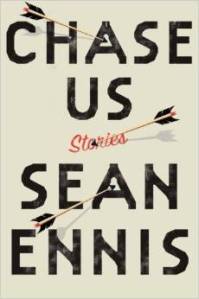
Sean Ennis is the author of Chase Us, which "expertly captures the tumultuous lives of youth on the streets of Philadelphia" according to a review by Largehearted Boy.

Sean Ennis is the author of Chase Us, which “expertly captures the tumultuous lives of youth on the streets of Philadelphia.”

Sean Ennis is the author of the story collection Chase Us, a finalist for the 2016 Saroyan Prize. Ennis is a Philadelphia native now living in Water Valley, Mississippi. He teaches writing and literature at the University of Mississippi and with the Gotham Writers Workshop. His work has appeared in Tin House, Crazyhorse, The Good Men Project, The Greensboro Review, The Mississippi Review, Hot Metal Bridge, LitNImage, Filter, and The Best New American Voices anthology.

In this interview, Ennis discusses staged and real violence, how the real story can be found in repercussions to dramatic events, and why game theory helps explain adolescence.

To read Ennis’ story, “Saint Roger of Fox Chase,” and an exercise on plot spoilers, click here.

Michael Noll

I’m really interested in the fact that the story puts the characters into two fights. The obvious thing to have done would be for the narrator to have learned a lesson from the first fight and responded differently in the second. But that’s not what happens. In fact, the second fight sort of sneaks up on him. He doesn’t even see it clearly. Did you always handle these fights in this way, or were there other versions of them in early drafts?

Sean Ennis

The structure for this story was a bit of a happy accident.  I had just finished reading a group of great, super-short novels (Ray by Barry Hannah, So Long, See You Tomorrow by William Maxwell, Death of a Beekeeper, by Lars Gustaffson), so I thought I might try my hand at something longer than my typical 15 page piece, and see what happens if I took my foot off the gas a bit.  My own experience playing soccer for ten years seemed like good enough fodder, and so I thought I’d tell every soccer story I had and see what fell out.  If I had originally approached the subject matter without thinking of it as a longer project, I probably just would have written the one long scene of the boy’s death.

A lot fell out though. Lengthy descriptions of indoor soccer, which is a bizarre game played with tiny goals and enormous tennis balls on basketball courts.  Errant coaches with hard drug problems who couldn’t keep their genitals from falling out of their shorts.  Feral sideline mothers who preyed on teenage referees.  The taste of yellow oranges in November at halftime.  All fine details, I guess, but eventually they felt irrelevant to the piece, and got cut. I didn’t want it to be turned into my lame soccer memoir.

The heart of the piece really seemed to be violence—the somewhat staged violence of the sport, and the real violence of the neighborhood.  On the field, there was, theoretically, some adult who would stop things from going too far.  Off the field there was not, even when their help was requested.

To the point of the narrator learning something, I guess my thought is that there is nothing to be learned.  He’s a coward in the best sense—he doesn’t believe that violence solves problems, or at least that he can use violence to solve problems—but might be surrounded by people who do.  I guess if he’s learned anything is that from now on, there is no one blowing a whistle to stop bad behavior.  He’ll have to manage it himself.

Michael Noll

I also really love the soccer field that you create in Fishtown. It’s not just a poor version of other fields—it’s not really even a field. What I love is how the absurdity of the field seems to change the tone of the story. We start out in familiar territory, familiar descriptions of poor neighborhoods, but then the field alters the scope of what is possible. It’s so beyond the bounds of what we think we know. I wonder if that second fight would have been believable in the story without that gravel soccer field. What do you think? Did any of this occur to you as you worked on the story?

Sean Ennis

This may diminish me as a story-teller, but that field was a real place. I played on it. This probably isn’t a shocker, but is it a bummer when writers say their best details are real?

Sean Ennis' debut story collection, Chase Us, follows the lives of boys living on the outskirts of Philadelphia.

Sean Ennis’ debut story collection, Chase Us, follows the lives of boys living on the outskirts of Philadelphia.

And in real life, I think the field was a metaphor. That neighborhood was very serious about soccer. They always kicked ass. They could have come up with money for grass. But it was a rite of passage in Philadelphia to play on that cinder field. We were shocked by it and had no idea how to negotiate it, so we complained and were totally intimidated and then lost. I distinctly remember my dad telling me it was a “cinder” field while we were driving there, and I had no idea what he meant. Had it been on fire?

Something that I think the whole collection is interested in is the idea of real objects out of place in a way that causes anxiety. Expanses of gravel and glass are not strange territory in an urban setting.  But when a hundred yards of them are contained by white lines and called a “field,” there’s something not right. To me, it’s the first clue for the narrator that something universal is off. The adults just shrug about the field.  Just say, sorry if you don’t like the rules, but you must play. For me, this is an idea running through most of the stories in the collection. For a while the whole manuscript was called “Deep Play,” an idea taken from Jeremy Bentham, a British political philosopher. He was talking about instances where players get involved in a game where it is impossible to win, but they play anyway. A lot of young adulthood feels like this, I think. I’m no expert in game theory, and “Deep Play” isn’t the sexiest of titles for a collection, but that superficial version of Bentham’s idea struck a chord with me in terms of the types of stories I was writing.

This relates to the second fight, I think. The natural progression of violence among these kids is that someone is going to be killed; it’s already in motion. Also, the narrator’s team’s manicured field is the place of real danger. Even the brutes from Fishtown understood when a fight was over and won. But the swarming idiots from the suburbs were less equipped to understand the repercussions of their actions.

Michael Noll

The story begins with a spoiler (“The night Roger was beaten to death…”). That’s a move that can really work and can also backfire (in this case, of course, it works really well). What went into your decision to start the story that way? And, how did foregrounding that line affect the way you structured the story?

Sean Ennis

My thought there was to just get that bit of drama out of the way. I think we all know stories about kids who died too early, and, of course, they are tragic, but I was interested in figuring out a way where that death wasn’t the climax of the piece. If the reader knows it first thing, then hopefully something else is going on to keep people reading. In general, I’m much more interested in the repercussions of dramatic events than the dramatic events themselves. Things that seem bad can have positive outcomes and vice versa. So, my hope is that what happens after the death is where the real heart of the story is.

Michael Noll

This is not the only story I’ve read that combines sex and death. First to mind is Stuart Dybek’s story, “We Didn’t.” But the novel Skippy Dies also came to mind. To that end, I guess even the movie Dead Poet’s Society fits the description. What is it, do you think, about sex and/or death that makes it natural to bring them together?

Sean Ennis

This question is probably above my pay grade, but I’ll speculate that there’s something evolutionary about an animal’s interest in these topics.  The ultimate conflict—have sex or die. The echoes of that impulse remain, right?  Freud?  Darwin? Help me out.

I also think for young people these are both concepts becoming real at about the same time.  By the age of twelve or so, most young boys are waging their virginity against their potential death in some stunt.  Before that age, neither sex nor death seem like possible outcomes, or even knowable outcomes. When they both come crashing in: chaos.

In terms of story-telling, a piece needs stake, and sex and death impart this pretty quickly. I’ll be the first to admit that maybe they do it cheaply.  Still, they’ve been staples in story-telling for thousands of years, which suggests readers are usually compelled by it.  All of which to say, I think this story, if it succeeds, is retreading very familiar thematic territory, if only because it is the story-telling I was trained in.

That said, I’m working to figure out how sex and death are no longer the backbone of my stories without becoming a bad version of Carver or Salinger (heroes of mine).  Surely there is a drama in between.

Originally published August 2014

Michael Noll

Michael Noll is the Editor of Read to Write Stories.

An Interview with John Jodzio

2 Jun
A New York Times review said about Knockout, "John Jodzio’s entire collection is tremendously funny and well written, every story inventive and a pleasure to read.”

A New York Times review said about Knockout, “John Jodzio’s entire collection is tremendously funny and well written, every story inventive and a pleasure to read.”

John Jodzio is a winner of the Loft-McKnight Fellowship and the author of the short story collections Get In If You Want To Live, If You Lived Here You’d Already Be Home, and, most recently, Knockout. His work has been featured in a variety of places including This American Life, McSweeney’s, and One Story. He lives in Minneapolis.

To read an exercise on building character based on Jodzio’s story “Lily and Annabelle,” click here.

In this interview, Jodzio discusses trying different approaches until scenes make sense, the importance of hooking the reader over and over, and surprise endings.

Michael Noll

I’m always curious how passages come into being. In this case, I love the paragraph about the mother’s hatred of Longwater Community School—so intense that she dumped red paint on the principal’s car hood. At the end of the paragraph, though, we learn that she’s sending her kids back to the school because she wants revenge on her ex-husband, who “hates the school even more than she does.” When you began writing about the mother’s hatred of the school, did you know in advance that she would send her kids back to it for revenge? Or did you begin the passage and, at some point, think, “Hey, what if she sent them back there?” I guess the larger question is this: Do you know where you’re going when you begin a passage, or do you start writing and hope for something cool to happen?

John Jodzio

In the early stages of this story I had written a couple of passages I found intriguing. One was the opening paragraph, the mother pushing the father out the second story window. Then there were a couple of scenes between Lily and Annabelle when they were back at Longwater. I didn’t really have any of the reasons how or why these things connected at that point, but after a draft or two the backstory unfolded (i.e. the dad cheated on the mother with a landscape painter, he was homeschooling them, their mother was sending them back there for revenge, etc). This is mostly how all of my stories come together. It’s mostly trying some different things and seeing what meshes/makes sense.

Michael Noll

The story is written in chunks separated by space breaks, and each chunk ends on a kind of punch. As a result, it’s possible to read each one as a kind of stand-alone piece, with a beginning, middle, and end. This would seem like a great way to approach plot and tension—worrying less about the big picture and more on keeping the reader hooked page by page. Is that your process? How much did you think about the big picture of the story?

John Jodzio

This is absolutely my process! In all my stories I am largely concerned with hooking the reader and love to give those little punches at the end of each passage in a story. I want these chunks to be able to stand on their own but to also move plot and character forward within the larger scope of the story. This is probably a function of how I write—I seem to end up really polishing each passage before I move on to the next one.

Michael Noll

How did you approach the end of the story? It’s sweet—and unexpectedly so. The next-to-last section ends on this:

“And that’s that,” their mom tells the girls as Jerry drives off. “Even the really nice ones have a breaking point.”

It’s not a moment that suggests good things will come. Were you surprised by your own ending?

John Jodzio

I usually don’t get surprised by endings but this one did surprise me. I’d struggled to find a good ending for a long time. I actually randomly added that blanket door as a detail to flesh out their apartment in one of the last drafts and then it somehow it came back to me as a possible ending. No idea why that happened, but ultimately liked how hopeful it was and how well it fit in the context of what was going with their family.

June 2016

Michael Noll Michael Noll is the Editor of Read to Write Stories.
An Interview with Karan Bajaj

26 May
Karan Bajaj is a bestselling novelist in India. The Yoga of Max's Discontent is his most recent book.

Karan Bajaj is a bestselling novelist in India. The Yoga of Max’s Discontent is his most recent book.

Karan Bajaj is a bestselling novelist and striving yogi. Born and raised in India, he has trained as a Hatha Yoga teacher in the Sivananda ashram in South India and learned meditation in the Himalayas. He is the author of the novels Johnny Gone Down and Keep off the Grass, both of which were No. 1 bestsellers in India. His most recent book is The Yoga of Max’s Discontent. He’s been named one of India Today’s Top 35 Under 35. He lives in New York City.

To read an exercise on hooking the reader based on The Yoga of Max’s Discontent, click here.

In this interview, Bajaj discusses why he chose a white American character for a novel based on his own experience, the necessity of an author’s “message” staying out of a story, and the importance of taking a sabbatical.

Michael Noll

You’ve written that parts of The Yoga of Max’s Discontent are based on your own experience studying yoga and Buddhism and hiking in the Himalayas, and so I’m interested in your choice to tell this story from the point of view of a white American. On one hand, I can imagine some publishers preferring a white main character because it fits their idea of what sells. On the other hand, I’ve also had the experience in my own work of not being able to write about something until I distanced myself from it somehow. What went into the creation of Max?

Karan Bajaj

Thanks Michael. I made the choice of an American main character, less due to publishing practicalities, more to approach Max’s experiences in India from the perspective of an outsider. His “otherness”, be it an American in India or a white guy in the Bronx housing projects, is crucial to the core idea in the book of a man stripping off layers of external identity, first, physical, then, spiritual, to come closer to a more permanent reality. If I had an Indian protagonist, he’d have too many pre-conceived notions about concepts like karma, re-birth, yogic powers etc. that he uncovers in his journey.

In terms of creating Max, here’s a small anecdote: I read more than one hundred books and as many articles and papers to research the 1st 30 pages of the book that are set in the Bronx housing projects. Almost none of my research appears in the book but I had to truly understand each day in Max’s childhood to understand why someone would make the extreme decision to quit his job in Wall Street to become a yogi in the Himalayas. The next 270 pages set in India required almost no research at all. I’ve lived Max’s life myself and spent a lot of time in hidden Indian ashrams and remote Himalayan villages.

Michael Noll

Part of Max’s attraction to yoga and meditation is the possibility, learned from a street food vendor, that some yogis can sit in mountain caves in the winter in nothing but loin cloths and walk barefoot in deep snow. As a fictive device, this works well, creating intrigue and suspense in both the main character and the reader. But I also found myself wondering how it connects with the physical and spiritual practices that you’ve studied and that are important to you. Did you feel any conflict between the need to tell a good story and the desire to introduce readers to the very real practice of yoga? (Of course, perhaps some yogis really can walk barefoot in snow and across water!)

Karan Bajaj

The Yoga of Max's Discontent is the latest novel by Karan Bajaj.

The Yoga of Max’s Discontent is the latest novel by Karan Bajaj.

Excellent question, Michael. My idea for this novel was to break the paradigm of spiritual/personal transformation novels as fables thick and heavy with messages. I wanted to write a page-turning adventure through contemporary India in which the reader melts into the story and doesn’t feel the presence of an author communicating any message. However, I didn’t exaggerate or falsely exoticize India for the sake of a good story. Yogis and their physical prowess are well researched and in the novel, I’ve treated it as a spontaneous by-product of a yogis’ journey from the finite to infinite rather than the goal of the practice. Yoga, as I’ve presented in the book, is chitta vritti nirodah, the complete cessation of the thought waves of the mind so that the individual dissolves as it were. Every practice referenced in the book is in service of that idea.

Michael Noll

One of the sources of Max’s discontent is his attachment to material things, and one of the realizations he has during his quest is that he actually requires very little in order to survive and be at peace. I think it’s natural for readers to wonder how the book connects with your own life. You’ve studied yoga, gone on a sabbatical, and meditated in silence for a year, but you also work with large corporations in New York and your personal website is no slouch as a marketing device. Do these roles ever feel like competing forces?

Karan Bajaj

As you get deeper into the book, I think the concept that emerges is one of dharma. The tree grows and bears fruit, the water quenches thirst, in the same way every living being has a dharma, a certain innate tendency. Purifying your actions in accordance with your dharma rather than taking someone else’s dharma serves you best. Max’s dharma was to live in the mountains and serve. My own dharma, I think, is to be in business since I feel a very natural inclination for it. So what I’m trying to do is to purify my life in that context by working without attachment to the results of the work. I slip and fall often but that’s the general idea I try to live by. Right now, for example, I’m focused on marketing the book and getting hundreds of people to read a story I think is pure and transforming, but if that doesn’t happen, I know a large part of me will remain untouched.

That’s why perhaps my 4,1,4 model of working for four years, then taking a year-long sabbatical, then working again for four years works for me. Being in the world starts to take its toll so stepping out of it regularly and doing deep meditation helps me return a little more grounded to it. Yet I do always return because I think my dharma is to be in the world of commerce rather than in teaching yoga and meditation in the Himalayas.

Michael Noll

I know that the idea of sabbatical is important to you and that your own sabbatical fueled your growth as a writer and in yoga. What advice would you give to people interested in taking a sabbatical but who also find it difficult for a variety of reasons: limited income, children, or parents or other family members who depend on them for care? I think a lot of people look at their lives and don’t see how they can extricate themselves from them for any long period of time. Is a sabbatical a possibility for everyone?

Karan Bajaj

It’s never easy for anyone, I think. It was difficult for me to step out of life for a year when I was alone, harder when both my wife and I had to plan it together, and will be harder still now that we have a toddler and an infant! But each time I’ve come back, I’ve transformed in so many dimensions from becoming more spontaneous and creative to a greater stillness in my thoughts that I make it a point to keep taking them. If someone is interested in the idea but struggling to make the time, I’d say start by taking deeper, more meaningful vacations. Rather than going to a beach resort or a comfortable destination like Florida, take vacations that dissolve your sense of self. I highly recommend the 10-day silent Vipassana meditation retreat, for example or a tough hike like Kilimanjaro or the Grand Canyon where for a period of time, you just take one step, then another, and no other idea exists. Once you take a few such vacations, you start seeing the impact on your life and make the space to take longer and longer sabbaticals. In some ways, this is much easier than the dramatic re-inventions I see in American life. People are always becoming in the U.S.—from lawyer to yoga teacher; from marketing director to life-purpose coach etc. It’s perhaps simpler and more effective to go from point A to nothing at all rather than point A to point B.

May 2016

Michael Noll Michael Noll is the Editor of Read to Write Stories.

An Interview with Alexander Chee

20 May
Alexander Chee has been called "incomparable" by Junot Diaz and is the author of the much-anticipated novel, The Queen of the Night.

Alexander Chee has been called “incomparable” by Junot Diaz and is the author of the much-anticipated novel, The Queen of the Night.

Alexander Chee is the author of the novels Edinburgh and The Queen of the Night. He is a contributing editor at The New Republic and an editor at large at VQR. His essays and stories have appeared in The New York Times Book Review, Tin House, Slate, Guernica, NPR and Out, among others. He has received a 2003 Whiting Award, a 2004 NEA Fellowship in prose and a 2010 MCCA Fellowship, and residency fellowships from the MacDowell Colony, the VCCA, Civitella Ranieri and Amtrak. He has taught writing at Wesleyan University, Amherst College, the University of Iowa Writers’ Workshop, Columbia University, Sarah Lawrence College and the University of Texas – Austin. He lives in New York City, where he curates the Dear Reader series at Ace Hotel New York.

To read an exercise on creating character with plot based on The Queen of the Night, click here.

In this interview, Chee discusses growing as a writer to meet the needs of your novel, building character in order to develop plot, and the process of writing a novel with a complex plot and many characters.

Michael Noll

I think a lot of people who read your first novel Edinburgh may have been surprised by this book. The Queen of the Night is big and sweeping, with plot twists galore. As an opening line states, “When it began, it began as an opera would begin…” You and I talked on a panel at Austin’s New Fiction Confab, and I compared this novel to Victor Hugo’s work. But Hugo probably isn’t a writer that many contemporary writers strive to emulate (despite the success of the musical Les Misérables). What drew you to the novel’s operatic style? Is there something that it allowed you to do that a so-called “quieter” style wouldn’t? Or is the novel simply the result of your maturation as a writer? Did your craft advance to the point that you could attempt something big, with a complex plot, without it falling apart?

Alexander Chee

When I began thinking about the things that resulted in the writing of the novel, I was fascinated by opera plots and how seemingly ridiculous they were but also how pleasing. And so I began looking into why opera even existed as an art form and found the poems Orlando Furioso and Orlando Innamorato, poems which are commonly believed to have been the inspiration for most of the classic Italian opera plots. The idea that there was some common source for seemingly disparate works of art fascinated me and then made me wonder, what would it be like to try to make something that could mirror that on the far side? A life composed of opera plots? Or what if, after believing opera plots were inherently unbelievable, your life came to resemble one? Would you believe they were real then? And of course I was fascinated by the idea of people living out a lesson from the Gods, dictated by them, which of course resembles or prefigures authorship.

And then the idea of doing anything like this seemed implausible. But of course that made it all very tantalizing. As did working with the tools of melodrama and the old romans: coincidence, mistaken identity, cliffhanger plot twists, and adventure.

Once I knew I would be writing a novel based on all of this, I decided it had to be very bold. I set out wanting to do something utterly different from both anything I had ever done much less anything anyone would expect me to do. I decided it would be a picaresque, with a woman as the main character and narrator, and initially believed it would be a very small novel, maybe 250 pages. I would work with the tools of escapism but to give the reader a deeper relationship to this question of why we do what we do when we are confronted with a coincidence. What is it in us that makes us believe it is the work of a higher power? What do we do to our lives when we believe that? And: what if it really is a higher power, what then?

I don’t know that the novel was the result of my maturation—I think it’s more that it caused it. I had to grow in order to do this. What you see here, these are all gambles. Finalizing the novel’s plot structure nearly drove me insane. And at every point before it worked, I believed I was closer to failure than success.

Michael Noll

When we talk about plot (and plot-driven novels) as writers, it’s perhaps tempting to think of it as separate from character. This is why we so often quote Chandler’s line about novels that are stuck: the solution is to have a guy with a gun walk in the door. Or we quote Chekhov and his advice that if a gun’s present in the first act, then it had better go off in the third. It’s possible to read both as arguments for deus ex machina plot devices in which characters are tossed about without much control over events. But this isn’t how your novel works. For example, early on, the main character—who will later become a famous opera singer—offends her mother, and so her mother punishes her by covering the girl’s mouth so that she can’t sing in church. It’s a moment that drives the plot forward (readers wonder, what will happen?), but it’s also a moment that reveals character. Something good has been taken from the girl; how will she respond? This is all to ask this: Was it difficult to balance building character with driving the story forward? Or are those challenges one and the same?

Alexander Chee

Alexander Chee's novel THE QUEEN OF THE NIGHT is a national bestseller a review in Vogue called "brilliantly extravagant in its twists and turns and its wide-ranging cast of characters."

Alexander Chee’s novel The Queen of the Night is a national bestseller a review in Vogue called “brilliantly extravagant in its twists and turns and its wide-ranging cast of characters.”

Thank you. Yes. This is a common mistake, I think, a fatal separation. Plots have to grow out of your character for them to really succeed. If a gun is present in the first act, I wouldn’t think about how it has to go off in the third. I would think about how the character is the reason the gun is there to begin with. And from there: under what circumstances would that character pick up the gun and fire it?

Building character is building plot, to me. If you don’t know where your story is going, you don’t know your character well enough yet and need to do more to know them.

At each moment you’re asking, as you draft, what is the most likely action for this person with these limitations and these desires in this place at this time, and you just keep asking that, at each moment going forward.

Michael Noll

In the course of the novel, the main character moves from a destitute servant girl to famous opera singer who runs in the most elite circles of Parisian society. As a result, we get to see many different worlds: the American frontier, hippodromes, brothels, secret passages in castles, salons featuring the most famous artists of the time, the opera stage, the French royal court, and scenes of war. On one hand, this variety means that every few chapters or so, the readers gets the thrill of being transported to a new setting. On the other hand, it also means that you had to create not just one world but many. How did you approach the challenge of getting the reader to buy into each new world? Was it difficult to maintain a consistent voice and sensibility throughout the novel?

Alexander Chee

They are one world and they are many, both. Part of my approach was inspired by a Sherlock Holmes story, “A Study in Scarlet”, which begins as a mystery in London and then becomes a Western (I won’t otherwise spoil it). I loved this sense of the two worlds connected by a single fugitive.

But also: I wrote this because I was fascinated by these kinds of women, the orphan who becomes a prostitute who becomes a courtesan who becomes a singer, women who existed in a sort of special social class that was slippier than the others. If you were a courtesan back then, you knew the powerful and the powerless. And you had your own power because of that. You moved between those worlds. So I simply read and researched and followed my imagination. I don’t know that I did anything more special than that. But yes, it meant so many research books. It was a little like preparing to write several novels rather than one. But it was often quite fun, to be honest.

As for her voice, well, I kept favorite sections of the draft printed out to read from before working, so her voice was in my head. Sections where I thought, “Yes, that is her, that is how she sounds.” And I used them to grow more.

Michael Noll

The novel contains so many reversals that I’ve wondered how you were able to keep track of them and hold a single narrative line in your head while writing. Perhaps part of the answer is in the way you tell the reader that certain plot points are bound to happen. For example, the singer learns that her voice is particularly gifted but that it will also inevitably fail her one day–and so we know that moment is coming, but I can also see how it gave you a destination to aim for. How did you keep track of where the novel was going?

Alexander Chee

In some ways, I wrote it without quite knowing where it was going. Or even that the story was building the way it was. It was as if I had to write each of the sections without knowing I was doing that.

I kept a journal devoted to the novel. I wrote in it at the end of every work session, included any questions I had, any frustrations. I read that at the beginning of work the next day. This diary idea came from keeping a blog. I decided to keep one but just for myself—which may sound funny, but which is to say that instead of keeping the diary in a traditional format, I wrote it so the newest entry was always at the top, and the oldest all the way at the end. This way whenever I opened the document the newest entry was the first thing I saw.

I also kept a list of characters and places for the novel where I could see it, and I looked at it whenever I had a question or was stuck. I would say to myself, “What next, what people in what places?” And that helped a great deal. I got the idea for the lists from Janet Frame, who describes it in her autobiography, along with many of her writing habits.

Lastly I kept a file of rejected pages, pages I cut from the novel. I noticed one day that the thing I was calling the novel was about 70 pages and the rejected file had about 300 pages. I had discarded what I thought of as false starts, yet this file was so big, it was like I’d thrown the whole novel away. So I went through it and understood the seemingly random different pieces were all one novel. That all of it was her life. And the twists and turns, I had to invent those as credible connections between the sections.

I always knew the novel was going to be something with false names and secrets and sudden reversals—that it would be a picaresque composed of opera plots, the life of someone overtaken by a curse that was turning her life into a series of operas she had once sung in. And the resulting twists did fit the conventions of the picaresque and of opera. The whole point of the novel was always, “What if opera plots were realism?” What if your life, when described, sounded like an opera? And yet I had to sneak up on myself to write it.

May 2016

Michael Noll Michael Noll is the Editor of Read to Write Stories.
An Interview with Katie Chase

12 May
Katie Chase is the author of Man and Wife, a story collection that Edan Lepucki calls "comic and horrific."

Katie Chase is the author of Man and Wife, a story collection that Edan Lepucki calls “comic and horrific.”

Katie Chase is the author of the story collection, Man and Wife. Her fiction has appeared in Missouri Review, Narrative, ZYZZYVA, Prairie Schooner, Mississippi Review, and the Best American Short Stories and Pushcart Prize anthologies. A graduate of the Iowa Writers’ Workshop, she was the recipient of a Teaching-Writing Fellowship, a Provost’s Postgraduate Writing Fellowship, and a Michener-Copernicus Award. She has also been a fellow of the MacDowell Colony and the Center for Steinbeck Studies at San José State University. Born and raised outside Detroit, Michigan, she lives currently in Portland, Oregon.

To read an exercise about creating suspense with stand-ins for characters, inspired by Chase’s story “Man and Wife,” click here.

In this interview, Chase discusses the “authority” wielded by a writer in a story, flashback, and differences between stories and novels.

Michael Noll

A word that often gets thrown around by writing students is “authority,” as in “the writer shows such authority; where does it come from?” I thought of this when I read your first line: “They say every girl remembers that special day when everything starts to change.” It’s so in-your-face in its irony—because, of course, we know the narrator isn’t talking about the change that immediately comes to mind  As soon as I read that line, I was hooked. Did the story always begin with this line? Or did you write it in some later draft?

Katie Chase

It’s funny, the first draft of this story is nearly eleven years old, and I couldn’t have told you the answer to this without digging it up. No, the story did not always begin this way. It went through two different openings before landing on this one: the second was similar, but still did not contain that first line, and the first was a version of a paragraph I later moved deeper in, one that gave away what “the change” really was. So, clearly, I realized (or perhaps was told in workshop) that it was better to build up to that revelation. As for “authority,” that too I had to work up to. From conception, I knew this would be an audacious story, but that I didn’t want it to read as audacious or, I suppose, “gimmicky,” and so a level, evenhanded tone would be key to pulling it off. I believe that by the time I was shaping up the story in revision, I had recognized that the point of connection in the story for me was the change that immediately comes to mind, or more generally, the process of having to grow up from a girl into a woman and all the expectations that attend that process. That point of connection was an even bigger key, and perhaps what lent me whatever authority the story may seem to have.

Michael Noll

At the beginning of the story, you use a bit of slick sleight-of-hand. You flash back to a really important scene (the party when the narrator met Mr. Middleton), and you make the leap with a single line of dialogue: “Well, do you remember Mr. Middleton? From Mommy and Daddy’s New Year’s party?” Did that scene always take place in flashback, or did the story ever start earlier so that the party scene appeared in the present moment?

Katie Chase

It did always take place in flashback. I wrote this story just before beginning graduate school, which taught me (among other things) the habit of more fully scrutinizing all of a story’s choices, and I don’t believe that I considered this one very consciously at the time, particularly during early drafting. What I would say now is that the reason for keeping it in flashback is to promote the sense that Mary Ellen, just a child, had not yet faced the inevitable. Her world is the water she swims in, etc., and she takes its qualities for granted, yet it still comes as a surprise when her turn to take part in it comes. She’s in denial, I suppose, if a child even has anything like the psychology an adult has. It feels to me that the story really begins with her opening her eyes to her fate, and as they say, a story that opens too early will feel slow, too late will feel disorienting or, again, gimmicky. Also, if I had added it as a present scene there would be two quite similar party scenes—and the strange bachelorette get-together that occurs in the present and is really for the parents, exists in part as a way to allow that first party onto the page.

Michael Noll

Man and Wife is the debut story collection by Katie Chase. The title story appeared in Missouri Review and Best American Short Stories 2008.

Man and Wife is the debut story collection by Katie Chase.

Perhaps the creepiest scene in the story—and maybe the entire book—is when Mr. Middleton stops by the house unannounced and asks to see the narrator’s Barbies. What I find remarkable is how much foreboding the scene contains and, yet, how little actually happens. He simply asks her to do certain things with her Barbies—and it’s so intensely creepy. What was your approach to this scene? 

Katie Chase

Mr. Middleton and Mary Ellen needed, I thought, to have some time alone, to share a scene that could explore what the dynamics would be like between them in a marriage and show more specifically not only why Mr. Middleton has chosen Mary Ellen, but how she is compelled to go along with him, beyond that she is a child without much choice. As you suggest, the set-up itself is inherently discomforting for the reader: the sheer fact of them being alone, along with the persisting question of whether such an encounter is aboveboard or not. The Barbies, too, as sexualized, anatomically idealized dolls, as vehicles for playing house, are already laden with import. In the scene, I wanted to push the potentialities of those elements, without going what I saw as too far. That inherent tension and anticipation for all that could happen can have more impact than showing any of it actually happen. And although this story presents a society with norms the reader will in all likelihood find repellent, it still has its rules for what is proper, and to even write this story, let alone in a way that was provocative and not merely lurid or sensational, which is what I wanted to do, drawing such lines was necessary. My intention, I won’t deny, was to disturb, but I wanted much of that disruption to be happening in the reader’s mind, and less so on the page.

Michael Noll

So many of your stories feel like they could be the first chapters of novels. This isn’t to say that they don’t feel finished. Instead, I mean that they end with a clear sense of conflicts yet to come. I think a lot of writers struggle with knowing what they’re writing–something short or something longer. How did you know these were stories? Or, to put it another way, what does the story form offer in these narratives that the novel form doesn’t?

Katie Chase

I have never sat down to write something and experienced the phenomenon of it growing, as if of its own will, much beyond the length I thought it was. I have tried to write novels, or turn stories into novels or novellas. Perhaps it is simply that I exercise too much control. But the stories I write, especially those in the book, are often based on certain premises, with certain potentialities, that seem to me to have a limited life span on the page. Any longer, and the premise would start to lose its impact and feel watered down. Often a first line suggests an entire arc to me—not that I already know all of what will happen, but I do know that the narrative will hinge on a shift and that this can be achieved in, say, twenty to thirty pages. For me, stories work by containing all of the fun stuff and none of the belabored. The creation of a world, its borders and its tone, the culling of a situation into a conflict, the “channeling” of a voice and culmination of a character’s potential for growth or revelation—the brick building in a story is faster, sentence by sentence, not chapter by chapter, and it holds together less with mortar than with magic. I suppose I like to end with an opening up, a sense of conflicts to come, in order to achieve that sense that a story is ostensibly just one part of a whole life, and to enlarge that sense a story already has, that in existing only in its pared-down essentials, a lot has been left off the page. Perhaps, again, it is temperament, but more often than not, a story doesn’t continue into its new conflicts because I don’t have the patience or interest in following them step by step. The very point is that shift that initiates a new momentum. I’d rather let those next steps stand as stars do in a constellation, as suggestions, and move on to a new set of constraints. If a writer isn’t into those things, they might be more of a novelist!

May 2016

Michael Noll Michael Noll is the Editor of Read to Write Stories.
An Interview with Phaedra Patrick

5 May
Phaedra Patrick is the author of the novel The Curious Charms of Arthur Pepper.

Phaedra Patrick is the author of the novel The Curious Charms of Arthur Pepper.

Phaedra Patrick studied art and marketing and has worked as a stained glass artist, film festival organizer and communications manager. She is a prize-winning short story writer and now writes full time. She lives in the UK with her husband and son. The Curious Charms of Arthur Pepper is her debut novel.

To read an exercise on setting up happy endings, inspired by The Curious Charms of Arthur Pepper, click here.

In this interview, Patrick discusses how to set a character off on a quest, happy endings, and using coincidence in a novel.

Michael Noll

The novel begins with the main character, Arthur, deciding to go on a quest. It’s a decision that is part of a long tradition of quest stories that is alive and well as shown by The Unlikely Pilgrimage of Harold Fry; Eat, Pray, Love, and Wild. The difficulty, I would imagine, in writing such a story is that you need a reason to push the character out the door. Did you always know that Arthur would find the charm bracelet? Or did he begin as a character in search of a reason to go searching?

Phaedra Patrick

The charm bracelet idea came to me first, as I showed my young son my own bracelet. I write short stories too, so I liked the idea that each charm would be like a short story in its own right, then there would be a thread linking them all together, like a bracelet. I then had to find the right character to discover the bracelet and to set off on the journey to find out more about it. I thought it would be interesting if it was an older gentleman, who was rather set in his ways, and who I could take out of his comfort zone to go on this search. One of my favourite exercises is to write down the ten worst things that could happen to your character, then to explore how they’d react if these happened. And that’s what I did with Arthur.

Michael Noll

One question that often comes up in my writing classes—especially with college undergraduates—is “Why must stories be so sad?” The “literary” novels and stories that they’re reading tend to end unhappily. (One caveat: this isn’t really true of the fantasy and science fiction novels they read.) So, I was struck as I read this novel how its emotional arc is pretty much always oriented toward a happy ending—and it’s to the book’s strength. The book jacket even says that it’s a “joyous celebration of life’s infinite possibilities.” What was required—in dreaming up the novel, in its early chapters—to get it moving in a happy, satisfying direction?

Phaedra Patrick

I believe in happy endings! And in order for the story to be happy at the end, it kind of needs to be the opposite (at least in places) at the beginning, so the character can go on his/her transformative journey. The Curious Charms of Arthur Pepper has been described as a kind of fable and even compared to a fairy story. A lot of fables or fairy tales traditionally start with the character in an unhappy place—Bambi’s mother dies, Cinderella is ill-treated by her step-sisters, etc. So I had to put Arthur in a bad place to make things right for him in the end. It was a fine balance not to make him too self-pitying, but as soon as I introduced his neighbour, Bernadette, then this brought along humour to lift the first couple of chapters.

Michael Noll

I had the pleasure of moderating a recent panel on writing that included Alexander Chee, and he talked about how coincidence is often frowned upon by writers, and so he wanted to write a book with a lot of it (and did, in The Queen of the Night). Your novel is full of coincidence; I suppose these moments (such as the ease with which Arthur finds the people he’s looking for) might be unrealistic, but they’re also hugely entertaining. How do you approach coincidence in your writing? How do you manage to explain a plot point enough for the reader to buy it but not overexploit it until the reader is suspicious?

Phaedra Patrick

The Curious Charms of Arthur Pepper is Phaedra Patrick's first novel, and it's been called "tender, insightful, and surprising."

The Curious Charms of Arthur Pepper is Phaedra Patrick’s first novel, and it’s been called “tender, insightful, and surprising.”

I think because the book had to link up eight charms then there had to be a rather strong element of coincidence, or else Arthur would just discover the first charm and then get stuck! It’s also a story rather than a real-life account, so it does invite readers to suspend disbelief a little and get swept along with it. For quite a while I pondered on whether readers would believe there was a phone number engraved on the elephant charm, but then I decided that Arthur had to get his first lead from somewhere, and that this was the story I wanted to tell. I also ensured that Arthur found out about the charms in a variety of ways—word of mouth, letter, photo, a receipt, family, etc., and at one point he even gets stuck in his search. I think this helps to make the coincidences more believable. It is a difficult balance though.

Michael Noll

Near the end of the book, Arthur has a conversation with a woman named Sonny Yardley. I don’t want to give anything away to readers, but Sonny’s response to Arthur’s questions is strikingly different from what he’s encountered before. Did you always know the scene would play out like this? Or did you sense that the novel needed a kind of unexpected hard turn to shake the reader a bit?

Phaedra Patrick

We know that Miriam led a secret life before she and Arthur married, so there had to be a rather big reason she kept this from him during 40 years of marriage. And it was unlikely to be a happy reason! So when Arthur finally speaks to Sonny, the conversation is serious and upsetting, as it needs to be considering the subject. I actually didn’t know what Miriam’s secret was until this part of the book, and I found out at the same time as Arthur. I had to have faith in my writing and plough on with the storyline in the hope that Miriam’s secret would reveal itself to me, and thankfully it did.

May 2016

Michael Noll Michael Noll is the Editor of Read to Write Stories.