
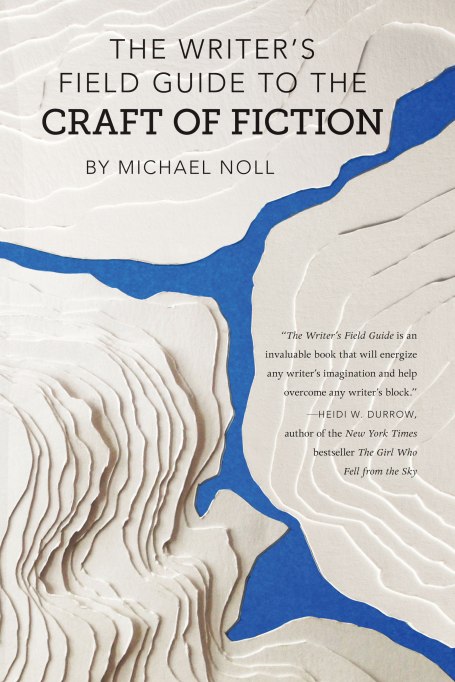
 One of the regular questions writers and teachers are asked is about the difference between literary and genre fiction. There are differences, but one of the things I found while putting together The Writer’s Field Guide to the Craft of Fiction was that both literary and genre writers were doing a lot of same things. This shouldn’t be surprising. A story is a story, and any distinctions almost certainly fall into what an author wants to focus on as opposed to any difference in quality.
This is especially true when you start looking at the basic building block of any story: the scene. Characters act, those acts have immediate consequences and possible effects down the line, and tension is built or released. In the chapter on writing scenes, I included four incredibly different writers–no kidding. No book has ever before paired the master of East Texas horror and mystery Joe R. Lansdale with Teju Cole, a writer whose work represents the height of meditative literary sophistication. And, the chapter includes not one but two Texas writers, including Bret Anthony Johnston, who recently moved from Harvard to the University of Texas to direct the famed Michener Center for Writers.
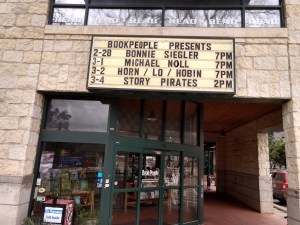
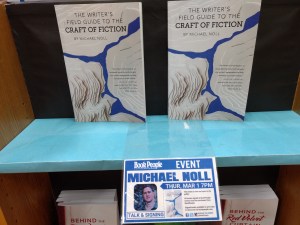 (If you’re in Austin, Johnston will be a special guest at the book launch for The Writer’s Field Guide this Thursday, March 1, 7 pm, at BookPeople.)
You can check out parts of the writing exercises based on their work, plus one based on Rachel Kushner’s award-winning novel The Flamethrowers. You’ll find that not only do the writers use similar strategies, they also work together to create a cumulative effect that can be used in a single work.
You can buy The Writer’s Field Guide at BookPeople and also here.
A Short Preview of the Exercises
Each excerpt is accompanied by an essay on the craft within it and an exercise for adapting the strategies to your own work. Here are one step from each exercise:

Give Your Characters Space to Be Themselves, inspired by Honky Tonk Samurai by Joe R. Lansdale
DISTILL YOUR CHARACTER’S PERSONALITY TO ONE OR TWO TRAITS. Some writers may resist this; their characters are too complex to be distilled to a few words. And yet we do this all the time in real life. We say, “That so-and-so is such a ____.” People who subscribe to astrology will say, “He’s such a Virgo.” Try filling in the blank. What sort of temperament or personality does your character have?
Use Repetition to Increase Tension to an Unsustainable Level, inspired by “Encounters with Unexpected Animals” by Bret Anthony Johnston (which appeared in The Best American Short Stories)
FIND A DETAIL THAT CREATES SOME EFFECT. This is a good strategy to use in revision. Read through a scene and find some detail that is charged negatively or positively. In Johnston’s story, a father doesn’t like his son’s girlfriend, and so he decides to force them to break up. But to make that story work, the reader needs to understand why he doesn’t like the girl. The reader needs to feel the father’s dislike, which is shown through details. In your scene, what makes your reader happy, sad, or angry?
Write Action Sequences with Minimal Choreography, inspired by The Flamethrowers by Rachel Kushner
SUMMARIZE THE ACTION. While you don’t want the final scene to resemble a transcript of Mortal Kombat, you do need to know what happens. It can be involved (numbers of kicks and punches) or general, as it probably was with Kushner (motorcycles ride through the streets, out of sight, and then return). Also, action doesn’t only mean fights and chases. If a character walks from one place to another, that’s an action sequence. Washing dishes, building a fort, and shining are also action sequences, as if anything that can descend into a list of actions: cast, reel, cast, reel, etc.
Make Interiority the Focus in Action Scenes, inspired by Open City by Teju Cole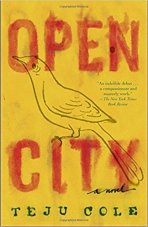
CHARACTERIZE THE MENTAL STATE. Cole does this plainly: “I was unnerved.” A line like this is helpful for a couple of reasons. First, it offers a filter for the thoughts. Aimless contemplation risks losing the reader. There should be a goal, an aim, a point. A character who is unnerved, angry, stunned, thrilled, relieved, or anxious has an end or desire in mind. Secondly, the mental state sets the stage for the action. Cole’s narrator is unnerved for good reason, as it turns out. He’s unnerved, and so are we.
Good luck.
You can buy The Writer’s Field Guide to the Craft of Fiction here.
 Everyone who has taken a writing workshop has, at some point, heard the advice, “Kill your darlings.” A lot of very confident writers have said or supposedly said it: Hemingway, Faulkner and Welty are just a few. Through repetition, the maxim has acquired the solidity of one thing that young writers often desire most: a rule to follow. Sometimes it’s even true. But even more often, you pick up a book you love and see example after example of lines that must have been precious to the author.


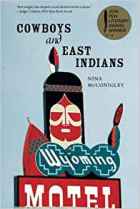 IDENTIFY THE MOTIVE FOR THE TOUR. The character leading the tour may have a destination in mind. Or the tour might be a way to kill time until some scheduled or expected moment. In McConigley’s case, the tour leads to both: a destination where Larson will make his request. This intention, or motive, is crucial. Without it, the characters are simply wandering around.
 GIVE YOUR CHARACTER A NEIGHBORHOOD TO INHABIT. To start, choose a common term (downtown, suburbs, etc.) that broadly applies to the neighborhood where your character lives, works, or spends time. Imagine that the character (or someone else) is explaining the location of this neighborhood. What phrase or term would be used? Not every character will necessarily use the same term. People who live downtown often view anything beyond their borders as the suburban hinterland, but people living outside of downtown will say things like, “I’m only 10 minutes from downtown,” suggesting that the suburbs are farther out. What does your character (and others) call your character’s neighborhood?
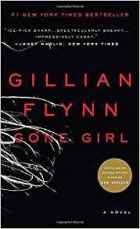 GIVE YOUR CHARACTER BEHAVIOR TO OBSERVE. Just as people who buy cars or have babies tend to pay close attention to other cars and other parents with babies, all people/characters tend to notice certain behaviors more than others. The question is this: What concerns are on your character’s mind? Someone who just bought a car, for example, is worried about buying the best/cheapest/safest one. What decision has your character made or what decisions must the character make on a daily basis? The rationale for those decisions will likely cause the character to notice people with the same rationale or, perhaps, who make different choices.
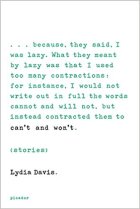 START WITH A PRONOUN. Davis’ story begins with we. It’s impersonal; we could be anyone. By the end of the sentence, it’s clear that the identity of we is wholly contingent on the setting. We are the people on the airplane. Nothing else about them matters. So, give yourself a pronoun: we, he, she, us, they, it. Don’t use a name. Avoid nailing down details for now. The point is to give your story a warm body, nothing more.
 FIND YOUR ELEPHANT. Because there are in nite possibilities for a story’s elephant, there are likely in nite ways to nd them. Let’s try two. First, dig into obsessions. Here’s a good way to identify them: imagine…you’re a guest on your favorite podcast. What are you talking about? If it’s Fresh Air by Terry Gross (not really a podcast, I know, but it’s where I fantasize myself being interviewed), then you’re probably talking about your life and childhood and where you come from. But the podcast could center on some aspect of pop culture—like Back to the Future Minute, the daily podcast that discusses the lm Back to the Future one minute at a time. (Yes, such a podcast really exists.) Almost all stories follow the writer’s interests or sensibilities. What are yours? Make a list. Brainstorm. Then pick one and search within it for some object (specific, tangible) to use as your elephant.
 IDENTIFY WHAT THE CHARACTER WANTS. This should always be one of the first steps to writing a story. The only thing more boring than a character getting what she wants is a character sitting in a chair, not wanting anything. Most stories revolve around desires for common things: love, vengeance, money, possessions, security, certainty, self-validation (the ability to say, “I told you so”), or the resolution to some unresolved matter. Lazarus and his sisters desire life—and, more broadly, an escape from death and suffering. What does your character want? What keeps your character up at night?
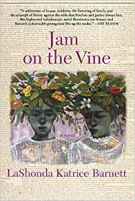 FIGURE OUT YOUR STORY’S EXPECTED SCENE. To do this, think about the premise of your story. If it involves ghosts, there will be an encounter with a ghost, right? If it’s a war story, someone’s going to kill or get killed. In a coming-of-age story, a character will be humiliated or embarrassed. Immigrant stories and American-abroad stories usually involve a moment of cultural difference, ignorance, or miscommunication. What is a scene that is promised by your premise? These scenes are usually the reason people want to read your type of story. Readers want to see encounters with ghosts. What do they want to see happen in your story?
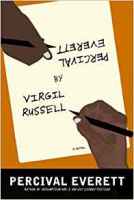 IDENTIFY THE SOURCE OF DANGER IN THE PREMISE. For many stories, this should be simple. If there’s a villain, you’ve found your danger. If something can be broken (contract, relationship, trust), there’s got to be a character who acts as the bull in the china shop. If someone doesn’t play by the rules (whatever the rules are), that person is the agent of danger. In Everett’s novel, the risk comes from the drug-dealing neighbor. He and his brother are the ones who will likely do something bad. So, ask yourself, who in your story has the potential to behave badly?


 Read to Write Stories