Tag Archives: creative writing prompts

How to Direct the Reader’s Gaze

15 Sep
Steve Adams' essay, "Waiting Till the Wait Is Over," is a meditation on hunting and writing and the surprising connection between the two.

Steve Adams’ essay, “Waiting Till the Wait Is Over,” is a meditation on hunting and writing and the surprising connection between the two.


If anything defines great writing, it’s the ability to control chronology and time. Inexperienced writers will start a chapter or story with an alarm clock and end the piece when the character goes to bed or passes out. In other words, their structure is driven by time and consciousness. A few weeks ago, I wrote about creating pockets of narrative as a way to avoid the chronology trap: the tendency to kill tension by narrating a story blow-by-blow, one thing after another. But that’s only one method for corralling time. Another great strategy is to step outside of chronology to point the reader toward what is important.

This strategy is put to excellent use in Steve Adams’ essay, “Waiting Till the Wait Is Over,” which was published in Notre Dame Magazine, where you can read it now.

How the Essay Works

The essay begins as a story about learning to hunt: “The greatest gift my father may have ever given me came as a byproduct of a wish — he wanted me to be a hunter.” The first paragraph ends with a condensed history of his education as a hunter:

I was fishing with him as early as age 3; at 7 carrying a BB gun as we skirted a cornfield for doves; by 9 crouching in a duck blind with my pint-sized 410 shotgun at the ready; and at 11 sitting next to him up high in a tree blind as we hunted deer.

The essay then elaborates on this brief chronology with several paragraphs of specific details:

  • “at 3 I could be quiet and still in a boat”
  • “By first grade I knew how to scan a trail for snakes, for copperheads and rattlers.”
  • “In the third grade I was carrying a firearm that could kill my father.”
  • “When I was 11 my father drove us from our home in Grand Prairie, one of the suburbs of Dallas-Fort Worth, down to his lease in the Texas hill country.”
  • “A few years later he bought me a rifle small enough to manage, a Winchester lever-action 30-30.”

The chronology of how Adams learned to hunt is now firmly established in the reader’s mind. Now, watch what he does next:

But I’ve jumped ahead. I want to go back to age 5. Or 6 or 7. To consider the hours I spent fishing in the boat with my father, walking beside him hunting doves, hunkered in the duck blind waiting for the birds to fly in. I sat beside him in the tree blind and never saw him shoot, or shoot at, a deer.

Story matters. As readers and viewers, we often demand an ending. I’ve heard many people say that once they start a book, they rarely quit before reaching the end. At movie theaters, you almost never see people walk out, even when them films turns out to be terrible. We are, it seems, genetically obligated to follow a story until the very end. Adams accounts for this, twice telling us the basic sequence of events that mark his becoming a hunter. But that chronology isn’t what he really wants to write about. And so, once he’s charted the story, he points us toward what he feels is truly important. He’s not subtle about it: “But I’ve jumped ahead. I want to go back to age 5. Or 6 or 7. To consider…”

I often say this in classes, but subtlety isn’t always a virtue. In workshop, students often use the word authority, and for a long time, when I was a student, that term had a fuzzy meaning. How did one gain authority? What made prose confident? The answer, I’ve come to believe, is that stating things clearly when clarity is called for. Adams writes, essentially, “That’s the outline of the story, but, now, look here. Pay attention to this.” He steps outside of the forward momentum of chronology and focuses on a particular idea, a particular moment—the aboutness of the story, the reason he’s telling it in the first place.

The Writing Exercise

Let’s step outside of chronology and direct the reader’s attention using “Waiting Till the Wait Is Over” by Steve Adams as a model:

  1. State what will happen in the story. Adams does this with his first line: his father wanted him to be a hunter. The suggestion is that this is exactly what happened. How can you state the chronological end of your story in the same way? You can use Adams’ template: “My ____ wanted me to _____.” The understanding behind such a statement is that you, the writer (or your character), either did or did not do what was desired. You can also cut the second party and make the statement personal: “I wanted to _____.” The word wanted can also be replaced with words like loved, feared, hated, or obsessed over.
  2. Give the basic chronology of the story. Adams’ father wanted him to become a hunter, and over the course of 14 years, that’s exactly what happened. Adams highlights moments along the way that stand out to him. Almost any narrative can be broken down this way: I was headed here, and along the way, this and this and this happened. You’re basically giving the short version of your story.
  3. Redirect the reader toward what’s important. Most stories are not, ultimately, about the ending of their plot. Instead, they’re about the meaning or unexpected consequences of that plot. Even The Lord of the Rings is not really a story about a hobbit tossing a ring into a mountain of fire; it’s about the passing of magic from the world, and Tolkien repeatedly directs our attention toward this consequence of the plot. So, consider a moment along your narrative arc that seems worth of considered attention. Put another way, what part of the story does your mind return to, over and over? What moment have you analyzed from every possible direction? Something is happening in that moment, and after you’ve laid out the basic chronology, you can go back and examine what it is. Try using Adams’ model: “But I’ve jumped ahead. I want to go back to ____.”
  4. Dig into that moment. Adams doesn’t stop telling his story, he just slows down. What details can you give about the moment you’ve returned to? What did you think about at the time? What do you think about now, when remembering it? When I was a kid, there was a TV show in which a girl could touch two fingers together and stop time in its tracks. In going back, you’ve created a similar moment. Time has stopped, and in that pause, what do you see?

Good luck.

How to Write Descriptions that Cut Both Ways

8 Sep
J. Ryan Stradal's novel Kitchens of the Great Midwest was called, by The New York Times, an "impressive feat of narrative jujitsu" and "a terrific reminder of what can be wrested from suffering and struggle" by Jane Smiley.

J. Ryan Stradal’s novel Kitchens of the Great Midwest was called, by The New York Times, an “impressive feat of narrative jujitsu” and “a terrific reminder of what can be wrested from suffering and struggle” by Jane Smiley.

When describing characters, it’s tempting to attempt the literary equivalent of a mug shot and try to capture an exact likeness. A description of this nature will rely on precise details: height, weight, hair color, eye color, clothes, and shoes. But what does this really tell us? My father likes to describe a person with a particular body type as being “built like a brick shithouse.” This delightful statement tells you as much about my father as the person he’s describing, which is often the effect of good writing. An effective description will reveal essential qualities of both the character being described and the character doing the looking.

A great example of this two-edged description can be found in J. Ryan Stradal’s novel Kitchens of the Great Midwest. You can read an excerpt at the website of Stradal’s publisher, Pamela Dorman Books.

How the Novel Works

Early in the novel, we’re shown an encounter between two characters who will eventually get married. So far, the narration has followed Lars, and so the encounter is portrayed from his perspective:

It was during these happy weeks when Cynthia Hargreaves, the smartest waitress on staff—she gave the best wine pairing advice of any of the servers—seemed to take an interest in Lars. By this time, he was twenty-eight, growing a pale hairy inner tube around his waist, and already going bald. Even though she had an overbite and the shakes, she was six feet tall and beautiful, and not like a statue or a perfume advertisement, but in a realistic way, like how a truck or a pizza is beautiful at the moment you want it most. This, to Lars, made her feel approachable.

This passage contains two different kinds of descriptions. The first is literal. We learn Lars’ age and two specific details about his anatomy (hairy inner tube, bald). With Cynthia, we about her height and teeth and one of her physical ticks. In short, we’re shown both characters’ distinctive physical traits. But these, for me, aren’t the best lines. Instead, it’s the statement that explains her beauty, in Lars’ eyes: “not like a statue or a perfume advertisement, but in a realistic way, like how a truck or a pizza is beautiful at the moment you want it most.” It’s a cliché to say that beauty is in the eye of the beholder, but it’s also true. Good writing often revitalizes such cliches. (And, as much as I’d like to claim that piece of wisdom as my own, it’s been previously stated by, alas, Jonathan Franzen and covered in-depth in this book by Orin Hargraves.)

That line about trucks and pizza reveals something about Cynthia (she’s not what some might call “classically beautiful”), but it reveals even more about Lars, the kind of man who connects beauty to trucks and pizza. It also tells us something about the nature of his desire. He’s not simply admiring Cynthia the way someone might admire a statue. Instead, he wants her, which is a feeling one doesn’t usually get in a museum unless you’re an art collector. So, we learn about Lars’ needs, not just his aesthetic bent.

The Writing Exercise

Let’s write double-edged descriptions using Kitchens of the Great Midwest by J. Ryan Stradal as a model:

  1. Describe the thing literally. Don’t use metaphor. Instead, focus on physical traits—height, weight, particularly body parts like teeth or hair—or on personality traits like a big smile, quick to anger, easy to get along with. Write a lot. Go overboard with the description. It may be the case that the character isn’t firmly planted in your mind, and so it can be helpful to describe as much as possible.
  2. Give the description coherence. Don’t treat your characters like strangers. There’s a reason that eyewitness descriptions tend to be vague; they eyewitnesses don’t know the person, haven’t developed an opinion toward the person, and so recollect the most general of details. But if you were to describe your partner, sibling, child, parent, good friend, or mortal enemy, you’d likely be precise and specific. You wouldn’t, however, be exhaustive. You’d mention some character traits but not others, choosing the ones that fit into your sense of the person. This is your goal for a fictional description as well. Stradal does this in a very clear way in this passage: “Even though she had an overbite and the shakes, she was six feet tall and beautiful.” The sense of the person is important. Someone else might simply focus on her teeth and shakes and not consider her beautiful, and that sense of her would lead to an entirely different description. So, try this: Choose a broad word like beautiful, ugly, mean, kind, intelligent, savvy, deviouslazy, or ambitious. Then, write a sentence-long description that aims toward that word (and perhaps even uses it). In this sentence, you could include details that don’t seem to fit (like “an overbite and the shakes”) but say, “But he was ____ anyway.”
  3. Add the viewer’s perspective. Choose a set of eyes for us to see the character through. In Stradal’s case, he shows us Cynthia through Lars’ eyes. Because they’re his eyes and not someone else’s, Cynthia’s beauty takes on a certain tint. She’s not just generically beautiful. Instead, she’s beautiful “not like a statue or a perfume advertisement, but in a realistic way, like how a truck or a pizza is beautiful at the moment you want it most.” So, you’ve got a coherent description and a word (beautiful, ugly, etc.). Now, add an explanation of how the character is beautiful, ugly, whatever, in that particular person’s eyes. Don’t rely on a generic intelligence, savvy, or laziness. Instead, make a comparison, literal or not, to something else; that comparison should tell us something about the person seeing the character, the person whose head we’re in. The difference in calling something beautiful like a chandelier and beautiful like a neon light tells you a lot about a character.

Good luck.

How to Create Structure with Teasers

1 Sep
Julia Fierro's debut novel, Cutting Teeth, was called "comically energetic" by The New Yorker.

Julia Fierro’s debut novel, Cutting Teeth, was called “comically energetic” by The New Yorker.

I often argue that, from a craft perspective, there is almost no difference between literary and genre fiction. The novels may be pointing their readers toward different things (character development versus plot, for instance, though that’s mostly a false distinction), but the strategies used to direct the readers are often the same. For example, genre books often use plot spoilers to create structure; if we know someone will end up dangling from a clock tower, we’ll read to find out how it happened. This same strategy is also used by literary writers. The content may be different (domestic strife rather than terrorist plot, though, again, that’s an oversimplification), but the technique is the same.

A good example of this is Julia Fierro’s novel Cutting Teeth. It’s a literary novel that was published last year to much acclaim, and you can read an excerpt here.

How the Novel Works

The novel is about a mommy group (for the non-parents: moms with young children who meet for playdates) who decides to vacation together with their families over Labor Day weekend. Each chapter is told from the point of view of a different mom, which includes the one dad in the group. His first chapter begins this way:

It had been over a year since Rip first began calling himself a mommy.

The sentence suggests a question: why does Rip call himself a mommy? There are several possibilities, and even if you can guess his rationale, that knowledge doesn’t give a complete answer to the question. We still want to know how he came to this decision. But the chapter doesn’t give the answer quickly. Instead, it treats the statement as a kind of flag in the sand and then backs up in time. We know where we’re headed (why he calls himself a mommy), and so we’re willing to read backstory.

But the structure of the chapter doesn’t simply come from backstory. Yes, we find out that Rip stays home with his son while his wife works and that, though he pays lip service to the difficulties posed by full-time parenting, in truth, “it is the best life Rip can imagine.” But what’s more important, and what drives the chapter forward, is the consequence of this backstory. This is the life that Rip wants. He does not want to go back to his life pre-child or act like a “dad”:

They didn’t understand he couldn’t befriend just any guy. He wasn’t just any dad. He felt most comfortable with the mommies because, in the last four years, he had become a mommy.

So, the chapter opens with a provocative statement, one that we want to know more about, but before it returns to the statement, the chapter reveals why the statement matters. It shows us the stakes for this question of identity. The rest of the chapter, then, puts Rip in situations that challenge his identity as a mommy, or at least make it uncomfortable for him. We keep reading because we know how much that identity means to him.

In short, the opening statement creates space for not just backstory but an explanation for the characters’ personal stakes in the story.

The Writing Exercise

Let’s use a teaser to create structure using Cutting Teeth by Julia Fierro as a model:

  1. Find something provocative about a character. It can be a question of identity, with the character identifying as something that might surprise others (I’m a guy, but I’m a mommy). It can also be a question of desire (I want this thing that people think I shouldn’t want). Or, it can be a question of intent (I intend to do this thing that people will not expect). If you find that your character doesn’t have a provocative identity, desire, or intent, your story may not have the oompfh to keep going. Fiction needs something amiss.
  2. State the provocative thing in a sentence. Be succinct. You’re intentionally trying to pique the reader’s interest.
  3. Back up. Now that you’ve created suspense and interest, step back and explain how the character arrived at that identity, desire, or intent. This means backstory. A useful way to begin is with a sentence similar to Fierro’s next sentence: “In the beginning, it had been a joke.” Try that opening: In the beginning… Or this: It had not always been this way. In short, bring the reader up to speed about the narrative, the sequence of events, that led to that statement being true.
  4. Explain why the statement matters. Fierro suggests the difficulty that Rip will have if his role as “mommy” disappears. He’ll be adrift. So, he develops a plan to convince his wife to have another baby. This is an effective strategy. Present the possibility that the character won’t get what she wants: the identity will be revoked or taken away, the desire will be unfulfilled, or the intent will not be achieved. If the character is unsatisfied, then what? If we know why it matters to the character, it will matter to us and we’ll keep reading as the story returns to the statement and moves forward into a plot that tests whatever statement you’ve written.

Good luck.

How to Frame Chronology

25 Aug
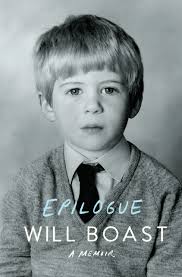
Will Boast's memoir Epilogue describes a family tragedy and revelation the force Boast to reconsider his definition of family.

Will Boast’s memoir Epilogue describes a family tragedy and revelation the force Boast to reconsider his definition of family.

When we sit down to write about our real lives, it’s easy to fall into the chronology trap. We write, “This happened and then this and then this.” The essay or memoir becomes, simply, one thing after another. This structure might sound logical; after all, isn’t that how our lives happen, one thing after another? Not really. At any moment, the complicated machines that are our worlds contain many moving pieces, some we see and some we don’t. But we only think about a few of them at a time, and it’s not always the pieces right in front of our faces. We tell stories to ourselves about our lives and histories, and those stories help structure our sense of what is happening to us and around us. When writing these stories down, chronology can actually be the enemy of good writing. What we need is a way to frame it, just as we do in real life.

An example of a memoir that frame chronology really well is Will Boast’s Epilogue. An excerpt was published at VQR Online, and you can read it now.

How the Memoir Works

The begins with the death of Boast’s father. His mother and only brother have recently died as well. These deaths create a natural occasion for thinking about the past—what else is a eulogy but a summing up of the chronology of a life? So, Boast begins with summary: “On the morning of the day he died…” and tells us how his father died. What makes the passage interesting from a craft point-of-view is that it’s not simply a list of his father’s actions and whereabouts. Instead, those actions are filtered through a lens: “My father was never one to complain.” Then, in the passage that follows, the moments of his father’s last day are connected to that statement about his personality and character:

On the morning of the day he died, an ulcer he’d suffered from for years, and left untreated, ruptured and began to bleed. Two days later I met with the town coroner. He told me the end had been painless, that, as his life leached away, my father would only have felt increasingly weak and light-​headed. The coroner, trying to make me feel better, was lying. By any other account, when an ulcer perforates and blood, bile, bacteria, and partially digested food begin to spill into the abdominal cavity, you feel as if a knife has just been buried in your guts. You might faint. You might vomit blood or something that looks like coffee grounds—​blood oxidized black by stomach acid. Or your body shuts down completely, total collapse its only remaining response to the shock and agony.

But my father, on the day he died, carried his burning, pleading stomach with him on his morning commute and worked his usual day at the plant, seven in the morning till seven at night.

As a result, a coroner’s report tells us about not just the cause of death but also something about the man who died. The chronology is given a purpose: tell what happened and pose a question. What kind of man doesn’t complain, even when in physical agony? Questions like that are the basis for story.

Boast fills the memoir with paragraphs that begin with thesis-like sentences. Here’s another: “Growing up, I thought he was unbreakable.” What follows is a paragraph containing details that convey unbreakability:

“On the coldest Wisconsin winter days, he went out gloveless and hatless, his face and fingers gone angry red in the frigid, prickling wind. Never bothered him. Freeze him, burn him, cut him, kiss him—​he wouldn’t even flinch.”

But the statement also sets the stage for a fairly straightforward chronology of his father’s childhood through his teen year—a necessity for any kind of accounting of a life. Most accountings, however, lead only to one thing: adulthood and, finally, death. But in Boast’s telling, the account of his father’s life leads to a point:

“The point of the story, I understood, was not that winners could suffer through and losers could not. The point was that showing your pain was a choice, and the choice not to show it required only an exercise of will. How joyous to laugh and play on in the face of pain!

By making a point, rather than just telling what happened, the prose is freed from the chronology trap. It gains the freedom to slow down, to stay in a moment and show it in great detail—creating pockets of chronology within the larger story. It can also skip over details that might seem important to a basic timeline but that don’t meaningfully contribute to the point. The writing can move back and forth in time because each paragraph or passage suggests the story (the point) of what we’re reading. The result is a memoir that is so much richer than the chronology behind it—even when those events are, as with Epilogue, stunning.

The Writing Exercise

Let’s give meaning to chronology using Epilogue by Will Boast as a model:

  1. Decide what thing you want to tell. Regardless of whether the writing is fiction or nonfiction, we often approach scenes or passages with one detail in mind, a fact or anecdote or description that shines brightly in our imaginations. Of course, to get it onto the page, we need some reason. It can’t sit there all alone. So we create a home for it, which usually involves chronology of some sort. For now, though, set that chronology or story aside. What’s the detail?
  2. Consider why the detail stands out? Some details are so weird or wild that they justify their own presence, though this is rarer than you might think. (Jim Varney, he of Ernest P. Worrell fame, made a movie about a man with a hand that stuck off the top his head. You’d think that’d be weird enough to sustain an audience’s interest. But you’d be wrong, as Dr. Otto and the Riddle of the Gloom Beam makes amply clear.) Instead of relying on shock, think about meaning. Why does the detail remain with you? What does it say about the people involved? Did they react to or treat the detail the same as everyone would? Did they think about it in a way that was particular to their community or group or individual personalities? This is where meaning is found.
  3. Write a sentence that suggests or directly states this meaning. It doesn’t need to be grand or philosophical. It can be simple and straightforward: “My father was never one to complain.” That sentence tell us how to think about the details that follow. For your sentence, pick one that tells the reader how to think about the details or chronology that you’re about to write.
  4. Write the chronology toward a point. What happened? What is the sequence of events around this detail? As you write it, think about where you’re headed. Not every passage will end with a sentence that begins “The point of this story is…” but every passage generally ought to end with such clarity. If the point is confusion (I didn’t know what to think), then that confusion should be clear. It’s this sense of direction that makes chronology a story and not just a list of events.

Good luck.

How to Give a Story’s Plot Enough Fuel to Finish

18 Aug
Andrew Malan Milward's collection, I Was a Revolutionary, takes a fresh look at the complex history of Bleeding Kansas and its role leading up to the Civil War and the aftershocks that are still present today.

Andrew Malan Milward’s collection, I Was a Revolutionary, takes a fresh look at the complex history of Bleeding Kansas, from the burning of Lawrence to the aftershocks still present today.

As writers, we all eventually experience this moment: we’re sitting at the computer, and the story just quits. It won’t move forward, no matter how many guns we hang on the wall or strangers we have knock on the door. So what do we do? Very likely, go back to the beginning, searching for that wrong piece that has fouled everything up. It’s often the case, though, that the problem isn’t a wrong piece but not enough pieces. A story needs multiple plot threads, multiple questions for the reader to wonder about. The solution to writer’s block, then, is often to find ways to introduce more plot threads at the beginning of the story.

A terrific example for how this can be done is Andrew Malan Milward’s story, “I Was a Revolutionary.” It’s the final story in his new collection, I Was a Revolutionary, and was first published in Virginia Quarterly Review, where you can read it now.

How the Story Works

The story has three primary plot lines, and each one is introduced right away. Here’s the first:

On the first day I tell them: “When searching for the Seven Cities of Cibola, Coronado was so disappointed by what he found in the land that would one day become Kansas that he strangled the guide who’d brought him here and turned around.”

No one laughs. Their blank stares communicate only this: It’s the first day of class. Don’t get cute.

The narrator is an adjunct instructor of Kansas history at the University of Kansas. He’s developed a passion for the subject, but his students are less than enthusiastic. Will he be able to get their attention, and, if so, what will happen? The first plot line is established.

Here’s the second line:

I check e-mail and find my wife has written. We used to speak openly and directly. Now we e-mail, and hers arrive with all the formality of a communiqué. Paul, I would like to get some more of my things this evening. Please leave the house from 7-8. —Linda. Strange to think of her across campus, over in Sociology, composing this terse missive. Stranger still to think that when the divorce papers arrive, we could, if so inclined, settle the whole matter via intracampus mail.

The narrator’s wife is divorcing him, and, as with all good divorce stories, being separated just mean they’re physical parted. They still work in the same place, which leads to the final plot line:

I’m debating whether to reply when Brad, the chair of the history department, pops in to say hello.

“Welcome back, partner. How was break?”

“Cold,” I say.

He laughs and asks if my eleven thirty went okay.

Brad toes a fine line between administrator and concerned colleague, a fact that seems to color any conversation I have with him. I shouldn’t complain; he’s always been pretty good to me. When the university hired Linda almost twenty-five years ago, he took me on as an instructor.

Not only does the narrator work in the same place as his soon-to-be ex-wife, but he is also, to some extent, dependent on her for his job, which his boss makes clear through awkward concern.

The story introduces these plots lines succinctly but clearly. This is important to remember because it would easy to read this story and several of the others in the collection and focus on the innovative way that Milward combines history with present action. This story in particular includes long lists of historical facts and events, and it might be tempting to view it as idiosyncratic or experimental—which it is, in a way. But it’s also quite deliberate about the way it introduces plot, which helps get the reader to buy in to its more unconventional qualities.

The Writing Exercise

Let’s introduce multiple plot lines, using “I Was a Revolutionary” by Andrew Malan Milward as a model:

  1. Identify a primary plot line. In “I Was a Revolutionary,” this is probably the narrator’s divorce and deteriorating relationship with his wife. Because he’s getting divorced, his job is in jeopardy and he gets involved with two students in a way that he might previously have avoided. This also happens to be the most usual of the plot lines; marriage/divorce stories are a standard of pretty much every genre. So, consider which of your potential plot lines most resembles a standard plot line, one that would drive a popular film. Sum it up in a line.
  2. Build a plot line from the world of the plot. What is happening around this primary plot. In “I Was a Revolutionary,” the characters work at a university. This may have been deliberately chosen by Milward, or it might have just been a job he stumbled upon when writing the story—it doesn’t matter. Whatever exists around the plot, make it matter. Find a way to make its very existence hinge on the outcome of the primary plot. For example, if the divorce goes badly, we know the narrator’s job could be at risk. So, find a way to put the foundation of your characters’ lives at stake: jobs, home, children, whatever makes them happy or secure. Connect it to the primary plot.
  3. Build a plot line from the characters’ interests. This may be the most idiosyncratic plot line. As with the Spanish Inquisition, no one expects an obsession with Kansas history. Yet there it is, figuring dramatically in the story. Milward accomplishes this by making it relevant to the narrator: he was once part of the Weather Underground, and so when he discovers the revolutionary past of Kansas, he’s naturally drawn to it and feels compelled to share it with other revolutionary-minded individuals—in this case, his students. Of course, revolutionary is a hazardous career path, as is working with people whose fervor dwarfs your own. The important thing is that the narrator’s interest in Kansas history ties in with his job and, thus, his divorce. This may seem inevitable, but it’s not. Lots of people who are not college instructors visit war sites and re-enact battles. But Milward found a way to channel this interest into the world he’d created for the story. So, identify an interest or obsession in your character and a way to connect it to the world of your story.
  4. Play with the connections. If you build these plot lines from the same basic materials (the world of the story), then they will eventually collide, which is what you want.

Good luck.

How to Raise the Level of Analysis in an Essay

11 Aug
Sarah Smarsh's essay, "Poverty, Pride, and Prejudice in Kansas," about legislation that would limit the amount that welfare recipients can withdraw from ATM machines appeared in The New Yorker.

Sarah Smarsh’s essay, “Poverty, Pride, and Prejudice in Kansas,” about legislation that would limit the amount that food stamp recipients can withdraw from ATM machines appeared in The New Yorker.

We enjoy a wealth of choices for news and analysis because of online magazines, which is good for readers (more niche writing and unexpected angles) and good for writers (more opportunities for publication). However, the abundance of cultural, political, and social analysis has changed our expectations for analysis. It’s not enough to report the facts or make an insightful point. The best essays make a kind of Malcolm-Gladwell leap that moves from close-frame analysis (what is happening right here, in this specific instance) to the big picture. Many writers attempt this leap but with mixed results. There is an entire genre of essay, for example, that critiques the peculiar, occasionally insightful, occasionally offensive leaps made by New York Times columnist David Brooks.

An example of a truly insightful, carefully considered leap can be found in Sarah Smarsh’s essay “Poverty, Pride, and Prejudice in Kansas.” It was published in The New Yorker where you can read it now.

How the Essay Works

The essay explains a complicated piece of legislation recently signed by Kansas state legislators. The bill would cap ATM withdrawals by welfare recipients to twenty-five dollars a day. Smarsh does a nice job of providing financial and political context for the bill: why it was passed, other restrictions attached to it, and a primer on the complicated relationship between ATM transaction fees and government contracts.  This is the “report the facts” aspect of the essay, and after it’s accomplished, Smarsh makes a leap:

As James Baldwin wrote (and as much research being published during this moment of historic wealth inequality demonstrates), it is expensive to be poor.

The leap is a logical one, from the specifics of ATM use by the poor to other expenses they encounter. But it’s also a political and sociological leap, as Smarsh makes clear in the rest of the passage:

There are the overdraft fees, the maintenance costs of ramshackle houses and cars, the credit-card debt accrued for necessities that low wages don’t cover, the interest paid on loans for college educations. Poverty’s highest costs are often psychological ones, though, borne by the neurochemistry of stress and by sociopolitical values that equate financial failures with moral ones. Laws creating barriers between impoverished families and public assistance intended for food and shelter represent a particular form of contempt for the poor—we’ll help you, these measures suggest, but we won’t trust you with that help. And they are imposed in the pall of hypocrisy and self-interest.

She moves from practical difficulties to psychological ones, putting the bill into a larger context, arguing that it’s only one manifestation of the overwhelming contempt that many Americans have for the poor.

Smarsh supports this shift in argument in two ways. First, she offers a quote from the Washington Post that makes a very similar point. Then, she tells two personal anecdotes, one from her experience working for a Kansas social-service agency and another from her childhood, when her family qualified for free and reduced school lunch. It’s this support (from other writers and from direct experience) that make the leap in analysis work. The biggest complaint about David Brooks’ essays in the Times is that they seem to exist in a vacuum, disconnected from fact or observation. But Smarsh has made a leap that she can tether to reality, and it makes her argument that much more powerful.

The Writing Exercise

Let’s make a leap of analysis in an essay using “Poverty, Pride, and Prejudice in Kansas” by Sarah Smarsh as a model:

  1. Report the facts. No matter the kind of nonfiction, whether it’s a personal essay or reportage, the foundation for the entire piece is hard information. This happened. The facts may not appear in the essay’s first paragraph, as shown by Smarsh’s essay. But they hold the entire structure together. To keep from getting lost in them (which isn’t easy, in personal stories and in complex explanations of financial transactions), summarize the facts in a line or two. The New Yorker actually does this in its photo caption: “In Kansas, a pending cap on A.T.M withdrawals for welfare recipients is the state legislature’s latest exhibition of scorn for low-income residents.” Notice the structure: fact + context. In this case, the context is a kind of philosophy or attitude. But it could be any sort of context. We do this in personal stories all the time: Oh, that’s just how he is. So, quickly summarize your facts and the context that seems most important to understand them.
  2. Make the leap. Context can guide you. We just established that Smarsh’s context is that the legislation is the latest episode in a long history of scorn for the poor in Kansas. So, it makes sense to leap from there: so what if the Kansas legislature doesn’t care about poor people? Smarsh answers that question by telling us something we might not know: the paradoxical truth that it’s expensive to be poor and that these expenses exact a psychological toll. As a result, the legislation actually adds to the stress that poor families bear. You can think about the leap as a kind of direct address to the reader: You might be tempted to think about these initial facts like this, but if you know this, then you’ll see things differently. So, to make the leap, consider the readers’ perspectives, what they’ll likely think. Then, ask yourself what piece of information might disrupt that belief or perspective. Because you’re offering a new way of thinking about the facts, the leap may involve a kind of philosophical shift.
  3. Back up your leap. Don’t be David Brooks, making grand pronouncements without evidence. Once you’ve disrupted the readers’ view of the essay’s facts, prove that the new perspective you’re offering is supported by reality. Use expert quotes, stats, or facts. Use personal experience and anecdotes. Ground the reader’s new way of thinking. Tether it to something hard and heavy so that it doesn’t float away after the readers walk away from the essay.

Good luck.

How to Dig Deeper into a Scene

4 Aug
Justin Taylor's story, "So You're Just What, Gone?" appeared in The New Yorker.

Justin Taylor’s story, “So You’re Just What, Gone?” appeared in The New Yorker.

If there’s anything I’ve learned as a writer, it’s that I tend to create a potentially interesting scene and then exit it too quickly. I don’t think I’m alone. Because stories value compression, it’s natural to compress everything, all of the time. But the best moments in a scene don’t always arrive immediately. To reach them, you must dig deeper into the scene to discover what’s inside.

Justin Taylor’s story, “So You’re Just What, Gone?” starts with a long scene that ends with a great, tense, plot-driving moment. It was published in The New Yorker, where you can read it now.

How the Story Works

The story’s opening lines set the scene:

It’s one of those airlines where you get your seat assignment at the gate, and they’re late to Logan and slow to get through security, so the lady at the counter can’t seat Charity and her mom together. Which means five-plus hours of freedom—hallelujah!

Charity is fifteen years old, and so, of course, the story makes her sit next to this guy:

When the guy appears, he’s older, way older—like thirty, maybe. He wears leather sandals and a powder-blue slim-cut dress shirt, untucked and with the sleeves rolled. When he lifts his black backpack up into the overhead compartment, Charity finds herself staring straight into his exposed navel, a bulging outie like a blind gold eye in his belly, which was waxed at some point and is now stubbled, like a face. The top of his boxers peeks up above the waist of what Charity just so happens to recognize as three-hundred-dollar True Religion jeans.

This is the point where it would be tempting to dive directly into conflict and, then, end the scene. But that’s not what Taylor does. He’s got a potentially tense situation, and he milks it.

First, he flirts with her a bit, mildly, but the flirtation ends quickly when he becomes absorbed in a newspaper. Next, Charity falls asleep and wakes to find that she’s been resting her head on the man’s shoulder. Then, they stand up at the same time to use the restroom, and when they return, talk a bit until this moment:

“I’m Mark,” he says. “What’s your name?”

“Charity.”

“Charity. That’s pretty.”

She can feel her cheeks warming. “I don’t know.”

“No, really. It is. You are.”

“O.K. I mean, thank you. Thanks.”

He gives her his number, and then this happens:

He palms her inner thigh and squeezes it, two pumps, the second one a hard one, his wrist digging against the crotch of her jeans.

“Call me when you get bored, Charity,” he says.

To arrive at this moment has taken almost a third of the story. We’re not stunned at this turn of events because it was suggested by their proximity to each other. But, we are creeped out. Taylor has slowly led us to the man’s hand on Charity’s thigh, giving the scene space to steadily make us more uncomfortable. So, how did he do it?

The situation (young girl, older man) presents an obvious narrative arc. Rather than rushing to that ending, Taylor picks a series of moments to depict along the way, inching us closer and closer to the inevitable end. They’re small moments: minor flirtations and incidental physical contact, but because we suspect where this is headed, each moment is charged. That charge is the reason we savor the scene.

The Writing Exercise

Let’s dig into a scene using “So You’re Just What, Gone?” by Justin Taylor as a model:

  1. Identify the situation and a natural narrative arc. This is something you may do after you’ve written a rough draft of the scene, simply because we don’t often know what’s going on until we’re in the thick of it. So, state the situation as clearly and succinctly as possible (teenage girl sat next to pervy man on plane). Then, consider in what direction the scene could naturally move (man hits on girl). The genius of many scenes is not that they do the unexpected but, rather, that the expected thing is so dramatic and tense. In a horror movie, when a character walks into the dark alone, we know what’s going to happen. It’s the wait that thrills us. So, figure out where you’re going with the scene.
  2. Brainstorm points along the arc. What large or small moments might occur before the scene’s end? Taylor’s moments are both large (she falls asleep on the man) and small (he lets her by to use the restroom). What matters is that each encounter builds on the previous one. Richard Ford once said that stories make impossible things possible. In this story, Taylor allows the characters to become comfortable enough with each other that the man’s hand can move to the girl’s thigh. The man wouldn’t do this immediately. Seduction (or at least familiarity) is needed. How can you show the steps required to allow your ending to occur?
  3. Build mini-scenes around each point. Each moment in Taylor’s scene is not long. The moment when Charity awake with her head on the man’s shoulder is only a few paragraphs. Each moment has its own small arc—its own increasing tension. So, in each of your mini-scenes, think about how you can ratchet up the tension, even a little. How can each mini-scene end with more tension than it began?

Good luck.

How to Write Multifaceted Characters

28 Jul
Herpreet Singh's essay,

Herpreet Singh’s essay, “Choking Out the Natives,” appeared in The Bitter Southerner and tells the story of a mixed marriage in Louisiana.

There are two ways of thinking about personality. In one, personality is a coherent thing that allows us to make definitive statements about someone, like, “He’s a bitter person” or “She always undermines her own happiness” or “She just makes you feel good about life.” In the other view, personality is sliced up, and so a person can be bitter at times, happy at times, and can be both cruel and loving. In this version, you might say to someone, “He’s such a jerk,” and have that person say, in response, “But he’s always been so nice when I’m around.”

Contradictory and seemingly mysterious behavior can be fodder for great writing, and nowhere is this more true than in Herpreet Singh’s essay, “Choking Out the Natives.” It was published at The Bitter Southerner, where you can read it now.

How the Essay Works

The essay begin with a description of Singh’s father-in-law, introduced this way:

When I started dating Chris, a friend asked, and then many friends asked, bemused, “Do you know he’s Honest Abe’s son?”

Honest Abe, as it turns out, is both a person and a character. He owns a tire shop, and his commercials, in which he starts, are famous in his hometown. We’re given a glimpse of several:

Him, slim and 6 feet 2 inches, a workhorse of a man, wearing gigantic prosthetic ears, shouting to the camera, “Hi, folks! Honest Abe ear — I mean here! I still have WAY too much inventory. I’m not kiddin. HELP! I HAVE A WHOLE BUNCHA TIRES COMIN OUT MY EARS!”

We learn something else about Abe, too:

He is also the man who legally adopted and raised Chris with Chris’s biological mother when Chris was 2 or 3, not that Chris has ever thought of any other person as his dad.

This early portrait of Abe is funny and sympathetic. We like the guy, in part because he’s impossible not to like, a colorful local celebrity, the stuff of great Southern writing. But, of course, it’s not enough to drive an essay. What makes this essay so good is what else we learn about Honest Abe. I won’t spoil it for you, but when it arrives on the page, it’s stunning. (Read it here.)

The Writing Exercise

Let’s write a multifaceted character using “Choking Out the Natives” by Herpreet Singh as a model:

  1. Identify the overriding trait of the character’s personality. This works, incidentally, for fictional and nonfictional characters. For either, think about the character in terms of your emotional reaction. Sure, we can say that somebody is a good person, but if we get incensed thinking about them, then their overriding trait, for us anyway, is something other than goodness. For example, Singh makes her emotional reaction to her father-in-law clear later in the essay, and it’s probably that reaction that prompted the essay. Sum up that trait in a sentence or two.
  2. Identify other traits. Again, follow the emotion—but this time, follow someone else’s emotional reaction. Singh does this at the beginning of the essay, when a friend asks, “Do you know he’s Honest Abe’s son?” For the friend, Honest Abe is an entirely different person than he is to Singh, and her positive reaction reflects that difference. So, how would someone else view the character? Do this as many times as you need. Move through the character’s day and life: childhood and adulthood, work and at home, in public and in private. Find as many traits as you can. Sum each up in a sentence or two.
  3. Start with a trait that seem contradictory to your own reaction. Buy into this trait—don’t give it a half effort. Make the reader believe that this is really how the character is. Singh does this by giving examples—showing the character being the way others perceive him. You’re setting the reader up so that when another, contradictory trait (the more important trait, perhaps, or simply another trait) the reader will be surprised. The contradiction can also drive the story or essay forward as it gives the writing something to chew on: how can a person act in such different ways? That question can be unanswerable, and that’s why it’s worth writing about.

Good luck and have fun.

How to Withhold Crucial Plot Information

21 Jul
Sarah Layden's story, "Bad Enough With Genghis Khan," appeared in Boston Review.

Sarah Layden’s story, “Bad Enough With Genghis Khan,” appeared in Boston Review.

When I was a kid, I devoured Agatha Christie novels, sleuthing along with Hercule Poirot, determined to solve the mystery before he did. I figured out pretty quickly that Christie was holding out on me, not showing me everything I needed to put the pieces together. But instead of getting frustrated, my inability to outwit her detective actually made me love the books more. I was in the hands of someone smarter than me, and I knew that not only would all would become clear by the final page, but it would also be a little bit shocking.

As writers, we sometimes want to withhold information in order to create a surprise ending, but it’s not easy to do. Many times, the readers know we’re messing with them and can see the strings being pulled. The best shock is the one that seems to come out of nowhere, and this is exactly what Sarah Layden pulls off in her story, “Bad Enough With Genghis Khan,” which you can read now at Boston Review.

How the Story Works

The ending is suggested, though we don’t know it yet, in the story’s first sentence:

The week after my husband’s retrial and acquittal, we went to a Mongolian barbecue restaurant for a celebration dinner with another couple.

Notice how smoothly that sentence operates. It begins with a trial and verdict and ends with Mongolian barbecue and a celebration. The rest of the paragraph is ostensibly about the meal and what happens to the other couple in the future (they get divorced). There is an emotional undercurrent present—the narrator gets drunk and starts to cry—but it’s not clear why she’s upset. (Remember, the trial only received half a sentence and hasn’t been mentioned again.) The next paragraph, which is its own section, moves onto a different situation. The trial is behind us.

The middle of the story uses different scenes and situations to develop a connection between sexual encounters and Genghis Khan, the infamous conqueror who raped and pillaged his way through Asia. Each of these scenes is compelling, but the relationship between them isn’t clear. We’re not sure where we’re headed, but lines like these have us intrigued:

Blushing, I delete the history from my browser but forget to delete it from my secret backup location, in case I want to remember the things we’ve deleted. My husband throws something away and thinks it disappears. Images I can never erase.

Then, in the second to last second, we encounter this (spoiler alert):

When a young woman has lived an unharmed life, she is not so much naïve as incredulous at the threat of harm. No way will she wind up like the kidnapped and presumed-murdered girl who was about to inform on drug dealers; or the girlfriend knocked down the stairs in a fight and then dismembered, her limbs, head, and torso hidden in the walls; or the very young girl secreted to the hills above her family’s home, enduring daily rape by a man old enough to be her grandfather; or the teen runaway kept as a sex slave in the secret compartment of one man’s basement. I sat beside the judge’s bench and typed these words, transcribed these testimonies, remembering meeting my husband in the same courtroom: his arm in a sling over his police officer’s uniform, the gold wedding band on his finger both remnant and reminder, his eyes hooded. His missing wife’s body never turned up.

The passage seals the connection between sex and violence and then, in the middle of a sentence, finally returns to the trial we saw briefly at the beginning of the story. We finally learn what the narrator might have discovered in her husband’s Internet browsing history. It’s an effective move. When I first read the story, I actually gasped when I finished the line and realized what it meant. What else could a story possibly hope to achieve?

What makes the story great, though, is that it doesn’t stop there. In the final section, our discovery is given emotional resonance. The narrator is talking to a friend who says, “Never get divorced…it’s cold out here.”

The distance between that piece of advice and what we’ve learned about the narrator’s marriage is what gives the story the evil chill of great crime fiction.

The Writing Exercise

Let’s withhold crucial information using “Bad Enough With Genghis Khan” by Sarah Layden as a model:

  1. Figure out the effect you want the story to have. In the case of “Bad Enough With Genghis Khan,” the effect is the shock of realizing that a woman has married a man who may have murdered his wife. The obvious way to approach this revelation would be to put the reader in the room with the narrator when she first learns that her lover’s wife has disappeared—or when she discovers clues to his misdeeds on his computer. But if the point is to shock the reader (and not the narrator), then the revelation doesn’t need to occur in the moment that it happens for the narrator. In fact, because it happens in a passage about something else, it becomes that much more shocking. So, what will your readers find shocking or funny or heartwarming or poignant in your story? That’s the moment we’re going to surprise them with.
  2. Write a sentence that clearly states the shocking/funny/poignant moment. For example, Layden could have written this: “The week after my husband’s retrial and acquittal for murdering his wife, we went to a Mongolian barbecue.” Notice how the sentence doesn’t end with the shocking thing but uses it as the catalyst for something else: This, then this. You can use this structure for any situation, for instance this one: “The week after I farted loudly during my own wedding, people cheered and high-fived me when they saw me around town.” Try it. Write a sentence that states the shocking/funny/poignant thing and then moves on to whatever comes next.
  3. Edit out the best part of the sentence. In Layden’s case, this is the fact that the guy was on trial for murdering his wife. In my example, I’d cut the fart and leave this: “The week after my wedding, people cheered…” The sentence operates just fine without the excised information. We’re being shown the same scene, just without one detail.
  4. Find a moment to slip the detail back into the story. Because you’ve already shown the readers the scene, you’re relieved of the obligation to convey the detail in scene. Instead, it can show up anywhere. This is what Layden does so masterfully. She writes a passage about other instances of sexual violence and then adds another to the list—which just happens to be connected to her. I could do the same thing with my example: write a passage about other farts or other embarrassing moments and then add in this particular moment. So, give it a try. Write a passage that lists moments (not necessarily experienced by the same people, just connected in some way) and then add in the detail that you’ve been withholding.

Good luck and have fun.

How to Make the Familiar Seem Strange

14 Jul
Sequoia Nagamatsu's story, "Placentophagy," was published at Tin House and will be included in his forthcoming collection, Where We Go When All We Were is Gone.

Sequoia Nagamatsu’s story, “Placentophagy,” was published at Tin House and will be included in his forthcoming collection, Where We Go When All We Were is Gone.

Any discussion of writing horror, sci-fi, or fantasy fiction will inevitably arrive at the phrase “defamiliarize the familiar.” What this means, in short, is that those stories aim to make readers pay attention to something they’d normally not give a second glance. Think about the film The Shining. It transformed a kid on a tricycle into the stuff of nightmares. Of course, all writing can do this, not just genre fiction.

A creepy example of a straight realism that does this is Sequoia Nagamatsu’s story, “Placentophagy.” It was published as part of Tin House‘s blog series “Flash Fridays,” where you can read it now.

How the Story Works

For some readers, the story’s title, Placentophagy, will give away the plot. But, I suspect most readers won’t immediately recognize or know the term, and so the moment of surprise happens a few seconds later, after reading the first sentence:

My doctor always asked how I would prepare it, the placenta.

In that single sentence, Nagamatsu manages to defamiliarize the familiar. The familiar: a body part (and, thus, something as familiar as can be). The unfamiliar: preparing the body part in order to eat it. It’s as simple as that: apply an unfamiliar context or action to something familiar. If you’re like me, there’s no way you won’t read the next sentence and the one after it. We’re hooked.

But now what? The story has made us pay attention to something we’d normally give no thought to: a placenta. How does it advance the premise?

First, it suggests ways to prepare the placenta:

Powdered and encapsulated for my Yuki—two, three, four or more a day depending on my level of sadness and how much I believed the vitamins and hormones within the tissue would make me whole again. Pan fried and stuffed into dumplings for Toru. A smoothie and two yakitori for Keiko.

Then, the story adds a moment of doubt: will the characters eat it? The husband introduces the doubt:

“We don’t have to do it this time—just because we have it.”

That doubt gets extended into the preparation:

I write down daal and naan. I write cumin and cardamom. But I’m not sure if I want to do Indian.

The story now has different directions it can go: eat it or not. Prepare it this way or that way. But that’s not enough. It’s not until the next section that the story really advances the premise into something beyond shock value.

First, Nagamatsu introduces the medical rationale for eating a placenta:

Despite being regarded as unusual, eating the placenta (placentophagy), can help women restore hormonal balance after labor and provide much needed vitamins and nutrients: Iron, B6, B12, Estrogen, Progesterone.

So, he’s made the unfamiliar into something as familiar as the medical text at the end of commercials for medication. He then takes this rationale and the fact that eating placentas is something that does, in fact, happen, and makes it unfamiliar again:

The Baganda of Uganda believe the placenta is a spirit double and plant the organ beneath a fruit tree.

The story has advanced. It’s not simply a matter of will the character eat the placenta and, if so, how it will be prepared. Now it’s a question of will she eat the placenta and, if so, what will that action mean?

That final question of meaning makes the story so much more satisfying. It’s not simply trying to shock us but, rather, grappling with the eternal issue of how to be in the world, which is the question behind all great fiction.

The Writing Exercise

Let’s make the familiar seem strange using “Placentophagy” by Sequoia Nagamatsu as a model:

  1. Pair something familiar with an unfamiliar context or action. You can do with this with absolutely anything. Here are some examples you’ve seen before: intelligent car (Herbie), flying car (The Absent-Minded Professor), killer car (Christine), and talking car (Knight Rider). In all of these, something familiar as a car is made unfamiliar with an adjective. The film Men in Black did this with Tommy Lee Jones’ car. It suddenly began driving on the roof of a tunnel, and Jones’ character put on a song by Elvis. The song, then, became defamiliarized. So, try this: pair a noun with either an adjective or a verb (eat) that wouldn’t normally be paired with that mount.
  2. Play with the possibilities of the premise. Nagamatsu does this by listing the ways the placenta could be prepared. If you’re using “flying car,” think of all the things a flying car could do. Yes, it can fly, but once it’s flying, then what? Where can it fly? What do the characters do while flying it? Utterly normal things like listening to music or looking out the window suddenly become strange.
  3. Re-familiarize the unfamiliar. Just as Nagamatsu uses medical terminology to make eating a placenta not so strange, you can make your premise less strange and more familiar. After all, if you fly a car enough, you get used to it. It’s not a big deal anymore. So, what would make your premise mundane again? Frequency? Social acceptability?
  4. Make it strange again. Nagamatsu adds the element of folklore: the idea that a placenta might be a spirit double. So, we’ve gotten used to one way of viewing the eating of a placenta. Then he introduces a new way of viewing it. So, what are other ways to view your premise. A flying car is awesome, for instance, until the atmosphere above one hundred feet becomes toxic. Or, a flying car gains new meaning if the ocean level rises and covers all of the land. Notice how this works: you’re shifting the background of the premise—the context. Nagamatsu shifts the context to Uganda, and suddenly the premise doesn’t look the same anymore. How can you shift the context of your story?

Good luck and have fun.