Tag Archives: creative writing prompts

How to Describe a Thing Without Naming It

14 Jan
Justin Carroll's story "Darryl Strawberry" was published in Gulf Coast 26.1. The story is about neither the Mets nor Darryl Strawberry.

Justin Carroll’s story “Darryl Strawberry” was published in Gulf Coast 26.1.

The smartest thing I ever heard in a writing workshop was Tim O’Brien’s exhortation to avoid unintentional repetition: never repeat a word on a page unless you mean to do it. This sounds obvious but can, in fact, be incredibly difficult. It’s not enough to find good synonyms. The solution often involves the complete rethinking of sentences and passages. That may sound intimidating, but it can sometimes be as simple as finding the right place for a character to stand.

A perfect example of the effect of viewpoint on prose style is Justin Carroll’s story, “Darryl Strawberry.” It was published in Gulf Coast, and you can read the first pages here.

How the Story Works

Every story contains a moment of necessary description: of a room, a table, a character. The way we often begin the passage is by identifying the thing being described: kitchen, table, the person’s name. This direct approach has two potential problems, though. First, it can be boring. Second, it aligns with our preconceived ideas of a kitchen, table, or what we already know about the character. Because it’s predictable, the passage can have a tendency to hew to and repeat predictable words. So, to write lively, unexpected prose, we need to find a less direct approach.

The following passage from Justin Carroll’s story “Darryl Strawberry” illustrates this less direct approach. This passage comes after the main character, Kidd Fenner, has found a note from his son that says, “I’m sorry. Can you meet me tomorrow at american legion field at six?” Fenner then gets in the car, and this is the scene that follows: (Notice the important, even necessary, words that Carroll avoids.)

The radio plays the same songs Fenner’s heard for twenty years or more: Allman Brothers’ “Ramblin’ Man,” “Big Shot,” by Billy Joel. He’s parked with his back to Safeway’s brightly-lit parking lot; all he can see are the shadowy outlines of the bleachers, the dugout blocked by clumps of snow, the skeletal cyclone fence that runs parallel with the first base line. On nice days, he and Nora picnicked by the fence and gave Henry encouraging fist pumps before he stepped onto the mound. Christ, Fenner wonders, how long since then? No more than two years ago, which might as well have been forever.

The words that he avoids, of course, are baseball and field. In short, Carroll has avoided naming the thing that he is describing. The result of this, at least in my reading, is that I was momentarily disoriented. (Since when does a Safeway parking lot have bleachers? But the details quickly oriented me. Dugout is pretty place-specific.) Because of that initial confusion, I paid closer attention. If Carroll had written baseball field in the first sentence, I would’ve scanned the rest, thinking, “Of course a baseball field has bleachers and a dugout.” An editor might have encouraged Carroll to cut those details and skip right to the line about encouraging fist pumps. If that had happened, what would be lost? Perhaps a sense of intimacy. The details draw us into a small but important moment. If the prose had just barreled onto the field, we might not appreciate or even notice that moment because we wouldn’t be paying attention.

The Writing Exercise

Let’s try writing a description that makes the reader pay attention, using “Darryl Strawberry” by Justin Carroll as a model:

  1. Choose the place. It can anywhere: indoors or outdoors, a room in a house or the house itself, a public place such as a store or a particular part of that place such as an aisle or the parking lot.
  2. Write a sentence that names the place. Be direct and simple: “The parking lot was full,” or “The kitchen was warm and full of inviting smells.”
  3. Ban yourself from using any of the words (minus articles and linking verbs) in that sentence. You’ve established the most predictable words that can be used to describe your place. Now, you can find better words.
  4. Decide where your narrator or observer will stand and write a sentence that states this. Even if your novel is in third person, even if it doesn’t privilege the point of view of one character, you can still position the point of origin of the description. If the observer is in the middle of your place, the description will read differently than if the observer is standing at the side or edge or watching from a distance. In “Darryl Strawberry,” the observer, Kidd Fenner, is “parked with his back to Safeway’s brightly-lit parking lot.”
  5. List, with brief descriptions, the most outstanding elements of the place. By outstanding, I mean, literally, the elements that stand out. Choosing those elements will depend on the limits placed on your observer. In “Darryl Strawberry,” the observer is limited by lack of light. But not all limits must be physical. They could also be emotional or mental: in other words, give your observer a pair of rose or other-colored glasses. Don’t dwell too long on any particular element of the description. Keep listing and describing new elements until you feel the urge to comment upon one.
  6. Comment on a description. In “Darryl Strawberry,” after the observer notices the mound, base paths, and fence, he remembers giving his son fist pumps before he pitched. Then, he thinks, “Christ…how long since then?” It’s memories and comments like those that are the description’s entire reason for being. They advance both the story and our understanding of the characters and their conflicts. That advancement can only happen, though, if the prose forces the reader to pay attention.

This same process can be used for describing a person—or anything, in fact. The goal is the same: avoiding predictable sentences in order to write unexpected ones. You may find that you’ve written at least one sentence that surprises you. If it surprises you, it will likely surprise the reader as well.

Good luck!

How to Use Transitions to Move Through Time

7 Jan
Victor Giannini's essay about his father's struggles with PTSD, "His Room's a Jungle," was published at Narratively.

Victor Giannini’s essay about his father’s struggles with PTSD, “His Room’s a Jungle,” was published at Narratively.

Every writer struggles at some point with transitions: how to move from one moment in time or idea to another moment. If the piece spans many years, these transitions become even more important because the writer is clumping together time: a moment here, a moment there, some context here. The transitions between these clumps can be simple (“And then…”), but how do you make them simple and also keeps the reader hooked?

Victor Giannini demonstrates how to use transitions in this beautiful essay about his father’s struggles with PTSD after serving in Vietnam. “His Room’s a Jungle” was published at Narratively, where you can read it now.

How the Story Works

There are hundreds of ways to transition from one moment in time to another, but in almost all of them, the transition works like a chain link: the transitional phrase touches upon a phrase or idea that precedes it and also a phrase or idea that follows it.

In “His Room’s a Jungle,” Victor Giannini uses at least three different kinds of chain link:

  • A link between one specific moment in time to another similar moment in time. The essay begins with the writer sitting in his father’s living room, watching a storm through the window. The transition works by directly linking this storm with another storm. Notice how quickly this happens:

I love how the sun showers create black clouds framed in gold, but before I can crack a smile, the rain takes my memory back to another storm. It was just like today, in this very room, just the two of us. He was fifty-three; I was thirteen. The power went out. I cursed life, furious that my video game had been interrupted. Then Dad said, “It’s like I’m back.

  • A link between an attitude/belief and a moment that changes that attitude/belief. The essay is, in part, a bildungsroman—a story about a young person learning some elemental truth that forever changes his life. The following passage demonstrates how to distill the belief that will change and the event that changes it:

When I was a young child in Brooklyn, for me, war had no veterans. War was scrambling around the public park, shouting “Bang! Bang! I got you, you’re dead!” and then fighting with Seth over whether he actually got shot or not.

War was abstract, perhaps scary, but always fun. Then one day, I was rolling around on the carpet, turning a table and couch into a secret mountain base for my army of plastic men, when Ron, my older half-brother, came to visit. He whispered to me, revealing a cool new secret about the father who had left his family and come to live with mine.

  • A link between a particular moment and a new attitude/belief. This link is the opposite of the previous one, and, as a result, the two are often used in tandem, as is the case in “His Room’s a Jungle”:

Ron left smirking. I was left with a weird mix of jealousy, sadness, and awe. My father was never the same again, not in my eyes. From then on, when my friends had sleepovers, watching “G.I. Joe” or a VHS of “Predator” that I stole from Ron, I felt special. I felt better than my friends. My father used to be a soldier. And even better, a special one. A marine!

Transitions become more difficult if you’re not sure what you’re linking: in other words, what is each passage about? The answer should be more than what happened. You’re also developing an idea: this happened, and this is the change that occurred as a result.

The Writing Exercise

Let’s try out some transitions, using “His Room’s a Jungle” by Victor Giannini as a model:

  1. Pick a true story to tell. Choose one that has personal importance, one that you’ve thought about a lot, one that gives you the sense that all was not the same after the events occurred.
  2. A link between one specific moment in time to another similar moment in time. In essence, this is the “This reminds me of a time…” link. When do you find yourself thinking about this story? Are there particular triggers? You can choose something timely (something from today’s news) or something routine (walking the dog, watching football, washing dishes). Keep in mind that the thing you remember is more important than the trigger—so just like a real trigger, the mechanics of it should happen quickly. Get the reader into the moment as fast as possible. Giannini does like this: “It was just like today, in this very room, just the two of us.”
  3. A link between an attitude/belief and a moment that changes that attitude/belief. In short, how did you once feel about the thing you are writing about? Which moment really began to change that belief? This is an old storytelling technique—think about the New Testament’s Saul getting knocked off his horse by lightning and becoming the evangelist Paul. Your moment might be less dramatic than a lightning strike, but it should start a chain of events that will lead to a new way of thinking. To make this work, summarize the belief and then transition quickly to the moment. Giannini uses three words: “Then, one day…”
  4. A link between a particular moment and a new attitude/belief. This is your chance to tell the reader how your ideas changed. While this could come at the end of the essay, it’s probably better to put it nearer the beginning. Ideally, the new attitude will complicate matters. Think about it this way: Now that the wool has been pulled away from your eyes, what do you see? It’s probably something a little unsettling. The transitional phrase can be simple. Giannini uses this: “From then on…”

Good luck and have fun!

7 Craft Lessons Every Writer Must Learn

31 Dec

Every writer must, at some point, come to terms with certain aspects of writing craft. Here are lessons drawn from seven excellent stories featured at Read to Write Stories in 2013.

1. Make Setting Do More Than Describe a Place

photo-1-300x300

Esmé-Michelle Watkins is an attorney based in Los Angeles and co-fiction editor of BLACKBERRY: A Magazine. Her writing has appeared in Boston Review, Word Riot, Voices de la Luna, and 4’33”.

If you’ve ever gotten bored while reading, the parts that you skimmed were probably descriptions of places. It’s not enough, as a writer, to use description to show what a place looks like. Try to convey the narrator’s or character’s attitude toward the thing you are describing. For an example, read this excerpt from Esmé-Michelle Watkins’s story “Xochimilco,” published in Boston Review:

There was nothing to see. Gone were the Stay Away drapes tall as street lights, whose heavy fabric Mammì flew all the way from our house in Pasadena to Nonna’s in Bivona to have custom-made; the Go Sit Down oil fresco of clustered villas hugging crags along a turquoise sea; the Knock You Into Next Tuesday French-legged dining table and high backed chairs, formerly below the Go Ahead and Try It chandelier; the Touch and Lose Your Life crystal bowls, where Mammì kept my favorite Sorrento lemons sweet like oranges, and the Cabinet of Doom wide as two hall closets, which housed the finest of Mammì’s That’s a No-No clique: tableware from Baccarat, Tiffany, and JL Coquet. (From “Xochimilco” by Esmé-Michelle Watkins)

2. Develop a Character’s Interior Life

Kelli Ford's story, "Walking Stick," was published in Drunken Boat.

Kelli Ford has been a Dobie Paisano Fellow and is finishing a collection of short stories.

It may seem obvious, but books are not movies. A reader’s relationship with a character is primarily with the character’s thoughts and feelings, not physical appearance. Yet, a simple description of who a character is and how she looks can be an entry into her interior life. Kelli Ford illustrates this perfectly in her story “Walking Stick,” published at Drunken Boat:

At sixty-seven, Anna Maria did not hurry with much these days. She was still stout and round, but a bone spur on her right ankle forced her foot out at an odd angle. That shoe always wore thin on the inside before the other. She could feel the gravel poking through. (From “Walking Stick” by Kelli Ford)

3. Write a Thrilling Action Sequence

Kevin Grauke's new story collection, Shadows of Men, was published by Queens Ferry Press and has been called X.

Kevin Grauke won the 2013 Texas Institute of Letters Steven Turner Award for Best First Book of Fiction for his short story collection, Shadows of Men.

I grew up reading Hardy Boys mysteries and Louis L’Amour cowboy adventures, which means I read a lot of fight scenes. Yet I’ve found that writing similar scenes–or any action sequence, for that matter–often turns into a boring choreography of movement: hit, punch, kick, grunt, etc. Good fight scenes must do more. The key is to interpret or comment upon the actions. Kevin Grauke shows how in this excerpt from his story “Bullies,” published at FiveChapters:

He grabbed Mr. Shelley’s tie and gave it a quick yank. He meant this only to be a sign, a signal that this was over for now–a period, not an exclamation point–but he pulled harder than he’d meant to, and Mr. Shelley, caught off-guard, stumbled forward, knocking into him. Off balance, Dennis staggered backwards from the low height of the porch, pulling Mr. Shelley with him in an awkward dance, and as they fell together and rolled, he understood that there was no way to turn back now, or to end this peacefully, no matter how clownish and clumsy it had to look. (From “Bullies” by Kevin Grauke)

4. Build Suspense

628x471

Manuel Gonzales is the author of the story collection, The Miniature Wife, and the forthcoming novel The Regional Office Is Under Attack!

In his famous essay “Psychology and Form,” Kenneth Burke explains how suspense is built by giving readers something to desire (“creation of an appetite,” he calls it) and then delaying the satisfaction of that desire. The easiest way to do this is with a distraction, or, as Burke writes, “a temporary set of frustrations.” In other words, promise the readers something and then wave something shiny to make them forget the thing you promised–so that when you finally produce what you originally promise, the readers are surprised. You can find a clear example of this strategy in Manuel Gonzales’ story “Farewell, Africa,” published at Guernica. If you read the entire story, you’ll see how long Gonzales is able to delay showing us what happened to the pool:

No one, apparently, had thought to test the pool before the party to see that it worked. The pool, which was the size of a comfortable Brooklyn or Queens apartment, had been designed by Harold Cornish and had been commissioned as a memorial installation for the Memorial Museum of Continents Lost. It was the centerpiece of the museum as well as the party celebrating the museum’s opening. In the center of the long, wide pool was a large, detailed model of the African continent. According to Cornish, the pool, an infinity pool, would be able to recreate the event of Africa sinking into the sea. “Not entirely accurately,” he told me early into the party, before anyone knew the installation wouldn’t work. “But enough to give a good idea of how it might have looked when it happened.” (From “Farewell, Africa” by Manuel Gonzales)

5. Use Dialogue to Create Conflict

images

Rene Perez is the author of Along These Highways, a story collection that won the Alfredo Cisneros Del Moral Foundation prize.

Close your eyes and listen to people talk, and you’ll quickly realize that they have different speaking styles–their own particular diction and phrasing. Dig a little deeper and I suspect you’ll find that those differences are tied to differences of personality. Our diction and phrasing are integral to our conception of our identity. So, to create conflict in a story, trap together two characters who have different speaking styles. The personality differences will soon emerge. A good example of this can be found in Rene Pérez II’s story, “Lost Days,” published in The Acentos Review:

“I don’t mean to disparage the whole of Corpus as being ‘ghetto,’ because that connotes a certain socioeconomic status,” he said, trying to backpedal as delicately as he could out of a comment he’d made at the dinner table that offended Beto, her husband, his father. He had always spoken that way; Stanford didn’t do that to him. “It’s just that there’s a culture here which is such that one can’t be challenged or even stimulated intellectually. There’s no art, no progress toward it or high culture. It’s a city of… of… philistines.”It would have hurt less if he’d just stuck with calling the place ‘ghetto.’ Rose knew what she did and didn’t have, and that she raised her son where and how she and Beto could afford to. So their neighbors were a little shady. They were still good neighbors. So their neighborhood was down-run and their house a little small. It was still their home. (From “Lost Days” by Rene S. Perez II)

6. Avoid the Chronology Trap

Roxane Gay

Roxane Gay is the author of Ayiti and the forthcoming novel An Untamed State.

Stories and novels don’t move through time. Instead, they gather time into chunks, organizing minutes and hours into miniature stories within a story. Think of each paragraph as a stand-alone unit–with its own arc, theme, and organization. This should help avoid those tedious passages that plod minute-by-minute through chronology. To demonstrate how this works, check out this paragraph from Roxane Gay’s story “Contrapasso,” published at Mixed FruitThe story is formatted like a restaurant menu. Each paragraph is a description of a dish. Notice how much time is collapsed into one short passage:

Filet Mignon $51.95 They saw specialists. There were accusations. They tried treatments, all of which failed. They tried adoption but she had a past and they had no future. And then it was just the two of them in their big house straining at the seams with all the things she bought and all the things they would never have. One day she came home. All of it was gone. (From “Contrapasso” by Roxane Gay)

7. Write Short, Stylish Sentences

kelly luce

Kelly Luce is the author of the story collection, Three Scenarios In Which Hana Sasaki Grows a Trail.

People often claim that a story’s language is poetic. But what does that mean? Sometimes it means that the writer uses lush, lyric descriptions. But not always. Great sentences–and great lines of poetry–often work the same way. They strive for leaps in logic, for the unexpected juxtaposition of images. Readers are expected to keep up, to make the connections without the aid of explanation. Therefore, a stylish sentence often dashes forward. The best writers can do this in two words, as Vladimir Nabokov did in his famous parenthetical aside “(picnic, lightning).” Other writers, like Kelly Luce, leap from one short, direct sentence to the next. For example, here is the opening paragraph from her story “Rooey” in The Literary ReviewNotice how far and fast the story moves using phrases of less than ten words each:

Since Rooey died, I’m no longer myself. Foods I’ve hated my entire life, I crave. Different things are funny. I’ve stopped wearing a bra. I bet they’re thinking about firing me here at work, but they must feel bad, my brother so recently dead and all. Plus, I’m cheap labor, fresh out of college. And let’s face it, the Sweetwater Weekly doesn’t have the most demanding readership or publishing standards. (From “Rooey” by Kelly Luce)

How to Use Theme and Variation in a Story—Christmas Edition

24 Dec
images-2

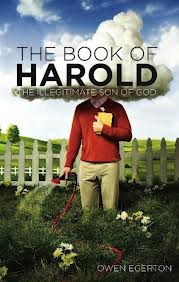
“The Book of Harold” by Owen Egerton is out in paperback from Soft Skull Press. You can read the first chapter here.

The success of a story is often determined by how well it goes off the tracks. In order for that to happen, though, the story must first lay those tracks. A great example of derailing a story can be found in the opening chapter of Owen Egerton’s novel, The Book of Harold: The Illegitimate Son of God. You can read that chapter, titled “Nativity,” on Amazon here. (Look inside and read the first pages.)

How the Chapter Works

One of the oldest ways to create suspense in a story is to create a repeating sequence of events. So, in “The Three Little Pigs,” we watch the wolf blow down two houses before going to the third—where his plan goes awry. In a more contemporary example, the film Oceans Eleven, plus every heist movie ever made, first shows the thieves planning the heist and then practicing the heist, and when they finally put their plan into action, something goes wrong. Both of those stories—the fairy tale and the blockbuster film—spend time establishing how events should go so that they can go wrong.

With that strategy in mind, count how many times Egerton shows us the Christmas pageant in “Nativity”:

  1. We’re told that the pageant “was a Christmas tradition for our church.”
  2. Next, we’re shown the casting and introduced to the doll that will play Baby Jesus.
  3. Then, we’re shown the children practicing the pageant, running through the entire show.
  4. Next, we’re given a quick description of the first two nights of the pageant.
  5. Finally, the last performance is upon us. We know the drill by heart, and so do the characters. Notice how they begin to alter the routine: the donkey drop “balls of dung every other step,” a Wise Man slips on the dung, and chaos ensues.

Notice how each telling involves a bit of irregularity: the introduction of the drummer boy, the casting of the narrator as Joseph, the drummer boy mis-delivering his line, angels crying, and finally donkeys pooping. Yet, even though the reader expects an unexpected turn of events, there is no way to foresee what actually happens. The thrill, for the reader, is in waiting for the predicted, yet unpredictable, twist. 

In addition to repeating the pageant, the passage contains words that clearly cue the reader into where things will go wrong. For instance, Egerton writes, “We practiced for two weeks. My part was simple enough.” The word simple is similar to Chekhov’s proverbial “gun on the wall.” If you show a gun in the first act, it must go off by the third. If you use the word simple in the beginning of a story, the story had better complicate that simplicity.

The Writing Exercise

Let’s create a sequence of events that will repeat itself, using Owen Egerton’s “Nativity” chapter as a model:

  1. Choose a scene that will repeat itself. The scene could be one that involves planning and practice (a wedding, shouting “Surprise!” at a birthday party). Or it could center around someone involved in a routine activity (door-to-door salesman).
  2. People the scene with characters. For instance, a wedding or party will have guests. A door-to-door salesman will visit homeowners.
  3. Tell the reader how the scene will play out. Be detailed. First, X will happen. Then X. Then X. Finally, X. The more detailed steps you provide, the more opportunities you have to make things go wrong.
  4. Show the scene once or twice. In each of the tellings, something should go slightly wrong but not so wrong that the characters can’t deal with it.
  5. Finally, show the scene a final time, adding big, unexpected challenges. Ideally, you’ll let the challenges build on one another. So, something goes wrong in the first step of the sequence, and that problem creates a slightly larger problem in the next step, and so on, until the final step, when the sequence has devolved into chaos.

It helps if you give the main character a sense that something might go wrong—or if you generally introduce the idea that all might not go according to plan. You can introduce the idea subtly or in an obvious way. The point is to show the sequence of events while hinting at a twist in the sequence.

Be inventive with this exercise. Remember, you want to surprise an expectant reader.

Good luck and have fun.

How to Introduce Genre Elements into a Literary Story

17 Dec
Daniel José Older's story, "Victory Music" was first published in PANK 8.06 and republished as part of Necessary Fiction's RePrint series.

Daniel José Older’s story, “Victory Music” was first published in PANK 8.06 and republished as part of Necessary Fiction‘s RePrint series.

How do you introduce genre elements into a literary story without also feeling beholden to the genre’s usual structure? For instance, not every story with ghosts is a ghost story. Anyone reading the first lines of a ghost story has certain expectations for what will happen. But if that same person begins a story about a young woman who tells her parents that she’s no longer a girl, the expectations are different. It’s the old genre vs literary divide.

One way to handle this balancing act can be found in Daniel José Older’s story “Victory Music.” It was originally published in PANK 8.06, and was selected as a RePrint by Necessary Fiction Writer-in-Residence Ashley Ford. You can read it now at Necessary Fiction.

How the Story Works

Any story that wants to use genre elements but not genre structure must toe a fine line. If it drops the genre element (in this case, a ghost) into the story out of nowhere, the reader is likely to be confused or thrown for too much of a loop. But if the story introduces the genre element too firmly, the reader is going to expect a genre structure. The trick, then, is to hint at the genre element without settling too firmly into the structure. Let’s look at how Daniel José Older does this in “Victory Music.”

He hints at the genre element (the ghost) by letting the narrator address a dead person named Krys. The opening section ends this way:

I wanted to tell you that you’ve saved my life at least twice. And once was after you died.

Notice how the statement is vague enough to be read several ways, only one of which requires a ghost. But even that lack of specificity might be too much—which is why the story begins with a paragraph that has nothing to do with ghosts:

One of my favorite moments ever was when the boy called me an Arab and you said, “She’s Sikh, fucknut” and then when he said “Oh, like hide and go-“ you broke his nose. I heard music playing, I swear to God, and it was victory music, your music: A dusty, unflinching beat, lowdown and grinding. It didn’t matter that my family’s not even technically Sikh anymore since my parents went born-again and I’m just whatever. I smiled for days after that moment, Krys. Days.

The first section ends with a hint of a ghost but a lot of non-ghost potential conflict. The next section can go two ways: It can develop the “saved my life…after you died” idea or one of the non-ghost ideas from the first paragraph. Older chooses the latter, reintroducing the narrator’s parents:

[M]y dad sent the twins to bed with a growl and then said to me, “What do you mean you’re not a girl?”

Imagine how different the story would be if it began the first section with something ghostly. In order to continue to increase the suspense further, the story would have no choice but to further develop the ghost—and as the possibilities for development narrowed, that is when the story would likely adopt the usual structure of a genre ghost story.

Instead, because the story introduces the conflict around the narrator’s gender identity, the story is given a new conflict to develop—and, in this story, that conflict climaxes with the appearance of a ghost. To some extent, the difference between a story with ghosts and a ghost story is when the ghost appears. The earlier it appears, the more likely it becomes that the story adopts a genre structure. (I’ll admit that there are exceptions to this rule, as shown by this story about a monster.)

The Writing Exercise

Let’s introduce a genre element into our stories, experimenting with placement, using “Victory Music” as a model:

  1. Choose the genre element. Pick your favorite genre story and borrow something from it: ghosts, zombies, vampires, monsters, detectives, cowboys, aliens, giant squid, playboy millionaires, heiresses with squandered fortunes, wizards, middle-aged women looking for sex in a city, 20-something actors with entourages of hometown friends.
  2. Hint at the genre element. Write a sentence or two that suggests to the reader which genre element is coming. Don’t be too specific (“There were werewolves somewhere in this city.”) Instead, try to hint at the element in a way that lends itself to multiple interpretations. Remember Older’s line from “Victory Music”: “I wanted to tell you that you’ve saved my life at least twice. And once was after you died.”
  3. Lead up to your hint with something unrelated to the element. Keep in mind the writer Ron Carlson’s advice that every story contains two parts: the story and the world that the story enters. Create a character or world that exists independently of the genre element that you’re introducing. Give that character or world the seeds of a conflict(s) that have nothing to do with the genre element.
  4. Figure out the relationship between conflict and genre element. Your story is necessarily going to move between two elements: the character’s original conflict and the genre element. To make this move, it’s helpful to know where each is located. Do they exist in the same space? In Older’s story, the ghosts are in one place and the conflict with the father is in another place.
  5. Develop one of those conflicts. Keep in mind where you’re going. If the genre elements waits elsewhere, the conflict should develop so that the character is required to leave one place and go to another.
  6. Introduce the genre element. Remember that most transitions are not clean breaks. Make the character preoccupied with the conflict he/she just left. That way, when the genre element appears, it will come as a surprise to both the reader and the character.

Good luck!

How to Find a Story’s Tone

10 Dec
Benjamin Rosenbaum's story XXX appeared at Tor.com

Benjamin Rosenbaum’s zombie story “Feature Development for Social Networking” appeared at Tor.com. (Illustraton by Scott Bakal)

Some stories have been told countless times. Yet, as writers, we often feel compelled to take another crack at them. So how do we make our stories different? Sometimes the answer is to find an unexpected tone.

Benjamin Rosenbaum does exactly that in his zombie story “Feature Development for Social Networking.” I guarantee that even if you’ve read a thousand zombie stories, you’ve never read one like this. You can read it now at Tor.com.

How the Story Works

Playing with tone in a story is a bit like improvising in music. A simple melody is easier to improvise than one that requires concentration just to play straight. So, when you’re thinking about tone, it’s helpful to make everything else simple. Here’s the opening of “Feature Development for Social Networking.” Notice how simple it is. (If you haven’t read the story yet, it’s written as a series of Facebook posts and comments).

Marsha Shirksy Got bitten . . .

Roland Wu wtf? Are you kidding?

Buster Day that is so not funny

Emily Carter omg Marsha are you serious?

Marsha Shirksy I’m not kidding, you guys! There was a rager at the supermarket. I could tell he was acting weird & I know I was totally stupid not to just drop my stuff and run! I’d just been in line forever & they had this terrific local asparagus on sale. Yes, I may have just sacrificed myself for asparagus.

The first two words of the story (after the character’s name) provide everything the reader needs to know about the plot (“Got bitten…”). Anyone who’s ever read a zombie story knows how this one will end. So, instead of focusing on the plot, Rosenbaum can play with tone. He finds his tone by doing a couple of simple things:

  • He chooses a place with a particular style of communication. In this case, it’s Facebook, with its users’ tendency to exaggerate the emotion in all statements (omg, wtf, exclamation marks galore) in order to not be misunderstood.
  • He gives himself room to play with tone. The first line introduces the plot, but then that plot is not explained or developed in any way until Marsha Shirksy speaks up again. In that lull, there’s space to play with tone. Notice how Roland, Buster, and Emily all say basically the same thing in slightly different ways—but also in ways that reinforce a kind of philosophy toward communication (or tone): informal, intimate, and performative (wtf, omg).
  • He uses the tone to convey an important piece of story information. After the Facebook tone is set, Rosenbaum uses it to tell the story of the zombie attack. Notice how that paragraph uses all of the traits established in the previous three lines: it’s informal (the ampersand, “totally stupid”), intimate (“you guys”), and performative (“Yes, I may have just sacrificed myself for asparagus).

Once the tone is set, the story is off and running. If you read the entire piece, you’ll see how Rosenbaum introduces a second set of characters and a slightly different form of communication goes through this process all over again.

The Writing Exercise

Let’s play with tone, using “Feature Development for Social Networking” as a model:

  1. Choose the oft-told story that you want to tell. Make it as simple as possible: zombie attack, quest, boy/girl falls in love with boy/girl and has to woo him/her, ghostly apparition, relationship goes sour.
  2. Choose a place with a particular style of communication. Think about the places where characters code switch (adapt to a language that is particular to one group): a bar, a workplace, a church, a classroom, or the hallway or space immediately outside the classroom or church or office or bar, a dinner table, a restaurant.
  3. Introduce the plot immediately. I got bit. I had to find the key, document, Easter egg, baby. I had to make him love me. The ghost handed me the shampoo. I used to love her, but now I don’t.
  4. Give yourself room to play with tone. Establish the communication style. You can do this by putting your character into conversation, having him/her tell the story to someone else. Or, you can simply adopt the tone of the place/group and use it in what is essentially a monologue. Think about the language’s phrasings, idioms, approaches to emotion (exaggerated, muted), use or avoidance of literal or figures of speech, directness or roundabout-ness. Think about speed. How fast or slow do the character talk? Play with the voice until you begin to hear it in your head, almost as if the voice is speaking to you.
  5. Use the tone to convey an important piece of information. How I got bit. Why I need to find the key, document, Easter egg, baby. Why it’s not easy to make him love me, or why I love him. What the ghost looks like. Why I don’t love her anymore.

Once you find the tone, you may find that the most enjoyable part of writing the story is the tone itself. Keep playing with it. Drop in a plot clue or reference now and then to keep the story moving forward.

Have fun.

How to Write an Ending that Swerves

3 Dec
"Poinsettias" by Myfanwy Collins was published in PANK Magazine.

“Poinsettias” by Myfanwy Collins was published in PANK Magazine.

Sometimes an ending can seem too much like the conclusion of a composition paper. The writer is moved to swerve away from the predictable, to untie the ending from the sense of inevitability that the story has spent its entire existence building. But how?

Myfanwy Collins gives a lesson in excellent endings in her story “Poinsettias.” It was published in PANK, where you can read it now. (Seriously, it’s short and wonderful, and you can read it in three minutes.)

How the Story Works

This kind of last-second-swerve might seem like the famous epiphanies from early Modernist writers. But, it’s actually quite different. To demonstrate, here are two of the most famous epiphany endings:

“Gazing up into the darkness I saw myself as a creature driven and derided by vanity; and my eyes burned with anguish and anger”

—from “Araby” by James Joyce.

“In the early morning on the lake sitting in the stern of the boat with his father rowing; he felt quite sure that he would never die.”

—”Indian Camp” by Ernest Hemingway

In both of those stories, the shocking thing is how quickly and suddenly the story states the character’s reaction to events—that is, if you find those lines shocking. To some extent, we’ve read so many epiphany endings that we’re immune to them.

So, now, check out the ending to “Poinsettias” by Myfanwy Collins. Keep in mind that, until this point, the story has been about the weird emotional state that often follows Christmas Day, the question of how long the season should last and when the final vestiges of it, like poinsettias, should be discarded.

“At the supermarket, they told her they would put the rotting turkey carcass in the renderer. They would take care of it, they told her. She felt some responsibility that the flesh of the bird be taken care of, that it be brought gently back to earth, to replenish, to renew. She remembered that when her mother died, hospice had said it was okay to send a personal item with her in the ambulance on the way to the crematory. She chose a fleece, duck-covered blanket that her mother had always snuggled under. That blanket was soft. It was so soft. When she thought of the flames, it was not her mother’s body she saw, but that blanket pushing toward the heat.”

This is an example of an ending that swerves away from predictability. Until this point, the mother has not been mentioned. And yet, we realize now, the entire story has been about her. So, how does the story pull off this ending?

In retrospect, we can see how every significant noun in the story is related to the idea of death.

  • The character, Mandy, constantly sucks on peppermint Altoids because she “didn’t want her mouth to taste like shit. All of these people were walking around with shit-tasting mouths, but not her.”
  • Mandy is upset with her partner about the poinsettias because “Nic would not let the poinsettias die. That was the problem.”
  • The turkey that Mandy bought to cook turns out to be rotten; she “drove the carcass to the market in the way back of her car with the windows cracked, but even now, weeks later, the smell lingered, sulfur twisting up her nostrils.”

So, even though the mother’s death is not introduced until the last paragraph, the story has prepared the reader to learn about it. The ending swerves not because it comes totally out of the blue but because it gives the reader an unexpected way of viewing everything that has come before it.

The Writing Exercise

Let’s prepare to write an ending that swerves, using Myfanwy Collins’ “Poinsettias” as a model:

  1. Choose a topic. You might consider a subject that has been bothering you or scratching at the inside of your head for a while—something you’ve wanted to write about but haven’t figured out how to approach yet.
  2. Free write about ideas, images, people, places, or events that are connected to the topic. Stray as far from the topic as you wish. You’re exploring the mental, emotional, and physical terrain of the story. If you’ve failed to write about the topic from one angle, find another. Myfanwy Collins’ story is about the death of the character’s mother, but it begins with the terrain that exists around that death: Christmas, Altoids, Poinsettias, and a turkey.
  3. Begin a story that has seemingly nothing to do with your topic. Sometimes our stories about topics that we really want to write about begin too directly. We rush up to the topic instead of taking our time, creeping up on it. So, choose one of the things you discovered through free writing and begin the story there.
  4. Switch topics after a few paragraphs or sentences. Myfanwy Collins writes two paragraphs about Altoids and then switches to Poinsettias. If you’re not sure how to make the switch, use the same sentence that Collins uses: “The real problem was that_____.”
  5. Feel for the right moment to introduce the “real” topic. You may need to switch topics again or introduce new elements. But, keep writing. Keep putting your character into moments of tension—in other words, write the story, and if it’s truly about the topic that has been bothering you, that topic will push its head onto the page. Trust your subconscious to put the pieces together.

Good luck!

How to Make Dialogue Move Faster

26 Nov
X story "Paper Tiger" appeared in Fiddleblack.

Liz Warren-Pederson’s story “Paper Tiger” appeared in Fiddleblack.

Most dialogue is written with paragraph breaks every time the speaker changes. The result is clarity, but the downside is that even a short back-and-forth can fill up half a page. What if you want capture the speed of the conversation?

One way to make dialogue move faster is to write it in chunks that appear in a single paragraph. If you’re writing in first-person, you may find that this technique sends a jolt of electricity into the voice of your narrator.

To see how this works, check out Liz Warren-Pederson’s story “Paper Tiger.” It’s so good that you’ll read the first sentence and think, “That was great,” and then the next sentence will be even better. It was published at Fiddleblack, where you can read it now.

How the Story Works

Almost everyone has told (or heard) this story: “She said, then I said, then he said, then this total stranger jumped in and said, so I told him…” It’s one of the most natural storytelling methods in the world. It probably predates written language. Yet, it can’t be captured within the constraints of normal formatting rules for dialogue (paragraph breaks for every speaker change).

Here is how Liz Warren-Pederson captures that style of speaking in the first sentence of her story:

“I want to invite the kids for Thanksgiving this year,” Cynthia said, and I said, “What the fuck? Where will I eat,” and she said, “I was hoping you’d eat with me, next to me,” and I said, “What a fucking misery,” and she said, “That’s not what you said last night,” and I said, “Well, we weren’t under a microscope then,” and she said, “You worry too much,” which was so off-base that I didn’t bother to respond.

Imagine if this dialogue had been written in the usual way:

“I want to invite the kids for Thanksgiving this year,” Cynthia said.

“What the fuck? Where will I eat?” I said.

“I was hoping you’d eat with me, next to me.”

“What a fucking misery,” I said.

“That’s not what you said last night.”

“Well, we weren’t under a microscope then.”

“You worry too much,” she said.

That was so off-base that I didn’t bother to respond.

It doesn’t work—at all. In fact, some of the best lines from the original sentence become some of the weakest in the new version. For instance, “What a fucking misery” becomes plodding because it’s just another comeback. And, “You worry too much,” is stripped of all tension, as is the last line. Some things, like punk rocks and tit-for-tats, require speed to operate. Slow them down, and even if all the notes are the same, they fall apart.

The great advantage to chunking this dialogue into one paragraph is that it captures the narrator’s voice. Banter can tell you a lot about both characters and real people:

  • What tone does each person take?
  • What language does each person use?
  • How do they respond to negative (or positive) comments?
  • Who gets the last word?

While these questions can be answered by traditionally-structured dialogue, the compression of Warren-Pederson’s first sentence shoves the characters into a tight space, where they bump into each other. Any time you push characters into each other—in a room, on a street, in a sentence—the tension rises, and you’re bound to learn something about them.

The Writing Exercise

Let’s speed up dialogue by chunking part of a conversation into a single sentence or paragraph. We’ll use the first sentence of Liz Warren-Pederson’s “Paper Tiger” as a model. You can write new dialogue or rewrite dialogue that you’ve already written for a story-in-progress.

  1. Choose a speaker. Even though the dialogue will be between two people, it will be filtered through the perspective of a speaker, the person telling the story of what was said and done.
  2. Choose an argument. We almost always tell a story about a conversation because there was tension present, and an argument is the easiest way to find that tension. The argument can be about something simple: to go out or stay in, what to eat, where to sit, how to spend money, or how to spend the holidays (as in this story). It can be about an ongoing dispute: I always take out the trash, you never load the dishwasher, it’s always up to me to get the car fixed.
  3. Let the speaker relate what was said. Think about the knee-jerk ways that we tend to respond when we feel attacked, slighted, or insulted. It’s those sort of comebacks that make for quick conversation. The characters don’t think, just speak. The result will look something like this: “”She said___, then I said___, then she said___, and that was ___, so I said___, and then ____.” As you come to the end of the sentence, think about how the argument ends. Who ends it? Does it end with a white flag or with a devastating assault?

This is Thanksgiving Week, and you may find that you have plenty of inspiration for this exercise after Thursday’s family dinner. If you find yourself telling any stories about who said what, write them down. You can always find a story for the dialogue later.

Good luck!

How to Raise the Stakes by Challenging a Character’s Identity

19 Nov
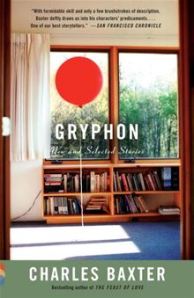
Charles Baxter's story, "The Next Building I Plan to Bomb" is included in his latest collection, Gryphon, and was published at The New York Times.

Charles Baxter’s story, “The Next Building I Plan to Bomb” is included in his latest collection, Gryphon, and was published at The New York Times.

One of the most common suggestions for improving a short story is to “raise the stakes.”  The writer Lee K. Abbot apparently once “dismissed a graduate class in less than five minutes by holding up a story, asking “Is there anything at stake in this?,” and upon hearing silence, said they were done with class.” But how does one make something hang in the balance? One option is to dangle a sword over the character’s head as in the Greek tale of Damocles.

Another option is to give your character something to resist or push back against. Most often, this means impugning your characters’ reputations and watching them push back.

A perfect example of this can be found in Charles Baxter’s story, “The Next Building I Plan to Bomb.” It’s included in Gryphon: New and Selected Stories, and you can read it now at The New York Times.

How the Story Works

In John Cheever’s story “The Country Husband,” a man almost dies in a plane crash, but when he comes home, no one wants to talk about it. His wife and children essentially refuse to recognize him as a human being whose experiences and responses to those experiences might not fit into the neatly packaged world they’ve created for themselves. As a result, he begins to act in ways that force people to take notice of him–which is  what Harry Edmonds does in Charles Baxter’s story “The Next Building I Plan to Bomb.” Baxter introduces the one personal slight that Harry cannot bear and so must resist, even at the sake of his own security.

The story raises the stakes by having this personal slight delivered by the person closest to the character, his girlfriend:

“You’ve never committed a crime in your life. You’re a banker, for Chrissake. You’re in the trust department. You’re harmless.”

Harry sat back in his chair and looked at her. “I’m not that harmless.”

“Yes, you are.” She laughed. “You’re quite harmless.”

“Lucia,” he said, “I wish you wouldn’t use that word.”

“‘Harmless’? It’s a compliment.”

“Not in this country, it isn’t,” he said.

This conversation has a direct effect on the character and, by extension, the story’s plot. The story began with Harry stepping into the police station to turn in a possible bomb threat but, at the last minute, turning around and leaving. After this conversation, he returns to the police station. From there, the story takes off, with Harry acting out to prove that he’s not harmless. “in this country,” he eventually tells someone, “if you’re harmless, you get killed and eaten.”

For this character, the stakes are his own self-regard, the sense that he’s a potent actor in the world.

The Writing Exercise

Let’s raise the stakes in a story by giving a character a personal slight to resist or push back against. We’ll use the dialogue from “The Next Building I Plan to Bomb” as a model. (This exercise can be used to create a story from scratch, but it may work best with a set of characters and a story that you’ve been working on for a while.)

  1. Put two characters who are close to one another together in a room. The room should be somewhere intimate, a place where personal things can be said.
  2. Make one character tell the other character everything that he/she is and is not. People do this all the time, often to themselves, saying things like, “I don’t eat muffins. I don’t watch baseball. I don’t do roller coasters.” Or they do it to other people: “He’s such a boy. She’s the kind of person who…” But while people don’t mind labeling themselves, they almost never like being labeled by someone else. So, a great way to create tension in a story (which is a roundabout way of raising the stakes) is by letting one character label another.
  3. Let the other character respond. The character should defend him/herself. “You say I’m X, but I say that I’m not.” Or, “You say that I’m not X, but I am.” If you’ve been in any kind of relationship, then you know that this is how many arguments go. Any time a character’s sense of him/herself is challenged, the stakes are being set.
  4. Make the character prove his point. Once your character’s identity has been challenged, make him or her prove that the challenge is incorrect. The proof could be literal (hitting a home run to show that he’s good at baseball) or more unpredictable (yelling at someone for not returning a grocery cart in order to prove that she’s tough).

Good luck!

How to Create a Monster

12 Nov
Ali Simpson's story

Ali Simpson’s story, “The Monster,” was first published in The Southampton Review and recommended to Electric Literature by Susan Merrell.

Everyone loves a good horror story. But anyone who tries to write such a story quickly discovers that it’s not enough to simply create a monster. You must also create a reason for the monster to exist. Or, to quote the great Albert Camus, who would have turned 100 this year, “A character is never the author who created him. It is quite likely, however, that an author may be all his characters simultaneously.” In all great horror stories, literary or otherwise, the monster is often a manifestation of a character’s inner monstrosity.

Ali Simpson’s story “The Monster” is a terrific example of this kind of character. The story was first published at The Southampton Review and reprinted at Electric Literature, where you can read it now.

How the Story Works

The story introduces the monster in the first line: “Laura was becoming unsure about what to do with the monster in her closet.”

Any reader who finishes that sentence has sentence has two immediate questions:

  1. What kind of world have I entered? (In other words, are there monsters in every closet? Is there some kind of society of closet-monsters?)
  2. What kind of monster is it?

Watch how the story clearly answers this first question in the opening paragraph:

“He shouldn’t have been there—she wasn’t a little girl; she was a grown woman with a full-time job and a roof over her head that she paid for herself with her full-time job. She had food in the fridge, dishes in the drying rack and dress pants pressed. Who had time or inclination to deal with monsters when there was work to be done, friends to have drinks with and love to pursue? Besides, the world was filled with enough scary stories as it was. Robbers, rapists, famines, and wars. Every day on the way to work, she passed people more unfortunate than she, and she knew if she stopped for a second, she would become a part of them, hungry all the time. She suspected she had a few scary stories lurking inside her and spent the better part of some nights guessing what they might be.”

So what kind of world is it? It’s a realistic world full of dirty dishes and jobs and wrinkled clothes. It’s a world with characters who have lives that do not involve monsters. This last part is important because it’s not true of all monster stories. Take the vampires out of Twilight, and the world evaporates. Take Voldemort out of Harry Potter or the gremlins out of Gremlins and you also remove the central conflict—and, to some extent, only conflict—facing the characters. But in this world, the narrator has a life and problems (and so does the rest of the world) that existed before the monster arrives.

Now, watch how the story answers the second question in the next two paragraphs:

So the monster came at the right time in her life. She had just put her dog to sleep because of his eye tumors. She had also recently kicked out her boyfriend because he thought she was his mother. She told him he was mistaken, that she was not his mother, and then she helped him pack his things, fed him lunch and kissed him good-bye. After Bumblebee went to sleep and the boyfriend was sent on his way, her apartment smelled empty and her sheets were cold. She lay around on the couch when she didn’t have to be at work and kept telling herself not to feel sad—she had a lot going for her.

The loneliness made her sick and pale. Nothing made her feel better and she wondered if the loneliness had been there all along but that she had somehow avoided looking it in the face until now.

So, what kind of monster is it? It’s a manifestation of the narrator’s deepest fears. In fact, we’re not yet sure if there really is a monster or if the narrator has simply conjured it out of her fear and doubt. As you read the rest of the story, though, you’ll see how that uncertainty is quickly put to rest.

The Writing Exercise

Let’s create a monster (real or imagined) using Ali Simpson’s “The Monster” as a model. To do so, we’ll answer the questions, “What kind of world is it?” and “What kind of monster is it?”

  1. Introduce the monster. To do this, you’ll need to state the following: Where is the monster? Who sees it? How does that person feel about the monster? (This last part is perhaps the most important. If the character is terrified for her life in the first sentence, the story will proceed much differently than if the character is amused or irritated.)
  2. What kind of world is it? Do monsters appear all the time? Is the world under siege by monsters? Or is this a regular world with a very personal monster. To answer this question, you’ll also need to figure out your character’s place in the world. If the world is a stage full of roles that people must play, which roles are being played by your character?
  3. What kind of monster is it? Why has the monster appeared to this character at this time? Even less-literary stories, monsters and victims are well matched. So, even in a novel like Twilight, the monster is a manifestation of Bella’s developing sense of her own sexuality. To answer this question, figure out the character’s life, problems, and conflicts that existed before the monster arrived. In a way, you’re adjusting the telescopic lens through which the story views the monster. If you begin by focusing on Conflict A, then Conflict A will always be present in the story (unless you stumble upon a better conflict; in that case, throw out Conflict A and switch to Conflict B). Regardless, if you make the character’s personal conflict part of the story from the beginning, the monster will naturally be viewed as part of that conflict.

Good luck and have fun! You’re writing a monster story. To paraphrase Kurt Vonnegut, if that isn’t nice, then I don’t know what is.