Tag Archives: creative writing prompts

How to Write a Story About Storytelling

2 Jul
Barry Hannah's story "Water Liars" is from his collection Airships and was republished recently at Garden and Gun. Photo credit Maude Schuyler Clay

Barry Hannah’s story “Water Liars” is from his collection Airships and was republished recently at Garden and Gun.
Photo credit Maude Schuyler Clay

At one point or another, most of us will try to turn one of our grandparents’ tall tales into a novel or a short story. Gabriel Garcia Marquez, for instance, wrote One Hundred Years of Solitude as an attempt to capture his grandmother’s way of telling a story. But unless we’re Marquez, the task is almost always more difficult than we expect. We often discover that what captivated us was the voice of the storyteller, and so after we’ve written a few sentences or pages, we come to a dead end because there’s no plot, no story to tell. So what do we do?

No writer has better answered that problem than Barry Hannah. His stories are dominated by his idiosyncratic voice. The plots are thin, sometimes nonexistent, and yet they draw us in anyway. For a perfect example of his storytelling gifts—and an example of a story about people telling stories—take a look at “Water Liars.” It’s from his collection Airships, and you can read it here at Garden and Gun.

How the Story Works

The story begins with the unpredictable bursts of a troubled mind that typify a story by Barry Hannah. If you try charting out the early paragraphs, you might feel as though there’s no structure or sense to them. But keep reading, and the story becomes quite simple: a man goes on vacation to a lake where old men tell tall tales, and one of those stories bothers him a lot. That’s the entire story. Nothing else happens. So how does Hannah make it work?

The answer can be found in two sentences: “I’m still figuring out why I couldn’t handle it” and “I was driven wild by the bodies that had trespassed her twelve and thirteen years ago.”

The narrator has discovered that his wife slept with other men before him, and not only does the news bother him, he’s also bothered by the fact that he’s bothered by it. As a result, the story becomes less about his wife and more about the narrator trying to understand his reaction to his discovery about her. That is the mental state that he brings to the dock where the old men tell their stories. When they begin to talk about the teenagers who come down to the lake to have intercourse, the narrator thinks about his wife and realizes that his way of thinking about her isn’t acceptable there, beside the lake, with that group of men. He realizes that he’s not like them.

The story is about self-discovery. It’s not so different from this line from Audre Lorde’s essay “Poetry Is Not a Luxury”:

“As they become known and accepted to ourselves, our feelings, and the honest exploration of them, become sanctuaries and fortresses and spawning grounds for the most radical and daring of ideas, the house of difference so necessary to change and the conceptualization of any meaningful action.”

The narrator of “Water Liars” has discovered the house of difference between him and the other men. The fact that one can quote a black, lesbian, feminist poet to explain “Water Liars” is, itself,  an explanation of the greatness of Barry Hannah.

The Writing Exercise

Here’s a simple exercise to help create a story about self-discovery:

  1. Create a character who has recently experienced trauma. The trauma could be an experience, or it could be, as in “Water Liars,” a discovery.
  2. Let the character struggle to recover from the trauma.
  3. Put the character into a scene with people who are talking and telling stories. Let them tell stories that are indirectly related to the trauma. For example, in “Water Liars,” the old men start out telling ghost stories, and those stories take a sexual turn.
  4. Let the character realize that his/her own experience doesn’t fit with the tone of these stories. Or, as Audre Lorde puts it, the character will begin to understand the “house of difference” between him/her and the others.

Remember, you don’t need to resolve the character’s struggle to cope with the trauma. The narrator of “Water Liars” find little comfort by the story’s end. But he does come to a realization, and that realization, or epiphany, is what the story has been building to.

Good luck.

Why Paragraphs Matter in a Story

25 Jun
Roxane Gay's story "Contrapasso" first appeared in Artifice Magazine and then in Mixed Fruit.

Roxane Gay’s story “Contrapasso” first appeared in Artifice Magazine and then in Mixed Fruit. The unique structure highlights the importance of paragraph structure.

When talking about structure in fiction, we tend to focus on large-scale issues (story arc and delayed gratification of suspense) and the fine detail of sentence crafting. What often gets neglected in the conversation is a structural unit that is, in some ways, the skeleton of all fiction: the paragraph.

An excellent example of the beauty and importance of the paragraph is Roxane Gay’s story “Contrapasso.” It was first published in Artifice Magazine, and you can read it here at Mixed Fruit.

How the Story Works

In any story, a character begins with infinite possibilities, and the writer’s job is to narrow those possibilities down to a few that the character must choose from. Choosing a theme is one way to narrow the possibilities. In this story, the menu headings provide those themes. Of course, it’s not necessary to stick to the theme in a strict sense, and Gay doesn’t, but her headings do provide a direction for each paragraph.

In this paragraph (from the “Life Maine Lobster” entry on the “Meat and Seafood” page), the theme or idea of boiling lobsters provides an entry into the character and her story about bondage. The heading allows her to write a sentence like this: “Now, in the wake of her divorce, she envied the lobster and the privilege of such pain.” The entire character development proceeds from the heading.

Focusing on paragraph structure can also help you move through time. Look at this section from the “Sauteed Spinach” entry on the “Sides and Accompaniments” page. For many writers, it’s easy to fall into the trap of chronology. So, this section could have been written this way: I followed her, I saw this, I did that, she saw me, we exchanged looks, she got out her phone, I went home, and there was a knock on my door late and the words, “Open up. It’s the police.”

But Gay skips all that unnecessary connecting tissue. Here, the theme doesn’t matter as much. Instead, the paragraph headings force each paragraph to have a point: what the narrator saw, what the cops said, what the narrator did next. As a result, the narrative moves more quickly because the reader doesn’t need to slog through needless detail. But the structure also slows the narrative down. Because each paragraph focuses on a single action or event, you can’t rush on to the next event. Instead, you investigate the action more deeply, which can lead to further character development.

In this story, paragraph structure cannot be separated from story structure.

The Writing Exercise

We’ll write two paragraphs, the first concentrating on character development and the second focusing on moving through time.

Paragraph 1 (Character Development)

  1. Make a list of your characters’ interests: hobbies, food preferences, career influences, regional or cultural influences, etc. For example, if the character is an accountant, he might view the world through accounting concepts. Or, if the character is a high school student who loves to read, she might view the world through the titles of novels, like the narrator of Special Topics in Calamity Physics by Marisha Pessl. Choose one of these interests for your theme.
  2. Write the theme as a paragraph heading.
  3. Let the character apply the theme to his or her world. For example, if your accountant character was asked how the whole world can be explained by common mistakes in basic math on tax returns, what would the character say? What if you let the character give an example from his or her life, something like this: “You’ve got two kinds of taxpayers, X and Y. Just the other day, a guy came into the office, and he was type X…”
  4. Tell the character’s story in a single paragraph. Stick to the theme you’ve given yourself.

Paragraph 2 (Moving Through Time)

  1. Same as Step 1 above. Choose a theme.
  2. Tell a story in 3 sentences: X happened. Then Y. Then Z.
  3. Build a paragraph around each of the three sentences. In each paragraph, focus less on advancing the narrative and more on describing in depth some aspect of the action, for instance what the character sees or feels or thinks.

Good luck.

How to Write an Action Sequence

18 Jun
Five Chapters is an online literary journal that publishes stories serially in five installments over the course of a week.

“Bullies” by Kevin Grauke first appeared FiveChapters, an online literary journal that publishes stories serially in five installments over the course of a week.

One of the hardest things to write is a fight scene. The blow-by-blow description often ends up sounding like a choreographer’s notes: hit here, kick there. The most commonly proposed solution to this problem is to condense the action into a line or two (He hit me, and I kicked him, and then we fell to the ground, fighting.)

But a terse summary is not the only way to write an action sequence. An example of the alternative can be found in the excellent fight scene in Kevin Grauke‘s story, “Bullies.” You can read it at FiveChapters. (The fight is at the end of Part Four.)

How the Story Works

The key to this passage is that it never becomes a list of actions. Lists are almost always boring. They’re too much like recipes, and so readers tend to skim them. Grauke solves this problem in two ways. First, he offers an interpretation of the action:

“He grabbed Mr. Shelley’s tie and gave it a quick yank. He meant this only to be a sign, a signal that this was over for now—a period, not an exclamation point—but he pulled harder than he’d meant to, and Mr. Shelley, caught off-guard, stumbled forward, knocking into him.”

Notice how the commentary (“He meant this only to be a sign…but he pulled harder than he’d meant to”) sets up the action that follows (“stumbled forward”). Imagine if the commentary were left out. The action would be stripped of cause and effect, and thus of story and meaning.

Second, Grauke repeatedly moves from a particular action to the character’s thoughts. Here’s the first half of a sentence that illustrates this move nicely:

“When their bodies came to a stop in the darkness beyond the glow of the porch light, Mr. Shelley was on top of him, and thinking of everything that he’d ever talked himself out of, all the stands he hadn’t taken, Dennis threw the first punch of his life…”

Again, imagine if the character’s thoughts were left out. The action would suddenly exist in a void. Why does a college professor throw a punch? Why does he throw that punch now, in this moment? We wouldn’t know.

But the phrase containing the thought doesn’t only cue the reader into motivation. It also breaks up the rhythm of the sentence. The twin phrases, set off by commas (and thinking of…; all the stands…) slows the reader down and suggests the ways that time itself seems to slow to the character whose head we’re inside.

The Writing Exercise

This is a simple exercise. We’re going to make two characters fight. Here’s how:

  1. Pick the two characters. You can choose two that you’ve been working with. Or you can make them up. Either way, it will be tempting to make them complete opposites. But the best fights are between characters who share something in common. In “Bullies,” the fighters are both fathers of young children. In Rocky IV (as a magnificent montage makes clear) both Rocky and the Russian, Ivan Drago, are willing to push their bodies against human limits. The difference between the men is less in their personalities than in their motivation.
  2. Pick the ring. Give the characters a place to fight: the flagpole in front of school, a parking lot, a house, a swimming pool. Think about how the place would affect the fight. For instance, water in a pool would reduce the fighters’ mobility but also raise the stakes (drowning).
  3. Write the fight. List the actions that will occur. What would an objective camera capture if filming the scene?
  4. Go back and insert commentary. Grauke uses a version of this: He meant to do X, but Y happened instead.
  5. Insert the character’s thoughts. Use Grauke’s sentence as a guide: X happened, and he thought Y, and so he Z. Give some thought to the character’s motivation. A fight demands that the participants make choices: to fight or not to fight, how hard to fight, how bad to hurt the other fighter, and when to stop. Keep in mind the great line from David Sedaris’ essay “Can’t Kill the Rooster.” Sedaris’ brother gets beat up in the parking lot of a bar, and someone asks when the other quy stopped hitting him. The brother says, “When he was fucking finished.” A good fight scene allows you to write a line like that.

Good luck.

How to Reinvent a Stock Character

11 Jun
M. John Harrison's Light is X.

M. John Harrison’s Light has been called “space opera for the intelligensia,” and Neil Gaiman said it was one of his favorite SF books of the last ten years. Light is the first in a trilogy that includes Nova Swing and Empty Space: A Haunting.

Almost every story begins with an idea that has been written about a thousand times. Detective stories can begin only so many ways. Stories about immigrants to America feature characters who, despite their far-flung origins, share a certain kind of experience. The problem is not to invent a story that’s never been written but to reinvent an age-old tale.

This is what M. John Harrison has done in his novel Light, the first of a science fiction trilogy. The book features space ships and aliens, but Harrison moves far beyond the typical versions of these things. You can read the opening of the novel here, or you can read the short passage below.

How the Story Works

For an example of how Harrison reinvents a stock character, read this passage about an alien invasion:

Drawn by the radio and TV ads of the twentieth century, which had reached them as faltering wisps and cobwebs of communication (yet still full of a mysterious, alien vitality), the New Men had invaded Earth in the middle 2100s. They were bipedal, humanoid—if you stretched a point—and uniformly tall and white-skinned, each with a shock of flaming red hair. They were indistinguishable from some kinds of Irish junkies. It was difficult to tell the sexes apart. They had a kind of pliable, etiolated feel about their limbs. To start with, they had great optimism and energy. Everything about Earth amazed them. They took over and, in an amiable, paternalistic way, misunderstood and mismanaged everything. It appeared to be an attempt to understand the human race in terms of a 1982 Coke ad. They produced food no one could eat, outlawed politics in favour of the kind of bureaucracy you find in the subsidised arts, and buried enormous machinery in the subcrust which eventually killed millions. After that, they seemed to fade away in embarrassment, taking to drugs, pop music and the twink-tank which was then an exciting if less than reliable new entertainment technology.

Thereafter, they spread with mankind, like a kind of wretched commentary on all that expansion and free trade. You often found them at the lower levels of organised crime. Their project was to fit in, but they were fatally retrospective. They were always saying:

“I really like this cornflakes thing you have, man. You know?”

Notice how the passage begins with an alien image we’ve seen before (humanoid, bipedal, white-skinned) but then quickly moves into unexpected territory (red hair, Irish junkies). But the genius of the passage is how Harrison describes the aliens’ attitude. He starts by making them the opposite of the creepy, emotionless creatures from TV and the movies. But then he develops the idea: what would it mean for an alien race to be attracted by Earth’s TV and radio ads? If human culture drew them to the planet, how would they behave? Rather than making the aliens sinister, the passage presents them as both curious and dopey enough to take that culture seriously but also technologically advanced enough to nearly destroy the world. By the passage’s end, Harrison has created an alien race that is entirely new to fiction.

The Writing Exercise

Let’s develop a stock fictional character the way that Harrison develops the alien invader.

  1. Pick a stock character: hard-boiled detective, crooked cop, bloodthirsty pirate, ambitious drug dealer, too-serious doctor, laconic cowboy, Medieval knight, bold dragon hunter.
  2. Describe the character. Feel free to include setting. Start with a cliche.
    1. A thin and weary private eye in a small, dirty office
    2. A single woman asleep in her cluttered apartment and awoken by a call from the hospital).
  3. Move the description in an unexpected direction. One way to do this is to include an unusual trait and then use that trait to make an unexpected comparison (red hair, Irish junkies).
    1. He had a mustache with the ends pulled to a thin point, like a villain who’d tie a woman to railroad tracks or a hipster with a custom-made bicycle.
    2. She was missing the pinky finger on her left hand. No one at the hospital had yet noticed the absence, but they inevitably would, just as a pickpocket’s victim inevitably pats his pocket to find his wallet gone.
  4. Answer the question of how someone in that character’s position would behave given that unusual trait.
    1. The mustache made it hard to blend in, but he wouldn’t give it up—the greased tips had taken him more than a year to grow out—and so as a result he only took business that involved the low-rent but becoming-gentrified part of town.
    2. The patient in which the finger resided would also discover it, which is why the doctor took a drink before going into work, a habit that was, in part, the reason she lost the finger in the first place.

The key to this exercise is to begin with a stock character and develop him/her by first adding a small, unexpected detail and then imagining how that detail would affect the character’s life.

Have fun.

Setting Up the Inevitable

4 Jun
"Crossing" by Mark Slouka was first published in The Paris Review.

“Crossing” by Mark Slouka was first published in The Paris Review.

Any hack with the smallest facility for plot can walk a character into a situation that cannot be escaped. But it takes skill and craft to make the reader feel the character’s desperation. This is exactly what Mark Slouka does in his story, “Crossing.” By the last paragraph, the tension is nearly unbearable. The ending is powerful: “There was nowhere to go. It didn’t matter. They had to go.”

To find out how Mark Slouka builds the tension so subtly and yet to such an incredible pitch, read “Crossing” at here at The Paris Review.

How “Crossing” Works

Slouka does two things at once in the story.

First, he takes the father back and forth across the river: with the backpacks and then with his son on his back, and then an identical set of return trips the next day. The first set of trips allows the story to show us the river and the care required to cross it. The details are not particularly subtle. For instance, the father remembers when he was a boy crossing the river with his own father and asking, “what do you do if you fall?” His father answered, “Don’t fuckin’ fall.” It becomes clear where this story is headed.

Yet we forget this inevitable end because of the second thing Slouka does. While the river takes a central place in the story, the focus is actually on the father’s memories and thoughts. In fact, the river doesn’t even appear until the fifth paragraph. The story opens in the house of the man’s ex-wife, where the man is picking up his son:

“He went inside, wiping his shoes and ducking his head like a visitor, and when the boy came running into the living room he threw him over his shoulder, careful not to hit his head on the corner of the TV, and at some point he saw her watching them, leaning against the kitchen counter in her bathrobe, and when he looked at her she shook her head and looked away and at that moment he thought, maybe—maybe he could make this right.”

Slouka uses this opening to set the stakes: the man is going to use this camping trip to make things right with his family. His thoughts circle this idea throughout the story, even as he’s crossing the river. And so he does not see a second set of story stakes appear. While the story starts out being about making this right with his family, it will end with both two lives in the balance.

The Writing Exercise

  1. Pick a place to which you have a strong emotional connection.
  2. Ask yourself: What is dangerous about that place? Or, what danger could the place pose to someone who feels about it the same as you do? The danger could be literal (drowning) or emotional (the end of a relationship). For instance, if I choose my current back yard, where I’m landscaping, the danger might be that a character such as myself spends so much time thinking about what trees to plant that he misses something more important (kids, spouse, etc.). The danger could also be literal: cutting off a finger with a saw.
  3. Create a character who will face the danger.
  4. Finally outline how he or she will end up facing the dangerous situation. What details are crucial to establishing the danger? Why doesn’t the character avoid the situation? You must decide where the story begins. Doing so will give you a timeframe and help determine how quickly or slowly to dole out information.

Many writers will feel reluctant to plan out a story this way or will be unable to stick to the outline once they begin writing. That’s okay. The point of this exercise is to develop a feel for how to parcel out information in order to create suspense.

Describe Setting Without Getting Lost in the Details

28 May
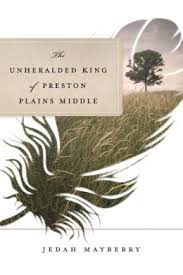
The Unheralded King of Preston Plains Middle is the debut novel from Jedah Mayberry.

The Unheralded King of Preston Plains Middle is the debut novel from Jedah Mayberry. You can read the opening pages here.

In a story or novel, how do you describe an entire town or geographical area without getting lost in the details?

Many writers have done it, memorably Toni Morrison in Sula and F. Scott Fitzgerald in The Great Gatsby. Add to that list Jedah Mayberry, whose debut novel, The Unheralded King of Preston Plains Middle, begins with a description of a small New England town that demonstrates how to distill history, culture, migration, geography, and demography into a single short passage.

The novel is new out from River Grove Press, and you can read the opening pages here.

How the Story Works

Ernest Hemingway famously claimed that the best writing omitted far more detail than it included–meaning that a story or novel resembles an iceberg, ninety percent of which is underwater. Critics have turned this idea into a theory for art, but, in truth, it merely describes an inevitable problem faced by all writers: if you’re writing what you know, then you know more than can fit into the story. But you can’t simply include and leave out details randomly. You need a method. Mayberry’s method in The Unheralded King of Preston Plains Middle becomes clear in the first sentence:

“The village of Preston is largely defined by the things it is not, by the things its expanse of working farms and decaying historic landmarks serve to divide.”

The novel tells us explicitly how it will organize details about the town. Any that do not fit into the idea of absence or division are left out. The Great Gatsby does something similar in its opening description of East and West Egg:

“I lived at West Egg, the—well, the less fashionable of the two, though this is a most superficial tag to express the bizarre and not a little sinister contrast between them.”

In this passage, the writing quickly moves to descriptions of Jay Gatsby and Tom Buchanan. Those characters stand for the difference between the two places. As a result, the setting helps create character.

So that you can see how common this strategy is, here’s the opening of Sula by Toni Morrison:

“In that place, where they tore the nightshade and blackberry patches from their roots to make room for the Medallion City Golf Course, there was once a neighborhood. It stood in the hills above the valley town of Medallion and spread all the way to the river. It is called the suburbs now, but when black people lived there it was called the Bottom.”

Morrison gives us her organizing principle right away: the way the neighborhood looks now versus the way it looked then. That difference helps introduce the story, which is in part about the relations between the people who once lived in the neighborhood and the ones who have turned it into a golf course.

In all of these examples, the writers clearly identify the way they will organize details about a town or area. A place that is vast and filled with innumerable things is reduced to a single passage in a book. In other words, only the tip of the iceberg is revealed.

The Writing Exercise

Let’s follow the example set by Jedah Mayberry, F. Scott Fitzgerald, and Toni Morrison.

  1. Choose a town or area to describe.
  2. Write a definition of the town that creates two groups, a la Fitzgerald and Morrison. For instance: “Everybody there was dumb except for the cops.” Or, “The town had a railroad line running through the middle of it, but the division wasn’t between poor and rich but between people living in rundown shacks and people sleeping on the ground.”
  3. Now, try writing a definition of the town that identifies a broad organizing principle, a la Mayberry. For example: “The town was defined by the opportunities it had missed.” Or, “So many people had ended up in the town by accident that everything about the place seemed ruled by random chance.”
  4. Finally, describe the town. Use the definition as inspiration and as a guide for the details.

In both #2 and #3, you can switch the order around. So, you can write the definition but save it. List the details first and then finish the description with the definition. Either way you use the strategy, you’ll begin seeing it in almost every story and book that you read.

Good luck.

Three Ways to Write Dialogue

21 May
Walter Mosley's novel, Little Green, is the latest installment in the Easy Rawlins series.

Walter Mosley’s novel, Little Green, is the latest installment in the Easy Rawlins series. You can read an excerpt from the novel at NPR’s website.

It’s become a cliche of writing workshops that, in good dialogue, the characters talk past one another. But how? For a primer, pick up any book by Walter Mosley. His most recent is Little Green, the latest in the Easy Rawlins detective series.

You can read an excerpt from the novel, here, at NPR’s website.

How the Novel Works

There are two easy ways to get characters talking past one another. The first is to give them different ends they want to achieve in the scene. The other is to provide the characters with different levels or forms of information or knowledge. (Of course, a third method is to give the characters vastly different personalities.) All of these methods are on display in these two lines from Little Green:

“I’m lookin’ for somebody for Raymond,” I said when the laughter subsided. “Evander Noon.”

 “That’s just the seesaw action,” Jo replied. “You lookin’ for yourself.”

Method 1: Notice how the first speaker, Easy Rawlins, makes his goals clear. But Jo doesn’t give a clear answer. She wants to help him but in a different way.

Method 2: Jo claims that Easy has another, deeper goal, one that only she knows. She possesses knowledge that he doesn’t. As a result, the dialogue takes on the manner of a common person talking to a sage.

Method 3: Easy is a detective, and Jo is a voodoo queen. Thus, he is direct, and she speaks in code. Their styles are determined by their personalities.

As a result, the characters talk past one another. They can’t help it. They’re different types of people with different goals and levels of information.

The Writing Exercise

Let’s trying writing dialogue using the three methods described above.

  1. Create two characters with vastly different personalities, jobs, or situations. Think about how their speaking style would be affected by the job or situation. For instance (relying on broad types), motivational speakers are intensely positive and assertive. Cops tend to speak as if everything they say has been said a thousand times before, which it has. What would happen if you put a cop and a motivational speaker together in a scene? Their styles would probably clash.
  2. Give the characters different goals for the scene. The easiest version of this is a scene involving a couple: one person wants to go out and the other wants to stay in. But there’s another way to approach the method. Make the characters’ goals different in terms of type. So, in the scene with the couple, one person wants to go out, and the other wants to leave. The goals become fundamentally different.
  3. Give the characters different levels or types of knowledge/interest. Imagine if someone has a broken toilet and so calls the plumber. The person wants a particular task to be done, but when the plumber shows up, all he wants to talk about is the metaphysical implications of cracked porcelain. Their interests and knowledge-bases will clash in the dialogue.

Good luck.

Using Dialogue to Create Conflict

14 May
Rene S. Perez in The Acentos Review

“Lost Days” by Rene S. Perez II first appeared in The Acentos Review and is included in his debut collection, Along These Highways, which won the Alfredo Cisneros Del Moral Prize and was published as part of the Camino del Sol series by the University of Arizona Press.

If you close your eyes and listen to people—your family or friends—you’ll discover that they don’t all talk the same. They use different diction, different cliches, and sentences of different lengths. Yet in fiction, we too often write dialogue as if everyone talks the same.

Not Rene S. Pérez II. In his story, “Lost Days,” he creates characters with distinctive speaking styles, and those style become the center of the conflict. The story is a great example of how character, when fully realized, can drive plot. “Lost Days” is included in Pérez’s collection, Along These Highways, and was first published in The Acentos Review, where you can read it now.

How the Story Works

Let’s take a look at a key paragraph from “Lost Days.” In it, you’ll see how Bobby talks differently than his mother and father and how the story comments on this style. Both are important in using character to create plot.

“I don’t mean to disparage the whole of Corpus as being ‘ghetto,’ because that connotes a certain socioeconomic status,” he said, trying to backpedal as delicately as he could out of a comment he’d made at the dinner table that offended Beto, her husband, his father. He had always spoken that way; Stanford didn’t do that to him. “It’s just that there’s a culture here which is such that one can’t be challenged or even stimulated intellectually. There’s no art, no progress toward it or high culture. It’s a city of… of… philistines.”

Bobby’s diction (disparage, connotes) and phrasing (which is such that) suggest not only that he is smart but that he’s trying to be smart, that he feels a need to prove his intelligence. His speaking pattern has a whiff of desperation, and so it’s no surprise that he ends up calling his hometown stupid and dull. In life, people generally say what they feel. It’s hard to maintain a true shellac over our inner selves. In fiction, you can use this tendency to create plot by having characters say what they think (in their unique voices) to the people most vulnerable to those opinions. Perez has established in one paragraph an entire family dynamic and conflict.

Perez turns this conflict into a narrative arc by focusing Bobby’s desperation on a single point: Starbucks. At first, he says, “I mean, this town doesn’t even have a Starbucks.” But later in the story, as his mom drives away from the town’s first Starbucks, he’ll say, “Starbucks is the Wal-Mart of coffee shops. I bet the opening was in the news and everything.”

In some ways, this is a story about that old saw, “The more things change, the more they stay the same.” All it takes to make the story work is a few words from one character and a cup of coffee.

The Writing Exercise

This exercise is really more of a writing habit. The first part you may have heard before, but the second will likely be new to you.

  1. Begin writing down snippets of dialogue. The speakers can be anyone: people in line at the grocery store, customers at a coffee shop, drinkers at a bar, your kids or spouse or parents, your friends. Try to write down a few sentences verbatim. Don’t worry about capturing an entire conversation. The back-and-forth may sound amazing, but on paper, it will almost always last too long and wander from its point. It’s more important to capture the essence of how the person speaks.
  2. Try to impersonate those people. Say aloud what you have written as they said it. Imagine that you’re an actor on stage. You may find that in order to fully capture the voice, you must delete or add words or change their order. Remember: Dialogue needs to sound lifelike, not be lifelike. Once you’ve captured the person’s voice, write down the dialogue as you speak it. Add attributions (she said) or descriptions (she wiped her nose) to help provide the rhythm of the voice.

Have fun.

Raising the Stakes in a Fragmented Narrative

7 May
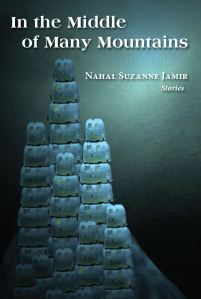
In the Middle of Many Mountains by Nahal Suzanne Jamir

Suzanne Jamir’s story “In the Middle of Many Mountains” was first published in Meridian and is the title story of a new collection, now out from Press 53, that has been called “a magic that is real.”

Stories are not true to life. Memoir writers quickly understand that they’re recreating moments from half-blind memory. They leave out as much as they put in. But even stories that make no claim for historical truth, that simply attempt to portray a life as it might be lived, tell a kind of lie. They offer a coherent storyline, a definite beginning and end, and a consistent narrative voice when life offers no such thing. As the writer Nahal Suzanne Jamir will say in Thursday’s interview, “We can’t expect the main character to have an inner conflict and insist that the form or approach of every story be neat or rigid.”

The problem is that readers want coherence. The  magic of stories is that they offer a clarity that is rarely present in life. Jamir’s story “In the Middle of Many Mountains,” finds a way to face this paradox. The story shares a title with Jamir’s new collection out from Press 53. An excerpt is available online at Meridian.

Or you can download their entire story here: “In the Middle of Many Mountains”

How the Story Works

The narrator is trying to understand how she has come to this present situation: her is dying, her father is living with another woman, and her sister is wasting away from an eating disorder. A once-tight family has unraveled for reasons that are not and may never be clear. As a result, the story is structured as a collection of fragments. Any other structure would force coherence upon the naturally incoherent.

And yet a story needs coherence in order to be read. Jamir manages this paradox with a simple strategy: Even though the narrative is fractured, the stakes are clear. Nowhere are they laid out more clearly than on page 5, when the sister, Marjan, says, “I need you to help me…but you’re not going to like it. You won’t want to hear.”

Though the form is fragmented, the characters retain a certain amount of wholeness. It’s possible to say what they want and do not want. These desires drive the plot. The narrator will be forced to do what seems impossible: to hear what she doesn’t want to hear and see what she does not want to see. Thus, the story uses the strategy used by all great stories. It pushes a character until the only option available is the one she never thought she’d choose.

The Writing Exercise

No matter how your story is structured—using some traditional plot or a shape invented on the spot—it’s important to make the stakes clear. It’s even more important when the story asks its readers to learn a new kind of storytelling.

So, let’s set the stakes. We’ll come at the problem from a couple of angles:

  1. Brainstorm the following: What do your main characters want more than anything? What do they avoid at all costs? What is the guiding principle of their lives? In your story, the characters’ desires will likely be tested. How badly do they want X? Will they be willing to do what they normally avoid? Will they even sacrifice their principles? It might help if you finish this sentence: X wants to…, and so he/she will be forced to… 
  2. Make the impossible possible. List the things in your story that seem permanent: relationships, geography, jobs, situations, existences, lives, etc. Now pick one or two and describe what it would take to make them impermanent; in other words, what force would be required to break an unbreakable thing? You can also flip this around and ask what force would be required to make permanent something that is either impermanent or not currently in existence.

Once you’re able to clearly answer any of these questions, you may find that your story comes into focus, both in shape and about-ness.

Good luck.

Short, Direct, and with Style

30 Apr
Kelly Luce Exercise

Kelly Luce’s story “Rooey” was first published by The Literary ReviewIt will also appear in her forthcoming collection Three Scenarios in Which Hana Sasaki Grows a Trail.

I’ve heard it claimed that you can teach writers plot, structure, and character, but you can’t teach them to write well, with style. As evidence, look at Vladimir Nabokov. His unpredictable sentences flash between subjects (picnic, lightning) at the wild speed of genius. They are impossible to imitate, I’ve heard. But I don’t believe it, if only because there are so many great writers crafting astounding sentences.

One of them is Kelly Luce. Her story, “Rooey,” was first published in The Literary Review, and you can read it here.

How the Story Works

Great sentences—and great lines of poetry—often work the same way. They strive for leaps in logic, for the unexpected juxtaposition of images. Readers are expected to keep up, to make the connections without the aid of explanation. Keep this in mind as you read the first paragraph of Kelly Luce’s story:

Since Rooey died, I’m no longer myself. Foods I’ve hated my entire life, I crave. Different things are funny. I’ve stopped wearing a bra. I bet they’re thinking about firing me here at work, but they must feel bad, my brother so recently dead and all. Plus, I’m cheap labor, fresh out of college. And let’s face it, the Sweetwater Weekly doesn’t have the most demanding readership or publishing standards.

The leaps of logic begin in the first sentence. The comma acts as a pivot point. Death we understand, but what does it mean to not be yourself? The first two examples (foods, humor) make sense within our common understanding of grief, but the third (“I’ve stopped wearing a bra”) is strange by almost any measure. The leaps continue: dead brother to cheap labor. By the end of the paragraph, we’ve moved from death and identity crisis to newspaper publishing standards.

The speed of those leaps is what gives the story its style. The sentences are not long or grammatically complex. They do not suggest but, rather, state things outright. Very often, beginning writers believe that good sentences are overwritten and overly subtle. The truth is usually quite the opposite. If you don’t believe me, here is part of the first page of Nabokov’s Lolita.

She was Lo, plain Lo, in the morning, standing four feet ten in one sock. She was Lola in slacks. She was Dolly at school. She was Dolores on the dotted line. But in my arms she was always Lolita.

Did she have a precursor? She did, indeed she did. In point of fact, there might have been no Lolita at all had I not loved, one summer, a certain initial girl-child.

Though Nabokov is known for his “poetic” style, the sentences are short, direct, and to the point. Their beauty is in the phrasing and the speed at which they move from “four feet ten in one sock” to loving “a certain initial girl-child.” That is fictional style.

The Writing Exercise

To be stylish, you need to know what your story is about. If you don’t know, then your sentences won’t know, either. If that makes you despair, don’t. The search for a story’s about-ness is often also a search for its style. Let’s start searching. We’ll write two paragraphs:

  1. Who is your story about? Why is the story about him or her or them? To answer the first question, begin by describing the person as plainly and directly as possible. Keep the second question in mind. Make it your goal to answer it by the end of the paragraph. So, you’ll likely move from literal description to a statement of causation: Because of her, I… or If it hadn’t been for him, she… (For a model, look at the example from Lolita.)
  2. What event is at the heart of your story? What are the implications or ramifications of that event? What is the story about? To answer the first question, state what happened (Since Rooey died… or When Billy got married…). Then, move onto the ramifications. What happened next? How did this event ripple forward into time? Make it your goal to answer the final question (what the story is about) by the end of the paragraph. So, you’ll move from what happened to why we’re reading the story. (For a model, look at the example from “Rooey.”)

Have fun!