Tag Archives: how to write a novel

How to Control Narrative Pace with Sentence Structure

4 Feb
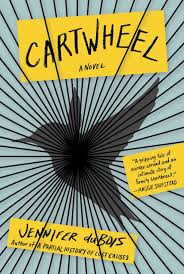
Jennifer Dubois' novel Cartwheel has been called...

The writing in Jennifer Dubois’ novel Cartwheel was described in The New York Times as “a pleasure: electric, fine-tuned, intelligent, conflicted.”

Maybe you’ve had this experience: you’re deep into a gripping novel, hooked by the plot and dying to know what happens next, when you realize that you aren’t actually reading the book anymore. Instead, you’re skimming pages. The writing is still strong; you’d like to slow down and enjoy the sentences, but you can’t. You need to find out what comes next right now.

As a writer, this might seem like a victory: you’ve written a page-turner. But this type of reading also makes many of the actual words in the book superfluous. Wouldn’t it be nice to set an intriguing plot into motion and keep the reader’s attention on each sentence and detail?

This is precisely the feat that Jennifer duBois has pulled off in her novel Cartwheel. It was inspired by, though not based on, the Amanda Knox trial, and has been called a “tabloid tragedy elevated to high art,” by Entertainment Weekly. You can read the opening pages here (click on “Look Inside”).

How the Story Works

If the plot of Cartwheel pushes us forward, making us want to turn the page, the sentences slow us down, directing our attention to nuances. The sentences are not long or difficult to read, but they are structurally complex, filled with interruptions and asides. Notice how many of the sentences in the first paragraph do not move in a straight line:

Andrew’s plane landed at EZE, as promised, at seven a.m. local time. Outside the window, the sun was a hideous orb, bleeding orange light through wavering heat. Andrew was still woozy from his two Valiums and two glasses of wine, the bare minimum that he needed to fly these days—to anywhere, for anything, though especially for here, for this. The irony of being a professor of international relations who was terrified of international travel was not lost on him (no irony was lost on him, ever), but it would not be helped. Neither could it be mitigated by the knowledge—always understood but now finally believed—that the things that go wrong are rarely the things you’ve thought to worry about.

The sentences use punctuation (commas, dashes, and parentheses) like detour signs. Some of these detours are long (“no irony was lost on him ever”), some are short (“as promised”), and some are a string of short detours (“to anywhere, for anything, though especially here, for this). The information they deliver varies widely. The phrase “no irony was lost on him ever” tells us a great deal about character. “Always understood but now finally believed” neatly lays out an eternal, psychological truth.

But what about the first one: “as promised”?

Planes land according to schedule all the time. Or they don’t, and no one is put out except in minor ways. Or the consequences are serious (missed connections, overnight stays in unfamiliar cities) but so common that they’re rarely noteworthy. If this paragraph was being discussed in a workshop, someone would almost certainly suggest cutting the phrase. And yet those two words—”as promised—perform an essential function. They force the reader to slow down, if only a little, and this is important because subsequent sentences will ask the reader to slow down even more. To some extent, the entire novel is about slowing down. It’s told from the point of view of multiple characters, each perspective often correcting or complicating the others. As much as the story moves forward, it also moves downward, deepening our understanding of the characters. If we’re racing along, flipping pages, we might miss most of what the novel offers. And so the sentences slow the reader to the pace required to truly enjoy the book.

The Writing Exercise

Let’s try writing three short sentences that contain detours, using the opening paragraph from Cartwheel by Jennifer duBois as a model:

Sentence 1: Taking nothing for granted

  1. Write a sentence about a character entering a scene. This kind of sentence tends to drive writers crazy: walking characters through doors or into rooms, moving them from one place to another, sitting them down to a meeting or dinner or date. It’s a mechanical part of any story. Keep it simple, and then we’ll add to it.
  2. Suggest that some part of that sentence could have happened (or did happen) differently. Here is what duBois writes: “Andrew’s plane landed at EZE, as promised, at seven a.m. local time.” The “as promised” suggests that the plan could have arrived late or early. It’s a small detail, but it makes a mechanical, dull sentence take the reader by surprise and, perhaps, a bit uneasy. So, if your sentence is “He walked into the room,” you could change it to “He walked—tripped, really—into the room.” Notice what a difference this makes, how it catches your attention.

Sentence 2: Adding a postscript about desire

  1. Write a sentence about something a character needs or wants. The desire could be for anything: a Coke, a different job, somebody to love. It might be helpful to locate the character in a place, like this: “The sun was shining down on the stadium, and she desperately needed a Coke.”
  2. Add a note at the end about the desired thing. Here is what duBois writes: “Andrew was still woozy from his two Valiums and two glasses of wine, the bare minimum that he needed to fly these days—to anywhere, for anything, though especially for here, for this.” The passage after the hyphen makes it clear how much he needs the Valium and wine. So, if your sentence is “She needed a Coke,” you could add, “She needed a Coke—right here, right now, even if it cost her twenty dollars.” This kind of postscript mimics the way we often talk in real life—children and adults alike.

Sentence 3: Interrupting your own train of thought

  1. Write a sentence about a character’s personality. You might identify a trait or a tendency that exists despite the difficulties it causes: “Another drink would cause him to start shooting off his mouth, but he walked to the bar anyway” or “She’d been told that correcting people in public was unbecoming, but Afghanistan and Iraq were definitely not neighbors.”
  2. Add an aside that interrupts the flow of the sentence entirely. duBois writes, “The irony of being a professor of international relations who was terrified of international travel was not lost on him (no irony was lost on him, ever), but it would not be helped.” The parenthetical aside gives the character a measure of self-awareness, which can be useful later in a story when the character must make an important decision. An easy way to add an aside is to let the character comment on his/her own trait or tendency. So, my sentence about correcting people in public might become “She’d been told that correcting people in public was unbecoming (those twerps who worked as aids to powerful men were always insisting on manners), but Afghanistan and Iraq were definitely not neighbors.”

By writing sentences with detours, you may find that your story becomes looser, with room for characters to move about and think and forget, even momentarily, about the plot you’ve put them in. Perhaps you’ll write a page-turner that makes the reader stick to every word out of fear of missing something great.

Good luck!

How to Find the Right Plot for Your Character

28 Jan
Long Division by Kiese Laymon has been compared to the novels of Haruki Murakami and called, by the Atlanta Journal-Constitution, "a little fantasy, a little mystery and a lot hilarious."

Long Division by Kiese Laymon has been compared to the novels of Haruki Murakami and called, by the Atlanta Journal-Constitution, “a little fantasy, a little mystery and a lot hilarious.”

I was talking to a writer the other day who said that, if it was up to her, she’d write nothing but character development. Her characters would talk to each other and occasionally wind up in interesting circumstances, but not much would happen. Her solution was to create a detailed outline—the kind that takes several weeks to create. This is a terrific idea, even if many writers are initially opposed to it. But what if you can’t find the right plot for the outline?

One of the best novels I’ve read lately also has a plot that perfectly fits its narrator. Long Division by Kiese Laymon is one of the competitors in the The Morning News Tournament of Books, and you can read an excerpt from the novel at Gawker.

How the Story Works

Long Division is about a teenager who gets the opportunity to compete in a national competition. Even from that vague description, it’s clear how the plot fits the character. Teenage kids all over America are dreaming about one day competing in the Super Bowl, World Series, or in March Madness. Almost all of our biggest celebrities are athletes; every two years at the Olympics, athletes from sports that exist on the fringe suddenly become the center of our national attention, setting themselves up for a brief moment of fame and corporate sponsorship. But this kind of competition isn’t confined to sports. It turns academic study into contests of knowledge like Jeopardy! and the Scripts National Spelling Bee. Every high school kid who takes the SAT or ACT is given a score and ranked against the other test takers, and those rankings help feed the competition for spots in select universities.

In short, any plot about a contest provides a good story for a teenage character. The trick is to find a contest that taps into the character’s hopes and fears.

In Long Division, Kiese Laymon has created a character named Citoyen (City) Coldson, a teenage African-American boy from Jackson, Mississippi. Keep that description in mind as you read this paragraph about the contest he faces:

“We’d like to welcome you to the fifth annual Can You Use That Word in a Sentence National Competition,” the voice behind the light said. “We’re so proud to be coming to you from historic Jackson, Mississippi. The state of Mississippi has loomed large in the history of civil rights and the English language. Maybe our next John Grisham, Richard Wright, Margaret Walker Alexander, William Faulkner, or Oprah Winfrey is in this contest. The rules of the contest are simple. I will give the contestant a word and he or she will have two minutes to use that word in a dynamic sentence. All three judges must agree upon the correct usage, appropriateness, and dynamism of the sentence. We guarantee you that this year’s contest will be must-see TV.

The passage immediately conflates “civil rights and the English language.” The competition is about word usage rather than spelling because (as stated earlier in the novel) the Scripts Spelling Bee was deemed racially and geographically biased. In this novel, and in this new competition, race is impossible to avoid. In fact, it’s put at the center of the story and televised to the world.

Watch how the first contestant, Coldson’s best friend, handles the word lascivious:

“If lascivious photographs of Amber Rose were found on Mr. White’s office computer,” LaVander began, “then the odds are higher than the poverty rate in the Mississippi Delta that Mr. Jay White would still keep his job at the college his great-great-grandfather founded.”

Coldson gets the next word:

“Your first word, Citoyen, is…‘niggardly.’”

Without uttering a syllable, I ran back to our dressing room and got my brush. “I just think better with this in my hand,” I told the voice when I got back.

“No problem. ‘Niggardly,’ Citoyen.”

“For real? It’s no problem?” I looked out into the white lights hoping somebody would demand they give me another word—not because I didn’t know how to use it, but because it just didn’t seem right that any kid like me should have to use a word like that, not in front of all those white folks.

“Etymology, please?” I asked him.

“From Old Norse nigla.”

Nigla? That’s funny. Am I pronouncing the word right? ‘Nigga’dly.’ Pronunciation, please.”

“Nig-gard-ly,” he said. “Citoyen, you have 30 more seconds.”

The beauty of this moment is that the contest has been made intensely personal for the character. Broadly speaking, its very existence is meant to serve kids like him. So, he’s already in the spotlight, simply because of who he is. The contest becomes acutely personal, though, when he’s given a word that he doesn’t know. He’s set up to look and feel inadequate. Finally, the broader issues of the contest meet the personal aspects because the word has racial overtones due to its similarity to another word. Given the nature of the contest and the character, it’s the perfect word to create tension and suspense and to force the character to act in ways that not only move the plot forward to reveal depth of character.

If you’re wondering what happens next, you can find out here.

The Writing Exercise

Let’s try finding the right plot for a character, using the excerpt from Long Divison by Kiese Laymon as a model:

  1. Choose a general plot vehicle that is appropriate for your character. Describe your character in the vaguest way possible (the way people are described in personal ads or by the police)—40-year-old white male, 16-year-old Hispanic female, middle class mother of three, retired widower living on a pension. What life events does that character typically (or stereotypically) encounter? Common examples that often find their way into stories include contests, marriage, divorce, coming-of-age, starting over, searching for someone (relative, someone to love), caring for elderly parent or child or dog, escaping something bad (war, old friends, neighborhood, family), making the grade, getting the promotion, etc.
  2. Summarize why the plot vehicle is particularly suited (generally speaking) to your character. This is where you begin to tie the plot to a few particulars of character: Getting laid off is particularly painful for a 50-year-old woman because she’s forced to compete for a job with younger people in an age-ist society. Tracking down your birth parents in rural Nevada is particularly difficult for someone who lives in New York and doesn’t have a driver’s license.
  3. Make the plot vehicle acutely personal. This can be done by accentuating the mechanics of the plot. In the excerpt from Long Division, the mechanics of the contest (contestants are given a word to use in a sentence) become accentuated when the character doesn’t know the word. That’s why the novel shows the mechanics of the contest: the back-and-forth between contestant and moderator, the question about etymological origin, the pushing against the rules when City runs to his dressing room to get his brush. Each of these mechanical details about the contest heightens the tension. In my examples, the 50-year-old woman interviewing for a job might be put into a group interview with a room full of recent college graduates. The person tracking down his birth parents in rural Nevada might arrange a ride from a friend-of-a-friend who doesn’t show up, leaving the character stranded.
  4. Connect the personal with the general. The key is to make the plot obstacles reflect or tap into the character’s hopes and fears. In Long Division, the plot taps into City’s complex feelings about race. When he’s given his word, he thinks that “it just didn’t seem right that any kid like me should have to use a word like that, not in front of all those white folks.” For him, it’s one thing to have the limits of his knowledge clearly defined, but it’s another thing entirely to have them defined in front of white people. In my examples, perhaps the 50-year-old job seeker has a college-grad child who wouldn’t fit in with the group interviewers, either. Or maybe the birth-parent seeker feels that he’s  been protected or insulated from certain harsher realities of the world.

As writers, we often resist thinking about character and plot at such a schematic level, but in any story—but especially a novel—this sort of clarity is often required to keep the plot from running out of steam. If you know the mechanics of the plot, you can manipulate them to keep the plot running.

Good luck!

An Interview with Owen Egerton

28 Dec
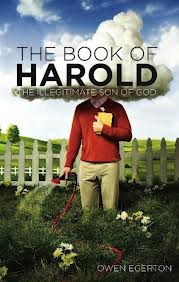
Owen Egerton's novel The Book of Harold has been called...

Owen Egerton’s novel Everyone Says That at the End of the World prompted the novelist Charles Yu to write, “People at the coffee shop were actually staring at me—I don’t think they fully believed that a book could make a person laugh that hard.”

Owen Egerton is the author of Everyone Says That at the End of the WorldThe Book of Harold: The Illegitimate Son of God, and the forthcoming story collection How to Avoid Dying, which was recently named by The New York Times as having one of the best book covers of 2013.

In this interview, Egerton talks about theme and variation in fiction, how to write a scene as well-known as a Christmas pageant, and the role of Christianity in literature.

To read the first chapter of The Book of Harold: The Illegitimate Son of God and an exercise on the expectations of sequence, click here.

Michael Noll

The chapter shows us the basic events of the Christmas pageant multiple times. It’s almost like you’re using dress rehearsals to make the reader familiar with how the scene will play out–only to surprise them with the actual events. Was this repetition intentional, or did you find that the practice runs through the pageant wrote themselves onto the page?

Owen Egerton

I’m a fan of theme and variation, of establishing what should be and then sharing what is. We see it in jazz, in comedy and in narratives. As Robert McKee likes to say, story is found in the gap between expectation and actuality. Your buddy Jim comes over for dinner every Friday at 7 pm. He always brings a bottle of wine and bag of day old donuts. 6:55 pm on Friday there’s a knock on the door. You open it expecting Jim. Instead a beautiful woman in a long black dress stands with a severely cut hand. There’s a story there. We are more aware of the gap – the space where the story lives – when we have some detail of the expectations.

Michael Noll

Most of your readers have likely seen a Christmas pageant—and perhaps appeared in them—and most of those pageants probably followed a similar storyline. All pageants are basically the same, in other words. That sameness would not seem like a great premise for a story, yet the every element of this novel’s pageant seems fresh and new. How did you approach telling the pageant story so that it escaped our expectations for pageants-past.

Owen Egerton

Point of view and characterization are keys to making the familiar fresh. Every wedding looks the same, basically. But it’s not the same old wedding for the secretly pregnant bride or the jilted lover in the back row or the groom who is in love with bride’s mother.

You can even get away with describing monotony if you allow at least one character to be passionate about the monotony.

It also helps if you hint or tell the reader that this is going somewhere. In my chapter, the narrator shares that the event he’ll be describing led him to believe God was hunting him down like a “pissed off loan shark.” The reader is willing to wait through some of the less fascinating details because they feel it building towards something. We’ve promised a payoff. Now we must deliever.

I’m also eluding to those all too familiar pageants for a reason that touches on the novel as a whole. The novel, like the pageant, is a story they do not know based on a story they do know. I’m retelling the gospel—I even begin with a nativity, but the nativity goes wonderfully astray. Hopefully this tells us that the story we’ll be reading will continue to surprise us. But also that the story we know – that pageant we’ve seen or participated in – is as different from the actual birth of a impoverished baby to unmarried parents in Roman-occupied Israel two thousand years ago as it is from the series of missteps in the story. We think we know the story, but we don’t.

 Michael Noll

In his New York Times essay "Has Fiction Lost Its Faith?" Paul Elie compares Christian belief in American fiction to "a dead language or a hangover."

In his New York Times essay “Has Fiction Lost Its Faith?” Paul Elie compares Christian belief in American fiction to “a dead language or a hangover.” Owen Egerton disagrees.

In a New York Times piece, Paul Elie argued that religion (especially Christianity) no longer plays a role in American literature. In Elie’s words, the role of Christian belief in fiction is “something between a dead language and a hangover…if any patch of our culture can be said to be post-Christian, it is literature.” Your novel would seem to refute this claim. Do you see questions of Christian or religious belief reflected in much of the literature you read? Is Elie simply reading the wrong books, or does he have a point?

Owen Egerton

I love reading Paul Elie. Amazing insight and warm passion. But I think he is mistaking a change in religious focus for death. Elie correctly recognizes that fewer and fewer “believers” populate modern literature. And that there appear to be fewer writers with Flannery O’Conner’s goal to “make belief believable.” Elie’s conclusion that religion no longer plays a role in American literature is based on the premise that the center of religion is belief. He feels one’s beliefs – not one’s actions or the tradition in which one participates – define one’s religious identity. But a Passover Seder can be impacting even if one doesn’t believe in a literal God sending plagues to ancient Egypt. And the power of the passion and death of Jesus is not limited to only those who believe in a historical, literal resurrection.

What Elie’s sees as a shrinking of religious themes, I see as an expansion past a narrower definition of religious devotion. I’d argue that we’ve lost some interest in the dogmatic discussion and distinctions, which for O’Conner and Percy Walker separated the saved and unsaved. We are less concerned in what a person or character believes and more interested in what they do. The beauty of a Catholic mass and the themes of community, sacrifice, and transcendence are not dependent on the doctrine of transubstantiation. More and more of us recognize this. Many moderns have a religious life free of belief.

And literature is a perfect vehicle for pondering the questions of religion without being moored on the dichotomy of belief and disbelief. We are moved by the characters and story and images of a novel without ever having to declare that we believe the events of the novel to be factually true. In fact, we recognize that our fiction by definition is not fact, but it no way limits the power.

The stories and rituals of faith traditions – whether you hold them to be history, myth, or both – are still often the language we use to wrestle with themes of mortality, morality, and meaning. Whether in James Reich’s dark, poetic 2012 novel I, Judas or the Christ imagery rampant in the final Harry Potter book, religion is still very much a living language.

I am not a believer, but I return again and again to religious themes in my writing. I see the shared power of these stories, the universal appeal to these themes, and perhaps I’m searching – and my readers along with me – for something beyond belief.

Michael Noll

In addition to writing, you’ve built a reputation as an improv-comedy performer. In some ways, improv seems like an imperfect match with writing. One requires spontaneity, and the other favors revision. Do you find that improv has influenced, and perhaps even helped, your writing?

Owen Egerton

Improv and writing are wonderful bedfellows. Long before I revise, I must create! In that place – that hot cauldron of creating, that hunt for self-surprise – the revising mind is an enemy. That part of my mind questioning my choices, correcting my spelling or simply asking “what are you doing here?” – that part must be shut up if I’m to thrill the page. I leave the revising for tomorrow. It’s the same in improv comedy. In improv we train ourselves to say “yes” to the wild, untested, unwritten ideas. We do not stop to ask, is this the best idea? It is the idea! So we play with it, we build upon it. So when I write, I tap into this mode. I splatter my pages with messy ideas and fractured sentences and fantastic surprises! Fire doesn’t think. It burns. Lovers don’t plan. They fuck.

First published in February 2013

Michael Noll

Michael Noll is the Editor of Read to Write Stories.

How to Use Theme and Variation in a Story—Christmas Edition

24 Dec
images-2

“The Book of Harold” by Owen Egerton is out in paperback from Soft Skull Press. You can read the first chapter here.

The success of a story is often determined by how well it goes off the tracks. In order for that to happen, though, the story must first lay those tracks. A great example of derailing a story can be found in the opening chapter of Owen Egerton’s novel, The Book of Harold: The Illegitimate Son of God. You can read that chapter, titled “Nativity,” on Amazon here. (Look inside and read the first pages.)

How the Chapter Works

One of the oldest ways to create suspense in a story is to create a repeating sequence of events. So, in “The Three Little Pigs,” we watch the wolf blow down two houses before going to the third—where his plan goes awry. In a more contemporary example, the film Oceans Eleven, plus every heist movie ever made, first shows the thieves planning the heist and then practicing the heist, and when they finally put their plan into action, something goes wrong. Both of those stories—the fairy tale and the blockbuster film—spend time establishing how events should go so that they can go wrong.

With that strategy in mind, count how many times Egerton shows us the Christmas pageant in “Nativity”:

  1. We’re told that the pageant “was a Christmas tradition for our church.”
  2. Next, we’re shown the casting and introduced to the doll that will play Baby Jesus.
  3. Then, we’re shown the children practicing the pageant, running through the entire show.
  4. Next, we’re given a quick description of the first two nights of the pageant.
  5. Finally, the last performance is upon us. We know the drill by heart, and so do the characters. Notice how they begin to alter the routine: the donkey drop “balls of dung every other step,” a Wise Man slips on the dung, and chaos ensues.

Notice how each telling involves a bit of irregularity: the introduction of the drummer boy, the casting of the narrator as Joseph, the drummer boy mis-delivering his line, angels crying, and finally donkeys pooping. Yet, even though the reader expects an unexpected turn of events, there is no way to foresee what actually happens. The thrill, for the reader, is in waiting for the predicted, yet unpredictable, twist. 

In addition to repeating the pageant, the passage contains words that clearly cue the reader into where things will go wrong. For instance, Egerton writes, “We practiced for two weeks. My part was simple enough.” The word simple is similar to Chekhov’s proverbial “gun on the wall.” If you show a gun in the first act, it must go off by the third. If you use the word simple in the beginning of a story, the story had better complicate that simplicity.

The Writing Exercise

Let’s create a sequence of events that will repeat itself, using Owen Egerton’s “Nativity” chapter as a model:

  1. Choose a scene that will repeat itself. The scene could be one that involves planning and practice (a wedding, shouting “Surprise!” at a birthday party). Or it could center around someone involved in a routine activity (door-to-door salesman).
  2. People the scene with characters. For instance, a wedding or party will have guests. A door-to-door salesman will visit homeowners.
  3. Tell the reader how the scene will play out. Be detailed. First, X will happen. Then X. Then X. Finally, X. The more detailed steps you provide, the more opportunities you have to make things go wrong.
  4. Show the scene once or twice. In each of the tellings, something should go slightly wrong but not so wrong that the characters can’t deal with it.
  5. Finally, show the scene a final time, adding big, unexpected challenges. Ideally, you’ll let the challenges build on one another. So, something goes wrong in the first step of the sequence, and that problem creates a slightly larger problem in the next step, and so on, until the final step, when the sequence has devolved into chaos.

It helps if you give the main character a sense that something might go wrong—or if you generally introduce the idea that all might not go according to plan. You can introduce the idea subtly or in an obvious way. The point is to show the sequence of events while hinting at a twist in the sequence.

Be inventive with this exercise. Remember, you want to surprise an expectant reader.

Good luck and have fun.

An Interview with Joe Lansdale

5 Sep
Joe Landale is the author of many novels and stories, including the Hap and Leonard mystery novels and the novella Bubba Ho-Tep. His latest novel The Thicket will be released on September 10.

Joe Landale latest novel The Thicket will be released on September 10. If you’re in Austin, you can see Lansdale in person at BookPeople on September 12.

Joe Lansdale is one of the most versatile and peculiar writers in American literature. He’s written a popular mystery series (Hap and Leonard) whose detectives are a white East Texas rose picker who spent time in prison as a conscientious objector and his best friend, a gay, black veteran. Lansdale has won the Bram Stoker Award from the Horror Writers Association eight times. He’s also written for comic books, television, and movies, and his work has been turned into the films Bubba Ho-Tep (which, if you haven’t seen it, you need to watch tonight) and, coming soon, Cold in July. His latest novel is The Thicket, a suspense novel set in The Big Thicket in East Texas. If you live in Austin, you can see him read from the book in person on Tuesday, Sept. 12, at BookPeople.

In this interview, Lansdale discusses voice, writing “historical” fiction, and what it means to write about East Texas.

(To read an excerpt from Lansdale’s new novel The Thicket and an exercise on voice and first sentences, click here.)

Michael Noll

The first sentence of the novel lists all the things that will happen in the story. I’ve seen a lot of beginning writers try something similar, and the sentences rarely work because they feel manipulative, like the language is trying too hard to get my attention. But this sentence is wonderful. It’s such an absurd list of events, and they’re related so matter-of-factly. How did you approach this sentence?

Joe Lansdale

I’m not overly conscious of it and mostly just try to write something from the subconcious where the story is hidden. But the subconscious mind knows, and I let it be my guide.

Michael Noll

I’m from rural Kansas, where people, especially old farmers, tend to have a colorful way of talking. My siblings and I actually play a game, trying to think of all the crazy lines we’ve heard our dad or grandfather say. So, that’s why I love this line from your novel: “Daddy always said Grandpa was so tight that when he blinked the skin on his pecker rolled back.” That’s maybe the funniest thing I’ve read in a novel in a long time. I’m curious if you made that line up, or if it’s something you’ve heard. In general, you’re so good at writing that rural voice. How much work does it take to maintain it for an entire novel?

Joe Lansdale

It’s a saying I heard growing up. People here, especially generations previous, spoke that way naturally. I’m very comparison-oriented as a writer and speaker. I pay attention even when I don’t know I am. I absorb more than I collect.

Michael Noll

The novel is set one hundred years ago–which seems like a risky move as a writer. So many books set in the past are stifling to read. The characters don’t seem like fresh creations, or the writers try to mimic an old-fashioned way of talking. How did you avoid those problems? At one point, I forgot the time period and thought I was reading something set in the present.

Joe Lansdale

I tried to capture the period without it capturing me. I did allow an old style of speaking to seep in, but I never let it own the story. Shorty has a very stylized way of speaking, and even his contemporaries find it odd.

Michael Noll

You’re a Texas writer–born in Texas, live there, and set many of your books there. As a literary setting, Texas often gets used as a platform for big, sweeping sagas about America. Your work doesn’t really do that, though. It’s funny, where often those books aren’t, and the characters are intensely idiosyncratic, rather than symbols for some larger idea–even though, as in the case of The Thicket, the story is set at a time of significant change. Is this because you write about East Texas, which lacks some of the mythic quality of the Old West and West Texas? Or does it have to do with your conception of how to tell a story? What do you think?

Joe Lansdale

I think East Texas is mythic, but more in an Old South way, mixed with some Western, and cajun, black, and more recently, Hispanic culture. I write out of the mythic and tall tale tradition, actually. Love it. Greek myths are a big part of my background.

September 2013

Profile pic

Michael Noll is the editor of Read to Write.

How to Create Your Narrator’s Voice

3 Sep
Joe Lansdale's new novel The Thicket is about X. You can read a free excerpt on Facebook.

Joe R. Lansdale’s new novel The Thicket follows a band of unlikely heroes on an adventure in turn-of-the-century East Texas. You can read a free excerpt on Facebook.

No aspect of writing fiction is more mysterious than creating a unique voice for the narrator. We often begin by imitating a voice that we love–Huck Finn, Holden Caulfield, or any of the voices dreamed up by Jonathan Safran Foer, Nicole Kraus, or Gary Shteyngart. Or we try to write the way that someone we know talks. As we fail, the elusive voice becomes like a magic trick that we should know how to perform but have forgotten. So what do we do?

One writer who consistently creates compelling narrators is Joe R. Lansdale. His new novel, The Thicket (to be released September 10) is set in East Texas at the turn of the century and narrated in a voice that catches your eye before the first sentence is over. The writer Ron Carlson said that The Thicket is “told in a voice so alluring and deadpan that it makes you smile and then look around to see who saw you smile.” You can read a preview of the first chapter here.

How the Story Works

First sentences are notoriously difficult to write. Stephen King recently claimed that he cannot write a novel until he’s gotten the first sentence right, and that sometimes doing so takes years. So it’s interesting to see how Lansdale approaches the first sentence of his novel. Notice how quickly he establishes the narrator’s voice:

“I didn’t suspect the day Grandfather came out and got me and my sister, Lula, and hauled us off toward the ferry that I’d soon end up with worse things happening than had already come upon us or that I’d take up with a gun-shooting dwarf, the son of a slave, and a big angry hog, let alone find true love and kill someone, but that’s exactly how it was.”

In that sentence, Lansdale falls back on a tried-and-true strategy. If you don’t know how to start a story, just tell the reader what will happen. It may sound simplistic, but this face-value approach is key to establishing the narrator’s voice for two reasons:

  1. We learn that the narrator is a tell-it-like-it-is kind of guy. He’s not going to play around with us. If you’re trying to develop a character, it’s useful to have a couple of hard-and-fast personality traits to rely upon.
  2. Because the statement is so factual, Lansdale has the luxury of playing with the words. He doesn’t have to worry about finding something interesting to say; he just needs to let the narrator find an interesting way to say a basic thing. This is exactly the strategy used here by Mark Twain in The Adventures of Huckleberry Finn (notice how it’s stating basic information):

“The Widow Douglas she took me for her son, and allowed she would sivilize me; but it was rough living in the house all the time, considering how dismal regular and decent the widow was in all her ways; and so when I couldn’t stand it no longer I lit out.”

A final point to consider: It’s easy to fall into the trap of believing that great voices are highly elaborate or deeply folksy, but the phrasings that make them memorable are often subtle. Lansdale’s three-part phrase “gun-shooting dwarf, the son of a slave, and a big angry hog” simply adds a few eye-catching adjectives. (This is another reason you shouldn’t abide by all “rules for writers.” Adjectives, when used well, can make a story sparkle.)

The Writing Exercise

Let’s create a voice, using Joe Lansdale’s The Thicket as a model:

  1. Using a story you’ve been working on, write a new first sentence(s). State outright, in the first person, what will happen. Use your plainest language. You’re giving yourself a frame to hang the narration on.
  2. Think about your narrator. Would he or she make such a up-front statement? If not, what parts would the narrator want to hide or soften? How would the simple statements be rephrased in order to make the narrator more comfortable? Make those changes.
  3. If the narrator had a captive audience, how would he/she change the remaining phrases in order to make them more interesting? In other words, what is the narrator’s storytelling voice? Because that is what narrators are doing: telling a story. Pick two or three words or phrases and make some simple changes: add adjectives, replace nouns with different nouns, or cut words to create surprising juxtapositions (“true love and kill someone”).

Play with your sentence(s) and see what you get. If you’re having fun, it’s a good sign.

Good luck.

An Interview with Mary Helen Specht

29 Aug
Mary Helen Specht

Mary Helen Specht was recently the writer-in-residence at Necessary Fiction, where she posted excerpts of her novel-in-progress, Migratory Animalsas well as interviews with the writers Sarah Bird and Rotimi Babatunde.

Mary Helen Specht might have been born and raised in Abilene, Texas, but after graduating from high school, she’s barely stopped moving. She’s studied at Rice University and Emerson College; worked in Santiago, Chile and Quito, Ecuador, and lived in Nigeria on a Fulbright grant. Most recently, she was a Fellow at the Dobie Paisano Ranch outside of Austin, and she’s now an assistant professor at St. Edward’s University in Austin.  A two-time Pushcart Prize nominee, her work has been published in numerous journals and literary magazines. She is currently working on a novel.

In this interview, Specht discusses introducing characters, the challenges of writing global fiction from an American perspective, and why she chose to use her experiences in Nigeria as the basis for a novel rather than a memoir.

(To read an excerpt from Specht’s novel-in-progress Migratory Animals and an exercise based on how she adeptly introduces two characters, click here.)

Michael Noll

One of the hardest things for beginning writers to do–and even for me–is to introduce characters to each other. So, I admire how easily you introduce Flannery and Kunle. You manage to cover the basics: where, when, and how and how they were dressed. But you also move on quickly. The introduction sets up the story rather than delaying it. Was this introduction always so smooth? Or did it become that way through revision?

Mary Helen Specht

The prologue has been the most worked over part of my novel. Each time I changed anything major about the rest of the book during a revision, the prologue would suddenly seem off. I’d lost the right emphasis or tone for what came next—a reverse domino effect. The fact that the prologue is set in Nigeria while much of the rest of the novel is set in the United States was another challenge—I felt that I had to give both the big picture trajectory of Flannery’s time there while also rooting the readers in scene. I ended up looking for guidance in the short story form for this, particularly in Jhumpa Lahiri’s most recent collection Unaccustomed Earth, which inspired me to start on a large scale and then zoom in to the “meet cute” between Flannery and Kunle. I also tried to use concrete physical objects (like palm wine) to transition quickly through time while remaining in scene throughout. For me, introducing characters and places is all about allowing the physical environment to do double duty by standing in for (or at least echoing) the interior lives or relationships of the characters.

Michael Noll

The novel is set in Nigeria, and so, obviously, place plays an important role in the novel. And because you’re writing for an audience that likely hasn’t been to Nigeria, you’re writing about cities and a landscape that most of us don’t know. So I’m curious how you approached the descriptions of place. How did you balance the need to show enough details to locate the reader but also the need to keep the story moving?

Mary Helen Specht

Great question. This has been tremendously complicated, and like the prologue, I’ve spent a lot of time thinking about and revising the Nigeria sections. In particular, I didn’t want to portray Nigeria one-dimensionally, when in reality it is a country with rural huts and modern houses, dirt roads and concrete flyovers. I had notebooks full of descriptions of Nigeria from my time living there after graduate school, and I combed through them, looking for details that would do the most work in terms of demonstrating the country’s complexity. Instead of spending a paragraph explicating the strange mix of modernity and degradation at the university, for example, I used an image of a woman wearing a traditional wrapper while carrying a computer monitor on her head across campus.

Michael Noll

As the writer-in-residence at Necessary Fiction, you wrote an essay, “The Challenges of Writing Global Fiction in the West.” In it, you talk about traveling to Nigeria for a Fulbright and knowing that you would write about the experience. And, yet, you wondered, “How could I use this setting, use my experiences with the people there, to write in a way that didn’t patronize, exoticize, or simplify the complex world of West Africa?” This is a significant problem with Western stories set outside of the West. Just recently, I saw the film The Best Exotic Marigold Hotel, which is about a group of British retirees who settle in India. In it, the Indians really only serve the purpose of enlightening the Brits. Yet, the film seemed well-intentioned. Is it possible to step outside of your Western influences when writing about places like India and Africa? Is there a way to somehow embrace your alien status and also honestly represent the people who are from that place?

Mary Helen Specht

The Nigerian writer Chimamanda Ngozi Adichi delivered this talk about the dangers of reducing a place to a single narrative at TED Global. The talk is 20 minutes and definitely worth checking out.

The Nigerian writer Chimamanda Ngozi Adichi delivered this talk about the dangers of reducing a place to a single narrative at TED Global. The talk is 20 minutes and definitely worth checking out.

I’ve spent a lot of time studying and writing about this question and my answer is this: I don’t know; but I won’t let myself off that easily. I certainly think there is an opportunity for writers from the developed world to write about the developing world in a way that is productive, especially when these writers use the opportunity to explore their own privilege and maybe even culpability. That said, I think it is almost impossible to entirely escape being part of the “western gaze” when writing about other cultures. I think the most important action writers like myself can take to make this situation less uncomfortable is to support—by reading, reviewing, promoting, assigning to our students etc.—international fiction written by non-western writers. As Chimamanda Ngozi Adichie discusses in her TED talk (which you MUST watch if you haven’t—she’s amazing), the danger is perpetuating a “single story” about any given place. If there is a multiplicity of voices, native and non-native, all writing about a country or culture, then there isn’t the same pressure to provide some impossible “objective” viewpoint. The beauty of fiction, after all, is in the opposite, in its subjectivity and ability to refract the world through many prisms.

Michael Noll

You published an essay about falling in love with a Nigerian man in Nigeria for The New York Times. It’s a really great essay. It also shares some of the same details as Migratory Animals. What went into your decision to write the story as a novel rather than as a memoir? What did fictionalizing the story allow you to do that wasn’t possible in nonfiction?

Mary Helen Specht

People connected to the publishing industry convinced me to work on a memoir based on my time in Nigeria, and I tried. However, it ended up more of a collection of essays (and is where the NYT piece came from), than one story with a strong arc. So, I returned to what I’d always really wanted to do in the first place, which was write a novel using my time there as a loose inspiration. Fictionalizing allows me to imagine what might have been—if I’d been a different person with different desires and challenges, and if I’d made different choices or been born into a different situation. In the real world, we only get to live one life; writing fiction allows me, for a time, to embody other possibilities.

August 2013

Profile pic

Michael Noll is the editor of Read to Write.

How to Introduce Characters to Each Other

27 Aug
Mary Helen Specht was the writer-in-residence at Necessary Fiction, where the prologue to her novel Migratory Animals was published.

Mary Helen Specht was the writer-in-residence at Necessary Fiction, where the prologue to her novel Migratory Animals was published.

Sometimes the simplest things are the most difficult. For instance, how do you introduce two characters for the first time? A lot rides on the encounter. It’s not so different than dreaming about that guy or girl in middle school and worrying about how you’d ask him or her to the dance. The problem vexed F. Scott Fitzgerald—how to introduce Gatsby to Nick— so much that he slipped the great man in the back door. We meet him without knowing it.

If you want an easier way to introduce two characters, check out Mary Helen Specht’s great novel-in-progress Migratory Animals. The prologue was published at Necessary Fiction, where you can read it now.

How the Story Works

Here’s how Specht introduces the novel’s main characters: Flannery, a white American woman in her 20s visiting Nigeria, and Kunle, a Nigerian man in graduate school:

“She met Kunle at an outdoor canteen at the Nigerian university where she had been posted on what was supposed to be a brief data-collecting trip. Sitting at an adjacent table with a soda and a worn textbook, he leaned over and said, “You should try the palm wine.” Kunle wore slacks and a blue button-down Oxford, both ironed within an inch of their lives. Trim and preppy, he looked like one of those idealized husbands in films, usually too straight-laced to be Flannery’s type, the kind of man who kissed a beautiful wife before leaving for the office.”

Notice what Specht does not do: she doesn’t let the characters say, “Hi.” They don’t shake hands or make chit-chat. They don’t eye each other from across the room. The introduction just happens. Here’s a breakdown of how it works:

  1. When and where she met the man
  2. The initial encounter boiled down to a single spoken phrase and action
  3. What the man was wearing
  4. What his appearance reminder her of

If you used this template for every introduction in every story and novel, you’d be set for life. It’s an easy, efficient way to get two characters together.

The Writing Exercise

Let’s introduce two characters using Mary Helen Specht’s novel as a model:

  1. Pick a setting: Why is the character/narrator there? In what specific place did the characters meet? Be explicit when starting the passage: He/She/I met So-and-so in this place.
  2. Pick a moment: Boil the initial encounter down to a single spoken phrase and action. When the main character/narrator leaves the encounter, what words of the other person will he/she remember and dream about?
  3. PIck the clothes: What is the person wearing? Be specific.
  4. Describe the clothes/style/appearance more generally: From one character’s perspective, describe the other character. What does he/she reminder her/him of? What feeling does he/she get when meeting the person?

That’s it. The encounter is over, and you can transition next to the next encounter. Mechanically speaking, all you need to do is get the characters onto the page together. The scene doesn’t need to be long, like the initial encounter in Henry James’ The Beast in the Jungle. Be brief and efficient and move on.

Good luck and have fun.

How to Write a Dream Sequence

20 Aug
Paul Yoon's novel, Snow Hunters, was published by Simon and Schuster. It follows the travels of Yohan, a Korean who leaves his country after the Korean War to start over in Brazil.

Paul Yoon’s novel, Snow Hunters, follows the travels of Yohan, a man who leaves his country after the Korean War to start over in Brazil. The novel prompted a New York Times reviewer to write, “One of the gratifications of literature is to know a character in a book more completely than we can know people in real life.”

Some writing teachers make a rule for stories submitted in workshop: No dreams. No dream sequences. They make this rule because badly written dreams are all the same. They “show” a character’s inner torments/thoughts rather than artfully imbedding them into the narrative. But if fiction is, in any way, supposed to imitate life, then dreams are fair game. The question is how to write them well.

Paul Yoon has written one of the best dream sequences I’ve ever read in his new novel Snow Hunters. You can read the first chapter here. The dream begins at the bottom of page 16.

How the Story Works

The passage begin with Yohan falling asleep and hearing sounds through the open window:

“the tapping of the rain and voices and a car and then a ship’s horn. A single chime of a church bell. a door opening. A song on the radio. The steady punches of a sewing machine. He heard aircraft and the dust spraying from trucks and the wind against the tents”

We get a short reflection on this noise from Yohan (“it was faint and calm and he did not mind”), and then the dream begins.

“He was riding a bicycle. He felt a hand on the small of his back. Someone familiar spoke to him and he said, —I can go a little longer, and he lifted a shovel and sank it into the earth. A group of children whistled and clapped. And then he was running his hands through a girl’s hair and she took his wrist and they moved through a corridor where rows of dresses hung from the ceiling. Those dresses turned into the sea.”

Then the dream ends. So why does this dream work? First, it has no clear message. It’s not telegraphing crucial information about Yohan’s interior life. At best, the message is mixed: the desire and need to push himself and the desire for friendship and love. The images are not accidental. They reflect encounters and experiences from waking life. Second, the dream does not predict the future. It doesn’t attempt to move the plot forward.  Though dreams sometimes cause us to act (dreaming that someone has an accident and then, upon waking, contacting that person), we tend to be skeptical of someone who claims that valuable information was gained in a dream.

So why does the dream work? Here are four reasons (and lessons to keep in mind):

  1. It’s so beautifully and simply written.
  2. It glides from image to image, never dwelling too long in one place.
  3. It’s short.
  4. The images reflect things we’ve already seen in the novel. The dream feels to us, the readers, the same as it does to Yohan. In other words, the dream feels like a real dream. And that is rare in fiction.

The Writing Exercise

Let’s practice writing a dream sequence, using Paul Yoon’s Snow Hunters as a model:

  1. Choose a character whom you’ve already created and written about.
  2. Bring the character home, to bed, after a long day—not after a life-changing event but simply a day in which things seem to be on the cusp of happening.
  3. When the characters’ eyes are closed, let the sounds of the world drift in. Be specific and precise. You’re describing that odd state in which the mind is both idle and resting and also alert and aware of its surroundings.
  4. Ease into the dream. If you’ve ever heard the voice/sound from the waking world in your dream (a spouse or child talking to you, a professor speaking, the alarm clock), then you know how permeable dreams can be.
  5. Make the dream a reflection of the images of the waking world. Treat the dream’s reflective power like that of an almost-still lake. Remember, the mind is not directing traffic any longer but instead letting images trickle through unfiltered. Move from image to image. End on one that best seems to fit the mood of the day.

Now you have a dream sequence. If it seems inconsequential, that’s good. Beware dreams of great import—unless you’re writing about the Virgin Mary. Let the dream become part of the character’s fabric and, thus, the fabric of the novel.

Good luck and have fun.

An Interview with Shannon A. Thompson

15 Aug
Shannon A. Thompson's novel Minutes Before Sunset was a Goodreads Book of the Month for July. You can read the first chapter here.

Shannon A. Thompson’s novel Minutes Before Sunset was a Goodreads Book of the Month for July. You can read the first chapter here.

Shannon A. Thompson is a 21-year-old with two novels under her belt. Her first, a YA sci-fi thriller November Snow, was published when she was 16. Her latest work, the YA paranormal novel Minutes Before Sunset, was voted a Goodreads Book of the Month for July. Currently, she is finishing her senior year at the University of Kansas with a bachelor’s degree in English (with a creative writing focus).

In this interview, Thompson discusses the idea of prophecy, what it takes for a college student to publish a book, and her strategy for using social media as a promotional tool.

(To read the first chapter of Minutes Before Sunset and an exercise based on how she sets the rules of the novel’s world, click here.)

Michael Noll

You very deliberately set up the rules of the novel’s world in the first chapter: The town is in denial of very plain truths, and yet the narrator would like to join the townspeople’s simple lives–but something prevents him. How did you approach this chapter? Did you set out to establish the mentality of the town and the main character, or did you write the novel and work those things into the first chapter through revision?

Shannon A. Thompson

The first chapter is actually one of the parts that remained remarkably the same during the editing process. I purposely set up the rules so quickly, because they end up being very different from what they seem. As many readers have found out, the “prophecy” idea is not a preordained fate but rather a twisted illusion of choice, identity, and questionable fate. Because of this ultimate change, the beginning was initially set up. In regards to the protagonist, Eric, he is probably more rigid in the ultimate version–a little harsher on the world than he originally was–but I enjoyed it, because his changing from the beginning to the end meant more with his extremities being stretched even further.

Michael Noll

We also learn the basic mechanics of the world’s supernatural elements: the characters can appear and vanish and move quickly across distances. Young members of this community are given guards, either to protect them or protect the world from them (it’s not yet clear in the first chapter). These are crucial details for readers to understand, and it’s important to establish them early, but it’s also important not to stop the story in order to explain these things. You avoid this problem by working the details into the narrative. How did you balance the need to get the story moving with the need to show the reader what the characters can do (which is likely a big part of the book’s appeal)?

Shannon A. Thompson

I balanced them more in the editing process than in the originally writing process. This happened because I had a better understanding after I’d spent so much time with the world and the characters living within it. A good example of this is reflecting on the word count: the first version was 136,000 words, but the published version is less than 80,000 words. This is important, because I was still discovering some of those rules while I wrote the first version. In the editing process, I was able to incorporate those elements sooner.

Michael Noll

Many high school and college students dream of being writers, but you’ve actually published two novels. How were you able to make the jump ambition to actually completing and publishing your work? How do you make time among all the things that typically distract young writers: social life, social media, school, family?

Shannon A. Thompson

Shannon Thompson's novel "Minutes Before Sunset" was a Goodreads Book of the Month in July.

Shannon Thompson’s novel Minutes Before Sunset

Honestly, I believe anyone can make the jump, as you put it, but it requires a lot of sacrifice. I don’t go out on the weekends or watch a lot of T.V. I write–but I also love writing, so this is a beautiful opportunity for me. In terms of making the decision to do this, I’d have to talk about my past. I started writing, because my mother was a writer, and she encouraged me to in order to cope with nightmares and night terrors. She suddenly died when I was 11, and I faced mortality at a young age. I realized that I had to spend my life chasing my dream, so I began immediately, and I had my first novel published in three years. November Snow is dedicated to her, but Minutes Before Sunset is dedicated to my late roommate, Kristine Andersen, who died in October of last year and our other roommate, Megan Paustian. In a way you could say that my passion pushes me forward, but deaths in my life have caused the first shove that turned into the momentum that began it all. However, if I had to give advice, I’d share my mantra: write with passion; succeed with self-discipline.

Michael Noll

I teach at a university, and I often hear faculty lamenting and/or praising our students’ use of social media. The lamenters believe that students are wasting their lives on tiny screens. The praisers believe that students may one day translate their online connections into beneficial ends. I’m curious about your use of social media. It seems like you’ve been successful in creating an online presence for yourself not just as a person but as a writer. Your blog has more than 8000 followers, and Minutes Before Sunset was a Goodreads Book of the Month in July. What’s your social media strategy?

Shannon A. Thompson

I like to believe my social media strategy is simple: be available and help others. My website provides a lot of writing, editing, and publishing tips, because I want to help other writers, but I also want to help other artists in general. My ultimate dream isn’t to be a famous author. My dream is to be able to open an affordable art school that connects students with innovative artists within their media. I believe I have connected with so many others over the Internet, because I try to help them, and I’m always reminding people they can email me at any time if they have any questions about the industry.

August 2013

Profile pic

Michael Noll is the editor of Read to Write.