Tag Archives: how to write a short story

An Interview with Michael Yang

16 Oct
Michael Yang's story, "Hollywood Bodies Found Headless," tells the story of an aspiring child actress and her mother living in the shadow of a serial killer.

Michael Yang’s story, “Hollywood Bodies Found Headless,” tells the story of an aspiring child actress and her mother living in the shadow of a serial killer.

Michael B. Yang’s stories have appeared in Ploughshares, Michigan Quarterly Review, and The Seattle Review. He lives in Austin, Texas, where he is currently working on a novel.

To read his story “Hollywood Bodies Found Headless” and an exercise on using setting and backdrop to heighten the tension in small, intimate dramas, click here.

Michael Noll

Ron Carlson has said that a story has two parts: the story and the world the story comes into. I usually read that to mean that there’s the dramatic thing that happens and the more mundane context that lends the drama meaning. But you seem to have reversed the roles in this story. The story about the child actress and her struggling mother is, in some ways, more mundane than the background world of a serial killer on the loose. Did you ever play around with making the serial killer more physically present in the story? I’m curious how the story found its eventual form.

Michael Yang

Okay, here’s my confession. I just checked and the first draft of the story was written in 2007. That’s seven years since I began writing it until it got published. Seven years. I don’t know how many drafts there have been in the interim.

Strangely, in all those drafts I don’t think that the serial killer was ever present in the story. This was for a number of reasons. First of all, and this might seem odd, but I thought it would be more realistic. Even if you’re in the same time and place where there is a mass murderer, I think it would be pretty unlikely that you’ll be their victim. It’s more likely that you will run into them by chance and nothing happens. Afterwards, you might say that they were nice people who quiet and kept to themselves (of course), but it’s more likely that you would survive the encounter. Second, I wanted to create a feeling of unease and fear in living in the same city as a serial killer. I imagine the sense of danger would color every interaction, and that was the backdrop I wanted in the story.

Michael Noll

The story is set in Los Angeles, which has been used as a setting countless times and, as a result, brings its own fictional weight to a story. I mean, it’s possible to talk about L.A. stories in a way that you can’t talk about Kansas City stories or El Paso stories. Yet, I really felt that I was seeing the world for the first time. In part, the freshness is likely from the niche that you portray: acting tryouts for children appearing in commercials. The characters also spend time in an apartment, which is something that you, as the writer, can create from scratch, rather than relying on tropes that already exist. Still, was it difficult to set a story in a place that has been written about so many times?

Michael Yang
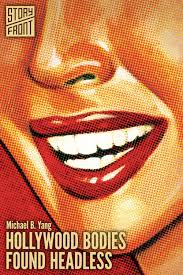
Michael Yang's story "Hollywood Bodies Found Headless" appeared in Amazon's literary series, "Day One."

Michael Yang’s story “Hollywood Bodies Found Headless” appeared in Amazon’s literary series, “Day One.”

I know, you’re right. The location is very familiar and there was some pressure in writing about a known place. On top of that, it has auditions and struggling actors, not exactly the freshest take on an L.A. story. I do think that in the very first drafts the story might have taken place in another city, but Sara was too ambitious to remain there and I thought it would heighten the stakes if her dreams were in reach, with the reality of failure more palpable.

I’ve always been fascinated by the entire, difficult process of creating movies, but it seemed interesting to write about it from the perspective of someone experiencing the day-to-day grind. And really, the constant failure and rejection of the actors seemed familiar. It reminded me of being a writer. There’s also a grotesque element in the process of child acting and the pursuit of fame, but I wanted to flip it slightly on its head by making the child the propulsive force instead of the stage mother. When I sent out the story, I had a few comments that Sara seemed to act too old for her age, but I think it fit her character. A very ambitious child can seem older and more business-savvy than someone else her age. I hoped it worked out.

Sara is a product of Hollywood, a place where her ambitions have taken her, so the topic defined the location which helped define the characters.

Michael Noll

The story is remarkably tight given how much exists just off the page. For instance, we know that the narrator has left her husband and her home in Texas to take her daughter to Los Angeles, but the husband appears only in the briefest of scenes, and even then, the focus is on the daughter, not him. Texas is referenced in passing. Did those parts of the story ever push themselves onto the page more fully? Did you have to revise them out, or were they always just in the background?

Michael Yang

This is also strange, but in all those drafts I don’t think that I ever wrote the scenes with both parents. I knew what the relationship was like between the mother and the father and why they broke up, but I wanted the story to take place as close to the ending as possible and I really wanted the fun of writing the commercials. By the way, if you have the chance to write a scene with a made-up advertisements for a fictional product, I highly recommend it.

I first drafted the story when I was examining my own writing process. It was around this time that I decided to think and plot less in the first draft. Even though I might have a general idea of the story’s direction, I wanted to follow where my subconscious took me, hoping that the turns would be surprising and make sense as I was typing. There’s a danger to this – where the wheels of the story might fall into familiar ruts, whether into cliches or into my own habits and proclivities – but the flashes of discovery, when they come, can be exciting.

Michael Noll

Robert Boswell, one of the best-known writing teachers in America, argues in The Half-Known World that writers should not know their characters too well.

Robert Boswell, one of the best-known writing teachers in America, argues in The Half-Known World that writers should not know their characters too well.

The story is playing around with the genre of tabloid sensationalism—the title is “Hollywood Bodies Found Headless.” As a result, I found it interesting how you develop the tension in the novel. When Frank appears, and when the narrator tells him off and then when he shows up at her apartment, I (and probably all readers) thought, “Uh oh.” We expected something awful to happen. And it may eventually happen, but not yet, not within the frame of this story. That must have been a difficult temptation to resist—to not fulfill the bloody expectations of the title, even though the way the story does end is a lot more unsettling than murder. How many drafts it took you to find that ending?

Michael Yang

I’m not certain how many drafts it took for me before I came up with the ending, but I’m pretty happy with it. For me, the appearance of the chicken man seems strange and unexpected, and right.

I was inspired by the essay “Narrative Spandrels” by the writer Robert Boswell in his craft book The Half-Known World. In the essay, he talks about how as we write, there can be an unintended image that recur throughout the story. It’s not planned and may seem inessential, a byproduct of our writing the primary scenes, but if we pay attention, it can shape the story, supply a sub-text, or gesture to the heart of our meaning.

As I worked on the many drafts of my story, at some point I noticed how many times chickens made an appearance, from the mother’s distaste of how live chickens look and act (my niece told me a story about how her pet chickens nearly pecked another, injured chicken to death), how they feed her child, how the old jingle from Chicken Tonight was a bonding experience during better days with her daughter. I also realized that the general feeling in the story was the same as touching raw chicken skin, which is a little disgusting and is also the same creeping sensation the mother feels towards L.A.

By the way, my fantastic editors asked me if the chicken man was entirely necessary, and I said, yes, yes he is.

October 2014

Michael Noll

Michael Noll is the Editor of Read to Write Stories.

How to Make Small, Intimate Stories into Page Turners

14 Oct
Michael Yang's story "Hollywood Bodies Found Headless" appeared in Amazon's literary series, "Day One."

Michael Yang’s story “Hollywood Bodies Found Headless” appeared in Amazon’s literary series, “Day One.”

When we think about drama, it’s tempting to believe that bigger is better. A story about a marriage on the rocks is good, but a story with married characters throwing rocks at each other is even better, right? Not necessarily. There’s a reason that some journal editors ban stories about characters who die. It’s important to explore the range of dramatic possibilities that exist between morning coffee and evening murder.

For an example of how domestic dramas can be made exciting, check out Michael Yang’s story, “Hollywood Bodies Found Headless.” The lurid sensationalism of the title draws you in, but the drama that holds you is smaller and more intimate than a tabloid headline. The story was published as part of Amazon’s “Day One” literary series, and you can read the first pages and buy the story for $1 at Amazon.

How the Story Works

I’ve mentioned a number of times on this blog the Ron Carlson quote about a story having two parts: the story and the world that the story enters. Usually, this means that a dramatic plot (ninja fights dragon in cage match) is given depth and resonance by the nuances of the story’s world (ninja can’t pass final ninja qualifying test, can’t get the girl, can’t make his parents happy, can’t get along with his more successful brother and sister). The world, then, gives the story texture.

But what if the opposite is also true? What if small, intimate plots can benefit from exciting worlds? What difference would the world make to a story about two characters working in a restaurant and trying to pay bills—one story is set in Kansas City, and the other is set in Pompeii just before Mt. Vesuvius erupts. Context matters—and that is exactly the truth that Yang uses in his story, “Hollywood Bodies Found Headless.”

The story is about a woman who has moved to Los Angeles so that her 9-year-old can pursue her dream of becoming an actress. It might seem odd to view a Hollywood story as mundane, but Yang sets the story in the grind-it-out world of television commercials: standing in line to audition, dealing with directors and other parents, and eating (and not eating) in order to look the part. Plus, the story isn’t concerned with a make-or-break moment for the girl, Sara. Something happens, of course, and it may or may not determine Sara’s future, but the immediate impact is felt most acutely by her mother. In other words, it’s a domestic story with small, intimate stakes.

So, look what Yang inserts into the story’s world: On the first page, the mother buys a grocery story tabloid magazine with the headline, “Hollywood Bodies Found Headless.” After she feeds her daughter dinner, she reads the article:

I open the glossy pages. The first body was discovered off a Sacramento highway a decade ago, a homeless man. There was hardly any press, only a small article in the back pages, but two years later the second body, a well-known former prostitute for celebrities, lapped up on the shore of the Los Angeles River, wrists and ankles bound. The only connection between the two crimes was the headless nature of their bodies. For a while, the Hollywood Lopper had been an LA secret, because of how infrequently he struck, but the killings ramped up as he began garnering news. The latest murder was a month ago: a ubiquitous character actor who always played the weaselly, cocksure best friend— the one who tries to steal the hero’s girl, only to get humiliated in the end.

After we learn the dramatic, Vesuvius-erupts part of the world, we learn about its personal ramifications:

On TV the news anchors prattle on about a besieged Los Angeles, with celebrities blinking under bright lights, stars turned into martyrs now that the Hollywood Lopper has moved up the entertainment food chain, while we no-names, the real victims, the people on the edges who had been enticed and promised celebrity, toil in obscurity through our ordinary lives.

In short, Yang has taken a small, intimate story and set it against a backdrop of 1) murder and 2) celebrities versus ordinary people. There  is a serial killer on the loose, but no one will care unless he kills someone notable. His murders have ascended the Hollywood social ladder, but there’s no guarantee that he won’t kill an unknown person next, like a certain nine-year-old trying out for commercials—or her mother. What makes the story beautiful is that it keeps the serial killer in the background (as part of the world) and foregrounds the story about a mostly oblivious girl chafing at the limits placed on her by her concerned mother.

That is how you can use a dramatic world to make an intimate story more exciting.

The Writing Exercise

Let’s make a small, intimate story more exciting by giving it a dramatic world, using “Hollywood Bodies Found Headless” by Michael Yang as a model:

  1. Choose a mundane story. Perhaps it’s one you’ve already written. Or, you could choose one of the many usual domestic plot lines: marriage drama, relationship drama, parent/child drama, money drama, extended-family drama. Regardless, you’re looking for a story that makes you worry that it’s not exciting/dramatic/sexy enough. Setting aside issues of fiction written by men vs women (and the tendency to dismiss domestic stories), this is a worry that most writers have: is our story interesting enough. Why should anyone read our story?
  2. Choose a dramatic backdrop. If you’re writing a short story, this might mean choosing something to exist in the background: noise that’s buzzing in the characters’ heads. It could be something unusual and threatening like a serial killer on the loose. It could be a significant election or a historical moment like the first moon landing. If you’re writing a novel, you might use the larger arc of the story (throw the ring into Mt. Doom, return the painting The Goldfinch) as a backdrop for an intimate moment or minor arc. Even though the action may be small, it’s cast against a much larger story that gives it weight.
  3. Watch for a moment to unite the story and backdrop. Michael Yang does this when he writes that “we no-names, the real victims, the people on the edges who had been enticed and promised celebrity, toil in obscurity through our ordinary lives.” Give your characters a chance to notice the backdrop, just as the mother in Yang’s story reads about celebrities in the tabloid newspaper. That moment can have many emotional angles. In a story set in Pompeii, one character could look out her window while eating dinner with her children and think, “Oh no.” Another character could glance away from her cheating husband, see the smoke, and think, “Thank god.” This moment will likely be brief. It may happen more than once, just as the mother in Yang’s story thinks about the serial killer more than once, but when she does, it’s to refocus our attention on the importance of the intimate drama in front of her.

Good luck!

How to Create a Character Foil

23 Sep
Kalpana Narayanan won Boston Review's Aura Estrada Short Story Prize with her story, "Aviator on the Prowl."

Kalpana Narayanan won Boston Review‘s Aura Estrada Short Story Prize with her story, “Aviator on the Prowl.”

In high school literature classes, students are often taught about character foils—a yin-and-yang concept in which characters tend to be polar opposites of each other, as in the nursery rhyme, “Jack Sprat could eat no fat, his wife could eat no lean.” As a story device, an opposites-attract approach often works. But it isn’t the only way to develop character conflicts.

In her story, “Aviator on the Prowl,” Kalpana Narayanan creates two characters who are remarkably alike rather than different. The result is a story that won Boston Review‘s 2011 Aura Estrada Short Story Contest. The judge, Francisco Goldman, wrote that the story “makes you laugh a lot, makes you feel great affection, and breaks your heart. I have to admit, I finished it with tears in my eyes.” You can read “Aviator on the Prowl” here.

How the Story Works

There are many ways to establish a character (physical traits, social position, job), but one of the most memorable to the reader is through the character’s attitude toward the world around her. In this first paragraph of “Aviator on the Prowl,” notice how prominent the narrator’s voice is. It could have been made transparent, like a clear window for us to see the events of her past, but, instead, the voice colors our view:

That summer I broke it up and down and got a job because I was tired of thinking. Each night I came home I peeled off my shirt and pants that smelled of the juice of a thousand pigs, and I stood outside my room. My brother Aalap had hanged there the year before, the starched, yellow fold of his karate-class belt rounding his neck like a scarf. I’d been at college, and my mother had made it clear it was the belt and not her own strangle that had writhed small Aalap purple. You could still see the hole where the nail had been. It was just above my bedroom door and everyone had remembered everything but no one had remembered it.

This is a tough, jaded narrator. Her brother has committed suicide, and she’s developed a kind of emotional scab over her still-raw feelings about his death. This attitude becomes clear as she’s put into an interaction with her mother:

My mother said it wasn’t nice how I stripped outside my room like that, that my father might see my triangle bra and shriveled-up breasts and then what. (Buchu, put your breasts back in your buttons!) I said maybe you shouldn’t stick your sad face in my business like that or maybe I just said it in my head.

This clear attitude makes it easier to create a foil for the narrator; the usual way would produce a character who has an opposite attitude toward life, a sort of bleeding heart. But Narayanan does the complete opposite and creates a character who shares the narrator’s combative attitude—and shares it in an exaggerated way. The character is her boss at the restaurant where she works. The similarity of their attitudes becomes clear as soon as he’s introduced:

I told an Asian girl that came in the restaurant our beer was from Japan. My boss screamed I was a humiliation, that it was from Okinawa and if I didn’t get it straight he’d really do something bad. I told the girl it was from Okinawa and gave her the bottle for free. She mouthed an apology when my boss wasn’t looking, but I didn’t care.

The story wastes no time before the boss’s attitude is applied to the central event of the narrator’s life: her brother’s suicide. In this scene, the narrator has come into work even though it’s her off day. She likes working in the kitchen, and so she helps the sous-chef cut some garlic. But, she does it badly, and her boss notices and digs the cut ends out of the trash:

His hand opened to show the end of the bulb I’d just tossed. His fingers rolled the end like mucus then threw it at my face. I twitched.

I don’t fucking care who’s dead and who’s not, he continued, if you waste my money like this again you’re out.

In a way, the story has taken the narrator’s tough attitude toward her brother’s death and, through the character of her boss, exaggerated it into a grotesque version of itself. It becomes a kind of contest between the character’s: how desensitized can they become? As you read the rest of the story, you’ll see how Narayanan steers this contest in a surprising direction and how the final scene offers a release from this contest of wills.

By creating this particular character foil—two characters who are similar rather than opposites—Narayanan creates a framework in which the story’s emotional tension (how does she grieve her brother’s death) can play out.

The Writing Exercise

Let’s create a character foil using “Aviator on the Prowl” by Kalpana Narayanan as a model:

  1. Create a character and a problem that will not go away quickly. The character can be anyone, but the problem should be persistent, as opposed to one that can be solved with a decision (to leave or stay, to take this job or that one). A problem like this tends to be in the background of everything else in the character’s life. So, think about big issues: love, death, or existential dilemmas (what kind of person am I?).
  2. Clearly define the character’s attitude toward that problem. If you’ve ever listened to people talk about themselves in the midst of a significant difficulty (death of a loved one, career change, big move, or some other dramatic life transition), you’ve likely noticed that the stories they tell often change, depending on how they’re feeling about the situation. In other words, we tell ourselves stories that support our basic view of the world and ourselves. So, think about the character’s attitude as a thing he or she has created. How has the character chosen to approach the problem that won’t go away?
  3. Create a second character, one whom the first character cannot avoid. Our lives are full of such people: bosses, coworkers, spouses, children, parents, neighbors, and friends. Particular situations also bring unavoidable people into our lives. If the toilet is backed up, you’re stuck with a plumber. If a storm has blown a tree over onto your house, you’re stuck with a contractor and team of workers. Hospitals have doctors and nurses. Schools have teachers and administrators. In short, think about your character’s situation and choose a character who is an inevitable part of it.
  4. Give this new character the same attitude as the first character. You don’t need to know why the character has this attitude, only that it exists. So, if your first character is tough, make this new character tougher. If your first character is highly rational, make the new character even more logical. Once you know the attitude, you can find ways for it to be expressed. Be practical. If the new character is a nurse who copes with all difficulty with laughter, there will be plenty of difficulties in a nurse’s routine to prompt that laughter.
  5. Find opportunities for these attitudes to collide. You have already created characters who cannot avoid each other. Now, create scenes that force them onto different sides of a problem. Both characters will address the problem in the same way, and that similar approach may produce conflict.

Good luck!

How to Make the Impossible Possible in Stories

2 Sep
Sarah Frisch's story, "Housebreaking," appeared in The Paris Review.

Sarah Frisch’s story, “Housebreaking,” appeared in the Winter 2012 issue of The Paris Review.

If a story is to keep its readers from walking away, it must do something unexpected, something that makes the reader say, “I didn’t see that coming.” These moments of surprise are what almost all stories are about—if we know how it will play out, why keep reading? The writer Richard Ford once put it this way: The job of fiction is to make the impossible possible. That’s fine to say, of course, but how do we do that?

Sarah Frisch offers a kind of textbook model for how to put Ford’s maxim into practice in her story, “Housebreaking.” It was published in The Paris Review, where you can read it now.

How the Story Works

The story is about two strangers who move in together after a chance encounter. It’s the sort of story that would cause a listener in real life to say, “Wait—you did what?” Most people don’t move in with perfect strangers for a lot of good reasons. As a result, any story in which this happens must overcome a great deal of skepticism on the reader’s part. Frisch begins to do this in the first paragraph:

Seamus lived in Wheaton, Maryland, in the last house on a quiet street that dead-ended at a county park. He’d bought the entire property, including a rental unit out back, at a decent price. This was after the housing market crashed but before people knew how bad it would get—back when he was still a practicing Christian Scientist, still had a job and a girlfriend he’d assumed he would marry. Now, two years later, he was single, faithless, and unemployed. The money his mother had loaned him for a down payment was starting to look more like a gift, as were the checks she’d been sending for the last year to help him cover the mortgage. His life was in disrepair, but for the first time in months he wasn’t thinking about any of that: he was sitting out back on a warm spring day with a woman. Her name was Charity, and she was a stranger.

Notice how Frisch skips over their initial encounter. By the time we meet the woman, Charity, the story has already begun. The next paragraph fills in some of the details about the encounter but also continues to skip over a great deal:

Earlier that afternoon Seamus had been weeding by the driveway, and she’d stopped to ask him if the cottage in the backyard was available to rent. It was already rented, but soon they were on his deck, talking and sharing a six-pack Charity had been carrying and that she confessed she’d planned on drinking alone.

Both paragraphs use a similar technique, one that’s not unlike the famous yada-yada from Seinfeld: “His life was in disrepair” yada-yada “he was sitting out back on a warm spring day with a woman.” “It was already rented” yada-yada “they were on his deck, talking and sharing a six-pack.” In both cases, if the story had shown that first encounter in great detail, those details would have needed to explain the thought processes behind both characters’ decisions to continue the encounter. Imagine trying to write dialogue for such a scene. Even in real life, we tend to skip over such details; we sometimes don’t even know exactly how we get into situations. The being-there is more important than the how. Yet in fiction, in early drafts, we tend to write those scenes out, and then we get lost.

Even when Frisch uses dialogue, she works fast, making the scene happen quickly so that we don’t have time to object:

“My ex’s house has the gravitational pull of a black hole,” Charity said. “I can’t believe I’m still here.”

“Congratulations,” Seamus said. Then he asked her to stay for dinner.

Something big happens in that moment, internally for Seamus, but we don’t get any details about it. The story doesn’t show us his thoughts, though the next passage does explain how he was unprepared for this moment: his kitchen is a mess, and he has no food ready except “package of ground beef rotting in the crisper.”

A few lines later, the story gives Charity a similar moment:

“I don’t want to go back to that hellhole,” she said.

“Stay here till you find a place,” Seamus heard himself say.

“I didn’t mean it like that.” She looked embarrassed, as if he had accused her of something.

“Everybody needs help.”

“It seems like a bad idea,” she said, quietly.

Seamus said he was trying to be more open to bad ideas.

When she accepted, it was with such obvious relief that he wished he’d offered the instant they’d met.

Notice how matter-of-factly the story skips over the internal struggle: “Then he asked her to stay” and “When she accepted.” If the story had shown that struggle, it likely could have gotten bogged down, taking longer to get to the real story, which is what happens when these two people move in together.

The Writing Exercise

Let’s overcome unlikely plot scenarios using “Housebreaking” by Sarah Frisch as a model:

Before you can use this exercise, you need to Identify the problematic plot point. It could be the scenario itself (two strangers move in together). It could also be a decision that a character makes deeper into the story. The point is to know which points you’re having trouble defending or explaining. Where is the explanation of a character’s thoughts or psychology bogging down the narrative? Once you’ve identified the sticking point, you can figure out how to yada-yada over the parts that don’t matter—in other words, you can skip to the good stuff.

  1. Skip over an unlikely initial encounter. Frisch begins the story by explaining Seamus’ situation and then saying, essentially, “but all that went out the window because now he was doing something totally unlike what was just described.” This can serve as a good model for any opening: Here’s a description of a character that suggests he/she is a particular way, but one day he/she found him/herself doing something totally out of character. This opening not only skips over difficult details but also creates tension: how did this unlikely thing happen?
  2. Use a transition to glide across time. Sometimes the right word or phrase can help the story leap over a few minutes to a more interesting moment in a scene. Look at the word soon in this sentence: ” It was already rented, but soon they were on his deck, talking and sharing a six-pack.” That word skips over the conversation about the rental unit, which is not only less interesting but also tricky to write since it involves a conversation about doing things the characters wouldn’t normally do. So, try introducing something that would normally end a scene (“It was already rented”) and then use the word soon to keep the scene going (“but soon they were on his deck.”
  3. State a character’s action or decision outright, with no explanation. There are statements that we consider making or actions that we consider doing for days (or for a few tortured seconds) before we actually make or do them. That mental state is hard to describe and often not particularly interesting. But if you’ve set up a character and the way he/she tends to act, it can be jarring (in a good say) to state that he/she did something totally out of character (“Then he asked her to stay for dinner”). So, if you’ve tried to describe that mental state and crisis, cut it completely and just state the result as quickly as possible. Once you’ve surprised the reader, you can give details (as Frisch does) for how the character is totally unprepared for this decision.
  4. Use a dependent clause to make a decision seem inevitable. Another mental state that we often try to describe is a moment of waiting: I just said this, and now I’m waiting to see how she’ll respond. It’s a really hard thing to describe, and often it’s better to just skip the response entirely and get to the result. You can do this with two basic pieces of grammar: a subjective conjunction (when, after, although) and a dependent clause (the string of words that usually accompanies these words). Like the word soon, these words skip over time (“When she accepted”). You can do something almost identical with many scenes. Skip over the conversation or waiting period and use when or after to get to the thing being discussed or waited for.

Good luck and have fun!

An Interview with Sean Ennis

28 Aug
Sean Ennis is the author of Chase Us, which "expertly captures the tumultuous lives of youth on the streets of Philadelphia" according to a review by Largehearted Boy.

Sean Ennis is the author of Chase Us, which “expertly captures the tumultuous lives of youth on the streets of Philadelphia.”

Sean Ennis is the author of Chase Us, a collection of connected stories set on the outskirts of Philadelphia. Ennis is a Philadelphia native now living in Water Valley, Mississippi. He teaches writing and literature at the University of Mississippi and with the Gotham Writers Workshop. His work has appeared in Tin House, Crazyhorse, The Good Men Project, The Greensboro Review, The Mississippi Review, Hot Metal Bridge, LitNImage, Filter, and The Best New American Voices anthology.

In this interview, Ennis discusses staged and real violence, how the real story can be found in repercussions to dramatic events, and why game theory helps explain adolescence.

To read Ennis’ story, “Saint Roger of Fox Chase,” and an exercise on plot spoilers, click here.

Michael Noll

I’m really interested in the fact that the story puts the characters into two fights. The obvious thing to have done would be for the narrator to have learned a lesson from the first fight and responded differently in the second. But that’s not what happens. In fact, the second fight sort of sneaks up on him. He doesn’t even see it clearly. Did you always handle these fights in this way, or were there other versions of them in early drafts?

Sean Ennis

The structure for this story was a bit of a happy accident.  I had just finished reading a group of great, super-short novels (Ray by Barry Hannah, So Long, See You Tomorrow by William Maxwell, Death of a Beekeeper, by Lars Gustaffson), so I thought I might try my hand at something longer than my typical 15 page piece, and see what happens if I took my foot off the gas a bit.  My own experience playing soccer for ten years seemed like good enough fodder, and so I thought I’d tell every soccer story I had and see what fell out.  If I had originally approached the subject matter without thinking of it as a longer project, I probably just would have written the one long scene of the boy’s death.

A lot fell out though. Lengthy descriptions of indoor soccer, which is a bizarre game played with tiny goals and enormous tennis balls on basketball courts.  Errant coaches with hard drug problems who couldn’t keep their genitals from falling out of their shorts.  Feral sideline mothers who preyed on teenage referees.  The taste of yellow oranges in November at halftime.  All fine details, I guess, but eventually they felt irrelevant to the piece, and got cut. I didn’t want it to be turned into my lame soccer memoir.

The heart of the piece really seemed to be violence—the somewhat staged violence of the sport, and the real violence of the neighborhood.  On the field, there was, theoretically, some adult who would stop things from going too far.  Off the field there was not, even when their help was requested.

To the point of the narrator learning something, I guess my thought is that there is nothing to be learned.  He’s a coward in the best sense—he doesn’t believe that violence solves problems, or at least that he can use violence to solve problems—but might be surrounded by people who do.  I guess if he’s learned anything is that from now on, there is no one blowing a whistle to stop bad behavior.  He’ll have to manage it himself.

Michael Noll

I also really love the soccer field that you create in Fishtown. It’s not just a poor version of other fields—it’s not really even a field. What I love is how the absurdity of the field seems to change the tone of the story. We start out in familiar territory, familiar descriptions of poor neighborhoods, but then the field alters the scope of what is possible. It’s so beyond the bounds of what we think we know. I wonder if that second fight would have been believable in the story without that gravel soccer field. What do you think? Did any of this occur to you as you worked on the story?

Sean Ennis

This may diminish me as a story-teller, but that field was a real place. I played on it. This probably isn’t a shocker, but is it a bummer when writers say their best details are real?

Sean Ennis' debut story collection, Chase Us, follows the lives of boys living on the outskirts of Philadelphia.

Sean Ennis’ debut story collection, Chase Us, follows the lives of boys living on the outskirts of Philadelphia.

And in real life, I think the field was a metaphor. That neighborhood was very serious about soccer. They always kicked ass. They could have come up with money for grass. But it was a rite of passage in Philadelphia to play on that cinder field. We were shocked by it and had no idea how to negotiate it, so we complained and were totally intimidated and then lost. I distinctly remember my dad telling me it was a “cinder” field while we were driving there, and I had no idea what he meant. Had it been on fire?

Something that I think the whole collection is interested in is the idea of real objects out of place in a way that causes anxiety. Expanses of gravel and glass are not strange territory in an urban setting.  But when a hundred yards of them are contained by white lines and called a “field,” there’s something not right. To me, it’s the first clue for the narrator that something universal is off. The adults just shrug about the field.  Just say, sorry if you don’t like the rules, but you must play. For me, this is an idea running through most of the stories in the collection. For a while the whole manuscript was called “Deep Play,” an idea taken from Jeremy Bentham, a British political philosopher. He was talking about instances where players get involved in a game where it is impossible to win, but they play anyway. A lot of young adulthood feels like this, I think. I’m no expert in game theory, and “Deep Play” isn’t the sexiest of titles for a collection, but that superficial version of Bentham’s idea struck a chord with me in terms of the types of stories I was writing.

This relates to the second fight, I think. The natural progression of violence among these kids is that someone is going to be killed; it’s already in motion. Also, the narrator’s team’s manicured field is the place of real danger. Even the brutes from Fishtown understood when a fight was over and won. But the swarming idiots from the suburbs were less equipped to understand the repercussions of their actions.

Michael Noll

The story begins with a spoiler (“The night Roger was beaten to death…”). That’s a move that can really work and can also backfire (in this case, of course, it works really well). What went into your decision to start the story that way? And, how did foregrounding that line affect the way you structured the story?

Sean Ennis

My thought there was to just get that bit of drama out of the way. I think we all know stories about kids who died too early, and, of course, they are tragic, but I was interested in figuring out a way where that death wasn’t the climax of the piece. If the reader knows it first thing, then hopefully something else is going on to keep people reading. In general, I’m much more interested in the repercussions of dramatic events than the dramatic events themselves. Things that seem bad can have positive outcomes and vice versa. So, my hope is that what happens after the death is where the real heart of the story is.

Michael Noll

This is not the only story I’ve read that combines sex and death. First to mind is Stuart Dybek’s story, “We Didn’t.” But the novel Skippy Dies also came to mind. To that end, I guess even the movie Dead Poet’s Society fits the description. What is it, do you think, about sex and/or death that makes it natural to bring them together?

Sean Ennis

This question is probably above my pay grade, but I’ll speculate that there’s something evolutionary about an animal’s interest in these topics.  The ultimate conflict—have sex or die. The echoes of that impulse remain, right?  Freud?  Darwin? Help me out.

I also think for young people these are both concepts becoming real at about the same time.  By the age of twelve or so, most young boys are waging their virginity against their potential death in some stunt.  Before that age, neither sex nor death seem like possible outcomes, or even knowable outcomes. When they both come crashing in: chaos.

In terms of story-telling, a piece needs stake, and sex and death impart this pretty quickly. I’ll be the first to admit that maybe they do it cheaply.  Still, they’ve been staples in story-telling for thousands of years, which suggests readers are usually compelled by it.  All of which to say, I think this story, if it succeeds, is retreading very familiar thematic territory, if only because it is the story-telling I was trained in.

That said, I’m working to figure out how sex and death are no longer the backbone of my stories without becoming a bad version of Carver or Salinger (heroes of mine).  Surely there is a drama in between.

August 2014

Michael Noll

Michael Noll is the Editor of Read to Write Stories.

How to Use Plot Spoilers in a Story

26 Aug
Sean Ennis' debut story collection, Chase Us, follows the lives of boys living on the outskirts of Philadelphia.

Sean Ennis’ debut story collection, Chase Us, follows the lives of boys living on the outskirts of Philadelphia.

Every writer will likely at some point begin a story with a spoiler—by giving away a major plot point. The novelist Paul Murray actually did this with the title of his book: Skippy Dies. It’s an effective strategy. The reader wants to know what happened—how did Skippy die? But it can also be a surprisingly difficult strategy to pull off. You can give away too much, or you can reveal an ending that the reader isn’t interested in. So, how do you make it work?

Sean Ennis does an excellent job of using this kind of opening in his story, “Saint Roger of Fox Chase.” It was included in his collection of linked stories Chase Us, and you can read it now at The Good Men Project.

How the Story Works

The first seven words of the story give away the ending: “The night Roger was beaten to death.” That’s the plot spoiler. A lesser story might depend on that spoiler alone to generate suspense. After all, it’s a powerful statement: Roger wasn’t killed but beaten to death. It’s natural for the reader to want to know what happened. Who was Roger? How did he arrive at such an awful ending?

But those seven words are just the beginning of passage that build suspense in a variety of ways. Here are the first two paragraphs in their entirety:

The night Roger was beaten to death, I was out there running, too. For weeks, he had been trying to convince Clip and me to hang out at the Fox Chase playground on Friday nights. The older kids were buying beer and selling cups for a buck. The girls that came were getting wild, dancing to the music blasting out of car stereos, and flashing their chests.

I was skeptical. The guys that hung around the playground at night were not my friends; they got in fights, smoked. I knew some of them from soccer, and we had a tenuous truce because I could play, but I didn’t want to tempt things and didn’t care much about drinking beer. Seventh grade is a tenuous time.

The initial pulse of suspense comes from “beaten to death,” but that suspense is heightened by the incongruity and mystery of what comes next: “I was out there running, too.” What does this mean? Running away? But what about that word too? He was running with Roger? The sentence makes perfect grammatical sense but leaves a great deal unclear in terms of the scene and what was happening. So, now the reader not only wants to know how and why Roger died but also what was going on in the background. Then, the next sentence introduces the word playground, which we don’t normally associate with beaten to death or beer and wild nudity. Again, it’s important to note that there is nothing literally  confusing about the paragraph. The sentences are not purposefully obscuring the facts. The confusion or mystery comes from not seeing only a glimpse of the entire picture. The narrator cannot explain everything in a few words, in part because it is first-person and therefore imperfect in the ways that all people are imperfect, rather than third-person and capable of omniscience.

The second paragraph continues the incongruity of playground/beaten to death by stringing together kids who “got in fights, smoked” with soccer and the idea that “Seventh grade is a tenuous time.” These are just kids, we realize. They’re playing at being adults but still stuck with the trappings of childhood—playgrounds and soccer.

So, even though the first sentence contains an enormous plot spoiler, the rest of the opening two paragraphs introduce a complexity and confusion that the reader wants to unravel and understand. If you read the entire story (which you most definitely should), you’ll likely find that the plot point of Roger’s death is less important than everything that was going on around it. In other words, the spoiler isn’t really a spoiler at all but a way of directing the reader’s attention toward what is truly important.

The Writing Exercise

Let’s introduce a plot spoiler into the beginning of a story using “Saint Roger of Fox Chase” by Sean Ennis as a model:

  1. Identify the most important thing that happens in your story. There are, of course, likely several important points, and the biggest of them might be internal—but internal plot points don’t really work as spoilers. Part of the problem is that even the deepest moments of realization for a character can sound, when distilled to a sentence, like the sentiments of a Hallmark card (“The Things They Carried”: Don’t let grief get you down.). To make a spoiler work, you need plot, which almost always means action and often means the external consequence of some internal turning point. So, identify the biggest plot point in the story.
  2. Write a sentence that states the spoiler plainly. You can’t get much plainer than “The night Roger was beaten to death.” But notice what else that sentence does: it suggest that other things are happening. It’s even a good idea to use Ennis’ first sentence as a template: On the _____ that ____ happened… You want to hint to the reader that though you’re revealing some parts of the story, there are others yet to be found out.
  3. Surround the plot spoiler with incongruities. Some spoilers aren’t really spoiler (A man went to war and died. A couple met in Vegas and got married and a year later they were divorced.) No one is going to wonder how those things happened because of course they happened. You want to provide details that make the spoiler not quite make sense. Ennis pairs “beaten to death” with a playground and wild parties and, eventually, seventh grade. These are things that don’t usually appear alongside a brutal murder. So, fill your first paragraph with details that one wouldn’t normally expect to find alongside the plot point that you’ve revealed. Keep in mind, though, that you’re not searching for opposites. Don’t be blatantly thematic (He died in a maternity ward). Be weird. Be unexpected. Here’s a sentence from the first paragraph of Stuart Dybek’s famous story “We Didn’t”: “We didn’t in your room on the canopy bed you slept in, the bed you’d slept in as a child, or in the backseat of my father’s rusted Rambler, which smelled of the smoked chubs and kielbasa he delivered on weekends from my uncle Vincent’s meat market.” Nobody expects to find smoked chubs in a sentence about sex. Allow your imagination to roam. What detail would make the reader sit up and say, “Huh?”
  4. Run with those details. Once you’ve got the plot spoiler in the story (and if it’s a good one), then there’s no doubt that you’ll return to it eventually. It’s also almost inevitable that it will press its face against the pane of your story over and over again. You won’t be able to get rid of it. So don’t feel the need to remind your readers that it’s there. Instead, elaborate on the incongruous details you’ve discovered. Ennis puts a playground and soccer in a paragraph with murder, and it’s the playground and the soccer that the story focuses on for a very long time—except that they’re not just soccer and a playground. They’re soccer and a playground that are accessories to murder. As a result, we pay attention. We want to know how the incongruous details will be brought together.

Good luck and have fun!

An Interview with Laura Benedict

7 Aug
Laura Benedict's most recent suspense novel, Bliss House, tells a story of hauntings and murder. Her story, "When I Make Love to the Bug Man," was featured in PANK's Pulp Issue.

Laura Benedict’s most recent suspense novel, Bliss House, tells a story of hauntings and murder. Her story, “When I Make Love to the Bug Man,” was featured in PANK’s Pulp Issue.

Laura Benedict is a suspense writer whose latest novel, Bliss House, was called “eerie, seductive, and suspenseful.” Benedict is also the author of Devil’s Oven, a modern Frankenstein tale, and Calling Mr. Lonely Hearts and Isabella Moon. Her work has appeared in Ellery Queen Mystery MagazinePANK, and numerous anthologies like Thrillers: 100 Must-Reads and Slices of Flesh. She originated and edited the Surreal South Anthology of Short Fiction Series with her husband, Pinckney Benedict, and edited Feeding Kate, a charity anthology, for their press, Gallowstree Press. A native of Cincinnati, Ohio, Laura grew up in Louisville, Kentucky, and claims both as hometowns. She currently lives with her family in the southern wilds of a Midwestern state.

In this interview, Benedict discusses writing fiction that disrupts the social constructs we take for granted, not knowing her endings as she writes, and imagining everyday encounters as criminal acts.

To read Benedict’s story, “When I Make Love to the Bug Man,” and an exercise on writing seemingly illogical characters, click here.

Michael Noll

This story is amazingly creepy, even when it’s about very real things. For instance, this is my favorite passage in the story:

Fact: Wolf spiders–the females are the ones you’ll see–look furry, but that’s not fur on their backs. It’s their young. Hundreds of them. Mama carries them around with her as she explores her territory.

I love this passage because it shocks me into seeing something familiar for the first time. Or, to quote the essayist Amy Leach, the passage creates “a place whose dimensions make nonsense of your heretofore extraordinary spatial intelligence.” It takes a special eye to notice such details and transform them into lines of fiction. Many people look at spiders and are creeped out, but you’ve created an entirely new creepiness. Is this a skill that comes naturally to you, or have you trained your eye and imagination to see other dimensions of common things?

Laura Benedict

What a lovely thought. I’m so glad you like that passage. I find that fact about wolf spiders strangely—I don’t know—metaphorical. The passage may contain a lot of energy because I discovered a bizarre kind of empathy for female wolf spiders, even though I fear them with my whole being. What practical and efficient parents they are, yes? How odd it is to feel a connection with an arachnid. Of course I’m anthropomorphizing like mad.

A creepy story about spiders feels almost like cheating to me because I’m able to count heavily on the reader’s own sense of dread. From a craft standpoint, I liked the idea of having the woman recount facts in a straightforward manner, almost as if she’s educating both herself and the reader with useful details about her new world and interests.

Skill or training? That’s always a good question. Once I found my material I realized that I had to be able to immerse the reader in whatever world I wanted them to experience down to the last detail. That did take a lot of practice. Every sentence has to move the story forward in some way, or at least be integral to the scene. And if you break the mood, break the scene with something that doesn’t fit, you risk losing the reader for the rest of the story. I reached this place in my work by giving myself permission to not accept what I saw around me at face value, to pretend, to suppose—to stretch those confines beyond the point that was generally acceptable. It’s good to be a little off. You have to be willing to cross that line. Transgress. You have to walk on the other side just enough to be able to confidently tell your reader what another reality might be like.

Michael Noll

On a craft level, you actually tell the reader the irrational act that will occur in advance of it actually happening on the page. Early on, the narrator says, 

“I fled my cheerful, shiny family for the Bug Man. Fit, grinning children with summer tans, good teeth, and stunning green eyes the color of new grass. Relentlessly healthy children. Blonde, enviable children. They greet each day with terrifying vigor: water guns and war games, barefoot races and soccer tournaments.  Robert and I have raised them in the light. They attack the world, ready to rule it.”

On one hand, I can imagine someone arguing that you’ve given away the story. On the other hand, the passage raises as many questions as it answers: Why does she give up her family? Who is the Bug Man? Why does she describe nice things in such an ugly way? I’m curious how you approach a paragraph like this. How do you know when such a paragraph is necessary and when it actually will give away the story?

Laura Benedict

A horror story can be, but is not necessarily, a mystery story. To me, the most interesting part of “When I Make Love to the Bug Man” is not that she ends up leaving her family for a creepy exterminator. It’s how she gets there, the way she changes along the way, what she’s willing to accept and lose. If I hadn’t put that paragraph in the beginning, it would’ve felt too much like an “aha!” story. And I hope my fiction is more interesting than that. I want the stakes to be higher for the reader, and the journey to the end to be worth his time. If I’ve already told the reader that she leaves her family for the exterminator, then he should expect something even stranger by the end.

I confess that I didn’t know until I was writing the last few pages that the story was going to end the way it did. I had no idea what was in the box or what would show up to feed on its contents until she was in the Bug Man’s bedroom. It was a surprise I very much liked, and I hope the reader likes it, too.

Does the description of her family sound ugly? I have the sense that she sees her family and her daily life in bright, hyperchromatic colors. She’s passionate, but overwhelmed with the reality of it all. Life with the Bug Man is strange, but laconic and muted. It’s like an opposite universe. In his world, she’s fecund but passive. By engaging in the very bold action of abandoning her family, she sinks—finally, fatally—into a kind of inaction.

Michael Noll

You’ve written that you’re paranoid and tend to imagine every possible crime that might happen to you or others. Given that, I’m curious about the genesis of “When I Make Love to the Bug Man.” Yes, it’s sort of a Rosemary’s Baby tale about a woman sleeping with a monster. But it’s also a story about a woman who, for no good reason, gives up a happy marriage and family in order to have an affair with an unattractive stranger. I’ve heard other writers say that the key to fiction is letting your characters say yes when the real-life you would run the other direction. Given your paranoia, I’m curious if you are re-imagining all of your everyday encounters, not just the potentially criminal ones.

Laura Benedict

“I’ve heard other writers say that the key to fiction is letting your characters say yes when the real-life you would run the other direction.” What an interesting quote. Now that I think about it, it does ring rather true for me.

This story did grow out of an encounter with a real exterminator—a man I found a little smarmy and not at all attractive. Our house is surrounded by woods, and when we bought it eight years ago it was badly infested with both spiders and mice (we caught 24 mice in the first 6 weeks!). The battle may never be won with the spiders, but we’re down to a couple of mice per year. When the exterminator came out to give us a price on bombing the house for spiders, he terrified me with his horror stories about other houses. I already knew about the way wolf spiders carry their young on their backs, but he shared that he has a female wolf spider in his house that lives in a closet. His girlfriend doesn’t like it, but he said that the spider is allowed to stay because it has lived there longer then she has. That’s an un-inventable detail. Honestly, I couldn’t make that up.

I’m able to envision just about every adult encounter as a potentially criminal event. Some events—like the visit from the exterminator—feed almost immediately into the part of my brain that processes stories. Usually those events concern my or my family’s physical safety (or lack thereof), or are things I’m already worried about.

Michael Noll

One of the traits of horror/gothic fiction and weird tales is that characters often act on impulses that are monstrous—i.e. they cannot be explained rationally. This goes pretty far back, at least to Poe and Lovecraft. Why, after all, does Poe’s Montresor really bury Fortunato alive? And Lovecraft’s Chthulhu stories are almost entirely about normal people suddenly going insane. This is true of your story as well. There isn’t a rational reason for the narrator to sleep with the Bug Man. It’s an act that can have only bad consequences, yet she does it anyway. I’m curious what draws you to this kind of story. Is there something about irrational acts that particularly draws your imagination–and also is particularly suited to horror fiction?

Laura Benedict

Laura Benedict's most recent novel, Bliss House, is "a novel that works as a mystery, a ghost story, and a touching family drama," according to NY Times Bestseller Jeff Abbot.

Laura Benedict’s most recent novel, Bliss House, is “a novel that works as a mystery, a ghost story, and a touching family drama,” according to NY Times Bestseller Jeff Abbott.

We all live inside a fairly narrow social construct with many, many rules. And those rules don’t have a lot of room for obsessions or strange desires. Our contemporary culture has broken down a lot of the rules/walls, and the notions about what is strange or alien or unacceptable have changed quite a bit. But the constraints are still only a little bit wider and rely heavily on convention. With the exception of the clinically insane, we all crowd around a stable, identifiable center.

So we exist in a constant state of tension. The majority of people are able to handle the tension between their desires and their tribes’ demands for conformity with relative ease: Their desires are either easily satisfied, they’re too busy fulfilling their basic survival needs, or they have found some trade-off that makes the relative sublimation of those desires acceptable. But sometimes the tension is too great and they either suffocate or feel compelled—often quite suddenly it seems to them—to give themselves over fully to their desires, and damn the consequences.

Yes, there is a line that characters in horror and surreal fiction transgress that leads them into places that seem insane to other people. The woman in the story cannot help but sleep with the Bug Man and become his concubine. She no longer recognizes the validity of the choice in front of her: stay with her loving, charming family, or follow her desire for the bug man (no matter how bizarre it seems to us—or even to her) to its unknown consequence. She only understands that this is what she must do. Does she understand why? No, not really. There is, no doubt, something in her psyche that has led her to this place, but is it my responsibility as a writer to lay out the reasons behind her actions for the reader? I don’t think so. If I’ve done my job, the reader has enough information come to her own satisfactory conclusion about why the woman has acted as she has—but she’ll also realize that the reasons are completely irrelevant.  That’s part of the horror of the story.

As to my attraction to irrational acts—honestly, I’m rarely satisfied with reality as it’s presented to me every day. Perhaps that sounds strange or greedy or ungrateful. But irrationality and speculation make things a hell of a lot more interesting.

August 2014

Michael Noll

Michael Noll is the Editor of Read to Write Stories.

How to Set Up Illogical Character Choices

5 Aug
Laura Benedict's story "When I Make Love to the Bug Man" was published in PANK's Pulp Issue.

Laura Benedict’s story “When I Make Love to the Bug Man” was published in PANK’s Pulp Issue.

Almost every writer will have this experience: you’re sitting in workshop, listening to comments about your story, and someone says, “That part where ____? I just don’t get it. Why’d she do that? It makes no sense.” Maybe the workshopper will add, “I don’t know a single person who would do that.” Everyone will nod, some grudgingly. The worst part is that they’re right. Your character’s choice makes no sense. And yet that doesn’t you should revise that choice out of the story. Many great works of fiction are about characters doing things that are totally illogical—but they make sense in the story.

So how do you make an illogical choice make sense or at least keep the reader from thinking it doesn’t make sense? An almost-textbook example of this problem can be found in Laura Benedict’s story, “When I Make Love to the Bug Man.”  The story is creepy and unsettling and great—and it also features a character doing something that doesn’t make sense. Certainly, nobody you know would make the same choice. How does she pull it off? The story was published in PANK’s Pulp Issue, where you can read it now.

How the Story Works

The story is about a woman who has an affair—but not just any affair. She sleeps with the home exterminator, a man described this way:

You wouldn’t call the Bug Man handsome. Hair steely gray, push broom-mustache, mature belly straining confidently against the fifth button of his tidy uniform shirt.

But, of course, marital affairs are often the result of unhappiness in the marriage. In those situations, who knows who you’ll sleep with, right? But this narrator isn’t unhappy. Instead, she fled her “cheerful, shiny family for the Bug Man.” Her children are beautiful, and her husband is a good father and good in bed (“Even our sex was aggressively superior, like an Olympic relay event”). In other words, there is absolutely no reason for her to sleep with the Bug Man. Yet she does. It’s illogical. So why don’t we stop reading?

The reason that readers identify acts or choices as illogical is because they’re applying an agreed-upon logic. For instance, most of us would agree with this statement: Attractive, happy women with attractive children and an attractive, good husband do not sleep with unattractive random strangers. This logic may be problematic (judging people on appearances usually is), but it’s one that we believe on some level. As a result, in order to make the reader accept the illogical act, the story must introduce a new logic.

The most obvious way to introduce this logic would be to use a psychological disorder—if the narrator is a sex addict, for instance, then we change our expectations of her behavior. Another common way to change a story’s logic is to introduce an impactful event from the past. (This is what Aimee Bender did in her novel An Invisible Sign of My Own: after the character’s father becomes ill, she begins quitting things and compulsively knocking on wood.) But Benedict uses neither of these strategies in “When I Make Love to the Bug Man.”

Instead, she introduces an obsession. It begins logically. In fact, it’s not really an obsession at first, only a fact:

It didn’t seem fair that there should be so many spiders in one house. Wolf spiders, jumping spiders, daddy and granddaddy longlegs, cave cricket spiders (sure they’re a kind of cricket, but just take a look at one and tell me you don’t think, that’s the ugliest spider I’ve ever seen), orb spiders, brown recluse spiders. If I turned a lamp on in a dark room, I didn’t have to wait long to notice one fleeing for the threshold, or crouching motionless in the light, playing dead.

Any rationale person could become unnerved by a spider infestation (in Texas, we have cockroaches, and when they scuttle across the wall at night and drop onto your pillow, it’s hard to go back to sleep). Any rationale person might become a bit obsessed:

Oh, yes, I saw them. I heard them, too, as I lay in bed at night beside my husband, Robert. Robert pretended not to hear, but I’m not ashamed to say I heard them knocking softly, messaging each other.

“Are you there?”

“Yes, I am here.”

And when you become obsessed with something that deserves your undivided attention (like spiders), it’s perfectly logical to start focusing on it to an unhealthy degree:

Fact: you are never any farther than three feet from a spider. Fact: Wolf spiders–the females are the ones you’ll see–look furry, but that’s not fur on their backs. It’s their young. Hundreds of them. Mama carries them around with her as she explores her territory. Fact: You’ll rarely see a female brown recluse unless you rip into walls and crevices. They hide like reluctant royalty, hatching their young away from the light. Fact: Those are males crawling out of the guest bedroom pillow or the electric socket. There’s something about cardboard boxes that attracts them too, like perfect camouflage, their compact, angular bodies and bent legs gliding across the boxes’ bone-dry walls as though the walls were made of ice. Fact: Spiders have no capacity for vocal sound. Thus, the knocking. Not many spiders can communicate this way, but some do.

Look at what Benedict has done. She’s introduced a house with a common problem (spider infestation) and changed the logic of the story so that it makes sense to learn minutia about spiders. Once that new logic has been set, it makes sense (or at least seems less illogical) to make a statement like this:

I know these are Facts because the Bug Man whispers them to me when I’m in his embrace.

And this:

I am in love with the Bug Man. I cannot leave him.

It’s a purely illogical statement that the reader has been given freedom to believe. It’s not a case of temporarily setting aside logic (the fictive dream) so much as introducing a new kind of logic. If you read the story, you’ll find out that an even crazier, creepier twist lies in store.

The Writing Exercise

Let’s set up an illogical character choice using “When I Make Love to the Bug Man” by Laura Benedict as a model:

  1. Identify the illogical character choice. Odds are, you already know what this is. It’s probably the reason the story has screeched to a halt. Either someone read the draft and said, “Nope. Don’t believe it,” or you read your own story and could not figure out how to make it work. So, make sure you know what illogical thing is happening in your draft.
  2. Explain why it’s illogical. If you do want to make it work (rather than changing the choice the character makes), you need to not only write down the choice but also the reasons why it doesn’t make sense. In Benedict’s case, the narrator’s choice to sleep with an unattractive stranger doesn’t make sense because the narrator has it all: looks, youth, an attractive husband who is a good father, and beautiful kids. It’s possible that in the story you’ll need to come out and state these things outright. Benedict does this after she’s dropped the bomb about loving the Bug Man. The next four paragraphs describe the reasons her choice is crazy, which means that she’s not crazy, or at least it gives the reader permission to keep reading. The old saw about crazy people not knowing they’re crazy basically holds true for fictional characters as well.
  3. Find a way to introduce the choice. You can hint at the illogical choice from the beginning (as Benedict does, as Nabokov did in Lolita: “Lolita, light of my life, fire of my loins.”). But, to make it believable, you need to also introduce an alternative way of thinking that leads to the choice. Nabokov did this with the line, “You can always count on a murderer for a fancy prose style,” and the story of early love that follows. Benedict does this by introducing the spiders and the very rationale freaking out and obsessing that results. So, find something real and practical to hang your odd thoughts on: spiders, a lover, something that exists in every world. Then, give the character a reason to think about this thing a lot (infestation, love).
  4. Introduce an obsession. After you’ve got a character thinking about something a lot, it’s not hard to put those thoughts into full-blown obsession. You don’t really even need to explain the shift. It can just happen, as it does in Benedict’s story. The narrator moves from hearing spiders to listing a litany of facts about them. So, give your character a chance to demonstrate some specialized knowledge in the subject. We do this with love stories (and real-life love) all of the time; we know every last detail about the object of our affection or the object of our character’s affections. Love, of course, is not unlike obsession. So, treat the object at the center of your character’s obsession as if he/she loves it. Go into loving detail.
  5. Return to, or introduce, the illogical choice. People who are obsessed do not behave rationally. If you can convince the readers of the obsession, it’s only another short step to convince them of the choice. Or, to be more accurate, the choice will flash by them and they won’t notice; it will fit in with the obsession.

You may find that you need to arrange and rearrange these elements of introducing an illogical choice. The thing to remember is that you’re setting up the choice by creating a mindset—and the sneakiest way to create a mindset is to make it initially focused on something logical. Once it becomes obsession, then you push it into the bounds of what is normally illogical.

Good luck and have fun!

An Interview with Mathilde Walter Clark

31 Jul
Mathilde Walter Clark has written five books and starred in a Danish-language television show of her own creation.

Mathilde Walter Clark has written five books and starred in a Danish-language television show of her own creation. Her story, “The Disappearance of Things,” appeared in translation in The Chattahoochee Review.

Mathilde Walter Clark is the Danish-American author of three novels and two story collections. Her most recent book, Patron Wanted, is a work that doesn’t fit neatly into any literary category. The project started with Clark writing letters to rich men whom she thought might fund her writing—who would, essentially, play the role of patron of the artist. Every single person turned her down, and she turned their responses into a kind of literary performance art. Clark eventually won a grant from the National Arts Foundation, and the book was self-published with a foreword from a former Danish Minister of Culture and an afterword by yet another Danish Minister of Culture. Clark has also written the screenplay for and starred in the Danish-language television show, In Seven Minds. Clark lives in Copenhagen.

In this interview, Clark discusses crafting stories around a flaw in logic, her revision strategy (she sometimes doesn’t), and the challenge of translation when only six million people speak your language.

To read Clark’s story, “The Disappearance of Things,” and an exercise on writing plot, click here.

Michael Noll

One of the things I love about this story is that it’s entirely about the character’s mental state. Until the end, almost nothing really takes place. Instead, the focus of the story is on a consciousness in transition, and all of the paragraphs and the details in them are aimed at illustrating that transition from “orderly surroundings make an orderly mind” to the disintegration of both surroundings and mind. In a way, this is a conception of “story” that is different from how we often define the word, with its emphasis on plot and occurrence. Is this a coincidence–in other words, is this simply the way the story arrived on the page–or is it a purposeful choice on your part? Are you trying to write a different kind of story?

Mathilde Walter Clark

First of all: Thank you for asking me to answer these excellent questions and to be part of this great site. This is actually the first story I ever wrote, so I didn’t have much clue what I was doing. What got me started was a very real annoyance over how things sometime disappear, and it occurred to me that this annoyance comes from a belief that things don’t really disappear – they are somewhere, you just can’t find them. But what if they did in fact disappear, go on to non-existence from one moment to the next? It then becomes a matter of acceptance, a mental state. The character in the story is (like most of us) bound up in the logic of classical physics, but perhaps even more so. And so, to make the point of that stuckness, I imagined him a traditionalist, somebody working in a ministry as a public servant, an archiver of sorts, a ring-binder manager.

Michael Noll

The amount of detail in this fairly short story is staggering. For instance, there is an entire paragraph about the type of paper the character prefers. Again, this seems like a different conception of the role of detail. Very often as writers, we try to invent one detail that illustrates some quality of a character, and then we push that quality into a conflict: thus, plot is born. But in this story, you don’t seem satisfied with a few well-chosen details. This emphasis on exploring an exhaustive quantity of details reminds me in a way of the work of David Foster Wallace. He once wrote about his style, “The most obvious, ubiquitous, important realities are often the ones that are the hardest to see and talk about.” Is this something that you’re aiming for in your fiction? Trying to make the reader see obvious realities in a new light?

Mathilde Walter Clark

Absolutely. It is a trick I use in many of my stories: a world we know, but there is a missing piece somehow, or some logic or law of nature gone awry. Perhaps these disorders of things are what makes us see our world in a clearer light. This story has only one motor. You quickly get the drift: at some point all his stuff will be gone (some of my later stories have other story threads that complicate matters). As I wrote the story it very much became a story of lists and categories that was intended to reveal something about how we – or the character – make sense of the world. A matter of detailing as revelation.

Michael Noll

My favorite moment in the story is when the disappearances escalate from minor things like shoes to large items like a grandfather clock and then, very quickly, to people: his wife. How did you know when to make that escalation? Did you initially write many more mid-level disappearances (more large items like grandfather clocks), or was the escalation always that fast—shoes to wife?

Mathilde Walter Clark

Yes, it always went shoes to wife like that. No mid-level stuff. I thought of it as a reversal of the familiar scheme: a husband pops out to buy cigarettes never to return. In this case the wife disappears as he is out to get tobacco for his pipe. The suddenness of this disappearance. She’s gone, just like that, in one word. It also reveals something about the character, that his wife figures on his detailed lists of belongings alongside – one must suppose – less animated items.

Michael Noll

Nothing about the story should be funny–a man is growing old, losing his sense of self and the things and people around him. But it does have moments of sharp humor. After we learn about the disappearance of his wife, for instance, the very next sentence is this: “Yet it was the shoes that tormented him the most.” He also makes lists of everything that he owns, and then the lists disappear. This is kind of a dark humor, of course, but it’s definitely not the somber tone that one might expect given a story about someone in this situation. Was that humor always present in the story? Or did it arrive through revision?

Mathilde Walter Clark

I didn’t do any revision of this story. I wrote the beginning, and then nothing for a year or so. As I started writing some of the other stories for my first collection Disorder of Things, I finished it. The change of mental state, stretching that to absurdity, until finally the point where he accepts the loss and another state of mind takes over: now he wants to get rid of the last of his pitiful belongings. I saw something almost zen-like in this acceptance and riddance, that maybe, somehow, there is a strange sort of happiness, or at least calmness, involved in that loss. Many of the other stories in that collection center around the themes of language, matter, madness, loss, the possibility of serenity. How dependent we are on language to make sense of things, and what happens to our minds when language somehow fails? To me, the dark humor is inherent in these subjects, not something I can edit forth.

Michael Noll

Mathilde Walter Clark recently published, "Report From the Flatlands of Statistics," essay in the Los Angeles Review of Books on guns and the differences in "gun culture" between Denmark and Texas.

Mathilde Walter Clark recently published, “Report From the Flatlands of Statistics,” an essay in the Los Angeles Review of Books on guns and the differences in “gun culture” between Denmark and Texas.

A question about translation: Americans have been justly criticized for not reading much work in translation, and American authors themselves have been criticized for not translating other writers into English. But the opposite is very common: American works are translated into dozens of languages. I’m curious how this particular translation came about. Did the translator, Martin Aitken, contact you? Or did The Chattahoochee Review discover your story in its original Danish and find a translator for it?

Mathilde Walter Clark

Translation is a catch 22. Especially into English – the most exclusive market in the world, and also the most attractive. As the translator is initially paid quite a lot more than the author, it’s too big an investment for the home country’s publisher to have the manuscript translated for the sole purpose of trying to sell it to other markets. But how can foreign publishers judge a manuscript they can’t read? Well, in this case only numbers speak. Most of what gets sold to publication in foreign territory – especially America – are books with impressive sales. Besides bestsellers, Hans Christian Andersen, Kafka and other deceased writers from the literary canon account for most of the meager 2% of foreign literature that finds its way into the US market. That, unfortunately, leaves out a lot of the interesting contemporary literature. As a writer in a language with only six million speakers, it is hard not to feel a little locked up. So for foreign language writers, translators rule. It’s thanks to their interests and passions that literature finds its way into other languages. I’m lucky enough to have had a little more than a handful of my stories translated and published in various American journals. This particular story was translated some years back by one of our best translators, Martin Aitken out of his good heart. He also made the connection with Lydia Ship, the editor on The Chattahoochee Review, and I am extremely grateful for the work he has done.

July 2014

Michael Noll

Michael Noll is the Editor of Read to Write Stories.
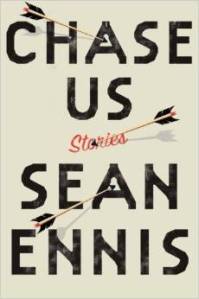
How to Make and Thwart Plans

29 Jul
Danish writer Mathilde Walter Clark's story, "The Disappearance of Things" appeared in The Chattahoochee review along with works by Roxane Gay and Aimee Bender.

Danish writer Mathilde Walter Clark’s story, “The Disappearance of Things” appeared in The Chattahoochee Review along with works by Roxane Gay and Aimee Bender.

In his poem, “To a Mouse,” the Scottish poet Robert Burns wrote the line—now famous as the source of the title of John Steinbeck’s novel Of Mice and Men—”The best-laid plans of mice and men/often go awry.” As a piece of advice for story writers, the line is as helpful today as it was in 1785. We often create a draft of a story or novel that has The Big Thing That Will Happen and The Way The Character Feels About It, but we don’t have any middle. In other words, we have no plot. To solve that problem, we can create plans and then let them go awry.

This is exactly what the writer Mathilde Walter Clark does in her story, “The Disappearance of Things.” Clark is Danish, and the story appeared in translation (by Martin Aitken) in The Chattahoochee Review, where you can read it now.

How the Story Works

The story is about a man whose possessions have begun to disappear: “a screw lid, a left sock.” It soon becomes clear that this isn’t a case of absent-mindedness. His shoes vanish, and the man realizes that his entire worldview is threatened.

That was not the way matter behaved. It could be obstructive, but it was an obstructiveness that came of existing, of having substance and shape. Of possessing hardness and inthewayness. He was under no illusion that he was a knowledgeable man, but the few things he did know were things to which he attached great importance. He knew, for example, that orderly surroundings make an orderly mind. And he knew that shoes don’t just disappear.

And so the premise is set, and we know how the man feels about it. We also know with some certainty that the disappearances will continue and that this will affect the man’s mental state. The question is now one of plot. The story can’t keep moving in the same way as it began: things disappearing, the man feeling confused. Resistance is needed. The man needs to push back. Something needs to happen. But how?

Here is Clark’s solution:

Following the disappearance of the rissole, he had drawn up a detailed list of all his possessions in order to help him navigate in what were habitually new and chaotic surroundings. The list ran initially to one hundred and forty-eight pages of yellow, lineated A4 paper.

The man creates a plan. He’s going to keep his things in a single room and consult his list to make sure all is accounted for. The temptation, now, would be to immediately thwart the plan. But that’s not what Clark does. Instead, she explains the logic behind the plan (“His possessions were ordered according to the following taxonomy”).

Okay, so now it’s time to thwart the plan, right?

Wrong. Instead, Clark adds to the plan:

He had yet to experience things disappearing in front of his eyes, so if he stayed awake long enough he thought he might be able to reduce his losses. He also took a chamber pot into the living room with him, since a number of his things seemed to be taking the opportunity to disappear during his visits to the bathroom.

This is how plot works. The character encounters a problem and comes up with a plan for dealing with it. The plan has a rationale. It’s personal to the character, and as the character thinks about it, she realizes holes in the plan. Perhaps those holes cause small problems, and so she adapts and closes the holes. Things are under control.

And that’s when you make the plan go awry:

It worked fine for a day or two until the lists disappeared.

Not only does the plan get thwarted, but that act—the disappearance of the list—feels personal:

[T]he leaves of yellow A4 were gone, with the exception of the one itemizing
temporary possessions belonging in the kitchen region. On the other hand,
the pile containing temporary possessions belonging in the kitchen region
was also gone, exactly as if matter had decided to play a very serious practical
joke on him.

The story has created a situation in which the character cannot defeat the problem. But the character himself isn’t defeated. And so the story continues. When all hope is lost, what comes next? That’s where plot must go.

The Writing Exercise

Let’s create and thwart plans to create plot, using the “The Disappearance of Things” by Mathilde Walter Clark as a model:

  1. Create a problem to be solved. The type of problem will depend on the type of story. Clark is writing (generally speaking) in the style of Fabulism (think of the writers Aimee Bender, George Saunders, Manuel Gonzales, Kelly Luce, or the filmmaker Michael Gondry), and so her problem isn’t realistic so much as a supernatural manifestation of some internal problem. The point is this: all genres create problems. Vampires must be killed, bills must be paid, cancer must be faced, and intergalactic nemeses must be defeated. The important thing is to create problems that can be addressed head on. In other words, the character must possess the power to solve the problem (serfs can’t defeat intergalactic villains, at least not on their own).
  2. Create a solution. Simple solutions tend to be better than complex solutions. In Star Wars, the good guys blow up the Death Star—pretty simple. It’s the complications to enacting the simple solution that make it interesting. In “The Disappearance of Things,” Clark has her character make a list of his possessions so that he can track the ones that go missing—again, a simple solution. The solution also fits his character because he’s detail-oriented. So, identify a trait of your character and ask yourself, “What kind of plan would that kind of person invent?”
  3. Give the solution a rationale. In part, this means to explain how it will work (the way a heist movie has its thieves rehearse the heist before actually enacting it). But it also means giving details about why the character knows the plan will work. The reader of the story or novel (or viewer of the heist movie) has suspicions that they’re being set up, but those suspicions need to be balanced out by the solidity of the plan. Readers need to believe that even if one or two things go wrong, the plan as a whole is solid. This is why Clark explains the taxonomy of the man’s possessions. She’s convincing us that the man is mentally fit and together. Even if one or two of his possessions goes missing, he’s still with it. He’ll be fine. Without this paragraph (this rationale for why his solution of creating a list is a good one), the readers will simply believe they’ve been given another plot point to be easily knocked over.
  4. Tweak the planShow your character in a state of reflection. There’s a scene at the end of Don Delillo’s novel White Noise when the novel’s main character, Jack Gladney, is driving to confront a man. As he drives, he repeats his plan to himself. But also, as he drives, he thinks about the plan and adds details to it. Any character, if they bear any semblance to real-life people, will try to anticipate the future and the things that might occur in it. So, let your character anticipate the ways the plan might go wrong or the obstacles it might encounter. Then, give the character room to adapt the plan to these potential problems. In so doing, the plan becomes more solid, more believable.
  5. Thwart the plan. The plan must go wrong. If something goes according to plan, readers will be disappointed. At the very least, the results must be different than expected (the old “Be careful what you wish for” thing). There are two ways that a plan can go wrong: the expected way (that the writer and character have anticipated) and the unexpected way. I don’t mean that a meteor appears from space. I mean that you can use any of the characters or things or trends that you’ve already established and reintroduce them in unexpected ways. Clark does this by returning to the disappearances that set the story in motion. The expected move would be to make things on the list disappear. The unexpected move is to make the list itself disappear. It’s also a move that renders the plan totally unworkable. As a plot point, this is useful because it forces the character into terrain that he could not (or refused to) anticipate. Once the character is in that situation, that’s when the story really takes off and the reader leans in. That’s when we see something we did not expect to see.

Good luck!