Tag Archives: how to write a short story

An Interview with Justin Carroll

16 Jan
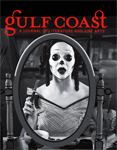
Justin Carroll's story, "Darryl Strawberry," appeared in Gulf Coast.

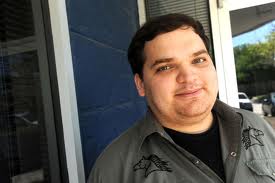
Justin Carroll was born in California but often writes about Montana, where he spent his formative years. His Montana story, “Darryl Strawberry,” appeared in Gulf Coast.

Justin Carroll was born in California, raised in Montana, and now lives in Texas. He has an MFA from Texas State University and is an assistant editor for the Austin-based literary journal Unstuck. His work has been previously published in Juked, Saltgrass, and Brink.

In this interview, Carroll talks about the necessity of palpable detail, the greatness of Andre Dubus, and revising toward what feels organic.

To read an excerpt from “Darryl Strawberry” and an exercise on descriptive passages, click here.

Michael Noll

This is a story about waiting—and as such, it means that much of the story is dominated by characters thinking and talking (or not talking) about the thing they are waiting for. One risk that seems inherent in this kind of story is that there won’t be enough action or forward movement to keep the reader interested. The note that Kidd Fenner finds under his windshield wiper (“I’m sorry. Can you meet me tomorrow at american legion field at six?”) seems to solve that problem by giving the reader something specific to anticipate. Was this note always part of the draft?

Justin Carroll

This story, like most, has seen its fair share of revisions. The first one did have a note, but it was given in passing, as back story. I was given the idea of putting the note into a scene in a workshop with Debra Monroe at Texas State University. It was in that workshop that I realized readers need a break from interior matters. They need something palpable to grip onto, something that breathes new life into the narrative. In Andre Dubus’s “A Father’s Story,” after a few pages of the narrator summarizing his views on faith, Dubus introduces the reader to his narrator’s daughter, who has just left the narrator’s horse ranch after a visit and who, later, become the catalyst for the story’s climax. We need this; without this introduction, the narrator’s views on faith (which, for the record, are wise, interesting, and entertaining) would begin to seem too one-note. Dubus introduces this different aspect of the story at just the right time. Without this break, stories begin to drag. In the beginning, “Darryl Strawberry” was frustratingly slow; the note was able to enliven this story’s step.

Andre Dubus' short story, "A Father's Story," was reprinted in Narrative Magazine, where you can read it bowl

Andre Dubus’ short story, “A Father’s Story,” was reprinted in Narrative Magazine. If you’re not familiar Dubus, you should set aside half an hour and read this.

Michael Noll

The story begins with a scene that isn’t directly related to the conflict between Kidd Fenner and his son, but by the end of the first paragraph, the conflict insinuates itself into the scene (“Wasn’t as good as Henry, but no one in Hamilton was. This, of course, was before the trouble.”) I can imagine writing a story like this and beginning by discussing the conflict directly, laying out its terms for the reader (The kid’s in trouble again, and his parents aren’t sure what to do this time.) Did you ever try such a direct opening?

Justin Carroll

In the first few drafts, Henry’s issues were revealed too clumsily: “This, of course, was before the meth fiasco,” or something equally cringe-worthy. That was too transparent, obviously. Then I erased any obvious hints of the Henry’s problems until Nora goes to the support group meeting. I think I settled with the line after I discovered that “the trouble” was in Fenner’s own language—this is the only way he’d be able to describe Henry’s status (in the beginning of the story, at least). I still got conflicting views on this matter from some of my colleagues, but in the end “the trouble” felt organic.

 Michael Noll

One of my favorite paragraphs is this one:

The radio plays the same songs Fenner’s heard for twenty years or more: Allman Brothers’ “Ramblin’ Man,” “Big Shot,” by Billy Joel. He’s parked with his back to Safeway’s brightly-lit parking lot; all he can see are the shadowy outlines of the bleachers, the dugout blocked by clumps of snow, the skeletal cyclone fence that runs parallel with the first base line.

It tells the reader that Fenner is at the baseball field without ever saying, “He’s at the baseball field.” Was this intentional? It certainly made me pay closer attention to the language. If you’d identified the field right away, I probably would have skimmed over the details: bleachers, dugout, cyclone fence.

Justin Carroll

Yes, this emphasis on language was intentional. Fenner needed to experience the baseball field in the emptiness of winter. To see the field in direct contrast to the way he’d seen it when Henry had been in tip-top shape seemed important to me.

Michael Noll

This story is full of details that situate it pretty firmly in a particular place, not just details about snow and landscape but also specific proper nouns: Sapphire Mountains, Daly Mansion, Whitman’s Towing, Ravalli County, Chinook Winds, Chapter One Bookstore, Safeway, Town Pump. The effect is that story feels like it occurs in a real place–but, ironically, those specific details also make it relatable. So, even though I’m from rural Kansas, I found myself recognizing aspects of my own hometown in Hamilton, Montana. I’ve heard other writers say that they try to make the places in their story vague so that it seems as though the story could be anywhere. But that’s not what you do. What’s your philosophy toward specific place details like these?

Justin Carroll

Thanks for the compliment! I think specificity of detail is crucial for this story—for all stories, really. I want to be able to walk down the streets of a story, much like I want to feel a beer bottle in a character’s hand. If I can’t access the place of a story, then I probably won’t remember it fifteen minutes after I read the story. My favorite stories build towns and landscapes I can revisit long after experiencing them for the first time; specificity of detail is responsible for this effect.

January 2014

Michael NollMichael Noll is the Editor of Read to Write Stories.

How to Describe a Thing Without Naming It

14 Jan
Justin Carroll's story "Darryl Strawberry" was published in Gulf Coast 26.1. The story is about neither the Mets nor Darryl Strawberry.

Justin Carroll’s story “Darryl Strawberry” was published in Gulf Coast 26.1.

The smartest thing I ever heard in a writing workshop was Tim O’Brien’s exhortation to avoid unintentional repetition: never repeat a word on a page unless you mean to do it. This sounds obvious but can, in fact, be incredibly difficult. It’s not enough to find good synonyms. The solution often involves the complete rethinking of sentences and passages. That may sound intimidating, but it can sometimes be as simple as finding the right place for a character to stand.

A perfect example of the effect of viewpoint on prose style is Justin Carroll’s story, “Darryl Strawberry.” It was published in Gulf Coast, and you can read the first pages here.

How the Story Works

Every story contains a moment of necessary description: of a room, a table, a character. The way we often begin the passage is by identifying the thing being described: kitchen, table, the person’s name. This direct approach has two potential problems, though. First, it can be boring. Second, it aligns with our preconceived ideas of a kitchen, table, or what we already know about the character. Because it’s predictable, the passage can have a tendency to hew to and repeat predictable words. So, to write lively, unexpected prose, we need to find a less direct approach.

The following passage from Justin Carroll’s story “Darryl Strawberry” illustrates this less direct approach. This passage comes after the main character, Kidd Fenner, has found a note from his son that says, “I’m sorry. Can you meet me tomorrow at american legion field at six?” Fenner then gets in the car, and this is the scene that follows: (Notice the important, even necessary, words that Carroll avoids.)

The radio plays the same songs Fenner’s heard for twenty years or more: Allman Brothers’ “Ramblin’ Man,” “Big Shot,” by Billy Joel. He’s parked with his back to Safeway’s brightly-lit parking lot; all he can see are the shadowy outlines of the bleachers, the dugout blocked by clumps of snow, the skeletal cyclone fence that runs parallel with the first base line. On nice days, he and Nora picnicked by the fence and gave Henry encouraging fist pumps before he stepped onto the mound. Christ, Fenner wonders, how long since then? No more than two years ago, which might as well have been forever.

The words that he avoids, of course, are baseball and field. In short, Carroll has avoided naming the thing that he is describing. The result of this, at least in my reading, is that I was momentarily disoriented. (Since when does a Safeway parking lot have bleachers? But the details quickly oriented me. Dugout is pretty place-specific.) Because of that initial confusion, I paid closer attention. If Carroll had written baseball field in the first sentence, I would’ve scanned the rest, thinking, “Of course a baseball field has bleachers and a dugout.” An editor might have encouraged Carroll to cut those details and skip right to the line about encouraging fist pumps. If that had happened, what would be lost? Perhaps a sense of intimacy. The details draw us into a small but important moment. If the prose had just barreled onto the field, we might not appreciate or even notice that moment because we wouldn’t be paying attention.

The Writing Exercise

Let’s try writing a description that makes the reader pay attention, using “Darryl Strawberry” by Justin Carroll as a model:

  1. Choose the place. It can anywhere: indoors or outdoors, a room in a house or the house itself, a public place such as a store or a particular part of that place such as an aisle or the parking lot.
  2. Write a sentence that names the place. Be direct and simple: “The parking lot was full,” or “The kitchen was warm and full of inviting smells.”
  3. Ban yourself from using any of the words (minus articles and linking verbs) in that sentence. You’ve established the most predictable words that can be used to describe your place. Now, you can find better words.
  4. Decide where your narrator or observer will stand and write a sentence that states this. Even if your novel is in third person, even if it doesn’t privilege the point of view of one character, you can still position the point of origin of the description. If the observer is in the middle of your place, the description will read differently than if the observer is standing at the side or edge or watching from a distance. In “Darryl Strawberry,” the observer, Kidd Fenner, is “parked with his back to Safeway’s brightly-lit parking lot.”
  5. List, with brief descriptions, the most outstanding elements of the place. By outstanding, I mean, literally, the elements that stand out. Choosing those elements will depend on the limits placed on your observer. In “Darryl Strawberry,” the observer is limited by lack of light. But not all limits must be physical. They could also be emotional or mental: in other words, give your observer a pair of rose or other-colored glasses. Don’t dwell too long on any particular element of the description. Keep listing and describing new elements until you feel the urge to comment upon one.
  6. Comment on a description. In “Darryl Strawberry,” after the observer notices the mound, base paths, and fence, he remembers giving his son fist pumps before he pitched. Then, he thinks, “Christ…how long since then?” It’s memories and comments like those that are the description’s entire reason for being. They advance both the story and our understanding of the characters and their conflicts. That advancement can only happen, though, if the prose forces the reader to pay attention.

This same process can be used for describing a person—or anything, in fact. The goal is the same: avoiding predictable sentences in order to write unexpected ones. You may find that you’ve written at least one sentence that surprises you. If it surprises you, it will likely surprise the reader as well.

Good luck!

7 Craft Lessons Every Writer Must Learn

31 Dec

Every writer must, at some point, come to terms with certain aspects of writing craft. Here are lessons drawn from seven excellent stories featured at Read to Write Stories in 2013.

1. Make Setting Do More Than Describe a Place

photo-1-300x300

Esmé-Michelle Watkins is an attorney based in Los Angeles and co-fiction editor of BLACKBERRY: A Magazine. Her writing has appeared in Boston Review, Word Riot, Voices de la Luna, and 4’33”.

If you’ve ever gotten bored while reading, the parts that you skimmed were probably descriptions of places. It’s not enough, as a writer, to use description to show what a place looks like. Try to convey the narrator’s or character’s attitude toward the thing you are describing. For an example, read this excerpt from Esmé-Michelle Watkins’s story “Xochimilco,” published in Boston Review:

There was nothing to see. Gone were the Stay Away drapes tall as street lights, whose heavy fabric Mammì flew all the way from our house in Pasadena to Nonna’s in Bivona to have custom-made; the Go Sit Down oil fresco of clustered villas hugging crags along a turquoise sea; the Knock You Into Next Tuesday French-legged dining table and high backed chairs, formerly below the Go Ahead and Try It chandelier; the Touch and Lose Your Life crystal bowls, where Mammì kept my favorite Sorrento lemons sweet like oranges, and the Cabinet of Doom wide as two hall closets, which housed the finest of Mammì’s That’s a No-No clique: tableware from Baccarat, Tiffany, and JL Coquet. (From “Xochimilco” by Esmé-Michelle Watkins)

2. Develop a Character’s Interior Life

Kelli Ford's story, "Walking Stick," was published in Drunken Boat.

Kelli Ford has been a Dobie Paisano Fellow and is finishing a collection of short stories.

It may seem obvious, but books are not movies. A reader’s relationship with a character is primarily with the character’s thoughts and feelings, not physical appearance. Yet, a simple description of who a character is and how she looks can be an entry into her interior life. Kelli Ford illustrates this perfectly in her story “Walking Stick,” published at Drunken Boat:

At sixty-seven, Anna Maria did not hurry with much these days. She was still stout and round, but a bone spur on her right ankle forced her foot out at an odd angle. That shoe always wore thin on the inside before the other. She could feel the gravel poking through. (From “Walking Stick” by Kelli Ford)

3. Write a Thrilling Action Sequence

Kevin Grauke's new story collection, Shadows of Men, was published by Queens Ferry Press and has been called X.

Kevin Grauke won the 2013 Texas Institute of Letters Steven Turner Award for Best First Book of Fiction for his short story collection, Shadows of Men.

I grew up reading Hardy Boys mysteries and Louis L’Amour cowboy adventures, which means I read a lot of fight scenes. Yet I’ve found that writing similar scenes–or any action sequence, for that matter–often turns into a boring choreography of movement: hit, punch, kick, grunt, etc. Good fight scenes must do more. The key is to interpret or comment upon the actions. Kevin Grauke shows how in this excerpt from his story “Bullies,” published at FiveChapters:

He grabbed Mr. Shelley’s tie and gave it a quick yank. He meant this only to be a sign, a signal that this was over for now–a period, not an exclamation point–but he pulled harder than he’d meant to, and Mr. Shelley, caught off-guard, stumbled forward, knocking into him. Off balance, Dennis staggered backwards from the low height of the porch, pulling Mr. Shelley with him in an awkward dance, and as they fell together and rolled, he understood that there was no way to turn back now, or to end this peacefully, no matter how clownish and clumsy it had to look. (From “Bullies” by Kevin Grauke)

4. Build Suspense

628x471

Manuel Gonzales is the author of the story collection, The Miniature Wife, and the forthcoming novel The Regional Office Is Under Attack!

In his famous essay “Psychology and Form,” Kenneth Burke explains how suspense is built by giving readers something to desire (“creation of an appetite,” he calls it) and then delaying the satisfaction of that desire. The easiest way to do this is with a distraction, or, as Burke writes, “a temporary set of frustrations.” In other words, promise the readers something and then wave something shiny to make them forget the thing you promised–so that when you finally produce what you originally promise, the readers are surprised. You can find a clear example of this strategy in Manuel Gonzales’ story “Farewell, Africa,” published at Guernica. If you read the entire story, you’ll see how long Gonzales is able to delay showing us what happened to the pool:

No one, apparently, had thought to test the pool before the party to see that it worked. The pool, which was the size of a comfortable Brooklyn or Queens apartment, had been designed by Harold Cornish and had been commissioned as a memorial installation for the Memorial Museum of Continents Lost. It was the centerpiece of the museum as well as the party celebrating the museum’s opening. In the center of the long, wide pool was a large, detailed model of the African continent. According to Cornish, the pool, an infinity pool, would be able to recreate the event of Africa sinking into the sea. “Not entirely accurately,” he told me early into the party, before anyone knew the installation wouldn’t work. “But enough to give a good idea of how it might have looked when it happened.” (From “Farewell, Africa” by Manuel Gonzales)

5. Use Dialogue to Create Conflict

images

Rene Perez is the author of Along These Highways, a story collection that won the Alfredo Cisneros Del Moral Foundation prize.

Close your eyes and listen to people talk, and you’ll quickly realize that they have different speaking styles–their own particular diction and phrasing. Dig a little deeper and I suspect you’ll find that those differences are tied to differences of personality. Our diction and phrasing are integral to our conception of our identity. So, to create conflict in a story, trap together two characters who have different speaking styles. The personality differences will soon emerge. A good example of this can be found in Rene Pérez II’s story, “Lost Days,” published in The Acentos Review:

“I don’t mean to disparage the whole of Corpus as being ‘ghetto,’ because that connotes a certain socioeconomic status,” he said, trying to backpedal as delicately as he could out of a comment he’d made at the dinner table that offended Beto, her husband, his father. He had always spoken that way; Stanford didn’t do that to him. “It’s just that there’s a culture here which is such that one can’t be challenged or even stimulated intellectually. There’s no art, no progress toward it or high culture. It’s a city of… of… philistines.”It would have hurt less if he’d just stuck with calling the place ‘ghetto.’ Rose knew what she did and didn’t have, and that she raised her son where and how she and Beto could afford to. So their neighbors were a little shady. They were still good neighbors. So their neighborhood was down-run and their house a little small. It was still their home. (From “Lost Days” by Rene S. Perez II)

6. Avoid the Chronology Trap

Roxane Gay

Roxane Gay is the author of Ayiti and the forthcoming novel An Untamed State.

Stories and novels don’t move through time. Instead, they gather time into chunks, organizing minutes and hours into miniature stories within a story. Think of each paragraph as a stand-alone unit–with its own arc, theme, and organization. This should help avoid those tedious passages that plod minute-by-minute through chronology. To demonstrate how this works, check out this paragraph from Roxane Gay’s story “Contrapasso,” published at Mixed FruitThe story is formatted like a restaurant menu. Each paragraph is a description of a dish. Notice how much time is collapsed into one short passage:

Filet Mignon $51.95 They saw specialists. There were accusations. They tried treatments, all of which failed. They tried adoption but she had a past and they had no future. And then it was just the two of them in their big house straining at the seams with all the things she bought and all the things they would never have. One day she came home. All of it was gone. (From “Contrapasso” by Roxane Gay)

7. Write Short, Stylish Sentences

kelly luce

Kelly Luce is the author of the story collection, Three Scenarios In Which Hana Sasaki Grows a Trail.

People often claim that a story’s language is poetic. But what does that mean? Sometimes it means that the writer uses lush, lyric descriptions. But not always. Great sentences–and great lines of poetry–often work the same way. They strive for leaps in logic, for the unexpected juxtaposition of images. Readers are expected to keep up, to make the connections without the aid of explanation. Therefore, a stylish sentence often dashes forward. The best writers can do this in two words, as Vladimir Nabokov did in his famous parenthetical aside “(picnic, lightning).” Other writers, like Kelly Luce, leap from one short, direct sentence to the next. For example, here is the opening paragraph from her story “Rooey” in The Literary ReviewNotice how far and fast the story moves using phrases of less than ten words each:

Since Rooey died, I’m no longer myself. Foods I’ve hated my entire life, I crave. Different things are funny. I’ve stopped wearing a bra. I bet they’re thinking about firing me here at work, but they must feel bad, my brother so recently dead and all. Plus, I’m cheap labor, fresh out of college. And let’s face it, the Sweetwater Weekly doesn’t have the most demanding readership or publishing standards. (From “Rooey” by Kelly Luce)

An Interview with Daniel José Older

19 Dec
Daniel

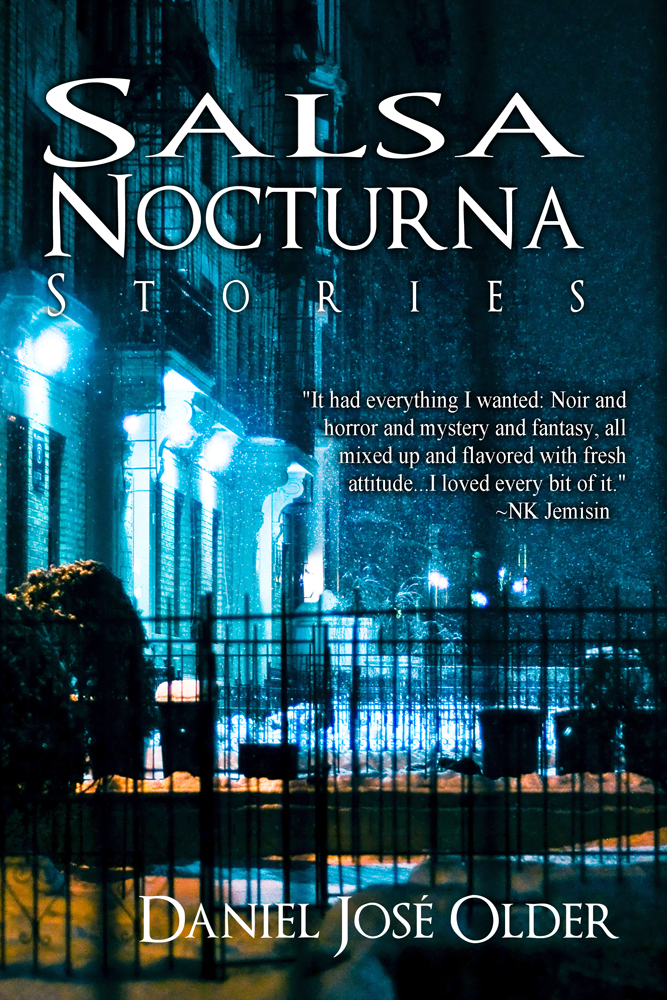
Daniel José Older is the author of Salsa Nocturna, a collection of ghost stories that Publisher’s Weekly called a “delicate mix of horror and humor” that secures Older “a place among the rising stars of the genre.”

Daniel José Older is the author of Salsa Nocturna, a collection of ghost stories. He’s also a composer and paramedic living in Brooklyn, New York. He has facilitated workshops on music and anti-oppression organizing at public schools, religious houses, universities, and prisons all over the east coast. His soul band Ghost Star regularly performs original multimedia theater productions about New York history around the city. His stories have appeared in Strange Horizons, Flash Fiction, Crossed Genres, and The Innsmouth Free Press and The Subversion Anthology, among others. He’s been a featured reader in Sheree Renée Thomas’ Black Pot Mojo Reading Series and at The New York Review Of Science Fiction.

In this interview, Older discusses ghosts and stories and why we love to combine the two.

(To read Older’s story “Victory Music” and an exercise on introducing genre elements into literary fiction, click here.)

Michael Noll

This is a ghost story, and it begins appropriately, with the narrator telling a dead person that “you’ve saved my life at least twice. And once was after you died.” But I was still surprised when the ghost actually arrived, not only because it’s not the ghost we expect but because I’d gotten so engaged in the scene with the narrator’s parents that I’d forgotten that there was supposed to be a ghost at all. I was reminded of Kenneth Burke’s essay, “Psychology and Form.” To explain how suspense is created, he uses the scene from Hamlet when Hamlet is waiting for his father’s ghost but then gets distracted by this uncle’s drunken entourage. Hamlet, and the audience, get so wrapped up in his uncle that we forget all about the ghost and so are surprised when it arrives. I wonder if you had this basic idea in mind when you wrote the story: promise something and then delay its arrival.

Daniel José Older

Great question. I’ve always been fascinated by the letters we write and never send, or write in our heads but never put on paper. I think this is one way we interact with the dead without meaning to or realizing it sometimes, that internal dialogue. The idea of the things we never had a change to say to someone is so heartbreaking and so real. So on the process tip, that was my starting point. In this case, I wasn’t thinking of Krys as a foreshadow so much as an emotional center that Wes anchors to for support even after Krys is dead. Memories are powerful, more powerful than ghosts maybe, and the subtext to this story, in my head, is that Krys—who does show up as a ghost in my book Salsa Nocturna—is never actually present in this story; Wes uses the memory of Krys to access a sense of their own power and sense of self.

Michael Noll

Salsa Nocturna is a collection of 13 ghost stories, published by Crossed Genres Publications.

Salsa Nocturna is a collection of 13 ghost stories, published by Crossed Genres Publications.

Your first book, Salsa Nocturna, is a collection of ghost stories. On one hand, when I read the description of the book, I thought, “Oh, that’d be fun to focus every story on ghosts.” But then I realized that you’d have to make each ghost and the approach to each ghost different. To that end, the ghost in this story isn’t really a ghost. He’s someone who can vanish at will–but, he still seems like a ghost. So, to some extent, it seems like you’re expanding the definition of ghost and ghost story. Is that simply out of necessity–there are only so many ghosts?

Daniel José Older

Ha! I really hadn’t thought of it that way. Once the underworld, or parallel world really, of ghosts became clear in my mind, the stories all came very smoothly. In some sense there’s truth in what you say though, as artists we always need to be pushing at the borders of our genre and comfort zones, and with “Victory Music” I was interested in how we are haunted sometimes more by the living than the dead. It’s a concept I’ve played with before, though never quite in these terms, and as I said, the healing power of memory plays a major role here. Niles just showed up in my imagination as is—he was born from the necessity of having an eerie, emotionally resonant conflict for Wes. And the act of disappearing is so rich, so layered when complicated by power and privilege…it’s a natural fit for the story.

Michael Noll

In this interview at the New York Times, Victor LaValle (The Devil in Silver), says, "The best monsters are our anxieties given form. They make sense on the level of a dream, or a nightmare."

In this interview at The New York Times, Victor LaValle (The Devil in Silver), says, “The best monsters are our anxieties given form. They make sense on the level of a dream, or a nightmare.”

The writer Victor LaValle said in a New York Times interview, “The best monsters are our anxieties given form. They make sense on the level of a dream, or a nightmare.” The ghost in your story seems to fit this description. The narrator is concerned with identity–her Sikh-ness, her gender–and then, appropriately enough, here comes a guy who can empty out his identity until he literally vanishes. Do you think about the meaning of your ghosts, the particular anxieties that are manifested in them?

Daniel José Older

Surely—the ghost is a crossroads. Past and present, life and death, healing and destruction all have the potential of meeting in the figure of the ghost. When we spend so much time focusing on the simple concept of ghost as evil spirit, it’s just a profound missed opportunity. Writing Salsa Nocturna really taught me that ghost stories are really about life, not death.

Michael Noll

I know a horror writer, Scott Johnson, who, in his free time, investigates ghosts and has encountered them many, many times. Those encounters have ranged from terrifying to quirky to sweet. I love hearing his stories—and other true ghost stories. Though I’m not sure I “believe” them in the factual sense, I find them utterly compelling. So, while I’m curious whether you believe in ghosts, I’m more interested in your take on ghost stories: Why do we tell them so often? What is the appeal of ghost stories?

Daniel José Older

How we view ghosts is about our connection to our own histories. Do we have something lurking back there, waiting to pounce? Do we lament an idealized day gone by? Have we found balance or are we still at war with our past? On a national sense, there’s so much undealt with baggage in the founding and maintaining of this frail, corrupt democracy and we’ve never really confronted what that means. So the idea of a shadow from history materializing in our modern world and causing havoc resonates, on a level that touches on both anxiety and empowerment.

December 2013

Profile pic

Michael Noll is the editor of Read to Write Stories.

How to Introduce Genre Elements into a Literary Story

17 Dec
Daniel José Older's story, "Victory Music" was first published in PANK 8.06 and republished as part of Necessary Fiction's RePrint series.

Daniel José Older’s story, “Victory Music” was first published in PANK 8.06 and republished as part of Necessary Fiction‘s RePrint series.

How do you introduce genre elements into a literary story without also feeling beholden to the genre’s usual structure? For instance, not every story with ghosts is a ghost story. Anyone reading the first lines of a ghost story has certain expectations for what will happen. But if that same person begins a story about a young woman who tells her parents that she’s no longer a girl, the expectations are different. It’s the old genre vs literary divide.

One way to handle this balancing act can be found in Daniel José Older’s story “Victory Music.” It was originally published in PANK 8.06, and was selected as a RePrint by Necessary Fiction Writer-in-Residence Ashley Ford. You can read it now at Necessary Fiction.

How the Story Works

Any story that wants to use genre elements but not genre structure must toe a fine line. If it drops the genre element (in this case, a ghost) into the story out of nowhere, the reader is likely to be confused or thrown for too much of a loop. But if the story introduces the genre element too firmly, the reader is going to expect a genre structure. The trick, then, is to hint at the genre element without settling too firmly into the structure. Let’s look at how Daniel José Older does this in “Victory Music.”

He hints at the genre element (the ghost) by letting the narrator address a dead person named Krys. The opening section ends this way:

I wanted to tell you that you’ve saved my life at least twice. And once was after you died.

Notice how the statement is vague enough to be read several ways, only one of which requires a ghost. But even that lack of specificity might be too much—which is why the story begins with a paragraph that has nothing to do with ghosts:

One of my favorite moments ever was when the boy called me an Arab and you said, “She’s Sikh, fucknut” and then when he said “Oh, like hide and go-“ you broke his nose. I heard music playing, I swear to God, and it was victory music, your music: A dusty, unflinching beat, lowdown and grinding. It didn’t matter that my family’s not even technically Sikh anymore since my parents went born-again and I’m just whatever. I smiled for days after that moment, Krys. Days.

The first section ends with a hint of a ghost but a lot of non-ghost potential conflict. The next section can go two ways: It can develop the “saved my life…after you died” idea or one of the non-ghost ideas from the first paragraph. Older chooses the latter, reintroducing the narrator’s parents:

[M]y dad sent the twins to bed with a growl and then said to me, “What do you mean you’re not a girl?”

Imagine how different the story would be if it began the first section with something ghostly. In order to continue to increase the suspense further, the story would have no choice but to further develop the ghost—and as the possibilities for development narrowed, that is when the story would likely adopt the usual structure of a genre ghost story.

Instead, because the story introduces the conflict around the narrator’s gender identity, the story is given a new conflict to develop—and, in this story, that conflict climaxes with the appearance of a ghost. To some extent, the difference between a story with ghosts and a ghost story is when the ghost appears. The earlier it appears, the more likely it becomes that the story adopts a genre structure. (I’ll admit that there are exceptions to this rule, as shown by this story about a monster.)

The Writing Exercise

Let’s introduce a genre element into our stories, experimenting with placement, using “Victory Music” as a model:

  1. Choose the genre element. Pick your favorite genre story and borrow something from it: ghosts, zombies, vampires, monsters, detectives, cowboys, aliens, giant squid, playboy millionaires, heiresses with squandered fortunes, wizards, middle-aged women looking for sex in a city, 20-something actors with entourages of hometown friends.
  2. Hint at the genre element. Write a sentence or two that suggests to the reader which genre element is coming. Don’t be too specific (“There were werewolves somewhere in this city.”) Instead, try to hint at the element in a way that lends itself to multiple interpretations. Remember Older’s line from “Victory Music”: “I wanted to tell you that you’ve saved my life at least twice. And once was after you died.”
  3. Lead up to your hint with something unrelated to the element. Keep in mind the writer Ron Carlson’s advice that every story contains two parts: the story and the world that the story enters. Create a character or world that exists independently of the genre element that you’re introducing. Give that character or world the seeds of a conflict(s) that have nothing to do with the genre element.
  4. Figure out the relationship between conflict and genre element. Your story is necessarily going to move between two elements: the character’s original conflict and the genre element. To make this move, it’s helpful to know where each is located. Do they exist in the same space? In Older’s story, the ghosts are in one place and the conflict with the father is in another place.
  5. Develop one of those conflicts. Keep in mind where you’re going. If the genre elements waits elsewhere, the conflict should develop so that the character is required to leave one place and go to another.
  6. Introduce the genre element. Remember that most transitions are not clean breaks. Make the character preoccupied with the conflict he/she just left. That way, when the genre element appears, it will come as a surprise to both the reader and the character.

Good luck!

An Interview with Benjamin Rosenbaum

12 Dec
Benjamin Rosenbaum's story "Feature Development for Social Media" was published at Tor.com. You can find a complete list of his stories here.

Benjamin Rosenbaum’s story “Feature Development for Social Media” was published at Tor.com. You can find a complete list of his stories here.

Benjamin Rosenbaum is the author of The Ant King and Other Stories. His stories have been published in Nature, Harper’s, F&SF, Asimov’s, McSweeney’s, and Strange Horizons, translated into 23 languages, and nominated for Hugo, Nebula, BSFA, Locus, World Fantasy, and Sturgeon Awards. He lives near Basel, Switzerland.

In this interview, Rosenbaum discusses social media in fiction, our ability to grow accustomed to anything (even zombies), the phrase first world problems, and a tabletop roleplaying game about teenage monsters.

(To read Rosenbaum’s story “Feature Development for Social Networking” and an exercise on story tone, click here.)

Michael Noll

I’ve been struck by the absence of social media in new stories and novels. In fact, the only social-media story I can think of is Jennifer Egan’s “Black Box,” which was written as a series of tweets. So, I love the sections of your story that are written as Facebook messages. What were the challenges you faced in using this form? Was it tempting to treat the medium ironically—to exaggerate or spoof the way people communicate via Facebook. Even though the scenario is far-fetched (zombie attack), the way the characters communicate seems authentic and real.

Benjamin Rosenbaum

I feel like there’s a certain amount of use of social media, instant messaging, etc, particularly in YA fiction. M.T. Anderson’s brilliant novel Feed comes to mind (not written exactly in an epistolary style, but in which the equivalent of IM’ing and tweeting is heavily foregrounded and substitutes for much of the dialogue), or Lauren Myracle’s ttyl.

Interestingly, the direction of my revisions was to tone down the realism of the Facebook usage. It’s not so much that I was tempted to exaggerate and spoof, as that my initial draft was very closely emulating real Facebook usage — for instance, the fact that the responses to a comment do not follow the comment immediately, but occur after a certain lag time during which other comments have intervened. In revision I simplified and threw away some of the peculiarities that are part of real Facebook interactions, but which weren’t thematically central and which made it harder to read smoothly as fiction.

I tried to be pretty naturalistic, rather than broad, because I thought the humor would mostly come from the contrast of the realistic, everyday style of discourse and the fantastical situation. I was going to say “familiar style of discourse” and “unfamiliar, dramatic situation”, but of course it’s really two familiarities — the everyday, real-world familiarity of social networking and the pop-culture familiarity of the zombie outbreak.

If anything, in revision, I made the satire sharper and the characters more distinct. Jewell got bubblier and more committed to lower-case abbreviations, Buster more self-serving and insensitive, etc. In that sense it actually became less naturalistic — the characters moved closer to being types, the way Dickens’s or Austen’s minor characters are. There’s always a balance to be struck between naturalistic and stylized.

Michael Noll

The actual zombie action takes place off the page, referenced but never seen directly. Even when the story’s characters see zombies, they don’t describe them with great detail. In a way, this seems to cut across the zombie genre, which almost always shows gore and carnage eventually. For instance, in this exchange between Facebook employees, one of them writes: “Suresh, you should check out the 2nd floor webcam. There’s not a lot of Grief and Loss Counseling going on up there right now. Nor do I recommend a massage.” I love that this detail is delivered as a literal P.S. to an email about the feature development from the story’s title. This particular exchange ends with one character writing, “Let’s not get distracted people!” On one hand, this is funny. On the other hand, it seems like it keeps the zombie-biting-people stuff from taking over the story. Were plot details like this one always dropped into the story so casually? Did they ever occupy a more direct space?

Benjamin Rosenbaum

So partly, I was going for a humorous deflation of the zombie story. If I’m juxtaposing the mundane detail of the everyday with the horrific detail of the apocalypse, and they are described with equal focus, the horrific details are going to take over emotionally.

Blood and gore are sensational: they force the reader to pay attention, demand an emotional reaction. On the other hand, if you demand an emotional reaction when you haven’t really earned one — when the reader isn’t sufficiently invested in the characters and the action — you get sentimentalism or melodrama rather than a real emotional response. The reader pulls back, because you’re rubbing their face into extreme stimuli without having won them over.

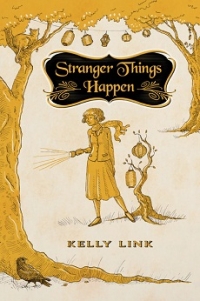
Kelly Link's collection of stories, Stranger Things Happen, includes the brilliant story "The Specialist's Hat."

Kelly Link’s collection of stories, Stranger Things Happen, includes the brilliant story “The Specialist’s Hat.”

So in a way, distancing the carnage is a double win: primarily, it’s funnier, because it allows the juxtaposition of mundane and extreme to be a balanced juxtaposition. But also, I think it may actually be scarier too, because the little details of what’s going on sort of slip in to the narrative. Something that’s just offstage is often scarier than something in the center of the screen. The end of the movie Blair Witch Project is far scarier than most horror movies where there’s an onscreen monster, because so much is implied, evoked in your imagination. However good the CGI or the rubber suit is, it’s never going to be as frightening as what your brain can project into the unknown. Kelly Link is an absolute master of this; I think “The Specialist’s Hat” is an exquisitely scary story, for instance, precisely because of what we don’t know.

In writing this, funny was more important to me than scary, but the little bit of scary helps bring the funny into relief, and makes it sharper.

There’s another related thing going on here, too, which is that I wanted to talk about habituation, which I think of as one of the most powerful mechanisms of the human mind. It’s like we can get used to anything. Like, in the first decades of aviation, flying was this incredible, awesome, unbelievably thrilling achievement. Human beings could fly — like birds! We had conquered gravity! To ascend to the heavens in a plane was mindblowing, it was this rush of absolute wonder and power. Now we get on a plane and we’re like, security sucks, my seat is uncomfortable, why do I have to put my tray table up, damnit my laptop battery is down and the inflight magazine is boring, what do they expect me to do, spend my time looking out at the clouds? This is actually hilarious when you think about it. And at the same time, people in horrific situations habituate to them too. I just re-read the Diary of Anne Frank, the new edition where they restored a bunch of stuff that had been cut out for propriety’s sake in the 50s. Anne Frank spends very little time on the Nazis. She occasionally remarks that it sucks that they have to hide, and that she’s worried about her schoolmates who didn’t hide in time, and that they’re following the progress of the war. But 90% of the time she’s pissed off at her mother, and at Peter’s mother, and at the guy she has to share a room with. Somebody’s not peeling enough potatoes and someone else is hogging the radio. That’s what life is composed of, whether you are an internet billionaire or a hidden Jew in occupied Holland during the Holocaust. Occasionally you stick your head up and think “hey, I could buy a small country!” or “hey, I’m probably going to be killed soon!” but most of the time you’re like “goddamnit, these potatoes are too salty” or “omg I think he might like me like me.”

That’s what’s deeply wrong, by the way, with this whole #firstworldproblems meme, you know that one? It’s supposedly an excercise in humility and perspective, but in fact it’s an exercise in arrogance. You know, like “my underwear is itchy #firstworldproblems” or “there’s too much goat cheese in my salad #firstworldproblems” or “I can’t get my favorite show on my cell phone #firstworldproblems”. You think people in Bangladesh don’t complain if their underwear is itchy? You think people in the dystopian industrial sprawl of China don’t bitch about their cell phones? There are 1.2 billion cell phones in China, four times as many as there are in the US, 89 per 100 citizens (in the US it’s 103 per 100 citizens). I just read the graphic novel of Waltz with Bashir — there’s this scene where there’s a firefight on the beach in Beruit, and the locals are coming out onto the balconies of their highrise beachside condo apartments to watch the gunfight like it’s a movie, leaning on their railings, smoking and kibitzing. Humans can get used to anything. Our focus is local. I grew up during the crack and AIDS epidemics, with most experts telling us that global nuclear annihilation was immanent, and I knew all that, but still I was mainly interested in playing D&D and going to 7-11, right? So it seems very clear to me that if there’s a zombie apocalypse, a lot of people are going to feel like that’s security’s job to deal with, and they need to get the next feature out. I mean we are currently dealing with the longest-running war in U.S. history, the irreversible melting of the polar ice caps, antibiotic resistant tuberculosis, and looming government financial default, but we’re still mainly interested in watching videos of cats. Why would zombies change anything?

I went back and looked at an early draft of the story — this dynamic, the foregrounded mundane and the offstage carnage, was in it from the beginning. Mostly what changed in revisions were plot and structure things. The story has a better ending now; it just kind of trailed off in earlier drafts.

Michael Noll

Zombie stories and other monster stories, especially vampire stories, are everywhere you look right now–and have been for a few years. They’re scary and thrilling, of course, but I wonder if their appeal runs deeper than just thrills and goosebumps. More than a few people have pointed out that zombies and vampires tend to reflect our fears as a culture (fear of outsiders, certain kinds of sexuality, fear of death). But I wonder, given the present wars and political violence, if monster stories don’t somehow put mass violence at a remove–in other words, putting our fear of such violence into a form that we can consume without being overwhelmed with fear or terror or grief. What do you think? What’s the power or appeal of zombies?

Benjamin Rosenbaum

I think this is a very good insight. It’s certainly one main job of the fantastic, in general, to put things at a remove where we can deal with them. When we think directly about dangers that really exist, we can get caught up in despair or anxiety, and sink. Adding an element of the impossible is one way of freeing up our minds, so that we relate to the danger with playful creativity. Often, this kind of distancing can make the emotional impact of a story greater. We’re less likely to get overwhelmed and shut down if there’s a balance between the absurd or imaginative and the horrific.

There are other techniques that can do this in realistic narratives. I recently read Ishmael Beah’s A Long Way Gone, his memoir of being a child soldier in Sierra Leone. What happened in his life was, he had this relatively idyllic, calm, rural childhood, and then the war came and first he was fleeing and starving as a refugee, and then he was brutalized and drugged and forced to murder people, and then he got out and was rehabilitated. If he told it in strict chronological order, it would start out pleasant and slow, and then descend into just unbearable awfulness, and then level out into a long and difficult and slow, if hopeful, recovery. That would be really hard for the reader to take. When you got to the part with twelve-year olds killing and mutilating people, you wouldn’t be able to go on without checking out emotionally. So what he does is very sophisticated and wise. He starts out chronologically, but as it gets worse — in the part where they are wandering around starving and being chased away from villages and seeing people die — he salts it with flashbacks. You’ll be in some truly horrific scene and he’ll say “oh, and this reminds me of the story my uncle used to tell back in the village” and he’ll give you something whimsical or sweet. And it’s not cheap or gimmicky, because he’s not just doing it to protect you from being overwhelmed. He’s also honoring the village that was lost, he’s sharing with you the whole reality of where he came from, which is not just the horror of the civil war but also the humane, pleasant ordinariness of the lives it intruded into. He’s showing you that Sierra Leone is not just child soldiers killing people, but also uncles telling stories at dinner. And when he gets to the worst part — where he actually becomes a soldier — he gives us very little of it, before skipping ahead to the story of rehabilitation, and then gradually feeds us the horror in small flashbacks, interleaved with things getting better. The treatment of chronology is very deft. He’s protecting the reader, not in order to insulate the reader from what happened so that the reader doesn’t care, but rather so that the reader will care — so that we won’t get overwhelmed and start reading it as just a story of terrible people in some terrible place. He’s resisting being sensationalized, resisting the role of the victim, insisting on constantly putting forward his own and his people’s humanity and agency and ordinariness.

So that’s one thing. Fantastic elements can serve the same kind of purpose, of distancing us enough so we can connect.

Mass violence is one thing zombies can stand for. Pandemics are another — this is definitely a zombie story in the spirit of 28 Days Later, where it’s a grittily real medical catastrophe that’s going on. A related thing that interests me about zombies is that they’re about dehumanization. Someone is infected with something that makes them dangerous and violent — do you see them as a monster, or as a person with an illness? There’s a way in which the apocalypse is often used to grant the characters, and the readers, license to escape a world in which we’re expected to deal responsibly with other people, to tolerate difference, to resolve conflicting needs; if everything falls apart enough, we have permission to just chop off the heads of people who we find difficult. Zombie stories are also about isolation. When I moved to Switzerland the most recent time, and was feeling very disconnected, I found myself having obsessive daydreams about pandemic flu clearing the streets, about having to subsist on what was in my apartment, to bar my door.

Monsterhearts is a roleplaying game where players explore the confusion that comes both from growing up and feeling like a monster.

Monsterhearts is a roleplaying game where players explore the confusion that comes both from growing up and feeling like a monster.

Monsters can stand for a lot of things. There’s a really brilliant tabletop roleplaying game, probably the best-designed roleplaying game I’ve ever played, called Monsterhearts, about the messy lives of teenaged monsters. One thing that’s amazing about it is how the game explicitly instructs you to create fiction that operates on both literal and metaphorical levels, simultaneously. Your Werewolf feels out of control of his body, which is changing without his consent — like every teenager’s, but also like a werewolf. Your Ghost feels invisible and lost, trapped by the past and like no one can even see, much less understand her, plus she actually can walk through walls. Your Vampire is about temptation and emotional manipulation and dangerous desire and also bites people. The game captures the balance that fantastic fiction strikes at it best — the fantastic elements evoke emotionally real things without being reducible to them. It’s not allegory, it’s symbol, which means it doesn’t collapse into a hidden meaning like a code, rather it radiates out meanings, generating echoes of echoes.

December 2013

Profile pic

Michael Noll is the editor of Read to Write Stories.
How to Find a Story’s Tone

10 Dec
Benjamin Rosenbaum's story XXX appeared at Tor.com

Benjamin Rosenbaum’s zombie story “Feature Development for Social Networking” appeared at Tor.com. (Illustraton by Scott Bakal)

Some stories have been told countless times. Yet, as writers, we often feel compelled to take another crack at them. So how do we make our stories different? Sometimes the answer is to find an unexpected tone.

Benjamin Rosenbaum does exactly that in his zombie story “Feature Development for Social Networking.” I guarantee that even if you’ve read a thousand zombie stories, you’ve never read one like this. You can read it now at Tor.com.

How the Story Works

Playing with tone in a story is a bit like improvising in music. A simple melody is easier to improvise than one that requires concentration just to play straight. So, when you’re thinking about tone, it’s helpful to make everything else simple. Here’s the opening of “Feature Development for Social Networking.” Notice how simple it is. (If you haven’t read the story yet, it’s written as a series of Facebook posts and comments).

Marsha Shirksy Got bitten . . .

Roland Wu wtf? Are you kidding?

Buster Day that is so not funny

Emily Carter omg Marsha are you serious?

Marsha Shirksy I’m not kidding, you guys! There was a rager at the supermarket. I could tell he was acting weird & I know I was totally stupid not to just drop my stuff and run! I’d just been in line forever & they had this terrific local asparagus on sale. Yes, I may have just sacrificed myself for asparagus.

The first two words of the story (after the character’s name) provide everything the reader needs to know about the plot (“Got bitten…”). Anyone who’s ever read a zombie story knows how this one will end. So, instead of focusing on the plot, Rosenbaum can play with tone. He finds his tone by doing a couple of simple things:

  • He chooses a place with a particular style of communication. In this case, it’s Facebook, with its users’ tendency to exaggerate the emotion in all statements (omg, wtf, exclamation marks galore) in order to not be misunderstood.
  • He gives himself room to play with tone. The first line introduces the plot, but then that plot is not explained or developed in any way until Marsha Shirksy speaks up again. In that lull, there’s space to play with tone. Notice how Roland, Buster, and Emily all say basically the same thing in slightly different ways—but also in ways that reinforce a kind of philosophy toward communication (or tone): informal, intimate, and performative (wtf, omg).
  • He uses the tone to convey an important piece of story information. After the Facebook tone is set, Rosenbaum uses it to tell the story of the zombie attack. Notice how that paragraph uses all of the traits established in the previous three lines: it’s informal (the ampersand, “totally stupid”), intimate (“you guys”), and performative (“Yes, I may have just sacrificed myself for asparagus).

Once the tone is set, the story is off and running. If you read the entire piece, you’ll see how Rosenbaum introduces a second set of characters and a slightly different form of communication goes through this process all over again.

The Writing Exercise

Let’s play with tone, using “Feature Development for Social Networking” as a model:

  1. Choose the oft-told story that you want to tell. Make it as simple as possible: zombie attack, quest, boy/girl falls in love with boy/girl and has to woo him/her, ghostly apparition, relationship goes sour.
  2. Choose a place with a particular style of communication. Think about the places where characters code switch (adapt to a language that is particular to one group): a bar, a workplace, a church, a classroom, or the hallway or space immediately outside the classroom or church or office or bar, a dinner table, a restaurant.
  3. Introduce the plot immediately. I got bit. I had to find the key, document, Easter egg, baby. I had to make him love me. The ghost handed me the shampoo. I used to love her, but now I don’t.
  4. Give yourself room to play with tone. Establish the communication style. You can do this by putting your character into conversation, having him/her tell the story to someone else. Or, you can simply adopt the tone of the place/group and use it in what is essentially a monologue. Think about the language’s phrasings, idioms, approaches to emotion (exaggerated, muted), use or avoidance of literal or figures of speech, directness or roundabout-ness. Think about speed. How fast or slow do the character talk? Play with the voice until you begin to hear it in your head, almost as if the voice is speaking to you.
  5. Use the tone to convey an important piece of information. How I got bit. Why I need to find the key, document, Easter egg, baby. Why it’s not easy to make him love me, or why I love him. What the ghost looks like. Why I don’t love her anymore.

Once you find the tone, you may find that the most enjoyable part of writing the story is the tone itself. Keep playing with it. Drop in a plot clue or reference now and then to keep the story moving forward.

Have fun.

An Interview with Myfanwy Collins

5 Dec
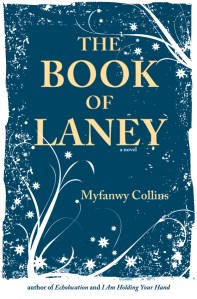
Myfanwy Collins work has been called "stark and stirring." Her forthcoming novel, The Book of Laney, will be released next year.

Myfanwy Collins work has been called “stark and stirring.” Her forthcoming novel, The Book of Laney, will be released next year.

Myfanwy Collins is the author of the novel Echolocation, the story collection I Am Holding Your Hand, and a very long list of stories, several of which have been nominated for the Pushcart Prize or Best of the Web awards. Next year, she will publish The Book of Laney, a Young Adult novel.

In this interview, Collins discusses the impetus behind first drafts, the difference between writing fiction for adults and for young adults, and palate cleansers for novelists.

(To read Collins’ story “Poinsettias” and an exercise on story endings, click here.)

Michael Noll

I’m curious about your process for writing this story. The story contains the term non sequitur, which seems to be the way the entire story operates. The jump from fresh breath to poinsettias isn’t logical. And while poinsettias and the rotting turkey are both Christmas-related, the introduction of the turkey still confounds our expectations (she goes to the store not to buy a turkey but to return a rotten one). The same thing happens with the jump from rotten turkey to dead mother. There’s clearly a connection, but it’s a sideways jump rather than a jump forward. I can’t imagine writing something like this with any sense of destination (of knowing how to get from peppermints to dead mother). How did this story take shape?

Myfanwy Collins

Great question. Your response to the story has really got me thinking. As with most short fiction I write, I wrote it as it came to me. The connections are as they came to me. The jumps, in my mind, have logic to them, but not everyone is in my mind and so I love that you have found this sense in them. I could not ask for more.

The impetus for the story were a couple of things on my mind the day I wrote the first draft.

The mundane things:

  • I have an altoids obsession and the tins are everywhere and I think this must really annoy my husband.
  • My husband insists on keeping poinsettias alive after the holiday. This drives me bananas.

The not so mundane things:

  • A few days before Christmas one year, there was a horrible smell in my fridge. We threw out everything we thought it might be. It still stank! Then I started googling the smell and realized it was the goddamned turkey that I was supposed to be cooking in a few days. I returned it to the store and they gave me a new one. They told me they would dispose of the old one for me. For some reason, this made me deeply sad. This bird had given its life for nothing.
  • The deep sadness I felt, made me think of my mother. Her last breath. The way we sent her off to the funeral home with her fuzzy blanket.

And now I’m crying.

Michael Noll

The ending reminded me of the ending to Alice Munro’s story “Friend of My Youth,” when she jumps, without any immediate logic, to a story about a Cameronian minister, who “in a mood of firm rejoicing at his own hanging, excommunicated all the other preachers in the world.” Even as I type those words, I get chills. There’s something thrilling about an ending that seems to come out of nowhere, as the ending to “Poinsettias” does. Was there a story that you had in mind as you wrote this? Or, if not, what’s your favorite non sequitur/out-of-nowhere ending?

Myfanwy Collins

Oh, this is so cool. I love it. Thank you.

No, there was no story I had in mind. I write from my own gut and experience. I write from the source of my pain or emotion. I write to release myself from something.

Michael Noll

Your forthcoming novel The Book of Laney is a young adult novel. On the surface, this is a bit startling given that your previous book, the story collection I Am Holding Your Hand, included a story that, according to the jacket description, is about “a woman has sex with her dead mother’s husband,” not exactly YA content. What made you want to write for a YA audience? What effect did this have on your approach to the novel?

Myfanwy Collins

Myfanwy Collins first YA novel, The Book of Laney, will be published by X in 2014.

Myfanwy Collins’ first YA novel, The Book of Laney, will be published by Lacewing Books in 2014.

The books of my youth (many of them written for young adults, but some were adult books) remain some of my favorite books. I think of authors like Judy Blume and Paul Zindel. They helped shape me. As did Salinger (I read the Catcher in the Rye when I was 12).

Then there are authors like Carson McCullers who write books that both young adults and adults are moved by. For example, The Member of the Wedding. In that book, McCullers was able to capture a sense of longing that is so pure and ferocious that one falls so easily into the longing with her.

When I was an undergraduate, I had a double major in Secondary Education/English and English Literature/Writing. For a very brief period of time before I started graduate school, I taught High School English. I did so because I enjoyed the age-group very much. Their insights, their emotions. I listened to them.

All this is to say, I have always felt a kinship to this age group. Often, I’ve written from the point-of-view of a young child or a young woman, so in terms of POV, it was not foreign to me.

As for my approach, I would say that the first drafts suffered the most from me trying to fit into some model I thought Young Adult books would be (even though I knew it wasn’t true). I was trying to reign myself in and not allow my character to be sexual or too adult or this or that. I thought I had to follow some rule about toning things down. Then after some time away, I realized that I was not being true to my writing self and the story was suffering as a result.

Then I had a wonderful editor (Andrew Scott at Lacewing Books) request to read the manuscript. I warned him that I wasn’t fully happy with it and that I wanted to make changes, but he bit the bullet and read it anyway.

Turns out he liked it and saw potential in it. He gave me some notes and I got back to work. But before I did, I ask him if there was anything I shouldn’t write in a YA book. He told me that pretty much everything was on the table except for bestiality and necrophilia.

I am extremely proud of the draft I turned in to him in October. I know there is still work to be done, but I feel the story is stronger for me unleashing myself a bit. I love my character Laney and I was honored to go on her journey with her. I hope the readers will feel the same way.

Michael Noll

Your list of publishing credits is astoundingly long, especially for someone who writes novels. Do you tend to work on multiple pieces at once? I’ve heard people say that novels are like black holes–they swallow up everything else that you’re working on. Everything gets incorporated into the novel. But that doesn’t seem to be the case with you. Do you take breaks from novel writing to work on shorter pieces?

Myfanwy Collins

In all things, there is nothing better than a good palate cleanser. So, yes, I do write lots of other stuff. I’ve even written some screenplays. They both suck but it was an incredibly good lesson in writing dialogue and action. I recommend it.

I love flash fiction and short stories, as a reader and a writer. I feel like short fiction takes up a different part of my brain than does a longer form, like a novel. With short fiction, I feel less attached to plot and more attached to an emotional response. Whereas with a novel, I absolutely insist that I give plot the respect it deserves.

I just (yesterday as a matter of fact) finished the first draft I’ve been working on for the past couple of years. I didn’t have time to focus on it until recently and it feels like such a relief to have the clay now that I can mold.

But now that I have that draft, I’m going to let it sit for a little while and write some shorter fiction. Most likely, I will go back to a project I’ve been posting on my web site. I call it vellum.

Basically, what I’ve been doing is writing these small pieces and posting them. If anyone reads them, great. If not, that’s okay, too. the reason I started doing it was to rediscover the joy of writing. Writing for no reason other than to hope a reader finds it and sees in it what I do.

December 2013

Profile pic

Michael Noll is the editor of Read to Write Stories.

How to Write an Ending that Swerves

3 Dec
"Poinsettias" by Myfanwy Collins was published in PANK Magazine.

“Poinsettias” by Myfanwy Collins was published in PANK Magazine.

Sometimes an ending can seem too much like the conclusion of a composition paper. The writer is moved to swerve away from the predictable, to untie the ending from the sense of inevitability that the story has spent its entire existence building. But how?

Myfanwy Collins gives a lesson in excellent endings in her story “Poinsettias.” It was published in PANK, where you can read it now. (Seriously, it’s short and wonderful, and you can read it in three minutes.)

How the Story Works

This kind of last-second-swerve might seem like the famous epiphanies from early Modernist writers. But, it’s actually quite different. To demonstrate, here are two of the most famous epiphany endings:

“Gazing up into the darkness I saw myself as a creature driven and derided by vanity; and my eyes burned with anguish and anger”

—from “Araby” by James Joyce.

“In the early morning on the lake sitting in the stern of the boat with his father rowing; he felt quite sure that he would never die.”

—”Indian Camp” by Ernest Hemingway

In both of those stories, the shocking thing is how quickly and suddenly the story states the character’s reaction to events—that is, if you find those lines shocking. To some extent, we’ve read so many epiphany endings that we’re immune to them.

So, now, check out the ending to “Poinsettias” by Myfanwy Collins. Keep in mind that, until this point, the story has been about the weird emotional state that often follows Christmas Day, the question of how long the season should last and when the final vestiges of it, like poinsettias, should be discarded.

“At the supermarket, they told her they would put the rotting turkey carcass in the renderer. They would take care of it, they told her. She felt some responsibility that the flesh of the bird be taken care of, that it be brought gently back to earth, to replenish, to renew. She remembered that when her mother died, hospice had said it was okay to send a personal item with her in the ambulance on the way to the crematory. She chose a fleece, duck-covered blanket that her mother had always snuggled under. That blanket was soft. It was so soft. When she thought of the flames, it was not her mother’s body she saw, but that blanket pushing toward the heat.”

This is an example of an ending that swerves away from predictability. Until this point, the mother has not been mentioned. And yet, we realize now, the entire story has been about her. So, how does the story pull off this ending?

In retrospect, we can see how every significant noun in the story is related to the idea of death.

  • The character, Mandy, constantly sucks on peppermint Altoids because she “didn’t want her mouth to taste like shit. All of these people were walking around with shit-tasting mouths, but not her.”
  • Mandy is upset with her partner about the poinsettias because “Nic would not let the poinsettias die. That was the problem.”
  • The turkey that Mandy bought to cook turns out to be rotten; she “drove the carcass to the market in the way back of her car with the windows cracked, but even now, weeks later, the smell lingered, sulfur twisting up her nostrils.”

So, even though the mother’s death is not introduced until the last paragraph, the story has prepared the reader to learn about it. The ending swerves not because it comes totally out of the blue but because it gives the reader an unexpected way of viewing everything that has come before it.

The Writing Exercise

Let’s prepare to write an ending that swerves, using Myfanwy Collins’ “Poinsettias” as a model:

  1. Choose a topic. You might consider a subject that has been bothering you or scratching at the inside of your head for a while—something you’ve wanted to write about but haven’t figured out how to approach yet.
  2. Free write about ideas, images, people, places, or events that are connected to the topic. Stray as far from the topic as you wish. You’re exploring the mental, emotional, and physical terrain of the story. If you’ve failed to write about the topic from one angle, find another. Myfanwy Collins’ story is about the death of the character’s mother, but it begins with the terrain that exists around that death: Christmas, Altoids, Poinsettias, and a turkey.
  3. Begin a story that has seemingly nothing to do with your topic. Sometimes our stories about topics that we really want to write about begin too directly. We rush up to the topic instead of taking our time, creeping up on it. So, choose one of the things you discovered through free writing and begin the story there.
  4. Switch topics after a few paragraphs or sentences. Myfanwy Collins writes two paragraphs about Altoids and then switches to Poinsettias. If you’re not sure how to make the switch, use the same sentence that Collins uses: “The real problem was that_____.”
  5. Feel for the right moment to introduce the “real” topic. You may need to switch topics again or introduce new elements. But, keep writing. Keep putting your character into moments of tension—in other words, write the story, and if it’s truly about the topic that has been bothering you, that topic will push its head onto the page. Trust your subconscious to put the pieces together.

Good luck!

An Interview with Liz Warren-Pederson

30 Nov
Liz Warren-Pederson's work has appeared in So To Speak, Paper Darts, Cutthroat and Terrain. She is based in Tucson.

Liz Warren-Pederson’s work has appeared in So To Speak, Paper Darts, Cutthroat and Terrain. She is based in Tucson.

Liz Warren-Pederson’s work has appeared in So To Speak, Paper Darts, Cutthroat and Terrain. She is based in Tucson, where she teaches writing and works in marketing at the University of Arizona.

In this interview, Warren-Pederson discusses dialogue, unlikable characters, and the moment when a narrator’s voice pops into your head.

(To read Warren-Pederson’s story “Paper Tiger” and an exercise on speeding up dialogue, click here.)

Michael Noll

Dialogue is normally structured with paragraph breaks every time the speaker changes. But that’s not what this story does. Instead, chunks of quick, back-and-forth dialogue are included in the same paragraph. I’m curious about why you chose this structure. It seems to have a few effect: 1) It makes each piece of the dialogue less important than the banter itself, 2) It makes the dialogue read faster than if it was broken into separate paragraphs and 3) It makes the dialogue (both speakers) part of the narrator’s voice. In other words, it’s not so much dialogue as a story being told by the narrator. Did you play around with different ways of writing this dialogue?

Liz Warren-Pederson

I actually didn’t play around with the structure of the dialogue; it just came out that way. This story emerged over a couple of weeks nearly fully formed – I had a sense of done-ness about it without my usual agonizing rounds of revision. The choice to not use hard returns in the dialogue was deliberate but also instinctive, if that makes sense. I’d been admiring run-together dialogue in other writers’ stories for exactly the effects you mention. I think a lot about how to influence the way the writing sounds to others when they read it, by which I mean, I want them to “hear” it how I am hearing it. I use AP style for my work writing, and have a strong allegiance to stylistic convention, so dialogue like this is about as close as I get to experimentation as a fiction writer, at least structurally. But then, paradoxically, I’m an intuitive grammarian, so I’m more interested in using commas to, say, control speed of reading than correctly manage the joining of dependent clauses or whatever. Gah, it was all I could do to even mention dependent clauses. I try to think of them as little as possible.

Michael Noll

I love this sentence: “Then she went out to the garden in her Holly Hobbie hat and spent five minutes getting down into a kneeling position on this geriatric-looking green foam “gardening aid” I found in a Lillian Vernon catalog one night when I was looking for something, anything to read while I took a dump.” The sentence covers so much ground: hat, gardening aid, catalogue, taking a dump. In terms of structure, it’s not unlike the chunks of dialogue in that it compresses a lot of information into a small, dense package. Does this voice and style come naturally to you, or is it something you achieve through revision?

Liz Warren-Pederson

Check out this terrific interview with Vladimir Nabokov, published at The Paris Review.

Check out this terrific interview with Vladimir Nabokov, published at The Paris Review.

This voice and style came naturally to me for this story in particular. Sometimes I have heard or read writers talking about how their characters “won’t shut up” or practically write the stories themselves, and this has always sounded and seemed like hokum to me. The Paris Review interview with Nabokov had a question about characters taking over, to which he responded that his characters are galley slaves—I love this. …but does it sound like I’m protesting too much? Because truly, one day I was driving home from work and the first line of the story popped into my head and then another line, and I had to kind of chant them to myself until I could get to a place where I could write them down. I think a great deal of writing happens in the subconscious, and when it’s ready to emerge, it will. Sometimes it does all at once, other times in dribs and drabs.

Michael Noll

Some seemingly-crucial information is left out of the story: the characters’ ages, the exact nature of their relationship, the exact nature of Cynthia’s health problems. We can guess some of this–but not all of it. Why did you choose to not make this kind of information explicit?

Liz Warren-Pederson

Those things were not what the story was about to me. I think that someone probably mentioned the omissions to me in workshop, but I was listening for whether my fellow writers got from the story what I intended, and by and large they did. I remember cleaning up a couple points of confusion in a revision, but the particulars you mentioned didn’t matter to me. I mean, it’s not a story about the pathology of a particular disease, you know? In workshop situations, especially when we’re trying to be good and thorough readers, we reflexively point to this type of omission, and pointing it out seems tantamount to calling it a problem. Lack of detail is kind of an impressionistic technique, and if the right impression is conveying, then I don’t think everything needs to be spelled out. I hasten to point out here that I’m probably the worst judge of what can and should be spelled out in my own work; I left those things out of this story because the direction of my workshop validated that decision. If they spent the whole workshop talking about how old the characters were, I’d figure something was seriously amiss.

Michael Noll

This story is about a broke middle-aged man in a relationship with an older, ill woman. In other words, it’s about a character who could be pretty unlikable–but he’s not. But neither is he “likable,” whatever that means. He’s interesting. But as I read, I thought of Claire Messud’s recent comments in an interview with Publisher’s Weekly. The interviewer commented that she wouldn’t want to be friends with one of Messud’s characters, and Messud answered this way:

“If you’re reading to find friends, you’re in deep trouble. We read to find life, in all its possibilities. The relevant question isn’t “is this a potential friend for me?” but “is this character alive?”

How did you approach Gerald’s character? It seems like it’d be easy to make him purposefully unlikable and throw that in the reader’s face. Or, you could fill the story with trite, sentimental messages about growing old, dying, living, etc. Did you ever think, “Gee, I’m not sure how to write about this guy?”

Liz Warren-Pederson

Claire Messud’s gotten a lot of crap for having written an angry woman narrator, which I think is weird and limiting. In the same interview you mention, she said: “…it’s totally unacceptable for a woman to be angry. I wanted to write a voice that for me, as a reader, had been missing from the chorus: the voice of an angry woman.” I’ve never had a problem accessing rage as a writer, but that I’ve channeled that rage into the first person narration of a man is telling. What it tells, I’ll let you decide. I really love Gerald. He’s such an asshole. But he kind of has to be, generationally and socially and culturally: he’s boxed into a specific worldview. His defense mechanisms are airtight; he doesn’t even turn off the bravado in his own internal monologue. To turn it off would be to admit how deeply he loves Cynthia and open himself to the pain of not only losing her, but also bearing witness as she wastes away. One of the things I intuited about Gerald from the very beginning, when those first couple lines came out of nowhere when I was driving, was his genuine love for Cynthia and his awareness of how skeptical people would be of it. Knowing that made him an easy character to write.

November 2013

Profile pic

Michael Noll is the editor of Read to Write Stories.