Tag Archives: how to write a short story

How to Write about an Unearthly Experience

17 Sep
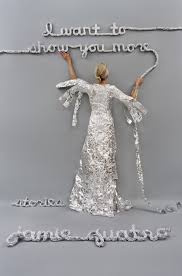
Jamie Quatro's story collection I Want to Show You More made New York Times reviewer Dwight Garner "laugh and gasp at the same time."

Jamie Quatro’s story collection I Want to Show You More made New York Times reviewer Dwight Garner “laugh and gasp at the same time.” You can read “The Anointing,” a story from the collection, at Guernica.

When writing about religion, it’s easy to fall into the trap of trying to find language or images that match the intensity of the believer’s experience. The problem is that this language almost always requires comparison and metaphor: “it felt like a strong wind” or “it was like there was a fire in my chest”. Such writing is fine for an audience inclined to believe, but it almost always fails with skeptics.

One writer who succeeds in finding a language to describe religious experience is Jamie Quatro. Her story, “The Anointing,” from her debut collection I Want to Show You More, is a perfect example of a successful description of what can seem like an indescribable miracle. It was published at Guernica, where you can read it now.

How the Story Works

In the Bible, most of Jesus’ miracles are described simply. The focus is almost always on the physical items involved, not on the experience. The apostles passed out the handful of loaves and fish, and the food never ran out. The water-from-wine at the wedding in Cannae tasted better than the wine from the original casks.

This is the same strategy used by Quatro in “The Anointing.” In the story, Diane’s husband is so depressed that he refuses to get out of bed. She has begun to fear for his life, and so she requests an anointing from the church elders. Here is how Quatro describes the kind of miracle that Diane has in mind:

“During evening worship—held in a makeshift auditorium beneath a stained canvas tarp—a boy with braces on his legs was brought forward by his mother, his wheelchair leaving tracks in the sawdust. The camp’s pastor removed the braces, knelt in front of the chair, and rubbed oil all over the boy’s white calves as if he were applying sunscreen. The following summer the boy came back to camp still wearing the braces, though now he used crutches with metal cuffs around the wrists.”

Notice the details that Quatro provides: the stained canvas tarp, tracks in the sawdust, oil applied like sunscreen. These are the mundane details of the physical world, not the language of spirituality. The result is that readers are more likely to set aside their natural skepticism.

Here is how Quatro describes the arrival of the church elders, the source of the miracle she hopes for:

“She thought they’d have a small phial, like a test tube—maybe something crystal—but Pastor Murray stepped in carrying a family-sized bottle of Wesson Oil. Diane was startled, not just by the oil (would something from Sam’s Club work?), but by the image of Florence Henderson that popped into her head, wearing padded mittens and frying up a mess of chicken.”

Because of the specific plainness of that description, we are engaged in the scene. We want to see the unearthly miracle that will (or will not) begin with that practical bottle of oil.

The Writing Exercise

Let’s write about an unearthly experience using “The Anointing” as a model:

  1. Think of an experience that is either unearthly (a miracle or encounter with something unearthly like God, a ghost, or an alien). Or think of any experience that has a hard-to-explain effect on a character.
  2. List the items involved: the room, the furnishings, the personal items. Be specific in your list: not just oil but “a family-sized bottle of Wesson Oil.”
  3. Now, set the stage for the experience. Assume that your audience is skeptical and ready to dismiss the first inklings of something unearthly. (This is always the assumption made by magicians, and the next few steps you will follow are the same steps they follow as well.)
  4. State what is about to happen (the miracle or unearthly experience).
  5. Show the items that will be involved, both directly and indirectly. (In Quatro’s miracle with the boy in the wheelchair, oil is used directly but the tracks in the sawdust are indirectly involved.) Make the reader believe in the physical reality of the scene. (This is why everyone knows the passage in the Bible where Jesus asks Thomas to probe his wounds with his fingers. We’re struck by the physical reality of the physically impossible.)
  6. State and show someone’s skepticism: the narrator or another character. (In Quatro’s story, Diane sees the oil and wonders if “something from Sam’s Club” will work.)
  7. Draw the curtain. Remove the object of the experience from sight, either literally (the narrator or main character leaves the room) or briefly (the narrator or main character looks away for a moment or becomes distracted). Make the audience forget for even a few seconds what is anticipated.
  8. Show the miracle or unearthly experience. State it simply. If the experience is truly remarkable, no loaded language is necessary.

Good luck and have fun.

7 Craft Lessons Every Writer Must Learn

13 Sep
Check out my craft essay, "7 Craft Lessons Every Write Must Learn" at the Huffington Post Books blog.

Check out my craft essay, “7 Craft Lessons Every Write Must Learn” at the Huffington Post Books blog.

The Huffington Post has published my essay, “7 Craft Lessons Every Writer Must Learn.” I use excerpts from seven stories to illustrate the ways that writers approach issues of setting, character, dialogue, language, structure, and scene. Check it out!

How to Add Historical Context to a Short Story

10 Sep
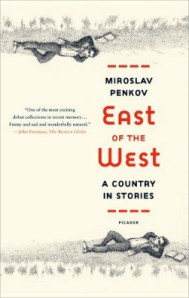
East of the West, the story collection from Bulgarian-born writer Miroslav Penkov, was called, by the Boston Glove, one of the most exciting debut collections in recent memory.

East of the West, the story collection from Bulgarian-born writer Miroslav Penkov, was called, by the Boston Globe, one of the most exciting debut collections in recent memory. The storoy “Makedonija” is included in the collection, and you can read it here at FiveChapters.

Stories are different than novels–obviously. They’re shorter, generally with fewer characters who face fewer complications within a more narrow scope. Novels that take place over the course of a day and stories that encompass decades are the anomaly, not the rule. And yet there are writers whose stories seem more like novels. Alice Munro is one.  Her recent story, “Axis,” (published in The New Yorker and The Best American Short Stories 2012), plays out over roughly half a century.

Another writer who accomplishes the same feat is Miroslav Penkov. The title story from his debut collection, East of the West, recently won the BBC International Short Story Award. It uses a love story to give a fierce portrayal of the geography of war. Another story from the collection, “Makedonija,” traces the effects of war over a person’s lifetime, a novel’s work in a single story. “Makedonija” was published at FiveChapters, where you can read it now.

How the Story Works

A man discovers the love letters sent to his wife by her old lover and reads them in a nursing home while offering advice to his daughter, whose husband is cheating on her. The story flips back and forth between the present and the past—the stories in the letters and the stories he remembers. As a result, he sees the present events against the backdrop of both personal and world history. The results are powerful.

For instance, here is a passage from the end of “Makedonija.” The old man is talking to his wife after sitting on a bench with his daughter’s husband. This is what he tells her:

“I’ve never told you this,” I say. “We never buried Brother. That was a lie. We never took him off the rope. I’d heard rumors, stories from people in our mountain, of how when mothers recognized their gunned-down children the tsarists pulled them aside and shot them on the spot. And so I told Mother, ‘I beseech you in your daughters’ blood, keep walking. Don’t say a word.’ And Mother was so shocked then she stood before my brother and didn’t even reach to touch his feet. We walked right past.”

In any work of fiction, it’s useful to ask what experience most haunts a character or narrator. That experience will likely shape, in subtle or obvious ways, the character’s decisions and reactions for the rest of his or her life. Here is a paragraph from Penkov’s story that does exactly that:

My brother came back from the war without a scratch. We never spoke of what he’d seen or done. I was ashamed to ask, and he was ashamed to say. We’d lost the war, of course, like all other recent wars, which was regrettable, since we never really lost our battles; we just picked the wrong allies. Or rather, our soldiers never lost their battles. Because what did I know? I herded sheep. So Brother joined me, up on the hills.

Of course, what happens next in the paragraph is that the war comes back for the brother.

The Writing Exercise

Let’s explore our characters’ pasts, using Penkov’s paragraph about his brother as a model:

  1. People often have multiple ways of thinking about their past: a view for when they’re feeling upbeat and a view for when they’re feeling down. How does your main character or narrator think about the past when he/she is feeling happy? What is the best version of the character’s personal history? The answer could relate to family or place, something small and intimate or large and cultural.
  2. What is the sad or pessimistic version of your character’s personal history? How does the character think about his/her personal past when he/she is feeling low?
  3. What is the main conflict from both versions of this past? What obstacle was overcome (or not overcome)?
  4. Fast forward to some point in the future. What sort of conflict would force the character to think about either version of this past? Possibilities include conflicts over love, children, property, money, and work. Ideally, the conflict should correspond in some way (though often unexpectedly) to the past conflict.

The past can affect the present in surprising ways. For instance, a happy version of the past could haunt a character who feels that she cannot live up to the standard set by previous generations. A dark version of the past could feel like an anchor on an otherwise buoyantly happy person. The point is to explore the ways that, as Faulkner famously wrote, “The past is never dead. It’s not even past.”

Good luck.

An Interview with Kelli Ford

8 Aug
Kelli Ford's story, "Walking Stick," was published in Drunken Boat.

Kelli Ford’s story, “Walking Stick,” was published in Drunken Boat, and you can read it here.

Kelli Ford was born in Tahlequah, the capital of the Cherokee Nation, and grew up in North Texas. She was the first in her family to graduate from college, and she went on to earn an M.F.A. at George Mason University. She was awarded a 2012-13 Dobie Paisano Fellowship through the University of Texas and the Texas Institute of Letters. While a fellow, she put the finishing touches on Crooked Hallelujah, a collection of linked stories that takes place in Eastern Oklahoma’s Indian Country and along the banks of the Red River.

In this interview, Ford discusses her process for describing characters, what it means to write about characters from low-income areas, and her solution to the tricky question of how to portray a character’s spoken language if the reader doesn’t understand it.

(To read Kelli’s story “Walking Stick” and an exercise based on her character descriptions, click here.)

Michael Noll

I admire your character descriptions. They’re quick and detailed, moving from the general (old lady) to the idiosyncratic (the fact that the sole of one of her shoes wears faster than the other) in just a few sentences. They’re also nestled within the story, so that the description leads directly into action or thought. How do you approach these descriptions? It can be difficult to fully visualize an invented character, but you make it look so easy.

Kelli Ford

Well, thank you, first of all. To answer this question, which is a nice, concise question about character descriptions, I think I need to take a step back. “Walking Stick” is one of my “origin obsession” stories. Some of us are blessed/cursed with the obsession of our origins and end up coming back again and again. I often think of this as a fault of mine, but try to both stretch myself to invent more and accept it as a gift with as much grace as I can muster.

So this is a roundabout way of answering your wonderful question with a terrible answer: I don’t know. These characters are inspired by my mom, her sisters, my grandmother, and great-grandmother. Of course—and as I always protest to my mom (too much?)—the people in the stories truly do become characters and take on a life of their own. They look ways, say things, and do things as they live on the page that their inspirational, real-life counterparts would never do.

I don’t know where the one worn shoe comes from. I don’t think my great-grandmother always wore out one shoe before the other, but the Anna Maria character does. Why or how? I think this is a character I know very well. It’s one that, perhaps, came easy. When I was writing the story, I didn’t find myself searching around for what she looks like or how she walks.

Other characters, and I’d imagine especially those who are wholly inventions, I have to search for, maybe, what he would wear or how he may respond to a fly crawling across his arm. (Does he wave it away distractedly, smash its guts on his arm, try but fail to Mr. Miyagi it in the air with chopsticks?) In the early pages of a story, descriptions can sometimes be a struggle with a character I am creating, or just beginning to know. I usually find myself more sure of these choices toward the end of the story. So much so, in fact, that maybe things once again begin to feel mysterious and not like choices at all. By the time I’m nearing the end of the story, I have a much better sense of that character, and it’s simply a matter of making sure I let go of early stuff, worked over as it may be, and truly start anew so this knowledge can be incorporated into the early stuff. On a purely nuts and bolts level, for me, that often means retyping each new draft each day so I’m not just tinkering and my subconscious is free to take off. Probably the invented characters require more cutting because I describe and describe trying to get it right, trying to know things for myself.

Michael Noll

This is a story about people who live without a lot of money. There’s a tendency in American fiction to portray these kinds of characters as either ennobled by poverty or as bloodthirsty and devolved. Your story does neither. Even though it’s about an old woman limping down to the tracks to carve up a cow hit by the train, the story never becomes cartoonish or cliched. Is this something you think about in your work?

Kelli Ford

I worry about sentimentality in my work, perhaps because so much comes back to the characters I write. For many of my characters, and especially Anna Maria and Lula, I feel so much for them. I really do. I feel the weight of their choices, the weight of the way the world acts upon them. Sometimes, you come across a character that can make you cry at your keyboard. So maybe the key, a key, is to be honest about them. Shit. We’re all saints and sinners, and poverty, or near-poverty, isn’t ennobling. Do you pay the light bill or buy the school clothes or do both and skip the car payment? Living with those kinds of choices doesn’t make you somehow more dignified than those around you. To write as if it does is dishonest, at best. Poor people are shitty all the time but, perhaps, have less agency to be shitty on a grander scale. If you work to create fully realized characters, and you aren’t setting out to ennoble or bloodthirst-ify a character, then characters are allowed to become either if that’s what the story demands, or rather what the character demands of the story.

Michael Noll
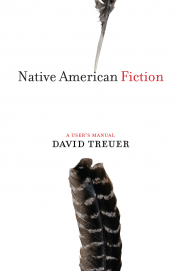
David Treuer essay collection, Native American Fiction: A User's Manual, challenges some of the popular notions about the influences behind and critical approaches to literature by Native American writers.

David Treuer essay collection, Native American Fiction: A User’s Manual, challenges some of the popular notions about the influences behind and critical approaches to literature by Native American writers. To read an excerpt about language and identity, click here.

I’m interested in the story’s use of the Cherokee language. In David Treuer’s essay “Smartberries” from his book Native American Fiction: A User’s Manual, he criticizes Louise Erdrich for misrepresenting and slighting the Ojibwe language in her novel The Antelope Wife. He claims that she slights the language in choosing mostly nouns when Ojibwe is a verb-based language and in almost always translating the Ojibwe into English. He says this:

“Erdrich adheres to the most popular conventions that govern the use of foreign words in English…the reader is left with sentiments about the Ojibwe language and instances in which Ojibwe functions as an ornament, not as a working part of the novel’s machinery…As with many other Native American novels, the use of lexical nuggets ends up feeling more like display, with language itself a museum piece.”

What are your thoughts about this problem: how to portray a character’s spoken language if the reader doesn’t understand it. In “Walking Stick,” the characters talk to one another in Cherokee, and their words are not translated. You seem to be honoring the integrity of the language. Is this an intentional move?

Kelli Ford

This is a great question! I’ve thought a lot about it, and to be honest, I don’t think I do a good job of “honoring the integrity of the language.” There’s nothing particularly Indian about the story aside from content, the characters and the tiny Oklahoma town they live in. Anna Maria is living in two worlds. She’s seeing her family become more white with each generation. Her daughter has moved in and has her own set of expectations and needs. Their religion is becoming the most important part of their identity. Anna Maria speaks her native language when she sees the Cheaters, and it’s a comfort, almost a sadness.

In “Smartberries,” Treuer says of the Ojibwe in Love Medicine (a book I’m more familiar with), “Strangely, the use of…words—though done seldom—highlights the longing for culture, not its presence” (64). He criticizes not just Erdrich’s mishandling of Ojibwe, but critics’ discussion of her work as particularly Native American in structure, in narrative approach, etc.

Having Anna Maria speak Cherokee is similar, I suppose, to writing her with a limp and one crappy shoe. I don’t think of these choices as “ornamental,” any more than I think having one of Erdrich’s characters speak Ojibwe is ornamental. These choices are integral to the characters as they are written.

That’s not to excuse mishandling the language. Erdrich didn’t grow up speaking the language. Neither did I, though like her I grew up hearing it. So should that preclude me from writing a character who speaks the language? Because Love Medicine is such a powerful and beautiful piece of literature, I say definitely not. (To be clear, I’m not comparing my work to hers—that would be nuts—I’m only comparing the use of language.) Should I work harder to do a better job and make the Cherokee I may happen to use better, more accurate, more complex? For sure. In “Walking Stick,” Anna Maria uses very basic greetings. It was a conscious choice not to translate the language for the most part, but she’s using simple greetings. It wasn’t really a difficult choice, though I suppose I could have taken it a bit further and used the actual Cherokee syllabary, which would have added another level of distance and work for readers who don’t speak the language. As it’s written, not much was a stake, but you know, she’s limited by my own limitations. That’s a real drag. You never want your character to be limited by your own ignorance, but when you are talking about a language, you can’t really sit down in the library for a couple weeks of research and be good.

This story is many years old. I am not sure I would try to use the language now, but you know, I hope I would. I hope I would simply work harder to get it right, to make it better, understanding that I’m going to get some things wrong. For this one, I used memory and books. I called the Cherokee Nation and talked to someone who was a cultural liaison of sorts to get a-do-la-nv-ss-di, but I don’t know if someone would really use this word as a nickname. I sent the story to a cousin to take a look at the language.

Erdrich is continually revising. In The Paris Review interview published a couple of years ago, she says that improving her use of Ojibwe is one reason she’s always revising, even Love Medicine, which is sort of a holy grail for me, as you can probably tell. It’s a great fear of mine that a native speaker will happen across one of my stories, or one of my cousins will follow a Facebook link, and see faults with the language. That simply means I have to work harder if I have another character that needs to speak the language. I don’t want to shy away from a story. I want my allegiance first to be to the character.

Michael Noll

This is an old story, but it was picked up recently by Drunken Boat. What is your process for sending work out? How did this story find its way to publication?

Kelli Ford

Well, I started out, like many of us do, with the Dick Cheney hunting birds process of submission. Send it out everywhere, hope you hit something, anything. But gradually, I think I’ve gotten a bit more focused. It’s hard, though. On a budget you can’t really subscribe to all the magazines and journals you’d like to, despite your best intentions. I find a few contemporary writers doing stuff I like and look at who is accepting their work, get subscriptions where I can, and send a story into the slush-ether with fingers crossed. If a writer I like edits a magazine, I send something there. I always have my dream magazines like The Southern Review or Oxford American.

This publication came about because Drunken Boat had a Native issue a while back. I submitted something that wasn’t quite right but got a nice note back that essentially said no really, send us something again and do it quickly! So I did. Even so, there was a new fiction editor in place by the time I sent “Walking Stick.” So that’s a small bit of advice to students and folks early in the process of submissions. When you get those nice rejections, act quickly. Send something else if you think you have something better suited for the magazine. Editors move on, and if one asks for more work, I think he or she generally really means it.

August 2013

Profile pic

Michael Noll is the editor of Read to Write.

How to Describe A Character

6 Aug
Kelli Ford's story, "Walking Stick" appeared in Drunken Boat.

Kelli Ford’s story, “Walking Stick” appeared in Drunken Boat. She recently served as the fellow at the Dobie Paisano Ranch near Austin, where she worked on finishing a story collection, Crooked Hallelujah.

When people call Anton Chekhov the greatest short story writer, they often talk about how quickly he develops characters. In “The Lady with the Dog,” for instance, he sums up a gentleman in Moscow this way: After the main character reveals the tiniest bit of his feelings about a woman to a friend at a dinner club, the friend says, “You were quite right, you know—the sturgeon was just a leetle off.” An entire social dynamic is revealed in those few words.

The best character descriptions do more than only show the reader a character. They reveal something about the way the world works or the way a character interacts with that world. Kelli Ford writes those kind of descriptions. To see how she does it, check out her story “Walking Stick.” You can read it now at Drunken Boat.

How the Story Works

Here’s how Kelli Ford describes one character:

“At sixty-seven, Anna Maria did not hurry with much these days. She was still stout and round, but a bone spur on her right ankle forced her foot out at an odd angle. That shoe always wore thin on the inside before the other. She could feel the gravel poking through.”

We learn not only that Anna Maria is poor and old, that she’s overweight with a limp, and that she lives in a place with gravel roads. But we also learn about how she faces a world that isn’t easy for a poor, old, overweight woman with a limp. We understand her mentality through the simple, matter of fact description of the shoes and the fact that she can feel the gravel. One of the most important words in the passage is always. Thin shoes and poky gravel are facts of Anna Maria’s existence, and she does not complain. A lesser writer would call her stoic, but a description like this one, because it shows us the character so thoroughly, makes us believe that she exists.

The Writing Exercise

Let’s describe a character, using Kelli Ford’s description of Anna Maria as a model:

  1. Start with the character’s age: “At — years old, So-and-so did (did not) _______.”
  2. Describe the character in terms of how he/she has always been: “He was still ______”
  3. But then add a recent change: “But (some new thing) made her ______.”
  4. Describe the affect this change has on the character: “As a result…”
  5. Describe the world from the character’s POV. Given the recent change, how does the character see the world? What does the character notice or do?

The idea is to move beyond basic physicality or mentality (short, tall, skinny, fat, smart, dumb, happy, sad) to a sense of interaction with the world. This means creating pressure on both sides: the pressure the world applies to the character and the way the character pushes back.

Good luck and have f un.

An Interview with Marc Watkins

25 Jul
Marc Watkins

Marc Watkins’ story “Two Midnights in a Jug” won Boulevard’s 2008 “Short Fiction Contest for Emerging Writers” and was included in Pushcart Prize XXXV: Best of the Small Presses.

If you liked Daniel Woodrell’s novel Winter’s Bone or the movie based on the book, then you’ll want to keep an eye on Marc Watkins. He was born and raised in Missouri and writes about the down and out of the Ozarks. He currently lives in Oxford, Mississippi, with his wife, the writer Emily Howorth. His stories have appeared in Pushcart Prize XXXV: Best of the Small PressesBoulevardThird CoastTexas ReviewStoryQuarterly, and elsewhere. Recently, he served as a guest fiction editor for the 2012 Pushcart Prize Anthology. In his spare time he edits a website,The Rankings.

In this interview, Watkins discusses the challenge of creating hopeful characters in a hopeless place, the influence of Biblical language, and what it means to be a highly literate high school dropout.

(For an exercise based on his story “Two Midnights in a Jug” click here.)

Michael Noll

The story has an interesting line early on: “Here is where you’re born and here is what you are.” There’s a lot of fatalism and futility wrapped up in a line like that. It suggests that the people who reside in that place will not change. How do you create suspense in a story when the setting is resistant to the ingredient necessary for suspense: the possibility of change? I’m curious how you approached setting a story in such a place.

Marc Watkins

Even though the structure of the story is punctuated by fatalism, it is hope, even in its slightest form, which drives the story. Stories that are essentially static in surface action have to rely on the sublet conflicts to develop tension and create suspense. Each character in the story latches onto a sort of absurd personal fantasy as a means of escape: Margret Jean thinks that a pill will save her broken marriage; Cordell believes that keeping the family together on the land that he lost is key to getting it back, even when a fire rains down ash and kills all the crops; and then there’s Abe, who believes his key to escaping his family is going to work for the very company that caused the fire to destroy the land.

I finished the story before I added the first graph. I like framing stories, especially those that use place as a major part of their structure, and trying to explain the environment by describing its rituals and cultures.

Michael Noll

The story’s point of view borders on omniscient, which is rare for any contemporary American work, let alone a short story. What led you to use that POV?

Marc Watkins

“Two Midnights in a Jug” was inspired by the biblical story of Job, and it was also the first time I’d ever written a third-person omniscient type of story. The voice basically fit the narrative, so I went with it as one of those crazy experiments that you’re supposed to engage in when tackling something wholly alien and new. The voice may have its roots in a church pew. I was raised Catholic and went to a Catholic school for several years. They’d send us to two or three masses each week, and I guess that voice from the pulpit, that sort of weird Bible voice stuck in my brain, even when all other aspects of my faith faded.

Michael Noll

The source of the title "Two Midnights in a Jar"

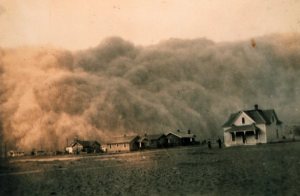
A saying from the Dust Bowl inspired the title “Two Midnights in a Jug.” You can read about an editor who hated the title at Marc Watkins’ website.

On your blog, you wrote about a journal editor who disliked the title because it didn’t make literal sense. In your blog post, you revealed that the phrase “Two midnights in a jug” comes from a Dust-Bowl era description of the blackness of the sky during a storm. There is no mention of this in the story. Do you think it’s necessary for writers to cue readers into the meanings behind the allusions in a work? In other words, are you okay with readers wondering what the title means?

Marc Watkins

The story’s title was actually the last phrase in the final sentence of the story, but it changed because one good piece of advice I picked up from Debra Monroe was to never repeat a title within the confines of a story. The title should encapsulate the world of the story, and when it’s told more than once it risks falling flat like a joke with a punch line told twice. I’m fine with readers left wondering what the title means. I think we all read for challenges and for curiosity, grand or small.

Michael Noll

This story is set in a real place—Eminence, Missouri. Frankly, when I googled the town, I was surprised to find that it was real. Your portrayal of it in the story is so bleak that I assumed that you’d made it up. Obviously the characters in this story don’t seem like the type who might encounter a story in a literary journal, but what about Eminence’s more educated residents? The internet has made the world a small place. Do you worry about what people might think of the way they’ve been portrayed?

Marc Watkins

I’m a walking contradiction; I have a Master’s degree and a G.E.D. In its own private way “Two Midnights in a Jug” manages to convey a level of honesty about how I felt after dropping out of high school. I never grew up in a trailer, but the moment I told people that I was from Missouri and had dropped out, someone asked if I’d been raised in one, and I felt ostracized by the stereotype, so I decided to follow that stereotype down a rabbit hole in the story. The narrative’s bleakness also had to do with my father. He had entered into the final stage of a disease that would claim his life in less than a year.

Even though Eminence, Missouri, is a real town, with real people, “Two Midnights in a Jug” is fiction. As writers we live in conjured spaces that are just as “real” to us emotionally as any physical event or place, and this emotional truth, or as Tim O’Brien calls it “story truth,” matters most. It’s the magic we seek.

July 2013

Profile pic

Michael Noll is the editor of Read to Write.

How to Introduce Setting

23 Jul
Marc Watkins story "Two Midnights in a Jug" appeared in Boulevard Magazine.

Marc Watkins story “Two Midnights in a Jug” won the 2008 Short Fiction Contest for Emerging Writings from Boulevard Magazine. You can read the story here.

A basic element of all fiction is showing the reader where the story takes place. But how? Do you use a wide-angle lens or focus on details? If you zoom from one angle to another, when do you narrow or broaden the focus and how quickly or slowly?

Answers to these questions can be found in one of the most beautiful and well-crafted story openings I’ve read recently. “Two Midnights in a Jug” by Marc Watkins won the 2008 Boulevard Short Fiction Contest for Emerging Writers, and you can read the story here.

How the Story Works

Let’s focus on the opening paragraph:

“Follow any hollow in the Ozarks and it’ll come to river or stream where soft clay the color of rust covers jagged limestone along the banks. Mountains cut by water dot the horizon, their peaks smoothed over millennia into knolls and greened with trees. In Eminence, MO, folks call trailer courts neighborhoods and hundred year old farm houses with acreage equal to a football field are mansions. There’s one high school, and you’ll get sidelong looks if you finish. People will talk, call you learnt, expect you to work at the mega hog farm as manager with an education. You’ll need a wife, finding her’s easy cause every household’s got at least one daughter ready for marriage, and you won’t meet her at a bar, there’s only a few in town. More likely it’ll be at a church, there’s twenty inside city limits.

Here is where you’re born and here is what you are.”

The passage begins with a wide frame (any hollow in the Ozarks) and gradually zooms in on a particular town (Eminence, MO) and then parts of town (trailer parks, farmhouses, the high school, the mega hog farm). So far, the passage follows the basics of Describing Setting 101. But notice what happens next. The passage moves from physical setting to philosophical setting, i.e. what the people who live in the place think and how they talk. This transition is crucial to the story’s development because it allows the narrative to begin. There’s almost never any story inherent in place. Concrete is merely concrete, and trees don’t care what happens around them. It’s the people who walk on the concrete and sit beneath the trees that give those things meaning.

This transition from place to people happens all of the time in fiction. Look for it in the next story or novel you read. I bet you’ll find it.

The Writing Exercise

Let’s practice writing a description of setting that transitions from place to people.

  1. Choose the place.
  2. Write down the basics of the place’s geography, landscape, and physical features. If you’re describing an interior space, the same ideas still apply except that you’re describing floor plans and architecture rather than landscape. (It’s important to sketch these details out before actually writing the paragraph. Your brain doesn’t always give you details in the best order for prose.)
  3. Now, write about the sense that you have of the place: cultured/backward, beautiful/ugly, freeing/oppressive, spiritual/dead, exciting/dull, etc. Try to explain why you have this sense.
  4. Finally, describe the people who occupy this place: smart/dumb, happy/sad, cosmopolitan/provincial, motivated/depressed, etc. When you think of these people, what actions, habits, or things first come to mind?
  5. At last, let’s write the paragraph.
  6. Start with a wide frame: show us the largest view of the place that makes sense (i.e. the region/city/neighborhood and not the blue speck of planet Earth in the black universe.)
  7. Zoom into the specific place where the story is set. Do this in no more than four sentences.
  8. Transition to the people. Notice how Marc Watkins does this with the phrase “folks call trailer parks…” In the next sentence, he writes, “You’ll need a wife…” And then he moves directly to the people: “People will talk…” He’s transitioning from the Godlike objective view of a satellite looking down on Missouri to the subjective view of the people on the ground.
  9. Drive home the sense that you have of this place with the people’s actions or habits. Marc Watkins does this with details about finding a wife. When you finish this paragraph, you may be ready to write a story. Or at least you’ll have a few good sentences about setting.

Good luck and have fun.

An Interview with Laura van den Berg

18 Jul
Laura van den Berg is the author of X. Her story, "Farewell My Loveds" does x

Laura van den Berg is the author of the forthcoming story collection The Isle of Youth. In this interview, she discusses her story, “Farewell My Loveds,” which was published at American Short Fiction and Atticus Review and included in her story collection What the World Will Look Like When All the Water Leaves Us.

Laura van den Berg is the author of the forthcoming collection The Isle of Youth, a book that prompted a reviewer for Publisher’s Weekly to gush, “If ever there was a writer going places, it’s Laura van den Berg.” Her previous story collection, What the World Will Look Like When All the Water Leaves Us from Dzanc Books, was called “stunning, desolate, and unforgettable” by Booklist.

In this interview, van den Berg discusses her drafting process, how a childhood spent in Florida gave birth to a slanted sense of reality, and how she reads to solve her own writing challenges.

(For an exercise based on her weird and tender story “Farewell My Loveds” click here.)

Michael Noll

You do such a great job at creating suspense in this story: What is the nature of the hole in the street? How did the parents die? Who was Calvin? I’m curious how you approach a scene or section of a story. Do you begin with an idea (for instance, a hole in the street) and then write a scene that revolves around that mystery, delaying as long as possible the answer? Or do you start with something more nebulous and then create the elements of suspense in revision?

Laura van den Berg

I’m an “intuitive drafter,” which means I usually barrel ahead without any kind of plan and end up with a mess on my hands. The real story often doesn’t emerge until I’m deep into revision. But for “Goodbye My Loveds,” the narrator was always grappling with not having access to certain kinds of information, so many of those questions were present in early drafts. However, the handling of those questions—what will be revealed; what will be denied; what will be offered in the place of the missing information—changed dramatically during the revision process.

Michael Noll

One thing I love about this story is how quickly you’re able to establish the dynamic between the brother and sister. There’s one moment in particular that is really great. The sister has convinced her brother to leave the hole and go back into their apartment. You write, “He thanked me for looking at the hole and apologized for waking me so early. I told him it was okay, I was glad to see it.” There’s such sweetness in that moment. It comes shortly after the sister says that her brother “was twelve, but most people thought he was younger.” In just a few sentences, you’re able to show a basic dynamic (he’s immature and headstrong, she’s protective) but also how much they care for each other. How did you develop these characters in your head? Did you begin with sketches of them? Or did you drop them into the premise to see what personalities emerged?

Laura van den Berg

For this story, “drop them into the premise to see what personalities emerged” would be the most accurate. I did a lot of work around adding texture/complications to the brother-sister relationship, but that rapport was, happily, there from the beginning.

Michael Noll

I’m interested in how you describe your own work. If someone asks you, “What kind of stuff do you write?” what do you say? I ask because this story has a strong non-realistic element. I’m not sure what to call it: absurdist, fantastic? At the very least, the premise is elevated beyond what we generally think of as realism. Your other stories do this as well. You have one about an actress who takes a job pretending to be Bigfoot. Other writers (George Saunders, Manuel Gonzales, Karen Russell) have a similar aesthetic. It’s as if you and they are combining the light, fun qualities of pulp with the emotional depth of literary fiction. What do you think? Do people ever look at you funny when you tell them you’ve written a great, serious, beautiful story about Bigfoot?

Laura van den Berg

I would agree that my work isn’t quite realist, but I’d be hesitant to put myself in league with George Saunders, Manuel Gonzales, and Karen Russell—and not just because they are all staggeringly good writers whose work I admire greatly!

Laura van den Berg's "Where We Must Be" tells the story of a woman who finds a job playing the role of Bigfoot.

Laura van den Berg’s “Where We Must Be” tells the story of a woman who finds a job playing the role of Bigfoot. You can read it at The Nervous Breakdown.

To take the Bigfoot story as an example: a more committed fabulist—or magical realist, etc—might very well have Bigfoot appear as a character in all his (her?) monstrous glory, where as “Where We Must Be” concerns a woman dressing up as Bigfoot, which is certainly unusual, but could, for all we know, be happening somewhere in the world as this very moment (I kind of hope it is!). To me reality seems perpetually multifarious, bewildering; it often evolves, sometimes instantaneously, without our consent. I am most drawn to fiction, and hope to write fiction, where the force of that disorientation is felt.

Aesthetic and perspective are often inexorably linked—how do you see the world? Where are you coming from when you sit down to write? I grew up in Florida, a deeply odd place, in a large family prone to eccentricity. For example, we kept, for a time, a wolf as a pet. Her name was Natasha and she lived in our suburban backyard, where she became a prodigious pacer and digger of holes. In graduate school, the details my peers often tagged as being “surreal” and “bizarre” seemed pretty normal to me; without knowing it, I had carried the eccentricity that I had lived, that felt as much like “reality” as anything, over into my work. In time, I realized that aesthetic/perspective could become not only a stylistic feature, but also a meaningful narrative tool.

I was even more conscious of this when working on my second collection, The Isle of Youth, due out in November. All the stories involve crime/mystery in one way or another: a woman investigating the mysterious death of her scientist brother in Antarctica; a gang of teenage bank robbers called the Gorillas; twin sisters who trade identities and become ensnared in the Miami underworld. I love noir, and I was aware of using that stylistic features as a means of reaching a new—for me—emotional/psychological/aesthetic space.

Going back to Bigfoot, people do look at me funny sometimes. Occasionally people seem surprised that a woman would write about Bigfoot, which surprised me as I hadn’t been aware that cryptids were such masculine territory. And a lot of people have asked if I had ever worked as a Bigfoot impersonator. I’m always a little heartbroken when I have to answer “no.”

Michael Noll

I believe you’re currently at work on a novel. When you find yourself stumped, which writer do you turn to?

Laura van den Berg

The Flamethrowers by Rachel Kushner is about motorcycle racing and the New York art world of the 1970s.

The Flamethrowers by Rachel Kushner is about motorcycle racing and the New York art world of the 1970s.

I am often stumped and while, like most any writer, I have a huge stable of “favorites,” I often find myself turning to whatever I’m reading at the time. For example, I recently finished Rachel Kushner’s stunning novel The Flame Throwers and that novel taught me a great deal about writing a certain kind of first person narrator—and also a great deal about endings. So what I’m reading often helps me with whatever puzzle has been tripping me up—Ah! How did the writer pull off that ending/scene/tone/structure?—or even helps in the sense that it shows me what I hope to avoid in my work—Where did things go awry? How could the writer have avoided falling into that particular trap? How can I avoid falling into that trap? I usually am reading a few books at the same time and more often than not, they are all teaching me something.

July 2013

Profile pic

Michael Noll is the editor of Read to Write.

Creating Suspense and Suspension of Disbelief

16 Jul
Laura van den Berg's story "Farewell My Loveds" was published by American Short Fiction and Atticus Review and is included in her story collection What the World Will Look Like When All the Water Leaves Us.

Laura van den Berg’s story “Farewell My Loveds” was published by American Short Fiction and Atticus Review and is included in her story collection What the World Will Look Like When All the Water Leaves Us.

Every writer must learn to create suspense. But how? Laura van den Berg offers a masterful lesson in her story “Goodbye My Loveds.” The story is included in van den Berg’s story collection What the World Will Look Like When All the Water Leaves Us from Dzanc Books and was first published in American Short Fiction and republished by Atticus Review, where you can read it now.

How the Story Works

The story introduces a mystery right away: the hole in the street. But the exact nature of the hole is unclear. Is it bottomless as the little brother believes or simply a hole as his big sister, the narrator, suggests? In delaying the answer, the story not only makes the readers want to know the answer but also changes the readers’ expectations: perhaps the hole really is more than just a hole. In other words, when a story creates suspense, it also creates a suspension of disbelief in the reader.

Here’s a breakdown of van den Berg accomplishes this trick:

  1. She introduces the mystery (the hole in the street) and a sense of urgency (the brother wakes the narrator up at dawn to look at the hole).
  2. The narrator and her brother argue about whether the hole is actually a crack.
  3. The narrator and brother argue about when to use a flashlight.
  4. The narrator and brother argue about whether the hole is bottomless.
  5. The narrator imagines her brother disappearing into the hole.
  6. The characters go back to their apartment.

After each of the first five sections, the story shows us the hole. With each view, we (along with the narrator) see some new aspect of the hole and it becomes a little bigger, deeper, and darker. Here is each view:

  1.  “a dark circle on the asphalt. It was the size of a dinner plate, the borders uneven and jagged”
  2. “he reached inside, his arm disappearing to the elbow”…’Okay,’ I said, hoping he would stop before a rat found the soft tips of his fingers.”
  3. “It looked like a patch of asphalt just melted away, a miniature sinkhole precariously close to the rear of a brown Honda…I saw a narrow stream of darkness, as though I was gazing through a telescope trained on a black and starless sky.”
  4. “He aimed the light into the hole; the beam was swallowed by shadows.”
  5. “I examined the diameter and, to my relief, decided it wasn’t large enough for him to squeeze through.”

At the end, the narrator imagines her brother falling into it—and this moment introduces a new mystery: why would the narrator imagine such a thing? It is this mystery that will drive the story forward.

The Writing Exercise

Let’s write a small scene around a mystery.

  1. Choose a mystery. You might use a familiar horror from books/movies. In this story, van den Berg has used the bottomless pit. Here are some other options: pit of snakes, endless staircase, secret doorway, cutout eyes in a painting for someone to spy through, trapdoors, secret passages, monsters under the bed, bogeyman in the closet, stranger hiding in the back seat of the car, and spider under the bedcovers.
  2. Translate the mystery into familiar realistic setting. van den Berg makes her bottomless pit a pothole. Think about how you could put a secret doorway, endless staircase, or monster into your kitchen or bedroom. Which familiar objects could be made mysterious? Show it to the reader using non-fantastic details.
  3. Create two characters. One will believe that the mysterious object is truly mysterious, and the other will believe that it’s not. List ways that the first person might investigate the mystery.
  4. Let the characters argue about the nature of the mysterious object.
  5. After each investigation or argument, show the object again, with new details, each more mysterious than the last. Your goal is to make the reader appreciate the object in a new way.

Good luck and have fun.

An Interview with Matthew Salesses

11 Jul
is the author of I’m Not Saying, I’m Just Saying (2013), The Last Repatriate, and two chapbooks, Our Island of Epidemics and We Will Take What We Can Get. He was adopted from Korea at age two, returned to Korea, married a Korean woman, and writes a column about his wife and baby for The Good Men Project. He also serves as the Project’s Fiction Editor. Photo Credit Stephanie Mitchell

Matthew Salesses is the author of I’m Not Saying, I’m Just Saying, The Last Repatriate, and two chapbooks. He was adopted from Korea at age two, returned to Korea, married a Korean woman, and writes a column about his wife and baby for The Good Men Project. He also serves as the Project’s Fiction Editor.
Photo Credit Stephanie Mitchell

When Flannery O’Connor wrote, “Anybody who has survived his childhood has enough information about life to last him the rest of his days,” she could have been talking about the writer Matthew Salesses. He was adopted from Korea at age two and then, as an adult, returned to Korea, where he married a Korean woman with whom he now has a child. The questions of identity inherent in such a life are enormous, and, fittingly, Salesses has dug deeply into those mysteries in his work. He’s the author of I’m Not Saying, I’m Just SayingThe Last Repatriate, two chapbooks, plus numerous essays that have appeared in The New York Times Motherlode blog, NPR, Glimmer Train, The Rumpus, Hyphen, and American Short Fiction.

In this interview, Salesses discusses his revision process, avoiding distractions that keep him from writing, and where he draws the line between fiction and nonfiction.

(For an exercise based on his story, “In My War Novel,” which uses repetition to devastating effect, click here.)

Michael Noll

I once heard Robert Stone explain the difference between a story and a novel by saying that a novel was like a baseball game and a story was like a single pitch. This story seems to fit that description. It’s a single movement. To use another metaphor, it’s almost as if the narrator has an immense lung capacity, and this is the story that he can tell before he runs out of breath. Did you conceive of this story in a rush or is that sense of a single, seamless movement the result of a lot of revision?

Matthew Salesses

In a way, both. I wrote the first draft in a rush. Revision took years. Most of my fiction is written in this way–the rush of the first draft and the long work of shaping that draft into something that reads with that rush. For this story, that meant cutting it up several times and moving the pieces around on my floor, adding and deleting pieces, trying to get the length down and also have enough of an emotional arc.

Michael Noll

Even though the story uses a style of repetition and variation (the phrases “In my war novel” and “Before my wife left me” reoccur in various ways) it actually contains a story that’s been told many times: the demise of a marriage. The difference between all those past tellings and this one is, obviously, the telling. How do you typically approach the plot in a story? Do you outline the events/scenes? Or do you start with the voice and discover where it will take you?

Matthew Salesses

It’s a different process for me from story to story. I wish I plotted everything out beforehand every time–I think that would be easier–but I often start with much less. Here I did start with the voice, and let the anger and sadness and frustration in the voice carry the story where it wanted. Then I trimmed it down like a hedge and guided it closer to where I wanted it.

Michael Noll

Here's a cool book trailer video for I'm Not Saying, I'm Just Saying.

Here’s a cool book trailer video for I’m Not Saying, I’m Just Saying.

You’ve written quite a bit about your own experience as an orphan from Korea, and this story–and others–pick up on that idea. How do you determine what goes into a nonfiction piece and what gets used in a story? Where do you draw the line between the genres–or, how do you separate them?

Matthew Salesses

I don’t determine, other than to keep certain things out of nonfiction that might hurt people close to me. I draw the line at telling the truth about what happened, as it happened, versus telling the truth about what happened through changing what happened.

Michael Noll

You’re a prolific writer. In addition to a story collection, novella, and a chapbook plus numerous nonfiction pieces, you also an editor for The Good Men Project. And, you update your blog often. How do you a) keep up with it all and b) produce so much material. You’re also a father, which means that you’re producing all of this while caring for children. How do you do it? I recently asked Roxane Gay this same question, and she attributed her enormous output to living in the middle of nowhere and insomnia. What’s your method?

Matthew Salesses

Roxane produces far more quality work than I do. I do what I can by not watching TV (except for an occasional kdrama), limiting Facebook time, relying on my wife and Twitter for the news, cutting out most sports (I can’t seem to get rid of my love for football), and not going out much. I also have taken up drinking copious amounts of coffee and only sleeping 6-7 hours a night.

July 2013

Profile pic

Michael Noll is the editor of Read to Write.