Tag Archives: writing exercises

An Interview with Christopher DeWan

6 Oct
Christopher DeWan is the author of Hoopty Time Machines, which Aimee Bender said contains "funny, sharp, playful zingers of stories that reach right out to grab a reader."

Christopher DeWan is the author of Hoopty Time Machines, which Aimee Bender called “funny, hooterharp, playful zingers of stories that reach right out to grab a reader.”

Christopher DeWan is a writer and teacher living on Los Angeles. He’s the author of the flash fiction collection Hoopty Time Machines and has published over fifty stories in in journals including Hobart, Juked, Necessary Fiction, Passages North, and wigleaf, and he has been nominated twice for the Pushcart Prize. He has had TV projects with the Chernin Group and Indomitable Entertainment and has collaborated on transmedia properties for Bad Robot, Paramount, Universal, and the Walt Disney Company. His screenwriting has been recognized by CineStory, Final Draft, the PAGE Awards, and Slamdance, and he is recipient of a fellowship from the International Screenwriters’ Association (ISA). He is currently chair of creative writing at the California State Summer School for the Arts.

To read an exercise on using emotion to make readers care about a story’s big-conceit elements, inspired by DeWan’s story “Voodoo,” click here.

In this interview, DeWan discusses the ways that second-person POV and first-person video games are similar, the pleasure of unknowing in flash fiction, and the emotional punch in works by Aimee Bender and Kevin Brockmeier.

Michael Noll

“Voodoo” is written in second person, which is one of those things that often happens without thinking at the beginning of a draft. But at a certain point, you must decide whether to stick with it or use reliable old third or first person. For this story, what made second person the right POV?

Christopher DeWan

I have a theory about second-person—wholly untested—that it works best for stories that are inherently about identity. There’s an effect that happens when I read a second-person story that reminds me a little of playing a first-person videogame, a sort of amnesiac effect where, in the game, I’m supposed to *be* this person but I also know almost nothing about this person: I stumble cluelessly through “my” home trying to collect information to understand who I am. Second-person fiction reads like that to me: the story is a series of puzzle pieces for readers as we actively participate in assembling the identity of the narrator.

In this story, “Voodoo,” the narrator feels alienated and confused by his daughter and, at some level, his whole life: he’s assembled all the trappings of a normal adult, but he doesn’t feel like one. His daughter and her room and his house and his wife should all feel very familiar to him, but they don’t—and I like the way second-person helps convey this alienation. Second-person blindfolds the reader, spins them around, and makes them feel a little lost.

Michael Noll

The story’s opening suggests, broadly speaking, a couple of possibilities: the daughter has made voodoo dolls and is using them to harm her parents or it’s all in her father’s head. The story never chooses one over the other. It also doesn’t escalate the premise into a plot that would require a much longer story, something that seems like it would destroy the great uncertainty that you’ve created. Were you ever tempted to enlarge this story, or did you always know it would hang in this particular moment?

Christopher DeWan

You’ve given away the secret of the entire book: a collection of forty-five short stories so short that I never have to decide anything!

This is one of things I love about flash fiction: the form allows me to write a story about the moment before a story, take it right up to the point that something catastrophic will have to happen—and then the story’s over. The reader is just left there in that moment, teetering on the cliff’s edge, imagining all the things that might happen next. For me, that not-knowing is a more interesting place than the knowing.

But there are many stories in this collection I could imagine enlarging. The book is basically forty-five inciting incidents for forty-five future novels. Now I’m just waiting for a forty-five book deal.

Michael Noll

Christopher DeWan's story "Voodoo" is included in his new collection, Hoopty Time Machines.

Christopher DeWan’s story “Voodoo” is included in his new collection of flash fiction, Hoopty Time Machines.

The book, Hoopty Time Machines is subtitled, “Fairy Tales for Grownups,” which gets at one of the weird things about fairy tales. The originals from Northern Europe were quite scary and told by adults–maybe to kids, often to each other. The death and other horrors in them reflected the very real dangers that people feared. Then, of course, they got sanitized. In this book, there isn’t much death, but there are a lot of unsettling situations: a changeling child, parents who seem to have been replaced by trolls. What is it about fairy tales that seems to convey the feelings we get from real life?

Christopher DeWan

There are a lot of people who study fairy tales as a genre and I should say I’m not one of those people: I’m no fairy tale scholar. But I am a big fan, and particularly a fan of a fairy tale’s ability to evoke deep, resonant, inexplicable horror: “Why did he grab himself by the foot and tear himself in half?!?” etc.

What I’m hoping to do with this book is explore some of the lingering cobwebby corners of adult psychology that still resonate within those murky kid fears. There are plenty of things in our lives that don’t make sense, exactly, but we push them out of focus so we can function as adults in the world. They’re still in there, lurking, making a mess of our minds in ways we don’t fully understand.

Michael Noll

Your book is blurbed by Aimee Bender and Kevin Brockmeier, in whose footsteps it obviously walks, as do so many books. They, along with a few other people, basically created the genre of American fabulism and fairy-tale-inspired fiction. And, of course, they were drawing upon the work of writers like Angela Carter and Donald Barthelme. Was there a particular story that made you think, “Yes, this is the kind of writing I want to do?”

Christopher DeWan

Well, first, I can’t overstate how much I admire both of them—actually, all four of those writers you mention. I first read Aimee Bender around the time her first book came out, and I consumed that book in a single sitting, and I remember being dazzled and awestruck and most of all I remember feeling a great sense of liberation, like, “It’s okay to do that?!” I was always into fabulism—I mean, we all are when we’re kids, but I just never outgrew it. So Angela Carter and Donald Barthelme and then Aimee Bender helped me form a very permissive view of what literature can be, helped reinforce in me this idea that I think I held intrinsically: that strange, magical stories have value to adults, too.

But honestly, the thing I admire most about Aimee Bender and Kevin Brockmeier has very little to do with fabulism and has much more to do with the enormous compassion and empathy they bring to the characters in their stories. Brockmeier’s The Truth About Celia is one of the most beautiful books I know, and I think the only reason it tips into fabulism is because the events in the book are too horrible for a person to reckon without inventing some fables to help mediate the horribleness.

I love these two writers. What gigantic, wonderful, fair hearts they both have. I learn so much from how both of them see the world—and yes, absolutely, that’s the kind of writing I want to do, too.

October 2016

Michael Noll Michael Noll is the Editor of Read to Write Stories.

An Interview with Garth Greenwell

22 Sep
Garth Greenwell is the author of the novel What Belongs to You, a novel of "originality and power" according to the New Yorker's James Wood.

Garth Greenwell is the author of What Belongs to You, a novel of “originality and power” according to The New Yorker‘s James Wood.

Garth Greenwell is the author of What Belongs to You, long listed for the National Book Award, and Mitko, which won the 2010 Miami University Press Novella Prize and was a finalist for the Edmund White Award for Debut Fiction Award and a Lambda Award. A native of Louisville, Kentucky, he holds graduate degrees from Harvard University and the Iowa Writers’ Workshop, where he was an Arts Fellow. His short fiction has appeared in The Paris Review and A Public Space.

To read an exercise on describing a character’s sense of consciousness, inspired by What Belongs to You, click here.

In this interview, Greenwell discusses feeling his way into the novel sentence by sentence, the traffic between the physical world and the abstract realm of consciousness, and why he doesn’t care for the annual award for bad sex writing.

Michael Noll

The book is written in a distinctive style: long paragraphs with nuanced descriptions of glances and other physical details of interactions between characters—and little dialogue. It reminds me, in a way, of Henry James’ novel The Beast in the Jungle, that is if James had been willing or able to use the word cock. It also reminds me a bit of Ben Lerner’s novels, which contain much more dialogue but are similarly interested in the experience of human interactions. I guess this is a long-winded way of asking this: As you wrote the novel, did you feel that you were writing in a style that you were seeing in books that you were reading, or did you feel that you were doing something different—in either a small or significant way?

Garth Greenwell

I think the truest answer is that I didn’t have any idea what I was doing. The first section of the novel was the first fiction I had ever written–before that I had only ever written poetry. That said, James has been a hero of mine since I read The Turn of the Screw in high school. And he has a pretty central place in a tradition of novel writing I’ve always loved, a line that includes Proust and Mann and Woolf and, more recently, Bernhard and Sebald and Marías. I admire Ben Lerner’s work a lot, and I think he’s following some of those same currents in his fiction.

So: none of those writers served as a model, really, but they were all in my head, knocking around with other things. As I wrote I was really feeling my way forward sentence by sentence, working without much idea of the shape it might take. The book begins and ends with place, I think, and I wanted to be true both to my experience of Bulgaria (where I wrote the novel) and to the relationship between the characters. I don’t think I was concerned at all about how what I was doing stylistically or formally might fit into any kind of tradition or field of practice

Michael Noll

One of my favorite sentences in the novel is this one:

“For all his friendliness, as we spoke he had seemed in some mysterious way to withdraw from me; the longer we avoided any erotic proposal the more finally he seemed unattainable, not so much because he was beautiful, although I found him beautiful, as for some still more forbidding quality, a kind of bodily sureness or ease that suggested freedom from doubts and self-gnawing, from any squeamishness about existence.”

It follows a line stating that the conversation between these characters lasted only a few minutes, and yet this sentence makes clear why the conversation occupies so much space in the novel. What I find interesting about the sentence is how much it operates without specific detail. Mitko is well-described, of course, but phrases like “some still more forbidding quality, a kind of bodily sureness or ease” are more about impressions than specific traits. What makes a sentence like this work? Does it depend on details that have come before? Or does the reader simply understand and fill in the spaces around words like beautiful, forbidding, and sureness?

Garth Greenwell

I like literature—in poetry and prose—in which there’s a constant traffic between the physical world and the more abstract realm of consciousness and feeling. I worked hard to make the physical world of the novel as concrete and fully realized as I could, but I also wanted the experience of the book to be the experience of consciousness, of having that reality filtered through the perceptions and ratiocination of the narrator. He tries throughout the book to understand and track his own feeling as carefully as he can, which leads him into rabbit holes of ambivalence and doubt and second-guessing–precisely the sort of thing Mitko’s physical demeanor seems to deny. This sentence does come after a good bit of physical description of the setting and of Mitko, which I hope grounds this more abstract bit of thinking.

Michael Noll

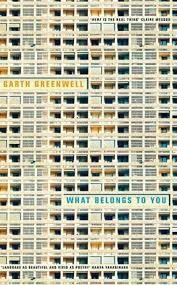
Garth Greenwell's novel What Belongs to You tells the story of a young American man teaching in Bulgaria and his complicated relationship with Mitko, whom he meets in a public restroom.

Garth Greenwell’s novel What Belongs to You tells the story of a young American man teaching in Bulgaria and his complicated relationship with Mitko, whom he meets in a public restroom.

The opening of the novel contains several sex scenes, and it seems at first that you tend toward the literal and specific in describing them. But then the novel offers this image: “clasping his hips with both my hands like the brim of a cup from which I drank.” That’s a bold image—effective and terrific, of course—but also noteworthy because it’s figurative. Every year, an award is given for bad sex writing, and some of the worst tends to involve metaphor and simile: a body part like ____. Were you nervous at all about writing the sex scenes, about creating images that readers might be inclined to read more closely and critically than a description of, say, eating a hamburger?

Garth Greenwell

For the narrator, sex is endlessly alluring and endlessly frustrating because it’s constantly gesturing toward metaphysics. I’ve always been interested in sex as a writer, in both poetry and prose. I think sex is almost uniquely useful for a novelist because of the opportunity it gives a character to be intensely focused on the experience of another while also thrown back onto his or her own sensations. I’m also interested in the social implications of sex, the ways communities form around it and are disrupted by it—communities like those in the cruising bathroom the novel begins in.

I’m not a huge fan of the bad sex writing award. I think it’s a myth that sex is harder to write well than most other things, and I think it’s a shame to give so much attention to less successful writing when there’s so much extraordinary writing of the sexual body being done right now. Just in the last couple of years, books by Alissa Nutting, Merritt Tierce, Lidia Yuknavitch, and Colm Toibin (in The Empty Family)—just to name a few—have used sex in ways that are revelatory to me for their dramatic and psychological force. I want to talk about and learn from those writers. It seems ungenerous to ridicule a few bad sentences or clumsy metaphors, often in books that are otherwise very fine.

Michael Noll

I believe that this book started out as a novella, and so I’m curious about your process in developing it into a much longer story. Was it a matter of adding complications to the set of characters you had already established? Or did you add characters and broaden the world that you were writing about?

Garth Greenwell

The novel did start out as a novella. When I finished the first section, I didn’t have any idea that it was part of a larger project: I thought the story was done. It wasn’t until I was about half-way through the second section, “A Grave,” that I realized how it was exploring the narrator’s childhood as a way of trying to understand some peculiarities of his character, especially the way he seems both to long for intimacy and hold it at arm’s length. It wasn’t until I was finished with that section that I realized that the narrative of the first section—the relationship between the narrator and Mitko—would continue. And it wasn’t until I finished the whole manuscript and could see certain thematic and structural echoes across sections that I began to trust my feeling that there was a kind of gravity holding the book together. I moved through the whole book sentence by sentence, paragraph by paragraph, section by section, without looking very far ahead. I tricked myself into writing a novel, I guess, without ever really realizing what I was doing.

Originally published in February 2016

Michael Noll Michael Noll is the Editor of Read to Write Stories.
An Interview with Hannah Pittard

8 Sep
Hannah Petard's latest novel, Listen to Me, has

Hannah Pittard’s latest novel, Listen to Me, was a New York Times “Editors’ Choice.”

Hannah Pittard is the author of four novels, including Listen to Me and the forthcoming Atlanta, 1962. Her second novel, Reunion, was named a Millions‘ Most Anticipated Book, a Chicago Tribune Editor’s Choice, a BuzzFeed Top-5 Great Book, a Best New Book by People Magazine, a Top-10 Read by Bustle Magazine and LibraryReads, a Must-Read by TimeOut Chicago, and a Hot New Novel by Good Housekeeping. Her debut, The Fates Will Find Their Way, was an Oprah Magazine selection, an Indie Next pick, a Powell’s Indiespendible Book Club Pick, and a “best of” selection by The Guardian, The Chicago Tribune, Details Magazine, The Kansas City Star, Chicago Magazine, Chicago Reader, and Hudson Booksellers. She is the winner of the 2006 Amanda Davis Highwire Fiction Award, a MacDowell Colony Fellow, and a consulting editor for Narrative Magazine. She teaches English at the University of Kentucky.

To read an exercise on creating an emotional backdrop for characters based on Listen to Me, click here.

In this interview, Pittard discusses finding the timeframe for a novel, zigzagging structure, and a difference between long and short novels.

Michael Noll

The novel takes place over the course of roughly 24 hours, yet two of the most important events, one for each of the characters (I’m referring to the mugging/murder and student-flirtation but won’t give it away in the Q&A), happens before the novel begins. Did you always know that the novel would have this timeframe, or did you begin with those events and discover the timeframe later?

Hannah Pittard

Hannah Petard's novel, Listen to Me, was a New York Times "Editors' Choice" and a Washington Post "Best Summer Thriller."

Hannah Petard’s novel, Listen to Me, was a Washington Post “Best Summer Thriller.”

From the beginning I was interested in writing a novel that took place over the course of a single day and concentrated on a single action. I’m fascinated with the treatment of time in fiction and I have a lot conversations with myself while I’m writing about the constraints and advantages of short stretches of time vs. long stretches of time. My first novel spans approximately four decades. Deciding what to include as scene (vs. summary) was such an intense process. In many ways, the chapters of that novel (The Fates Will Find Their Way) became for me like sentences in a short story. Every chapter needed to be as tight and deliberate and relevant as possible. Nothing was included that wasn’t essential, which is how I write my short stories (or try to…) I knew in crafting a novel that took place over the course 24 hours, I’d be relying more than usual on summary, backstory, and flashbacks. In general, I’m a writer who likes to stay away from all those things, concentrating instead on juxtapositions between observation and scene and the implications of the quiet ellipses that exist off the page. It was only during later drafts that I realized I would need to fill out those two major events you’re referring to. I put up a fight at first but I’m so glad that I eventually gave in. I think those moments away from the “present tense” of the narrative provide such a necessary reprieve from the current action.

Michael Noll

The novel opens with scenes that anyone who’s been in a long-term relationship will recognize: disagreements over mundane issues like walking the dog, packing the car, and taking out the garbage. What I found so refreshing about the novel is how the tension from those disagreements really forms the basis of the plot. Many of the early scenes are simply Mark and Maggie together in the car, feeling each other out. As a reader, I found these scenes really engaging and suspenseful. How did you approach suspense and tension in those scenes?

Hannah Pittard

I have never considered myself a suspenseful writer, but I came up with a method for the alternating chapters of this novel and I think somehow it (the suspense) just fell into place. In moving from chapter to chapter, I gave myself the rule of always moving forward in time and place (allowing for occasional flashbacks within each chapter). Next I tried always to pick up close to where Maggie or Mark might have left off but never exactly where the other had ended. Instead of a straight line, I imagined instead a zigzagging thunderbolt that moved right to left, upward and away. I also tried never to allow Mark and Maggie to consider the same moment (with a few key exceptions, including the cowboy and the sex). Somehow, this uneven and off-kilter back and forth provided the perfect balance for whatever suspense does exist.

Michael Noll

In the blurbs on the back of the book, several writers remark on how they read the novel in one sitting, which is easy to do as it’s less than 200 pages long. As a writer, I would imagine that this length would make the novel easier to hold in your head, more like a story. Was that the case? How did the process of writing this novel compare to your others, which are about 100 pages longer?

Hannah Pittard

Man… This novel took me longer than any book or story I’ve ever written. It’s short, you’re right, but there was nothing easy for me in its creation. As with the stories I write, every word in this book mattered to me. And given the aspect of suspense and the moodiness of the Maggie’s fear and Mark’s frustration, it was essential to me that it be as terse and swift as possible.

September 2016

Michael Noll Michael Noll is the Editor of Read to Write Stories.

An Interview with Julie Wernersbach

1 Sep
Julie Wernersbach is the Literary Director for the Texas Book Festival and the author of two books of nonfiction, including the forthcoming Swi

Julie Wernersbach is the Literary Director for the Texas Book Festival and the author of two books of nonfiction, including the forthcoming Swimming Holes of Texas.

Julie Wernersbach serves as the Literary Director for the Texas Book Festival. She has ten years of experience as an independent bookseller, most recently serving as marketing director for BookPeople, the largest independent bookstore in Texas and one of the most high-profile independent bookstores in the country. Before moving to Austin in 2011, Julie served as publicist and events coordinator for Book Revue, a large independent bookstore on Long Island. Julie is the author of the books Vegan Survival Guide to Austin and Swimming Holes of Texas (due out from University of Texas Press in 2017). Her short story, “Happiness” appears in the latest issue of Arcadia magazine.

To read an exercise on creating conflict in multiple point of view narratives based on Wernersbach’s story “Happiness,” click here.

In this interview, Wernersbach discusses finding the beginning of characters’ story arcs, moving back and forth between those arcs, and the tension that’s created in each moment of the story.

Michael Noll

The story follows three characters over the course of one day. Their storylines eventually intersect, of course, and that’s part of what we’re reading for. That said, one of the challenges of such a story is figuring out where to begin. Not all of the characters’ arcs can begin with a bang. How did you figure out where to begin each characters’ story?

Julie Wernersbach

The story began inside Leslie’s head. I saw a manicured house from the perspective of a woman preparing to leave for an appointment. I knew she wasn’t having a great day and that she was overall anxious and unhappy. Once I had her unhappiness pinned to two other people, I wanted to know what they were doing at that same exact moment. I can’t remember if I specify the day of the week in this story, but it definitely feels like a Tuesday. I figure, for the most part, Tuesday afternoons don’t typically have a whole lot of bang to them. It’s a pretty safe bet that if you’re generally miserable or obsessed about something, the misery and obsession are going to be humming along without a whole lot of deep distraction on a Tuesday afternoon. So I just sort of jumped into where her husband and sister might be in those cases on an average afternoon and went from there.

Michael Noll

The story moves quickly from character to character, never staying with one for more than a few paragraphs. Did you write the story with that structure, or did you write longer sections and then break them into smaller pieces?

Julie Wernersbach

Julie Wernersbach's story, "Happiness," appears in the latest issue of Arcadia.

Julie Wernersbach’s story, “Happiness,” appears in the latest issue of Arcadia.

Once I understood that the entire story wasn’t going to be told from Leslie’s perspective, I did write it with that structure. In the end, I actually went back and expanded sections. As a reader, I really like short hops from one character to another, whether those hops come in brief chapters in a novel or paragraphs in a story. As a writer, it was energizing to make brisk moves between the characters. It took some of the pressure off of figuring out exactly who they were and what the story needed to be, as I wrote. I could write a little bit, move on and have that character in the back of mind, developing as I wrote the next bit of someone else’s storyline, and then come back to him or her and do more.

Michael Noll

One of the cool things about the story is that, from a wide-lens view, not a great deal happens, yet in each section something occurs: slight but important moments concerning a package, a diet, a visit to the doctor. What was your approach to plot and action in the story?

Julie Wernersbach

It’s funny that Arcadia paired this story on their site with an image of potato chips, because I thought about the structure a bit that way. I wanted to make sure the reader couldn’t eat just one paragraph. I wanted a small hook in each section, a little something to keep each character intriguing and propel the reader forward. To me, the hook was (and probably always is) the small moments that string together a life. Those slight moments of discomfort and dissatisfaction add up to a lot, building pressure and tension little by little. I felt the action had to be incremental for Leslie to blow up in a believable way. Death by a thousand paper cuts! So to speak.

Michael Noll

You’ve spent your career around books and writers. You’re the Literary Director at the Texas Book Festival, and previously you were the marketing director at BookPeople. Great writing can inspire people to write, but it can also discourage them—make them think, “I’ll never write something that good.” How does your reading inform your writing?

Julie Wernersbach

There were definitely many years of believing that what I did was outside of the books I read and the authors I hosted; that those works and writers were legitimate and my work and identity as a writer never would be. But the thing about being exposed to so many books is that you’re exposed to so many books, good and bad, memorable and forgettable. It’s been reassuring to comprehend the volume of what’s published any given week and to acknowledge the multi-faceted reasons behind a publisher’s decision to put a work in print.

It’s also been heartening and reassuring to stand on the sidelines of hundreds (more than one thousand? probably more than one thousand) audience Q&As with authors. There’s always a process question and some version of a “what’s it like to be a writer” question. In addition to picking up a ton of great writing advice, I’ve also learned that virtually every author struggles to feel valid and successful, and that the authors who do have a strong sense of security in their work have one thing in common: they write their asses off. If I’ve felt inferior in the presence of phenomenal books and authors, it’s only stoked the fire to write my ass off. (And to read more really, really good books.)

September 2016

Michael Noll Michael Noll is the Editor of Read to Write Stories.

An Interview with Tristan Ahtone

12 Aug
Tristan Ahtone rode Greyhound busses across America and wrote about it in a series for Al Jazeera America.

Tristan Ahtone rode Greyhound busses across America and wrote about it in the series, America by Bus, for Al Jazeera America.

Tristan Ahtone is an award-winning journalist and member of the Kiowa Tribe of Oklahoma. Born in Arizona, raised across the United States, and educated at the Institute of American Indian Arts and the Columbia School of Journalism, he has worked as a door-to-door salesman, delivery driver, telemarketer, and busboy. Since 2008, Ahtone has reported for The Newshour with Jim Lehrer, National Native News, Frontline, Wyoming Public Radio, Vice, the Fronteras Desk, NPR, and Al Jazeera America. He serves as Treasurer for the Native American Journalists Association and lives in Albuquerque, New Mexico.

To read an exercise about writing character descriptions based on Ahtone’s essay on riding Greyhound busses across America, click here.

In this interview, Ahtone discusses the role of human and technical limitations on writing and choosing what makes the cut in a piece of journalism.

Michael Noll

It seems like something you’re trying to convey in these pieces is the fleeting nature of encounters on a bus. So, for example, your description of Russell Hall focuses on only a few seconds of observation: Hall on the phone, a glance given to him by a woman sitting nearby, a look that he gives to something he set out the window, the condition of the Bible he’s holding. Was it tempting to try to make more of this encounter? Or was the opposite true: was the challenge instead trying to build a vignette out of only a few details?

Tristan Ahtone

Each encounter we had during this story could have been expanded to a feature-length story. The challenge was having so much detail and condensing it into a vignette. However, in Mr. Hall’s case, the simple nature of his story stemmed from a technical error, embarrassingly enough: the recorder we used to interview our subjects decided to become uncooperative, so there were no accurate quotes save for what I caught in my notes when first observing him. It would have been great to get his backstory in—he worked for the Los Angeles public school system as a truancy officer and had been involved in the church for years traveling the country by bus—but when I sat down to write about him, I found that the brief encounter offered more with less dialogue. So in short, Mr. Hall’s story functions as a fleeting encounter but its creation stems from a technical problem and having to make due with good note taking to replace missing quotes.

Michael Noll

I love the dialogue that you capture. In the piece about Hu Li, the dialogue isn’t really conversation so much as different people talking at the same time. You must have overheard or participated in so many conversations. How did you decide which ones to write up?

Tristan Ahtone

There are about half a dozen interviews we did that never made it to the final product and many never even made draft form. In each case my partner Tomo Muscionico and I would strike up conversations with people, feel out whether we wanted to continue the conversation for a story, and eventually asked to mic them up so we could record that interview. Sometimes it worked, sometimes it didn’t. In the end, a lot of people we took photos of and interviewed didn’t make it in usually because their narrative wasn’t as strong when putting it in short form. For instance, there was a woman named Dianne Whitlock, who showed up briefly in Rosalinda’s vignette – she had a wonderful story and had a great conversation with another gentlemen that had his own vignette that was also eventually cut. The primary reason was because in short form, we couldn’t do them justice. Essentially, we gathered as much material as we could, and when we sat down to write and edit it, a lot of people washed out.

Michael Noll

Tristan Ahtone rode Greyhound buses around America and wrote about it for Al Jazeera America.

In his essay on riding Greyhound busses, Tristan Ahtone met a woman named Rosalinda who was traveling from Guatemala to Florida and who spoke neither English nor Spanish.

In the piece about Rosalinda, you write, “She and her baby had matching yellow wristbands, the kind one gets in a hospital or a prison.” This description has two parts: the detail (matching yellow wristbands) and the interpretation (the kind one gets…). How much of your task as a journalist, as a writer, is helping the readers understand the details you show them?

Tristan Ahtone

I’d say most of my job is helping readers understand details. Context is what makes people’s stories real and relevant. One of the nice thing about long-form journalism is that you have the opportunity to see and write about details like that and offer them to the audience. We spent a long time with Rosalinda and ran into her twice: once at the Phoenix bus station and again on a bus we boarded in El Paso. I think I can speak for my partner, Tomo, that we’re not the superstitious types, but we knew we had to write her story when we ran into her again. We had to do something. She was too special and too important to let drive off without trying. That meant we had to get really creative, though: we couldn’t talk to her, nobody could really, so we had to take a lot of pictures and extensive notes so that we could make her a real person to our audience, and that meant keeping an eye to detail and interpreting who she was, where she was going, and what her situation was based on physical information that was available.

Michael Noll

In that same passage about Rosalinda, you have the problem of not being able to communicate with her. So, you approach the description through the other passengers’ eyes and knowledge about her. As a result, the passage becomes not just about Rosalinda but also everyone else on the bus, the community they form. Was that approach a matter of simply using the information available, or had you sketched out a variety of approaches to these passages before the trip?

Tristan Ahtone

The only thing we had sketched out prior to going on the trip is where we would leave from and where we would end up and even that changed mid-way through. Originally, I wanted Rosalinda’s story to be weaved in throughout the entire piece with other passengers narratives. The original structure I sketched out more closely resembled a Robert Altman film with a number of different characters all overlapping at various places. I couldn’t get it to work though, one reason being that while we have rich detail on everyone we spoke with, there wasn’t enough information to support a story that long. It also felt confusing, so we scrapped it. One of the only variations of that idea that remains in the final piece is the interaction between Lonnie Head and Christopher Nyman in Nashville. Had we stuck with the original structure, you likely would have seen a lot more interactions like that between a lot of the people we met. As I mentioned before, Dianne Whitlock makes an appearance in Rosalinda’s vignette: originally she had her own story, which is part of the reason she’s even named at all in this one instead of just identified as another passenger. In the end I really liked how Rosalinda’s story came to embody a greater sense of community. I think that people deride and criticize people who ride busses, but I have to say, I’ve never seen people on a plane act so kindly to each other. In Rosalinda’s case, we observed how people behaved toward her and reported it. If she had been treated poorly, we would have written it that way instead.

Originally posted in January 2016

Michael Noll Michael Noll is the Editor of Read to Write Stories.

An Interview with Amy Gentry

4 Aug
Amy Gentry's debut novel, Good as Gone is one of the most anticipated books of the summer.

Amy Gentry’s debut novel, the thriller Good as Gone, is one of the most anticipated books of the summer.

Amy Gentry lives in Austin, Texas, with her husband and two cats. After graduating in 2011 with a PhD in English from the University of Chicago, she began a freelance writing career, writing book reviews, cultural criticism, and, for one strange and wonderful year, a fashion column. She frequently reviews fiction for the Chicago Tribune Printer’s Row Journal, and her writing has appeared in Salon.com, xoJane, The Rumpus, the Austin Chronicle, the Texas Observer, LA Review of Books, Gastronomica, and the Best Food Writing of 2014. Good as Gone, her first novel, is set in her hometown of Houston, Texas.

To read an exercise on turning information into scene based on Good as Gone, click here.

In this interview, Gentry discusses the importance of POV choices, writing toward what is missing from a story, and layering big ideas within a plot.

Michael Noll

When I started the prologue of the novel, I didn’t know if I’d be able to read it. Perhaps it’s because I’m a parent, but I find stories about bad things happening to children difficult to read. And yet the horror of the opening chapter was both sharp and muted at the same time. Bad things happen, but what we actually see is the prelude to the bad things rather than the bad things themselves. It’s not unlike the novel Room in that way. When we see the worst things in the novel, it’s through a crack in a closet door. Did you experiment with other points of view? Were you consciously trying to balance drawing in the reader with conveying the horror of what was happening in the scene?

Amy Gentry

That Room comparison is so flattering, thank you! I hadn’t thought about it that way, but I think the muting or distancing effect you’re talking about comes not only from the closet-door perspective, but–as in Room–from the child’s perspective. In theory, it’s terrifying to imagine seeing this as a child, so you get the horror on a conceptual level. But on a more literal level, there’s an alienation effect, because nobody reading this novel is actually ten years old (I hope).

The closet scene was among the first I imagined, but I wrote it last, because the point of view presented a huge challenge for me. Jane was not supposed to be a POV character in the novel at all; for a long time, I had Anna describing Jane’s role in witnessing the abduction (“I picture Julie as Jane must have seen her, drifting down the hallway. . .”). But the sense of urgency was completely missing. No matter how beautiful or tragic someone’s thoughts are, they’re still just thoughts, and they are never going to feel as important to a reader as action. Julie’s kidnapping was the central trauma in the book, and it had to feel like a tear in the fabric of this family’s reality. It was too important for exposition. But Jane was literally the only one who could tell the story.

In the end I justified the POV shift by making it a prologue. What I like about that scene now is that Witness Jane is only just past the age where fact and fiction blur; her night terrors have only recently started to fade. She’s a little on the old side for nightmares, but I thought, well, the family has moved recently, they probably started up again when she got her own bedroom. That dreamlike quality helped me reconcile the POV shift, and hopefully adds an element of uncertainty to what Jane really saw.

Michael Noll

The novel has an interesting structure. It’s divided into, basically, two points of view: the mother and the daughter, Julie. The mother’s POV moves chronologically and Julie’s moves in reverse, so that it moves backward in time from the first chapter. This is an interesting way to think about tension, about the desire to know what happens next, because in the daughter’s chapters, next is almost always the revelation of some piece of information. How did you approach Julie’s chapters?

Amy Gentry

When I started writing this novel I felt pretty hopeless about plot. I’d never tried to write something that required this much tension and required so many reveals. Plus I had this character Julie, or better yet “Julie”, whose identity was in question. I knew her POV had to be in the book, but I couldn’t give away her identity. How do you write from her POV without saying who she is? I knew her lies were going to start showing up, one by one, in the present-tense plot. So I got the idea to alternate those little revelations with chapters that peeled back the layers of her identity one by one, starting with the most recent. It bought me time, logistically speaking; plus it rang true with the ideas about trauma and identity formation that were already in the book. Trauma kind of forces everything else in your life to exist in relation to it. It rewrites the whole narrative of your life, even what came before. Trauma does not obey chronology.

When I was actually writing “Julie”, though, I had to do it chronologically. At first I thought I could write those parts in the order they appear, but I quickly found that she was such a liar, I couldn’t really get to the bottom of who she was and what happened to her that way. I didn’t know who she was in the present until I went through all that stuff with her in the order it happened. I approached each episode of her life trying to use what had most recently happened to her as a guide for what she’d do next. Which was tricky, because when you’re reading it in the book, you sometimes don’t understand why she starts a chapter the way she does until you get to the end of the next episode, and by then you may have forgotten. I’m totally fine with that, because her identity is meant to be unsettlingly fractured. But the connections are there.

Michael Noll

Amy Gentry's debut novel GOOD AS GONE "draws our attention to the self that’s forged from sheer survival, and from the clarifying call to vengeance," according to a New York Times review.

Amy Gentry’s debut novel GOOD AS GONE “draws our attention to the self that’s forged from sheer survival, and from the clarifying call to vengeance,” according to a New York Times review.

One of my favorite moments in the book is the scene between Julia and a housekeeper at a hotel. (I won’t say more to avoid giving anything away.) It’s a moment when our perception of Julie changes pretty drastically. Did you always know that scene would be in the novel, or did you find yourself writing it and thinking, “Oh, this is interesting?”

Amy Gentry

That was a scene I had to write because I was reworking the chapters in a late draft and needed one more episode. When I asked myself what was missing, I realized immediately that I had put Maybe-Julie in a lot of very extreme situations–not unrealistic for someone with her story, but I wanted to show her doing something more mundane and boring to survive, just the good old back-breaking labor of cleaning. Unsurprisingly, she doesn’t like it. Most people don’t. I also wanted to add another chance for her to make what most people would call a “good” choice, and have her reject it for reasons of her own. Whether the reader sympathizes with that or not, I hope by that point in the book s/he’s starting to get the idea that Julie’s priorities are survival first, survival second, survival third, fourth, fifth and so on; “good” behavior might be in there somewhere, but it’s pretty close to the bottom. I think that’s a realistic way that agency plays out under conditions of duress, with someone who’s had a lot of trauma. So the more opportunities I had to put that in, and the more I was able to identify with those so-called “bad” choices, the more her character spoke to me.

Michael Noll

One of the characters in the novel is a preacher at a mega-church that meets in the Astrodome, which just so happens to be similar to an actual place with an actual church run by a quite-famous preacher. That said, your preacher looks quite different from the real guy, different enough that it’s clear that they’re not the same person. And yet I wonder if you received any pushback on this.

Amy Gentry

At a certain point in the book, religion started coming out as a theme, and I just heaved a big sigh and thought, “Oh boy, here we go.” Thinking about Houston, it made so much sense to have a mega-church play a big role. When I was growing up in Houston, First Baptist was what we meant by a mega-church. These days the non-denominational mega-church Lakewood is almost twice the size of First Baptist and meets in the former Compaq Center. Because the dates worked out, I got to fantasize about an even bigger mega-church meeting in the former Astrodome, a gargantuan Houston landmark now utterly abandoned.

I was also careful to differentiate my fictional pastor from Lakewood’s real pastor via appearance, mannerisms, and of course motive—I’m not out to impugn Joel Osteen. However, his theology—that I have no problem impugning, especially from the point of view of Anna, who finds it morally repugnant. Anna is not big on religion of any kind. Her religion is the life of the mind, and she believes, rightly or wrongly, that it gives her everything she needs to understand the world. My fictional preacher’s theology, which is only slightly amped up from Osteen’s “prosperity gospel”, really upsets her, because it’s so focused on erasing or denying the bad things that have happened to you and are still happening. There’s no sin, there’s no suffering, and ultimately, there’s no memory—optimism is the only virtue.

In grad school I got interested in the American religious tradition called New Thought, which I think is pretty clearly a part of prosperity gospel, and which started up around the turn of the 20th century. The most recognizable form it takes today is something like The Secret. That stuff is always big in America because we love the individualism of it, the idea that you have control over your destiny. But there’s a dark side to it, because it gives you far too much agency. It puts the blame for bad stuff happening to you on you, because you must have attracted it somehow. And in a book that’s so much about rape culture, that was a message I was very interested in fighting.

The fun part is that I went to the Compaq Center and took notes as if I were Anna, who is even more cynical than I am. As Amy, I could instantly see why that type of church is so popular. It is a gigantic music and laser-light show, totally free, with child care and wall-to-wall programming for every demographic, even financial planning classes. In the absence of a social safety net, these churches offer a ready-made, big-tent community. As Anna, though, I could just revel in how tacky and appalling it all was. She sees Nuremberg, and I don’t entirely disagree with that either.

August 2016

Michael Noll Michael Noll is the Editor of Read to Write Stories.

An Interview with Adam Soto

28 Jul
Adam Soto is the author of "The Box," which appears in the latest issue of Glimmer Train.

Adam Soto is the author of “The Box,” which appears in the latest issue of Glimmer Train.

Adam Soto is a graduate of the Iowa Writers’ Workshop and a recipient of the Michener-Copernicus Fellowship. His writing has appeared in Versal Journal, and in 2012 he was named a finalist in Narrative Magazine’s 30-below contest. A Chicago native, Adam currently resides in Austin, Texas, where he works as a schoolteacher and is completing work on a novel. He writes a multimedia serial at EverythingInTheSkyBelongsToYou.com.

To read an exercise on hooking readers with a character’s emotions based on Soto’s story “The Box,” click here.

In this interview, Soto discusses his approach for creating characters who are unlike him and his theory for narrative structure and the delivery of information.

Michael Noll

This is a story whose true subject isn’t revealed for several pages. At what point did you know what it was about–the conflict and the characters it would settle on? Did you always know, from the beginning? Or did you discover it in writing about the box?

Adam Soto

The body, Ebola, and the box were unified from day one. I heard an NPR piece detailing a particularly gruesome scene in which an infected infant had to be quarantined in a box of some sort, and it was so devastating I knew I had to stay connected to it in someway, I couldn’t just forget it, and that connection turned out to be this story. I went all the way back to the factory floor, and from there the box just started gathering characters like a gyre, taking on attributes of the disease and the fleeting nature of human relationships.

Michael Noll

These are characters who are quite different from yourself–and it’s set in a place, in the midst of a situation, that I’m assuming (perhaps incorrectly) that you haven’t spent much time in. What allowed you to enter this story? These characters and the place?

Adam Soto

You’re right, I’ve never been to West Africa, but the characters arrived rather easily, without pretension, human, and burdened/ driven by challenges that are pretty universal. A guy gets high and loses someone’s keys; a doctor’s work takes her away from her family; a man is called upon by his father to help him with the family business; a woman, in a state of loss, redefines herself against adversity. For the particulars, I researched. Everything from local flora to migrant work policy to medicine to regional history and social taboos. And these details brought the world to life for me, creating a space the characters could react to in ways true to their deepest selves.

Michael Noll

Endings can be so difficult–finding the right note, the right moment or event to end on. In this story, you don’t close with a kind of plot closure so much as emotional closure. What was your approach to the ending?

Adam Soto

Ira Glass read an excerpt from Stuart Dybek's story "We Didn't" on This American Life.

Ira Glass read an excerpt from Stuart Dybek’s story “We Didn’t” on This American Life.

The story is actually quite short, especially given how much ground it covers/ how many plot points it has. It’d be quite easy to dismiss it as choppy and distracted, difficult to hold onto. Maybe some people will. A number of years ago I listened to Stuart Dybek discuss his story “We Didn’t,” which is this beautifully repetitive, lyrical piece about two teenage lovers interrupted by a corpse just as they are about to consummate their love on a Chicago beach one night. He had this theory about narrative structure and memory that really resonated with me. Dybek stated that story, since the dawn of abstract thinking, has been a tool for passing on information, and that plot—especially traditional plot structure—is just an easy and familiar way to keep that information in order, similar to the outlines and concept maps we use when studying in school or planning for projects at work. Pretty basic structuralist argument, I suppose. But he also noted the importance rhythm and rhyme have played in passing down information, citing ancient oral traditions as perfect examples, where a kind of musical part of the brain was employed to memorize something of importance.

I think “The Box” surpasses its narratological shortcomings by way of its musicality and image-driven lyricism. From the first draft there was this unspoken thread running through, and with each revision I tried to honor it, whatever it was. The ending, to me, was letting the music take over, such that it adopted this strangely antiquated language, harkening back to something perhaps like an oral tradition. Trusting the language paid off and made it possible to conflate the body, Ebola, and the box into one as the final resting image. It made sense to end this way. The story can’t end with another death, it can’t even end with the eradication of the disease. The story’s brevity and pace and lyricism all work towards this effort to write honestly about something gratuitous in a way that isn’t gratuitous, which makes use of an age-old technique of writing about death by way of life.

Michael Noll

I know you’re working on a novel. How does this story fit into the process of writing that novel? Was this something you wrote on the side, stepping away from the novel? Or is this connected in some way–in subject or form, perhaps. I ask because novels often introduce problems that we don’t know how to solve, and I’m wondering if you were working out craft problems in this shorter form.

Adam Soto

This story was written during a vacation from the novel. My major craft issue at the time was knowing whether or not I still knew how to finish something. The novel has an ensemble structure, and these days “The Box” is worth reflecting on to see how subtle connections—a shared object, a friend of a friend, proximity—can be more moving than major plot developments. There’s probably a term for it, but people get goosebumps when strangers tell stories they can relate to—an impression they share, a concert they both attended, a really weird website no one else has ever heard of. I’m sure people have gotten married over these types of things. They’re like these internal notes we share, waiting to resonate together. In this way, I guess “The Box” is this oboe helping me tune the orchestra that is my novel.

July 2016

Michael Noll Michael Noll is the Editor of Read to Write Stories.

An Interview with Sequoia Nagamatsu

7 Jul
Sequoia Nagamatsu's forthcoming debut collection, Where We Go When All We Were Is Gone, is a collection of twelve fabulist and genre-bending stories inspired by Japanese folklore, historical events, and pop culture.

Sequoia Nagamatsu’s forthcoming debut collection, Where We Go When All We Were Is Gone, is a collection of twelve fabulist and genre-bending stories inspired by Japanese folklore, historical events, and pop culture.

Sequoia Nagamatsu is the author of the Japanese folktale and pop-culture inspired story collection, Where We Go When All We Were Is Gone. His work has appeared or is forthcoming in Conjunctions, ZYZZYVA, Bat City Review, Fairy Tale Review, and Copper Nickel, among others. He is the managing editor of Psychopomp Magazine and an assistant professor of creative writing at St. Olaf College in Minnesota.

To read Nagamatsu’s story “Placentophagy” and an exercise on defamiliarizing the familiar, click here. In this interview, Nagamatsu discusses first lines, his process for outlining stories, and why realism sometimes falls short.

Michael Noll

The story starts with a solid impact: “My doctor always asked how I would prepare it, the placenta.” I’m curious about the genesis of that line. For some writers, first lines simply appear and the challenge is finding the story that follows, but I know others who start with a scene or an idea and then need to find a line to kick it all off. Was this first line always present in the story?

Sequoia Nagamatsu

For me, I like to do a lot of “writing” in my head long before I actually put any words down. I knew I wanted to write a story about Placentophagy but it took another week or so of thinking about the idea to attach a grieving couple to the practice vs. the story focusing on folk medicine and celebrity mothers who have eaten their placenta (i.e. Alicia Silverstone). Once I had the grieving couple tied to pieces of folklore, I knew I had the necessary emotional tension plus the fun facts that interested me to begin writing.

I believe first lines (and first paragraphs) are crucial to pretty much any story (but especially so for flash pieces where you need to draw the reader in, provide some kind of map of what the story will be about (even if only via tone), and establish character and world building in short order. As an editor, I want a story to provide the central characters, introduce a central tension, and do something unexpected and interesting within the first few lines. Don’t reveal all your cards certainly, but I don’t believe in messing with readers too much. Give them a map of an unfamiliar town. Give the reader something they can navigate as more information is revealed.

As a writer, I don’t continue with a story until I’m satisfied with at least the first few sentences. For this story, the first lines came pretty quickly (with other stories, it can be more of a slog . . . and sometimes I’ll think I have a first line I’m happy with until I finish the story and realize my first line is actually buried somewhere else b/c, as a writer, I was navigating to a destination just askew from where I thought I was going when I started).

This question has made me revisit many of my first lines. A few from my forthcoming collection:

Mayu called me from the train car that Godzilla had grabbed hold of––no screaming or sobbing, no confessions of great regrets, no final professions of love.

Our daughter, Kaede, has returned to us five years after the police fished her out of the community pool, her body sodden and distended like the carcass of a baby seal when I identified her in the morgue.

On our wedding day, you weighed 115 lbs. When you died, you weighed 97. You are now 8.7 cups of ash, and I figure I can make enough 1:25 scale figurines of you from what you’ve left behind, so we can see the world.

Michael Noll

Where We Go When All We Were Is Gone is "an exhilarating debut that serves up every guilty-pleasure pop-culture satisfaction one could hope for while simultaneously reframing and refashioning those familiar low-art joys into something singular, unanticipated, and entirely original," according to Pinckney Benedict.

Where We Go When All We Were Is Gone is “an exhilarating debut that serves up every guilty-pleasure pop-culture satisfaction one could hope for while simultaneously reframing and refashioning those familiar low-art joys into something singular, unanticipated, and entirely original,” according to Pinckney Benedict.

Backstory is crucial to the present action in this story, but it’s handled in a quick, compact line: “Somewhere in the building Ayu’s tiny body, caught in the strained expression of her first and last cry, rests in drawer, waiting for someone to fetch her.” Again, I’m curious how much revision was required to achieve such efficiency. Many of your other stories are quite long, which would seem to require a different process than a piece of flash fiction like this.

Sequoia Nagamatsu

When I conceive of a story or a character or a place that I think could contain some kind of world, I start with sketches and summaries. For a longer short story, this might take the form of a rough synopsis. For the novel I’m working on, these sketches might take the form of bulleted points which represent important scenes within an act. I knew from the get go that Placentophagy would most likely be a flash piece, so instead of thinking about my initial sketches as guidelines to be fleshed out later, I made more of a concerted effort to make my notes resemble lines that could potentially be included in the story. The line in question was born from knowing that I needed to capture the loss of a child. Instead of noting “enter scene of miscarriage,” I immediately played around with a couple of variations that captured the essence of this plot point. In other words, when I’m writing smaller and shorter, I inhabit the atoms that make up the molecules of a larger story’s architecture. I need to capture what’s going on at that level.

Michael Noll

I love the essay-ish section about the practice of eating placentas, but I can also imagine workshop readers advocating for it to be cut—because that’s the sort of thing that workshops do. How did you approach that section so that it moved the story forward?

Sequoia Nagamatsu

Whenever I become fascinated with something and consider treating the topic in a story, I tend to be cautious because there’s a real danger that I might dilute forward motion and character with unnecessary minutiae. With that said, I don’t think there is anything inherently wrong with tracts of reportage and “essay-ish” writing in fiction so long as 1) the conventions of the story have been firmly established to allow for such asides (esp. if they are lengthy and a bit more detached from character) and/ or  2) the momentum for characters and the overall story are not completely lost or forgotten. For this section, considering the length of the piece, I knew I would have to pick and choose a couple of interesting facts, tie them to the emotional tension of my narrator, and quickly move on. The facts in this story, while certainly stepping outside of my main character, illuminate her research, as well as her relationship to her children and to her body, so if I chose, I probably could have added a line or two more without much lost momentum.

Michael Noll

When I first read this story, it seemed like a piece of horror fiction. Then, I read some of your other work, which involves science fiction situations and characters, and it all seemed to cohere as a single vision. Horror and sci-fi are obviously different genres, but both depend, to some extent, on defamiliarizing the familiar. Is that what attracts you to these types of stories?

Sequoia Nagamatsu

Defamiliarizing the familiar is something present in pretty much all fiction. But to the degree of horror and fantasy and sci-fi (and its genre-bending cousins by various names: magical realism, slipstream, fabulism), the defamiliarizing is often illuminating aspects of reality whether that be racism or rampant consumerism via what many might consider obviously unrealistic, surreal, or fantastic.

I’ve long been a fan of literature and film that forces me to suspend my disbelief, that takes me to other worlds. I love these kinds of stories because I find them entertaining and imaginative. I love these stories because the primal part of me wants to be afraid, wants to use that fear. I love these kinds of stories because they force me to consider the gadgets around me and how they factor into who I am and who I’ll be 10, 20, 50 or more years from now. To quote the title of a Chan-Wook Park film (of Oldboy notoriety): I’m a cyborg, but that’s okay.

These kinds of stories are important and increasingly necessary because we live in complex times and sometimes “realism” falls far short of what we need to comprehend how fast we are evolving, how we process information, and how we define personal, cultural, and geographic borders and spaces. What we consider fantastical fiction used to simply fall in the realm of story or religion. Our stone age ancestors needed a way to understand and process the world around them. For countries who have had to deal with colonial and post-war transitions, the fantastical has become a vehicle where the distant native past and the unhinged identities of the present intermingle. Today we’re compounding these past relationships born from colonialism and warfare with globalization and technology.

Many of my stories are set in Japan. And for me, Japan is a unique case b/c it is a country that has had to reinvent itself multiple times over a short amount of time (notably in the 1800s when there was a push to westernize and again after WWII when the country shifted from military empire to technological and commercial super power). These shifts occurred so rapidly that Japanese culture & identity couldn’t keep pace, and you’ll note that creatures of Japanese folklore often share the stage with technology or modern society gone awry in anime, showcasing the tenuous relationship between the past and present. Akira was released nearly thirty years ago but has never been more relevant for Japan and the rest of the world.

In short, I’m drawn to and write in the realm of the fantastic because, for me, they are the stories that help me navigate the many spheres constituting who we are.

First published July 2015

Michael Noll Michael Noll is the Editor of Read to Write Stories.

An Interview with Robert Boswell

30 Jun
Robert Boswell has published 12 books, 2 plays, and more than 70 stories and essays and won more awards than can fit beneath a headshot.

Robert Boswell has published 12 books and more than 70 stories and essays and won some of the most prestigious literary awards in America.

Robert Boswell has published seven novels, three story collections, and two books of nonfiction. He has had two plays produced. His work has earned him two National Endowment for the Arts Fellowships, a Guggenheim Fellowship, the Iowa School of Letters Award for Fiction, a Lila Wallace/Woodrow Wilson Fellowship, the PEN West Award for Fiction, the John Gassner Prize for Playwriting, and the Evil Companions Award. His novels include The Heyday of the Insensitive Bastards, a finalist for the 2010 PEN USA Award in Fiction; Mystery Ride, named by the Chicago Tribune and Publisher’s Weekly as one of the best books of the year; The Geography of Desire, picked by The London Independent as one of the best books of the year; and Virtual Death, a finalist for the Philip K. Dick Award and named by the Science Fiction Chronicle as one of the best novels of the year. A New York Times review said that his most recent novel, Tumbledown, contains a “deft twining of irony and insight on nearly every page.”

Boswell has published more than 70 stories and essays, which have appeared in the New Yorker, Best American Short Stories, O. Henry Prize Stories, Pushcart Prize Stories, Esquire, Colorado Review, Epoch, Ploughshares, and many other magazines and anthologies. He holds the Cullen Endowed Chair in Creative Writing at the University of Houston. He lives in Houston, Texas; Las Cruces, New Mexico; and Telluride, Colorado. He also spends time in a ghost town high in the Rockies.

To read an exercise on dialogue based on Boswell’s story, “The House on Bony Lake,” click here.

In this interview, Boswell discusses the early drafts of “The House on Bony Lake” and his approach to withholding and revealing key information in the story.

Michael Noll

The story moves back and forth between the main character’s present and his family’s past. Did the idea for the story begin in the present—and then you added the family history? Or did the family history come first?

Robert Boswell

The story began with the idea of the house, built by a distant ancestor and improved upon by each generation until Paul inherits it; Paul’s carelessness causes the house to burn to the ground. This idea told me enough about Paul that I could begin to imagine him, and it also demanded that I picture the house and conceive the manner of its construction and the types of improvements that followed. The two threads were linked from the start.

Why I found this idea interesting or where the idea came from, I can’t say.

But I can guess.

Some years ago my wife and I bought a big hunk of a ghost town, and we’ve been fixing up the old post office, turning it into a cabin—a writing retreat, supposedly. I would guess that my subjecting that old building to my fiercely lousy carpentry had something to do with the origin of the story. (I have not burned the post office to the ground, but there’s time yet.)

Sidebar—it was actually a combination post office and tavern. Why didn’t that idea catch on?

Michael Noll

What was your approach to that back and forth between the story’s present and past? Both parts move chronologically, but I’m curious about your strategy for how to juxtapose the different sections.

Robert Boswell

Early drafts of the story opened with the grandfather building the house, and the narrative moved forward chronologically, generation by generation, until Paul finally took possession of the place. This strategy did not work. Characters were introduced, their lives were summarized, and then they died. By the time the narrative reached Paul, the reader (assuming she was still awake) would have been exhausted.

I decided to start with Paul and weave the history of the house into his narrative. My first draft after making this decision was purely mechanical. I scissored up the history and shuffled it into Paul’s story. With each subsequent draft, I experimented, eventually cutting roughly a third of Paul’s story and maybe half of the family history. I looked for logical points at which to break from the history, I rearranged the segments of Paul’s narrative, and I kept tinkering until things clicked into place. (Chris Cox at Harper’s made a number of good suggestions, as well.)

All of these decisions were matters of craft, meaning that I worked to apply to the decision-making all that I’ve studied over the years, and then I compared the result with my own intuitive sense of story. (This is something like choosing a mate by making lists of positive and negative traits; no matter how much you employ logic to solve the problem it will never trump irrational emotional attraction.) Craft permits me to align story elements, but it’s ultimately my own instincts about narrative that decide. I work a story until a mysterious something sends a spark along the narrative circuits in my mind. That’s about as close as I can come to honestly answering this question.

And, yes, even now, after working at it for decades, I find writing fiction as mysterious as falling in love. Fortunately, I also find it every bit as compelling. Ultimately, my fidelity is not to the craft of writing but to the mystery of living that literature relentlessly explores. I am not a fan of well-made stories that merely advertise the inventiveness of their architecture. The stories I love reek of life.

I am drawn to stories with multiple timeframes, but writing them exhausts me. The key, I believe, is that every movement between frames, regardless of chronology, has to feel like an acceleration of the narrative.

Easier said than done.

Michael Noll

There’s a big reveal in the story, and you keep it to hidden for a long time—in fact, we don’t really even know that it’s there to be found. We only know that his house burned down and that this was a significant event. Did you always know that you would wait to reveal what happened?

Robert Boswell

How a writer manages the release of information is crucial to any story’s success. As you point out, the reader of “Bony Lake” has no idea that a reveal is coming. To my way of thinking, this is the key to withholding information.

If a narrator alludes to a dramatic event without giving the reader enough information to feel settled, it will likely come off as coy. Imagine that you notice someone at a party and you ask the host about him. The host says, “He’s my new colleague, and he has a dark secret in his past. Catch you later.” You’ll no doubt find yourself annoyed with the host. But imagine that the host says, “He’s my new colleague. When he was a kid, he lost his parents in a hurricane.” While you may wonder if there’s more to the story, this information is not a tease. You now possess one solid tidbit about the person.

Time passes. You encounter the man, and the information about him that you possess colors your understanding of him. One evening in a bar, he tells you about the hurricane, and you discover that he was responsible for his mother going out in the storm to fetch something for him. His father then went out to retrieve her. The real secret is that he’s responsible for the deaths of his parents. Revealed in stages, the secret is not a tease and the writer is able to insert the information wherever it best serves the narrative.

Moreover, when a reader feels that she understands a situation and then realizes that the terms are larger or stranger than she conceived, the discovery is stimulating. It forces the reader to rethink all she thought she knew.

That’s more or less the effect that I’m striving for in “The House on Bony Lake.”

Michael Noll

This is a story where things end but not a door-slamming way—with an emotional resolution rather than a plot conclusion. I think this is something that story writers struggle with. When a character’s struggle is primarily interior, how do you dramatize the resolution (at least in terms of the story) of that struggle? When did you know how the story would end?

Robert Boswell

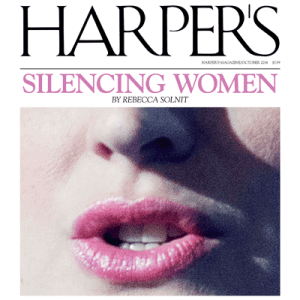
Robert Boswell's story, "The House on Bony Lake," appeared in the October 2014 issue of Harper's Magazine.

Robert Boswell’s story, “The House on Bony Lake,” appeared in the October 2014 issue of Harper’s Magazine.

I knew early on how the story would end, but I did not know why or how the narrative would get there. I had to discover all that while revising. Paul’s final act in the story is meant to, as you say, provide an emotional resolution; however, the ending is also meant to complete the narrative shape by suggesting that the there is another way of interpreting the family’s history.

Having avoided talking about the reveal in the reply above, I don’t think I should give away the end of the story with this response. So I’ll try to talk about it by referring to other stories—great stories—that make analogous narrative moves.

In Tolstoy’s “The Death of Ivan Ilych,” the end of the story reframes Ivan Ilych’s deathbed question from “Why me?” to “How should I have lived?” And then the question is answered in an astonishing manner. Until the very end, the character and the reader are engaged with the wrong mystery.

In Peter Taylor’s “A Wife of Nashville,” Helen’s behavior at the end can only be understood when the reader lets go of the terms by which he’s interpreted events (the racial divide among Southerners in the middle of the 20th century) and adopts a new set of terms (the gender divide in that same population).

NoViolet Bulawayo deftly orchestrates a similar narrative maneuver in the first story (“Hitting Budapest”) of her novel-in-stories We Need New Names. The final moments of the story complicates the reader’s natural desire to side with hungry children. Such a desire tends to sentimentalize characters, and Bulawayo refuses to let this happen. By denying the reader a romanticized vision of the children, Bulawayo insists on the characters’ full share of humanity.

I do not mean to suggest that my story belongs in the same category as these great stories; rather, that the ending, if it works, comes from an understanding of an elusive narrative strategy that I did not so much mimic as discover—a startling discovery made during the writing of the story. And it’s only later, of course, that I realized my discovery is a merely variation on the work of some writer on whose shoulders I have been for some time attempting to stand.

June 2016

Michael Noll Michael Noll is the Editor of Read to Write Stories.

An Interview with Callie Collins

16 Jun
Callie Collins is the co-editor of A Strange Object and, starting in the fall, a MFA student at the University of Michigan.

Callie Collins is the codirector of A Strange Object and, starting in the fall, a MFA student at the University of Michigan.

Callie Collins is a writer and editor in Austin, Texas. Her work has appeared in places like the Rumpus, the Toast, Midnight Breakfast, the Collagist, PANK, and NANOFiction, among other venues. She is the codirector of A Strange Object, a small press; the fiction editor of Covered with Fur, an online magazine; and the cohost of the Five Things reading series.

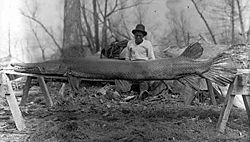
To read an exercise on sparking the imagination based on Collins’ story “Tropical Storm Bill Washes Up Alligator Gar in Corpus Christi, 2015,” click here.

In this interview, Collins discusses two pieces of flash fiction and linearity, titles, and listening to the sound of your sentences.

Michael Noll

When I read these stories, the thing that immediately caught my eye is the nonlinear jumps in the narration. Sometimes they’re on the content level, like when the gar arrive in the story or when we see the girl at the bar practicing her vowels. But they also happen on the sentence level, as with the line “They approximate well” in this passage: 

Hold the grip like you’re shaking a man’s hand, Billy instructs the boys, but who among them has really shaken a man’s hand, he thinks. They approximate well. He doesn’t have children. 

That line seems to arrive out of nowhere. It’s not a logical extension of “They approximate well.” Is this just the logic of your imagination, or do you have a kind of internal rule or approach that you follow for these sort of jumps?

Callie Collins

It’s strange; when I first read this question, I was surprised you pulled that line, cause it strikes me as a super linear extension of that thought, which now I realize it is not at all and I must be crazy. So yes, the logic of my imagination is maybe a bit more leapy than usual. I pay a lot of attention to rhythm and geometry when I write. In this particular case my logic worked a little like this.

“He doesn’t have children” seemed necessary for a couple reasons. The six syllables of “They approximate well” didn’t feel like enough rhythmically to stop the forward momentum of the multi-clausal sentence before it—I wanted a stronger wall. “He doesn’t have children” is really satisfying to me because of the internal symmetry of consonants and emphasis: (he) DOES-N’T (have) CHIL-DREN. Those two lines together sounded closed and tight because they’re syllabically equal. Also, “They approximate well” shifts the paragraph’s focus to the boys, so I wanted to extend a line back to Billy to balance the scale. I tried to jump back and forth from the boys to Billy almost sentence-by-sentence in order to both alienate them from each other and tie them together in this room while the storm rages outside. I also wanted to go one step further down into Billy, to reveal some new, personal knowledge of his character, before the last sentence of the paragraph zooms back out to an overhead view of the scene.

Yeah… it seems kind of nuts. Thankfully there’s another, parallel answer to this question, and that’s because this story comes out of a bigger project. Billy is the youngest of five siblings in a generation of a family, and he’s the only one who doesn’t have kids. It was a piece of information I wanted to fit in there somehow, and to my ear that was the right place to put it.

Michael Noll

Your titles are wonderful. They remind me of the chapter headings that you see in certain novels from the 1700s and 1800s. What’s your approach to titling stories? It’s something that most writers I know find so difficult.

Callie Collins

Once you've got your butt in the chair, how do you get your head in the right place? An exercise on sparking the imagination from Callie Collins' story, "Tropical Storm Bill Washes Up Alligator Gar in Corpus Christi, 2015."

Callie Collins’ story, “Tropical Storm Bill Washes Up Alligator Gar in Corpus Christi, 2015” was published along with one other at Conflict of Interest.

Oh, thank you! I feel lucky when I land on serviceable, or at the very least somewhere near I-can-see-she’s-trying-to-move-me-and-am-not-entirely-repulsed.

I cheat a little. I’ll find a particular structure I like and adapt it in subtle ways to fit many pieces. I like the “something unsettling happens to a body, date” scheme for its simplicity. There’s room to make the first part as strange or noisy as I want, but the year provides stability, normalizes, maybe brings it down to earth. My hope is that each title alone will function pretty straightforwardly, but that using the structure repeatedly will help the stories accrete and flow differently—as variations on a theme. I can, of course, take this way too far. Currently I’m using the same exact title for at least five different stories and for the manuscript they all come out of—man, stop me—which has become inconvenient and messy.

But I like this sort of repetition. It’s how my brain works most naturally. There are pieces of language and slices of syntax that lodge in my mind, and I return to them compulsively but hopefully from new angles and alignments. And it’s one of the really big pros to writing page-long stories. It wouldn’t work if I had fewer pieces to title.

Michael Noll

Both of these stories have a kind of thematic structure. You could, if you wanted, distill them to their major images (for example, cocoons/butterflies, gar, the O shape the girl makes), and then it seems as if the purpose of the story is to connect these images in a way that makes sense. This makes me wonder: Do you start with the images and try to connect them or start with one image and write your way into the story, discovering new images as you go?

Callie Collins

Mostly I start with one image and write my way into the story. I think a lot about thematic structure and particularly the idea of thematic return, movement back toward the home of an original moment or sound. I used to study some music theory and composition a long time ago and was really pretty awful at it, but I found some comfort in the fact that our brains are kind of wired to find closure and satisfaction in music that returns to the tonic—the piece’s tonal center. There are certainly many ways to come home to the tonic, or to approach coming home and not make it all the way, or to refuse that closure entirely, and I think the same is true in fiction. I love endings for that reason; I’m attracted to the urgency of the choice whether or not to return.

I’ve written stories that come all the way goddamn home, middle C, climb back in the bed they were born in—there’s a horse story I read at readings sometimes that does this—but the gar story doesn’t. I tried to end it with a stand on the dominant: an anticipatory feeling, a settling in the front yard of the tonic and pointing at the door.

The tonic is usually an image. Here, the gar. I set the tonic and then work my way into other images that orbit it. I wanted the last note, the couple at the bar, to recall the gar in certain ways—to approach the ideas of foreignness, animal transformation, and alienation from a new perspective. What I really hope, though, is that none of my crazy scaffolding is visible—that the story reads cleanly and easily. Thinking about structure in these minute ways is, it turns out, the only way I know how to get anything done at all.

Michael Noll

These stories are quite polished. You’re also co-editor of the independent press A Strange Object. A lot of people would look at both of those statements and think, “She’s doing pretty well.” Yet this fall you’ll enter the MFA program at the University of Michigan. What do you hope to learn there? Obviously you want to work on your writing and craft, but you’re entering from a different position than a lot of writers, with more experience and success in the publishing world–more than many people who graduate from writing programs. Is it simply the desire to grow and improve that’s at work, or is there something in particular that you wish to gain?

Callie Collins

I hope to learn many things. Where to buy a good coat, for one—anyone know? I’m hoping someone’ll teach me how to do that weird Michigan vowel shift, too.

But really, what a kind question to ask! I didn’t take creative writing courses in college and have very little experience with the formal workshop setting, so even though I’ve spent some time on the publishing side, I’m much more of a newbie in certain ways than most folks entering programs. Mostly I’m just excited and feeling very lucky to have the time and funding to work on the novel-thing, and to get to do that with amazing faculty whose work I deeply admire.

My work’s pretty invested in central Texas, and I think leaving will help me write about the place with more nuance. It’s easy for me to get wrapped up in the mythology of Texas while I’m in it, and I hope being away will give me new perspective and energy. I’m very sad, but it seems like time to go. Just keep everything exactly the same while I’m gone, thanks! Or at least cool it with the condos.

June 2016

Michael Noll Michael Noll is the Editor of Read to Write Stories.