Tag Archives: writing exercises

An Interview with J. Ryan Stradal

10 Sep
J. Ryan Stradal's debut novel Kitchens of the Great Midwest was called "an impressive feat of narrative jujitsu" by The New York Times Book Review.

J. Ryan Stradal’s debut novel Kitchens of the Great Midwest was called “an impressive feat of narrative jujitsu” by The New York Times Book Review.

J. Ryan Stradal is the author of the debut novel Kitchens of the Great Midwest. He edits the fiction section of The Nervous Breakdown with Gina Frangello. His writing has appeared in The Rumpus, the Los Angeles Review of Books, and McSweeney’s: The Goods. Born and raised in Minnesota, he now lives in Los Angeles and has worked as a TV producer, notably for the History Channel’s Ice Road Truckers and Discovery Channel’s Deadliest Catch.

To read an excerpt from Kitchens of the Great Midwest and an exercise on writing character descriptions, click here.

In this interview, Stradal discusses the challenge of covering large time periods, novel pacing, and the influence of Minnesota’s most famous writer.

Michael Noll

You cover a lot of ground in the first chapter, from Lars’ childhood to his post-high school days to married life. Spanning so much time would seem to pose a challenge for the narrative: how to make individual events taking place over a decade or more cohere? How did you approach this problem? Lutefisk seems to be a big part of the answer.

J. Ryan Stradal

I just tried to concentrate on the moments that I considered to be essential. They weren’t always the most apparent life-defining moments, but moments that, if a character looked back, they would consider to be a vital fork in the road. Lutefisk and the other food that enjoyed their moments in the sun as window dressing for each chapter just helped give these disparate moments a unifying theme.

Michael Noll

The first page contains a couple of story-propelling lines. Here’s one:

“Lars blamed his sorry luck with women on his lack of teenage romance, and he blamed his lack of teenage romance on the fact that he was the worst-smelling kid in his grade, every year.”

A line like that seems to beg for an explanation: Tell us why he smelled so terrible! Here’s another line:

“Fish Boy” they called him, year round, and it was all the fault of an old Swedish woman named Dorothy Seaborg.

Again, that line begs for more. It suggests a story. Both lines seem carefully crafted to drive the reader deeper into the novel. Was this purposeful on your part, or did lines like these simply occur to you?

J. Ryan Stradal

No, I’m not lucky enough to have those natural storytelling instincts. I try to ask a lot of questions during a chapter to keep it moving forward, and give the reader a reason to keep going if they’re invested, and these are two pretty flagrant examples of that. This section was one of the last parts I wrote in the entire manuscript, so as such I was propelled by my own knowledge of what was to come, and attempted to pace the establishing narrative to set up the novel as efficiently as possible while still trying to be entertaining.

Michael Noll

It seems inevitable that a novel that contains lutefisk, Lutherans, and Minnesota will draw comparisons to the work of Garrison Keillor. Your novel is quite different from his writing, but it does share some characteristics, especially with his novels, which tend to be about young men grappling with their dour, Lutheran, Minnesota upbringing. How did you approach writing a story that takes place in a kind of Yoknapatawpha County, a place that has been famously mined by one particular writer? I’m curious because the shift in main characters between the first two chapters seems like a move away from Keillor (away from young Lutheran men), but the fact that the novel ends up telling so many characters’ stories seems to have a bit of Lake Wobegon to it. Did you feel any need to write purposefully toward his influence—or away from it? Or did it not affect you at all?

J. Ryan Stradal

It didn’t really affect me at all. I enjoy Keillor and his work, but I don’t listen to it often, and haven’t heard it regularly since I lived in Minnesota, almost twenty years ago. My mom and grandma were/are big fans, and I may have been influenced by what they enjoyed about it, but there was a conscious effort on my part to not hew too close to any existing narratives or styles of characterizing my home region. The Midwest I attempt to capture isn’t quite like any I’ve read or heard. I hope I’ve succeeded at making the world of Kitchens its own universe; I personally can’t wait for an even greater array of diversity of setting and voice among Midwestern authors.

September 2015

Michael Noll Michael Noll is the Editor of Read to Write Stories.

An Interview with Will Boast

27 Aug
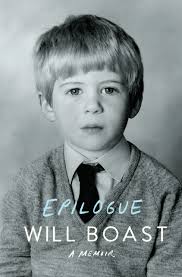
Will Boast's memoir Epilogue was called "hands down the most moving book I’ve read this year" by Anthony Marra.

Will Boast’s memoir Epilogue was called “hands down the most moving book I’ve read this year” by Anthony Marra.

Will Boast was born in England and grew up in Ireland and Wisconsin. His story collection, Power Ballads, won the 2011 Iowa Short Fiction Award. His fiction and essays have appeared in Best New American Voices, Virginia Quarterly Review, Glimmer Train, The American Scholar, and The New York Times. He’s been a Stegner Fellow in fiction at Stanford and a Charles Pick Fellow at the University of East Anglia. His most recent book is the New York Times bestselling memoir, Epilogue. He currently divides his time between Chicago and Brooklyn, NY, and is currently a Literature Fellow at the American Academy in Rome.

To read the prologue to Boast’s memoir Epilogue and an exercise on framing chronology, click here.

In this interview, Boast discusses structural challenges of memoirs, writing dialogue from memory, and using concision to handle emotion.

Michael Noll

One of the challenges for memoir writers, at least in some memoirs I’ve read, is that they get trapped by chronology. They have something they want to talk about or some particular story to tell, but that thing or that story isn’t enough to fill an entire book. And so, at a certain point, the book moves into “and then this happened and this.” That isn’t the case for this book, and it seems, in part, to be due to the structure you chose, which is centered more on thematic units than chronological ones. Did you always have such a structure in mind? How did you discover it?

Will Boast

I agree. A strictly chronological telling is very tempting for writers starting on any story, whether nonfiction or fiction. And sometimes it does work. But, in memoir anyway, it can be deadening. Too much of life is mundane to just make it “and then and then,” and very few, if any people, have real experiences that naturally take the shape of a good story. So you splice and rearrange and follow patterns rather than doggedly follow a timeline. Sven Birkerts’ The Art of Time in Memoir is very good on this subject.

Every book finds its own shape, but memoirs seem to present special structural challenges. I often say that, If fiction is the art of invention, memoir is the art of arrangement. Honestly, only an enormous amount of effort and trial and error helped me move forward. But I did have in mind, through many drafts, an emotional progression. That, more than anything, was my guide. It’s difficult for me to talk about themes, because I think those only become truly clear in nearly the final drafts. Certainly, I thought about ideas I wanted to express in the book. But more often than not, I found that they dropped away in the long process of revision, and that the ones that stayed became so tightly wound into the story itself that I almost hesitate to call them themes now.

Michael Noll

The book contains so much loss, but you write mostly about living in the aftershocks of the loss and only a little about the loss itself. For example, you cover your mother’s death in a single paragraph. Was such concision always part of your sense of the book? Or did you write a great deal that you ended up cutting?

Will Boast

I wrote an incredible amount that I ended up cutting: several very long drafts and many, many alternate versions of each chapter. A certain concision, even reticence, ended up becoming part of the way the book handles emotion. At times I found that passages that had once sprawled over pages could be condensed into single sentences, and gain in power because of it. That’s actually quite a realization, that editing out whole episodes of your own experience can help the whole cohere. At first, it all seems important. But then you start to see the most relevant through lines, and they begin to guide you.

Michael Noll

Will Boast's memoir Epilogue describes a family tragedy and revelation the force Boast to reconsider his definition of family.

Will Boast’s memoir Epilogue describes a family tragedy and revelation the force Boast to reconsider his definition of family.

One of the questions that memoir writers face is how to handle dialogue, how to write spoken lines that are only half-remembered. So, I’m curious how you handled these conversations. For instance, you talked on the phone with your dad on the day that he died. During the call, you were, as you write,”hungover and pissy about being woken early,” which would seem to not lay fertile ground for remembering. How did you approach recreating this conversation for the book?

Will Boast

That phone call I do remember pretty vividly. Even though my brain was a little addled at the time, it’s simply one of those conversations you can’t forget, even if you wish you could. There are several instances of that in the book. There were also moments where, later in the timeline of the book, I actually thought to take notes, so that helped in places.

But you’re also right to wonder how much of actual speech can be remembered. I don’t think that many people who’ve written memoir would claim to recall verbatim who said what and when. And, really, that isn’t the point of memoir. No one has tape recordings of family dinners from twenty years ago. It’s important to understand that memoir is not simply a transcript of what happened. It’s not even simply remembering things. (If it was, it would be rather easier to write.) There’s a necessary process of distillation. Every single person, after all, says the same things over and over again. Our little refrains are a huge part of who we are. And those I find very easy to recall with great accuracy. So some of the dialogue you see in the book is made up of those things that were said habitually, day after day, dinner after dinner, fight after fight, bad joke after bad joke.

Michael Noll

At times, you mix present action (for instance, preparing for your father’s funeral) with memories from childhood (giving your father a knife that you prized so that he could sell it). Is this mixing simply the result of your imagination and unconscious churning out material? Or the result of something more logical and planned?

Will Boast

Memory is not linear. Though we always live in the present, our minds are constantly casting into both the future and the past. In a way, I think of the stuff of memoir as being that which is so constantly on our minds that it keeps intruding on and interrupting the present. (This is the definition of trauma, I think.) The process of drafting, then, should be in part associative. This moment recalls another moment. Some of this just happens in the notebook. But, by the final drafts, yes, everything is intentional and very carefully planned.

August 2015

Michael Noll Michael Noll is the Editor of Read to Write Stories.

An Interview with Andrew Malan Milward

20 Aug
Andrew Malan Milward's collection I Was a Revolutionary zeroes in on the complex radicalism of Kansas.

Andrew Malan Milward’s collection I Was a Revolutionary zeroes in on the complex radicalism of Kansas with stories that range from the burning of Lawrence to the assassination of George Tiller.

Andrew Malan Milward, a Lawrence, Kansas native and graduate of the Iowa Writers’ Workshop, is the author of the story collection The Agriculture Hall of Fame, which was awarded the Juniper Prize in Fiction by the University of Massachusetts. He has served as the McCreight Fiction Fellow at the University of Wisconsin, a Steinbeck Fellow at San Jose State University, and has received fellowships and awards from the Lannan Foundation, Jentel, and Yaddo. He lives in Hattiesburg, Mississippi, where he teaches at the University of Southern Mississippi’s Center for Writers and is editor-in-chief of Mississippi Review. His most recent book is the story collection I Was a Revolutionary.

To read Milward’s story “I Was a Revolutionary” and an exercise on building plot, click here.

In this interview, Milward discusses using specific cultural references, trusting the reader, and mixing history with present action.

Michael Noll

One of the things I love about the story “I Was a Revolutionary” is that it contains references to things I grew up with. For example, the narrator goes to a bar and drinks a “schooner of Boulevard Wheat,” a beer that I know well. I’m curious, though, whether you ever questioned such specific references. Did you ever consider just having him go out for a beer, rather than a Boulevard Wheat? 

Andrew Malan Milward

Yeah, I know what you mean, and it did give me momentary pause. However, I realized with a story like this that is so interested in examining a specific place, in this case Lawrence, Kansas, it was important to render that place as specifically as possible. So it was important to me to have the protagonist not only drinking Boulevard but to have him doing so in Louise’s and later in the 8th St. Taproom—real bars in downtown Lawrence where I’ve passed many boozy nights—even if most readers won’t have done so themselves. Obviously the story doesn’t depend on the reader knowing these specific references, but it’s a nice little winking fist-bump to those who do.

Michael Noll

The history that you tackle in the book as a whole is fascinating. Of course, I’m a native Kansan, so I love this stuff, but my wife, who’s from Delaware, also became interested in the history when she read the book. So, there seems to be an inherent appeal to the Bleeding Kansas days. But, the stories must still, at some point, give the reader a reason for the history’s presence. How did you approach that problem? Did you start with the history and find a plot to contain it? Or, did you start with a story (adjunct college instructor whose wife leaves him) and build the history into it?

Andrew Malan Milward

Yes, this was a real challenge. I knew that my fictional characters and their predicaments couldn’t just be excuses to introduce the reader to a whole bunch of Kansas history I happen to find fascinating. In certain failed early drafts I did just that. For example, in the early versions of “A Defense of History,” the Assistant’s storyline was slight and underdeveloped because I was basically just using him to try to tell the story of the Populists. This made the story lopsided and I had to find a way to make his story matter as much as the Populists’. This was a macro-level challenge for the whole book. I had to find a way to give my characters the dignity of human complexity. They couldn’t be afterthoughts. I had to make their situations as interesting, dramatic, and relevant as the history I was attempting to limn.

Now as for how I did that, I tried different strategies. Sometimes, as in “O Death,” it was an attempt to mimetically recreate the history, placing my fictional characters right into the drama of the time. And sometimes, as in “The Americanist” or “A Defense of History,” the history is mediated by a character in more contemporary times. A story like “The Burning of Lawrence” does both at once.

Michael Noll

Andrew Malan Milward's collection, I Was a Revolutionary, takes a fresh look at the complex history of Bleeding Kansas and its role leading up to the Civil War and the aftershocks that are still present today.

Andrew Malan Milward’s collection, I Was a Revolutionary, takes a fresh look at the complex history of Bleeding Kansas and its role leading up to the Civil War and the aftershocks that are still present today.

The title story, “I Was a Revolutionary,” contains several unexplained references—to history, to books (What’s the Matter with Kansas), and to the Obama presidential campaign. For example, the story mentions “the Ayers stuff” but doesn’t explain what it is, relying on the reader to know. How did you know to trust the reader to figure it out? 

Andrew Malan Milward

As a writer I always try to respect the reader as much as possible and that involves a lot of trust, because as readers we’ve all had the unpleasant experience of a writer not trusting us and we resent it. Oftentimes this is an unintended consequence of writers with good intentions—they’re trying to invite us into the story and don’t want us to feel confused. But we don’t like to have our hand held because it feels condescending. As readers we like to feel smart and when a writer doesn’t trust us enough to know something or “get” something, when they’re trying too hard to guide us through their work, we react against it. We think, I knew that. You didn’t have to tell me.

And you’re right, the title story has more references than the others because as the final story in the collection it’s working on two levels: it’s no only the story of Paul and his radical past, it’s also the story of all the stories in the collection. It the one that talks about everything that has come before it. A lot of the references in it are to events and people that have been explored in previous stories in the collection (which I why I strongly suggest/hope readers read the stories in the order they have been arranged). However, there are a lot of references to people and events not covered previously in the book. I suppose I’m trusting the reader to either know or maybe be curious enough to look them up. I like to think, however, that the story still holds together even if they don’t.

Michael Noll

Kansas is at an interesting political moment. Its governor, Sam Brownback, has enacted tax cuts that are the dream of every Tea Party member, and, as a result, the state has experienced a revenue shortfall and is struggling to fund basic things like schools and highway construction. Not surprisingly, Brownback has become massively unpopular. And yet I’m not sure what will happen in the next election. In the recent past, when Republican governors and candidates have veered too far to the right, Kansans have elected Democrats (Joan Finney and Kathleen Sebelius). But, as you point out in I Was a Revolutionary, this is a state that also has a long history of political extremism. I’m curious how you’d read the state’s political tea leaves. Do you think it will move back toward centrist politics? Or are there enough voters with an extremist conservative ideology to keep pushing the state further to the right?

Andrew Malan Milward

It’s incredibly hard to square Kansas’s warring instincts for progressivism and conservatism. Much of the book was guided by that question: How did such a forward-thinking state that was founded very bloodily to enter the Union as a free state instead of a slave state—inciting what would become the Civil War—arrive at its reactionary present of the Westboro Baptist Church, a militant anti-abortion movement, and the top-down class warfare of the Koch Brothers and Governor Sam Brownback? As the protagonist of the title story tells his students in class one day, “Kansas is and always was a radical state.” I certainly found that to be true. And, you’re right, the present isn’t very pretty—all the risible insanity that makes Kansas look like the meth-lab Winnebago of American democracy. I’m not sure what will happen, but if there’s one thing that Kansas’s history has proved it’s that the state and its inhabitants are capable of dramatic change, which is certainly what’s required right now. Personally, I’m hoping we become as smart and civilized as farmers in Kansas were 125 years ago. Those Populists organized a true grassroots party, the People’s Party, as an alternative to the Republicans and Democrats that at its core was a movement against corporate hegemony. Think about that for a moment: a movement against corporate domination of society in 1890. Incredible. They certainly saw the direction we were heading and they had the courage to try to do something about it.

August 2015

Michael Noll Michael Noll is the Editor of Read to Write Stories.

An Interview with Sarah Smarsh

13 Aug
Sarah Smarsh is a Kansas native whose essay,

Sarah Smarsh is a Kansas native whose essay, “Pride, Poverty, and Prejudice in Kansas” examines the relationship of political power and poverty.

Sarah Smarsh is a Kansas-born journalist, public speaker and educator. Her writing has appeared in Harper’s, The Believer, Creative Nonfiction, The Guardian, Guernica, and The New Yorker. Her forthcoming book, In the Red, combines memoir, literary reportage, and social analysis to examine the life of poor and working-class Americans as seen through the lens of Smarsh’s own turbulent upbringing in rural Kansas.

To read Smarsh’s New Yorker essay “Poverty, Pride, and Prejudice in Kansas” and an exercise on raising the level of analysis in an essay, click here.

In this interview, Smarsh discusses strategies for beginning essays, the challenge of explaining complex and technical material, and the delicate balance of writing truthfully and respectfully about family.

Michael Noll

I love the way this essay begins, with the story of a vandalized ATM that you encountered in Italy. It’s vivid stuff, but it’s also from 2001 and set in Europe; the essay that follows explains a 2015 Kansas law. This makes me curious how you approached the problem of introducing this essay. It’s about a law, which means you’re tasked with explaining something dry and convoluted. Did you sense that, without some striking imagery at the beginning, readers might not follow you through the details of the law?

Sarah Smarsh

Thank you for the good words.

The essay’s opening isn’t quite what journalists call an “anecdotal lede,” starting with a quick story to humanize an issue and grab the reader’s attention. But while nothing happens in the opening, the image has the tangible components of a real person interacting with an environment in a way that is metaphorically rather than directly tied to the story’s news component. As poets and photographers know, a poignant, true image cuts as deep into the psyche as story. When I was a nonfiction professor I’d do close-reads of essays with students and then have them close their eyes. I’d ask them to picture the contents of the essay, write down the first image that came to mind, and then go around the room reading their answers. Almost every time, most answers were the same; some visual had been most searing for everyone.

The bloody ATM jumped into my mind after I started working on the essay. I’d thought of it a few times in the past fourteen years, but it was deep in my memory files. At first I wasn’t sure why or how it was relevant, but I trusted that if my brain had made the connection, readers’ would too. I researched the political protest that was cause for the ATM’s vandalization, and it turned out to involve the Bank of Rome funding the arms trade. A long leap from welfare allocation in Kansas! In an early draft I referenced that bit of global economic history to demonstrate the power of banks—they control not just poor people’s pocketbooks but international warfare. But what was more relevant to the essay was why the image had stayed with me: my relationship to the ATM as a cold, inhuman middle-man between me and scarce money, as Kansas legislators now stand between poor citizens and their funds.

I could have opened with a modern-day image of a Kansas welfare recipient at an ATM, but I was more interested in digging into the symbol of what these machines represent to us as a culture. (My editor wisely struck from the piece an overwrought description, “robotic foot soldiers for plutocrats,” which I’m happy to exhume here.) One of my favorite things about nonfiction is that one needn’t contrive or strategize real-life metaphors. They materialize on their own, from the actual, if you’re paying attention.

Michael Noll

The details of the law pretty complex: understanding them requires understanding not just the wording of the law but several types of financial transactions: ATM fees and food stamps. Explaining this stuff would seem to require a skill set that is completely different from those used to describe animal guts smeared on an ATM. How did you convey the basic info about the law and the transactions to readers who likely have only casual knowledge of such things?

Sarah Smarsh

Writing what I like to think of as literary nonfiction about wonkish topics takes a lot of work because I myself only have casual knowledge of them before I dig into the research. This essay had about thirty footnotes linking to public documents for the New Yorker’s fact-checkers, and I consider this light work since I didn’t conduct interviews (though I did make a few calls to verify this or that). In that process, one can get hung up in red tape very easily. Having reported on municipalities, laws, cops, public schools and other bureaucracies from hell for many years, I’m confident that some of that confusion is by design; in this piece, for example, I had to consult several state sources to figure out what private financial company holds a contract to administer welfare funds, since its umbrella corporation has factions and subsidiaries legally referred to by different names. Once I have the info, though, I have a pretty easy time describing it. What would I need to know in order to understand the gist? Whatever the answer is for me, it’s the same for the reader. A harder task is knowing where to stop. An earlier version of the ATM piece had a sizable tangent on the rise of electronic debit cards in public assistance programs, along with numbers from other states demonstrating the enormous amount of public money that now ends up as private-bank fees.

You’re right, though, that two different writerly sensibilities are in play with this and many of my essays. I remember attending an Investigative Reporters & Editors conference in New York in 2000 when I had an internship in the news unit of the NBC affiliate there, and being struck by how razor-like the reporters’ minds were in cutting straight to one particular narrative within a story. My brain is more of an artsy-fartsy thing that relishes how everything is connected to everything. I like to juxtapose and suggest expansive ideas rather than directly explain hard facts. Maybe my upbringing is why I can put on a reporter hat all the same. It was not an environment that indulged in daydreaming and philosophizing. “Cut the bullshit and get to the point,” my grandma might say.

Michael Noll

I’m a huge fan of James Baldwin, and so I was happy to see the reference to him later in the essay. I was also surprised. You make a jump from the specifics of the law to a broader discussion of the particular costs of poverty. Did you always know that such a widening of the essay’s frame would happen, or did you stumble upon it during the writing process?

Sarah Smarsh

When an editor asked me to weigh in on the new law, it had already been covered elsewhere. I knew right away that what I could offer that other stories hadn’t was a big-picture understanding of why this abstract discourse about laws and ethics might matter to a woman living in poverty—how a policy plays out at the ground, and even how it feels to be affected. I’m careful to not speak for anyone but myself, but yes, I immediately saw the law as springboard to a broader experience rarely represented first-hand in the media.

Michael Noll

At the end of the essay, you describe your childhood experience of using a free-lunch card in school and how embarrassed you were. You also mention at the beginning of the essay that your family was eligible for welfare but, out of pride, didn’t apply for it. This gets at a tricky part of writing about family and, more broadly, experiences that you share with others. How you do you accurately write about stories that may still evoke strong emotion, even embarrassment, in others while respecting their feelings?

Sarah Smarsh

Sarah Smarsh wrote about the prevalence of poor dental care in impoverished families and the shame it brings in middle-class society.

In her essay, “Poor Teeth,” Sarah Smarsh wrote about the prevalence of poor dental care in impoverished families and the shame it brings in middle-class society.

However simple and factual a statement, so much context often is missing by necessity of length or keeping momentum. My family didn’t apply for benefits out of pride, yes, but probably for a lot of other reasons—lack of information or access and so on. We also managed to be employed in manual and service labor; what if we hadn’t had those skills or the health to perform them? Regardless, we might have made a comparable income—when factoring in income tax—on public assistance, but to us that was unthinkable. When I was writing the story, my grandma confided in me that she had in fact received public benefits in the 1960s. That was long before I was born and Reagan started yapping about “welfare queens,” but it’s still a small piece of my family’s survival story. I then wrote the following, that didn’t make the cut in the final piece:

To suggest that recipients would be able to splurge under such constraints even if they wanted to is to cast every impoverished Kansan as the dastardly welfare queen of lore. This sneer from the capital is not lost on the poor, who in my considerable research would rather have a job with a living wage than a “handout.” Only as I was discussing this story with her did my grandmother—who, like myself and our whole family spent much of her life doing manual labor, juggling at least two jobs and turning clever frugality into a satisfying art form—admit that she briefly went on the dole as a teenage mother with a newborn to feed in the early 1960s, when her abusive husband went AWOL from the Army and their military payments stopped. “I’m ashamed to say it,” she told me. She only took assistance for a few weeks after giving birth; then she fled her husband for another state and went—by grit and by choice—off welfare and onto a factory floor. There, she made enough to pay for rent, baby formula, gas to get to work and a babysitter who lived in her apartment building with padlocks on the doors. With what remained, she calculated, the most filling meal available was a frozen chicken pot pie, and she ate exactly one per day for months—a story I share not to tug heartstrings but to demonstrate the resilience and ingenuity of people so often categorized as “lazy.” Where I’m from, there is no more hurtful word, and to demoralize our poorest citizens, as the new welfare-restrictions does, is not just bad form but bad economic strategy.

Since I was writing about my family as I was growing up, it’s accurate to say my family “didn’t apply,” but there’s a bit more to the story. I accept these limitations of writing as we all must—you will never write the whole story, I used to tell students—but I try to include brushstrokes that suggest whatever nuance I don’t have room to describe at length.

Nuance is often at the heart of a subject’s experience in reading a piece. I’ve been written about only a handful of times, and I know it’s not an easy thing. I always try to put myself in my subjects’ shoes and consider their experience as important as my own—especially when it comes to matters as sensitive as class. But I think there’s a way to go right at the truth, however painful and ugly, and still respect all involved. I try to do that by writing from a place of “we” rather than “me” and “them”—not just in matters of family but politics and all else.

Clear communication with people about the contents and intentions behind a piece of writing goes a long way in softening the experience of being turned into subjects or characters. I messed up on that once as a young writer doing a cover story for an alt-weekly, and though the story was factual, it was unnecessarily traumatic for the subjects (and, thereby, since these things matter to me very much, for me). Sometimes investigative reporting requires sly maneuvering for the sake of revealing corruption or being a “watch dog” for democracy. Even with more personal stories I’d never share a draft for someone to review. But my writing often intersects with vulnerable populations—say, a teacher who could get fired for sharing her opinion or a guy whose small-town banker could turn him down for a loan because he talked to me about his poverty. So I try to be as upfront as possible about what’s going down with a story.

At the most personal level, I tell my family about writing projects that mention them and give them an opportunity to say, “no.” I’m grateful that they never have. They aren’t a crew that’s sitting around offices reading online think pieces, and perhaps I could let publications slip by without their knowledge, but I offer to share them. They don’t always read them, which is perfectly fine, but I want them to know there’s this thing in the world that has appropriated, channeled and hopefully honored their energy. I would never not write something that felt essential to me because someone told me to keep my trap shut. But something that leaves a loved one vulnerable without her blessing will never be essential to me.

Occasionally something I write stings them, and that’s probably inevitable. Last winter I told my grandma that an essay I wrote about dental health as class signifier was on some fancy best-of-the-year lists. She said, “Well, I guess now the whole world knows I have false teeth.”

In this ATM piece, I describe myself as “the first member of my household to finish ninth grade.” My mom told me she was “taken aback” reading this, as she left school after eleventh grade and got her G.E.D. I explained that I was describing my grandparents, with whom I lived permanently from age 11 to 17, though I often spent weekends and summers with my mom. In a family and class where “household” can be complicated, to me that grandparents’ farm unequivocally was my “household,” with a grandpa who quit school after sixth grade to work the family farm and a grandma who left in ninth grade to wait tables. “I know, but people won’t know that,” Mom said. And she’s right; most readers would assume I was talking about my parents.

Furthermore, the sentence, while accurate and succinctly effective in conveying my life experience to readers, does a disservice to my grandparents; in the seventies my grandma got a government grant to attend “business college” and admirably worked her way into the Wichita court system, where she served as a probation officer for many years. Most readers probably picture a very different person when they picture a “high school dropout.” Meanwhile, my mom had her IQ tested when I was a kid, and it’s statistically probable that she’s considerably smarter than the vast majority of New Yorker readers.

Mom, it turns out, didn’t care about the majority of readers. She cared about her close friends, all former co-workers in the real-estate industry, who might click the story from my Facebook page and think she left high school at an earlier grade than she did, or that she’d been a poor student, or that she’d not actually gotten her G.E.D. She’d just been through the most harrowing, near-death cancer battle of her life, so knowing I’d written something she found misleading and painful was brutal. I asked the New Yorker if we could tweak the sentence, but it would’ve required some hullabaloo, potentially including an asterisked explanation of why the change was made. Mom had said not to make a fuss, so I offered to instead provide public clarification somewhere in the future. Thanks for the opportunity to do that here. This is the only time in the course of many thousands of words written about my family that a small quibble has arisen, so I’d like to think we’re doing pretty good.

There’s a famous book by Janet Malcolm about these things, and I got to ask her some questions once in New York. She’s a goddess on earth who rightfully tired of having this line referenced twenty years ago, but I disagree with her provocative opening statement about a journalist’s work being morally indefensible. A blanket statement that journalism is inherently jacked-up strikes me as a dangerous carte blanche for those tempted to use their subjects in callous ways. Welp, regardless of how I conduct myself, journalism is shady, so might as well trot this starving child out for a Pulitzer and then hit the road back to New York! For me the ethical quality of a piece of writing falls along a continuum like any other human action. In my experience, the care you put into it is never lost.

Michael Noll

Here’s a political question: The essay is about a controversial law in Kansas, a state where the governor has introduced all sorts of controversial legislation. He’s now massively unpopular, and yet I’m not sure what will happen in the next election. In the recent past, when Republican governors and candidates have veered too far to the right, Kansans have elected Democrats (Joan Finney and Kathleen Sebelius). But, this is a state that has a long history of political extremism and a Democratic party without any infrastructure. I’m curious how you’d read the state’s political tea leaves. Do you think it will move back toward centrist politics? Or are there enough voters with an extremist conservative ideology to keep pushing the state further to the right?

Sarah Smarsh

Brownback enacted his far-right policies in his first term and managed to get re-elected in a close race. He is uber-conservative for ideological reasons that appeal to some voters, and his very wealthy supporters in Kansas are uber-conservative for fiscal reasons that by most economic estimations hurt voters. That has been a perfect storm for pushing state policies destructively far to the right.

Out on the streets in Kansas, though, as in all places, you’ll find a diverse spectrum of political views not represented by the stories out of our infamous legislature. Historically that sort of divide between people and government leads to an extremely pissed-off populism. Pissed-off populism is what Kansas was founded on, in fact; the state’s early years were all about abolition, women’s rights, workers’ rights.

I’m a good enough student of Kansas and life to know there’s no predicting where state politics will go. But there are many new bipartisan movements and organizations afoot within the state that share a goal of repairing and preserving Kansas’s historically good outcomes in health, education and other public systems. Kansans are switching parties, getting involved in ways they’ve never been. Our former insurance commissioner, elected as a Republican, boldly fought on behalf of the Affordable Care Act in an extremely inhospitable administration. For all their Midwestern reserve, and whether they got themselves into this mess or not, Kansans are pissed off. I’m a fifth-generation Kansas farm kid and can tell you this: My grandpa didn’t blow up very often, but when he did, you’d better run like hell.

August 2015

Michael Noll Michael Noll is the Editor of Read to Write Stories.

An Interview with Justin Taylor

6 Aug
Justin Taylor is the author of three books, most recently the story collection Flings.

Justin Taylor is the author of three books, most recently the story collection Flings.

Justin Taylor is the author of the story collection Everything Here Is the Best Thing Ever and the novel The Gospel of Anarchy. He lives in New York City and co-edits the arts journal Agriculture Reader. His most recent book is the story collection, Flings.

To read Taylor’s story “So You’re Just What, Gone?” and an exercise on digging into a scene, click here.

In this interview, Taylor discusses the moral universes of stories, creating bombs and aftershocks in fiction, and his testing process for writing characters’ text messages.

Michael Noll

One of the writer-sayings from workshop is that a story should walk characters through danger doors–situations that put them at risk. This story does a terrific job of that. First, Charity is seated next to a pervy older man on a plane. Then, he gives her his number. Then he invites her to meet him. As empathetic humans, we don’t want Charity to go along with any of this, but as readers, of course, we want her to choose poorly since it makes a better story. Given all of this, I’m curious about how you approached the ending. She has the opportunity to meet Mark but talks herself out of it—with some help from his aggressive behavior. I love this ending, but I’m also curious if, in early drafts, Charity ever met Mark as he asks? How did you know when to put an end to the chain of bad events?

Justin Taylor

I’ve never heard that expression before—“danger doors.” It reminds me of old-school video games, specifically those colored bulbs in the original Metroid or the ante-chamber to the boss room that you’d find in any given Mega Man. Anyway, to answer your question, there are no drafts in which Charity meets up with Mark. To me, the story is about Charity’s inner life, her self-perception, particularly with regard to questions of age and maturity. To me, the major conflict of the story is between the part of her that still feels young—like a daughter, like a child—and the part of her that craves independence, wants to grow up faster. Mark’s intentions are predatory, but he’s not a very effective predator. Charity’s autonomy and safety are never truly put at risk. The public space of the airplane, and later the distance of the phone, conspire to place a concrete limit on the damage that Mark can do, and that’s because the story is far less interested in what he wants from her, than in what she thinks about it. In the moral universe of this story, questionable choices (and/or the mere fact of being an adolescent girl) are not understood as debts to be repaid through suffering. Mark’s impatience and his demands are somewhere between the ravings of a tyrant and the tantrum of a child. To hook up with someone like that would be to cede the very independence she’s been fighting for, and as soon as she sees that, she’s repulsed. That in mind, I wanted to end the story with Charity on her own, to reinforce that this is not a “him and her” story, but just hers—he was just this weird interlude in her life, like a bottle episode on a TV show, where it doesn’t quite connect back to the main arc of the season. That’s how I came back to the aquarium: she’s on her own, and doing exactly what she wants to do. It may be that the most dangerous thing you can do with a teenager is pay her the same respect that you would someone your own age. That, to me, is the main “danger door” the story walks through.

Michael Noll

Justin Taylor's story, "So You're Just What, Gone?" appeared in The New Yorker.

Justin Taylor’s story, “So You’re Just What, Gone?” appeared in The New Yorker.

I’m interested in the pacing of the story. It begins with a long scene aboard the plane that occupies about 1/3 of the story, and in that long scene, we’re introduced to the character and the plot (will Charity call the guy?), but I can also imagine a workshop teacher suggesting that it all get condensed to a paragraph, which sounds right in theory but, of course, would have been terrible advice. How did you keep that scene going without losing tension?

Justin Taylor

You cannot condense those pages into a paragraph. They are, as you have said, 1/3 of the whole story, and therefore are doing 1/3 of the work. That scene establishes Charity’s psychology through her perceptions of the world around her, her relationship with her mother and various other establishing and background details. Maybe most important of all, it builds up mood. When Mark assaults her, that mood is (hopefully) shattered. I wanted his change in tone and behavior to feel like a bomb going off in the story, and then for the rest of the story to sort of reverberate with the aftershocks of that blast.

Michael Noll

The story contains some extended text conversations. Do you approach those any differently than you would spoken dialogue?

Justin Taylor

I tried to write my texts the way most people actually text—the language clipped, the punctuation light or absent—but mostly I wanted to be true to the characters themselves. They should sound less like “a person texting” than like the people who they each actually are. Charity, for example, is a more deliberate texter than Mark is. There are a couple places where he runs two sentences together in a hash of unpunctuated shorthand (“Cmon sumthing to look fwd to ur teasing me bad here”) whereas she bothers herself to put a comma in the middle of “Pajamas I guess, like a shirt”. She also prefers “you” to Mark’s “u,” though at the end of the conversation she adopts his style, possibly because she wants something from him—“Will u send one back?” Originally, I wanted Mark to be borderline incoherent, because I liked the idea that he was this rabid bro falling all over himself, but then I did some test-runs with my own phone’s autocorrect and saw that it tended to save him from the worst of himself. Overall the punctuation is pretty true to an iPhone 5, though I took a few liberties, such as the un-capitalized “I”, which reads like hasty texting but in real life could only be the result of extra effort, because the phone would always fix it for you unless you stopped it from doing so. Also, “Now were talking.” The phone has enough grammar to know that you meant “we’re” in that sentence. Or anyway mine does. But it’s also true that autocorrect learns from usage, so it’s at least plausible that Mark’s phone wouldn’t make that fix. Also—and I know I’m giving away the depth of my own insanity here—I originally had Mark using “2” for “to” but I eventually realized that while 2 is faster on a computer keyboard, on a phone screen it takes several extra touches to get over to the number screen and then to get back. So he wouldn’t do that.

Michael Noll

The story is about a 15-year-old girl’s sexual encounter with a 30-ish man. It’s a story in a similar vein as Lolita, and when that novel was published, a lot of early reviews claimed that the young girl had somehow entrapped or seduced Humbert Humbert. The reviewers were, it seems, reading Lolita as older than she was because of the way she was viewed by the narrator. In your story, did you worry that the reader would somehow forget that Charity, because she’s interacting semi-sexually with an older man, is only 15? Did you build in reminders of her age?

Justin Taylor

I don’t see how you could forget Charity’s age—the story is entirely defined by it. She’s only on this trip in the first place because her mother thought she was too young to stay home alone. Plus there’s her homework, her friends back home, the presence of her mother and grandmother, and Mark’s own word choice with regard to her. Lolita is 12 years old when the novel begins, and is literally kidnapped by a murderer. If she can be said to eventually “seduce” Humbert, it’s only in the sense that a captive figures out how to “seduce” her captor. I think Nabokov himself is very clear about this, even if the critics haven’t always been—most of the book doesn’t make any sense without this element, and the ending certainly doesn’t. Charity’s problems aren’t nearly as grave—she has a lot more power than Lolita, and she’s older. Not “older than her years” (which is what all abusers of children tell themselves—it’s a fantasy of permission) but old enough to understand the world, and the body, she inhabits. To the extent that, as I said before, the story places superlative value on Charity’s capacity for self-determination, it would have to respect her decision to hook up with him just as much as it does her decision not to. She doesn’t cut him off because she suddenly realizes he’s too old for her—that was the main thing that made him attractive in the first place. She cuts him off because he’s a creepy scumbag, which to me is a better reason. Adolescence comes and goes, but a well-tuned creep-detector is something you carry with you through life.

August 2015

Michael Noll Michael Noll is the Editor of Read to Write Stories.

An Interview with Herpreet Singh

30 Jul
Herpreet Singh

Herpreet Singh work has appeared most recently in The Bitter Southerner and The Intentional.

Herpreet Singh writes fiction and personal essays, exploring the intersection between culture and geography, especially the Indo-American experience in the deep South. Her work has appeared in The Bitter Southerner and The Intentional. She coaches clients who are trying to write their own true stories in the book form. She’s a mother and partner and is at work on a novel.

To read Singh’s essay “Choking Out the Natives” and an exercise on creating multifaceted characters, click here.

In this interview, Singh discusses beginning an essay, using subheadings, and the challenge of writing about family.

Michael Noll

The part from that essay that will stick with most people is your father-in-law’s line about dots. But what I really admire is how you set up that moment so that it has as much shock value as possible. It seems like you do this by treating him with humor and admiration at the beginning of the essay: the description of his commercials and the fact that he adopted your husband. Did the essay always begin this way?

Herpreet Singh

It did. But initially, the set-up was intended to bring readers into Christmas. My in-laws’ Christmas tradition is humorous. It’s generous. It’s problematic in some ways. But it is also something I look forward to. It’s unlike any family Christmas I’ve ever heard about. I’d wanted to write about it for sometime, though I wasn’t sure what I had to say about it, beyond, “here is this crazy, wild, fun time.”

When I sat to write, I felt I could not convey the grandiosity or special appeal of Christmas without giving readers a glimpse of my father-in-law. So much of who he is and what he does could easily seem ordinary; but actually, he is innately creative, and he finds outlets for his creativity in his business endeavors and with creating events and traditions like this for his family. I was surprised that the set up led to a less flattering trait, his bigotry.

As I wrote about my father-in-law, it opened a portal to explore my husband. I started wandering as I wrote, exploring aspects of my husband and in-laws and being a part of their family that I hadn’t intended to explore. I permitted myself to go with that wandering, revealing the larger question: how does one take root in a family, whether one is brought into it, born into it, or has married in, especially when that person does not fully ‘fit’? In particular, I explored my specific experience of this more universal experience, and thus came the line about dots. The essay is exploratory in the truest sense.

Michael Noll

You use subheadings in the essay: Mixed Babies; Red, White and Fused; Foreign Relations, and so on. Are these headings part of your drafting process? In other words, do you write the essay in sections? Or do you add them later as an organizational tool or as a guide to the reader?

Herpreet Singh

Have you ever watched someone braid hair? My dad is a natural storyteller, but his stories, delivered orally, unfold in a long, interlacing ramble. I have always admired the way he draws listeners in, and we feel like we are, at first, just taking in the scenery as we follow. Then we realize we are actually observing clustered strands being braided together.

In school, we are usually discouraged from taking this approach, and it’s too bad. A meandering writing style is most natural to me; I attribute it both to my dad’s storytelling and to the geography in which I grew up. South Louisiana has its own meandering way of being. You can go to New Orleans for a full day, and by the next morning, you can feel like you’ve done so much and nothing all at once. In writing, this works for some readers and turns others off.

But I did not draft in sections or with subheadings. Because the essay took so many turns, after it was written, I felt it was important to offer readers some directionality, road markers to indicate, “Hey. We’re taking another turn; just stick with me! There is a clear destination. We will arrive!”

Adding those organizational headings did help the revision process. It forced me to identify the core truth or message in each section, and from there, I was able to cut whatever was too divergent or simply irrelevant.

Michael Noll

Herpreet Singh's essay, "Choking Out the Natives," appeared in The Bitter Southerner and tells the story of a mixed marriage in Louisiana.

Herpreet Singh’s essay, “Choking Out the Natives,” appeared in The Bitter Southerner.

One of my favorite parts of the essay is Chris’s explanation of why he’s not racist. He tells a story and then, you write, “Not satisfied with his explanation, I remember he shrugged and said, “It just made an impression on me.” I don’t think Chris can make any more sense than I can out of who he is in relationship to his family.” I love this because it resists explanation and knowing. And yet essays, by their very nature, seem designed to explain things. Did you struggle at all with finding a balance between trying to convey some things with a degree of certainty (this is how it is) while leaving other things open ended or unexplained?

Herpreet Singh

I think an argumentative essay is meant to explain definitively, to offer a thesis and to prove it. An exploratory essay, particularly one that is also personal, ought to foster the use of language and observation and feelings and analytical skills to try to understand a subject, to simply think on the page. Of course, you go back, clean it up, see what part of the exploration yielded nothing or took you too far off path. But the writer should not go in knowing what he wants to prove. He should go in knowing he wants to better understand something, and that maybe that something is not entirely knowable.

I never intended to write about the night at the bar and what my sister-in-law shared. I don’t even think I knew how deeply it still bothered me, or how closely I associated that night with my in-laws’ Christmas. But there it landed on the page, and I gave space to it; I let it take up geography.

Then I wondered why it still mattered. Why was I holding tight a single painful memory when I loved this family and recognized the ways they loved me? After writing, I recognized the reason was my son. (And once I made sense of this, I revised to include his arrival earlier in the essay.)

So, no, I didn’t struggle to find a balance between certainty and uncertainty; I hold the worldview that some things, some people, some experiences, are not fully knowable, or that they possess many contradictory truths.

I did struggle to find a balance between attempting to understand what could be understood and accepting what I could not understand, and in presenting these in the essay, I aimed to not demonize my family. The more intentional balance struggle was whether I drew these people in with kindness while I also drew in some hard truths about them and my experience.

The most surprising revelation to me in the writing was to state of my father-in-law, “I don’t love him.” Those words landed on the page without conscious forethought. Five years after writing the essay, and seeing it published now, I struggle with that single line. I think I’ve made progress in my acceptance, because I do know that I love this family completely, and my father-in-law cannot be extracted from the unit. In fact, they are all who they are, to varying degrees, because of him.

Michael Noll

A lot of people who write personal essays struggle with knowing that their family or friends will read the work. How have you handled this issue? Will your family read this essay? Do you talk to them about it’s published?

Herpreet Singh

I am fairly new to publishing; my work has only begun to gain some traction. So with the publication of this essay I learned something: in nonfiction I intend to publish, I need to read it with this question in mind: Do the details and particulars included give life to the essay and its larger meaning that outweighs the real lives of the people the essay depicts? If the details only add color, like nice accessories, but could be hurtful to the people they depict, remove them. On the other hand, if the details contribute to the larger meaning and are delivered with fairness, leave them in.

There are several line edits I would make to this piece to remove purely “colorful” details (such as the Christmas “cocktail” I talk about my brother-in-law having), or else to ensure that particulars are balanced (such as referring to my nieces as “loud-mouthed and not-so-tactful” which both lumped several people together and did not explicitly relay their good intentions or traits). With these kinds of changes, the exploration and complexity in the essay would not have been diminished.

I’m not sure whether I will, in the future, talk to people ahead of time. That may be something I consider on a case-by-case basis.

My family did read the essay, though I had not intended them to. Ultimately, I think this is a good thing. It gives me space, not as a writer, but as a human being and family member, to live truthfully in a way I have not, to change the trajectory of these relationships and how I exist as a part of that family. And as a writer, I don’t regret writing or publishing personal work. I know there is a larger message that will reach an audience that is starving to have it; as an Indo-American who grew up in south Louisiana, I was thirsty to see myself and my experiences depicted. When I did identify my own experiences and truths in another’s writing, I felt the enormous relief of not being alone in the world. That is a largely why I write and why I share my writing.

July 2015

Michael Noll Michael Noll is the Editor of Read to Write Stories.

An Interview with Sarah Layden

23 Jul
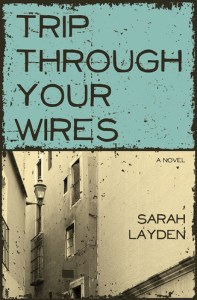
Sarah Layden's novel Trip the Wires has been called "compulsively readable" and "a welcome antidote to despair."

Sarah Layden’s novel Trip Through Your Wires has been called “compulsively readable” and “a welcome antidote to despair.”

Sarah Layden is the author of the novel Trip Through Your Wires and the winner of the Allen and Nirelle Galson Prize for fiction and an AWP Intro Award. Her short fiction can be found in Boston Review, Stone Canoe, Blackbird, Artful Dodge, The Evansville Review, Booth, PANK, and the anthology Sudden Flash Youth. A two-time Society of Professional Journalists award winner, her recent essays, interviews and articles have appeared in Ladies’ Home Journal, The Writer’s Chronicle, NUVO, and The Humanist. She teaches writing at Indiana University-Purdue University Indianapolis and the Indiana Writers Center.

To read Layden’s story “Bad Enough With Genghis Khan” and an exercise on withholding plot information, click here.

In this interview, Layden discusses crime fiction and Gone Girl, lyric versus story impulses, and plot twists that cause readers to make Scooby Doo noises.

Michael Noll

The story begins with “The week after my husband’s retrial and acquittal,” but we don’t learn what he was accused of until much later, almost at the end. When that information arrives, it’s stunning. In fact, I’d completely forgotten about the retrial–the opening paragraph moves on from the trial so quickly. I think I may have made a Scooby Doo noise when I realized what I’d just read. So, I’m fascinated by this strategy of delaying the info. Did you always do that in the story? How did you approach the structure?

Sarah Layden

I know exactly the Scooby Doo noise you mean, and couldn’t be happier that the story elicited it from you. The structure of this piece was always in short vignettes, I think starting with three or four. Initially I’d numbered them, though the numbering was discarded later. Each vignette initially had some sort of tie to Genghis Khan, even if it was a distant link. It took several drafts before I started seeing what some of the connections were between the different parts. That first sentence about the retrial and acquittal was built into the last revision I did: I finally had a sense of the characters and what had –or had not—happened, and I realized that because the narrator had that information prominently in mind, that it should be prominent in the beginning, too.

Michael Noll

The story is doing something really interesting with Genghis Khan. At times, past and present blur together, as they do here: “We don huge fur hats and pound our utensils on the table. Bring us all that we desire, we growl, even if we don’t know what it is. We stab our meat with sharpened knives I pull from my purse.” I’ll admit that when I first read these lines, I was confused. But it was a good confusion. It was such an odd shift that I wanted to keep reading to figure out what was going on. But it’s a strategy with risks. How do you know when a passage is confusing in the good way as opposed to the bad way?

Sarah Layden

Having good readers is crucial to me for this very thing. When I began writing this, I was experimenting: I didn’t know what it would become. My friend Bryan Furuness, also a writer and editor, gave me early feedback that helped me see places where it was confusing rather than mysterious. Part of our conversation was about the lyric impulse versus the story impulse, and how they can work together. Early on, I was probably writing more toward the lyrical. As I revised, it turned more narrative. It’s funny that you mention past and present and the blurring of boundaries, because that does seem to be something that crops up in my work. My novel, Trip Through Your Wires, alternates between past and present, and concerns itself with memory. That interests me in fiction: a character wondering, in the Talking Heads song sense of the line, “How did I get here?” (By the way, one of my all-time favorite songs, “This Must Be the Place,” just came on. Talking Heads asks, Talking Heads answers.)

Michael Noll

In general, there are some amazing shifts of tone in the story. At one point, a paragraph moves from “flecks of charred flesh between his teeth” to “Genghis didn’t give a fuck about floss” to “Jengis was a guy who conquered and then didn’t call because he was high and playing Xbox and just, like, forgot.” I love this. Is it simply the stuff your creative mind is spitting out? Or is there a method to the madness? If not, how do you put yourself in the right mind frame to write prose that seems, at first glance, to move in idiosyncratic rather than linear ways?

Sarah Layden

Thank you. It’s definitely associative. The title, in fact, does come from a line I overhead in a café: “It was bad enough with Genghis Khan.” From there, I started thinking up links and connections and was writing in sections. Those sections took on their own voices, and at first I wondered if I was writing different characters. Instead, the story pointed to a narrator across different moments in her life. At times she’s mimicking the person she describes, as if trying to take on his perspective, to be the conqueror rather than the conquest.

I’ve always been a little bit of a mimic, and as demonstrated, a big eavesdropper. I love trying to recreate different voices and train my ear. I used to be a reporter and I strove to quote people accurately. What’s fun about fiction is stretching accuracy into a shape that fits a story. Or making it weirder, more complicated, and multi-layered than the thing that was actually said, such as an offhand remark about Genghis Khan.

Michael Noll

In Trip Through Your Wires, a new clue causes a woman to retrace the mystery of her boyfriend's death.

In Trip Through Your Wires, a new clue causes a woman to retrace the mystery of her boyfriend’s death.

You’ve published a novel, Trip Through Your Wires, that involves a murder and some uncertainty about a character’s culpability. Now, you have a story about an unsolved murder/disappearance. You’re working over material that is the heart and soul of the thriller genre. Do you ever consider going “full thriller?” Or, what’s the difference between your stories and those?

Sarah Layden

Unexpectedly, this does seem to be the material I’ve been returning to. I’ve read a little in the thriller genre, and it’s so intricately plotted and painstakingly resolved. I hesitate putting my work in with that type of craft, because I’m definitely a novice there. Someone described my novel as a “literary thriller” or “literary mystery.” I like that a lot, maybe because it gives me some wiggle room to focus on place, character, and scenes that drive the story forward, but not necessarily at a breakneck pace. Moments of being or reflection or ambiguity are definitely more characteristic of literary fiction than something shelved under Mystery, and I’ve been learning that mystery readers definitely want closure. And may be a little upset if you don’t give it to them.

Michael Noll

Out of curiosity, what’s your verdict of Gone Girl? At a writer’s conference last weekend, I heard two very different opinions about the book from people I respect. Care to weigh in?

Sarah Layden

I thought it was a terrifically entertaining read. The writing was fun, lively, and engaging. My sister passed it on to me when we were on vacation a few years back and kept asking me where I was in the story. I’d tell her what I thought was about to happen and usually was right or at least close. There’s a little reading thrill in confirming your predictions.

There’s been lots of criticism about the book and how it portrays women, and I’d like to reread it with that in mind. You certainly don’t want to reaffirm stereotypes of women as fakers and man-trappers (I’m trying not to spoil it for the three people who haven’t read it yet.) But as I remember it, both the male and female leads behaved with equal awfulness, thus leveling the playing field.

July 2015

Michael Noll Michael Noll is the Editor of Read to Write Stories.

An Interview with Sequoia Nagamatsu

16 Jul
Sequoia Nagamatsu's forthcoming debut collection, Where We Go When All We Were Is Gone, is a collection of twelve fabulist and genre-bending stories inspired by Japanese folklore, historical events, and pop culture.

Sequoia Nagamatsu’s forthcoming debut collection, Where We Go When All We Were Is Gone, is a collection of twelve fabulist and genre-bending stories inspired by Japanese folklore, historical events, and pop culture.

Sequoia Nagamatsu is the author of the forthcoming Japanese folktale and pop-culture inspired story collection, Where We Go When All We Were Is Gone (Black Lawrence Press, 2016). His work has appeared or is forthcoming in Conjunctions, ZYZZYVA, Bat City Review, Fairy Tale Review, and Copper Nickel, among others. He is the managing editor of Psychopomp Magazine and a visiting assistant professor at The College of Idaho.

To read Nagamatsu’s story “Placentophagy” and an exercise on defamiliarizing the familiar, click here. In this interview, Nagamatsu discusses first lines, his process for outlining stories, and why realism sometimes falls short.

Michael Noll

The story starts with a solid impact: “My doctor always asked how I would prepare it, the placenta.” I’m curious about the genesis of that line. For some writers, first lines simply appear and the challenge is finding the story that follows, but I know others who start with a scene or an idea and then need to find a line to kick it all off. Was this first line always present in the story?

Sequoia Nagamatsu

For me, I like to do a lot of “writing” in my head long before I actually put any words down. I knew I wanted to write a story about Placentophagy but it took another week or so of thinking about the idea to attach a grieving couple to the practice vs. the story focusing on folk medicine and celebrity mothers who have eaten their placenta (i.e. Alicia Silverstone). Once I had the grieving couple tied to pieces of folklore, I knew I had the necessary emotional tension plus the fun facts that interested me to begin writing.

I believe first lines (and first paragraphs) are crucial to pretty much any story (but especially so for flash pieces where you need to draw the reader in, provide some kind of map of what the story will be about (even if only via tone), and establish character and world building in short order. As an editor, I want a story to provide the central characters, introduce a central tension, and do something unexpected and interesting within the first few lines. Don’t reveal all your cards certainly, but I don’t believe in messing with readers too much. Give them a map of an unfamiliar town. Give the reader something they can navigate as more information is revealed.

As a writer, I don’t continue with a story until I’m satisfied with at least the first few sentences. For this story, the first lines came pretty quickly (with other stories, it can be more of a slog . . . and sometimes I’ll think I have a first line I’m happy with until I finish the story and realize my first line is actually buried somewhere else b/c, as a writer, I was navigating to a destination just askew from where I thought I was going when I started).

This question has made me revisit many of my first lines. A few from my forthcoming collection:

Mayu called me from the train car that Godzilla had grabbed hold of––no screaming or sobbing, no confessions of great regrets, no final professions of love.

Our daughter, Kaede, has returned to us five years after the police fished her out of the community pool, her body sodden and distended like the carcass of a baby seal when I identified her in the morgue.

On our wedding day, you weighed 115 lbs. When you died, you weighed 97. You are now 8.7 cups of ash, and I figure I can make enough 1:25 scale figurines of you from what you’ve left behind, so we can see the world.

Michael Noll

Where We Go When All We Were Is Gone is "an exhilarating debut that serves up every guilty-pleasure pop-culture satisfaction one could hope for while simultaneously reframing and refashioning those familiar low-art joys into something singular, unanticipated, and entirely original," according to Pinckney Benedict.

Where We Go When All We Were Is Gone is “an exhilarating debut that serves up every guilty-pleasure pop-culture satisfaction one could hope for while simultaneously reframing and refashioning those familiar low-art joys into something singular, unanticipated, and entirely original,” according to Pinckney Benedict.

Backstory is crucial to the present action in this story, but it’s handled in a quick, compact line: “Somewhere in the building Ayu’s tiny body, caught in the strained expression of her first and last cry, rests in drawer, waiting for someone to fetch her.” Again, I’m curious how much revision was required to achieve such efficiency. Many of your other stories are quite long, which would seem to require a different process than a piece of flash fiction like this.

Sequoia Nagamatsu

When I conceive of a story or a character or a place that I think could contain some kind of world, I start with sketches and summaries. For a longer short story, this might take the form of a rough synopsis. For the novel I’m working on, these sketches might take the form of bulleted points which represent important scenes within an act. I knew from the get go that Placentophagy would most likely be a flash piece, so instead of thinking about my initial sketches as guidelines to be fleshed out later, I made more of a concerted effort to make my notes resemble lines that could potentially be included in the story. The line in question was born from knowing that I needed to capture the loss of a child. Instead of noting “enter scene of miscarriage,” I immediately played around with a couple of variations that captured the essence of this plot point. In other words, when I’m writing smaller and shorter, I inhabit the atoms that make up the molecules of a larger story’s architecture. I need to capture what’s going on at that level.

Michael Noll

I love the essay-ish section about the practice of eating placentas, but I can also imagine workshop readers advocating for it to be cut—because that’s the sort of thing that workshops do. How did you approach that section so that it moved the story forward?

Sequoia Nagamatsu

Whenever I become fascinated with something and consider treating the topic in a story, I tend to be cautious b/c there’s a real danger that I might dilute forward motion and character with unnecessary minutiae. With that said, I don’t think there is anything inherently wrong with tracts of reportage and “essay-ish” writing in fiction so long as 1) the conventions of the story have been firmly established to allow for such asides (esp. if they are lengthy and a bit more detached from character) and/ or  2) the momentum for characters and the overall story are not completely lost or forgotten. For this section, considering the length of the piece, I knew I would have to pick and choose a couple of interesting facts, tie them to the emotional tension of my narrator, and quickly move on. The facts in this story, while certainly stepping outside of my main character, illuminate her research, as well as her relationship to her children and to her body, so if I chose, I probably could have added a line or two more without much lost momentum.

Michael Noll

When I first read this story, it seemed like a piece of horror fiction. Then, I read some of your other work, which involves science fiction situations and characters, and it all seemed to cohere as a single vision. Horror and sci-fi are obviously different genres, but both depend, to some extent, on defamiliarizing the familiar. Is that what attracts you to these types of stories?

Sequoia Nagamatsu

Defamiliarizing the familiar is something present in pretty much all fiction. But to the degree of horror and fantasy and sci-fi (and its genre-bending cousins by various names: magical realism, slipstream, fabulism), the defamiliarizing is often illuminating aspects of reality whether that be racism or rampant consumerism via what many might consider obviously unrealistic, surreal, or fantastic.

I’ve long been a fan of literature and film that forces me to suspend my disbelief, that takes me to other worlds. I love these kinds of stories because I find them entertaining and imaginative. I love these stories because the primal part of me wants to be afraid, wants to use that fear. I love these kinds of stories because they force me to consider the gadgets around me and how they factor into who I am and who I’ll be 10, 20, 50 or more years from now. To quote the title of a Chan-Wook Park film (of Oldboy notoriety): I’m a cyborg, but that’s okay.

These kinds of stories are important and increasingly necessary because we live in complex times and sometimes “realism” falls far short of what we need to comprehend how fast we are evolving, how we process information, and how we define personal, cultural, and geographic borders and spaces. What we consider fantastical fiction used to simply fall in the realm of story or religion. Our stone age ancestors needed a way to understand and process the world around them. For countries who have had to deal with colonial and post-war transitions, the fantastical has become a vehicle where the distant native past and the unhinged identities of the present intermingle. Today we’re compounding these past relationships born from colonialism and warfare with globalization and technology.

Many of my stories are set in Japan. And for me, Japan is a unique case b/c it is a country that has had to reinvent itself multiple times over a short amount of time (notably in the 1800s when there was a push to westernize and again after WWII when the country shifted from military empire to technological and commercial super power). These shifts occurred so rapidly that Japanese culture & identity couldn’t keep pace, and you’ll note that creatures of Japanese folklore often share the stage with technology or modern society gone awry in anime, showcasing the tenuous relationship between the past and present. Akira was released nearly thirty years ago but has never been more relevant for Japan and the rest of the world.

In short, I’m drawn to and write in the realm of the fantastic because, for me, they are the stories that help me navigate the many spheres constituting who we are.

July 2015

Michael Noll Michael Noll is the Editor of Read to Write Stories.

An Interview with Natashia Deón

9 Jul
Natashia Deón's debut novel will be published in 2016 by Counterpoint Press.

Natashia Deón’s debut novel will be published in 2016 by Counterpoint Press.

Natashia Deón is a Los Angeles attorney, writer, and law professor. She is the creator of the reading series Dirty Laundry Lit and was named one of L.A.’s “Most Fascinating People” in L.A. Weekly’s 2013 People Issue. A 2010 PEN Center USA Emerging Voices Fellow, her writing has appeared side-by-side with Pulitzer Prize winning writer, Yousef Komunyakaa in The Rattling Wall, in B O D Y, The Rumpus, The Feminist Wire, and Asian American Lit Review. Deón has been awarded fellowships and residencies at Yale, Bread Loaf Writer’s Conference, Prague’s Creative Writing Program, Dickinson House in Belgium, and the Virginia Center for Creative Arts. Deón’s debut novel is due out in the summer of 2016 from Counterpoint Press.

To read two of Deón’s Facebook posts that were republished as stand-alone pieces, plus an exercise on writing artful sentences, click here. In this interview, Deón discusses Facebook’s positive effect on her fiction, the benefit of reading your work aloud, and the importance of being a generous writer.

Michael Noll

What role does Facebook play in your creative life as a writer? Do you have a rhetorical strategy to writing posts? Does the personal aspect of Facebook posts serve as a relief from your fiction writing? I ask because your forthcoming novel is set after the Civil War and so would seem to be at quite a remove from your life.

Natashia Deón

I spend way too much time on Facebook like most people. By too much time, I mean, I know that there are other things I could be doing but I often find myself multitasking in my real life and on social media. Between work and family and volunteering, I’m rarely sitting at home on a computer or somewhere where I can quietly contemplate a post, so my posts are things that randomly strike me in the day, things that I think other people might think are funny or poignant or helpful or sometimes there’s no point, I’m just venting or sharing a day. Is that a strategy?

Honestly, my FB behavior hasn’t really changed since my first sign-on to Facebook years ago after having my first baby and I thought, if I post these photos here, I don’t have to talk to grandma right now. I’ll text her and say, “SEE MY POST!”

Sometimes I say too much. Like having a drink at a bar and talking to a stranger. I’m sure there’s a hazard to this “strategy”–online footprint and all–and I’ve been known to delete posts, but for me, making mistakes matter less to me than connecting with people.

I do think I’ve gotten better at writing short-short stories because of Facebook. You have to get to the point, be clear, or get the dialog right. But that said, I still post long paragraphs that annoy people. But sometimes, that long post is the one that gets the most attention. I try to keep it interesting.

Sometimes I wish I could be like friends who only share other people’s posts, or Bible verses, or encouraging words, but I’m not that girl. I’m the one who’s tapping the microphone saying, “Is this thing on?”

It’s not that I think my thoughts are any more important than anyone else’s but what I’m beginning to understand is that people are afraid. Especially when it comes to social issues, topics that artists for centuries have represented in their work and have been the central voices in positive change. People today, even artists, are afraid of their thoughts and questions and not having the answers or fear that they’ll come to the wrong conclusions.

So I speak for them sometimes. To show people, especially artists, that I don’t know either and it’s O.K. It’s the conversation that matters. There’s still a lot more convincing to do because the trolls will always regulate as they do, convincing people that they shouldn’t have a voice and that we don’t have anything in common.

And yes, breaking away to post on social media is relief. Writing, in general, is relief. It’s emptying out old thoughts and replacing them with new ones. The same as I would in my fiction. And in my debut novel SWEET TEA AND HONEY—the title is about to change—I get to traverse time and through research am reminded that human beings are still the same. We all have hungered, loved, laughed, hurt, are born, die. I’ve read somewhere before that every person alive is the result of thousands of years of love or painful interactions. I’m privileged to live in this time and imagine some of those stories.

Michael Noll

You organize the Dirty Laundry Lit reading series. How important is it for writers to perform or read their work publicly? Do you think it benefits the work that eventually winds up on the page?

Natashia Deón

The Dirty Laundry Lit reading series was called a "raucous, all-inclusive party" by L.A. Weekly.

The Dirty Laundry Lit reading series was called a “raucous, all-inclusive party” by L.A. Weekly.

In the last five years or so as I’ve run Dirty Laundry Lit, I’ve seen over a hundred writers take our stage and some are incredible readers and some are so-so readers. So-so is rare on our stage. Both of these “classes” of writers, if you will, are all tremendously talented writers. But sometimes what I hear about the great reader is that he or she is “a great performer” and that’s why he or she did a great job reading, where another reader who might be so-so, is considered to have work that “stands on the page.” It’s one of those double-sided compliments that imply if you’re a great reader, your work does not equally stand.

What I believe and what I have seen is that great work stands when it’s played aloud. Period. Great work stands even when the writer is not a good reader and shines even more when the writer is a good reader.

Readings build confidence in the work. It’s the difference. Not just on the stage but before, as we prepare to take the stage and sometimes while we’re in the throes of reading it. We edit ourselves and armed with the honesty that voice gives our pieces, we become our best editor-selves. We skip things—sentences, words—we make new word choices as we read, playing the sentences aloud. We hear the pacing problems, the unneeded repetition, we become better judges of ourselves, our work. We discover how we can deliver our stories better. Make them more clear. Sometimes we see new things that we hadn’t seen on the page. The solitary side of the writer needs to get dressed and go outside some days. Reading publicly is one of those days. We make ourselves better for the crowd.

Michael Noll

As an organizer of a reading series, you are, in a way, playing a role in the publishing and book industry: you’re giving a voice to writers, giving them a chance to promote themselves and become known and advance their craft. This is an industry that is sometimes criticized for the voices it promotes. In response to that criticism, the small press And Other Stories recently announced that it would publish only women authors in 2018. Given Los Angeles’ rich diversity, it would seem like you could play a similar role with Dirty Laundry Lit, pushing against tendencies within the publishing industry? How do you find readers for the series?

Natashia Deón

When I created Dirty Laundry Lit, diversity was one of my three main goals. And by diversity, I do mean race and gender, and also other larger categories like economic diversity, religious, sexual preference and identity, age, physical ability, etc. This diversity isn’t the exclusion of anyone. It’s the inclusion of all. Or, as many as we can get. Diversity has to be intentional. And without a lot of money, creating diversity means we have to give a lot of personal time and effort to seek and find people, not waiting for them to find us. Our goal for each show is that any person can walk into a Dirty Laundry Lit event and see themselves on the stage; their experience represented. And if not this time, the next, or the next.

This aspect is important to me because when I became part of the literary community here in L.A. that’s not what I saw. Black writers were with Black writers, White with White, Asian with Asian, women with women, most experienced writers with the same, etc. We put ourselves into these ghettos of sameness for protection, support, for encouragement, to even have a space, and I get it. I need that, too. There is richness there but there’s magic when we put our differences together. I believe in creating the world I want to see. We all have a role. Where one repairs, another builds up, and so on as the saying goes. It’s community. The magic is in discovering what’s out there, smoking out the wonder. I believe that’s what we’re doing at Dirty Laundry Lit. And by doing this, we are telling people, you belong here, too.

I choose readers based on diversity, recommendations, and their involvement in the literary community. Dirty Laundry Lit goes hard in promoting writers and we do it with more passion than a paid publicist. We do it because we love it. We truly celebrate writers which is a rare experience for most writers. I was lucky to have first felt “celebrated” as a PEN Emerging Voices Fellow. There were six of us and for the eight months of the fellowship, we were treated like literary rock stars. That’s what I want to share with every writer who signs on to be on the slate of a Dirty Laundry Lit event.

And because we’ve been successful in doing this, there is a wait list to become one of our readers. Writers of all levels come to us and essentially say, “Celebrate me. I’m good.” We want to, but there’s limited time and space. So we tend to choose writers who are generous as we are generous. Writers who are giving back to the literary community already through volunteer work and other ways, and are also making space for other writers. This writing journey is impossible without community.

July 2015

Michael Noll Michael Noll is the Editor of Read to Write Stories.

An Interview with Christine Grimes

2 Jul
Christine Grimes' story, "The Window," appeared in 2 Bridges Review.

Christine Grimes is a Texas-born writer living in upstate New York. Her story, “The Window,” appeared in 2 Bridges Review.

Christine Grimes teaches at SUNY Jefferson and has led writing workshops and craft seminars for Black River Writers and Fort Drum’s women’s conference. Grimes’ work has been included in From Where You Dream, a collection of craft lectures by Robert Olen Butler. She also hosts the North Country Writers Festival in Watertown, NY, annually, as well as the monthly reading and performance series, First Fridays, in Sackets Harbor, NY. Her stories have been published in journals such as Harpur Palate, Cutthroat, Passages North, and 2 Bridges Review. She is currently at work on a collection of stories and a supernatural thriller set in Sackets Harbor, NY.

To read “The Window” by Christine Grimes and an exercise on structuring a plot around a character’s lack of change, click here. In this interview, Grimes discusses the ten-year road to publication for “The Window,” the problem of where to begin a story, and the legal issues of using real-world references in a fictional story.

Michael Noll

I know that “The Window” has had a long life between first draft and publication (ten years?). How did it change in that time? Or, what revisions finally got it to the final draft?

Christine Grimes

I first drafted this story for a Texas State University MFA workshop in 2004 and it finally found a home when it was published in 2015 with 2 Bridges Review. Remarkably, the story’s structure and who the character was didn’t change drastically during those eleven years. A lot of my stories are rooted in working-class monotony that stretches into the weird and absurd. I wanted to portray a woman who truly believes she’s destined for greatness and is stuck in a dead-end job that moves from unpleasant and slides into a surreal nightmare without her quite realizing that it’s occurring until it does.

Like many MFA students, I revised shortly after workshop and sent it out into the world for rejection. I submitted a couple times a year and when I’d hear back from journals, sometimes there would be an encouraging note, but mainly it was those little scraps of paper (in the days before Duotrope) saying thanks, but no thanks. Every time it came back, I’d read it through again and cut some words, some lines, some paragraphs. I’d rework a passage or two. Then I’d send it out during the next 3-day weekend or block of vacation time I had. I landed a few other stories I’d written for Tim O’Brien’s workshop at journals during those years and that, coupled with the encouraging rejections, was enough to keep me still sending this one. 

When I wrote newer stories, I sent those instead, but something always drew me back to this one, so I kept tinkering. I removed filters, cut some more words, and sent again. When I compare the 2004 draft to the 2015 published version, many of the original lines are still included, but they are cleaner and the chaff has dropped away. I also have added lines to each key scene that either roots it in sensory description, calls back to something else in the story, and/or transitions between ideas. In the final paragraph for instance, the middle of the paragraph was added: “The cloudy smear shrinks as the impression from his hot breath fades until the window is clear.” Before that sentence was added, the paragraph moved too quickly and the beats didn’t effectively root the reader with the narrator in that final, isolated moment. When I look through the story, there are sentences like this throughout, but I doubt I ever would have gotten to those without the cuts that made the space and air for them to arrive.

Michael Noll

I really like the opening scene at the bar, where the narrator gets embarrassed by the guy she met. It’s an interesting scene to begin the story with because it’s set outside of the chip factory, where the entire story is basically set. It also happens outside the time frame of the day that the story is mostly set in. Did the story always begin with this scene? Or, did you add it to achieve a particular effect?

Christine Grimes

The story always included this scene, but it wasn’t until I revised the story several times over that I realized its importance to the narrative. Originally, I’d written it to set her in small town ambiance, show her life outside of work wasn’t much better, and make her late to work. While it did create that effect, I thought of cutting it and starting in the chip factory during revisions. Then I realized that it’s important that she has the man’s attention and hopes for romance until his friends mock him for his interest. It sets up a parallel for the final scene where she is on display and falls at the mercy of several guys together. Although she is able to convince herself the first event doesn’t matter, her willingness to hope for some connection with the final guy who exposes himself leaves her in an even more vulnerable position. Her inability to recognize the reality of a situation repeats throughout the story.

Michael Noll

I also love the daydream about becoming a food critic. I remember this part from all those years ago in workshop. Since this an internal moment for the narrator (as opposed to a present-tense scene), it probably has the ability to move about the story until it finds its right location and size. Was this the case? Or was this daydream always present in the story in basically this same place, in the same way?

Christine Grimes

Christine Grimes' story, The Window, appeared in 2 Bridges Review, Vol. 4.

Christine Grimes’ story, The Window, appeared in 2 Bridges Review, Vol. 4.

Thanks. It was something I had a lot of fun with, particularly because her idea of becoming a food critic is vastly different from what many would imagine. She isn’t cooking up exciting dishes at home and no one is coming to her for restaurant recommendations. The daydream always appeared in this format and was one of the few things I decided not to tinker with in the story.

Surprisingly, one of the most difficult challenges with revision to this story was centered around food. I’d named the factory after a well-known corn chip company and used it throughout. Sometimes it was a benefit I suppose – a kind editor at Carve wrote to tell me the story had made it through the  early rounds for their contest but didn’t make it to the finals, then noted she was a sucker for those chips and any story that featured them. However, ultimately, when I worked with Rita Ciresi at 2 Bridges Review, she accepted the story noting that I’d have to take the name out for the sake of liability. I agreed and immediately brainstormed 15-20 names that conjured up the same type of oily corn chip sound with my favorites at the top.  When I began researching those, I found Mexican restaurants, East and West coast chips companies, vegan chips, and weight loss companies, until I finally landed on Gornitos. While I’d seen different writers debate whether or not to use companies for the sake of verisimilitude, I never expected to have to change it for liability purposes.

Michael Noll

I cringed at the fact that the narrator eats ten bags of chips a day. I mean, I love to eat and I can pretty easily eat way too much food, but that is a lot of chips. It’s an interesting thing for the narrator to know about herself—she seems aware of her own actions yet also unable to change them. That seems like it would be a difficult balance to find. How did you make her aware but not so aware that the reader wouldn’t believe that she was still stuck in a job she felt was beneath her?

Christine Grimes

Two for lunch, two for dinner, a few in the afternoon? Nope, you’re right. That is a ton of chips. One of things that fascinates me about people are the disconnects they are able to have in their own lives. That’s certainly one of the things I wanted to explore with this character. She’s overweight, unhappy, and stuck, but doesn’t see that eating all of these bags, and even logging more tastings than she’s supposed to, could be detrimental. And she’s proud of her work and her work ethic, even though she shows up late and sabotages her boss. So I tried to illustrate her goals and dreams, the reality of her life, and the disconnect between the two. That was something I really wanted to capture – the ways in which we are woefully short of the visions we keep of ourselves. Of course, it’s easier to see in others, particularly people who might seem so different from ourselves.

July 2015

Michael Noll Michael Noll is the Editor of Read to Write Stories.