How to Describe a Character’s Sense of the World

20 Sep
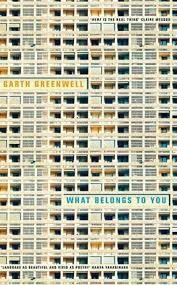
Garth Greenwell's novel What Belongs to You tells the story of a young American man teaching in Bulgaria and his complicated relationship with Mitko, whom he meets in a public restroom.

Garth Greenwell’s novel What Belongs to You tells the story of a young American man teaching in Bulgaria and his complicated relationship with Mitko, whom he meets in a public restroom.

When I was an undergrad, one of my writing teachers lamented that too many novelists were trying to write books that could easily be filmed. A good novel, she said, moved differently than film; it created a kind of narrative space that could not be captured on a screen. And what filled that space? Human thought.

This isn’t the only view of what constitutes good writing, and it’s probably not even a majority opinion, but it does suggest an interesting question. If a scene that can be filmed—i.e. one with dialogue and action and subtext to inform both—is not the only approach to a scene, then what else is there?

One answer can be found in Garth Greenwell’s new novel What Belongs to You. You can read a long excerpt from the beginning of the novel here.

How the Story Works

In his review of What Belongs to You in The New Yorker, James Wood writes this:

The novel contains no direct dialogue, only reported speech; scenes are remembered by the narrator, not invented by an omniscient author, which means that the writing doesn’t have to involve itself in those feats of startup mimesis that form the grammar, and gamble, of most novels. In an age of the sentence fetish, Greenwell thinks and writes, as Woolf or Sebald do, in larger units of comprehension; so consummate is the pacing and control, it seems as if he understands this section to be a single long sentence.

Wood’s “feats of startup mimesis” are another version of “can be filmed,” or at least “can be filmed in the way we’re accustomed to seeing on-screen.” In place of these feats, he claims, Greenwell inserts “larger units of comprehension.” That’s all a bit vague without an example, and so here is a brief passage (only a small part of a longer paragraph) from What Belongs to You. A bit of setup: the novel’s narrator is a young American man teaching in Bulgaria. In this scene, he’s in the National Palace of Culture, in the restrooms,which are frequented by gay men because they “are well enough hidden and have such a reputation that they’re hardly used for anything else.” The narrator encounters a man there, and that encounter, brief in terms of actual minutes, occupies almost ten pages. Here is why:

I wanted him to stay, even though over the course of our conversation, which moved in such fits and starts and which couldn’t have lasted more than five or ten minutes, it had become difficult to imagine the desire I increasingly felt for him having any prospect of satisfaction. For all his friendliness, as we spoke he had seemed in some mysterious way to withdraw from me; the longer we avoided any erotic proposal the more finally he seemed unattainable, not so much because he was beautiful, although I found him beautiful, as for some still more forbidding quality, a kind of bodily sureness or ease that suggested freedom from doubts and self-gnawing, from any squeamishness about existence. He had about him a sense simply of accepting his right to a measure of the world’s beneficence, even as so clearly it had been withheld him.

The first sentence is pretty straightforward: The narrator desires the man but doubts he will get any such satisfaction.

The second sentence starts in a similarly clear way (“For all his friendliness”) but instead of sticking to what is clear and evident, the narrator begins to suss out what lies behind that friendliness. He identifies it as a “more forbidding quality, a kind of bodily sureness or ease that suggested freedom from doubts and self-gnawing, from any squeamishness about existence.” Earlier, the man has been described in specific detail, but this sense of him is particular to the narrator. Someone else might see nothing like this at all. In short, the prose has jumped from what is to what seems to be to the narrator. The world and the people in it are being viewed, thickly, through the narrator’s consciousness. The final sentence extends this filter and the sense of being that it reveals: “a sense simply of accepting his right to a measure of the world’s beneficence.”

Of course, that filter is present in all novels. In first-person narration, the narrator provides the filter. Everything we see is seen through the narrator’s eyes. In third-person prose (and, really, in all novels), the filter is the author’s. And yet we forget this because most novels work hard to make us forget; they want us to see the world of the novel as clearly as an image in a film.

A review in The New York Times by Aaron Hamburger calls the style used by Greenwell “an ‘all over’ prose style, similar to that of a Jackson Pollock abstract expressionist painting, in which all compositional details seem to be given equal weight,” comparing it to the prose of Ben Lerner’s novels. But that doesn’t seem quite right. Greenwell’s narrator isn’t scattered. He’s pretty focused on the man in front of him and his desire for him, and it’s that focus—the act of seeing and thinking about—that becomes the essential material of the novel.

Lerner does something similar. Here’s a passage from his most recent novel, 10:04, after the narrator has had sex:

I was alarmed by the thoroughness of what I experienced as Alena’s dissimulation, felt almost gaslighted, as if our encounter on the apartment floor had never happened. Here I was, still flush from our coition, my senses and the city vibrating at one frequency, wanting nothing so much as to possess and be possessed by her again, while she looked at me with a detachment so total I felt as if I were the jealous ex she’d wanted to avoid, a bourgeois prude incapable of conceiving of the erotic outside the lexicon of property.

As in Greenwell’s novel, Lerner’s prose is interested in sense and what an awareness of the world feels like: “what I experienced as Alena’s dissimulation, felt almost gaslighted.”

Of course, these are two very different books with very different narrators. Lerner’s narrator spends a lot of time on social media, and so his consciousness actually is scattered at times because it is pinging along with the rapid delivery of information from Facebook and Twitter. He’s also a poet, and so he’s apt to fall into long interior discourses about art and poetics. In other words, the things he thinks about are different, but the general style of the narrator, its general focus on consciousness, is similar.

Of course, any time reviewers start comparing the book at hand to some deceased writer’s work (Wood chooses Woolf and Sebald) or to writers with highly distinctive styles (Hamburger in The New York Times chooses Lerner and Karl Ove Knausgaard), you know that the book is doing something so new that it isn’t easily classifiable. Yet, let me take my own shot: In its focus on a mind actively thinking about the experience it is having, Greenwell’s (and Lerner’s) work resembles the prose of Henry James, particularly The Beast in the Jungle.

That book, like Greenwell’s, begins with a charged encounter, a man and a woman at a party. The woman tells the man they’ve met before and asks if he’s forgotten. Here is what comes next:

He had forgotten, and was even more surprised than ashamed.  But the great thing was that he saw in this no vulgar reminder of any “sweet” speech.  The vanity of women had long memories, but she was making no claim on him of a compliment or a mistake.  With another woman, a totally different one, he might have feared the recall possibly even some imbecile “offer.”  So, in having to say that he had indeed forgotten, he was conscious rather of a loss than of a gain; he already saw an interest in the matter of her mention.

Much about James’ novel is different from What Belongs to You. It’s about inaction, and Greenwell’s isn’t. There is dialogue, and Greenwell writes almost none. Yet to quote Wood, both novelists are interested in “larger units of comprehension,” and those units are filled with character’s sense of what is happening around them.

The Writing Exercise

Let’s describe a character’s sense of an interaction, using What Belongs to You by Garth Greenwell as a model:

  1. Choose who will have the interaction. The possibilities, of course, are endless. It can be between lovers, siblings, parents, coworkers, friends, business associates, or enemies, or it can be transactional, like the interaction between store clerk and customer.
  2. Choose which perspective will serve as the filter. In other words, whose eyes are we seeing the scene through? This can work in third-person as well as first-person, as Henry James makes clear in The Beast in the Jungle.
  3. State the desire. Despite the capacious units of comprehension that Greenwell creates for his narrator’s consciousness, certain things are quite clear. Number one would be the narrator’s desire. He wants the man in the restroom. Without that clear desire, the passage that follows might come untethered from the experience it is pondering. The reader needs a reason to wonder what the narrator thinks, and that reason is the possibility that the narrator might get, or not get, what he wants. So, state as clearly as you can what the character wants out of the interaction: money, love, some object, acceptance, permission, refusal, rejection, a chance to fight, a chance to make up, or even a mindless conversation. If no one wants anything in the scene, it’s probably not worth writing. Don’t be subtle. Greenwell’s narrator thinks, “I wanted him to stay.” Be just as direct.
  4. Describe the surface. Greenwell does this elsewhere in the scene and refers to it with the phrase “For all his friendliness.” How does the interaction seem at first glance. If the other character is putting on an act, what is the act? What is intended to be seen?
  5. Peer behind the surface. Greenwell’s narrator finishes the sentence that begins “For all his friendliness” by looking closer and thinking about what lies behind that friendliness. It might be useful to use Greenwell’s actual syntax as a model: “more forbidding quality.” So, you could write a sentence like this: For all his/her ______, there was a more _____ quality.”
  6. Let the character draw conclusions from this sense of things. Once the narrator/character determines that something does, in fact, lie behind the surface, let the character think about it. The desired end of thought is, usually, conclusion, which is what Greenwell’s narrator reaches: “He had about him a sense simply of…” Again, try using that syntax: He/she had about him/her a sense simply of _____.”

The goal is to expand the room your prose offers to its characters consciousness, the narrator’s sense of what is happening. You can make that room an efficiency or a mansion. Either way, the idea is to add a character’s sense of things, something that can be described in prose but not easily portrayed in film.

Good luck.

How to Swim in the Narrative Stream

13 Sep
Tim Horvath's story, "Fuchsia Maroon Timberwolf," was published in Green Mountains Review.

Tim Horvath’s story, “Fuchsia Maroon Timberwolf,” was published in Green Mountains Review.

If you spend any time in writing classes, you’ll eventually encounter the term “fictive dream.” It was coined by John Gardner in The Art of Fiction and means, basically, the zone that writers sometimes hit when the world they’re writing seems more real to them than the room they’re actually sitting in. Rather than seeing words on a page, the writers are dreaming their characters to a life that gets translated on the page. It’s a great feeling, but talking about it has always struck as a bit like talking about “runner’s high.” It’s good to know it exists; when it happens, you think, “Oh, this is what everyone was talking about.” But knowing that a fictive dream is within our reach doesn’t help us find it.

So, let me suggest another term. Narrative stream: The swiftly moving current of a story, as opposed to the still water in stagnant pools along the shore. When you find the narrative stream, your story seems to really move. Writing it feels easy, and so finding it is an important part of the writing process—the process for getting into the fictive dream.

A good place to see the narrative stream at work is in Tim Horvath’s story “Fuchsia Maroon Timberwolf,” a brilliant piece of not-quite-flash fiction you can read now at Green Mountains Review.

How the Story Works

The story is about a man and his daughter. On its surface, the story is structurally complex, spanning years and using a hypnotic style in which almost every sentence begins with “How…” This style and the montage-like movement through time give it a naturally dreaming effect but also presents clear challenges, for instance, how to keep the story moving when every sentence begins the same way. It’s a story that, by its nature, could easily get stuck in the still pools along the shore. The fact that it doesn’t—and that it ends with an emotional punch to the gut—makes the story worth paying close attention to. How does Horvath find and stay in the narrative stream?

Here is a passage from early in the story:

How he brought her to museums during the days, tilting the carriage up on its rear wheels till she pointed. How even when he was working, he’d taken days off. How he kept calling them days off, though he was home for months on end. How they grew apart even before he’d moved out. How he watched her increasingly from afar, marveling at her growing aptitude for making pictures, as if he could see manual dexterity insinuating itself into her wrists like a creature moving through the ocean in a time-lapse film, fingers as fluid as anemone tendrils but also hypodermic-exact. How he encouraged her!

The movement through time is evident here: the daughter starts the passage in a carriage and ends with her old enough to have grown apart from her father. That’s the dreaminess of the story—its ability to drastically compress time in a way that makes sense in a dream but is impossible in real, waking life. But that dreaminess is secondary to the story itself:

  • We see the man’s connection with his daughter in the way he tilts her carriage at the museum and the fact that he takes days off to be with her.
  • We see the change in the man’s work status (change almost always being essential to story).
  • As a result, we see the connection with his daughter begin to change until, in the next-to-last sentence, it seems to be severed in all ways except a lingering emotional one for him.

The sentences span years and, thus, could focus on anything, but what they actually focus on is emotion and change: the foundation for basically every memorable plot going back to Homer. The man feels something, and then his circumstances change, which leads to a change in the way he’s able to feel the original emotion. As readers, we naturally want to know what happens. As writers, we feel compelled to keep writing in order to find out.

The passage continues:

Brought her brushes and joked that she herself was his little paintbrush, gripping her hair and tugging it ever-so-gently to the top of her head till it all pointed upward, how then he hoisted her aloft and angled her till it tumbled over like horsehair as if she was the world’s largest heaviest giggliest shriekingest paintbrush and he working up a masterpiece on the canvas that was their wall. How her mother worried because it was late and he was getting her riled up. How he ignored her and lifted her still higher. How often he did this, how heavy his brush got! How once he dropped her but she was okay. She hadn’t blacked out, she promised, and she hadn’t started crying until she woke up at 3:18, hyperventilating and clawing the air. How years later on the field hockey team she started getting dizzy spells. How he learned that she wasn’t going to practice any more and hadn’t for over a month.

Again, we’re shown emotion (“joked that she herself was his little paintbrush” and “largest heaviest giggliest shriekingest paintbrush“) and from more than his point of view (“How her mother worried because…”). Again, time moves with astonishing swiftness (“How years later…”), and yet the focus remains sharply on change (“How once he dropped her” and the results of that drop).

When a story stalls out, it’s often (though not always, of course) for a couple of reasons:

  • We’ve lost track of what’s going on. Our characters are simply emoting in place, feeling strong feelings and thinking big thoughts with nothing else going on. In short, we’ve got emotion without change.
  • We’ve lost track of how things feel. A lot is happening, reversal after reversal, but it makes no impact on the character. Or, the impact is cursory. We write sentences like “She was sad” but don’t make the emotion visceral, which means it’s not really felt. After all, what significant emotion have we ever felt theoretically?

Horvath stays in the narrative stream because he’s able to continually focus on change and emotion. Even amid some pretty spectacular craft fireworks, the story remains devastatingly clear and compelling.

The Writing Exercise

Let’s swim in the narrative stream, using “Fuchsia Maroon Timberwolf” by Tim Horvath as a model:

  1. Find an emotion. In any moment, what is the strongest emotional state felt by someone? It doesn’t need to be felt by everyone or returned (I love/hate you, and you love/hate me). It doesn’t even need to be directly tied to the moment at hand. A character could be reminded of something and feel strongly about whatever is in his/her head. What you don’t want is blankness. You don’t want the answer that all kids give when their parents ask, “How was school?” Fine is not interesting for anyone involved. So, if a moment is fine for everyone, go in search of a moment where it’s not, where it’s good or bad or happy or sad or whatever. The emotion doesn’t necessarily need to be clear. Often, we don’t know what we’re feeling, only that we’re feeling it. When does your character experience a moment like that? There will almost certainly be more than one.
  2. Change the circumstances. In Horvath’s story, the man’s work status changes. It’s not clear what exactly has happened, only that something has. There’s an element of mystery. This is important to keep in mind. You don’t need to fully explain everything that happens in a story. Instead, the change should impact what is important (the emotion). The change can have an external cause (getting laid off) or be self-caused (dropping a kid on her head). It could be big or small, connected to the emotion or simply in the same place at the same time. What changes occur in your character’s world?
  3. Let the change impact the emotion. Once the man’s work status changes, his connection with his daughter deteriorates—not necessarily on his end, it seems, but on her end or her mother’s. The emotional connection isn’t the same as it was at the beginning. This shift matters because that’s the nature of emotional changes. We want to fall in love and feel loved, and we dread and fear falling out of love or losing love. Emotions are difficult, maybe impossible, to separate from desire. If you find a moment when a character feels strong emotion, it’s probably also a moment when the character desires something—which is what clues readers into the story. As with all emotions, characters will naturally resist or embrace change (I want things to change so I don’t feel this way, or I don’t ever want this feeling to end). What impact does your story’s change have on the character’s emotion or the way that emotion is felt?
  4. Repeat. Don’t stop with one emotion and one change. Or, stay with an emotion but complicate it by introducing change after change. Those changes and the impact each one has on the emotion is the story’s narrative stream.

The goal is to find the current that carries a story forward by focusing on the emotion and changes within the story.

Good luck.

An Interview with Hannah Pittard

8 Sep
Hannah Petard's latest novel, Listen to Me, has

Hannah Pittard’s latest novel, Listen to Me, was a New York Times “Editors’ Choice.”

Hannah Pittard is the author of four novels, including Listen to Me and the forthcoming Atlanta, 1962. Her second novel, Reunion, was named a Millions‘ Most Anticipated Book, a Chicago Tribune Editor’s Choice, a BuzzFeed Top-5 Great Book, a Best New Book by People Magazine, a Top-10 Read by Bustle Magazine and LibraryReads, a Must-Read by TimeOut Chicago, and a Hot New Novel by Good Housekeeping. Her debut, The Fates Will Find Their Way, was an Oprah Magazine selection, an Indie Next pick, a Powell’s Indiespendible Book Club Pick, and a “best of” selection by The Guardian, The Chicago Tribune, Details Magazine, The Kansas City Star, Chicago Magazine, Chicago Reader, and Hudson Booksellers. She is the winner of the 2006 Amanda Davis Highwire Fiction Award, a MacDowell Colony Fellow, and a consulting editor for Narrative Magazine. She teaches English at the University of Kentucky.

To read an exercise on creating an emotional backdrop for characters based on Listen to Me, click here.

In this interview, Pittard discusses finding the timeframe for a novel, zigzagging structure, and a difference between long and short novels.

Michael Noll

The novel takes place over the course of roughly 24 hours, yet two of the most important events, one for each of the characters (I’m referring to the mugging/murder and student-flirtation but won’t give it away in the Q&A), happens before the novel begins. Did you always know that the novel would have this timeframe, or did you begin with those events and discover the timeframe later?

Hannah Pittard

Hannah Petard's novel, Listen to Me, was a New York Times "Editors' Choice" and a Washington Post "Best Summer Thriller."

Hannah Petard’s novel, Listen to Me, was a Washington Post “Best Summer Thriller.”

From the beginning I was interested in writing a novel that took place over the course of a single day and concentrated on a single action. I’m fascinated with the treatment of time in fiction and I have a lot conversations with myself while I’m writing about the constraints and advantages of short stretches of time vs. long stretches of time. My first novel spans approximately four decades. Deciding what to include as scene (vs. summary) was such an intense process. In many ways, the chapters of that novel (The Fates Will Find Their Way) became for me like sentences in a short story. Every chapter needed to be as tight and deliberate and relevant as possible. Nothing was included that wasn’t essential, which is how I write my short stories (or try to…) I knew in crafting a novel that took place over the course 24 hours, I’d be relying more than usual on summary, backstory, and flashbacks. In general, I’m a writer who likes to stay away from all those things, concentrating instead on juxtapositions between observation and scene and the implications of the quiet ellipses that exist off the page. It was only during later drafts that I realized I would need to fill out those two major events you’re referring to. I put up a fight at first but I’m so glad that I eventually gave in. I think those moments away from the “present tense” of the narrative provide such a necessary reprieve from the current action.

Michael Noll

The novel opens with scenes that anyone who’s been in a long-term relationship will recognize: disagreements over mundane issues like walking the dog, packing the car, and taking out the garbage. What I found so refreshing about the novel is how the tension from those disagreements really forms the basis of the plot. Many of the early scenes are simply Mark and Maggie together in the car, feeling each other out. As a reader, I found these scenes really engaging and suspenseful. How did you approach suspense and tension in those scenes?

Hannah Pittard

I have never considered myself a suspenseful writer, but I came up with a method for the alternating chapters of this novel and I think somehow it (the suspense) just fell into place. In moving from chapter to chapter, I gave myself the rule of always moving forward in time and place (allowing for occasional flashbacks within each chapter). Next I tried always to pick up close to where Maggie or Mark might have left off but never exactly where the other had ended. Instead of a straight line, I imagined instead a zigzagging thunderbolt that moved right to left, upward and away. I also tried never to allow Mark and Maggie to consider the same moment (with a few key exceptions, including the cowboy and the sex). Somehow, this uneven and off-kilter back and forth provided the perfect balance for whatever suspense does exist.

Michael Noll

In the blurbs on the back of the book, several writers remark on how they read the novel in one sitting, which is easy to do as it’s less than 200 pages long. As a writer, I would imagine that this length would make the novel easier to hold in your head, more like a story. Was that the case? How did the process of writing this novel compare to your others, which are about 100 pages longer?

Hannah Pittard

Man… This novel took me longer than any book or story I’ve ever written. It’s short, you’re right, but there was nothing easy for me in its creation. As with the stories I write, every word in this book mattered to me. And given the aspect of suspense and the moodiness of the Maggie’s fear and Mark’s frustration, it was essential to me that it be as terse and swift as possible.

September 2016

Michael Noll Michael Noll is the Editor of Read to Write Stories.

Create an Emotional Backdrop for Your Characters

6 Sep
Hannah Petard's novel, Listen to Me, was a New York Times "Editors' Choice" and a Washington Post "Best Summer Thriller."

Hannah Petard’s novel, Listen to Me, was a New York Times “Editors’ Choice” and a Washington Post “Best Summer Thriller.”

Most of us have had this experience: we’re upset about something and chew it over in our minds, over and over, becoming dead certain about the rightness of our feelings and thoughts—and then we share them with someone. Suddenly, we understand how wrong and ugly our thoughts have become, perhaps as soon as they leave our mouths or maybe not until the other person puts us in our place. If we’re lucky, our ugly thoughts are about someone or something not present, and we feel relieved: “Whew, I’m glad I said this here instead of out in public.” If we’re not lucky, our ugly thoughts are directed at the person we’re talking to. In that case, our lives are about to get unpleasant. When it happens in fiction though, the drama is about to get interesting.

This is exactly what Hannah Pittard does in her novel, Listen to Me. A review in The Washington Post said, “You won’t put this story down… Pittard is operating at a level few writers attain.” You can read an excerpt here.

How the Novel Works

The novel is about a married couple, Mark and Maggie, who take a trip to visit his parents in the midst of some marital strife. It begins as they get ready to leave and focuses on the small things that must be done: taking out the trash, walking the dog, packing the car. The chores, of course, are also the sort of things unhappy couples argue about, and so each one provides an opportunity for either Mark or Maggie to think about their partner’s failings. One of those internal monologues goes like this:

Maggie had an excuse for her behavior, but it was getting old. It was getting old in part because she’d been getting better. The symptoms now felt disproportionate to the cause. Like, for instance, Patricia Hatchett, who was also in the History Department, had lost a baby last year, and Mark wasn’t the only one to notice that she looked better these days than ever. He’d heard she was considering a run for chair, for Christ’s sake. It embarrassed Mark that his wife had become a completely different person just because she’d been mugged. Strike that—because someone they didn’t even know had been murdered. But what was becoming more and more apparent—and this wasn’t a happy or an easy realization—was that Mark was spending his life with one of the world’s weaklings: the type of person who gets diagnosed with cancer and, instead of going outside and taking on life, gets in bed and waits for the inevitable. He’d expected more from Maggie. My god, he’d expected so much more.

This is some pretty ugly stuff: “one of the world’s weaklings” and using someone else’s tragedy (lost a baby) to justify his own self-righteousness. It might be tempting to write something like this as dialogue, to just come out with it and turn the ugly thoughts into a full-on fight. The problem with doing that, though, is that it doesn’t leave many options for going forward. Once you call your spouse a weakling and compare them unfavorably to cancer patients, the dice have been thrown, so to speak. By making these thoughts simply that—thoughts—Pittard has created an emotional backdrop to everything that Mark says or does, which is almost certainly less awful than the backdrop. This creates tension: we know those ugly thoughts are lurking, waiting to get out, and so as the novel’s plot escalates, we worry about what Mark will do when pushed or stressed too far.

The Writing Exercise

Let’s  create an emotional backdrop for a character, using Hannah Petard’s novel, Listen to ME, as a model:

  1. Give your character something to mentally grouse about. Mark is upset with his wife’s behavior after getting mugged. Forget, for a moment, how unfair his reaction might be. The truth in life is that people are often selfish and we manage to maintain relationships and find happiness because we minimize and make amends for our selfish acts. But that doesn’t mean anyone is perfect. So, let your character lash out selfishly—in the privacy of his or her head. The character can be upset with something out in the world (the cable company, a professional sports team, immigrants) or with something that he or she actually encounters: a spouse, family member, coworker, or neighbor. What irritates your character?
  2. Establish why this person/thing irritates your character. This is probably the selfish part. Mark is irritated with Maggie because she’s become less enjoyable to be around. Her reaction to being mugged has interrupted their lives together. But, again, forget whether your character is being fair or not. By letting your character think selfishly, you are, in part, creating an aspect of that character’s self, something the character wants badly to protect.
  3. Let your character compare the irritant to something better. Mark believes that his coworker, Patricia Hatchett, has responded to difficulty in a better way. He’s thinking, in different words, “Look at So-and-So. Is she (acting like you)? No, she’s (what’s she’s doing instead).” This is something that people tend to do when they’re unhappy—they go in search, mentally or physically, of something to justify their unhappiness. What comparison would your character make? Who is the So-and-So in your character’s version of “Look at So-and-So?”
  4. Let your character compare the irritant to something bad (in your character’s view). Mark compares Maggie to a cancer patient who sits at home, waiting to die. Clearly, he thinks this is a bad thing. It’s really just a straw man that Mark has created, a manifestation of his own ideas. That’s why he doesn’t give a name to the cancer patient—as anyone who’s seen cancer knows, the details can get in the way of how we believe a person ought to react. He’s basically saying a version of “You’re like someone who (does something theoretically awful like stealing candy from a baby or eating the last slice of pie without sharing).” Obviously, I’m a fan of pie and so that’s something that I might say. What would your character say? How would you character fill in the blank of his or version of “You’re like someone who ____”?

The goal is to create the emotional backdrop for a character, the worst-case version of his or her feelings on a subject. This backdrop gives readers a sense for how far a character might go in a dramatic moment.

Good luck.

An Interview with Julie Wernersbach

1 Sep
Julie Wernersbach is the Literary Director for the Texas Book Festival and the author of two books of nonfiction, including the forthcoming Swi

Julie Wernersbach is the Literary Director for the Texas Book Festival and the author of two books of nonfiction, including the forthcoming Swimming Holes of Texas.

Julie Wernersbach serves as the Literary Director for the Texas Book Festival. She has ten years of experience as an independent bookseller, most recently serving as marketing director for BookPeople, the largest independent bookstore in Texas and one of the most high-profile independent bookstores in the country. Before moving to Austin in 2011, Julie served as publicist and events coordinator for Book Revue, a large independent bookstore on Long Island. Julie is the author of the books Vegan Survival Guide to Austin and Swimming Holes of Texas (due out from University of Texas Press in 2017). Her short story, “Happiness” appears in the latest issue of Arcadia magazine.

To read an exercise on creating conflict in multiple point of view narratives based on Wernersbach’s story “Happiness,” click here.

In this interview, Wernersbach discusses finding the beginning of characters’ story arcs, moving back and forth between those arcs, and the tension that’s created in each moment of the story.

Michael Noll

The story follows three characters over the course of one day. Their storylines eventually intersect, of course, and that’s part of what we’re reading for. That said, one of the challenges of such a story is figuring out where to begin. Not all of the characters’ arcs can begin with a bang. How did you figure out where to begin each characters’ story?

Julie Wernersbach

The story began inside Leslie’s head. I saw a manicured house from the perspective of a woman preparing to leave for an appointment. I knew she wasn’t having a great day and that she was overall anxious and unhappy. Once I had her unhappiness pinned to two other people, I wanted to know what they were doing at that same exact moment. I can’t remember if I specify the day of the week in this story, but it definitely feels like a Tuesday. I figure, for the most part, Tuesday afternoons don’t typically have a whole lot of bang to them. It’s a pretty safe bet that if you’re generally miserable or obsessed about something, the misery and obsession are going to be humming along without a whole lot of deep distraction on a Tuesday afternoon. So I just sort of jumped into where her husband and sister might be in those cases on an average afternoon and went from there.

Michael Noll

The story moves quickly from character to character, never staying with one for more than a few paragraphs. Did you write the story with that structure, or did you write longer sections and then break them into smaller pieces?

Julie Wernersbach

Julie Wernersbach's story, "Happiness," appears in the latest issue of Arcadia.

Julie Wernersbach’s story, “Happiness,” appears in the latest issue of Arcadia.

Once I understood that the entire story wasn’t going to be told from Leslie’s perspective, I did write it with that structure. In the end, I actually went back and expanded sections. As a reader, I really like short hops from one character to another, whether those hops come in brief chapters in a novel or paragraphs in a story. As a writer, it was energizing to make brisk moves between the characters. It took some of the pressure off of figuring out exactly who they were and what the story needed to be, as I wrote. I could write a little bit, move on and have that character in the back of mind, developing as I wrote the next bit of someone else’s storyline, and then come back to him or her and do more.

Michael Noll

One of the cool things about the story is that, from a wide-lens view, not a great deal happens, yet in each section something occurs: slight but important moments concerning a package, a diet, a visit to the doctor. What was your approach to plot and action in the story?

Julie Wernersbach

It’s funny that Arcadia paired this story on their site with an image of potato chips, because I thought about the structure a bit that way. I wanted to make sure the reader couldn’t eat just one paragraph. I wanted a small hook in each section, a little something to keep each character intriguing and propel the reader forward. To me, the hook was (and probably always is) the small moments that string together a life. Those slight moments of discomfort and dissatisfaction add up to a lot, building pressure and tension little by little. I felt the action had to be incremental for Leslie to blow up in a believable way. Death by a thousand paper cuts! So to speak.

Michael Noll

You’ve spent your career around books and writers. You’re the Literary Director at the Texas Book Festival, and previously you were the marketing director at BookPeople. Great writing can inspire people to write, but it can also discourage them—make them think, “I’ll never write something that good.” How does your reading inform your writing?

Julie Wernersbach

There were definitely many years of believing that what I did was outside of the books I read and the authors I hosted; that those works and writers were legitimate and my work and identity as a writer never would be. But the thing about being exposed to so many books is that you’re exposed to so many books, good and bad, memorable and forgettable. It’s been reassuring to comprehend the volume of what’s published any given week and to acknowledge the multi-faceted reasons behind a publisher’s decision to put a work in print.

It’s also been heartening and reassuring to stand on the sidelines of hundreds (more than one thousand? probably more than one thousand) audience Q&As with authors. There’s always a process question and some version of a “what’s it like to be a writer” question. In addition to picking up a ton of great writing advice, I’ve also learned that virtually every author struggles to feel valid and successful, and that the authors who do have a strong sense of security in their work have one thing in common: they write their asses off. If I’ve felt inferior in the presence of phenomenal books and authors, it’s only stoked the fire to write my ass off. (And to read more really, really good books.)

September 2016

Michael Noll Michael Noll is the Editor of Read to Write Stories.

How to Introduce Conflict in Multiple POV Stories

30 Aug
Julie Wernersbach's story, "Happiness," appears in the latest issue of Arcadia.

Julie Wernersbach’s story, “Happiness,” appears in the latest issue of Arcadia.

We’re all familiar with novels that are told through multiple points of view. The challenge for the writer is not only moving between the points of view but also figuring out where to start each one. Unless you’re writing about an event (a terrorist attack, a wedding, a blizzard) experienced simultaneously by all of your characters, there’s a good chance that a great place to begin one character’s story (April 3, let’s say) is a great place to begin every character’s story. And yet that’s what multiple POV novels require. The same is true of multiple POV stories, except that the challenge is, in some ways, even greater.

A great place to study how to begin different narrative arcs in a multiple POV story or novel is Julie Wernersbach’s story, “Happiness.” It’s included in the newest issue of Arcadia, where you can read it here.

How the Story Works

The story follows three characters on a particularly dramatic day in their lives. Each character encounters a conflict, but the conflicts don’t follow similar arcs. For example, we don’t learn the actual nature of Leslie’s conflict until fairly late in the story, whereas we learn about the other conflicts pretty quickly. This is important to keep in mind. Just because a story or novel contains different points of views doesn’t mean that each one must start with a bang and follow a quick-rising dramatic arc.

So, how does Wernersbach set up her conflicts?

One begins with internal conflict, the sort that a character’s mind chews on over and over:

And why should it be unforgivable, Leslie’s happiness? Her sister was never happy with Lewis anyway. Joanne complained about his ear wax and the hair on his back that he asked her to shave and the tremendous farts he felt entitled to release in bed; complaints which Leslie understands, sure, now that she’s been with Lewis for ten years—but when you love a person there are certain things you overlook until even the hard-to-look-at things become endearing.

At this point, we’re not sure what Leslie’s story is about, but we’ve glimpsed her internal turmoil: the issue that she keeps working over in her head.

Another character’s arc begins with a direct conflict with another person that creates an internal conflict within a character:

Across town, on the third floor of a six-floor building in a sprawling office park, Lewis sits at his desk struggling to articulate his dissatisfaction to a sales rep over a recent shipment. The product arrived late and was damaged. Customer service blamed UPS but the receiving department talked at length with their UPS guy, a man with the jocular personality and off-color jokes of someone who never stays in one place too long, and apparently all shipments coming out of GenTech warehouses are showing up in boxes that look like they’ve been through World War II. This is unacceptable, he types, and deletes the phrase and begins again.

In this case, the conflict is Ye Old Man Versus Man: Lewis against customer service. But the fact that he deletes the phrase suggests that he isn’t sure how to proceed, which sets off the internal conflict.

The last character’s arc begins with an internal conflict that takes place in a public place, and the drama comes from the way the public responds to this internal, private issue:

Joanne walks into a grocery store with a shopping list.

Six pounds of cabbage and three stalks of lacinato kale. One white onion. Four cucumbers—no, five—because cucumbers are a free food. Ditto celery. You burn their calories just by chewing. The smoothie recipe said kale or spinach and she goes for the kale because it feels exotic and also more serious. She’s forging new territory here. A diet that is not a diet, that is a whole new way of life. A holistic approach, the doctor advised. Not a litany of restrictions but a hymn of possibilities. Kale! Cucumbers! Cabbage! Celery! She lays each vegetable on the conveyor belt. The cashier looks at her and thinks the same thing every cashier thinks when Joanne stocks up for a new diet: Good for you.

We’re not yet sure where Joanne’s story is headed, but we can feel the tension between what she’s trying to do and the way it’s perceived by others.

None of these ways of kicking off a character arc is better than the others. They’re merely different—and that’s the point. When character arcs begin to follow the same pattern, the reader is likely to get bored and skim ahead, and, generally, skimming is the first step to walking away from a story. Keeping the reader engaged means mixing up your strategies, as Wernersbach does in “Happiness.”

The Writing Exercise

Let’s try different strategies for setting up character arcs, using “Happiness” by Julie Wernersbach as a model:

  1. Begin with an issue that a character can’t stop thinking about. In “Happiness,” Leslie can’t stop thinking about her happiness and how it relates to her husband and sister. She is rationalizing it, justifying her as-yet-unknown actions to herself. Rationalization and justification are almost always great places to begin a story because they suggest that a character isn’t comfortable with her behavior. So, what does your character feel the need to justify or rationalize? When does your character become defensive and say/think things like “Sure, but…?”
  2. Begin with a conflict with another person that causes self-doubt. The truth is, we don’t intrinsically care about the package from UPS—unless that package contains a bomb or a body part. What’s important is the effect the package has on Lewis. If it matters to Lewis, then it matters to us. It matters even more when Lewis isn’t sure how to proceed. We naturally wonder, “What will he do?” So, introduce a conflict (as large as a bomb or as small as a dented package) that makes your character deliberate—that causes your character to decide on an action and then revise that decision.
  3. Begin by introducing a distance between a character’s internal conflict and the way it’s perceived by others. Joanne has decided to change her diet, to eat healthier. It’s something that people decide to do and succeed and fail at every day. That success or failure is not what makes the conflict interesting. Instead, it’s the way that conflict is viewed by others—because those other people’s opinions matter to Joanne. She is aware of them, and they shape her own sense of her conflict. So, don’t let your character confront a conflict in isolation. Try putting the character in some public place (a store, a home, a dinner table, a school, work) and see what reaction her internal struggle gets from the people around her. How does that shape her sense of the stakes?

The goal is to keep readers on their toes by introducing character arcs in different ways.

Good luck.

How to Use Conflict to Give Your Novel a Sense of Direction

23 Aug
Idea Novey's debut novel, Ways to Disappear, has been called a "tour de force" and "seared to perfection" by reviewers.

Idea Novey’s debut novel, Ways to Disappear, about the search for a vanished Brazilian writer has been called a “tour de force” and “seared to perfection” by reviewers.

Anyone with small kids is familiar with this situation: they argue over (take your pick). One says, “I want it.” The other says, “No, I do.” Or one says, “Let’s do ___,” and the other says, “No, let’s do ___.” As a parent, you can step in, which you often do. But sometimes you don’t. You think, “Let them figure it out.” You tell your partner, “They’ll either figure it out or they won’t.” Then, you listen to the fight continue and wait to see which way it will go. If the argument’s loud enough, you can feel your muscles tense as you wait for it to resolve itself—or not.

This is misery as a parent but a great strategy for fiction writers, and Idra Novey uses it to great effect in her novel Ways to Disappear. You can read the opening of the book here.

How the Novel Works

The novel is about a famous Brazilian novelist who vanishes and her American translator who sets out to find her. Early in the novel, we’re introduced to the translator’s conflicted relationship with her boyfriend:

Miles told her she spent too much time fretting over unanswered emails. His preferred subject of late was when they might get married, and whether they had to invite everyone in their Road Runners group. He said he was leaning toward an outside venue regardless.

Emma, on the other hand, was leaning toward never.

She had yet to express this.

In this passage, the conflict is as clear as when kids fight over a toy: he wants to get married and she doesn’t. Either they’ll figure it out (and get married), or they won’t. Not only is the conflict laid out clearly, but so are the possible resolutions. That’s step one: a map that shows the plot’s endpoint.

Novey doesn’t stop there. The passage continues with “She had yet to express this,” which introduces a stop along the way to the end of the plot. This is as important as the conflict itself; a novel needs stages, steps, obstacles (choose your preferred word). It needs stuff to fill out the pages between the beginning and the end, and that’s what Novey has done so concisely in these three short paragraphs: clearly laid out the beginning and end and one part of the middle.

As you read the entire novel, you’ll quickly see that it’s formally inventive, with pages devoted entirely to a single dictionary definition or a single email or a radio dispatch. At one point, a chapter is written in verse. It’s also a heady novel about translation and, as a critic in The New Yorker wrote, “the nature of personal agency in life and fiction.” And it’s a comic novel with real villains and dramatic twists and turns. In short, it’s a novel with a lot going on, and part of the reason that Novey is able to stuff so much into the pages is because of how clearly she lays out the conflict at the beginning.

The Writing Exercise

Let’s set up conflict and possible resolution, using Ways to Disappear as a model:

  1. Find a single issue on which two characters disagree. Novey uses marriage. One of her characters wants it, and the other doesn’t. Of course, the issue can be absolutely anything. Whatever you choose, try to state it as clearly as I was able to state the issue in Ways to Disappear: The issue is ___. One character wants ____, and the other character doesn’t or wants ___. You’re also laying out two possible resolutions. It’s a blunt, direct statement, and this may feel odd. As writers, it’s tempting to latch onto subtlety, to want the reader to figure things out. But it’s important to know which things ought to be subtle and which should be direct. Ways to Disappear contains all sorts of smart, subtle lines about translation and agency. But it lays out the plot clearly.
  2. Flesh out each of their stances. Novey does this with Miles in particular, describing his plans and anxieties about the wedding. She doesn’t just say, “Miles wanted to get married.” She shows him wanting it and assuming that it will happen. She does something different with Emma. Rather than showing us her thoughts, we’re shown her voice: leaning toward never. It’s a line that Emma might have said while confiding to a close friend over coffee. The line is understated, not bombastic or intense or meek or whatever. So, try both strategies. Show us one character working on the assumption that his or her stance will win out. For the other character, try writing a line that sounds as if it has been spoken to a confidant. You can even write it as such: She told her friend…
  3. Create an unknown. Novey does this by revealing that Emma hasn’t yet told Miles that she doesn’t want to get married. The unknown, then, has two parts: Miles doesn’t know something, and the reader doesn’t know when he’ll find out. That’s a great way to approach plot: one character knows more than the other, and the plot is built, at least in part, around when the other character finds out or catches up. So, what information might one of your characters keep in reserve? It might be his or her stance on the issue. Or, it could be a plan that is related to that stance. It could be an emotion or memory. In essence, it’s a secret. 

The goal is to chart out a general direction and plot point for your story or novel by introducing a point of conflict, two possible resolutions, and a piece of information that one character knows but the other doesn’t.

Good luck.

An Interview with Aliette de Bodard

18 Aug
Aliette de Bodard is the author of the Aztec mystery-fantasy series, Obsidian and Blood, and the science fiction novel On a Red Station, Drifting.

Aliette de Bodard is the author of the Aztec mystery-fantasy series, Obsidian and Blood, and the speculative fiction novel House of Shattered Wings.

Aliette de Bodard is a half-French, half-Vietnamese computer and history geek who lives in Paris. Her speculative fiction has appeared in Asimov’s, ClarkesworldInterzone and the Year’s Best Science Fiction. Her trilogy Obsidian and Blood is set in Ancient Mexico, and her novel House of Shattered Wings is set in a post-Apocalyptic Paris and features Fallen angels, a washed-out alchemist and a former Vietnamese immortal with a grudge. She has won almost every science fiction and fantasy award possible: a Nebula Award, a Locus Award, a BSFA Award, as well as Writers of the Future.

In this interview, de Bodard discusses mixed points of view, stories as social commentary, and the myth that technology and science are value neutral.

To read de Bodard’s story “Immersion” and an exercise on writing ideas into fiction, click here.

Michael Noll

Your story, “Immersion” is told from a mixed point of view: second person for the woman who cannot remove her immerser and third person for the woman who scorns the technology. The mix works: second person seems to really fit the dilemma faced by Agnes, and the third-person POV helps avoid confusion between the two narratives. But the mix also probably breaks one of those “rules” that occasionally pop up in writing workshops, something along the lines of “pick a point of view and stick with it.” How did you decide upon this mix? Was Agnes’ POV always told from second-person?

Aliette de Bodard

I’ve never been much of a person for following rules, actually—my motto is more “know why the rules exist so you can break them”. Seriously though, I think rules are very useful when you’re a beginner, mostly in order to leave you time to work on more “simple” things. I think of it as juggling. If you start out learning to juggle with six balls, you’re probably going to get discouraged; an easier way to go about it is to start with one ball, then add another one, etc. until you get to six. Rules are meant to “box” you in a bit, to make stories a little easier to write. But they can become strictures if you keep applying them without thinking on why they exist.

In this particular case, sticking with one POV makes sense in a short story, because you have little space, and shifting POVs too often risks making your story difficult to follow. It’s always been one of the more frustrating rules for me, though, because what you gain in clarify, you lose in subtlety: I think it makes for better, more balanced stories if you combine several points of view–it gives you several different views on the action or on things that characters might not be aware of. In the case of “Immersion”, it makes you understand the plight of Agnes better to see her both from within and from without. The story didn’t start out that way: I originally only had Quy’s point of view, but it wouldn’t gel until I found Agnes’s voice in second person.

Michael Noll

I recently read M. John Harrison’s Light trilogy, which features a character who is addicted to a chemically-induced dream reality. This same idea is present in “Immersion.” Agnes used the immerser to fit in with her husband’s social group but soon began to rely on it until she reached the point that removing it will kill her. Unlike in Harrison’s novels, though, the addiction in your story isn’t complete. The characters, even Agnes, are aware—if dimly—of their altered states. You capture this by showing Agnes half remembering phrases or caught between instincts that are truly remembered and those that are technology-induced. It’s a fine line that you must walk in almost every sentence—capturing warring impulses in a single mind. Did this voice simply come to you one day, or did you have to experiment to find a way to portray this dual state?

Aliette de Bodard

Agnes’s voice was pretty straightforward to write—though I’m not sure if I could sustain it for a full novel, since it’s a bit draining and a bit difficult to write a character like her, who’s not exactly sure which world she inhabits. I’ve always found it easier to write characters with a very large internal life, and she certainly fits the bill.

 Michael Noll

You’ve written some high-powered social commentary in the story. This is probably my favorite line: “It takes a Galactic to believe that you can take a whole culture and reduce it to algorithms; that language and customs can be boiled to just a simple set of rules.” What I found impressive was how you integrated this commentary into the story. It doesn’t come out of nowhere or feel like the author intruding to tell the reader the moral. Instead, you attach it to the technology that is warping the characters’ lives. The technology, you write, “Takes existing cultural norms, and puts them into a cohesive, satisfying narrative…Just like immersers take a given culture and parcel it out to you in a form you can relate to: language, gestures, customs, the whole package.” I wonder what came first: the commentary or the story it’s embedded within. How do you strike the balance between story and the things you want to say?

Aliette de Bodard

It really depends on the story! “Immersion” started out as mostly commentary: I wrote it after we came back from visiting my maternal family in Vietnam, and I saw firsthand the damages the Western mindset was still doing there. I always knew what I wanted to say with the story; and what took time was working out a setting and characters that would help me do this without seeming overly preachy (though every one has a different idea of what “preachy” means. I felt the story was very direct about postcolonial issues, perhaps too overtly so, but there are a lot of people who didn’t even see that aspect of it!).

Michael Noll

When I read about the immersers, I couldn’t help but think of our current technology, especially smart phones. Just as the immersers “take a whole culture and reduce it to algorithms,” so do smart phones take complex processes like navigating space or killing time and flatten them into simple interactions with a screen. I’ve read enough Jaron Lanier to know how much of what we take for granted as “the way we interact with technology” is founded on particular assumptions made by a handful of early programmers and developers, who may or may not have had problematic assumptions about culture. What do you think? Does technology force people and cultures to interact within the paradigm of the technologically dominant culture?

Aliette de Bodard

Aliette de Bodard has composed eight "rules" for writing fiction about cultures other than your own. The rules, along with a lot of other great essays and links, are available here at her website.

Aliette de Bodard has composed eight “rules” for writing fiction about cultures other than your own. The rules, along with a lot of other great essays and links, are available here at her website.

I think there is a persistent myth that technology, like science, is value neutral because it simply reflects the way the universe works. The thing is, they’re both tools, and they’re both created in a cultural matrix that makes them what they are (the pursuit of science, and the way science revolutionised the world at the end of the 19th Century, for instance, is inextricably bound up with the rise of massive colonial empires and the plundering of resources from said empires). Perhaps even more so than science, technology is dependent on who created it and how they thought people would interact with it: a very simple example is that, on a lot of webpages and forms, the encoding is ASCII or some variant that doesn’t handle diacritics. That’s because the people who coded it were Anglophones, and didn’t think anyone would have a need for letters like “é”, “è”, etc. So when you have to type in something, you strip it of diacritics rather than have it come out as garbage text. And that’s a very simple example: now imagine this kind of mindset in, say, the use of a GPS, the use of a personal assistant, the coding of an AI. You see that there is something at work there that goes beyond lines of codes and electronics and whatnot; a set of assumptions that remain unquestioned and perpetuate a status quo. So, yes, definitely, there’s a paradigm that gets enforced when dealing with technology; and it’s a self-reinforcing one because people will then reject, say, any smart phone that doesn’t behave “sort of like an iPhone”–unless there’s some massive shift.

I’m not saying we’re locked in this; there are game changers, and there are people providing technology beyond the dominant paradigm and being very successful at it–but just that we have to be aware of this.

Originally published in March 2014

Michael Noll

Michael Noll is the Editor of Read to Write Stories.

How to Write Ideas into Fiction

16 Aug
Aliette de Bodard's story, "Immersion" appeared in Issue 69 of Clarksworld Magazine.

Aliette de Bodard’s story, “Immersion” appeared in Issue 69 of Clarkesworld and won the Nebula and Locus prizes for Best Short Story.

When I was in an undergraduate fiction workshop, my teacher told us not to worry about what our stories were about. Focus on the characters and plot, he said, and the rest will sort itself out. This is often good advice—but not always. Some stories are about ideas, and the issue becomes not how to momentarily forget those ideas but, instead, how to attach them to the characters and plot so that they read as story rather than apart from it.

One genre that consistently tackles big ideas is science fiction. And one of the most interesting new science fiction writers is Aliette de Bodard, whose story, “Immersion,” appeared in Clarkesworld and won or was nominated for pretty much every award possible: Nebula, Locus, and Hugo Awards for Best Short Story. You can read “Immersion” at Clarkesworld‘s website.

How the Story Works

The story states its ideas outright. It’s about a piece of technology that allows its user to drop into a world and culture that isn’t their own and still communicate. In the story, de Bodard writes that certain people “believe that you can take a whole culture and reduce it to algorithms; that language and customs can be boiled to just a simple set of rules.” She also writes that the technology takes “existing cultural norms, and puts them into a cohesive, satisfying narrative.”

These are strong statements about culture and cultural appropriation, and it’s impossible to not read them as sharp critiques of very real technology in our very real world. The risk that any story runs when stating its ideas in this way is that can begin to feel more like an essay than a narrative. Essays are great, of course, but when readers begin a piece of fiction, they often have little patience for tangents that do not advance the forward momentum of plot and character. So how does de Bodard successfully include these statements in her story?

  1. She applies them directly to a single character. Here’s the story’s first sentence: “In the morning, you’re no longer quite sure who you are.” And why is the character not sure? Because she wears a device that produces an avatar that not only produces an external image but also delivers cultural and linguistic cues directly into the character’s brain. Imagine a Fodor’s guidebook mixed with Siri and the information delivery system in The Matrix. In short, de Bodard has created a machine that turns her ideas into tangible objects with consequences for the characters who encounter with them.
  2. She makes the plot hinge on the character’s decision. The story begins by asking the character who she is, and the plot follows an attempt to answer that question. Three of the characters (her husband, Quy, and Quy’s sister) are actively pushing or, at least, tangentially giving her space to answer that question, but the technology (the immerser) is pushing back. It wants to supply its own answer. In a way, the plot is similar to any story about powerful external influence (addiction, cults, relationships with manipulative partners). Because the technology is a character with (almost) a will that it exerts, it makes perfect sense for de Bodard to write that the immerser takes “existing cultural norms, and puts them into a cohesive, satisfying narrative.”

The Writing Exercise

Let’s write ideas into a story using Aliette de Bodard’s story, “Immersion,” as a model:

  1. State your ideas. What is your theory about _____? de Bodard is writing about cultural appropriation, and you can write about something equally large. Or, you can focus on something smaller. To get you started, how would you finish this sentence? The thing about (pick your group of people) is ______. For instance, you’ll sometimes hear people claim that certain men suffer from small-man syndrome; i.e. the guy is short and making up for it. Congressman Paul Ryan recently blamed poverty on inner-city people who don’t know how to work. President (at the time, candidate) Obama once said about Midwesterners that “”it’s not surprising then that they get bitter, they cling to guns or religion or antipathy to people who aren’t like them or anti-immigrant sentiment or anti-trade sentiment as a way to explain their frustrations.” (Interestingly, when my Midwestern, religious, gun-owning father heard this, he thought it seemed about right.) All of these statements are basically ideas or theories about human behavior. de Bodard’s ideas are more rigorously academic, but they are still about human behavior. So, what’s your theory about 1) why people act the way they do or 2) the systematic consequences of that behavior?
  2. Create a machine that turns those ideas into things. This can mean a literal machine like the one de Bodard has created. The point of the machine is to put your character into an existential dilemma that is tied to the theory you have developed. So, if you believe in short-man syndrome, you might create a machine that makes tall people short. If you’re a Paul Ryan acolyte, your machine would make people unwilling to work (a city full of unwilling scriveners). Or, if you agree with the president, your machine might make people bitter in order to see what they cling to. But your machine doesn’t need to be an actual machine. I’ve already mentioned that addiction or cult personalities can fulfill many of the same functions. But so can the circumstances you create: if you want to make a character bitter enough to hate foreigners and brandish guns, there are realistic ways to do that. Melville found a way to make Bartleby avoid work. Many stories are filled with characters who suffer illnesses or accidents that change their physical appearance. In short, you can use the world of your story to drive your character into a situation that forces them to act.
  3. Make the plot hinge on the character’s action. How will the physically altered character react, and how will that reaction the ones she loves? If the character refuses to work, even in the face of extreme poverty, will someone eventually step in to help or not? Will the bitter character use the gun you’ve given him against the people he blames for his misfortunes? Turn the plot into a question of the path your character will take? The story can end once the decision has been made. Or, it can proceed from there to show the effects. Either way, you’re turning your initial ideas into a story that may have room for the statement of those ideas.

Good luck!

An Interview with Tristan Ahtone

12 Aug
Tristan Ahtone rode Greyhound busses across America and wrote about it in a series for Al Jazeera America.

Tristan Ahtone rode Greyhound busses across America and wrote about it in the series, America by Bus, for Al Jazeera America.

Tristan Ahtone is an award-winning journalist and member of the Kiowa Tribe of Oklahoma. Born in Arizona, raised across the United States, and educated at the Institute of American Indian Arts and the Columbia School of Journalism, he has worked as a door-to-door salesman, delivery driver, telemarketer, and busboy. Since 2008, Ahtone has reported for The Newshour with Jim Lehrer, National Native News, Frontline, Wyoming Public Radio, Vice, the Fronteras Desk, NPR, and Al Jazeera America. He serves as Treasurer for the Native American Journalists Association and lives in Albuquerque, New Mexico.

To read an exercise about writing character descriptions based on Ahtone’s essay on riding Greyhound busses across America, click here.

In this interview, Ahtone discusses the role of human and technical limitations on writing and choosing what makes the cut in a piece of journalism.

Michael Noll

It seems like something you’re trying to convey in these pieces is the fleeting nature of encounters on a bus. So, for example, your description of Russell Hall focuses on only a few seconds of observation: Hall on the phone, a glance given to him by a woman sitting nearby, a look that he gives to something he set out the window, the condition of the Bible he’s holding. Was it tempting to try to make more of this encounter? Or was the opposite true: was the challenge instead trying to build a vignette out of only a few details?

Tristan Ahtone

Each encounter we had during this story could have been expanded to a feature-length story. The challenge was having so much detail and condensing it into a vignette. However, in Mr. Hall’s case, the simple nature of his story stemmed from a technical error, embarrassingly enough: the recorder we used to interview our subjects decided to become uncooperative, so there were no accurate quotes save for what I caught in my notes when first observing him. It would have been great to get his backstory in—he worked for the Los Angeles public school system as a truancy officer and had been involved in the church for years traveling the country by bus—but when I sat down to write about him, I found that the brief encounter offered more with less dialogue. So in short, Mr. Hall’s story functions as a fleeting encounter but its creation stems from a technical problem and having to make due with good note taking to replace missing quotes.

Michael Noll

I love the dialogue that you capture. In the piece about Hu Li, the dialogue isn’t really conversation so much as different people talking at the same time. You must have overheard or participated in so many conversations. How did you decide which ones to write up?

Tristan Ahtone

There are about half a dozen interviews we did that never made it to the final product and many never even made draft form. In each case my partner Tomo Muscionico and I would strike up conversations with people, feel out whether we wanted to continue the conversation for a story, and eventually asked to mic them up so we could record that interview. Sometimes it worked, sometimes it didn’t. In the end, a lot of people we took photos of and interviewed didn’t make it in usually because their narrative wasn’t as strong when putting it in short form. For instance, there was a woman named Dianne Whitlock, who showed up briefly in Rosalinda’s vignette – she had a wonderful story and had a great conversation with another gentlemen that had his own vignette that was also eventually cut. The primary reason was because in short form, we couldn’t do them justice. Essentially, we gathered as much material as we could, and when we sat down to write and edit it, a lot of people washed out.

Michael Noll

Tristan Ahtone rode Greyhound buses around America and wrote about it for Al Jazeera America.

In his essay on riding Greyhound busses, Tristan Ahtone met a woman named Rosalinda who was traveling from Guatemala to Florida and who spoke neither English nor Spanish.

In the piece about Rosalinda, you write, “She and her baby had matching yellow wristbands, the kind one gets in a hospital or a prison.” This description has two parts: the detail (matching yellow wristbands) and the interpretation (the kind one gets…). How much of your task as a journalist, as a writer, is helping the readers understand the details you show them?

Tristan Ahtone

I’d say most of my job is helping readers understand details. Context is what makes people’s stories real and relevant. One of the nice thing about long-form journalism is that you have the opportunity to see and write about details like that and offer them to the audience. We spent a long time with Rosalinda and ran into her twice: once at the Phoenix bus station and again on a bus we boarded in El Paso. I think I can speak for my partner, Tomo, that we’re not the superstitious types, but we knew we had to write her story when we ran into her again. We had to do something. She was too special and too important to let drive off without trying. That meant we had to get really creative, though: we couldn’t talk to her, nobody could really, so we had to take a lot of pictures and extensive notes so that we could make her a real person to our audience, and that meant keeping an eye to detail and interpreting who she was, where she was going, and what her situation was based on physical information that was available.

Michael Noll

In that same passage about Rosalinda, you have the problem of not being able to communicate with her. So, you approach the description through the other passengers’ eyes and knowledge about her. As a result, the passage becomes not just about Rosalinda but also everyone else on the bus, the community they form. Was that approach a matter of simply using the information available, or had you sketched out a variety of approaches to these passages before the trip?

Tristan Ahtone

The only thing we had sketched out prior to going on the trip is where we would leave from and where we would end up and even that changed mid-way through. Originally, I wanted Rosalinda’s story to be weaved in throughout the entire piece with other passengers narratives. The original structure I sketched out more closely resembled a Robert Altman film with a number of different characters all overlapping at various places. I couldn’t get it to work though, one reason being that while we have rich detail on everyone we spoke with, there wasn’t enough information to support a story that long. It also felt confusing, so we scrapped it. One of the only variations of that idea that remains in the final piece is the interaction between Lonnie Head and Christopher Nyman in Nashville. Had we stuck with the original structure, you likely would have seen a lot more interactions like that between a lot of the people we met. As I mentioned before, Dianne Whitlock makes an appearance in Rosalinda’s vignette: originally she had her own story, which is part of the reason she’s even named at all in this one instead of just identified as another passenger. In the end I really liked how Rosalinda’s story came to embody a greater sense of community. I think that people deride and criticize people who ride busses, but I have to say, I’ve never seen people on a plane act so kindly to each other. In Rosalinda’s case, we observed how people behaved toward her and reported it. If she had been treated poorly, we would have written it that way instead.

Originally posted in January 2016

Michael Noll Michael Noll is the Editor of Read to Write Stories.