How to Switch Gears and Increase Tension

23 Jun
Katherine Fawcett's Little Washer of Sorrows offers funny, unsettling  stories that have drawn comparisons to the stories of Kelly Link.

Katherine Fawcett’s Little Washer of Sorrows offers funny, unsettling stories that have drawn comparisons to the stories of Kelly Link.

One of the easiest mistakes to make as a writer is to write the same thing over and over again. What happens is that we hit on a great idea to start a story (something spooky or funny or weird or sad), and then, when the story hits a lull, we double down on that idea to keep the story going (more spookiness, humor, weirdness, or sorrow). It’s the literary equivalent of saying, “More cowbell.” A better strategy is often to switch up what your story is doing, to step away from your great idea, and that stepping away (or switching gears, depending on your metaphor of choice) can actually increase the story’s tension.

A great example of how switching gears can heighten tension can be found in Katherine Fawcett’s story, “Dire Consequences.” It’s included in her story collection The Little Washer of Sorrows and was first published in Pique, where you can read it now (it’s the third of three stories).

How the Story Works

The story begins with a great idea: a girl doesn’t want to eat her broccoli, and her mother says, “No one’s ever died from eating broccoli.” So the girl eats it. Here is what happens next (it’s the story’s great idea):

“See?” said the mother. “I told you. That wasn’t so bad now, was it?”

The girl didn’t answer. She wiped her mouth on her sleeve, went quietly to the couch, curled up under the afghan, and died.

Awesome, right? At that point, the story comes to a natural pause. The girl is dead. Now what? It’d be tempting, as the writer, to up the ante and find ways to immediately keep the weird cause of death going. But, instead, Fawcett does something different:

From that day on, the boy knew he could get anything he wanted. “If I have to do my homework, I’ll die,” he’d tell his mother, and she’d write a note to his teacher. “I’ll die if I can’t have an ice cream cone,” he’d say and she’d get him a large tiger-tiger in a waffle cone. “I will die right now if I can’t ride in that fire truck,” he’d say and she would have a chat with the fire chief and next thing you know the boy would be sitting in the passenger seat, looking out from under a red plastic fireman’s hat, grinning and waving at all his envious friends.

The story has switched gears, from cause of death to consequences of death. Before long, the story switches gears again:

But like mourning and passion, the novelty of the boy’s threats eventually wore off, and the mother could not bear how spoiled he’d become.

“Hey Mum! Mum! I’ll die unless I can have my birthday party in Disneyland,” he said one day. “With all the kids in my class. Plus a few from soccer.”

Enough was enough.

“Quit using that ‘I will die’ stuff with me,” she said. “You will not die. You’re just manipulating me.”

Neither one of them knew if this was true or not, but deep down the boy was scared that she would test it, so he gradually returned to his obedient ways, and she returned to not being such a pushover.

The story has switched gears again by moving from consequences of death to a kind of acceptance of those consequences.

The story keeps changing gears in this way until the very end. When you read to that ending, you’ll see that the story delivers the sort of payout promised by the great idea at the beginning. And you’ll also see that the story moves in a pretty direct line toward that ending—but, when reading the story, that line doesn’t feel direct. For such a short story, it has many parts and movements, each one ratcheting up the tension and emotional stakes by switching gears.

The Writing Exercise

Let’s increase tension by switching gears, using “Dire Consequences” by Katherine Fawcett as a model:

  1. Find the first pause of your story. When we’re writing, we often feel these moments as they arrive. They have a conclusive quality; we write a sentence and automatically add a space break. These are often moments where we hit writer’s block because they mean starting a new section or part of the story, and any new start means, to some extent, inventing something new rather than extending something that you’ve already created. Fawcett handles her first pause with this phrase: From that day on. It has a natural movement toward consequences or effects: the aftershocks of the big quake that starts the story. So, try starting a new section (after the pause and the space break) with this phrase. If something big happened just before the pause, how can you move forward in time and reveal the fallout from that big happening?
  2. Amplify the consequences. E. M. Forster famously wrote that “The king died and then the queen died” is a story while “The king died and then the queen died of grief” is a plot. The difference between the two is a sense of consequence. Imagine if he filled in that second line: “The king died and then the queen wouldn’t leave her room and she wouldn’t eat and wouldn’t drink and wouldn’t get up to use the chamber pot and wouldn’t clean herself up or put on new clothes or swat the flies, which were considerable by the time she died of grief.” The consequences get stacked on top of one another until they become unsustainable. This is exactly what Fawcett does with the son, who demands to have things so that he won’t die. So, try repeating the basic consequence that you’ve invented. How can you break it down into specific actions that can be repeated?
  3. Change the energy level. What happens when the consequences become unsustainable? Once you’ve created an unsustainable situation, you’re going to hit another natural pause: the situation will resolve itself. Then what? Fawcett switches gears again by changing the energy level of the story from frantic to calm. The kid is freaking out, asking for stuff, and the his mom calls his bluff and they settle into a more sustainable routine, which will, of course, get broken (which will be the next opportunity to change gears). So, how can you dramatically increase or decrease the energy level of your story?

Good luck and have fun.

An Interview with Dina Guidubaldi

18 Jun
Dina Guidubaldi's debut story collection, How Gone We Got, features robots and sea creatures and characters that seem intimately familiar.

Dina Guidubaldi’s debut story collection, How Gone We Got, features robots and sea creatures and characters that seem intimately familiar.

Dina Guidubaldi’s first book, the story collection How Gone We Got, has drawn comparisons to Gabriel Garcia Marquez. Her work has appeared in Prairie Schooner, Ninth Letter, the Santa Monica Review, Cup of Fiction, SPIN, the Austin American-Statesman, and Other Voices; she has been an editor for Callaloo and American Short Fiction. A graduate of Texas State’s MFA program, she currently lives in Austin.

To read an exercise on making high-concept stories unpredictable and Guidubaldi’s story “What I Wouldn’t Do,” click here. In this interview, Guidubaldi discusses how to create realistic characters and following your instinct as a writer.

Michael Noll

How did “What I Wouldn’t Do” begin its life? Did you sit down and think, I’m going to write about a guy who builds an actual city for the woman he loves and see how far I can take the idea? Or, were you writing about a relationship when the idea of building a city occurred to you?

Dina Guidubaldi

This was one of those actually “fun” stories to write. I think it started with the idea of the narrator as this kind of obsessive, impractical nut. It also started with me thinking about the concept of “true” love, how there’s something selfish about it. My dad bought me a book when I was little, called The Reward Worth Having, about these brothers (?) who travel a long distance to vie for the hand of this ailing princess. The one who woos her in the end is of course the underdog, who just brings her a bird and a song and no money or promises. The idea was supposed to be “Aw, be yourself and people will see your value,” but I guess what I took out of it was “He doesn’t even know that princess! She could be awful! Why bother? He just wants to be the One who gets her, the One who gets written about.” And so that fuzzy memory sitting somewhere in my head got the ball rolling.

Michael Noll

I love how the story takes phrases that would normally seem sweet (“you were my hours and my half-pasts”) and makes them oppressive and creepy. This is part of what made the story seem strangely realistic to me. It’s a kind of fable or allegory (or something), and the risk with such stories is that they’re too clever for their own good. But this story seems like a real portrait of a relationship that many people have had; in fact, the fantastic-ish elements seem to create the opportunity for the moments that seem most authentic. How did you achieve this balance? In other words, how did you keep the metaphor trained on real emotion?

Dina Guidubaldi

Hm. Right, I think if it does achieve that realness, it’s because this is an honest problem people have—obsession is just selfishness. This guy’s trying his best to make things work, but for what? I also think the female character helps balance things out. She figures things out way before he does, that it’s not about her at all. And again, that fable bit—because it is loosely based on the premise of the knight aiming for the princess, you can get all crazy with the details. Also, he’s rich, and rich people come up with fantastic ways to spend their money, in real life. Or so I like to think.

Michael Noll

I laughed out loud at this line: 

It’s not like you’re a prisoner here, I said. You’re free to walk out of your turret room and down the spiral staircase and through the antechamber and into the foyer and out the front door and past the rosemary and lavender bushes and into the hedge maze and down the cobblestoned circular streets and out into the world. 

It makes me curious about the story’s tone. It’s told in first person, but a line like that seems to reveal a certain amount of self-awareness in the narrator. Was that tone/awareness easy to find, or did you have to write your way into it?

Dina Guidubaldi

Not to sound like a writer jerk, but that’s just the way the character talks, to me. He’s so blustering and headstrong that he almost grasps it—in fact, he does grasp it, I’d say—but he’s heedless, he doesn’t care. He has this little war brewing inside him—Should I keep doing this? Heck, I’ll keep doing it!—and I love that he just quashes any self-doubt before it can get big enough to rise up before him, before his many, many failures catch up to him.

Michael Noll

How did you approach the story’s ending? I can imagine other tempting ways to end it: when the woman leaves or with the narrator’s realization that “I’d been building us your city for me.” But you keep going and end with the great, creepy moment with the microscope. How did you know you’d found the right image or line to end on?

Dina Guidubaldi

I think I kinda like this guy, and I didn’t want him to be sad. I didn’t want him to realize anything much, or to change for very long. I wanted him to keep living blindly and blithely in his world, and the idea of a child—or, for him, a brand new generation of something to love and obsess over—seemed a good way of extending his quest. I also like that he doesn’t care if it’s his child—any one will do. Which kinda circles around the true love idea: is he truly loving or is he truly selfish? And I guess I (inadvertently) revisit this whole idea in a later story in the collection—the “Press Repeat” clone one.

June 2015

Michael Noll Michael Noll is the Editor of Read to Write Stories.

How to Make High Concept Stories Unpredictable

16 Jun
Dina Guidubaldi's story collection, How Gone We Got, fits neatly on any bookshelf containing George Saunders or Karen Russell.

Dina Guidubaldi’s story collection, How Gone We Got, fits neatly on any bookshelf containing George Saunders or Karen Russell.

It sometimes seems like the fabulists are taking over the literary world: George Saunders, Aimee Bender, Kelly Link, Karen Russell, Manuel Gonzales, and Amelia Gray, to name a few. When we talk about these writers’ stories, we tend to focus on the fantastic: on the slightly fantastic (something’s a bit amiss or weird) and incredibly fantastic (zombies at the workplace). But I wonder if that focus is misplaced. Maybe the fantastic elements of these stories simply reflect something about the culture and world they’re written within. From a craft and critical perspective, it might be better to focus on something else: many of these stories use high-concept story plots—plots that contain elements that make them easy to summarize, like, say, Vampires in the Lemon Grove.

Here’s one more writer to add to the fabulist canon: Dina Guidubaldi. Her collection How Gone We Got is as good as anything by the writers mentioned above, and her story “What I Wouldn’t Do” offers a great lesson in how to use a high concept plot and avoid the trap of it becoming predictable. You can read the story online at Superstition Review.

How the Story Works

When I use the term high concept, I’m not referring to any particular genre. The term simply means any story whose premise can distilled to a tagline that often serves as a title: CivilWarLand in Bad DeclineThe Faery HandbagJurassic Park, or One Hundred Years of Solitude. The opposite of high concept is low concept, meaning stories that can’t be easily distilled because they’re about character or world development. They might have catchy titles (Freedom) but are still fairly difficult to summarize (Franzen’s thoughts about America); there just isn’t the same immediate recognition about what the story is about.

The problem with high concept stories is that the story may not be as interesting as its title. After the premise is introduced, the story is basically the same thing over and over again (Snakes on a Plane, Bad Teacher, Horrible Bosses). The trick, then, is finding a way to keep the conceit going in surprising ways. This means that the story may repeat itself or follow a predictable path but that it should have moments of surprise built into that path.

This is exactly what Guidubaldi does in “What I Wouldn’t Do.”

The high concept plot is stated succinctly in the story’s first line: “I wanted to love you better so I bought you a city.”

The rest of the first paragraph establishes the tone of the story:

It was small but shaped like your fingerprint, with a mansion for you in the middle of the whorl. It was hard to find, your mansion, but since I’d mapped it, troweled cement for the foundation, chopped logs for the beams, hammered and nailed and sanded until my hands fell off, lugged stones in a canvas sling with my teeth when they did, hung tapestries and draped velvet, since I did all of that, I had a pretty good idea where it was. I landscaped your rose garden and made your maze. I scissorhanded some topiaries for you in the shape of hearts and souls and kept up with their maintenance too; I was on a tight schedule and you were my hours and my half-pasts.

At this point, many readers will have a pretty good idea where this story is headed. The relationship will either grow or it will end (the basic plot lines for all love stories). As the relationship grows or falls apart, the conceit of the story (the city built for the lover) will also grow or fall apart. Once we read those details that move in either direction, we’re going to think, either consciously or not, “Aha.” Then, we may get bored; we know what will happen next. Guidubaldi follows one of these paths but what she does so well is include details that leap out of the conceit and surprise us in some way.

Here is a good example:

When the narrator’s beloved begins to chafe at all that is being built for her and around her, the narrator says this:

It’s not like you’re a prisoner here, I said. You’re free to walk out of your turret room and down the spiral staircase and through the antechamber and into the foyer and out the front door and past the rosemary and lavender bushes and into the hedge maze and down the cobblestoned circular streets and out into the world.

Personally, I think that line is really funny. I laughed out loud when I read it, and the sheer humor of it surprised me, in part because it reflects an awareness in the narrator of what he’s doing. He’s aware of the story’s high concept and its metaphoric qualities.

In another moment, the fairy-tale nature of the story’s conceit (the city build for the woman) is lowered into the grit of real life:

All bundled up, we went out into the city in a sleigh led by horses that I’d had surgically implanted to be unicorns. The one on the left had developed an abscess around the horn and it smelled bad, so I switched you seats.

And, then, a few lines later: “The horse with the inflamed horn scratched it off on a tree and your answer got lost among the resultant blood and gauze.”

Finally, the characters are allowed to sound like real people and not elements that simply arrived with the conceit like the Fisher Price farmer that comes with the plastic barn. For instance, the narrator tries to paint koi to cover up the fungus that is growing on them, and this dialogue ensues:

Jesus, you said, layering thin slices of cucumber on your eyes as if you were a salad now, too. Go order a pizza. Go back to work. Do what you need to do.

I stared at the tiny eyedropper, at the tainted fish, at my reflection in the murk. This is what I need to do, I said. The fish looked nervously skyward.

I suspect that plenty of real people, including, perhaps, the ones reading this, have spoken those lines or had those lines spoken to them. The conceit, in all of its fantastic absurdity, has been brought into the familiar realm of our real lives. As a result, the story continually makes the reader pause to laugh or cringe, and it’s those moments that make it succeed.

The Writing Exercise

Let’s add surprises to a high-concept story using “What I Wouldn’t Do” by Dina Guidubaldi as a model:

  1. Make the story and characters aware of the conceit. If a characters aren’t aware of the conceit, the reader may eventually become impatient with them. For instance, Manuel Gonzales has a story, “Life on Capra II,” about characters who are actually characters in a video game. At a certain point, one of them figures this out. If he didn’t, the story would be simply thin allegory, and we’d think, “Yeah, yeah, I get it” and thumb to the end to see how many pages are left. But when the characters gets it, too, then we wonder what will happen. So, make your characters aware of everything that you, the writer, are aware of. You can do this by simply rereading a passage that you’ve written and asking yourself, “What do I know?” Does your character know that, too? If not, how will that knowledge change how he or she feels or acts? In “What I Wouldn’t Do,” the narrator understands that the world he’s building is oppressive, and so his voice gains a kind of knowing irony.
  2. Lower the conceit into the grit of the real world. This is particularly important for sci-fi and fantasy novels. Think about the original Jurassic Park novel. These are freaking dinosaurs we’re talking about. If they escape their pens, why won’t they eat everyone in the world? The answer that Crichton invented is basic but important: the dinosaurs are on an island. (The latter movies are terrible because the dinosaurs reach the mainland and so the story becomes implausible.) Guidubaldi adds a basic biological detail to her unicorns: they get abscesses. So, take a look around your house or workplace: the places and bodies around you. Choose one or two details that you see and add them to your story, to a particular passage. What difference does it make?
  3. Bring the conceit into the realm of real human interactions. This is the same idea as the previous step, except your focusing on relationships and interactions. Take a look around you. How can you build a conversation or kind of conversation into your story. Guidubaldi does this when the narrator is making the woman feel especially claustrophobic. She says, “Go order a pizza. Go back to work. Do what you need to do.” She’s expressing her irritation in the mundane language of the real-life routine of a relationship. In other words, she’s expressing what she feels without referring to the conceit around her. So, take a look at the dialogue you’ve written. Does it refer to the conceit (zombies, dinosaurs, theme park)? If so, can you remove the reference so that the dialogue only refers to the emotions and feelings at hand?

Good luck.

How to Write from Multiple Points of View

9 Jun
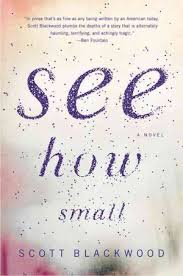
Scott Blackwood's novel See How Small "compassionately examines the fragile psyches of the individuals left behind in the haunting wake of murder," according to a New York Times review.

Scott Blackwood’s novel See How Small “compassionately examines the fragile psyches of the individuals left behind in the haunting wake of murder,” according to a New York Times review.

Anyone writing a novel with multiple points of view probably finds it easy to identify the characters to follow—you simply follow the plot lines and see who’s involved. The tricky part is figuring out how to signal the POV shifts. In his beautiful novel Plainsong, Kent Haruf made the shift at the beginning of each chapter and titled the chapters with a character’s name. The voice or tone of the chapters was basically the same, despite following different characters. This is one way to handle different POVs, but it’s not the only way.

You may want your POV sections to sound different, but it can difficult to create a different voice for each character—let’s face it, it’s hard enough to create one distinctive voice, let alone three or four. Therefore, we need to play with more than voice if we’re going to create distinctive sounding POVs.

No recent novel does as much with POV (or includes as many different perspectives) as Scott Blackwood’s novel See How Small. You can read the opening pages here.

How the Novel Works

See How Small follows a lot of different characters, and each POV sounds and feels slightly different. However, Blackwood doesn’t accomplish this by trying to mimic the character’s natural voice. Instead, he plays with different storytelling styles. For instance, the novel begins with a chapter that mixes third-person and first-person plural POVs (they and we), but what’s more important is how it focuses on some details and not others. (To understand the scene, you need to know that the novel is about the brutal killing of three girls):

Another remembered the pride she’d felt the day before, riding a horse no one in her family could ride, a horse that had thrown her older sister. He knows your true heart, her father had said. The horse’s shoulders were lathered with sweat. He had a salty, earthy smell she’d thought of as love.

The men with guns did things to us.

The chapter also contains this sentence: “It grew hot, dark, and wet like first things.”

Notice how the details are shape and focused when it comes to the characters’ memories, but the writing becomes fuzzy and impressionistic (even purposefully vague) when describing violence.

The next chapter uses a more traditional third person POV, from the perspective of a girl’s mother. Even though the writing probably feels more familiar, it does play with style:

Then, for some reason, most likely because Kate Ulrich is embellishing, revising even as she imagines it, the parking lot goes dark. Days are shorter now, Kate thinks.

The narration doesn’t rely on strict chronology but is impressionistic, like the first chapter but with a different sensibility since the character is different.

The third chapter follows Jack Dewey and lists his thoughts before a pivotal moment. The chapter is structured as a literal list, with each item focused narrowly on a particular detail:

1. Of his nylon search rope, which is five-sixteenths of an inch in diameter and two hundred feet long and attached to a snap hook on his belt.

The list advances his thoughts on the rope, which gives the chapter a much more narrow focus than the others.

The fourth chapter follows a man, Hollis, who notices something important but is distracted by something else. He’s so engrossed in that thing (a boy prying loose a shell that was glued to Hollis’ car) that he’s not even aware of himself: “Around him, at the other tables, heads swivel. He suspects he’s yelled an obscenity, maybe even a threat.”

Finally, the fifth chapter follows one of the perpetrators of the crime, 17-year-old Michael. As such, he’s inherently unlikable, yet he’s described sympathetically:

“He’d asked if Michael was working on his GED and Michael lied. The older man, whose hair was thinning, laughed ruefully and said, Sure, that’s you. Overachiever.

The contradiction in how we expect to feel about a character versus how he’s describes creates tension and mystery.

The Writing Exercise

Let’s writing from multiple points of view using See How Small by Scott Blackwood as a model:

  1. Write from an impressionistic POV. It’s a cliché that any public moment or interaction will be seen and remembered differently by the different people who are present. But it may be more useful to think about what characters want or don’t want to notice—or what a character can’t help but see or not see, remember or not remember. In other words, much of what people notice is affected by their emotional states, both vague (in a good mood) and specific (mad at someone for a particular reason). Consider what emotional state your character has during the scene and how that state will affect what he or she notices or remembers.
  2. Write from a pointillist POV. Our tendency is to rely on a usual kind of camera view, taking in an entire scene at once. Try zooming the camera in. Focus on a small, particular part of a scene or on a particular thing that a character notices or thinks about. Put blinders on the narration so that it can only see one thing. What is that thing?
  3. Write from a distracted POV. In Pieter Bruegel’s famous painting “Landscape with the Fall of Icarus,” the splash of Icarus into the sea is only a small part of the painting. Many of the characters, like the farmer in the foreground, are looking elsewhere. You can do this with your characters (and their POV) as well. If you’ve created a significant event or interaction, the reader will expect to see it. So, defy that expectation and give your character something else to think about. If the significant event or interaction is important enough, it will butt its head into the scene eventually. Until then, what can distract the character? This is a good way to create suspense in the reader and also to develop a character.
  4. Write a sympathetic POV about an unlikable character. Again, this is about defying the reader’s expectations. If a character plays an unlikable or negative role in the novel, how can you show us the character in a sympathetic light? You might think about how the character would defend him or herself. What are some mitigating factors behind the character’s decisions? What would a character witness for your character say in a trial? Try building a chapter around those details. The opposite of this, of course, is to write an unsympathetic POV about a likable character.

Good luck and have fun.

How to Write Riveting, Mundane Dialogue

2 Jun
Love Me Back by Merritt Tierce was an Editor's Choice at The New York Times.

Love Me Back by Merritt Tierce was an Editor’s Choice at The New York Times.

One of the drawbacks of the “raise the stakes” and “put a gun on the wall” comments in workshop is that writers begin to make every moment in a story or novel the equivalent of a gunshot. This is especially true of dialogue. It’s either needlessly mundane (“Hi,” I said. “Hey,” she replied) or it’s trying too hard to advance the plot with a forced argument. The sweet spot for dialogue has a foot in both camps: mundane and realistic and intense.

One of the best writers of dialogue that I’ve read recently is Merritt Tierce. Her novel Love Me Back is astoundingly good, and it contains dialogue that pulses with energy (to use some good book-jacket language) despite being about the most mundane topics. If you read nothing else this week, read this excerpt from Love Me Back.

How the Novel Works

The novel begins with a young woman interviewing for a job as a restaurant server. She’s immediately hired and told that she can start working immediately. Another server gives her a tour of the restaurant—he’s a Desert Storm veteran, and he immediately gives her the once over. The following excerpt is from his guided tour of the restaurant:

He takes a clear plastic cup from a stack by the soda machine and plunges it into the ice. Plastic for us, glass for them, he says. Always use the ice scoop. Georgie sees you doing this you’ll get yelled at. It’s unsanitary. Plus if you break a glass in the ice we have to burn it. Where is the ice scoop? I ask. Fuck if I know, he says. He fills his cup with Mountain Dew and takes a straw wrapped in paper from a cardboard box on the stainless-steel shelf above the soda machine. He tears the paper about an inch from the top of the straw, throwing away the long part and leaving the short part on like a cap. He stabs the straw into the cup. This is how you serve a soda, he says. Make sure it’s full. Fuckers drink it like it’s fucking crack. Put a straw in it. Leave the top on the straw so they know you didn’t put your nasty paws all over where their mouth goes. Always have extra straws in your apron because some lazy asshole in the section next to you won’t give his people straws, and when you walk by they’ll ask you for one, and if you don’t have one you gotta find dipshit or get it yourself. He takes the paper cap off the straw and flicks it into the trash. The fizzing head on the soda has settled so he tops it off and then takes a big suck. I recommend a straw for your personal consumption as well, he says. Never put your mouth on anything in a restaurant if you can help it. Shit doesn’t get clean. Ever.

In terms of plot, this scene does very little. A guy is simply talking about how to scoop ice and deliver drinks to customers—as mundane a task as there is. And yet the dialogue is charged. So, how does Tierce pull it off?

  • Use contradictory dialogue. The server gives the rules for scooping ice, but when asked where the ice scoop is, he says, “Fuck if I know.” The dialogue also contradicts his actions. Rather than scooping the ice the correct way, he scoops it out with his cup. These contradictions create tension; anytime someone breaks a rule, tension is created. It’s even better when the break is intentional.
  • Connect detail with attitude. A basic detail (He tears the paper about an inch from the top of the straw, throwing away the long part and leaving the short part on like a cap) is followed up with a comment that shows the speaker’s attitude toward that detail (This is how you serve a soda, he says. Make sure it’s full. Fuckers drink it like it’s fucking crack.) If a mundane detail is viewed as mundane, then it’s not worth mentioning in the story. But if a character feels strongly about the detail, then it’s not mundane anymore. In short, the dialogue is building the relationship between the characters and their world.
  • Mix diction and tone. Think about dialogue as a performance, which it often is, at least in moments of tension. When people perform, we tend to modulate our voice and vocabulary to get and maintain our audience’s attention. This is exactly what the server does. He uses formal diction and phrasings (I recommend a straw for your personal consumption as well) as well as less formal diction and phrasings (Shit doesn’t get clean. Ever.). Most importantly, he does this in the same breath.
  • Create ulterior motives. If you read the entire novel excerpt, you’ll see that the server is hitting on the narrator, and this sexual tension informs a lot of his actions and dialogue. As a rule, it’s a good idea to have more than one thing going on in any scene. So, in this case, the server is giving a tour of the restaurant and hitting on the narrator. The simultaneity of these actions helps give the dialogue tension.

The Writing Exercise

Let’s write riveting, mundane dialogue using Love Me Back by Merritt Tierce as a model:

  1. Give the scene simultaneity. Basically, give at least one of the characters multiple intentions for the dialogue. Think about the character’s deeper aims for a scene. There’s the surface thing the character is doing (talking to a boss, a kid, a spouse, a friend) and there’s the thing he or she is thinking about because it feels pressing (a problem, a relationship). When a character’s mind is in two places at once, the dialogue will tend to reflect this.
  2. Use contradictory language. This can be intentional or through an unintentional lapse. So, if a character’s mind is elsewhere, he could say something and, without thinking, do exactly the opposite. Or he could say something that clearly doesn’t apply to the situation. An intentional contradiction suggests that the character doesn’t care or is feeling antagonistic. So, think about what lapse your character might make or how your character might choose to willfully disregard a rule. Make the contradiction something basic.
  3. Connect detail with attitude. You’ve already set the stage for this with the contradiction. If your character makes a lapse and is called out for it, how does the character react? With embarrassment? Anger? Surprise? If the character willfully contradicts herself, how does that antagonism play out with other details?
  4. Mix diction and tone. When would the character try to speak formally (with fancy talk)? When would the character be crude or blunt? Force yourself to use both registers in a piece of dialogue. In playing with the tone, you may discover something about the character’s intentions.

Good luck and have fun.

An Interview with David James Poissant

28 May
David James Poissant's debut collection, The Heaven of Animals, has a

David James Poissant’s debut collection, The Heaven of Animals, has a “rogue touch,” according to Rebecca Lee in a New York Times a review.

David James Poissant’s debut story collection The Heaven of Animals received a rave review in The New York Times. His stories and essays have appeared in The Atlantic, The Chicago Tribune, Glimmer Train, The New York Times, One Story, Playboy, Ploughshares, The Southern Review, and in the New Stories from the South and Best New American Voices anthologies. He teaches in the MFA program at the University of Central Florida and lives in Orlando with his wife and daughters.

To read an exercise on developing a rapport with readers and Poissant’s story “Stealing Orlando,” click here.

In this interview, Poissant discusses why there is no such thing as a timeless story and why directly addressing there reader is a natural convention in stories.

Michael Noll

The story does a couple of things that might get called “risky” in workshop. The first is that it directly references pop culture. Plus, it’s a very specific reference—Orlando Bloom in the film Elizabethtown. I’m curious what your thinking was about this reference. I guess you could have written, “My wife wanted to have sex with a famous movie star, so I stole a promotional cutout with his picture on it.” What impact does the specificity of the Orlando Bloom reference have on the story?

David James Poissant

In workshop, we often hear about concrete details, about specificity, about “no ideas but in things.” Then, when it comes to pop culture, we often hear the dictum about avoiding concrete or specific brand names and pop culture references. I think the theory here is that you can better give your fiction a “timeless” quality if you don’t pinpoint an era too specifically with the name of a TV show or song or actor, or whatever. Or else, some people feel that, acknowledging the American entertainment industry, you pollute your literary story with low culture stuff. I think that both of these are bogus reasons to avoid cultural references and time-specific touchstones. Even if you leave those things out, a story will never feel timeless. Let me repeat that: No matter how vague you are, you have no shot at creating a sense of timelessness.

Already, stories are marked by pre- and post-cell phone usage. Having cellular phones easily available to most residents of the Western world has dramatically changed how living writers shape plot and plausibility in contemporary narratives. If you have a character hurt in a car accident and have another character run for help instead of pulling out a phone, your reader won’t think, Oh, this is timeless! She’ll think, Oh, this must be set before 2000 but after 1920. Then, the reader will waste time and energy focusing on minor details and trying to ferret out clues that reveal the story’s time period more specifically. Point is, your story is always marked by time. And, besides, what makes historical fiction more “literary” than contemporary fiction set in the current time period? Also, look at the classics. The Great Gatsby is full of its time period’s pop culture. Great fiction doesn’t have to look away from reality. Instead, great fiction can grapple with reality, even if that reality is Hollywood (Nathanael West’s The Day of the Locust) or pop music (Teddy Wayne’s The Love Song of Jonny Valentine).

Michael Noll

The other potentially risky move is that the story directly addresses the reader: 

“I could tell you, Did the marriage make it, yes or no?
But I’m not going to tell you, not yet, because where’s the fun in that?
And also because read, you lazy motherfucker, read.”

I love that it sets out the stakes (will the marriage make it?), and I’m not sure if that could have been done so quickly without this passage. Was this passage always in the story? Or was it added in the course of revision? 

David James Poissant

One Story editor Hannah Tinti called The Heaven of Animals

One Story editor Hannah Tinti called The Heaven of Animals “Wild as two men wrestling an alligator, tender as a father stretching out on the floor next to his sleeping son.”

I love to address the reader directly. Think of Jane Eyre‘s “Reader, I married him.” I don’t know why this convention has been discouraged by some in contemporary fiction. Maybe because it sounds old-fashioned? I don’t know. But, in a sense, all stories are told, so all stories have an implied listener or listeners. Denis Johnson makes great use of this convention, addressing that “you” in both Jesus’ Son and The Name of the World, two of my favorite books.

As for foregrounding what’s at stake in a narrative, I think that some stories do better to set up the bowling pins on the first page, while some stories make great use of what screenwriters call a “slow reveal.” For this story, because it’s so weird and meandering at times, I wanted to put some heat on it and let the reader know pretty quickly what she’s reading for. I believe that those lines, or something close to them, emerged in the early drafts of “Stealing Orlando.”

Michael Noll

I’ve previously asked David Gordon and Melissa Falcon Field about writing sex scenes. Gordon uses a lot of specific details. Falcon Field focuses on what the scene means to the characters. You do something a little different. There are a lot of details, but they’re told in summary (“edible panties, sex toys, food, porn, food-porn, once the lubed length of a Harry Potter wand”). There’s a lot of lead up to the sex, but the sex isn’t actually shown. Was that always the case? Or did you write the actual sex and then think, in revision, “Hmm, maybe not?”

David James Poissant

I think that a lot can be implied when writing sex. I wanted to get the point across that there was an imbalance in these characters’ sexual appetites. I wanted to convey an energy and carnality that makes the narrator uncomfortable. But, I rarely want to make my reader unnecessarily uncomfortable. So, here, I decided that I could name some objects and ideas, then leave the sexual acts themselves to the readers’ imagination, rather than having to describe the sex acts themselves along with the implementation of those objects, etc. Additionally, trying to stay in character (when writing in first person) means saying what this guy would say and skipping over the parts he’d skip over. He probably wouldn’t go into too much detail if he was already kind of shy about what they’d been doing in the bedroom.

Michael Noll

I love the story’s ending, the way it jumps forward in time and then flashes back again. What made you save that final piece of dialogue between the characters for the end? Why not end it with “Some things, they end just this way”? To my ears, it’s not as nice an ending, but it could work. How did you know where to end it?

David James Poissant

First, thanks for the kind words. That ending, it was the hardest part of this particular story to get right. I played around with the end a lot and moved things around in the story’s chronology many times. The airport scene is the last scene that I actually wrote. I realized very late in the process that these two ought to have one more scene together. But, in the end, there was something more fulfilling about ending with the two committing to one another, even though we know that the commitment is doomed to fail. So, jumping around in time provides that tonal shift, or whatever you want to call it. The trick, then, was to avoid playing the moment for irony’s sake. I wanted to end on a note closer to melancholy sweetness than irony or cynicism. If I’ve hit that note with this ending, then I feel like I’ve done my job.

May 2015

Michael Noll Michael Noll is the Editor of Read to Write Stories.

How to Develop a Rapport with the Reader

26 May
David James Poissant's story,

David James Poissant’s story, “Stealing Orlando,” appears in the latest edition of Newfound.

A few years ago, the guest editor for The Best American Short Stories (I think it was Alice Sebold) wrote that she chose the stories while sitting on a plane. If a story could hold her attention in that hectic environment, then it was a good one. If it couldn’t, then it wasn’t. It’s true that certain kinds of quiet stories might not be great reads for an airplane, but it’s also true that most of us make up our minds about a story by the end of the first page or two. So, how can we make our own stories grab the reader? I’ve written before about writing quick-starting opening paragraphs. But there are other ways as well.

David James Poissant uses the opening paragraphs of his story, “Stealing Orlando,” to develop a rapport with the reader. You can read it now at Newfound.

How the Story Works

The story begins with an intriguing premise: the narrator’s wife wants him to dress up like Orlando Bloom in Elizabethtown while they have sex. There are many ways to introduce such a premise, but Poissant uses a particular kind of informal language that draws the reader in. You can see it at work in the first sentence:

What happened was our marriage was falling apart, the way marriages do, and, in our falling, my wife Delia and I got real honest, because why not, because what did we have to lose?

Notice the phrases “the way marriages do” and “real honest” and “because why not”. This is how people talk in real life: we generalize, we’re ungrammatical, and we use flip phrases to to talk about things that could be embarrassing. There’s a kind of confessional tone at work, and it’s natural for the reader to lean in to listen. We’re naturally drawn to confessions.

In moments of honest confession, the speaker often tries to connect with the listener. Who wants to confess to something that is unimaginable to the other person? This is exactly what Poissant’s narrator does:

This was one of those nights where you both drink so much you feel closer than you are and safer than you are, and so you speak dangerously, say things that make it hard the next morning to meet eyes.

The phrase “one of those nights where” implies that we, the readers, understand what those nights are like.

Even the premise itself suggests a kind of intimacy between narrator and reader. Workshop teachers occasionally claim that stories should be universal, that they shouldn’t contain time-sensitive cultural references. Such references may or may not affect the story’s readers twenty years in the future, but they do make connects to its contemporary readers. What do we talk about most of the time? Movies and television. So, why not use those conversations in fiction? Here is how Poissant does exactly that:

This was a decade ago, after Orlando Bloom grew elf ears, but before the “Pirates” movies got so bad. Anyhow, it wasn’t elf Bloom Delia wanted, with his weirdo bow and creepy side braid, or swashbuckling Bloom with his muttonchops and creepy half goatee. No, Delia had a thing for Drew Baylor, the suicidal-but-clean-cut lead in what was—and pretty much remains—Cameron Crowe’s worst film. That was the Orlando she wanted.

This paragraph assumes that we understand its references: “before the ‘Pirates’ movies got so bad.” By giving the reader credit, the story draws us in.

Finally, the story actually addresses the reader directly:

And because this was a decade ago, my telling you this means I know how things turned out. As in, I could tell you, Did the marriage make it, yes or no?

But I’m not going to tell you, not yet, because where’s the fun in that?

And also because read, you lazy motherfucker, read.

Those lines may seem risky (and perhaps they will turn off some readers), but they’re built on a rapport that has been developed over the first page of the story. Many readers will want to know what happened to the marriage, and the rapport we feel with the narrator is a big reason why we’ll keep reading.

The Writing Exercise

Let’s develop a rapport with the reader, using “Stealing Orlando” by David James Poissant as a model:

  1. Use informal phrases in the first paragraph. Stories can use many different ranges of language, of course, including the very formal. However, stories also don’t have book jackets and marketing teams. Readers can’t be lured in before picking up the story, as they can with novels. So, a language that implies some connection with the reader is useful. (Novels do this, too. Read the opening page of Junot Diaz’s The Brief and Wonderous Life of Oscar Wao.) Try including phrases in the opening paragraph that generalize, are ungrammatical, or that cover up embarrassment or emotion. In other words, how can you add a few words to make the prose feel as if it’s sitting beside the readers, not lecturing to them.
  2. Refer to a shared understanding with the reader. You can use Poissant’s phrase as a starter: “This was one of those nights where…” This phrase can be taken in an honest direction by using an experience that truly is shared by most people. Or, you can use it to surprise the reader: “This was one of those nights where you end up shooting cats and showing up naked on your fiancé’s doorstep.” Obviously, most people have never done that, and the suggestion that we have is so ludicrous that we’re drawn in anyway.
  3. Use specific cultural references. A key to making this work is to suggest a shared knowledge. So, don’t just sprinkle in references. Instead, make judgments about those references that many people share (or, don’t share, if you’re trying to surprise the reader). Think about the narrative arc of a references. Poissant does this with the Pirates of the Caribbean movies: they were pretty good and then they weren’t. Pretty much any cultural reference that has staying power will have an arc: people won’t feel the same about it the entire time. If you refer to those changing opinions, you give the reader a chance to fill in the blanks with their own opinions, which draws them in.
  4. Address the reader directly. Again, try using Poissant’s exact phrase: “I could tell you, Did the marriage make it, yes or no.” Replace the question about the marriage with a question that is integral to the premise or plot of your story. This won’t work for every story. However, in some stories, if you develop a rapport with the reader, you can also acknowledge the artificial nature of the story itself, and that admission will actually strengthen the rapport. You’re simply admitting what the reader already knows. You’re giving the reader credit for being smart.

Good luck and have fun.

An Interview with Nicelle Davis

21 May
Nicelle Davis is the author of three books of poetry, most recently the novel-in-poems In the Circus of You.

Nicelle Davis is the author of three books of poetry, most recently the novel-in-poems In the Circus of You.

Nicelle Davis is a California poet, collaborator, and performance artist whose most recent book is the novel-in-poems, In the Circus of You. Her poems have appeared or are forthcoming in The Beloit Poetry Journal, The New York Quarterly, PANK, and SLAB Magazine. She is editor-at-large of The Los Angeles Review and currently teaches at Paraclete and with the Red Hen Press WITS program.

To read an exercise on writing description and Davis’ poem “In a Note Not Given to the Addressee,” click here.

In this wide-ranging interview, Davis discusses Borges’ “The Aleph,” Mikhail Bakhtin’s view of poetry as monolithic, and why poetry is not going extinct.

Michael Noll

I love the poem “In a Note Not Given to the Addressee,” especially the way it uses a hole punched through a door as a means of viewing something quite larger about a relationship. It’s not unlike Jorge Luis Borges’ story, “The Aleph,” in which the characters can put their eye to a point located in the cellar of a house and see everything that exists in the universe. What was the genesis of your poem? Did you start with the hole in the door? Or with some other detail that then led you to the hole? In other words, do you start with the aleph or with the entire universe and work backward?

Nicelle Davis

Thank you for taking the time to love any work of writing. And wow, what a question.

I can’t say that the poem “In a Note Not Given to the Addressee” was directly in conversation with Borges’s story, but I can’t deny that they might share a similar desire. I want a love that moves along the mirrors of the infinite, which expands and inverts simultaneously—a love that is so intensely real that it is no longer possible. The impossible—this is what I want. And my only chance of even glimpsing such a love is in metaphor. So I write poems.

“The Aleph.” That is such a perfect, perfect madness.

It’s difficult to talk about that story without becoming its characters. Discussing “The Aleph,”  I will easily gush like Carlos Argentino, the madman poet, who sees what he wants in every line—I just as easily become the sour Borges who robs others of magic out of the raw envy of everything mystical. That is to say, for me, there is an aleph, which means the hole is aleph and aleph is a hole. Whole is the word game here, isn’t it? It’s the blessing and the curse of being a writer—more like being a dreamer.

I love how “The Aleph” is something more than story; it is a poem that hates poetry; it is an essay that risks bending events past the conceits we use to construct truths. It is everything and nothing—that story IS its subject: “The Aleph”—the everything/nothing of us. It is hysterical both in humor and despair. I love how the protagonist is hyper focused on one point, the unrequited beloved, and is forced into revolving that one burning point into all and every angle of existence. In other words the obsession becomes the aleph or the aleph is in the obsession. Borges writes of the aleph, “And here begins my despair as a writer.”

This sort of despair is the only thing worth living for—yes? I’d gladly trade of lifetime of certainty for a glimpse of ever expanding uncertainty hidden in some weirdo-poet’s cellar.

Now the real challenge is seeking such a love without going insane or becoming a complete asshole; that is the warning in Borges’s “The Aleph.”He warns that those who seek the universe—that is, those who dwell in metaphors—are mad poets and assholes Not exactly exciting options, but the reward of such pursuits is that we find an entire universe hidden in the beloved’s skin.

In the Circus of You is mindful of such complications.

Michael Noll

The poems comes from In the Circus of You, a novel-in-poems, which is a strange hybrid animal. I’m curious about how this form affects the individual poems. Because a novel, theoretically, coheres in a different way than a collection, does it put pressure on the poems to repeat images or, perhaps, make certain images clearer or more spelled out in order to gain that overall coherence?

Nicelle Davis

Nicelle Davis latest book is the illustrated novel-in-poems, In the Circus of You.

In the Circus of You pairs the poems of Nicelle Davis with the illustrations of Cheryl Gross.

Sometimes it’s fun to look at the etymology of things. The root of “fiction” is new work, or new story. The root of “poetry” is to make. Yes, I would like to make new work—to enter and break open words. I’m not sure if this is possible, but I want to try.

The concept of a novel in verse is old; every epic poem has novel like characteristics. The Iliad and the Odyssey are novel(s) in a way, yes? Every novel has poetic elements, yes? It just so happens that the world (I would say, has always) chosen to privilege linear narratives over the stories manifested in poetry. I sometimes wonder if this privileging the linear over the nonlinear is similar to the world favoring war over peace; ecofeminism would say this correlation holds some merit. Instead of writing a lyrical novel, I wanted to make a novel comply with the dream rules of poetry.

Michael Noll

I’m a fiction writer, not a poet, and so when I pick up a novel-in-poems, I’m approaching it from the novel end of the label, not the poetry end. How do you think the form fits into the form of “the novel,” generally speaking? Or, what draws you, as a poet, to the novel form?

Nicelle Davis

Much of what I do is out of rebellion—In the Circus of You was in part written in response to Mikhail Bakhtin. Bakhtin views poetry as largely monologic: that is, the text speaks with one voice, using one language—that of the author—admitting no possibility for outside voices (heteroglossia), and thus diversity of meaning within the text. Bakhtin concludes that “the language of poetic genres […] often become authoritarian, dogmatic and conservative, sealing itself off from the influence of extraliterary social dialects.” He seems to be saying that poetry is,at best, the worst form of navel gazing. I wanted to fuck with that; how much can one find in a navel; maybe an entire sideshow lives there?

Even more rabble-rousing is Christopher Ingraham’s recent article in the Washington Post, claiming that “Poetry is going extinct, government data show.” He writes on how the latest numbers from the SPPA show “poetry is less popular than jazz.” Well fuck, the only thing I might love more than poetry is jazz.

Okay, okay, I hear it all; all the voices telling us “if poetry isn’t dead, it should die.” Maybe part of writing a novel in poems was to tell those voices to fuck-off. I mean, the world still continues to process information and dreams in metaphor. The end of poetry is the end of dreamers; I’m not interested in such a world—I can’t imagine the world being interested in a dreamless existence.

Poetry traditionally has been the voice of the subversive, disfranchised—the voice of other. I find it convenient that during times of intense “speech oppression” that poetry is declared dead. A novel in poems, in a way, is the voice from the grave—the voice says, “Poetry is synonymous with human.”

Michael Noll

The illustrations in the book are beautiful and amazing. I found that they affected how I read the book. They slowed me down, preventing me from jumping immediately from one poem to another, which seemed to benefit my readings of each poem. When you decided to include illustrations in the book, did you do so simply because they’re so wonderful? Or did you have a particular effect in mind?

Nicelle Davis

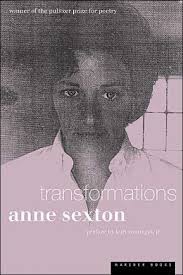
Anne Sexton's Transformations was praised by Kurt Vonnegut and called "blood-curdling" by Stanley Kunitz.

Anne Sexton’s Transformations was praised by Kurt Vonnegut and called “blood-curdling” by Stanley Kunitz.

I’d be lying if I didn’t say that Anne Sexton’s Transformations didn’t inform my wanting illustrations to couple with poetry. Also, I’m a huge fan of graphic novels and comic books; Spiderman is a rather perfect creation.

Even more influential than Sexton and Spiderman is just dumb luck. My path crossed with the incredible Cheryl Gross. I wasn’t going to miss the opportunity to work with her. I fell in love with her illustrations at first sight, and I asked if she would be willing to work with me. That was six years ago, and we continue to work together. This is a miracle, and I don’t take miracles lightly. Any form of art is a miracle.

As you pointed out in your lovely question, the pairing does slow down the read. I didn’t mindfully consider reader’s speed with the pairing of visuals and text, but I did intend for the words and pictures to feel like a conversation—for the reader to know they are part of that conversation. All art is ultimately meant to be a gift to some unknown love—the imagined voice at the larger table we dream of.

May 2015

Michael Noll Michael Noll is the Editor of Read to Write Stories.

How to Reveal the Universe through a Single Detail

19 May
Nicelle Davis latest book is the illustrated novel-in-poems, In the Circus of You.

Nicelle Davis latest book is the illustrated novel-in-poems, In the Circus of You. It includes the poem “In a Note Not Given to the Addressee.”

In Jorge Luis Borges’ famous story, “The Aleph,” a character goes into a cellar and looks at a particular part of it, a mere point, and through it he sees the entire universe. It’s a dizzying concept that makes graduate students go, “Ooh,” when they read it, but it’s also a metaphor for how writing often works, especially descriptive passages. A single detail can provide a glimpse of something much larger—the universe or a relationship or the internal self. The problem is finding that detail and, when you do, knowing how to look through it.

A great example of how quickly a single detail can expand into a world can be found in Nicelle Davis’ poem “In a Note Not Given to the Addressee,” which is part of her new novel-in-poems, In the Circus of You. You can read it now at A cappella Zoo (it’s the third poem in the excerpt).

How the Poem Works

The poem begins with this line: “There is a hole the size of your fist in our bathroom door.” This is, of course, a powerful image, and, if you imagine it as an aleph and put your eye to that hole in the door, you can quickly imagine the sort of things you might see: violence, anger, fear, and all the ways they can appear. The next line seems to set up some of those emotions: “My fault, I’m told, for pushing the hinge towards your movements.” Imagine if the poem had looked through that hole and seen the speaker of the poem, hiding in the bathroom. What do you think the poem would see? The obvious answer is a kind of keyhole snapshot of a woman. But that’s not exactly where the poem goes.

Instead of peering through the hole and seeing the speaker the way that a camera would, the poem uses the hole to see into the speaker: “I used to dream of large machines with hands pounding apart concrete so a single seed could be sown.” This is a fitting image, as it keeps with the violence of the hole. But it also moves far beyond that original image, as do the next lines, which move forward in time and also outward, giving us a glimpse of the relationship over a long period of time:

After this spectacle of effort, I’d wake with a fever of 103. You never understood how I could be sick so often.

When I teach poetry to a lecture hall full of students required to take an English course, I talk about how poems often try to move as far as they can from line to line. The thrill in reading the poem, if you feel any thrill, is in appreciating how far it can jump and still maintain some sort of coherence. In the presence of undergrads, I usually refer to this quality as something particular to poetry, but the truth is that prose writers make these leaps as well. Just read Vladimir Nabokov, Toni Morrison, or Paul Harding.

It’s the same kind of leap that Borges made with the aleph. When you peer through a descriptive detail, what you see is not simply the next logical detail but something unexpected. The surprise we feel is often what pulls us through the writing, whether it’s prose or poetry.

The Writing Exercise

Let’s make intuitive leaps in description, using “In a Note Not Given to the Addressee” by Nicelle Davis as a model:

  1. Start with a scene that contains strong emotion. Davis’ scene contains anger and fear, but these aren’t your only options. Any emotion will work. The goal is to access a moment for a character, narrator, person, or speaker when they are ready to see or look beyond what is right in front of their faces. Those moments are usually accompanied by powerful feelings. This is true in life as well: when we’re feeling love or joy or satisfaction or anger, our minds tend to leap beyond the immediate circumstances to the past or future or places that don’t exist and never will. Anxiety is a perfect example of this: It’s a feeling that pulls you out of the moment and into some possible future. So, choose some scene in which you, the writer, or the character you’re writing about are feeling charged up.
  2. Find your aleph. Of course, you may be thinking, “Sure, I’ll just find that perfect, all-seeing, all-encompassing detail. Wait, what’s that in my pocket? Oh, there it is.” Most of us can’t find that detail in one try. So, start brainstorming. If you drop yourself into the scene, what do you see? Davis choose a point of impact (literally), where the emotion has erupted into action. This is a pretty direct image (though it’s not as direct as an image of the fist punching through the door). You can choose something that directly conveys the emotion, or you can look to the side, at something that is next to the thing that directly conveys the emotion. Regardless of what you choose, try looking through it. Does the image make you want to keep writing? Or do read it and feel your energy drop. This is hardly scientific, but that’s how writing often works. Look for an image that revs up or directs your already charged emotional state.
  3. Jump past the obvious next detail. Davis could have looked through the hole in the door and seen a woman. But that would be obvious. Of course that’s what is visible through the door. The reader understands the logic of the scene and can intuit that next step. So, move beyond it. You can move chronologically (what came before the scene or what comes after). You can move from the physical to the mental/emotional/spiritual (which is what Davis does). You can zoom out (which she also does) or zoom in. You can jump sideways to a moment or image that fits in some way with the image or moment where you began. Try all of these. Some will work and some won’t. You may find that once you make one intuitive jump, you’re able to make others. The first leap gives you and your writing permission to move out of the immediate scene and toward some detail that surprises not just the reader but you as well.

Good luck and have fun.

An Interview with Joni Tevis

14 May
Kirkus Reviews called Joni Tevis' essay collection, The World Is On Fire, "fiercely, startlingly bright."

Kirkus Reviews called Joni Tevis’ essay collection, The World Is On Fire, “fiercely, startlingly bright.”

Joni Tevis is the author of two books of essays, The Wet Collection, and, most recently, The World Is On Fire. She has worked as a park ranger, factory worker, and seller of cemetery plots, and her nonfiction has been published in Oxford American, Bellingham Review, Shenandoah, the Pushcart Prize anthology, and Orion. She teaches literature and creative writing at Furman University, and lives in Greenville, South Carolina.

To read an exercise on writing with Keats’ negative capability Tevis’ essay, “Fairy Tales of the Atomic Age (Rock City),” click here.

For this interview, Tevis wrote about the inspiration behind her essay in what is perhaps the most detailed recollection of a writer’s zigzagging mental process that you’ll ever read.

Michael Noll

This is such a wide-ranging essay: Fairyland Caverns, the nuclear test in New Mexico, Rip Van Winkle, the preacher from your childhood, and a Civil War battle. The connections made complete sense as I read the essay, but I was also aware that these were connections that you made. They weren’t simply lying around, ready to be reported on. So, I’m curious about the origin of the essay. How did you begin making associations between these very different stories and events and places? How did you keep so many balls in the air without letting them drop? Was it difficult to keep the connections straight in your head as you worked?

Joni Tevis

I like to start research for an essay by going somewhere that intrigues me and just seeing what I can see. This essay began that way; I remembered Rock City from my childhood and went back for a visit as an adult, with the idea of writing about it. For me, this impulse isn’t primarily rational. I might not know why a place or idea or image appeals to me, but I try not to question that, at least initially. I’ll just go and see what’s there.

So I tried to approach the visit with a very porous mind and took notes on everything I noticed there, from the stuff in the gift shop, to the painted barns and handmade signs along the road up the mountain, to the recorded music and running water within Fairyland Caverns. And I’ll add that even though I like to start essays via this travel experience process, sometimes that impulse doesn’t lead anywhere—I have plenty of dead-end trip notes languishing in my notebooks. But you just never know what you might find.

The big surprise on that trip was the black light in the Caverns. I hadn’t remembered that at all, and I found it unsettling—the juxtaposition of childhood scenes with this very trippy light, light that we associate with drug culture. How to make sense of it? When I discovered that the sculptor who created those scenes did much of her work in the late 1940s, I made the connection to early atomic history, a period that had long fascinated me.

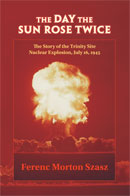
The Day The Sun Rose Twice has been called "definitive account of the days and hours leading up to the first nuclear explosion in history and the legacy it left."

The Day the Sun Rose Twice has been called “definitive account of the days and hours leading up to the first nuclear explosion in history and the legacy it left.”

And this is where the traditional research component came in. I was teaching at UNC-Chapel Hill at the time and had access to the terrific libraries there. One day I was browsing the stacks when I saw The Day The Sun Rose Twice, a great book about the Manhattan Project and the Trinity explosion. The book pulled me—in a not-fully-rational way, the same way that the impulse to revisit Rock City had been. I couldn’t put the book down. It hit me that when I had been a child, worrying about the end-times sermons on Sundays, I was also worrying about the reports I heard on the evening news, about nuclear tensions with the Soviets. So that led me to more research about the Trinity test—which led, in turn, to a visit to the Atomic History Museum, out in Albuquerque—and then to archival research about the woman who created the scenes at Fairyland Caverns.

I traced some of the other stories from the Caverns back—that’s where the Rip Van Winkle research came in, and by moving back in historical time, I read more about the Civil War battle that had taken place on Lookout Mountain sixty years before Rock City was created. Research about the material culture of the place led me to the See Rock City barns that had helped to advertise it. And what had many of those those barns held? Tobacco leaves, which were fascinating to research as well.

Someone painted the barns. Someone planned the scenes in the caverns, poured the plaster. Someone even now changes the black lightbulbs. Just like someone built the bomb. I’m satisfied with the essay now in part because it draws attention to the things we make, and the meaning we make with those things. And I think it evokes this sense of “living in a haunted world” with which the rest of the book also grapples—the reality that we’re not the first to step onto this patch of ground or handle this clay or stone, and that by examining the relics and words that our forebears left us, we can live in a more deep, enriched way.

May 2015

Michael Noll Michael Noll is the Editor of Read to Write Stories.