An Interview with Murray Farish

12 Jun
Murray Farish

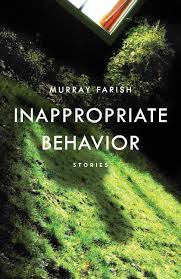
Murray Farish’s story collection, Inappropriate Behavior, includes stories about Lee Harvey Oswald and John Hinckley, Jr.

Murray Farish’s debut story collection, Inappropriate Behavior, was called “the best first collection I have read in years” by Elizabeth McCracken. Farish’s short stories have appeared in The Missouri Review, Epoch, Roanoke Review, FiveChapters, and Black Warrior Review, among other publications. His work has been awarded the William Peden Prize, the Phoebe Fiction Prize, and the Donald Barthelme Memorial Fellowship Prize. Farish lives with his wife and two sons in St. Louis, Missouri, where he teaches writing and literature at Webster University.

In this interview, Farish discusses the accretion of American pain, the despair of not finding the right ending, and writing stories in a world in which CEOs make 350 times the salary of their workers.

To read the collection’s title story, “Inappropriate Behavior,” and exercises on breaking narrative rules, click here.

Michael Noll

Early in the story, George and Miranda are discussing their son’s behavior and the problems he’s causing at school, and George says, “I just thank God that he’s healthy.” The conversation that followed really struck me for a couple of reasons. One, I have kids, and I think that I’ve probably said something similar to this. Two, the conversation seems to announce that this story is going to run counter to some basic ideas about propriety. Generally, thanking God for a child’s health wouldn’t be considered morally bankrupt, but that’s exactly what Miranda suggests, and both the reader and George come to realize that she’s right. Did the story always begin this way, or did you write the dialogue to perform a particular function within the story?

Murray Farish

The first thing I wrote that made the cut in the final draft of “Inappropriate Behavior” was a version of a much later scene where Archie is lying on the couch trying to figure out which of his toys he’s taking to heaven when he dies. I have to write a lot of pages and take a lot of false paths before I figure out what a story is about and what I want to do with it. Once I figure that out, I try to orchestrate everything—scene, setting, dialogue, situation, character—around that realization. That orchestration became even more important in this story, which I think of as nearly plotless and almost totally free of character development.

Michael Noll

In several places, you create catalogues of George’s thoughts and snippets of news that he hears. I’ve seen stories make similar moves before but never to the extent that you make them. The catalogues are very long–and so there’s the inevitable risk of losing the narrative thread. But that’s not what happens. The juxtapositions in the catalogues are savage, and the paragraphs contain some of the most gut wrenching lines in the story. This is generally true of the story as a whole. There’s another section about paying bills that isn’t a catalogue but works in a similar way. I can imagine a lot of writers drafting a couple of lines about bills and then moving forward into the story, but you stay with the bills for ten paragraphs. I kept expecting the narrative to stall, but it never did. How did you keep the momentum moving?

Murray Farish

Especially in a story that is plotless and free of character development? I worried about it a lot, until I decided to trust in the orchestration—or if that’s too grand a term to keep repeating—to trust the design of the story. Once I figured out that the story I wanted to write was about the Great Recession and how it was the natural result of four decades of political, legislative, and cultural malpractice and neglect of the commonwealth—of the failure to live up to ideals that we the people are obligated, by ink and by blood, to try to live up to . . . well, you can see the problem, for a fiction writer. But if that’s the story you’ve got to write, that’s the story you’ve got to write, so you’ve got to figure out how to write it. I decided to create this little family and inflict upon them a steady accretion of American pain, and hope to build narrative momentum out of that accretion.

Michael Noll

I have to admit that I felt a thrill at the story’s description of St. Louis: “It feels like exactly what it is: a static, lifeless, dead-water burg, a place that lacked enough imagination to remake itself when people stopped using beaver pelts as currency, and that runs, after a fashion, on the inertia of old money.” And that’s just one sentence in a long paragraph that ends with a line of bitter sarcasm: “Here’s something people say about St. Louis: It’s a great place to raise kids.” I can’t remember the last time I read such a brutal takedown of a place. I’m not sure I’d have the courage to write something like that. Given that you live in St. Louis, do you worry that someone you know will read this story and get upset?

Murray Farish

Well, of course that’s George’s description of St. Louis, and St. Louis is a place he feels victimized by, in a way. All this bad stuff is happening to him and there’s no one around to try to help him out. But however St. Louisans would feel about the description, to the extent that they would find it accurate, we also have to realize how places like St. Louis have themselves been victimized by that same neglect I talked about before. One of the most troubling things I’ve seen in my forty-some years as an American is precisely that lack of imagination, a fearful inability to conceive of how things might be different, might be better. That lack of common vision hits places like St. Louis particularly hard. To the extent that a St. Louisan might find the description inaccurate or unfair, I guess I’d have to plead artistic license.

Michael Noll

By the story’s end, you’ve put the characters in such an intensely difficult situation that it’s natural as a reader to want to look away, to avert our eyes from what we suspect will happen. And that’s exactly what you do–you shift the point of view in a way that’s bound to bother some readers who will expect a neat conclusion. But I actually loved the ending. In a way, it reminded me of what Richard Ford does in Independence Day: His narrator, Frank Bascombe, fails repeatedly to connect and successfully parent his son, and when it seems as if nothing good can happen, Ford knocks the kid out of the novel–literally. The kid gets hit in the head with a baseball and is knocked unconscious. I found that particular move frustrating—a cheat on Ford’s part—because then everything starts going Bascombe’s way again. But in your story, the shift in POV (the looking away) doesn’t change the characters’ fortunes. But it makes them easier to read—not less disturbing or emotional but readable, as if there’s only so much misery readers can take before they walk away. Your ending kept me with the story. That’s a lot of words to ask, how did you approach the ending?

Murray Farish

Finding the ending was as close to real despair as I’ve ever had as a writer. I had worked for months to winnow hundreds of pages down to the final version, up to the scene where George goes for the last meeting at Archie’s school. I knew I loved this story, but the steady accretion of pain had left the Putnams, and me, in a corner where there was no way to write a narratively satisfying and honest ending that would change their fortunes in any way. Do some sort of Horatio Alger bit? Launch an alien invasion or some other cataclysm that renders the economy irrelevant? Have George blow his brains out? I wrote versions of all of these, and many others, including one ending replete with learned footnotes and pie-charts and bar-graphs, which I think you’ll agree with everyone else who read that version that it was a bad idea. Somewhere in the midst of that despair I looked at the school principal’s statement at the end of the last “realistic” scene: “I’m sure you have questions.” So I put the story away and just started making this long list of questions—some from George, some from Miranda, some from American lit and American history, recent and ancient. My notion was not that this catalog of questions would become the ending, but I hoped that some question in there would trigger an ending. Then I saw that those questions could be orchestrated in a way that felt to me very honest and risky and perhaps even resonant, and if I couldn’t do narratively satisfying, I could at least do those things. Jumping out of the third-person, realistic mode also allowed me to return to the Putnams in the voice of Archie and the style of the fairy tale. Archie may be in a lot of trouble, anchored to this sinking family of his, but at least he still has imagination, and he’s not afraid. That’s about the only note of hope I could stand to build into this story, the notion that the future might be better if we don’t lose our courage and our imaginations. But realistically, Archie’s probably screwed.

Michael Noll

A. O. Scott of The New York Times didn't like the way the film Away We Go portrayed red America. You can read his review here.

A. O. Scott of The New York Times didn’t like the way the film Away We Go portrayed “regular” Americans. You can read his review here.

Many stories create unlikable side characters and then reveal some redeeming part of them. But not this story. George thinks this: “The greater part of what my neighbors call good I believe in my soul to be bad, and if I repent of anything it is very likely to be my good behavior: what demon possessed me that I behaved so well?” Because I think we’re supposed to empathize with George and his point of view, this is a pretty damning indictment of a great swath of the population of St. Louis. It reminds me of the Dave Eggers film, Away We Go, about a couple on the verge of parenthood who travel America trying to find a good place to raise their kids. But everywhere they go, they find people they don’t like. The New York Times critic A. O. Scott angrily criticized the film’s “smug self-regard” and its portrayal of “red state grotesques” and said, “This movie does not like you.” Do you feel any obligation to find the good in every character? Or, to put it in the negative, do you think fiction suffers when it’s too nice and open-minded?

Murray Farish

The quoted question about good behavior is from American lit, one that Thoreau asks in Walden, but of course it applies to George as well, as well as to the overall point that this section and this story is trying to make—what is “inappropriate behavior?” Is it the stuff this goofy kid does to get in trouble at school, or is it unnecessary wars and drone strikes and cutting off people’s unemployment benefits? Is it one little kid hugging some other little kid or is it the Trail of Tears? Is it hyperactivity or the abjuration of our responsibilities to one another? If the fact that CEOs make 350 times the salary of their workers isn’t at the very least inappropriate, I don’t know what is. I think the only obligations fiction writers have are to write the best story they possibly can, and to give the reader something they can’t get from anyone else.

June 2014

Michael Noll

Michael Noll is the Editor of Read to Write Stories.
How to Write Break the Contract with Your Reader

11 Jun
Murray Farish's story collection, Inappropriate Behavior, includes stories about X, X, and X.

Murray Farish’s story collection, Inappropriate Behavior, was called “the best first collection I have read in years” by Elizabeth McCracken.

In stories and novels, we occasionally write ourselves into corners of inevitability. The story dictates that a particular thing must come next, but we can’t or don’t want to write that ending. Often this is because the ending is going to be unpleasant for everyone involved: characters, readers, and writer. So what do we do? We can scrap or rewrite the story, or we can find a way to write the inevitable ending in a way that honors the narrative momentum that has been built but also changes the way we think about that narrative. Sometimes, this means breaking the contract with the reader—a big no-no in workshop but sometimes a necessary risk to take.

In his story, “Inappropriate Behavior,” Murray Farish writes an ending that radically shifts point of view and tone. You can read it now at FiveChapters. Tomorrow, Farish will talk about the risks of writing this kind of ending.

How the Story Works

Every story makes a contract with the reader—or, as various quotable writers have said, works of fiction teach their readers how to read them. This means that the first paragraph of stories and novels teaches the reader how the narrative will proceed in terms of point of view, style, and tone. Here is the first paragraph of “Inappropriate Behavior”:

George and Miranda Putnam have been called to another meeting at their son’s school. It’s hard for Miranda to get off work, but she’s going to be there. For George, it’s no problem, and there’s a part of him that’s glad for something to do. There’s a part of him that’s glad to have another grievance to nurse deep into the night. For Miranda, in this economy, this is all a real inconvenience.

The terms of the contract have been set. The story will be told in third person, switching between George and Miranda’s points of view, closer to George’s than Miranda’s. The tone is pretty straightforward—some version of realism. Of course, there is room to move within these terms, but if, for instance, the story shifts into extended first-person narration or if Godzilla rumbles onto the page, the reader might drop the story and walk away. Broken contracts don’t normally bode well for a work of fictions’ relationship with its readers.

Now watch how Farish begins the final section of this story:

Once upon a time, there was a man. He lived with his wife and his son in what he’d always been told was the greatest country in the world. God-loved and manifest. A city upon a hill. Commensurate to his capacity for wonder. The last, best hope of Earth. Then when the man reached what should have been his happiest and safest and most productive years, everything went wrong.

Farish has switched from close third person to a much more distant point of view. George is now “a man.” This change is straining against the bounds of the contract, but nothing has been broken yet. Then, Farish switches the focus of the point of view, from George to his son, Archie:

Their son watched all of this, and he was a smart boy. Everyone thought he was stupid, but he wasn’t. He didn’t understand why everyone thought he was stupid, but it didn’t matter, because he knew he wasn’t. The boy watched his parents. He knew they were scared. But the boy was not scared.

Again, this change is pushing against everything the reader has accepted and known thus far, but it’s a discomfort the reader will likely adapt to. It’s not like Godzilla has appeared on the page:

As soon as the father got in his car, a monster picked up his car and threw it all the way to where the boy couldn’t see. The boy got his sword and Mr. Carrots got his laser, and the boy said the spell to go through the door so they could rescue the apartment complex. Then they killed the monster.

Okay, now the contract is broken. How does Farish pull it off? Some readers will say that he doesn’t. Any narrative risk that a writer takes is bound to alienate some readers, and it’s not because those readers lack sophistication. At a certain point, liking a book isn’t about the book’s quality but about the readers’ taste. Some readers will give a story more leeway to break against expectations. That said, this story tries to set up the reader for the extreme change it has in store. First, as I wrote yesterday, the story continually breaks the frame of its own narration, which makes the reader comfortable with a story that will reach beyond its immediate setting. Second, the story eases into the ending, first tweaking the distance in the third-person POV and then changing the person that the POV follows. When the POV shifts from George to Archie, the tone necessarily changes as well, and it’s not unexpected. We’ve gotten to know Archie pretty well over the course of the story. So, Farish has set up the ending as much as possible.

But why make these changes at all? Why not stick with the terms of the contract? (Spoiler Alert) The story begins with Archie causing trouble at school, George out of work, and the stress taking a toll on George’s relationship with his wife Miranda. By the end, Archie has been removed from the school and placed in an alternative school for children with behavioral problems. George is still unemployed, his relationship with his wife has deteriorated, and they’ve lost their home. They’ve living in a small apartment in a dangerous part of town. Things are bad. Here is the scene that ends the story: George gets a call for an immediate job interview, but he has nowhere to go with Archie, who is at home. So George puts on Mario and tells the boy not to open the door; then he leaves for the interview. In this scene, nothing good can happen. Given the Job-like string of misfortune that has befallen the family, only a misfortune of the very worst kind can happen now. The way that the story must end is clear. And yet, as a reader, I don’t think I could bear it; it’s possible I might not finish the story. I’m not sure Farish, as the writer, could stand the ending, either.

So what is to be done with the story? Farish’s solution is to keep the scene but tell it from a POV that permits the reader to finish the story. It gives the reader enough emotional distance to keep going. In a way, by breaking the contract with the reader, the story works in partnership with the reader to create the ending.

The Writing Exercise

Let’s write an ending that breaks the contract with the reader, using the ending from Murray Farish’s story “Inappropriate Behavior” as a model:

  1. Choose a story that you can’t finish. Every writer has unfinished stories stashed in a folder. Read through the story again and ask yourself this question: Given what has occurred in the story, what must happen at the end? Now, ask yourself a second question: Do you want to write that ending? If the answer is yes, then go ahead and write it. Sometimes you just need to look at the ending logically. But if the answer is no, then you need to figure out why. Does the ending feel wrong? In other words, does it not fit your sense of the characters and place and tone? If so, you’ll need to adjust the way you’ve handled the characters, place, and tone (and what happens to them) so that you can get to the ending that is right for the story. You likely took a wrong turn somewhere; you’ll need to go back and find it. But perhaps the ending is right, and the problem is you don’t want to do that to your characters. In that case, you need to find a way to do what needs to be done.
  2. Try out different ways to break the contract with the reader. The most likely way to break the contract is to change the POV. Can you change the amount of distance in the point of view (close to distant third person)? You probably can’t switch from third to first. You might be able to switch from first to third. You can also switch the character at the focus of the POV. If you do this, you will also likely change the tone of the story since the character will have a different sense of the world. Another way to break the contract is to jump forward in time. Or go back in time. This type of break is more common but carries the same level of risk. Whatever type of break you choose, you should choose it intentionally. You can’t sneak a change past the reader.
  3. Ease into the break. What smaller changes can you make to prepare the reader for the big change? Farish first changes the distance of the point of view. Then he changes the focus (man to boy). Finally, he drastically changes the tone. Think about the break that you’ve chosen. What are small ways that you can begin to push against the limits of the contract before finally breaking it? Doing so can prepare the reader for what you’ve got in store.

One final thing to keep in mind. Farish breaks the contract at the very end of a long story. If he had broken it halfway through, all readers probably would have quit. Keep in mind the readers’ psychology. If they see that there is only paragraph or so left in the story, they’re likely to keep reading. Every workshop teacher in the world will preach not breaking contracts with readers, but if you must do so (and sometimes you must), then try to do it in a way that makes it easier on the reader.

Good luck!

How to Break the Narrative Frame

10 Jun
Murray Farish's story collection, Inappropriate Behavior, includes stories about X, X, and X.

Murray Farish’s story collection, Inappropriate Behavior, was called “the best first collection I have read in years” by Elizabeth McCracken.

As writers, we often find ourselves frustrated at the difference between the story in our heads and what appears on the page. As we often imagine it, the story and its many parts exist all at once, smashed together in our minds. Connections between ideas are immediate. But on the page, these parts are broken into discrete paragraphs that put space and distance between the ideas and images. The best writers are able to eliminate that distance. We recognize such writing when we see it, but how can we create such prose ourselves?

Murray Farish’s story, “Inappropriate Behavior,” contains entire worlds in single paragraphs. The story is the part of the new collection, Inappropriate Behavior, from Milkweed Editions. Read it now at FiveChapters.

How the Story Works

Great narration often breaks the frame that is has set for itself. A paragraph that begins in a particular room, in a particular moment of time, will slide out of that room and moment of time. In this paragraph from “Inappropriate Behavior,” watch how Farish breaks out of the frame that he sets in the first sentence:

Once they finally get Archie to sleep, Miranda goes to bed because she has to work in the morning, and she’s liable to be up with Archie’s nightmares in an hour or two. George checks the ads on Monster, even though LaShonda at the outplacement agency says no one ever gets a job off of Monster. The only way to get a job in this economy is to meet people, LaShonda says. Network, network, network. George looks at Monster. He looks at hockey scores. He jerks off to porn. He e-mails résumés. The Internet costs $24.99 a month. He nurses his grievances. He reads the news. In Washington, Congress has averted a government shutdown. The deal includes another six months of unemployment benefits. Six more months? He can’t imagine what will happen if it’s six more months. Don’t let feelings of worthlessness ever enter your mind, LaShonda says. You are not worthless because you’ve been laid off. There is no stigma attached to losing a job in this economy.

The paragraph begins in George and Miranda’s house in St. Louis, in the moment after their son has fallen asleep. Yet very quickly it starts quoting someone, LaShonda, who is not present. It also reports political news from Washington D.C. When reading this paragraph, it’s possible that you don’t notice these shifts out of the initial frame. They seem like a natural part of the narrative voice. But almost every writer has experienced the frustration of feeling trapped in place and time, as their story’s narration is yoked to whatever is happening immediately in front of its gaze. So, how does Farish move away from the present moment?

He connects the present moment with another moment. Perhaps the most important phrase in the paragraph is “even though LaShonda at the outplacement agency says.” The phrase creates a bridge from the present moment to something that happened earlier and in another place. The next two sentences take place on the other side of that bridge, in the outplacement agency. This bridge is essential to the shifts that take place in the rest of the paragraph. Because the readers have been shown one bridge, they won’t be surprised when others are built—and built more quickly. For instance, the next bridge out of the initial frame contains no transition such as “even though.” Instead, the paragraph leaps from “He reads the news” to “In Washington, Congress has averted a government shutdown.” The shift happens much faster than the first one.

He shifts between moments again and again. A bridge is no good unless you use it. So, Farish stays in the political news for another sentence and then shifts back into George’s head in the present moment and then immediately into LaShonda’s advice from the outplacement agency.

Once the bridge out of the narrative frame has been built, you can jump out of the frame again and again, as many times as you want. It’s this kind of dynamic sense of place and time that makes great narration so wonderful to read. As readers, we’re constantly surprised (pleasantly) by where the prose takes us, by what unexpected bridges have been built.

The Writing Exercise

Let’s shift out of the narrative frame of a paragraph, using the passage from Murray Farish’s story “Inappropriate Behavior” as a model:

  1. Create a frame. Take any paragraph you’ve already written. Or write a new one. It can be about anything. The important thing is to give yourself a defined place and time: your characters are in this place at this moment. Farish’s paragraph is about what two parents do after their son falls asleep. The place is a house, and the time, we know from an earlier paragraph, is about eleven at night.
  2. Create a bridge out of the frame. The easiest way to do this is to connect something about the present place and time with something that is not within that frame. Farish uses a simple transitional phrase: “even though.” It works like this: Character does _____, even though So-and-So says not to. So, to create a bridge, you can make a character do something and then explain what someone else says about that particular behavior. That said, the bridge doesn’t require an action. You can do the same thing with an object: Character picks up a coffee cup, which So-and-So always hated/loved.
  3. Cross the bridge. Once you’ve got the bridge, go over it. Farish leaves George’s house at 11 p.m. and shifts into a placement agency on some previous day. Readers are savvy enough that if you directly mention someone or someone in a paragraph (and I’ve that something or someone an attitude or weight of being), then if you, in the next sentence, write from a POV that is close to that person or thing, the readers will figure out what’s going on. That said, the weight of being is important. It’s more difficult to build a bridge out of a weightless reference. Here’s an example: She listens to Bon Jovi and wonders what she’s going to do about Carl. If the writer suddenly crossed a bridge into Bon Jovi world, the reader would likely figure it out but might also wonder why Bon Jovi matters. The reference is weightless. So, give your reference weight by providing it with an attitude about what is happening or by letting it reflect, like a mirror, the attitudes of others (she always hated the coffee cup).
  4. Cross back to the other side. Very little transitional work is required. If you clearly set up the two sides of the bridge, the reader will understand what side they’re on.

Once you’ve built one bridge and crossed over it and crossed back, you can easily build more bridges. In his short paragraph, Farish creates and crosses over two. The story as a whole has dozens of bridges. As a result, it has set up the reader to perhaps accept an even greater break at the end, which I’ll look at tomorrow.

Good luck!

An Interview with Jennifer Ziegler

5 Jun
Jennifer Ziegler's new middle-grade novel Revenge of the Flower Girls, has X

In Jennifer Ziegler’s new middle-grade novel Revenge of the Flower Girls, three flowers girls set out to ruin their sister’s wedding.

Jennifer Ziegler’s latest middle-grade novel is Revenge of the Flower Girls. She’s also the author of How Not to Be Popular and Sass & Serendipity. She teaches writing workshops, edits other writers’ work, and creates writing programs for The Writer’s League of Texas. She lives in Austin, TX, with her husband, the writer Chris Barton, and their four children.

In this interview, Ziegler discusses inventing characters, the importance of villains, and her method for keeping the plot straight in her head.

To read an excerpt from Revenge of the Flower Girls and an exercise on creating villains, click here.

Michael Noll

I’m interested in how you invent characters. Some of the characters in the book, especially Mrs. Caldwell, exude a kind of essential Texan-ness. Her last name is even a famous Texas name. But other characters are much more idiosyncratic. For instance, you describe Aunt Jane this way: “She’s tall and strong. She played professional basketball for a while and then taught PE classes here in Blanco County. Now she lives in Boston, where she runs a bar.” What do you draw on to create your characters?

Jennifer Ziegler

The way I invent characters is a mystery even to me. I often feel that characters gestate in my mind for a long time until the right story concept comes along. How they get planted there, I don’t really know. I suspect that they are amalgams of people I know or used to know or observed from afar. They are never close replications of individuals from my life. Even when I’ve tried to put friends or family in my novels the characters based on them morph into their own distinct beings. At times I’m aware that I’m borrowing elements from real people (their mannerisms or looks or habits of speech), but more often I have no idea. There have been instances when I’ve flipped through a published book of mine and suddenly realized who a character was partly based on – subconsciously. That’s always a strange revelation. But I suppose all novelists can at least be partly psychoanalyzed through their fiction.

Michael Noll

There are several instances in the book where the triplets create a plan of action and describe it in detail—and then, of course, the plan goes off the rails. I know that you’re a thorough outliner of plot, and I’m curious how these sorts of plans factor into your outlining. From a reader’s perspective, they’re great at creating suspense. But are they useful to you as a writer as well?

Jennifer Ziegler

Yes very. The triplets’ schemes are integral to the book’s plot. I had to make sure I got everything straight before I started writing because logistics aren’t my strong suit. I like to disappear into the story as I go along and whenever I get yanked out of that world in order to work out the cause and effects, it slows down my momentum. I knew who the triplets were and what they wanted, so it was just a case of figuring out how they would approach this problem and what would be the outcome of each of their plans.

Knowing who they were told me what they would do. Because the girls are big history buffs, it made sense that they would brainstorm complicated operations – that they would be action oriented rather than just mope. But, of course, they are only 11, so their lack of worldly experience translated into somewhat unrealistic schemes. The plans show just how far the girls will go to help their sister, what they’re good at, how they assume the world works, and how they work together – so they also help reveal character.

Michael Noll

The novel features three narrators who are triplets. Each of them takes turns telling the story, which must have presented an enormous challenge to you as the writer: how to distinguish between them. One thing I noticed is that you give the triplets, and all of the characters, tags. For instance, the triplets are history buffs, and so they judge each other and everyone else based on their choice of favorite president of the United States. For instance, Darby mentions that their big sister’s ex-boyfriend liked Thomas Jefferson, and says, “We all respect that.” But the big sister’s fiancé likes Franklin Pierce, and she says that “we all agree that Pierce was not one of the best.” This reminds me of the way George Lucas used motifs in Star Wars: a particular musical phrase that corresponds with each character. Is this technique essential for the kind of story you’re telling, or is it something you use regardless of the story?

Jennifer Ziegler

I use it regardless of the story. It’s showing rather than telling. You, as storyteller, know so much more about the characters with regard to who they are and where they came from. The problem is, you can’t put it all in the book, and you don’t want to interrupt the action with big information dumps. So instead you impart key aspects of character through dialogue, action, description, and these nuggets of revealing information – or tags. The fact that Burton names Franklin Pierce as his favorite president tells the triplets (and the reader) that he either A) doesn’t know his presidential history or care about it or B) is judging by very different, perhaps very superficial, standards. Both possibilities are alarming to the triplets.

Michael Noll

The novel has a very clear villain. At every opportunity, Mrs. Caldwell does something unlikable. For instance, when the wedding menu is being planned, she refuses to include meat-free options for the bride, who is a vegetarian. She says, “Yes, but this wedding also includes a big strong boy who needs nourishment.” And, “Yes, but the meat eaters who will be attending the wedding will far outnumber the vegetarians.” Her lack of empathy or sense of compromise is pretty astonishing. How important is it to create a character like this—and to create moments where she can be bad?

Jennifer Ziegler

In this story it was critical that there be a clear antagonist. For one thing, the title sort of promises it, and for another, the mayhem created by the girls would be excessive and mean-spirited if there wasn’t a clear reason for it. The readers have to believe in their mission, too.

At the earliest concept stages, there was no mother-in-law character and I intended to make the groom the antagonist. But that didn’t work. It didn’t make sense that Lily – even if she was on the rebound – would fall for someone villainous. Burton isn’t a bad guy, he just isn’t the right guy. It’s clear to the sisters, and hopefully to readers, that Lily is about to make an awful mistake. But for them to go to such extremes and be thwarted meant there had to be some equal opposing force. Thus, the pushy Mrs. Caldwell was created. Her son is basically her whole life and she will stop at nothing to get what she wants for him. Plus, she is the type of woman who is used to getting her way. It is gradually revealed that she is meddling in her own fashion as much as the triplets are. The difference is that she’s trying to manipulate her vision of her son’s future regardless of what’s right for everyone involved. The girls, on the other hand, just want to make sure their sister is happy. I liked this juxtaposition.

June 2014

Michael Noll

Michael Noll is the Editor of Read to Write Stories.

How to Create a Villain

3 Jun
Jennifer Ziegler's new middle-grade novel, Revenge of the Flower Girls, is set in the Texas Hill Country and features triplets as narrators.

Jennifer Ziegler’s new middle-grade novel, Revenge of the Flower Girls, is set in the Texas Hill Country and features triplets as narrators.

For a reader, one of the most satisfying parts of a novel is the presence of a villain. We want someone to root against—this is true for books as well as films, sports, politics, and often everyday life. And yet as writers (especially literary writers) we’re often reluctant to create characters of pure malicious intent. We have a tendency to attempt to view the situation from the villain’s point of view, if only briefly, if only to make the character a little bit redeemable. In real life, this is probably a virtue. But in fiction, it’s often necessary to behave worse than our real selves.

A great example of the appeal of a villain—and how to create one—can be found in Jennifer Ziegler’s new middle-grade novel Revenge of the Flower Girls. You can read an excerpt from the novel here.

How the Story Works

The problem with creating villains is that the word usually makes us think of characters like Sauron from Lord of the Rings or Darth Vader—i.e. characters whose evil exists on a grand scale. Most stories simply don’t have room for that kind of character. Imagine dropping Darth Vader into the stands of a little league baseball game. In almost every scene I can imagine, the situation overwhelms the character. In other words, Darth Vader will not remain the dark Imperial lord but will instead inevitably become simply another cranky parent. So, the key to creating a villain is to find opportunities for villainy in your story’s particular circumstances.

Ziegler has created an occasion that often brings out a certain kind of villainy—a wedding. But rather than writing a bridezilla, which would be both predictable and understandable (wedding planning being slightly less than relaxing), she creates a character for whom things should be easy—the mother of the groom. In this scene, watch how she gives this character, Mrs. Caldwell, opportunities to play nice, to reach consensus, and then lets the character play the villain instead:

“Well, then,” said Mrs. Caldwell, dabbing at the corners of her mouth with a napkin. “I think it’s obvious that these meatballs would be best, along with some salmon-topped canapés and bacon sliders.”

“But…Lily doesn’t eat meat. She’s vegetarian,” Darby said, louder and more slowly than when she’d said it before.

“Yes, but Lily isn’t going to be the only person eating at the wedding,” Mrs. Caldwell said.

“Yes, but Lily is the bride,” Delaney said.

“Yes, but this wedding also includes a big strong boy who needs nourishment,” Mrs. Caldwell said.

Darby, Delaney, and I exchanged puzzled looks. “What big strong boy,” I asked.

“Why, Burton, of course.”

“Yes, but this is Lily’s house, and she needs nourishment, too,” I pointed out, my voice rising a little. “Burton can eat vegetables, but she can’t eat meat.”

“Yes, but the meat eaters who will be attending the wedding will far outnumber the vegetarians.”

Over and over again, the novel and the other characters give Mrs. Caldwell the opportunity to give in, even slightly, and not only does she refuse to do so but her refusal becomes pointedly selfish. Her villainy may be of a lesser scale than Sauron’s, but it breaks against so many commonly held conventions about civility that the reader roots against her. If a reader is wishing ill toward a character, then it’s probably fair to say that the character is the villain.

The Writing Exercise

Let’s create a villain and give him/her opportunities to act maliciously, using the passage from Jennifer Ziegler’s novel Revenge of the Flower Girls as a model:

  1. Create an occasion. Though villainy can happen in private (sabotage, vandalism, theft), the most dramatic forms tend to happen in public, in front of an audience. So, create an opportunity for people to come together. You can use an event (wedding, funeral, birthday party, holiday) or something more practical (meeting, dinner, classroom, workplace team). You should also flesh out the people or type of people who will be at the occasion.
  2. Create an opportunity for compromise. You’ve brought your people together. Now, make them come to a mutual decision about something. The decision can be mundane (what to eat, where to go, how to proceed). Anyone who’s ever sat through a meeting knows the frustration of dealing with somebody who obstructs for no good reason.
  3. Create the villain. Approach this from the character’s action, not personality or motive. So, don’t worry about why the character does the malicious thing. Just find the malicious thing and figure out motive later. In truth, motive isn’t that important. For instance, in Othello, we know that Iago is angry at being passed over for a promotion, but that’s really just a way to get the reader on board for the incredible, unexplainable evil that he causes. So, figure out how your character could obstruct the decision that’s being made. What contrary position could the character take? Or, how could the character delay the decision-making process?
  4. Give the villain chances to do right. Notice how Ziegler’s characters give Mrs. Caldwell plenty of rational reasons to abandon her position. They appeal to ethics (“Lily doesn’t eat meat”), authority and privilege (“Lily is the bride”), and finally to necessity (“she needs nourishment, too”). In other words, Mrs. Caldwell is given plenty of opportunity to give in. But she doesn’t. If you keep reading the scene, you’ll see that her mind is changed only by force. So, let the other characters try to persuade the villain to do right or change his/her behavior. Try different approaches: ethics, authority and privilege, necessity. If you’re rhetorically inclined, you can try the pyramid of ethos, pathos, and logos. You can also offer the villain compromises that are continually rejected. This isn’t so different from what parents do with kids, pleading with them in various ways to do some desired thing. And when the kids resist all overtures, they often seem like villains. Your villain can act the same way, resisting all overtures until their behavior becomes so unreasonable that the reader begins to wish him/her ill.

Good luck!

Henry Louis Gates on the Legacy of James Baldwin

29 May
James Baldwin

James Baldwin once appeared on the cover of Time after writing a best-selling book of essays. In the essay, “The Fire Last Time,” Henry Louis Gates discusses the complex legacy of Baldwin’s work.

In Texas, many high school required-reading lists include To Kill a Mockingbird, a novel that often provides the students with their sole glimpse of the Civil Rights era and issues of racism. Sometimes the students also read Dr. Martin Luther King Jr.’s “Letter from Birmingham Jail,” which is a start, but clearly more African-American voices are needed in high school curricula. One of those voices ought to be James Baldwin.

Baldwin was, for a time, one of the most famous writers in America. Time put him on the cover in 1963, following the publication of his book of two essays, The Fire Next Time. (This was three years after the publication of To Kill a Mockingbird. To say that the books portray the world in different ways is putting it lightly.) Baldwin was also the author of many novels, including Go Tell It On the Mountain and Giovanni’s Room, and collections of essays, including Notes of a Native Son, which contains a complex discussion of Richard Wright’s novel. Baldwin was gay, and because of the way this fact was received, he eventually moved to France, where he spent most of the rest of his life.

Ironically, despite his immense literary output and former prestige, most high school and college students today rarely encounter Baldwin’s work, the lone exception being the story “Sonny’s Blues.” I’ve taught college composition and literature for almost ten years and used many different anthologies, and the only other work of Baldwin’s that I’ve ever encountered in a course text is his essay about living in Switzerland, “Stranger in a Village.” 

There are likely numerous reasons for the absence of Baldwin’s work in many classrooms and texts: American’s enduring racism, Baldwin’s sexual identity, his criticism of Christianity, the fact that he lived most of his life in Europe, his at-times contrarian attitudes toward some of the major African-American of the time. Rather than attempting to discuss these, I’ll leave that work to someone much more knowledgeable and smarter than me. A few years ago, Henry Louis Gates wrote an essay, “The Fire Last Time,” for The New Republic. In it, Gates talks about meeting Baldwin and wrestling with his work. The essay is one of those shining examples of a highly erudite and entertaining intellectual discussing and assessing a writer’s work in the context of changing movements and aesthetics. In other words, it’s very good. You can read it here at The New Republic.

May 2014

Michael Noll

Michael Noll is the Editor of Read to Write Stories.

How to Ground Ecstatic Experience in Human Motivation

27 May
James Baldwin published The Fire Next Time, with its two long essays, in 1963, and its enormous success put Baldwin on the cover of Time Magazine.

James Baldwin published The Fire Next Time in 1963. It contained the long essay, “Down at the Cross,” and a letter to his nephew, “My Dungeon Shook: Letter to My Nephew on the One-Hundredth Anniversary of Emancipation.” After the book’s enormous success, Time put Baldwin on its cover.

One of the great regularities of human existence is that many of us, at one time or another, feel as though we’ve become the conduit for some superhuman energy. The source differs: God, the artistic muses, love, sex, drugs, and probably a host of others. When writing about such experiences, our language must necessarily match the intensity of the moment, relying on metaphor and on diction and syntax that transcend the everyday or commonplace. But when the moment is over, when the essay or story must move on, how does the language (and, therefore, the essay/story itself) come back down to regular life?

James Baldwin’s famous essay, “Down at the Cross,” included in the book The Fire Next Time, contains an astounding moment of spiritual ecstasy and then immediately grounds that experience in human desire and motivation. You can’t read the essay online, but you should go find a copy at the library or bookstore. It contains so many quotable passages and great pieces of writing that to discuss them all would mean excerpting the entire essay.

How the Story Works

Baldwin is writing about a conversion experience that he had as a teenager. His best friend had taken him to his church, and after a summer of increasing sexual confusion, Baldwin was suddenly overcome one day during a church service:

“One moment I was on my feet, singing and clapping and, at the same time, working out in my head the plot of a play I was working on then; the next moment, with no transition, no sensation of falling, I was on my back, with the lights beating down into my face and all the vertical saints above me. I did not know what I was doing down so low, or how I had got there. And the anguish that filled me cannot be described. It moved in me like one of those floods that devastate countries, tearing everything down, tearing children from parents and lovers from each other, and making everything an unrecognizable waste. All I really remember is the pain, the unspeakable pain: it was as though I were yelling up to Heaven and Heaven would not hear me. And if Heaven would not hear me, if love could not descend from Heaven—to wash me, to make me clean—then utter disaster was my portion.”

This is the intense moment of ecstasy that Baldwin experiences, a moment of human relief that he later calls “at once so pagan and so desperate.” He does not understand how, exactly, it happened, and he feels inadequate to the task of describing the sensation of it. So he turns to metaphor: “like one of those floods that devastate countries” and “as though I were yelling up to Heaven and Heaven would not hear me.” It would make sense if this passage came at the end of the essay because how can anyone follow up something so powerful? How can an essay move forward from such a climactic scene?

Here is how Baldwin solves this problem:

“I was saved. But at the same time, out of a deep, adolescent cunning I do not pretend to understand, I realized immediately that I could not remain in the church merely as another worshipper. I would have to give myself something to do, in order not to be to bored and find myself among all the wretched unsaved of the Avenue. And I don’t doubt that I also intended to best my father on his own ground.”

Baldwin may have experienced the divine, but when he gets up off the floor, he’s still human. He’s still baffled by what is happening to him (“a deep, adolescent cunning I do not pretend to understand”), but the force is no longer an unearthly one but, instead, intrinsically human.

This shift from the sublimely divine to human motivation is common in many religious texts. It’s in the Book of Exodus when Moses goes up the mountain to receive the commandments. He’s blasted by the presence of God. Then, he comes back down the mountain and into human desire. His reaction to the carrying-on of his people is purely human as well: he smashes the commandments in anger and then has to go get new ones made. This shift is also present more generally in the New Testament, when Saul gets knocked off his horse and blinded on the road to Damascus. He was a zealot for one cause before the incident, and even though he changed his name to Paul, he remained a zealot afterward, only for a different cause. In both cases, the touch of the divine is interpreted and grounded in human motivation and personality.

The Writing Exercise

Let’s ground a moment of ecstasy in specific human motivation, using the passage from James Baldwin’s essay “Down at the Cross” as a model:

  1. Find a moment of ecstasy. You can write a new one, but what may be better is to find one that you’ve already written in an unfinished draft of a story or essay. These types of moments tend to sit uneasily in our writing. We want to convey how it feels to have such an experience, but we’re often not sure how or where to do it. So, think about the drafts sitting in your proverbial drawer, collecting dust. What moment of ecstasy (intense spiritual, mental, or physical experience that transcends normal, everyday life) have you tried to write about? Find that draft or passage.
  2. Sum up the result of the experience. Usually, the change is something along the lines of “I was a changed person.” The question is what kind of change took place. How were you or your character fundamentally different after the experience than before? Baldwin sums up his experience in three words familiar to any American: “I was saved.”
  3. Explain how that change fits in with the person you inescapably are. Any change worth its salt has a real-world impact, and yet the change almost never results in a reversal so complete that it leaves you unrecognizable. So, when Baldwin writes, “I could not remain in the church merely as another worshipper,” he’s not talking about a result of the change but about a character trait that had been present all along, a refusal to blend in. So, identify a trait in you or your character that is present before the experience and explain how that trait directs your behavior after the change. If you’re stumped, try using the same introductory phrase that Baldwin uses: “I realized immediately…” Follow the idea through to its practical conclusion. So, Baldwin writes, “I would have to give myself something to do, in order not to be to bored and find myself among all the wretched unsaved of the Avenue.” Because he cannot simply go along, because of his active, searching mind, he must engage himself in the change to an exceptional degree. In your piece, think about the ways that you or your character react to the change, in the context of the character trait, in practical and necessary ways.
  4. Explain how the change impacts the dynamics of an existing relationship. While the change might alter the relationship, it might also simply play into the dynamic that exists. So, Baldwin writes, “And I don’t doubt that I also intended to best my father on his own ground.” That tension between father and son already existed, and Baldwin’s experience in the church merely gave that dynamic another way to manifest itself.

Remember, the goal is to ground an experience that seems unreal or unearthly in the very earthly and real life you’re portraying (yours or your character’s).

Good luck!

How to Describe a Character’s Mental State

20 May
Nami Mun's novel Miles From Nowhere was a Booklist Top Ten Novel in 2009.

Nami Mun’s novel Miles from Nowhere was a Booklist Top Ten First Novel.

Our tendency as writers is to focus on describing the emotions of the characters closest to us: our narrators or, in the case of third person POV, the character we’re following. We become a Henry James-in-training, trying to capture the minute shifts of perception and feeling that occur inside the characters’ heads. But what happens when we need to describe those shifts of emotion inside a character whose head is closed to us? How do you describe an internal thought process when all you have available is the character’s exterior appearance?

A good example for how to approach this problem can be found in Nami Mun’s story, “Club Orchid.” It was a chapter in her novel Miles from Nowhere, a startling book about a homeless teenager that seemed to come out of nowhere in 2009 and appeared on many best-of lists. “Club Orchid” was originally published in Evergreen Review, where you can read it now.

How the Story Works

The story is about a homeless teenage girl in New York City in the 1980s. She rents a blood-stained mattress at night and has found a job in a brothel. Here is a passage that demonstrates the narrator describing her own thoughts and feelings about the club:

But the club was all right for what it was and I was just glad to come in from the rain. After a whole day of walking around downtown looking for work at grocery stores, gas stations, and donut shops, it was nice to hear someone say you’re hired, just by looking at you. Like I was a model or something. Miss T. didn’t give me any forms to fill out, didn’t ask how old I was or where I went to school. She did ask if I was over eighteen, and I felt bad about lying, but I really needed the money. And to be honest, she didn’t seem to care all that much about my answer. Rajeev the night manager at Bombay Palace Hotel had asked me the same question before renting me a room, and I’d lied to him, too. But I didn’t feel guilty about fibbing to him because he charged too much money.

Notice the indicator phrases: “I was just glad,” “it was nice,” “I felt bad,” and “But I didn’t feel guilty.” These types of phrases are available to a narrator talking about herself. But, they’re not available if she’s describing the interior mind of someone else. Here is a passage that shows how the description changes. The narrator is talking to a man who has hired her services, and she’s failed to follow the act he expected:

I turned back and caught the old man wiping his face up and down with both hands, like he was washing it or something, then he rattled his head to shake off the invisible water. He took a deep breath, held it, then let it out, sending me a wave of garlic and more garlic. His face squeezed out a big clown smile that looked more painful than anything, and he pulled up his chair closer to the table, sitting upright and tall. He was a new man. He was gonna take it from the top.

One key to this passage is that the narrator not only describes the man but mentally engages with the things she is describing. In other words, the thoughts and intentions behind the man’s actions are important to the narrator. She’s in a dangerous and unfamiliar situation, and so it’s necessary for her to figure out what is happening around her. As a result, the narrator provides specific descriptions of the man’s appearance and behavior and experiences these descriptions in different ways: she compares them to actions she’s familiar with (“like he was washing it”) and smells them (“sending me a wave of garlic and more garlic”). She also imagines the physical sensations that he feels (“a big clown smile that looked more painful than anything”). Finally, she interprets his intentions (“He was a new man. He was going to take it from the top.”)

If you go back and look at the first passage, you’ll see the difference. In the paragraph about the man, Mun uses none of the indicator phrases that appeared in the paragraph about herself. This may seem fairly obvious, but in early drafts of stories, it’s not unusual to find writers forcing narrators to convey their own emotions by describing their physical appearance (the most common way is to have a narrator look into a mirror). Or, the writer will force a narrator to describe another character’s emotion without describing that character physically; the result becomes speculation that can make the reader wonder about the narrator’s reliability.

The Writing Exercise

Let’s describe the thought processes and emotions of a character whose head is closed to us, using Nami Mun’s story “Club Orchid” as a model:

  1. Choose the characters. You’ll need a narrator and another character. Give them a relationship (friends, spouses, lovers, siblings, parent-child, customer-service provider, etc).
  2. Determine the situation. You don’t want to choose a scene in which nothing is at stake. Think of the situation as a transaction: the narrator is trying to get something from or give something to the other character (or vice versa). The thing being transacted could be information (where were you last night?), a word (yes or no), an agreement (what do you want to do?), or even engagement itself (talk to me, look at me, don’t ignore me). The thing could also be money or some object or action. I read a lot of Matt Christopher’s baseball novels when I was a kid, and the transactions in them were often between pitchers and batters. The thing being transacted was a baseball, but it was also cues that might give away the character’s intention for that ball (curveball, fastball, changeup). Be specific about what the narrator is trying to get out of the situation.
  3. Let the narrator describe the character using a comparison. So, you’ll need a description of the character (“the old man wiping his face up and down with both hands”) and the narrator’s sense of what that description is like (“like he was washing it or something”). The key is to give the character something to do. Try to avoid gazes (he looked at me like he was a jackal).
  4. Let the narrator engage physically with the description. Again, you’ll need a description of the character (“He took a deep breath, held it, then let it out”) and a way for the character to engage physically with it (“sending me a wave of garlic and more garlic”). The physical engagement can be through any of the four senses other than sight. Your goal is to make your narrator more than a distant observer. It’s one thing to watch somebody have a breakdown through a window, but it’s another to watch it from across the table. Make whatever the narrator is observing difficult to evade or hide from.
  5. Let the narrator imagine the character’s physical experience. In other words, let your character notice something (“a big clown smile”) and then imagine what it feels like (“more painful than anything”). This might be the easiest of the descriptions. One way to approach it is to watch for act and reaction: for instance, a character slamming the table with her fist and then the grimace that immediately follows. Allow your narrator to comment on what he sees.
  6. Let the narrator interpret the character’s intentions. Think of everything that the narrator has described (all of the character’s actions) as a transition from one mental state to another. So, is the character transitioning from joy to anger, from confusion to clarity, from grief to frustration? What is the outcome after these actions take place? Because the narrator cannot escape what is happening (Step 4), this outcome matters a great deal. So, let the narrator try to understand what that outcome might be (“He was a new man. He was going to take it from the top.”)

This exercise may yield a lot of writing. The next stage will be paring it back to a passage that propels the story forward. This likely means simply picking the descriptions that work best.

Good luck!

An Interview with Bret Anthony Johnston

15 May
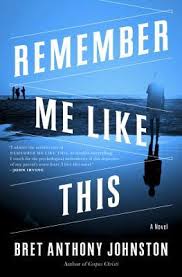
Bret Anthony Johnston's story collection, Corpus Christi, was named Best Book of the Year by The Independent and the Irish Times. He has just published his first novel, Remember Me Like This.

Bret Anthony Johnston’s first book, Corpus Christi: Stories, was named Best Book of the Year by The Independent and the Irish Times. His new novel, Remember Me Like This, tells the story of a boy who disappears in Corpus Christi and then mysteriously turns up.

Bret Anthony Johnston new novel Remember Me Like This, tells the story of a Corpus Christi family whose young son disappeared for years and then mysteriously reappeared. A review in the Washington Post says that the book asks, “But what happens after the cable news hysteria fades away, and the mayor issues a proclamation and the tearful grandparents fly back home? Are these rare families like lottery winners who celebrate in public and then, in the months that follow, squander their good fortune?”

Johnston is the author of Corpus Christi: Stories, which was named a Best Book of the Year by The Independent (London) and The Irish Times, and the editor of Naming the World and Other Exercises for the Creative Writer. He currently serves as Director of Creative Writing at Harvard University.

In this interview, Johnston discusses suspenseful imagery, the challenge of finding the right tone, and his approach to place in fiction.

To read an excerpt from Remember Me Like This and an exercise on setting the mood in fiction, click here.

Michael Noll

The novel begins with a body facedown in the water. This image doesn’t return until almost the end of the novel. In fact, it’s almost possible to forget about it since it’s not long before the drama of the novel takes over. What went into your decision to open the novel with that image? Did you worry that the reader would become impatient with wanting to return to it?

Bret Anthony Johnston

My hope was that the image would embed itself in the reader’s subconscious memory, that it would be something of a shadow that followed them through the story. I wanted them to wonder about the body; I wanted it to keep them from getting too comfortable in the story, to preclude them from taking survival for granted. That is, I wanted them to share the experience that the family endures. Starting the book that way seemed to invite a necessary kind of empathy. Of course you’re right, though, in that it’s almost possible to forget about the image. That’s the gamble I had to take so that when the body returns, the reader is jolted and yanked back toward a kind of raw vulnerability. I hope it works. If it didn’t, don’t tell me.

Michael Noll

The scene where Justin appears for the first time is really well done and uses a deft trick of misdirection. I can imagine that scene was difficult to write. The readers been waiting for it intently, and so there’s a need to both meet and confound their expectations. How did you approach that scene?

Bret Anthony Johnston

Your reading of the scene, the craft behind it, is incredibly accurate and I really appreciate such close reading, Michael. Thank you. What you’re pointing out, though, actually came with relative ease—meaning, it was stunningly difficult and time-consuming, but still not as difficult or time-consuming as other scenes—because it was the result of empathizing with the characters. I only had to understand what the characters would be feeling in that moment, and because I knew them well by that point in the book, their reactions were readily available. Once I understood that she would fixate on her memory him being afraid of snakes, I felt really at home in her reaction.

What took an enormous amount of time was striking the right balance in what might be called tone. I revised and revised and revised to get the scene to move evenly toward the revelation. I struggled with the pace for many drafts. I struggled with the cop’s reaction and the district attorney’s entrance. As you say, it was a scene that we were all waiting to see—not least the writer and the characters—and I took care not to speed through it or linger in an indulgent, self-defeating way. One of the pieces of advice that I regularly dole out to my students is to engage the opposite emotion of what the reader would expect, and I relied on that here. The expectation, I thought, would be hopefulness, but I didn’t think these characters had much hope left in them. I saw that as an opportunity, a way in.

Michael Noll

Bret Anthony Johnston's debut novel, Remember Me Like This, has, according to Esquire, a "driving plot but fully realized characters as well"

Bret Anthony Johnston’s debut novel, Remember Me Like This, has, according to Esquire, a “driving plot but fully realized characters as well.”

The novel returns to certain places (the empty pool at the “half-razed TeePee Motel” and the Marine Lab). The places begin just as places where the characters go, but over the course of the novel, several of the most important events occur there. Did you have certain dramatic scenes in mind when you first introduced those places into the novel? Or, did you explore the places and return to them until the drama presented itself?

Bret Anthony Johnston

The latter. When I start writing anything, I have no intentions of any kind, and the novel was no different. I approach every piece of fiction the same way, which is to pay attention to the details, images, and artifacts of the story and take nothing for granted. My impulse is to reach backwards in a story rather to stretch forward, so I’m always asking myself what’s already in play that I can use again, that I can recycle in a manner that will reward the reader’s attention. It’s a mechanism of repetition and evolution. In this case, I returned to various places until those places evolved to mean something other than what they had. I think a lot of new writers are excited by the prospect of constantly bringing in new material, new imagery or settings or objects, but I think the more satisfying move is often to juggle what you already have so that the reader sees something familiar in a new, more revelatory light.

Michael Noll

It’s been ten years since Corpus Christi: Stories was published. Since then you’ve continued to write stories, and you’ve also published a book of creative writing exercises and written a film documentary about skateboarder Danny Way. Plus, you direct the writing program at Harvard. In other words, you’ve been pretty busy. And yet, I can imagine there was pressure to produce a novel, especially since your first book was so well received. How were you able to resist that pressure, to discover the novel you wanted to write and then write it at a pace that would allow it to become the book you had in mind?

Bret Anthony Johnston

You’re absolutely right about the pressure, but I regard any kind of pressure as a privilege. I’m incredibly fortunate to have editors and readers who want to read my work, and I refuse to take that as a given. Honestly, it still surprises me. It really does. It surprises me to the degree that I don’t fully believe anyone when they ask to read something I’ve written; I think they’re just being nice.

And yet it’s always been clear to me that I’m a slow writer and there will be years between the books that I’m lucky enough to publish. Meaning, I don’t want to publish something until I think it’s ready, until I’ve written the book I want to read, because it will be a long, long time before I have the opportunity to redeem myself. What this means is that I’ve missed many deadlines. I know I missed at least three for the novel, though maybe I missed more. The book just wasn’t ready, and publishing it would have seemed a kind of malpractice. I always gave the publisher the opportunity to cancel my contract, and I apologized profusely, but I also wouldn’t show them the book until it was ready. I worked with an amazing editor named Kendra Harpster, and she was beyond supportive. Not only would the book not have been published without her, the published book wouldn’t be nearly as successful without her guidance. It’s another way that I got lucky. I’ve been lucky my whole career. Lucky and slow, that’s my life as a writer. I wouldn’t change it for the world.

May 2014

Michael Noll

Michael Noll is the Editor of Read to Write Stories.

How to Set the Mood

13 May
Bret Anthony Johnston's debut novel, Remember Me Like This, has, according to Esquire, a "driving plot but fully realized characters as well"

Bret Anthony Johnston’s debut novel, Remember Me Like This, features, according to Esquire, a “driving plot but fully realized characters as well.”

Every story tries to reveal the kind of story it is from the opening page or opening shot, in the case of film and TV. The opening shots of any given episode of Breaking Bad, for instance, are pretty different from the opening of any episode of Parks and Recreation. One is almost always foreboding and dark, and the other is light, fast, and witty. Even if you were to encounter these shows with no knowledge of them, you’d understand after about five seconds what kind of world and narrative sensibility you’d entered.

Novels and stories must set the mood as quickly as any TV show, and a great example is the beginning (or pretty much any chapter) of Bret Anthony Johnston’s debut novel Remember Me Like This. The book is set on the Texas coast, in and around Mustang Island, a place that can inspire many emotions. But the novel quickly focuses on a specific mixture of them that hints at the story to come. You can read an excerpt at the Random House website.

How the Story Works

Most writers are probably familiar with John Gardner’s famous exercise for emotion in description: “Describe a barn as seen by a man whose son has just been killed in a war. Do not mention the son, or war, or death.” This is a brilliant exercise—unless you can’t do it. I’ve seen very good writers in workshops tackle this exercise and come up with nothing. Yet, Gardner’s goal of establishing emotion and mood through description is still a valid one; the thing that might be tripping up some writers is the exercise’s focus on an emotion stemming from a specific event: the son’s death. Emotion and mood can also be general, as seen in this paragraph from the first chapter of Remember Me Like This. Pay attention to the word choices Johnston makes, the way they seem to have been pulled from a stream with a pan that lets all but a certain kind of word sift out the bottom:

Months earlier, the June heat on Mustang Island was gauzy and glomming. The sky hung close, pale as caliche, and the small played-out waves were dragging in the briny, pungent scent of seaweed. On the beach, people tried holding out for a breeze from the Gulf, but when the gusts blew ashore, they were humid and harsh, kicking up sand that stung like wasps. By midday, everyone surrendered. Fishermen cut bait, surfers packed in their boards. Even the notoriously dogged sunbathers shook out their long towels and draped them over the seats in their cars, the leather and vinyl scalding. Lines for the ferry stretched for half an hour, though it could seem days before the dashboard vents were pushing in cool air. Porpoises wheeled in the boats’ wakes, their bellies pink and glistening.

You may have paused at these words and phrases: gauzy, glomming, close, pale as caliche, played-out, dragging, holding out, humid and harsh, stung like wasps, surrendered, cut bait, dogged, scalding. And, of course, there’s the static image of the cars lined up, waiting for the ferry. Taken together, the words don’t describe a particular emotion so much as a general sense of an end of things. If this was a film, it might be called a tone poem: the mood is unmistakable. As readers, we’re made uneasy.

And then there’s that last line: “Porpoises wheeled in the boats’ wakes, their bellies pink and glistening.” Its tone is markedly different, even the opposite of everything that came before it. It might be tempting, if reading this in a workshop, to suggest cutting the sentence. But, in fact, it might be the most important line in the paragraph. It’s the postcard from Hawaii taped to the bathroom mirror in a Chicago apartment in February—the reminder, good or bad, that there are other ways of being and other perspectives on the world. Placing this bright line in a dreary description makes the dreariness even harder to bear. It also suggests that there are entities in the world that relish conditions that the rest of us find unbearable.

The Writing Exercise

Let’s set the mood in a story, using the passage from Bret Anthony Johnston’s novel Remember Me Like This as a model:

  1. Choose the place to describe. Be specific. Johnston shows us a particular spot on the beach. In the prologue, he focuses on the Harbor Bridge in Corpus Christi.
  2. Choose the moment to describe it. Descriptions tend to focus on moments of transition. So, Johnston shows us the beach as the weather is driving the surfers, fishermen, and sunbathers away. The bridge in the prologue is shown at its beginning and then in the moments before and after a group of people walking over discover something terrible. So, think about what often happens in the place you’ve chosen. Or think about an incident that occurs there in your story. Describe the place just before or after that moment has occurred.
  3. Choose the emotion or mood. Unlike your choice of place, specificity is less important here. It might even be easier to think in terms that are tangential to emotions: positive, negative, bright, dark, still, frenetic. Emotions like joy, sorrow, anger, or jealousy can be too pointed and produce obvious personifications: skies shedding tears, happy breezes, etc. Leave room for the language to surprise you. Sometimes you’ll discover lines like this one from Denis Johnson’s Tree of Smoke: “a child up on its knees on the mattress howled out of a face like a fist.”
  4. Choose a narrative arc. Think of the description as a story, with a beginning, middle, and end. For instance, Johnston begins with the weather conditions, which drive the people away, who then sit in line for the ferry while the porpoises swim. In other words, the end of the description should be different from the beginning: a narrative arc, no matter how small, is a way to ensure this.
  5. Write the description. Keep all of the above in mind: the moment of transition, the arc, the mood. After each phrase or sentence, take a look back at the nouns, verbs, and adjectives in it and ask yourself if they can be changed to fit the mood. Play around with the diction. In Johnston’s paragraph, the difference between “small waves” and “small played-out waves” is small but significant. That difference is the source of much of the pleasure in writing. Challenge yourself to lean toward the mood at every opportunity. If you lean too far, you can always pull back.

It’s possible that these steps may seem overwhelming. You might wonder if Johnston approached the paragraph in this way or if he simply wrote it. The odds are, he just wrote it, and perhaps you will, too. But one drawback to modeling your work after published writing is that you’re trying to achieve the same effect as someone who’s been working for many years. As beginners, we must sometimes parse out the processes that more experienced artists seem to manage naturally, without thinking. So, give yourself permission to scramble these steps, to forget some or focus more heavily on others. Let yourself experiment. You’re giving your imagination room to work.

Good luck!