Archive | Character Development RSS feed for this section

How to Explain Away Implausibility

23 Feb
Mo Daviau's novel Every Anxious Wave follows a bar owner who time travels to historical indie rock concerts.

Mo Daviau’s novel Every Anxious Wave follows a bar owner who time travels to historical indie rock concerts.

All superheroes have origin stories: Superman came from another planet, Spiderman got bitten by a radioactive spider, and Batman saw his parents murdered and so became a vigilante. Such character explanations are expected in comic books, but they are, in fact, part of almost every story with a fantastic plot.

A great example of an origin story can be found in Mo Daviau’s novel Every Anxious Wave. You can read the first pages of the novel at her publisher, St. Martin’s, website.

How the Novel Works

The first line of the novel gives away the plot: “About a year before the time traveling began, before I lost Wayne and found Lena, Wayne DeMint stumbled into my bar for the first time.”

It’s a novel about time travel, which poses a basic problem: How to introduce the mechanism that allows the characters to travel through time. The answer depends on the novel’s genre. A sci-fi novel would likely be interested in the actual science behind time travel and would include a lot of mechanics, explanations, and even, perhaps, equations. An adventure or thriller novel would include much less science. My favorite example of a non-scientific answer is the film Inception, in which characters enter people’s dreams. How do they get into the dreams? There’s a box and some tubes that get connected to the characters and—voila—into the dreams they go. The solution contains zero science. The point is simply to get the characters—and the audience—into the dream as quickly as possible so that the plot can move along.

Mo Daviau does the same thing in Every Anxious Wave.

Karl is crawling around on the floor of his bar when, suddenly, he falls through a hole and lands in another time and place. His friend explains that the hole is a wormhole and then builds a mechanism to control travel through it. Watch how fast that mechanism is explained:

He went home to his fifteen computers and wrote the software program, an astonishing time-bending navigational system that harnesses the directional pulls of the wormhole and allows you to choose when and where you’d like to land. Two laptops, three generators, and a series of wires now occupy the desk next to my closet. On the laptop screen there is a Google map with a grid over it. You type in the coordinates of where you want to go, physically.

How does it work? Some computers and wires and a Google map. As an explanation, it’s roughly similar to Peabody’s Wayback Machine—and that is exactly the point. The book’s interest lies in what happens after time travel is made possible, and so it needs to get there quickly. In case a skeptical reader wants more science, Daviau gives them this:

If pressed to explain his scientific understanding of our portal to the past, Wayne would describe Carl Sagan’s theory of the wormhole: that it is totally possible to travel from point A to point B on an unseen plane C.

Carl Sagan does, in fact, have a theory of wormholes, but this is the fastest possible summary of it. Again, audience is key. If this were a sci-fi book, the explanation (and, indeed, the entire book) would be quite different. But the novel is more of an adventure story, and so a bone is tossed to scientifically-minded readers, and then off we go into the past.

These passages create an origin story for the novel’s time travel. They establish its plausibility and allow the story to move forward.

The Writing Exercise

Let’s create an origin story, using Every Anxious Wave by Mo Daviau as a model:

  1. Identify the moment of implausibility. Almost every story has one, not just stories with fantastic premises like superheroes and time travel. Most love stories involve unlikely love; otherwise, they’d be boring. Even that great literary genre, coming-of-age stories, has implausible moments. In The Catcher in the Rye, for example, Holden Caulfield escapes from his boarding school, a difficult challenge in real life. In Every Anxious Wave, the implausibility is time travel for a bar owner. In short, the implausible moment is anything the reader might balk at.
  2. Offer a plausible explanation. This is the origin story, but it doesn’t need to completely and totally explain away all implausibility. It only needs to keep the reader reading. In The Catcher in the Rye, the novel is careful to point out that Holden’s roommate doesn’t wake up and that Holden’s grandmother has recently sent a wad of cash—just enough luck to get him on the train. In Every Anxious Wave, Daviau throws some tech at the reader. Is her explanation actually plausible? Who knows? The point is that it says to the reader, hey, there is an explanation. It’s also short and sweet, like Spiderman’s radioactive spider. If it was too long, the reader might begin to doubt it. So, consider what details can you give the reader to make your story plausible. Try explaining the implausible thing in a single breath—or to someone about to answer a phone call. You have until they pick up their ringing phone. What can you say in that short period of time that will make them say, “Oh, okay, got it. That makes sense?”
  3. Answer the skeptics. If someone were to doubt your explanation, what would they say? On what question would their doubt rest? The best answer is not to give more details. Instead, you can try one of three approaches. First, you can have a character or the narrator ask the same question and someone else answer it. Even if the answer isn’t great, asking the question lets your reader off the hook. Secondly, you can let a character confirm the implausible thing, something like “That sure was crazy, getting bit by that spider.” The more characters who see something, the more plausible it becomes. Finally, you can lean on authority. This is Daviau’s approach: she namedrops Carl Sagan, saying, in effect, that her rationale is supported by a famous scientist, an expert. Your expert could be someone from the outside world, like Sagan, or someone who’s an expert within the world of your novel.
  4. Move on. Once you’ve addressed the plausibility issue, don’t belabor it. Move on with your story. Ideally, this means introducing some problem related to the premise. Daviau’s novel sends one of its characters back to a time the character didn’t expect. As a result, the reader is too busy wondering what will happen next to worry about the plausibility of the wormhole.

The goal is to let your readers off the hook, to let them enjoy your story without worrying about the plausibility of it.

Good luck.

How to Develop a Character amid Large-Scale Conflict

16 Feb
Selin Gökçesu wrote about her honeymoon in Turkey and the Syrian refugee crisis in her essay, "Under the Aegean Moon." The essay was published at the Tin House blog "The Open Bar."

Selin Gökçesu wrote about her honeymoon in Turkey and the Syrian refugee crisis in her essay, “Under the Aegean Moon.” The essay was published at the Tin House blog “The Open Bar.”

Stories about large-scale conflicts like war can reduce the characters involved to the level of those faceless henchman found in action movies, characters whose only purpose in the film is to get shot and die. Did they have friends? Family? Personalities? Who knows? It’s not important. Yet if a story is to be dramatic and engaging, its characters must have lives and personalities that do more than reflect the conflict around them.

A great example of such characterization can be found in Selin Gökçesu’s essay, “Under the Aegean Moon.” It was published at the Tin House blog “The Open Bar,” where you can read it now.

How the Essay Works

The essay is about the author’s honeymoon in Turkey, where her family lives. The trip came amid the Syrian refugee crisis that continues to captivate the world’s attention. If you’ve heard any stories of refugees or seen photos, you’ve probably responded in a very human way: you felt sad, angry, and overwhelmed. As a writer, though, these reactions, though honest and real, don’t make for particularly compelling storytelling. An essay can’t say, “Like you, Reader, I, too, felt sad.” It must do more. (This is not just true of narratives about geopolitical conflict. Any story can exert a seemingly inescapable force of gravity on its characters. You can often identify such stories by the shorthand used for their characters: superheroes, spies, aliens, cops, drug dealers, etc. All of these characters can benefit from more idiosyncratic personality traits.)

For Gökçesu, that more is found by building up herself as a primary actor in the essay—despite not playing an active role in the refugee crisis. She didn’t help anyone enter Turkey or get a visa. She was like most of us, a witness, with the difference that she was witnessing the crisis from Turkey. It may seem odd to write about oneself in the midst of such overwhelming tragedy, but it’s actually a key to the essay’s power.

Here is the beginning of a passage in which Gökçesu describes herself:

In Aspat, we found the makings of a proper—if not perfect—honeymoon. Our bungalow, though too utilitarian to be romantic, was comfortable. We had blue skies, palm trees, and a blazing sun tempered by a cool breeze.

This may not strike you as particularly idiosyncratic. Anyone who’s taken a beach honeymoon has probably found something similar. This is important. Gökçesu is part of multiple stories at once. Yes, she’s witness to the refugee crisis, but she’s also a newlywed, a role that exerts its own gravity.

She does have interests beyond her honeymoon:

Because I had recently watched a video on Facebook of a plastic straw being pulled out of a turtle’s nose, every time a plastic object flew past me, I begrudgingly left my chaise lounge in pursuit of it.

This desire to pick up litter leads to the discovery of a particular kind of item washing up on the shore, typified by this one:

A wallet holding 2500 Syrian pounds, a business card from a health and wellness center in Kobane, a letter, and the driver’s license of a very young man with a round face.

That wallet, and the many other items like it, introduce a conflict. On one hand, Gökçesu knows very well what is going on around her and understands what she is finding. On the other hand, she’s on her honeymoon and very understandably wants to savor this time with her new husband. It’s a conflict she states directly:

The tears that I so readily shed when I watched TV reports on the Syrian refugee’s plight were absent. Even the shame I felt over my indifference was mild. My mind and my body conspired to keep my honeymoon normal, one by being willfully unimaginative and the other by holding back the emotions that it so readily displays at home.

This conflict is never really resolved, though it does come to a head at the end of the essay with two powerful images. The images by themselves are arresting, but their power is accentuated because we see them with fresh eyes; like the writer, we’ve been looking elsewhere.

The Writing Exercise

Let’s create character amid conflict, using “Under the Aegean Moon” by Selin Gökçesu as a model:

  1. Identify the major conflict and the gravitational force it exertsAs readers, we are immersed in information, narrative, and news, and we learn to recognize patterns. In a tragedy (earthquake, tsunami, war), the participants will be portrayed in a handful of usual ways. The same is true of all stories. In politics, you can almost predict what the candidates will say before they open their mouths. No story can escape these patterns completely. Instead, it’s important to understand that they exist and identify the ways they inform our own stories. So, what conflict are you writing about? How is it usually portrayed?
  2. Identify the character’s role within that conflict. Within almost every conflict, there is a predictable cast: victims, perpetrators, bystanders, heroes, villains, the innocent, and the guilty. For each character, there is also a predictable emotional response for the readers. We weep for the victims and feel anger toward those responsible. For your characters (or, for an essay, for yourself or whoever you’re profiling), what roles do they play? If their faces were shown on the nightly news, how would you expect the audience to respond? In “Under the Aegean Moon,” Gökçesu plays the role of witness.
  3. Give the character another role or story. It’s not a matter of destroying the character’s role within the conflict (victim, perpetrator, etc). Instead, you’re adding another role. No one is only a victim or only a perpetrator. In the Aegean, after the smugglers make good on their promises, they go home—and then what? For refugees, victimhood often temporarily flattens their hopes and dreams; it’s hard to think about a future career when you’re sitting in a dinghy in rough waves. But the dinghy trip is only a small part of the refugees’ lives, just as the worst or most dangerous moments of anyone’s life are often fleeting. Then comes the rest of their life. What happens then? What does your character hope for, dream about, fear, love, and detest? What does your character seek out during a free moment? If the conflict had never occurred, what path would your character be following? In Turkey, Gökçesu is following the path of a newlywed.
  4. Make that secondary role challenge the first one. In other words, put the major conflict into the background. If you know that readers will respond in a predictable way, there’s little need to dwell on the conflict. As soon as it appears, the readers will respond in the expected way. Instead, focus on the secondary role, the role that is more personal to your character. When this role collides with the conflict, when the character is forced to forget for a moment this personal role, that’s when tension is created. So, how can you summarize your story in terms of this secondary role. Gökçesu might do it this way: I was honeymooning on a beach in Turkey, picking up trash to save the sea turtles—and then I noticed something else.

The goal is to develop character and drama by giving your characters roles that exist independently of the conflict that surrounds them.

Good luck.

How to Reveal Character Interiority through Action

9 Feb
Justin Torres' novel We the Animals has been called "the kind of book that makes a career" in a review in Esquire.

Justin Torres’ novel We the Animals has been called “the kind of book that makes a career” in a review in Esquire.

All characters think and feel, and, as writers, it’s important to convey the texture of those interior worlds. Some stories are, in fact, as much about what happens inside a character’s head as what happens outside of it. The problem, though, is that it’s tempting to describe thoughts and feelings in ways that kill drama and tension. Sentences that begin with “She thought _____” or “He felt ____” risk doing just that. Everyone writes these sentences occasionally, and they undoubtedly appear in great novels. That said, when we search for alternative ways to describe a character’s mindset, we often stretch our prose in surprising, engaging ways.

A perfect example of showing a character’s thoughts without stating them explicitly can be found in Justin Torres’ novel We the Animals. It’s a slim book that was a mega-blockbuster a few years ago, and if you haven’t read it yet, you can check out this excerpt. (If you live in Austin, you can see Torres read this Thursday at Austin Community College.)

How the Novel Works

The novel follows three brothers as they grow and develop into young men. Here’s a paragraph from near the beginning of the book:

We all three sat at the kitchen table in our raincoats, and Joel smashed tomatoes with a small rubber mallet. We had seen it on TV: a man with an untamed mustache and a mallet slaughtering vegetables, and people in clear plastic ponchos soaking up the mess, having the time of their lives. We aimed to smile like that.

The most important sentence, in my view, is the last one: “We aimed to smile like that.” It reveals why they’re smashing tomatoes, and that why is the key to their minds and thoughts. They’ve seen something, and so they’re replicating what they see in order to replicate a feeling. At this point, another writer might be tempted to stick with that aimed to and explain, perhaps, why they wanted to feel that way and why this image was so compelling. Torres could have even given one of the boys’ thoughts, in italics, like this: This place isn’t happy. I’m tired of being worried. I want to cut loose. But that’s not what he does. Here is what comes next:

We felt the pop and smack of tomato guts exploding; the guts dripped down the walls and landed on our cheeks and foreheads and congealed in our hair. When we ran out of tomatoes, we went into the bathroom and pulled out tubes of our mother’s lotions from under the sink. We took off our raincoats and positioned ourselves so that when the mallet slammed down and forced out the white cream, it would get everywhere, the creases of our shut-tight eyes and the folds of our ears.

Those sentences are entirely about action. There is no interiority at all. And yet the action reveals the boys’ mental states as well as any italicized thoughts. The “pop and smack of tomato guts exploding” is what they feel inside as well (not literally guts exploding, which would be worrisome) but figuratively: they’re full of the kinetic energy of exploding fruit.

More importantly the readers feel the exploding fruit and the carefree chaos of the mess it makes. In short, Torres hasn’t told the readers what the characters feel. Instead, he’s made the readers feel the same thing that the characters feel, which is far more effective. It’s the difference between knowing something intellectually and feeling it in your gut. The latter is more powerful and engaging.

Also, the passage is written in first-person plural (we). As a result, it’s very difficult to give just one character’s thoughts. And, of course, it’s implausible to suggest that all characters think exactly the same italicized thought. This is why fiction written in first-person plural tends to be more action oriented and less interior.

Finally, look at the sentence that follows the passage about smashing tomatoes:

Our mother came into the kitchen, pulling her robe shut and rubbing her eyes, saying, “Man oh man, what time is it?” We told her it was eight-fifteen, and she said fuck, still keeping her eyes closed, just rubbing them harder, and then she said fuck again, louder, and picked up the teakettle and slammed it down on the stove and screamed, “Why aren’t you in school?”

The mother is the opposite of her sons: she’s sleepy and angry. Her appearance on the page immediately introduces tension. The room cannot contain these opposing emotions without conflict.

The Writing Exercise 

Let’s reveal a character’s thoughts through action, using We the Animals by Justin Torres as a model:

  1. Start with action, not thought. Torres begins with what the boys are doing: wearing raincoats and smashing tomatoes. The action comes first. It’s a version of the in media res strategy. So, choose a moment of strong feeling for your character. That feeling could be an emotion like anger or joy, but it might also be something more difficult to label, something that pulses in the character’s blood. What is the character doing in that moment? State it clearly.
  2. Show what the character sees. Torres tells us that the boys are watching a TV show with a man smashing vegetables (Hooray, Gallagher!). They are imitating what they see. So, show the reader what your character sees or hears and how it informs the action. In this case, the boys are imitating. But that’s not the only approach. Character can respond to something they see in many ways. Imagine if the boys were smashing vegetables while watching another 80s icon, the blissed-out PBS painter Bob Ross. They might still smash the vegetables, but we’d view the action differently.
  3. State what the character wants. Torres tell us that the boys “aimed to smile like that.” He doesn’t name an emotion or spell out a thought in italics. He simplifies whatever the boys are thinking and feeling into a desire. So, state as clearly as possible what your character wants in the midst of doing whatever she’s doing and seeing whatever she’s seeing.
  4. Return to the action. Describe it as viscerally as possible. If the action is upbeat or energetic, choose energetic words. If the action is calm or threatening or despairing, then choose words that convey it. The goal is to affect the reader, to make the reader feel something like what the character feels. Horror stories do this all the time. What is Hannibal Lecter feeling as he eats his victims? Who knows? But when he serves a slice of person with a side of fava beans, we shudder. It’s creepy, and we know that whatever mind thought of such a combination is creepy, too.
  5. Introduce someone with a different emotional state. Torres introduces the sleepy, angry mother. Notice that he reveals her emotional state through action (rubbing her eyes). Ideally, the emotional state of this new character will not be able to co-exist with the emotional state and action of the character you’ve been describing.

The goal is to convey emotion and interiority through action and to create tension by putting together characters with conflicting emotional states.

Good luck.

How to Describe a Character’s Sense of the World

2 Feb
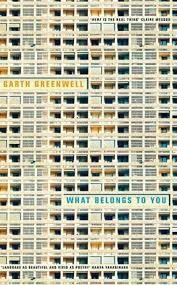
Garth Greenwell's novel What Belongs to You tells the story of a young American man teaching in Bulgaria and his complicated relationship with Mitko, whom he meets in a public restroom.

Garth Greenwell’s novel What Belongs to You tells the story of a young American man teaching in Bulgaria and his complicated relationship with Mitko, whom he meets in a public restroom.

When I was an undergrad, one of my writing teachers lamented that too many novelists were trying to write books that could easily be filmed. A good novel, she said, moved differently than film; it created a kind of narrative space that could not be captured on a screen. And what filled that space? Human thought.

This isn’t the only view of what constitutes good writing, and it’s probably not even a majority opinion, but it does suggest an interesting question. If a scene that can be filmed—i.e. one with dialogue and action and subtext to inform both—is not the only approach to a scene, then what else is there?

One answer can be found in Garth Greenwell’s new novel What Belongs to You. You can read a long excerpt from the beginning of the novel here.

How the Story Works

In his review of What Belongs to You in The New Yorker, James Wood writes this:

The novel contains no direct dialogue, only reported speech; scenes are remembered by the narrator, not invented by an omniscient author, which means that the writing doesn’t have to involve itself in those feats of startup mimesis that form the grammar, and gamble, of most novels. In an age of the sentence fetish, Greenwell thinks and writes, as Woolf or Sebald do, in larger units of comprehension; so consummate is the pacing and control, it seems as if he understands this section to be a single long sentence.

Wood’s “feats of startup mimesis” are another version of “can be filmed,” or at least “can be filmed in the way we’re accustomed to seeing on-screen.” In place of these feats, he claims, Greenwell inserts “larger units of comprehension.” That’s all a bit vague without an example, and so here is a brief passage (only a small part of a longer paragraph) from What Belongs to You. A bit of setup: the novel’s narrator is a young American man teaching in Bulgaria. In this scene, he’s in the National Palace of Culture, in the restrooms,which are frequented by gay men because they “are well enough hidden and have such a reputation that they’re hardly used for anything else.” The narrator encounters a man there, and that encounter, brief in terms of actual minutes, occupies almost ten pages. Here is why:

I wanted him to stay, even though over the course of our conversation, which moved in such fits and starts and which couldn’t have lasted more than five or ten minutes, it had become difficult to imagine the desire I increasingly felt for him having any prospect of satisfaction. For all his friendliness, as we spoke he had seemed in some mysterious way to withdraw from me; the longer we avoided any erotic proposal the more finally he seemed unattainable, not so much because he was beautiful, although I found him beautiful, as for some still more forbidding quality, a kind of bodily sureness or ease that suggested freedom from doubts and self-gnawing, from any squeamishness about existence. He had about him a sense simply of accepting his right to a measure of the world’s beneficence, even as so clearly it had been withheld him.

The first sentence is pretty straightforward: The narrator desires the man but doubts he will get any such satisfaction.

The second sentence starts in a similarly clear way (“For all his friendliness”) but instead of sticking to what is clear and evident, the narrator begins to suss out what lies behind that friendliness. He identifies it as a “more forbidding quality, a kind of bodily sureness or ease that suggested freedom from doubts and self-gnawing, from any squeamishness about existence.” Earlier, the man has been described in specific detail, but this sense of him is particular to the narrator. Someone else might see nothing like this at all. In short, the prose has jumped from what is to what seems to be to the narrator. The world and the people in it are being viewed, thickly, through the narrator’s consciousness. The final sentence extends this filter and the sense of being that it reveals: “a sense simply of accepting his right to a measure of the world’s beneficence.”

Of course, that filter is present in all novels. In first-person narration, the narrator provides the filter. Everything we see is seen through the narrator’s eyes. In third-person prose (and, really, in all novels), the filter is the author’s. And yet we forget this because most novels work hard to make us forget; they want us to see the world of the novel as clearly as an image in a film.

A review in The New York Times by Aaron Hamburger calls the style used by Greenwell “an ‘all over’ prose style, similar to that of a Jackson Pollock abstract expressionist painting, in which all compositional details seem to be given equal weight,” comparing it to the prose of Ben Lerner’s novels. But that doesn’t seem quite right. Greenwell’s narrator isn’t scattered. He’s pretty focused on the man in front of him and his desire for him, and it’s that focus—the act of seeing and thinking about—that becomes the essential material of the novel.

Lerner does something similar. Here’s a passage from his most recent novel, 10:04, after the narrator has had sex:

I was alarmed by the thoroughness of what I experienced as Alena’s dissimulation, felt almost gaslighted, as if our encounter on the apartment floor had never happened. Here I was, still flush from our coition, my senses and the city vibrating at one frequency, wanting nothing so much as to possess and be possessed by her again, while she looked at me with a detachment so total I felt as if I were the jealous ex she’d wanted to avoid, a bourgeois prude incapable of conceiving of the erotic outside the lexicon of property.

As in Greenwell’s novel, Lerner’s prose is interested in sense and what an awareness of the world feels like: “what I experienced as Alena’s dissimulation, felt almost gaslighted.”

Of course, these are two very different books with very different narrators. Lerner’s narrator spends a lot of time on social media, and so his consciousness actually is scattered at times because it is pinging along with the rapid delivery of information from Facebook and Twitter. He’s also a poet, and so he’s apt to fall into long interior discourses about art and poetics. In other words, the things he thinks about are different, but the general style of the narrator, its general focus on consciousness, is similar.

Of course, any time reviewers start comparing the book at hand to some deceased writer’s work (Wood chooses Woolf and Sebald) or to writers with highly distinctive styles (Hamburger in The New York Times chooses Lerner and Karl Ove Knausgaard), you know that the book is doing something so new that it isn’t easily classifiable. Yet, let me take my own shot: In its focus on a mind actively thinking about the experience it is having, Greenwell’s (and Lerner’s) work resembles the prose of Henry James, particularly The Beast in the Jungle.

That book, like Greenwell’s, begins with a charged encounter, a man and a woman at a party. The woman tells the man they’ve met before and asks if he’s forgotten. Here is what comes next:

He had forgotten, and was even more surprised than ashamed.  But the great thing was that he saw in this no vulgar reminder of any “sweet” speech.  The vanity of women had long memories, but she was making no claim on him of a compliment or a mistake.  With another woman, a totally different one, he might have feared the recall possibly even some imbecile “offer.”  So, in having to say that he had indeed forgotten, he was conscious rather of a loss than of a gain; he already saw an interest in the matter of her mention.

Much about James’ novel is different from What Belongs to You. It’s about inaction, and Greenwell’s isn’t. There is dialogue, and Greenwell writes almost none. Yet to quote Wood, both novelists are interested in “larger units of comprehension,” and those units are filled with character’s sense of what is happening around them.

The Writing Exercise

Let’s describe a character’s sense of an interaction, using What Belongs to You by Garth Greenwell as a model:

  1. Choose who will have the interaction. The possibilities, of course, are endless. It can be between lovers, siblings, parents, coworkers, friends, business associates, or enemies, or it can be transactional, like the interaction between store clerk and customer.
  2. Choose which perspective will serve as the filter. In other words, whose eyes are we seeing the scene through? This can work in third-person as well as first-person, as Henry James makes clear in The Beast in the Jungle.
  3. State the desire. Despite the capacious units of comprehension that Greenwell creates for his narrator’s consciousness, certain things are quite clear. Number one would be the narrator’s desire. He wants the man in the restroom. Without that clear desire, the passage that follows might come untethered from the experience it is pondering. The reader needs a reason to wonder what the narrator thinks, and that reason is the possibility that the narrator might get, or not get, what he wants. So, state as clearly as you can what the character wants out of the interaction: money, love, some object, acceptance, permission, refusal, rejection, a chance to fight, a chance to make up, or even a mindless conversation. If no one wants anything in the scene, it’s probably not worth writing. Don’t be subtle. Greenwell’s narrator thinks, “I wanted him to stay.” Be just as direct.
  4. Describe the surface. Greenwell does this elsewhere in the scene and refers to it with the phrase “For all his friendliness.” How does the interaction seem at first glance. If the other character is putting on an act, what is the act? What is intended to be seen?
  5. Peer behind the surface. Greenwell’s narrator finishes the sentence that begins “For all his friendliness” by looking closer and thinking about what lies behind that friendliness. It might be useful to use Greenwell’s actual syntax as a model: “more forbidding quality.” So, you could write a sentence like this: For all his/her ______, there was a more _____ quality.”
  6. Let the character draw conclusions from this sense of things. Once the narrator/character determines that something does, in fact, lie behind the surface, let the character think about it. The desired end of thought is, usually, conclusion, which is what Greenwell’s narrator reaches: “He had about him a sense simply of…” Again, try using that syntax: He/she had about him/her a sense simply of _____.”

The goal is to expand the room your prose offers to its characters consciousness, the narrator’s sense of what is happening. You can make that room an efficiency or a mansion. Either way, the idea is to add a character’s sense of things, something that can be described in prose but not easily portrayed in film.

Good luck.

How to Challenge a Reader’s Sense of Reality

26 Jan
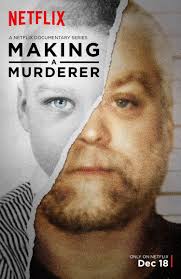
The hit documentary series, Making a Murderer, tells the story of Steven Avery, who was wrongly convicted of rape and then accused of murder.

The hit documentary series, Making a Murderer, tells the story of Steven Avery, who was wrongly convicted of rape and then accused of murder.

One of the smartest things ever said about writing fiction comes from Kenneth Burke’s essay, “Psychology and Form.” In it, he explains that suspense is built by manipulating the reader. He gives the example from Hamlet, when Hamlet and a friend go to a platform to meet his father’s ghost, but then Hamlet hears his uncle drunk in the streets. So Hamlet rants for a while about drunkenness, and we the readers are nodding along—and that’s when the ghost shows up. We’d forgotten all about it, and because we’d forgotten, we’re surprised at its arrival and eager to know what will happen next.

Here’s the takeaway: Shakespeare delivered exactly what was promised, the ghost of Hamlet’s father. The thrill, as a reader/audience member, came from having it given to us in a way we didn’t expect.

Once you understand that such manipulation is possible—and necessary—you will see it at work in every type of narrative. A example of audience manipulation on a mind-boggling scale can be found in the Netflix documentary series Making a Murderer. If you haven’t yet seen it, you can watch the trailer here.

How the Show Works

[Spoiler Alert: This post discusses later episodes.]

The documentary tells the story of Steven Avery, who was wrongly convicted of rape and served 18 years in prison. After his release, he is soon arrested again, this time for murder. While many viewers are convinced that Avery is innocent again, the part of the show that has generated the most outrage among viewers is the treatment of Avery’s nephew Brendan Dassey, who was arrested as an accomplice and interrogated alone with his attorney’s permission. Dassey was 16 at the time and a slow learner, meaning that his intellectual capacity to engage in a police interrogation may have been limited.

To illustrate Dassey’s limited ability to understand what was happening, the filmmakers show large parts of his interrogation by two detectives. The interrogation follows a basic pattern. The detectives ask Dassey what happened, he says he doesn’t know, and so the detectives suggest what they believe happened, punctuated with a line like, “Isn’t that right?” Then Dassey nods and repeats some version of what he’s been told. By the end of the interrogation, Dassey has confessed to awful things, but he’s done it after three hours of intense pressure and leading questions from the detectives.

The documentary also shows a phone call made to Dassey’s mother. In it, he tells her that the detectives have told him that his story is inconsistent, and he asks, “What does inconsistent mean?” She doesn’t know.

As a result, most viewers believe the confession to be worthless; they don’t believe that Dassey has told the truth. In short, when the interrogation comes up again in the show, viewers will have a strong point of view about it.

Of course, it does come up again. A judge has several opportunities to throw out the confession as evidence, but he never does, explaining that he sees nothing wrong with the confession. At this point, most viewers probably react with anger. They disagree with the judge, yes, but they’ve also been manipulated to react this way. This isn’t to say that the viewers are wrong—but this is what good storytelling does. It directs the audience’s attention. It gives the reader a sense of the basic reality of the story’s world—and then, sometimes, it introduces a character or fact that undermines or resists that reality.

When this happens, the audience reacts—and when it reacts, it becomes more deeply engaged in the story. This same strategy is used over and over in stories that hinge upon someone’s guilt or innocence: establish the nature and reality of the world and then introduce some element that calls it into question. Sometimes that element actually upends the world we’ve come to know, as happens in Gillian Flynn’s Gone Girl. In Making a Murderer, however, the audience’s mind is made up, and what gets upended is the expectation that the viewer’s sense of the world will be accepted by everyone.

The Writing Exercise

Let’s direct the reader’s attention, using the documentary series Making a Murderer as a model:

  1. Establish the reality of the situation. Show the reader the world. Readers, like all people, trust what they see. We rely upon direct experience to build our knowledge of how the world works. Of course, all works of art (including documentaries) frame that experience. Readers can’t see everything, only what the author chooses to show them. So, show your readers the world in a way that seems uncontroversial. Build this reality with details. Give the story texture: what the world feels and tastes and looks like. And, more importantly, don’t get to the point too soon. In Making a Murderer, we’re shown clips from the interrogation of Brendan Dassey, and it’s slow going at first. Eventually, Dassey will confess to everything, but at first, he’s sitting in a chair, not really answering questions, and claiming that he doesn’t know what the detectives are talking about. It’s not particularly gripping footage, not like when he begins to give lurid details. But, it’s the details that show his demeanor in the room that set the stage for what is to come. So, at first, show your character doing something unremarkable like reading the paper or eating breakfast or driving to work. Make us believe in the reality of their existence, and then rev up the story’s engine.
  2. Establish the nature of the character. If the character is slow-witted, create a mundane situation in which that trait will be revealed. If the character is hot-headed, sentimental, easily rattled, cool under pressure, funny, irreverent, or depressive, create an everyday situation to reveal that trait to the reader. Don’t wait until an important moment. If someone gets mad easily, then that person likely gets mad at the drop of a hat—so, find a hat to drop.
  3. Create a scene that must be believed. Love stories are full of such scenes: someone is suspected of cheating and must prove that he/she is innocent. For crime fiction, of course, disputed scenes are stock in trade. Family life is also full of moments like this: parents asking kids if they finished their homework, a spouse asking the other spouse if a bill got paid or if the trash has been taken out. These scenes are usually built on unremarkable moments: I put my purse down right here, I’m telling you. What basic action might your character take that could, later, be questioned?
  4. Challenge the accepted reality. Offer an alternate version of events. You’re lying. You never brought the purse into the house. Or, I know you weren’t doing your homework. I could hear you talking on the phone. Or, I saw you go into her apartment. These challenges make life difficult for the character, but more importantly they force readers to question their basic sense of the world. As the writer, you can use that challenge in two ways. One, you can actually upend and revise the readers’ sense of reality. Two, you can confirm the readers’ sense but refuse to let every character buy into that version of reality.

The goal is to make readers react to the narrative and hook them deeper into the story.

Good luck.

How to Give Characters a Frame of Reference

19 Jan
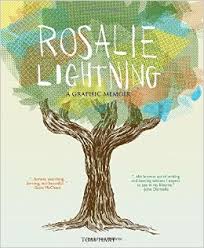
Rosalie Lightning is cartoonist Tom Hart's graphic memoir about the death of his infant daughter Rosalie and the struggle to understand how to live in her absence.

Rosalie Lightning is cartoonist Tom Hart’s graphic memoir about the death of his infant daughter Rosalie and the struggle to understand how to live on in her absence.

When people face tragedy, they rely upon the philosophical framework they’ve built their entire lives. You can hear this framework in the stories they tell, the rituals they follow, and the words of wisdom they recall. Our characters should be no different, yet it’s easy to think only in terms of the questions a character must grapple with in the aftermath of something life-changing: where to live, who to be with, how to cope with what they’re feeling. But all of these questions are answered within a frame of reference. Characters, like us, do not invent every feeling and bit of knowledge or instinct from scratch. Instead, they build their experience of the world hand-in-hand with the books, art, religions, and stories that exist around them.

An excellent—and heartbreakingly beautiful—example of this essential human practice can be found in Tom Hart’s new graphic memoir, Rosalie Lightning. When his daughter was almost two years old, she died without warning in her sleep. This book is the story of what happened afterward. You can read the first two chapters of the book at Hart’s website.

How the Memoir Works

Throughout the book, Hart show the reader key moments from his daughter’s life and death, his and his wife’s grief, and their attempts to know how to live without their daughter. Many of these moments are associated with art: a book that Hart read to his daughter and films, songs, and poems that have meant something to him—consciously or not. Anyone who has experienced intense grief understands this kind of association, the way, for example, that a song can gain meaning when it’s heard at a particular time or during a particular moment.

The challenge in a book is to make the reader understand and feel these associations. A good place to start is the beginning. Make the art, religion, or words of wisdom part of the character’s frame of reference before the story really begins. In Rosalie Lightning, Hart makes the frame of reference literally the first thing we encounter.

(Note: I’m going to quote the book, but because it’s a graphic memoir, it’s best understood in its complete form. You can find the opening pages of the book at Hart’s website and at Amazon.)

Here is how the book begins:

Her favorite image

In a single night the oak tree grows to full height from a scattering of acorns in the garden.

In the next frame, we see a house with oak trees and learn the source of this magical image:

A scene from Hayao Miyazaki’s My Neighbor Totoro

What follows is a series of images of Hart’s daughter Rosalie picking up acorns and calling them “dideo atune” or “Totoro acorn” and also her death and its aftermath. Hart quotes his wife Leela saying, “My heart is a blast sight.”

This introduction is important because it presents both the tragedy and the mental framework that it enters. As Hart and his wife try to make sense of their loss, they fall back on that framework. Hart clearly shows us their attempts to make sense. For example, there is this scene early in the book:

I look for help in art and images. Wondering what makes them work. Wondering what’s going on in my brain…

I read Roland Barthes

“The relation between thing signified and imagine signifying an analogical representation is not ‘arbitrary’ as it is in language…”

He is writing about an ad for Italian spaghetti.

What it signifies, what it semiotizes, and how the layers of semiconscious signations and intents correlate with the

Forget it—I pick up the vault of horror

Obviously, Roland Barthes is not to everyone’s reading taste. What matters is that Barthes matters to Hart and that Hart looks to Barthes’ words to help understand his grief. In Barthes matters to the story because his words fail. Hart eventually turns away from them. In some ways, the book repeats this sequence: Hart seeks out a book, film, poem, or song, and he finds something helps or he doesn’t. Sometimes the art arrives in his life unexpectedly—arrivals that are possible only because the memoir has created space for them.

The Writing Exercise 

Let’s give a character a frame of reference, using Rosalie Lightning by Tom Hart as a model:

  1. Give the character a general frame. In short, what kind of person is your character, generally? Hart reads Roland Barthes and the poet Ben Lerner (who is quoted in an epigraph to the book), watches films by Miyazaki and Kurosawa, and reads the work of cartoonists and graphic novelists. He’s not watching Transformers or reading Tuesdays with Morrie (at least not in the book). Make a list of the sort of books and films your character prefers. If the character is religious, what texts does she turn to? Be specific. If the character is a Christian, don’t say she turns to the Bible. Identify the books in the Bible or passages that she recalls. What stories does the character like to tell? Does she tend toward patriotic myth, like the story of George Washington and the apple tree? Toward the mystical, like the various stories that pop up on Facebook about people holding hands and praying around a lake and, in so doing, altering the chemical structure of the water molecules?
  2. Figure out why the character turns to the frame of reference. In Hart’s case, his daughter died, and he was trying to make sense of the personal devastation that remained. Tragedy often forces people to question the meaning and essence of things, and so they turn toward prayer or art. But a story doesn’t need tragedy to do this. Case in point: whoever won the Powerball last week has experienced something good and life-changing. That person will almost certainly fall back on their frame of reference in order to understand how to be rich and what to do with the money. Anything that significantly alters or redirects a character’s life will likely force them to develop a new or revised or refreshed understanding of the world and situation they find themselves in.
  3. Find the applicable parts of the frame of reference. Hart no doubt watches many films and reads many books, but in the wake of his daughter’s death, it was particular films and books that he recalled and sought out. Return to the general frame of reference that you created. Which parts apply to your character’s situation? Some parts may be easy to identify. For example, certain Bible passages are read at funerals and weddings over and over again. Other parts may be idiosyncratic. Not many people might think of Roland Barthes when grieving, but Hart did, and that fact reveals something particular about him. So, find the particular films, books, stories, passages, and words of wisdom that your character would turn to.
  4. Introduce the frame before the story. In Rosalie Lightning, we see acorns and Miyazaki before we’re introduced to Rosalie’s death. Consider when/how your character might think about or talk about the film or book. When would she talk about it? Often there are objects that, when seen or encountered, prompt us to think about certain things. Or when someone we know has experienced a particular situation, we tend to tell the same stories as comfort. Try putting your character in one of those situations before introducing the major conflict. Don’t worry about the situation’s proximity in time to the conflict. Prose, unlike film, has all time and memory at its disposal. Hart begins with acorns. In The Great Gatsby, Fitzgerald began with this sentence: “In my younger and more vulnerable years, my father gave me some advice that I’ve been turning over in my mind ever since.” That’s the frame of reference that Nick Carraway carries with him when he meets Gatsby. It’s important to begin with the frame because if it appears only after the conflict, it can seem artificial, like something introduced to induce some emotional response in the reader. If it’s introduced before the conflict, then it seems simply like part of the character.

The goal is to give a character the chance to make sense of the world, and that sense-making cannot happen in a vacuum. The character needs some frame of reference, which is what you’re providing.

Good luck.

How to Add Physical Description to Dialogue

12 Jan
Pulitzer Prize-winning journalist Eli Saslow wrote a lengthy feature on Cheyeanne Fitzgerald, one of the survivor's of the mass shooting at Umpqua Community College in Roseburg, Oregon.

Pulitzer Prize-winning journalist Eli Saslow wrote a feature for The Washington Post, “A Survivor’s Life,” on Cheyeanne Fitzgerald, one of the survivor’s of the mass shooting at Umpqua Community College in Roseburg, Oregon.

A key difference between beginning and experienced writers is the ability to handle the attributions and descriptions within dialogue. As we improve our craft, we work from “he said with glittering eyes” to “he guffawed” to “he said” to “he said, looking hard at her” to, finally, something better. Well-written dialogue uses carefully chosen physical details to push forward or expand the dramatic moment and the reader’s understanding of it.

An excellent example of this skill (and, frankly, an excellent example of pretty much every type of good writing) is “A Survivor’s Life,” Eli Saslow’s recent article about a 16-year-old girl who survived the mass shooting in Roseburg, Oregon. It was published in The Washington Post, where you can read it now.

How the Article Works

The article focuses on the relationship between the survivor, Cheyeanne Fitzgerald, and her mother and primary caregiver, Bonnie Schaan. In the opening paragraphs, Bonnie needs to run to the store to buy juice and ice, the first time she’s left her daughter alone since the shooting. Here is part of the dialogue from that scene:

“Do you want me to call someone to come sit with you?” Bonnie asked.

“No. Jesus. I can take care of myself.”

“Blinds opened or closed?”

“Damn it, Mom. Just go!”

Bonnie grabbed her coat and opened the door. She could see the market across the street.

“You’ll be okay?” she asked, but Cheyeanne didn’t answer.

This dialogue is effective for several reasons. First, attribution (identifying the speaker) is used only when necessary. Second, the attributions are kept simple: no screaming or whispering or begging, just “she asked.” Finally, physical details that we’re shown serve a clear purpose. Bonnie grabs her coat and sees the market across the street, making it clear how close the store is and how little time Bonnie’s daughter will spend alone. It’s a small detail, but it reveals so much about the situation. Bonnie is running literally across the street to buy two items, and yet she’s scared to leave her daughter for that long.

In another scene, Cheyeanne tells the story of  the shooting, something that Bonnie doesn’t want to hear. What results is dialogue with only one person speaking:

“The thing I keep thinking about is how that bastard stepped on me,” she said.

Bonnie shifted on the couch. She flicked dust off the armrest. She noticed a dirty plate on Cheyeanne’s bedside table and reached over to grab it.

“Like I wasn’t even human,” Cheyeanne said. “Like I was nothing.”

Bonnie may not speak words, but she is still communicating. It’s not intentional communication, but nonetheless, she’s revealing her thoughts: she doesn’t want to hear this information, a fact that is shown by how she redirects her attention from what is being said.

Finally, there’s a long tradition in stories, particularly war stories like “Speaking of Courage” by Tim O’Brien and “Soldier’s Home” by Ernest Hemingway, in which characters speak but aren’t heard—at least not in a meaningful way. The same thing happens to Cheyeanne in a coffee shop with a sign posted that announces, “Ten percent of proceeds go to victims!”

“I actually was a victim,” Cheyeanne told the girl at the counter, after she’d ordered her drink.

“Of what?” the girl asked.

Cheyeanne pointed to the sign.

“Oh. No kidding?” the girl said. She smiled. She handed out the drink. “Straw?” she asked.

In this case, the physical description (she smiled, handed out the drink) tells the reader how to understand the dialogue. For example, if the description had instead said that the girl “trembled, her hand shaking as she handed out the drink,” the dialogue would be understood much differently.

The Writing Exercise 

Let’s add physical description to dialogue, using “A Survivor’s Life” by Eli Saslow as a model:

  1. Use description to add context to dialogue. Saslow writes dialogue showing how nervous Bonnie is to leave her daughter alone, but that nervousness takes on a different meaning when we see the store across the street. So, find an exchange of dialogue that refers to something or someone (I know that’s a vague instruction, but it’s necessary.) In short, find a noun that one speaker references and feels something about (happiness, trepidation, anger). Then, show that noun to the reader. If there is some difference between how we see the noun and how it’s being discussed, that difference will provide context for what is being said.
  2. Use description to replace dialogue. It’s no secret that body language is a significant part of human communication, yet we tend to strip it out of dialogue. Or, we add meaningless details, the equivalent of someone clearing their throat. One strategy is to summarize what a character is communicating or thinking or feeling. This is different than a summary of what the character says, as anyone who has snapped, “And what is that supposed to mean?” knows well. Keep that summary in mind as you write the dialogue. If possible, delete one line of dialogue and replace it with a physical action. The goal is to communicate the same thing as the line of dialogue but without speaking. The result can be a more nuanced scene.
  3. Use dialogue to interpret dialogue. In the scene in the coffee shop, Saslow uses the description to help us understand the barista’s line, “No kidding?” The description shows her smile and a single action, but you could also describe a character’s clothing, posture, or what the character does immediately following the dialogue. The goal is to reveal the impact that the conversation has on the character.

The goal is to add nuance and depth to dialogue with physical description of the characters and the things around them.

Good luck.

How to Describe a Character from the Perspective of Others

5 Jan
Tristan Ahtone rode Greyhound buses around America and wrote about it for Al Jazeera America.

Tristan Ahtone rode Greyhound buses around America and wrote about it for Al Jazeera America‘s project, “The United States of Bus Travel.” Photo credit: Tomas Muscionico, Al Jazeera America

The easiest and most common way to describe a character is directly, like this: She’s tall and loves Adele but believes people who sing along with the music are disrespecting the artist. The first part of that description (she’s tall) can be deduced from observation, and perhaps the second part (loves Adele) can be as well if the music is audible. But the final part (disrespecting the artist) requires knowing her thoughts, which means that she speaks them aloud. For most characters, this isn’t a big deal. But what about characters who can’t or won’t speak?

A good example of using every  available resource to describe a character can be found in a recent series, “The United States of Bus Travel,” from Al Jazeera America. Journalist Tristan Ahtone traveled the United States by Greyhound bus and wrote short vignettes about the people he encountered. You can read the entire project here.

How the Essay Works

The final part of the series, “The Mother,” is about a passenger named Rosalinda who spoke no English. (You can find it by scrolling all the way to the bottom of the page.) Normally Ahtone’s approach was to strike up a conversation, but, in this case, that wasn’t possible because Rosalinda didn’t speak English. Watch how Ahtone builds that inability to communicate into the first part of the description:

Rosalinda had all her possessions in two bags: a trash bag and a giant resealable storage bag with the Homeland Security logo on it. She and her baby had matching yellow wristbands, the kind one gets in a hospital or a prison. She spoke no English and only a touch of Spanish and, from what passengers could gather, had taken a bus from Guatemala to Arizona 13 days before and was now bound for Florida.

Notice how Ahtone starts with what can be observed: what Rosalinda carries with her and the wristbands she shares with her baby. At that point, he’s run out of what can be learned directly, and so he finds a way to learn information indirectly: “from what passengers could gather.” In short, Ahtone is using the impressions and knowledge of the people around Rosalinda as a source of information rather than Rosalinda herself.

The rest of the vignette becomes as much about those people around her as about Rosalinda herself. Here’s the bus driver:

“She’s probably Central American or something,” said the bus driver. “I think she’s going all the way to Miami. That happens all the time on this schedule. We get a lot of Central Americans probably getting sent from one detention area to another, and they’re being processed.”

Through this quote, we learn something about the route and the people who tend to travel it.

Here’s another passenger on the bus:

“I want to get her something to eat when we stop, but I don’t know how to communicate with her,” said Dianne Whitlock as Rosalinda’s baby cried. “She’s not eating.”

And here is how the passage ends:

At the next stop, passengers in her section pooled their resources for water, soda, chips, diapers, baby food and a cheeseburger with a side of fries.

By looking beyond Rosalinda for information about her, the writer has also opened up the vignette to the world around the person he is ostensibly focused on. We learn about her, but we also learn about the kind of route she’s on and the way that a temporary community develops on the bus. All of this is built from statements made about Rosalinda by the other people on the bus.

The Writing Exercise 

Let’s describe a character from the perspective of others, using “The United States of Bus Travel” by Tristan Ahtone as a model:

  1. Describe the character using what can be observed. Ahtone describes what Rosalinda is carrying with her and one notable part of her wardrobe: the matching yellow wristbands. The key is to choose details that convey something about the character. It’s actually a good exercise to pretend that you’re viewing your character while riding on a bus. In that situation, it’s natural to draw conclusions about people from what they’re wearing or carrying or from their posture or behavior. So, choose one or two basic details that allow the reader to infer some basic aspects of the character’s life, background, or situation.
  2. State the impediment to knowing more about the character. In Ahtone’s case, he didn’t speak Rosalinda’s language. But language isn’t the only possible impediment. Perhaps a character doesn’t want to talk or cannot talk due to a physical cause or due to the situation (no one or someone isn’t allowed to speak). There are many situations that we encounter where speaking openly or at all isn’t possible or socially acceptable (like on an elevator). Don’t be coy. State clearly the reason the characters cannot talk.
  3. Look for other sources of information. The most obvious, of course, are other people, but in the absence of people, you can study the character’s relationship to her possessions or surroundings. (Think of the Sherlock Holmes line about watching what a woman first rescues from a burning home.) If other people are present, consider the difference in their perspective compared to your own (or your narrator’s). For example, on Ahtone’s bus trip, the other passengers had been riding the bus with Rosalinda for a while, and in that time, they’d observed her acting or not acting in ways that stood out to them. They’d likely tried to talk to her in Spanish and failed at that. Like Ahtone, you can use these different perspectives and levels of knowledge/experience to convey information that is not directly accessible to you or your narrator. What do other people think or see or notice or say?
  4. Look to the setting for information. Ahtone gets a crucial piece of information from the driver, who has seen many passengers like Rosalinda. So, think of your character as being part of a trend or demographic. We draw conclusions about others based on age, gender, dress, race, ethnicity, language, etc, all of the time. What conclusions can/would your characters draw based on their own experience and the setting where the story occurs?
  5. Consider how the other perspectives interact. On the bus, the other passengers worry about Rosalinda and eventually pool their money to buy her food and diapers. Of course, the other perspectives don’t need to react positively. We’re all coming out of the holidays, and so we’ve perhaps been reminded that not all personalities gel or work well together. If a character has drawn many people’s interest, how does that shared interest cause them to behave?

The goal is not only learn about a character who cannot or will not speak but also to learn about the surrounding characters and world.

Good luck.

How to Create Structure with Images

30 Dec
Mario Alberto Zambrano's novel Lotería uses a deck of cards to chart the story of a young girl's family and its demise.

Mario Alberto Zambrano’s novel Lotería uses a deck of cards to chart the story of a young girl’s family and its demise.

When working on a novel, writers often reach a point where the thrill is gone. Whatever impulse that kicked off the project has vanished, and all that is left is plot: who did what, what they will do next. The novel begins to resemble an outline. One way to solve this problem is to create a structure that doesn’t hinge on the next plot point. This is why you often see flashbacks and backstory at the beginning of chapters: that information provides an emotional context for the present action that follows. Another strategy to provide that same context is to use images.

There is probably no novel that demonstrates this approach more clearly than Lotería by Mario Alberto Zambrano. You can read an excerpt here and see a preview with images here.

How the Novel Works

The novel is structured around images from the game lotería. It’s a Mexican game, played like bingo but with illustrations called out (through the recitation of riddles) rather than numbers. In the novel, each chapter begins with one of these lotería images, for instance La araña (the spider) and La sirena (the mermaid). The result is one of the most beautiful books you’ll ever see and a strategy that offers the writer as many possibilities for structuring chapters as there are cards.

The novel begins with La araña and this opening:

This room has spiders.

¿Y? It’s not like You don’t see them. The way they move their legs and carry their backs and creep in the dark when you’re not looking. You see us, ¿verdad? You see what we see? It’s not like You don’t know what we’re thinking when we lie down at night and look up at the ceiling, or when we crawl in our heads the way these spiders crawl over furniture. It’s never made sense why people think You’re only there at church and nowhere else. Not at home or in the yard or the police station. Or under a bed.

The card is used to create setting (the room with spiders) but also a metaphor for the character’s mind. Because the narrator is talking to a specific entity (the You in the passage is God), the introduction of spiders colors that conversation. If God can see spiders, then He can also see everything (like what goes on in police stations, a place the novel will quickly move to).

Sometimes the image doesn’t enter the chapter until the end. For example, in El cantarito (the water pitcher) the chapter is about the narrator interacting with social worker, and the imagine arrives in the last paragraph:

Standing there, all of a sudden, I was like a jug of water trying to be taken from one place to another, and little by little, I was spilling. The nurses didn’t even look at me anymore.

At times, the image informs the novel in the lightest way. In El alacrán (the scorpion), the image is never referenced directly. But the word sting appears.

Some images inform characters or their actions, as does El borracho (the drunk).

And, of course, the cards can inform plot. The El pino chapter (the pine tree) begins like this:

“The truck is a piece of shit,” Papi said. He’d bought it from someone he worked with. I liked it because it had a handle for the window to go up and down instead of a button. So the window was going up and down, up and down, and Rocío Dúrcal was on the radio, a cassette we listened to all the time of a live performance in Acapulco. It was Sunday, early morning, and while most people were headed to mass we were going to buy a tree. Just the two of us. It was going to be the first Christmas without Mom. It had been awhile since she’d disappeared and it seemed okay to talk about her.

The cards give the novel a way to resist or slow down plot, which gives it room to develop place, character, and voice.

The Writing Exercise 

Let’s use image to structure passages, using Lotería by Mario Alberto Zambrano as a model:

  1. Choose a series of images. Zambrano has used the images from a game, but your images don’t need to have an official connection. They could be connected by theme or place or geography or culture or job. Think of the way that children’s vocabulary books (or chapters of a foreign language textbook) introduce words: restaurant, home, workplace, shopping, animals, things in the sky. Give yourself a filter so that you can quickly choose an image rather than starting from scratch each time you need one.
  2. Use the image to inform setting. Zambrano does this with the spider. Because the room has spiders in it, he’s able to assume other things about this place: not just the room but the world around it and the characters within it. Every place has spiders, of course, but focusing on them in the first sentence creates a very different passage than if the first image was a bottle of champagne. So, insert the image directly into your prose and create a passage around it.
  3. Use the image to inform emotion. At the end of the water pitcher chapter, the narrator explains how she feels like a jug of water. You don’t need to wait until the end of a passage. Choose an image and force yourself to connect it to emotion or sensation—what things feel like. You may end up writing a sentence that begins like this: It was like a _____ (image)…
  4. Use the image to inform diction. The only presence of the scorpion in Lotería is the word sting. Yet that’s a powerful word. Try word-association. Choose a few that seem loaded in some way (charged, not neutral) and give yourself the goal of working them into the passage.
  5. Use the image to inform character. If your image is a drunk, the possibilities are clear. We do this all the time: pig, dog, even the word animal. What does it mean for a character to be ____ (image)?
  6. Use the image to inform plot. Obviously, if your image is a gun, then the plot possibilities are clear. But it might be more useful to choose an image that doesn’t seem directly connected to dramatic action. Zambrano uses the pine tree and turns it into a trip to buy a Christmas tree. This trip provides his characters an opportunity to interact away from others. In a way, the image inserts a kind of detour into the plot, which is often where the most interesting moments of a story appear.

The goal is to use image as a structuring devices and create space for play and imagination within plot.

Good luck.

12 Exercises Inspired by the Best Writing from 2015

22 Dec

The time of resolutions is upon us, and for writers, this usually means re-committing ourselves to projects that have stalled and gathered dust. We sit down at our computers, excited, and then realize that we’re still stuck. We need help. Like kids on swings, we need a push to get started; after that, we can take care of ourselves.

For the past 51 weeks, this blog has shared exercises based on some of the best writing from the most interesting, best-written stories, novels, and essays of the year. Here are twelve of those exercises to give your writing momentum as we enter 2016.

1. Withhold Crucial Plot Information

8769008

Sarah Layden is the author of the novel Trip Through Your Wires.

When I was a kid, I devoured Agatha Christie novels, despite knowing that Christie was not showing me everything I needed to solve the mystery. But instead of getting frustrated, my inability to outwit her detective actually made me love the books more. I was in the hands of someone smarter than me, and I knew that not only would all would become clear by the final page, but it would also be shocking.

As writers, we sometimes want to withhold information, but it’s not easy to do. The readers know we’re messing with them and can see the strings being pulled. In Sarah Layden’s, “Bad Enough With Genghis Khan,” she sets up the surprise with lines like this:

Blushing, I delete the history from my browser but forget to delete it from my secret backup location, in case I want to remember the things we’ve deleted. My husband throws something away and thinks it disappears. Images I can never erase.

Find the entire exercise here.

2. Write from Multiple Points of View

Unknown-1

Scott Blackwood is the author of the novel See How Small.

The challenge in writing from multiple points of view is to make each POV sound different. In Scott Blackwood’s See How Small, he follows a lot of different characters, and each POV sounds and feels slightly different. However, Blackwood doesn’t accomplish this by trying to mimic the character’s natural voice. Instead, he plays with different storytelling styles. For instance, the novel begins with a chapter that mixes third-person and first-person plural POVs (they and we), but what’s more important is how it focuses on some details and not others:

Another remembered the pride she’d felt the day before, riding a horse no one in her family could ride, a horse that had thrown her older sister. He knows your true heart, her father had said. The horse’s shoulders were lathered with sweat. He had a salty, earthy smell she’d thought of as love.

The men with guns did things to us.

Find the entire exercise here.

3. Make the Most of a High Concept

Unknown

Dina Guidubaldi is the author of the story collection How Gone We Got.

The term high concept simply means any story whose premise can distilled to a tagline that often serves as a title, as in George Saunders’ CivilWarLand in Bad Decline, Kelly Link’s The Faery Handbag, Michael Crichton’s Jurassic Park, or Gabriel Garcia Marquez’s One Hundred Years of Solitude. The challenge with high concept stories is make the story as interesting as its title, to advance the conceit in surprising ways. This means that the story may repeat itself or follow a predictable path but that it should have moments of surprise built into that path.

This is exactly what Dina Guidubaldi does in her story “What I Wouldn’t Do.”

I wanted to love you better so I bought a city. It was small but shaped like your fingerprint, with a mansion for you in the middle of the whorl. It was hard to find, your mansion, but since I’d mapped it, troweled cement for the foundation, chopped logs for the beams, hammered and nailed and sanded until my hands fell off, lugged stones in a canvas sling with my teeth when they did, hung tapestries and draped velvet, since I did all of that, I had a pretty good idea where it was. I landscaped your rose garden and made your maze. I scissorhanded some topiaries for you in the shape of hearts and souls and kept up with their maintenance too; I was on a tight schedule and you were my hours and my half-pasts.

Find the entire exercise here.

4. Use Scenes to Show the Passage of Time

images

Rene S. Perez II is the author of the YA novel Seeing Off the Johns.

Some famous writer once said that stories and novels don’t portray a life but, rather, a glimpse of one part of the life that suggests the entirety of the whole. It’s a true statement that makes you wonder, “Which snapshot is the right one?” or “What part of my life suggests the whole thing? I hope it’s not the part where I forgot to put on deodorant.” It can be an impossible question to answer. A better question might be this: How can a particular scene or moment reveal the constant process of change that is part of any life This is what Rene S. Perez II does in his debut novel, Seeing Off the Johns.

In one scene, the novel uses a dinner as a touchstone for the entire 20-year relationship between two couples. In that history, we learn not just the differences between the couples but how they’ve navigated those differences, and it’s that struggle that reveals the life and makes for interesting drama:

The Mejias had felt a sting of embarrassment when they went to the first of their dinners with the Robisons. They knew the Robisons were well off—Arn was the youngest grandchild and sole remaining Greentonite of Samuel and Wilhelmina Robison, who’d made a small fortune on a ranch outside of town. Arn had inherited money from them. He’d worked hard all his life as a horse doctor and hit big on some investments. But the Mejias weren’t prepared for the kind of food the Robisons were used to.

Find the entire exercise here.

5. Show Things Twice

Nicole Haroutunian

Nicole Haroutunian is the author of the story collection Speed Dreaming.

When working on plot, we tend to think in terms of major scenes: singular moments of tension and drama when significant character traits are revealed. That’s the idea, anyway. When we actually write these moments, we often discover that we’re burdening them with too much expectation. A scene can only do so much work, and that’s why it’s often a good idea to write a scene into your story twice. It gives you twice as much dramatic space to work within and, thus, the potential to reveal a lot more about a character.

A great example of showing a scene twice can be found in Nicole Haroutunian’s story, “Youse.” It is included in her debut collection, Speed Dreaming. In the story, a man catcalls two young women from his car:

“Next time that dude drives by,” Joanna says, “let’s make sure he knows that one of us is a pro.”

Of course, this means we’re expecting the man to drive by again, and, of course, he does (it’d be a tremendous missed opportunity if he didn’t). That scene begins in the same way:

Then the bronze SUV—the same one, it has to be—is slowing down beside them. They hear a familiar voice. “How about youse…” he starts.

Find the entire exercise here.

6. Write a Fast-Starting First Paragraph

Bess Winter

Bess Winter is a Ph.D. student at the fiction program at the University of Cincinnati.

Literary journals receive hundreds, sometimes thousands, of submissions every year. These submissions are read by busy volunteers, making their way through stacks of stories at night and on weekends. As a writer, these are not the ideal conditions for appreciating your carefully crafted manuscript. But this is the world you’re sending your stories into, and so it’s important to consider the audience. What will make your work easier to read? What will catch this busy volunteer’s attention? One answer: a quick-starting opening paragraph. Watch how fast this first paragraph from Bess Winter’s “Are You Running Away?” gets the story moving:

Val says, fuck school. She eats another cracker. Wouldn’t it be great if school were cancelled? And I say, Yeah, it would be great. And she says, I know a way. She scrapes her shoed feet along her parents’ couch. And I say, How? And she says, There are these pipes.

Find the entire exercise here.

7. Create Moments of Intense Emotion

RuizCamacho007B

Antonio Ruiz-Camacho is the author of the story collection Barefoot Dogs.

Robert Olen Butler has a theory that stories are written from a white hot center. Your job as a writer is to find it. But what happens when you do? That center often carries significant emotion, and the challenge is how to dramatize that emotion without verging into sentimentality or melodrama. In other words, you need to hit the note at the right pitch and for the right amount of time. A story that hits that moment just right is Antonio Ruiz-Camacho’s story, “Madrid,” from his collection Barefoot Dogs. The moment comes at the end, in a ghostly encounter with the narrator’s father:

He clears his throat, and my stomach cramps for everything looks and feels so real, his voice, his gestures, his presence around me, that always soothed me, regardless.

Find the entire exercise here.

8. Use Forbidden Acts to Create Plot

M-McFawn

Monica McFawn is the author of the Flannery O’Connor Award-winning story collection Bright Shards of Someplace Else.

Chekhov famously wrote that if a story puts a gun on the wall in the first act, the gun needs to be fired by the third act. In other words, if a story presents something as dangerous, then it must face that thing directly, not avoid it. Of course, not every story needs a gun. The danger can be located in anything—even things that aren’t necessarily dangerous in every circumstance. All you need is for a character to say, “Don’t do that” or “That’s off-limits” or “Be careful” and you’ve got your dangerous element. A good example of using something forbidden to create plot is Monica McFawn’s story, “Out of the Mouths of Babes.” It’s included in her collection, Bright Shards of Someplace Else, which won the 2014 Flannery O’Connor Award for Short Fiction.

The story is about Grace, a woman who is babysitting Andy Henderson, a precocious nine-year-old boy. By the end of the first page, the story introduces something forbidden, through the instructions of Andy’s mother:

“I said, keep him off the phone. He doesn’t need to be on the phone today.”

By the story’s end, this rule will have been broken multiple times, with increasingly high stakes.

Find the entire exercise here.

9. Structure a Story around a Fairy Tale

Kseniya Melnik

Kseniya Melnik is the author of the story collection Snow in May.

Many writers will eventually try to write a story based on a fairy tale or folk tale. There are some powerful examples of such adaptations: Angela Carter’s The Bloody Chamber, Aimee Bender’s stories, and Gabriel Garcia Marquez’s One Hundred Years of Solitude. But writing a modern fairy tale can be easier said than done. How do you capture the essence of the original tale while also creating a story that fulfills our sense of a modern story?

Kseniya Melnik’s story, “The Witch,” achieves that balance beautifully. It was included in her collection Snow in May. The story lays out its fairy tale inspiration in the second paragraph. The narrator is being taken to a witch for help with her headaches and, on the way, thinks about the most famous witch she knows:

I kept picturing the fairy-tale Baba Yaga, who lived deep inside a dark forest in a  cabin held up by chicken legs. Her home was surrounded by a fence of bones, on top of which human skulls with glowing eye sockets sat like ghastly lanterns. Baba Yaga flew in a giant iron mortar, driving it with a pestle and sweeping her trail with a broomstick, on the hunt for children to cook in her oven for dinner.

Find the entire exercise here.

10. Write Dialogue that Creates Conflict

laila

Laila Lalami is the author of the novel The Moor’s Account.

In real life, we strive for understanding, but in stories, conflict often works best when characters speak as if they don’t hear one another. A great example of dialogue without understanding can be found in Laila Lalami’s novel The Moor’s Account. The novel re-imagines the expedition of Cabeza de Vaca, the Spanish explorer who shipwrecked in Galveston and traveled across Texas, the American Southwest, and Mexico. Lalami tells this story from the perspective of a Moroccan slave who was one of four people to survive the journey

Early in the novel, de Vaca’s expedition claims the land of La Florida for Spain. The expedition is alone on a beach, in the middle of an empty indigenous village. In other words, the only people present are the conquistadors, and yet the notary unrolls a scroll and reads a long declaration claiming the land. The narrator listens and thinks this:

Until Señor Albaniz had arrived at the promises and threats, I had not known that this speech was meant for the Indians. Nor could I understand why it was given here, on this beach, if its intended recipients had already fled their village. How strange, I remember thinking, how utterly strange were the ways of the Castilians—just by saying that something was so, they believed that it was. I know now that these conquerors, like many others before them, and no doubt like others after, gave speeches not to voice the truth, but to create it.

Find the entire exercise here.

11. Use an Omniscient Narrator

Ru Freeman

Ru Freeman is the author of the novel On Sal Mal Lane and the editor of the anthology Extraordinary Rendition: (American) Writers on Palestine.

One of the most tempting points of view for a novel is the omniscient, godlike POV. It’s also, perhaps, the most difficult to pull off. The literary critic James Wood has called it almost impossible. Yet, it’s also the case that certain stories require a narrator who exists on a different plane than the characters, who can focus on a few of them for a while but can also speak authoritatively about very large groups of them (entire countries, even). A novel that both requires and uses an omniscient POV is Ru Freeman’s On Sal Mal Lane.

This omniscient voices takes different forms, sometimes becoming embodied in a kind of we:

God was not responsible for what came to pass. People said it was karma, punishment in this life for past sins, fate. People said that no beauty was permitted in the world without some accompanying darkness to balance it out, and, surely, these children were beautiful. But what people said was unimportant; what befell them befell us all.

Find the entire exercise here.

12. Defamiliarize the Familiar

Sequoia 2

Sequoia Nagamatsu is the author of the forthcoming story collection Where We Go When All We Were Is Gone.

Any discussion of writing horror, sci-fi, or fantasy fiction will inevitably arrive at the phrase “defamiliarize the familiar.” In short, stories aim to make readers pay attention to something they’d normally not give a second glance. For example, the film The Shining transformed a kid on a tricycle into the stuff of nightmares. All writing can do this, not just genre fiction. A creepy example of a straight realism that does this is Sequoia Nagamatsu’s story, “Placentophagy.” By the end of its first line, the familiar has been totally upended:

My doctor always asked how I would prepare it, the placenta.

Find the entire exercise here.