Archive | Character Development RSS feed for this section

How to Reveal the Universe through a Single Detail

19 May
Nicelle Davis latest book is the illustrated novel-in-poems, In the Circus of You.

Nicelle Davis latest book is the illustrated novel-in-poems, In the Circus of You. It includes the poem “In a Note Not Given to the Addressee.”

In Jorge Luis Borges’ famous story, “The Aleph,” a character goes into a cellar and looks at a particular part of it, a mere point, and through it he sees the entire universe. It’s a dizzying concept that makes graduate students go, “Ooh,” when they read it, but it’s also a metaphor for how writing often works, especially descriptive passages. A single detail can provide a glimpse of something much larger—the universe or a relationship or the internal self. The problem is finding that detail and, when you do, knowing how to look through it.

A great example of how quickly a single detail can expand into a world can be found in Nicelle Davis’ poem “In a Note Not Given to the Addressee,” which is part of her new novel-in-poems, In the Circus of You. You can read it now at A cappella Zoo (it’s the third poem in the excerpt).

How the Poem Works

The poem begins with this line: “There is a hole the size of your fist in our bathroom door.” This is, of course, a powerful image, and, if you imagine it as an aleph and put your eye to that hole in the door, you can quickly imagine the sort of things you might see: violence, anger, fear, and all the ways they can appear. The next line seems to set up some of those emotions: “My fault, I’m told, for pushing the hinge towards your movements.” Imagine if the poem had looked through that hole and seen the speaker of the poem, hiding in the bathroom. What do you think the poem would see? The obvious answer is a kind of keyhole snapshot of a woman. But that’s not exactly where the poem goes.

Instead of peering through the hole and seeing the speaker the way that a camera would, the poem uses the hole to see into the speaker: “I used to dream of large machines with hands pounding apart concrete so a single seed could be sown.” This is a fitting image, as it keeps with the violence of the hole. But it also moves far beyond that original image, as do the next lines, which move forward in time and also outward, giving us a glimpse of the relationship over a long period of time:

After this spectacle of effort, I’d wake with a fever of 103. You never understood how I could be sick so often.

When I teach poetry to a lecture hall full of students required to take an English course, I talk about how poems often try to move as far as they can from line to line. The thrill in reading the poem, if you feel any thrill, is in appreciating how far it can jump and still maintain some sort of coherence. In the presence of undergrads, I usually refer to this quality as something particular to poetry, but the truth is that prose writers make these leaps as well. Just read Vladimir Nabokov, Toni Morrison, or Paul Harding.

It’s the same kind of leap that Borges made with the aleph. When you peer through a descriptive detail, what you see is not simply the next logical detail but something unexpected. The surprise we feel is often what pulls us through the writing, whether it’s prose or poetry.

The Writing Exercise

Let’s make intuitive leaps in description, using “In a Note Not Given to the Addressee” by Nicelle Davis as a model:

  1. Start with a scene that contains strong emotion. Davis’ scene contains anger and fear, but these aren’t your only options. Any emotion will work. The goal is to access a moment for a character, narrator, person, or speaker when they are ready to see or look beyond what is right in front of their faces. Those moments are usually accompanied by powerful feelings. This is true in life as well: when we’re feeling love or joy or satisfaction or anger, our minds tend to leap beyond the immediate circumstances to the past or future or places that don’t exist and never will. Anxiety is a perfect example of this: It’s a feeling that pulls you out of the moment and into some possible future. So, choose some scene in which you, the writer, or the character you’re writing about are feeling charged up.
  2. Find your aleph. Of course, you may be thinking, “Sure, I’ll just find that perfect, all-seeing, all-encompassing detail. Wait, what’s that in my pocket? Oh, there it is.” Most of us can’t find that detail in one try. So, start brainstorming. If you drop yourself into the scene, what do you see? Davis choose a point of impact (literally), where the emotion has erupted into action. This is a pretty direct image (though it’s not as direct as an image of the fist punching through the door). You can choose something that directly conveys the emotion, or you can look to the side, at something that is next to the thing that directly conveys the emotion. Regardless of what you choose, try looking through it. Does the image make you want to keep writing? Or do read it and feel your energy drop. This is hardly scientific, but that’s how writing often works. Look for an image that revs up or directs your already charged emotional state.
  3. Jump past the obvious next detail. Davis could have looked through the hole in the door and seen a woman. But that would be obvious. Of course that’s what is visible through the door. The reader understands the logic of the scene and can intuit that next step. So, move beyond it. You can move chronologically (what came before the scene or what comes after). You can move from the physical to the mental/emotional/spiritual (which is what Davis does). You can zoom out (which she also does) or zoom in. You can jump sideways to a moment or image that fits in some way with the image or moment where you began. Try all of these. Some will work and some won’t. You may find that once you make one intuitive jump, you’re able to make others. The first leap gives you and your writing permission to move out of the immediate scene and toward some detail that surprises not just the reader but you as well.

Good luck and have fun.

How to Write with Negative Capability

12 May
Joni Tevis' nonfiction collection The World Is on Fire is a collection for a future culture, with references to atomic bombs, Buddy Holly, the Alaskan wilderness, Liberace, and that old time religion.

Joni Tevis’ nonfiction collection The World Is On Fire is a collection meant for some future race, with references to atomic bombs, Buddy Holly, the Alaskan wilderness, Liberace, and that old time religion.

One of the most famous terms in literature is negative capability, coined by the poet John Keats. It’s so important that it even gets its own Wikipedia entry—not bad for a term that Keats mentioned once, and only once, and not in a poem or essay but in a letter to his brothers. So, if it’s such a big deal, then we probably ought to know what it means and how to use it or make it happen in our writing.

A recent essay that uses negative capability in a dramatic way is Joni Tevis’ “Fairy Tales of the Atomic Age (Rock City).” It is included in her new collection The World Is On Fire and was originally published in Orion, where you can read it now.

How the Essay Works

Probably no term has been more analyzed than negative capability, so let’s just start from the beginning, with Keats’ own words:

“it struck me what quality went to form a Man of Achievement, especially in Literature, and which Shakespeare possessed so enormously – I mean Negative Capability, that is, when a man is capable of being in uncertainties, mysteries, doubts, without any irritable reaching after fact and reason”

Here’s an even shorter version, as restated by F. Scott Fitzgerald:

“The test of a first-rate intelligence is the ability to hold two opposing ideas in the mind at the same time, and still retain the ability to function.”

So, the short answer to the question, “What is negative capability?” is that it’s the ability to give equal consideration to (or even believe) two contradictory ideas. So, what’s this have to do with writing great prose? Take a look at this passage from “Fairy Tales of the Atomic Age (Rock City)”:

I loved the world, believed its every inch paved with treasure, but knew it could be ripped away at any moment. Death was real; the preaching we heard every Sunday underscored that. A farm accident instantly killed my grandfather. A girl my own age, eight or nine, lost her mother one Friday night when her car was forced off a bridge. You’re no different, the preachers said, and I had to admit their logic. They’d start in on the scary parts of the Bible: Ezekiel, Daniel, Revelation, the moon turning red on that great and fearsome day. The Battle of Armageddon could start at any moment, the preachers would say, even now, while we’re sitting here in this big beautiful sanctuary, and are you right with God? Well, who could be? There will be a blast of wind, the rivers will turn to blood, the preachers said. Matthew 24:29, The stars shall fall from heaven, and the powers of the heavens shall be shaken. What a relief when we could all file out of the barnlike church, shaking the preacher’s hand on the way into the bright sun, past the blooming crepe myrtles and the old crabapple tree. How could we go out for fried chicken after that? How could I lie on the living room floor and read the funnies or look at the paper’s boring pictures of boring debutantes? I asked my parents about the end of the world, and they said, Try not to worry about it too much.

Tevis has set up contradictory ideas, a contradiction that is set up in the first sentence: 1) the world is beautiful and amazing, and 2) all of that beauty can be taken away. In other words, as the next sentence states, we’re all going to die. This might not seem contradictory. After all, both things are true. The world can be pretty great (though it’s not always), and everyone now living will die. Put that way, most of us will likely say, “Sure. Of course.” But what the paragraph does is make us feel the contradiction. It’s the same feeling that we often get at funerals or after hearing about some tragedy or horrible act in the world. We’re going to die, and it might be really terrible. That’s the message the preacher has, and when Tevis walks out of the church, she blinks at the light and delivers a line that I absolutely adore: “How could we go out for fried chicken after that?”

We know the passage has worked because there’s no good answer to the question. Her parents say, “Try not to worry about it too much,” which is no kind of answer. Or, it’s almost exactly the definition of negative capability, a term that is often considered a goal for good writing. In “Fairy Tales of the Atomic Age (Rock City),” Tevis suggests that believing in contradictory things is an inevitable and natural part of the human experience and that drama, the stuff of good writing, comes from a character’s inability to tie together those contradictory elements. The goal shouldn’t be, as Keats puts it, to avoid “irritable reaching after fact and reason.” Instead, it should be to reach for that fact and reason and find it missing. As with all writing, you want the reader to ask, in some form, the question, “Now what?”

The Writing Exercise

Let’s create tension with negative capability, using “Fairy Tales of the Atomic Age (Rock City)” by Joni Tevis as a model:

  1. Set up the conflicting ideas. Tevis uses “life is beautiful” and “we’re all going to die.” This isn’t so different from what Stuart Dybek does in his famous story, “We Didn’t.” He pairs sex and death. If you wish, you can stick to religion: “Jesus loves me” and “sinners in the hands of an angry god.” Or, you can move toward a personal conflict with others: “I’m a good person” and “everyone hates me” or “I’m horrible” and “everyone loves me.” Or, you can create an internal conflict: “I want to do good” and “I love doing bad” or “I love my children” and “I want to be free.” The goal is to put two incompatible ideas or beliefs in the same place, at the same time. It doesn’t really matter how small or large, personal or cosmic those ideas are. The important thing is that they should resist being held together.
  2. Make the reader believe one of those ideas. Tevis does this beautifully with the sentences about deadly accidents and the quotes from the preacher. The deadly accidents give us visceral proof of the idea. How can we argue that we all die when it’s happening in front of us? The preacher creates a philosophical framework around that proof; he’s telling his congregation how to think about the proof that they witness. This two-part structure is important. If anything that happens to a character/person/narrator is worthwhile, then that person has given it significant thought and has formulated a story to tell about it or mental approach to it. How we think about something is just as important as the reason we believe it.
  3. Introduce, quickly, the other idea. This is what happens when Tevis brings us out of the church, into the beautiful world and asks how we can bear to eat fried chicken. She’s juxtaposing the beliefs. She sets beauty (sunlight and crepe myrtles) against the preacher’s version of the world, with its real proof (untimely accidents). If the juxtaposition is sharp or harsh enough, the reader will understand, on a visceral level, the impossibility of both things being true. We will question (or understand the characters when they question) how both can be true at the same time.
  4. Answer the question with negative capability. Have someone say, as Tevis’ parents did, “Try not to worry about it too much.” If you have any experience with Christianity, you may be attaching a word to this dilemma: faith. We accept, on faith, things that we cannot understand or that seem not to be possible. But faith cannot exist without a crisis of faith (otherwise, it wouldn’t be a matter of faith; it’d just be obvious). What you’re setting up is a moment where the narrator or character understands that two ideas cannot be held together, but there they are, together, and they must deal with the mental trauma of trying to make congruous this incongruous pairing. In other words, someone must say, “Don’t think about it too much,” and that mental avoidance must come to seem impossible or undesirable. When that happens, the reader will automatically want to know, “Then what?”

Good luck.

How to Create Friction Between Character and Scene

5 May
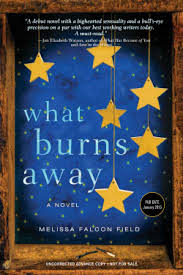
What Burns Away, the debut novel by Melissa Falcon Field, has been called "thrilling" and "perceptive" by Tin House executive editor Michelle Wildgren.

What Burns Away, the debut novel by Melissa Falcon Field, has been called “thrilling” and “perceptive” by Tin House executive editor Michelle Wildgren.

In life, people tend to work together. At weddings, when the crazy uncle is drinking too much and telling offensive jokes, the rest of the family negotiates this behavior gently, distracting the uncle and muting him. Everyone is on the same page. If life didn’t work this way, we’d spend all of our time screaming at each other. In fiction, however, characters shouldn’t work together, at least not all of them. When a scene gathers momentum and begins to take on rules for how to act, a character needs to refuse or fail to play along. That friction between character and scene can be a great source of tension.

Melissa Falcon Field’s novel What Burns Away has this tension in spades. You can read the opening of the novel here.

How the Novel Works

The novel opens with a scene that may feel familiar to parents of young children. It’s morning, the baby is awake and screaming, and one of the parents is getting ready for work. The other is staying home. So, the scene is set:

Jonah hollered again, his breathing gone fierce: “Mama! Come!

Such hollering tends to create a particular mood in a house, in a scene. Think about the last time you were around tired people while a child screamed. What was the mood? Frustrated? Frantic? Now, watch the book’s narrator (Jonah’s mother) look at her husband:

I eyed my husband through the open bathroom door, watching as he tapped his razor against the edge of the sink.

Already, you can see a distance open up between the sensibility of the scene (screaming child) and the response of the character “tapped his razor.” Imagine how else this description of the husband could have been written. He could have become as frantic as the child (parents often do). He could have snapped at his wife. He could have rushed out the door. Instead, he moves methodically. Now, watch how the sensibility of that tapping razor gets stretched along:

Miles kept his back to me. A new breadbasket of weight pooled at his waist, and I studied his face in the mirror. His steady surgeon’s hand took a straight edge to the beveled cleft of his chin.

All desperation and hysterics, Jonah screamed. “Please, Mama!”

Every sentence contains a key detail: Instead of turning to his wife to see if she hears the baby, Miles keeps his back to her. He has gained weight, which has pooled (note the inertia implied in that word choice) at his waist. We learn that he’s a surgeon with a steady hand. In short, his refusal to get sucked in to the household drama is an essential part of his nature and evident in his actions, his physical appearance, and his career.

Now, watch what happens next:

Miles turned to face me as I stood, a dollop of shaving cream above his lip. “Claire, go get the baby.”

That’s a cold line. He’s asserting himself and his sensibility upon the drama around him. It’s a line that you can feel like a punch in the gut.

The Writing Exercise

Let’s write a gap between scene and character using What Burns Away by Melissa Falcon Field as a model:

  1. Set the tone of the scene. Often, this is done by introducing a particular force. In What Burns Away, it’s a screaming baby. In my earlier example, it was an uncle acting inappropriately at a wedding. Both are characters who can’t be tamed, at least not easily. This week’s episode of Mad Men had a great example of this. Don’s in a meeting with a table full of creative directors, listening to a pitch about beer. The company is impressively huge, and so everyone is listening intently. But not Don. In short, walk something into the scene that cannot be ignored, that must be dealt with.
  2. Create the character who will not play along. In What Burns Away, the husband refuses to quicken his morning routine for a screaming child. In Mad Men, Don refuses to listen. At the wedding, a character could egg the uncle on, rather than tamping down his behavior. If you know what the best or necessary behavior is, think about what it would mean for a character to A) do the opposite or B) disregard the thing that cannot be ignored.
  3. Be subtle. Miles eventually tells his wife to get the baby, which is highly dramatic, but before we get to that moment, we see him resisting or ignoring in a very small way: tapping his razor. In Mad Men, Don looks out the window before he walks out of the room. Don’t jump directly to the drama. Set it up by giving the character the smallest possible physical action that reveals or embodies his or her sensibility or behavior in general. Give the character a way to not play along that no one but the reader and maybe one other character will notice.

Good luck.

How to Direct the Reader’s Attention

28 Apr
Stefanie Freele's story, "Davenports and Ottomans" was published in Tahoma Literary Review.

Stefanie Freele’s story, “Davenports and Ottomans” was published in Tahoma Literary Review.

In his epic story, “Hurricanes Anonymous,” Adam Johnson uses a strategy for writing descriptions that has fundamentally influenced how I write my own. It’s also a strategy that I see everywhere, in books of all kinds, and I recently came across it once again in Stefanie Freele’s story, “Davenports and Ottomans.” It was published in a relatively new journal that is already developing a reputation for quality work, Tahoma Literary Review. At the TLR website, you can read the story, and the entire issue of the journal, as a pdf.

How the Story Works

In some ways, Johnson’s story, one of the longest (maybe the longest) story ever published in Tin House, has little in common with Freele’s story, which clocks in at just three pages. Yet both stories use the same approach to description.

Here is a passage from the beginning of Johnson’s story:

The boarded-up Outback Steakhouse next door is swamped with FEMA campers, and a darkened AMC 16 is a Lollapalooza of urban camping. It’s crazy, but weeks after losing everything, people seem to have more stuff than ever—and it’s all the shit you’d want to get rid of: Teflon pans, old towels, coffee cans of silverware. How do you tell your thin bed sheets from your neighbor’s? Can you separate your yellowed, mismatched Tupperware from the world’s? And there are mountains of all-new crap. Outside the campers are bright purple laundry bins, molded-plastic porch chairs, and the deep black of Weber grills, which is what happens when Wal-Mart is your first responder.

In this passage, a pattern develops: give details and then tell the reader how to understand those details. So, we see the parking lots full of campers and then get the line, “It’s crazy, but weeks after losing everything, people seem to have more stuff than ever—and it’s all the shit you’d want to get rid of.” The same thing happens at the end of the passage. We see the laundry bins, porch chairs, and grills, and then we get this line: “which is what happens when Wal-Mart is your first responder.”

Of course, Johnson reverses the pattern as well: “it’s all the shit you’d want to get rid of: Teflon pans, old towels, coffee cans of silverware.” In that line, he tells us how to understand the list that follows. Mostly, though, throughout the story, a list of details is summed up with a line that indicates how to understand those details. It’s an incredibly effective strategy, as the paragraph from “Hurricanes Anonymous” makes clear.

Now, here is a passage from Freele’s story, “Davenports and Ottomans”:

The crotch in Maribel’s white tights scoots even lower, half-way down her thighs as she enters the hot holiday-decorated living room. The insides of her legs itch and are already chafing from the short walk across the icy parking lot and up the green carpeted stairs that smell like mold and rain, a confining smell she will forever associate with Great Aunt Agnes. She hates these ill-fitting tights, the crinkly dress, the stiff polished shoes, and her mother for making her wear all of this nonsense.

The description is no longer about setting, as it was in Johnson’s story. Instead, it’s become personal, a description of a character’s clothes and the way they make her feel. Still, the strategy is the same: details and interpretation. We see the tights and her thighs, the itching and chafing, and the claustrophobia of these details is connected to setting with the moldy carpet. Then, we get that last line, which adds the character’s thoughts: “She hates these ill-fitting tights, the crinkly dress, the stiff polished shoes, and her mother for making her wear all of this nonsense.”

The details probably made you feel a certain way, but the words hates and nonsense point us in a clear direction for understanding this feeling and these details. There are, in fact, many ways to feel about ill-fitting tights, and the story, in a line, dispatches with all but one, which allows the story to move forward with a clear sense of purpose.

The Writing Exercise

Let’s write a description using “Davenports and Ottomans” by Stefanie Freele as a model:

  1. Decide what to describe. Johnson describes setting: a place. Freele mostly describes a person, though that description eventually brings in some details about place. It doesn’t really matter what you want to describe, only that it (place, person) should be connected to some feeling. That feeling may be vague, but it should be there. When you think about the place/person, you should feel excited or uneasy or something. In stories, neutral is almost never good. We want characters and places that are charged with emotion or sensation.
  2. Describe it with specific details. Eventually, you’ll want details that cohere into a whole that is larger than the parts, but, first, you just need to get some details onto the page. Be as specific as possible. Use the sort of nouns that have adjectives attached to them (“white tights…half-way down her thighs” or “bright purple laundry bins, molded-plastic porch chairs, and the deep black of Weber grills”). You’re giving the reader something to see, an image that may be familiar or surreal. Either way, it’s specific.
  3. Interpret the details. Try using the phrasing from either of Johnson’s sentences as models: “People seem…” or “which is what happens when…” Or, use Freele’s phrasing: “She (emotion verb) (things we just saw). The goal is to not only tell the readers what we just saw/read but also how to think about it.
  4. Revise the passage for coherence. Once you have a line of interpretation, you may find that some details fit better than others. So, cut the ones that don’t fit, add more that do fit, and tweak the interpretive line so that the entire passage makes as much sense as possible.

Good luck.

How to Capture an Entire Society

21 Apr
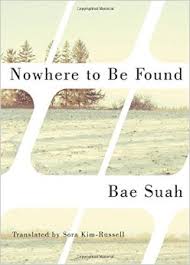
Nowhere to Be Found by Bae Suah tells the story of a young woman trying to make sense of her life and world in South Korea.

Nowhere to Be Found by Bae Suah tells the story of a young woman trying to make sense of her life and world in South Korea.

Some stories are about individuals, and the drama between them is so intense that the backdrop could be the Death Star or a blank wall and it wouldn’t matter. In other stories, the backdrop matters. Take it away, and the story vanishes. Whether the story is about a society as a whole or a particular town or neighborhood, the challenge is to establish the backdrop as quickly as you’d establish a character. This is, of course, not easy.

One story that shows how it can be done is Bae Suah’s novella Nowhere to Be Found. It was originally published in 1998 in Korean and was recently translated into English by Sora Kim-Russell and published in the United States. You can read the opening pages here.

How the Novella Works

Here is how the novella begins:

In 1988 I was temping at a university in Gyeonggi Province.

Mostly what I did there was send lecture requests to part-time instructors, make adjustments to their class schedules, mail them their paystubs, and field complaints from students. As far as the work went, I didn’t have any major complaints of my own. It was the kind of clerical work that anyone could have done without any special qualifications or expertise.

Many readers will likely be familiar with the tedium of such work and also the way it was done:

At this job we could chew gum or do our nails while answering the phones and take over two hours to type even the sparest syllabus. We weren’t lazy or indifferent or anything. It was just the nature of the work…I didn’t have too many tasks, but I also wasn’t so idle that I could have passed the time knitting. When I was working, the hours went by at what I can only call a measured pace.

Another writer might have dug into the absurdities that are intrinsic in such work, but Bae has something different in mind:

We got a month off while classes were out of session. I spent that month working part-time in a dye factory close to my house. My job was to screw caps onto tubes of dye using a mechanical device. That was a long time ago. I’m sure that dye factory has since found a more modern solution to that primitive final step of production. But then again, if they had modernized any earlier, I wouldn’t have spent that summer wrapped in the suffocating smell of acrylics.

Bae is up to something larger than the story of a single person stuck in a soul-killing job. The novella’s target is 1980s-era South Korean society as a whole, and, as you might expect given the nature of the work, there is some large, inhuman imagery:

“That’s how things get done, just as the less delicate components of a machine submit to the will of the machine without any conscious thought or shred of volition while being ground down.”

What makes this novella bold and interesting is that it finds perverse ways of bringing the machinery of society to bear on the components. Here is a great example from early on:

Even now I think maybe my family is just a random collection of people I knew long ago and will never happen upon again, and people I don’t know yet but will meet by chance one day.

These are recurrent themes in the novella: larger, impersonal forces and disconnection. They’re powerful and interesting, and yet they have the potential to lose their power as soon as the reader becomes used to them. And so Bae introduces the novella’s first dialogue, between the narrator and a “guest lecturer on criminal sociology”:

“This week’s topic is murder.”

“Oh.”

When I was an undergrad, one of my literature professors made fun of 1920s political poetry, with its predictable imagery of downtrodden masses and greedy capitalists. This novella is different because it so often jolts the readers out of their expectations—causing them to lean forward to really pay attention and setting them up to be smacked down by the societal machinery all over again. Nowhere to Be Found manages to replay that cycle—beat-down, jolt, beat-down, jolt—for 100 pages. It’s an impressive feat.

The Writing Exercise

Let’s try writing about society (without becoming predictable) using Nowhere to Be Found by Bae Suah as a model:

  1. Create a machine for the society. Another way to put this is this: Create a metaphor. In Nowhere to Be Found, the jobs are clearly representative of the society as a whole. The jobs are noteworthy because of how they reveal the mechanics of the society. While you can create a metaphor by thinking, “I’m going to create a metaphor now,” you can also approach the task from another angle. Try finishing this sentence, “When I think about (the place), I immediately think of _____.” Trust your imagination to fill in the blank with a job or hobby or whatever. Don’t worry about if it’s a good metaphor. If it’s an essential part of the place—not to everyone but to you—it will eventually take on the role of a metaphor.
  2. Acknowledge the machinery. In other words, give the narrator or characters some awareness of the situation. (Without that awareness, you risk writing a morality play.) There are different levels of acknowledgment. The highest level requires a statement like this: “The whole society was about _____.” While this is possible (Bae writes sentences like this), it’s also difficult to pull off. It’s often more manageable to let the characters think practically about their immediate surroundings, as the narrator does in this sentence: “It was just the nature of the work…” Try using that word, nature. Let the character ponder or make a statement about the nature of whatever surrounds her. You may find yourself working up the scale to the nature of the society as a whole. Or, you won’t. Stop when the writing begins to crumble under its own weight.
  3. Give the characters agency. Part of the reason that Albert Camus’ The Stranger is so powerful is that the narrator acts. He chooses to do things. The motive behind those actions isn’t always clear, but the action is dramatic. This is an important lesson to remember: even if characters are just floating along, they need to occasionally act as if they have some control over themselves. (In The Stranger, the narrator chooses to help set up his friend’s girlfriend for a cruel joke.) In Nowhere to Be Found, some of the moments of highest tension occur when the narrator behaves in ways that grind against the machinery she’s caught in. A good rule of thumb is this: When a scene feels like it’s about to end on a down note, keep writing. What if the character suddenly pushed back and refused to accept that down note? What would happen then?
  4. Reveal the machine at work in a surprising way. Machinery tends to work on several levels: the obvious one and the less obvious one. In Bae’s novella, the machinery is the economics of South Korea: the way that low-paid, tedious work turns people into laborers and into automatons. In other words, the machine is exterior to people. What’s surprising is when Bae makes the machinery interior as well, as in the passage about family members seeming like random people. Don’t create an impermeable wall between a character’s interior and exterior. How can her thoughts or actions reveal the presence of the forces she tries to resist?
  5. Throw a wrench into machine. Make the readers believe that the machine can be broken or that it’s possible to step outside of it for a period. Again, there are obvious and less obvious ways to do this. There’s the V for Vendetta method: bomb Parliament. Then, there’s the Nowhere to Be Found method: introduce a wild card: “This week’s topic is murder.” These wild cards don’t need to become part of the plot, they only need to throw askew the reader’s expectations. No society is totally flat. Every place contains pockets of unexpected absurdity or evil or goodness. Create those pockets in your story. How can you introduce a character, even momentarily, who is working not against the system but on a different plane altogether? He or she may still be part of it, but the level of acknowledgement or the choices he makes are different and upend our perhaps simplified ideas of the place.

Good luck.

How to Use an Omniscient Narrator

14 Apr

Ru Freeman's novel On Sal Mal Lane "soars [with] its sensory beauty, language and humor," according to a New York Times review.

Ru Freeman’s novel On Sal Mal Lane “soars [with] its sensory beauty, language and humor,” according to a New York Times review.

One of the most tempting points of view for a novel is the omniscient, godlike POV. It’s also, perhaps, the most difficult to pull off. The literary critic James Wood has called it almost impossible. Yet, it’s also the case that certain stories require a narrator who exists on a different plane than the characters, who can focus on a few of them for a while but can also speak authoritatively about very large groups of them (entire countries, even).

Not many novels actually attempt an omniscient point of view. One that does is Ru Freeman’s On Sal Mal Lane. It was published by Graywolf, and you can read an excerpt at that its website.

How the Novel Works

The novel is set in Sri Lanka, just before its recent civil war. Such a premise poses a particular challenge: the novel must focus on a few people who are affected by the war and also explain the origins, politics, and geography of the war. This can be difficult for any war but is especially difficult for a war that most Americans know little about. That ignorance is important because the novel is not a translation. Freeman was born in Sri Lanka but lives primarily in the U.S. and writes in English; the novel was published by an American independent press. So, how does Freeman convey the basic outline of the war? With an opening worthy of Star Wars.

As everyone knows, Star Wars begins with a two-paragraph intro that scrolls up the screen, prefaced, famously, with the line, “A long time ago in a galaxy far, far away…” Just as the text that followed laid out the basics of the war (who is fighting, what’s at stake, and one of the characters), the opening paragraphs of On Sal Mal Lane lay out the basics of Sri Lanka’s civil war. The problem, though, is that a novel is not like a film, or, at least a literary novel is not like a B movie (which Star Wars absolutely was). If the voice that opens the novel vanished suddenly like the text that opens Star Wars, the reader might close it and walk away. It would be like a film changing from color to black and white, which can be done, but only under very special circumstances. Rather than risking that readers might not make the jump, the novel creates a narrator that can handle both the large scale of the war and the small scale of a few characters affected by it.

Of course, many readers will encounter that narrative voice and quite naturally ask, “Who is telling this story?” So, the novel provides an answer:

And who, you might ask, am I? I am nothing more than the air that passed through these homes, lingering in the verandas where husbands and wives revisited their days and examined their prospects in comparison to those of their neighbors. I am the road itself…

This self-identification goes on for a bit and ends this way:

To tell a story about divergent lives, the storyteller must be everything and nothing. I am that.

You can’t state the problem and solution more neatly than that. Now, how does such a voice operate, on a practical level?

Mostly, it follows different groups of characters, with each getting their own sections in the novel. In these sections, characters will be spoken about as groups (an entire family, for instance) and as individuals. But the voice will occasionally speak about things in general, as it does here:

God was not responsible for what came to pass. People said it was karma, punishment in this life for past sins, fate. People said that no beauty was permitted in the world without some accompanying darkness to balance it out, and, surely, these children were beautiful. But what people said was unimportant; what befell them befell us all.

So, it operates by speaking in a kind of godlike voice but also, quickly, zooming down to a more human perspective—a perspective that we’re more comfortable with, being, as we are, humans and not gods.

The Writing Exercise

Let’s try writing from an omniscient point of view,  using On Sal Mal Lane by Ru Freeman as a model:

  1. Create a reason for such a point of view. The reason should be practical: what about your novel cannot be conveyed by a narrator with a limited point of view? Freeman’s reason is the complexity of explaining the context and development of a civil war. Your reason may be similarly political. Does the novel’s conflict involve parties larger than a single person or handful of individuals? Does it involve groups and national or international politics or movement (like migration)? Does writing the book require the occasional use of a kind of professorial or journalistic mode? If so, you might need an omniscient narrator.
  2. Identify the registers the narrative voice must hit. What is the range the voice must cover? Every novel (at least every one that I can think of) follows individual characters. But what is the opposite end of the spectrum? To use the language of film, how far out must the camera move? Will the voice talk about a community as a whole? About a region or country? About the entire world? The universe? The range doesn’t really matter; the important thing is to know in advance how much ground you must cover.
  3. Identify the voice. This may be the trickiest part. Freeman writes that the voice is the wind and the road (in other words, the world itself and also the people as a whole). Some reviewers have found this identification awkward. You can probably imagine how such a move would be met in workshop: “How can the wind talk?” But the move is probably also necessary. Without the identification, the same reviewers might ask, “Who is telling this story?” There’s no perfect solution. The short passage about the narrator’s identity is a bit like the scene from the original Rocky, when Apollo Creed is choosing his challenger, eventually picking Rocky Balboa. It’s the most contrived part of the film, a scene where the mechanics are laid out in the open, and yet it’s necessary because, without it, Rocky will keep collecting debts and will never meet Apollo. In short, without that scene, one of the most iconic American films of all time doesn’t exist. In the same way, without the passage about the narrator’s identity, Freeman’s great novel might not have come together. So, think about the identity of your narrator. Is it God? Is it some manifestation of the world? If so, what manifestation would make sense for your novel’s particular world?
  4. Write from the broadest register. What is the grandest, largest scale the voice can manage? Think about the Book of Genesis: “In the beginning when God created the heavens and the earth…” Or think about Star Wars: “A long time ago in a galaxy far, far away…” How can you craft a voice that is vast enough to make such statements?
  5. Transition to a more narrow register. Unlike Star Wars, a novel must make this transition as smooth as possible. This is where Freeman’s novel really shines. In two sentences, she moves from “God was not responsible for what came to pass” to “surely, these children were beautiful.” The first part is vast and the second is beginning to focus on specific characters: these children. Freeman links the two with a single world: surely. It’s not a causal connection but a logical one. Here’s the full sentence: “People said that no beauty was permitted in the world without some accompanying darkness to balance it out, and, surely, these children were beautiful.” Basically, the sentence says, “Beauty exists in the world, and these children are beautiful.” It’s moving from a general statement to an illustration of the statement. This is a great way to transition. Make a general statement and then illustrate it: “and here they are.”

Good luck. Take risks. Have fun with the exercise.

How to Write Self-Conscious Prose

7 Apr
Jaime Netzer's story, "How to Die," appeared in Black Warrior Review and was reprinted in LitRagger.

Jaime Netzer’s story, “How to Die,” appeared in Black Warrior Review and was reprinted in Litragger.

It’s been said that every writer secretly wishes to be a musician—on stage, performing before a crowd. The experience is very different from the life of a writer, working alone in a room and being read by people who are far removed in other rooms. Yet the idea of performance has a place in writing. In fact, when it comes to first-person narration, a writer’s voice often becomes a consciously public act. You can see this clearly in Tim O’Brien’s masterpiece, The Things They Carried, in stories like “How to Tell a True War Story,” when the narrator says things like, “This one does it for me. I’ve told it before—many times many versions—but here’s what actually happened.” The narrator is performing for his audience, and the effect is powerful; as a reader, you can feel yourself leaning forward into the prose.

This is the same strategy used (to the same effect) by Jaime Netzer in her story, “How to Die,” which was published recently in Black Warrior Review and reprinted at Litragger, where you can read it now.

How the Story Works

The writer’s performance begins with the title: “How to Die.” It’s a particular kind of title (a How to) that has become almost a genre in itself. Tim O’Brien has written a version, and Lorrie Moore has written several. The genre often employs a second-person narration (You do this, you do that), and even in first-person stories, you tends to pop up a lot. It’s the nature of the story, not unlike when you were assigned to stand in front of a middle school classroom and deliver a demonstration: how to make a peanut butter and jelly sandwich or how to give someone a buzz cut (at least that’s the speech that I gave). It’s a story that’s difficult to tell without directly engaging the audience. That engagement is an inevitable part of the story’s voice, as you can see in the first two paragraphs of “How to Die.”

Everybody knows this, but, die young. I look around at my fellow contestants and start to smirk. I’m only twenty, won’t even be drinking legal for months and months. I can see them peering at me, thinking thoughts they don’t realize are petty and unflattering, thinking, for example, why would little One-Eye want to win her own death?

But they’re here, too. We aren’t any different. Except I have a better story.

In the first sentence, the narrator is speaking directly to us. She doesn’t say “you,” but it’s understood who “die young” refers to. The narrator is also self-conscious in her performance. She’s aware of the effect she is trying to make and is delivering a spiel that feels rehearsed, if not in front of an actual audience, then to herself in her head.

The entire story is about performance. The narrator is auditioning for a reality show in which the contestants are competing to receive a show-assisted suicide at centerfield of Arrowhead Stadium in Kansas City. They “win” by being both sexy and appealing and also miserable enough to want to die. The very nature of this premise requires the characters to put on an act and to think about how best to put on that act. This is why the narrator says things like, “Die sexy,” and “Die while you’re still sharp, smart, with it. Don’t let them pull one over on you.” She is calibrating her performance for the audience but also calibrating her own ideas for how to live, which is the subject of most fiction—how to be in the world.

What Netzer has done, then, is create a narrator who feels compelled to tell her audience how to be in her particular world—in the immediate, reality-show sense and in the broader, 20-year-old-in-America sense. It’s this voice telling us how to be that pulls us into and through the story, not the premise, as outlandish and engaging as it is.

The Writing Exercise

Let’s write narration that tells the reader how to be, using “How to Die” by Jaime Netzer as a model:

  1. Create a narrator with something to say. In real life, we have obsessions that feel the need to explain to people: what it means to grow up in _____ or what it’s like to be _____ or do _____. Sometimes these obsessions center around traumatic or elevated experiences (going to war or encountering racism or sexism), but just as often these obsessions involve nuances that most people probably overlook but which are important to us. For this exercise, try giving your obsession(s) to a narrator. Or, if you’re a born fiction writer, create a character with an obsession that he/she feels compelled to explain. Obsession, of course, can mean something unusual (licking lamp posts) or something quotidian (how to die).
  2. Give the narrator a reason to explain the obsession. Most of us don’t need much of an excuse to talk about the things that preoccupy our minds. But, as an audience, we’re more receptive to those thoughts if there’s some reason for us to listen. This is the difference between wanting to listen to someone rant or lecture and wanting to run away. The reason doesn’t need to be something huge. Mostly, it needs to be dramatic. In Lorrie Moore’s story “How to Be an Other Woman,” the reason we listen is because we can’t help but want to know about affairs. So, rather than wringing your hands over that age-old workshop question, “Why is the narrator telling us this?” instead ask yourself, “What is the story or dramatic action that has prompted the narrator to start talking?” Give your character a story to talk about—not just an obsession to talk about.
  3. Shake the character. In a story like this, the narrative arc takes a toll on the narrative voice. In other words, the narrator has changed by the story’s end and that change is evident in how he or she talks. Often, this means undermining the narrator’s certainty about the world he or she is narrating—making the narrator vulnerable. For all her bluster about how to die and how to appeal to a reality-show audience, the narrator in “How to Die” doesn’t end up quite where she expected, in part because she did not anticipate something essential about her world. When that unanticipated thing arrives, her voice is shaken. So, in your story, find a way to introduce an element that will shake the narrator. If the voice talks as if it knows everything, introduce something that it does not know.

Good luck.

Why a Story Should Show Its Dramatic Elements Twice

31 Mar
Nicole Haroutunian's story, "Youse," was published at The Literarian and is included in her debut collection, Speed Dreaming.

Nicole Haroutunian’s story, “Youse,” was published at The Literarian and is included in her debut collection, Speed Dreaming.

When working on plot, we tend to think in terms of major scenes: singular moments of tension and drama when significant character traits are revealed. That’s the idea, anyway. When we actually write these moments, we often discover that we’re burdening them with too much expectation. A scene can only do so much work, and that’s why it’s often a good idea to write a scene into your story twice. It gives you twice as much dramatic space to work within and, thus, the potential to reveal a lot more about a character.

A great example of showing a scene twice can be found in Nicole Haroutunian’s story, “Youse.” It is included in her debut collection, Speed Dreaming, and was published at The Literarian, where you can read it now.

How the Story Works

Showing moments twice in a story gives you the opportunity to create parallels. In life, we tend to see something and then react when we see it again because the first experience has stayed with us. In fiction, letting this happen gives characters a chance to reveal more complex sides of themselves. It also provides a sense of depth of vision. The statue of liberty, for instance, might look small if shown by itself, but when a tourist is standing in front of it, you perceive its actual size. The same can be true for stories.

Haroutunian’s story contains two scenes with the same bronze SUV. The first time it appears, the main character, Rae, is walking home from school with her friend, Joanna:

The man inside yells, “How about youse sit on my dick?”

That’s the end of it. The man drives off. What’s more important is the girls’ reactions:

“Did he say ‘youse’?” Rae asks, shuddering.

Joanna rubs her arms as if she’s showering. “Dirty,” she says. “Bad grammar makes me feel dirty.”

“I bet he’s married,” Rae says. “My dad never believes me when I say that men do that. He can’t conceive of it.”

The scene ends with this bit of foreshadowing:

“Next time that dude drives by,” Joanna says, “let’s make sure he knows that one of us is a pro.”

Of course, this means we’re expecting the dude to drive by again, and, of course, he does (it’d be a tremendous missed opportunity if he didn’t). It begins in the same way:

Then the bronze SUV—the same one, it has to be—is slowing down beside them. They hear a familiar voice. “How about youse…” he starts.

The scene diverges from the first one in how the girls react:

Rae does not want to hear the rest of his sentence. “How about we fucking kill you?” she yells, kicking her foot in the direction of the car.

“I’m going to scream,” Joanna murmurs. “Let’s scream.”

“No,” Rae says, walking faster. “We’ll get in trouble if someone comes. He just wants attention—he’s full of shit.”

This reaction prompts a response from the man in the SUV:

“What are you going to do?” the guy asks, keeping pace with them. His voice is deep and mean; he’s also dropped the “youse.”

And this is how the scene ends:

Joanna grabs for Rae’s wrist and starts off toward someone’s yard. Rae leans back in opposition. Their tug of war paralyzes them in place. It’s not that she’s being stubborn by not changing course—the yard is full of shrubs, shrubs she can picture lying dead in.

He rolls down the window a little farther. No one is moving.

“I can see you,” Rae says, although she can’t. “We know what you look like.”

He says, “Oh yeah?” in this threatening way, like there’s more he has to say, but before he does, he pops open the passenger door. It swings so close it almost hits them.

Then they’re running.

It’s pretty clear how much this scene appearance of the SUV adds to the story. The first time it rolls up, the girls react the way anyone would: with surprise. It’d be unbelievable if they had the wherewithal to respond to the man in any meaningful way; few people have that kind of presence of mind. So, by reintroducing the SUV later, it gives the girls a chance to respond in almost premeditated way—in a way that reflects some essential thing about their characters. Because those essential things aren’t necessarily compatible with most people’s deeply embedded desire to avoid confrontation, their responses increase the dramatic tension.

On their own, these scenes don’t carry a ton of weight—though they’re certainly compelling. It’s when they’re put into the larger context of the story that they become truly interesting.

The Writing Exercise

Let’s write a scene twice using “Youse” by Nicole Haroutunian as a model:

  1. Write a short scene that interrupts the thread of the story. Fiction is often structured around routine; drama comes from the interruption of that routine. The routine can along the lines of “Everyday Joe read the paper at his favorite coffee shop until one day.” Or it can be the sort of routine that Haroutunian uses. The story begins with two high school girls talking and quick, awkward sexual encounter—pretty common high school behavior. Then the SUV rolls up. So, think about a story that you’re already writing or that you’ve written but which seems incomplete. Find a way to interrupt whatever routine the story has established. Here’s the catch: the interruption doesn’t need to seem significant at first. In “Youse,” the SUV drives away as quickly as it appeared. It’s only when it returns that it really impacts the story. So, don’t make too much of your interruption; just be sure it’s something that can be repeated in some way.
  2. End the scene with foreshadowing. This doesn’t need to be subtle. In “Youse,” the character says, “Next time that dude drives by…” The difference between that phrase and “Wow! Wasn’t that weird?” is the difference between the scene ending with no impact and ending with a bit of resonance that carries forward into the story.
  3. Write the scene again. This time, let your characters respond in a more thoughtful way. This is similar to those moments we all experience, when something happens and we think of the right thing to say only after the moment has ended. In your story, you’re basically giving your characters the chance to react the way that they wished they’d reacted the first time. The nature of this reaction will depend on the kind of story you’re writing and the context for the scene.
  4. Don’t put too much pressure on the scene. It’s no accident that “Youse” doesn’t end with the second appearance of the SUV. Instead, the story continues on, with the emotional impact of the scene carrying forward into what the story is really about—Rae’s relationship with her mom, in the aftermath of her father’s untimely death. So, don’t make your entire story about the scene. Simply use it as a way to provide depth of vision for the part of the story that is foregrounded.

Good luck.

How to Write Energetic Character Descriptions

24 Mar
Chinua Achebe's novel Things Fall Apart remains a staple of the World Literature canon, though it reads as contemporary as any fiction written today.

Chinua Achebe’s novel Things Fall Apart remains a staple of the World Literature canon, though it reads as contemporary as any fiction written today.

The great Nigerian writer Chinua Achebe died two years ago, but he was given a second passing a few days ago when The New York Times’ Twitter post announcing his death was somehow reposted. A lot of people were fooled, but it was a good opportunity to remember how great a writer Achebe truly was. It’s astounding at how contemporary and fresh the writing in his novel Things Fall Apart remains, despite having been written half a world away and fifty years ago. In particular, the character descriptions have a vitality to them that any writer today would be lucky to emulate.

The American writer James Baldwin felt the same way. Achebe was an admirer of his, and here is Achebe writing about the day they finally met:

What he said about my novel Things Fall Apart was quite extraordinary. He read it in France, he said. It was about people and customs of which he knew nothing. But reading it, he recognized everybody: “That man, Okonkwo, is my father. How he got over, I don’t know, but he did.”

Here the opening chapter of Things Falls Apart.

How the Novel Works

In the following passage, Achebe is describing his main character, Okonkwo, a man who gained fame for a fight with an undefeated fighter nicknamed The Cat. Notice how much time the descriptions spans and how active it is.

Every nerve and every muscle stood out on their arms, on their backs and their thighs, and one almost heard them stretching to breaking point. In the end, Okonkwo threw the Cat. That was many years ago, twenty years or more, and during this time Okonkwo’s fame had grown like a bush-fire in the harmattan. He was tall and huge, and his bushy eyebrows and wide nose gave him a very severe look.

He breathed heavily, and it was said that, when he slept, his wives and children in their houses could hear him breathe. When he walked, his heels hardly touched the ground and he seemed to walk on springs, as if he was going to pounce on somebody. And he did pounce on people quite often. He had a slight stammer and whenever he was angry and could not get his words out quickly enough, he would use his fists. He had no patience with unsuccessful men. He had had no patience with his father.

It’s startling how much Achebe packs into this description. It starts with a fight, moves to a physical description that focuses on eyebrows, of all things, and then moves to breathing, the way he walked, the way he talked, and his relationship with his father. It’s an incredible jumble of information that makes absolute sense. So, how does Achebe pull it off?

The description depends so much upon the fight, those nerves and muscles stretched to a breaking point. This is a man of not only strength but also intense drive, and those ideas (the high energy of a fighter in action) carry the description forward: bushy eyebrows, heavy breathing, walking on springs, stammering, fighting, and finally lack of patience with people he viewed as lesser than him, especially his father. By establishing Okonkwo’s fighting ability, Achebe created a way to think about every part of the character’s personality and life.

The Writing Exercise

Let’s write an active character description using Things Fall Apart by Chinua Achebe as a model:

  1. Establish the character in action. It’s tempting to describe a character as a portrait, with as much action as a still-life painting of flowers. But people are rarely still, and, in writing as in life, we tend to learn about characters and people by what they do, how they encounter the world and its obstacles. So, choose a moment where your character is struggling with something. It can be another person, as in Okonkwo’s fight, or it can be an inanimate object: a lunch box or a seat belt. Think about how people act when stuck in traffic. Do they bang on the steering wheel? Sit back and sigh? Pull out their phone? Before painting a picture of the character in repose, show us the character in action.
  2. Distill that action to a phrase or image. Okonkwo’s taut and stretched muscles serve as a kind of guiding post for the rest of the description. How can you do something similar with your character? Think of the character stuck in traffic. Is she leaned forward or back? Is her jaw clenched or does she turn on the radio and close on eye? Does she text furiously? Scroll through Twitter casually? Use the adjectives or adverbs as an opportunity for repetition.
  3. Carry the idea of the phrase or image forward. Try to repeat the adjective or adverb without literally repeating it. You’re trying to find other ways to suggest the idea of those adjectives or adverbs. So, it’s no accident that Okonkwo’s eyebrows are bushy. Bushy fits better with the idea of taught muscles than thin. And, it’s no accident that he breathes loudly. It would be weird for him to be exaggerated in one sense and quiet and invisible in another sense (or, it might work, but it would be a contrast that would need to be suggested and created). So, think about every aspect of the character and try to convey the same adjective or adverb that you established in the initial moment of action.

Good luck.

How to Write Complex Characters

17 Mar
D Watkins' essay, "Too Poor for Pop Culture," examines the reach—or lack of—of popular media into East Baltimore.

D Watkins’ essay, “Too Poor for Pop Culture,” examines the reach—or lack of—of popular media into East Baltimore.

In fiction and essays, it’s tempting to write about characters and people so that they’re merely vehicles for a larger point. The piece begins to feel like an allegory or morality play: See how tragic these poor people’s lives are? See how awful these rich people are? See how mundane these suburban lives are? Categorization is often the enemy of good writing. Think of all the novels and films with smiling, dopey Midwesterners or rude New Yorkers. And, of course, when it comes to race and ethnicity, categorization leads to the flattening effect of the oldest stereotypes in our culture. These caricatures may seem familiar and right to us, but they’re inevitably too simple, and the story or essay, as a whole, suffers. So, how do we write more complex characters?

One answer: give the characters and people in your fiction and essays a chance to be as smart and funny. Don’t let the work become a monologue by you, the author. Instead, let the characters and people speak for themselves. A great example of this strategy is D Watkins’ essay, “Too Poor for Pop Culture.” It was published at Salon, where it became on of the most-read pieces on the Internet in 2014. You can read it here.

How the Story Works

The title of Watkins’ essays sums up its point pretty clearly: some communities do not have access to the media (24-hour news, Twitter, Facebook) that most of us take for granted. It’s an interesting, complex argument that carries with it the risk of oversimplification. The essay’s setting is East Baltimore, a neighborhood made visible to national audience by the HBO series The Wire. In other words, it’s a neighborhood and a community that many of us think we know, either from TV or from general ideas about black, inner-city poverty. Given those expectations, look how the essay begins:

Miss Sheryl, Dontay, Bucket-Head and I compiled our loose change for a fifth of vodka. I’m the only driver, so I went to get it. On the way back I laughed at the local radio stations going on and on and on, still buzzing about Obama taking a selfie at Nelson Mandela’s funeral. Who cares?

No really, who? Especially since the funeral was weeks ago.

The dynamics at work are immediately clear: national media trends versus the isolation and segregation of inner-city poverty. See how quickly I’m able to sum up those first sentences? The essay could work at the level of the categories I just created and still make its point. Yet something would be lost, and that something would be the people at the heart of the essay. These people (Miss Sheryl, Dontay, and Bucket-Head) are not characters whose lives stop at the end of the page. They don’t exist just for readers to learn about poverty. If the essay proceeded from the general categories I created, those lives would be reduced. But that’s not what Watkins does. Instead, he moves back and forth between broad categories and the idiosyncratic and personal.

Here is an example of categorization:

Two taps on the door, it opened and the gang was all there — four disenfranchised African-Americans posted up in a 9 x 11 prison-size tenement, one of those spots where you enter the front door, take a half-step and land in the yard. I call us disenfranchised, because Obama’s selfie with some random lady or the whole selfie movement in general is more important than us and the conditions where we dwell.

Note the terms and phrases he uses: “disenfranchised” and “one of those spots.” It’s a language that plays into expectation, that assumes the reader knows something already about these people.

Now, here is how Watkins moves away from the general and toward the personal:

“A yo, Michelle was gonna beat on Barack for taking dat selfie with dat chick at the Mandela wake! Whateva da fuk a selfie is! What’s a selfie, some type of bailout?” yelled Dontay from the kitchen, dumping Utz chips into a cracked flowery bowl. I was placing cubes into all of our cups and equally distributing the vodka like, “Some for you and some for you …”

“What the fuck is a selfie?” said Miss Sheryl.

“When a stupid person with a smartphone flicks themselves and looks at it,” I said to the room. She replied with a raised eyebrow, “Oh?”

Imagine how John Steinbeck might have written this scene, the kind of plodding march he would have made toward the thematic conclusion. You can’t miss the point in any of Steinbeck’s writing or in any number of political speeches. And you can’t miss the point here, either. But the essay also allows the people at its heart to participate in the discussion. They aren’t dumb puppets in a morality play. They’re actively engaging with the information they have and seeking out answers. Another writer might have left out the line, “What’s a selfie, some type of bailout?” because it reveals that the speaker, Dontay, a man drinking vodka in a tenement, knows about corporate bailouts. It complicates the characterization of someone who is disenfranchised. These are people with thoughts and opinions of their own—and they aren’t always predictable, as Watkins later reveals:

“Put me on that Obamacare when you can, college boy!” Sheryl says to me as I contemplate the number of books I can make out of my shitty hand. We all laugh. I am the only one in the room with the skill set to figure it out, but we all really see Obamacare as another bill and from what I hear, the website is as broke as we are. We love Barack, Michelle, their lovely daughters and his dog Bo as much as any African-American family, but not like in 2008.

Good writing should hit the mark it aims for. If it has a point, it should make it. But the writing shouldn’t make that point while honoring the complexity of the world it portrays.

The Writing Exercise

Let’s create complex characters using “Too Poor for Pop Culture” by D Watkins as a model:

  1. Summarize your point. In a story, this point is usually dramatic: where should the drama/tension stand at the end of the scene? In an essay, this point can be dramatic or thematic. Either way, it’s important to know where you’re headed. Can you sum up the conclusion or how things stand in a phrase as easy to understand as “Too Poor for Pop Culture?”
  2. Categorize the characters or people. You can use the same phrases as Watkins: I/they call us/them _____. One of those places that ______. You’re connecting the characters, and, by extension, the setting, with the knowledge or expectations that the readers bring with them.
  3. Let the characters or people speak. The power of dialogue is that it often defies generalization. People use language in surprising ways. The phrases and diction they use can make us pause, force us to pay attention. In dialogue, people and characters also tend to reveal the inner workings of their minds. We see them from the outside and develop ideas about them, but dialogue has the power to show us what we cannot see or guess at. So, give your characters the opportunity to speak for themselves. Create an opening for them to talk about what is going on, dramatically or thematically. In “Too Poor for Pop Culture,” Watkins doesn’t just show us that his friends don’t know what a selfie is. He lets them talk about how they don’t know what it is. How can you let your characters or the people in your essay talk about the thing at the heart of your writing?

Good luck.