Archive | Character Development RSS feed for this section

How to Not Over-Explain a Character’s Behavior

20 Dec
Sam Allingham's collection The Great American Songbook has been called "hilarious and deeply unnerving" by Dan Chaon.

Sam Allingham’s collection The Great American Songbook has been called “hilarious and deeply unnerving” by Dan Chaon.

When you sit through enough writing workshops, you begin to recognize certain patterns to how students respond to stories. For example, in almost every workshop, someone will say about a story, “I want more.” A good instructor will push back: “More what?” And that’s usually where the critique begins to break down. “I don’t know, just more,” the student might say. For the person whose story it is, this can be incredibly frustrating. But it’s also a necessary part of learning to diagnose what isn’t working in a piece of fiction. The person saying, “I want more,” senses that there’s a problem but doesn’t know what it is. The problem could be almost anything, but the solution is almost never simply writing more. In fact, more can often ruin whatever is most compelling about the story.

A good example of how less-is-more can drive a story forward can be found in Sam Allingham’s story, “Stockholm Syndrome.” It was originally published in Epoch and is included in his debut collection The Great American Songbook.

How the Story Works

The story is about a woman, Betty, who has come out of an abusive relationship with a man named Will. Most of the story takes place after the relationship has ended, when she works in a coffee shop with a magnetic, mysterious barista, Thomas, that she has a crush on. The foundation for how she interacts with this new guy and what happens next is that early relationship. Here’s one scene from that backstory:

But then there was the rest stop, just after they crossed into Idaho. When they passed through the double doors and passed the crane machine to Roy Rogers, he grabbed her arm and held her close, as if he was afraid of losing her—as if she might disappear into the crowd and leave him behind. She remembers wanting to whisper, You don’t need to hold so tight. He looked so sad in those days, pale and skinny in his Smiths T-shirt. You could see in his eyes this overwhelming need for love.

When she went to pay, she found that her wallet was missing.

“You dropped it on the floor of the car,” he spoke from behind her shoulder. “Lucky I picked it up.”

He took out her money and paid for them both.

It’s good I have Will around to remember things, she often told people. I’m so absent-minded.

The end of this scene packs a punch because we, the readers, understand the flaw in her thinking. We know she’s being manipulated. We’re worried about his “overwhelming need for love” and pick up on the gross detail about him paying for them both with her money. Naturally, we wonder why she doesn’t pick up on these things, too. After all, it’s her story. We get inside her head. We trust her perspective. If this story was being workshopped, someone might ask, “Why doesn’t she see what he’s doing?” and then trot out that dreaded statement: “I want to see more of this relationship.”

The problem is that showing more of the relationship won’t explain why Betty didn’t recognize what Will was doing (or didn’t admit to herself that she recognized it). It’s like when I’m searching the refrigerator for something and can’t find it. Then, my wife comes over and finds it immediately. “How did you not see it?” she’ll ask. I don’t know. I just didn’t. There’s no explaining it.

In “Stockholm Syndrome,” explaining why Betty doesn’t see through Will would ruin the story. So, Allingham doesn’t try. Instead, he does something much more interesting. Here’s the beginning of the next scene (after a space break):

Betty doesn’t really know Thomas’ girlfriend, Leigh Anne. Nobody at the shop does. She never comes in; when she does come to meet Thomas, she calls in advance and has him meet her in a health food store a few blocks away, where Thomas says she buys her tinctures and herbal supplements. Leigh Anne has a number of health problems that Thomas can never quite explain, problems that make it difficult for her to get out of bed in the morning.

Taken on its own, without context, this description of Thomas and Leigh Anne’s relationship might sound a little off, but coming as it does after Will’s manipulation of Betty, this passage rings some pretty clear warning bells. Allingham drives this home with a bit of dialogue from another coffee shop worker:

It’s sweet of Thomas to take care of Leigh Anne like that,” Valerie says. “A lot of people would have let somebody like that drop.”

Instead of explaining Betty’s own relationship, Allingham drops her into a situation where something similar seems to be happening. The question becomes, “What will she do?” In short, the important question to answer is not “Why did she do that?” but “What will she do next?”

The Writing Exercise

Let’s make the reader ask “What will she do next?” using “Stockholm Syndrome” by Sam Allingham as a model:

  1.  Give your character a blind spot. What does the character not see that others recognize? Betty doesn’t see (or doesn’t admit) that she’s being manipulated by Will. Shakespeare did this constantly: Othello and Macbeth don’t see some pretty significant things. For them, this blindness is a so-called fatal flaw, but the blind spot doesn’t necessarily need to lead to a bad ending. Most romantic comedies are also built around blind spots: everyone knows the two characters are meant to be—except the two characters. What does your character not recognize?
  2. Juxtapose the thing and the blindness. Allingham does this with the wallet scene, following Will’s manipulative actions immediately with Betty’s thoughts: It’s good I have Will around to remember things…I’m so absent-minded. Putting these so closely together highlights the blind spot. So, find a clear scene that contains both the thing that is not seen and the character not seeing it.
  3. Don’t belabor this juxtaposition. Drop it on the reader and then get out. Allingham literally gets out of the scene with a space break.
  4. Put the blind character in a situation with someone else who is blind in the same way. Betty sees a similar situation in Thomas and Leigh Anne’s relationship, but she’s not blind to it because it’s not happening to her. The trick to making this work is laying out the situation clearly so that everyone understands the connections. Don’t be subtle or sly. In fact, don’t be afraid to drive home the connection, as Allingham does with Valerie’s dialogue. He makes Valerie blind in the same way that Betty was blind in the earlier scene—or so it seems.

The goal is to create an opportunity for a character to act. It’s like the saying, “Fool me once, shame on you. Fool me twice, shame on me.” If a character has been fooled or blinded in the past, he or she will naturally want to get it right the next time around. The question becomes, what will the character do this time—and is the character actually seeing things more clearly now?

Good luck.
How to Create Suspense in Any Story

13 Dec
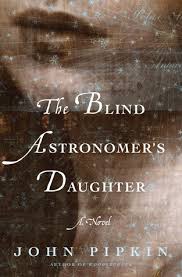
John Pipkin's second novel, The Blind Astronomer's Daughter, "captures our own awe and sense of puniness as we look at the skies," according to a New York Times review.

John Pipkin’s second novel, The Blind Astronomer’s Daughter, “captures our own awe and sense of puniness as we look at the skies,” according to a New York Times review.

One of those hoary claims about writing that won’t go away is that genre fiction focuses on plot and literary fiction focuses on character and language. I suppose there are bits of truth in that statement, but all you need to do is read John Pipkin’s new novel The Blind Astronomer’s Daughter to realize that the distinction is mostly nonsense.

The novel is the sort of book that shouldn’t be as easy to read as it is. It’s big and ambitious, rich with metaphor and complex characters, and written in the language of its setting: late eighteenth-century Ireland. It’s a book about science and the ways that our understandings of the latest discoveries shape how we understand the people and world all around us. And, in the midst of all that high-literary business, it manages to leap nimbly from page to page because it uses some of the basic elements of creating suspense.

You can read the opening pages here.

How the Novel Works

The novel is, as you might expect, about a blind astronomer’s daughter. Pretty much every word of that title is complicated, though, since she’s not exactly his daughter, he’s not exactly blind, and not exactly an astronomer since astronomy in Ireland two hundred years ago wasn’t the academic science we know today. So, there’s plenty of intrigue in the book. But much of the page-to-page suspense comes from the sort of mechanical strategies we’re familiar with in genre fiction. For example, early in the book, there’s a scene in which the daughter, Caroline, has finally convinced her father, Arthur, to take her to his rooftop observatory. The scene begins like this:

He insists that she tie herself to him.

The short length of thick-braided hemp is already knotted at his waist when he holds the fretted end toward her in the cramped attic. She words her refusal in terms he will appreciate.

“While there is comfort in having you anchor my steps, if you were to falter, the fall would carry us both.” She considers adding that a larger object will ever hold a small in its sway, but decides that this would overstate the point.

He warns her that even now, in the light of midday, there are still shadows ready to deceive, and that she must heed the sharp angle of the roof and hold fast to the railing with her strong hand.

“And there will be wind,” he says.

Caroline has imagine this moment often—her first visit to the observatory—but it seems odd that her father has chosen to bring her here during the day when there is nothing to be seen but blue sky and white clouds. As usual he wears the patch over his left eye, and when she asks him if it is a hindrance in getting to the roof, he explains that he has grown accustomed to climbing the stairs half-blind, that he has learned to translate two dimensions into three, that preserving the eye for the telescope is worth incurring some unsteadiness in his step.

In this short passage, Pipkin has made something as basic as going onto the roof of a house into a riveting question of “What will happen?” First, he starts with a statement that demands explanation (“He insists that she tie herself to him.”) We don’t yet know what’s happening in the scene, and so we naturally think, “Huh?” Then, she refuses to do it. As a rule, refusal is good for tension (unless acceptance means going along with something we understand to be dangerous). Pipkin introduces several elements of danger: shadows, the sharp angle of the roof, and wind. He also writes the scene into a moment we don’t expect it. Astronomer’s work at night, but this is the middle of the day. Finally, Pipkin gives Arthur an eyepatch (as a rule, eyepatches=awesome) and uses the patch to further throw everything a bit off-kilter. It’s one thing to navigate a dangerous place, but it’s quite another to do it without the full faculty of your senses. It’s a trick that every magician understands: they’ll escape an underwater box or stand in front of knives, but first they’ll tie this blindfold over their eyes.

Each one of these is a strategy used every day by genre writers. The only difference is that Pipkin is using them on a rooftop observatory rather than, say, an intergalactic war.

The Writing Exercise 

Let’s create suspense, using The Blind Astronomer’s Daughter by John Pipkin as a model:

  1. Choose the scene you want to write. It doesn’t really matter what scene you choose. It can be one with obvious plot elements or one without. It should contain a kind of set piece: a particular thing happening in a particular place.
  2. Introduce the scene with an unexpected detail. Don’t “set the scene.” Don’t lay out the basic parameters of place and stakes. Instead, focus on one element that, stripped of its context, strikes the reader as unusual. Pipkin ties his characters together with a rope. You want to avoid cheap thrills, of course, and false innuendos. And you can’t do this in every scene. But it’s a great strategy now and then: state something about the characters or place or situation without context, a statement that demands explanation.
  3. Let a character refuse or or accept the premise of the situation. Refusal works because it leads to disagreement, which leads to tension. Acceptance works if the thing being accepted ought to be refused (jumping off that cliff your parents talked about, walking into Mordor). Again, this will require explanation.
  4. Use the explanation as an opportunity to introduce danger. Every scene should contain elements of danger. If there are none, what’s the point of the scene? In this case, the danger is falling off the roof. But the danger might also be saying the wrong word, doing the wrong thing, doing the right thing but getting the wrong reaction, etc. In your scene, what poses a risk to the characters. Let one of the characters enumerate those risks.
  5. Give the scene an element of the unexpected. Pipkin knows we’ll expect the scene to take place at night, so he sets it during the day. There are other ways to play with the basic elements of the scene: something expected that is subtracted or something unexpected that is added. Or, some element is changed: day for night, bedroom for kitchen, outside for inside, work for church, etc.
  6. Impair or heighten one of your characters’ senses. Pipkin makes Arthur wear an eyepatch. He’s used to it, but it’s clear that is increases the risk in the scene. Superhero and comic book movies do this all the time (special powers). War movies and action movies do this in the negative: the hero is always fighting without his weapon or with some grievous wound. How can you impair or heighten your own character’s senses or abilities?

The goal is use these basic strategies for increasing tension in any scene, no matter if the story is literary or genre.

Good luck.

How to Create Tension Between Desire and Thought

6 Dec
Octavio Solis' story, "The Want," appears in the most recent issue of Huizache: The Magazine of Latino Literature.

Octavio Solis’ story, “The Want,” appears in the most recent issue of Huizache: The Magazine of Latino Literature.

Every writer knows that it’s important to find a character’s motivating desire, and those desires are often pretty simple: make money, find love, get revenge, get away, get laid. These are essential human desires, but when they’re distilled down to basics, they can feel too simple. In our minds, our lives are messier and more complicated than any of these desires, which is why we’ve all heard someone say (or we’ve said), “It’s not just about ___. It’s the principle of the thing.” In life and in stories, there’s the desire itself and the invisible architecture of thought, rationalization, philosophy, theology, and politics that we construct around it. Sometimes we become so invested in this architecture that we forget about the desire upon which it’s built.

Octavio Solis crafts an entire story around the distance between the architecture and desire in “The Want,” which you can read in its entirety online at Huizache: The Magazine of Latino Literature.

How the Story Works

The premise is simple. The narrator is home from his first semester of college and feeling lonely. He goes for a drive and thinks, “I need a girl, some girl to lie to, hold, feel against me, someone to give me a little nighttime CPR, for god’s sake. Just one time. One night. That’s all.” It’s a pretty straightforward desire, and if the story proceeded from there, the plot would be the same as any of a thousand movies about young guys trying to have sex. But Solis begins to build an architecture of thought around this desire, and the story changes.

Here is the next paragraph:

The loneliness is hurting real bad now. It’s not in the heart but in the head like a migraine shooting icicles into the back of my eyes. It’s in my throat too, sore with the whispers that keep hissing out of my mouth like bile. All around me, the streets are barren and shiny in the night. All mortals hidden, out of reach. This is what my born-again high school teacher said would happen. You abandon the Lord and you’ll feel the desolation of that choice. You’ll be more alone than you could ever imagine. Painful and paralyzing is the sinner’s harrowing.

The desire has been enlarged, spreading from the heart (and, probably, another organ) to his head and eventually to the entire world (“the streets are barren and shiny in the night. All mortals hidden, out of reach”). You’ve probably been taught about the pathetic fallacy: the giving of human emotions to non-human things (animals, the sky, trees). At it’s worst, it’s an emotional shortcut. A character is sad, and so the weather is sad and rainy. That’s sloppy writing. But Solis is using the same basic idea in a different way. His narrator sees the world (empty streets) and perceives it through the lens of his emotion (lonely, horny), and so in his mind, the street seems to reflect his own feelings back at him.

The desire also becomes about more than just sex. Now, religion is part of it.

Into this new enlarged sense of desire comes a girl, walking alone by the railroad tracks. She’s pregnant. The narrator offers her a ride. The scene that follows depends completely on the distance between the narrator’s physical desire (find a girl) and the thoughts he’s built around it (“All mortals hidden out of reach…abandon the Lord…more alone than you could ever imagine.”) In short, he forgets (or pretends to himself that he’s forgotten) about looking for sex. He tells himself (and her) that it’s human connection that he wants: “I tell her that I draw strength from her company.”

The girl cuts through this. I won’t say how. You should read the story. But it’s important to note what she does not do. In stories by beginning writers (and in some scripts by professional TV and film writers), a character like the girl will dispense wisdom. She’ll be a kind of guardian angel, swooping into the story to help the main character feel better or learn something. If that’s the point of the story (Highway to HeavenQuantum LeapTouched by an Angel), then so be it. But it’s crucial to look out for lazy tropes. For example, when a character like the girl is black, she too often becomes the magical negro. Solis avoids this problem. The girl doesn’t dispense wisdom. She acts and speaks in ways that match her own desires in the moment.

The result is a great, tense passage. Read it here.

The Writing Exercise

Let’s create tension between physical desire and the architecture of thought a character builds around that desire, using “The Want” by Octavio Solis as a model:

  1. Find the basic desire. Keep it simple. What does your character hunger for? Or, what is an absence that is unacceptable to your character? The objects will be some of the usual ones: money, food, shelter, security, love, friendship, sex. Once you find the desire, put the object at its center just out of reach. Solis’ narrator wants a girl, but he can’t find one. The bar is full of “older blinder boozers” and the streets are empty. What does your character want? How can you make it seem impossible to get?
  2. Lay the foundation for the architecture of thought. The story begins on Christmas, and so there is a series of Christmas imagery: Bing Crosby on the radio, a city light that reminds the narrator of the Christmas star. The character is home from college, and so he flips through his high school yearbook, looking at pictures and notes written by classmates. The yearbook suggests a different kind of loneliness, not just sexual but more general. And, it’s a pretty short jump from Christmas imagery to theological loneliness. So, give your character and story something to work with. This is basic narrative work: what details in the setting and situation stand out to the character?
  3. Build the architecture of thought. When your character is alone in his/her head, thinking about these details while in the midst of the basic desire, what thoughts come up? Keep writing. What do they spin themselves into? In “The Want,” we soon realize that the narrator is struggling with his religious beliefs (or has moved past them and is struggling with the aftermath). We also realize that he’s not quite sure how to be an adult (reading the yearbook). He goes into a bar but doesn’t like the company he finds there. Like anyone does while driving, he thinks and thinks about these things and develops some ideas. To some extent, he’s created his own diversion from looking for sex. He’s distracted by his own thoughts. What are the thoughts that your character might become distracted by?
  4. Bring another character into the story. This character will not be aware of the invisible architecture of thought in the first character’s head. The girl in “The Want” only knows what she sees: a guy has picked her up. It’s natural, then, that her actions and words will cut across the world the narrator has created in his mind. She interacts with him based on his desire (which is evident), not his thoughts. Conflict ensues. So, what character can you bring into the story? How does that character fit into your main character’s basic desire?

The goal is to create conflict and tension by giving your main character/narrator both a desire and an architecture of thought build around that desire. You may know what those thoughts will be beforehand, or you may need to explore the premise a bit to discover them. Once you do, bring another character into the story.

Good luck.

How to Write Expansively Instead of In a Straight Line

29 Nov
Angela Palm's memoir Riverine "Riverine is a different kind of memoir, one that through a kind of sleight of hand transports readers from the narrative into the world of ideas and back again, with readers scarcely noticing the transitions," according to a Wall Street Journal review.

Angela Palm’s memoir Riverine “is a different kind of memoir, one that through a kind of sleight of hand transports readers from the narrative into the world of ideas and back again, with readers scarcely noticing the transitions,” according to a Wall Street Journal review.

In my own writing, the number one sign that I’ve lost track of the narrative is that I become locked into a minute-by-minute recitation of what’s happening in the story. Even if the action is eventful, the telling of it feels tedious. Good prose should seem light on its feet, not plodding; expansive, not narrow; all-inclusive like Borges’ aleph or Whitman’s lines “what I assume you shall assume/For every atom belonging to me as good belongs to you.” Perhaps that sounds a bit high-minded, but it’s a feat of mechanics, something that any writer can try on the page.

A great example of expansive prose can be found in Angela Palm’s memoir Riverine. You can read an excerpt here.

How the Memoir Works

Palm grew up in rural Indiana, in an unincorporated group of homes along the Kankakee River. Her neighbor and friend was a boy named Corey, who she played with and fantasized about until the day he was arrested for the brutal murder of two of their neighbors. She continues thinking about him long afterward, and the memoir is an attempt, in part, to make sense of that murder in both their lives.

As a result, the book faces the need of telling what happened to Palm and Corey but also exploring the world around them. Palm does exactly that in a passage about a third of the way into the memoir:

Generally, the town newspaper was a thing you decidedly wanted your name in or out of, depending on your status. If you were Bridget Trotsma with the brownest eyes and leanest thighs and eagerest stage mother, you wanted to be in. You said, “Look at that. I can’t believe I made front page. Again.” You smiled to yourself knowing full well you’d be on the front page but not knowing that you life would never be better than it was in that moment. If you were Corey, on the other hand, and you had killed two elderly, innocent persons and torched their car in a cornfield, you wanted to be out. You said nothing, if you were smart. But Corey wasn’t that smart. He talked to someone who talked to someone else who talked to the police.

The passage starts with a definitive statement about town newspapers and the sort of people who wanted to be written about. It’s a statement that requires explanation and evidence, which Palm proceeds to provide with the examples of Bridget Trotsma and Corey. Buried within that explanation are more statements that beg for more information, like “But Corey wasn’t that smart.” It’s no accident, then, that the next paragraph begins “Or, he was smart once, but only had a makeshift upbringing as the fifth of five children, one dead too young, to guide him.”

This meditation on types of people and how they become that way runs into an opposing view in the next paragraph:

I walked the aisles of the grocery store—a mistake, in retrospect. In the bread aisle at the IGA, I heard a man say, “I hope he fries.” Firing squad, another said. In the frozen section: “Those people living in the old riverbed ought to be self-incorporated if you ask me. Those people ain’t never been fit for this town. Draw a line between the northern farms and the river and be done with them.” Some folks are born evil, someone said. “Ain’t nothing you can do about it.” But that wasn’t true, was it?

The paragraph proceeds to offer examples that complicate a belief that in “born evil.”

The passage has now moved from the town newspaper to a metaphysical discussion of the nature of the soul, and so the next paragraph begins with “His case never went to trial” and ends with “But somehow I held out hope against hope in Corey’s civility, in his true self before he shattered, over time, into other broken versions of himself.”

We learn essential information about the narrative, the sort of details that are part of any crime story. But by making definitive claims about the world (from simple things like newspapers to complex abstractions like the nature of good and evil), the prose expand far beyond the basic execution of the crime and its punishment.

The Writing Exercise 

Let’s expand a narrative beyond its immediate action, using Riverine by Angela Palm as a model:

  1. Start with a general statement about the people, places, or things in your narrative. Palm begins her passage with newspapers and how people feel about appearing in them. It’s a version of the old saw “There are two types of people: those who ____ and those who ____.” Of course, statements like these are simplistic (“There are two types of people: Those who believe in dualities, and those who don’t.”). The point is not to definitively describe something so much as launch a discussion of it. You’re giving yourself something to talk about. So, pick any aspect of your narrative world and describe it in terms of “There are two types of people…” Ideally, you’re picking something that is connected to the main thread (the action or plot) of your story, but don’t let that stop you in your tracks. If you’re stuck, pick anything and see where it takes you. Don’t plan yourself into a perpetually blank page.
  2. Provide evidence for your statement. Give examples, as Palm does with Bridget and Corey. Put faces on the examples. Avoid, if you can, the invention of straw men (faceless characters who act in ways that are convenient for the writer). Ground your statement in reality (even if that reality is intentionally curated).
  3. Make definitive statements about your examples. Palm writes, “You said nothing, if you were smart. But Corey wasn’t that smart.” She starts with a generalization (“if you were smart”) and then makes it particular (“But Corey wasn’t”). Try using Palm’s basic structure “If you were ___, then ___.” Then, follow it up with “But/And ___ was/wasn’t ___.”
  4. Provide evidence for this new statement. Palm digs into the idea that Corey wasn’t smart and tries to explain how that could be true. In your own work, think about the how. This may feel like a natural progression: from what is to how/why it got that way.
  5. Introduce opposing views. If this sounds like instructions for a freshman comp essay, that’s okay. Good arguments are often narratives, and good narratives often make arguments about their worlds and characters. Palm introduces what some of the townspeople say about Corey, which differs from her own perception of him. She does this by putting herself in the place where the townspeople can be found: the grocery store. She doesn’t worry about identifying the people she encounters. Instead, she lists their statements one after another.
  6. Ask if these opposing views are true. Palm does this literally: “But that wasn’t true, was it?” Notice how she uses a question, not a statement (But that wasn’t true). A question demands an answer, which she then must provide. What you’ll probably find is that if you ask enough questions in your narrative (whether it’s fiction or nonfiction), you’ll find one that’s difficult to answer–and it’s that question that is likely at the reason you began writing the story in the first place.

The goal is expanding a piece of prose to reveal the world around a plot and possibly discover a story’s about-ness.

Good luck.

How to Figure Out What Really Drives a Character to Act

1 Nov
Hasanthika Sirisena's collection, The Other One, won the 2015 Juniper Prize for Fiction.

Hasanthika Sirisena’s collection, The Other One, won the 2015 Juniper Prize for Fiction.

When you begin a novel, it’s easy to find a detail that pulls you into a character or plot line, and then another detail, and then another, and then one day you look at the accumulated pages and think, “What is this?” One response to this question is to create an outline, a big-picture snapshot of what’s in a novel and where it’s going. The problem, of course, is that outlines don’t create order; they only reveal what’s already there. Figuring out plot and character and what happens next is still the writer’s job. There are no shortcuts, except for maybe this one.

If you can identify a single, driving impulse in a character—a fundamental need that colors every aspect of his or her behavior—then sometimes a story will snap into focus. Hasanthika Sirisena does exactly that in her story, “Ismail.” It’s included in her new collection The Other One and was originally published at Narrative Magazine, where you can read it now.

How the Story Works

Ismael is the story’s narrator, and his story begins like this:

How to explain why my brother Harry and I stood in my best friend Abdul’s backyard at two in the morning carrying five large Mason jars filled with milk and turkey parts we’d bought at Fairway?

From the first line, we know the characters’ motivations will be complicated. Abdul is Ismael’s best friend, and we soon learn that the Ismael’s brother Harry is in love with Abdul’s sister. And yet the two brothers are wrecking Abdul’s house. The situation, as the first line suggests, demands an explanation, a big Why? This ought to be easy, right? Ismael must have a good reason for an action that will have serious consequences. The writer simply needs to let the readers know what that reason is.

The problem is that Ismael is smart—perhaps not book smart, since he “nearly flunked tenth grade,” but he’s observant and self-aware and emotionally astute. These are all great traits for a narrator. (I’m a believer in making narrators as smart as their readers.) But it also presents a challenge that can be summed up in a line a lot of us heard as children: “How could someone so smart do something so stupid?” It’s a difficult question to answer. Any factual statement that starts with “Because So-and-so…” is likely to fall flat. Readers are like your skeptical parents. They have no time for thin excuses. But when we’re pressed to really explain ourselves, we often draw blanks. People rarely act rationally. Instead, we respond to deep-seated desires and urges and then rationalize the behavior that follows.

As writers, then, we need to identify our characters’ deep-seated urges. Here is how Sirisena does just that:

If you go long enough without something, sex, money, even love, you can get to the point you don’t need it. But if you suddenly have access to what’s missing, get it back in your life, then you’ll do whatever it takes to keep that thing. The thought of loss knocks you flat on the floor, your chest caved in, gasping for air.

For a time, that’s what knowing Abdul felt like. I’d been okay without him, but once we were friends I couldn’t imagine what it would be like to lose him. There were days that thought alone—the thought of that loss—left me knocked out on the floor, chest caved in, gasping for air.

Notice the imagery that ends the passage: “gasping for air.” It’s an image of suffocation or drowning, and as anyone who’s ever taken lifeguard training knows, a drowning person isn’t capable of rational responses. Instead, they thrash about and grab hold of whatever object presents itself. That’s the sort of deep-seated desire you’re after: a desire equal to the desire to not die.

Of course, you might be thinking that the lack of sex, money, and love are not the same as the threat of death. But here’s what’s important: the desire doesn’t need to literally be equivalent to dying. Nothing is. It just needs to feel like dying. For Ismail, losing a friend after not having had one feels like dying, and so when it happens, he thrashes about and latches onto whatever seems to keep him afloat: in this case, vengeance.

The Writing Exercise

Let’s find a character’s motivating, deep-seated desire, using “Ismail” by Hasanthika Sirisena as a model:

  1. Start with the action your character must defend. It’s not always the case that action is the best place to start, but it’s probably the place to begin thinking about character and often what draws a writer to a character in the first place. The character is going to do something drastic, with consequences, something that demands an explanation. What is that action? Don’t worry if it doesn’t yet make sense or seems out of character.
  2. Give the character figurative parents to defend it to. This can be as easy as posing this question to your character: Why did you do that? Let your character offer up a list of responses, and then swat them down, if possible, just as a parent would. The goal is to move beyond the easy, unsatisfying explanations until the point at which the figurative parent (you, the writer) can demand, “How can someone so smart do something so stupid?”
  3. Let the character do some soul searching. He might search his past for clues or his family or the other people who surround him: their values or fears. Think in terms of change: the dread, based on experience, that something will change and wreck everything or that nothing will change and everything will remain the same. If you’re familiar with the canon of Western literature from, say, James Joyce to Richard Ford, the statements that results from this soul searching will feel an awful lot like an epiphany. Generally speaking, we’re skeptical of epiphanies now because they’ve been so overused, but that doesn’t mean they have disappeared from stories. The passage from “Ismail” could have been an epiphany except that it occurs in the first half of the story. What statement of causation (I acted because) can you draw from your character’s deepest fears or needs?
  4. Make the character defend the action to someone in the storyOne of the biggest mistakes writers make early on is doing everything I’ve just discussed—but doing it all inside a character’s head. Stories like these consist entirely of characters sitting and drinking/smoking and thinking big thoughts, which is boring. So, force the character to defend the action to some other character. Ismail, for example, must defend his actions to his brother. The defense matters, and the impact it has on their relationship matters. That’s where story and plot come from. Who is that other character in your story?

The goal is to figure out where a story is headed by better understanding what motivates a character to act in the first place.

Good luck.

How to Use Readers’ Desire to Create Suspense

25 Oct
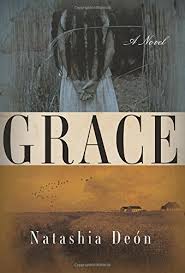
A New York Times review said of Natashia Deón's debut novel Grace, "her style is so visual it plays tricks on the imagination — did I just watch that scene? Or did I read it?"

A New York Times review said of Natashia Deón’s debut novel Grace, “Her style is so visual it plays tricks on the imagination — did I just watch that scene? Or did I read it?”

Anton Chekhov said that if there’s a gun on the wall in the first act, then it needs to go off in the third act. This is good advice, of course, but it’s also pretty bare-bones. So much remains unaccounted for: Who gets shot? Who does the shooting, and why? Is the shooting on purpose or accident? Is it done out of rage, necessity, pity? Does the reader root for the shooting or against it? That final question can be one of the most powerful to answer. Writers sometimes talk about giving readers what they want, but it can be just as effective to give readers something they absolutely do not want.

This is what Natashia Deón does in her novel Grace. You can read an excerpt from the novel at The Nervous Breakdown.

How the Novel Works

The novel tells the story of an escaped slave, Naomi, who finds refuge in a brothel in Georgia, taken under the protective wing of its madam, Cynthia. At least that’s part of the novel. There’s more, but the scene I want to focus on takes place in the brothel. It’s not a nice place, of course, but Cynthia is a strong, complex character who realizes that Naomi is still a virgin. That virginity becomes a kind of amulet in Cynthia’s eyes, freighted with meaning and importance and luck, which is good news for Naomi since it frees her from the obligations of the other women in the brothel.

Into this scene walks Jeremy, a likable gambler who flirts with Naomi (despite the fact that he’s white and she’s black) and whom she falls in love with. Are we more savvy than Naomi? Do we see where this affair is headed? Of course, we do. But Jeremy is also sweet and sincere, and so, if we can’t hope for the best, we’re lulled into dropping our guard, the same as Naomi. And then…

In this scene, Jeremy has lost every penny to his name and is begging Naomi to offer herself to the house dealer in exchange for money—which he will use to win back his losses. She reluctantly agrees to do it:

I stand on the wrong side of this door with my belly quivering, waiting for Mr. Shepard to greet me. He’s counting his money, slipping bills through his pinchers. He folds a wad of dollars and slides it through a silver clasp and into his pocket.

I shift in the doorway, hope he see me move.

He don’t.

He lops a deck of cards in his bag, his dice, then fastens it closed. I clear my throat. “Uh-hum,” I say softly. Louder, “Uh-hum?”

“Didn’t know y’all served breakfast,” he say, and stacks his chips in piles on his table, then sits down. “You here for my order?

No one wants this moment to take place. Naomi doesn’t want to have sex with the dealer, and he recognizes the situation for what it is. As readers, we definitely don’t want the scene to happen, yet the characters begin to go through with it anyway. First, Mr. Shepard says, “Twenty years and I’ve seen hundreds of gals like you.” When she doesn’t leave, he becomes more aggressive:

He puts his hand gently behind my head. I shiver as he kisses my cheek softly. Only Jeremy’s kissed me there. That way.

He slaps it. Grabs my face around my cheeks, squeezing too hard.

It gets worse before he finally calls out the situation for what it is: “Your boyfriend want a chance that bad?” he asks and then:

He clutches my ass, presses his face on the side of mine. I flatten to the door as he breathes in my ear, telling me things I don’t want to hear. Telling me about me. About Jeremy. Nasty things I won’t tell nobody.

He unlocks it, pushes me out the door, tells me to go.

The scene ends the way we hope: she doesn’t have sex with him. But it’s hardly a moment that makes us feel good. Instead, we feel like Naomi: “Withered away” and “nasty.” The novel has met our hopes as readers: Naomi has been spared. But it also brought us to face-to-face with the thing we hoped wouldn’t happen, so close that the very nearness of it affects us. This is an important strategy to remember for creating suspense (will the horrible thing happen?), but it’s also a good example of using Chekhov’s gun. This is a novel where a lot of guns, literally and figuratively, go off. If they always go off, they become less effective as narrative devices. If the worst thing always happens, we become immune to it. We reflexively deaden ourselves to it. But if we’re given evidence that perhaps the worst thing can be avoided, then the impact of the fired bullet is that much greater, even if we knew it was coming.

The Writing Exercise

Let’s put a gun on the wall and make readers dread its use, using Grace by Natashia Deón as a model:

  1. Choose your weapon. In Grace, the weapon is prostitution. Naomi lives in a brothel, and so the risk of being forced to have sex for money is ever-present. The fact that it’s sex and not a gun is a good reminder that Chekhov’s gun can be anything. It could be peanuts—if a character has a peanut allergy. Anything is dangerous if placed in the right circumstances. So, what are the circumstances of your story? What is dangerous or feared?
  2. Pave a path past the weapon. Deón does this twice. First, she creates Cynthia, the madam with the heart of gold (sort of, not exactly), who tries to protect Naomi from participating in her trade. (Incidentally, for a similar character who does the complete opposite, read Alexander Chee’s excellent novel The Queen of the Night.) Second, she creates Jeremy, the suitor who will take her away from the place where the weapon hangs on the wall. Note that Deón offers two characters to guide Naomi down the safe path. Who are those characters in your story? You don’t necessarily need two, but you probably need one.
  3. Make readers buy into the path to safety. This can be a fine line to tread. If you show the path but readers don’t think it’s a plausible direction for the story, they’ll feel like the writer is trying to trick them. But convince readers to go down the path with the characters, and you’ll devastate them when they find themselves facing the gun again. So, take your time. Develop the characters you created in the previous step. Make them likable. (Hint: great characters mix likability with failure, for various reasons, to do the right thing at the right time.)
  4. Stick the character and the readers into a situation they hope to avoid.  Find a place or situation where the weapon you chose is impossible to avoid. To return to Chekhov’s gun metaphor, take your character to the shooting range. This could mean a place where the weapon naturally resides or where it’s use is provoked by a character (as Naomi tries to provoke Mr. Shepard into having sex with her). The trick, of course, is to find the entry to such a place and situation. Deón does this by having one character push the protagonist into doing something she doesn’t want (a version of the age-old “If you really loved me”). So, find a character who, for nefarious or practical reasons, pushes the main character into the dangerous situation.
  5. Sell the readers on the danger. Just as readers feel cheated by safe paths that don’t feel plausible, they also get angry at dangers that don’t feel real. In a successful scene of this type, the reader needs to feel that the gun might really go off, that, in fact, there is a better-than-50-percent-chance that it will.

The goal is to create tension and suspense by thinking beyond the gun on the wall to what the viewer hopes will happen (or not) with the gun.

Good luck.

How a Character’s Past Can Inform the Present Action

18 Oct
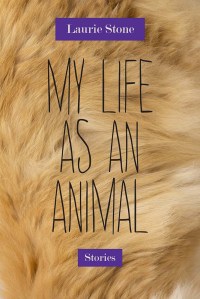
Laurie Stone's new book, My Life as an Animal, is about a woman a woman constantly seduced by strangers, language, the streets in the downtown scene of New York City in the 70s, 80s, and 90s.

Laurie Stone’s new book, My Life as an Animal, is about a woman constantly seduced by strangers, language, and the streets in the downtown scene of New York City in the 70s, 80s, and 90s.

Here is one way to think about conflict: A character has a desire (like, say, wanting to eat a really good sandwich), but something stands in the way of satisfying that desire (there are no good sandwiches, only Subway). The story becomes about that character’s effort to overcome the obstacle in order to obtain the desired thing (the quest for the sandwich). There is nothing wrong with this structure, clearly, since it’s the basis of any number of famous stories and novels. That said, it has a simplicity that can feel false. In real life, we often act in ways that takes us away from the thing we desire. Or, we have conflicting desires. When this is the case in a story, a different structure is needed than the “Quest for the Sandwich” narrative.

A great example of this type of internal conflict can be found in Laurie Stone’s new book, My Life as an Animal, new from Northwestern University Press. You can read the opening of the book here.

How the Story Works

The book is a collection of stories, the term that Stone uses to describe her fictions that often use material from her life. (Read about that definition in the interview on Thursday.)  One of the stories in the book, André, revolves around the sexual assault that the main character suffered, when she was 14, at the hands of her psychoanalyst, a man named André. Her reaction to the traumatic event was a kind of dissociation:

Have you ever left your body? People talk about this happening during trauma. Maybe it is a throwback to our chimpy past, when the endangered primate searched for a tree to climb into at the sound of pounding hooves. I looked down at a girl in a blue cardigan with her arms by her sides.

Many years later, she tells the story of this assault at a dinner party, and a man at the party has this reaction:

The man had been quiet until André was mentioned. He had intense eyes and an enigmatic smile. His belly was round, his hair thinning, his arms and legs untoned, despite his work as a landscape gardener. We were drinking margaritas and eating chips. Sailboats raced outside the windows, and I looked around my friend’s peaceful loft with its large, abstract paintings, couches by a window, a coffee table made from an old, green door. I was on a stool and once or twice rubbed my shoulder. The man said, “Can I give you a massage? I have studied massage.” I said, “Okay.” My mother used to say, “Nothing is free.” I did not want her to be right. The man stood too close as he worked on my neck. Softly, he said, “Does it feel good?” I said, “Yes.” He kept working. I closed my eyes. I didn’t like him. His hands were soothing. He was silent for a while and then he said, “Can I kiss your shoulder. These shoulders don’t know they are loved.” I did not want the kiss. I thought he was ugly. I said, “Okay,” and I felt his lips, cool and quick, on my skin.

That night in bed Richard said, “Why did you let him kiss you?” I said, “It felt easier than saying no.’

There is a lot to be learned here about men’s behavior and consent, of course, but the scene also reveals something important about craft: A character’s behavior becomes a lot more interesting and suspenseful if must choose between competing desires. In this case, she wants to be left alone but also wants to avoid a confrontation. The result is that the scene becomes less predictable. There are several different ways it could have gone. The narrator could have slapped the man or told him to get his hands off of her, and it would have made sense. She could have begun crying or stormed out of the room. In short, the narrator’s actions depend on which desire she chooses to act on (to be left alone or to avoid confrontation).

Because the choice between those desires is so difficult, the story becomes about the choice itself (and the stress involved in making it) rather than the action that follows. The narrator alludes to that stress shortly after this scene ends when she says, in one of the best lines of the book, “Suffering does not ennoble people. Suffering mostly crushes people.” The description that leads up to this statement is alone worth the price of the book. And, it’s possible because of the way Stone creates the narrator’s internal conflict.

The Writing Exercise

Let’s create competing desires within a character, using “André” from My Life as an Animal by Laurie Stone as a model:

  1. Give your character a critical event. In My Life as an Animal, Stone uses the abuse by the psychoanalyst. It’s an event that hangs over the narrator for the rest of her life, coloring the way she understands herself and others. Because the narrator is so complex and well drawn, this critical event doesn’t entirely explain her character, and that is important. Characters who can be distilled to a single event too completely risk becoming flat and unrealistic. So, the event shouldn’t define your character, but it should be an inextricable part of your character. For your own character, consider what memory he or she returns to, loves, or dreads. What past event keeps the character up at night or gets told to others again and again?
  2. Jump forward in time to a similar situation. The situation can be exactly the same or vaguely similar; in My Life as an Animal, the narrator is receiving unwanted attention from a man, and the kind of attention is similar but of a different degree. But the situation can also be similar only from the character’s perspective. In real life, we tend to use our own critical events as yardsticks for much of what happens around us. So, the critical event and present situation may seem totally different to one character but similar to another. The point is that the present situation makes your character feel the same—or in a similar way—as she did in the critical event.
  3. Give the character a desire related to that situation. In My Life as an Animal, the narrator’s desire is pretty simple: to be left alone, not harassed. The desire can also be small. For example, some people avoid certain foods (oranges, chives, etc) because they once had a negative experience with them (getting sick). As a result, they live their lives with the ongoing desire to avoid those foods. The desire can also be a positive one. If someone had a good experience in the past, he or she might actively seek out similar experiences.
  4. Give the character an expected way to act on that desire. You’re simply following the logic of the desire. If a character wants to avoid oranges, she’ll behave in predictable ways: avoiding certain aisles in the grocery store or never eating breakfast in a restaurant. How does your character usually act on his or her desire?
  5. Create another desire that, if acted upon, has the opposite effect of the previous action. In My Life as an Animal, the narrator also wants to avoid confrontation with the man who is bothering her. She’s at a party and doesn’t want to make a scene. As a result, she allows the man to give her a massage and kiss her even though it runs contrary to her deep desire to be left alone. To a certain degree, she’s also bombarded with mixed feelings about the man. He’s ugly and creepy, but her shoulders do hurt and his “hands were soothing.” So, place your character in a particular place and time with particular people. What else is going on in that moment? What else does the character want (to avoid making a scene, to relax her shoulders)? These desires don’t need to be inherently contrary to the first desire you created, but the actions that result from them should work against that first desire.
  6. Let the character choose. Generally speaking, drama requires release. A scene builds and builds, and readers wonder what will happen. So, what will your character choose?

The goal is to create a scene by exploring the ways that a past event creates desires that can or cannot be acted upon in the present.

Good luck.

How to Make a Character Represent a Place or Group

11 Oct
Leona Theis' story "How Sylvie Failed to Become a Better Person through Yoga" appears in the latest issue of American Short Fiction, alongside Matt Bell, Smith Henderson, and Porochista Khakpour.

Leona Theis’ story “How Sylvie Failed to Become a Better Person through Yoga” appears in the latest issue of American Short Fiction, alongside stories by Matt Bell, Smith Henderson, and Porochista Khakpour.

Stories, novels, and even essays feature two types of characters (broadly speaking): major, complex characters and minor, flat ones.  The terms are basically shorthand for this: some characters get a lot of time on the page while others might show up for only a sentence, the literary equivalent of a nameless movie henchman or Star Trek crew member. In action scenes, the minor character exists as a plot device, to get chopped down so that the major characters will act. But what about in stories where action isn’t the primary draw?

Leona Theis offers a great example of such a character and story in “How Sylvie Failed to Become a Better Person through Yoga,” which won the American Short Fiction contest (judged by Elizabeth McCracken) and appears in the latest issue of the magazine.

How the Story Works

The story takes place in 1974 in a Canadian university town. Sylvie is sharing an apartment with a woman she met at a bus stop. The women “each ran with a different crowd, and they agreed this would make for a good relationship, each of them minding her own business.” As anyone who’s ever shared an apartment might guess, it’s not long before the different crowds collide:

Lisa had moved into the suite a week earlier than Sylvie, claimed the larger bedroom, and stacked three twelve-packs of empty Labatt’s Blue bottles on the floor at the end of the kitchen cupboard. Sylvie associated Blue with truck drivers and guys who went out to Alberta to work the rigs. As if to confirm, Lisa’s fiancé Dave, a house framer, came by one night with three of his friends who were home from Alberta for the weekend. Not one of them wore his hair long; their fun appeared to come from drinking and its related games. Sylvie knelt and put Led Zeppelin on the turntable.

In this passage, Theis uses objects and places as emblems of a particular culture and class. On one hand, there’s the sort of men who drink Labatt’s Blue, drive trucks for Alberta oil rigs, and frame houses. On the other hand, there are men with long hair who listen to Led Zeppelin. Each of these details could be a throw-away detail, but because the passage has a point (showing how Lisa and Sylvie inhabit different worlds), each one is given a purpose.

The result is a short interaction with a minor character that acts as a kind of mic drop for the passage. It picks up after Sylvie puts on Led Zeppelin:

“Anybody mind?”

“Far out,” said the burly guy in the quilted vest in the armchair, and Sylvie could sense the effort involved, like someone who’d never taken French at school trying to say au revoir.

The minor character (un-named, like a henchman) is given a line of dialogue that puts his quilted vest and Labatt Blue into action: it lets him try to bridge the divide between the Lisa and Sylvie worlds.

When we talk about setting, we often refer to descriptions of place, but setting, like most writing terms, can be built in many different ways, as talented writers like Theis demonstrate.

The Writing Exercise

Let’s make a character represent a place or group, using “How Sylvie Failed to Become a Better Person through Yoga” by Leona Theis as a model:

  1. Figure out what worlds or groups exist in the story. Literature is full of examples: the cliques in high school stories, the many version of “The Prince and the Pauper” and “The Country Mouse and the City Mouse,” the rookies and pros from sports stories, insiders and outsiders, and worlds of gender, race, sexuality, politics, religion, and probably a hundred other ways that we divvy ourselves (or are divvied) into groups. Which ones are present in your story?
  2. Place your major characters into those worlds or groups. Which groups do your main characters belong to? As you can tell from the examples above, group identity can become a significant part of a story’s plot. In “How Sylvie Failed to Become a Better Person through Yoga,” the groups aren’t as essential to the story as in, say, a sports or high school story, but they certainly affect the characters and plot. So, don’t worry yet about what you’ll do with these groups. Just find which groups your characters are part of.
  3. Choose an acquaintance or someone close to one major character. In Theis’ story, we meet the roommate’s fiancé’s friend—so, someone who one of the major character (Lisa) knows but not someone she’s particularly close to, which makes him easy to discard after he’s done his job in the story. Because he’s not important, he can simply walk onto the page, do his thing, and leave. You can make a list of all of the possible acquaintances for your major characters, or you can try this:
  4. Decide what effect you’re going for. In Theis’ story, the passage accentuates the cultural difference between Sylvie (long hair, Led Zeppelin) and Lisa (Labatt’s Blue, truckers). Of course, this affect could be created by the great details she chooses, but it’s reinforced and made dramatic (and, therefore, interesting) by having it personified. So, in walks “the burly guy in the quilted vest.” He’s called forth by the situation. If Theis hadn’t needed to show the cultural difference between Sylvie and Lisa, the burly guy never would have been invented. What effect are you going for? What is the point of this particular passage in your story?
  5. Let the character react to something from another world. The burly guy is interesting only because he tries to engage with Sylvie on her terms (the terms of her world), which means responding to Led Zeppelin. Because he’s not from that long-haired world, his attempt to fit in isn’t smooth—which is what makes the moment interesting. What detail or person can your minor character interact with? How can the character try to engage with that person or detail on that person/detail’s terms? (In other words, what is the Led Zeppelin that your minor character must try to deal with?)

The goal is to create character, setting, and drama by letting a minor character represent his or her larger group and engage with some other group. If this sounds like science fiction and fantasy, that’s because this is what those genres do over and over again, but with aliens/dwarves/space travelers/vampires instead of truckers and hippies.

Good luck.

Make Readers Care about a Story’s Movie-Poster Elements

4 Oct
Christopher DeWan's story "Voodoo" is included in his new collection, Hoopty Time Machines.

Christopher DeWan’s story “Voodoo” is included in his new collection, Hoopty Time Machines.

I often teach a class about first pages and how to hook readers. There are some obvious strategies for this: introducing a gun, dead body, broken rule, or a moment with two possible outcomes. But none of these is enough to compel a reader to turn the page. After all, we’ve all seen these strategies put to use over and over again. Something else is needed. That something could be a bigger or more awful gun, more dead bodies, and a more taboo broken rule, but at a certain point you’re simply making another Saw movie. Shock value is a finite resource. But human emotion isn’t. For a first page to be truly compelling, it needs to make readers care about the gun or dead body or whatever.

A great example of making a reader care can be found in Christopher DeWan’s story, “Voodoo,” which was originally published in A cappella Zoo and is included in his new collection Hoopty Time Machines: Fairy Tales for Grownups.  You can read the story here.

How the Story Works

As the title makes clear, the story is playing with a well-known horror/supernatural trope. Any reader will have pretty clear expectations for what will follow: some version of a doll with pins and needles stuck in it. The problem facing DeWan is the same one facing most writers. The story is familiar, and so something is needed to make readers pay attention yet again. He could have used a more horrific doll or added bloodier consequences, but that wasn’t his approach. Instead, here is how the story begins:

You walk into your daughter’s room. You wouldn’t do this normally. You try very hard to respect her privacy, even when this sometimes causes you to wonder if you’re being a bad or neglectful parent. The fact that you wonder means that you probably are not a bad or neglectful parent. But everyone has better days and worse days.

There’s no mention of voodoo or a doll in this paragraph. Instead, we’re shown a relationship and a character who isn’t sure how to proceed, who means well but isn’t is faced with the possibility that good intentions might be insufficient. Or perhaps everything is just fine.

The uncertainty is important. As readers, we’re naturally drawn to situations in which a character is trying to discern the true nature of the world and circumstances. It’s why we’re drawn to conspiracy theories, magic, and Halloween. We love the idea that everything is not as it seems. But we also need to care, and that’s why the emotions in this first paragraph are so important. The character has feelings, and those feelings are tethered to concrete things (the welfare of his daughter) and abstractions (do we ever really know how someone is doing?).

The next paragraph makes good on the title’s promise:

Her alarm clock is going off and she’s nowhere to be found, so you walk into her room, and that’s when you see them: two little dolls. Voodoo dolls of you and your wife.

Now the story kicks into gear, but the reason we keep reading isn’t because of the dolls but because we care (and the character cares) what happens with those dolls.

The Writing Exercise

Let’s introduce emotional stakes to a story, using “Voodoo” by Christopher DeWan as a model:

  1. Decide what readers will care about. In other words, what’s the primary story element. In “Voodoo,” that element is voodoo. In monster stories (vampires, zombies, aliens, serial killers), the element is the monster. In detective fiction, it’s the pursuit of the criminal, and in romances, it’s the consummation of love and the struggle to maintain it in the face of difficulty. It’s the movie poster image for your story or novel. What is this element for your story?
  2. Create an emotional attachment to that element. Movies use a lot of the same emotional stakes—protecting a child or other loved one, finding true love or friendship, finding your best self—because they’re part of our lives in an essential way. Great literary works use the same emotional stakes. So, start by choosing something we all worry or dream about.
  3. Find an authentic entry to that emotion. The problem with blockbuster movies is they introduce the emotional stakes using some well-worn tricks (a child saying, “Why won’t you come to my ballgame, Mommy/Daddy?) but then abandon the stakes as soon as the movie-poster element shows up. After all, the filmmakers seem to think, who cares about that kid when the museum exhibits have come to life and are trying to kill you? They’re right some of the time. But in stories and novels, the writer usually needs to stick with the emotional stakes. Rather than using a shortcut, introduce the stakes with more uncertainty. So, find a simple action (walking into the daughter’s room) and then add a choice (should I or shouldn’t I?) and a larger emotional context (am I a good parent or not?).
  4. Lead with the emotion. Very often, as soon as the movie-poster element shows up, it sucks up a lot of the oxygen in the story. It’s hard to introduce emotion for the first time when stuff is blowing up. So, begin with the simple action, choice, and larger emotional context. Let it be the hook for the reader. The movie-poster element will arrive soon enough.

The goal is to make readers care about the big story elements rather than relying on those big elements to keep readers turning the page.

Good luck.

How to Turn Desire into Motivation and Plot

27 Sep
Rahul Kanakia's novel Enter Title Here has a main character that Barnes and Noble's Teen Blog called "a genuinely unique protagonist: unintentionally funny, often mean, and uncompromising in the lengths she’ll go to get what she wants."

Rahul Kanakia’s novel Enter Title Here has a main character that Barnes and Noble’s Teen Blog called “a genuinely unique protagonist: unintentionally funny, often mean, and uncompromising in the lengths she’ll go to get what she wants.”

Any writing teacher will tell you that one key to finding a plot is to find your character’s desire: the thing that the character wants badly and will fight for. It doesn’t matter, really, what the desire is (love, money, applesauce) as long as the reader believes it matters to the character. Simple, right?

The problem is that, at the beginning of a draft, we tend to think of characters in a vacuum, floating there waiting to feel and act. But desire has no effect on the world (on plot) when there is nothing around it.  So, one way to build a story is to put your character in the midst of other characters. Once one character begins to state beliefs and desires, it’s likely that your character will react. As in life, many of our desires and feelings are clarified once they’re contrasted with others.

A great example of this strategy can be found in Rahul Kanakia’s novel Enter Title Here. You can read the opening pages here.

How the Novel Works

The novel is about a high school student, Reshma Kapoor, who wants to be valedictorian but worries that someone might beat her. Her desire is clear, but it’s not enough to build a novel on. More is needed. In this passage, we see some of that more:

When I first told Mummy about the perfects, she laughed and said, “No one can be perfect.”

People say that all the time, as if it’s obvious.

But is it?

That’s the problem with people. They think perfection is about things you can’t control: your intelligence or your wealth or your beauty. But if they thought of it as avoiding mistakes, they’d understand how achievable it is.

We all know that it’s impossible to go one hour without making a mistake. And if that’s possible, then it must be possible to string together twenty-four consecutive mistake-free hours into a perfect day.

Having an entire mistake-free day is difficult, but it’s doable.

She lists the ways she didn’t make mistakes (studying, dieting, etc) and then says this:

And if I can have one mistake-free day, then I can have two, and three, and four, and eventually whole weeks and months and years will pass without mistakes. Is that so insane?

This is a nifty piece of writing. It starts with the idea that some girls are perfect, gives one character’s response (no one’s perfect), and then considers whether that’s really true. If perfection is possible, how would the narrator achieve it? She develops a plan.

Kanakia has used that basic desire (be valedictorian) to create plot. Take out the specifics, and you get this: “Main Character wants ____, and some characters seem to have an advantage in getting ____, but So-and-So says that’s not true. But if it is true, then here is how Main Character will beat those characters at their own game.”

The Writing Exercise 

Let’s use desire and community to create plot, using Enter Title Here by Rahul Kanakia as a model:

  1. Find something that your character wants. It can be anything, and there are a few usual suspects: love, money, success. Try using Maslow’s hierarchy of needs: food and water (and other basics required for human survival), safety and security, love and belonging, respect, and the ability to pursue happiness (self-actualization, American-style). In Enter Title Here, Reshma’s desire is a mixture of the last four. If she’s valedictorian, she’ll be assured of a successful career and the financial security it brings. She’ll feel as if she belongs with a group like the perfects. She’ll gain people’s respect and will be able to pursue the life she wants (or so she thinks). Your character’s desire doesn’t need to tap into all of these categories, but it should hit at least one of them. If it doesn’t, it’s probably too fleeting to drive plot forward.
  2. Give the character competition. Reshma wants to be valedictorian, but the perfects might beat her to it. Of course, competition doesn’t necessarily require other characters pursuing the same goal. They might have other goals that put them in the way of your character’s pursuit of her own desire. In the way is the key phrase. If nothing’s in the way, there’s no story: I wanted to be valedictorian, and so I did it.
  3. Create a philosophical framework. Resume’s mother doesn’t say, “You’ll never be as good as the perfects.” Instead, she says, “No one can be perfect.” She’s suggesting a way of seeing and understanding the world. Reshma doesn’t just reject her advice, she also rejects this philosophical framework for another: You can be perfect if you have the willpower. In your story, let a character comment on the competition. Is it possible to defeat it? To be like it? Is it desirable to try? We hear versions of this almost every day: when we fail to get something we want, someone will say, “It’s probably for the best.” Whether we agree or disagree with that statement determines what we do next.
  4. Let your main character disagree with this framework. Reshma decides to beat the perfects at their own game. She can be perfect. She’s saying, in effect, it’s not for the best. How can your character refuse to see the problem the same way as the philosophical character?
  5. Develop a plan. Once Reshma decides to do what seems impossible—be perfect—she creates a plan: be perfect for an hour, then a day, then a week, then for months and years. What is your character’s plan to outwit, outwork, or outperform the competition/obstacle?

The goal is use desire as a starting point for creating character motivation and plot.

Good luck.