Archive | Character Development RSS feed for this section

How to Stretch Present Action

12 Jul
The New York Times called Jeffrey Renard Allen's novel Song of the Shank,

The New York Times called Jeffrey Renard Allen’s novel Song of the Shank, “the kind of imaginative work only a prodigiously gifted risk-taker could produce.”

Some books come with warnings, a heads-up to readers that the text is demanding and challenging. On one hand, these warnings are necessary to allow readers to brace themselves for what might be slow going. On the other hand, it’s possible that these warnings turn off readers from prose that isn’t difficult so much as new. As a casual or even serious reader, it’s easy to devour the same kinds of books over and over (I’m certainly guilty of this). But when you take time to study a difficult book, the rewards can be enormous.

Song of the Shank by Jeffrey Renard Allen is one of these books. It was published by Graywolf Press, and the press’ hometown newspaper, the Star Tribune, called the novel “engrossing and demanding.” At first glance, this seems like an accurate description, but spend a few minutes with the prose, and I think you’ll find that not only does it become easy to read, it also creates possibilities that other prose styles don’t allow.

You can read the opening chapter of Song of the Shank at Graywolf’s website.

How the Story Works

The Onion once ran the headline, “Nation Shudders at Large Block of Uninterrupted Text,” and that may be the reaction of many readers to the novel’s first paragraph, which continues for more than two pages. This is an approach to writing that we’re not used to. In fact, as writers, I’m willing to bet that most of us would struggle to write a paragraph that lasts two pages. So, how does Allen do it?

Not that much happens in the paragraph. We’re introduced to Eliza, who realizes that Tom is missing and so goes out into the yard to look for him—that’s the extent of the action. The bulk of the paragraph is taken up by Eliza’s thoughts, close description, commentary on her thoughts and the descriptions, and context for those thoughts and the situation in general. The novel is essentially asking us to recalibrate our expectations, to focus on things that we tend to skim over.

Here are two early sentences that show how Allen stretches out the present action. Try to spot the transition between action and context:

A clear track, left foot and right, running the circumference of the house, evidence that someone has been spying through the windows, trespassing at the doors. Had she been back in the city, the idea would already have occurred to her that the journalists were to blame, those men of paper determined in their unstoppable quest to unearth the long-lost—three years? four?—”Blind Tom”—Half Man, Half Amazing—to reproduce the person, return him to public consumption, his name new again, a photograph (ideally) to go along with it, the shutter snapping (a thousand words).

The second sentence begins with a clear marker to the reader: the prose is moving from action (a clear track, evidence that someone has been spying through the windows) to context (Had she been back in the city…).

In these sentences, the prose moves from action to close description:

She turns left, right, her neck at all angles. The house pleasantly still behind her, tall (two stories and an attic) and white, long and wide, a structure that seems neither exalted nor neglected, cheerful disregard, its sun-beaten doll’s house gable and clear-cut timber boards long in need of a thick coat of wash, the veranda sunken forward like an open jaw, the stairs a striped and worn tongue.

The description continues for a few more sentences and then moves into commentary (then, notice how the commentary moves back into description):

Taken altogether it promises plenty, luxury without pretense, prominence without arrogance, privacy and isolation. Inviting. Homey. Lace curtains blowing in at the windows, white tears draining back into a face.

Finally, here is an example of how the prose moves from action to Eliza’s thoughts:

Winded and dizzy, she finds herself right in the middle of the oval turnaround between the house and the long macadam road that divides the lawn. Charming really, her effort, she thinks. In her search just now had she even ventured as far as the straggly bushes, let alone into the woods?

Taken individually, none of these moves out of present action is remarkable. Writers use strategies like these all of the time. But when they’re used together, the effect is powerful. The present action is stretched so much that we almost forget what is happening and, instead, focus on what is happening around the action. This is often where the most interesting parts of any novel lie. The difference is that Allen has found a way to direct our attention to them.

The Writing Exercise

Let’s stretch out present action using Song of the Shank by Jeffrey Renard Allen as a model:

  1. Introduce context. There are many ways to temporarily broaden the point of view. An easy way is to jump out of the scene’s immediate time and place. Allen does this with the phrase, “Had she been back in the city.” Try letting the character (or the narrator) suggest how things in the scene might be different if the time and place were different. In other words, give context for how the situation dictates the action.
  2. Introduce close description. Every writer at some point describes aspects of the setting or character, but one way to extend the description is to use simile (veranda sunken forward like an open jaw) and metaphor (the stairs a striped and worn tongue). Allen also moves beyond literal description and explains how the place seems (a structure that seems neither exalted nor neglected). He’s able to do this, in part, because of the prose’s pacing. If we’re leaning into the present action, waiting to see what happens next, then we don’t have much patience for extended description. But this prose moves more slowly. So, try to slow down your descriptions by extending them with metaphor and simile and statements of how the places or characters seem.
  3. Introduce commentary. This is really just an extension of that seeming description. A good way to do this is to follow a description with a statement that sums up its individual pieces. You (or your narrator or character) are essentially telling the readers how to view what they’ve just read.
  4. Introduce a character’s thoughts. One way to approach a character’s thoughts is to let them function as commentary. In other words, avoid writing thoughts like this: Oh no! I need to hurry! Instead, let the character observe him or herself doing the present action. In Allen’s case, he lets Eliza gently mock her search for Tom (Charming really, her effort, she thinks). We’re allowed to see her from different angles, which gives a deeper picture of her, one that is multi-faceted. The more facets you show, the slower your prose may move—but, as Allen proves, the more texture and depth you can provide.

Good luck!

How to Make the Familiar Seem Strange

5 Jul
Sequoia Nagamatsu's story, "Placentophagy," was published at Tin House and is included in his collection, Where We Go When All We Were is Gone.

Sequoia Nagamatsu’s story, “Placentophagy,” was published at Tin House and is included in his collection, Where We Go When All We Were is Gone.

Any discussion of writing horror, sci-fi, or fantasy fiction will inevitably arrive at the phrase “defamiliarize the familiar.” What this means, in short, is that those stories aim to make readers pay attention to something they’d normally not give a second glance. Think about the film The Shining. It transformed a kid on a tricycle into the stuff of nightmares. Of course, all writing can do this, not just genre fiction.

A creepy example of a straight realism that does this is Sequoia Nagamatsu’s story, “Placentophagy.” It was published as part of Tin House‘s blog series “Flash Fridays,” where you can read it now.

How the Story Works

For some readers, the story’s title, Placentophagy, will give away the plot. But, I suspect most readers won’t immediately recognize or know the term, and so the moment of surprise happens a few seconds later, after reading the first sentence:

My doctor always asked how I would prepare it, the placenta.

In that single sentence, Nagamatsu manages to defamiliarize the familiar. The familiar: a body part (and, thus, something as familiar as can be). The unfamiliar: preparing the body part in order to eat it. It’s as simple as that: apply an unfamiliar context or action to something familiar. If you’re like me, there’s no way you won’t read the next sentence and the one after it. We’re hooked.

But now what? The story has made us pay attention to something we’d normally give no thought to: a placenta. How does it advance the premise?

First, it suggests ways to prepare the placenta:

Powdered and encapsulated for my Yuki—two, three, four or more a day depending on my level of sadness and how much I believed the vitamins and hormones within the tissue would make me whole again. Pan fried and stuffed into dumplings for Toru. A smoothie and two yakitori for Keiko.

Then, the story adds a moment of doubt: will the characters eat it? The husband introduces the doubt:

“We don’t have to do it this time—just because we have it.”

That doubt gets extended into the preparation:

I write down daal and naan. I write cumin and cardamom. But I’m not sure if I want to do Indian.

The story now has different directions it can go: eat it or not. Prepare it this way or that way. But that’s not enough. It’s not until the next section that the story really advances the premise into something beyond shock value.

First, Nagamatsu introduces the medical rationale for eating a placenta:

Despite being regarded as unusual, eating the placenta (placentophagy), can help women restore hormonal balance after labor and provide much needed vitamins and nutrients: Iron, B6, B12, Estrogen, Progesterone.

So, he’s made the unfamiliar into something as familiar as the medical text at the end of commercials for medication. He then takes this rationale and the fact that eating a placenta is something that does, in fact, happen, and makes it unfamiliar again:

The Baganda of Uganda believe the placenta is a spirit double and plant the organ beneath a fruit tree.

The story has advanced. It’s not simply a matter of will the character eat the placenta and, if so, how it will be prepared. Now it’s a question of will she eat the placenta and, if so, what will that action mean?

That final question of meaning makes the story so much more satisfying. It’s not simply trying to shock us but, rather, grappling with the eternal issue of how to be in the world, which is the question behind all great fiction.

The Writing Exercise

Let’s make the familiar seem strange using “Placentophagy” by Sequoia Nagamatsu as a model:

  1. Pair something familiar with an unfamiliar context or action. You can do with this with absolutely anything. Here are some examples you’ve seen before: intelligent car (Herbie), flying car (The Absent-Minded Professor), killer car (Christine), and talking car (Knight Rider). In all of these, something familiar as a car is made unfamiliar with an adjective. The film Men in Black did this with Tommy Lee Jones’ car. It suddenly began driving on the roof of a tunnel, and Jones’ character put on a song by Elvis. The song, then, became defamiliarized. So, try this: pair a noun with either an adjective or a verb (eat) that wouldn’t normally be paired with that mount.
  2. Play with the possibilities of the premise. Nagamatsu does this by listing the ways the placenta could be prepared. If you’re using “flying car,” think of all the things a flying car could do. Yes, it can fly, but once it’s flying, then what? Where can it fly? What do the characters do while flying it? Utterly normal things like listening to music or looking out the window suddenly become strange.
  3. Re-familiarize the unfamiliar. Just as Nagamatsu uses medical terminology to make eating a placenta not so strange, you can make your premise less strange and more familiar. After all, if you fly a car enough, you get used to it. It’s not a big deal anymore. So, what would make your premise mundane again? Frequency? Social acceptability?
  4. Make it strange again. Nagamatsu adds the element of folklore: the idea that a placenta might be a spirit double. So, we’ve gotten used to one way of viewing the eating of a placenta. Then he introduces a new way of viewing it. So, what are other ways to view your premise. A flying car is awesome, for instance, until the atmosphere above one hundred feet becomes toxic. Or, a flying car gains new meaning if the ocean level rises and covers all of the land. Notice how this works: you’re shifting the background of the premise—the context. Nagamatsu shifts the context to Uganda, and suddenly the premise doesn’t look the same anymore. How can you shift the context of your story?

Good luck and have fun.

How to Set Up Dialogue with Declarative Statements

28 Jun
Robert Boswell's story, "The House on Bony Lake," appeared in the October 2014 issue of Harper's Magazine.

Robert Boswell’s story, “The House on Bony Lake,” appeared in the October 2014 issue of Harper’s Magazine.

The best writers have a way of making their prose seem light and effortless. It’s the effect we’re all seeking because in our minds, the story races along, but on the page, it too often plods along, one thing after another. The place where that slow, predictable, stuck feeling tends to reveal itself the clearest in our drafts is in dialogue. Conversely, in a great piece of writing, the dialogue snaps.

A great example of light and fast dialogue and prose can be found in Robert Boswell’s story, “The House on Bony Lake.” It was published in Harper’s Magazine, where you can read it now.

How the Story Works

A passage early in the story begins like this: “Lew’s All Nite was a dark tavern attractive to serious drinkers.” The paragraph ends with “The All Nite was not a place for optimists.”

Now, look at the dialogue that follows:

“Hey, genius,” a regular called, a woman in her late thirties named Kay Timmons, a gin drinker, who liked to talk, who needed his attention, who would tip him a twenty on a thirty-dollar tab. “If you’re so smart, why’s my glass empty?”

Paul responded immediately, “Nobody thinks I’m smart but you.”

“I’m putting all my eggs in that basket,” Kay told him. “Be kind to my eggs.”

The dialogue (why’s my glass empty, nobody thinks I’m smart but you, all my eggs in that basket) illustrates the claims made in the declarative statements at the beginning of the passage (serious drinkers, not a place for optimists).

The same thing happens throughout the passage. Here is another example of declarative statements:

Melinda wore the shortest skirts of any waitress. The men in All Nite studied her hungrily. From the first hour of her first shift Paul had the feeling they would wind up in bed together.

Of course, they have sex, and afterward “He remembered thinking that she’d cast a longing look at her crossword.” He notices a rectangle-shaped tattoo, and here is the dialogue that follows:

“It’s Colorado,” she said, “my home state.”

“You’re from Ohio.”

“It’s a book, then.”

“It’s not a book.”

“It might be a book. I read.”

“Looks more like a television.”

“All right, then,” she’d said. “Are we done?”

Again, the dialogue illustrates what we can infer from what we’ve already been told: she’s something less than smitten with him.

Finally, in the same passage, we learn the history of the building where Lew’s All Night is located. At one point, it housed “a storefront church — the Holy Committee of Righteous Christ — whose floppy-haired minister plastered flyers of his face all over town, declaring himself god’s delivery system. He played electric flute and drum machine during hymns. Paul met him once, in a bar on the north end of the lake.”

At this point, it’s interesting to consider what dialogue might follow. How will it confirm what we already know? There are a few possibilities. This is the path it takes:

“You recognize me, don’t you?” the preacher asked as he slid a creased five into the tight filament of a stripper’s thong. “You’ve seen my posters,” he insisted.

It’s as if the story is saying to the reader, you just met the preacher and you’re suspicious of him–and, turns out, your suspicions are correct.

What Boswell has done is write a passage that contains dialogue from four different characters who aren’t talking together. It leaps from one thing to another so smoothly that it’s possible to read the passage without noticing how much time and space it covers. This may sound complicated, but it’s similar to how many of us talk. We make declarative statements all the time, followed by a piece of evidence to substantiate our claim. This is especially true of the preachers in our lives. I’m willing to bet that a lot of people have heard someone talk about So-and-so from the Such-and-such church and then add, “And do you know where I saw him? In a ____, with a ___.” The blanks are not positive, and we knew that before they even arrived in the conversation.

The Writing Exercise

Let’s use declarative statements to set up dialogue, using Robert Boswell’s story, “The House on Bony Lake,” as a model:

  1. Set your scene in a particular place with particular individuals. Stories and novels can, of course, make general statements (Tolstoy made a lot of hay with his statement about happy and unhappy families in Anna Karenina), but it’s easier to work with specific details. Where is this passage from your story/novel taking place or referring to?
  2. Choose a particular voice. This might mean that the statement will come from a character (who may or may not be the narrator) or the narrator or some other voice you’ve concocted. It doesn’t matter who you pick, but you must pick. The voice needs attitude. When Boswell’s story states, “It was not a place for optimists,” that’s not a neutral statement. It has attitude. There are, probably, characters who would disagree with that assessment of the bar. What is your voice’s attitude on the subject you laid out in the first step?
  3. Make a statement. Let the voice you’ve chosen hold forth. Imagine that the voice is being interviewed by Terry Gross, host of the NPR show “Fresh Air.” She’s asking your voice about the places and people in its life. What does it have to say now that it’s suddenly an expert?
  4. Illustrate the statement with dialogue. You can use the scaffolding of real-life conversations to comment on the people and places within the statement: “And you know what he/she said then?” or “You’ll never guess what So-and-so did the other day” or “Case in point: ____.” You’ll likely end up cutting this scaffolding and moving directly from the statement to the dialogue.

We question dialogue when we don’t know where it’s going, when we have no sense that it knows where it’s going. So, give it a sense of direction: it’s moving toward the statement you’ve already given us. The goal is to make dialogue snap by divorcing it from plot and attaching it, instead, to statements about people and place. If you can do this once, you can do it again and again, often with different subjects within the same passage.

Good luck.

How to Defy Readers’ Expectations for Characters

21 Jun
D Watkins' essay, "Too Poor for Pop Culture," examines the reach—or lack of—of popular media into East Baltimore.

D Watkins’ essay, “Too Poor for Pop Culture,” was one of the most-read essays of the year in 2014.

In fiction and essays, it’s tempting to write about characters and people so that they’re merely vehicles for a larger point. The piece begins to feel like an allegory or morality play: See how tragic these poor people’s lives are? See how awful these rich people are? See how mundane these suburban lives are? Categorization is often the enemy of good writing. Think of all the novels and films with smiling, dopey Midwesterners or rude New Yorkers. And, of course, when it comes to race and ethnicity, categorization leads to the flattening effect of the oldest stereotypes in our culture. These caricatures may seem familiar and right to us as readers, but they’re inevitably too simple, and the story or essay as a whole suffers. So, how do we write more complex characters?

One answer: give the characters and people in your fiction and essays a chance to be as smart and funny. Don’t let the work become a monologue by you, the author. Instead, let the characters and people speak for themselves. A great example of this strategy is D Watkins’ essay, “Too Poor for Pop Culture.” It was published at Salon, where it became on of the most-read pieces on the Internet in 2014. You can read it here.

How the Story Works

The title of Watkins’ essays sums up its point pretty clearly: some communities do not have access to the media (24-hour news, Twitter, Facebook) that most of us take for granted. It’s an interesting, complex argument that carries with it the risk of oversimplification. The essay’s setting is East Baltimore, a neighborhood made visible to national audience by the HBO series The Wire. In other words, it’s a neighborhood and a community that many of us think we know, either from TV or from general ideas about black, inner-city poverty. Given those expectations, look how the essay begins:

Miss Sheryl, Dontay, Bucket-Head and I compiled our loose change for a fifth of vodka. I’m the only driver, so I went to get it. On the way back I laughed at the local radio stations going on and on and on, still buzzing about Obama taking a selfie at Nelson Mandela’s funeral. Who cares?

No really, who? Especially since the funeral was weeks ago.

The dynamics at work are immediately clear: national media trends versus the isolation and segregation of inner-city poverty. The essay could work at the level of the broad categories  and still make its point. Yet something would be lost. These people (Miss Sheryl, Dontay, and Bucket-Head) are not characters whose lives stop at the end of the page. They don’t exist just for readers to learn about poverty. But that’s not what Watkins is interested in writing about. Instead, he moves back and forth between broad categories and the idiosyncratic and personal.

Here is an example of categorization:

Two taps on the door, it opened and the gang was all there — four disenfranchised African-Americans posted up in a 9 x 11 prison-size tenement, one of those spots where you enter the front door, take a half-step and land in the yard. I call us disenfranchised, because Obama’s selfie with some random lady or the whole selfie movement in general is more important than us and the conditions where we dwell.

Note the terms and phrases he uses: “disenfranchised” and “one of those spots.” It’s a language that many of us are familiar with, which means it’s a language that carries with it certain expectations.

Now, watch how Watkins moves away from those expectations, from the general and toward the personal:

“A yo, Michelle was gonna beat on Barack for taking dat selfie with dat chick at the Mandela wake! Whateva da fuk a selfie is! What’s a selfie, some type of bailout?” yelled Dontay from the kitchen, dumping Utz chips into a cracked flowery bowl. I was placing cubes into all of our cups and equally distributing the vodka like, “Some for you and some for you …”

“What the fuck is a selfie?” said Miss Sheryl.

“When a stupid person with a smartphone flicks themselves and looks at it,” I said to the room. She replied with a raised eyebrow, “Oh?”

Once the people in the essay are allowed to participate in the discussion, they show their wit and intelligence. They aren’t dumb puppets in a morality play. They’re actively engaging with the information they have and seeking out answers. The line, “What’s a selfie, some type of bailout?” not only reveals that the speaker knows about corporate bailouts but also reveals a sense of goofball, idiosyncratic sense of humor. It complicates the portrayal of someone who is “disenfranchised,” a term that can flatten the people it describes.

Once you honor the people’s or characters’ complexity, you can begin to describe the complexity of their world:

“Put me on that Obamacare when you can, college boy!” Sheryl says to me as I contemplate the number of books I can make out of my shitty hand. We all laugh. I am the only one in the room with the skill set to figure it out, but we all really see Obamacare as another bill and from what I hear, the website is as broke as we are. We love Barack, Michelle, their lovely daughters and his dog Bo as much as any African-American family, but not like in 2008.

This is a passage that does not fit into much of the political speech we’re hearing at the moment–because it’s complex.

The Writing Exercise

Let’s create complex characters using “Too Poor for Pop Culture” by D Watkins as a model:

  1. Summarize your point. Use Watkins’ headline as a model: “Too Poor for Pop Culture.” Fill in the blanks: Too ___ for ____. This won’t be difficult for essay writers, but it applies to fiction writers as well. Many love stories are about characters who believe they’re too ___ to be loved or, conversely, too ____ for the person who loves them. Most fiction is driven by a sense of a character’s dissatisfaction. What is it in your story?
  2. Categorize the characters or people. You can use the same phrases as Watkins: “I call us disenfranchised” and “one of those spots where.” Fill in the blanks: So-and-so calls them _____ because ___” and “It was one of those places that ___.” You’re inherently working with categories, with types of characters or places, and these types carry expectations for readers.
  3. Let the characters or people speak for themselves. The power of dialogue is that it often defies generalization. People use language in surprising ways. The phrases and diction they use can make us pause, force us to pay attention. In dialogue, people and characters also tend to reveal the inner workings of their minds. We see them from the outside and develop ideas about them, but dialogue has the power to show us what we cannot see or guess at. So, give your characters the opportunity to speak for themselves. Create an opening for them to talk about what is going on, dramatically or thematically. In “Too Poor for Pop Culture,” Watkins doesn’t just show us that his friends don’t know what a selfie is. He lets them talk about how they don’t know what it is. So, let your characters/people comment on the categories you’ve just made. Imagine that they’ve just read your line from Step 2. Or, someone in the room has said something similar. How would they respond?

The goal is to create categories that are both real and that seem familiar to readers and then let your characters/people surprise you and the reader by speaking for themselves.

Good luck.

How to Spark the Imagination

14 Jun
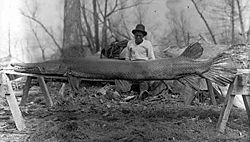
Once you've got your butt in the chair, how do you get your head in the right place? An exercise on sparking the imagination from Callie Collins' story, "Tropical Storm Bill Washes Up Alligator Gar in Corpus Christi, 2015."

Once you’ve got your butt in the chair, how do you get your head in the right place? An exercise on sparking the imagination from Callie Collins’ story, “Tropical Storm Bill Washes Up Alligator Gar in Corpus Christi, 2015.

Part of the terror and joy of writing anything creative, whether it’s fiction or nonfiction or poetry, is that you often have no idea what will happen. You sit there, and maybe magic will happen—or maybe you’ll just sit there, at least that’s the fear, and being a writer probably means accepting that sometimes you’ll write uninspired dreck that you’ll toss out.

And, yet, I recently heard a writer say that when you look back on your drafts, it’s impossible to tell when the words were flowing and when they weren’t. I suspect that what many writers learn is how to create the opportunity for magic. If you create the conditions for a spark, sooner or later something will happen. A good example of creating the conditions for the imaginative spark can be found in Callie Collins’ story, “Tropical Storm Bill Washes Up Alligator Gar in Corpus Christi, 2015.” It was published in Conflict of Interest, where you can read it now.

How the Story Works

At some point, every writer (and every kid in a writing camp or class) will play the game, “Exquisite Corpse.” It was invented by the Surrealists, who wanted to bypass the learned logic that their minds had picked up through living in the rules and strictures of civilization. They wanted to access the wild root of the imagination. To do this, (as you know if you’ve played the game) they’d write down random phrases and words, toss them in a hat and then pull them out. You couldn’t control what you’d pick, and so you might pull out two slips that add up to “Exquisite Corpse.” The logical brain might never invent that phrase, and yet there it is, meaningless and full of potential. As soon as you read it, you begin to make sense of it. Turns out, the phrase is beautiful and magical. You could, if you wanted, write an entire poem or passage based on it.

The trick, then, is to create the conditions for a kind of surrealist game on the page as you write. If you can somehow get a phrase like “exquisite corpse” on the page, your imagination will do the rest. But how? Collins’ story offers a guide if you pay attention to the imagery.

It begins with the phrase “we’ve lost all our bearings,” which is sort of the point: to get yourself lost and then reorient yourself within strange horizons. Collins immediately does this, giving us fishing—but inside a building. Then she pairs boys and caterpillars. In the next paragraph, she adds gar—and, as with the fishing at the story’s beginning, the usual setting has been scrambled, a fence instead of the water. These are unexpected images, and yet you can see Collins’ brain beginning to make (to invent) sense out of them. The character imagines the fish saying “Here we are…where are you?” which echoes the line from the beginning: “we’ve lost all our bearings.” In the last paragraph, we’re suddenly in a bar, next to a woman practicing vowel sounds—and, again, there’s that sense-making happening. Her mouth resembles a fish’s: O, O, O.

In literature classes, the focus is on reading and interpreting such connections as these. But, for writers, the emphasis is on making those connections in the first place. Collins creates those opportunities—the conditions for the imaginative spark—by pairing unlike images and throwing familiar images into unfamiliar terrain. Her creative juices may not have been flowing when she first sat down, but when you’ve got gar in fences next to caterpillars and women practicing English in bars, an imagination can’t help but get intrigued.

The Writing Exercise 

Let’s create the conditions for an imaginative spark, using “Tropical Storm Bill Washes Up Alligator Gar in Corpus Christi, 2015” by Callie Collins as a model:

  1. Start with an image. Just pick one out of your head, something you’ve been thinking about, that you keep returning to. It doesn’t need to be “beautiful,” whatever that means. Collins starts with kids practicing casting. It’s simple and straightforward.
  2. Put it in unfamiliar territory. This is like the improv game where actors play out a scene in front of a green screen. They’re having tea or celebrating a birthday while dinosaurs or whatever rampage behind them. Again, don’t think too hard. Take your image and place it somewhere unexpected—but somewhere that your character would go. It doesn’t need to be the Jurassic period. Think about the usual places: work, school, kitchen, living room, bathroom, bedroom, street, church, post office, store, bar, restaurant. You probably have a natural inclination about where to place your image. Don’t follow it. Instead, try a place that seems not to fit.
  3. Create a scene or passage around it. You’ve got the image and place; now write. What gets said, thought, felt? Again, be practical. Collins puts casting in a building and then sticks to the logistics: how to cast, a manager on an intercom.
  4. Jump to another, different image. Collins jumps to the caterpillar—and then to the gar, and then to the bar. Each one is unexpected, but each also fits within the frame of the story. There’s been a flood, and so gar could get washed out of their natural habitat. A cocoon is a great image for transformation. Try this: Use Collins phrase “we’ve lost all our bearings.” Figure out why that’s the case for this character in this moment. While disoriented, what does the character notice? Run with that image.
  5. Continue the scene or passage. Keep the scene going. The character sees the gar after work and walks over to look at them. The narrator sees the woman practicing her vowel sounds and watches. Again, what gets said, thought, felt?
  6. Make sense. You’ve juxtaposed two or more images. Rather than trying to make sense of them as the writer, let your characters make the sense, as Collins does. Uncle Billy sees the gar and imagines what they’re saying. The narrator sees the woman practicing her vowels and connects woman’s mouth to the fish mouths. Letting the characters do the work takes the pressure off of you. You can always say, “I didn’t come up with that stupid idea; it was my character.” Of course, what you come up with could very well be the key to the entire piece of writing.

The goal is to create the conditions for your imagination to fire up by juxtaposing compelling images.

Good luck.

How to Use Plot Spoilers in a Story

7 Jun
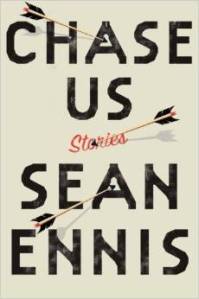
Sean Ennis' debut story collection, Chase Us, follows the lives of boys living on the outskirts of Philadelphia.

Sean Ennis’ debut story collection, Chase Us, follows two boys through skateboarding, drugs, crime, and stolen school busses on the outskirts of Philadelphia.

Every writer will likely at some point begin a story by giving away a major plot point. Paul Murray even did this with his novel’s title: Skippy Dies. The reader wants to know what happened—how did Skippy die? It’s not so different from film titles like Snakes on a Plane or The Empire Strikes Back. Both reveal the general direction of the story and make viewers want to know the specifics. This strategy might sound easy, but it can also be a surprisingly difficult to pull off. You can give away too much, or you can reveal an ending that the reader isn’t interested in. So, how do you make it work?

Sean Ennis does an excellent job of using a plot spoiler in his story, “Saint Roger of Fox Chase.” It was included in his collection Chase Us, which is a finalist for the 2016 Saroyan Prize. You can read it now at The Good Men Project.

How the Story Works

The first seven words of the story give away the ending: “The night Roger was beaten to death.” That’s the plot spoiler. A lesser story might depend on that spoiler alone to generate suspense. After all, it’s a powerful statement: Roger wasn’t killed but beaten to death. It’s natural for the reader to want to know what happened. Who was Roger? How did he arrive at such an awful ending?

But those seven words are just the beginning of passage that build suspense in a variety of ways. Here are the first two paragraphs in their entirety:

The night Roger was beaten to death, I was out there running, too. For weeks, he had been trying to convince Clip and me to hang out at the Fox Chase playground on Friday nights. The older kids were buying beer and selling cups for a buck. The girls that came were getting wild, dancing to the music blasting out of car stereos, and flashing their chests.

I was skeptical. The guys that hung around the playground at night were not my friends; they got in fights, smoked. I knew some of them from soccer, and we had a tenuous truce because I could play, but I didn’t want to tempt things and didn’t care much about drinking beer. Seventh grade is a tenuous time.

The initial pulse of suspense comes from “beaten to death,” but that suspense is heightened by the incongruity and mystery of what comes next: “I was out there running, too.” What does this mean? Running away? But what about that word too? He was running with Roger? The sentence makes perfect grammatical sense but leaves a great deal unclear in terms of the scene and what was happening. So, now the reader not only wants to know how and why Roger died but also what was going on in the background. Then, the next sentence introduces the word playground, which we don’t normally associate with beaten to death or beer and wild nudity. Again, it’s important to note that there is nothing literally  confusing about the paragraph. The sentences are not purposefully obscuring the facts. The confusion or mystery comes from not seeing only a glimpse of the entire picture. The narrator cannot explain everything in a few words, in part because it is first-person and therefore imperfect in the ways that all people are imperfect, rather than third-person and capable of omniscience.

The second paragraph continues the incongruity of playground/beaten to death by stringing together kids who “got in fights, smoked” with soccer and the idea that “Seventh grade is a tenuous time.” These are just kids, we realize. They’re playing at being adults but still stuck with the trappings of childhood—playgrounds and soccer.

So, even though the first sentence contains an enormous plot spoiler, the rest of the opening two paragraphs introduce a complexity and confusion that the reader wants to unravel and understand. If you read the entire story (which you most definitely should), you’ll likely find that the plot point of Roger’s death is less important than everything that was going on around it. In other words, the spoiler isn’t really a spoiler at all but a way of directing the reader’s attention toward what is truly important.

The Writing Exercise

Let’s introduce a plot spoiler into the beginning of a story using “Saint Roger of Fox Chase” by Sean Ennis as a model:

  1. Identify the most important thing that happens in your story. There are, of course, likely several important points, and the biggest of them might be internal—but internal plot points don’t really work as spoilers. Part of the problem is that even the deepest moments of realization for a character can sound, when distilled to a sentence, like the sentiments of a Hallmark card (“The Things They Carried”: Don’t let grief get you down.). To make a spoiler work, you need plot, which almost always means action and often means the external consequence of some internal turning point. So, identify the biggest plot point in the story.
  2. Write a sentence that states the spoiler plainly. You can’t get much plainer than “The night Roger was beaten to death.” But notice what else that sentence does: it suggest that other things are happening. It’s even a good idea to use Ennis’ first sentence as a template: On the _____ that ____ happened… You want to hint to the reader that though you’re revealing some parts of the story, there are others yet to be found out.
  3. Surround the plot spoiler with incongruities. Some spoilers aren’t really spoiler (A man went to war and died. A couple met in Vegas and got married and a year later they were divorced.) No one is going to wonder how those things happened because of course they happened. You want to provide details that make the spoiler not quite make sense. Ennis pairs “beaten to death” with a playground and wild parties and, eventually, seventh grade. These are things that don’t usually appear alongside a brutal murder. So, fill your first paragraph with details that one wouldn’t normally expect to find alongside the plot point that you’ve revealed. Keep in mind, though, that you’re not searching for opposites. Don’t be blatantly thematic (He died in a maternity ward). Be weird. Be unexpected. Here’s a sentence from the first paragraph of Stuart Dybek’s famous story “We Didn’t”: “We didn’t in your room on the canopy bed you slept in, the bed you’d slept in as a child, or in the backseat of my father’s rusted Rambler, which smelled of the smoked chubs and kielbasa he delivered on weekends from my uncle Vincent’s meat market.” Nobody expects to find smoked chubs in a sentence about sex. Allow your imagination to roam. What detail would make the reader sit up and say, “Huh?”
  4. Run with those details. Once you’ve got the plot spoiler in the story (and if it’s a good one), then there’s no doubt that you’ll return to it eventually. It’s also almost inevitable that it will press its face against the pane of your story over and over again. You won’t be able to get rid of it. So don’t feel the need to remind your readers that it’s there. Instead, elaborate on the incongruous details you’ve discovered. Ennis puts a playground and soccer in a paragraph with murder, and it’s the playground and the soccer that the story focuses on for a very long time—except that they’re not just soccer and a playground. They’re soccer and a playground that are accessories to murder. As a result, we pay attention. We want to know how the incongruous details will be brought together.

Good luck and have fun!

How to Develop Characters Using Degrees of Intensity

1 Jun
John Jodzio is the author of the new collection Knockout, which includes the story "Lily and Annabelle."

John Jodzio is the author of the new collection Knockout, which includes the story “Lily and Annabelle.”

Most of us have had the experience of liking something (ice cream, for instance) and then experiencing something new (say, gelato) and thinking, “Whoa! I like this so much more.” The opposite can also happen: you hate something and then discover something that you detest even more. These degrees of liking or disliking reveal a lot about our tastes and personalities, and they’re a great way to develop characters.

John Jodzio uses such degrees of intensity masterfully in his story “Lily and Annabelle.” It was first published in Austin Review and is included in his new collection Knockout.

How the Story Works

The story is about two girls, Lily and Annabelle, whose parents have recently separated, an event which leads to this paragraph:

Their dad has been homeschooling the two of them, so the next morning, their mom drives them back to Longwater Community School. Their mom hates Longwater. She hates all the teachers there. She hates the curriculum. She especially hates the principal. Last year she drove over to the principal’s house in the middle of the night and dumped a bucket of red paint onto the hood of the principal’s car. Their mom believes that there’s asbestos in the classroom ceiling tiles even though the principal showed her the paperwork that said all the asbestos in the building was disposed of ten years ago. Their mom’s hatred of Longwater doesn’t matter anymore, it’s been dumped by her anger at their dad. She’s bringing the girls back to Longwater for revenge. She’s re-enrolling them there because their father hates the school even more than she does.

The paragraph is straightforward in its structure:

  • Statement of action, based on a decision made by a character
  • Statement of feeling, in this case hatred
  • Description of the intensity of that feeling
  • Revelation of a feeling that is stronger than the first one—that, in the words of the story, trumps the first feeling.
  • Explanation of how this new feeling explains the action from the beginning of the paragraph.

This is a really useful strategy because it reveals something the mother feels strongly about but also something that can make her act in a way that is contrary to that strong feeling. It’s a version of that old game, “How much  money would it take for you to ____?” The answer can reveal a lot and, of course, create tension.

The Writing Exercise

Let’s develop character using varying intensities of feeling, with “Lily and Annabelle” by John Jodzio as a model:

  1. Find something that your character feels strongly about. It doesn’t really matter what it is. You’re aiming for surprise—if not at the subject, then at the intensity of the character’s feeling about it. Try answering the question, “You know what I really love/can’t stand?”
  2. Describe how strong that feeling is. This is the fun part, in stories as in life. We often enjoy hearing people describe something they adore or loathe, the way they gush or rant. Let your character go on too long about the thing they that drives them crazy.
  3. Find something that trumps that evokes an even more intense emotion—that trumps the first feeling. It can be related or not. The relationship between the two things can be temporary or permanent. Try answering this question, “But you know what I really really love/can’t stand?” Or finishing this sentence: “I thought that was great/bad, but then I found out about ____.”
  4. Let the character act on this discovery. As with all stories, action is the key to narrative. Once your character learns of something he/she hates or loves even more, then what? You can try going in a couple of directions. In one, the character acts contrary to her own preference (as the mother does). In another, the character gives up something he loves or embraces something he hates. In both, the characters are acting in a way that will probably surprise the people around them. That surprise can create drama.

The goal is to reveal nuances of character and kickstart narrative by finding out what characters love or hate to a degree that surprises even themselves.

Good luck.

How to Hook a Reader with Cool Stuff

25 May
The Yoga of Max's Discontent is the latest novel by Karan Bajaj.

The Yoga of Max’s Discontentthe latest novel by Karan Bajaj, tells the story of a “quest for answers that bother all of us at some level.”

I recently read a picture book version of The Odyssey to my 4 and 6-year-old sons. We read, of course, about the Cyclops and how Odysseus’ men clung to the bottom of sheep as they trotted out of the blinded monster’s cave. And how Odysseus traveled to the land of the dead, sacrificed two sheep, and let their blood pool because the dead love to drink blood, and how he saw, among the blood-drinkers, the shade of his mother. And how, when Odysseus finally returned to his homeland, only his old, sick dog recognized him—and then the promptly died. My kids were rapt. I could hardly read certain parts without getting choked up.

It’s tempting to forget amid the five-paragraph essays and multiple choice tests that we attach to literature that the reason certain stories stick around for years or millennia is because they’re freaking awesome. But their appeal isn’t based on “literary merit,” whatever that means. Odysseus watched a bunch of shades lap up ram’s blood so that he could get instructions from a dead, blind prophet—and his mother showed up, which meant she’d died in his absence. That’s great storytelling because of the emotion and because it involves dead people drinking blood. Without the latter part—and all the other crazy stuff in The Odyssey—Homer’s work likely doesn’t survive.

Great stories do cool stuff (to use the technical term). A perfect example of the power of cool stuff can be found in Karan Bajaj’s novel The Yoga of Max’s Discontent. You can read an excerpt at Riverhead’s website.

How the Novel Works

The novel is about an American named Max who becomes disillusioned with his Wall Street lifestyle and travels to India to study yoga and meditation and discover other ways of viewing the world and himself. In short, it’s a story that, if you’re interested in spiritual enlightenment, you’ve probably seen before. So, the challenge facing Bajaj is to hook a reader who knows what’s coming. He begins to set the hook when Max buys falafel from a street vendor, who throws in some cool stuff about certain yogis:

“I don’t know, these yogis were superhuman, like God more than men, sir,” he said. “All Indian soldiers selected to go up to the high camps of Siachen had grown up their entire life in the mountains. On top of that, we were put through a year of survival training and a team of psychologists monitored us when we came back. And yet none of us had even a fraction of the yogis’ powers. We walked up and down the ice in our five layers of clothes all day to keep warm. But the yogis just sat in the caves, their eyes closed, meditating, and they would come out once in ten, fifteen days, wearing nothing but a loincloth. They walked barefoot in sixty or seventy inches of snow and we used heavy snowshoes with crampons imported from Russia. Yet their feet were quicker, surer than ours. Like machines their bodies were, not human at all.”

A little later we learn that bears and snow leopards guarded the yogis’ caves. Even if you’re not inclined to read about yoga and meditation, it’s hard not to be tempted by these details. It’s the same reason that, if someone says they saw a ghost—really saw one—you pay attention. You’re probably about to hear something cool and weird. At its heart, that is what stories are often about: the cool and the weird. Richard Ford likes to say that fiction makes the impossible possible, and while he applies that maxim to realism, it’s a natural fit for the sort of stories people have been telling as long as stories have been around.

When in doubt, throw in something that makes the reader go, “What?” At best, you’ll write The Odyssey. At the very least, you’ll keep the reader turning pages.

The Writing Exercise

Let’s add cool stuff to a story, using The Yoga of Max’s Discontent by Karan Bajaj as a model:

  1. Decide what sort of story you’re telling. Homer was telling (literally) a story about gods and men. Bajaj is telling a story about spiritual practice. Both imply a beyond-human element. As a result, it’s not shocking when superhuman and supernatural details crop up. But not all stories are this type. Some are romances. Others are mystery or crime stories. Others are sci-fi/fantasy. Others are dirty realism. All of them are about people doing things. The question is, what sort of things might be expected in this particular world? How do you answer that question for your story?
  2. Find your character’s discontent. It might be the threat of physical disconnect (the alien is going to eat me). Or it might be romantic, philosophical, cultural, economic, familial, or professional. This discontent is often the source of whatever cool stuff you’ll pull out of your sleeve. Rocky Balboa is discontent with his archenemy pounding his face, and so he gets up off the mat and takes it to Ivan Drago (leading to the great line from Drago, similar to Bajaj’s line about machines, “He is not human, he is a piece of iron”). Cool stuff is the stock-in-trade of sports movies: a character gets beaten down (becomes discontent) and then does something awesome. In bro movies (whether it’s Animal House or Fight Club), you know that as soon as things get tough for a character, something crazy is about to happen. What is the nature of your character’s discontent?
  3. What sort of cool would your character perform or seek out? Sports movies are about individual performance. Romances are about passion—and so the passion better be hot. When I saw Titanic in the theater, in a moment when we’re teased with but not given a glimpse of Rose’s nude body, a guy shouted out, “Oh, c’mon!” Shortly after, the handprint-in-steam scene arrived. Regular old literary realism does the same thing. Richard Ford’s collection, Rock Springs, contains stripteases, gunshots, and stolen train tickets. One approach is to ask, “What is the craziest, slightly unbelievable thing that could happen to the character right now?” Ask that question of third graders, and they’ll invariably answer, “Ninjas!” But you’re aiming for slightly unbelievable within the context of the story. We know that Bajaj’s novel contains a quest for spiritual enlightenment in India, and so it’s believable that the cool stuff will revolve around yoga and meditation and slightly unbelievable that it might involve superhuman elements of those practices.

The goal is to get your readers to say, “Oh, c’mon,” after teasing them with the potential for something cool and “Whoa,” when you actually deliver the cool thing.

Good luck.

Develop Character with Plot

17 May
Alexander Chee's novel THE QUEEN OF THE NIGHT is a national bestseller a review in Vogue called "brilliantly extravagant in its twists and turns and its wide-ranging cast of characters."

Alexander Chee’s novel The Queen of the Night is a national bestseller and, according to Vogue, “brilliantly extravagant in its twists and turns and its wide-ranging cast of characters.”

For some literary writers, plot is a four-letter word. You’ll be at a party with writers or in class, and someone will say, “I’m just not interested in plot.” Or “I just want to write about a feeling.” These are valid statements and probably indicate one difference between literary and genre writers. Someone who writes classic mystery stories, for example is most likely very interested in plot and its mechanics. But mystery plots are not the only kind of plots, nor are thriller plots or YA dystopian plots. It’s possible to view plot as any device that creates suspense and, as a result, structure. In fact, the feelings or characters that some literary writers want to focus on can be developed most fully by using plot.

A great example of using the mechanics of plot to create character can be found in Alexander Chee’s novel The Queen of the Night. You can read the opening pages here.

How the Novel Works

The novel follows the rise of an orphan from her humble origins on the American frontier to the heights of art and prestige as an opera singer in the court of French court of Napoleon III. As you might expect, the narrator’s life contains twists and turns that account for much of the basic plot of the novel. But Chee also uses plot in smaller, more subtle ways, as when he introduces the narrator’s life as a young girl in Minnesota and the singing talent that would carry her far from it. Here is an early passage in which the narrator sings in church with her mother:

I loved to go to church with her, but it was only to sing the hymns. This little church was my first theater. When the time came to sing, I was the very picture of an eager Christian, standing first out of the whole congregation, hymnal open, waiting impatiently for the pastor’s wife to pick out the refrain on the church’s piano. But when the singing was over, I’d sit numb for the rest of the service until my mother pulled my sleeve to show we were leaving. As we left, the congregation would come to say to her what a voice I had and wasn’t she so proud of me. And I would glow beside her, beaming at her, waiting for her to be proud of me. She would sometimes reach out and tuck my hair behind my ears if it had come loose.

This is a terrific description of character. We learn not only about the narrator’s gifted voice but also how it fits into the place where she lives. We learn how proud she is of her voice and how much she wants to be praised for it. Here’s the next line:

I loved my mother but I did not love God.

This line is crucial because it turns the character description into story. It creates an untenable situation—at least from the mother’s point of view. Not loving God isn’t an option, and so the mother acts: tying a piece of ribbon and velvet over the narrator’s mouth and forbidding her to sing in church.

“You’ll wear this today and think of how, when you know what you should know as a proper Christian, you can sing in church again.”

A few paragraphs later, the mother says, “There’s no gift like yours without a test.”

That is plot. We want to know what the narrator will do. A raw, prized part of her being has been taken from her; how will she respond? The answer propels the novel forward but also reveals greater depths within the narrator. It’s one thing to say, “She’s the kind of person who ____,” and it’s another to say, “She’s the kind of person who ___, and if you get in her way, she’ll ____.” The first cannot sustain a narrative on its own, and without narrative (however you think of it), there’s no short story or novel. In this case, the narrative is the opening of a novel, and so the narrator’s response suggests how she will respond to future obstacles. When allowed to sing again, she chooses subterfuge:

I made a deliberately thin, weak noise that blended quietly, like the noise of another girl.

The scene has not only developed her character but also a pattern of behavior that will shape the events of the novel. Character has introduced plot, plot has deepened character, and that character development will shape the plot going forward. One is necessary to create the other.


The Writing Exercise

Let’s deepen our understanding of a character using plot, with The Queen of the Night by Alexander Chee as a model:

  1. Describe the character through a valued trait. It’s almost always the case that characters are built on only a handful of details—or even a single detail. In this case, it’s the narrator’s singing voice. So, give your character a noticeable trait or talent or vice. It doesn’t matter what it is; what’s important is that the character cares about it. The character should have strong feelings about that trait, talent, or vice. If Wendy, Michael, John, and Peter had said, “We can fly. Meh,” there would be no Peter Pan play or film. Even the most amazing trait falls flat if the characters don’t care. What personal, intrinsic or new thing does your character feel deeply about?
  2. Put the trait in conflict with some other value. Chee does this with rules. In frontier Minnesota, in this particular family, you love God. All actions should serve God. That’s the rule, and, of course, the narrator has broken it. Notice how Chee has introduced the rule through place and other characters. This is why it’s so difficult to write a story with only one character. How can you use the rules of a place, society, or group to create conflict with the trait you’ve just described? A good place to start is to simply list rules and listen for your character’s reaction. When the character gets uncomfortable, you’ve hit on something good.
  3. Challenge the character’s attachment to the trait. As the singer’s mother says, “There’s no gift…without a test.” You’re gauging how much your character values the trait. Unlike most tests, though, this one doesn’t carry the threat of failure, at least for the writer. If a character is easily cowed or quickly gives up on something he or she values, that’s not a bad sign for your story. Instead, it’s revealing something essential about the character that will be important as the story moves forward. What test can you give your character? How can you take away or hobble the trait?
  4. Make the stakes clear. In The Queen of the Night, the stakes are this: humble yourself before God or give up singing. Make one of your characters act like a parent: “Do as I say or else.”
  5. Explore the character’s response. Explore the range of possibilities. Your character can resist publicly or privately, use subterfuge, and give in publicly or privately. The response can be sincere or not. It’s the nature of the response that’s important. You’re testing the character’s mettle and discovering a reaction that could become a pattern of behavior when obstacle after obstacle is introduced.

The goal is to gain a better understanding of your character by introducing plot and then use that understanding to drive the plot forward.

Good luck.

Create Tension by Using Character Stand-ins

10 May
Man and Wife is the debut story collection by Katie Chase. The title story appeared in Missouri Review and Best American Short Stories 2008.

Man and Wife is the debut story collection by Katie Chase. The title story appeared in Missouri Review and Best American Short Stories 2008.

For my money, one of the most intense scenes in any film is the moment in Ridley Scott’s Alien when a character goes into an air duct with the goal of pushing the Alien toward an air lock so it can be sucked out into space. (If you’ve seen the film, you know the scene; it’s everybody’s favorite.) We barely see the Alien. Instead, we track it with a motion sensor which registers both the man in the air duct and the Alien as dots on a grid. One dot draws closer to the other. It’s terrifying—as suspenseful or more than if we saw the actual Alien racing toward the man.

A lot has been written about the scene, in particular how it resulted from Ridley’s small budget. He couldn’t afford crazy special effects. In prose, writers often work under similar restrictions. Every word costs the same, but they aren’t always equally available. So, it’s useful to keep the dots from Alien in mind. A stand-in for the real thing is often as effective or more than the thing itself.

A great example of this approach can be found in Katie Chase’s story “Man and Wife.” It’s included in her new collection, Man and Wife, and was originally published in Missouri Review and Best American Short Stories 2008. You can read it online here.

How the Story Works

The story begins with a bold sentence: “They say every girl remembers that special day when everything starts to change.” You don’t have to read very long before realizing that the change isn’t the one we expect. (If you don’t want details of the story spoiled for you, stop and read it now. You’ll be glad you did.)

We learn that the narrator, Mary Ellen, is remembering the day when she was nine years old and was told that her parents had promised her in marriage to a much, much older man, Mr. Middleton. From this point, we meet the husband-to-be and follow Mary Ellen through the elaborate process that will culminate in their wedding. At all times, we’re aware of the looming prospect of sex. It’s mostly addressed obliquely, as in the wry first line, but there are moments when it’s brought to the forefront of the story. For example, Mary Ellen’s mother hands her a book titled Your Womanly Body and says, “This will tell you some of what you need to know about being a wife. I imagine Mr. Middleton won’t expect much from you at first. After all, you’re still very young.”

Yet the prospect of sex presents a problem for Chase. If shown in detail, such a scene would push away many, if not most, readers. So, we never see any sex. But there is a scene like the one from Alien, and it conveys all of the creepiness and horror that is suggested by the premise.

Chase uses Barbie dolls. Mary Ellen loves to play with them, and one day Mr. Middleton comes over to her house unannounced and asks her to take him to the basement to show him her dolls. We’re shown the dolls in close detail:

Mr. Middleton dropped my hand and approached the Barbies’ houses slowly, as if in awe. The toys sprawled from one corner of the room to the other, threatening to take over even the laundry area; the foldout couch, which I maintained took up valuable space, sometimes served as a mountain to which the Barbies took the camper. There was one real Barbie house, pink and plastic; it had come with an elevator that would stick in the shaft, so I had converted the elevator to a bed. The other Barbie home was made of boxes and old bathroom rugs meant to designate rooms and divisions; this was the one Stacie used for her family. The objects in the houses were a mixture of real Barbie toys and other adapted items: small beads served as food, my mother’s discarded tampon applicators were the legs of a cardboard table. On a Kleenex box my Barbie slept sideways, facing Ken’s back; both were shirtless, her plastic breasts against him.

In Alien, there’s a pause when the Alien’s dot disappears and we’re left to wait breathlessly for it to appear again. The same thing happens here. Mr. Middleton chats with Mary Ellen about the materials used in the construction of the dollhouse—the threat has disappeared. And then, this happens:

Then he leaned down and stroked Barbie’s back with his index finger. “Do they always sleep this way?” he asked.

In Alien, when the Alien’s dot reappears, a character screams at the man in the vent to leave, to get out of there. But he’s not sure what to do or where to go. The same is true of what follows in this scene, except that we’re the ones who are freaked out, even as Mary Ellen stays put. We never see the thing itself, unlike in Alien, but the sight of the dolls standing in for that thing is just as unsettling.

The Writing Exercise

Let’s write a pivotal scene with character stand-ins, using “Man and Wife” by Katie Chase as a model:

  1. Know what is implied or promised by the premise. A good test for your story is to finish this sentence: “We know the characters are going to ____.” Or finish this one: “I hope that ___ doesn’t/does happen.” As a side note, if these sentences are impossible to finish, it may suggest that your story isn’t building suspense. After all, dread and hope can only exist if it’s possible to imagine what will happen next.
  2. Search for possible stand-ins. In Alien, the stand-in is an element of technology, which makes sense in a film about space ships in the future. In “Man and Wife,” the stand-ins are Barbies, which, again, makes sense for a 9-year-old character. Perhaps both were planned from the beginning, but it’s just as likely that both Ridley Scott and Katie Chase made use of the objects at hand. So, figure out what sort of objects/items/materials are important to your characters. What would they feel attached to or compelled to keep close?
  3. Incorporate the stand-ins into a scene. Both scenes start with the threat of something and then introduce the stand-ins. Mr. Middleton shows up unannounced (creepy!), and then they go into the basement to see the dolls. This order may be important. If he’d shown up while Mary Ellen was playing with her dolls, it might have felt too heavy-handed. Because he arrives first, creating the tension, the introduction of the dolls is unexpected, which further ratchets the tension because we’re not sure what’s coming. In your story, start writing a scene that feels as though it could be important. Then, introduce your stand-ins. You may not be sure which ones you’ll choose. Try several until one feels right.
  4. Focus on the stand-ins, not the rest of the scene. The scene from “Man and Wife” works so well because everything is channeled through the dolls. In Alien, we can’t see the Alien and so we’re forced to look at the dots. Force your characters to use the stand-ins. Give yourself and them constraints. If they must use the stand-ins (if we’re forced to pay attention to the stand-ins), what happens?

The goal is to create tension by showing an expected scene in an unexpected way. You may eventually reveal the thing itself, as in Alien, or you might not, as in “Man and Wife.” Either way, you’re using stand-ins to build suspense.

Good luck.