Archive | Writers on Writing RSS feed for this section

An Interview with Anabel Graff

5 Mar
Anabel Graff's story, "The Prom at the End of the World" won the Prada-Feltrinelli Prize.

Anabel Graff’s story, “The Prom at the End of the World” won the Prada-Feltrinelli Prize.

Anabel Graff received her B.A. from Vassar College and is currently pursuing an M.F.A. in Creative Writing at Texas State University. She has lived in London, Pittsburgh, Montreal, and New York City. She is the winner of the 2014 Prada Feltrinelli Prize. Her work has appeared in Amazon’s literary journal, Day One, as well as Prada Journal.

To read her story “The Prom at the End of the World” and an exercise on writing human stories in the face of cosmic disaster, click here.

In this interview, Graff discusses getting readers to forget logistics, stealing from writers (especially Ramona Ausubel and Amy Hempel), and why writers write the same story over and over.

Michael Noll

As it’s title suggests, “The Prom at the End of the World” strikes a balance between the normal (prom dates and dresses) and the apocalyptic (asteroid). Mostly the story sticks to the prom, and the asteroid stays in the background, informing the choices that the characters make. It’s the opposite of how the film The Day After Tomorrow operates. Did the story always have that balance, or did the asteroid ever take over in some drafts? In other words, did it ever threaten to turn into The Road or The Walking Dead?

Anabel Graff

It’s funny, but despite the topic, “Prom” was never really concerned the particulars of an apocalypse. I had no interest in writing that story—it’s one we’re almost too familiar with. The circumstances of “Prom” didn’t really feel like that much of a stretch to me. It’s hard not to feel like the world is on the edge of the apocalypse anyway (just turn on the news). Instead, I was fascinated by the emotional territory the apocalypse allowed me to explore: How would we act if we knew the end was near? And how would that reveal what we value? Who we were? Jenny’s answer is connection. That would be my answer, too.

That answer was satisfying to early readers of this story, and I revised “Prom” to strengthen that effect. In many ways, this was a test of narrative authority. I wanted to write a story that felt so emotionally true that people wouldn’t feel the need to ask logistical questions. It will resonate for some readers and not for others. But that’s okay—those are the limitations we must accept when we venture into writing stories that aren’t strictly realism.

Michael Noll

Even though the prom dress and date take center stage, there is a certain amount of general action going on in the background. For instance, two consecutive paragraphs begin this way: “The men bought supplies” and “The women made plans.” Each paragraph tells, generally, about those supplies and plans. This seems like a pretty succinct way to capture the larger commotion caused by the asteroid without getting sucked into the details. I’m curious if this strategy simply occurred to you while writing or if you borrowed it from another writer or story.

Anabel Graff

I wanted to write a new story for the Prada contest, but I had a hard time starting that first sentence. So I turned away from my blank computer screen and dove into the books on my shelf. I read. That’s the best advice I’ve ever received to overcome writer’s block, and I would tell anyone who would listen to do the same. I think I read about ten books the week before I returned to that blank computer screen. When I read fiction, I always pay close attention to how it is made. I look for tricks to steal (I’ve always believed that great writers are great liars and thieves)—this is how I’ve been taught to read like a writer (like you do on your site!). When I finally sat down to write “Prom,” those tricks were at my fingertips. It was quite astounding actually how quickly I wrote this story, especially after being stalled for so long.

A review in The San Francisco Chronicle said that "No One Is Here Except All of Us contains so many achingly beautiful passages, it’s as if language itself is continually striving to be a refuge."

A review in The San Francisco Chronicle said that “No One Is Here Except All of Us contains so many achingly beautiful passages, it’s as if language itself is continually striving to be a refuge.”

One book I read that week was No One is Here Except All of Us by Ramona Ausubel. It’s narrated in the third person plural, though the narrative sometimes shifts to a first person. This is done to great effect—the combination makes the narration at once authoritative (the power of the “we”) and personal (the intimacy of the “I”). After I read this book, I was inspired to try this device, and I felt the freedom to play with point of view in this way.

I also immersed myself in Amy Hempel’s short stories. In an interview with the Paris Review, Hempel talks about the notion of moving plot in terms of moment building. And that was another technique I was interested in, in terms of the construction of “Prom.” Hempel also discusses letting white space speak through the story’s transitions. Can I just quote her here? She says:

Transitions are usually not that interesting. I use space breaks instead, and a lot of them. A space break makes a clean segue whereas some segues you try to write sound convenient, contrived. The white space sets off, underscores, the writing presented, and you have to be sure it deserves to be highlighted this way. If used honestly and not as a gimmick, these spaces can signify the way the mind really works, noting moments and assembling them in such a way that a kind of logic or pattern comes forward, until the accretion of moments forms a whole experience, observation, state of being. The connective tissue of a story is often the white space, which is not empty. There’s nothing new here, but what you don’t say can be as important as what you do say.

Much is left unsaid in “Prom,” and that silence speaks volumes. The story, in a weird way, is all about what’s not being said. That thought’s in every line—what people are too scared to say is as important as what they say out loud.

Michael Noll

In his introduction to The Adventures of Huckleberry Finn, George Saunders writes that every writer has “The Thing This Writer Loves To Do, and Does Naturally” and that the “writer started writing so that he or she could endlessly and effortlessly do this thing and nothing else—be funny, say, or verbally brilliant, or write lush nature vignettes, or detailed descriptions of the interiors of rich people’s houses.” As I read your story, I noticed two things that you seem very good at: inventing wonderful details about teenage sensibility (the term promapocalypse and the last-minute decision to decorate the auditorium like outer space) and also capturing those universal moments of teenage uncertainty that we all experienced and recognize immediately. How much of your writing process is simply finding a plot that will allow you to do these things?

Anabel Graff

Wow, thanks! Well, I first have to credit Jane Hawley from my cohort with the “promapocalypse ” line. A lot of the details I labor over as I build the world of the story never seem to get noticed, and the ones that come easily are the ones that some readers hold onto (like the prom decorations, for example). Debra Monroe, my professor at Texas State, taught me about the importance of specific details in fiction, and she brilliantly explains how they constellate to create the tension of a story and reveal its meaning. So that’s something I always work towards in my writing—how I can be as particular as possible, by using a lot of specific details, to capture the universal, to create meaning.

Which brings me to the second part of your question—I believe that a writer writes the same story until she has answered the question the story poses. All of my stories are about these moments of uncertainty of adulthood—whether my characters are 8, 18, 28, or 88. I don’t ever start writing with a theme in mind—I always start writing with plot. But I am interested in these particular moments because they have both meaning and dramatic potential. Will Jenny find a date for the prom? That is the plot. What does it mean to take a risk to connect? Therein lies the theme.

Michael Noll

The story was written for a specific prompt: “What are the signs of a changing world? And what situations can we envision? Taking a good look at the details might give us the answer.” Did writing for those questions change your process at all? Did you write a story that is unlike your normal subject matter, or did you simply adapt the kind of story you usually write to the prompt?

Anabel Graff

Anabel Graff's story, "The Prom at the End of the World," won the Prada-Feltrinelli Prize and was published in Prada Journal.

Anabel Graff’s story, “The Prom at the End of the World,” won the Prada-Feltrinelli Prize and was published in Prada Journal.

I think I was the only winner who wrote a new the story for the contest. Since this prompt was inspired by Prada’s latest eyewear line, I always knew that the idea of vision (what we see and what we don’t) would be central to the story. But I was having a hard time finding a plot to lay over that as a backdrop. Sometimes, when I am looking for inspiration, I read weird news sites for ideas. I came across a story about a meteor that was supposed to hit Earth. As soon as I saw that, I knew my story would center on a teenager’s last night on Earth. From there, the prom seemed an obvious setting. It’s a night full of expectation, and these expectations were intensified by the impending apocalypse. But, honestly, this process is similar to how I begin many of my stories—I like the idea of taking two or three ideas, images, thoughts, and figuring out a narrative that weaves them all together to make the fabric of a story. This how I always feel like I’m writing towards something. And it’s how I try to bring richness and texture to my fiction, by finding images that fascinate me, that I can imbue with meaning to function as a central metaphor for each story.

Prompts are a helpful tool we have as writers. It’s a way to explore ideas that may lie outside our regular instincts, thought processes. They provide structure and limitations. For me at least, when I have those kind of limitations, I’m always trying to figure out how I can bend them. And that’s when I’m the most creative.

March 2015

Michael Noll Michael Noll is the Editor of Read to Write Stories.

An Interview with Antonio Ruiz-Camacho

26 Feb
Antonio Ruiz-Camacho's debut story collection, Barefoot Dogs, has been called "a wealth of talent."

Antonio Ruiz-Camacho’s debut story collection, Barefoot Dogs, has been called “a wealth of talent.”

Antonio Ruiz-Camacho was born in Toluca, Mexico, and has occupied every imaginable position in a newsroom, working for publications in Mexico, Europe and the U.S. He’s also taught creative writing to bilingual second graders, sold Mexican handcrafts at a flea market in Spain, and played Santa Claus at a French school in Silicon Valley. He’s been honored as a Journalism Knight Fellow at Stanford University and a Dobie Paisano Fellow by the Graduate School at UT and The Texas Institute of Letters. His work has appeared widely, including in The New York Times. His debut story collection Barefoot Dogs will be published by Scribner on March 10.

To read an excerpt from his story “Madrid” and an exercise on writing moments of high emotion, click here.

In this interview, Ruiz-Camacho discusses beginning stories with a strong lede and haunting images and introducing unexpected twists in dialogue.

Michael Noll

The opening of “Madrid” ends with an almost Dan Brown-esque cliffhanger: “There are no curtains or blinds on the windows to keep the buzz away because we don’t worry about privacy and security here. We don’t have to care about that anymore.” It not only made me want to find out what was going on, it also set up a sense of dread well before the first grisly detail of the kidnapping arrives. Did you always begin the story in this way?

Antonio Ruiz-Camacho

Yes, I wanted to open with an intense sense of the kind of traumatic experience the protagonist was going through, even though you could say it’s a rather slow opening in terms of movement or action.

I always like to start with a striking image, or at least a lede strong enough to hook the reader in–an opening so intriguing and complex that the reader feels she has no option but to keep reading. I have worked as a journalist for more than 18 years. In journalism, if you don’t grab your reader’s attention from the very beginning you’re doomed. I think that my journalistic background has helped me to develop the skills needed to write effective openings. The trick is to reveal enough about the story to lure the reader in without giving away too much of it, just a sense of what’s at stake, the kind the journey you’re proposing. That can be achieved through small but deliberately concrete details–the lack of curtains, the vague mention of the lack of need of security.

Michael Noll

The linked stories in Barefoot Dogs follow the members of a wealthy Mexican family after their patriarch, José Victoriano Arteaga, is kidnapped.

The linked stories in Barefoot Dogs follow the members of a wealthy Mexican family after their patriarch, José Victoriano Arteaga, is kidnapped.

The father’s kidnapping is juxtaposed with the birth of the narrator’s son, and this juxtaposition makes a lot of sense (death and life), but then you introduce the dog and its wounded paw, which fits in terms of the sense of being wounded. But, it also complicates the imagery, making it difficult to think in the fairly simple terms of birth and death. I’m curious if the dog was always in the story–or if the baby was always in it. I imagine it could be tempting to start out with a simpler story and then gradually make it more complex.

Antonio Ruiz-Camacho

I think both of them were in the story since the very beginning. I don’t plan ahead the topics in my stories or even the personalities or circumstances of the characters that populate them. Usually it all starts with a character showing up in my mind in the form of a haunting image. In the case of “Madrid,” it was the image of the first box that appears in the story. The moment I saw it I knew exactly what it contained, but that was it. Writing the story then became an investigation around that image, trying to find out who was the recipient of that box, what had happened to him. As I kept working on the story I realized that he was the son of a man who had disappeared, that he’d just had his first son, and that his dog was sick. It all came together at once. I would like to say that I get to make decisions about the characters in my stories, but that’s not the case. They show up as they are, and keep haunting me until I put their story on paper. The most I can do is to highlight one aspect of their personality over others less relevant to the story in order to build a compelling narrative. What you leave out in a story is many times more important than what you keep in.

Michael Noll

The story ends with a kind of ghostly appearance and involves some pretty weighty dialogue. This scene could have been unbearably sentimental, a kind of literary Touched by an Angel, but it’s not that at all. What was your approach to this scene, especially the dialogue? Did you struggle to keep it from being overwhelmed by the significance of the moment, the way last lines between characters (and real people) are often overwhelmed with the realization that the end has come?

Antonio Ruiz-Camacho

That section of the story was actually one of the easiest to write. These two characters had a very clear idea of what they wanted to communicate through that exchange since the beginning. What I personally like about it is that both characters remain honest and true to their feelings throughout, regardless of the significance of the moment. They stay fragile and funny and cynical and confused, and neither one of them tries to “make sense” of this encounter, or to purposely deliver any message to the reader–their transformation as characters, if you will, emerges from their acceptance of the moment as it comes. My work there was to make sure that I didn’t interfere with the relationship between them or try to force the ending of the story or the direction of this final exchange to a perfect closure.

My personal opinion is that dialogue works best when we let characters express what they really want, and then work with that material, trying to incorporate it organically into the story, instead of forcing them to say what we think would be “better” to advance the story. Also, if I may add, having unexpected twists in dialogue exchanges is always useful to enhance their impact. This is a pretty dramatic, emotionally charged, scene, and yet there are some really funny or just downright absurd lines in it. I think that’s what, hopefully, makes it work.

Michael Noll

Antonio Ruiz-Camacho's essay, "Keepsakes from Across the Border," was published as one of The New York Times "Private Lives" essays.

Antonio Ruiz-Camacho’s essay, “Keepsakes from Across the Border,” was published as one of The New York Times’ “Private Lives” essays.

You recently published an essay in The New York Times about taking your kids to Mexico for the first time. You grew up there, and so you saw in their experience of the country the same wonder and bafflement that you saw on your early trips to the United States. It’s a sweet essay about universal experience. And yet, many of the readers’ comments were blistering, accusing the piece of bigotry against Mexicans, of all things, and also of simplistic assumptions about Americans—which other commenters complicated by spouting racist garbage. The reaction to the essay seemed to sum up a kind of “Damned if you do, damned if you don’t” problem for Mexican, Mexican-American, and Hispanic writers in the United States. As a writer, do you just have to ignore all of that? Is that even possible? How do you approach your work in what seems like such a charged, toxic environment?

Antonio Ruiz-Camacho

First I’d like to say that I don’t perceive the environment in which I write as especially charged or toxic, just the opposite. The encouragement, support, and opportunities my work and I have received over the last few years have been just incredible. Also, maybe because of my journalistic background, or maybe because I’m morbidly curious, I’m one of those rare writers who look forward to reading all kinds of comments from readers–they’re like little pieces of characterization in and of themselves. Commenters reveal so much about themselves in those posts, especially in both the most scathing and the most heartfelt ones, and I find that fascinating.

All of that said, one of the things that you must assume as a writer since the very beginning, regardless of your background, is that your work is public and everyone is free to have and express an opinion about it. Some people will relate to, or even like, your work, and many others won’t. It’s impossible to write something that pleases everybody. That’s why I think the writer should only write for herself. Once a story or an essay is finished, I, of course, hope many people will connect with it, and I love when a reader reaches out to say he or she liked what I wrote, but none of that matters when I’m writing.

At the same time, a negative opinion is, after all, a reaction to your work, emotional, intellectual or otherwise, which is pretty great. The worst thing that can happen to a writer is that readers welcome her work with indifference. As writers, I think we should aim at eliciting intense, memorable reactions on our readers, regardless of whether they are positive or negative. The nature of those reactions is, to a great extent, beyond my control and, therefore, none of my business.

February 2015

Michael Noll Michael Noll is the Editor of Read to Write Stories.

An Interview with Jane Hawley

19 Feb
Jane Hawley's story, "The Suitcases of San Leon," tells the story of Mexican bus depot workers who must decide what to do with the suitcases of murdered passengers.

Jane Hawley’s story, “The Suitcases of San Leon,” tells the story of Mexican bus depot workers who must decide what to do with the suitcases of murdered passengers.

Jane Hawley grew up in California, received her BA from the University of Wyoming, and is currently pursuing an MFA in creative writing at Texas State University, where she serves as the managing editor of Front Porch Journal. Her nonfiction has been published in the Pinch and Memoir Journal.

To read an excerpt from her story “The Suitcases of San León” and an exercise on writing from news headlines, click here.

In this interview, Hawley discusses the challenges presented by the “we” point of view, her approach to violence and memory in fiction, and the connection between geography and emotion.

Michael Noll

I’m curious about the story’s setting. Ostensibly it’s set in Mexico, in a small town at the end of a bus route, but the setting also feels a bit like a fable—as if Gabriel Garcia Marquez decided to rewrite “The Handsomest Drowned Man in the World” and set it in Mexico during the narco violence. The setting has an everywhere quality to it that doesn’t feel specific to any particular place. Was this intentional? How did you approach setting in the story?

Jane Hawley

I began the story with the intention of using first person plural point of view, which I think really lends itself to giving the setting an everywhere quality since the point of view is so artificial and communal. It was also important to me to set the story in a particular time and social-historical circumstance, but I wanted the focus to be more on how people are affected by violence, oppression, displacement, and abandonment. The drug war is a political reality, but I think the effects of the situation translate to a variety of historical and contemporary moments. I wanted to honor the very real troubles the Mexican people are facing regarding the drug war, but I also wanted to create my own story-world. I wanted readers to emotionally connect to the town—perhaps even more so than the characters. It’s the town that arguably experiences more change than anything or anyone else.

It only recently occurred to me that though the setting and point of view have a fablesque quality to them, but all of the story’s events are firmly based in reality. San León is modeled after San Fernando, a city about 85 miles away from Brownsville Texas where two of the largest recorded massacres of the Mexican Drug War took place. I initially came up with the concept of the story when I read an article about abandoned suitcases showing up in bus depots across the region that were eventually discovered to belong to the victims of the massacres.

Michael Noll

Speaking of the point of view, first person plural—we and us—is not easy to pull off, and I noticed that in the middle of the story, it shifts a bit to focus on the actions of a few particular individuals (Damacio, Juan Manuel, Alejandra). That shift seems inevitable, in a way, as it would seem difficult to create particular actions in a plot when the actors are we. Were these characters in the story from the earliest drafts? Or did you need to create them in order to move the plot forward?

Jane Hawley

Jane Hawley's story, "The Suitcases of San León," was published in Amazon's literary journal, Day One.

Jane Hawley’s story, “The Suitcases of San León,” was published in Amazon’s literary journal, Day One.

This is by far the most technically challenging story I’ve written because of the first person plural point of view, which I’ve always admired. It often seems to carry a tone of nostalgia, a fable-like quality and allows a writer to tell the story of a community. This is where the craft gets difficult. No one character feels the same as another. The characters are individuals, yet they’re also part of a group. This is an effect I wanted to capture with the point of view shifts. After following a particular character, the narrative always returns to the first person plural voice.

Two major inspirations for writing the story were The Virgin Suicides and The Buddha In The Attic. In the first novel, you almost forget you’re reading first person plural as you follow the Lisbon girls (or at least those lives as perceived by the neighborhood boys). The first person plural voice in The Buddha In The Attic is much stronger and more removed from the individual lives—readers never get to know characters individually. I decided to use a combination of these techniques because I wanted to be able to show the variety of the bus depot workers’ personal reactions to their situation while also retaining their membership in a collective experience of the historical moment.

Michael Noll

When I began the story, I thought that the suitcases provide a way to show the effects of Mexico’s narco violence without getting into the gory details of their murders. The story is about the rippling effects of the violence, but it also definitely describes how the violence is perpetrated. What was your thought process for showing that violence? In some ways, it’s so awful that it can seem unreal. Did you ever worry that details of the violence would overwhelm the more quotidian parts of the story?

Jane Hawley

Violence can be so difficult to approach in fiction because of how strongly visceral the details can and should be, and I think for many stories the less is more approach is probably the most effective, especially for authors who have not experienced violence firsthand. I see violent images all the time—both real and fictional—in movies and on the news, but I’ve never seen firsthand the kinds of things that my characters have ostensibly experienced in this particular story. I’ve never had a gun held to my chest. I’ve never seen a dismembered hand. I wanted to get those experiences right, though, so I tried to just depict them on the page as simply and honestly as I could. I had to trust that the details themselves would do the heavy lifting. However, I came to learn through the writing of this story is that the memory of violence, the constant returning to those moments and images, adds to the psychic terror of the initial violent experience. Memory is a curse. It weighs you down. It changes your identity, your perception of the world. I wanted readers not to be overwhelmed by the violence itself, but more by the “long-term” psychological and emotional trauma. That’s one of the reasons the end of the story occurs in a near-distant future when the characters are approaching the ends of their lives.

Michael Noll

This is your first published short story. How does it fit with the rest of your work?  Do you often write about Mexico? Does your work as a whole have a fable-like tone?

Jane Hawley

My stories range from strict realism to fabulist or fairytale, but I try to always maintain a sense of wonder or imaginative, supernatural, or magical experience. My approach to place is probably the strongest element that ties my short fiction together. Only a few take place in Mexico although many of them are set in the West and Southwest. I’m from California and I’ve traveled a lot through the western states and Baja California so those places are very close to me—I feel like I understand them on a quasi-emotional level. I’ve been studying Guy Debord’s concept of psychogeography (briefly, “the study of the precise laws and specific effects of the geographical environment, whether consciously organized or not, on the emotions and behavior of individuals”) and considering how that concept can frame and arrange stories in interesting ways.

February 2015

Michael Noll Michael Noll is the Editor of Read to Write Stories.

An Interview with Jacob M. Appel

12 Feb
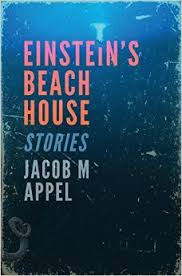
Jacob Appel's latest story collection, Einstein's Beach House, features characters who aren't always who they seem or claim to be.

Jacob M. Appel’s latest story collection, Einstein’s Beach House, features characters who aren’t always who they seem or claim to be.

Jacob M. Appel is a physician, attorney and bioethicist based in New York City. He is the author of more than two hundred published short stories, many of which have been anthologized, and has won numerous prizes. His nonfiction has appeared in many newspapers, including The New York Times, Chicago Tribune, and San Francisco Chronicle. He holds graduate degrees from Brown University, Columbia University’s College of Physicians and Surgeons, Harvard Law School, New York University’s MFA program in fiction and Albany Medical College’s Alden March Institute of Bioethics. He taught for many years at Brown University and currently teaches at the Gotham Writers’ Workshop and the Mount Sinai School of Medicine.

To read an excerpt from his story “Einstein’s Beach House” and an exercise on writing backstory, click here.

In this interview, Appel discusses living stories in his mind, the inherent subjectivity of narrative, and jumping forward in time at a story’s end.

Michael Noll

This story’s plot has a strong pulse. If you read the end of each section, you can see how each ends with a complication: the father deciding to sell fake tours, the arrival of Einstein’s aunt, the threat of losing the house. How did you create such a tension-building structure? Is it something you do naturally or through a particular kind of revision? 

Jacob M. Appel

I think much of this comes out of the writing process itself. I like to end my day’s writing at the conclusion of a scene; in fact, most of my stories are written roughly on a scene-a-day basis….so if you count the number of scenes in a story, you can often surmise how long I took to write a first draft of that particular piece. (I prefer to “live” the story in my mind as I write—sort of like method acting, only without leaving my chair.) I also prefer to stop writing at a point of particular tension, so I have a crisis to resolve when I return to the story at the next session.  Fortuitously, these two preferences combine to create a synchronicity between the scene breaks and the most dramatic moments in the story. At least, the two elements come together like this when things are going well—when they go badly, my writing reads more like a daytime soap opera.

Michael Noll

The story raises the possibility that the house really was Einstein’s beach house, something that becomes the basis of legal claims, and yet the story doesn’t ever really settle the issue—or perhaps it does. When I returned to the story’s opening to figure out who was right, I realized that you established definite possession of the house in the first paragraph without—and I looked at this paragraph several times—any kind of definite proof, just the narrator’s say-so. It’s such a delicate trick to pull off, and I’m curious how difficult it was to arrive at.

Jacob M. Appel

Einstein's Beach House by Jacob Appel has been called  "a collection that takes a sharp look at the moments when we, whether child or adult, see who we truly are and the inevitability of who we will become."

Einstein’s Beach House by Jacob Appel has been called “a collection that takes a sharp look at the moments when we, whether child or adult, see who we truly are and the inevitability of who we will become.”

All narrative is inherently subjective. That’s the only valuable lesson I think I learned in law school. Readers often have a difficult time accepting this. For instance, a few deeply-misguided readers of my first short story collection, Scouting for the Reaper, concluded that I was a bigot because I used several racial stereotypes; these readers seemed unable to distinguish between my personal views, as the author, and the disturbing prejudices of the limited third person narrators. In Einstein, the narrator tells the story from a great distance, but carefully withholds information from us along the way. We never know for certain whose house it is. As in many of my stories, characters “lie their way toward reality”—spinning tales that may turn out to be true.

Michael Noll

The end of the story jumps forward in time briefly to the narrator’s adult life before returning to the moment of the story. This is something that, as a writer, I often feel compelled to do at the end of a story, and it’s certainly a technique something that a number of writers use (Alice Munro and Richard Ford for example). But it’s also a move that feels like it might have the potential to become artificial, a crutch to lean on when we can’t quite figure out how to end a story. Your ending works quite well, but I wonder if this was this something you were wary of? 

Jacob M. Appel

I’ll take any comparison to Alice Munro or Richard Ford with both a broad smile and several billion grains of salt, but thank you! The reason I jump forward in time—and I imagine the reason that other, more established authors do as well—is that one wants to garner the maximum of meaning from each narrative. Readers want to know: Why is this story important? Does it matter? But often the importance of a narrative is not clear for years or even generations. I’m reminded of the poetry of the brilliant Philip Larkin (eg. “MCMXIV”), in which the power derives not only from what he describes, but from what we know, unspoken, comes afterwards. Yes, it’s risky. But writing is a risky business. If you’re too risk-averse for a flash-forward, you might try a career in accounting.

Michael Noll

You have one of the most dizzying bios I’ve ever read. By my count, you hold ten degrees, you’re certified to practice law in two states, you’ve published fiction in more than 200 journals (a number so astounding that I can’t quite wrap my head around, especially since your stories are not short), and you’ve published pretty extensively in journals dedicated to bioethics. How have you managed all of this? Do you ever sleep? Are there cloned Jacob Appels—as in the film Multiplicity—doing your work for you?

Jacob M. Appel

It turns out there actually is another writer named Jacob Appel, an economist who co-wrote a book called More Than Good Intentions. I am NOT him. That does not stop well-wishers and detractors from mistaking us on many occasions…..I cannot speak for the other Jacob Appel, but for myself, I keep writing because I like doing it. The day I stop enjoying my time conjuring up imaginary worlds, is the day I’m ready for them to put a pillowcase over my head. (That’s the bioethicist in me speaking, possibly with his tongue in his cheek.)

February 2015

Michael Noll Michael Noll is the Editor of Read to Write Stories.

An Interview with Amanda Eyre Ward

29 Jan
Amanda Eyre Ward's new novel, The Same Sky, has been called "the timeliest book you will read this year."

Amanda Eyre Ward’s new novel, The Same Sky, has been called “the timeliest book you will read this year.”

Amanda Eyre Ward is the critically acclaimed author of six novels. Her most recent, The Same Sky, follows two Honduran children who migrate to Texas in order to escape the violence of her home. She spent much of 2014 visiting shelters in Texas and California, meeting immigrant children, and hearing their stories. Ward was born in New York City and has traveled in Kenya, Egypt, South Africa, Greece, and Central America and worked as a journalist, librarian, and teacher. She earned her MFA at the University of Montana and now lives in Austin, TX.

To read an excerpt from The Same Sky and an exercise on writing understated violence, click here.

In this interview, Ward discusses traveling to research her novels, the challenge of writing about places you haven’t visited, and writing novels that cause people to yell during readings and prisoners to write letters.

Michael Noll

I love that the first paragraph of the novel ends with “Old Navy.” On one hand, it makes sense since the store is so essentially American—the style of its clothes, the interior of the store. But on the other hand, the choice of that store seems to carry with it a choice in tone. You didn’t choose Wal-Mart or Target or Banana Republic. Did you ever consider other stores or other ways to establish the tone so quickly? How did you happen upon Old Navy? 

Amanda Eyre Ward

That’s a great question with a simple (not so insightful) answer. The dress I chose for Carla’s mother to send to her daughter in Honduras is a tiny dress with the figure of an ice skater on it (Carla has never seen ice). My own daughter owns the dress, and it’s from Old Navy.

Michael Noll

Some of the novel takes place in Tegucigalpa, Honduras, and along the migrant trail in Mexico. How did you approach writing about these places? Did you visit them? The other major setting of the novel is Austin, TX, where you live in real life. Did you ever worry that the details you know so well about Austin would outweigh or overwhelm the details about the places you knew less well?

Amanda Eyre Ward

Uh oh, now I am worried they did! Writing about Tegucigalpa was very hard. I have not been there, though I’ve traveled a lot all over Mexico and Central America. I wanted to go, but I didn’t. Here’s how I wrote about Tegu: I took a pile of my sister’s snapshots from when she built a school in rural Honduras and I lay them all over my desk. I printed maps and watched YouTube videos from Tegu and Honduras in general, and the migrant trail, and even Mexico City. (One two or three-day rabbit hole involved watching Mexican gang videos, but I digress.) I read everything I could find.

I closed my eyes and listened for Carla’s voice and wrote. Later, I found (via Facebook) two or three people who lived in Tegu and I sent them all the sections set there. It turns out I was wrong about some things, so I changed them. I could never pin down where Carla’s EXACT village would be, so in the final draft I made up the name of a fictional village rather than changing details of her home that were important to me and to Carla’s voice in my head.

When I wrote about Khayelitsha Township outside Cape Town, South Africa, I went there and it changed the entire book. It was also pretty dangerous and changed me. So I’m still wrestling with these issues. My sister, who often comes with me on research trips as a photographer and bon vivant, has asked that I try—just try—to set a novel somewhere luxurious, like a spa.

The new book is set in Houston, New Orleans, and Grand Isle, LA…so at least that’s closer to home.

Amanda Eyre Ward's novel The Same Sky follows two Central American children migrating to the United States. Jodi Picoult said, "This one's going to haunt me for a long time."

Amanda Eyre Ward’s novel The Same Sky follows two Central American children migrating to the United States. Jodi Picoult said, “This one’s going to haunt me for a long time.”

I also did a huge amount of research on East Austin and even BBQ towns like Lockhart, TX. I wanted to know both where Jake came from and where Carla was headed. I drove around taking notes on East Austin immigrant communities: high schools, motels, supermarkets, parks, etc. Then I spent most of a year in these places, sometimes bringing along a friend who spoke Spanish to translate the goings on. I went to the East Side College Prep homecoming football game and dance, sitting in the corner of the gym like a nut job, and sent Stacy Franklin about a thousand emails. Just for research, I ate at most restaurants in the area, and my kids played at Metz Park for a summer.

In the end, though, I try to trust the voices in the novel (whether first or third); trust what they need to mention and know and understand. Too much research can drag a book down, as can too much detail. I’m a complete cynic in every part of my life except writing—a novel coming together is absolute magic and a gift. I just try to make my brain ready, give it details and slow-smoked brisket and hope for the best.

Lastly, I find that immersive research is great for a parent. There’s a lot of down time when I want to be writing but can’t, and that furious feeling of words trapped in my body on a Saturday when I’m in charge of the kids (like literally right now when my family headed out to take Nora to ballet class and give me an hour by myself and she threw up in the car and now they’re not only back but standing next to me AT MY DESK) can be eased by taking them to a place I’m researching, or eating a food I’m researching, or sitting at a neighborhood park staring into space and daydreaming.

Michael Noll

Who would you guess the audience is for this book? Immigration into the United States is such a politically charged topic. Did you assume anything about your readers’ beliefs—that they were sympathetic to the stories of these children or that you needed to pay special attention to justifying the immigrants’ actions? How does the larger political debate factor into the writing of such a novel?

Amanda Eyre Ward

I try not to think about this at all (though of course I do). I read a lot and buy novels and I try to write the kind of book I’d want to read: smart, funny, thoughtful, dark, carefully crafted, and filled with rich characters. When I came to the topic of unaccompanied minors, they were not yet in the news. When I told my friends and family what I was researching, it was the first time most of them had heard about these kids.

(At the border, it was another story—everyone knew the issue was about to blow up because the numbers of minors were rising alarmingly and the stories the kids were telling were getting worse. The worst part is that the numbers of kids are going way down and no one yet is certain why. Oscar Martinez has done some reporting on this and it’s truly terrible…kids are being pulled off trains by both immigration authorities and gangs and they are not reaching the US. They are leaving their homes…and then they are disappearing.)

Having the issue become a huge one this summer was bizarre and I can only hope will inspire more people to help these kids.

In summation, I write about what obsesses me. That’s the best part about being 42 and a few books in—I trust that my obsessions will lead me somewhere good. I often don’t have a political opinion before I start. I’ve had audiences yell at me during readings (Sleep Toward Heaven and Forgive Me) and I’ve gotten letters from prison inmates (Close Your Eyes) and teenagers (How to Be Lost). So I’m happy.

Michael Noll

I’m really interested in the way you approach the inherent violence in the story. The murder of Carla’s teacher is handled quickly, without much emotion or drama—almost as if Carla is numb or accustomed to such things. I can imagine another writer really stretching out the discovery of the bodies. Was this an approach that you always use, or was there a particular reason for it in this particular scene and novel?

Amanda Eyre Ward

I’m so glad you noticed this. It’s exactly the way the kids I interviewed at the border spoke. They looked at me, and sometimes at their hands, and they told me the most awful things I’d ever heard. Some of them had eyes that were just…blank and dull. I don’t know if it’s PTSD or what, but it was chilling. That said, they had so much hope, too. And they played just like…kids. I think about them all the time.

January 2015

Michael Noll Michael Noll is the Editor of Read to Write Stories.

An Interview with Kseniya Melnik

15 Jan
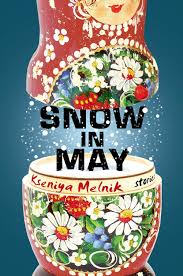
Kseniya Melnik's debut book Snow in May blends history and fable to bring her real-life hometown of Magadan, Russia, to life.

Kseniya Melnik’s debut book Snow in May blends history and fable to bring her real-life hometown of Magadan, Russia, to life.

Kseniya Melnik’s debut book is the linked story collection Snow in May, which was short-listed for the International Dylan Thomas Prize and long-listed for the Frank O’Connor International Short Story Award.. Born in Magadan, Russia, she moved to Alaska in 1998, at the age of 15. She received her MFA from New York University. Her work has appeared in The Brooklyn Rail, Epoch, Esquire (Russia), Virginia Quarterly Review, Prospect (UK), and was selected for Granta‘s New Voices series.

To read Melnik’s story, “The Witch” and an exercise on building a story around a fairy tale, click here.

In this interview, Melnik discusses writing a Baba Yaga story, creating echo chambers in fiction, and avoiding easy descriptions of complex places.

Michael Noll

The story is about visiting a traditional healer (a witch), and it’s also a Baba Yaga story. In both cases, it seems like a story that you might, as a Russian, feel obligated to tell—that it’s one of those stories that is so closely entwined with the place that you both want to write and also dread trying to write. I’m curious if this was the case. How do you approach a story that has Russian Story stamped all over it without getting trapped by the gravitational pull of the fairy tale and the stock characters? I ask because this story feels so fresh. You even manage to have characters turn into animals in a way that is natural and unexpected.

Kseniya Melnik

Baba Yaga is an Eastern European incarnation of the archetype of a malevolent older woman that is culturally universal. We see the variations of this archetype in many cultures as compiled and expanded in the fairy tales from the Brothers Grimm, Hans Anderson, Charles Perrault to Disney. I grew up reading fairy tales and watching movies and cartoons based on them, and I think certain associations are ingrained in my head: forest—hut—witch, for example; or dark forest—girl—wolf. I didn’t feel obliged to write “a Russian Baba Yaga story,” but rather, once that automatic association came up in my mind, I wanted to see whether I could put a new spin on it.

I think the key in “The Witch,” as in any other story, is specificity. It’s told from the point of view of Alina, who is just young enough that, in combination with the hallucinations produced by her migraines, fairy tales feel real to her and help her understand life directly rather than metaphorically. The reader is left to decide for themselves what is a hallucination and what is really happening. I think it’s the juxtaposition of the Soviet and Russian and occult culture with very real emotions, fears, and concerns that make the story fresh. Each character has a specific desire and is desperate enough to do almost anything within the framework of the story to satisfy it.

Michael Noll

The story begins with clear stakes. The narrator suffers from debilitating migraines: “No medication had helped. The witch was our last resort.” In a way, this opening promises a particular ending: the witch will cure the migraines or she won’t. Certainly, one of these is how the story ends, but that ending feels much larger than simply the closing off of possibilities, in part because of what we’ve learned about the narrator’s mother. How did you approach the ending? Did you always know, as you wrote, where you were headed?

Kseniya Melnik

Kseniya Melnik's story, "The Witch," was included in Granta's New Voices series.

Kseniya Melnik’s story, “The Witch,” was included in Granta’s New Voices series.

This is one of the shortest stories I’ve written, and I knew the general trajectory from the beginning. You are right in saying that on the surface level, there are only two options for the ending: either Alina is cured, or she’s not. After a trusted friend of mine read the story, he said that it needed a “larger echo chamber” for the characters’ conflicts. I introduced more thematic vectors so that the concerns of the characters could be amplified and enlarged to the concerns of the whole country, or perhaps even concerns of the whole world. In this way they become philosophical concerns. But again, to achieve that effect, I had to start small. I began with Alina’s singular problem and gradually built up desire upon desire, pain upon pain, and introduced enough doubt and possibility to create an ending that was both right and unexpected. (I hope!) In the end, the roles of the characters are somewhat reversed and challenged: who is the witch? who is the patient? who needs to be cured? and who is truly powerless in their pursuit of relief from pain.

Michael Noll

I love this description of the migraine: “Soon the world would be ruined by blobs of emptiness, like rain on a fresh watercolor.” It’s such a lovely line. How many attempts at describing the migraine did it take for this line to appear? Or, did it simply write itself?

Kseniya Melnik

Thank you. I don’t remember exactly, but I’m sure the line went through a couple of revisions. They all do. Even though Alina’s vision is blurry and confused, the images that express that cannot also be blurry and confused. I read a lot about migraine symptoms and auras and wanted to describe them with language that was both poetic and at least somewhat scientifically accurate.

Michael Noll

In "Selling Your First Soul," an essay in Granta, writes about returning to Russia to visit her sick grandmother.

In “Selling Your First Soul,” an essay in Granta, writes about returning to Russia to visit her sick grandmother.

You returned to Russia a couple of years ago for the first time since leaving at age 15. In an essay for Granta, you write about the thrill of encountering some of the absurdities that we’ve come to expect from tales of Russian life: “I was finally observing it all first hand. I would out-Shteyngart them all!” But then, you write, “When, upon my return home, I was retelling some of the choice anecdotes to a friend over the phone, I caught myself sounding like a hack stand-up comedian.” I think this probably rings true for many people who have moved away from the place where they grew up. It’s easy to find yourself telling funny stories that are perfectly true but that, somehow, distort the real experience of living there. Is this something you struggle with in your fiction? How do you avoid it? Or, how do you find the right tone for writing about a place like Magadan?

Kseniya Melnik

I do research. I try to write about the place, the weather, and, most importantly, the characters with nuance to avoid caricaturization. Russian clichés cannot be avoided entirely because so many of them are true! I think the key is to inhabit a character or a situation as fully as possible when writing, to see their Russia through their eyes, to be aware of whether you are distorting an experience as innovation or commentary, or because of automatic writing and laziness. The solution may be equal parts criticism and compassion for my characters, for Russia, and for myself.

January 2015

Michael Noll Michael Noll is the Editor of Read to Write Stories.
An Interview with Monica McFawn

8 Jan
Monica McFawn won the 2014 Flannery O'Connor Award for Short Fiction for her story collection Bright Shards of Someplace Else.

Monica McFawn won the 2014 Flannery O’Connor Award for Short Fiction for her story collection Bright Shards of Someplace Else.

Monica McFawn is a writer and playwright living in Michigan. Her short story collection, Bright Shards of Someplace Else, won the Flannery O’Connor Award for Short Fiction. She is also the author of a hybrid chapbook, “A Catalogue of Rare Moments,” and her screenplays and plays have had readings in New York and Chicago. She teaches writing at Grand Valley State University and trains her Welsh Cob cross pony in dressage and jumping.

To read McFawn’s story, “Out of the Mouths of Babes” and an exercise on using danger to create plot, click here.

In this interview, McFawn discusses the difference between “writing my way in” to a story and outlining it in advance, the challenge of exposition, and avoiding long volleys of dialogue.

Michael Noll

I’m curious about the way this story was written. It has such a clear progression: the boy’s mother tells the babysitter, Grace, not to let him talk on the phone, and then Grace lets him do just that four times, with each call having higher stakes. The structure is so straightforward and clear that I can’t imagine the story existing any other way. Did you have this structure in mind from the beginning, or did you have to write your way into it?

Monica McFawn

The structure was very carefully mapped out before I wrote the bulk of the story. I did it out of desperation. I had been trying to “write my way into” the stories I was writing for years, mostly because that’s what I thought most writers did. You hear so many writers talk that way, i.e. “I just start writing and see where it goes!” “My characters just take over!” I thought that was how it was done, and I believed that there was something stiff or false about plotting a story beforehand.

But when I actually tried the “write my way in” method, my stories would end up shapeless, overlong, and unfinished. One story in particular had gotten so bloated and meandering that I made myself set it aside and start a new story. This time, I thought to myself, I’ll do the exact opposite: I’ll plot it out beforehand. If it’s stilted as a result, who cares? At least I can finish something this way.

I like making tables, so I made a table in Word, then populated it with different phone calls and different recipients. I spent some time experimenting with the table—adding calls, deleting them, and just thinking about how to escalate the calls throughout the story. Using a table felt very businesslike, far from the mystical experience I thought writing stories should be. I worried that writing a story this way might prevent me from experiencing any surprise or serendipity, but in fact it was the opposite. The clear structure was freeing, and I found plenty of surprises in the details.

Michael Noll

The last two phone calls are made to Grace’s boyfriend/private investigator and to her sister. In order to understand these calls, we need to know certain things about a lawsuit and the family drama that led to it. The problem is that the information needs to be revealed before the calls are made, and this is difficult because it can’t come out in dialogue because there are only two characters in the story, and one of them spends the entire time on the phone. So, I really admire how you handle this problem, the way you reveal this back story through Grace’s thoughts in a way that seems perfectly natural. Was this a difficult thing to pull off?

Monica McFawn

"Bright Shards of Someplace Else," the debut story collection from Monica McFawn, won the 2014 Flannery O'Connor Award.

Bright Shards of Someplace Else, the debut story collection from Monica McFawn, is populated, according to National Book Award winner Jaimy Gordon, ‘a strange and wondrous band of misfits, isolatos, geniuses and obsessives of every stripe.”

I think exposition is the biggest challenge of writing short stories. There is so little space for backstory, yet often the backstory is critically important to what’s driving the character in the present moment. It’s something I’ve studied obsessively in the short stories and novels I’ve read. Some writers, like Phillip Roth, do a kind of exposition dump early in the story to get it out of the way. That can work for a novel, but for a short story it slows the action down too much.

Reading Eileen Pollack’s story, “The Bris”, really showed me how subtle and artful backstory can be. It’s a wonderful, hilarious story, but one that is highly dependent on the character’s history—with his father, his ex-wife, his present girlfriend. Pollock is a master at dropping bits of her character’s history throughout the story. As a reader, I’d find myself knowing things about the character’s past without knowing how I knew it. I’d have to flip back in the story to see where Pollack slipped in that detail—that’s just how smooth she was.

I studied that story at length to see how she did it: highlighting all the backstory, and then noting all the ways she segued in and out of it. She often used a phrase from the present action to trigger a related memory, yet did this so cleverly that it was hardly perceptible as a technique. So, for “Babes,” I used what I learned from Pollack and other short story writers to find those small triggers within the prose that could bounce readers back in time for a moment.

Michael Noll

Last year, Claire Messud was asked about writing unlikable characters (specifically, if she’d want to be friends with one of her characters) and Messud’s angry answer prompted a lot of pubic debate about whether men and women have the same freedom to write unlikable characters. As I reread “Out of the Mouths of Babes,” it occurred to me that, obviously, Grace doesn’t behave well (getting drunk while babysitting) but also that the story never tries to make her particularly sympathetic. She’s kind of a sad sack and there’s not really a moment where we’re supposed to say, “Ah, but she means well” or “Ah, but she has a good heart.” The closest the story comes to this might be where Grace wonders if her sister embezzled from the Girl Scouts as a gesture toward Grace, but Grace is pretty inebriated at this point. Was this something you thought about as you wrote the story?

Monica McFawn

I find the whole debate about “likable” characters interesting. As a reader, I never think of characters in those terms. I tend to think of characters as believable or not, and any empathy I have for characters comes from believing in their existence—not from whether or not they behave ethically, charmingly, reasonably or whatever else “likable” might mean.

Another way I think of it: I like to read stories that feel “warm,” or intimate in some way.  That’s why I like writers as disparate as Phillip Roth and Richard Russo. While Roth’s characters are far less pleasant people than Russo’s, generally, both authors pull you in with a narration that streams the world through the prism of their characters’ impressions. Same thing with Messud’s The Woman Upstairs. Readers ride along with every dip and spike of Nora’s exhilaration, obsession, and frustration. I think an intimate narrative style, more than the character’s goodness, is what creates empathy in readers.

For me, unlikable characters are not those that act badly, but those that are handled distantly by the narration of a story. Some experimental fiction does this, some realist fiction in third person does this, even some first person stories can give a sense that the writer is keeping a safe distance from the inner world of his/her characters. These stories can be beautifully written, but they always feel a bit cold and ascetic to me.

In “Babes,” I wanted only to leave readers with a feeling that they knew Grace by the end of the story. I wanted to get close to her in the narration, and expose the mix of abandon, skewed logic, and righteousness that drives her. I didn’t write her to elicit sympathy or condemnation, because I think few real-life people are wholly deserving of either. The world “likability” seems to miss how complex people are, and how any one person is a dense mix of (oftentimes interrelated) flaws and virtues. One of my favorite Hawthorne quotes sums up how I like to think of even the most badly behaved characters:

“What is called poetic insight is the gift of discerning, in this sphere of strangely-mingled elements, the beauty and the majesty which are compelled to assume a garb so sordid.”

Michael Noll

In addition to writing stories, you’ve also written plays. How much has the dialogue in your stories been influenced by your playwriting? Generally speaking, I wouldn’t say that your stories are dialogue-heavy at all. Do stories provide a kind of relief from relying so heavily on dialogue?

Monica McFawn

I think some readers are surprised by the lack of dialogue in my stories, considering my experience with playwriting. Paradoxically, playwriting has really taught me how to use less dialogue, not more.  In a play, every utterance from the character matters. There can’t be any idle filler, or you’ll lose the audience. I watched an interview with the playwright Edward Albee recently where he stressed that every word spoken on stage must either further the plot or our understanding of the character. That’s how I see dialogue in fiction: something that should be used sparingly and deliberately to do one of those two things, and nothing else.

That’s what you won’t see a lot of back and forth volleying between characters in my stories, i.e:

“Where’s the pancake batter?” she asked.

“In the cupboard,” he responded.

“What color is the bag?”

“Beige”

“Do you mean taupe?”

“No,” he snapped.

“Oh, I see it now,” she exclaimed.

“Good.”

“Yes, it is good to have found it.”

“Indeed it is.”

This can easily fall into a dull pattern that eats up the page visually.  Instead, when I use dialogue, I want it to be highly significant.  In the above example, I’d pull a single line or two that showed something about the characters—perhaps just the clarification about the color, rather than use the whole thing. A few carefully placed pieces of dialogue broken off from a block of prose has a lot more impact—visually and story-wise—then a long tit-for-tat between characters.

January 2015

Michael Noll Michael Noll is the Editor of Read to Write Stories.
An Interview with Jeffrey Renard Allen

26 Dec
Jeffrey Renard Allen's latest novel, Song of the Shank, about Blind Tom, a former slave and piano prodigy, has been named to a list of best-of lists for 2014.

Jeffrey Renard Allen’s latest novel, Song of the Shank, about Blind Tom, a former slave and piano prodigy, has been named to a list of best-of lists for 2014.

Jeffrey Renard Allen is the author of two collections of poetry, Stellar Places and Harbors and Spirits, and three works of fiction, including the novel, Rails Under My Back and the story collection Holding Pattern. His latest novel, Song of the Shank, was included on The New York Times‘ list of 100 notable books of 2014. Allen is fiction director for the Norman Mailer Center’s Writers Colony in Provincetown, and he has served as the Program Director for Literature for the Jahazi Literature and Jazz Festival in Zanzibar, East Africa. He currently teaches at the New School in New York City.

To read an excerpt from Song of the Shank and an exercise on stretching present action, click here.

In this interview, Allen discusses the “thick narration” of Song of the Shank, writing characters who are different from the author, and the transforming power of art.

Michael Noll

The most striking thing about the novel is its narration, which feels like stream of consciousness but isn’t, of course, because it’s written in third-person. But there is a definite narrative consciousness at work, one that sees into the characters’ heads with a kind of detached empathy but that also roams where it wants—following, for instance, a group of black Civil War soldiers through the dangerous early months after the war and back home to New York. How did you develop this narrative style?

Jeffrey Renard Allen

In Song of the Shank, I sought to establish a kind of thick narration where various voices seem to slip in and out of what is essentially a limited narration. So the direct thought of a character will pop up at a given moment in the story, along with asides, ideas, song lyrics, biblical verses and other texts, questions and doubts, alternatives, flashbacks and other kinds of voices and materials that may or may not derive from this character. A million embedded stories. At the same time, I wanted the book to feel loose in the way it moves backwards and forwards and sideways in time, although the book novel’s overall structure is carefully orchestrated.

Michael Noll

You can chalk this up to denseness on my part, but I assumed at first that Eliza was black. I caught on, of course, but it took a few pages. Then, in the second section, when I got to Tabbs, who is black, I became aware of the difficulty of the characterization that you accomplish in the novel. It’s not a secret that some, perhaps many, male writers are notoriously bad at writing female characters. And, white writers often create black characters that tend to reflect the writer’s perception of the role filled by black people (The Help) more than the reality that black people actually inhabit. Was it more difficult to write Eliza than Tabbs? Or, to generalize a bit, why do you think it’s so difficult for writers of privilege to imagine the lives of characters who are not like them?

Jeffrey Renard Allen

The New York Times called Jeffrey Renard Allen's novel Song of the Shank,

The New York Times called Jeffrey Renard Allen’s novel Song of the Shank, “the kind of imaginative work only a prodigiously gifted risk-taker could produce.”

It was not any more difficult for me to write Eliza, Perry Oliver, Seven or any of the white characters in the novel than it was for me to write Tabbs, Charity, Ruggles or any of the other black characters. And the reason why is simple: the imagination is a vehicle that carries us to that honest place where we can put ourselves into the bodies of other people. Of course, it requires a lot of hard work to create a convincing character, a person who had the entire emotional and intellectual range of felt life. That said, I might note that I did encounter one great difficulty in this novel in terms of characterization. At first I found it hard to hear my characters, to create dialogue that was both convincing and engaging for people who were alive in New York City in the 1860s.

Any good writer seeks to avoid generalization, which is both an aesthetic and moral dead end. Instead, you must choose to be, to engage the world as it is. The long and short, I don’t think that it is difficult for writers of privilege to imagine the lives of characters who are not like them. Some writers knowingly or unknowingly, simply choose to embrace their privilege, which means that they must create cardboard stereotypes of people who they feel lack any agency and who are therefore in need of sympathetic white saviors.

Michael Noll

One of most fascinating details in the novel is about the Freedmen arriving in the North, the way begin talking faster than they did while in the South: “Their once slow tongues up the pace too, stumbling into strange conjoinings of consonants and vowels, a metamorphosis that Tabbs has heard seen with his own skeptical ears and eyes.” Do you recall where you learned this detail? Or, if not, how sort of things were you reading? What did your research process look w like?

Jeffrey Renard Allen

I was intrigued by the whole process of the Freedmen’s acquisition of language, this matter of freedom and literacy, as some have called it. So I read quite a number of books on this topic, numerous personal testimonials from both former slaves and from the northerners who taught them, along with historical texts. Like with most things in this novel, I tried to find appropriate but striking metaphors that could help turn fact into image, scene, illustration. But language is also a central concern in this novel where language, where words both constrict and liberate, create and destroy. After all, “Blind Tom” begins as a linguistic construction borne out of Perry Oliver’s desire to exploit Tom for financial gain. At the same time, Tom has a kind of mastery of language that knows no bounds, that no one can contain.

Michael Noll

The first paragraph of this novel is several pages long. The plot is minimal. The narration requires slow reading. In other words, this is a novel that asks for (and rewards, I believe) patience on the reader’s part. As a result, it’s a novel whose value will be measured in literary terms rather than sales. So, I’m curious how you see this novel fitting into Big A, Big L American Literature. If it should win some major award (and if you imagine such an event), what do the judges say about it?

Jeffrey Renard Allen

Of course, I have high hopes for my novel. The first thing I would want any reader to say about this novel is that “Jeff Allen gave everything he had when he wrote this book, every bit of himself, on every page, head and heart” because that is true. I really tried hard to get it right. Art might be the only form of perfection available to humans, and creating a work of art might be the only thing in life that we have full control over. So we might ask, How is great measured? Craft is certainly one thing. I also would like to think that certain works of art transform the artist. Indeed, Song of the Shank required a process of personal growth that I could not have expected when I first began writing the book more than a decade ago. I could not have written a better book.

December 2014

Michael Noll Michael Noll is the Editor of Read to Write Stories.
An Interview with Rahul Kanakia

11 Dec
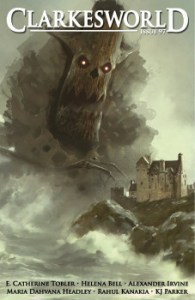
Rahul Kanakia is the author of the forthcoming YA novel Enter Title Here and this weird ghost story in Clarkesworld.

Rahul Kanakia is the author of the forthcoming YA novel Enter Title Here and this cool, weird ghost story in Clarkesworld.

Rahul Kanakia’s young adult novel, Enter Title Here (its actual title, not a typo) will be published by Disney-Hyperion in Fall 2015. His stories have appeared in Clarkesworld, The Indiana Review, Apex, and Nature. He holds an MFA in Creative Writing from Johns Hopkins, and a B.A. in Economics from Stanford, and used to work in the field of international development. Currently, he lives in Oakland, CA, working a freelance writer and content creation consultant.

To read “Seeking boarder for rm w/ attached bathroom, must be willing to live with ghosts ($500 / Berkeley)” and an exercise on playing with the logistics of genre stories, click here.

In this interview, Kanakia discusses early reactions to his story in a MFA workshop, the source of some of the imagery in the story, and what (if any) connection this supernatural story has on his forthcoming Young Adult novel.

Michael Noll

I love how this story flips some famous tropes from ghost stories. For instance, one of the most darkest sentences is this one: “You know how many times I’ve gone down to the Kaiser Hospital over on Howe Street and sucked the ghost of a crying baby out of one of their incubators?” Capturing ghosts was so funny and great in Ghostbusters, but here it’s horribly sad and a sign of something wrong emotionally with the person who does it. Did you set out to subvert this image, or did you simply happen upon it in writing the story?

Rahul Kanakia

Interesting that you bring this up. I actually only thought of the movie Ghostbusters after the story was completed, but it’s obvious that it had some subconscious influence on the imagery of the story. For instance, the vacuum device that I’ve imagined in this story is definitely reminiscent of the apparatus they used in the movie. Regarding this particular image, I can’t say what I was doing. In its first draft, the story was entitled “Seven Things That Really Don’t Bother Me,” and each section was about one thing that annoyed other people but didn’t annoy the narrator. In this case, I think the idea was that the narrator wasn’t bothered by the sound of crying babies (which is said to be one of the most distressing sounds that a human being can hear). The idea with the story was, I think, that the narrator came off as emotionally disturbed because he didn’t have these basic human responses, but, after a lifetime of grappling with these problems, the narrator had started to rationalize these deficiencies as being a sign of a greater and more inclusive heart (i.e. other people are disturbed by babies, so they refuse to have anything to do with them, whereas, in his eyes, he is so great-hearted that he’s willing to go out and extract them from the incubators so that the hospital’s operations can continue).

Michael Noll

Those babies are also part of the real horror of this horror story. For instance, there is a ghost of a baby whose intestines developed on the outside of its body—and what’s horrifying is that this is something that actually happens. But unless it happens to us—to our baby—we rarely give such possibilities any thought. You do something similar with the ghosts of the men who died of AIDS. Is that one of the goals of horror stories? To remind readers of the very real horror that exists in the world?

Rahul Kanakia

I don’t know. This is probably one of the only horror stories I’ve ever read. In the case of the baby w/ the intestines, that’s a result of a documentary on harlequin babies that I once saw late at night. Horrifying images. The men with AIDS was something I tossed in at the last minute. I realized that a 60+ year old gay man will have some experience with the epidemic, and I wanted to be true to that. The imagery of the AIDS patients was drawn from the descriptions in Randy Shilt’s history of the early years of the epidemic: And The Band Played On.

Michael Noll

Rahul Kanakia's story, "Seeking boarder for rm w/ attached bathroom, must be willing to live with ghosts ($500 / Berkeley)" was published in Clarkesworld, which recently won a Hugo Award for best Science Fiction and Fantasy Magazine.

Rahul Kanakia’s story, “Seeking boarder for rm w/ attached bathroom, must be willing to live with ghosts ($500 / Berkeley)” was published in Clarkesworld, which recently won a Hugo Award for best Science Fiction and Fantasy Magazine.

The title is great—as soon as I saw it, I wanted to read the story. Did you start with this title, which really only begins to introduce the direction the story will go, or did you write the story first and then choose the title?

Rahul Kanakia

As I mentioned above, the original title of the story was “Seven Things That Really Don’t Bother Me,” and it was originally told as a list of seven things. The basic underlying story (a ghostbuster’s roommate has moved out and he’s filled with angst about it) was the same, but the format was very different. However, when I ran it through my MFA workshop, they said the format felt too scattershot, so I decided to tell it as a series of Craigslist house posts. The title is, I think, based on an actual post I saw while looking for housing once. Although, in that case, I believe, the landlord wanted a roommate who wouldn’t drink alcohol.

Michael Noll

You have a young adult novel being published in the next year, so I’m curious how you see this story fitting in with the rest of your writing. Would you give this story to fans of your YA novel? Or are that novel and this story products of separate writing lives that you inhabit?

Rahul Kanakia

My YA novel is very different. Firstly, it doesn’t have any fantastic or science fictional elements. It’s about a high school senior—the valedictorian of her school—who’s very angry with those who she sees as having gotten more recognition than her and who embarks upon all kinds of schemes in order to bring down her enemies. But I do see both this story and that novel as sharing lots of themes. They’re both about people who feel like they’re damaged and outside the mainstream; people who are secretly worried that no one will ever, or could ever, love them. I think the horrifying thing about this story is that in this case, the protagonist is right. He is unloveable. For whatever reason, he’s rendered himself unloveable. My book, though, is not quite as bleak.

December 2014

Michael Noll Michael Noll is the Editor of Read to Write Stories.