Archive | Writers on Writing RSS feed for this section

An Interview with Steph Post

4 Dec
Steph Post's crime novel, A Tree Born Crooked, is set in the Florida panhandle made infamous by Harry Crews.

Steph Post’s crime novel, A Tree Born Crooked, is set in the Florida panhandle made infamous by Harry Crews.

Steph Post grew up in North Florida, lives in St. Petersburg with her husband and six dogs, and teaches writing at a performing arts high school in Tampa. Her essay, “Blue Diamond,” on the early work of Stephen King was included in the recent anthology, Stephen King’s Contemporary Classics: Reflections on the Modern Master of Horror. Her latest book is the crime novel, A Tree Born Crooked.

To read an excerpt from A Tree Born Crooked and an exercise on writing active character descriptions, click here.

In this interview, Post discusses writing about making the Florida panhandle feel authentic, creating intimate spaces within plot, and working under the influence of Cormac McCarthy.

Michael Noll

This book seems to be as much about its setting in the Florida panhandle as the actual story. On one hand, this seems like a good move as a storyteller since it’s a place full of colorful characters. On the other hand, I’d imagine it could be hard to create characters in this place without running into stereotypes. How did you create this place in a way included drugs, alligators, and poor, uneducated white people without falling into the caricatures so often connected with popular images of those things?

Steph Post

I honestly didn’t even think about the stereotype issue until I was deep into the revision process. I just created a place and a set of characters that were real and true to the people of this area of Florida. Although Crystal Springs is a fictional town, I wanted it to feel authentic for the reader. I didn’t want readers to feel like they were watching a movie or television show with a caricature of a rural Florida town, populated with rednecks and white trash. I mean, how many times has this been done? I wanted readers to feel like they could imagine walking around the town as if it were an actual place. I wanted them to feel all of the hopes, dreams, despairs and complexities of these characters. Just as all people are complex, so to are all characters. It’s the job of the writer not to be lazy when bringing the characters to light.

Michael Noll

A Tree Born Crooked, a crime novel by Steph Post, is set in the Florida panhandle and follows the disaster of a theft gone wrong.

A Tree Born Crooked, a crime novel by Steph Post, is set in the Florida panhandle and follows the disaster of a theft gone wrong.

I’m interested in how you approached plot in the novel. The book starts with James getting a postcard telling him to come home because his father has died. But the plot doesn’t really begin until his brother and cousin commit a crime. How did you bridge the gap between James showing up in town and his getting drawn into the crime? It would seem tempting to make that gap quite large, with James meeting various characters and visiting old haunts. Was it difficult to get the next part of the plot moving?

Steph Post

I won’t lie—developing the plot was the hardest part of writing A Tree Born Crooked. I’m on my third novel now and crafting plot has become a much more fluid process, but it was a bit difficult for me with A Tree Born Crooked. It was tempting to let James play in Crystal Springs a while and to bring out new characters and places, but I wanted to keep the pace accelerated throughout the novel. There’s a definite balance between pushing the action forward and then allowing for pauses where readers can become more intimate with the setting and characters. I had to establish James and his inner conflict before I could focus on the external conflicts of the plot, and from there I had to make sure there were enough peaks and valleys between the two.

Michael Noll

Crime novels tend to have a particular kind of main character, one who has, as your book jacket puts it, “a tough-as-nails exterior and an aching emptiness inside.” But, of course, book jackets are not novels. How did you create a character who fulfills the description in the jacket (and the readers’ expectations for a crime novel) but is also a nuanced character with depth?

Steph Post

I was much more concerned with creating a character with depth. It wasn’t until after the novel was finished that I realized James fit into the role of anti-hero in a crime novel. And, of course, that came from the subliminal effects of researching and writing in this genre. As I was writing, I was focused on developing James as a character who is having to come to terms with events outside of his control. He’s thrust back into a world that he wants no part of and he must decide how he wants to navigate the situation. James’ story is really one of a character peeling, or a times ripping, back layers in a difficult process of self-discovery. He just also happens to be dodging bullets in the process.

Michael Noll

In the blurbs for the novel, you’re compared to Daniel Woodrell and Harry Crews. I’d add another writer: Joe Lansdale, the crime and horror writer from East Texas. I’m curious which writers were in your head as your wrote this novel. Was there a book that you looked to for help? What did you learn or borrow?

Steph Post

A lot of books were influential in getting A Tree Born Crooked started. Novels such as Jim Harrison’s A Good Day to Die, Daniel Woodrell’s Winter’s Bone and David Eddings’ High Hunt definitely inspired me to write about underdog characters in an underbelly world. I fully fall prey to Bloom’s “anxiety of influence,” though, and so try to avoid reading fiction when I’m writing the first draft of a novel. However, Cormac McCarthy’s No Country for Old Men was crucial in helping me to craft dialogue. There’s a scene in the beginning of the novel with Llewellyn sitting in his trailer—what the character doesn’t say is almost more important than what he puts into words. I definitely relied on McCarthy when working to create “negative dialogue” and to utilize the spaces in a scene to their fullest.

December 2014

Michael Noll Michael Noll is the Editor of Read to Write Stories.

An Interview with Syed Ali Haider

29 Nov
Syed Ali Haider

Syed Ali Haider’s essay about food and religion, “Porkistan,” was published at The Butter.

Syed Ali Haider was born in Pakistan, grew up in Florida, went to college in Minnesota, and finished his degree in Texas. He lives in the Texas Hill Country, where he writes, teaches, and cheers for the Detroit Lions. His work has appeared in Glimmer Train, vandal, and Mary: A Journal of New Writing. His essay about bacon and Islam, “Porkistan,” was published at The Butter.

To read “Porkistan” and an exercise on using sensory details, click here. In this interview, Haider discusses the challenges of describing religious confusion and writing about family and the way that telling a story to a live audience can help shape its written form.

Michael Noll

The descriptions of food in this essay are really great. You capture the essence of bacon. the sound of it cooking in its own fat, the look of it. You write that after you tried it for the first time, you “wanted to lick the greasy paper towel.” You also capture the weird grossness of turkey bacon (“salted rubber tires”). Finally, you make a really interesting statement when talking about the food of South and Central Texas, comparing it to the food of Pakistan: “Carne Guisada Con Papas is Aloo Gosht. Aloo Qeema is Picadillo Mexicano.” Food can sometimes be a difficult thing to describe: our sense of taste doesn’t correspond neatly to adjectives. Was it difficult to put your love of bacon, disgust at turkey bacon, and appreciation for Tex-Mex into words?

Syed Ali Haider

I think it’s difficult for me to put nearly anything into words because I’m such a stickler about precise language. But when it comes to writing about food, I think I have an easier time than with anything else because I think about it so damn much. Seriously, I am nearly always thinking about food, reading about food, talking about food. And when I was growing up, bacon was such a constant obsession of mine, that it was so much fun to write about at length. Earlier drafts of the essay were much more focused on bacon that it read like a cheap David Foster Wallace knockoff. But, yeah, because food occupies so much of my time and thought, it was the easiest part of the essay to write. Everything surrounding food was much more difficult because I had to explain how religious confusion feels. I had to somehow put into words the moment your family is ready to disown you and everything that is going on in your head and your body. Bacon tastes smoky and salty. It has texture. It’s crunchy and chewy and fatty. But how does it feel when your mom tells you she won’t see or speak to you? What does that feel like? That’s much more difficult.

Michael Noll

This essay started out as a story told to a live audience. I’m curious how much you had to change the story to adapt it to a written form. Was there a significant difference between telling and writing this essay?

Syed Ali Haider

I think that because of the way Story Department was framed to me—tell us stories about your mom!—the stakes were lower than when I’m writing. I’m much more comfortable with oral storytelling. Because I can talk for days, and I don’t nitpick and stress about sentence structure and the precision of language and all that. I gave myself permission to just talk. Because I wanted it to sound like a conversation, I wrote a loose outline and allowed room to just freestyle and flesh it out on the spot. This might make some people really nervous, but it removed the possibility of me forgetting lines or anything like that. I rehearsed it four times, and each iteration was drastically different. And when I got up and told it to the audience, it was a whole new beast. Sort of stand-up routine/storytelling. Mike Birbiglia-esque. Telling the story to a live audience sort of activates all these devices we have as natural storytellers. You very quickly get a feel for the room and what sort of things are and aren’t working. When a joke bombs, you feel it. The silence of the room is so awful. You’re standing up there thinking, “I thought that was going to be hilarious.” So you get this instant feedback that you don’t get when you’re writing. When you’re telling somebody a story, you’re forced to cut out all the uninteresting parts that don’t really pertain or aren’t important to what you’re trying to say. Unless you’re just completely ignoring the look on the other person’s face in which case you’re going to miss most of that and tell a really long and boring story and completely lose the person’s attention. I think that’s what live storytelling did for me. Forced me to think about the audience and their attention. How can I tell this story in the best way so that they’ll keep listening to me. And the feedback I got that night was so positive that I wanted to keep that voice and sound in the essay. I wanted it to more or less be as direct an adaptation as I could get. There’re pieces that I culled from an older essay of mine and fit it in, but for the most part I wrote down what I remembered telling at Story Department.

Michael Noll

Syed Ali Haider's essay about food and religion, "Porkistan," appeared at The Butter, the new online journal edited by Roxane Gay.

Syed Ali Haider’s essay about food and religion, “Porkistan,” appeared at The Butter, the new online journal edited by Roxane Gay.

This is a wide-ranging essay. It’s about your relationship with your parents, especially your mother. But it’s also about religious belief, persecution based on religious and ethnic stereotypes, food, and creating a mixed identity—one that is part one thing and part another. I’m curious how long it took for this essay to find its structure. How often did you wade into this material before finding the right way to begin?

Syed Ali Haider

When I wrote the essay two years ago, it was more about me and my love of food. But when I told the story at Story Department, I opened with a story about my mom that is essential to understanding who she is. She’s at JFK and accosts a Delta Airlines lady and is nearly arrested for climbing over the counter. It’s such a bizarre story that all these years later, I’m still baffled that she did that and I wonder if I made it all up. I love telling this story about my mom because she’s so whackadoodle but also equal parts graceful and wonderful. The story comes back toward the end of the essay because I understand her and the story in a whole new way. She’s this totally fierce protector of her kids and is willing to look silly and risk arrest if her kid isn’t allowed on an airplane. In telling this story and focusing on my mom, I realized that her story and my story are so similar, which is why sometimes there’s so much tension between us. She grew up with the same religious confusion that I did except mine was so entirely food-centric. So everything just clicked and I realized that she was the missing piece to the whole thing.

Michael Noll

This is an essay about your religious beliefs, practice and identity, but it’s also about your mother’s conversion to Islam. That conversion is essential to understanding your own, not least because it led to your being born. But, it’s also someone else’s experience, not your own. Relationships with parents can be a touchy subject, especially for writers. Was it difficult to write about this part of your mother’s life? How did you approach telling the story of her conversion?

Syed Ali Haider

Yeah, this was an extremely difficult piece to write. When I told the story, it was a one-off thing, so I didn’t have to worry about my mom reading it, but when I sent it to The Butter, and they published it, it was suddenly out there for anyone to read. The strange thing about this essay is that it pivots on this secret—that I’m not a Muslim or at least that I don’t really know what I am—and the necessity to continue lying to her to maintain our relationship. But I still have this responsibility to tell her story in a way that honors her experience. So in trying to honor her, I asked her a lot about growing up and what that was like, and she was really open about it with me. I’m not sure what her reaction to the essay would be, but I tried very hard to write a piece that respects her and shows her how much I love her because I don’t want people to read it and think she’s a horrible person who disowns her kids. Like yes, that threat was there, but it’s like a fucked up love thing.

November 2014

Michael Noll Michael Noll is the Editor of Read to Write Stories.

An Interview with Judy Chicurel

20 Nov
Judy Chicurel novel, If I Knew You Were Going to Be This Beautiful, I Never Would Have Let You Go, tells the story of a young woman in Long Island during the 70s.

Judy Chicurel novel, If I Knew You Were Going to Be This Beautiful, I Never Would Have Let You Go, tells the story of a young woman coming of age in Long Island during the 70s.

Judy Chicurel’s writing has appeared The New York Times, Newsday and Granta, and her plays have been performed in NYC theaters and at festivals, including the NYC International Fringe Festival, New Perspectives Theatre, and Metropolitan Playhouse. She is a member of the New York Writers Coalition and was a 2011 Fellow in the CUNY Graduate Center Writers Institute Fiction Writing Program. She recently published her first novel, If I Knew You Were Going to be This Beautiful, I Never Would Have Let You Go.

To read an excerpt from If I Knew You Were Going to Be This Beautiful, I Never Would Have Let You Go and an exercise on creating a narrative clock, click here.

In the following interview, Chicurel discusses endings that aren’t neat, staying true to a character’s voice, and the writer as outsider.

Michael Noll

I’m really interested in your conception of the book as a collection of linked stories. On one hand, the book doesn’t quite build and develop its story lines the way a novel would. On the other hand, many of the stories do seem like chapters, with narrative arcs of their own and endings that seem incomplete, like the prelude to another story or chapter. Also, some of the chapters are almost character sketches, which is probably insufficient to drive a stand-alone story, but which, in the context of the book as a whole, are really probing and thoughtful. How did you decide on the structure of the book?

Judy Chicurel

The content and structure of If I Knew… almost had a life of its own. I wrote the last story first and knew it was going to be the last story, but really had no idea what would come before. I just started writing the stories pretty much out of sequence and I would send them to my agent as they were completed; I was simultaneously working on another novel at the same time, and at one point she said about If I Knew…, “I think this is your book.” I still didn’t know if it was going to be a novel or a story collection until the manuscript was finished, and then the linked stories made the most sense, particularly within the contextual setting of Elephant Beach. I liked the idea of stories about these connected lives that didn’t necessarily have neat, tied-in-a-bow conclusions and might haunt readers a little after they finished reading. This seems to have been accomplished, according to some of the reviews.

Michael Noll

I once heard Robert Stone talk about the drug experimentation of the Beats. They’d expected to create a cultural revolution, he said, but, in the end, many of the changes wrought by drug use were bad, both in the effects of addiction and the conservative societal and governmental response that followed. This book seems set after the glow has worn off. There’s not a lot of sense of promise and positive excitement to the drug use. For instance, the narrator talks about “boys I’d gone to school with, known forever, groping, sniffing, sliding around me, everyone high on acid or THC, thinking I was just as stoned as they were and it would be easy.” The drug use seems more predatory than hopefully experimental here. Is this a depiction you were aiming for?

Judy Chicurel

No. The sniffing and sliding around were more a result of hormones, not drug use, which, like alcohol, has been known to lower inhibitions when it comes to sexual activity. And don’t forget the sexual revolution was in full swing, which heightened expectations. But there’s a scene in the same chapter that you’re referring to where Katie considers having sex with one of her friends on a lifeguard chair, but it never happens because he passes out from too many Quaaludes, so I don’t think you can really call that predatory behavior.

I think we tend to delude ourselves with the notion that excessive behavior is always excusable if you’re some kind of artist because then drugs or alcohol have a creative purpose, when in reality people at all ends of the spectrum fare just as badly from resulting addictions. Whether we’re talking about the Beats or working class kids in the 1970s or young people today, a lot of experimentation with heavier drugs promised mind-expanding possibilities that yielded mind-diminishing consequences. Keep in mind not all the Beats enjoyed William Burroughs’ productivity and longevity.

Michael Noll

If I Knew You Were Going to Be This Beautiful

The Guardian called If I Knew...”a beautifully evocative portrait of one tight-knit working-class community on Long Island during the summer of 1972.”

You occasionally let your characters talk for long, uninterrupted stretches—especially Mitch. He has one piece of dialogue where he’s talking about the flowers in Vietnam, and he talks for at least a page. I don’t often read dialogue—or monologues—that last that long? Is that the effect of your experience as a playwright? How did you know when to let a character keep talking and when to shut him down?

Judy Chicurel

I think whether writing dialogue for plays or narrative fiction, you have to pay attention to your characters, more so than to the rules of whatever medium in which you’re writing. Mitch loves to drink and the drunker he gets, the more he likes to talk; in that particularly monologue, he’s finally found someone in Luke who can empathize with his experiences in Viet Nam and he’s sharing what for him was a critical memory. Luke, the other Viet Nam vet, is more taciturn; his war experiences have made him more of a brooder. I like to picture my characters and imagine their speech patterns, the sound of their voices, conversations they might have; sometimes I’ll write snippets of dialogue and think, “That’s a nice couple of lines, but would this character really say that?” So for me it’s more about respecting the characters, trying to stay true to their voices.

Michael Noll

At one point Katie is walking through her neighborhood, watching kids play and their parents hanging out on the stoops, and the description of the place is chaotic and messy, and Katie’s heart begins to beat faster and she thinks to herself, “These are my people.” That sense of belonging is really strong in the book, and I’m curious about how much you felt—and still feel—the same way. This stretch of Long Island is not a place you’d expect to find a published writer living. How has your sense of belonging to that community changed as you’ve grown as a person and an artist?

Judy Chicurel

I think I’ve almost always felt like something of an outsider no matter how much I appear to belong to a particular group. I’ve spoken to other writers who’ve experienced this kind of psychic detachment, where externally you’re part of the scene, but internally you might as well be on an island, alone, and on some level, you’re always observing. It’s an interesting paradox because most of the time, unless you tell them, nobody else knows how you’re really feeling.

I no longer live on Long Island and haven’t for over twenty years, though I still have friends who live there. But I’m often struck by the expectations of where published writers live and don’t live, and the typecasting of people who live on Long Island by folks both familiar and unfamiliar with the geographical terrain. When I did live there, I was a journalist who contributed to The New York Times and Newsday, as well as national magazines, and I knew many other writers doing the same thing who still enjoy living there or have moved there because they want to live five minutes from the beach. So I do think these types of assumptions tend to put limitations on people that probably shouldn’t be there. Readers might also keep in mind that If I Knew…takes place over forty years ago and that the demographics of Long Island, like practically every place else in America, have changed quite a bit.

November 2014

Michael Noll

Michael Noll is the Editor of Read to Write Stories.

An Interview with Kerry Howley

13 Nov
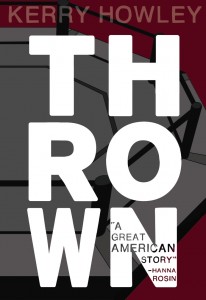
Kerry Howley traveled with MMA fighters for three years and wrote about the experience in her book-length essay THROWN.

Kerry Howley spent three years traveling and visiting with MMA fighters and wrote about the experience in her book-length essay Thrown.

Kerry Howley’s essays, reviews, and reportage have appeared in Harper’sThe New York Times MagazineSlateThe AtlanticThe Wall Street JournalGulf CoastVice.com, and frequently in Bookforum. Her short story “Pretty Citadel” was published in The Paris Review. Thrown, her book-length essay, is an account of three years spent in the company of mixed martial artists, narrated from the perspective of an excitable, semi-fictionalized graduate student named Kit. Howley teaches creative writing at the University of Tennessee at Chattanooga.

To read Howley’s essay “Cold Water in Texas” and an exercise on writing dialogue, click here.

In the following interview, Howley discusses framing essays around comic dialogue, the challenge of describing fight scenes, and the kind of person who is attracted to mixed martial arts.

Michael Noll

I’m really interested in the role and POV you assume in the piece (I’d call it an essay, but it’s partly fictionalized, yes?). There’s an interesting moment once you move out of the locker room and into the crowd. You write this:

In the way of any traveler, I ascribe every aberration to the jurisdiction. I have been to fights at bars and strip clubs and flyover state fairgrounds but never have I seen a barefoot ring girl — this one’s Vietnamese, in a bikini — and I’ve never seen an announcer cat-call a ring girl on his descent from the cage. “Texas,” I think.

It’s such an unexpected detail, and it suggests quite a bit of familiarity with the world of Mixed Martial Arts. How long did it take you to feel comfortable writing about a world that I’m assuming is pretty far outside your natural habitat?

Kerry Howley

It’s an essay, and semi-fictionalized in that the narrative voice is that of an imagined narrator named Kit. I probably felt comfortable well before comfort was justified. It took years for me to really understand the rhythms of those small fights, and longer to be able to write competently about them. That cat-calling of the ring girl is still surprising to me.

Michael Noll

In Thrown, Howley portrays the lives, battles, and worlds of two MMA fighters.

In Thrown, Howley portrays the lives, battles, and worlds of two MMA fighters from the perspective of a semi-fictionalized female graduate student.

It would seem tempting to draw conclusions about certain parts of society based on their love and enjoyment of MMA fighting. Yet you seem to resist this. At the beginning of the essay, you mention that fight takes place in Cleveland, Texas, where 19 men were charged with sexually abusing an 11-year-old girl, a fact that seems important, yet you refrain from drawing the connection, writing, “I don’t know what to do with this information.” Was it difficult to avoid that kind of societal analysis? Or did you find that the complexity of the people involved precluded easy conclusions.

Kerry Howley

It was never tempting to conflate the kind of brutality on display among Cleveland’s rapists with the kind of artful, consensual violence I was witnessing at the fights. I think my book-length essay, Thrown, does have something to say about the kind of person who is drawn to MMA. The men I follow tend to be proud nonconformists given to the kind of cosmopolitan worldview you’d expect from a sport closely identified with Japan and Brazil.

Michael Noll

I love the dialogue between the fighters as they’re trying to distract Charlie before the fight. It’s one of those rare moments when people are trying to be funny and succeeding and you seem to make a choice to get out of the way as a writer and let them talk. What was your approach to dialogue like this? Did you simply write it down as fast as possible and put it on the page? Or did you need to craft and revise the essay so that the dialogue would sound right?

Kerry Howley

Thank you. That was all recorded on my iPhone; I just transcribed what I took to be the best back-and-forth. I take such joy in bringing a funny voice to the page that I naturally frame essays around those moments. Part of editing the book involved purging a bunch of scenes I’d included—scenes much like the one you identify—that weren’t serving any purpose beyond amusement. I just felt like the reader had to know this hilarious thing the protagonist said about lawnmowers.

Michael Noll

You have a natural ease in writing about the actual fight—the punches and kicks, the action of it. This is actually quite difficult to do. It’s easy to get lost in a choreography of fists and feet, as in those films where the camera is zoomed in so close to the person fighting that we can’t get a sense for the action as a whole. But you really manage to convey both the immediate sense of what is happening and the arc of the fight. How did you approach writing these scenes?

Kerry Howley

Great question. The reader is only going to tolerate so much description of bodies in motion, so you end up molding a fight into the simplest version of itself—a few key moments and a mood. There are going to be a lot of small movements lost between point A and point B, and in that way perhaps writing about fighting (or dancing, which presents the same challenges) is emblematic of essay writing as a whole. So much of the struggle is subtraction.

November 2014

Michael Noll

Michael Noll is the Editor of Read to Write Stories.

An Interview with Michael McGriff and J. M. Tyree

6 Nov
Our Secret Life in the Movies by Michael McGriff and J. M. Tyree was the subject of this interview at NPR's Morning Edition.

Our Secret Life in the Movies by Michael McGriff and J. M. Tyree was the subject of this interview at NPR’s Weekend Edition.

Michael McGriff and J. M. Tyree are the authors of Our Secret Life in the Movies, a collection of stories written through the lens of the films from the Criterion Collection.

McGriff is an author, translator, and editor. His most recent book, Home Burial, was a New York Times Book Review Editors’ Choice selection. He is also the author of Dismantling the Hills, a translation of Tomas Tranströmer’s The Sorrow Gondola, and an edition of David Wevill’s essential writing, To Build My Shadow a Fire.

Tyree was a Truman Capote–Wallace Stegner Fellow and Jones Lecturer in Fiction at Stanford University. He works as an associate editor of The New England Review and is the author of BFI Film Classics: Salesman and the coauthor, with Ben Walters, of BFI Film Classics: The Big Lebowski, from the British Film Institute.

To read their story, “Yuri Gagarin Explores Outer Space” and an exercise on writing sentences that push past expected endings, click here.

Michael Noll

The version of “Yuri Gagarin Explores Outer Space” in Our Secret Life in the Movies is slightly different than the version published in Tin House. The girl becomes a kid, who we learn, through pronouns, is a boy. A line of dialogue is cut (“I’m seventeen and a half,” she said. “My dad’s a cop down in the hills. He didn’t like my boyfriend. I guess that sums it up.”), as is a line in the last paragraph (I ripped the pom-pom off my ski hat and used it to clean up her face.) I’m curious about your thoughts behind the revisions. To some extent, the scene can be read quite differently depending on the kid’s gender and how we view that act of the characters sharing a sleeping bag in an abandoned mansion. The final version is more fraternal, less potentially creepy. Was that purposeful?

Michael McGriff and J. M. Tyree

As readers, we tend to assume that a story is done because it has been published. As writers, we know better, because we stay awake at night worrying about all the ways we got it wrong. The important point to keep in mind is that publication is only one part of the creative process. In this case, the ending seemed better when the genders were reversed because that way you could never rule out the possibility that this character was actually alone the entire time, or that he had run into his doppelganger. Something along those lines. There are at least four kinds of stories – the kind you never get around to writing, the kind you write and abandon, the kind that come out right the first time, and the kind that come at great cost after a struggle and too many drafts to mention. This story was one of the last kind.

Michael Noll

In the book’s introduction, you write that the book began as sketches written while you watched films from the Criterion Collection. At a certain point, you figured out that these sketches were part of a narrative. How did you turn those early sketches into a coherent book? The process of free writing for fun and the process of revising for narrative coherence would seem to be very different. Was there a point at which you created a timeline or outline to follow? Did you discuss in advance of watching certain films or writing certain pieces what direction you might go with them?

Michael McGriff and J. M. Tyree

We never had an outline or a timeline. I think we were both surprised as the book gained momentum, almost of its own accord, to look less like a smaller “cycle” of sketches and more like a book. A pile of sketches began to look like it had a trajectory, showing the parallel lives of characters growing up during the last days of the Cold War. It was honestly more a matter of subtraction, of removing material from the book so that the linkages of the stories made more sense and a sense of continuity could be inferred or imagined. The book wound up as something more like a fragmented novel, or a mosaic with some of its pieces missing. The painful thing about working the way we did is that a lot of good material got left on the cutting room floor. Like any film! As with so much writing, paring things down often makes things clearer.

Michael Noll

Our Secret Life in the Movies was inspired, in part, by Wu-Tang Clan's GZA's album Liquid Swords. GZA discusses the album here.

Our Secret Life in the Movies was inspired, in part, by Wu-Tang Clan’s GZA’s album Liquid Swords. GZA discussed the album at WaxPoetics.

It’s exciting to me that this book wears its inspirations so clearly on its sleeves. Many writers work out of homage to or inspiration from another artist, but that influence is not often made explicit in fiction. It’s much more common (it seems to me, anyway) in poetry, music, and, to some extent, film. Do you think the fact that one of you is a poet and the other is a film critic (in addition to being a fiction writer) allowed you the freedom to create this particular narrative structure?

Michael McGriff and J. M. Tyree

It’s funny, but we never thought of not mentioning the movies. We could have left them out but we did want to expose the mechanism a little bit, as well as to relate the parts to the whole. We wanted the stories to be accessible to any reader, whether they had seen the movies or not. But we wanted to lead interested parties deeper into the maze with us. One of the influences on the book’s overall structure was the hip-hop album Liquid Swords. How certain snippets of dialogue from the Kung-Fu movies on that album – “I see you are using an old style” or “special technique of shadowboxing” – got repurposed and suddenly made a new kind of sense. We wanted to emulate the way sampling works in music.

Michael Noll

Many of the stories reference Ronald Reagan and the economic disillusionment that much of the country was feeling at the time. For instance, the early piece, “Boxcars,” pairs these two passages:

  • “Bodies without work permits, addicts, drunk high-school kids come down from the valley to slum through the rhythms of the rural American night. Dead bodies, dumped bodies, bodies alive with fear, bodies of elation, bodies that should have known better. A one-day notice in the Bay River Gazette, then the ten-mile stretch of industrial waterfront was closed.”
  • “In the paper, on AM talk radio, at the State Capitol, the regulators blamed the deregulators, the state the country, the county the wood beams collapsing in the rail tunnels, the loggers the environmentalists, and the end-of-days folks blamed our perpetual slipping from grace.”

There’s a pretty clear moral vision at work here, not laying blame, exactly, but clearly articulating a situation that we’ve tended to gloss over with some happy political speech. Did this image of an America in decline arise naturally in the course of viewing the films and writing, or was it something that you discussed and wanted to write about?

Michael McGriff and J. M. Tyree

What we’ve both found is that a lot of writing is just luck. You stumble around in the dark, rely on your instincts, and try to stick to your impulses, no matter how strange those impulses might be (in one of our stories the speaker’s child is an invisible boy, in another the speaker’s father marries an egg). All the leitmotifs and connections and echoes in Our Secret Life in the Movies are there because we both wrote stories rooted in our own experiences, which happened to parallel each other in unexpected ways. This isn’t a work of autobiography by any stretch, but it does reflect some facets of the experiences of working-class life for folks in our generation. In one sense, we got lucky that there was so much overlap in the book. But, as writers, it was our job to craft a book and tell good stories, not just rely on luck. We highlighted many of these overlaps and themes in the revision process, and we had some great help from trusted readers, friends, and our editors at A Strange Object. I think the important point here is that we didn’t set out to move from A to B and specifically hit on themes X,Y, and Z. Instead, we had faith that the interesting and worthwhile would surface in our writing if we kept exploring our shared love for the movies and our desire to be connected to them.

November 2014

Michael Noll

Michael Noll is the Editor of Read to Write Stories.

An Interview with David Gordon

30 Oct
David Gordon's novel The Serialist swept a series of major Japanese literary awards and was turned into a major motion picture in Japan. His new story collection is White Tiger on Snow Mountain.

Photo Credit: Michael Sharkey               David Gordon’s novel The Serialist swept a series of major Japanese literary awards and was turned into a major motion picture in Japan. His new story collection is White Tiger on Snow Mountain.

David Gordon’s first novel, The Serialist, was made into a major motion picture in Japan. It also won the VCU/Cabell First Novel Award and was a finalist for an Edgar Award. He is also the author of the novel, Mystery Girl, and, most recently, the story collection, White Tiger on Snow Mountain. His work has also appeared in The Paris Review, The New York Times, Purple, and Fence. Gordon was born in New York City, attended Sarah Lawrence College, and holds an MA in English and Comparative Literature and an MFA in Writing, both from Columbia University. He has worked in film, fashion, publishing and pornography.

To read his story “Man-Boob Summer” and an exercise on writing sex scenes, click here.

Michael Noll

I’m curious about the sex scene in “Man-Boob Summer.” It contains actual sex, not just a reference to it, and it’s both realistic and sexy. This is notable because there’s so much awful sex writing in fiction (notably Tom Wolfe’s attempt in I Am Charlotte Simmons: “the flood in her loins washed morals, despair and all other abstract assessments away in a cloud of some sort of divine cologne of his”). So, I guess the key to a good sex scene is no metaphors or abstract language. What else do you keep in mind as you approach a scene like this?

David Gordon

Yikes, that is a choice example. And, as so often with bad metaphors, it is impossible to really picture: A  cloud that floods loins? A cologne flushing out morals and despair? Poor Charlotte!

I think your rule of thumb is good, and while I hope I never cross that line, I might crank up the intensity of the language, depending on the mood of the scene. I think that is my real rule: Treat a sex scene like any other scene. And the first step of writing any scene at all is to ask do I even need it? Is it essential to the story? Most lame sex scenes, whether cringe-inducing or just boring and generic (cut to slo-mo heaving) share the characteristic of being unnecessary. So, just like a scene of dinner or walking home or anything else, why is it essential? Why can’t we just say, “They had sex” or “They had dinner,” or “After dinner, they had sex then walked home.” If it is necessary, it is adding something vital that moves us forward, not always plot maybe, but telling us something, about these people, their relationship, their world: something is revealed. Then, all my stylistic or tonal choices, the amount of “cologne,” is based on that. In other words, I want to write a good scene, not necessarily a “sexy” one. In the end whether it turns romantic or erotic or awkward or sad depends on the people and the moment. After all, every kiss is different.

Michael Noll

You describe characters’ bodies a lot in the collection. In this story, there’s the description of the man with “one pendulous female breast” and the lifeguard, whose “legs were long and slender, and…kept folding and unfolding, rubbing against each other like cats in the warmth of the sun.” What I love about these descriptions is that they’re in motion, as opposed to static, and they lead to drama (especially the legs). Is this something that comes to you naturally or the product of revision?

David Gordon

Hmmm, good question. This is not something I have really thought about before, so I suppose it is “natural” in the sense of intuitive. But, that said, those specific wordings often come during revision, which is to say they come out of the process of trying as best I can to make the story feel real and alive, to myself and to the reader. For me, this does often mean trying to get at as much movement and physical or sensual information as I can. I tend to think that the way people sit and move, the light in the window and the smell of their coffee is as important as what they’re saying or thinking. I don’t mean necessarily being very detailed or longer, since some these descriptions are quite short, but to try as best I can to make something really happen in language, the way you can say a sculpture of person walking is happening in stone. Even if it is just one verb, I want the right verb.

Michael Noll

How did you know where to end the story? It ends after a sex scene and just before, the last sentence seems to suggest, another sex scene is about to begin. There’s a sense that the characters are beginning some kind of relationship, however fleeting. Were you tempted to write about that relationship, or did you always know where the story ended?

David Gordon

David Gordon's new story collection, White Tiger on Snow Mountain, features sex, murder, ghosts, and frauds. Its opening story, "Man-Boob Summer," was published in The Paris Review.

David Gordon’s new story collection, White Tiger on Snow Mountain, features sex, murder, ghosts, and frauds. Its opening story, “Man-Boob Summer,” was published in The Paris Review.

I knew that scene was the last scene. I actually had a very strong sense of that moment, the turn where things change between them after sex—I wanted that feeling of a sudden slap in the face, a sudden chill—and I began to wonder, who are these people and how did they get there? So I had that in mind and I sort of wrote toward it. But at first it ended a bit sooner, on the more dark or melancholy imagery. Then later on—I think I might have even already shown the story to some people who found it really sad and heavy—I just felt like I wanted to let a little bit more light or air in at the end. Just a little though…Really, it sounds strange but it is like I’d gotten to know this non-existent person in my mind and I thought, yes, this is what she would do.

I agree with you that the relationship feels like it will go on but maybe just for another day or week or hour even. I wasn’t thinking about continuing the story, not at all, I knew this was the end, but about finding the right tone or mix of colors to express how I saw them right then, if that makes sense. That was the feeling I was trying to find all along—that scene. Think of it as a painting: I was trying to just paint in every emotional facet I could to show what was going on between these two people and who they were separately and together, and to me anyway, that felt like the last little touch. Maybe I’d write it differently today. Who knows?

Michael Noll

Your work plays with genre quite a bit—not just your novel The Serialist, about a ghostwriter writing the memoir of a serial killer who may still be actively killing—but also the last story in this collection, “The Amateur,” which is a hard-boiled story about organized crime and murder. What draws you to these kinds of stories? I’ve recently heard several writers try to explain the difference between genre and literary fiction, and I wasn’t entirely convinced by their answers. What do you thinks separates the two—if anything does?

David Gordon

I think it is one of those things where the more you try to define it more mixed up it gets. Which is fine, since as a reader there is little difference to me—I like what I like—and as a writer I am just happy to have what I think is a good idea. I will really do anything that works or helps me get it written. Sometimes in these stories I have also drawn on horror and sci-fi—for imagery and for structuring devices that I think help make a scene feel exciting or tense or surprising. I mean, certainly scholars can talk about a genre like crime or sci-fi having its own historical development, but as a writer, I think about genre as form. These are forms I can explore, use, change or ignore the same way a poet can write free verse or rhymed, use a sonnet or a haiku—and to think of one as inherently better than the others seems absurd. In The Serialist I found that having that form—a detective story—shaped the narrative but also sort of focused and drove it forward, but “The Amateur” is almost the opposite: I had that idea for years, but could not figure out how to write it until I found myself thinking about Borges and those really brief stories he has that contain a novel’s worth of material in eight pages, and then about classic sort of framed tales like those by Conrad or James. So there you see some very high-brow literary teachers helped me write my pulpy New Jersey crime story.

October 2014

Michael Noll

Michael Noll is the Editor of Read to Write Stories.
An Interview with Shannon A. Thompson

23 Oct
Shannon A. Thompson's novel Take Me Tomorrow features a drug that makes its users temporarily clairvoyant. You can read the opening chapters here.

Shannon A. Thompson’s novel Take Me Tomorrow features a drug that makes its users temporarily clairvoyant. You can read the opening chapters here.

Shannon A. Thompson is the author of the Timely Death Trilogy, a YA paranormal romance series. The first novel in the series, Minutes Before Sunset, was a Goodreads Book of the Month selection. Her most recent novel is Take Me Tomorrow, a YA dystopian thriller.

In this interview, Thompson discusses her growth as a writer since publishing her first novel at the age of 16, stretching the conventions of the YA dystopian genre, and the role of The Odyssey in her new novel.

(To read the opening chapters of Take Me Tomorrow and an exercise on how to begin and end chapters, click here.)

Michael Noll

The chapters have real dramatic punch. Each begins in a moment of tension and ends with that moment ends. As a result, the chapters are often short and focused on a single scene. Do you structure them that way consciously?

Shannon A. Thompson

I never structure chapters to be a certain way. The breaks might change during editing, but I mainly focus on simply telling the story honestly and in the best way possible. In fact, I didn’t even realize that about the chapters until you said it. Perhaps that is just the way Sophia’s mind works.

Michael Noll

This is your fourth novel. The first one, November Snow, was written (I believe) while you were still a teenager. I’m sure it’s easy to see how you’ve developed as a writer since then. I’m curious what you think is the most significant way your writing has grown.

Shannon A. Thompson

I believe my writing has grown dramatically. It’s funny you bring November Snow up because it is currently being re-written for re-release in November of 2015, and even I can confess to the embarrassing moments (the endless moments) I’ve had evaluating the changes I want to make. My voice has become more concise, and my characters have grown in maturity and depth. I am very excited to see how far my stories have come over the past seven years, and I hope to continue growing for the rest of my writing life.

Michael Noll

The novel begins in the woods, with a female narrator running and throwing knives into trees. In other words, we’re in a world that owes some of its existence to The Hunger Games. Its dystopian world (with a tyrannical state apparatus) also sits firmly within the genre of dystopian YA literature. I’m curious how you view yourself as a writer in these genres. Some writers, like Tolkien and J.K. Rowling, take inherited creatures and stories and re-imagine them. Other writers—Suzanne Collins, to some extent—write within the genre without feeling the need to stretch it. What sort of writer do you consider yourself? Are you pushing at the conventions or working comfortably within them?

Shannon A. Thompson

Shannon S. Thompson's YA dystopian novel, Take Me Tomorrow, features a clairvoyant drug and an uprising against the oppressive State.

Shannon A. Thompson’s YA dystopian novel, Take Me Tomorrow, is set in a region around Topeka, Kansas.

Well, to be honest, I based the beginning off of my real life. I used to live on a couple hundred acres with my husky, Shadow (the inspiration for Argos) and I collect knives in my spare time. That being said, I strived for a more realistic viewpoint in my dystopian novel. The genre is saturated with almost unrelatable worlds, and although those are fantastically entertaining, I wanted Take Me Tomorrow to have a very close relationship with our current world because the themes very much coincide with societal issues of today, and I didn’t want the topics to be buried under a fantasy. Perhaps that is working comfortably within today’s lines, but maybe – in all honesty – it is pushing the conventions since the approach isn’t in dystopian literature as often. I leave that for the reader to decide. That being said, the sequel – Take Me Yesterday — reveals more about the world than the first book, and I am hoping it receives a contract in the near future. Too bad I don’t have tomo to know.

Michael Noll

The Iliad and The Odyssey are mentioned often in this book. To what extent do you look to those books and their monsters and plots, all of which remain freshly contemporary?

Shannon A. Thompson

Both of those stories are mentioned because Sophia really enjoys them. She has a daring soul and an adventurous heart, but the extent of their mention is explained more so in the sequel. That being said, I will point out one particular scene, which is a bit of spoiler, but in Noah’s bedroom, she comes across a statue, but she doesn’t recognize it. This has to do with Greek culture, and it also shows that – although Sophia reads – the government has censored a lot, especially in terms of photographs (hence why Sophia is fascinated by the paintings in Phelps’ mansion) so she doesn’t recognize what she is looking at despite the fact that she would be aware of it if she were alive in our world. Those are very small details that I inserted specifically for the readers who experience novels more than once and for the rest of the series because Sophia ends up on her own odyssey, and the adventure exposes – like you said – many monsters.

October 2014


Michael NollMichael Noll is the editor of Read to Write.

An Interview with Michael Yang

16 Oct
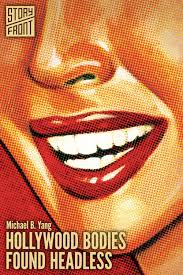
Michael Yang's story, "Hollywood Bodies Found Headless," tells the story of an aspiring child actress and her mother living in the shadow of a serial killer.

Michael Yang’s story, “Hollywood Bodies Found Headless,” tells the story of an aspiring child actress and her mother living in the shadow of a serial killer.

Michael B. Yang’s stories have appeared in Ploughshares, Michigan Quarterly Review, and The Seattle Review. He lives in Austin, Texas, where he is currently working on a novel.

To read his story “Hollywood Bodies Found Headless” and an exercise on using setting and backdrop to heighten the tension in small, intimate dramas, click here.

Michael Noll

Ron Carlson has said that a story has two parts: the story and the world the story comes into. I usually read that to mean that there’s the dramatic thing that happens and the more mundane context that lends the drama meaning. But you seem to have reversed the roles in this story. The story about the child actress and her struggling mother is, in some ways, more mundane than the background world of a serial killer on the loose. Did you ever play around with making the serial killer more physically present in the story? I’m curious how the story found its eventual form.

Michael Yang

Okay, here’s my confession. I just checked and the first draft of the story was written in 2007. That’s seven years since I began writing it until it got published. Seven years. I don’t know how many drafts there have been in the interim.

Strangely, in all those drafts I don’t think that the serial killer was ever present in the story. This was for a number of reasons. First of all, and this might seem odd, but I thought it would be more realistic. Even if you’re in the same time and place where there is a mass murderer, I think it would be pretty unlikely that you’ll be their victim. It’s more likely that you will run into them by chance and nothing happens. Afterwards, you might say that they were nice people who quiet and kept to themselves (of course), but it’s more likely that you would survive the encounter. Second, I wanted to create a feeling of unease and fear in living in the same city as a serial killer. I imagine the sense of danger would color every interaction, and that was the backdrop I wanted in the story.

Michael Noll

The story is set in Los Angeles, which has been used as a setting countless times and, as a result, brings its own fictional weight to a story. I mean, it’s possible to talk about L.A. stories in a way that you can’t talk about Kansas City stories or El Paso stories. Yet, I really felt that I was seeing the world for the first time. In part, the freshness is likely from the niche that you portray: acting tryouts for children appearing in commercials. The characters also spend time in an apartment, which is something that you, as the writer, can create from scratch, rather than relying on tropes that already exist. Still, was it difficult to set a story in a place that has been written about so many times?

Michael Yang

Michael Yang's story "Hollywood Bodies Found Headless" appeared in Amazon's literary series, "Day One."

Michael Yang’s story “Hollywood Bodies Found Headless” appeared in Amazon’s literary series, “Day One.”

I know, you’re right. The location is very familiar and there was some pressure in writing about a known place. On top of that, it has auditions and struggling actors, not exactly the freshest take on an L.A. story. I do think that in the very first drafts the story might have taken place in another city, but Sara was too ambitious to remain there and I thought it would heighten the stakes if her dreams were in reach, with the reality of failure more palpable.

I’ve always been fascinated by the entire, difficult process of creating movies, but it seemed interesting to write about it from the perspective of someone experiencing the day-to-day grind. And really, the constant failure and rejection of the actors seemed familiar. It reminded me of being a writer. There’s also a grotesque element in the process of child acting and the pursuit of fame, but I wanted to flip it slightly on its head by making the child the propulsive force instead of the stage mother. When I sent out the story, I had a few comments that Sara seemed to act too old for her age, but I think it fit her character. A very ambitious child can seem older and more business-savvy than someone else her age. I hoped it worked out.

Sara is a product of Hollywood, a place where her ambitions have taken her, so the topic defined the location which helped define the characters.

Michael Noll

The story is remarkably tight given how much exists just off the page. For instance, we know that the narrator has left her husband and her home in Texas to take her daughter to Los Angeles, but the husband appears only in the briefest of scenes, and even then, the focus is on the daughter, not him. Texas is referenced in passing. Did those parts of the story ever push themselves onto the page more fully? Did you have to revise them out, or were they always just in the background?

Michael Yang

This is also strange, but in all those drafts I don’t think that I ever wrote the scenes with both parents. I knew what the relationship was like between the mother and the father and why they broke up, but I wanted the story to take place as close to the ending as possible and I really wanted the fun of writing the commercials. By the way, if you have the chance to write a scene with a made-up advertisements for a fictional product, I highly recommend it.

I first drafted the story when I was examining my own writing process. It was around this time that I decided to think and plot less in the first draft. Even though I might have a general idea of the story’s direction, I wanted to follow where my subconscious took me, hoping that the turns would be surprising and make sense as I was typing. There’s a danger to this – where the wheels of the story might fall into familiar ruts, whether into cliches or into my own habits and proclivities – but the flashes of discovery, when they come, can be exciting.

Michael Noll

Robert Boswell, one of the best-known writing teachers in America, argues in The Half-Known World that writers should not know their characters too well.

Robert Boswell, one of the best-known writing teachers in America, argues in The Half-Known World that writers should not know their characters too well.

The story is playing around with the genre of tabloid sensationalism—the title is “Hollywood Bodies Found Headless.” As a result, I found it interesting how you develop the tension in the novel. When Frank appears, and when the narrator tells him off and then when he shows up at her apartment, I (and probably all readers) thought, “Uh oh.” We expected something awful to happen. And it may eventually happen, but not yet, not within the frame of this story. That must have been a difficult temptation to resist—to not fulfill the bloody expectations of the title, even though the way the story does end is a lot more unsettling than murder. How many drafts it took you to find that ending?

Michael Yang

I’m not certain how many drafts it took for me before I came up with the ending, but I’m pretty happy with it. For me, the appearance of the chicken man seems strange and unexpected, and right.

I was inspired by the essay “Narrative Spandrels” by the writer Robert Boswell in his craft book The Half-Known World. In the essay, he talks about how as we write, there can be an unintended image that recur throughout the story. It’s not planned and may seem inessential, a byproduct of our writing the primary scenes, but if we pay attention, it can shape the story, supply a sub-text, or gesture to the heart of our meaning.

As I worked on the many drafts of my story, at some point I noticed how many times chickens made an appearance, from the mother’s distaste of how live chickens look and act (my niece told me a story about how her pet chickens nearly pecked another, injured chicken to death), how they feed her child, how the old jingle from Chicken Tonight was a bonding experience during better days with her daughter. I also realized that the general feeling in the story was the same as touching raw chicken skin, which is a little disgusting and is also the same creeping sensation the mother feels towards L.A.

By the way, my fantastic editors asked me if the chicken man was entirely necessary, and I said, yes, yes he is.

October 2014

Michael Noll

Michael Noll is the Editor of Read to Write Stories.
An Interview with Jess Stoner

9 Oct
Jess Stoner's essay, "Blues on Wheels," about illegal labor practices at the US Post Office has inspired hundreds of postal workers to write her with their stories.

Jess Stoner’s essay, “Blues on Wheels,” about illegal labor practices at the US Post Office has inspired many postal workers to write her with their stories.

Jess Stoner is the author of the novel I Have Blinded Myself Writing This. Her work has been published in The Morning News, The Rumpus, Burnt Orange Report, and Caketrain, among others. She lives in Colorado and previously lived in Austin, where she worked for the United States Postal Service. Stoner wrote about the illegal and abusive labor practices that she experienced as a postal carrier in the essay “Blues on Wheels.”

To read “Blues on Wheels” and an exercise on writing for a hostile audience, click here.

Michael Noll

The essay contains so many stories of abuse and working conditions that are not only unsafe but illegal. How did you know where to begin telling them? When there is so much to tell, how do you figure out what to put in the essay, what to leave out, and how to organize the stories and details that you choose to include?

Jess Stoner

The most important thing I did, for myself, was wait a few months after I quit to even think about putting anything coherent together. I needed some emotional distance, because I knew it had to be bigger than just “The Post Office is the worst! Feel bad for me!”

Once we moved from Texas to Colorado, I had even more breathing room, and I started researching the history of the USPS.  It wasn’t until after I had read hundreds of posts on postal worker forums and a few books, including Mailman, USA, written by a former president of the National Association of Letter Carriers, that I started to truly understand my experience as a part of a larger narrative.

One thing I knew for certain was that no one outside the USPS understands what the job is like—that’s such a lonely space to inhabit seven days a week. In addition, a fantastic editor I worked with at The Morning News, Rosecrans Baldwin, encouraged me to include not just the micro details (like what a typical morning looks like) but the macro (the historical and political) as well.

I was finally ready to finish the essay after telling a friend about the 40,000 words I had written. His response was: “That’s not an essay, that’s a book.” And that simple answer was so freeing. So maybe I wouldn’t talk about how letter carriers see and feel a city changing in unique ways (a house is torn down and three duplexes are built in its space—multiplying by six the amount of mail and packages you have to deliver); but it could still be a chapter in the book.

Michael Noll

The Dallas Morning News reported that "one in three construction workers in Dallas doesn’t get a break during the work day, no matter the time of day or temperature."

The Dallas Morning News reported that “one in three construction workers in Dallas doesn’t get a break during the work day, no matter the time of day or temperature.”

You mention that Texas, where you worked, is a right-to-work state, which means the power of unions is severely limited. Texas is not alone; it’s one of 24 states with right-to-work laws, which is not surprising. Generally speaking, Americans are not particularly sympathetic to issues of worker safety or abuse. Perhaps it’s due to that old Protestant work ethic: work hard, don’t complain. Or perhaps it’s a result of the poor economy; when so many people are out of work or underemployed, they may have little interest in hearing complains from people with jobs. It seemed that you had these attitudes in mind as you wrote. For instance, you mention your work ethic, which was instilled by your lower middle class background. You remind readers that you could have quit if you wanted to; the job wasn’t a matter of avoiding destitution. I’m curious when these passages entered the essay. Where they always present? Did you have the readers’ skepticism in mind from the beginning? Or did you add them later after getting some initial feedback?

Jess Stoner

It wasn’t just the reader’s skepticism I was worried about; I was worried the entire time I worked at the Post Office that my colleagues would think I wasn’t cut out for the job. It meant everything to me to work hard and earn their respect.

And I was even more worried, from the very first day of training, that if my colleagues knew my background, they would think I accepted the position as an experiment, as fodder for something I’d write about later. In reality, I was proud to deliver the mail, and for the first two months or so, I naively hoped that it would be the last job I ever had.

You know, we hear a lot about the dignity of work. Politicians from the left and right, including President Obama, talk about how a job gives you dignity. I call bullshit. The people I worked with at the Post Office were good parents and grandparents; they were veterans; some of them talked about their strong faith—they all have an innate dignity that has nothing to do with how they earn a paycheck. From them, from my own experiences, and from the experiences of my friends who work at chain restaurants or are sales clerks at big box retailers, I have learned an incredibly important lesson: Work is just what millions of Americans do, despite the indignity.

The Texas Tribune's series "Hurting for Work" reveals the injuries and deaths to Texas workers in the midst of the economic growth nicknamed "The Texas Miracle."

The Texas Tribune’s series “Hurting for Work” reveals the injuries and deaths to Texas workers in the midst of the economic growth nicknamed “The Texas Miracle.”

I mean, for Christ’s sake, the Austin City Council had to pass an ordinance requiring employers to give construction workers rest breaks. According to The Dallas Morning News, one out of every three construction workers in Dallas isn’t allowed to take a water break—even when it’s 110 degrees outside. The Texas Tribune did an excellent, and, I think, award-deserving series called “Hurting for Work,” that details the terrible conditions workers face throughout the state. That more people aren’t horrified and publicly demanding change makes me wonder what the hell is wrong with our country.

Michael Noll

At one point, you describe getting bit by a dog (unleashed, unfenced), and your supervisor’s reaction was, “You’re probably going to get fired.” I can only imagine how incensed and upset you must have been at this. How were you able to control those emotions to write about the incident? Was it a matter of letting some time pass? Or did you use some other strategy to direct your anger?

Jess Stoner

In the moment I was blown away—my vision and mind went white—I felt like I had Saramago’s blindness. I had known, mostly only theoretically, of workman’s comp laws, of OSHA rules—they don’t exactly come up in faculty meetings and I hadn’t worked outside of a university, the state government, or a non-profit in years. I assumed that these laws existed and they were respected. Beyond my initial bewilderment and subsequent anger, I felt, more than anything, beaten down and depressed.

For weeks and months after I quit, I felt a strangling guilt over the fact that I had given up, that I could give up, that I abandoned the carriers and CCAs I worked with who had been so kind and supportive. I had to shake that off though. I had the privilege of walking away. Now what was I going to do with it?

Michael Noll

This essay falls into the long tradition of muckraker journalism: from Upton Sinclair’s expose of the meat packing industry to Barbara Ehrenreich’s book, Nickel and Dimed, about the conditions faced by the working poor. As such, it’s making highly critical claims about not only the USPS as a whole but also individual employees who behaved badly. Did you have concerns about legal repercussions of publishing the essay—libel, for instance? I know that you changed the names of the people involved, but I’m curious what other steps you may have taken to protect yourself from lawsuits or other legal retribution.

Jess Stoner

I’m beyond flattered that you consider my essay in concert with Ehrenreich—whose book I, coincidentally, re-read when I was writing the essay—the margins are full of my notes (like that part about why many low-paid workers get real pleasure from their short cigarette breaks: “Work is what you do for others; smoking is what you do for yourself.”). Nickle and Dimed, in so many ways, is even more depressing to read now; since its publication in 2001, workers are barely making more per hour, and, as we approach a divisive midterm election and are heading into 2016, so few are talking about the burden of affordable housing—which is a huge part of the book.

I have heard from a number of supervisors since the essay was published, and I realize that in my book, I need to include their experiences—because they’re under terrible pressure as well. One thing I regret is cutting a few lines about my supervisor. While I couldn’t predict when the day would go bad, we started each day off with a hospitable “Good Morning,” and no matter what happened afterward, I appreciated that. On my last day, when I had to come back early from a route because my back was so messed up I couldn’t breathe, she happened to be in the office, visiting from her new station, and she was phenomenal—didn’t yell at me, recognized that I needed immediate medical attention. I was so grateful she was there and not the district supervisor.

As for libel, while I’m not thinking, “Come at me bro,” everything I wrote was true, and if I were threatened with legal action, I think the USPS might have to deal with the Streisand Effect. Since the article was published, I’ve received hundreds of emails, tweets, and Facebook messages from carriers, clerks, maintenance workers, and even people who work in upper management, who wrote to thank me for sharing my story, because theirs are all too similar. Many have signed their emails, “Too afraid to give my name,” and while I understand why they would do so, it both breaks my heart and encourages me to continue my work.

October 2014

Michael Noll

Michael Noll is the Editor of Read to Write Stories.

An Interview with Donna Johnson

2 Oct
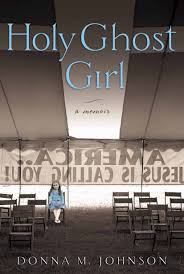
Donna Johnson's memoir, Holy Ghost Girl, "takes you inside a world where God and sin and miracles and deceit and love are so jumbled together you can't tell them apart," according to Jeannete Walls, author of The Glass Castle.

Donna Johnson’s memoir, Holy Ghost Girl, “takes you inside a world where God and sin and miracles and deceit and love are so jumbled together you can’t tell them apart,” according to Jeannette Walls, author of The Glass Castle.

Donna M. Johnson was just three years old when her mother signed on as the organist for the tent revivalist David Terrell. The family became part of the preacher’s inner circle, and Johnson remained part of it until she was left at 17 years old. The experience inspired the memoir Holy Ghost Girl, which was called “enthralling” and “a sure bet” by The New York Times. Johnson has written about religion for The Dallas Morning News and created, wrote, and produced a five-day-a-week radio show called Tech Ranch.  Holy Ghost Girl won the Mayborn Creative Nonfiction Prize for a work in progress. Johnson lives in Austin, TX, with her husband, the author and poet Kirk Wilson.

To read the first pages of Holy Ghost Girl and an exercise on writing setting, click here.

Michael Noll

One of my favorite parts about this book is that you convey the full complexity of David Terrell—not just the juicy stuff like his philandering and not just the effect that he had on people. You really convey the sense of the miraculous that he carried with him. The temptation would have been to reveal the truth behind the miracles he performed (a woman’s tumor vanished from her stomach) and the miracles that happened to him (God called him to give another preacher $100, and, lo and behold, that amount was returned to him manyfold). Did you struggle at all to portray these scenes without saying to the reader, “But, you know, of course, that it was all for show”?

Donna Johnson

I struggled with knowing that people would expect me to debunk the miracles, and that I would lose credibility if I didn’t. I decided to take that risk because in truth, I didn’t see trickery, or perhaps I did, but I didn’t know it. Please understand, I think there must have been some chicanery. But I also think amazing things happened. I experienced a healing in my young adulthood that certainly could have been a mind over matter thing, and I write it about it as such in Holy Ghost Girl. I’m somewhat of a mystic who believes in the rational world and in the possibility of the world of faith. I wanted to write from that perspective.

I now wonder if I should have been more explicit in my exploration of belief and the spell it weaves. The Terrellites saw the world through the lens of faith, and that shaped their conception of reality, and maybe even their actual reality at times. I wrote almost that exact sentence in the book, but readers remember the miracles, not my sideways musings about faith. Like many memoir writers, I hesitated to break the spell of the world I was creating on the page. Maybe I should have been more ruthless in my questioning of what was real and what wasn’t. I don’t know.

Michael Noll

You write quite a few scenes that show Terrell preaching, which presents a significant problem. His services were really long—hours and hours. How did you find the right moments to dramatize? I noticed that you mixed direct quotations with summary. For example, you summarized his reading of the story of Moses (“In a fit of pique, he kills an Egyptian) but then quoted his thoughts on the story (“You can’t outrun God. When God chooses you, you’re chosen for life”). I’m curious how many drafts some of these sermons would go through before you found the right frame or entry point that would allow you to craft a short scene from a great deal of material.

Donna Johnson

Holy Ghost Girl by Donna Johnson portrays the author's experience growing up on the trail of a revivalist preacher who would eventually be sentenced to prison time.

Holy Ghost Girl by Donna Johnson portrays the author’s experience growing up on the trail of revivalist preacher David Terrell.

I thought about the sermons I had heard Terrell preach from the time I was three until I was about sixteen, many of them a variation on a theme, and I chose the ones that seemed to best serve the story and to exemplify his peculiar worldview. I found his voice, his language, still very alive in me, and so I followed it. The phrases and lines quoted in the book are ones he used most often when making a point—and many of those points were made again and again in every sermon. Of course this makes sense only in retrospect. I didn’t have the sense I was choosing what to quote and what to summarize while writing. It felt like I was simply watching and listening to the character and trying to capture it in sentences.

I have no idea how many drafts I wrote of those sermons. I tend to rewrite as I go and move on only when I’m comfortable with a scene. It’s torturous.

Michael Noll

On the subject of that particular sermon, I love that line “In a fit of pique, he kills an Egyptian.” You go on to say, “Chapter three opens with Moses on the lam. God appears to him as a burning bush with a gift for gab and tells him to confront Pharaoh and lead the Israelites out of Egypt.” That is just terrific stuff–such a strong voice. I know that you teach a memoir class, and one of the things you focus on is voice. How conscious were you of trying to construct a voice when writing a passage like this?

Donna Johnson

I worked hard to find that voice. I couldn’t get past the prologue until it emerged—and I had the luxury of working a year on the prologue. The voice is a persona constructed from a multiplicity of selves. The scrappy kid I was when traveling with the tent, the irreverent girl I became who said things to shock people, the failed poet, the outcast who longs to return home; they are all there. Mixed in too is a white trash version of Scout Finch. It’s me, and it’s not me of course. I have to work against tossing off the quick, easy line, a habit from years of writing feature story leads and ad copy.

Michael Noll

There are moments in the narrative when you pull back to provide context. For example, in a story about three white men surrounding Terrell and telling him to kick the black people out of his tent, you step back to give a paragraph of context about the attitude toward black people on the sawdust trail, focusing in particular on the Azusa Street Revival in Los Angeles. Did the need for context like this jump out at you as you were writing? Or was it something you added in revision?

Donna Johnson

Once I finished the prologue, my agent sold the book on proposal. There was no time for revision, and I think the book suffers as a result. I always knew Holy Ghost Girl would include some of the history of Pentecostalism and the sawdust trail. It seemed necessary. Those three white men you mention above were with the KKK and they eventually beat Terrell over his insistence that blacks and whites sit together under his tents. If I had left the story there, Terrell might have seemed too heroic. Pentecostalism was born in Los Angeles on Azusa Street and the worshippers were black and white. The mixed race aspect of the revival ignited indignation among the press and the elites. The tents were one of the few places where blacks and whites gathered as equals in the pre civil rights south. That knowledge places Terrell in a tradition. It seemed important to let readers know he was not utterly unique.

October 2014

Michael Noll

Michael Noll is the Editor of Read to Write Stories.