Archive | Writers on Writing RSS feed for this section

An Interview with Juliana Goodman

10 Apr
Juliana Goodman is a senior English major at Western Illinois University. Her story, "Hot N' Spicy," appeared in BLACKBERRY.

Juliana Goodman is a senior English major at Western Illinois University. Her story, “Hot N’ Spicy,” appeared in BLACKBERRY.

Juliana Goodman is a senior English major at Western Illinois University. She is the recipient of the 2012 and 2013 Cordell Larner Award in fiction, as well as the 2013 Cordell Larner award in poetry and the 2013 Lois C. Bruner award in Nonfiction. Her story, “Hot N’ Spicy,” appeared in Blackberry.

In this interview, Goodman discusses where to start stories, why she writes about characters she knows, and why Mary Gaitskill’s stories are so great.

To read “Hot N’ Spicy” and an exercise on speed in flash fiction, click here.

Michael Noll

This story starts fast. With two words—”This time”—you sum up the entire relationship and jump into the most recent argument. Did you always know to start that way, or did you write about the characters’ history together before figuring out where to begin?

Juliana Goodman

I really just started off in the middle of a relationship that basically runs in a circle. I drew a lot of the background of this couple from some of my own relationships and relationships I’ve seen other people go through. They fight and makeup over the same things over and over again. I usually like to start all of my stories right in the middle of the action to draw readers in and I feel it is even more important to get the ball rolling when it’s flash fiction. Every single word counts and should add to the piece as a whole.

Michael Noll

The story is full of lines that speed up the narrative. Some skip over explanation, like this one: “Will he take the hoodie?” We didn’t know he had one yet, and the story could have explained that he had one, and that it was his favorite, and so on, but it just moves on. Other lines have well-chosen words that convey a lot of information, like this one: “And then he’s gone out into the hot summer night, my heart stuffed in his back pocket with his wallet and a gold condom.” There’s something unexpectedly specific about the word “gold.” But it’s also not too specific. You could have named the condom brand, but you don’t, but we still know, which makes the line funny. That one word tells us a lot about this guy. Does this sort of condensed language happen naturally on the page? What’s your revision process look like? 

Juliana Goodman

I wanted this piece to have a very intimate feel, like a woman writing in her diary.  She doesn’t explain everything because she’s  in the midst of it all. A lot of the language came naturally because I’ve been in similar situations and the feelings she expressed were my own at the time. That’s a big reason why I always write about characters and situations I know because it makes the emotions easier to convey on the page.  My revision process is a little bit different than the traditional one. Rather than writing a rough draft and going back to edit lines, I revise as I write. I may write a paragraph and then go back and reread it to make sure it sounds good before I continue on with the piece. I read the entire piece again when I’ve completed it, but the amount of changes I make at the end is very small since I’ve already looked it over multiple times.

Michael Noll

I sometimes teach undergraduate creative writing workshops, and I’ve found that my students haven’t read a lot of short fiction, neither stories or flash fiction. So, I’m curious who you’ve been reading. I ask in part because the tone of this story is so sure and confident, simultaneously funny and angry. Are you modeling your work after any writers? 

Juliana Goodman

Mary Gaitskill's collection Because They Wanted To

Mary Gaitskill’s collection Because They Wanted To

A couple of my favorite short story collections are by Junot Diaz and Mary Gaitskill. I enjoy Diaz’s work because it’s very honest and incorporates his culture in a way that’s easy to relate to. Gaitskill’s Because They Wanted To, my absolute favorite short story collection, really changed the way I write.  There’s no filter or sugar coating and the emotions are illustrated without cutting any of those embarrassing or shameful feelings that people are sometimes too afraid to write about.  Reading her stories really taught me to write without restraint. If I’m feeling or thinking about something a lot, whatever it is or how humiliating or crazy it may sound, I put it on the page and take it from there.

Michael Noll

Undergraduate students also often don’t know how to submit their work for publication—not the process or where to submit. How did you find Blackberry ? Did some of your writing teachers at Western Illinois point you in its direction, or did you find it on your own? 

Juliana Goodman

One of my creative writing professors at Western Illinois University, Erika Wurth, sent me the link to Blackberry and encouraged me to look into submitting. The process was fairly simple and now I’ve learned to look around for magazines that publish the type of stories I write by browsing the internet and reading past issues of lit magazines.

April 2014

Michael Noll

Michael Noll is the Editor of Read to Write Stories.

An Interview with Shannon A. Thompson

3 Apr
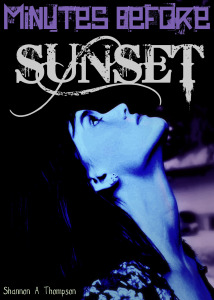
Shannon A. Thompson's novel Minutes Before Sunset was a Goodreads Book of the Month for July. You can read the first chapter here.

Shannon A. Thompson’s novel Seconds Before Sunrise is the latest in the Timely Death series. You can read the opening chapters here.

Shannon A. Thompson is a recent graduate of the University of Kansas and the author of Timely Death Trilogy, a YA paranormal romance series. The latest novel in the series is Seconds Before Sunrise. The first novel, Minutes Before Sunset, was a Goodreads Book of the Month selection.

In this interview, Thompson discusses choosing Kansas over New York for her novel’s setting, when to write multiple points of view, and how to create a community of readers and writers.

(To read the opening chapters of Seconds Before Sunrise and an exercise based on how Thompson sets up the novel’s love story, click here.)

Michael Noll

I’m curious about the importance of place in the trilogy. It’s set in Hayworth, Kansas, which you’ve said is an amalgam of Hays and Ellsworth. This seems, on the surface, like an unusually specific choice for a paranormal romance. The genre states its interests in its name (paranormal and romance), and so the focus of your novels is obviously on the experience of being a shade and the love story between Eric and Jessica. The genre doesn’t really allow for long, lyric passages about place. But does that mean the trilogy could have been set anywhere, or does place matter? To take other examples, place definitely matters in True Blood and Harry Potter, but the American South and England also have much stronger literary histories than central Kansas. In other words, if you set any novel in the South, the reader will have certain expectations. Kansas is more of a blank page, so to speak. How does it impact or color the novel?

Shannon A. Thompson

Understandable question! In the first draft, The Timely Death Trilogy purposely did not have a set place where everything happened. This was because I wanted it to feel like it could happen anywhere, especially right outside your window. Then, in rewrites, I realized I wanted a place, but I didn’t want the stereotypical cities that many novels take place in right now (New York City, Chicago, etc.) I desire more of a “home” feel, something more people can relate to, so I knew I wanted a smaller town, and then I realized I hadn’t read many YA novels in the Midwest, especially fantasy or paranormal based, so I picked Kansas—more or less—as a tribute to the state I lived in during the time of writing the novel.

Michael Noll

The novel is told from two perspectives: Eric and Jessica. How do you know when to switch between them? Sometimes the chapters switch back and forth between points of view, one after the other, but there are also times when Eric gets a couple of chapters in a row. I’m especially curious about the chapters where they are together. How did you decide who got to narrate those chapters?

Shannon A. Thompson

Shannon Thompson's novel "Minutes Before Sunset" was a Goodreads Book of the Month in July.

Shannon A. Thompson’s novel Minutes Before Sunset was a Goodreads Book of the Month. Thompson discusses her approach to POV in the novel at her website.

I actually wrote about how I choose who was speaking on my blog here: Dual Perspectives: Should Characters Have Equal Time to Speak?

To summarize it, I let the characters dictate when they will speak. Since the first novel revolves around the Dark (shades), Eric spoke more, but the second book is focused on what it is like to be a human. Jessica speaks more because of her human background, but it’s a lot more even than the first novel. The third novel, Death Before Daylight, will expose the Light, but I won’t spoil it by saying who speaks more yet. 😀 

Michael Noll

On your website, you give writing tips, and one of them is to avoid inserting technology into fiction—no cell phones, Facebook, Twitter—because it will quickly become obsolete, as flip phones and MySpace have proven. But you also write that excluding technology is a moral choice. You write, “I want young adults to spend more time outside (or reading) and putting an emphasis on social media didn’t sit well with me any longer.” I’m curious how you balance this choice with the fact that social media and technology are becoming integral parts of our lives. Many people (especially teens) cannot use maps, for instance, but instead rely on the GPS apps in their phones. We check our phones constantly (Facebook, Twitter, Snapchat) and even sleep with them. We almost certainly do not plan social gatherings or meetings as far ahead as we did when it was possible to go a day or more without talking to someone. Is it possible that at some point in the future, it will be impossible to write about human life without incorporating phones and social media? Will they become like cars–essential parts of a story?

Shannon A. Thompson

You have a very great point! Yes, technology is part of our everyday lives. However, I still think people will eventually turn away from certain aspects—like how the popularity of MySpace eventually went to Facebook—so I see technology as an unknown expiration date when included in novels. That being said, I see nothing wrong with including social media websites—I loved TTYL when I was younger—but it’s not something I will use in this particular trilogy. I might incorporate it into my future works, but I avoid it for now.

Michael Noll

Many writers (new and old, self-published and those working with publishers) tend to focus on their work but not on the business of publishing. What advice would you give about networking? You’ve been quite successful at building a following. Your author website has more than 14,000 followers. How do you find or attract your readers?

Shannon A. Thompson

I think it’s really important to have a website they can go to. Participate on social media, connect all of your sites, and be willing to understand how the social media changes overtime. Blogging has been my most successful platform. If you’re going to blog, I would suggest keeping a regular schedule with a focused topic range, but it’s more important to connect with fellow bloggers by reading and commenting on writers’ blogs like yourself. Networking is the key to finding fun and entertaining relationships with your readers. Overall, be engaging, entertaining, fun, and informative.

For my website, I began it in September of 2012 under the advice of Robin Hoffman, the Get Published Coach. I started reviewing books and movies, but then I slowly began sharing my story—how I got published and what I was planning on doing in the future. This was before I had my contract for my trilogy. I made sure to begin using a lot of SEO terms in my tags, and through the tags, I found blogs that spoke about similar topics. That’s how I found more writers and readers. Once I did that, I followed trends. For instance, I noticed my book reviews weren’t nearly as popular as my writing tips, so I dropped book reviews and did a long series of writing tips. I also started incorporating my contacts into my blog, which I still do today. On my author Facebook, I will ask questions that followers can answer. If I use their answer, I link to their blog. It’s a way to give back while encouraging a communicating and fun environment. It’s win-win. I honestly believe my every other day schedule is a huge factor, because trends slip majorly on the days I do not blog. Keeping everyone up-to-date is really vital to guarantee return. Having my blog connected with all social facets, so it automatically shares across numerous streams helps. My blog automatically posts on Facebook, Twitter, Google+, LinkedIn, Wattpad, and more.

April 2014


Michael NollMichael Noll is the editor of Read to Write.

An Interview with Aliette de Bodard

27 Mar
Aliette de Bodard is the author of the Aztec mystery-fantasy series, Obsidian and Blood, and the science fiction novel On a Red Station, Drifting.

Aliette de Bodard is the author of the Aztec mystery-fantasy series, Obsidian and Blood, and the science fiction novel On a Red Station, Drifting.

Aliette de Bodard has won almost every science fiction and fantasy award possible: a Nebula Award, a Locus Award, a BSFA Award, as well as Writers of the Future. She has also been a finalist for the Hugo, Sturgeon, and Tiptree Awards. She is the author of the Aztec mystery-fantasy series, Obsidian and Blood; the science fiction novel On a Red Station, Drifting; and many short stories and essays. She lives in Paris.

In this interview, de Bodard discusses mixed points of view, stories as social commentary, and the myth that technology and science are value neutral.

To read “Immersion” and an exercise on writing ideas into fiction, click here.

Michael Noll

Your story, “Immersion” is told from a mixed point of view: second person for the woman who cannot remove her immerser and third person for the woman who scorns the technology. The mix works: second person seems to really fit the dilemma faced by Agnes, and the third-person POV helps avoid confusion between the two narratives. But the mix also probably breaks one of those “rules” that occasionally pop up in writing workshops, something along the lines of “pick a point of view and stick with it.” How did you decide upon this mix? Was Agnes’ POV always told from second-person?

Aliette de Bodard

I’ve never been much of a person for following rules, actually–my motto is more “know why the rules exist so you can break them”. Seriously though, I think rules are very useful when you’re a beginner, mostly in order to leave you time to work on more “simple” things. I think of it as juggling. If you start out learning to juggle with six balls, you’re probably going to get discouraged; an easier way to go about it is to start with one ball, then add another one, etc. until you get to six. Rules are meant to “box” you in a bit, to make stories a little easier to write. But they can become strictures if you keep applying them without thinking on why they exist.

In this particular case, sticking with one POV makes sense in a short story, because you have little space, and shifting POVs too often risks making your story difficult to follow. It’s always been one of the more frustrating rules for me, though, because what you gain in clarify, you lose in subtlety: I think it makes for better, more balanced stories if you combine several points of view–it gives you several different views on the action or on things that characters might not be aware of. In the case of “Immersion”, it makes you understand the plight of Agnes better to see her both from within and from without. The story didn’t start out that way: I originally only had Quy’s point of view, but it wouldn’t gel until I found Agnes’s voice in second person.

Michael Noll

I recently read M. John Harrison’s Light trilogy, which features a character who is addicted to a chemically-induced dream reality. This same idea is present in “Immersion.” Agnes used the immerser to fit in with her husband’s social group but soon began to rely on it until she reached the point that removing it will kill her. Unlike in Harrison’s novels, though, the addiction in your story isn’t complete. The characters, even Agnes, are aware—if dimly—of their altered states. You capture this by showing Agnes half remembering phrases or caught between instincts that are truly remembered and those that are technology-induced. It’s a fine line that you must walk in almost every sentence—capturing warring impulses in a single mind. Did this voice simply come to you one day, or did you have to experiment to find a way to portray this dual state?

Aliette de Bodard

Agnes’s voice was pretty straightforward to write—though I’m not sure if I could sustain it for a full novel, since it’s a bit draining and a bit difficult to write a character like her, who’s not exactly sure which world she inhabits. I’ve always found it easier to write characters with a very large internal life, and she certainly fits the bill.

 Michael Noll

You’ve written some high-powered social commentary in the story. This is probably my favorite line: “It takes a Galactic to believe that you can take a whole culture and reduce it to algorithms; that language and customs can be boiled to just a simple set of rules.” What I found impressive was how you integrated this commentary into the story. It doesn’t come out of nowhere or feel like the author intruding to tell the reader the moral. Instead, you attach it to the technology that is warping the characters’ lives. The technology, you write, “Takes existing cultural norms, and puts them into a cohesive, satisfying narrative…Just like immersers take a given culture and parcel it out to you in a form you can relate to: language, gestures, customs, the whole package.” I wonder what came first: the commentary or the story it’s embedded within. How do you strike the balance between story and the things you want to say?

Aliette de Bodard

It really depends on the story! “Immersion” started out as mostly commentary: I wrote it after we came back from visiting my maternal family in Vietnam, and I saw firsthand the damages the Western mindset was still doing there. I always knew what I wanted to say with the story; and what took time was working out a setting and characters that would help me do this without seeming overly preachy (though every one has a different idea of what “preachy” means. I felt the story was very direct about postcolonial issues, perhaps too overtly so, but there are a lot of people who didn’t even see that aspect of it!).

Michael Noll

When I read about the immersers, I couldn’t help but think of our current technology, especially smart phones. Just as the immersers “take a whole culture and reduce it to algorithms,” so do smart phones take complex processes like navigating space or killing time and flatten them into simple interactions with a screen. I’ve read enough Jaron Lanier to know how much of what we take for granted as “the way we interact with technology” is founded on particular assumptions made by a handful of early programmers and developers, who may or may not have had problematic assumptions about culture. What do you think? Does technology force people and cultures to interact within the paradigm of the technologically dominant culture?

Aliette de Bodard

Aliette de Bodard has composed eight "rules" for writing fiction about cultures other than your own. The rules, along with a lot of other great essays and links, are available here at her website.

Aliette de Bodard has composed eight “rules” for writing fiction about cultures other than your own. The rules, along with a lot of other great essays and links, are available here at her website.

I think there is a persistent myth that technology, like science, is value neutral because it simply reflects the way the universe works. The thing is, they’re both tools, and they’re both created in a cultural matrix that makes them what they are (the pursuit of science, and the way science revolutionised the world at the end of the 19th Century, for instance, is inextricably bound up with the rise of massive colonial empires and the plundering of resources from said empires). Perhaps even more so than science, technology is dependent on who created it and how they thought people would interact with it: a very simple example is that, on a lot of webpages and forms, the encoding is ASCII or some variant that doesn’t handle diacritics. That’s because the people who coded it were Anglophones, and didn’t think anyone would have a need for letters like “é”, “è”, etc. So when you have to type in something, you strip it of diacritics rather than have it come out as garbage text. And that’s a very simple example: now imagine this kind of mindset in, say, the use of a GPS, the use of a personal assistant, the coding of an AI. You see that there is something at work there that goes beyond lines of codes and electronics and whatnot; a set of assumptions that remain unquestioned and perpetuate a status quo. So, yes, definitely, there’s a paradigm that gets enforced when dealing with technology; and it’s a self-reinforcing one because people will then reject, say, any smart phone that doesn’t behave “sort of like an iPhone”–unless there’s some massive shift.

I’m not saying we’re locked in this; there are game changers, and there are people providing technology beyond the dominant paradigm and being very successful at it–but just that we have to be aware of this.

March 2014

Michael Noll

Michael Noll is the Editor of Read to Write Stories.

An Interview with Diana Lopez

6 Mar
Diana Lopez is the author of the YA novel Ask My Mood Ring How I Feel, two middle grade novels, and an adult novella. She won the 2012 William Allen White Award.

Diana Lopez is the author of the YA novel Ask My Mood Ring How I Feel, two middle grade novels, and an adult novella. She won the 2012 William Allen White Award.

Diana López is the author of the adult novella, Sofia’s Saints; the middle grade novels, Confetti Girl and Ask My Mood Ring How I Feel; and the young adult novel, Choke. She was featured in the anthologies Hecho en Tejas and You Don’t Have a Clue and appeared as a guest on NPR’s Latino USA. She won the 2004 Alfredo Cisneros del Moral Award and the 2012 William Allen White Award. Lopez teaches English and works with the organization, CentroVictoria, at the University of Houston Victoria.

In this interview, Lopez discusses the importance of strong imagery, how to find a contemporary teen voice, and when to explain cultural/regional details to a broader audience.

To read the opening chapters of Ask My Mood Ring How I Feel and an exercise on creating conflict with subtext, click here. For those in Austin, Lopez will be reading at the Westbank Library on March 12.

Michael Noll

One of the more challenging technical aspects of fiction writing is getting characters onto the page for the first time. Your novel does this really effectively. The opening pages use a simple object (bikinis) to introduce four of the major characters (the narrator, her mother, her sister, and her little brother) and also the major conflict (the mother’s breast cancer). All of that happens in about three pages. How did you approach this introduction to character and story? Did the book always begin with the bikinis?

Diana Lopez

Yes. The original title of the novel was “9 Bikinis, 500 Names,” which are now the first and last chapters. I have no idea where the number nine came from, but I knew that I wanted to tackle breast cancer from a daughter’s perspective, a girl who is maturing and who has a lot questions about the body. I wanted her mother to be a strong character with a positive attitude, someone who was going to celebrate her days before the mastectomy by showing off. What better way than to wear bikini tops?

I can’t overstate the importance of strong imagery. The best way to make an okay story into a memorable one is specific imagery. My students often struggle with this. They miss so many opportunities. But consider all the power an image holds. First, it gives the reader a chance to experience via the senses—the bikini colors and patterns, the texture of the fabric, even the hot sun that we associate with them. Second, images hold connotative powers. I don’t have to say that Chia’s mom is fun loving, daring, and sexy. What kind of conclusion would the reader draw if the mother bought oversized T-shirts instead or if she threw away her bras the minute she came home from the doctor? In other words, a good image lets the readers co-create as they arrive at their own conclusions about the characters. Imagine all the assumptions we make about a forty year old woman driving a minivan versus a sixteen-year-old boy.

Michael Noll

There’s a really tender moment in the first chapter between the narrator’s dad and mom:

He pulled out her chair. He could be a real gentleman, but since he pulled out Mom’s chair only at fancy dinners or weddings, this was weird. Mom must have thought so, too, because she hesitated before sitting down.

When the narrator’s little brother demands juice, her dad gets it instead of her mom, which causes her mom to say, “Your father’s treating me like an invalid.” What I love about this moment is its complexity: the father is trying to be kind and considerate—and in most situations, his actions would be seen that way—but because of the situation, the mother interprets these actions as insulting and painful. As a result, the reader is shown something deep and powerful about the characters. Did you try to find scenes that would result in this kind of awkward collision of intention and effect? Or was a scene like this a happy accident? Did it just pop onto the page one day?

Diana Lopez

I am always looking for opportunities to heighten the conflict. It’s what drives a novel just as it drives a good conversation. Imagine how bored you are when your friend is relating the non-eventful details of her day, and then imagine how attentive you are when your friend is talking about someone in trouble. We love conflict.

I spent a lot of time figuring out my characters. I write a lot about each before I put them in scenes. What’s the mom like? Where does she come from and how does she spend her days? How about the dad? Where did they meet? Of course, this doesn’t make it into the final book but it definitely informs the scenes.

So to answer your question about that dinner, I imagined the family at the table and the parents having to deal with the mother’s breast cancer. It made sense for the father to be overprotective, and by then, we already know the mother has an independent streak. So the way she takes offense is natural and logical, given who she is. You could put two different people at the same table with the same looming news and get a completely different scene. In fact, that would be a good writing exercise, wouldn’t it?

Michael Noll

You don’t shy away from featuring technology in the novel. In the first chapter alone, the narrator texts her friend, searches through Google Images, and uses her iPod as a point of comparison for something as important as boys. Was it difficult to write about these things from an 8th grader’s perspective? I ask because my students at Texas State have a far different relationship to cell phones and technology than I do—and certainly different than I had at their age. These same students, however, tend to view their younger siblings as getting far more privileges than even they got. They sometimes sound like old geezers complaining about the kids these days. As a writer, how are you able to bridge the generational gap between you and your characters, especially with technology?

Diana Lopez

Good question and one that brings up a very important aspect of writing for young adults. You have to know your audience. I like writing contemporary books, so they have to take place in the here and now, not decades ago when I was a teen. This can be a challenge, but here’s where research comes in. The best way to bridge that generational gap is spend time with teens. Talk to them. Observe them. “Friend” them on Facebook or follow them on Twitter. Soon you’ll start hearing that contemporary teen voice and you’ll get a good sense of how they relate to each other and to technology. I teach too, and I’m still writing on the board. Instead of copying the notes, half the class takes a pic with cell phones. Many public schools are doing away with books and distributing iPads to their students. I only know these things because I’m out there paying attention. A good tool for writers is observation and engagement with the people you hope will read your book.

Michael Noll

I’m curious about the audience for this book. It’s about a Latino family living in San Antonio. They use corn tortillas for tacos—not flour—and take a trip to a cuarto de milagros. In other words, they have an intimate relationship with a particular culture and place. As a result, I was interested in this passage about migas:

Migas was our favorite Tex-Mex dish—a mix of corn tortillas, eggs, tomatoes, onions, and cheese. We loved the recipe. Thing was, migas were for breakfast, not dinner.

The description of migas is clearly meant for readers who do not have the same cultural knowledge as the narrator and her family. This seems to point to a tension that is inherent in a novel about characters who do not often appear in national fiction (though this is changing). How do you balance the need to clue in an audience not familiar with things like Tex-Mex food with the equal need for an honest depiction of a narrator who wouldn’t walk around explaining the basic elements of her life? How do you decide what to explain and what to leave to the reader to figure out?

Diana Lopez

Diana Lopez's middle grade novel Confetti Girl won the William Allen White Award and, according to ALA Booklist, "puts at its center a likable girl facing realistic problems on her own terms."

Diana Lopez’s middle grade novel Confetti Girl is featured the week at Latin@’s in Kid Lit.

Excellent question and one I have struggled with. I want my book to be accessible to many readers. That said, I don’t intentionally highlight these details. Seriously, they are part of my world so it doesn’t occur to me to give the recipe for things like migas or to explain the process of making cascarones like I do in Confetti Girl. This is where an editor who lives in New York comes in. We’ll get to this point in the revision process where she has highlighted places with unfamiliar images or words. I remember the first time this happened. I wrote a book set in Corpus and mentioned T-heads, never realizing how unique that term was. The editor had no idea what I was talking about, so I added an appositive phrase for clarification. Ultimately, that’s what I have to determine. Are there enough context clues or should I be little more explicit? The last thing I want is a reader to stop because she’s confused. In that sense, I am very grateful to have an editor who is not from my world and can point out these places—then lets me decide whether or not I should add that recipe or definition.

March 2014

Michael Noll

Michael Noll is the Editor of Read to Write Stories.

An Interview with Benjamin Reed

27 Feb
Benjamin Reed's story, "King of the Apes," appeared in Arcadia Magazine.

Benjamin Reed’s story, “King of the Apes,” appeared in Arcadia Magazine. He guest edited the most recent volume of the magazine.

Benjamin Reed’s fiction and essays have appeared in [PANK], West Branch, Arcadia Magazine, Blue Mesa Review, Sou’wester, and The Southern Quarterly. He won the 2013 Austin Chronicle Short Story contest, and Junot Díaz selected Reed’s “The Quiet Hunt” as winner of the Avery Anthology Small Spaces Prize. Reed was born in Houston, and grew up near San Francisco. He is a graduate of the University of Texas, and recently earned his MFA from Texas State University, where he currently teaches English. He lives in Austin with his wife and their two boys.

In this interview, Reed discusses Tarzan’s Faustian bargain, writing sex scenes, and the use of metaphor by nomadic hunter-gatherers.

To read “King of the Apes” and an exercise on unrequited love and writing inevitable scenes, click here.

(Reed will be reading at the AWP Conference this week at Big Fiction‘s event at Tony’s Coffee Bar on Saturday at 7:30.)

Michael Noll

In an interview with The Committee Room, you said, “Good stories often show relationships in transition. They often revolve around some kind of power imbalance.” In “King of the Apes,” this is certainly the case—in the jungle, Tarzan has power over Jane, but when he comes to America, the balance shifts in her favor—but it’s also not that simple. To some extent, the characters all use each other. Edgar Rice Burroughs uses Tarzan’s story for money and fame, but Tarzan also uses that relationship for money as well. In New York, the anthropologists and Tarzan use each other—for study and fame (anthropologists) and education and fame (Tarzan). Did that complexity of relationships always exist in the draft? Or, did you start with something simpler (anthropologists taking advantage of Tarzan, Tarzan fighting back) and discover the complexity during subsequent drafts?

Benjamin Reed

Originally, Edgar Rice Burroughs was dead the whole time, just a reference and a quick flashback. No dialogue. I decided to include Burroughs as a living, speaking character in a very late revision. Having him echo Tarzan’s original rejection from Jane totally refocused the nature or “aboutness” of the story: The loneliness and profound sadness a person feels when he can’t let go of someone who has let go of him. For me this was better and more specific than just focusing on my Tarzan’s “alienation” or “strangeness,” which is what I’d been working with before.

Edgar Rice Burroughs published Tarzan of the Apes in 1914 and wrote more than two dozen follow-up novels.

Edgar Rice Burroughs published Tarzan of the Apes in 1914. You can read it for free at The Gutenberg Project.

I’m really heartened by this question, because you totally recognize what I was trying to do. After Jane tilts the axis of power by leaving Africa, Tarzan never recovers. He becomes a man shipwrecked on an alien society. In civilized America, his relationships are transactional and exploitive, both parties using each other as a means to an end. These are Faustian bargains of self-sacrifice and bondage: the researchers who replace Tarzan’s social identity, the circus promoter who retains his liberty, and finally the pulp fiction writer who acquires and appropriates his very life story. He sells off his mind, body, and soul. This sinister trifecta has always been in the story, but it wasn’t until Burroughs showed up that I knew what everything meant.

Michael Noll

Early in the story, you’ve got this amazing passage about the love story that Tarzan wants told about Jane and him:

It’d be “a real literary affair where Tarzan has to find Jane. He has to seek her out. Possibly cover hundreds or thousands of miles. A story that spans the globe. He tracks her down, Jane, who’s in this kind of spell, or a haze, or a hypnosis or something. So Tarzan has to save her, not just from the darkness, but from herself, Edgar. A story where Tarzan reaches inside Jane to keep her from falling off some rocky precipice in her own heart.”

In Tarzan’s summary, it sounds hackneyed and ridiculous, but, of course, the line between hackneyed and emotionally-impactful is a fine one (just ask Nicholas Sparks). Were you ever tempted to write this story?

Benjamin Reed

“Hackneyed?” You’re dead to me, Noll.

No, but seriously, yeah, it’s supposed to be trite and make Tarzan look ridiculous, revealing how he sees things when he’s alone in his apartment, feeling sorry for himself. In a way I feel like I did get to explore this fantastic and divergent storyline by having Tarzan narrate it as a kind of embedded text, a story within a story, while also evincing that sometimes he can get a little drunk on his own a delusional sap.

 Michael Noll

The story moves very quickly over some important moments. For instance, Tarzan’s move from Africa to New York happens in a single paragraph. And, before that move, there are these lines about Jane:

When Jane’s stinking clothes finally fell into rags she covered herself in leaves until I could steal a lion pelt from a hunter’s cache. She taught me how to speak some of her language. And of course, she gave me so much more than that. For a brief time, the jungle flowered into paradise.

Again, another writer might have handled that passage very differently. Was it difficult to find the right way to say, “We had sex?”

Benjamin Reed

Isn’t that a lot of what we deal with when we write? Answering mundane questions like, “What does my character do for money?” or resolving issues of taste, such as how to convey that characters have had sex without engaging in the dreaded sex scene? Honestly though, I think I originally did have a less subtextual sex scene in that spot, and it was probably an orgasm of bad taste and falling flower petals. As writers are taught, I wrote my way out of it. I just revised and revised until what I had in front of me didn’t make me cringe.

Michael Noll

A character gives Tarzan a copy of Shelley’s novel Frankenstein; or, The Modern Prometheus, which is apt since both Tarzan and Frankenstein’s monster had to learn to speak. How did you approach the voice of Tarzan? It would seem challenging for a couple of reasons. For one, you have to invent a way of speaking that suggests the consequences of coming to any language (or, in this case, all language) late in life. In addition to that, you’re also working under the “Idea of Tarzan” that every reader will immediately have in mind once they learn your Tarzan’s name. What was your process for finding the right voice?

Benjamin Reed

It might surprise you how much of my time is preoccupied with this exact problem. Right now I’m working on a story about a tribe of nomadic hunter-gatherers in about 30,000 BCE, and figuring out how they speak is like creating a new language, but one whose only existence is in my own fluid translation. Lately I’ve been grappling with this clan’s dexterity with metaphor. It’s also been made clear to me how heavily English relies upon a modern and contemporary idiom. I thought my “caveman story” would be fun and relatively quick, but it’s become this huge project. I have to create these people’s entire culture and worldview, one word choice at a time.

Tarzan’s voice was easier. As the story is told in retrospect, I totally avoided having to figure out what a “primitive” or transitional Tarzan would sound like. Instead I gave him a normal, only slightly elevated diction, this slight lilting of an ironic aspiration to society, which I hoped would give him that bourgeois tinge of insecurity.

Dr. Kroeber was a real man, an early anthropologist from UC Berkeley who became famous for his work on Ishi, the last surviving member of the Yana people of California. In my story, Kroeber is trying to nudge Tarzan toward greater self-awareness. He gives Tarzan a copy of Frankenstein because, like Shelley’s terrible creation, Tarzan is also a construction, and a kind of monster.

March 2014

Michael Noll

Michael Noll is the Editor of Read to Write Stories.

An Interview with Caeli Widger

20 Feb
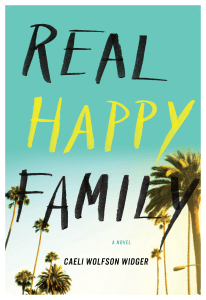
Caeli Widger's essay, "X" appeared in the "Lives" section of The New York Times Magazine. Her first novel, Real Happy Family, will be released by Amazon in March.

Caeli Widger’s essay, “Why I Silence Your Call, Even When I’m Free,” appeared in the “Lives” section of The New York Times Magazine. Her first novel, Real Happy Family, will be released by Amazon in March.

Caeli Widger’s debut novel, Real Happy Family, will be released by Amazon in March. Her work has appeared in The New York Times Magazine, Another Chicago Magazine, and the Madison Review, as well as on NPR and CBS Radio. She currently teaches for Writing Workshops Los Angeles, and has taught in the past for Brooklyn’s Sackett Street Workshop and at University College London.

In this interview, Widger discusses rage against digital culture, what The New York Times will fact check (text messages!), and moving from novel writing to working within an 800-word limit.

To read “Why I Silence Your Call, Even When I’m Free” and an exercise on using context to discover what a story or essay is about, click here.

Michael Noll

A lot has been written about the way social media and technology are impacting our lives, and I suspect that most of us feel as though our own behavior has been changed—I know mine has. However, I’m not sure that I could pinpoint a moment that illustrates that impact. But that’s precisely what you do in this essay. The simple act of not answering your phone becomes an opportunity to discuss the emotional consequences of how you use technology. How did you choose that moment to use as the basis of your essay? Was it immediately after the missed-call and subsequent follow-up occurred—a lightning strike of understanding? Or did you start with a general feeling about technology and then search for a moment to illustrate it?

Caeli Widger

The call with Stacey actually was not the trigger for the original essay. Her voicemail and our follow-up exchanges occurred a full month before I sat down to write the first draft. My initial motivation came from anger and resentment over how digital culture works against all the elements required to sustain a writing life: silence, contemplation, solitude. Unimpeded focus, minimal distraction, etc. As a writer with young children and a day job, I must stay vigilantly protective of my writing time. I was revising my first novel at the time, and had maybe an hour a day to work on it. And I found that unless I wrote at the crack of dawn, it was nearly impossible to “unplug” mentally and fully inhabit my writing mind in a short amount of time. As soon as I began to engage with the digital world, I always felt it breathing on me. I’d run Freedom (internet-crippling software) on my laptop and then cheat and check my phone for messages five minutes later. Or, even if I didn’t check, some little portion of my brain would still be attuned to the possibility of something happening on some technology platform. And every time I caved to the possibility and turned away from my work, I ended up feeling gross and disingenuous. Disgusted with myself. It felt like a low-grade addiction—and I’m a total social media lightweight compared to most people! I don’t use Facebook or Instagram. But the infringement of texting and email and Twitter on my writing life finally sent me into something of a rage one afternoon (after a lame revision session) and I wrote a spontaneous 2000+-word essay on how technology is anti-art and anti-relationship. The relationship part is where the Stacey situation worked itself into that first draft, but it was a minor part. The original essay was a high-level, “our culture’s going to hell” sort of rant-piece. Really, it was an act of catharsis and I didn’t have submitting to The New York Times or any particular publication in mind. I was just feeling disgusted and emotional about everyone being glued to their stupid smart phones, myself included, and needed to blow off steam.

I revised it over the next few days and decided to submit it to the NYT Mag’s “Riff” page. I hit send and forgot about it. A few weeks later Adam Sternbergh, the mag’s culture editor, wrote and said he liked the piece, but that it wasn’t right as a “Riff”. He asked if he could send it over to Jillian Dunham who ran the “Lives” page. Jillian liked it, but said I would need to 1) cut it down by two-thirds (Yikes!) 2) make the piece a personal essay instead of a cultural-criticism piece. She suggested starting over with the Stacey anecdote at the core, so that’s what I did. And I ended up getting to a deeper truth than I originally had in the long rant. It just took me a long time to get there.

Michael Noll

The essay begins with the story and then, in the fourth paragraph, provides context for that story by explaining your phone habits. This is a common structure in magazine essays (begin in scene or with an anecdote, then provide context), but it can also be difficult to get right. There are usually several ways to talk about the same incident, and so providing context means choosing one and, perhaps, disregarding the others. How did you approach this paragraph? Was it difficult to distill your phone/social media habits down to five sentences?

Caeli Widger

Some iteration of that graph was always in the piece. I don’t think I consciously chose to explain my phone habits that way, but one of my original inspirations for writing it—part of what fueled that first burst of culture-rage—was the viscera of digitial communciation. The swooshes and pings and tinkling glass and other nine million noises that can come from a little machine had become way too present—and desired—in my daily life. Even the way my fingers feel on the glass of iPhone, tapping out a text, or the particular swiping motion I make with my thumb to enter my home screen—these are noises and actions that never existed until recently, and here they were, the gateways to NOT writing my book and NOT talking to people I love! So those sensory details organically worked themselves into the “example” paragraph supporting the opening graph, and then in revision I distilled the language into a succinct portrait of my phone habits.

 Michael Noll

The essay moves through time with incredible efficiency. These lines are a perfect example:

“I’ll call you at 2!” I replied.

“You didn’t listen to my voice mail last week, did you?” she asked when we finally spoke.

Was that transition between conversations always so quick, or did you need to revise out some mechanical explanation?

Caeli Widger

The 800-word limit is incredibly restricting. No room whatsover for mechanical explanation! This felt totally unnatural to me. I’m longwinded by nature. Novel-writing suits me—no parameters! But I simply had no choice with this essay. The original graph you cite was originally MUCH longer. I had to pare down every single inessential word. The NYT’s incredibly diligent fact-checking system also helped impose limits. I had to supply screen shots of my text conversations with Stacey and use them verbatim in the essay—no paraphrasing allowed!

Michael Noll

In her debut novel, family drama leads to a public intervention on a TV reality show and in a seedy Reno motel room.

In Caeli Widger’s debut novel, Real Happy Family, family drama leads to a public intervention on a TV reality show and in a seedy Reno motel room.

Your first novel, Real Happy Family, will be released next month. Outside of poetry or highly academic work, there’s probably not a form that is more different than a novel than a personal essay. One is long, digressive, and invented, and the other is short, narrowly-focused, and true. Was it difficult to move from novel-writing to essay-writing?

Caeli Widger

In ways yes, but in others, writing this essay felt like a reprieve from the open-endedness of my usual genre. I’d never really written a personal essay before, outside of one workshop back in grad school. I’d spent years writing short fiction, and when my stories began to creep beyond 10k words, I decided it was time to take the plunge and commit to a novel. And it was totally liberating. But also overwhelmingly free, if that makes sense. You can go anywhere in a novel: into any character’s head, anywhere in time. You can indulge in descriptive language, you can digress for chapters at a time. Of course, in the end, you must impose control and revise endlessly, but there is a Wild West feeling to the early drafts that was pleasantly minimal in the crafting of my essay. Even in that very first “rant draft,” I was fueled by specific subject matter and knew I couldn’t go on too long. This is not to say that I found the form easier—certainly not! Not only did the prose require strict discipline, but it took a long time to tease what I truly wanted to stay out of the piece while staying within 800 words. The piece must have had 30 different endings. Jillian kept sending it back to me saying, Try again. I kept trying to force a transformation on the end. I was avoiding (subconsciously) being honest and facing the fact that what I learned from the experience is that probably won’t change. And that was an uncomfortable, if painful, realization. In this respect, the two forms (novel and short essay) are similar: both require a great amount of patience and openness on the part of the author in order for the true subject to “reveal” itself.

February 2014

Michael NollMichael Noll is the Editor of Read to Write Stories.

An Interview with Nicholas Grider

13 Feb
Nicholas Grider's debut story collection, Misadventure, has just been published by A Strange object and called "vital" by Publisher's Weekly.

Nicholas Grider’s debut story collection, Misadventure, has just been published by A Strange object and called “vital” by Publisher’s Weekly.

Nicholas Grider is a writer and artist living in Milwaukee. He received an interschool MFA from California Institute of the Arts. His photography has been exhibited internationally, and his writing has appeared in Caketrain, The Collagist, Conjunctions, Guernica, and Hobart, among others. His first book, the story collection Misadventure, has just been published by A Strange Object.

In this interview, Grider discusses OuLiPo writing rules, the delight of breaking rules, and his attempt at writing at story without making editorial judgement.

To read “Millions of Americans are Strange” and an exercise on point of view, click here.

To start our conversation, here is how Grider explains the writing process behind “Millions of Americans Are Strange”:

Nicholas Grider

“Millions” is the newest story in the collection and is indicative of where my writing, at least in short fiction, is headed for the next batch of stories. As I was finishing up the manuscript I started getting really interested in the OuLiPo, and still am, with books by Perec and Mathews on my desk as I write this. I made up a simple rule to begin the story, then: Sentence one must be related to sentence two, and sentence two should be related to sentence three, but sentences one and three should be unrelated. That got me off to a start but I realized that I kept inadvertently breaking the rule, so I introduced the stock phrase “Millions of Americans do X or Y” as a bridge, but then decided that wasn’t working well either so I slowly increased their volume until every sentence was a “Millions” sentence and I approached the end of the story more like a prose poem than a narrative.

Michael Noll

The American OuLiPo writer Harry Mathews wrote this essay about Georges Perec's novel La Vie mode d’emploi after it was translated and published in America as Life A User's Manual.

The American OuLiPo writer Harry Mathews wrote this essay about Georges Perec’s novel La Vie mode d’emploi after it was translated and published in America as Life A User’s Manual.

My favorite moment from any OuLiPo work is from Georges Perec’s La Dispiration. As you know, the text contains no letter e’s. There’s a scene where a character orders a drink at a bar, and the lack of e’s becomes crucial. This is what Harry Mathews said about the scene: 

“Perec took this absurdly confining idea and made of it a way of creating incident, situation, and plot. Eggs (oeufs) are declared to be taboo because they sound like e. And so a barman drops dead when asked to concoct a porto flip, a cocktail requiring port wine and eggs.” 

As you’ve experimented with OuLiPo-type limitations, have you found that the limits “create incident, situation, and plot?”

Nicholas Grider

This has a bit to do with being reserved and shy person, but in my art and writing I often start with the questions: what boundaries can I push and what can I get away with? Meaning, how many rules can I break, what can I talk my way into, etc. And breaking all the usual rules means making up my own, which applies not just to this story but to most of my art and writing. I’ll make up a set of rules, then follow them or break them as I see fit. The rules in “Millions” were an attempt to write a story that does not move forward in any way—it slides laterally through dozens of characters too briefly for anything to develop and ends up piling into an anaphora of generalities at the end. When it came to writing the story, though, making a good aesthetic choice always outweighed (and outweighs) following my rule or someone else’s. For me, the rules are less about developing content and more a way to do an end-run around a well-told “beginning, middle, end, character develops” kind of story. I’m currently writing a new collection and there are even more self-made rules, and more complex ones, but rule-making is part of the enjoyment of writing for me.

Michael Noll

When I was in graduate school, we studied a few OuLiPo writers—plus, Italo Calvino was pretty popular in the U.S. at the time—and I remember that the few experiments people tried with the methods often failed because the limitations ended up being too inflexible. I’m curious how you handled this problem. I know that you adjusted or added to your rules once you began. Did you ever break your rules in order to let the story do what it needed to do?

Nicholas Grider

I got ahead of myself and explained this already, but yes: I delight in breaking other peoples’ rules and will break my own as I see fit. A compelling story is always more important than strict adherence to any rules.

Michael Noll

The story never settles into a single plot line or character’s point of view. If anything, the character of the story is those millions of Americans in the title.  Were you temped to follow Gary or George and Allen or Hannah and make the story about them? Was it difficult to maintain a forward momentum without an individual to use as the focus of tension and suspense?

Nicholas Grider

There are snippets in the story that I think would make for interesting stories, and some of those incidents are real things that people have told me about being involved in, but I was more invested in trying to keep the story moving laterally very quickly to want to linger over any individual character. What I can say, though, is that a lot of the obsessions, indecision, illness and weirdness in “Millions” had been explored earlier in a different form in the other stories that comprise Misadventure, so if anything, the incidents in the story serve as a very weird kind of precis for what later happens with other characters in other situations.

Michael Noll

The story’s tone at times seems to mimic the language of certain kinds of news sources, or even Wikipedia. Here’s one example:

“Millions of Americans are suffering due to the current economic climate. Sometimes persons without jobs receive unemployment insurance while they look for new jobs. Jason receives unemployment insurance because he was laid off when the plant closed.”

In this passage, especially the first two sentences, there’s an intentional vagueness that seems common to cable news segments (those 15 second headline readings that anchors do). Generally, as writers, we try to avoid that kind of language, but you really embrace it, and throughout the story, the language develops a sharp edge. How did you approach the tone and language? Did it appear through luck and experiment, or did you have something in mind when you began the story?

Nicholas Grider

Drunken Boat interviewed Nicholas Grider about his art and art projects, which are weird, thoughtful, and amazing. You can read the interview here.

Drunken Boat interviewed Nicholas Grider about his art and art projects, which are weird, thoughtful, and amazing. You can read the interview here.

The generality and bluntness of the style was something I had in mind at the start, for two reasons: first, I wanted the story to seem to have a veneer of scientific or academic detachment, where the story is simply a collection of facts presented in a particular order—an effort to try to decrease narratorial presence, and second because so much of what gets referenced is so bizarre or extreme that I wanted to deliberately underplay people having themselves kidnapped or firing shotguns in malls—trying to avoid sensationalizing anything in an effort to let the incidents do the sensationalizing themselves, so to speak. In other words, I didn’t want to make it seem as if I had any editorial opinion over what I was recounting, but emphasize instead that one character firing a shotgun in a mall and another character being described as three years old bear an equivalent amount of narrative weight.

February 2014

Michael NollMichael Noll is the Editor of Read to Write Stories.

An Interview with Jennifer duBois

6 Feb
Jennifer Dubois' latest novel, Cartwheel, was included on multiple best-of-the-year lists in 2013. Photo credit: Ilana Panich-Linsman

Jennifer Dubois’ latest novel, Cartwheel, was included on multiple best-of-the-year lists in 2013. Photo credit: Ilana Panich-Linsman

Jennifer duBois’ latest novel, Cartwheel, was included in at least eight best-of-the-year lists in 2013. Her debut novel, A Partial History of Lost Causes, was the winner of the California Book Award for First Fiction and the Northern California Book Award for Fiction and a finalist for the PEN/Hemingway Prize for Debut Fiction. Dubois attended the Iowa Writer’s Workshop and completed a Stegnor Fellowship at Stanford University. Her writing has appeared in The New York Times, The Wall Street Journal, Playboy, The Missouri Review, Salon, The Kenyon Review, Cosmopolitan, Narrative, ZYZZYVA, and others. She was the recipient of a 2013 Whiting Writer’s Award and a 2012 National Book Foundation 5 Under 35 award, and she currently teaches in the MFA program at Texas State University.

In this interview, duBois discusses sentence structure and style, her reason for telling a story from multiple points of view, and how she chose Buenos Aires as the setting for Cartwheel.

To read the opening pages of Cartwheel and an exercise on controlling narrative pace with sentence structure, click here.

Michael Noll

The book is a whodunit thriller, and yet the sentences move at a deliberative, almost stately pace. The sentences rarely move in a smooth, straight line. In the first paragraph, for instance, four out of the five sentences contain a phrase that is literally offset by punctuation: commas, dashes, or hyphens. The same thing happens throughout the novel, and, as a result, I was forced to slow down instead of racing ahead to see what happened on the next page–which was a pleasurable relief. Anxious page flipping always causes me to feel as though I’m blindly devouring a jumbo bag of Doritos. I’m curious how aware you were of this sentence style. Was the pace purposeful or simply the way your voice appears on the page? Or was it something that began naturally but fine-tuned through revision?

Jennifer duBois

I never thought of the book as a whodunit, or even really as a thriller. To me Cartwheel is more of a whoisit than a whodunit, I guess you could say: I wanted readers to experience a sense of suspense regarding the question of who Lily Hayes really was, and what they thought she was capable of; I wanted the plot’s twists and turns to stem not only from events, but from readers’ shifting interpretations of those events. And so the sentence structure wasn’t really a conscious effort to slow down the pace; I think I probably do tend to write long sentences anyway—and I definitely get a lot of mileage out of the em dash (case in point). And that tendency was probably amplified by the fact that each chapter is embedded so deeply in each character’s perspective. I really hoped that readers would be persuaded by the logic of each character’s thinking while they were with them, so I tried to capture that thinking in as much detail as I could—there’s a lot of time spent in each of their heads.

Michael Noll

The novel is told from four different points of view: the accused murderer, her father, her boyfriend, and the prosecuting attorney. As a finished product, the novel seems whole and complete, but I imagine that in the early stage of writing it, you were unsure of basic things such as whose point of view to follow. There are other important characters in the novel, but their actions take place mostly off the page. Was it difficult to decide on these four viewpoints? Did you ever try writing from the POV of any other characters?

Jennifer duBois

I knew from the beginning that I would include the prosecutor’s and Lily’s father’s point of view, since it seemed natural to hear from a character totally convinced of Lily’s guilt and a character totally convinced of her innocence. I also knew I’d include Lily’s point of view, but that her sections would end the night of the murder—I wanted her chapters to offer psychological revelations about her character, but not factual revelations about the crime itself. The fourth point of view, Sebastien’s, was the last addition. I liked the idea of hearing from a character whose sympathies weren’t necessarily so pre-ordained as the prosecutor’s or Lily’s father’s were. I also liked the idea of introducing another character whose behavior inspires wildly different reactions, and whose interiority doesn’t always match the way he’s externally perceived. I didn’t think Lily should be the only character in the book who is at the mercy of other people’s interpretations—because in real life, we all are. To misquote St. Francis, I wanted Lily not only to be misunderstood, but to misunderstand.

 Michael Noll

The novel has an interesting sense of place. It’s set in Buenos Aires, but most of the action takes place in a series of closed spaces, not just houses but rooms in houses: Lily’s bedroom, the parlor in her boyfriend’s house, the prosecutor’s bedroom, the rooms in the jail cell where Lily is allowed to talk to her family and lawyers, and the inside of a restaurant where Lily worked. The rest of Buenos Aires appears only briefly, through Lily’s photographs (or as she tours the city, photographing it) or the travels of the other characters to and from the prison. I can imagine beginning this novel and feeling the need to capture the city, to do a kind of travel-show introduction. But this never happens. Were those passages cut, or did you know from the beginning how to approach descriptions of the city?

Jennifer duBois

In her debut novel, Dubois matches a former Russian chess champion intent on challenging Vladimir Putin's political power with a young American college lecturer who, fearing that she has inherited the genes for Huntington's Disease, travels to Russia to find out answers about her dead father.

In her debut novel, Dubois matches a former Russian chess champion intent on challenging Vladimir Putin’s political power with a young American college lecturer who, fearing that she has inherited the genes for Huntington’s Disease, travels to Russia to find out answers about her dead father.

That’s such an interesting observation and question—I never really thought about the number of closed spaces in the book, but you’re totally right. I think it relates to my sense of the book as being “set” in a hazy sphere of personal perception much more than in an objective external reality. There were a few reasons I selected Buenos Aires—I needed a city an American study abroad student might fall in love with, in a country with a judicial system similar enough to our own that said student might not be aware of some key differences. I wanted a country with a language that an American college student might have mastered sufficiently to feel overly confident in. I thought that setting the book in a Catholic country could provide an interesting dimension to its exploration of misogyny/ideas about female sexuality, and that setting the book in a country with such a fraught history with the U.S. could add an interesting angle to the questions about American entitlement/anti-American resentment. But ultimately I didn’t see Cartwheel as trying to depict a particular place as much as trying to depict four different characters’ minds. In a very fundamental way I think Cartwheel is a story that could have been set anywhere—this was very different from my first book, A Partial History of Lost Causes, in which the Russian setting is, in many ways, the book’s soul. And so that’s probably partly why Cartwheel doesn’t linger in the Argentinean setting very much; I hope that readers believe Buenos Aires as the book’s backdrop, but I think its real setting is in the characters’ heads (talk about enclosed spaces).

Michael Noll

 A lot of young writers tend to stick close to home with their work, but this isn’t the case for you. So far, your novels have been about characters who seem, at least on the surface, pretty different than yourself: an American exchange student charged with murder, a father, an Argentinean prosecutor, a Russian chess champion and political dissident. Plus, your novels have mostly been set in countries other than the United States. What draws your imagination to these characters and places? Are you drawing on the books that you read as a child? Were you a news and Time magazine junky as a kid?

Jennifer duBois

I don’t think my own life has really been interesting enough to generate a ton of material for fiction—but even if it had been, I’m not sure writing about it would appeal to me very much. I’m in my own life and memories every day anyway, and there is a real limit to my curiosity about myself. For me, the fun of fiction writing is in imagining lives and experiences that are very different from my own, and in getting to explore ideas or situations that I think are interesting. And because I’ve always been interested in other countries–and in international politics in particular (I was a political science major in college)—that interest winds up showing up in my fiction, along with assorted other preoccupations and hobbies and fun facts and jokes and pet conspiracy theories, etc. If I’m curious about it, it’s going in.

February 2014

Michael NollMichael Noll is the Editor of Read to Write Stories.

An Interview with Justin Carroll

16 Jan
Justin Carroll's story, "Darryl Strawberry," appeared in Gulf Coast.

Justin Carroll was born in California but often writes about Montana, where he spent his formative years. His Montana story, “Darryl Strawberry,” appeared in Gulf Coast.

Justin Carroll was born in California, raised in Montana, and now lives in Texas. He has an MFA from Texas State University and is an assistant editor for the Austin-based literary journal Unstuck. His work has been previously published in Juked, Saltgrass, and Brink.

In this interview, Carroll talks about the necessity of palpable detail, the greatness of Andre Dubus, and revising toward what feels organic.

To read an excerpt from “Darryl Strawberry” and an exercise on descriptive passages, click here.

Michael Noll

This is a story about waiting—and as such, it means that much of the story is dominated by characters thinking and talking (or not talking) about the thing they are waiting for. One risk that seems inherent in this kind of story is that there won’t be enough action or forward movement to keep the reader interested. The note that Kidd Fenner finds under his windshield wiper (“I’m sorry. Can you meet me tomorrow at american legion field at six?”) seems to solve that problem by giving the reader something specific to anticipate. Was this note always part of the draft?

Justin Carroll

This story, like most, has seen its fair share of revisions. The first one did have a note, but it was given in passing, as back story. I was given the idea of putting the note into a scene in a workshop with Debra Monroe at Texas State University. It was in that workshop that I realized readers need a break from interior matters. They need something palpable to grip onto, something that breathes new life into the narrative. In Andre Dubus’s “A Father’s Story,” after a few pages of the narrator summarizing his views on faith, Dubus introduces the reader to his narrator’s daughter, who has just left the narrator’s horse ranch after a visit and who, later, become the catalyst for the story’s climax. We need this; without this introduction, the narrator’s views on faith (which, for the record, are wise, interesting, and entertaining) would begin to seem too one-note. Dubus introduces this different aspect of the story at just the right time. Without this break, stories begin to drag. In the beginning, “Darryl Strawberry” was frustratingly slow; the note was able to enliven this story’s step.

Andre Dubus' short story, "A Father's Story," was reprinted in Narrative Magazine, where you can read it bowl

Andre Dubus’ short story, “A Father’s Story,” was reprinted in Narrative Magazine. If you’re not familiar Dubus, you should set aside half an hour and read this.

Michael Noll

The story begins with a scene that isn’t directly related to the conflict between Kidd Fenner and his son, but by the end of the first paragraph, the conflict insinuates itself into the scene (“Wasn’t as good as Henry, but no one in Hamilton was. This, of course, was before the trouble.”) I can imagine writing a story like this and beginning by discussing the conflict directly, laying out its terms for the reader (The kid’s in trouble again, and his parents aren’t sure what to do this time.) Did you ever try such a direct opening?

Justin Carroll

In the first few drafts, Henry’s issues were revealed too clumsily: “This, of course, was before the meth fiasco,” or something equally cringe-worthy. That was too transparent, obviously. Then I erased any obvious hints of the Henry’s problems until Nora goes to the support group meeting. I think I settled with the line after I discovered that “the trouble” was in Fenner’s own language—this is the only way he’d be able to describe Henry’s status (in the beginning of the story, at least). I still got conflicting views on this matter from some of my colleagues, but in the end “the trouble” felt organic.

 Michael Noll

One of my favorite paragraphs is this one:

The radio plays the same songs Fenner’s heard for twenty years or more: Allman Brothers’ “Ramblin’ Man,” “Big Shot,” by Billy Joel. He’s parked with his back to Safeway’s brightly-lit parking lot; all he can see are the shadowy outlines of the bleachers, the dugout blocked by clumps of snow, the skeletal cyclone fence that runs parallel with the first base line.

It tells the reader that Fenner is at the baseball field without ever saying, “He’s at the baseball field.” Was this intentional? It certainly made me pay closer attention to the language. If you’d identified the field right away, I probably would have skimmed over the details: bleachers, dugout, cyclone fence.

Justin Carroll

Yes, this emphasis on language was intentional. Fenner needed to experience the baseball field in the emptiness of winter. To see the field in direct contrast to the way he’d seen it when Henry had been in tip-top shape seemed important to me.

Michael Noll

This story is full of details that situate it pretty firmly in a particular place, not just details about snow and landscape but also specific proper nouns: Sapphire Mountains, Daly Mansion, Whitman’s Towing, Ravalli County, Chinook Winds, Chapter One Bookstore, Safeway, Town Pump. The effect is that story feels like it occurs in a real place–but, ironically, those specific details also make it relatable. So, even though I’m from rural Kansas, I found myself recognizing aspects of my own hometown in Hamilton, Montana. I’ve heard other writers say that they try to make the places in their story vague so that it seems as though the story could be anywhere. But that’s not what you do. What’s your philosophy toward specific place details like these?

Justin Carroll

Thanks for the compliment! I think specificity of detail is crucial for this story—for all stories, really. I want to be able to walk down the streets of a story, much like I want to feel a beer bottle in a character’s hand. If I can’t access the place of a story, then I probably won’t remember it fifteen minutes after I read the story. My favorite stories build towns and landscapes I can revisit long after experiencing them for the first time; specificity of detail is responsible for this effect.

January 2014

Michael NollMichael Noll is the Editor of Read to Write Stories.

An Interview with Victor Giannini

9 Jan
Vic G Bio Pic 07

Victor Giannini is the author of Scott Too, which has been compared to “the best speculative fiction of Philip K. Dick, and the magical realism of Jose Saramago” by novelist Kaylie Jones.

Victor Giannini is the author of the novella Scott Too and the forthcoming novel Counselor. His writing has appeared at Carrier Pigeon, The Southampton Review, Narratively, (a)Bonac, and Silverthought Press’ IPPY winning anthologies: Silverthought: Ignition and Thank You Death Robot. His art has been featured by various magazines, clothing companies, and skateboard shops.

In this interview, Giannini talks about finding the right frame for a story, the role of pain in writing a personal essay, and why not all facts are necessary to convey the truth.

To read “His Living Room’s a Jungle” and an exercise on using transitions to move through time, click here.

Michael Noll

“His Living Room’s a Jungle” tells a story that spans your entire lifetime and, really, reaches back before you were born. A story that like presents certain challenges, such as how do you, in terms of pure mechanics, move between and link events that occurred in very different time periods. What was your approach to this problem?

Victor Giannini

My first and only idea was this: My father is the center of the story, and I wanted to approach him through my subjective experience. This allowed me an honesty and self-deprecation that balanced out factual errors or emotional wounds.

So I needed to nail the mechanics before I fleshed out the narrative, and it took a few days of writing in my head to find the right flow, like a song with the verses and chorus in the correct places. Memory was the greatest advantage, because at their core, memories are stories. I could slip in and out of memory to find the thematic thread for this story, but that took a few revisions.

The biggest challenge was how to get to the end, which was already set from the moment I pitched the article. The end became the beginning, so it framed the story as a circular piece with nearly linear sequences broken up by flashes to ‘now’ as transitions. The storms and rain were key, and once I moved that idea up front, it allowed me to continue in a more or less linear fashion with the memories.

Handpicking the most dense and condensed memories, with appropriate transitions, became the final puzzle to solve. My memory is highly evocative, if not perfect, meaning I can remember a moment, relive it, even who I was and how I perceived life at the time.

It’s a funny map in my head…start with a scene that sets theme, jump to a scene establishing my narrative reliability (emotionally honest at best), and then, since I was the lens to see my father, jump to the earliest moment I could remember regarding his time in Vietnam, and then work my way back to the opening scene, revealing far more along the way. Throughout the many revisions, which were based on my editor’s questions and suggestions, the framing remained intact as I wrote, rewrote, rewrote, revised, and then cut, cut, cut, all the while keeping that vital key: the framing device, which I view as the frame of a house. When that is confidently set, then it came time to sit down and fill the rooms, so to speak.

Michael Noll

How did you find this framing device (you and your father watching a storm that happened recently, which reminds you of another storm that happened when you were thirteen years old and discovered something about your father)? On one hand, it works the way that our memories really do work, sliding back and forth between past and present. On the other hand, there were probably other intimate, in-scene moments that you could started with–including the scene that you remember when you learn that storms always bring your father vivid reminders of his time in Vietnam. How did you figure out which opening would work best?

Victor Giannini

From the start, I always knew I’d start “today”, me 30 years old and my father at 70.

The theme of rain and storms, making my father slip back in time, and my knowledge of that, gave me the structure I needed to leap back and forth in time as needed. It was an intuitive thing, one of those ideas that wake you up in the night and you just feel confident in it. That was my initial pitch to Narratively.

Victor Giannini with his father, Joe Giannini.

Victor Giannini with his father, Joe Giannini, a relationship that is the subject of “His Living Room’s a Jungle”

Starting “today”, with the storms as a device to link memories across time to “today”, allowed me to hook the reader in with just a bit of mystery and drama, and then slip into that night of interaction and revelation, and back to “today’s storm”, where there is no overt interaction. Now the reader knew that the main subject, my father, would be seen from a lens that can be factually shaky, but emotionally true.

The transitions between these scenes, past to present, memory to now, back again, are the most vital technical aspect. They needed to work on three levels: Functional to the frame as a whole, factual regarding what needs to be known at that narrative moment, and most importantly, emotionally: the transitions making sense that I would take you from “here” to “today” without breaking the flow. If I couldn’t nail the transitions in a very natural way, one that engaged the reader to continue without becoming a road bump, it’d all fall apart. I began to think of them as the last sentence of each chapter. One that gives closure to the section, and a hook to the next.

The only way to figure those out was revision. Thankfully I had a great editor to look at three of the eight versions I wrote. It took constant revision, keeping the focus on my father while still going back into my own mind, finding the most honest way to weave our lives together in service to the main theme, while maintaining emotional honesty.

 Michael Noll

How long have you been thinking about this essay—either working on it or just thinking about how you’d approach it? It seems like a story you might have been shaping and thinking about for a long time, and I wonder what finally clicked and allowed you to write it.

Victor Giannini

What finally clicked … fear. And pain.

Pain for every “character” in the article became the shared theme in which to view every event: Myself as naïve, selfish, expressive, the aftermath for my father and my family … I knew that I was on the right path when I became afraid to publish it. When I became truly afraid, not for portraying myself as imperfect, but for my father, who I treasure deeply, I knew I’d nailed it. Becoming afraid to accidentally misrepresent us was when I knew this story NEEDED to be told, rather than just me wanting to impress people. I was terrified right up until publication. But it was the right kind of fear. It meant I was honest with my reader, myself … and my father.

Victor Giannini's novella, Scott, Too, "echoes the best speculative fiction of Philip K. Dick and the magical realism of Jose Saramago."

Victor Giannini’s novella, Scott Too, from Silverthoght Press, “echoes the best speculative fiction of Philip K. Dick and the magical realism of Jose Saramago.”

As for how long it took…ever since I started writing at 15, I knew someday some aspect of his story must be told. So this particular essay was written for Narratively, and the editor wanted a “veteran story” that was unlike any he’d seen before. Given the non-fiction genre (I write fiction primarily), the greatest challenge was not what to put in, but rather what content to cut out. So I forgot about word count, took off all the restraints, off and wrote a version that was three times as long.

That allowed me to cut, cut, move, revise, which I believe are the key aspects to writing. Well, at least for me. Just let it all out. Be human. Then become an author, go back and revise everything to embrace the narrative. So the initial idea was always there for over a decade, the structural one was immediate, something from my subconscious, and the task of writing actually writing it took over a month. Actually, the context of it being a public article with a set word count was a great constraint during the entire process, even though I initially broke that constraint. Thankfully, my editor provided helpful questions and comments which led me down the path of what to cut, and what tiny parts to put in that weren’t there.

Michael Noll

Your father is publishing a memoir that will, presumably, cover some of this same material. How did that affect your writing of this essay. You’re using your perspective on your father as the lens for understanding him, and sometimes when writers do this, they worry that the lens is too strong–that they’re, in fact, writing more about themselves than about the other person. Did you ever find yourself checking to see if your memories were accurate? Or did the fact that your father was writing his own story free you up to write yours?

Victor Giannini

Bit of a mixture. Knowing my father was writing his own memoir allowed me to leave many facts, many amazing stories, for him to tell. That memoir is his life, his story. That was a huge burden taken off my shoulders, so I could focus on a subjective view of a veteran rather than a historical view.

I allowed myself to write about myself because, in a way, as long as my thoughts were focused on him, he is the main character, and I remain the narrator. This article is still about him but from my perspective. His own writing fills in all of the things I merely list. In a way they compliment each other, so a massive amount of information about his time in Vietnam was “allowed” to be truncated for me. I knew he’d reveal it all, in his own words. At times I did feel I was writing more about myself, but I waited for the revision process, when I had a break and a clear set of eyes to steer my way back towards him. That often meant cutting any ponderings or flowery prose, however pleased I was, that were merely my reactions to my own memories. Then focus the lens back on him.

As for fact checking … I was afraid to do so until the very final draft. To find out what I was right or wrong about outside my experience would skew my memories and emotions. Much of what I learned from my mother was at the last minute. Things that aren’t in the article, regarding my half-brother, my mother, and so on. But it’d be dishonest to force them into the final draft.

My father knew of the project, but I never showed him it. I was afraid it would taint the embarrassing, brutal, honesty that I’d finally cut the piece down to. New information about the past didn’t enhance the narrative at all. It castrated it, because from my point of view…those things didn’t happen. Knowing my father is writing his own memoir absolutely freed me to write honestly, “right or wrong”. Looking back…I’d say that’s actually the most important aspect. I could never write this article, showing him as both a veteran and a man, without the real life assurance that he’d be showing himself through his own memoirs. A strange case of life impacting art, and art reflecting life. This was a true challenge to write, and I’m happy and grateful that I was given the chance.

January 2014

Michael NollMichael Noll is the Editor of Read to Write Stories.