Archive | Writers on Writing RSS feed for this section

An Interview with Marc Watkins

25 Jul
Marc Watkins

Marc Watkins’ story “Two Midnights in a Jug” won Boulevard’s 2008 “Short Fiction Contest for Emerging Writers” and was included in Pushcart Prize XXXV: Best of the Small Presses.

If you liked Daniel Woodrell’s novel Winter’s Bone or the movie based on the book, then you’ll want to keep an eye on Marc Watkins. He was born and raised in Missouri and writes about the down and out of the Ozarks. He currently lives in Oxford, Mississippi, with his wife, the writer Emily Howorth. His stories have appeared in Pushcart Prize XXXV: Best of the Small PressesBoulevardThird CoastTexas ReviewStoryQuarterly, and elsewhere. Recently, he served as a guest fiction editor for the 2012 Pushcart Prize Anthology. In his spare time he edits a website,The Rankings.

In this interview, Watkins discusses the challenge of creating hopeful characters in a hopeless place, the influence of Biblical language, and what it means to be a highly literate high school dropout.

(For an exercise based on his story “Two Midnights in a Jug” click here.)

Michael Noll

The story has an interesting line early on: “Here is where you’re born and here is what you are.” There’s a lot of fatalism and futility wrapped up in a line like that. It suggests that the people who reside in that place will not change. How do you create suspense in a story when the setting is resistant to the ingredient necessary for suspense: the possibility of change? I’m curious how you approached setting a story in such a place.

Marc Watkins

Even though the structure of the story is punctuated by fatalism, it is hope, even in its slightest form, which drives the story. Stories that are essentially static in surface action have to rely on the sublet conflicts to develop tension and create suspense. Each character in the story latches onto a sort of absurd personal fantasy as a means of escape: Margret Jean thinks that a pill will save her broken marriage; Cordell believes that keeping the family together on the land that he lost is key to getting it back, even when a fire rains down ash and kills all the crops; and then there’s Abe, who believes his key to escaping his family is going to work for the very company that caused the fire to destroy the land.

I finished the story before I added the first graph. I like framing stories, especially those that use place as a major part of their structure, and trying to explain the environment by describing its rituals and cultures.

Michael Noll

The story’s point of view borders on omniscient, which is rare for any contemporary American work, let alone a short story. What led you to use that POV?

Marc Watkins

“Two Midnights in a Jug” was inspired by the biblical story of Job, and it was also the first time I’d ever written a third-person omniscient type of story. The voice basically fit the narrative, so I went with it as one of those crazy experiments that you’re supposed to engage in when tackling something wholly alien and new. The voice may have its roots in a church pew. I was raised Catholic and went to a Catholic school for several years. They’d send us to two or three masses each week, and I guess that voice from the pulpit, that sort of weird Bible voice stuck in my brain, even when all other aspects of my faith faded.

Michael Noll

The source of the title "Two Midnights in a Jar"

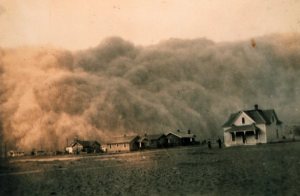
A saying from the Dust Bowl inspired the title “Two Midnights in a Jug.” You can read about an editor who hated the title at Marc Watkins’ website.

On your blog, you wrote about a journal editor who disliked the title because it didn’t make literal sense. In your blog post, you revealed that the phrase “Two midnights in a jug” comes from a Dust-Bowl era description of the blackness of the sky during a storm. There is no mention of this in the story. Do you think it’s necessary for writers to cue readers into the meanings behind the allusions in a work? In other words, are you okay with readers wondering what the title means?

Marc Watkins

The story’s title was actually the last phrase in the final sentence of the story, but it changed because one good piece of advice I picked up from Debra Monroe was to never repeat a title within the confines of a story. The title should encapsulate the world of the story, and when it’s told more than once it risks falling flat like a joke with a punch line told twice. I’m fine with readers left wondering what the title means. I think we all read for challenges and for curiosity, grand or small.

Michael Noll

This story is set in a real place—Eminence, Missouri. Frankly, when I googled the town, I was surprised to find that it was real. Your portrayal of it in the story is so bleak that I assumed that you’d made it up. Obviously the characters in this story don’t seem like the type who might encounter a story in a literary journal, but what about Eminence’s more educated residents? The internet has made the world a small place. Do you worry about what people might think of the way they’ve been portrayed?

Marc Watkins

I’m a walking contradiction; I have a Master’s degree and a G.E.D. In its own private way “Two Midnights in a Jug” manages to convey a level of honesty about how I felt after dropping out of high school. I never grew up in a trailer, but the moment I told people that I was from Missouri and had dropped out, someone asked if I’d been raised in one, and I felt ostracized by the stereotype, so I decided to follow that stereotype down a rabbit hole in the story. The narrative’s bleakness also had to do with my father. He had entered into the final stage of a disease that would claim his life in less than a year.

Even though Eminence, Missouri, is a real town, with real people, “Two Midnights in a Jug” is fiction. As writers we live in conjured spaces that are just as “real” to us emotionally as any physical event or place, and this emotional truth, or as Tim O’Brien calls it “story truth,” matters most. It’s the magic we seek.

July 2013

Profile pic

Michael Noll is the editor of Read to Write.

An Interview with Laura van den Berg

18 Jul
Laura van den Berg is the author of X. Her story, "Farewell My Loveds" does x

Laura van den Berg is the author of the forthcoming story collection The Isle of Youth. In this interview, she discusses her story, “Farewell My Loveds,” which was published at American Short Fiction and Atticus Review and included in her story collection What the World Will Look Like When All the Water Leaves Us.

Laura van den Berg is the author of the forthcoming collection The Isle of Youth, a book that prompted a reviewer for Publisher’s Weekly to gush, “If ever there was a writer going places, it’s Laura van den Berg.” Her previous story collection, What the World Will Look Like When All the Water Leaves Us from Dzanc Books, was called “stunning, desolate, and unforgettable” by Booklist.

In this interview, van den Berg discusses her drafting process, how a childhood spent in Florida gave birth to a slanted sense of reality, and how she reads to solve her own writing challenges.

(For an exercise based on her weird and tender story “Farewell My Loveds” click here.)

Michael Noll

You do such a great job at creating suspense in this story: What is the nature of the hole in the street? How did the parents die? Who was Calvin? I’m curious how you approach a scene or section of a story. Do you begin with an idea (for instance, a hole in the street) and then write a scene that revolves around that mystery, delaying as long as possible the answer? Or do you start with something more nebulous and then create the elements of suspense in revision?

Laura van den Berg

I’m an “intuitive drafter,” which means I usually barrel ahead without any kind of plan and end up with a mess on my hands. The real story often doesn’t emerge until I’m deep into revision. But for “Goodbye My Loveds,” the narrator was always grappling with not having access to certain kinds of information, so many of those questions were present in early drafts. However, the handling of those questions—what will be revealed; what will be denied; what will be offered in the place of the missing information—changed dramatically during the revision process.

Michael Noll

One thing I love about this story is how quickly you’re able to establish the dynamic between the brother and sister. There’s one moment in particular that is really great. The sister has convinced her brother to leave the hole and go back into their apartment. You write, “He thanked me for looking at the hole and apologized for waking me so early. I told him it was okay, I was glad to see it.” There’s such sweetness in that moment. It comes shortly after the sister says that her brother “was twelve, but most people thought he was younger.” In just a few sentences, you’re able to show a basic dynamic (he’s immature and headstrong, she’s protective) but also how much they care for each other. How did you develop these characters in your head? Did you begin with sketches of them? Or did you drop them into the premise to see what personalities emerged?

Laura van den Berg

For this story, “drop them into the premise to see what personalities emerged” would be the most accurate. I did a lot of work around adding texture/complications to the brother-sister relationship, but that rapport was, happily, there from the beginning.

Michael Noll

I’m interested in how you describe your own work. If someone asks you, “What kind of stuff do you write?” what do you say? I ask because this story has a strong non-realistic element. I’m not sure what to call it: absurdist, fantastic? At the very least, the premise is elevated beyond what we generally think of as realism. Your other stories do this as well. You have one about an actress who takes a job pretending to be Bigfoot. Other writers (George Saunders, Manuel Gonzales, Karen Russell) have a similar aesthetic. It’s as if you and they are combining the light, fun qualities of pulp with the emotional depth of literary fiction. What do you think? Do people ever look at you funny when you tell them you’ve written a great, serious, beautiful story about Bigfoot?

Laura van den Berg

I would agree that my work isn’t quite realist, but I’d be hesitant to put myself in league with George Saunders, Manuel Gonzales, and Karen Russell—and not just because they are all staggeringly good writers whose work I admire greatly!

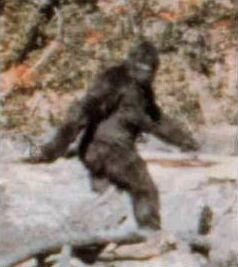
Laura van den Berg's "Where We Must Be" tells the story of a woman who finds a job playing the role of Bigfoot.

Laura van den Berg’s “Where We Must Be” tells the story of a woman who finds a job playing the role of Bigfoot. You can read it at The Nervous Breakdown.

To take the Bigfoot story as an example: a more committed fabulist—or magical realist, etc—might very well have Bigfoot appear as a character in all his (her?) monstrous glory, where as “Where We Must Be” concerns a woman dressing up as Bigfoot, which is certainly unusual, but could, for all we know, be happening somewhere in the world as this very moment (I kind of hope it is!). To me reality seems perpetually multifarious, bewildering; it often evolves, sometimes instantaneously, without our consent. I am most drawn to fiction, and hope to write fiction, where the force of that disorientation is felt.

Aesthetic and perspective are often inexorably linked—how do you see the world? Where are you coming from when you sit down to write? I grew up in Florida, a deeply odd place, in a large family prone to eccentricity. For example, we kept, for a time, a wolf as a pet. Her name was Natasha and she lived in our suburban backyard, where she became a prodigious pacer and digger of holes. In graduate school, the details my peers often tagged as being “surreal” and “bizarre” seemed pretty normal to me; without knowing it, I had carried the eccentricity that I had lived, that felt as much like “reality” as anything, over into my work. In time, I realized that aesthetic/perspective could become not only a stylistic feature, but also a meaningful narrative tool.

I was even more conscious of this when working on my second collection, The Isle of Youth, due out in November. All the stories involve crime/mystery in one way or another: a woman investigating the mysterious death of her scientist brother in Antarctica; a gang of teenage bank robbers called the Gorillas; twin sisters who trade identities and become ensnared in the Miami underworld. I love noir, and I was aware of using that stylistic features as a means of reaching a new—for me—emotional/psychological/aesthetic space.

Going back to Bigfoot, people do look at me funny sometimes. Occasionally people seem surprised that a woman would write about Bigfoot, which surprised me as I hadn’t been aware that cryptids were such masculine territory. And a lot of people have asked if I had ever worked as a Bigfoot impersonator. I’m always a little heartbroken when I have to answer “no.”

Michael Noll

I believe you’re currently at work on a novel. When you find yourself stumped, which writer do you turn to?

Laura van den Berg

The Flamethrowers by Rachel Kushner is about motorcycle racing and the New York art world of the 1970s.

The Flamethrowers by Rachel Kushner is about motorcycle racing and the New York art world of the 1970s.

I am often stumped and while, like most any writer, I have a huge stable of “favorites,” I often find myself turning to whatever I’m reading at the time. For example, I recently finished Rachel Kushner’s stunning novel The Flame Throwers and that novel taught me a great deal about writing a certain kind of first person narrator—and also a great deal about endings. So what I’m reading often helps me with whatever puzzle has been tripping me up—Ah! How did the writer pull off that ending/scene/tone/structure?—or even helps in the sense that it shows me what I hope to avoid in my work—Where did things go awry? How could the writer have avoided falling into that particular trap? How can I avoid falling into that trap? I usually am reading a few books at the same time and more often than not, they are all teaching me something.

July 2013

Profile pic

Michael Noll is the editor of Read to Write.

An Interview with Matthew Salesses

11 Jul
is the author of I’m Not Saying, I’m Just Saying (2013), The Last Repatriate, and two chapbooks, Our Island of Epidemics and We Will Take What We Can Get. He was adopted from Korea at age two, returned to Korea, married a Korean woman, and writes a column about his wife and baby for The Good Men Project. He also serves as the Project’s Fiction Editor. Photo Credit Stephanie Mitchell

Matthew Salesses is the author of I’m Not Saying, I’m Just Saying, The Last Repatriate, and two chapbooks. He was adopted from Korea at age two, returned to Korea, married a Korean woman, and writes a column about his wife and baby for The Good Men Project. He also serves as the Project’s Fiction Editor.
Photo Credit Stephanie Mitchell

When Flannery O’Connor wrote, “Anybody who has survived his childhood has enough information about life to last him the rest of his days,” she could have been talking about the writer Matthew Salesses. He was adopted from Korea at age two and then, as an adult, returned to Korea, where he married a Korean woman with whom he now has a child. The questions of identity inherent in such a life are enormous, and, fittingly, Salesses has dug deeply into those mysteries in his work. He’s the author of I’m Not Saying, I’m Just SayingThe Last Repatriate, two chapbooks, plus numerous essays that have appeared in The New York Times Motherlode blog, NPR, Glimmer Train, The Rumpus, Hyphen, and American Short Fiction.

In this interview, Salesses discusses his revision process, avoiding distractions that keep him from writing, and where he draws the line between fiction and nonfiction.

(For an exercise based on his story, “In My War Novel,” which uses repetition to devastating effect, click here.)

Michael Noll

I once heard Robert Stone explain the difference between a story and a novel by saying that a novel was like a baseball game and a story was like a single pitch. This story seems to fit that description. It’s a single movement. To use another metaphor, it’s almost as if the narrator has an immense lung capacity, and this is the story that he can tell before he runs out of breath. Did you conceive of this story in a rush or is that sense of a single, seamless movement the result of a lot of revision?

Matthew Salesses

In a way, both. I wrote the first draft in a rush. Revision took years. Most of my fiction is written in this way–the rush of the first draft and the long work of shaping that draft into something that reads with that rush. For this story, that meant cutting it up several times and moving the pieces around on my floor, adding and deleting pieces, trying to get the length down and also have enough of an emotional arc.

Michael Noll

Even though the story uses a style of repetition and variation (the phrases “In my war novel” and “Before my wife left me” reoccur in various ways) it actually contains a story that’s been told many times: the demise of a marriage. The difference between all those past tellings and this one is, obviously, the telling. How do you typically approach the plot in a story? Do you outline the events/scenes? Or do you start with the voice and discover where it will take you?

Matthew Salesses

It’s a different process for me from story to story. I wish I plotted everything out beforehand every time–I think that would be easier–but I often start with much less. Here I did start with the voice, and let the anger and sadness and frustration in the voice carry the story where it wanted. Then I trimmed it down like a hedge and guided it closer to where I wanted it.

Michael Noll

Here's a cool book trailer video for I'm Not Saying, I'm Just Saying.

Here’s a cool book trailer video for I’m Not Saying, I’m Just Saying.

You’ve written quite a bit about your own experience as an orphan from Korea, and this story–and others–pick up on that idea. How do you determine what goes into a nonfiction piece and what gets used in a story? Where do you draw the line between the genres–or, how do you separate them?

Matthew Salesses

I don’t determine, other than to keep certain things out of nonfiction that might hurt people close to me. I draw the line at telling the truth about what happened, as it happened, versus telling the truth about what happened through changing what happened.

Michael Noll

You’re a prolific writer. In addition to a story collection, novella, and a chapbook plus numerous nonfiction pieces, you also an editor for The Good Men Project. And, you update your blog often. How do you a) keep up with it all and b) produce so much material. You’re also a father, which means that you’re producing all of this while caring for children. How do you do it? I recently asked Roxane Gay this same question, and she attributed her enormous output to living in the middle of nowhere and insomnia. What’s your method?

Matthew Salesses

Roxane produces far more quality work than I do. I do what I can by not watching TV (except for an occasional kdrama), limiting Facebook time, relying on my wife and Twitter for the news, cutting out most sports (I can’t seem to get rid of my love for football), and not going out much. I also have taken up drinking copious amounts of coffee and only sleeping 6-7 hours a night.

July 2013

Profile pic

Michael Noll is the editor of Read to Write.

Barry Hannah Reads “Water Liars”

5 Jul
Barry Hannah's story "Water Liars" is from his collection Airships and was republished recently at Garden and Gun. Photo credit Maude Schuyler Clay

Barry Hannah’s story “Water Liars” is from his collection Airships and was republished recently at Garden and Gun. You can listen to Hannah read the story here at Wired for Books.
Photo credit Maude Schuyler Clay

Barry Hannah was one of the funniest writers of the last half century, but if you’re new to his work, you might not catch the humor. Thanks to a heads up from the writer Marc Watkins, I’ve found an audio clip of Hannah reading his story “Water Liars.” You can also listen to Don Swaim interview the master of Southern Lit, courtesy of Wired for Books. (If you’re using a Mac, you’ll need to download RealPlayer for Mac.)

(For an exercise based on “Water Liars” and a, perhaps, surprising perspective on the story via Audre Lorde’s essay “Poetry Is Not a Luxury” click here.)

An Interview with Roxane Gay

27 Jun
Roxane Gay is the author of X and the editor of X. She teaches at X.

Roxane Gay is the author of Ayiti, an editor at both The Rumpus and PANK, and a regular contributor at Salon, where this excellent piece about the Paula Deen controversy recently appeared..

When Roxane Gay claims in the bio on her website, that “I write things,” she’s not being vague, only inclusive. Her long list of publications includes the story collection Ayiti and appearances in story anthologies such as Best American Short Stories 2012 and nonfiction journals like Salon. She’s also the co-editor of PANK and the essays editor at The Rumpus. On top of all of that, she teaches writing as an assistant professor of English at Eastern Illinois University.

In this interview, Gay discusses what it means to write a story in the guise of a restaurant menu, the virtues of exposition, and her response to people who claim that there are not that many good writers of color.

(For an exercise based on her menu-themed story “Contrapasso” click here.)

Michael Noll

The first thing every reader will notice about “Contrapasso” is its structure–which is amazing. I’ve never seen a story like it. How did using the conceit of a menu affect how you wrote the story? Did you write the story first and apply it to the structure, or did you take the menu structure and write a story that would make sense within it?

Roxane Gay

This story went through a few drafts. It’s been a while since I wrote this story but even though it has been through a few drafts, the menu structure was always a part of the story. Originally, it was just a few dishes and I was focused more on seven deadly sins and there wasn’t much story there. The editor of Artifice sent me some editorial suggestions and I really took them to heart, and expanded the story into a full blown narrative and the menu structure still worked really well, particularly because I fully committed to it in the revision.

Michael Noll

Just the other day, I heard someone advocating for “show, don’t tell,” but this story seems to show by telling. In part because of the structure, it rarely descends into a scene for longer than a few sentences. There is almost no extended dialogue. Several stories are told that begin and end within a single paragraph (about the cheesemonger, about cooking lobster.) As a result, I’m curious what your attitude is toward that that old advice of “show don’t tell”?

Roxane Gay

We love to talk about showing versus telling in creative writing and the distinction remains useful. That said, sometimes, parts of a story need to be told rather than shown. For better or worse, I use exposition a lot in my writing and I don’t balk when I see exposition in fiction. It’s not that you should show rather than tell. It’s that you should make the choice.

Michael Noll

The “Writing” page on your website is kind of astounding. You’ve published more than 100 stories and many essays. How do you produce so much material? What does your writing process look like?

Roxane Gay

I live in the middle of nowhere and suffer from insomnia quite often and I also write fast because I’m always thinking through story and essay ideas in my head. My writing process involves a lot of procrastination and then sitting down and just writing and writing and writing until I can’t write anymore.

Michael Noll

Roxane Gay's essay "We Are Many. We Are Everywhere" in The Rumpus includes this list of writers of color. It's long and wonderful, especially if you're a teacher looking for stories/essays that move beyond the usual topics for writers of color. Check it out.

Roxane Gay’s essay “We Are Many. We Are Everywhere” in The Rumpus includes this list of writers of color. It’s long and wonderful, especially if you’re a teacher looking for stories/essays that move beyond the usual topics for writers of color. Check it out.

Last summer, you wrote a piece for The Rumpus (We Are Many. We Are Everywhere) about the idea within the publishing world that the reason writers of color have little visibility is that there simply are not very many of them. So you put together a list. You also said this: “This is not a token list of writers to go to when you need someone to write about race—these writers write about a wide range of subjects.” What reaction did this statement get? What do you think needs to happen so that a statement like that is no longer necessary?

Roxane Gay

Great question. That whole project was really successful. A great list of writers was compiled. I don’t know that the statement you highlighted got a specific reaction but I included it because all too often, people tend to think that writers from a certain group should only write about issues specific to that group. I wanted to make it clear that I wasn’t compiling a list of race-related subject matter experts. I was compiling a list of writers who happen to be of different races and ethnicities. For a statement like that to no longer be necessary, a list like the one I compiled no longer needs to be necessary. We’re a long way from there.

June 2013

Profile pic

Michael Noll is the editor of Read to Write.

An Interview with Kevin Grauke

20 Jun
Kevin Grauke's new story collection, Shadows of Men, was published by Queens Ferry Press and has been called X.

Kevin Grauke’s new story collection, Shadows of Men, was published by Queens Ferry Press and has been compared to the stories of John Cheever, Anton Chekhov, Andre Debus, Richard Ford, William Trevor, and Richard Yates.

Texas occupies a iconic place in American literature. The state has given us Larry McMurtry’s Lonesome Dove and—to some extent—the later works of Cormac McCarthy. Its politicians tend to channel the persona of John Wayne. And yet a truer depiction of modern Texas culture might be the band Arcade Fire’s album The Suburbs. A writer whose work reflects this changing nature of Texas is Kevin Grauke, whose new collection of stories, Shadows of Men, recently won the Steven Turner Award for Best First Work of Fiction from the Texas Institute of Letters.

Kevin Grauke is a native Texan who now lives with his wife and two children in the Historic Germantown neighborhood of Philadelphia. He is Associate Professor of English at La Salle University, where he teaches creative writing and American literature.

In this interview, Grauke discusses what it means to write about Texas and how to write a fight scene. (For an exercise based on the fight scene in his story “Bullies,” click here.)

Michael Noll

At the end of Part Four of “Bullies,” two men get in a fight. You describe their fight in close detail, moving back and forth between physical action and one of the fighters’ thoughts. Many writers find such passages difficult to pull off without sounding like a choreographer: hit here, kick there, etc. But this story doesn’t have that problem at all. I’m curious how you approached this scene.

Kevin Grauke

I think brevity is the key; the scene is only about half a page long, and most of it concerns Dennis’s thoughts, rather than a cataloguing of punches and feints and such. Keeping such a scene as short as possible is important for a couple of reasons: for one thing, “action” sequences such as this tend to start dragging very quickly, to my mind, and for another, most fights that actually take place are nothing like the ones we see in the movies. They don’t involve a lengthy exchange of haymakers; instead, they’re usually quick and clumsy, and I wanted to convey that this fight was definitely of the quick and clumsy variety.

Michael Noll

The fight also occupies an interesting position in the story. It’s the climax, releasing the tension that has built up, and yet the scene that follows has little to do with the circumstances of the fight. As a result, the emotional consequences are felt far away from the scene of the action. Was this intentional–did you plan it early in the drafting process–or was it a happy accident?

Kevin Grauke

I think I knew that the story would play out in this way once I realized that Dennis was going to bully the father of Karl’s bully. Like Dennis, I think we tend to want intensely dramatic moments, in both what we read and in our own lives, to “mean” more than they often do, so I tend to want to problematize the significance of such moments just as soon as they happen in my stories. For instance, Dennis hopes that this action will boost his ex-wife’s opinion of him, and this (probably misguided) hope of his becomes what’s most important, not the fight itself.

Michael Noll

The story appears in a journal, FiveChapters, that has an unusual format. Every story is published serially, over the course of five days. Did you write “Bullies” with a five-part shape in mind? Or did you adapt the structure for FiveChapters?

Kevin Grauke

I didn’t write it with that shape in mind, nor did I adapt it for that structure, as a matter of fact. I have Five Chapter’s great editor, David Daley, to thank for finding the best places to break the story into five “chapters.”

Michael Noll

Many of the stories in Shadows of Men are set in Texas, but it’s a Texas that is suburban rather than dusty and western in nature. This view of Texas seems to becoming increasingly common. The writer Scott Blackwood writes about a similar landscape, and even the band Arcade Fire named its last album (inspired by The Woodlands, a suburb of Houston) The Suburbs. Yet most Texas literature classes taught in Texas focus on cowboys and oilmen. Do you think the literature of the suburb will ever be embraced by the Texas literary establishment?

Kevin Grauke

Kevin Grauke's collection Shadows of Men won the XX prize from the Texas Institute of Arts and Letters. You can read a review of the book here at the Dallas Morning News.

Kevin Grauke’s collection Shadows of Men was published by Queen’s Ferry Press, an independent publisher in Plano, Texas.  According to a Dallas Morning News review, “Grauke details the fecklessness of the American 21st-century urban male with humor and insight.”

Well, if the Texas literary establishment is the Texas Institute of Letters, I would say that it already has to a certain degree, since Scott’s outstanding novel, We Agreed to Meet Just Here, won TIL’s Jesse Jones Award for Best Work of Fiction in 2009, and my collection, Shadows of Men, won the Steven Turner Award for Best First Work of Fiction this year. Whether we like it or not, large portions of Texas are just as urbanized and suburbanized as the rest of the country, so more and more Texas writers will undoubtedly write about such homogenized landscapes. However, cowboys and oilmen live on as myths, and these myths will continue to exert a certain degree of influence in Texas, even if it’s a Texas of malls and subdivisions.

June 2013

Profile pic

Michael Noll is the editor of Read to Write.

An Interview with Jedah Mayberry

30 May
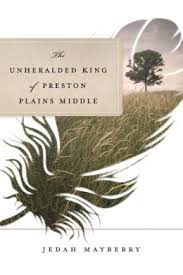
Jedah Mayberry's debut novel The Unheralded King of Preston Plains Middle is out now from River Grove Press.

Jedah Mayberry’s debut novel The Unheralded King of Preston Plains Middle is out now from River Grove Press. You can read the opening pages here.

Jedah Mayberry is the only writer-engineer combination that I’ve ever met. He holds degrees in engineering from Georgia Tech and North Carolina A&T, and amassed several US and foreign patents before returning to his first love, fiction writing. His debut novel, The Unheralded King of Preston Plains Middle, is set in southeastern Connecticut, where he spent most of his youth. He lives with his wife and teenage daughters in Austin, TX.

In this interview, Mayberry discusses country-boy/city-boy story lines, the influence of Edwidge Danticat, and how he’s built a writing community without an MFA.

Michael Noll

I  really like the opening paragraph from the chapter titled Turnabout. You manage to tell us the history and geography of the town of Preston in a way that gives it a personality. You do this, in part, by focusing on what the town is not. How did you approach this passage?

Jedah Mayberry

It was primarily a way to place Preston on the map: north of this, west of that, removed from the other. I started with a hill-and-dale, stroll-through-the-meadow description, and then decided that approach wouldn’t work for what I wanted to accomplish. First, there is very little mass to Preston itself. The town literally sits at the intersection of a couple of two lane roads leading off in either direction through farmland and cow pastures. Second, the contrast between Preston and the surrounding urban centers is where the story derives much of its energy, placing Langston and Trajan outside their element when the time comes to venture to Norwich or New London. The setting introduces a new wrinkle on the country-boy/city-boy encounter when the country-boy would appear,at least by skin tone, more at home with his city counterparts. Yet, quite the opposite is true, giving the brothers a fish out of water feel when they start high school. Focusing attention on what Preston is not underlines the gap the boys need to cross, uneasy footing in part contributing to the various difficulties each encounters along the way.

Michael Noll

The novel approaches an intimate story about a family from the viewpoint of history and migration. How does the large-scale world of the story inform the events that take place? Why start with the broad view of history and geography?

Jedah Mayberry

Rearranging things to preserve a linear progression in scope is the single most outstanding contribution the substantive editor made.

The Unheralded King of Preston Plains Middle is the debut novel from Jedah Mayberry.

The Unheralded King of Preston Plains Middle follows the story of Trajan Hopkins, an African-American teen in a small Connecticut town and the tragic accident that forever changes his life and that of his brother, an Olympic-hopeful athlete whose dreams come to an end.

I invariably encounter people who are surprised to learn that I grew up in CT, that people of color actually live there. I felt it was important to trace the roots a bit to lend credible explanation as to how this family tree grew into (and out of) CT in the first place, how these two boys wound up in close proximity to Norwich yet still managed to fall culturally outside the reach of the kids whom they most resembled.

(Interesting to note, the boys’ appearance is only the surface telling to the story. Later in the narrative, we learn that Langston’s name originated with Langston Hughes, a deep cultural root that ultimately bridges his connection with one of the first Norwichton girls he encounters.) As the story progresses, I introduce a friend/turned villain as well as a suspected villain/turned pseudo-savior. I weave their threads in a similar way using a bit of family history to explain how they wound up in the River Valley as well.

Michael Noll

I know that you’re a fan of the work of Edwidge Danticat. How has her writing influenced your own? Do you at all borrow from or find inspiration in her language, voice, structure, or mixture of biography and fiction?

Jedah Mayberry

I have certainly tried to emulate her voice, speaking as plainly as possible while attending to the world surrounding the characters, working to provide a somewhat out-of-the-ordinary description of a scene without it seeming outlandish or overly ornate, e.g. melding the interrelationship between tribes in molten lava, characterizing the arrival of New Yorkers and Bostonians as a Martian Landing. I’ve gotten lots of feedback on those passages, how they stuck with the reader. I also worked to have something of interest going on in the background to help propel the story: the Eastern Pequot’s petition to be recognized as a sovereign state (which incidentally is still ongoing, not to mention the casino’s impact on the surrounding area). This isn’t quite as traumatic an uprising of one people against another as the one that plays backdrop in Danticat’s The Farming of Bones, ultimately resulting in the massacre of scores of Haitians working as laborers and domestics on the Dominican side of the island. But, based in truth nonetheless, the Native American sub-theme lends color to the region, contributing to the story in its own right.
Michael Noll

There is sometimes an expectation among aspiring writers that they must attend a MFA program. But many writers find different routes to becoming published. That was the case for you. As a result, I’m curious what your writing community looks like? What has helped in your development as a writer?

Jedah Mayberry

I read somewhere recently that a stocked bookshelf is a poor man’s approximation of an MFA. I spend lots of time reading, working to identify what in a particular piece worked for me, how the author succeeded in connecting me to his/her characters, to the story line.

Connect with Jedah Mayberry and find out what he's reading at Goodreads.

Connect with Jedah Mayberry and find out what he’s reading at Goodreads.

Right now, I’m reading Ghana Must Go (Taiye Selasi) as part of a goodreads book group I joined. She uses a lot of singsong in her language, which I worry some might find distracting. However, her description of things (various degrees of snowfall most notably, how the most crippling blizzard starts with a flutter of the first few flakes) is remarkable. She deals with some very complex human interactions, starting with a father to his children, a pair of twins, the connection between which always seems fascinating. She gives each character a special ability to read people or see people or appease people, and then works those characteristics consistently throughout the book. I look at it as an intense study in character development.

So, my community consists of book groups enabling me to discuss openly my take on a piece we’ve read alongside oftentimes differing opinions. A bunch of people from my undergrad (I have a masters in science as opposed to fine arts) started a group on Facebook that caters to alumni in the arts. There are a half-dozen published authors in the group, mostly spiritual-based or strongly Afrocentric. My aim is to push the literary bent first, undoubtedly with a strong cultural base. I’ve gotten lots of insights from them on things related to the publishing industry itself if not actual writing content.

There is an active Tumblr community out there as well, though I’m finding its somewhat diffuse. I’ve discovered a few literary sites. I was recently “followed” by a member funded library based in Brooklyn, NY (mellowpageslibrary). I sent them a copy of the book over the weekend to add to their collection. (BTW, they posted a picture of Amelia Gray with a copy of Threats in recent weeks. She’s someone I met at an ASF sponsored reading a year or so ago. Seeing her photo solidified credibility for me in what mellow pages is doing.)

I also claim the short fiction workshop you facilitated as invaluable in my establishing confidence in my voice. I recognize there were a couple of people in the group who didn’t really dig what I was sharing (as well as one who pretended to). But, a couple others really resonated with it and shared with me at the conclusion of the workshop how much they looked forward to seeing me do something with it. And, you were the first person to tell me that I wasn’t a short story writer necessarily, that I should focus on scene, but write longer, put the story down end-to-end then work to fill in detail. That’s essentially the formula I followed with this latest project. So thank you for that.

May 2013

Profile pic

Michael Noll is the editor of Read to Write.

An Interview with Rene S. Perez II

16 May
Rene S. Perez II

“Lost Days” by Rene S. Perez II first appeared in The Acentos Review and is included in his debut collection, Along These Highways, which won the Alfredo Cisneros Del Moral Prize and was published as part of the Camino del Sol series by the University of Arizona Press.

The stories in “Along These Highways,” the debut collection from Rene S. Perez II, might best be described by that famous quote from Flannery O’Connor: “Anybody who has survived his childhood has enough information about life to last him the rest of his days.”

Like many writers, Perez sets his stories in the place of his youth. What makes Perez unusual, however, is that those places are Corpus Christi, Kingsville, and South Texas, a part of the country rarely seen in literature. That is why the writer Dagoberto Gilb praises the book by writing, “Rene Perez’s collection is much more than a fine first book by an enormously gifted young writer, it is one marking trail for an ignored culture to find its way to the nation’s center.”

In this interview, Perez discusses writing flawed characters, the challenge of writing about a place where you haven’t lived in years, and the importance of small presses to Latino writers.

Michael Noll

The story is about a woman whose son, Bobby, treats her as if she’s intellectually inferior . As I read, I found myself both disliking Bobby but also understanding his actions. How did you approach the balancing act of creating character who is at once unlikable but also understandable?

Rene S. Perez II

This is something I try to do with my fiction, to create characters who, despite however flawed (arrogant, violent, ‘crazy’) they are, are justified. While it may not be apparent in the prose I write, one of my greatest influences, perhaps one of the only writers I can directly cite as being an influence, is Toni Morrison. What she does in all of her texts, starting with The Bluest Eye and Cholly and Pauline Breedlove, is create lives as contexts for her characters’ later flaws and sins. She does this with acts of infidelity, murder, infanticide, and planned terrorism, to name a few throughout her books. In each instance, she provides causal underpinnings for her characters’ actions.

My goal is never really to write crazy or depressed or, as in Bobby’s case, intellectually condescending characters, but when a plot unfolds, if the events are anything outside of the mundane, there has to be some reason for a character to have set them in motion, and in trying to create a believable reality, there has to be a believable causal chain leading characters to act as they do. That’s, really, how I approached Bobby, even with the stakes being as, seemingly, small as they are.

Michael Noll

Starbucks is central to the story. Bobby’s shifting attitudes can be traced by his reaction to the absence or presence of Starbucks. It’s a really succinct, efficient way to show a character’s development over time. Was this an intentional move on your part? Or did you discover it through revision?

Rene S. Perez II

I set out to write the story of the mother. Of course it’s about her relationship with her son, but I wanted her to be on the upswing from a dark time. I also specifically wanted this to be a story very much informed by being set in Corpus Christi. I last lived there over 10 years ago, so my Corpus stories are really of that time.

Rene Perez

To learn more about the geography of South Texas, check out this great interview with Rene S. Perez II that appeared in Critical Mass, the blog of the National Book Critics Circle Board of Directors.

Should anyone from Corpus read it and cry foul over the fact that there’s been a Starbucks (now two), not counting the stand in the Barnes and Noble, in town for over ten years, I would point out that this story is about a time when there wasn’t. I bring that up because it was a natural before-and-after time marker. There would naturally have been a time when this particular character (Bobby), at 16 or 17, likely smoking friend-bought Clove cigarettes, would have complained about the absence of a Starbucks in town. That same kid leaving for Stanford and ending up seeking out a PhD in Lubbock, now smoking rightly attained American Spirits, can be expected to have come to be above the idea of Starbucks. In seeking to have something small resulting in something very big, the idea of Bobby came to me. The Starbucks angle came naturally from that.

Michael Noll

The story is, in terms of plot, very simple: A woman walks into Starbucks, sits for a while, orders coffee, and drives away. Altogether, the events take about an hour. Yet the story is much vaster than that hour, encompassing entire lives and histories. How did you maintain the immediate story arc—woman goes into Starbucks—while at the same time developing the larger histories of the characters?

Rene S. Perez II

This story is all about the histories of the characters. A thing that I do, outside of any writing exercise, is observe people and assume a context for them. I can guess that this is something all people do to some extent, but I lose myself in it sometimes. If I am at the movies and I see someone sitting and watching alone, I guess at a set of circumstances that has put that person there alone. For some reason my imagination always takes it to a place that makes me feel crassly presumptuous—I mean, I go to movies alone all the time for reasons completely unrelated to loneliness and freakish anti-social tendencies (mostly), but I always paint sad pictures of these lives that don’t give any credit to the people actually eating a small popcorn and enjoying a matinee feature.

In setting out to write this story, I let my mind run in that familiar direction. I had a lady taking a day off. Why? How often does she do this? How has her life changed in the time since she first started taking her days? This is her first time in a coffee shop. What has happened in her life that has brought her to this new place? What brings any person into a Starbucks who isn’t a coffee person? We know what would have put Bobby there, but what would have put her there? That’s what the story is about—those things that have brought her to this hour. So it was naturally going to be a small story. I think big truths about characters can be best examined in small stories. Instead of exploring what a character would do when encountering life’s plot turns, I think a small story–woman walks into a Starbucks, gets a coffee, leaves–allows for exploring who a character is when no one else is watching. I didn’t plan it this way, but I think that’s why the story takes place during her private me-time.

Michael Noll

The PEN/Faulkner Award for Fiction was recently announced, and the winner was Benjamin Alire Sáenz. His selection was noteworthy because he is the first Latino to win the award, but he’s been nominated for other awards, so it’s not like he’s been pulled from obscurity. What I found surprising is that he’s published by Cinco Puntos, a small press in El Paso that publishes books primarily about the borderlands and the people who live there. Your book was also released by a small press and your stories have appeared in journals focusing on Texas/Latino/Southwest writers. Is it the case that Latino writers are struggling to break into the big, national presses? Or are small presses with thematic listings (regional, cultural, ethnic) simply doing a better job of discovering and promoting Latino writers? 

Rene S. Perez II

I can’t speak to big presses, breaking into them, struggling to do so. I know of the great work small presses are doing to discover and promote Latino writers. It is a great service to Latino literature. There are stories to be told—truths and lives worth documenting and representing. These small presses are doing pretty heavy lifting as far as Chicano Literature goes, because it’s pretty easy to look around and see that the big presses aren’t publishing too many Chicanos. There are many theories as to why these big presses are skewing toward Dominican and Cuban other such Latino books to publish. Most obviously, they are more traditionally present on the East Coast. I have to believe that with all of the migration of new-comers from Mexico all over the country, there will be new generations of Chicanos born and raised here, with their own stories to tell of their Mexican American existences as I have tried to do with my Texan upbringing. The aforementioned growing demographic that will soon be too big to ignore will only add to families like mine who have been here for generations, living and working for the same American dream, shaded the exact same red white and blue as anyone else’s, no part immigrant to speak of. Until the tide turns and this group that already makes up something like 60% of all American Latinos becomes more evident to those who make the big decisions for the big presses, I am glad to know that there are these small presses doing big work. Already they are reaping big rewards.

May 2013

Profile pic

Michael Noll is the editor of Read to Write.

An Interview with Nahal Suzanne Jamir

9 May
Suzanne Jamir

Nahal Suzanne Jamir’s story “In the Middle of Many Mountains” was first published in Meridian and is the title story of the new collection from Press 53.

Nahal Suzanne Jamir’s debut collection of stories, In the Middle of Many Mountains, grapples with a question that is perhaps unanswerable: Where did I come from? What values and cultures combined to make me who I am? In praising this bold, new book, the writer Debra Monroe puts the question succinctly: How do “we lonely humans trapped in a single life seek the wisdom handed down to us and chafe against it, too”?

Nahal Suzanne Jamir earned her PhD from Florida State University. She’s won numerous story prizes, including First Prize in the 2012 William Van Dyke Short Story Prize, by Ruminate Magazine, for “Stories My Mother Told Me.”

In this interview, Jamir discusses family betrayal, story truth, and why the best fiction resists formal tidiness.

Michael Noll

The story opens with uncertainty—the narrator isn’t sure how to begin. I can imagine a workshop leader claiming that the story should simply start after it’s figured out where to begin. But that seems like poor advice here. In this case, the story seems to be, in part, about the narrator trying to wrap her mind around something awful that has happened—and will happen. The story is about her search for narrative as a way to understand. As you worked on this story, how did you think about the question of where to begin?

Nahal Suzanne Jamir

Yes, and I did get some of that type of feedback when the story was workshopped. I think some readers, workshoppers, and authors expect characters and the stories they live in to be too neat–despite this overwhelming stamp of approval that postsecondary institutions give to postmodern and experimental literature. Yet, stories may be raw both in form and content. We can’t expect the main character to have an inner conflict and insist that the form or approach of every story be neat or rigid. I love stories and novels that de-evolve, like Vonnegut’s Breakfast of Champions. So, I wanted to try to start at that point, to use its rawness and see how far I could push not just the characters but also the form. A neat beginning was out of the question.

The question of where to begin with this story was also strongly influenced by my nonfiction writing. As a younger writer, I only wrote two stories where I engaged with semi-autobiographical material, and I felt odd using material from my life. I felt like I was lying instead of telling the truth. So, in 2004, I started writing nonfiction, and that task required me to retell stories—family stories, religious stories, to even “retell” letters. Retelling epitomizes the struggle to find one’s place and to understand others, especially those who came before.
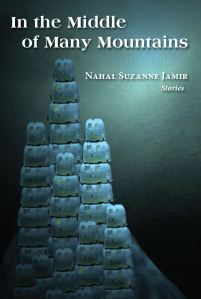
In the Middle of Many Mountains by Nahal Suzanne Jamir

The stories in In the Middle of Many Mountains by Nahal Suzanne Jamir have been described as “a magic that is real.”

The narrator of “In the Middle of Many Mountains” isn’t sure how to begin because she hasn’t wrapped her mind around all of the different facets of her life, and toward the end, you see the struggle to begin a story linked with her retelling stories.

Though tertiary, with this story, I was also inspired by the Canongate myth series in which authors like Jeanette Winterson and Margaret Atwood retell myths. Winterson’s Weight, a re-telling of the Atlas myth, in particular caught my attention. She merges the myth with her own autobiographical material and has this recurring line “I want to tell the story again.” I love this notion because she uses this line and this notion to link her myth and her (real-life) story. So, she is retelling her story when retelling Atlas’s, discovering both.

Michael Noll

The story asks a fascinating question: “Who is the betrayer?” The suggestion is that the answer won’t be clear, otherwise the question wouldn’t be necessary. How do you tackle such a complex, multi-faceted idea in a story? Was this a story you had to sit with for a long time? Just as the narrator struggles to wrap her mind around the events, was it difficult to wrap yours around the nuances of the betrayal?

Nahal Suzanne Jamir

The notion of betrayal is one that has always been intrinsically linked to family because families are supposed to be a certain way. We have family “duties” and “roles.” But I didn’t want to let any of the family members off the hook in this story. When something goes wrong in a family, it usually affects all members. It’s a mess, and no one behaves well. The questions don’t stop. The guilt and anger don’t stop. I also made a conscious choice to have the family be a family that wasn’t new, so to speak. They’d been together as a family for a while. The parents are old. The daughters are not these young innocent children. The betrayals are small and large. The role of the betrayer belongs to each family member—even the mother because she cannot save her husband or her daughters. Marjan betrays by betraying herself (her body) and by leaving the family. The eldest daughter betrays her students and herself by quitting her job, which is her passion. The eldest daughter can also not save anyone and continues contact with the father. The father’s betrayal is obvious and rather cliché, but he also gets betrayed by his own idealism, what he believes a romantic relationship should be.

Most importantly, this line, this question, appears in the story right after the subject of language, the Persian language, which the eldest daughter doesn’t understand. Yet, on a broader level, language or communication betrays all of these family members. Sometimes, though, the misunderstandings that result from these problems with language are funny or even beautiful.

With all of this family trauma unraveling, with all the betrayal, I tried to control the drama (keep it from being melodrama) by using a fragmented form so that no one character and no one scene could go on and on. I also tried to control the drama by contrasting it with stories and information that were tangential yet still relevant. Finally, when I got to a certain point, I realized that the story was long enough. I didn’t want it to be too long.

Michael Noll

The story begins with a place (Nayriz, Iran) where the narrator has never been. It also offers words and phrases from a language (Farsi) that she doesn’t understand well. How do you write about a place, language, and culture when the narrator has only a limited knowledge of them? In other words, the narrator and the reader cannot fully understand the mother without understanding her language and history, but that knowledge isn’t fully available to her or us. That’s an exceedingly tricky, yet often true to life, premise? How did you approach it?

Nahal Suzanne Jamir

At a certain point in my development as a writer, I started to enjoy the challenge of writing far outside of my realm of knowledge. On a literal level, one can obtain information and become some sort of expert on any number of subjects, but for me, acknowledging the lack of knowledge—for myself and for a character—is the most interesting approach because then the story becomes about the struggle. So, admission—or telling the truth or letting the truth just be—my first move with this story and the culture and language that neither the main character nor I knows. In “Good Form,” Tim O’Brien writes, “I want you to feel what I felt. I want you to know why the story-truth is truer sometimes than happening-truth.” So, I’m not going after authority but authenticity through story. I do have a lot of story-truth about Iran passed down to me that I can use or re-create.

The struggle is the story and vice versa. Moreover, the struggle shows both what is known and what is not. The main character in this story has some knowledge, and those pieces are present. I hope that her lack of knowledge also is present, just as white space is in poetry. I think this narrator does search and seek, despite a great deal of confusion on her part, and this is a concept very present in some novels that I greatly admire, like Percy’s The Moviegoer and Ellison’s Invisible Man.

Michael Noll

Near the end of the excerpt, you write about the feeling the narrator gets while talking to her younger sister. She thinks, “I don’t want to see. Her, barely there, five-year-old limbs stretched out to form an adult. We are always playing with dolls.” As someone with younger siblings, I know this feeling exactly, and I can honestly say I’ve never seen it so perfectly and eloquently captured. How do you create a description like that? There are two common metaphors about the writer’s experience, and I wonder which applies to you. Are you the medium transmitting a voice from beyond or the sculptor chiseling away at a rock to reveal the statue hidden within?

Nahal Suzanne Jamir

It begins with this strange moment when you look at someone you knew as a child and you can see that child overlapped with this adult in front of you. Sometimes, my mother will turn to me and say that a look or a sound I’d just made was the same one I’d been making my whole life. And I think we’re always trying to make these connections with our changing bodies. Of course, there is that strange phase where adolescents really do look stretched out. In the story, though, Marjan is anorexic and has done this to herself. So, there is this physical manifestation of her emotional state and reaction to her family’s changes. I feel that there are so many horrible images of those who suffer from anorexia, and there is definitely a stigma attached to it. I wanted to present it in a slightly different way, where her loss of weight brought her back to childhood somehow. The notion of dolls refers to the sisters’ childhood. Yet, the notion of dolls points to, of course, the false representation of the female body (Barbie dolls, etc.). More importantly for me is the notion of playing with dolls, playing out stories and scenarios, that act of creation, which is an act of control—and how by manipulating her own body Marjan is playing in both child-like and adult ways.

The Kingdom by Lars von Trier

The Kingdom by Dutch filmmaker Lars von Trier  inspired  Steven King’s Kingdom Hospital and, now, “In the Middle of Many Mountains” by Nahal Suzanne Jamir. The critic David Moats writes about the appeal of this subtly twisted and influential series at The Quietus.

I also have to admit that the description was influenced by a series titled The Kingdom, created and co-directed by Lars Von Trier. To say this series is weird would be a gross understatement. Toward the end of the series, a child is born to one of the doctors, and this child grows much too quickly. The child develops into a strange adult body (about 10-feet tall) in a very short time, and his voice and his desires remain those of a child. The hospital staff has to build a makeshift scaffold to hold the child up. It’s a haunting image that I’ve admired for a while.

Von Trier always struck me as a writer/director who transmits voices from beyond. I don’t really view my process that way, or as a sculptor either. If anything, I’m the kid who broke that vase that had been in the family for generations—and I’m putting it together piece by piece…and before anyone can figure out what I’ve done and punish me. Gloria Anzaldua writes of one of her books having a “mosaic pattern” that in the end is an “almost finished product. . . .an assemblage, a montage, a beaded work with several leitmotifs and with a central core, now appearing, now disappearing in a crazy dance. The whole thing has a mind of its own. . . .It is a rebellious, willful entity, a precocious girl-child forced to grow up too quickly, rough, unyielding, with pieces of feather sticking out here and there, fur, twigs, clay.” I think there is intense fear, anxiety, and even shame involved in the writing process. This process is very messy and very personal for me. The writing process is not just about hard work and understanding your craft. It’s about not having control. If you’re lucky, I think you have brief moments of sanity and balance.

May 2013

Profile pic

Michael Noll is the editor of Read to Write.

An Interview with Kelly Luce

2 May
Kelly Luce's debut collection of stories will be released in October by A Strange Object.

Kelly Luce’s debut collection of stories, Three Scenarios in Which Hana Sasaki Grows a Tail, will be released in October by A Strange Object.

Not many writer biographies can go toe-to-toe with the condensed history of Kelly Luce: She once attended a fiction seminar in Bulgaria, she was the writer-in-residence at the house where Jack Kerouac lived while writing Dharma Bums, and her forthcoming collection of stories has the knockout title Three Scenarios in Which Hana Sasaka Grows a Tail.

In this interview, Luce discusses first sentences, the challenge of finding the right publisher, and books that make her say, “Oh! Oohhhhh!”

Michael Noll

The story has a perfect first sentence: simple, yet absolutely essential to the story. It accomplishes in seven words what some writers spend paragraphs doing: creating and then breaking a routine in order to find where the story begins. What was your approach to writing this opening?

Kelly Luce

It’s funny; when I read this question I thought about the first sentence (“Since Rooey died, I’m no longer myself.”) and felt sure that it had been there since the start, from draft one. It seems like such an obvious opening. Maybe too obvious, you know? Then I dug up my early drafts. After having a drink to brace myself, I was able to face them…and I discovered that that line didn’t show up until draft 7. I don’t remember what the process was like that brought me to write it. Maybe this is a testament to how hard it is to put into words what is simple and true.

Michael Noll

Very early in the story, this paragraph appears:

“Here’s a story: two people are in trouble and the wrong one dies. There’s been a cosmic mix-up, but there’s nothing anyone can do about it, and they all live sadly ever after. The end.”

I love this paragraph because of its speed. The distance between “two people are in trouble” and “the wrong one dies” is vast—an entire story lies in between—and yet the paragraph doesn’t bother with any of that. It keeps rushing along, moving from the comedy (in the Shakespearean sense) of “cosmic mix-up” to the tragedy of “they all live sadly ever after.” Is this speed something you purposefully strive and revise for, or is it present in the earliest drafts?

Kelly Luce

Thank you. Though this paragraph also came fairly late in the drafting process, after I decided to try introducing the cover-story subplot, it came out fully formed in one of those rare moments when the writing goes on auto-pilot for a few lines. Rhythm and sound is one of my favorite things about writing, the way syllables and commas pile up and suddenly stop, the way long sentences full of short words interact with short ones made of long words, the interplay between vowels and consonants, the way internal rhyme can create gravity. It becomes very physical. So I feel like the answer to your question is, both: I strive and revise for appropriate rhythm, and sometimes it happens in draft one; other times the conditions aren’t right for it to show up until draft ten.

Michael Noll

When I was in graduate school, the term “magical realism” was popular, mostly due to the work of Gabriel Garcia Marquez and Salman Rushdie. There weren’t a lot of American writers working in that style, and some critics wondered if it was possible to use it in this country. Yet here we are a few years later, and the most influential American short story writers are Aimee Bender and George Saunders, whose absurdist, fantastical stories are perhaps an American adaptation of magical realism. Your writing also seems to fall into this category, so I’m curious how you would explain its appeal. How did the American short story move from the dirty realism of Raymond Carver to the contemporary mixture of fantasy/comic-book/genre/absurdist/supernatural elements?

Kelly Luce

I’d love to know more about this, myself. I have no idea why the American short story has moved beyond Carver’s realism, other than to say that things always change, and what’s fashionable in one era is sort of inevitably not in the next. I mean, what made Carver who he was as a writer (other than Gordon Lish)? What was he shifting away from? That might help us figure out why we’ve moved on from his example, at least somewhat. It could be that this generation of writers and readers is reacting to that generation, looking for something different, or at least being willing to consider something different. Certainly other countries have not suffered as much (I consider it a suffering) from a dearth of imaginative/non-realistic writing during this time. What was it about America, specifically, that made realism the desired form of expression during that time?
Still, from what I’ve read of lit mags and recently released collections, as well as at workshops I’ve participated in during recent years, I’d say the dirty realist story still has quite a following. Maybe, with the advent of online publishing, magazines have been able to take a few more chances on what they publish, so there’s both more supply and demand of the weirder stuff. Or maybe the rise of the reputable online venue let publishers who were outside the box get a foot in the box. A story from my collection, for example, was published by the Kenyon Review Online, which purports to publish more experimental work than the regular KR. Would they have printed my story five, six years ago, in KR proper? I don’t know. But a lot of readers have been able to connect with that story and say, hey, this is my kind of thing and I want more, and we’re lucky that there are places like Fairy Tale Review and KRO and Unstuck and a ton of others meeting that demand.
We all loved reading as kids, and kids’ books are often extremely imaginative. In this age of extended adolescence and “be yourself” messages, maybe those writers who wanted to play a bit more with fantasy/genre/supernatural stuff felt free enough to do so. Or maybe like me, they read Girl in the Flammable Skirt or Pastoralia and went, Oh! Oohhhhh!
Michael Noll

You’re a really talented writer with an enviable body of work—stories in reputable journals, prestigious fellowships. Your debut collection of stories, Three Scenarios in Which Hana Sasaki Grows a Tail, will be released in October, and reviewers will almost certainly compare the writing to that of Aimee Bender and Karen Russell, two highly regarded and popular writers.

A Strange Object is an independent press in Austin that publishes books that take risks, buck form, and build warm dwellings in dark places.

A Strange Object is an independent press in Austin that publishes books that take risks, buck form, and build warm dwellings in dark places.

As a result, your book seems like it would be awfully desirable from a publisher’s perspective.

Yet when readers open it, they won’t find the name of a major, New York-based publisher. Instead, they’ll see the name of a new independent press based in Austin—A Strange Object. Can you write a little about how this relationship with A Strange Object came about? What makes A Strange Object a great partner for your collection?

Kelly Luce

Will you marry me? Or can I pay you to come over every day and tell me nice things?

The relationship with A Strange Object started a few years ago, when Jill Meyers was editor of American Short Fiction and accepted a short-short of mine for a series on their website. That’s how I met her and Callie Collins, who worked at ASF as well. When they started A Strange Object, I was one of the writers they contacted about submitting a MS.

I always had a sense that I wanted this book to go to an indie press, and that my novel, which I’ve been at for a few years, would be the New York book. Maybe it’s because I heard so many rumors about story collections being treated like redheaded step-kids by the big house publishers, or maybe it’s because I never had the guts to push my agent, who represented my novel, to do anything with the stories. A\SO is the place for this book, absolutely. They get the strangeness, they love things about it I’d forgotten, and through editing they’ve made it a way better book than it was when I submitted it to them. The design is gorgeous, smart, clean. The cover artist is incredible. When you’re working with a small press, you’re pressed right up against the taste of the people who run it. And these guys are like…I don’t know. They’re not like anybody, which is the point. I have a crush on them.

May 2013

Profile pic

Michael Noll is the editor of Read to Write.