Tag Archives: creative writing exercises

Put Snakes on a Plane

2 Apr

Stacey Swann’s story “Pull” was published in Freight Stories.

No movie ever had a better premise than Snakes on a Plane. If good fiction traps incompatible characters in a room, then what could better than a crowd trapped 20,000 feet above ground with humanity’s oldest enemy. The problem, however, was that the trapped characters had shallow motivations and desires—bite, not get bitten. As a result, the movie had no way to advance or explore the premise. Why do the snakes want to bite the people? Who cares? They’re snakes. It’s what they do. What is the passenger’s ulterior motives? I’ll let Samuel L. Jackson fill you in

So what does great fiction have to do with a B movie? Like Snakes on a Plane, fiction seeks to trap together incompatible characters. The difference is that the incompatibility itself is complex. A clear example can be found in Stacey Swann’s story, “Pull,” which was published here at Freight Stories.

How the Story Works

Unlike the snakes and the passengers, who hate and despise each other equally, the characters in Stacey Swann’s story, “Pull,” suffer from a far more complex incompatibility: unrequited love. As the story makes clear in the final, devastating line, the two characters are incompatible, but only one of them knows it—and even that knowledge cannot save them.

So how does Swann do it?

First, she carefully sets the stage: Jo and Lou are in love.

Then, she defines each character: Lou is a depressive who drops out of Texas A&M and only feels better when Jo returns home while on break from Stanford. Jo, on the other hand, realizes that “she was sad every time she saw him.”

At this point, a lot of writers might wonder what comes next. If Jo is at Stanford, how do you get her back to small town in Texas that she doesn’t like? How do you trap them together? Swann does it by making Jo a casualty of the economy. Her newspaper job has vanished, and Jo, like so many young people, has no choice but to temporarily move home—where her old boyfriend awaits. Perhaps, Jo thinks, the old romantic fire still smolders. Maybe they’ll catch on together. But, of course, that’s not what happens. The events that occur must occur, and, as a result, we read this brilliant final line: “There will always be things we can’t keep ourselves from doing, no matter who it hurts.”

The Writing Exercise

Let’s follow Stacey Swann’s model:

  1. Create a premise: X and Y are in love. X and Y are in prison. X and Y are sailing across the ocean (Life of Pi), X and Y are college friends.
  2. Define each character, stressing the incompatability: X loves Y, but Y is way too old (Harold and Maude); Y is X’s only friend, but Y is an invisible 6-foot-tall rabbit (Harvey); X is neat and uptight, and his roommate Y is an easygoing slob (The Odd Couple); X loves Y, but Y is impotent and can never be with X (The Sun Also Rises).
  3. Trap the characters in a confined place: a lifeboat, a car, an apartment, a small group of friends in a strange city.
  4. Explore the situation. Don’t worry about story or plot. Write a few scenes and see what happens. For instance, what happens if impotent Jake is at a bar and sees the love of his life Brett with another man?

An effective entrapment will make the situation seem inevitable. Of course Jake Barnes is impotent; he was in the war, and the war was terrible, and many soldiers came home injured, and everything that came afterward was bad. Of course Jo returns to her small Texas hometown; where else would she go after losing her job? She couldn’t afford to live in San Francisco without money.

Spend some time thinking about the entrapment. If you find the right approach, and if your characters are compellingly mismatched, you may find that it sparks your imagination and the story begins to write itself.

Good luck.

Twist Endings

26 Mar
Brian Evenson's story "Windeye" was first published in PEN America 11: Make Believe. The story was later selected for the 2010 PEN/O'Henry Prize Stories.

Brian Evenson’s story “Windeye” was first published in PEN America 11: Make Believe. The story was later selected for The 2011 PEN/O’Henry Prize Stories.

Twist endings are one of the great pleasures of literature, yet in contemporary fiction, they’ve gone the way of the dodo and the epiphany. No one would dare write a modern version of O’Henry’s classic “Gift of the Magi,” and for good reason. That twist—and others like it—seem manipulative and implausible to modern readers. Perhaps it’s our attachment, as Americans, to realism, but we tend to relegate sudden reversals of fortune or circumstance to reality TV and schlocky movies. As a result, it’s tempting to ask whether a twist ending is even possible in literary fiction.

Brian Evenson would say yes, and he pulls of a doozy in “Windeye.” The story appeared in The 2011 Pen/O. Henry Prize Stories and was first published by PEN American Center. You can read it at PEN America’s site, here.

How the Story Works

Evenson uses an old trick: Introduce a character, weave her into the fabric of the story, and then—when our attention is focused elsewhere— make us question the character’s reality.  It’s not unlike the strategy used by Ron Howard in A Beautiful Mind; the brilliant mathematician’s friend is real, and when, suddenly, he’s not, we’re as dumbfounded as the mathematician. In “Windeye”, the reader doesn’t fully understand the truth until the mother says, “But you don’t have a sister.” And like the boy, we can’t quite believe it.

In a classic reversal, such as the one used by M. Night Shyamalon in The Sixth Sense, the viewer or reader’s sense of what is true is completely reversed. In other words, we realize that Bruce Willis is, in fact, not alive but dead. “Windeye” operates differently. The twist is incomplete. The sister likely never existed, but the boy can’t be certain of it – and more importantly, the boy will never be certain. Evenson creates this uncertainty with the fifth and final section, jumping forward in time, explaining the reversal’s emotional consequences. The boy can never shake the feeling that one day his sister will “simply reappear, young as ever, ready to continue with the games they had played.” This is similar to the strategy that Alfred Hitchock used in Vertigo, when Jimmy Stewart’s character discovers that he’s been fooled. Instead of ending with the revelation, the film continues, revealing the twist’s emotional consequences.

Once you’ve read the story, it’s easy to go back, section by section, to see how the twist (the fact that the sister isn’t real) is hinted at but not revealed. It’s worth checking out to learn how seeds planted at the beginning gradually sprout and reveal more of themselves.

The Writing Exercise:

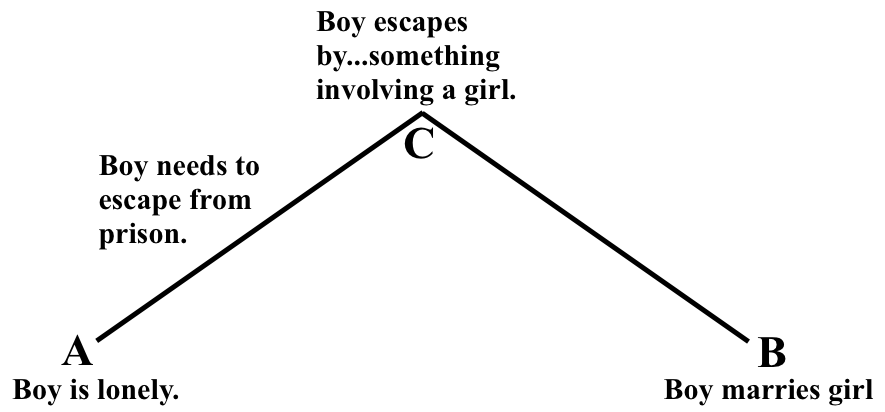
  1. Write down an ending (boy gets girl, woman discovers fortune, man finds happiness, woman is revealed to be a zombie). Don’t be afraid to go boldly where you normally wouldn’t dare.
  2. Now, write down a beginning that is the complete opposite of the ending (girl doesn’t know boy exists, woman is poor, man is miserable, woman is the leader of the free world).
  3. You may think that the trick will be getting from Point A to Point B, from leader of the free world to the realization that she’s a zombie. But a story with a twist—in truth, most stories—depends on a point between A and B. So, give the character a goal that has nothing to do with the Point B (boy needs to escape from prison, woman needs to hide from ex-husband, man wants to become the world’s greatest ventriloquist, woman must pass a national budget).
  4. Screen Shot 2013-03-25 at 8.45.45 PMOutline the events that must occur or the stages the character must go through to reach the destination he or she is aiming for. At the same time, outline backward from the Point B ending. The moment where the outlines meet will be a point of high tension (hopefully). If you can create the outline, all that is left is to flesh out the story, dropping hints of Point B in the beginning.

If you’re working on a story and don’t want to start a new one, try this exercise:

  1. Reread the ending of your story. Then fast forward in time (six months, sixty years, whatever). Summarize the emotional consequences of the ending you have already written. How do the characters live with the ending you’ve given them?
  2. You may discover that the story isn’t over. The story’s true conflict may still be unwritten. Or, you may realize that your original ending is the best one. That realization can be as valuable as any.

Have fun writing.

How to Use Mystifying Detail to Create Conflict

19 Mar
full_swiftbrutal

“Swift, Brutal Retaliation” by Megan McCarron was published at Tor.com and was nominated for a 2013 Nebula Award.

A few years ago, one of my college-composition students read the Christian inspirational novel, The Shack. In the book, a man receives a letter from God. I asked what seemed like a reasonable question: “Where was the letter from? What city was on the postmark?” The student just shook her head. For her, and for the book apparently, details like that were besides the point.

But for a writer, details are exactly the point. (For theologians as well. For instance, did Adam have a belly button? The answer matters more than you might expect.)

Meghan McCarron embraces this sort of mystifying detail in her story, “Swift, Brutal Retaliation.” You can read the Nebula Award-nominated novelette here at Tor.com.

How the Story Works

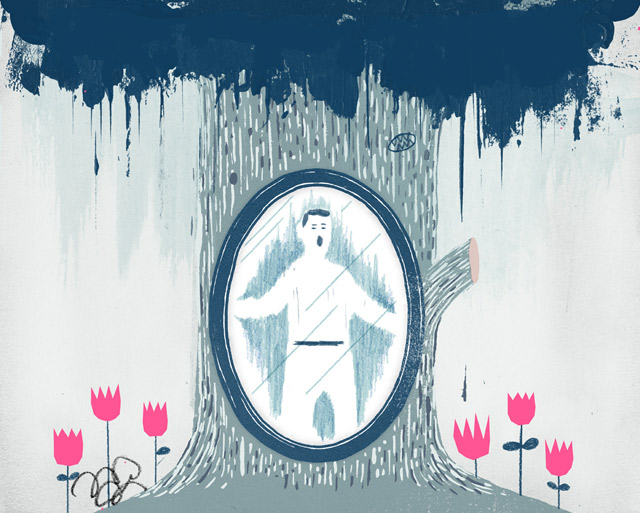
McCarron uses a classic ghost-story concept: Look into a mirror and see someone else’s face. It’s an easy way to move a ghost into a story. But once you have a ghost, what do you do with it? The answer depends on the sort of world the ghost has entered. In the novel The Shack, the world is one that God enters easily, where obvious questions such as   “Where did this letter come from?” are never asked. The world of that novel isn’t the world we live in. But what if it was? Part of the beauty of “Swift, Brutal Retaliation” is that it takes one of the oldest sci-fi/fantasy premises and adapts it to a contemporary world. As a result, the fantastical elements almost become realistic. Here are a few examples of the details that McCarron shows us:

  • “Sinead carried a thermometer and a compass, which the internet had told her were useful for detecting paranormal presences.”
  • “Sinead remembered reading somewhere, or maybe seeing in a movie, that you had to ask ghosts what they wanted.”
  • The ghost, when still alive, loved Facebook, and so his sister logged on and typed, “Ian, r u haunting the house?”

The world that McCarron creates—and that the ghost inhabits—becomes almost tangible. We, the readers, believe this place exists because we can see it in such sharp focus. As a result, when the ghost becomes angry, its fury and frustration are manifested in ways that now seem highly plausible—lasagna, hair-removal liquid. We’ve bought into the world, and now we’re scared when it becomes dangerous.

The Writing Exercise

In some ways, this story answers the age-old question, “What would you do if you saw a ghost?” The question has many possible answers, but the sisters’ responses are not limitless because they are shaped both by their personalities and by their world. So, for this exercise, let’s create a premise and a world.

  1. Choose an unusual premise. Ideally, you’ll pick something fun, something you’ve always wanted to write about: zombies, vampires, ghosts, magic, any one of a thousand sci-fi/fantasy/superhero/whatever premises. 
  2. Now, choose a specific place. It could be your living room. Or whatever is outside your window. Or it could be place in town that you know well. It could even be imagined.
  3. Fill the place with things: silverware, a piano, a fire hydrant, a church pew, a filing cabinet. Give yourself plenty of objects to use later.
  4. Put people in the place—main characters, anonymous faces, it doesn’t matter.
  5. Now, wind the premise like a toy and watch it run. Imagine a scene: If someone has otherworldly powers, how do those powers affect the things you’ve given yourself? If someone must react to a character with otherworldly powers, how are the things used as protection/weapons or for cover? Play around with the premise and things. In other words, do the ghosts use Facebook?

Have fun.

Show the Narrator’s Evolution

12 Mar
Nina McConigley's story "White Wedding" was first published in Memorius and will be included in her forthcoming debut short-story collection, Cowboys and East Indians.

Nina McConigley’s story “White Wedding” was first published in Memorious and is included in her debut short-story collection, Cowboys and East Indians.

If someone asks, “What happens in the story?” the answer can tell you a lot. Maybe it’s a series of actions: guy gets killed in the Louvre, and so another guy interviews people, solves puzzles, meets Jesus’ great-great-etc granddaughter, and together they catch the killer. The main character probably doesn’t have much of an interior life. All changes are plot changes.

But what if the answer is “It’s about this guy, and at first he felt this way, but then he realized he felt this way?” The story is in his head. A story like this can present a problem: if the character’s interior life is the story, how do you show any of it? Most of us want to avoid writing this sentence: “Now he felt different.” But how?

Nina McConigley solves this problem masterfully in “White Wedding.” The story is included in her debut collection from Five Chapter Books, but you can read it here at Memorious.

How the Story Works

The narrator, Lakshmi, lives (and has chosen to live) in Casper, Wyoming, a city and state with an almost-entirely white population. She claims to be comfortable with standing out, but by the story’s end, she has perhaps decided to leave, in part because of her feelings about identity and place. As a result, the reader can gauge Lakshmi’s movement toward “the speed of [her] own escape” by how she feels about Casper.

Here are a few examples of her evolution:

  • The first paragraph ends with this statement: “We were used to white people.”
  • Halfway through the story, the narrator remembers her dying mother’s wish not to be “buried in Western clothes.” Instead, her mother asks to be buried in a sari. The problem is that the “people in the funeral home won’t know how.” But neither does the narrator. As she practices putting on the sari, her mother tells her Lakshmi that she should wear one more often. The narrator remembers thinking, “I would like to wear them more often. But where? To the Wonder Bar? To work?” Suddenly, the narrator isn’t so certain about her relationship to the place’s whiteness.
  • By the day of the wedding, the narrator has learned to dress someone in a sari. But that ability does not give her a connection to her Indian identity. When asked how she feels about being bi-racial, the narrator has usually answered, “It’s the best of two worlds! I get to be American, and Indian. I have two cultures to choose from!” But she’s learned that “the halves did not make a whole.” She is satisfied with neither white Casper nor her Indian heritage. As a result, she perhaps decides to strike out and find her own place and identity.

Notice how McConigley invests the narrator’s feelings about ethnicity in a specific object: a sari. The writing is never vague. The first paragraph even gives a statistic about the whiteness of Casper. The lesson, then, is to give the narrator an existential concern—Who am I? What am I doing?—and embody that concern in a particular place, object, or person.

The Writing Exercise

  1. Pick a character. You can invent one from scratch or choose an existing character from a story draft. 
  2. Find an existential problem. Answer this question: When the character can’t sleep at night, what does he/she think or obsess about? Write the answer as a general statement (Carl wonders if he’ll ever find love.)
  3. Locate that problem in something concrete. Embody your answer in a place, object, or person. For example, my character Carl might be really ugly, and so he obsesses about a particular feature of his face or body. Or perhaps he lives in a place where no one shares his interests (canning, video games, musicals).
  4. Change the character’s attitude toward the problem. Brainstorm how the character’s feelings toward that place, object, or person change over the course of time. So, Carl might become less self-conscious about his looks. Or he might decide to move somewhere that has people like him. Or he might change his views on the requirements of love—maybe people don’t need to share interests. Maybe there’s something else that can attract lovers. Once you find the change that will occur, you can create a story (obstacles for the character to encounter) that will allow them to take place.

It’s possible that this exercise will feel too didactic, as though you’re telling the reader too much. Keep in mind that these notes are for you. If you know how your character feels (and evolves), it will be easier to keep the story moving in the right direction.

Good luck!

Disorient the Reader

5 Mar
The opening chapters of "Threats" by Amelia Gray can be read at Newfound.

The opening chapters of Threats by Amelia Gray can be read at Newfound. For a listing of AWP events featuring Gray, click here.

Reviewers love a page turner. It’s the highest praise a book can receive, right? The story becomes so tense that you begin flipping pages, moving from highlight to highlight: dead body, mysterious note, late-night phone call, threatened detective, terse cover up. Soon you’re skimming, propelled by the urge to find out what happens. All those words on the page actually get in the way. They slow us down. We might even ask, what are they for? What is the purpose of words in a page turner?

Amelia Gray answers this question in her novel Threats. She takes a genre (murder mystery) that we know so well that the usual stories make an impression only by being more exciting, more page-turning, than the rest. But Threats scrambles the form, shaking us into paying attention. The novel was published by Farrar, Strous, and Giroux (and named a finalist for the PEN/Faulkner Award), and you can read the opening pages here at Newfound.

How the Novel Works

Many novels will begin with a wide-angle lens, showing us the place where events will occur. Even nonfiction does this; think about Truman Capote’s In Cold Blood and its description of the rural Kansas landscape. But Gray doesn’t let us see the world of her novel right away. Instead, we’re shown a package. Then string. Then fingernails, styrofoam carton, thick tape, and a receipt. Notice how long it takes to get to the casual mention of a cremation charge. This is a conscious choice by the author. The entire excerpt is designed to confound and disorient the reader. Imagine how different the novel would be if it instead started this way: “The postal carrier walked up the sidewalk of the small, neat house. He was carrying a box from a mortuary, and inside was an urn full of ashes.”

The novel also mixes up the order in which information is revealed. Rather than telling us that Franny is dead at the beginning, the novel first shows us Franny’s magazines, her height, and the backstory of how she met David. Even her death scene is scrambled. When the paramedics arrive, David sees himself (and his wife’s corpse) through the eyes of the fire fighter. As a result, we’re disoriented. We know we’ve seen this premise before, but it’s so unrecognizable that we’re forced to slow down and pay attention.

As a reader, you may hate this. Or, you may love it. If you do—if you want your eyes held to each word , never skimming—then try this exercise to help achieve the effect in your own writing.

The Writing Exercise

Here are two different exercises. In the first exercise, we’ll think about frame:

  1. Pick a scene you’ve already written or begin a new one (Here’s an easy way to begin: two or more people in a specific place, in the midst of a long-simmering argument).
  2. First, introduce the reader to the scene with a wide frame. You’ll not only show the people involved but also the space around them—the room, the building, the surrounding land. The frame will gradually narrow and focus on the individuals involved in the scene.
    1. For example: The park was green and shaded except for three picnic tables where the trees had been cut down. This was where Mark and Grace were setting up for the party. Every other table was taken. The temperature was barely 80 degrees, but they were already drenched in sweat.
  3. Now, take that same scene and introduce the reader to it using a narrow frame (like Gray does in Threats). Squeeze the reader’s view as small as possible, focusing on a single item or even part of an item (such as the package, the tape, the fingernails in Threats). The frame will gradually widen to include the people involved and perhaps even the place.

Neither frame (wide or narrow) is by default better than the other. Each is simply a tool that can be used.

The second exercise focuses on the release of information.

  1. Choose a sequence of events that culminates in an action that cannot be undone.
    1. For example: Eat, wash dishes, break plate.
    2. Here is the sequence in Threats: Franny hurts herself and dies, paramedics arrive, ashes arrive.
  2. Write a paragraph for each part of the sequence. Each paragraph will focus on one part. You can also write a paragraph that sets up the sequence.
  3. Once you’ve written the paragraphs, scramble the order in which they appear in the story.
    1. Here is how Threats scrambles the sequence: box of ashes, backstory (setting up sequence), Franny’s injury, paramedics, Franny’s corpse.

Happy writing. Also, if you’re at AWP, you can catch Amelia Gray every day of the conference. For a schedule of events, click here.

Show It Once, Show It Again

26 Feb
images-2

“The Book of Harold” by Owen Egerton is out in paperback from Soft Skull Press. You can read the first chapter here.

Maybe you’ve heard this one: A doctor, a corpse, and a rabbit walk into a bar. The doctor says, “Give me a stiff one.” The corpse says…

Or this one: Three little pigs each built a house. A big, bad wolf knocked on the first pig’s door and said…

Or possibly this one: A man named Ocean gets 11 thieves to break into a casino. First, they plan the heist, then they practice it, and then they do it for real, except…

These three stories share one of the world’s oldest storytelling strategies: put characters in a situation that will be repeated, but each repetition is slightly different—different enough to keep the reader’s attention but also essentially the same. The storyteller allows the reader to develop an expectation for how a situation will play out. But of course, there is a twist in the final repetition; the sequence goes awry. The success of a story is often determined by how well its sequence goes off the tracks.

A great example of this strategy can be found in Owen Egerton’s novel, The Book of Harold: The Illegitimate Son of God. The paperback edition of the book was published by Soft Skull Press, and you can read the first chapter, “Nativity,” on Amazon here.

How the Chapter Works

Count how many times Egerton shows us the Christmas pageant:

  1. We’re told that the pageant “was a Christmas tradition for our church.”
  2. Next, we’re shown the casting and introduced to the doll that will play Baby Jesus.
  3. Then, we’re shown the children practicing the pageant, running through the entire show.
  4. Next, we’re given a quick description of the first two nights of the pageant.
  5. Finally, the last performance is upon us. We know the drill by heart, and so do the characters. Notice how they begin to alter the routine: the donkey drop “balls of dung every other step,” a Wise Man slips on the dung, and chaos ensues.

Because the story repeats the pageant five times, the reader develops an expectation for what will occur—and also that something will go wrong. Notice how each telling involves a bit of irregularity: the introduction of the drummer boy, the casting of the narrator as Joseph, the drummer boy mis-delivering his line, angels crying, and finally donkeys pooping. Yet, even though the reader expects an unexpected turn of events, there is no way to foresee what actually happens. The thrill, for the reader, is in waiting for the predicted, yet unpredictable, twist.

The Writing Exercise

  1. Choose a scene that will repeat itself. The scene could be one that involves planning and practice (a wedding, shouting “Surprise!” at a birthday party). Or it could center around someone involved in a routine activity (door-to-door salesman).
  2. People the scene with characters (wedding/party guests, salesman/homeowners).
  3. Tell the reader how the scene will play out, and then show the scene once or twice.
  4. Finally, show the scene a final time, adding unexpected challenges.

It helps if you give the main character a sense that something might go wrong—or if you generally introduce the idea that all might not go according to plan. You can introduce the idea subtly or in an obvious way. The point is to show the sequence of events while hinting at a twist in the sequence.

Be inventive with this exercise. Remember, you want to surprise an expectant reader.

Happy writing.

Make the Reader Want to Know

19 Feb
images-1

“Farewell, Africa” by Manuel Gonzales was published in Guernica. You can read the story online here. Or, you can check out the story collection The Miniature Wife.

The writer Ron Carlson once began a story workshop by listing the things that we, as writers, would love to be told—but would never hear—in a workshop. Number one was, “If you stop writing, I’ll die.” The truth is that we’ll never receive the praise we truly want. No one’s life hinges on our work. Our readers won’t die if we hang up our writing shoes.

But that doesn’t mean we can’t make them curious—maybe even make them sweat.

Manuel Gonzales’s new story, “Farewell, Africa,” rivals any potboiler for its ability to create suspense. By the end of the first sentence, we want to know something very badly, and we’ll read until we find it out. “Farewell, Africa” is included in the new story collection The Miniature Wife and was also recently published by Guernica. You can read it here.

How the Story Works

Kenneth Burke, in his essay “Psychology and Form,” explains the relationship between writer and audience. To create suspense in the reader’s mind, Burke claims, requires “the creation of an appetite in the mind of the [reader], and the adequate satisfying of that appetite.” To create the appetite, the writer first dangles a prize in front of the reader—saying, in effect, “You know you want this, reader.” Once the appetite is created, the writer delays handing over the prize as long as possible, introducing, as Burke writes, “a temporary set of frustrations.”

Let’s look at how “Farewell, Africa” creates and then delays the satisfaction of an appetite.

The story begins this way: “No one, apparently, had thought to test the pool before the party to see that it worked.” Immediately the reader wonders what went wrong. Or even, more basically, how can a pool not work? The statement is so unexpected and odd that we naturally want to know more.

But the story withholds the answer for several paragraphs. It shifts gears, explaining the pool’s size and architect and the fact that it “had been commissioned as a memorial installation for the Memorial Museum of Continents Lost.” Now we’re really intrigued. What continents were lost? What is this world we’ve entered? In effect, the story has pulled a bit of sleight of hand, replacing the initial prize that we wanted with something else that we also want. We want to know why the pool didn’t work, but we’re distracted with the sheer strangeness of a world with disappearing continents. When, at the end of Part I, the story finally returns to the pool, it’s with a savage, understated rush that catches us by surprise: “’The damn thing’s not working.’ Then he took a sip of champagne and said, ‘Too bad this didn’t happen with the real Africa.'”

As readers, once we’re hooked so firmly, we’ll follow the story wherever it goes.

The Writing Exercise

  1. Begin a scene by selecting a place (i.e. kitchen) and at least two characters (man, woman).
  2. In the first sentence of the paragraph, tell the reader what will happen in the scene (man will propose, woman will reveal she’s pregnant). There are many different ways to approach this first sentence, but, for now, simply tell the reader the information, either in third person (The man practiced his marriage proposal as he walked into the kitchen) or in first person (I didn’t want to tell him I was pregnant right away, so when he came into the kitchen, I asked if he’d picked up take-out).
  3. In the second sentence, introduce a diversion—or, as Burke calls it, a frustration. The diversion can be anything (take-out or the lack of). The idea is to get the reader interested and distracted by this new piece of information.
  4. Follow the diversion for as long as you can (argument about take-out).
  5. Then, surprise the reader by coming back to the info promised by the first sentence (Oh, by the way, Honey, we’re having a baby).

In short, promise the reader something, delay delivering on the promise for as long as possible, and then deliver. That’s one way to create suspense.

To learn more, look for an interview with Manuel Gonzales on Thursday.

Happy writing.

Put Setting to Work

12 Feb
Boston-Review-logo


“Xochimilco” by Esme-Michelle Watkins appeared in the Boston Review.

We’re taught from an early age that stories have five parts and setting comes first, which means it’s important. After all, one of the most famous first sentences of all time—”It was a dark and stormy night”—sets the stage for a particular kind of tale. Any other kind of night wouldn’t do. So, writing about setting ought to be easy, right? Just pick the perfect first sentence. Yet for some reason, crafting good descriptions of place can often seem impossible. Like the famous sentence suggests, it’s not enough to simply tell the reader what a place looks like. The description must do more. But what?

Here’s a short story that demonstrates clearly the work that setting can perform. “Xochimilco” by Esmé-Michelle Watkins was published in the Boston Review and can be read here.

How the Story Works

Let’s focus on one particular paragraph. Watkins is doing something fairly simple: describing an empty room. Of course, an empty room has nothing to describe except walls and floors, so she tells us what is absent. Most writers would likely approach the task in the same way. But Watkins goes one step further, and here is where we can learn from her:

There was nothing to see. Gone were the Stay Away drapes tall as street lights, whose heavy fabric Mammì flew all the way from our house in Pasadena to Nonna’s in Bivona to have custom-made; the Go Sit Down oil fresco of clustered villas hugging crags along a turquoise sea; the Knock You Into Next Tuesday French-legged dining table and high backed chairs, formerly below the Go Ahead and Try It chandelier; the Touch and Lose Your Life crystal bowls, where Mammì kept my favorite Sorrento lemons sweet like oranges, and the Cabinet of Doom wide as two hall closets, which housed the finest of Mammì’s That’s a No-No clique: tableware from Baccarat, Tiffany, and JL Coquet. A room for outfits and occasions now snatched and deserted, save for a cud-colored footprint kitty-corner to where the cabinet had been. It was an uninvited mark on the place we dared not enter—not even at my first communion, when hidden-pocket-flask Uncle Mel, who liberally invoked the Don’t Touch exception clause between swallows and sips, waved us in.

Now, let’s focus on a single line from that paragraph:

Gone were the Stay Away drapes tall as street lights, whose heavy fabric Mammì flew all the way from our house in Pasadena to Nonna’s in Bivona to have custom-made

Notice how the drapes aren’t simply curtains. We learn their size and style and history, yes, but we also learn something more important. The curtains are our window into both Mammì and the narrator.

  • “Stay Away” gives us Mammi’s voice. The curtains are suddenly embodied with Mammì’s personality and value system. Each item missing from the room will be given a name based on how Mammì warned her kids about using it.
  • The phrase “tall as street lights” gives us a sense of the narrator’s size. Drapes are only as tall as street lights if you’re looking up at them from a distance. Drapes aren’t so tall if you are tall.
  • The “heavy fabric” suggests, perhaps, that the drapes are not cheap, but more certainly the word “heavy” sets up a contrast with their being flown halfway across the world. The drapes must truly be important to Mammì for her to invest them with such care and effort.
  • Finally, “Nonna’s in Bivona” tells us that’s it not just anyone who made the drapes, and “custom-made” suggests opulence and care.

None of the phrases in this sentence (or any of the descriptions in the paragraph) are written only to show the reader how the room used to look. Each phrase and description also reveals the perspective of the narrator and the value system of Mammì. It is these things—perspective and values—that drive the story forward. Without them, the story is left with a kid and an upset mom. With them, the story becomes particular, and the mom’s confusion/anger/loss become overwhelming.

The Writing Exercise

  1. Choose a room to describe. It can also be a place outdoors. If inventing a place is difficult, choose one you know well. You’ll need to see objects in the place.
  2. Choose a character for whom the place is supremely important. The importance can be highly dramatic (attempted murder) or smaller, more personal in nature. For instance, a child could sit in the living room, watching television, while her parents argue in the other room. The key is to find an emotional connection to the room.
  3. Give the character one or two dominant values or traits. No character can be a blank slate. Watkins makes her narrator mature, an oldest child responsible for her younger brother. In short, she’s the kind of person who listens when someone says to stay away from the drapes. Her mother is no-nonsense, in command, and under a great deal of stress.
  4. Convey those traits through description. Describe the things in the room or the place so that the reader learns not only how the place looks but also values and traits of the character—without ever seeing him or her. Watkins does this by issuing commands for the objects in the room: Stay Away, Go Sit Down, and Go Ahead and Try It. These commands tell us about the person giving them and the person receiving them. There are many ways to create this effect. Keep in mind the lesson from the old Sherlock Holmes story: If a house is on fire, the thing a person grabs first tells you about his or her priorities. Which objects in the room are off limits? Which objects are valued? Which are neglected and dusty? What has been left to rust in the rain? 

This exercise can be challenging, but the more you work at it, the easier it gets. You’ll also begin to see it in everything you read. This is how great writers describe place. For example, there’s a famous passage in The Great Gatsby Daisy and Jordan are sitting in Daisy’s living room. The windows are open, the curtains are billowing, the women’s dresses are floating. Then Tom walks in, slams the door, and everything stops. The curtains and dresses sink. Even though we’ve barely been introduced to the characters, the room’s description has shown us the dynamics at work. That is what setting can accomplish.

Check back in on Thursday to read an interview with Esme-Michelle Watkins.

Setting Up A Scene

9 Feb
A Memory of Light is the final novel of the bestselling Wheel of Time series.

A Memory of Light is the final novel of the #1 bestselling Wheel of Time series.

Fantasy doesn’t have the greatest reputation among literary writers–despite the efforts of crossover authors like Neil Gaiman, China Mieville, and Ursula K. Le Guin. While it’s true that fantasy novels—and many novels of all genres, including literary—often contain cringe-worthy sentences, that doesn’t mean they’re not well written. Case in point: The Wheel of Time series by Robert Jordan (completed by Brandon Sanderson). The fourteenth and final installment of the series, A Memory of Light, was released in January and spent weeks atop the bestseller lists. Certainly, the series boasts its share of amusing lines. But the latest book also kept me awake long past my bedtime, which was good because, at 909 pages, it took me a while to get through it.

How the Novel Works

Ironically, such a long book requires a great deal of telling. The cliche in writing is “show, don’t tell,” but in a series with hundreds of characters, a map full of countries and armies, and countless scheming factions within factions, showing everything would take a thousand books. Even the most dedicated reader would give up out of boredom. As it is, the novel’s compression of certain facts—the way it tells the reader what is happening—actually heightens the tension.

Here is a passage from A Memory of Light that illustrates effective telling. Notice how quickly the writer sums up a huge amount of information: a battle spread across a huge city:

“If there was human resistance anywhere in the city, it would be the Palace. Unfortunately, fists of Trollocs roved the area between Talmanes’ position and the Palace. They kept running across the monsters and getting drawn into fights.

Talmanes couldn’t find out if, indeed, there was resistance above without getting there. That meant leading his men up toward the Palace, fighting all the way, and leaving himself open to being cut off from behind if one of those roving groups worked around behind him. There was nothing for it, though. He needed to find out what—if anything—remained of the Palace defense. From there, he could strike further into the city and try to get the dragons.”

How does the writer condense a sprawling scene into two short paragraphs?

  • The first sentence sets the stakes. Yes, there’s a battle involving tens of thousands, but it all boils down to a simple statement: If anyone is left to fight back, they’ll be in one particular place, the Palace.
  • The next two sentences locate the Palace within the two sides of the battle, the main character’s men and the monsters.
  • The next paragraph explains the consequences of the previous three sentences: the character’s men will have to fight their way to the Palace, which means likely being surrounded by monsters. The reader has been given something to look forward to: an all-or-nothing race to safety.

Because the huge tapestry of a scene is boiled down so neatly, the writer is able to quickly move in subsequent paragraphs to the particular drama of Talmanes’ quest without constantly reminding the reader of what is going on around him. In other words, the novel gets the requisite info out of the way so that the story can begin.

The Writing Exercise

  1. Choose a scene that you have already written.
  2. Strip the scene of everything but dialogue and action sentences. (You’ll likely want to cut and paste the rest into a separate document so that you don’t lose anything.)
  3. Read what remains on the page and answer this question: What does the reader need to know in order for this scene to move as quickly and effectively as possible? In other words, what would you need to tell the reader up front so that you could avoid slowing down the dialogue and action with detail. Make a list of everything the reader must know.
  4. Write a paragraph or two that will preface the scene. Use the paragraph to tell the readers what they need to know—to set the scene. Be concise. Keep in mind your list and focus every sentence on delivering necessary information.
  5. Now that the scene is set, you can return to the dialogue and action and add in any details necessary to heighten the mood or tension or to adjust the speed of the narrative.

As you work with this exercise, you may find that telling the reader the right information up front makes the scene that follows easier to write.

Good luck.

Simple Stories, Complex Worlds

4 Feb
9780812993806_custom-f9472c743ae546a0b19bf6a1c8ce3a89971d1a83-s6-c10

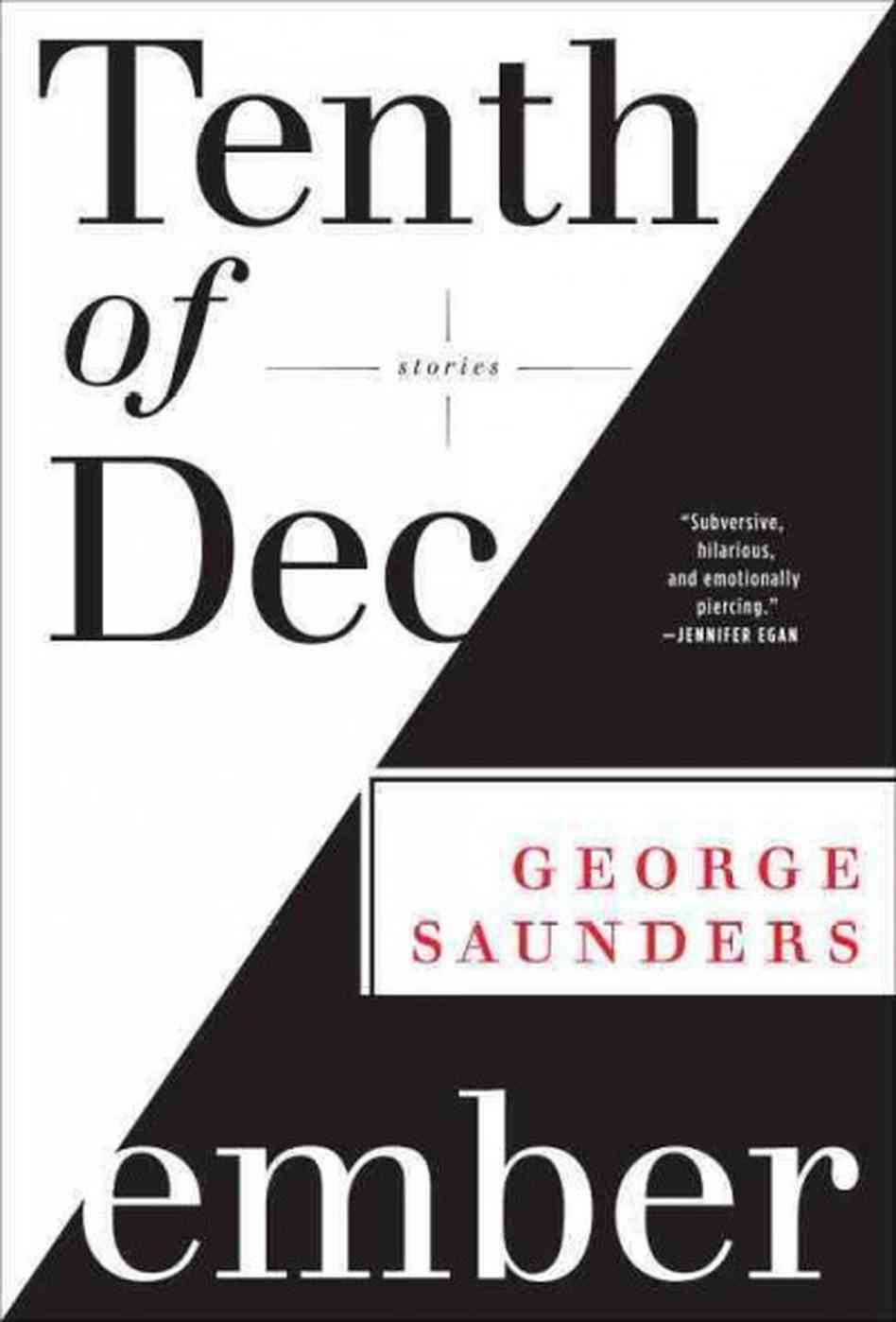
George Saunders’ story collection, “Tenth of December,” includes the story discussed here.

George Saunders is not only an amazing writer. He’s a guru. People talk about him with the reverence of pilgrims returning from a visit with the man at the top of the mountain. His stories have the uncanny ability to make you laugh and cry at the same time—laughing at their absurdity (dead aunt’s reanimated corpse encourages her nephew to show his—ahem—at the Hooters-like restaurant where he waits tables) and crying because the stories reveal a humanity so fresh and true that our perception of the world is deepened. Reading a George Saunders story can be like putting on glasses for the first time.

So let’s say this now: no writing exercise can make you as wise as George Saunders. You can, however, learn how he structures a story, introduces a character, constructs a scene, writes dialogue, or describes a dog. In other words, you can build a toolbox of George-Saunders wrenches and use those wrenches in your own work. If you are wise or smart or imaginative—or even if you’re not—you might write a pretty good story. Maybe an awesome one.

Even if you don’t, you still get to appreciate and spend time with a great story.

So, to kick off this blog, I want to begin with one of the best stories I’ve read in a long time: “Tenth of December” by George Saunders. It was originally published in The New Yorker, and you can find it here.

How the Story Works

Here are the two best pieces of writing advice I’ve ever received.

  • Every story should be easily explained. The Adventures of Huckleberry Finn: Boy gets on raft, floats south on river with an escaped slave. Hamlet: Man kills king; prince must kill man. These summaries barely touch the true nature of these classics, and that is the point. When the story is simple, it doesn’t need to spend a lot of time explaining and clarifying. As a writer, you want to spend your words doing interesting things, pondering interesting thoughts, being funny or poignant. You don’t want the reader asking, “Tell me again, why is Huck on the raft?”
  • Every story exists in a world. Thus, you must create a story (man murders king) and also a world for it to inhabit. This world will have rules, and its characters will have personalities, obsessions, and lives that exist outside of the story. It is these personalities, obsessions, and lives that will inform the story and give it depth. That depth is why Hamlet asks “To be or not to be” rather than “Should I stab my uncle or bash in his head?”

“Tenth of December” exemplifies this advice. Here’s the story: Man tries to freeze himself to death, and boy tries to give him a coat; but boy falls through ice on pond, so man must save boy. It’s a story rocket-bound for chicken-soup sentimentality. The reason it doesn’t get there is because of the world Saunders creates.

Let’s focus on the opening section, the voice of the boy, Robin. Though we’re dropped into his head without explanation or preface, we’re quickly given clear markers of what will happen:

  • “Today’s assignation: walk to pond, ascertain beaver dam.”
  • “Whoa, cold, dang. Duck thermometer read ten. And that was without windchill.”
  • “Judging by the single set of tracks, the Nether appeared to be carrying her.”

Even though most of the narration is about Robin’s fantasy world, we already know by the end of the first page (online version) that the weather is bitterly cold, that’s he’s going to a pond, and that he’s following someone’s tracks. The clarity of the story allows Saunders to play with the boy’s voice, to allow the reader to indulge with Robin in tangents about torture at the hands of fantasy beings—and it is these indulgences which make the story great.

The Writing Exercise

It’s an easy one.

  1. Write a simple plot summary (dog bites man; man shoots dog). Try to limit the summary to less than ten words. We’re aiming for clarity.
  2. Create two characters. Give them each one trait and one desire that is related to the trait. (Dog owner: accountant who eats chocolate even though he is allergic to it; he’s having an allergy attack and needs to get to the emergency room. Man who gets bitten: stay-at-home dad whose baby cries all the time; the man is trying not to resent the baby.)
  3. Give the characters a point of connection. (In this case, it’s the dog. In the Saunders story, it’s the pond.) The connection should have a trait of its own. (Pond isn’t quite frozen; dog has three legs and boldly goes about it’s business anyway.)

Sometimes the hardest part of writing a story is writing the first line. If you can do these three things, you can begin a story. If you keep these three things in mind as you write, you can play with the prose and characters and have fun, which is the point. It’s why we write.

So have fun. Happy writing.