Tag Archives: creative writing prompts

Put Setting to Work

12 Feb
Boston-Review-logo


“Xochimilco” by Esme-Michelle Watkins appeared in the Boston Review.

We’re taught from an early age that stories have five parts and setting comes first, which means it’s important. After all, one of the most famous first sentences of all time—”It was a dark and stormy night”—sets the stage for a particular kind of tale. Any other kind of night wouldn’t do. So, writing about setting ought to be easy, right? Just pick the perfect first sentence. Yet for some reason, crafting good descriptions of place can often seem impossible. Like the famous sentence suggests, it’s not enough to simply tell the reader what a place looks like. The description must do more. But what?

Here’s a short story that demonstrates clearly the work that setting can perform. “Xochimilco” by Esmé-Michelle Watkins was published in the Boston Review and can be read here.

How the Story Works

Let’s focus on one particular paragraph. Watkins is doing something fairly simple: describing an empty room. Of course, an empty room has nothing to describe except walls and floors, so she tells us what is absent. Most writers would likely approach the task in the same way. But Watkins goes one step further, and here is where we can learn from her:

There was nothing to see. Gone were the Stay Away drapes tall as street lights, whose heavy fabric Mammì flew all the way from our house in Pasadena to Nonna’s in Bivona to have custom-made; the Go Sit Down oil fresco of clustered villas hugging crags along a turquoise sea; the Knock You Into Next Tuesday French-legged dining table and high backed chairs, formerly below the Go Ahead and Try It chandelier; the Touch and Lose Your Life crystal bowls, where Mammì kept my favorite Sorrento lemons sweet like oranges, and the Cabinet of Doom wide as two hall closets, which housed the finest of Mammì’s That’s a No-No clique: tableware from Baccarat, Tiffany, and JL Coquet. A room for outfits and occasions now snatched and deserted, save for a cud-colored footprint kitty-corner to where the cabinet had been. It was an uninvited mark on the place we dared not enter—not even at my first communion, when hidden-pocket-flask Uncle Mel, who liberally invoked the Don’t Touch exception clause between swallows and sips, waved us in.

Now, let’s focus on a single line from that paragraph:

Gone were the Stay Away drapes tall as street lights, whose heavy fabric Mammì flew all the way from our house in Pasadena to Nonna’s in Bivona to have custom-made

Notice how the drapes aren’t simply curtains. We learn their size and style and history, yes, but we also learn something more important. The curtains are our window into both Mammì and the narrator.

  • “Stay Away” gives us Mammi’s voice. The curtains are suddenly embodied with Mammì’s personality and value system. Each item missing from the room will be given a name based on how Mammì warned her kids about using it.
  • The phrase “tall as street lights” gives us a sense of the narrator’s size. Drapes are only as tall as street lights if you’re looking up at them from a distance. Drapes aren’t so tall if you are tall.
  • The “heavy fabric” suggests, perhaps, that the drapes are not cheap, but more certainly the word “heavy” sets up a contrast with their being flown halfway across the world. The drapes must truly be important to Mammì for her to invest them with such care and effort.
  • Finally, “Nonna’s in Bivona” tells us that’s it not just anyone who made the drapes, and “custom-made” suggests opulence and care.

None of the phrases in this sentence (or any of the descriptions in the paragraph) are written only to show the reader how the room used to look. Each phrase and description also reveals the perspective of the narrator and the value system of Mammì. It is these things—perspective and values—that drive the story forward. Without them, the story is left with a kid and an upset mom. With them, the story becomes particular, and the mom’s confusion/anger/loss become overwhelming.

The Writing Exercise

  1. Choose a room to describe. It can also be a place outdoors. If inventing a place is difficult, choose one you know well. You’ll need to see objects in the place.
  2. Choose a character for whom the place is supremely important. The importance can be highly dramatic (attempted murder) or smaller, more personal in nature. For instance, a child could sit in the living room, watching television, while her parents argue in the other room. The key is to find an emotional connection to the room.
  3. Give the character one or two dominant values or traits. No character can be a blank slate. Watkins makes her narrator mature, an oldest child responsible for her younger brother. In short, she’s the kind of person who listens when someone says to stay away from the drapes. Her mother is no-nonsense, in command, and under a great deal of stress.
  4. Convey those traits through description. Describe the things in the room or the place so that the reader learns not only how the place looks but also values and traits of the character—without ever seeing him or her. Watkins does this by issuing commands for the objects in the room: Stay Away, Go Sit Down, and Go Ahead and Try It. These commands tell us about the person giving them and the person receiving them. There are many ways to create this effect. Keep in mind the lesson from the old Sherlock Holmes story: If a house is on fire, the thing a person grabs first tells you about his or her priorities. Which objects in the room are off limits? Which objects are valued? Which are neglected and dusty? What has been left to rust in the rain? 

This exercise can be challenging, but the more you work at it, the easier it gets. You’ll also begin to see it in everything you read. This is how great writers describe place. For example, there’s a famous passage in The Great Gatsby Daisy and Jordan are sitting in Daisy’s living room. The windows are open, the curtains are billowing, the women’s dresses are floating. Then Tom walks in, slams the door, and everything stops. The curtains and dresses sink. Even though we’ve barely been introduced to the characters, the room’s description has shown us the dynamics at work. That is what setting can accomplish.

Check back in on Thursday to read an interview with Esme-Michelle Watkins.

Setting Up A Scene

9 Feb
A Memory of Light is the final novel of the bestselling Wheel of Time series.

A Memory of Light is the final novel of the #1 bestselling Wheel of Time series.

Fantasy doesn’t have the greatest reputation among literary writers–despite the efforts of crossover authors like Neil Gaiman, China Mieville, and Ursula K. Le Guin. While it’s true that fantasy novels—and many novels of all genres, including literary—often contain cringe-worthy sentences, that doesn’t mean they’re not well written. Case in point: The Wheel of Time series by Robert Jordan (completed by Brandon Sanderson). The fourteenth and final installment of the series, A Memory of Light, was released in January and spent weeks atop the bestseller lists. Certainly, the series boasts its share of amusing lines. But the latest book also kept me awake long past my bedtime, which was good because, at 909 pages, it took me a while to get through it.

How the Novel Works

Ironically, such a long book requires a great deal of telling. The cliche in writing is “show, don’t tell,” but in a series with hundreds of characters, a map full of countries and armies, and countless scheming factions within factions, showing everything would take a thousand books. Even the most dedicated reader would give up out of boredom. As it is, the novel’s compression of certain facts—the way it tells the reader what is happening—actually heightens the tension.

Here is a passage from A Memory of Light that illustrates effective telling. Notice how quickly the writer sums up a huge amount of information: a battle spread across a huge city:

“If there was human resistance anywhere in the city, it would be the Palace. Unfortunately, fists of Trollocs roved the area between Talmanes’ position and the Palace. They kept running across the monsters and getting drawn into fights.

Talmanes couldn’t find out if, indeed, there was resistance above without getting there. That meant leading his men up toward the Palace, fighting all the way, and leaving himself open to being cut off from behind if one of those roving groups worked around behind him. There was nothing for it, though. He needed to find out what—if anything—remained of the Palace defense. From there, he could strike further into the city and try to get the dragons.”

How does the writer condense a sprawling scene into two short paragraphs?

  • The first sentence sets the stakes. Yes, there’s a battle involving tens of thousands, but it all boils down to a simple statement: If anyone is left to fight back, they’ll be in one particular place, the Palace.
  • The next two sentences locate the Palace within the two sides of the battle, the main character’s men and the monsters.
  • The next paragraph explains the consequences of the previous three sentences: the character’s men will have to fight their way to the Palace, which means likely being surrounded by monsters. The reader has been given something to look forward to: an all-or-nothing race to safety.

Because the huge tapestry of a scene is boiled down so neatly, the writer is able to quickly move in subsequent paragraphs to the particular drama of Talmanes’ quest without constantly reminding the reader of what is going on around him. In other words, the novel gets the requisite info out of the way so that the story can begin.

The Writing Exercise

  1. Choose a scene that you have already written.
  2. Strip the scene of everything but dialogue and action sentences. (You’ll likely want to cut and paste the rest into a separate document so that you don’t lose anything.)
  3. Read what remains on the page and answer this question: What does the reader need to know in order for this scene to move as quickly and effectively as possible? In other words, what would you need to tell the reader up front so that you could avoid slowing down the dialogue and action with detail. Make a list of everything the reader must know.
  4. Write a paragraph or two that will preface the scene. Use the paragraph to tell the readers what they need to know—to set the scene. Be concise. Keep in mind your list and focus every sentence on delivering necessary information.
  5. Now that the scene is set, you can return to the dialogue and action and add in any details necessary to heighten the mood or tension or to adjust the speed of the narrative.

As you work with this exercise, you may find that telling the reader the right information up front makes the scene that follows easier to write.

Good luck.

Simple Stories, Complex Worlds

4 Feb
9780812993806_custom-f9472c743ae546a0b19bf6a1c8ce3a89971d1a83-s6-c10

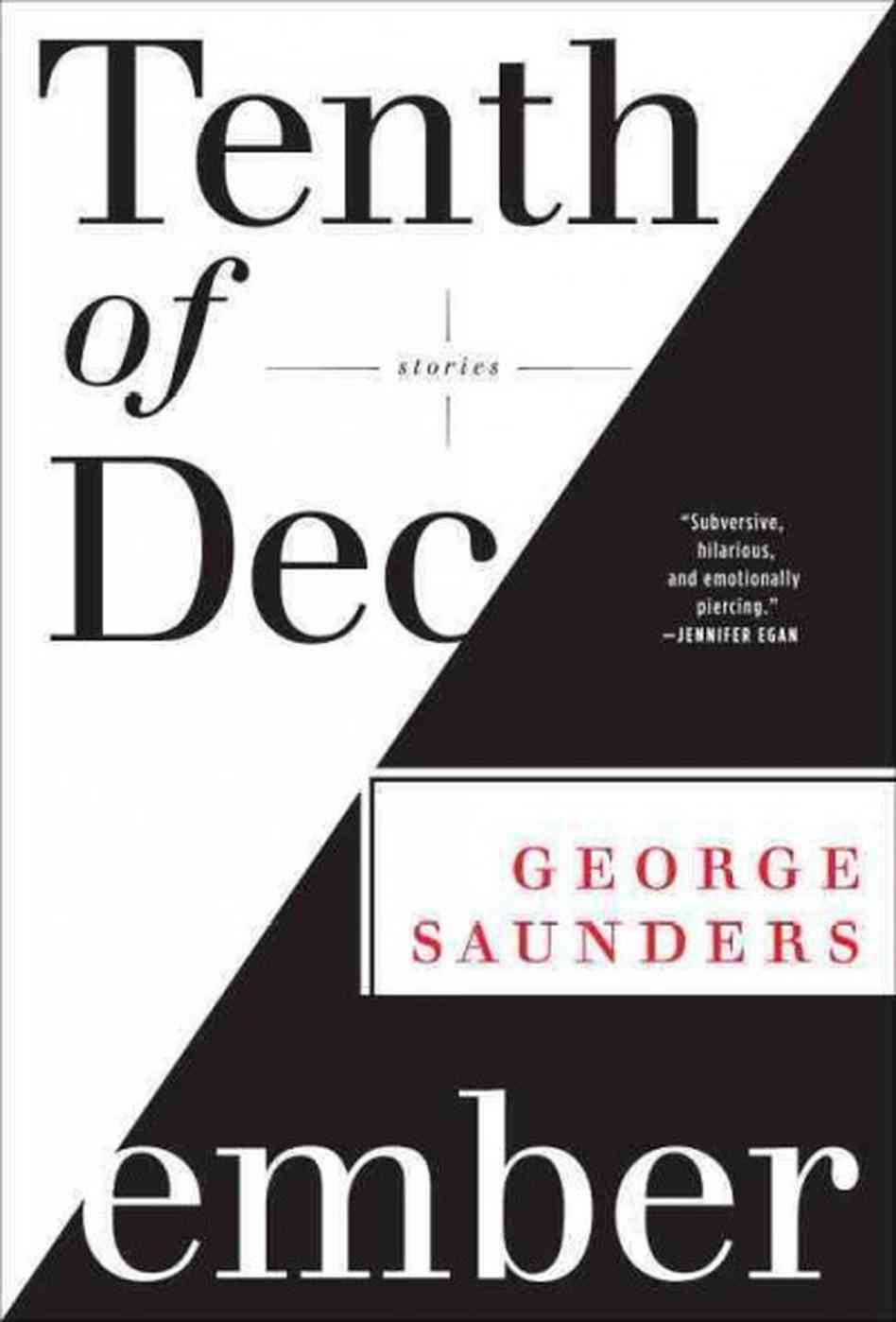
George Saunders’ story collection, “Tenth of December,” includes the story discussed here.

George Saunders is not only an amazing writer. He’s a guru. People talk about him with the reverence of pilgrims returning from a visit with the man at the top of the mountain. His stories have the uncanny ability to make you laugh and cry at the same time—laughing at their absurdity (dead aunt’s reanimated corpse encourages her nephew to show his—ahem—at the Hooters-like restaurant where he waits tables) and crying because the stories reveal a humanity so fresh and true that our perception of the world is deepened. Reading a George Saunders story can be like putting on glasses for the first time.

So let’s say this now: no writing exercise can make you as wise as George Saunders. You can, however, learn how he structures a story, introduces a character, constructs a scene, writes dialogue, or describes a dog. In other words, you can build a toolbox of George-Saunders wrenches and use those wrenches in your own work. If you are wise or smart or imaginative—or even if you’re not—you might write a pretty good story. Maybe an awesome one.

Even if you don’t, you still get to appreciate and spend time with a great story.

So, to kick off this blog, I want to begin with one of the best stories I’ve read in a long time: “Tenth of December” by George Saunders. It was originally published in The New Yorker, and you can find it here.

How the Story Works

Here are the two best pieces of writing advice I’ve ever received.

  • Every story should be easily explained. The Adventures of Huckleberry Finn: Boy gets on raft, floats south on river with an escaped slave. Hamlet: Man kills king; prince must kill man. These summaries barely touch the true nature of these classics, and that is the point. When the story is simple, it doesn’t need to spend a lot of time explaining and clarifying. As a writer, you want to spend your words doing interesting things, pondering interesting thoughts, being funny or poignant. You don’t want the reader asking, “Tell me again, why is Huck on the raft?”
  • Every story exists in a world. Thus, you must create a story (man murders king) and also a world for it to inhabit. This world will have rules, and its characters will have personalities, obsessions, and lives that exist outside of the story. It is these personalities, obsessions, and lives that will inform the story and give it depth. That depth is why Hamlet asks “To be or not to be” rather than “Should I stab my uncle or bash in his head?”

“Tenth of December” exemplifies this advice. Here’s the story: Man tries to freeze himself to death, and boy tries to give him a coat; but boy falls through ice on pond, so man must save boy. It’s a story rocket-bound for chicken-soup sentimentality. The reason it doesn’t get there is because of the world Saunders creates.

Let’s focus on the opening section, the voice of the boy, Robin. Though we’re dropped into his head without explanation or preface, we’re quickly given clear markers of what will happen:

  • “Today’s assignation: walk to pond, ascertain beaver dam.”
  • “Whoa, cold, dang. Duck thermometer read ten. And that was without windchill.”
  • “Judging by the single set of tracks, the Nether appeared to be carrying her.”

Even though most of the narration is about Robin’s fantasy world, we already know by the end of the first page (online version) that the weather is bitterly cold, that’s he’s going to a pond, and that he’s following someone’s tracks. The clarity of the story allows Saunders to play with the boy’s voice, to allow the reader to indulge with Robin in tangents about torture at the hands of fantasy beings—and it is these indulgences which make the story great.

The Writing Exercise

It’s an easy one.

  1. Write a simple plot summary (dog bites man; man shoots dog). Try to limit the summary to less than ten words. We’re aiming for clarity.
  2. Create two characters. Give them each one trait and one desire that is related to the trait. (Dog owner: accountant who eats chocolate even though he is allergic to it; he’s having an allergy attack and needs to get to the emergency room. Man who gets bitten: stay-at-home dad whose baby cries all the time; the man is trying not to resent the baby.)
  3. Give the characters a point of connection. (In this case, it’s the dog. In the Saunders story, it’s the pond.) The connection should have a trait of its own. (Pond isn’t quite frozen; dog has three legs and boldly goes about it’s business anyway.)

Sometimes the hardest part of writing a story is writing the first line. If you can do these three things, you can begin a story. If you keep these three things in mind as you write, you can play with the prose and characters and have fun, which is the point. It’s why we write.

So have fun. Happy writing.

Welcome to Read to Write

24 Jan

All writers read to learn. We can’t help it. Every story is an opportunity to improve our own craft.

We take stories apart, finding and borrowing techniques to use in our own work. The challenge is learning how to read in order to learn. Once you accomplish that, imagine the possibilities. Every day, a journal is publishing new and exciting work. Every day, we can sit down at our computers or notebooks and write, if only for ten minutes. Why not pair these activities? If you’re already reading and already writing, then you’re ready to become a better writer.

On this blog, we’ll read one story each week with the goal of finding tools or strategies to help inspire, organize, or craft our own stories. When possible, I’ll post an interview with the writer. Once a month, we will pair a contemporary story with a classic to see how different writers approach the same technique or problem. Each “lesson” will culminate in a writing exercise designed to put the technique to work.

The writing exercises are simple, fun, and effective. A former student wrote, “I’ve been in lots of workshops, a few brief encouraging ones with Joy Williams and Robert Stone, and have worked one on one with a few good writers, but I’ve gotten more from this than any workshop I can remember.”

The first exercise will be posted on Tuesday, February 5. Subsequent exercises will be posted on Tuesdays (as you settle into the workweek and need something to get you through it.)