Tag Archives: creative writing prompts

How to Write Expansively Instead of In a Straight Line

29 Nov
Angela Palm's memoir Riverine "Riverine is a different kind of memoir, one that through a kind of sleight of hand transports readers from the narrative into the world of ideas and back again, with readers scarcely noticing the transitions," according to a Wall Street Journal review.

Angela Palm’s memoir Riverine “is a different kind of memoir, one that through a kind of sleight of hand transports readers from the narrative into the world of ideas and back again, with readers scarcely noticing the transitions,” according to a Wall Street Journal review.

In my own writing, the number one sign that I’ve lost track of the narrative is that I become locked into a minute-by-minute recitation of what’s happening in the story. Even if the action is eventful, the telling of it feels tedious. Good prose should seem light on its feet, not plodding; expansive, not narrow; all-inclusive like Borges’ aleph or Whitman’s lines “what I assume you shall assume/For every atom belonging to me as good belongs to you.” Perhaps that sounds a bit high-minded, but it’s a feat of mechanics, something that any writer can try on the page.

A great example of expansive prose can be found in Angela Palm’s memoir Riverine. You can read an excerpt here.

How the Memoir Works

Palm grew up in rural Indiana, in an unincorporated group of homes along the Kankakee River. Her neighbor and friend was a boy named Corey, who she played with and fantasized about until the day he was arrested for the brutal murder of two of their neighbors. She continues thinking about him long afterward, and the memoir is an attempt, in part, to make sense of that murder in both their lives.

As a result, the book faces the need of telling what happened to Palm and Corey but also exploring the world around them. Palm does exactly that in a passage about a third of the way into the memoir:

Generally, the town newspaper was a thing you decidedly wanted your name in or out of, depending on your status. If you were Bridget Trotsma with the brownest eyes and leanest thighs and eagerest stage mother, you wanted to be in. You said, “Look at that. I can’t believe I made front page. Again.” You smiled to yourself knowing full well you’d be on the front page but not knowing that you life would never be better than it was in that moment. If you were Corey, on the other hand, and you had killed two elderly, innocent persons and torched their car in a cornfield, you wanted to be out. You said nothing, if you were smart. But Corey wasn’t that smart. He talked to someone who talked to someone else who talked to the police.

The passage starts with a definitive statement about town newspapers and the sort of people who wanted to be written about. It’s a statement that requires explanation and evidence, which Palm proceeds to provide with the examples of Bridget Trotsma and Corey. Buried within that explanation are more statements that beg for more information, like “But Corey wasn’t that smart.” It’s no accident, then, that the next paragraph begins “Or, he was smart once, but only had a makeshift upbringing as the fifth of five children, one dead too young, to guide him.”

This meditation on types of people and how they become that way runs into an opposing view in the next paragraph:

I walked the aisles of the grocery store—a mistake, in retrospect. In the bread aisle at the IGA, I heard a man say, “I hope he fries.” Firing squad, another said. In the frozen section: “Those people living in the old riverbed ought to be self-incorporated if you ask me. Those people ain’t never been fit for this town. Draw a line between the northern farms and the river and be done with them.” Some folks are born evil, someone said. “Ain’t nothing you can do about it.” But that wasn’t true, was it?

The paragraph proceeds to offer examples that complicate a belief that in “born evil.”

The passage has now moved from the town newspaper to a metaphysical discussion of the nature of the soul, and so the next paragraph begins with “His case never went to trial” and ends with “But somehow I held out hope against hope in Corey’s civility, in his true self before he shattered, over time, into other broken versions of himself.”

We learn essential information about the narrative, the sort of details that are part of any crime story. But by making definitive claims about the world (from simple things like newspapers to complex abstractions like the nature of good and evil), the prose expand far beyond the basic execution of the crime and its punishment.

The Writing Exercise 

Let’s expand a narrative beyond its immediate action, using Riverine by Angela Palm as a model:

  1. Start with a general statement about the people, places, or things in your narrative. Palm begins her passage with newspapers and how people feel about appearing in them. It’s a version of the old saw “There are two types of people: those who ____ and those who ____.” Of course, statements like these are simplistic (“There are two types of people: Those who believe in dualities, and those who don’t.”). The point is not to definitively describe something so much as launch a discussion of it. You’re giving yourself something to talk about. So, pick any aspect of your narrative world and describe it in terms of “There are two types of people…” Ideally, you’re picking something that is connected to the main thread (the action or plot) of your story, but don’t let that stop you in your tracks. If you’re stuck, pick anything and see where it takes you. Don’t plan yourself into a perpetually blank page.
  2. Provide evidence for your statement. Give examples, as Palm does with Bridget and Corey. Put faces on the examples. Avoid, if you can, the invention of straw men (faceless characters who act in ways that are convenient for the writer). Ground your statement in reality (even if that reality is intentionally curated).
  3. Make definitive statements about your examples. Palm writes, “You said nothing, if you were smart. But Corey wasn’t that smart.” She starts with a generalization (“if you were smart”) and then makes it particular (“But Corey wasn’t”). Try using Palm’s basic structure “If you were ___, then ___.” Then, follow it up with “But/And ___ was/wasn’t ___.”
  4. Provide evidence for this new statement. Palm digs into the idea that Corey wasn’t smart and tries to explain how that could be true. In your own work, think about the how. This may feel like a natural progression: from what is to how/why it got that way.
  5. Introduce opposing views. If this sounds like instructions for a freshman comp essay, that’s okay. Good arguments are often narratives, and good narratives often make arguments about their worlds and characters. Palm introduces what some of the townspeople say about Corey, which differs from her own perception of him. She does this by putting herself in the place where the townspeople can be found: the grocery store. She doesn’t worry about identifying the people she encounters. Instead, she lists their statements one after another.
  6. Ask if these opposing views are true. Palm does this literally: “But that wasn’t true, was it?” Notice how she uses a question, not a statement (But that wasn’t true). A question demands an answer, which she then must provide. What you’ll probably find is that if you ask enough questions in your narrative (whether it’s fiction or nonfiction), you’ll find one that’s difficult to answer–and it’s that question that is likely at the reason you began writing the story in the first place.

The goal is expanding a piece of prose to reveal the world around a plot and possibly discover a story’s about-ness.

Good luck.
How to Use Theme to Create Structure

22 Nov
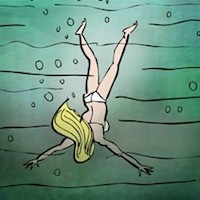
In her essay, "Strong Is The New Sexy," Kelly Davio argues that shifting the idea image of female beauty from thin to strong still leaves some people feeling like they're not real women.

In her essay, “Strong Is The New Sexy,” Kelly Davio argues that shifting the image of ideal female beauty from thin to curvy still leaves some women feeling unreal and unfeminine.  Art Credit: Mark Armstrong

For some writers, structure comes naturally. They have an innate compass that allows them to chart a course through the jumble of experiences and memories in their minds, forming a narrative arc from the chaos. Others of us, though, can spend all day writing and still find nothing but a mess on the page. No matter how interesting the individual paragraphs or sentences or story, until those things are placed within some structure, the essay won’t work. The question is this: How do we find that structure?

Kelly Davio’s essay, “Strong Is The New Sexy,” offers a primer in giving structure to our experiences and ideas. It appeared in The Rumpus, where you can read it now. 

How the Essay Works

The essay plants several flags in the ground and moves back and forth between them. The first flag is found in the title, “Strong Is The New Sexy,” which clearly presents one idea that will recur within the essay: for a woman, being strong is desirable. It doesn’t take a lot of imagination to guess that this statement suggests another, different idea: for a woman, being thin is sexy and desirable. Davio makes this connection explicitly:

The product of a generation of girls who grew up with the specter of anorexia stalking our friends and siblings, I was told that “real women have curves” as though it were a mantra.

These two ideas alone are probably enough to fuel an essay. In fact, you’ve probably read an essay like that before. But Davio is interested in moving beyond binary positions of “strong vs skinny” because neither describes her, and she, of course, is a real woman. So she plants a third flag in the ground: “The name of my disease translates directly from the Greek and Latin to ‘grave weakness.'” Due to the nature of this disease, she’s lost the muscle memory required for eating and must relearn it with the help of a physical therapist:

The most important thing, she tells me, is that I don’t quit eating. Sometimes, people just give up, she says. She looks at my chart again, and asks how much weight I’ve lost in the past few months.

Davio has shifted the conversation from “strong vs skinny” to “Strong is the new sexy vs grave weakness.” In other words, what if a woman is thin not because she wants to be but because she has no choice? These are the flags (strong/sexy and grave weakness) that Davio moves between. Each section of the essay is focused on one or the other or on the tension between the two:

  • The first section introduces the image of Davio relearning to eat while looking out the window at hang gliders.
  • The second section introduces a Pinterest image of a curvy woman in a swimsuit and the idea that “being healthy and fit is so much more important than being skinny.”
  • The third section returns to Davio learning how to eat and adds the dimension of unwanted weight loss.
  • The fourth section explains the consequences of losing weight and, as a result, the markers of femininity: Davio feels that is becoming “less and less of a real woman.”
  • The fifth section gives details about the physical effects of the “grave weakness.”
  • The sixth section shows Davio trying to cover up these effects.
  • The next two sections finally make explicit the juxtaposition between strong and weak.
  • The final section returns to the hang gliders, with Davio admitting “that they are beautiful.”

By planting the thematic flags of the essay so clearly, Davio gives her imagination and memory a structure to work within. Everyone has sat in waiting rooms at doctor’s offices; those scenes in this essay could have been generic. But because Davio knows (or her unconscious knows) that she’s writing about strength and grave weakness, she focuses the waiting-room scene on images that touches on those ideas: particular images on her phone, the hang gliders outside the window.

By knowing what the essay is about, Davio also knows which details to use and which to leave out.

The Writing Exercise

Let’s create structure with theme using “Strong Is The New Sexy” by Kelly Davio as a model:

  1. Choose your topic. What are you going to write about? It might just be a story or memory that’s been running through your mind. You might not know what it’s about. That’s fine. The important thing is to have something definite in your mind, some concrete experience or detail.
  2. Identify what your essay seems to be about. If you told someone the story/memory/detail, what would they say it’s about? Or, to put it another way, what is the usual version of your essay? What would readers expect it to be about based on the title? Davio’s essay would seem, from the title, to be making a common argument about female body image: that strong/athletic/curvy is better than making oneself skinny through self-deprivation. Even though your essay might not be about this expected thing, it’s useful to know what is expected. It gives you something to react against.
  3. What is the essay really about? Perhaps you’ve had the experience of telling someone you’re story/memory/detail and they say, “Well, here’s what’s going on with you.” If they’re right, it’s enlightening. If they’re wrong, it’s infuriating. The best essays often develop from the need to correct an idea or fill in a missing gap. Davio’s essay is adding necessary dimensions to the strong vs skinny debate. What does your essay want to add to the ideas that readers already have? How can you say to your imaginary reader, “No, no, it’s not about that at all. It’s about this?”
  4. Plant your flags. Identify the different positions/ideas present in your essay (perhaps conflicting in your essay). Do it in a word or two. Davio uses “strong/sexy” and “grave weakness.” How can you distill your argument to a couple of words like that?
  5. Write scenes/sections around each flag. One way to think about structure is as “theme and variation.” How many different perspectives can you offer on the flags that you’ve planted. For strength, Davio 1) shows images of female beauty from her phone, 2) shows people who are healthy and actively flying hang gliders, and 3) gives context (“the specter of anorexia”). She does the same thing with grave weakness, showing various aspects of what that means in physical terms and their mental effect. For each of the flags you’ve planted (the one or two-word phrases that explain what the essay is about), write a scene from a story or build a paragraph using an image or detail. To change metaphors, how can you filter your memories through these phrases to see what comes out?

At some point, you’ll find that you have enough scenes and sections, and your job will be to order them. That will be easier if they share a similar focus and direction.

Good luck!

How to Put Setting to Work

15 Nov
Boston-Review-logo


“Xochimilco” by Esme-Michelle Watkins appeared in the Boston Review.

We’re taught from an early age that stories have five parts and setting comes first, which means it’s important. After all, one of the most famous first sentences of all time—”It was a dark and stormy night”—sets the stage for a particular kind of story. Any other kind of night wouldn’t do. So, writing about setting ought to be easy, right? Just pick the perfect first sentence. Yet for some reason, crafting good descriptions of place can often seem impossible. Like the famous sentence suggests, it’s not enough to simply tell the reader what a place looks like. The description must do more. But what?

Here’s a short story that demonstrates clearly the work that setting can perform. “Xochimilco” by Esmé-Michelle Watkins was published in the Boston Review and can be read here.

How the Story Works

Let’s focus on one particular paragraph. Watkins is doing something fairly simple: describing an empty room. Of course, an empty room has nothing to describe except walls and floors, so she tells us what is absent. Most writers would likely approach the task in the same way. But Watkins goes one step further, and here is where we can learn from her:

There was nothing to see. Gone were the Stay Away drapes tall as street lights, whose heavy fabric Mammì flew all the way from our house in Pasadena to Nonna’s in Bivona to have custom-made; the Go Sit Down oil fresco of clustered villas hugging crags along a turquoise sea; the Knock You Into Next Tuesday French-legged dining table and high backed chairs, formerly below the Go Ahead and Try It chandelier; the Touch and Lose Your Life crystal bowls, where Mammì kept my favorite Sorrento lemons sweet like oranges, and the Cabinet of Doom wide as two hall closets, which housed the finest of Mammì’s That’s a No-No clique: tableware from Baccarat, Tiffany, and JL Coquet. A room for outfits and occasions now snatched and deserted, save for a cud-colored footprint kitty-corner to where the cabinet had been. It was an uninvited mark on the place we dared not enter—not even at my first communion, when hidden-pocket-flask Uncle Mel, who liberally invoked the Don’t Touch exception clause between swallows and sips, waved us in.

Now, let’s focus on a single line from that paragraph:

Gone were the Stay Away drapes tall as street lights, whose heavy fabric Mammì flew all the way from our house in Pasadena to Nonna’s in Bivona to have custom-made

Notice how the drapes aren’t simply curtains. We learn their size and style and history, yes, but we also learn something more important. The curtains are our window into both Mammì and the narrator.

  • “Stay Away” gives us Mammi’s voice. The curtains are suddenly embodied with Mammì’s personality and value system. Each item missing from the room will be given a name based on how Mammì warned her kids about using it.
  • The phrase “tall as street lights” gives us a sense of the narrator’s size. Drapes are only as tall as street lights if you’re looking up at them from a distance. Drapes aren’t so tall if you are tall.
  • The “heavy fabric” suggests, perhaps, that the drapes are not cheap, but more certainly the word “heavy” sets up a contrast with their being flown halfway across the world. The drapes must truly be important to Mammì for her to invest them with such care and effort.
  • Finally, “Nonna’s in Bivona” tells us that’s it not just anyone who made the drapes, and “custom-made” suggests opulence and care.

None of the phrases in this sentence (or any of the descriptions in the paragraph) are written only to show the reader how the room used to look. Each phrase and description also reveals the perspective of the narrator and the value system of Mammì. It is these things—perspective and values—that drive the story forward. Without them, the story is left with a kid and an upset mom. With them, the story becomes particular, and the mom’s confusion/anger/loss become overwhelming.

The Writing Exercise

Let’s put setting to work, using “Xochimilco” by Esme-Michelle Watkins as a model:

  1. Choose a room to describe. It can also be a place outdoors. If inventing a place is difficult, choose one you know well. You’ll need to see objects in the place.
  2. Choose a character for whom the place is supremely important. The importance can be highly dramatic (attempted murder) or smaller, more personal in nature. For instance, a child could sit in the living room, watching television, while her parents argue in the other room. The key is to find an emotional connection to the room.
  3. Give the character one or two dominant values or traits. No character can be a blank slate. Watkins makes her narrator mature, an oldest child responsible for her younger brother. In short, she’s the kind of person who listens when someone says to stay away from the drapes. Her mother is no-nonsense, in command, and under a great deal of stress.
  4. Convey those traits through description. Describe the things in the room or the place so that the reader learns not only how the place looks but also values and traits of the character—without ever seeing him or her. Watkins does this by issuing commands for the objects in the room: Stay Away, Go Sit Down, and Go Ahead and Try It. These commands tell us about the person giving them and the person receiving them. There are many ways to create this effect. Keep in mind the lesson from the old Sherlock Holmes story: If a house is on fire, the thing a person grabs first tells you about his or her priorities. Which objects in the room are off limits? Which objects are valued? Which are neglected and dusty? What has been left to rust in the rain?

This exercise can be challenging, but the more you work at it, the easier it gets. You’ll also begin to see it in everything you read. This is how great writers describe place. For example, there’s a famous passage in The Great Gatsby Daisy and Jordan are sitting in Daisy’s living room. The windows are open, the curtains are billowing, the women’s dresses are floating. Then Tom walks in, slams the door, and everything stops. The curtains and dresses sink. Even though we’ve barely been introduced to the characters, the room’s description has shown us the dynamics at work. That is what setting can accomplish.

How to Figure Out What Really Drives a Character to Act

1 Nov
Hasanthika Sirisena's collection, The Other One, won the 2015 Juniper Prize for Fiction.

Hasanthika Sirisena’s collection, The Other One, won the 2015 Juniper Prize for Fiction.

When you begin a novel, it’s easy to find a detail that pulls you into a character or plot line, and then another detail, and then another, and then one day you look at the accumulated pages and think, “What is this?” One response to this question is to create an outline, a big-picture snapshot of what’s in a novel and where it’s going. The problem, of course, is that outlines don’t create order; they only reveal what’s already there. Figuring out plot and character and what happens next is still the writer’s job. There are no shortcuts, except for maybe this one.

If you can identify a single, driving impulse in a character—a fundamental need that colors every aspect of his or her behavior—then sometimes a story will snap into focus. Hasanthika Sirisena does exactly that in her story, “Ismail.” It’s included in her new collection The Other One and was originally published at Narrative Magazine, where you can read it now.

How the Story Works

Ismael is the story’s narrator, and his story begins like this:

How to explain why my brother Harry and I stood in my best friend Abdul’s backyard at two in the morning carrying five large Mason jars filled with milk and turkey parts we’d bought at Fairway?

From the first line, we know the characters’ motivations will be complicated. Abdul is Ismael’s best friend, and we soon learn that the Ismael’s brother Harry is in love with Abdul’s sister. And yet the two brothers are wrecking Abdul’s house. The situation, as the first line suggests, demands an explanation, a big Why? This ought to be easy, right? Ismael must have a good reason for an action that will have serious consequences. The writer simply needs to let the readers know what that reason is.

The problem is that Ismael is smart—perhaps not book smart, since he “nearly flunked tenth grade,” but he’s observant and self-aware and emotionally astute. These are all great traits for a narrator. (I’m a believer in making narrators as smart as their readers.) But it also presents a challenge that can be summed up in a line a lot of us heard as children: “How could someone so smart do something so stupid?” It’s a difficult question to answer. Any factual statement that starts with “Because So-and-so…” is likely to fall flat. Readers are like your skeptical parents. They have no time for thin excuses. But when we’re pressed to really explain ourselves, we often draw blanks. People rarely act rationally. Instead, we respond to deep-seated desires and urges and then rationalize the behavior that follows.

As writers, then, we need to identify our characters’ deep-seated urges. Here is how Sirisena does just that:

If you go long enough without something, sex, money, even love, you can get to the point you don’t need it. But if you suddenly have access to what’s missing, get it back in your life, then you’ll do whatever it takes to keep that thing. The thought of loss knocks you flat on the floor, your chest caved in, gasping for air.

For a time, that’s what knowing Abdul felt like. I’d been okay without him, but once we were friends I couldn’t imagine what it would be like to lose him. There were days that thought alone—the thought of that loss—left me knocked out on the floor, chest caved in, gasping for air.

Notice the imagery that ends the passage: “gasping for air.” It’s an image of suffocation or drowning, and as anyone who’s ever taken lifeguard training knows, a drowning person isn’t capable of rational responses. Instead, they thrash about and grab hold of whatever object presents itself. That’s the sort of deep-seated desire you’re after: a desire equal to the desire to not die.

Of course, you might be thinking that the lack of sex, money, and love are not the same as the threat of death. But here’s what’s important: the desire doesn’t need to literally be equivalent to dying. Nothing is. It just needs to feel like dying. For Ismail, losing a friend after not having had one feels like dying, and so when it happens, he thrashes about and latches onto whatever seems to keep him afloat: in this case, vengeance.

The Writing Exercise

Let’s find a character’s motivating, deep-seated desire, using “Ismail” by Hasanthika Sirisena as a model:

  1. Start with the action your character must defend. It’s not always the case that action is the best place to start, but it’s probably the place to begin thinking about character and often what draws a writer to a character in the first place. The character is going to do something drastic, with consequences, something that demands an explanation. What is that action? Don’t worry if it doesn’t yet make sense or seems out of character.
  2. Give the character figurative parents to defend it to. This can be as easy as posing this question to your character: Why did you do that? Let your character offer up a list of responses, and then swat them down, if possible, just as a parent would. The goal is to move beyond the easy, unsatisfying explanations until the point at which the figurative parent (you, the writer) can demand, “How can someone so smart do something so stupid?”
  3. Let the character do some soul searching. He might search his past for clues or his family or the other people who surround him: their values or fears. Think in terms of change: the dread, based on experience, that something will change and wreck everything or that nothing will change and everything will remain the same. If you’re familiar with the canon of Western literature from, say, James Joyce to Richard Ford, the statements that results from this soul searching will feel an awful lot like an epiphany. Generally speaking, we’re skeptical of epiphanies now because they’ve been so overused, but that doesn’t mean they have disappeared from stories. The passage from “Ismail” could have been an epiphany except that it occurs in the first half of the story. What statement of causation (I acted because) can you draw from your character’s deepest fears or needs?
  4. Make the character defend the action to someone in the storyOne of the biggest mistakes writers make early on is doing everything I’ve just discussed—but doing it all inside a character’s head. Stories like these consist entirely of characters sitting and drinking/smoking and thinking big thoughts, which is boring. So, force the character to defend the action to some other character. Ismail, for example, must defend his actions to his brother. The defense matters, and the impact it has on their relationship matters. That’s where story and plot come from. Who is that other character in your story?

The goal is to figure out where a story is headed by better understanding what motivates a character to act in the first place.

Good luck.

How a Character’s Past Can Inform the Present Action

18 Oct
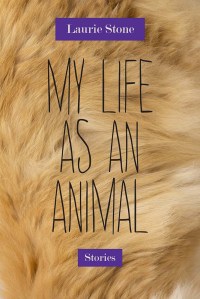
Laurie Stone's new book, My Life as an Animal, is about a woman a woman constantly seduced by strangers, language, the streets in the downtown scene of New York City in the 70s, 80s, and 90s.

Laurie Stone’s new book, My Life as an Animal, is about a woman constantly seduced by strangers, language, and the streets in the downtown scene of New York City in the 70s, 80s, and 90s.

Here is one way to think about conflict: A character has a desire (like, say, wanting to eat a really good sandwich), but something stands in the way of satisfying that desire (there are no good sandwiches, only Subway). The story becomes about that character’s effort to overcome the obstacle in order to obtain the desired thing (the quest for the sandwich). There is nothing wrong with this structure, clearly, since it’s the basis of any number of famous stories and novels. That said, it has a simplicity that can feel false. In real life, we often act in ways that takes us away from the thing we desire. Or, we have conflicting desires. When this is the case in a story, a different structure is needed than the “Quest for the Sandwich” narrative.

A great example of this type of internal conflict can be found in Laurie Stone’s new book, My Life as an Animal, new from Northwestern University Press. You can read the opening of the book here.

How the Story Works

The book is a collection of stories, the term that Stone uses to describe her fictions that often use material from her life. (Read about that definition in the interview on Thursday.)  One of the stories in the book, André, revolves around the sexual assault that the main character suffered, when she was 14, at the hands of her psychoanalyst, a man named André. Her reaction to the traumatic event was a kind of dissociation:

Have you ever left your body? People talk about this happening during trauma. Maybe it is a throwback to our chimpy past, when the endangered primate searched for a tree to climb into at the sound of pounding hooves. I looked down at a girl in a blue cardigan with her arms by her sides.

Many years later, she tells the story of this assault at a dinner party, and a man at the party has this reaction:

The man had been quiet until André was mentioned. He had intense eyes and an enigmatic smile. His belly was round, his hair thinning, his arms and legs untoned, despite his work as a landscape gardener. We were drinking margaritas and eating chips. Sailboats raced outside the windows, and I looked around my friend’s peaceful loft with its large, abstract paintings, couches by a window, a coffee table made from an old, green door. I was on a stool and once or twice rubbed my shoulder. The man said, “Can I give you a massage? I have studied massage.” I said, “Okay.” My mother used to say, “Nothing is free.” I did not want her to be right. The man stood too close as he worked on my neck. Softly, he said, “Does it feel good?” I said, “Yes.” He kept working. I closed my eyes. I didn’t like him. His hands were soothing. He was silent for a while and then he said, “Can I kiss your shoulder. These shoulders don’t know they are loved.” I did not want the kiss. I thought he was ugly. I said, “Okay,” and I felt his lips, cool and quick, on my skin.

That night in bed Richard said, “Why did you let him kiss you?” I said, “It felt easier than saying no.’

There is a lot to be learned here about men’s behavior and consent, of course, but the scene also reveals something important about craft: A character’s behavior becomes a lot more interesting and suspenseful if must choose between competing desires. In this case, she wants to be left alone but also wants to avoid a confrontation. The result is that the scene becomes less predictable. There are several different ways it could have gone. The narrator could have slapped the man or told him to get his hands off of her, and it would have made sense. She could have begun crying or stormed out of the room. In short, the narrator’s actions depend on which desire she chooses to act on (to be left alone or to avoid confrontation).

Because the choice between those desires is so difficult, the story becomes about the choice itself (and the stress involved in making it) rather than the action that follows. The narrator alludes to that stress shortly after this scene ends when she says, in one of the best lines of the book, “Suffering does not ennoble people. Suffering mostly crushes people.” The description that leads up to this statement is alone worth the price of the book. And, it’s possible because of the way Stone creates the narrator’s internal conflict.

The Writing Exercise

Let’s create competing desires within a character, using “André” from My Life as an Animal by Laurie Stone as a model:

  1. Give your character a critical event. In My Life as an Animal, Stone uses the abuse by the psychoanalyst. It’s an event that hangs over the narrator for the rest of her life, coloring the way she understands herself and others. Because the narrator is so complex and well drawn, this critical event doesn’t entirely explain her character, and that is important. Characters who can be distilled to a single event too completely risk becoming flat and unrealistic. So, the event shouldn’t define your character, but it should be an inextricable part of your character. For your own character, consider what memory he or she returns to, loves, or dreads. What past event keeps the character up at night or gets told to others again and again?
  2. Jump forward in time to a similar situation. The situation can be exactly the same or vaguely similar; in My Life as an Animal, the narrator is receiving unwanted attention from a man, and the kind of attention is similar but of a different degree. But the situation can also be similar only from the character’s perspective. In real life, we tend to use our own critical events as yardsticks for much of what happens around us. So, the critical event and present situation may seem totally different to one character but similar to another. The point is that the present situation makes your character feel the same—or in a similar way—as she did in the critical event.
  3. Give the character a desire related to that situation. In My Life as an Animal, the narrator’s desire is pretty simple: to be left alone, not harassed. The desire can also be small. For example, some people avoid certain foods (oranges, chives, etc) because they once had a negative experience with them (getting sick). As a result, they live their lives with the ongoing desire to avoid those foods. The desire can also be a positive one. If someone had a good experience in the past, he or she might actively seek out similar experiences.
  4. Give the character an expected way to act on that desire. You’re simply following the logic of the desire. If a character wants to avoid oranges, she’ll behave in predictable ways: avoiding certain aisles in the grocery store or never eating breakfast in a restaurant. How does your character usually act on his or her desire?
  5. Create another desire that, if acted upon, has the opposite effect of the previous action. In My Life as an Animal, the narrator also wants to avoid confrontation with the man who is bothering her. She’s at a party and doesn’t want to make a scene. As a result, she allows the man to give her a massage and kiss her even though it runs contrary to her deep desire to be left alone. To a certain degree, she’s also bombarded with mixed feelings about the man. He’s ugly and creepy, but her shoulders do hurt and his “hands were soothing.” So, place your character in a particular place and time with particular people. What else is going on in that moment? What else does the character want (to avoid making a scene, to relax her shoulders)? These desires don’t need to be inherently contrary to the first desire you created, but the actions that result from them should work against that first desire.
  6. Let the character choose. Generally speaking, drama requires release. A scene builds and builds, and readers wonder what will happen. So, what will your character choose?

The goal is to create a scene by exploring the ways that a past event creates desires that can or cannot be acted upon in the present.

Good luck.

How to Make a Character Represent a Place or Group

11 Oct
Leona Theis' story "How Sylvie Failed to Become a Better Person through Yoga" appears in the latest issue of American Short Fiction, alongside Matt Bell, Smith Henderson, and Porochista Khakpour.

Leona Theis’ story “How Sylvie Failed to Become a Better Person through Yoga” appears in the latest issue of American Short Fiction, alongside stories by Matt Bell, Smith Henderson, and Porochista Khakpour.

Stories, novels, and even essays feature two types of characters (broadly speaking): major, complex characters and minor, flat ones.  The terms are basically shorthand for this: some characters get a lot of time on the page while others might show up for only a sentence, the literary equivalent of a nameless movie henchman or Star Trek crew member. In action scenes, the minor character exists as a plot device, to get chopped down so that the major characters will act. But what about in stories where action isn’t the primary draw?

Leona Theis offers a great example of such a character and story in “How Sylvie Failed to Become a Better Person through Yoga,” which won the American Short Fiction contest (judged by Elizabeth McCracken) and appears in the latest issue of the magazine.

How the Story Works

The story takes place in 1974 in a Canadian university town. Sylvie is sharing an apartment with a woman she met at a bus stop. The women “each ran with a different crowd, and they agreed this would make for a good relationship, each of them minding her own business.” As anyone who’s ever shared an apartment might guess, it’s not long before the different crowds collide:

Lisa had moved into the suite a week earlier than Sylvie, claimed the larger bedroom, and stacked three twelve-packs of empty Labatt’s Blue bottles on the floor at the end of the kitchen cupboard. Sylvie associated Blue with truck drivers and guys who went out to Alberta to work the rigs. As if to confirm, Lisa’s fiancé Dave, a house framer, came by one night with three of his friends who were home from Alberta for the weekend. Not one of them wore his hair long; their fun appeared to come from drinking and its related games. Sylvie knelt and put Led Zeppelin on the turntable.

In this passage, Theis uses objects and places as emblems of a particular culture and class. On one hand, there’s the sort of men who drink Labatt’s Blue, drive trucks for Alberta oil rigs, and frame houses. On the other hand, there are men with long hair who listen to Led Zeppelin. Each of these details could be a throw-away detail, but because the passage has a point (showing how Lisa and Sylvie inhabit different worlds), each one is given a purpose.

The result is a short interaction with a minor character that acts as a kind of mic drop for the passage. It picks up after Sylvie puts on Led Zeppelin:

“Anybody mind?”

“Far out,” said the burly guy in the quilted vest in the armchair, and Sylvie could sense the effort involved, like someone who’d never taken French at school trying to say au revoir.

The minor character (un-named, like a henchman) is given a line of dialogue that puts his quilted vest and Labatt Blue into action: it lets him try to bridge the divide between the Lisa and Sylvie worlds.

When we talk about setting, we often refer to descriptions of place, but setting, like most writing terms, can be built in many different ways, as talented writers like Theis demonstrate.

The Writing Exercise

Let’s make a character represent a place or group, using “How Sylvie Failed to Become a Better Person through Yoga” by Leona Theis as a model:

  1. Figure out what worlds or groups exist in the story. Literature is full of examples: the cliques in high school stories, the many version of “The Prince and the Pauper” and “The Country Mouse and the City Mouse,” the rookies and pros from sports stories, insiders and outsiders, and worlds of gender, race, sexuality, politics, religion, and probably a hundred other ways that we divvy ourselves (or are divvied) into groups. Which ones are present in your story?
  2. Place your major characters into those worlds or groups. Which groups do your main characters belong to? As you can tell from the examples above, group identity can become a significant part of a story’s plot. In “How Sylvie Failed to Become a Better Person through Yoga,” the groups aren’t as essential to the story as in, say, a sports or high school story, but they certainly affect the characters and plot. So, don’t worry yet about what you’ll do with these groups. Just find which groups your characters are part of.
  3. Choose an acquaintance or someone close to one major character. In Theis’ story, we meet the roommate’s fiancé’s friend—so, someone who one of the major character (Lisa) knows but not someone she’s particularly close to, which makes him easy to discard after he’s done his job in the story. Because he’s not important, he can simply walk onto the page, do his thing, and leave. You can make a list of all of the possible acquaintances for your major characters, or you can try this:
  4. Decide what effect you’re going for. In Theis’ story, the passage accentuates the cultural difference between Sylvie (long hair, Led Zeppelin) and Lisa (Labatt’s Blue, truckers). Of course, this affect could be created by the great details she chooses, but it’s reinforced and made dramatic (and, therefore, interesting) by having it personified. So, in walks “the burly guy in the quilted vest.” He’s called forth by the situation. If Theis hadn’t needed to show the cultural difference between Sylvie and Lisa, the burly guy never would have been invented. What effect are you going for? What is the point of this particular passage in your story?
  5. Let the character react to something from another world. The burly guy is interesting only because he tries to engage with Sylvie on her terms (the terms of her world), which means responding to Led Zeppelin. Because he’s not from that long-haired world, his attempt to fit in isn’t smooth—which is what makes the moment interesting. What detail or person can your minor character interact with? How can the character try to engage with that person or detail on that person/detail’s terms? (In other words, what is the Led Zeppelin that your minor character must try to deal with?)

The goal is to create character, setting, and drama by letting a minor character represent his or her larger group and engage with some other group. If this sounds like science fiction and fantasy, that’s because this is what those genres do over and over again, but with aliens/dwarves/space travelers/vampires instead of truckers and hippies.

Good luck.

Make Readers Care about a Story’s Movie-Poster Elements

4 Oct
Christopher DeWan's story "Voodoo" is included in his new collection, Hoopty Time Machines.

Christopher DeWan’s story “Voodoo” is included in his new collection, Hoopty Time Machines.

I often teach a class about first pages and how to hook readers. There are some obvious strategies for this: introducing a gun, dead body, broken rule, or a moment with two possible outcomes. But none of these is enough to compel a reader to turn the page. After all, we’ve all seen these strategies put to use over and over again. Something else is needed. That something could be a bigger or more awful gun, more dead bodies, and a more taboo broken rule, but at a certain point you’re simply making another Saw movie. Shock value is a finite resource. But human emotion isn’t. For a first page to be truly compelling, it needs to make readers care about the gun or dead body or whatever.

A great example of making a reader care can be found in Christopher DeWan’s story, “Voodoo,” which was originally published in A cappella Zoo and is included in his new collection Hoopty Time Machines: Fairy Tales for Grownups.  You can read the story here.

How the Story Works

As the title makes clear, the story is playing with a well-known horror/supernatural trope. Any reader will have pretty clear expectations for what will follow: some version of a doll with pins and needles stuck in it. The problem facing DeWan is the same one facing most writers. The story is familiar, and so something is needed to make readers pay attention yet again. He could have used a more horrific doll or added bloodier consequences, but that wasn’t his approach. Instead, here is how the story begins:

You walk into your daughter’s room. You wouldn’t do this normally. You try very hard to respect her privacy, even when this sometimes causes you to wonder if you’re being a bad or neglectful parent. The fact that you wonder means that you probably are not a bad or neglectful parent. But everyone has better days and worse days.

There’s no mention of voodoo or a doll in this paragraph. Instead, we’re shown a relationship and a character who isn’t sure how to proceed, who means well but isn’t is faced with the possibility that good intentions might be insufficient. Or perhaps everything is just fine.

The uncertainty is important. As readers, we’re naturally drawn to situations in which a character is trying to discern the true nature of the world and circumstances. It’s why we’re drawn to conspiracy theories, magic, and Halloween. We love the idea that everything is not as it seems. But we also need to care, and that’s why the emotions in this first paragraph are so important. The character has feelings, and those feelings are tethered to concrete things (the welfare of his daughter) and abstractions (do we ever really know how someone is doing?).

The next paragraph makes good on the title’s promise:

Her alarm clock is going off and she’s nowhere to be found, so you walk into her room, and that’s when you see them: two little dolls. Voodoo dolls of you and your wife.

Now the story kicks into gear, but the reason we keep reading isn’t because of the dolls but because we care (and the character cares) what happens with those dolls.

The Writing Exercise

Let’s introduce emotional stakes to a story, using “Voodoo” by Christopher DeWan as a model:

  1. Decide what readers will care about. In other words, what’s the primary story element. In “Voodoo,” that element is voodoo. In monster stories (vampires, zombies, aliens, serial killers), the element is the monster. In detective fiction, it’s the pursuit of the criminal, and in romances, it’s the consummation of love and the struggle to maintain it in the face of difficulty. It’s the movie poster image for your story or novel. What is this element for your story?
  2. Create an emotional attachment to that element. Movies use a lot of the same emotional stakes—protecting a child or other loved one, finding true love or friendship, finding your best self—because they’re part of our lives in an essential way. Great literary works use the same emotional stakes. So, start by choosing something we all worry or dream about.
  3. Find an authentic entry to that emotion. The problem with blockbuster movies is they introduce the emotional stakes using some well-worn tricks (a child saying, “Why won’t you come to my ballgame, Mommy/Daddy?) but then abandon the stakes as soon as the movie-poster element shows up. After all, the filmmakers seem to think, who cares about that kid when the museum exhibits have come to life and are trying to kill you? They’re right some of the time. But in stories and novels, the writer usually needs to stick with the emotional stakes. Rather than using a shortcut, introduce the stakes with more uncertainty. So, find a simple action (walking into the daughter’s room) and then add a choice (should I or shouldn’t I?) and a larger emotional context (am I a good parent or not?).
  4. Lead with the emotion. Very often, as soon as the movie-poster element shows up, it sucks up a lot of the oxygen in the story. It’s hard to introduce emotion for the first time when stuff is blowing up. So, begin with the simple action, choice, and larger emotional context. Let it be the hook for the reader. The movie-poster element will arrive soon enough.

The goal is to make readers care about the big story elements rather than relying on those big elements to keep readers turning the page.

Good luck.

How to Turn Desire into Motivation and Plot

27 Sep
Rahul Kanakia's novel Enter Title Here has a main character that Barnes and Noble's Teen Blog called "a genuinely unique protagonist: unintentionally funny, often mean, and uncompromising in the lengths she’ll go to get what she wants."

Rahul Kanakia’s novel Enter Title Here has a main character that Barnes and Noble’s Teen Blog called “a genuinely unique protagonist: unintentionally funny, often mean, and uncompromising in the lengths she’ll go to get what she wants.”

Any writing teacher will tell you that one key to finding a plot is to find your character’s desire: the thing that the character wants badly and will fight for. It doesn’t matter, really, what the desire is (love, money, applesauce) as long as the reader believes it matters to the character. Simple, right?

The problem is that, at the beginning of a draft, we tend to think of characters in a vacuum, floating there waiting to feel and act. But desire has no effect on the world (on plot) when there is nothing around it.  So, one way to build a story is to put your character in the midst of other characters. Once one character begins to state beliefs and desires, it’s likely that your character will react. As in life, many of our desires and feelings are clarified once they’re contrasted with others.

A great example of this strategy can be found in Rahul Kanakia’s novel Enter Title Here. You can read the opening pages here.

How the Novel Works

The novel is about a high school student, Reshma Kapoor, who wants to be valedictorian but worries that someone might beat her. Her desire is clear, but it’s not enough to build a novel on. More is needed. In this passage, we see some of that more:

When I first told Mummy about the perfects, she laughed and said, “No one can be perfect.”

People say that all the time, as if it’s obvious.

But is it?

That’s the problem with people. They think perfection is about things you can’t control: your intelligence or your wealth or your beauty. But if they thought of it as avoiding mistakes, they’d understand how achievable it is.

We all know that it’s impossible to go one hour without making a mistake. And if that’s possible, then it must be possible to string together twenty-four consecutive mistake-free hours into a perfect day.

Having an entire mistake-free day is difficult, but it’s doable.

She lists the ways she didn’t make mistakes (studying, dieting, etc) and then says this:

And if I can have one mistake-free day, then I can have two, and three, and four, and eventually whole weeks and months and years will pass without mistakes. Is that so insane?

This is a nifty piece of writing. It starts with the idea that some girls are perfect, gives one character’s response (no one’s perfect), and then considers whether that’s really true. If perfection is possible, how would the narrator achieve it? She develops a plan.

Kanakia has used that basic desire (be valedictorian) to create plot. Take out the specifics, and you get this: “Main Character wants ____, and some characters seem to have an advantage in getting ____, but So-and-So says that’s not true. But if it is true, then here is how Main Character will beat those characters at their own game.”

The Writing Exercise 

Let’s use desire and community to create plot, using Enter Title Here by Rahul Kanakia as a model:

  1. Find something that your character wants. It can be anything, and there are a few usual suspects: love, money, success. Try using Maslow’s hierarchy of needs: food and water (and other basics required for human survival), safety and security, love and belonging, respect, and the ability to pursue happiness (self-actualization, American-style). In Enter Title Here, Reshma’s desire is a mixture of the last four. If she’s valedictorian, she’ll be assured of a successful career and the financial security it brings. She’ll feel as if she belongs with a group like the perfects. She’ll gain people’s respect and will be able to pursue the life she wants (or so she thinks). Your character’s desire doesn’t need to tap into all of these categories, but it should hit at least one of them. If it doesn’t, it’s probably too fleeting to drive plot forward.
  2. Give the character competition. Reshma wants to be valedictorian, but the perfects might beat her to it. Of course, competition doesn’t necessarily require other characters pursuing the same goal. They might have other goals that put them in the way of your character’s pursuit of her own desire. In the way is the key phrase. If nothing’s in the way, there’s no story: I wanted to be valedictorian, and so I did it.
  3. Create a philosophical framework. Resume’s mother doesn’t say, “You’ll never be as good as the perfects.” Instead, she says, “No one can be perfect.” She’s suggesting a way of seeing and understanding the world. Reshma doesn’t just reject her advice, she also rejects this philosophical framework for another: You can be perfect if you have the willpower. In your story, let a character comment on the competition. Is it possible to defeat it? To be like it? Is it desirable to try? We hear versions of this almost every day: when we fail to get something we want, someone will say, “It’s probably for the best.” Whether we agree or disagree with that statement determines what we do next.
  4. Let your main character disagree with this framework. Reshma decides to beat the perfects at their own game. She can be perfect. She’s saying, in effect, it’s not for the best. How can your character refuse to see the problem the same way as the philosophical character?
  5. Develop a plan. Once Reshma decides to do what seems impossible—be perfect—she creates a plan: be perfect for an hour, then a day, then a week, then for months and years. What is your character’s plan to outwit, outwork, or outperform the competition/obstacle?

The goal is use desire as a starting point for creating character motivation and plot.

Good luck.

How to Describe a Character’s Sense of the World

20 Sep
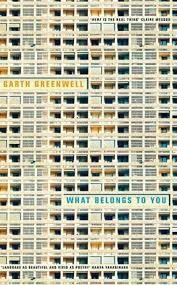
Garth Greenwell's novel What Belongs to You tells the story of a young American man teaching in Bulgaria and his complicated relationship with Mitko, whom he meets in a public restroom.

Garth Greenwell’s novel What Belongs to You tells the story of a young American man teaching in Bulgaria and his complicated relationship with Mitko, whom he meets in a public restroom.

When I was an undergrad, one of my writing teachers lamented that too many novelists were trying to write books that could easily be filmed. A good novel, she said, moved differently than film; it created a kind of narrative space that could not be captured on a screen. And what filled that space? Human thought.

This isn’t the only view of what constitutes good writing, and it’s probably not even a majority opinion, but it does suggest an interesting question. If a scene that can be filmed—i.e. one with dialogue and action and subtext to inform both—is not the only approach to a scene, then what else is there?

One answer can be found in Garth Greenwell’s new novel What Belongs to You. You can read a long excerpt from the beginning of the novel here.

How the Story Works

In his review of What Belongs to You in The New Yorker, James Wood writes this:

The novel contains no direct dialogue, only reported speech; scenes are remembered by the narrator, not invented by an omniscient author, which means that the writing doesn’t have to involve itself in those feats of startup mimesis that form the grammar, and gamble, of most novels. In an age of the sentence fetish, Greenwell thinks and writes, as Woolf or Sebald do, in larger units of comprehension; so consummate is the pacing and control, it seems as if he understands this section to be a single long sentence.

Wood’s “feats of startup mimesis” are another version of “can be filmed,” or at least “can be filmed in the way we’re accustomed to seeing on-screen.” In place of these feats, he claims, Greenwell inserts “larger units of comprehension.” That’s all a bit vague without an example, and so here is a brief passage (only a small part of a longer paragraph) from What Belongs to You. A bit of setup: the novel’s narrator is a young American man teaching in Bulgaria. In this scene, he’s in the National Palace of Culture, in the restrooms,which are frequented by gay men because they “are well enough hidden and have such a reputation that they’re hardly used for anything else.” The narrator encounters a man there, and that encounter, brief in terms of actual minutes, occupies almost ten pages. Here is why:

I wanted him to stay, even though over the course of our conversation, which moved in such fits and starts and which couldn’t have lasted more than five or ten minutes, it had become difficult to imagine the desire I increasingly felt for him having any prospect of satisfaction. For all his friendliness, as we spoke he had seemed in some mysterious way to withdraw from me; the longer we avoided any erotic proposal the more finally he seemed unattainable, not so much because he was beautiful, although I found him beautiful, as for some still more forbidding quality, a kind of bodily sureness or ease that suggested freedom from doubts and self-gnawing, from any squeamishness about existence. He had about him a sense simply of accepting his right to a measure of the world’s beneficence, even as so clearly it had been withheld him.

The first sentence is pretty straightforward: The narrator desires the man but doubts he will get any such satisfaction.

The second sentence starts in a similarly clear way (“For all his friendliness”) but instead of sticking to what is clear and evident, the narrator begins to suss out what lies behind that friendliness. He identifies it as a “more forbidding quality, a kind of bodily sureness or ease that suggested freedom from doubts and self-gnawing, from any squeamishness about existence.” Earlier, the man has been described in specific detail, but this sense of him is particular to the narrator. Someone else might see nothing like this at all. In short, the prose has jumped from what is to what seems to be to the narrator. The world and the people in it are being viewed, thickly, through the narrator’s consciousness. The final sentence extends this filter and the sense of being that it reveals: “a sense simply of accepting his right to a measure of the world’s beneficence.”

Of course, that filter is present in all novels. In first-person narration, the narrator provides the filter. Everything we see is seen through the narrator’s eyes. In third-person prose (and, really, in all novels), the filter is the author’s. And yet we forget this because most novels work hard to make us forget; they want us to see the world of the novel as clearly as an image in a film.

A review in The New York Times by Aaron Hamburger calls the style used by Greenwell “an ‘all over’ prose style, similar to that of a Jackson Pollock abstract expressionist painting, in which all compositional details seem to be given equal weight,” comparing it to the prose of Ben Lerner’s novels. But that doesn’t seem quite right. Greenwell’s narrator isn’t scattered. He’s pretty focused on the man in front of him and his desire for him, and it’s that focus—the act of seeing and thinking about—that becomes the essential material of the novel.

Lerner does something similar. Here’s a passage from his most recent novel, 10:04, after the narrator has had sex:

I was alarmed by the thoroughness of what I experienced as Alena’s dissimulation, felt almost gaslighted, as if our encounter on the apartment floor had never happened. Here I was, still flush from our coition, my senses and the city vibrating at one frequency, wanting nothing so much as to possess and be possessed by her again, while she looked at me with a detachment so total I felt as if I were the jealous ex she’d wanted to avoid, a bourgeois prude incapable of conceiving of the erotic outside the lexicon of property.

As in Greenwell’s novel, Lerner’s prose is interested in sense and what an awareness of the world feels like: “what I experienced as Alena’s dissimulation, felt almost gaslighted.”

Of course, these are two very different books with very different narrators. Lerner’s narrator spends a lot of time on social media, and so his consciousness actually is scattered at times because it is pinging along with the rapid delivery of information from Facebook and Twitter. He’s also a poet, and so he’s apt to fall into long interior discourses about art and poetics. In other words, the things he thinks about are different, but the general style of the narrator, its general focus on consciousness, is similar.

Of course, any time reviewers start comparing the book at hand to some deceased writer’s work (Wood chooses Woolf and Sebald) or to writers with highly distinctive styles (Hamburger in The New York Times chooses Lerner and Karl Ove Knausgaard), you know that the book is doing something so new that it isn’t easily classifiable. Yet, let me take my own shot: In its focus on a mind actively thinking about the experience it is having, Greenwell’s (and Lerner’s) work resembles the prose of Henry James, particularly The Beast in the Jungle.

That book, like Greenwell’s, begins with a charged encounter, a man and a woman at a party. The woman tells the man they’ve met before and asks if he’s forgotten. Here is what comes next:

He had forgotten, and was even more surprised than ashamed.  But the great thing was that he saw in this no vulgar reminder of any “sweet” speech.  The vanity of women had long memories, but she was making no claim on him of a compliment or a mistake.  With another woman, a totally different one, he might have feared the recall possibly even some imbecile “offer.”  So, in having to say that he had indeed forgotten, he was conscious rather of a loss than of a gain; he already saw an interest in the matter of her mention.

Much about James’ novel is different from What Belongs to You. It’s about inaction, and Greenwell’s isn’t. There is dialogue, and Greenwell writes almost none. Yet to quote Wood, both novelists are interested in “larger units of comprehension,” and those units are filled with character’s sense of what is happening around them.

The Writing Exercise

Let’s describe a character’s sense of an interaction, using What Belongs to You by Garth Greenwell as a model:

  1. Choose who will have the interaction. The possibilities, of course, are endless. It can be between lovers, siblings, parents, coworkers, friends, business associates, or enemies, or it can be transactional, like the interaction between store clerk and customer.
  2. Choose which perspective will serve as the filter. In other words, whose eyes are we seeing the scene through? This can work in third-person as well as first-person, as Henry James makes clear in The Beast in the Jungle.
  3. State the desire. Despite the capacious units of comprehension that Greenwell creates for his narrator’s consciousness, certain things are quite clear. Number one would be the narrator’s desire. He wants the man in the restroom. Without that clear desire, the passage that follows might come untethered from the experience it is pondering. The reader needs a reason to wonder what the narrator thinks, and that reason is the possibility that the narrator might get, or not get, what he wants. So, state as clearly as you can what the character wants out of the interaction: money, love, some object, acceptance, permission, refusal, rejection, a chance to fight, a chance to make up, or even a mindless conversation. If no one wants anything in the scene, it’s probably not worth writing. Don’t be subtle. Greenwell’s narrator thinks, “I wanted him to stay.” Be just as direct.
  4. Describe the surface. Greenwell does this elsewhere in the scene and refers to it with the phrase “For all his friendliness.” How does the interaction seem at first glance. If the other character is putting on an act, what is the act? What is intended to be seen?
  5. Peer behind the surface. Greenwell’s narrator finishes the sentence that begins “For all his friendliness” by looking closer and thinking about what lies behind that friendliness. It might be useful to use Greenwell’s actual syntax as a model: “more forbidding quality.” So, you could write a sentence like this: For all his/her ______, there was a more _____ quality.”
  6. Let the character draw conclusions from this sense of things. Once the narrator/character determines that something does, in fact, lie behind the surface, let the character think about it. The desired end of thought is, usually, conclusion, which is what Greenwell’s narrator reaches: “He had about him a sense simply of…” Again, try using that syntax: He/she had about him/her a sense simply of _____.”

The goal is to expand the room your prose offers to its characters consciousness, the narrator’s sense of what is happening. You can make that room an efficiency or a mansion. Either way, the idea is to add a character’s sense of things, something that can be described in prose but not easily portrayed in film.

Good luck.

How to Swim in the Narrative Stream

13 Sep
Tim Horvath's story, "Fuchsia Maroon Timberwolf," was published in Green Mountains Review.

Tim Horvath’s story, “Fuchsia Maroon Timberwolf,” was published in Green Mountains Review.

If you spend any time in writing classes, you’ll eventually encounter the term “fictive dream.” It was coined by John Gardner in The Art of Fiction and means, basically, the zone that writers sometimes hit when the world they’re writing seems more real to them than the room they’re actually sitting in. Rather than seeing words on a page, the writers are dreaming their characters to a life that gets translated on the page. It’s a great feeling, but talking about it has always struck as a bit like talking about “runner’s high.” It’s good to know it exists; when it happens, you think, “Oh, this is what everyone was talking about.” But knowing that a fictive dream is within our reach doesn’t help us find it.

So, let me suggest another term. Narrative stream: The swiftly moving current of a story, as opposed to the still water in stagnant pools along the shore. When you find the narrative stream, your story seems to really move. Writing it feels easy, and so finding it is an important part of the writing process—the process for getting into the fictive dream.

A good place to see the narrative stream at work is in Tim Horvath’s story “Fuchsia Maroon Timberwolf,” a brilliant piece of not-quite-flash fiction you can read now at Green Mountains Review.

How the Story Works

The story is about a man and his daughter. On its surface, the story is structurally complex, spanning years and using a hypnotic style in which almost every sentence begins with “How…” This style and the montage-like movement through time give it a naturally dreaming effect but also presents clear challenges, for instance, how to keep the story moving when every sentence begins the same way. It’s a story that, by its nature, could easily get stuck in the still pools along the shore. The fact that it doesn’t—and that it ends with an emotional punch to the gut—makes the story worth paying close attention to. How does Horvath find and stay in the narrative stream?

Here is a passage from early in the story:

How he brought her to museums during the days, tilting the carriage up on its rear wheels till she pointed. How even when he was working, he’d taken days off. How he kept calling them days off, though he was home for months on end. How they grew apart even before he’d moved out. How he watched her increasingly from afar, marveling at her growing aptitude for making pictures, as if he could see manual dexterity insinuating itself into her wrists like a creature moving through the ocean in a time-lapse film, fingers as fluid as anemone tendrils but also hypodermic-exact. How he encouraged her!

The movement through time is evident here: the daughter starts the passage in a carriage and ends with her old enough to have grown apart from her father. That’s the dreaminess of the story—its ability to drastically compress time in a way that makes sense in a dream but is impossible in real, waking life. But that dreaminess is secondary to the story itself:

  • We see the man’s connection with his daughter in the way he tilts her carriage at the museum and the fact that he takes days off to be with her.
  • We see the change in the man’s work status (change almost always being essential to story).
  • As a result, we see the connection with his daughter begin to change until, in the next-to-last sentence, it seems to be severed in all ways except a lingering emotional one for him.

The sentences span years and, thus, could focus on anything, but what they actually focus on is emotion and change: the foundation for basically every memorable plot going back to Homer. The man feels something, and then his circumstances change, which leads to a change in the way he’s able to feel the original emotion. As readers, we naturally want to know what happens. As writers, we feel compelled to keep writing in order to find out.

The passage continues:

Brought her brushes and joked that she herself was his little paintbrush, gripping her hair and tugging it ever-so-gently to the top of her head till it all pointed upward, how then he hoisted her aloft and angled her till it tumbled over like horsehair as if she was the world’s largest heaviest giggliest shriekingest paintbrush and he working up a masterpiece on the canvas that was their wall. How her mother worried because it was late and he was getting her riled up. How he ignored her and lifted her still higher. How often he did this, how heavy his brush got! How once he dropped her but she was okay. She hadn’t blacked out, she promised, and she hadn’t started crying until she woke up at 3:18, hyperventilating and clawing the air. How years later on the field hockey team she started getting dizzy spells. How he learned that she wasn’t going to practice any more and hadn’t for over a month.

Again, we’re shown emotion (“joked that she herself was his little paintbrush” and “largest heaviest giggliest shriekingest paintbrush“) and from more than his point of view (“How her mother worried because…”). Again, time moves with astonishing swiftness (“How years later…”), and yet the focus remains sharply on change (“How once he dropped her” and the results of that drop).

When a story stalls out, it’s often (though not always, of course) for a couple of reasons:

  • We’ve lost track of what’s going on. Our characters are simply emoting in place, feeling strong feelings and thinking big thoughts with nothing else going on. In short, we’ve got emotion without change.
  • We’ve lost track of how things feel. A lot is happening, reversal after reversal, but it makes no impact on the character. Or, the impact is cursory. We write sentences like “She was sad” but don’t make the emotion visceral, which means it’s not really felt. After all, what significant emotion have we ever felt theoretically?

Horvath stays in the narrative stream because he’s able to continually focus on change and emotion. Even amid some pretty spectacular craft fireworks, the story remains devastatingly clear and compelling.

The Writing Exercise

Let’s swim in the narrative stream, using “Fuchsia Maroon Timberwolf” by Tim Horvath as a model:

  1. Find an emotion. In any moment, what is the strongest emotional state felt by someone? It doesn’t need to be felt by everyone or returned (I love/hate you, and you love/hate me). It doesn’t even need to be directly tied to the moment at hand. A character could be reminded of something and feel strongly about whatever is in his/her head. What you don’t want is blankness. You don’t want the answer that all kids give when their parents ask, “How was school?” Fine is not interesting for anyone involved. So, if a moment is fine for everyone, go in search of a moment where it’s not, where it’s good or bad or happy or sad or whatever. The emotion doesn’t necessarily need to be clear. Often, we don’t know what we’re feeling, only that we’re feeling it. When does your character experience a moment like that? There will almost certainly be more than one.
  2. Change the circumstances. In Horvath’s story, the man’s work status changes. It’s not clear what exactly has happened, only that something has. There’s an element of mystery. This is important to keep in mind. You don’t need to fully explain everything that happens in a story. Instead, the change should impact what is important (the emotion). The change can have an external cause (getting laid off) or be self-caused (dropping a kid on her head). It could be big or small, connected to the emotion or simply in the same place at the same time. What changes occur in your character’s world?
  3. Let the change impact the emotion. Once the man’s work status changes, his connection with his daughter deteriorates—not necessarily on his end, it seems, but on her end or her mother’s. The emotional connection isn’t the same as it was at the beginning. This shift matters because that’s the nature of emotional changes. We want to fall in love and feel loved, and we dread and fear falling out of love or losing love. Emotions are difficult, maybe impossible, to separate from desire. If you find a moment when a character feels strong emotion, it’s probably also a moment when the character desires something—which is what clues readers into the story. As with all emotions, characters will naturally resist or embrace change (I want things to change so I don’t feel this way, or I don’t ever want this feeling to end). What impact does your story’s change have on the character’s emotion or the way that emotion is felt?
  4. Repeat. Don’t stop with one emotion and one change. Or, stay with an emotion but complicate it by introducing change after change. Those changes and the impact each one has on the emotion is the story’s narrative stream.

The goal is to find the current that carries a story forward by focusing on the emotion and changes within the story.

Good luck.