Tag Archives: creative writing prompts

Create an Emotional Backdrop for Your Characters

6 Sep
Hannah Petard's novel, Listen to Me, was a New York Times "Editors' Choice" and a Washington Post "Best Summer Thriller."

Hannah Petard’s novel, Listen to Me, was a New York Times “Editors’ Choice” and a Washington Post “Best Summer Thriller.”

Most of us have had this experience: we’re upset about something and chew it over in our minds, over and over, becoming dead certain about the rightness of our feelings and thoughts—and then we share them with someone. Suddenly, we understand how wrong and ugly our thoughts have become, perhaps as soon as they leave our mouths or maybe not until the other person puts us in our place. If we’re lucky, our ugly thoughts are about someone or something not present, and we feel relieved: “Whew, I’m glad I said this here instead of out in public.” If we’re not lucky, our ugly thoughts are directed at the person we’re talking to. In that case, our lives are about to get unpleasant. When it happens in fiction though, the drama is about to get interesting.

This is exactly what Hannah Pittard does in her novel, Listen to Me. A review in The Washington Post said, “You won’t put this story down… Pittard is operating at a level few writers attain.” You can read an excerpt here.

How the Novel Works

The novel is about a married couple, Mark and Maggie, who take a trip to visit his parents in the midst of some marital strife. It begins as they get ready to leave and focuses on the small things that must be done: taking out the trash, walking the dog, packing the car. The chores, of course, are also the sort of things unhappy couples argue about, and so each one provides an opportunity for either Mark or Maggie to think about their partner’s failings. One of those internal monologues goes like this:

Maggie had an excuse for her behavior, but it was getting old. It was getting old in part because she’d been getting better. The symptoms now felt disproportionate to the cause. Like, for instance, Patricia Hatchett, who was also in the History Department, had lost a baby last year, and Mark wasn’t the only one to notice that she looked better these days than ever. He’d heard she was considering a run for chair, for Christ’s sake. It embarrassed Mark that his wife had become a completely different person just because she’d been mugged. Strike that—because someone they didn’t even know had been murdered. But what was becoming more and more apparent—and this wasn’t a happy or an easy realization—was that Mark was spending his life with one of the world’s weaklings: the type of person who gets diagnosed with cancer and, instead of going outside and taking on life, gets in bed and waits for the inevitable. He’d expected more from Maggie. My god, he’d expected so much more.

This is some pretty ugly stuff: “one of the world’s weaklings” and using someone else’s tragedy (lost a baby) to justify his own self-righteousness. It might be tempting to write something like this as dialogue, to just come out with it and turn the ugly thoughts into a full-on fight. The problem with doing that, though, is that it doesn’t leave many options for going forward. Once you call your spouse a weakling and compare them unfavorably to cancer patients, the dice have been thrown, so to speak. By making these thoughts simply that—thoughts—Pittard has created an emotional backdrop to everything that Mark says or does, which is almost certainly less awful than the backdrop. This creates tension: we know those ugly thoughts are lurking, waiting to get out, and so as the novel’s plot escalates, we worry about what Mark will do when pushed or stressed too far.

The Writing Exercise

Let’s  create an emotional backdrop for a character, using Hannah Petard’s novel, Listen to ME, as a model:

  1. Give your character something to mentally grouse about. Mark is upset with his wife’s behavior after getting mugged. Forget, for a moment, how unfair his reaction might be. The truth in life is that people are often selfish and we manage to maintain relationships and find happiness because we minimize and make amends for our selfish acts. But that doesn’t mean anyone is perfect. So, let your character lash out selfishly—in the privacy of his or her head. The character can be upset with something out in the world (the cable company, a professional sports team, immigrants) or with something that he or she actually encounters: a spouse, family member, coworker, or neighbor. What irritates your character?
  2. Establish why this person/thing irritates your character. This is probably the selfish part. Mark is irritated with Maggie because she’s become less enjoyable to be around. Her reaction to being mugged has interrupted their lives together. But, again, forget whether your character is being fair or not. By letting your character think selfishly, you are, in part, creating an aspect of that character’s self, something the character wants badly to protect.
  3. Let your character compare the irritant to something better. Mark believes that his coworker, Patricia Hatchett, has responded to difficulty in a better way. He’s thinking, in different words, “Look at So-and-So. Is she (acting like you)? No, she’s (what’s she’s doing instead).” This is something that people tend to do when they’re unhappy—they go in search, mentally or physically, of something to justify their unhappiness. What comparison would your character make? Who is the So-and-So in your character’s version of “Look at So-and-So?”
  4. Let your character compare the irritant to something bad (in your character’s view). Mark compares Maggie to a cancer patient who sits at home, waiting to die. Clearly, he thinks this is a bad thing. It’s really just a straw man that Mark has created, a manifestation of his own ideas. That’s why he doesn’t give a name to the cancer patient—as anyone who’s seen cancer knows, the details can get in the way of how we believe a person ought to react. He’s basically saying a version of “You’re like someone who (does something theoretically awful like stealing candy from a baby or eating the last slice of pie without sharing).” Obviously, I’m a fan of pie and so that’s something that I might say. What would your character say? How would you character fill in the blank of his or version of “You’re like someone who ____”?

The goal is to create the emotional backdrop for a character, the worst-case version of his or her feelings on a subject. This backdrop gives readers a sense for how far a character might go in a dramatic moment.

Good luck.

How to Introduce Conflict in Multiple POV Stories

30 Aug
Julie Wernersbach's story, "Happiness," appears in the latest issue of Arcadia.

Julie Wernersbach’s story, “Happiness,” appears in the latest issue of Arcadia.

We’re all familiar with novels that are told through multiple points of view. The challenge for the writer is not only moving between the points of view but also figuring out where to start each one. Unless you’re writing about an event (a terrorist attack, a wedding, a blizzard) experienced simultaneously by all of your characters, there’s a good chance that a great place to begin one character’s story (April 3, let’s say) is a great place to begin every character’s story. And yet that’s what multiple POV novels require. The same is true of multiple POV stories, except that the challenge is, in some ways, even greater.

A great place to study how to begin different narrative arcs in a multiple POV story or novel is Julie Wernersbach’s story, “Happiness.” It’s included in the newest issue of Arcadia, where you can read it here.

How the Story Works

The story follows three characters on a particularly dramatic day in their lives. Each character encounters a conflict, but the conflicts don’t follow similar arcs. For example, we don’t learn the actual nature of Leslie’s conflict until fairly late in the story, whereas we learn about the other conflicts pretty quickly. This is important to keep in mind. Just because a story or novel contains different points of views doesn’t mean that each one must start with a bang and follow a quick-rising dramatic arc.

So, how does Wernersbach set up her conflicts?

One begins with internal conflict, the sort that a character’s mind chews on over and over:

And why should it be unforgivable, Leslie’s happiness? Her sister was never happy with Lewis anyway. Joanne complained about his ear wax and the hair on his back that he asked her to shave and the tremendous farts he felt entitled to release in bed; complaints which Leslie understands, sure, now that she’s been with Lewis for ten years—but when you love a person there are certain things you overlook until even the hard-to-look-at things become endearing.

At this point, we’re not sure what Leslie’s story is about, but we’ve glimpsed her internal turmoil: the issue that she keeps working over in her head.

Another character’s arc begins with a direct conflict with another person that creates an internal conflict within a character:

Across town, on the third floor of a six-floor building in a sprawling office park, Lewis sits at his desk struggling to articulate his dissatisfaction to a sales rep over a recent shipment. The product arrived late and was damaged. Customer service blamed UPS but the receiving department talked at length with their UPS guy, a man with the jocular personality and off-color jokes of someone who never stays in one place too long, and apparently all shipments coming out of GenTech warehouses are showing up in boxes that look like they’ve been through World War II. This is unacceptable, he types, and deletes the phrase and begins again.

In this case, the conflict is Ye Old Man Versus Man: Lewis against customer service. But the fact that he deletes the phrase suggests that he isn’t sure how to proceed, which sets off the internal conflict.

The last character’s arc begins with an internal conflict that takes place in a public place, and the drama comes from the way the public responds to this internal, private issue:

Joanne walks into a grocery store with a shopping list.

Six pounds of cabbage and three stalks of lacinato kale. One white onion. Four cucumbers—no, five—because cucumbers are a free food. Ditto celery. You burn their calories just by chewing. The smoothie recipe said kale or spinach and she goes for the kale because it feels exotic and also more serious. She’s forging new territory here. A diet that is not a diet, that is a whole new way of life. A holistic approach, the doctor advised. Not a litany of restrictions but a hymn of possibilities. Kale! Cucumbers! Cabbage! Celery! She lays each vegetable on the conveyor belt. The cashier looks at her and thinks the same thing every cashier thinks when Joanne stocks up for a new diet: Good for you.

We’re not yet sure where Joanne’s story is headed, but we can feel the tension between what she’s trying to do and the way it’s perceived by others.

None of these ways of kicking off a character arc is better than the others. They’re merely different—and that’s the point. When character arcs begin to follow the same pattern, the reader is likely to get bored and skim ahead, and, generally, skimming is the first step to walking away from a story. Keeping the reader engaged means mixing up your strategies, as Wernersbach does in “Happiness.”

The Writing Exercise

Let’s try different strategies for setting up character arcs, using “Happiness” by Julie Wernersbach as a model:

  1. Begin with an issue that a character can’t stop thinking about. In “Happiness,” Leslie can’t stop thinking about her happiness and how it relates to her husband and sister. She is rationalizing it, justifying her as-yet-unknown actions to herself. Rationalization and justification are almost always great places to begin a story because they suggest that a character isn’t comfortable with her behavior. So, what does your character feel the need to justify or rationalize? When does your character become defensive and say/think things like “Sure, but…?”
  2. Begin with a conflict with another person that causes self-doubt. The truth is, we don’t intrinsically care about the package from UPS—unless that package contains a bomb or a body part. What’s important is the effect the package has on Lewis. If it matters to Lewis, then it matters to us. It matters even more when Lewis isn’t sure how to proceed. We naturally wonder, “What will he do?” So, introduce a conflict (as large as a bomb or as small as a dented package) that makes your character deliberate—that causes your character to decide on an action and then revise that decision.
  3. Begin by introducing a distance between a character’s internal conflict and the way it’s perceived by others. Joanne has decided to change her diet, to eat healthier. It’s something that people decide to do and succeed and fail at every day. That success or failure is not what makes the conflict interesting. Instead, it’s the way that conflict is viewed by others—because those other people’s opinions matter to Joanne. She is aware of them, and they shape her own sense of her conflict. So, don’t let your character confront a conflict in isolation. Try putting the character in some public place (a store, a home, a dinner table, a school, work) and see what reaction her internal struggle gets from the people around her. How does that shape her sense of the stakes?

The goal is to keep readers on their toes by introducing character arcs in different ways.

Good luck.

How to Use Conflict to Give Your Novel a Sense of Direction

23 Aug
Idea Novey's debut novel, Ways to Disappear, has been called a "tour de force" and "seared to perfection" by reviewers.

Idea Novey’s debut novel, Ways to Disappear, about the search for a vanished Brazilian writer has been called a “tour de force” and “seared to perfection” by reviewers.

Anyone with small kids is familiar with this situation: they argue over (take your pick). One says, “I want it.” The other says, “No, I do.” Or one says, “Let’s do ___,” and the other says, “No, let’s do ___.” As a parent, you can step in, which you often do. But sometimes you don’t. You think, “Let them figure it out.” You tell your partner, “They’ll either figure it out or they won’t.” Then, you listen to the fight continue and wait to see which way it will go. If the argument’s loud enough, you can feel your muscles tense as you wait for it to resolve itself—or not.

This is misery as a parent but a great strategy for fiction writers, and Idra Novey uses it to great effect in her novel Ways to Disappear. You can read the opening of the book here.

How the Novel Works

The novel is about a famous Brazilian novelist who vanishes and her American translator who sets out to find her. Early in the novel, we’re introduced to the translator’s conflicted relationship with her boyfriend:

Miles told her she spent too much time fretting over unanswered emails. His preferred subject of late was when they might get married, and whether they had to invite everyone in their Road Runners group. He said he was leaning toward an outside venue regardless.

Emma, on the other hand, was leaning toward never.

She had yet to express this.

In this passage, the conflict is as clear as when kids fight over a toy: he wants to get married and she doesn’t. Either they’ll figure it out (and get married), or they won’t. Not only is the conflict laid out clearly, but so are the possible resolutions. That’s step one: a map that shows the plot’s endpoint.

Novey doesn’t stop there. The passage continues with “She had yet to express this,” which introduces a stop along the way to the end of the plot. This is as important as the conflict itself; a novel needs stages, steps, obstacles (choose your preferred word). It needs stuff to fill out the pages between the beginning and the end, and that’s what Novey has done so concisely in these three short paragraphs: clearly laid out the beginning and end and one part of the middle.

As you read the entire novel, you’ll quickly see that it’s formally inventive, with pages devoted entirely to a single dictionary definition or a single email or a radio dispatch. At one point, a chapter is written in verse. It’s also a heady novel about translation and, as a critic in The New Yorker wrote, “the nature of personal agency in life and fiction.” And it’s a comic novel with real villains and dramatic twists and turns. In short, it’s a novel with a lot going on, and part of the reason that Novey is able to stuff so much into the pages is because of how clearly she lays out the conflict at the beginning.

The Writing Exercise

Let’s set up conflict and possible resolution, using Ways to Disappear as a model:

  1. Find a single issue on which two characters disagree. Novey uses marriage. One of her characters wants it, and the other doesn’t. Of course, the issue can be absolutely anything. Whatever you choose, try to state it as clearly as I was able to state the issue in Ways to Disappear: The issue is ___. One character wants ____, and the other character doesn’t or wants ___. You’re also laying out two possible resolutions. It’s a blunt, direct statement, and this may feel odd. As writers, it’s tempting to latch onto subtlety, to want the reader to figure things out. But it’s important to know which things ought to be subtle and which should be direct. Ways to Disappear contains all sorts of smart, subtle lines about translation and agency. But it lays out the plot clearly.
  2. Flesh out each of their stances. Novey does this with Miles in particular, describing his plans and anxieties about the wedding. She doesn’t just say, “Miles wanted to get married.” She shows him wanting it and assuming that it will happen. She does something different with Emma. Rather than showing us her thoughts, we’re shown her voice: leaning toward never. It’s a line that Emma might have said while confiding to a close friend over coffee. The line is understated, not bombastic or intense or meek or whatever. So, try both strategies. Show us one character working on the assumption that his or her stance will win out. For the other character, try writing a line that sounds as if it has been spoken to a confidant. You can even write it as such: She told her friend…
  3. Create an unknown. Novey does this by revealing that Emma hasn’t yet told Miles that she doesn’t want to get married. The unknown, then, has two parts: Miles doesn’t know something, and the reader doesn’t know when he’ll find out. That’s a great way to approach plot: one character knows more than the other, and the plot is built, at least in part, around when the other character finds out or catches up. So, what information might one of your characters keep in reserve? It might be his or her stance on the issue. Or, it could be a plan that is related to that stance. It could be an emotion or memory. In essence, it’s a secret. 

The goal is to chart out a general direction and plot point for your story or novel by introducing a point of conflict, two possible resolutions, and a piece of information that one character knows but the other doesn’t.

Good luck.

How to Write Ideas into Fiction

16 Aug
Aliette de Bodard's story, "Immersion" appeared in Issue 69 of Clarksworld Magazine.

Aliette de Bodard’s story, “Immersion” appeared in Issue 69 of Clarkesworld and won the Nebula and Locus prizes for Best Short Story.

When I was in an undergraduate fiction workshop, my teacher told us not to worry about what our stories were about. Focus on the characters and plot, he said, and the rest will sort itself out. This is often good advice—but not always. Some stories are about ideas, and the issue becomes not how to momentarily forget those ideas but, instead, how to attach them to the characters and plot so that they read as story rather than apart from it.

One genre that consistently tackles big ideas is science fiction. And one of the most interesting new science fiction writers is Aliette de Bodard, whose story, “Immersion,” appeared in Clarkesworld and won or was nominated for pretty much every award possible: Nebula, Locus, and Hugo Awards for Best Short Story. You can read “Immersion” at Clarkesworld‘s website.

How the Story Works

The story states its ideas outright. It’s about a piece of technology that allows its user to drop into a world and culture that isn’t their own and still communicate. In the story, de Bodard writes that certain people “believe that you can take a whole culture and reduce it to algorithms; that language and customs can be boiled to just a simple set of rules.” She also writes that the technology takes “existing cultural norms, and puts them into a cohesive, satisfying narrative.”

These are strong statements about culture and cultural appropriation, and it’s impossible to not read them as sharp critiques of very real technology in our very real world. The risk that any story runs when stating its ideas in this way is that can begin to feel more like an essay than a narrative. Essays are great, of course, but when readers begin a piece of fiction, they often have little patience for tangents that do not advance the forward momentum of plot and character. So how does de Bodard successfully include these statements in her story?

  1. She applies them directly to a single character. Here’s the story’s first sentence: “In the morning, you’re no longer quite sure who you are.” And why is the character not sure? Because she wears a device that produces an avatar that not only produces an external image but also delivers cultural and linguistic cues directly into the character’s brain. Imagine a Fodor’s guidebook mixed with Siri and the information delivery system in The Matrix. In short, de Bodard has created a machine that turns her ideas into tangible objects with consequences for the characters who encounter with them.
  2. She makes the plot hinge on the character’s decision. The story begins by asking the character who she is, and the plot follows an attempt to answer that question. Three of the characters (her husband, Quy, and Quy’s sister) are actively pushing or, at least, tangentially giving her space to answer that question, but the technology (the immerser) is pushing back. It wants to supply its own answer. In a way, the plot is similar to any story about powerful external influence (addiction, cults, relationships with manipulative partners). Because the technology is a character with (almost) a will that it exerts, it makes perfect sense for de Bodard to write that the immerser takes “existing cultural norms, and puts them into a cohesive, satisfying narrative.”

The Writing Exercise

Let’s write ideas into a story using Aliette de Bodard’s story, “Immersion,” as a model:

  1. State your ideas. What is your theory about _____? de Bodard is writing about cultural appropriation, and you can write about something equally large. Or, you can focus on something smaller. To get you started, how would you finish this sentence? The thing about (pick your group of people) is ______. For instance, you’ll sometimes hear people claim that certain men suffer from small-man syndrome; i.e. the guy is short and making up for it. Congressman Paul Ryan recently blamed poverty on inner-city people who don’t know how to work. President (at the time, candidate) Obama once said about Midwesterners that “”it’s not surprising then that they get bitter, they cling to guns or religion or antipathy to people who aren’t like them or anti-immigrant sentiment or anti-trade sentiment as a way to explain their frustrations.” (Interestingly, when my Midwestern, religious, gun-owning father heard this, he thought it seemed about right.) All of these statements are basically ideas or theories about human behavior. de Bodard’s ideas are more rigorously academic, but they are still about human behavior. So, what’s your theory about 1) why people act the way they do or 2) the systematic consequences of that behavior?
  2. Create a machine that turns those ideas into things. This can mean a literal machine like the one de Bodard has created. The point of the machine is to put your character into an existential dilemma that is tied to the theory you have developed. So, if you believe in short-man syndrome, you might create a machine that makes tall people short. If you’re a Paul Ryan acolyte, your machine would make people unwilling to work (a city full of unwilling scriveners). Or, if you agree with the president, your machine might make people bitter in order to see what they cling to. But your machine doesn’t need to be an actual machine. I’ve already mentioned that addiction or cult personalities can fulfill many of the same functions. But so can the circumstances you create: if you want to make a character bitter enough to hate foreigners and brandish guns, there are realistic ways to do that. Melville found a way to make Bartleby avoid work. Many stories are filled with characters who suffer illnesses or accidents that change their physical appearance. In short, you can use the world of your story to drive your character into a situation that forces them to act.
  3. Make the plot hinge on the character’s action. How will the physically altered character react, and how will that reaction the ones she loves? If the character refuses to work, even in the face of extreme poverty, will someone eventually step in to help or not? Will the bitter character use the gun you’ve given him against the people he blames for his misfortunes? Turn the plot into a question of the path your character will take? The story can end once the decision has been made. Or, it can proceed from there to show the effects. Either way, you’re turning your initial ideas into a story that may have room for the statement of those ideas.

Good luck!

How to Describe a Character from the Perspective of Others

9 Aug
Tristan Ahtone rode Greyhound buses around America and wrote about it for Al Jazeera America.

Tristan Ahtone rode Greyhound buses around America and wrote about it for Al Jazeera America‘s project, “The United States of Bus Travel.” Photo credit: Tomas Muscionico, Al Jazeera America

The easiest and most common way to describe a character is directly, like this: She’s tall and loves Adele but believes people who sing along with the music are disrespecting the artist. The first part of that description (she’s tall) can be deduced from observation, and perhaps the second part (loves Adele) can be as well if the music is audible. But the final part (disrespecting the artist) requires knowing her thoughts, which means that she speaks them aloud. For most characters, this isn’t a big deal. But what about characters who can’t or won’t speak?

A good example of using every  available resource to describe a character can be found in a recent series, “The United States of Bus Travel,” from Al Jazeera America. Journalist Tristan Ahtone traveled the United States by Greyhound bus and wrote short vignettes about the people he encountered. You can read the entire project here.

How the Essay Works

The final part of the series, “The Mother,” is about a passenger named Rosalinda who spoke no English. (You can find it by scrolling all the way to the bottom of the page.) Normally Ahtone’s approach was to strike up a conversation, but, in this case, that wasn’t possible because Rosalinda didn’t speak English. Watch how Ahtone builds that inability to communicate into the first part of the description:

Rosalinda had all her possessions in two bags: a trash bag and a giant resealable storage bag with the Homeland Security logo on it. She and her baby had matching yellow wristbands, the kind one gets in a hospital or a prison. She spoke no English and only a touch of Spanish and, from what passengers could gather, had taken a bus from Guatemala to Arizona 13 days before and was now bound for Florida.

Notice how Ahtone starts with what can be observed: what Rosalinda carries with her and the wristbands she shares with her baby. At that point, he’s run out of what can be learned directly, and so he finds a way to learn information indirectly: “from what passengers could gather.” In short, Ahtone is using the impressions and knowledge of the people around Rosalinda as a source of information rather than Rosalinda herself.

The rest of the vignette becomes as much about those people around her as about Rosalinda herself. Here’s the bus driver:

“She’s probably Central American or something,” said the bus driver. “I think she’s going all the way to Miami. That happens all the time on this schedule. We get a lot of Central Americans probably getting sent from one detention area to another, and they’re being processed.”

Through this quote, we learn something about the route and the people who tend to travel it.

Here’s another passenger on the bus:

“I want to get her something to eat when we stop, but I don’t know how to communicate with her,” said Dianne Whitlock as Rosalinda’s baby cried. “She’s not eating.”

And here is how the passage ends:

At the next stop, passengers in her section pooled their resources for water, soda, chips, diapers, baby food and a cheeseburger with a side of fries.

By looking beyond Rosalinda for information about her, the writer has also opened up the vignette to the world around the person he is ostensibly focused on. We learn about her, but we also learn about the kind of route she’s on and the way that a temporary community develops on the bus. All of this is built from statements made about Rosalinda by the other people on the bus.

The Writing Exercise 

Let’s describe a character from the perspective of others, using “The United States of Bus Travel” by Tristan Ahtone as a model:

  1. Describe the character using what can be observed. Ahtone describes what Rosalinda is carrying with her and one notable part of her wardrobe: the matching yellow wristbands. The key is to choose details that convey something about the character. It’s actually a good exercise to pretend that you’re viewing your character while riding on a bus. In that situation, it’s natural to draw conclusions about people from what they’re wearing or carrying or from their posture or behavior. So, choose one or two basic details that allow the reader to infer some basic aspects of the character’s life, background, or situation.
  2. State the impediment to knowing more about the character. In Ahtone’s case, he didn’t speak Rosalinda’s language. But language isn’t the only possible impediment. Perhaps a character doesn’t want to talk or cannot talk due to a physical cause or due to the situation (no one or someone isn’t allowed to speak). There are many situations that we encounter where speaking openly or at all isn’t possible or socially acceptable (like on an elevator). Don’t be coy. State clearly the reason the characters cannot talk.
  3. Look for other sources of information. The most obvious, of course, are other people, but in the absence of people, you can study the character’s relationship to her possessions or surroundings. (Think of the Sherlock Holmes line about watching what a woman first rescues from a burning home.) If other people are present, consider the difference in their perspective compared to your own (or your narrator’s). For example, on Ahtone’s bus trip, the other passengers had been riding the bus with Rosalinda for a while, and in that time, they’d observed her acting or not acting in ways that stood out to them. They’d likely tried to talk to her in Spanish and failed at that. Like Ahtone, you can use these different perspectives and levels of knowledge/experience to convey information that is not directly accessible to you or your narrator. What do other people think or see or notice or say?
  4. Look to the setting for information. Ahtone gets a crucial piece of information from the driver, who has seen many passengers like Rosalinda. So, think of your character as being part of a trend or demographic. We draw conclusions about others based on age, gender, dress, race, ethnicity, language, etc, all of the time. What conclusions can/would your characters draw based on their own experience and the setting where the story occurs?
  5. Consider how the other perspectives interact. On the bus, the other passengers worry about Rosalinda and eventually pool their money to buy her food and diapers. Of course, the other perspectives don’t need to react positively. We’re all coming out of the holidays, and so we’ve perhaps been reminded that not all personalities gel or work well together. If a character has drawn many people’s interest, how does that shared interest cause them to behave?

The goal is not only learn about a character who cannot or will not speak but also to learn about the surrounding characters and world.

Good luck.

How to Turn Information into Scene

2 Aug
Amy Gentry's debut novel GOOD AS GONE "draws our attention to the self that’s forged from sheer survival, and from the clarifying call to vengeance," according to a New York Times review.

Amy Gentry’s debut novel Good as Gone “draws our attention to the self that’s forged from sheer survival, and from the clarifying call to vengeance,” according to a New York Times review.

When I was a MFA student, one of my professors liked to hold up a story and rip out the first three pages. “This is where it ought to begin,” he’d say, and he was almost always right. Our openings tended to be general information and backstory. The story started when the first scene arrived. If this is true, though, it poses a challenge to writers. How can you start in scene and introduce the basics of setting, character, and situation?

Amy Gentry does an excellent job of doing both in her novel Good as Gone. If you haven’t heard of it yet, you soon will. It’s getting a big national marketing campaign and big-time reviews—for good reason. The book is a thriller that is also thoughtful, with well-developed characters. You can read the opening pages here.

How the Novel Works

The story is set in Houston, which is information that must be conveyed quickly—not just the name of the city but the particular details of what the city is like and how it feels to be there. That information and more is introduced in the first paragraph of Chapter 1:

Julie’s been gone for eight years, but she’s been dead much longer—centuries—when I step outside in the steaming air on my way to teach my last class of the spring semester. The middle of May is as hot as human breath in Houston. Before I’ve even locked the door behind me, a damp friction starts up between my skin and clothes; five more paces to the garage, and every hidden place sickens. By the time I get to the car, even my bent knuckles are sweating up the plastic sides of the insulated travel cup, and my grip sips as I climb into the SUV, throwing oily beads of black coffee onto the lid. A few on my hand, too, but I let them burn and turn on the air conditioning.

Here is the information delivered in this paragraph:

  • The situation (“Julie’s been gone for eight years”) and how that absence feels (“dead much longer”)
  • The temperature (steaming)
  • The narrator’s job (college instructor)
  • The month (May)
  • The city (Houston)
  • How the weather feels (“a damp friction”)
  • The exact location of the scene (outside the narrator’s front door and then in her SUV)
  • Something about the narrator’s mindset (“I let them burn”)

This is a tremendous amount of information, and one thing that beginning writers tend to do is dump it onto the page. Such info dumps are almost always tedious and boring—but this paragraph isn’t because it’s in scene. As a result, the passage has a sense of movement. Because it begins with situation, we want to know more about what’s going on. Because the setting is made palpable, we feel the narrator’s discomfort along with her. Because the narrator reacts to a detail in an unexpected way (“I let them burn”), we want to understand what’s going on in her head.

In short, Gentry manages to include an info-dump’s worth of detail and make it feel like story because of how she weaves it into the scene. If Gentry can make such mundane information come alive, you can imagine how exciting the book becomes once she’s working with the twists and turns of a thriller plot.

The Writing Exercise

Let’s turn information into scene, using Good as Gone by Amy Gentry as a model:

  1. Prioritize the basics of setting. For Gentry, this means city, month, and weather, but this is because those details are impossible for her narrator to ignore every time she walks out of her house. So, put your character into motion. Move her from one spot to another and find out what part of the setting affects her most acutely. If your character doesn’t notice the weather, then the weather doesn’t matter. What does the character notice about setting? What is the character’s attitude toward this noticeable detail? It doesn’t matter whether it’s positive or negative, only that it’s charged.
  2. Give the character some necessary task to do. Gentry sends her narrator to work. The job isn’t pressing; it’s not like she’s a fire fighter rushing to a burning building. But it’s necessary for the narrator to go. This tethers the narrator to the world. Too often in drafts, characters are left floating in infinite space, thinking big thoughts. It’s almost always the case that no thought—no matter how deep or well-stated—is interesting if it’s not given context or background. So, before the character thinks, let the character do something she has no choice but to do. This task could be a job, or it could be some other essential task (household, community, family). You’re connecting the character to other characters and institutions, and these connections reveal small, yet important information.
  3. Be specific about setting. Gentry’s scene is set in Houston, but it’s also outside the narrator’s front door. Without that detail, we wouldn’t know if the narrator was leaving an apartment, a doctor’s office, a super-secret spy agency; we’d only know she was outside.
  4. Be aware of your character’s state of mind. Perhaps the best detail in the paragraph is the one about letting the coffee burn her skin. We begin to read into such a detail, making guesses at why the narrator would act that way. Once the readers begins to do that work, they’re hooked. So, put yourself in your character’s head; what is the single most pressing emotion or feeling in it? What is the source of that feeling? We already know that Julie is dead and gone, and so we can begin to connect that piece of information with the unexpected action. You can do the same thing. Let your character’s state of mind affect how she reacts to some small detail.
  5. Introduce the situation. The state of mind and reaction from the last step will make more sense if we know what’s going on. In this case, what’s going on isn’t the narrator going to work but the fact that Julie is gone. The situation is ongoing, not acute. The advantage to clearly stating the situation and how it feels (as Gentry does in the first sentence) is that is quickly orients the reader. Every new piece of information will be read in relation to the situation. I made this the final step because writers often don’t know what the situation is until they’ve gotten into their character’s head and seen the character react to the setting. Then, as writers, we’re like, “Oh, that’s what’s going on.”

The goal is to make basic information about setting and character interesting by putting it into scene.

How to Use a Character’s Emotions to Hook the Reader

26 Jul
Adam Soto's story, "The Box," appears in the most recent issue of Glimmer Train.

Adam Soto’s story, “The Box,” appears in the most recent issue of Glimmer Train.

As a short story writer, one of the realities that you must accept is that your story is one of hundreds or thousands that a journal editor will read. Those editors are almost always unpaid, reading slush pile manuscripts out of a sincere devotion to short fiction—but also at night, after work, when they’re tired. When they turn to your story, they don’t rub their hands together and say, “Ah, finally, I’ve been longing to read this one.” In fact, just the opposite happens. Editors and their first readers begin to look for reasons to say no, to reject the story before finishing it because that will create time to read the many other stories in the pile.

As a writer, this is the world your story enters, and so it’s a good idea to craft your opening so that it will catch a reader’s attention—so that it will make the reader forget about all the other stories that must be read. Perhaps the best way to do this is to immediately introduce conflict. But, not all conflict is created equal. The first line, “The vampires attacked,” works only if the editor’s never read a vampire story before. The sentence contains conflict but is generic. So what if the vampires attack? Big deal, a vampire-weary editor might think. The conflict needs to become personal, and the best way to make something personal is to attach emotion to it.

This is exactly what Adam Soto does in his story, “The Box.” It appears in the most recent issue of Glimmer Train.

How the Story Works

The story is set in Guinea, Sierra Leone, and Liberia, and it follows a handcrafted box as it moves from owner to owner. As a result, each part (at least in the first half) focuses on a different character. This means that the story must hook the reader not just once but several times, each time a new character is introduced.

Here is how Soto introduces the character in the second section of the story:

The box becomes a half-Liberian, half-Belgian doctor’s laundry basket. It sits beneath her desk all winter. At night she turns on a soft paper lamp to write observational notes and letters. At some point she writes: I am sorry I came this time. I will be back before the spring. The work has always been challenging and meaningful. But now it was also selfish, she has realized. The hiccups, she writes, they will haunt me forever. In early March, she leaves. She goes to Brussels, where her husband and son are. It was not like before, she explains to a colleague over coffee, when it was only her, the work, and the long solitude of memory.

“Of course not,” he agrees, tearing open a strip of sugar, staring at the plinths of rain outside the restaurant window. “The oath to your son should be greater than the one to your patients.”

She feels put off.

Notice how many emotional indicators are in this passage: sorrychallengingmeaningfulselfishhauntfeels put off. At this point in the story, we’re not yet clear about the nature of her work and why she finds it challenging and meaningful. But because we know how she feels about the work—about how leaving it—we’re curious to know more about it, which is the entire purpose of an opening paragraph, whether it’s at the beginning of a story or the beginning of a new section.

The character’s emotional connection to her work becomes more complex when it gets reflected back at her by the colleague she meets for coffee. He says, “The oath to your son should be greater than the one to your patients,” a statement that puts words, accurate or not, to the way the doctor is feeling. The doctor could have said, “Yes, that’s right.” But she doesn’t. She resists and “feels put off.” Now we’re curious why her emotions are mixed, why she doesn’t have a clear feeling about her actions. Again, this is a great way to hook the reader. We want to know more.

The Writing Exercise

Let’s hook the reader with a character’s emotions, using “The Box” by Adam Soto as a model:

  1. Find something that your character feels strongly about. Strong, of course, is a relative term. In this case, I mean that the emotion should be worth telling someone about, which is why the passage begins with the doctor writing, “I am sorry.” This doesn’t mean that your character needs to tell someone how they feel—only that the feeling needs to be close to the skin and not buried. So, look around your character’s life. What are the big things that evoke an emotional response? Think about jobs and relationships and pivotal choices the character has made. And, what are the small things that evoke a response, arguments or dilemmas that might be forgotten in a month but which are pressing in the moment?
  2. Put your character into that moment. Show the readers your character in the midst of the conflicting emotion. Such scenes have an inherent interest to them. Think about the times you’ve seen people in coffee shops or stores or anywhere in public having an argument or clearly feeling some emotion. You can’t help but watch them. But if they’re simply telling someone, “Yesterday, I felt…” we’re less inclined to eavesdrop because the emotional state has passed. It’s more interesting to have someone actively feeling rather than having already felt.
  3. Let the character attempt to grapple with the emotion. As a rule (and you’re free to disagree), I believe it’s important to make characters as smart and self-aware as possible. Of course, some characters will be less aware than others, but when we make characters who act stupidly and blindly all of the time, the reader is tempted to feel that the story is unrealistic. If fiction partly works through readers identifying with characters, it’s good for the readers to feel that the character is as smart and self-aware as them. So, let your character try to manage or cope with the emotion he or she is feeling. Give the character mechanisms for doing so, strategies to fall back upon or the ability to consider why he or she is feeling this way. Soto does this in “The Box” with the line, “But now it is also selfish, she has realized.” This shows the character being thoughtful and giving consideration to her own feelings. As a result, the readers are more likely to buy into the story and her actions.
  4. Let the character act on the emotion. As you well know, anytime you get the feels strongly enough, you act on them. If you can forget your feelings or act as if they aren’t present, they probably aren’t that strong to begin with. Think about the small irritations that happen every day. You get wound up—but only a little. Then you move on. Don’t let your character move on. Let the character respond to the emotion. Because Soto’s doctor feels the way she does about her work, she returns home to  Brussels.
  5. Reflect the character’s feelings back at her. To do this, you can, like Soto, let the character discuss her feelings with someone else. That person then uses the good conversational strategy of repeating back what he hears. Or, you can use the “But you said,” strategy. If the action from the previous step impacts the actions and choices of others, you can have them report the results of their actions. If they’re unsatisfactory to your character, this other character can say, “But you said ____.” In short, you’re creating a real, tangible consequence for the character’s emotion: She feels ____, and so she does ___, which  means someone else does ___, which isn’t what she expected or wanted to happen.

The goal is to quickly engage the reader by showing the emotional attachment a character has the world and conflict around her.

Good luck.

How to Set Up the Second Half of Your Novel

19 Jul
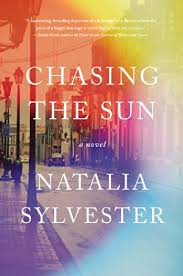
Natalia Sylvester's debut novel, Chasing the Sun, is a literary thriller that has drawn comparisons to Gillian Flynn's blockbuster Gone Girl.

Natalia Sylvester’s debut novel, Chasing the Sun, tells the story of a kidnapping and its effects on a marriage. A USA Today review called the book “a page turner.”

Almost everyone who tries to write a novel hits a wall roughly a third to halfway through the book. They discover that the plot is played out and the characters have hit dead ends. Why is this?

Part of the problem is often found in the opening pages. One of the inescapable truths of storytelling is that you must get to the story quickly; it’s the reason readers won’t be able to put down your book. This is true for every kind of story, but it’s especially true for a novel that fits into the category thriller. Yet if the novel focuses solely on kicking off the plot, it won’t give itself enough material to keep going once the initial plot mechanism runs its course. This is why many early novel drafts tend to stall out after 70 to 100 pages.

The question is how to do two things at once: hook the reader and also plant seeds that will sprout later in the book.

An excellent example of planting seeds can be found in Natalia Sylvester’s novel Chasing the Sun. The hook is made clear in the front flap: “Andres suspects his wife has left him—again. Then he learns that the unthinkable has happened: she’s been kidnapped. Too much time and too many secrets have come between Andres and Marabela, but now that she’s gone, he’ll do anything to get her back. Or will he?” But you have to read the first chapter to find the seeds that will sprout into the second half of the novel.

How does Sylvester integrate early hints of those secrets into the kidnapping scene that must begin the story? Find out by reading the opening pages here.

How the Story Works

Anyone who’s read the jacket of Chasing the Sun knows that Marabela will be kidnapped. So, the novel has no choice but to begin there. Even if Sylvester had wanted to start earlier, the reader wouldn’t have stood for it. If readers know what happens next, they won’t keep reading for long. So, Marabela disappears in the first chapter. And yet what a difficult place to begin. Once the kidnapping occurs, there are certain steps that must quickly follow: calls from the kidnappers, requests for ransom, negotiations, and wrong steps by everyone involved. These events carry an incredible gravitational field. The reader’s eye will skip over everything else and move straight to the central question: then what? Good luck creating depth of character or culture or place when a woman’s life hangs in the balance. But character and culture and place are the best parts of the story and (from a practical standpoint) the triggers that will propel the plot forward after the initial burst of kidnapping energy has played itself out. As a result, the writer must embed these things, this backstory, into the hook. Sylvester does this in a couple of ways.

First, she creates synchronous events. While Marabela is being kidnapped, her husband Andres is on a business call. Sylvester ties the events together in a few deft sentences, when Andres has to explain why his wife couldn’t come to the meeting:

He’d hoped Marabela would come with him today to help make a good impression.

“She’s so sorry she couldn’t make it. She was really looking forward to seeing you again,” he says.

“Tell her I said hello and that I hope she feels better,” Lara says.

We don’t yet know she’s been kidnapped, but we know something is going to happen (and if we’ve read the jacket, we know exactly what will happen), and so we’re aware of the irony of Lara’s statement. Sylvester doesn’t let it drop there. After the meeting, Andres’ son asks why his mom would come to a business meeting for something that doesn’t directly involve her. Watch how Sylvester uses Andres’ answer to do something crucial to the novel:

He sighs, unsure how to explain the less concrete aspects of his business. “Sometimes those kinds of things help the situation along. A man like Manuel wants to know the person he’s about to do business with shares his values. That he’s a good husband, a family guy. That he can be trusted.”

Again, the statement is ironic (“a good husband, a family guy. That he can be trusted”). Sylvester is making a clearcut statement about the man Andres wants to be, and, later in the novel, it will inevitably turn out that he’s not this kind of man. But Sylvester is doing something else as well. She’s beginning to tell the reader the values that Andres holds dear. Just one page later, when Andres and his son are being driven home, his son accidentally rolls down the window at a stoplight:

“Señor, tres paquetes de galletas por un sol.” A young boy, no older than thirteen, pokes his head through the window. Ignacio shakes his head and starts rolling up the window when his father leans forward to stop him.

“Not so fast. You already got his hopes up. Don’t toy with the kid.” He leans over and shouts, “¡Dos paquetes! Go ahead, pay him.” He nudges his son.

“But you’re the one who—” With a stern look from his father, Ignacio stops protesting and fishes two coins out of his pocket.

The scene might seem incidental, but it tells the reader that Andres lives by a particular ethical code. Just as the novel will inevitably challenge Andres’ definition of himself as a good husband, a family guy, and trustworthy, the novel will also inevitably challenge his ethical system, forcing him to act in ways he would have previously believed unacceptable. The scene has also introduced Andres’ relationship to the larger political situation in Lima. The novel is set during the days of the Shining Path, a guerrilla group whose battle against the government cost more than 100,000 lives. It’s not accident, then, that the scene just described involves two people with a hired driver and a poor boy selling cookies. The novel is hinting at the politics that will play a large role in the story.

These seeds will become increasingly important. The kidnapping will be resolved, as it must, and that is when the real story begins—a story that is impossible without these details about Andres that can be turned on their head, a turning that will drive the plot forward again.

The Writing Exercise

Let’s plant some seeds using Chasing the Sun by Natalia Sylvester as a model:

  1. Create a synchronous event. Your novel probably has a Big Event that kicks off the story. At its most basic, it’s likely some version of a stranger arriving in town or a character leaving on a trip. The story hinges on that event, and, as a result, it’s difficult to shoehorn any character development in those scenes. So, carve out a scene that takes place at the same time or within the Big Event. It can be anything. Sylvester’s Big Event is the kidnapping, and her synchronous event is the business meeting. In a way, this is true to life. We’re never doing one thing at a time, and when something big happens, we’re almost always engaged in some other activity. Create that activity. If your character is getting ready to leave on a trip, send her to the bank, the grocery store, the mechanic, to coffee with a friend, or to the person who will take care of the dog while she’s gone. If a stranger is arriving, find out what people are doing as the stranger gets into town; they’re probably not sitting around, waiting for him.
  2. Connect the events. The connection is essential because otherwise the reader may feel like you’ve added an extraneous scene. Obvious ways to connect the events are with glimpses of someone (I saw a figure walk past the window and didn’t think much of it) or with phone calls or text messages (Ready yet?). You can also connect the events with irony (I couldn’t wait for a relaxing evening, or, they seem like they’ll make the perfect married couple). Because any novel’s initial events are given away by the jacket flap, the reader is anticipating whatever Big Event you have in store. So, if you’re dropping hints that the characters have certain expectations that won’t be met, the reader gets a sense of anticipation. Therefore, the connection that you make between events doesn’t need to be direct; it can simply hint at expectations that the Big Event will disrupt.
  3. Use that connection as an opportunity for character definition. Remember, not all character development is created equal. It’s fine to know that a character is vegan, but if you write that a character refuses to sit in an establishment that doesn’t serve vegan options, then you’re creating a scene that the reader can anticipate. A great way to create expectations in the reader is to define the character’s value system (He’s the kind of person who…). Sylvester lets Andres define himself as a good, honest husband and family man. The reason that he defines himself is because he’s thinking about his wife’s absence at the meeting. So, how can you use the connection between events as an opportunity for your characters to define themselves? If your character is leaving on a trip, let her define the kind of traveler she is (I take books and a coffee grinder, but I refuse to answer my email). If it’s a stranger arriving in town, let the character define the kind of place he lives, which will be a reflection of how he sees himself (I thought about hitting the showers but decided to knock out another couple of sets. The guys nodded at me as I came back into the weight room.) You’re setting the stage for the Big Event. Notice that these definitions contain value systems. When you establish a value, it’s a good idea to try to pressure it, even break it, in the story. The reader will be expecting nothing less.

Good luck!

How to Stretch Present Action

12 Jul
The New York Times called Jeffrey Renard Allen's novel Song of the Shank,

The New York Times called Jeffrey Renard Allen’s novel Song of the Shank, “the kind of imaginative work only a prodigiously gifted risk-taker could produce.”

Some books come with warnings, a heads-up to readers that the text is demanding and challenging. On one hand, these warnings are necessary to allow readers to brace themselves for what might be slow going. On the other hand, it’s possible that these warnings turn off readers from prose that isn’t difficult so much as new. As a casual or even serious reader, it’s easy to devour the same kinds of books over and over (I’m certainly guilty of this). But when you take time to study a difficult book, the rewards can be enormous.

Song of the Shank by Jeffrey Renard Allen is one of these books. It was published by Graywolf Press, and the press’ hometown newspaper, the Star Tribune, called the novel “engrossing and demanding.” At first glance, this seems like an accurate description, but spend a few minutes with the prose, and I think you’ll find that not only does it become easy to read, it also creates possibilities that other prose styles don’t allow.

You can read the opening chapter of Song of the Shank at Graywolf’s website.

How the Story Works

The Onion once ran the headline, “Nation Shudders at Large Block of Uninterrupted Text,” and that may be the reaction of many readers to the novel’s first paragraph, which continues for more than two pages. This is an approach to writing that we’re not used to. In fact, as writers, I’m willing to bet that most of us would struggle to write a paragraph that lasts two pages. So, how does Allen do it?

Not that much happens in the paragraph. We’re introduced to Eliza, who realizes that Tom is missing and so goes out into the yard to look for him—that’s the extent of the action. The bulk of the paragraph is taken up by Eliza’s thoughts, close description, commentary on her thoughts and the descriptions, and context for those thoughts and the situation in general. The novel is essentially asking us to recalibrate our expectations, to focus on things that we tend to skim over.

Here are two early sentences that show how Allen stretches out the present action. Try to spot the transition between action and context:

A clear track, left foot and right, running the circumference of the house, evidence that someone has been spying through the windows, trespassing at the doors. Had she been back in the city, the idea would already have occurred to her that the journalists were to blame, those men of paper determined in their unstoppable quest to unearth the long-lost—three years? four?—”Blind Tom”—Half Man, Half Amazing—to reproduce the person, return him to public consumption, his name new again, a photograph (ideally) to go along with it, the shutter snapping (a thousand words).

The second sentence begins with a clear marker to the reader: the prose is moving from action (a clear track, evidence that someone has been spying through the windows) to context (Had she been back in the city…).

In these sentences, the prose moves from action to close description:

She turns left, right, her neck at all angles. The house pleasantly still behind her, tall (two stories and an attic) and white, long and wide, a structure that seems neither exalted nor neglected, cheerful disregard, its sun-beaten doll’s house gable and clear-cut timber boards long in need of a thick coat of wash, the veranda sunken forward like an open jaw, the stairs a striped and worn tongue.

The description continues for a few more sentences and then moves into commentary (then, notice how the commentary moves back into description):

Taken altogether it promises plenty, luxury without pretense, prominence without arrogance, privacy and isolation. Inviting. Homey. Lace curtains blowing in at the windows, white tears draining back into a face.

Finally, here is an example of how the prose moves from action to Eliza’s thoughts:

Winded and dizzy, she finds herself right in the middle of the oval turnaround between the house and the long macadam road that divides the lawn. Charming really, her effort, she thinks. In her search just now had she even ventured as far as the straggly bushes, let alone into the woods?

Taken individually, none of these moves out of present action is remarkable. Writers use strategies like these all of the time. But when they’re used together, the effect is powerful. The present action is stretched so much that we almost forget what is happening and, instead, focus on what is happening around the action. This is often where the most interesting parts of any novel lie. The difference is that Allen has found a way to direct our attention to them.

The Writing Exercise

Let’s stretch out present action using Song of the Shank by Jeffrey Renard Allen as a model:

  1. Introduce context. There are many ways to temporarily broaden the point of view. An easy way is to jump out of the scene’s immediate time and place. Allen does this with the phrase, “Had she been back in the city.” Try letting the character (or the narrator) suggest how things in the scene might be different if the time and place were different. In other words, give context for how the situation dictates the action.
  2. Introduce close description. Every writer at some point describes aspects of the setting or character, but one way to extend the description is to use simile (veranda sunken forward like an open jaw) and metaphor (the stairs a striped and worn tongue). Allen also moves beyond literal description and explains how the place seems (a structure that seems neither exalted nor neglected). He’s able to do this, in part, because of the prose’s pacing. If we’re leaning into the present action, waiting to see what happens next, then we don’t have much patience for extended description. But this prose moves more slowly. So, try to slow down your descriptions by extending them with metaphor and simile and statements of how the places or characters seem.
  3. Introduce commentary. This is really just an extension of that seeming description. A good way to do this is to follow a description with a statement that sums up its individual pieces. You (or your narrator or character) are essentially telling the readers how to view what they’ve just read.
  4. Introduce a character’s thoughts. One way to approach a character’s thoughts is to let them function as commentary. In other words, avoid writing thoughts like this: Oh no! I need to hurry! Instead, let the character observe him or herself doing the present action. In Allen’s case, he lets Eliza gently mock her search for Tom (Charming really, her effort, she thinks). We’re allowed to see her from different angles, which gives a deeper picture of her, one that is multi-faceted. The more facets you show, the slower your prose may move—but, as Allen proves, the more texture and depth you can provide.

Good luck!

How to Make the Familiar Seem Strange

5 Jul
Sequoia Nagamatsu's story, "Placentophagy," was published at Tin House and is included in his collection, Where We Go When All We Were is Gone.

Sequoia Nagamatsu’s story, “Placentophagy,” was published at Tin House and is included in his collection, Where We Go When All We Were is Gone.

Any discussion of writing horror, sci-fi, or fantasy fiction will inevitably arrive at the phrase “defamiliarize the familiar.” What this means, in short, is that those stories aim to make readers pay attention to something they’d normally not give a second glance. Think about the film The Shining. It transformed a kid on a tricycle into the stuff of nightmares. Of course, all writing can do this, not just genre fiction.

A creepy example of a straight realism that does this is Sequoia Nagamatsu’s story, “Placentophagy.” It was published as part of Tin House‘s blog series “Flash Fridays,” where you can read it now.

How the Story Works

For some readers, the story’s title, Placentophagy, will give away the plot. But, I suspect most readers won’t immediately recognize or know the term, and so the moment of surprise happens a few seconds later, after reading the first sentence:

My doctor always asked how I would prepare it, the placenta.

In that single sentence, Nagamatsu manages to defamiliarize the familiar. The familiar: a body part (and, thus, something as familiar as can be). The unfamiliar: preparing the body part in order to eat it. It’s as simple as that: apply an unfamiliar context or action to something familiar. If you’re like me, there’s no way you won’t read the next sentence and the one after it. We’re hooked.

But now what? The story has made us pay attention to something we’d normally give no thought to: a placenta. How does it advance the premise?

First, it suggests ways to prepare the placenta:

Powdered and encapsulated for my Yuki—two, three, four or more a day depending on my level of sadness and how much I believed the vitamins and hormones within the tissue would make me whole again. Pan fried and stuffed into dumplings for Toru. A smoothie and two yakitori for Keiko.

Then, the story adds a moment of doubt: will the characters eat it? The husband introduces the doubt:

“We don’t have to do it this time—just because we have it.”

That doubt gets extended into the preparation:

I write down daal and naan. I write cumin and cardamom. But I’m not sure if I want to do Indian.

The story now has different directions it can go: eat it or not. Prepare it this way or that way. But that’s not enough. It’s not until the next section that the story really advances the premise into something beyond shock value.

First, Nagamatsu introduces the medical rationale for eating a placenta:

Despite being regarded as unusual, eating the placenta (placentophagy), can help women restore hormonal balance after labor and provide much needed vitamins and nutrients: Iron, B6, B12, Estrogen, Progesterone.

So, he’s made the unfamiliar into something as familiar as the medical text at the end of commercials for medication. He then takes this rationale and the fact that eating a placenta is something that does, in fact, happen, and makes it unfamiliar again:

The Baganda of Uganda believe the placenta is a spirit double and plant the organ beneath a fruit tree.

The story has advanced. It’s not simply a matter of will the character eat the placenta and, if so, how it will be prepared. Now it’s a question of will she eat the placenta and, if so, what will that action mean?

That final question of meaning makes the story so much more satisfying. It’s not simply trying to shock us but, rather, grappling with the eternal issue of how to be in the world, which is the question behind all great fiction.

The Writing Exercise

Let’s make the familiar seem strange using “Placentophagy” by Sequoia Nagamatsu as a model:

  1. Pair something familiar with an unfamiliar context or action. You can do with this with absolutely anything. Here are some examples you’ve seen before: intelligent car (Herbie), flying car (The Absent-Minded Professor), killer car (Christine), and talking car (Knight Rider). In all of these, something familiar as a car is made unfamiliar with an adjective. The film Men in Black did this with Tommy Lee Jones’ car. It suddenly began driving on the roof of a tunnel, and Jones’ character put on a song by Elvis. The song, then, became defamiliarized. So, try this: pair a noun with either an adjective or a verb (eat) that wouldn’t normally be paired with that mount.
  2. Play with the possibilities of the premise. Nagamatsu does this by listing the ways the placenta could be prepared. If you’re using “flying car,” think of all the things a flying car could do. Yes, it can fly, but once it’s flying, then what? Where can it fly? What do the characters do while flying it? Utterly normal things like listening to music or looking out the window suddenly become strange.
  3. Re-familiarize the unfamiliar. Just as Nagamatsu uses medical terminology to make eating a placenta not so strange, you can make your premise less strange and more familiar. After all, if you fly a car enough, you get used to it. It’s not a big deal anymore. So, what would make your premise mundane again? Frequency? Social acceptability?
  4. Make it strange again. Nagamatsu adds the element of folklore: the idea that a placenta might be a spirit double. So, we’ve gotten used to one way of viewing the eating of a placenta. Then he introduces a new way of viewing it. So, what are other ways to view your premise. A flying car is awesome, for instance, until the atmosphere above one hundred feet becomes toxic. Or, a flying car gains new meaning if the ocean level rises and covers all of the land. Notice how this works: you’re shifting the background of the premise—the context. Nagamatsu shifts the context to Uganda, and suddenly the premise doesn’t look the same anymore. How can you shift the context of your story?

Good luck and have fun.