Tag Archives: how to write a novel

How to Write Understated Violence

27 Jan
Amanda Eyre Ward's novel The Same Sky follows two Central American children migrating to the United States. Jodi Picoult said, "This one's going to haunt me for a long time."

Amanda Eyre Ward’s novel The Same Sky follows two Central American children migrating to the United States. Jodi Picoult said, “This one’s going to haunt me for a long time.”

In stories, violence has a way of dominating the scene, elbowing out character and setting so that the violence is all that you can see or remember. This is fine for some stories—sometimes violence does take over—but for other stories, it distracts from more important things.

So how do you keep violence in the background? A great way to learn would be to read Amanda Eyre Ward’s novel The Same Sky, which begins with a murder and a reaction that is noteworthy in its understatement. You can read the opening chapters here.

How the Novel Works

The novel begins with Carla, a young girl living in Tegucigalpa, the capital of Honduras. Her teacher has gone missing, and so she sets out to visit his house along with her friend, Humberto. The scene that follows immediately introduces us to a discovery of disturbing violence:

The front door was open. Our teacher and his wife were dead, lying next to each other on the kitchen floor.

Imagine the range of sentences and details that could follow this discovery. It would be natural for the characters and us, the readers, to dwell on the bodies, to become fixated on them, noticing and remembering particular details: some gruesome and some strikingly normal. But this isn’t what Ward does. Notice how she makes something else the focus of the scene:

The robbers had taken everything in the house. Our teacher, like me, had a mother in America, in Dallas, Texas, a gleaming city we had seen on the television in the window of the PriceSmart electronics store. The point is that our teacher had many things—a watch, alarm clock, boom box, lantern. Luckily, our teacher did not have any children (as far as we knew). That would have been very sad.

Humberto cried out when he saw the bodies. I did not make a sound. My eyes went to my teacher’s wrist, but his watch was gone. His wife no longer wore her ring or the bracelet our teacher had given her on their one-year anniversary. The robbers had taken our teacher’s shoes, shirt, and pants. It was strange to see our teacher like that. I had never seen his bare legs before. They were hairy.

Instead of grisly details, we’re shown their possessions. In fact, we see the possessions first, through a brief bit of context, and then we see their absence. It is through that absence that the bodies are revealed:  “I had never see his bare legs before. They were hairy.”

This misdirection accomplishes three important things:

  1. It keeps the gore at bay. Remember, this is the opening chapter of the novel. If those first pages contain a high level of uncomfortable detail, it begins to set a tone for the novel as a whole—a tone that might not be appropriate for the story. This isn’t a Quentin Tarantino film.
  2. It reveals the characters’ relationship with violence. Take this same murder and put it Austin, TX, where Carla will eventually end up, and the reaction would become quite different. In fact, Scott Blackwood has just published a novel about just such a murder: See How Small. The emotional resonance in that book is very different. In The Same Sky, the characters have become accustomed to murder and violence. As a result, they’re less visibly jolted when it occurs—whether through numbness or its routine nature.
  3. It gives us a sense for the characters’ real concerns. More important, perhaps, than what they don’t notice is what they do notice: “a watch, alarm clock, boom box, lantern.” It’s like the line from Sherlock Holmes: “When a woman thinks that her house is on fire, her instinct is at once to rush to the thing which she values most.” What these characters notice tells us what they value and need, and it is those values and needs that will help shape their decisions in the novel.

The Writing Exercise

Let’s write understated violence, using The Same Sky by Amanda Eyre Ward as a model:

  1. Decide on the type of violence. There are many kinds, not all of them physical. Some are emotional and mental. You can even think large scale and consider cultural violence: the aggression that groups enact against each other. An important distinction to consider is the difference between violence suffered by a person and violence witnessed by a person. Someone witnessing violence can, in some cases, turn away. But if that isn’t possible if the violence is being perpetrated against them—or, it’s more difficult and requires, perhaps, an interior numbness or turning away.
  2. Choose the new focus of the scene. Ward has the children focus on their teacher’s possessions. This makes sense because these are things that would be present in the house, along with the bodies, but their children’s familiarity with them allows the scene to step out of the moment and recall how they appeared before the violence occurred. So, think about what is in the room or place along with the violence: room furnishings, plants, cars, colors, sounds, smells.
  3. Create a reason for the character to pay attention to this new focus. What does the new focus (the thing, smell, color, etc) remind the character of? How does it make the character feel before the violence actually occurs? Does it highlight a scarcity or bounty in the character’s life?
  4. Add the violence to this setting. This addition will, of course, create a kind of contrast, a juxtaposition with the thing you’ve focused on. This contrast will create tension: where does the character look? It’s possible that the more severe and disturbing the violence, the more difficult it will be to look away. The more familiar or mundane the violence, the easier it will be to retain the character’s attention on the thing you’ve focused on. The closer you entwine the violence with the new focus, the more heightened the tension will become. This tension is important because only a severely disturbed person could totally ignore a scene of violence. The key, then, is to background the violence and, thus, insert the tension into the character’s thoughts. That tension will likely stay in their thoughts even after they’ve left the scene.

Good luck.

An Interview with Shannon A. Thompson

23 Oct
Shannon A. Thompson's novel Take Me Tomorrow features a drug that makes its users temporarily clairvoyant. You can read the opening chapters here.

Shannon A. Thompson’s novel Take Me Tomorrow features a drug that makes its users temporarily clairvoyant. You can read the opening chapters here.

Shannon A. Thompson is the author of the Timely Death Trilogy, a YA paranormal romance series. The first novel in the series, Minutes Before Sunset, was a Goodreads Book of the Month selection. Her most recent novel is Take Me Tomorrow, a YA dystopian thriller.

In this interview, Thompson discusses her growth as a writer since publishing her first novel at the age of 16, stretching the conventions of the YA dystopian genre, and the role of The Odyssey in her new novel.

(To read the opening chapters of Take Me Tomorrow and an exercise on how to begin and end chapters, click here.)

Michael Noll

The chapters have real dramatic punch. Each begins in a moment of tension and ends with that moment ends. As a result, the chapters are often short and focused on a single scene. Do you structure them that way consciously?

Shannon A. Thompson

I never structure chapters to be a certain way. The breaks might change during editing, but I mainly focus on simply telling the story honestly and in the best way possible. In fact, I didn’t even realize that about the chapters until you said it. Perhaps that is just the way Sophia’s mind works.

Michael Noll

This is your fourth novel. The first one, November Snow, was written (I believe) while you were still a teenager. I’m sure it’s easy to see how you’ve developed as a writer since then. I’m curious what you think is the most significant way your writing has grown.

Shannon A. Thompson

I believe my writing has grown dramatically. It’s funny you bring November Snow up because it is currently being re-written for re-release in November of 2015, and even I can confess to the embarrassing moments (the endless moments) I’ve had evaluating the changes I want to make. My voice has become more concise, and my characters have grown in maturity and depth. I am very excited to see how far my stories have come over the past seven years, and I hope to continue growing for the rest of my writing life.

Michael Noll

The novel begins in the woods, with a female narrator running and throwing knives into trees. In other words, we’re in a world that owes some of its existence to The Hunger Games. Its dystopian world (with a tyrannical state apparatus) also sits firmly within the genre of dystopian YA literature. I’m curious how you view yourself as a writer in these genres. Some writers, like Tolkien and J.K. Rowling, take inherited creatures and stories and re-imagine them. Other writers—Suzanne Collins, to some extent—write within the genre without feeling the need to stretch it. What sort of writer do you consider yourself? Are you pushing at the conventions or working comfortably within them?

Shannon A. Thompson

Shannon S. Thompson's YA dystopian novel, Take Me Tomorrow, features a clairvoyant drug and an uprising against the oppressive State.

Shannon A. Thompson’s YA dystopian novel, Take Me Tomorrow, is set in a region around Topeka, Kansas.

Well, to be honest, I based the beginning off of my real life. I used to live on a couple hundred acres with my husky, Shadow (the inspiration for Argos) and I collect knives in my spare time. That being said, I strived for a more realistic viewpoint in my dystopian novel. The genre is saturated with almost unrelatable worlds, and although those are fantastically entertaining, I wanted Take Me Tomorrow to have a very close relationship with our current world because the themes very much coincide with societal issues of today, and I didn’t want the topics to be buried under a fantasy. Perhaps that is working comfortably within today’s lines, but maybe – in all honesty – it is pushing the conventions since the approach isn’t in dystopian literature as often. I leave that for the reader to decide. That being said, the sequel – Take Me Yesterday — reveals more about the world than the first book, and I am hoping it receives a contract in the near future. Too bad I don’t have tomo to know.

Michael Noll

The Iliad and The Odyssey are mentioned often in this book. To what extent do you look to those books and their monsters and plots, all of which remain freshly contemporary?

Shannon A. Thompson

Both of those stories are mentioned because Sophia really enjoys them. She has a daring soul and an adventurous heart, but the extent of their mention is explained more so in the sequel. That being said, I will point out one particular scene, which is a bit of spoiler, but in Noah’s bedroom, she comes across a statue, but she doesn’t recognize it. This has to do with Greek culture, and it also shows that – although Sophia reads – the government has censored a lot, especially in terms of photographs (hence why Sophia is fascinated by the paintings in Phelps’ mansion) so she doesn’t recognize what she is looking at despite the fact that she would be aware of it if she were alive in our world. Those are very small details that I inserted specifically for the readers who experience novels more than once and for the rest of the series because Sophia ends up on her own odyssey, and the adventure exposes – like you said – many monsters.

October 2014


Michael NollMichael Noll is the editor of Read to Write.

How to Make Characters Uncomfortable

16 Sep
Ted Thompson's novel, The Land of Steady habits, has earned comparisons to Richard Yates and John Updike.

Ted Thompson’s novel, The Land of Steady Habits, has earned comparisons to Richard Yates and John Updike.

Fiction should not be nice to its characters. As soon as a character reveals some preference (I like this but hate that), the story has an obligation to force the character into that hated thing. It’s a tried and true strategy that can produce some of the best moments in a story, regardless of genre (remember snake-fearing Indiana Jones facing a pit of snakes?). So, how do you set up a situation in which a character must face the thing he or she detests most?

Ted Thompson begins his novel The Land of Steady Habits with exactly this kind of moment. The novel was published by Hatchette Book Group, and you can read the opening chapter at Hatchette’s website.

How the Story Works

The first line of the novel establishes the hated thing:

One of the great advantages of Anders’s divorce—besides, of course, the end of the squabbling, and the sudden guiltless thrill of freedom—was that he no longer had to attend the Ashbys’ holiday party. The party, like all the parties he’d attended in his marriage, was his wife’s domain, and he was relieved to no longer have to show up only to be a disappointment to her friends.

The novel wastes no time forcing Anders to confront the thing he thought he’d left behind: “a card arrived from the Ashbys, as if with the season, inviting him once again to their holiday party.”

Of course, the invitation shouldn’t matter. Anders should simply toss it in the trash—the advantage of divorce. This seems to be his plan, and at first he treats it as curiosity—”the only invitation he’d received”—and tries “to decide if it was a peace offering of if they’d simply forgotten to take him off their list.”

But there’s a complication. As part of the divorce agreement, Anders agreed to give his wife the house (with its expensive mortgage), but he can’t afford to retire on what remains of their wealth and has, out of necessity and spite, quit paying the mortgage. The problem with this solution becomes clear with a second piece of mail: a note from his wife’s lawyers also comes in the mail that makes clear that he has “until the end of the year before the bank brought in a judge.”

To solve this problem, Anders must talk with his ex-wife—and that is why he decided to attend the party.

Thus, in the span of only a couple of pages, the novel creates a situation that Anders should absolutely avoid and a reason for him to necessarily confront it. As one might expect, his appearance begins uncomfortably and ends with disaster.

Side note: This novel was recently optioned by director Nicole Holofcener, whose films (Please GiveFriends with MoneyEnough Said) excel at putting characters into uncomfortable situations. When you read the opening chapter of Thompson’s novel, its appeal to a filmmaker will make a lot of sense.

The Writing Exercise

Let’s put a character into an uncomfortable situation using the excerpt from The Land of Steady Habits by Ted Thompson as a model:

  1. Create a character and a reasonable dislike/hatred. You might actually use Thompson’s first line as a model: “One of the great pleasures of _____ was that he/she no longer had to ______.” Life is full of situations like this. Parents look forward to no longer changing diapers, people in apartments look forward to no longer carrying groceries up flights of stairs, people who’ve changed jobs look forward to no longer commuting or sitting next to So-and-so. And, of course, most of us know what it’s like to expect that something is over—and then it isn’t. So, imagine what life change your character has recently gone through and the annoying things this change has left behind.
  2. Create an opportunity to encounter that dislike. Thompson uses an invitation in the mail, which is, in a larger sense, a visit from somebody he used to know but now no longer encounters. So, imagine all the ways that your character’s dislike could return in the form of an unexpected encounter: running into someone in the grocery store, an event (wedding, funeral, graduation) that forces them together, a merger at work. We like to believe that the world is large and that we can make our own place in it, but the truth is that our places overlap more than we often acknowledge. How can you make your character’s worlds overlap in order to bring him/her into an encounter with some unpleasant thing that has been left behind?
  3. Create a reason for the character to seek out that encounter. Thompson gives his character no choice, really, but to attend the party (Anders has quit paying the mortgage on the house that his wife won in the divorce, and he needs to explain himself). As Thompson demonstrates, a good way to force a character’s hand is to make him/her do something that will have negative consequences. So, imagine an act that your character could commit that would force him/her to face some unpleasantness that has been left behind. Or, imagine a circumstance that is beyond the character’s control (layoffs, illness) that could turn the character back to a place that’s been left behind. The result will likely be a scene that the character wants desperately to avoid but has no choice but to enter.

Have fun!

An Interview with Natalia Sylvester

10 Jul
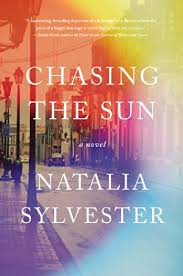
Natalia Sylvester's debut novel, Chasing the Sun, is set in Lima, Peru, during the terrifying years of the Shining Path. It tells the story of a marriage -in-crisis that is pushed to the brink by a kidnapping.

Natalia Sylvester’s debut novel, Chasing the Sun, is set in Lima, Peru, during the terrifying years of the Shining Path. It tells the story of a marriage-in-crisis that is pushed to the brink by a kidnapping.

Natalia Sylvester is a Peruvian-born Miamian now living in Austin, Texas. Her debut novel, Chasing the Sun, follows a frail marriage tested to the extreme by the wife’s kidnapping in 1990s Peru. Booklist called the novel’s ending “smart and unexpected.”

In this interview, Sylvester discusses restarting a novel after setting it aside for six years, the things that pull a marriage apart, and what happens when you pitch to American editors a novel set in Peru with an all-Peruvian cast of characters.

To read an exercise on moving the plot forward in a novel and an excerpt from Chasing the Sun, click here.

Michael Noll

I know the novel is based in part on the kidnapping of your grandfather in Lima in the 1990s. I’m sure that’s a story that you’ve been thinking about for a long time, not just what happened to your grandfather but the larger political situation in Peru at the time. What finally allowed you to turn that story into a novel? Was it a question of finding the right backstory for the kidnapping?

Natalia Sylvester

I think more than anything, it was time that allowed me to tell this story. I started writing it as part of my undergrad Creative Writing thesis back in 2005/2006, and back then (like I’d been most of my life) I was hesitant to talk to my family about my grandfather’s kidnapping. It’s something I’d known about and wondered about, but since we rarely spoke about it in much depth, I didn’t ask. I let all my questions pile up and even when I wrote the first drafts of Chasing the Sun, I wrote it quietly, keeping all my questions between me and the page.

Not surprisingly, the story didn’t come together the way I’d hoped. (Also, I was 21, newly engaged, and trying to write a story about a troubled marriage. I don’t really buy into the “write what you know” belief, but when I write I do need to find an access point into a story, and for me it can be almost anything, as long as it feels true.)

I set the book aside for nearly six years. I had no plans to ever revisit it, but my husband had read parts of it and would constantly insist, based on one scene he loved, that there was something there. This time I approached it with a heavy emphasis on research—not just on Peru and its political situation and the years of terrorism it experienced, but also the main thing I’d been avoiding all along, which was talking to my family about the kidnapping. Though none of the characters are based on my family, having their insights (and now I realize, their support) was so necessary because I wanted to restart this story from a place of truth and honesty.

Michael Noll

Speaking of the backstory, I loved the relationship between Andres and Marabela—it’s so complex. Even after Marabela is kidnapped, I found myself wondering not whether she’d survive but what would happen after she returned. This seems like a real accomplishment—to create a story that can rival kidnapping for suspense. How did you come up with it?

Natalia Sylvester

Natalia Sylvester's debut novel, Chasing the Sun, is a literary thriller that has drawn comparisons to Gillian Flynn's blockbuster Gone Girl.

Natalia Sylvester’s debut novel, Chasing the Sun, is a literary thriller that has drawn comparisons to Gillian Flynn’s blockbuster Gone Girl.

Thank you, I’m really touched by that. Their relationship took me by surprise from the very first draft. I’d originally written my thesis as a set of linked short stories, all told from different POVs, about Marabela’s kidnapping. I started with Cynthia’s POV, then Consuelo, then Ignacio, and then finally, Andres. When I got to his story, it was like they’d been keeping their troubled marriage secret from me all this time. And I thought that was pretty fascinating, because life never happens in a vacuum, even (or maybe especially) the kinds of things we most fear. I wondered if Andres would be able to compartmentalize, and not let his feelings about his failing marriage affect the decisions he makes as he tries to save Marabela. Their relationship became almost like an additional character I wanted to explore and dissect and understand.

Also, in the six years that I’d set the story aside, I’d gotten (happily!) married but seen a lot of marriages around me fall apart. So I became kind of obsessed with how that happens. How does something as huge as two lives, lived side by side for decades, fall apart to practically nothing? I thought it’d have to be something equally big and traumatizing, like a kidnapping, when really it’s the little things, the everyday, mundane gestures and regrets that can build up and pull us apart.

Michael Noll

I love the way the beginning of the novel sets up Andres’ value system (hard work pays, be assertive in business, honor your promises) and also the holes in that system (he doesn’t really pay attention or express concern for his family’s domestic employees). How important was it to establish those values early in the novel?

Natalia Sylvester

It’s interesting that you mention it because a huge chunk of that early scene, I didn’t end up writing until after the book had sold and I was working on my first round of revisions for my editor. Looking back, I feel very lucky the book sold like that, because I think it’s crucial to establish who a character is, what they stand for, and what world they’re living in, before you disrupt it all with something as earth-shattering as a kidnapping. What good is the “after” picture without the “before”? In fiction we’re often told, “Start with the inciting incident” but the false sense of security in the calm before the storm is equally rich in possibility.

Michael Noll

It’s not unusual to set novels in “exotic” locations, but it’s less common for American novels set in one of those places (in this case, Peru) to follow a cast of characters that doesn’t feature any Americans. I wonder if you encountered any resistance to the fact that it’s truly a Peruvian novel, about Peruvian characters. Did anyone, a reader or agent or editor, ever say, “Gee, couldn’t you make Andres an American?”

Natalia Sylvester

Not in exactly those words, but yes, several publishers that rejected the story expressed concern that it wasn’t tied at all to the U.S. Some wished there could be an American character, or maybe at some point, they go to the U.S. And you know, if there’s one thing I wish I could unlearn about publishing, or that I could make other aspiring authors unlearn, it’s this. Because I was blissfully unaware as I wrote Chasing the Sun that it being so Peruvian was unusual. I just thought, I’m writing a story, and of course I’m going to set it here, and these are the people who live in that world. It never occurred to me that they’d be seen as “difficult to relate to” because I’ve always believed we’re more alike than we are different, and that universal stories are just that—they can belong to any of us.

I’m very lucky that my publisher understood this; they actually loved that the book was so Peruvian. But my heart breaks when I realize what a struggle it was, and what a struggle it still is, for us to get our stories heard because they’re not perceived as part of the mainstream world.

July 2014

Michael Noll

Michael Noll is the Editor of Read to Write Stories.

How to Set Up the Second Half of Your Novel

8 Jul
Natalia Sylvester's debut novel, Chasing the Sun, is a literary thriller that has drawn comparisons to Gillian Flynn's blockbuster Gone Girl.

Natalia Sylvester’s debut novel, Chasing the Sun, is a literary thriller that has drawn comparisons to Gillian Flynn’s blockbuster Gone Girl.

Almost everyone who tries to write a novel hits a wall roughly a third to halfway through the book. They discover that the plot is played out and the characters have hit dead ends. Why is this?

Part of the problem is often found in the opening pages. One of the inescapable truths of storytelling is that you must get to the story quickly; it’s the reason readers won’t be able to put down your book. This is true for every kind of story, but it’s especially true for a novel that fits into the category thriller. Yet if the novel focuses solely on kicking off the plot, it won’t give itself enough material to keep going once the initial plot mechanism runs its course. This is why many early novel drafts tend to stall out after 70 to 100 pages.

The question is how to do two things at once: hook the reader and also plant seeds that will sprout later in the book.

An excellent example of planting seeds can be found in Natalia Sylvester’s novel Chasing the Sun. The hook is made clear in the front flap: “Andres suspects his wife has left him—again. Then he learns that the unthinkable has happened: she’s been kidnapped. Too much time and too many secrets have come between Andres and Marabela, but now that she’s gone, he’ll do anything to get her back. Or will he?” But you have to read the first chapter to find the seeds that will sprout into the second half of the novel.

How does Sylvester integrate early hints of those secrets into the kidnapping scene that must begin the story? Find out by reading the opening pages here.

How the Story Works

Anyone who’s read the jacket of Chasing the Sun knows that Marabela will be kidnapped. So, the novel has no choice but to begin there. Even if Sylvester had wanted to start earlier, the reader wouldn’t have stood for it. If readers know what happens next, they won’t keep reading for long. So, Marabela disappears in the first chapter. And yet what a difficult place to begin. Once the kidnapping occurs, there are certain steps that must quickly follow: calls from the kidnappers, requests for ransom, negotiations, and wrong steps by everyone involved. These events carry an incredible gravitational field. The reader’s eye will skip over everything else and move straight to the central question: then what? Good luck creating depth of character or culture or place when a woman’s life hangs in the balance. But character and culture and place are the best parts of the story and (from a practical standpoint) the triggers that will propel the plot forward after the initial burst of kidnapping energy has played itself out. As a result, the writer must imbed these things, this backstory, into the hook. Sylvester does this in a couple of ways.

First, she creates synchronous events. While Marabela is being kidnapped, her husband Andres is on a business call. Sylvester ties the events together in a few deft sentences, when Andres has to explain why his wife couldn’t come to the meeting:

He’d hoped Marabela would come with him today to help make a good impression.

“She’s so sorry she couldn’t make it. She was really looking forward to seeing you again,” he says.

“Tell her I said hello and that I hope she feels better,” Lara says.

We don’t yet know she’s been kidnapped, but we know something is going to happen (and if we’ve read the jacket, we know exactly what will happen), and so we’re aware of the irony of Lara’s statement. Sylvester doesn’t let it drop there. After the meeting, Andres’ son asks why his mom would come to a business meeting for something that doesn’t directly involve her. Watch how Sylvester uses Andres’ answer to do something crucial to the novel:

He sighs, unsure how to explain the less concrete aspects of his business. “Sometimes those kinds of things help the situation along. A man like Manuel wants to know the person he’s about to do business with shares his values. That he’s a good husband, a family guy. That he can be trusted.”

Again, the statement is ironic (“a good husband, a family guy. That he can be trusted”). Sylvester is making a clearcut statement about the man Andres wants to be, and, later in the novel, it will inevitably turn out that he’s not this kind of man. But Sylvester is doing something else as well. She’s beginning to tell the reader the values that Andres holds dear. Just one page later, when Andres and his son are being driven home, his son accidentally rolls down the window at a stoplight:

“Señor, tres paquetes de galletas por un sol.” A young boy, no older than thirteen, pokes his head through the window. Ignacio shakes his head and starts rolling up the window when his father leans forward to stop him.

“Not so fast. You already got his hopes up. Don’t toy with the kid.” He leans over and shouts, “¡Dos paquetes! Go ahead, pay him.” He nudges his son.

“But you’re the one who—” With a stern look from his father, Ignacio stops protesting and fishes two coins out of his pocket.

The scene might seem incidental, but it tells the reader that Andres lives by a particular ethical code. Just as the novel will inevitably challenge Andres’ definition of himself as a good husband, a family guy, and trustworthy, the novel will also inevitably challenge his ethical system, forcing him to act in ways he would have previously believed unacceptable. The scene has also introduced Andres’ relationship to the larger political situation in Lima. The novel is set during the days of the Shining Path, a guerrilla group whose battle against the government cost more than 100,000 lives. It’s not accident, then, that the scene just described involves two people with a hired driver and a poor boy selling cookies. The novel is hinting at the politics that will play a large role in the story.

These seeds will become increasingly important. The kidnapping will be resolved, as it must, and that is when the real story begins—a story that is impossible without these details about Andres that can be turned on their head, a turning that will drive the plot forward again.

The Writing Exercise

Let’s plant some seeds using Chasing the Sun by Natalia Sylvester as a model:

  1. Create a synchronous event. Your novel probably has a Big Event that kicks off the story. At its most basic, it’s likely some version of a stranger arriving in town or a character leaving on a trip. The story hinges on that event, and, as a result, it’s difficult to shoehorn any character development in those scenes. So, carve out a scene that takes place at the same time or within the Big Event. It can be anything. Sylvester’s Big Event is the kidnapping, and her synchronous event is the business meeting. In a way, this is true to life. We’re never doing one thing at a time, and when something big happens, we’re almost always engaged in some other activity. Create that activity. If your character is getting ready to leave on a trip, send her to the bank, the grocery store, the mechanic, to coffee with a friend, or to the person who will take care of the dog while she’s gone. If a stranger is arriving, find out what people are doing as the stranger gets into town; they’re probably not sitting around, waiting for him.
  2. Connect the events. The connection is essential because otherwise the reader may feel like you’ve added an extraneous scene. Obvious ways to connect the events are with glimpses of someone (I saw a figure walk past the window and didn’t think much of it) or with phone calls or text messages (Ready yet?). You can also connect the events with irony (I couldn’t wait for a relaxing evening, or, they seem like they’ll make the perfect married couple). Because any novel’s initial events are given away by the jacket flap, the reader is anticipating whatever Big Event you have in store. So, if you’re dropping hints that the characters have certain expectations that won’t be met, the reader gets a sense of anticipation. Therefore, the connection that you make between events doesn’t need to be direct; it can simply hint at expectations that the Big Event will disrupt.
  3. Use that connection as an opportunity for character definition. Remember, not all character development is created equal. It’s fine to know that a character is vegan, but if you write that a character refuses to sit in an establishment that doesn’t serve vegan options, then you’re creating a scene that the reader can anticipate. A great way to create expectations in the reader is to define the character’s value system (He’s the kind of person who…). Sylvester lets Andres define himself as a good, honest husband and family man. The reason that he defines himself is because he’s thinking about his wife’s absence at the meeting. So, how can you use the connection between events as an opportunity for your characters to define themselves? If your character is leaving on a trip, let her define the kind of traveler she is (I take books and a coffee grinder, but I refuse to answer my email). If it’s a stranger arriving in town, let the character define the kind of place he lives, which will be a reflection of how he sees himself (I thought about hitting the showers but decided to knock out another couple of sets. The guys nodded at me as I came back into the weight room.) You’re setting the stage for the Big Event. Notice that these definitions contain value systems. When you establish a value, it’s a good idea to try to pressure it, even break it, in the story. The reader will be expecting nothing less.

Good luck!

An Interview with Smith Henderson

3 Jul
Smith Henderson's novel Fourth of July Creek is already in the works to become a television series.

Smith Henderson’s novel Fourth of July Creek is already in the works to become a television series.

Smith Henderson’s novel, Fourth of July Creek, made news before it was even released, in part due to the bidding war it inspired among publishers. So far, the novel has been called “the best book I’ve read so far this year” by the book editor of The Washington Post and “a hell of a great book” by Esquire. The novel is set in Montana and follows a social worker whose life becomes entwined with the delusional and grandiose actions of a would-be prophet and revolutionary, Jeremiah Pearl.

Henderson was the recipient of the 2011 PEN Emerging Writers Award in fiction. He was a 2011 Philip Roth Resident in Creative Writing at Bucknell University, a 2011 Pushcart Prize winner, and a fellow at the Michener Center for Writers in Austin, Texas. He currently works at the Wieden+Kennedy advertising agency, where he wrote the Chrysler Super Bowl ad featuring Clint Eastwood. His fiction has appeared in American Short Fiction, One Story, New Orleans Review, Makeout Creek, and Witness. Born and raised in Montana, he now lives in Portland, Oregon.

In this interview, Henderson discusses the challenge of dramatizing a character who spends much of his time off the page and his method for capturing the voice of a man who believes the Antichrist is alive and well.

To read an exercise on using summary in dialogue and an excerpt from Fourth of July Creek, click here.

Michael Noll

I love the way that you make Jeremiah Pearl present in the novel, even when he’s not actually on the page. The biggest way you do this is with the coins that have had holes somehow cut into them. Pete finds one of the coins in his change, and then he runs across individuals who’ve encountered the coins and are collecting them, which leads him to someone who’s had a face-to-face encounter with Pearl. I’m curious if the coins were always present in the novel or if you introduced them to solve some issue you were having, perhaps the difficult of writing about a guy who would necessarily spend much of his time in hiding.

Smith Henderson

I’m sure the coins were a solution, as you suggest, but it was also just one of those things that felt right, and may have been something I was going to have him do all along. You have a character in mind and you start to think of things he or she does and what those things could mean for the plot.

But as you say, Pearl is in hiding quite a bit, so it began to be important that he do enough things that he wasn’t hiding from nobody. People—not just the protagonist, Pete—needed to want to find him. And so then you just start to look at things that a guy like that would do that would draw attention. The coins were definitely part of that.

If there’s a craft takeaway from all this, it’s probably that a character’s actions should both move the plot and be expressive of that character’s core identity.

Michael Noll

While Pearl makes his first appearance early on in the novel, he isn’t seen a second time until about halfway through. In that span of pages, you’ve created a tremendous amount of suspense about his activities and who, exactly, he is. Did you worry about how you’d satisfy the intrigue you’d built up? In other words, how did you approach the scene that you must have known that your readers would be dying for—Pete’s second encounter with Pearl?

Smith Henderson

I honestly don’t recall approaching that scene. I remember being more concerned with making Pearl off-stage as compelling as scenes with him in them. A scene with characters in the same time and place is technically easier to do than having a character relate a story to another character.

But of course, there was pressure to make Pearl-in-the-flesh as vibrant, interesting, and troubling as possible. To have earned that intrigue. But then, the intrigue itself gives the character a certain degree of power. Playing against the created image of the man was a large part of the fun in writing those scenes.

Michael Noll

Smith Henderson's highly anticipated debut novel, Fourth of July Creek, was called "the best book I've ready so far this year" by Washington Post fiction editor Ron Charles.

Smith Henderson’s highly anticipated debut novel, Fourth of July Creek, was called “the best book I’ve ready so far this year” by Washington Post fiction editor Ron Charles.

One last question about Pearl (he’s tremendously fascinating). How much research was required to write his rants? Did you try to research the kinds of things he would have read about? Or did you research people like him to see what they talked about?

Smith Henderson

Well I’ve been to churches where people spoke in tongues and where the religious intensity was hotter than say, at a Unitarian church or something. I was privy to conversations about who exactly was the antichrist. So a lot of Pearl’s basic worldview was familiar to me, as it is to millions of Americans.

Also, people in Montana are generally suspicious of “outside” authority…so I was steeped in that kind of thinking before I ever conceived of Pearl. But as it came time to bring him to life, I did research into separatist movements and militias and the different flash points of the past 30 years. The Unabomber’s capture, the Ruby Ridge standoff, the hunt for Eric Rudolph. But Pearl’s voice was drawn from more older sources. I read a lot of Thoreau, Emerson, and even Nietzsche to get his pronouncements to sound properly grand. He’s as much a product of the Jesus who threw the money-changers out of the temple as he is Timothy McVeigh.

Michael Noll

The novel is written from a few different points of view, and in the sections about Pete’s daughter Rachel, you use a Q&A format. Was this a way to break up the pace of the novel? Her story takes place pretty far from Pearl’s story, and so I’m wondering if you felt the need to give her sections some extra velocity, some snap, to keep the reader’s mind from wandering back to Pearl and Pete.

Smith Henderson

The Q&A format is basically a way for me to generate material. I will often write that way to figure out a character or write my way out of a problem. With the Rachel sections, I just found that I liked them in the Q&A style. For a couple reasons. First, the identities of the Q&A aren’t really identified and work like a Greek chorus, sort of commenting on the action as they disclose it. But also, there is an inherent anxiety to the questions, which I felt really gave the reader Pete’s perspective on his daughter’s fate, his worry, his fear, his imagination running away with the possibilities…it’s as if every question is some version of “Is she okay is she okay is she okay is she okay…?” I found that much more satisfying experience as a reader.

July 2014

Michael Noll

Michael Noll is the Editor of Read to Write Stories.

How to Create Energy in Dialogue with Summary

1 Jul
Smith Henderson's highly anticipated debut novel, Fourth of July Creek, was called "the best book I've ready so far this year" by Washington Post fiction editor Ron Charles.

Smith Henderson’s highly anticipated debut novel, Fourth of July Creek, was called “the best book I’ve ready so far this year” by Washington Post fiction editor Ron Charles.

Dialogue is not the same as real-life conversation. While this isn’t exactly news to anyone who’s tried to write a story or novel, it’s something we often forget. Most obviously, dialogue is brief, a few pages at most (and that’s some very extensive dialogue), whereas even short conversations, if transcribed, would last at least probably twice as long. There are some common ways to condense dialogue: skip the greetings and chit-chat. Get down to business. Jump ahead to the tense part of the dialogue—the bit where something is at stake. Leave out the filler that we often think is required to get to the good stuff but which can usually be cut.

But what if it’s all good stuff? What if, for instance, a character is telling another character a story, and it’s all tense and interesting, but it’s also going on and on? How do you keep the material but shorten the dialogue? One answer is to use summary.

A great example of using summary in dialogue can be found in the highly-praised debut novel Fourth of July Creek by Smith Henderson. It was published by Ecco, and you can read the opening pages here.

How the Story Works

In the novel’s opening scene, a social worker, Pete, has been called out to a dispute between a woman and her teenage son. A neighbor called the police, and after subduing both individuals, the cop called the social worker. In this piece of dialogue, the officer is telling Pete what happened. Notice what Henderson puts into dialogue and what he summarizes:

Pete nodded and wrote some more…

“And the situation when you got here? ”

The situation was a perfect fucking mess. The situation was the kid climbing up onto the slanted, dented aluminum carport and stomping on the rusted thing like an ape. Just making the whole unsound shelter boom and groan under his weight. The mother saying so help her if that thing falls on her Charger she’ll gut him, and the kid just swagging the carport back and forth so that it was popping and starting to bow under his weight. Now the cop was about ready to shoot the ornery shit off the goddamn thing.

Then the situation got interesting.

“The mother has the air rifle and—”

“No way,” Pete said.

“Yeah, fuckin way,” the cop said.

“She shoot him? ”

“Before I get to her, yeah, she shoots. You can see the big old welt on his forearm.”

Pete started to write.

“And then what?”

At this point, dialogue moves back into summary, describing what happened next between the boy and his mother. Take another look at the dialogue and imagine if the summarized part (the paragraph that begins with “The situation was a perfect fucking mess”) had been put into dialogue. In other words, what if the police officer had told the entire story in his words? It would have taken longer—perhaps only slightly longer, but if you’ve ever listened to someone tell a good story, anything that slows the pace is annoying.

So what does Henderson summarize? Notice where the summary ends and the dialogue picks back up again: “Now the cop was about ready to shoot the ornery shit off the goddamn thing.” The summary has given us the setup, the logistics of the story: who and where and what. But when the setup turns into a moment of action, of potential drama becoming actual drama, the scene is told through dialogue. We’re put immediately into the question of what happened:

“The mother has the air rifle and—”

“No way,” Pete said.

The dialogue is saved for the moment of greatest intensity and interest. Everything that is required to get to those moments is summarized.

The Writing Exercise

Let’s summarize within sections of dialogue, using the passage from Smith Henderson’s novel Fourth of July Creek as a model:

  1. Choose the scene. You’ll need two or more characters and a story for one of them to tell. While the story doesn’t need to be connected to the immediate situation (people just sitting around, telling stories), the dialogue will feel more pressing if it impacts the characters. Henderson makes his story impactful because the story dictates how the social worker will handle the situation. One way to handle the scene is to have a character enter in a hurry, or with great purpose, and begin telling a story that must be told. Think of a child running into a house to tell his mom that his brother is hurt. The story will answer the question, “What happened?” And what happened will dictate what the mom does next. So, how can you invent a scene where a character enters in a hurry and causes another character to ask, “What happened?”
  2. Write out the dialogue in full. Don’t worry about summarizing yet. In a way, you don’t know what to summarize because you don’t yet know the entire story or how it will unfold.
  3. Listen for the slow parts. As you reread the dialogue, or as you write it, attune yourself to the voice in your head telling the story and also the voice that’s listening to the story. When does that second voice begin to lose interest? When does its attention flag? When does it perk up?
  4. Summarize the slow parts. Slow doesn’t mean uninteresting, only less interesting than the most exciting parts. Usually, these parts are the interstitial moments, the parts of the story that connect the moments of true drama. Imagine telling the story at a bar or coffee shop. When the listener leans forward and says, “And then what?” that’s almost certainly a moment of high interest or suspense. Put that part in dialogue. The setup that was required to get there can be summarized.
  5. In the summary, use sentences that emphasize action. It’s almost like you’re blocking out a scene for a play, directing the actors where to stand and what to do. Henderson does this with -ing words: “the kid climbing up onto the slanted, dented aluminum carport and stomping on the rusted thing like an ape. Just making the whole unsound shelter boom and groan under his weight. The mother saying so help her if that thing falls on her Charger she’ll gut him, and the kid just swagging the carport back and forth so that it was popping and starting to bow under his weight.” These words give the scene a sense of immediacy because the make the action ongoing, rather than completed and over with. We do this naturally: “So I was standing there, minding my own business when…”
  6. In the summary, use sentence structures that emphasize latent energy. Latent energy is the energy required for a substance to undergo a transition (water: ice to liquid; a car: not moving to rolling down a hill). Latent energy is what makes an audience lean forward and ask, “Then what?” Notice the latent energy in this sentence from the scene in Henderson’s novel: “the kid just swagging the carport back and forth so that it was popping and starting to bow under his weight.” The kid is applying force to the carport, and at a certain point, that force may supply the necessary latent energy for the carport to fall apart. In story terms, the act of the boy jumping on the carport is also applying force to his mother. When the force is strong enough, she will act. So, in your scene, find a way for one character to apply a type of force against another character: you’re looking for the amount of force that will supply the necessary latent energy to make that character act. When the character is about to act, that’s when you quit summarizing and begin using dialogue again.

Good luck!

An Interview with Jennifer Ziegler

5 Jun
Jennifer Ziegler's new middle-grade novel Revenge of the Flower Girls, has X

In Jennifer Ziegler’s new middle-grade novel Revenge of the Flower Girls, three flowers girls set out to ruin their sister’s wedding.

Jennifer Ziegler’s latest middle-grade novel is Revenge of the Flower Girls. She’s also the author of How Not to Be Popular and Sass & Serendipity. She teaches writing workshops, edits other writers’ work, and creates writing programs for The Writer’s League of Texas. She lives in Austin, TX, with her husband, the writer Chris Barton, and their four children.

In this interview, Ziegler discusses inventing characters, the importance of villains, and her method for keeping the plot straight in her head.

To read an excerpt from Revenge of the Flower Girls and an exercise on creating villains, click here.

Michael Noll

I’m interested in how you invent characters. Some of the characters in the book, especially Mrs. Caldwell, exude a kind of essential Texan-ness. Her last name is even a famous Texas name. But other characters are much more idiosyncratic. For instance, you describe Aunt Jane this way: “She’s tall and strong. She played professional basketball for a while and then taught PE classes here in Blanco County. Now she lives in Boston, where she runs a bar.” What do you draw on to create your characters?

Jennifer Ziegler

The way I invent characters is a mystery even to me. I often feel that characters gestate in my mind for a long time until the right story concept comes along. How they get planted there, I don’t really know. I suspect that they are amalgams of people I know or used to know or observed from afar. They are never close replications of individuals from my life. Even when I’ve tried to put friends or family in my novels the characters based on them morph into their own distinct beings. At times I’m aware that I’m borrowing elements from real people (their mannerisms or looks or habits of speech), but more often I have no idea. There have been instances when I’ve flipped through a published book of mine and suddenly realized who a character was partly based on – subconsciously. That’s always a strange revelation. But I suppose all novelists can at least be partly psychoanalyzed through their fiction.

Michael Noll

There are several instances in the book where the triplets create a plan of action and describe it in detail—and then, of course, the plan goes off the rails. I know that you’re a thorough outliner of plot, and I’m curious how these sorts of plans factor into your outlining. From a reader’s perspective, they’re great at creating suspense. But are they useful to you as a writer as well?

Jennifer Ziegler

Yes very. The triplets’ schemes are integral to the book’s plot. I had to make sure I got everything straight before I started writing because logistics aren’t my strong suit. I like to disappear into the story as I go along and whenever I get yanked out of that world in order to work out the cause and effects, it slows down my momentum. I knew who the triplets were and what they wanted, so it was just a case of figuring out how they would approach this problem and what would be the outcome of each of their plans.

Knowing who they were told me what they would do. Because the girls are big history buffs, it made sense that they would brainstorm complicated operations – that they would be action oriented rather than just mope. But, of course, they are only 11, so their lack of worldly experience translated into somewhat unrealistic schemes. The plans show just how far the girls will go to help their sister, what they’re good at, how they assume the world works, and how they work together – so they also help reveal character.

Michael Noll

The novel features three narrators who are triplets. Each of them takes turns telling the story, which must have presented an enormous challenge to you as the writer: how to distinguish between them. One thing I noticed is that you give the triplets, and all of the characters, tags. For instance, the triplets are history buffs, and so they judge each other and everyone else based on their choice of favorite president of the United States. For instance, Darby mentions that their big sister’s ex-boyfriend liked Thomas Jefferson, and says, “We all respect that.” But the big sister’s fiancé likes Franklin Pierce, and she says that “we all agree that Pierce was not one of the best.” This reminds me of the way George Lucas used motifs in Star Wars: a particular musical phrase that corresponds with each character. Is this technique essential for the kind of story you’re telling, or is it something you use regardless of the story?

Jennifer Ziegler

I use it regardless of the story. It’s showing rather than telling. You, as storyteller, know so much more about the characters with regard to who they are and where they came from. The problem is, you can’t put it all in the book, and you don’t want to interrupt the action with big information dumps. So instead you impart key aspects of character through dialogue, action, description, and these nuggets of revealing information – or tags. The fact that Burton names Franklin Pierce as his favorite president tells the triplets (and the reader) that he either A) doesn’t know his presidential history or care about it or B) is judging by very different, perhaps very superficial, standards. Both possibilities are alarming to the triplets.

Michael Noll

The novel has a very clear villain. At every opportunity, Mrs. Caldwell does something unlikable. For instance, when the wedding menu is being planned, she refuses to include meat-free options for the bride, who is a vegetarian. She says, “Yes, but this wedding also includes a big strong boy who needs nourishment.” And, “Yes, but the meat eaters who will be attending the wedding will far outnumber the vegetarians.” Her lack of empathy or sense of compromise is pretty astonishing. How important is it to create a character like this—and to create moments where she can be bad?

Jennifer Ziegler

In this story it was critical that there be a clear antagonist. For one thing, the title sort of promises it, and for another, the mayhem created by the girls would be excessive and mean-spirited if there wasn’t a clear reason for it. The readers have to believe in their mission, too.

At the earliest concept stages, there was no mother-in-law character and I intended to make the groom the antagonist. But that didn’t work. It didn’t make sense that Lily – even if she was on the rebound – would fall for someone villainous. Burton isn’t a bad guy, he just isn’t the right guy. It’s clear to the sisters, and hopefully to readers, that Lily is about to make an awful mistake. But for them to go to such extremes and be thwarted meant there had to be some equal opposing force. Thus, the pushy Mrs. Caldwell was created. Her son is basically her whole life and she will stop at nothing to get what she wants for him. Plus, she is the type of woman who is used to getting her way. It is gradually revealed that she is meddling in her own fashion as much as the triplets are. The difference is that she’s trying to manipulate her vision of her son’s future regardless of what’s right for everyone involved. The girls, on the other hand, just want to make sure their sister is happy. I liked this juxtaposition.

June 2014

Michael Noll

Michael Noll is the Editor of Read to Write Stories.

How to Create a Villain

3 Jun
Jennifer Ziegler's new middle-grade novel, Revenge of the Flower Girls, is set in the Texas Hill Country and features triplets as narrators.

Jennifer Ziegler’s new middle-grade novel, Revenge of the Flower Girls, is set in the Texas Hill Country and features triplets as narrators.

For a reader, one of the most satisfying parts of a novel is the presence of a villain. We want someone to root against—this is true for books as well as films, sports, politics, and often everyday life. And yet as writers (especially literary writers) we’re often reluctant to create characters of pure malicious intent. We have a tendency to attempt to view the situation from the villain’s point of view, if only briefly, if only to make the character a little bit redeemable. In real life, this is probably a virtue. But in fiction, it’s often necessary to behave worse than our real selves.

A great example of the appeal of a villain—and how to create one—can be found in Jennifer Ziegler’s new middle-grade novel Revenge of the Flower Girls. You can read an excerpt from the novel here.

How the Story Works

The problem with creating villains is that the word usually makes us think of characters like Sauron from Lord of the Rings or Darth Vader—i.e. characters whose evil exists on a grand scale. Most stories simply don’t have room for that kind of character. Imagine dropping Darth Vader into the stands of a little league baseball game. In almost every scene I can imagine, the situation overwhelms the character. In other words, Darth Vader will not remain the dark Imperial lord but will instead inevitably become simply another cranky parent. So, the key to creating a villain is to find opportunities for villainy in your story’s particular circumstances.

Ziegler has created an occasion that often brings out a certain kind of villainy—a wedding. But rather than writing a bridezilla, which would be both predictable and understandable (wedding planning being slightly less than relaxing), she creates a character for whom things should be easy—the mother of the groom. In this scene, watch how she gives this character, Mrs. Caldwell, opportunities to play nice, to reach consensus, and then lets the character play the villain instead:

“Well, then,” said Mrs. Caldwell, dabbing at the corners of her mouth with a napkin. “I think it’s obvious that these meatballs would be best, along with some salmon-topped canapés and bacon sliders.”

“But…Lily doesn’t eat meat. She’s vegetarian,” Darby said, louder and more slowly than when she’d said it before.

“Yes, but Lily isn’t going to be the only person eating at the wedding,” Mrs. Caldwell said.

“Yes, but Lily is the bride,” Delaney said.

“Yes, but this wedding also includes a big strong boy who needs nourishment,” Mrs. Caldwell said.

Darby, Delaney, and I exchanged puzzled looks. “What big strong boy,” I asked.

“Why, Burton, of course.”

“Yes, but this is Lily’s house, and she needs nourishment, too,” I pointed out, my voice rising a little. “Burton can eat vegetables, but she can’t eat meat.”

“Yes, but the meat eaters who will be attending the wedding will far outnumber the vegetarians.”

Over and over again, the novel and the other characters give Mrs. Caldwell the opportunity to give in, even slightly, and not only does she refuse to do so but her refusal becomes pointedly selfish. Her villainy may be of a lesser scale than Sauron’s, but it breaks against so many commonly held conventions about civility that the reader roots against her. If a reader is wishing ill toward a character, then it’s probably fair to say that the character is the villain.

The Writing Exercise

Let’s create a villain and give him/her opportunities to act maliciously, using the passage from Jennifer Ziegler’s novel Revenge of the Flower Girls as a model:

  1. Create an occasion. Though villainy can happen in private (sabotage, vandalism, theft), the most dramatic forms tend to happen in public, in front of an audience. So, create an opportunity for people to come together. You can use an event (wedding, funeral, birthday party, holiday) or something more practical (meeting, dinner, classroom, workplace team). You should also flesh out the people or type of people who will be at the occasion.
  2. Create an opportunity for compromise. You’ve brought your people together. Now, make them come to a mutual decision about something. The decision can be mundane (what to eat, where to go, how to proceed). Anyone who’s ever sat through a meeting knows the frustration of dealing with somebody who obstructs for no good reason.
  3. Create the villain. Approach this from the character’s action, not personality or motive. So, don’t worry about why the character does the malicious thing. Just find the malicious thing and figure out motive later. In truth, motive isn’t that important. For instance, in Othello, we know that Iago is angry at being passed over for a promotion, but that’s really just a way to get the reader on board for the incredible, unexplainable evil that he causes. So, figure out how your character could obstruct the decision that’s being made. What contrary position could the character take? Or, how could the character delay the decision-making process?
  4. Give the villain chances to do right. Notice how Ziegler’s characters give Mrs. Caldwell plenty of rational reasons to abandon her position. They appeal to ethics (“Lily doesn’t eat meat”), authority and privilege (“Lily is the bride”), and finally to necessity (“she needs nourishment, too”). In other words, Mrs. Caldwell is given plenty of opportunity to give in. But she doesn’t. If you keep reading the scene, you’ll see that her mind is changed only by force. So, let the other characters try to persuade the villain to do right or change his/her behavior. Try different approaches: ethics, authority and privilege, necessity. If you’re rhetorically inclined, you can try the pyramid of ethos, pathos, and logos. You can also offer the villain compromises that are continually rejected. This isn’t so different from what parents do with kids, pleading with them in various ways to do some desired thing. And when the kids resist all overtures, they often seem like villains. Your villain can act the same way, resisting all overtures until their behavior becomes so unreasonable that the reader begins to wish him/her ill.

Good luck!