Tag Archives: how to write a novel

Amelia Gray On the Origin of Threats

7 Mar
Amelia Gray's novel, Threats, was included in the --- best of year list.

Amelia Gray’s novel, Threats, has been called astonishing, bizarre, poetic, and jaw-slugging.

Amelia Gray‘s debut novel, Threats, has received so many glowing reviews that when it was left off The New York Times’ year-end list of notable books—along with books by Gillian Flynn and Salman Rushdie—people got angry. One website, Flavorwire, could only comprehend the snub this way: “We understand: Amelia Gray is just a little too cool for The New York Times. Or maybe they’re just intimidated by her weird greatness. Otherwise, how did this bizarre little wonder of a novel, which will tickle your spine with icy fingers and then pinch your cheek, not strike their fancy?” The judges of the PEN/Faulkner Award agreed, recently naming Threats as a finalist for the fiction award.

Gray lives in Los Angeles, where you can find her telling stories, teaching, and shouting quotes from her novel from the back of a moped. She slowed down long enough to explain the genesis of her novel.

On the origins of Threats

I remember I was doing the dishes when I had this image pop into my head, of a woman at the bottom of a long set of stairs, holding the rail, wearing a heavy jacket and a long skirt, and under the skirt, blood pooling. And in the course of considering the image, I felt myself as a person at the top of the stairs, holding the top rail, and how the two of us were connected by the rail. So that was very interesting and I decided to write it down. Over the course of writing it down—I chose a close third person point of view, because I didn’t know who the “I” would be—I saw that the other person was a man, the woman’s husband, and then the woman died, and so of course other people had to arrive and witness that. A firefighter arrived and by then I didn’t want to leave my main character, who I had named David, I didn’t want to leave his head, and so I thought about how to do it for a couple days and then realized that in his grief, David would like to leave his body and experience someone else’s life briefly. So I did that, and by then I was a few chapters in and we were off to the races.

On outlining (or not outlining) the novel:

I tried to create an outline, writing down all the plot events that had happened on a big poster board as a way to find patterns or wrap up loose ends, but it was a largely fruitless exercise. I would try outlining again, though. Right now I’m writing a historical fiction thing that kind of has a built-in outline going for it, but next time I’m in the woods with fiction I’m going to give planning a shot.

March 2013

For a writing exercise based on Threats, click here.

Also, if you’re at AWP, you can catch Amelia Gray every day of the conference. For a schedule of events featuring Amelia, click here.

Disorient the Reader

5 Mar
The opening chapters of "Threats" by Amelia Gray can be read at Newfound.

The opening chapters of Threats by Amelia Gray can be read at Newfound. For a listing of AWP events featuring Gray, click here.

Reviewers love a page turner. It’s the highest praise a book can receive, right? The story becomes so tense that you begin flipping pages, moving from highlight to highlight: dead body, mysterious note, late-night phone call, threatened detective, terse cover up. Soon you’re skimming, propelled by the urge to find out what happens. All those words on the page actually get in the way. They slow us down. We might even ask, what are they for? What is the purpose of words in a page turner?

Amelia Gray answers this question in her novel Threats. She takes a genre (murder mystery) that we know so well that the usual stories make an impression only by being more exciting, more page-turning, than the rest. But Threats scrambles the form, shaking us into paying attention. The novel was published by Farrar, Strous, and Giroux (and named a finalist for the PEN/Faulkner Award), and you can read the opening pages here at Newfound.

How the Novel Works

Many novels will begin with a wide-angle lens, showing us the place where events will occur. Even nonfiction does this; think about Truman Capote’s In Cold Blood and its description of the rural Kansas landscape. But Gray doesn’t let us see the world of her novel right away. Instead, we’re shown a package. Then string. Then fingernails, styrofoam carton, thick tape, and a receipt. Notice how long it takes to get to the casual mention of a cremation charge. This is a conscious choice by the author. The entire excerpt is designed to confound and disorient the reader. Imagine how different the novel would be if it instead started this way: “The postal carrier walked up the sidewalk of the small, neat house. He was carrying a box from a mortuary, and inside was an urn full of ashes.”

The novel also mixes up the order in which information is revealed. Rather than telling us that Franny is dead at the beginning, the novel first shows us Franny’s magazines, her height, and the backstory of how she met David. Even her death scene is scrambled. When the paramedics arrive, David sees himself (and his wife’s corpse) through the eyes of the fire fighter. As a result, we’re disoriented. We know we’ve seen this premise before, but it’s so unrecognizable that we’re forced to slow down and pay attention.

As a reader, you may hate this. Or, you may love it. If you do—if you want your eyes held to each word , never skimming—then try this exercise to help achieve the effect in your own writing.

The Writing Exercise

Here are two different exercises. In the first exercise, we’ll think about frame:

  1. Pick a scene you’ve already written or begin a new one (Here’s an easy way to begin: two or more people in a specific place, in the midst of a long-simmering argument).
  2. First, introduce the reader to the scene with a wide frame. You’ll not only show the people involved but also the space around them—the room, the building, the surrounding land. The frame will gradually narrow and focus on the individuals involved in the scene.
    1. For example: The park was green and shaded except for three picnic tables where the trees had been cut down. This was where Mark and Grace were setting up for the party. Every other table was taken. The temperature was barely 80 degrees, but they were already drenched in sweat.
  3. Now, take that same scene and introduce the reader to it using a narrow frame (like Gray does in Threats). Squeeze the reader’s view as small as possible, focusing on a single item or even part of an item (such as the package, the tape, the fingernails in Threats). The frame will gradually widen to include the people involved and perhaps even the place.

Neither frame (wide or narrow) is by default better than the other. Each is simply a tool that can be used.

The second exercise focuses on the release of information.

  1. Choose a sequence of events that culminates in an action that cannot be undone.
    1. For example: Eat, wash dishes, break plate.
    2. Here is the sequence in Threats: Franny hurts herself and dies, paramedics arrive, ashes arrive.
  2. Write a paragraph for each part of the sequence. Each paragraph will focus on one part. You can also write a paragraph that sets up the sequence.
  3. Once you’ve written the paragraphs, scramble the order in which they appear in the story.
    1. Here is how Threats scrambles the sequence: box of ashes, backstory (setting up sequence), Franny’s injury, paramedics, Franny’s corpse.

Happy writing. Also, if you’re at AWP, you can catch Amelia Gray every day of the conference. For a schedule of events, click here.

Show It Once, Show It Again

26 Feb
images-2

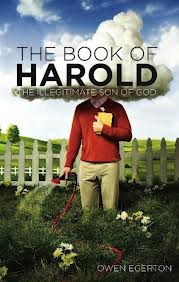
“The Book of Harold” by Owen Egerton is out in paperback from Soft Skull Press. You can read the first chapter here.

Maybe you’ve heard this one: A doctor, a corpse, and a rabbit walk into a bar. The doctor says, “Give me a stiff one.” The corpse says…

Or this one: Three little pigs each built a house. A big, bad wolf knocked on the first pig’s door and said…

Or possibly this one: A man named Ocean gets 11 thieves to break into a casino. First, they plan the heist, then they practice it, and then they do it for real, except…

These three stories share one of the world’s oldest storytelling strategies: put characters in a situation that will be repeated, but each repetition is slightly different—different enough to keep the reader’s attention but also essentially the same. The storyteller allows the reader to develop an expectation for how a situation will play out. But of course, there is a twist in the final repetition; the sequence goes awry. The success of a story is often determined by how well its sequence goes off the tracks.

A great example of this strategy can be found in Owen Egerton’s novel, The Book of Harold: The Illegitimate Son of God. The paperback edition of the book was published by Soft Skull Press, and you can read the first chapter, “Nativity,” on Amazon here.

How the Chapter Works

Count how many times Egerton shows us the Christmas pageant:

  1. We’re told that the pageant “was a Christmas tradition for our church.”
  2. Next, we’re shown the casting and introduced to the doll that will play Baby Jesus.
  3. Then, we’re shown the children practicing the pageant, running through the entire show.
  4. Next, we’re given a quick description of the first two nights of the pageant.
  5. Finally, the last performance is upon us. We know the drill by heart, and so do the characters. Notice how they begin to alter the routine: the donkey drop “balls of dung every other step,” a Wise Man slips on the dung, and chaos ensues.

Because the story repeats the pageant five times, the reader develops an expectation for what will occur—and also that something will go wrong. Notice how each telling involves a bit of irregularity: the introduction of the drummer boy, the casting of the narrator as Joseph, the drummer boy mis-delivering his line, angels crying, and finally donkeys pooping. Yet, even though the reader expects an unexpected turn of events, there is no way to foresee what actually happens. The thrill, for the reader, is in waiting for the predicted, yet unpredictable, twist.

The Writing Exercise

  1. Choose a scene that will repeat itself. The scene could be one that involves planning and practice (a wedding, shouting “Surprise!” at a birthday party). Or it could center around someone involved in a routine activity (door-to-door salesman).
  2. People the scene with characters (wedding/party guests, salesman/homeowners).
  3. Tell the reader how the scene will play out, and then show the scene once or twice.
  4. Finally, show the scene a final time, adding unexpected challenges.

It helps if you give the main character a sense that something might go wrong—or if you generally introduce the idea that all might not go according to plan. You can introduce the idea subtly or in an obvious way. The point is to show the sequence of events while hinting at a twist in the sequence.

Be inventive with this exercise. Remember, you want to surprise an expectant reader.

Happy writing.

Setting Up A Scene

9 Feb
A Memory of Light is the final novel of the bestselling Wheel of Time series.

A Memory of Light is the final novel of the #1 bestselling Wheel of Time series.

Fantasy doesn’t have the greatest reputation among literary writers–despite the efforts of crossover authors like Neil Gaiman, China Mieville, and Ursula K. Le Guin. While it’s true that fantasy novels—and many novels of all genres, including literary—often contain cringe-worthy sentences, that doesn’t mean they’re not well written. Case in point: The Wheel of Time series by Robert Jordan (completed by Brandon Sanderson). The fourteenth and final installment of the series, A Memory of Light, was released in January and spent weeks atop the bestseller lists. Certainly, the series boasts its share of amusing lines. But the latest book also kept me awake long past my bedtime, which was good because, at 909 pages, it took me a while to get through it.

How the Novel Works

Ironically, such a long book requires a great deal of telling. The cliche in writing is “show, don’t tell,” but in a series with hundreds of characters, a map full of countries and armies, and countless scheming factions within factions, showing everything would take a thousand books. Even the most dedicated reader would give up out of boredom. As it is, the novel’s compression of certain facts—the way it tells the reader what is happening—actually heightens the tension.

Here is a passage from A Memory of Light that illustrates effective telling. Notice how quickly the writer sums up a huge amount of information: a battle spread across a huge city:

“If there was human resistance anywhere in the city, it would be the Palace. Unfortunately, fists of Trollocs roved the area between Talmanes’ position and the Palace. They kept running across the monsters and getting drawn into fights.

Talmanes couldn’t find out if, indeed, there was resistance above without getting there. That meant leading his men up toward the Palace, fighting all the way, and leaving himself open to being cut off from behind if one of those roving groups worked around behind him. There was nothing for it, though. He needed to find out what—if anything—remained of the Palace defense. From there, he could strike further into the city and try to get the dragons.”

How does the writer condense a sprawling scene into two short paragraphs?

  • The first sentence sets the stakes. Yes, there’s a battle involving tens of thousands, but it all boils down to a simple statement: If anyone is left to fight back, they’ll be in one particular place, the Palace.
  • The next two sentences locate the Palace within the two sides of the battle, the main character’s men and the monsters.
  • The next paragraph explains the consequences of the previous three sentences: the character’s men will have to fight their way to the Palace, which means likely being surrounded by monsters. The reader has been given something to look forward to: an all-or-nothing race to safety.

Because the huge tapestry of a scene is boiled down so neatly, the writer is able to quickly move in subsequent paragraphs to the particular drama of Talmanes’ quest without constantly reminding the reader of what is going on around him. In other words, the novel gets the requisite info out of the way so that the story can begin.

The Writing Exercise

  1. Choose a scene that you have already written.
  2. Strip the scene of everything but dialogue and action sentences. (You’ll likely want to cut and paste the rest into a separate document so that you don’t lose anything.)
  3. Read what remains on the page and answer this question: What does the reader need to know in order for this scene to move as quickly and effectively as possible? In other words, what would you need to tell the reader up front so that you could avoid slowing down the dialogue and action with detail. Make a list of everything the reader must know.
  4. Write a paragraph or two that will preface the scene. Use the paragraph to tell the readers what they need to know—to set the scene. Be concise. Keep in mind your list and focus every sentence on delivering necessary information.
  5. Now that the scene is set, you can return to the dialogue and action and add in any details necessary to heighten the mood or tension or to adjust the speed of the narrative.

As you work with this exercise, you may find that telling the reader the right information up front makes the scene that follows easier to write.

Good luck.