Tag Archives: Texas Writers

An Interview with Nicholas Grider

13 Feb
Nicholas Grider's debut story collection, Misadventure, has just been published by A Strange object and called "vital" by Publisher's Weekly.

Nicholas Grider’s debut story collection, Misadventure, has just been published by A Strange object and called “vital” by Publisher’s Weekly.

Nicholas Grider is a writer and artist living in Milwaukee. He received an interschool MFA from California Institute of the Arts. His photography has been exhibited internationally, and his writing has appeared in Caketrain, The Collagist, Conjunctions, Guernica, and Hobart, among others. His first book, the story collection Misadventure, has just been published by A Strange Object.

In this interview, Grider discusses OuLiPo writing rules, the delight of breaking rules, and his attempt at writing at story without making editorial judgement.

To read “Millions of Americans are Strange” and an exercise on point of view, click here.

To start our conversation, here is how Grider explains the writing process behind “Millions of Americans Are Strange”:

Nicholas Grider

“Millions” is the newest story in the collection and is indicative of where my writing, at least in short fiction, is headed for the next batch of stories. As I was finishing up the manuscript I started getting really interested in the OuLiPo, and still am, with books by Perec and Mathews on my desk as I write this. I made up a simple rule to begin the story, then: Sentence one must be related to sentence two, and sentence two should be related to sentence three, but sentences one and three should be unrelated. That got me off to a start but I realized that I kept inadvertently breaking the rule, so I introduced the stock phrase “Millions of Americans do X or Y” as a bridge, but then decided that wasn’t working well either so I slowly increased their volume until every sentence was a “Millions” sentence and I approached the end of the story more like a prose poem than a narrative.

Michael Noll

The American OuLiPo writer Harry Mathews wrote this essay about Georges Perec's novel La Vie mode d’emploi after it was translated and published in America as Life A User's Manual.

The American OuLiPo writer Harry Mathews wrote this essay about Georges Perec’s novel La Vie mode d’emploi after it was translated and published in America as Life A User’s Manual.

My favorite moment from any OuLiPo work is from Georges Perec’s La Dispiration. As you know, the text contains no letter e’s. There’s a scene where a character orders a drink at a bar, and the lack of e’s becomes crucial. This is what Harry Mathews said about the scene: 

“Perec took this absurdly confining idea and made of it a way of creating incident, situation, and plot. Eggs (oeufs) are declared to be taboo because they sound like e. And so a barman drops dead when asked to concoct a porto flip, a cocktail requiring port wine and eggs.” 

As you’ve experimented with OuLiPo-type limitations, have you found that the limits “create incident, situation, and plot?”

Nicholas Grider

This has a bit to do with being reserved and shy person, but in my art and writing I often start with the questions: what boundaries can I push and what can I get away with? Meaning, how many rules can I break, what can I talk my way into, etc. And breaking all the usual rules means making up my own, which applies not just to this story but to most of my art and writing. I’ll make up a set of rules, then follow them or break them as I see fit. The rules in “Millions” were an attempt to write a story that does not move forward in any way—it slides laterally through dozens of characters too briefly for anything to develop and ends up piling into an anaphora of generalities at the end. When it came to writing the story, though, making a good aesthetic choice always outweighed (and outweighs) following my rule or someone else’s. For me, the rules are less about developing content and more a way to do an end-run around a well-told “beginning, middle, end, character develops” kind of story. I’m currently writing a new collection and there are even more self-made rules, and more complex ones, but rule-making is part of the enjoyment of writing for me.

Michael Noll

When I was in graduate school, we studied a few OuLiPo writers—plus, Italo Calvino was pretty popular in the U.S. at the time—and I remember that the few experiments people tried with the methods often failed because the limitations ended up being too inflexible. I’m curious how you handled this problem. I know that you adjusted or added to your rules once you began. Did you ever break your rules in order to let the story do what it needed to do?

Nicholas Grider

I got ahead of myself and explained this already, but yes: I delight in breaking other peoples’ rules and will break my own as I see fit. A compelling story is always more important than strict adherence to any rules.

Michael Noll

The story never settles into a single plot line or character’s point of view. If anything, the character of the story is those millions of Americans in the title.  Were you temped to follow Gary or George and Allen or Hannah and make the story about them? Was it difficult to maintain a forward momentum without an individual to use as the focus of tension and suspense?

Nicholas Grider

There are snippets in the story that I think would make for interesting stories, and some of those incidents are real things that people have told me about being involved in, but I was more invested in trying to keep the story moving laterally very quickly to want to linger over any individual character. What I can say, though, is that a lot of the obsessions, indecision, illness and weirdness in “Millions” had been explored earlier in a different form in the other stories that comprise Misadventure, so if anything, the incidents in the story serve as a very weird kind of precis for what later happens with other characters in other situations.

Michael Noll

The story’s tone at times seems to mimic the language of certain kinds of news sources, or even Wikipedia. Here’s one example:

“Millions of Americans are suffering due to the current economic climate. Sometimes persons without jobs receive unemployment insurance while they look for new jobs. Jason receives unemployment insurance because he was laid off when the plant closed.”

In this passage, especially the first two sentences, there’s an intentional vagueness that seems common to cable news segments (those 15 second headline readings that anchors do). Generally, as writers, we try to avoid that kind of language, but you really embrace it, and throughout the story, the language develops a sharp edge. How did you approach the tone and language? Did it appear through luck and experiment, or did you have something in mind when you began the story?

Nicholas Grider

Drunken Boat interviewed Nicholas Grider about his art and art projects, which are weird, thoughtful, and amazing. You can read the interview here.

Drunken Boat interviewed Nicholas Grider about his art and art projects, which are weird, thoughtful, and amazing. You can read the interview here.

The generality and bluntness of the style was something I had in mind at the start, for two reasons: first, I wanted the story to seem to have a veneer of scientific or academic detachment, where the story is simply a collection of facts presented in a particular order—an effort to try to decrease narratorial presence, and second because so much of what gets referenced is so bizarre or extreme that I wanted to deliberately underplay people having themselves kidnapped or firing shotguns in malls—trying to avoid sensationalizing anything in an effort to let the incidents do the sensationalizing themselves, so to speak. In other words, I didn’t want to make it seem as if I had any editorial opinion over what I was recounting, but emphasize instead that one character firing a shotgun in a mall and another character being described as three years old bear an equivalent amount of narrative weight.

February 2014

Michael NollMichael Noll is the Editor of Read to Write Stories.

An Interview with Jennifer duBois

6 Feb
Jennifer Dubois' latest novel, Cartwheel, was included on multiple best-of-the-year lists in 2013. Photo credit: Ilana Panich-Linsman

Jennifer Dubois’ latest novel, Cartwheel, was included on multiple best-of-the-year lists in 2013. Photo credit: Ilana Panich-Linsman

Jennifer duBois’ latest novel, Cartwheel, was included in at least eight best-of-the-year lists in 2013. Her debut novel, A Partial History of Lost Causes, was the winner of the California Book Award for First Fiction and the Northern California Book Award for Fiction and a finalist for the PEN/Hemingway Prize for Debut Fiction. Dubois attended the Iowa Writer’s Workshop and completed a Stegnor Fellowship at Stanford University. Her writing has appeared in The New York Times, The Wall Street Journal, Playboy, The Missouri Review, Salon, The Kenyon Review, Cosmopolitan, Narrative, ZYZZYVA, and others. She was the recipient of a 2013 Whiting Writer’s Award and a 2012 National Book Foundation 5 Under 35 award, and she currently teaches in the MFA program at Texas State University.

In this interview, duBois discusses sentence structure and style, her reason for telling a story from multiple points of view, and how she chose Buenos Aires as the setting for Cartwheel.

To read the opening pages of Cartwheel and an exercise on controlling narrative pace with sentence structure, click here.

Michael Noll

The book is a whodunit thriller, and yet the sentences move at a deliberative, almost stately pace. The sentences rarely move in a smooth, straight line. In the first paragraph, for instance, four out of the five sentences contain a phrase that is literally offset by punctuation: commas, dashes, or hyphens. The same thing happens throughout the novel, and, as a result, I was forced to slow down instead of racing ahead to see what happened on the next page–which was a pleasurable relief. Anxious page flipping always causes me to feel as though I’m blindly devouring a jumbo bag of Doritos. I’m curious how aware you were of this sentence style. Was the pace purposeful or simply the way your voice appears on the page? Or was it something that began naturally but fine-tuned through revision?

Jennifer duBois

I never thought of the book as a whodunit, or even really as a thriller. To me Cartwheel is more of a whoisit than a whodunit, I guess you could say: I wanted readers to experience a sense of suspense regarding the question of who Lily Hayes really was, and what they thought she was capable of; I wanted the plot’s twists and turns to stem not only from events, but from readers’ shifting interpretations of those events. And so the sentence structure wasn’t really a conscious effort to slow down the pace; I think I probably do tend to write long sentences anyway—and I definitely get a lot of mileage out of the em dash (case in point). And that tendency was probably amplified by the fact that each chapter is embedded so deeply in each character’s perspective. I really hoped that readers would be persuaded by the logic of each character’s thinking while they were with them, so I tried to capture that thinking in as much detail as I could—there’s a lot of time spent in each of their heads.

Michael Noll

The novel is told from four different points of view: the accused murderer, her father, her boyfriend, and the prosecuting attorney. As a finished product, the novel seems whole and complete, but I imagine that in the early stage of writing it, you were unsure of basic things such as whose point of view to follow. There are other important characters in the novel, but their actions take place mostly off the page. Was it difficult to decide on these four viewpoints? Did you ever try writing from the POV of any other characters?

Jennifer duBois

I knew from the beginning that I would include the prosecutor’s and Lily’s father’s point of view, since it seemed natural to hear from a character totally convinced of Lily’s guilt and a character totally convinced of her innocence. I also knew I’d include Lily’s point of view, but that her sections would end the night of the murder—I wanted her chapters to offer psychological revelations about her character, but not factual revelations about the crime itself. The fourth point of view, Sebastien’s, was the last addition. I liked the idea of hearing from a character whose sympathies weren’t necessarily so pre-ordained as the prosecutor’s or Lily’s father’s were. I also liked the idea of introducing another character whose behavior inspires wildly different reactions, and whose interiority doesn’t always match the way he’s externally perceived. I didn’t think Lily should be the only character in the book who is at the mercy of other people’s interpretations—because in real life, we all are. To misquote St. Francis, I wanted Lily not only to be misunderstood, but to misunderstand.

 Michael Noll

The novel has an interesting sense of place. It’s set in Buenos Aires, but most of the action takes place in a series of closed spaces, not just houses but rooms in houses: Lily’s bedroom, the parlor in her boyfriend’s house, the prosecutor’s bedroom, the rooms in the jail cell where Lily is allowed to talk to her family and lawyers, and the inside of a restaurant where Lily worked. The rest of Buenos Aires appears only briefly, through Lily’s photographs (or as she tours the city, photographing it) or the travels of the other characters to and from the prison. I can imagine beginning this novel and feeling the need to capture the city, to do a kind of travel-show introduction. But this never happens. Were those passages cut, or did you know from the beginning how to approach descriptions of the city?

Jennifer duBois

In her debut novel, Dubois matches a former Russian chess champion intent on challenging Vladimir Putin's political power with a young American college lecturer who, fearing that she has inherited the genes for Huntington's Disease, travels to Russia to find out answers about her dead father.

In her debut novel, Dubois matches a former Russian chess champion intent on challenging Vladimir Putin’s political power with a young American college lecturer who, fearing that she has inherited the genes for Huntington’s Disease, travels to Russia to find out answers about her dead father.

That’s such an interesting observation and question—I never really thought about the number of closed spaces in the book, but you’re totally right. I think it relates to my sense of the book as being “set” in a hazy sphere of personal perception much more than in an objective external reality. There were a few reasons I selected Buenos Aires—I needed a city an American study abroad student might fall in love with, in a country with a judicial system similar enough to our own that said student might not be aware of some key differences. I wanted a country with a language that an American college student might have mastered sufficiently to feel overly confident in. I thought that setting the book in a Catholic country could provide an interesting dimension to its exploration of misogyny/ideas about female sexuality, and that setting the book in a country with such a fraught history with the U.S. could add an interesting angle to the questions about American entitlement/anti-American resentment. But ultimately I didn’t see Cartwheel as trying to depict a particular place as much as trying to depict four different characters’ minds. In a very fundamental way I think Cartwheel is a story that could have been set anywhere—this was very different from my first book, A Partial History of Lost Causes, in which the Russian setting is, in many ways, the book’s soul. And so that’s probably partly why Cartwheel doesn’t linger in the Argentinean setting very much; I hope that readers believe Buenos Aires as the book’s backdrop, but I think its real setting is in the characters’ heads (talk about enclosed spaces).

Michael Noll

 A lot of young writers tend to stick close to home with their work, but this isn’t the case for you. So far, your novels have been about characters who seem, at least on the surface, pretty different than yourself: an American exchange student charged with murder, a father, an Argentinean prosecutor, a Russian chess champion and political dissident. Plus, your novels have mostly been set in countries other than the United States. What draws your imagination to these characters and places? Are you drawing on the books that you read as a child? Were you a news and Time magazine junky as a kid?

Jennifer duBois

I don’t think my own life has really been interesting enough to generate a ton of material for fiction—but even if it had been, I’m not sure writing about it would appeal to me very much. I’m in my own life and memories every day anyway, and there is a real limit to my curiosity about myself. For me, the fun of fiction writing is in imagining lives and experiences that are very different from my own, and in getting to explore ideas or situations that I think are interesting. And because I’ve always been interested in other countries–and in international politics in particular (I was a political science major in college)—that interest winds up showing up in my fiction, along with assorted other preoccupations and hobbies and fun facts and jokes and pet conspiracy theories, etc. If I’m curious about it, it’s going in.

February 2014

Michael NollMichael Noll is the Editor of Read to Write Stories.

An Interview with Justin Carroll

16 Jan
Justin Carroll's story, "Darryl Strawberry," appeared in Gulf Coast.

Justin Carroll was born in California but often writes about Montana, where he spent his formative years. His Montana story, “Darryl Strawberry,” appeared in Gulf Coast.

Justin Carroll was born in California, raised in Montana, and now lives in Texas. He has an MFA from Texas State University and is an assistant editor for the Austin-based literary journal Unstuck. His work has been previously published in Juked, Saltgrass, and Brink.

In this interview, Carroll talks about the necessity of palpable detail, the greatness of Andre Dubus, and revising toward what feels organic.

To read an excerpt from “Darryl Strawberry” and an exercise on descriptive passages, click here.

Michael Noll

This is a story about waiting—and as such, it means that much of the story is dominated by characters thinking and talking (or not talking) about the thing they are waiting for. One risk that seems inherent in this kind of story is that there won’t be enough action or forward movement to keep the reader interested. The note that Kidd Fenner finds under his windshield wiper (“I’m sorry. Can you meet me tomorrow at american legion field at six?”) seems to solve that problem by giving the reader something specific to anticipate. Was this note always part of the draft?

Justin Carroll

This story, like most, has seen its fair share of revisions. The first one did have a note, but it was given in passing, as back story. I was given the idea of putting the note into a scene in a workshop with Debra Monroe at Texas State University. It was in that workshop that I realized readers need a break from interior matters. They need something palpable to grip onto, something that breathes new life into the narrative. In Andre Dubus’s “A Father’s Story,” after a few pages of the narrator summarizing his views on faith, Dubus introduces the reader to his narrator’s daughter, who has just left the narrator’s horse ranch after a visit and who, later, become the catalyst for the story’s climax. We need this; without this introduction, the narrator’s views on faith (which, for the record, are wise, interesting, and entertaining) would begin to seem too one-note. Dubus introduces this different aspect of the story at just the right time. Without this break, stories begin to drag. In the beginning, “Darryl Strawberry” was frustratingly slow; the note was able to enliven this story’s step.

Andre Dubus' short story, "A Father's Story," was reprinted in Narrative Magazine, where you can read it bowl

Andre Dubus’ short story, “A Father’s Story,” was reprinted in Narrative Magazine. If you’re not familiar Dubus, you should set aside half an hour and read this.

Michael Noll

The story begins with a scene that isn’t directly related to the conflict between Kidd Fenner and his son, but by the end of the first paragraph, the conflict insinuates itself into the scene (“Wasn’t as good as Henry, but no one in Hamilton was. This, of course, was before the trouble.”) I can imagine writing a story like this and beginning by discussing the conflict directly, laying out its terms for the reader (The kid’s in trouble again, and his parents aren’t sure what to do this time.) Did you ever try such a direct opening?

Justin Carroll

In the first few drafts, Henry’s issues were revealed too clumsily: “This, of course, was before the meth fiasco,” or something equally cringe-worthy. That was too transparent, obviously. Then I erased any obvious hints of the Henry’s problems until Nora goes to the support group meeting. I think I settled with the line after I discovered that “the trouble” was in Fenner’s own language—this is the only way he’d be able to describe Henry’s status (in the beginning of the story, at least). I still got conflicting views on this matter from some of my colleagues, but in the end “the trouble” felt organic.

 Michael Noll

One of my favorite paragraphs is this one:

The radio plays the same songs Fenner’s heard for twenty years or more: Allman Brothers’ “Ramblin’ Man,” “Big Shot,” by Billy Joel. He’s parked with his back to Safeway’s brightly-lit parking lot; all he can see are the shadowy outlines of the bleachers, the dugout blocked by clumps of snow, the skeletal cyclone fence that runs parallel with the first base line.

It tells the reader that Fenner is at the baseball field without ever saying, “He’s at the baseball field.” Was this intentional? It certainly made me pay closer attention to the language. If you’d identified the field right away, I probably would have skimmed over the details: bleachers, dugout, cyclone fence.

Justin Carroll

Yes, this emphasis on language was intentional. Fenner needed to experience the baseball field in the emptiness of winter. To see the field in direct contrast to the way he’d seen it when Henry had been in tip-top shape seemed important to me.

Michael Noll

This story is full of details that situate it pretty firmly in a particular place, not just details about snow and landscape but also specific proper nouns: Sapphire Mountains, Daly Mansion, Whitman’s Towing, Ravalli County, Chinook Winds, Chapter One Bookstore, Safeway, Town Pump. The effect is that story feels like it occurs in a real place–but, ironically, those specific details also make it relatable. So, even though I’m from rural Kansas, I found myself recognizing aspects of my own hometown in Hamilton, Montana. I’ve heard other writers say that they try to make the places in their story vague so that it seems as though the story could be anywhere. But that’s not what you do. What’s your philosophy toward specific place details like these?

Justin Carroll

Thanks for the compliment! I think specificity of detail is crucial for this story—for all stories, really. I want to be able to walk down the streets of a story, much like I want to feel a beer bottle in a character’s hand. If I can’t access the place of a story, then I probably won’t remember it fifteen minutes after I read the story. My favorite stories build towns and landscapes I can revisit long after experiencing them for the first time; specificity of detail is responsible for this effect.

January 2014

Michael NollMichael Noll is the Editor of Read to Write Stories.
An Interview with the Editors of American Short Fiction

12 Oct
The latest issue of the Austin-based journal American Short Fiction features a story by Roxane Gay and a Pushcart Prize winner "Teen X" by X. ASF also publishes work online, such as this story by Anthony Abboreno.

The last issue of the Austin-based journal American Short Fiction featured a story by Roxane Gay and the Pushcart Prize winning “Teen Culture” by Elizabeth Ellen. The next issue will feature Joyce Carol Oates and Kevin Wilson. ASF also publishes work online, such as this story by Anthony Abboreno.

American Short Fiction was founded in Austin, TX, in 1991 by Laura Furman (editor of the O’Henry Prize Story Collections) and has published stories that have found their way into most of the big, yearly story collections. Like most literary journals, American Short Fiction gone through multiple incarnations. After a brief hiatus in 2012, ASF is publishing once again. The forthcoming issue features work from Kevin Wilson, Joyce Carol Oates, Kellie Wells, and others, including Barrett Swanson. The journal also publishes web-inclusive stories and essays at americanshortfiction.org. One of those stories, “Filler” by Anthony Abboreno, was featured this week here at Read to Write Stories.

In this interview, American Short Fiction co-editors Adeena Reitberger and Rebecca Markovits discuss the editing process, the limits of readers’ attention span for online fiction, and the advantages of publishing online content as well as a traditional print journal.

(To read Anthony Abboreno’s story “Filler” and an exercise based on the story’s character development, click here.)

Michael Noll

The funny thing about reading published stories is that you can’t imagine them existing in any other version. At least, that’s how I feel about Anthony Abboreno’s story “Filler.” And yet I know from experience that most stories that are accepted by journals are usually revised before being published. As a result, I’m curious about your role as an editor for this story. How close to the published version was the first draft that you read? What sort of suggestions did you make?

ASF

A huge part—in some ways the most important part—of an editor’s job is simply being selective. And “Filler” was definitely a case where this was the most important part of our job—choosing to publish the story in the first place. Filler came in already as very clean copy, which is lovely for an editor. I seem to remember we made a couple of tiny changes for clarity, added or removed a comma here and there for technical, grammatical reasons, maybe turned one sentence into two, or two sentences into one, but nothing which would have made you respond any differently to the story than the final version you read on our website. That’s not always the case, and sometimes we do make some significant changes to stories that come our way (especially, sometimes, stories we really love), but we try to trust the authors’ instincts as much as possible, and if we have too big an issue with something, simply choose not to publish the story, rather than trying to “fix” something that may in fact just be a question of taste preferences. We fell for “Filler” right away, though.

Michael Noll

American Short Fiction is a traditional print journal, but it also publishes stories online. Do you think there’s any difference in the way readers approach stories in print versus online? It would seem that someone who picks up the print journal has made a firmer commitment to the work than someone who happens across your website. Does that mean that an online story must have a catchier or somehow sharper-edged first paragraph?

ASF

That’s a great question. And as more and more print journals (both fiction and non-fiction) are being driven, by economic realities, to online-only existences, one wonders to what extent that’s changing the nature of our reading content. The easiest answer to your question is that our policy is fairly simple: we limit our online fiction to stories that are roughly 2000wds or fewer. Now, we might well publish a story that’s 2000wds in our print journal, but you won’t see us publishing a story that is 7000wds long online. I don’t know if it is so much a question of attention span, but it is simply physically a little unpleasant to focus on the same backlit computer screen for that long. And, as you say, relief is such an easy click away. But there are probably more complicated answers to your question, as well. The fact that our online fiction changes every month somehow gives us a little more freedom to experiment in that space than we perhaps feel we have in the tri-annual print edition. And of course the online space has dynamic potential that print lacks: our current online fiction exclusive, for example, was written as a companion piece to a track on an album, and we were able to embed the SoundCloud of the music file right there next to the story, which was great. We love how the online space gives us the opportunity to have fun like that.

Michael Noll

I’m curious about how a journal’s identity and mission are shaped by its online presence. In the past, a print journal needed to offer content only a few times a year. But being online requires you to offer new material on the website with enough frequency to keep people returning to it. Does this new publishing schedule change the way that you approach submissions or editing? You’ve run a literary NFL preview (which was great, by the way), and this is probably something that wouldn’t happen in a strictly print journal. On one hand, some people might say this is watering down the “literary” content of the magazine, but on the other hand, a feature like that one broadens our sense of what it means to be a writer (we don’t often think of writers as die-hard NFL fans). It also gave you the chance to publish a lot of writers all at once.

ASF

I’m so glad you enjoyed that NFL preview—it was a lot of fun, all credit to our fantastic managing editor Jess Stoner, whose brainchild that was. Jess actually offers me a good way into answering your “pretty big question.” She’s a great aficionado of Internet culture (do I sound geriatric enough yet?) and has what I think is one of the most important qualities in an editor: an always-open mind. That means that she’s full of ideas about how to use the web to expand the often too-narrow idea of what a literary journal can do, which can result in fantastic surprises like that NFL series. In our case, I think it would be accurate to say that our website and our print journal have pretty separate identities. For one thing, other than the monthly fiction web exclusive, the website features entirely non-fiction, where as the print journal is fiction-only. That makes it pretty easy to separate out the two without feeling anxious about image questions. To a certain extent, the audience for the website is also probably a little different than the audience for the print journal. The website offers us a chance to join in the conversation about wider cultural issues that aren’t necessarily fiction-related (we have a regular series called “Things American” that gives us a great outlet for that sort of thing). But most of all, we like to use the website as a compliment to the journal, so that if we publish an author in the journal, or have published someone in the past who, say, has a new collection coming out, we feature an interview with her on the site. Or we can use the site to add a fresh dimension to the content in the journal, in the way I discussed above, by having, for example, playlists or visual material that might compliment a story in print. Ideally, a reader of both the print and online versions of American Short Fiction will find the two experiences not redundant, but also not add odds; companionable; two sides of one coin.

Michael Noll

American Short Fiction is located in Austin, which has always had a strong literary community. But it also seems to be a community that is growing and developing a stronger national reputation. What does it mean to be an Austin literary journal?

ASF

We LOVE being an Austin literary journal! As you say, the writing scene here is lively and growing quickly, with new publications and independent bookstores springing up all the time, and it’s great to be a part of that. We’re also excited about getting involved with the artistic community in general, so, for example, we try to feature art by local artists on our covers, and local musical acts at our events, etc. Literary hubs like New York obviously present their own advantages, but it’s nice, as a national journal, to swim around in a smaller pond too, sometimes, especially as the other fish are so colorful, and we like the relaxed atmosphere down here in Austin. It just feels nice and neighborly, and it’s great to have a local community that’s really invested in what you do. Plus, the tacos are just better!

October 2013

Profile pic

Michael Noll is the editor of Read to Write Stories.

An Interview with Joe Lansdale

5 Sep
Joe Landale is the author of many novels and stories, including the Hap and Leonard mystery novels and the novella Bubba Ho-Tep. His latest novel The Thicket will be released on September 10.

Joe Landale latest novel The Thicket will be released on September 10. If you’re in Austin, you can see Lansdale in person at BookPeople on September 12.

Joe Lansdale is one of the most versatile and peculiar writers in American literature. He’s written a popular mystery series (Hap and Leonard) whose detectives are a white East Texas rose picker who spent time in prison as a conscientious objector and his best friend, a gay, black veteran. Lansdale has won the Bram Stoker Award from the Horror Writers Association eight times. He’s also written for comic books, television, and movies, and his work has been turned into the films Bubba Ho-Tep (which, if you haven’t seen it, you need to watch tonight) and, coming soon, Cold in July. His latest novel is The Thicket, a suspense novel set in The Big Thicket in East Texas. If you live in Austin, you can see him read from the book in person on Tuesday, Sept. 12, at BookPeople.

In this interview, Lansdale discusses voice, writing “historical” fiction, and what it means to write about East Texas.

(To read an excerpt from Lansdale’s new novel The Thicket and an exercise on voice and first sentences, click here.)

Michael Noll

The first sentence of the novel lists all the things that will happen in the story. I’ve seen a lot of beginning writers try something similar, and the sentences rarely work because they feel manipulative, like the language is trying too hard to get my attention. But this sentence is wonderful. It’s such an absurd list of events, and they’re related so matter-of-factly. How did you approach this sentence?

Joe Lansdale

I’m not overly conscious of it and mostly just try to write something from the subconcious where the story is hidden. But the subconscious mind knows, and I let it be my guide.

Michael Noll

I’m from rural Kansas, where people, especially old farmers, tend to have a colorful way of talking. My siblings and I actually play a game, trying to think of all the crazy lines we’ve heard our dad or grandfather say. So, that’s why I love this line from your novel: “Daddy always said Grandpa was so tight that when he blinked the skin on his pecker rolled back.” That’s maybe the funniest thing I’ve read in a novel in a long time. I’m curious if you made that line up, or if it’s something you’ve heard. In general, you’re so good at writing that rural voice. How much work does it take to maintain it for an entire novel?

Joe Lansdale

It’s a saying I heard growing up. People here, especially generations previous, spoke that way naturally. I’m very comparison-oriented as a writer and speaker. I pay attention even when I don’t know I am. I absorb more than I collect.

Michael Noll

The novel is set one hundred years ago–which seems like a risky move as a writer. So many books set in the past are stifling to read. The characters don’t seem like fresh creations, or the writers try to mimic an old-fashioned way of talking. How did you avoid those problems? At one point, I forgot the time period and thought I was reading something set in the present.

Joe Lansdale

I tried to capture the period without it capturing me. I did allow an old style of speaking to seep in, but I never let it own the story. Shorty has a very stylized way of speaking, and even his contemporaries find it odd.

Michael Noll

You’re a Texas writer–born in Texas, live there, and set many of your books there. As a literary setting, Texas often gets used as a platform for big, sweeping sagas about America. Your work doesn’t really do that, though. It’s funny, where often those books aren’t, and the characters are intensely idiosyncratic, rather than symbols for some larger idea–even though, as in the case of The Thicket, the story is set at a time of significant change. Is this because you write about East Texas, which lacks some of the mythic quality of the Old West and West Texas? Or does it have to do with your conception of how to tell a story? What do you think?

Joe Lansdale

I think East Texas is mythic, but more in an Old South way, mixed with some Western, and cajun, black, and more recently, Hispanic culture. I write out of the mythic and tall tale tradition, actually. Love it. Greek myths are a big part of my background.

September 2013

Profile pic

Michael Noll is the editor of Read to Write.

An Interview with Mary Helen Specht

29 Aug
Mary Helen Specht

Mary Helen Specht was recently the writer-in-residence at Necessary Fiction, where she posted excerpts of her novel-in-progress, Migratory Animalsas well as interviews with the writers Sarah Bird and Rotimi Babatunde.

Mary Helen Specht might have been born and raised in Abilene, Texas, but after graduating from high school, she’s barely stopped moving. She’s studied at Rice University and Emerson College; worked in Santiago, Chile and Quito, Ecuador, and lived in Nigeria on a Fulbright grant. Most recently, she was a Fellow at the Dobie Paisano Ranch outside of Austin, and she’s now an assistant professor at St. Edward’s University in Austin.  A two-time Pushcart Prize nominee, her work has been published in numerous journals and literary magazines. She is currently working on a novel.

In this interview, Specht discusses introducing characters, the challenges of writing global fiction from an American perspective, and why she chose to use her experiences in Nigeria as the basis for a novel rather than a memoir.

(To read an excerpt from Specht’s novel-in-progress Migratory Animals and an exercise based on how she adeptly introduces two characters, click here.)

Michael Noll

One of the hardest things for beginning writers to do–and even for me–is to introduce characters to each other. So, I admire how easily you introduce Flannery and Kunle. You manage to cover the basics: where, when, and how and how they were dressed. But you also move on quickly. The introduction sets up the story rather than delaying it. Was this introduction always so smooth? Or did it become that way through revision?

Mary Helen Specht

The prologue has been the most worked over part of my novel. Each time I changed anything major about the rest of the book during a revision, the prologue would suddenly seem off. I’d lost the right emphasis or tone for what came next—a reverse domino effect. The fact that the prologue is set in Nigeria while much of the rest of the novel is set in the United States was another challenge—I felt that I had to give both the big picture trajectory of Flannery’s time there while also rooting the readers in scene. I ended up looking for guidance in the short story form for this, particularly in Jhumpa Lahiri’s most recent collection Unaccustomed Earth, which inspired me to start on a large scale and then zoom in to the “meet cute” between Flannery and Kunle. I also tried to use concrete physical objects (like palm wine) to transition quickly through time while remaining in scene throughout. For me, introducing characters and places is all about allowing the physical environment to do double duty by standing in for (or at least echoing) the interior lives or relationships of the characters.

Michael Noll

The novel is set in Nigeria, and so, obviously, place plays an important role in the novel. And because you’re writing for an audience that likely hasn’t been to Nigeria, you’re writing about cities and a landscape that most of us don’t know. So I’m curious how you approached the descriptions of place. How did you balance the need to show enough details to locate the reader but also the need to keep the story moving?

Mary Helen Specht

Great question. This has been tremendously complicated, and like the prologue, I’ve spent a lot of time thinking about and revising the Nigeria sections. In particular, I didn’t want to portray Nigeria one-dimensionally, when in reality it is a country with rural huts and modern houses, dirt roads and concrete flyovers. I had notebooks full of descriptions of Nigeria from my time living there after graduate school, and I combed through them, looking for details that would do the most work in terms of demonstrating the country’s complexity. Instead of spending a paragraph explicating the strange mix of modernity and degradation at the university, for example, I used an image of a woman wearing a traditional wrapper while carrying a computer monitor on her head across campus.

Michael Noll

As the writer-in-residence at Necessary Fiction, you wrote an essay, “The Challenges of Writing Global Fiction in the West.” In it, you talk about traveling to Nigeria for a Fulbright and knowing that you would write about the experience. And, yet, you wondered, “How could I use this setting, use my experiences with the people there, to write in a way that didn’t patronize, exoticize, or simplify the complex world of West Africa?” This is a significant problem with Western stories set outside of the West. Just recently, I saw the film The Best Exotic Marigold Hotel, which is about a group of British retirees who settle in India. In it, the Indians really only serve the purpose of enlightening the Brits. Yet, the film seemed well-intentioned. Is it possible to step outside of your Western influences when writing about places like India and Africa? Is there a way to somehow embrace your alien status and also honestly represent the people who are from that place?

Mary Helen Specht

The Nigerian writer Chimamanda Ngozi Adichi delivered this talk about the dangers of reducing a place to a single narrative at TED Global. The talk is 20 minutes and definitely worth checking out.

The Nigerian writer Chimamanda Ngozi Adichi delivered this talk about the dangers of reducing a place to a single narrative at TED Global. The talk is 20 minutes and definitely worth checking out.

I’ve spent a lot of time studying and writing about this question and my answer is this: I don’t know; but I won’t let myself off that easily. I certainly think there is an opportunity for writers from the developed world to write about the developing world in a way that is productive, especially when these writers use the opportunity to explore their own privilege and maybe even culpability. That said, I think it is almost impossible to entirely escape being part of the “western gaze” when writing about other cultures. I think the most important action writers like myself can take to make this situation less uncomfortable is to support—by reading, reviewing, promoting, assigning to our students etc.—international fiction written by non-western writers. As Chimamanda Ngozi Adichie discusses in her TED talk (which you MUST watch if you haven’t—she’s amazing), the danger is perpetuating a “single story” about any given place. If there is a multiplicity of voices, native and non-native, all writing about a country or culture, then there isn’t the same pressure to provide some impossible “objective” viewpoint. The beauty of fiction, after all, is in the opposite, in its subjectivity and ability to refract the world through many prisms.

Michael Noll

You published an essay about falling in love with a Nigerian man in Nigeria for The New York Times. It’s a really great essay. It also shares some of the same details as Migratory Animals. What went into your decision to write the story as a novel rather than as a memoir? What did fictionalizing the story allow you to do that wasn’t possible in nonfiction?

Mary Helen Specht

People connected to the publishing industry convinced me to work on a memoir based on my time in Nigeria, and I tried. However, it ended up more of a collection of essays (and is where the NYT piece came from), than one story with a strong arc. So, I returned to what I’d always really wanted to do in the first place, which was write a novel using my time there as a loose inspiration. Fictionalizing allows me to imagine what might have been—if I’d been a different person with different desires and challenges, and if I’d made different choices or been born into a different situation. In the real world, we only get to live one life; writing fiction allows me, for a time, to embody other possibilities.

August 2013

Profile pic

Michael Noll is the editor of Read to Write.

An Interview with Kelli Ford

8 Aug
Kelli Ford's story, "Walking Stick," was published in Drunken Boat.

Kelli Ford’s story, “Walking Stick,” was published in Drunken Boat, and you can read it here.

Kelli Ford was born in Tahlequah, the capital of the Cherokee Nation, and grew up in North Texas. She was the first in her family to graduate from college, and she went on to earn an M.F.A. at George Mason University. She was awarded a 2012-13 Dobie Paisano Fellowship through the University of Texas and the Texas Institute of Letters. While a fellow, she put the finishing touches on Crooked Hallelujah, a collection of linked stories that takes place in Eastern Oklahoma’s Indian Country and along the banks of the Red River.

In this interview, Ford discusses her process for describing characters, what it means to write about characters from low-income areas, and her solution to the tricky question of how to portray a character’s spoken language if the reader doesn’t understand it.

(To read Kelli’s story “Walking Stick” and an exercise based on her character descriptions, click here.)

Michael Noll

I admire your character descriptions. They’re quick and detailed, moving from the general (old lady) to the idiosyncratic (the fact that the sole of one of her shoes wears faster than the other) in just a few sentences. They’re also nestled within the story, so that the description leads directly into action or thought. How do you approach these descriptions? It can be difficult to fully visualize an invented character, but you make it look so easy.

Kelli Ford

Well, thank you, first of all. To answer this question, which is a nice, concise question about character descriptions, I think I need to take a step back. “Walking Stick” is one of my “origin obsession” stories. Some of us are blessed/cursed with the obsession of our origins and end up coming back again and again. I often think of this as a fault of mine, but try to both stretch myself to invent more and accept it as a gift with as much grace as I can muster.

So this is a roundabout way of answering your wonderful question with a terrible answer: I don’t know. These characters are inspired by my mom, her sisters, my grandmother, and great-grandmother. Of course—and as I always protest to my mom (too much?)—the people in the stories truly do become characters and take on a life of their own. They look ways, say things, and do things as they live on the page that their inspirational, real-life counterparts would never do.

I don’t know where the one worn shoe comes from. I don’t think my great-grandmother always wore out one shoe before the other, but the Anna Maria character does. Why or how? I think this is a character I know very well. It’s one that, perhaps, came easy. When I was writing the story, I didn’t find myself searching around for what she looks like or how she walks.

Other characters, and I’d imagine especially those who are wholly inventions, I have to search for, maybe, what he would wear or how he may respond to a fly crawling across his arm. (Does he wave it away distractedly, smash its guts on his arm, try but fail to Mr. Miyagi it in the air with chopsticks?) In the early pages of a story, descriptions can sometimes be a struggle with a character I am creating, or just beginning to know. I usually find myself more sure of these choices toward the end of the story. So much so, in fact, that maybe things once again begin to feel mysterious and not like choices at all. By the time I’m nearing the end of the story, I have a much better sense of that character, and it’s simply a matter of making sure I let go of early stuff, worked over as it may be, and truly start anew so this knowledge can be incorporated into the early stuff. On a purely nuts and bolts level, for me, that often means retyping each new draft each day so I’m not just tinkering and my subconscious is free to take off. Probably the invented characters require more cutting because I describe and describe trying to get it right, trying to know things for myself.

Michael Noll

This is a story about people who live without a lot of money. There’s a tendency in American fiction to portray these kinds of characters as either ennobled by poverty or as bloodthirsty and devolved. Your story does neither. Even though it’s about an old woman limping down to the tracks to carve up a cow hit by the train, the story never becomes cartoonish or cliched. Is this something you think about in your work?

Kelli Ford

I worry about sentimentality in my work, perhaps because so much comes back to the characters I write. For many of my characters, and especially Anna Maria and Lula, I feel so much for them. I really do. I feel the weight of their choices, the weight of the way the world acts upon them. Sometimes, you come across a character that can make you cry at your keyboard. So maybe the key, a key, is to be honest about them. Shit. We’re all saints and sinners, and poverty, or near-poverty, isn’t ennobling. Do you pay the light bill or buy the school clothes or do both and skip the car payment? Living with those kinds of choices doesn’t make you somehow more dignified than those around you. To write as if it does is dishonest, at best. Poor people are shitty all the time but, perhaps, have less agency to be shitty on a grander scale. If you work to create fully realized characters, and you aren’t setting out to ennoble or bloodthirst-ify a character, then characters are allowed to become either if that’s what the story demands, or rather what the character demands of the story.

Michael Noll

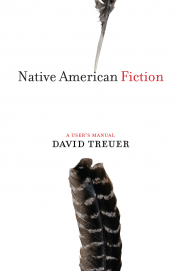
David Treuer essay collection, Native American Fiction: A User's Manual, challenges some of the popular notions about the influences behind and critical approaches to literature by Native American writers.

David Treuer essay collection, Native American Fiction: A User’s Manual, challenges some of the popular notions about the influences behind and critical approaches to literature by Native American writers. To read an excerpt about language and identity, click here.

I’m interested in the story’s use of the Cherokee language. In David Treuer’s essay “Smartberries” from his book Native American Fiction: A User’s Manual, he criticizes Louise Erdrich for misrepresenting and slighting the Ojibwe language in her novel The Antelope Wife. He claims that she slights the language in choosing mostly nouns when Ojibwe is a verb-based language and in almost always translating the Ojibwe into English. He says this:

“Erdrich adheres to the most popular conventions that govern the use of foreign words in English…the reader is left with sentiments about the Ojibwe language and instances in which Ojibwe functions as an ornament, not as a working part of the novel’s machinery…As with many other Native American novels, the use of lexical nuggets ends up feeling more like display, with language itself a museum piece.”

What are your thoughts about this problem: how to portray a character’s spoken language if the reader doesn’t understand it. In “Walking Stick,” the characters talk to one another in Cherokee, and their words are not translated. You seem to be honoring the integrity of the language. Is this an intentional move?

Kelli Ford

This is a great question! I’ve thought a lot about it, and to be honest, I don’t think I do a good job of “honoring the integrity of the language.” There’s nothing particularly Indian about the story aside from content, the characters and the tiny Oklahoma town they live in. Anna Maria is living in two worlds. She’s seeing her family become more white with each generation. Her daughter has moved in and has her own set of expectations and needs. Their religion is becoming the most important part of their identity. Anna Maria speaks her native language when she sees the Cheaters, and it’s a comfort, almost a sadness.

In “Smartberries,” Treuer says of the Ojibwe in Love Medicine (a book I’m more familiar with), “Strangely, the use of…words—though done seldom—highlights the longing for culture, not its presence” (64). He criticizes not just Erdrich’s mishandling of Ojibwe, but critics’ discussion of her work as particularly Native American in structure, in narrative approach, etc.

Having Anna Maria speak Cherokee is similar, I suppose, to writing her with a limp and one crappy shoe. I don’t think of these choices as “ornamental,” any more than I think having one of Erdrich’s characters speak Ojibwe is ornamental. These choices are integral to the characters as they are written.

That’s not to excuse mishandling the language. Erdrich didn’t grow up speaking the language. Neither did I, though like her I grew up hearing it. So should that preclude me from writing a character who speaks the language? Because Love Medicine is such a powerful and beautiful piece of literature, I say definitely not. (To be clear, I’m not comparing my work to hers—that would be nuts—I’m only comparing the use of language.) Should I work harder to do a better job and make the Cherokee I may happen to use better, more accurate, more complex? For sure. In “Walking Stick,” Anna Maria uses very basic greetings. It was a conscious choice not to translate the language for the most part, but she’s using simple greetings. It wasn’t really a difficult choice, though I suppose I could have taken it a bit further and used the actual Cherokee syllabary, which would have added another level of distance and work for readers who don’t speak the language. As it’s written, not much was a stake, but you know, she’s limited by my own limitations. That’s a real drag. You never want your character to be limited by your own ignorance, but when you are talking about a language, you can’t really sit down in the library for a couple weeks of research and be good.

This story is many years old. I am not sure I would try to use the language now, but you know, I hope I would. I hope I would simply work harder to get it right, to make it better, understanding that I’m going to get some things wrong. For this one, I used memory and books. I called the Cherokee Nation and talked to someone who was a cultural liaison of sorts to get a-do-la-nv-ss-di, but I don’t know if someone would really use this word as a nickname. I sent the story to a cousin to take a look at the language.

Erdrich is continually revising. In The Paris Review interview published a couple of years ago, she says that improving her use of Ojibwe is one reason she’s always revising, even Love Medicine, which is sort of a holy grail for me, as you can probably tell. It’s a great fear of mine that a native speaker will happen across one of my stories, or one of my cousins will follow a Facebook link, and see faults with the language. That simply means I have to work harder if I have another character that needs to speak the language. I don’t want to shy away from a story. I want my allegiance first to be to the character.

Michael Noll

This is an old story, but it was picked up recently by Drunken Boat. What is your process for sending work out? How did this story find its way to publication?

Kelli Ford

Well, I started out, like many of us do, with the Dick Cheney hunting birds process of submission. Send it out everywhere, hope you hit something, anything. But gradually, I think I’ve gotten a bit more focused. It’s hard, though. On a budget you can’t really subscribe to all the magazines and journals you’d like to, despite your best intentions. I find a few contemporary writers doing stuff I like and look at who is accepting their work, get subscriptions where I can, and send a story into the slush-ether with fingers crossed. If a writer I like edits a magazine, I send something there. I always have my dream magazines like The Southern Review or Oxford American.

This publication came about because Drunken Boat had a Native issue a while back. I submitted something that wasn’t quite right but got a nice note back that essentially said no really, send us something again and do it quickly! So I did. Even so, there was a new fiction editor in place by the time I sent “Walking Stick.” So that’s a small bit of advice to students and folks early in the process of submissions. When you get those nice rejections, act quickly. Send something else if you think you have something better suited for the magazine. Editors move on, and if one asks for more work, I think he or she generally really means it.

August 2013

Profile pic

Michael Noll is the editor of Read to Write.

An Interview with Kevin Grauke

20 Jun
Kevin Grauke's new story collection, Shadows of Men, was published by Queens Ferry Press and has been called X.

Kevin Grauke’s new story collection, Shadows of Men, was published by Queens Ferry Press and has been compared to the stories of John Cheever, Anton Chekhov, Andre Debus, Richard Ford, William Trevor, and Richard Yates.

Texas occupies a iconic place in American literature. The state has given us Larry McMurtry’s Lonesome Dove and—to some extent—the later works of Cormac McCarthy. Its politicians tend to channel the persona of John Wayne. And yet a truer depiction of modern Texas culture might be the band Arcade Fire’s album The Suburbs. A writer whose work reflects this changing nature of Texas is Kevin Grauke, whose new collection of stories, Shadows of Men, recently won the Steven Turner Award for Best First Work of Fiction from the Texas Institute of Letters.

Kevin Grauke is a native Texan who now lives with his wife and two children in the Historic Germantown neighborhood of Philadelphia. He is Associate Professor of English at La Salle University, where he teaches creative writing and American literature.

In this interview, Grauke discusses what it means to write about Texas and how to write a fight scene. (For an exercise based on the fight scene in his story “Bullies,” click here.)

Michael Noll

At the end of Part Four of “Bullies,” two men get in a fight. You describe their fight in close detail, moving back and forth between physical action and one of the fighters’ thoughts. Many writers find such passages difficult to pull off without sounding like a choreographer: hit here, kick there, etc. But this story doesn’t have that problem at all. I’m curious how you approached this scene.

Kevin Grauke

I think brevity is the key; the scene is only about half a page long, and most of it concerns Dennis’s thoughts, rather than a cataloguing of punches and feints and such. Keeping such a scene as short as possible is important for a couple of reasons: for one thing, “action” sequences such as this tend to start dragging very quickly, to my mind, and for another, most fights that actually take place are nothing like the ones we see in the movies. They don’t involve a lengthy exchange of haymakers; instead, they’re usually quick and clumsy, and I wanted to convey that this fight was definitely of the quick and clumsy variety.

Michael Noll

The fight also occupies an interesting position in the story. It’s the climax, releasing the tension that has built up, and yet the scene that follows has little to do with the circumstances of the fight. As a result, the emotional consequences are felt far away from the scene of the action. Was this intentional–did you plan it early in the drafting process–or was it a happy accident?

Kevin Grauke

I think I knew that the story would play out in this way once I realized that Dennis was going to bully the father of Karl’s bully. Like Dennis, I think we tend to want intensely dramatic moments, in both what we read and in our own lives, to “mean” more than they often do, so I tend to want to problematize the significance of such moments just as soon as they happen in my stories. For instance, Dennis hopes that this action will boost his ex-wife’s opinion of him, and this (probably misguided) hope of his becomes what’s most important, not the fight itself.

Michael Noll

The story appears in a journal, FiveChapters, that has an unusual format. Every story is published serially, over the course of five days. Did you write “Bullies” with a five-part shape in mind? Or did you adapt the structure for FiveChapters?

Kevin Grauke

I didn’t write it with that shape in mind, nor did I adapt it for that structure, as a matter of fact. I have Five Chapter’s great editor, David Daley, to thank for finding the best places to break the story into five “chapters.”

Michael Noll

Many of the stories in Shadows of Men are set in Texas, but it’s a Texas that is suburban rather than dusty and western in nature. This view of Texas seems to becoming increasingly common. The writer Scott Blackwood writes about a similar landscape, and even the band Arcade Fire named its last album (inspired by The Woodlands, a suburb of Houston) The Suburbs. Yet most Texas literature classes taught in Texas focus on cowboys and oilmen. Do you think the literature of the suburb will ever be embraced by the Texas literary establishment?

Kevin Grauke

Kevin Grauke's collection Shadows of Men won the XX prize from the Texas Institute of Arts and Letters. You can read a review of the book here at the Dallas Morning News.

Kevin Grauke’s collection Shadows of Men was published by Queen’s Ferry Press, an independent publisher in Plano, Texas.  According to a Dallas Morning News review, “Grauke details the fecklessness of the American 21st-century urban male with humor and insight.”

Well, if the Texas literary establishment is the Texas Institute of Letters, I would say that it already has to a certain degree, since Scott’s outstanding novel, We Agreed to Meet Just Here, won TIL’s Jesse Jones Award for Best Work of Fiction in 2009, and my collection, Shadows of Men, won the Steven Turner Award for Best First Work of Fiction this year. Whether we like it or not, large portions of Texas are just as urbanized and suburbanized as the rest of the country, so more and more Texas writers will undoubtedly write about such homogenized landscapes. However, cowboys and oilmen live on as myths, and these myths will continue to exert a certain degree of influence in Texas, even if it’s a Texas of malls and subdivisions.

June 2013

Profile pic

Michael Noll is the editor of Read to Write.

How to Write an Action Sequence

18 Jun
Five Chapters is an online literary journal that publishes stories serially in five installments over the course of a week.

“Bullies” by Kevin Grauke first appeared FiveChapters, an online literary journal that publishes stories serially in five installments over the course of a week.

One of the hardest things to write is a fight scene. The blow-by-blow description often ends up sounding like a choreographer’s notes: hit here, kick there. The most commonly proposed solution to this problem is to condense the action into a line or two (He hit me, and I kicked him, and then we fell to the ground, fighting.)

But a terse summary is not the only way to write an action sequence. An example of the alternative can be found in the excellent fight scene in Kevin Grauke‘s story, “Bullies.” You can read it at FiveChapters. (The fight is at the end of Part Four.)

How the Story Works

The key to this passage is that it never becomes a list of actions. Lists are almost always boring. They’re too much like recipes, and so readers tend to skim them. Grauke solves this problem in two ways. First, he offers an interpretation of the action:

“He grabbed Mr. Shelley’s tie and gave it a quick yank. He meant this only to be a sign, a signal that this was over for now—a period, not an exclamation point—but he pulled harder than he’d meant to, and Mr. Shelley, caught off-guard, stumbled forward, knocking into him.”

Notice how the commentary (“He meant this only to be a sign…but he pulled harder than he’d meant to”) sets up the action that follows (“stumbled forward”). Imagine if the commentary were left out. The action would be stripped of cause and effect, and thus of story and meaning.

Second, Grauke repeatedly moves from a particular action to the character’s thoughts. Here’s the first half of a sentence that illustrates this move nicely:

“When their bodies came to a stop in the darkness beyond the glow of the porch light, Mr. Shelley was on top of him, and thinking of everything that he’d ever talked himself out of, all the stands he hadn’t taken, Dennis threw the first punch of his life…”

Again, imagine if the character’s thoughts were left out. The action would suddenly exist in a void. Why does a college professor throw a punch? Why does he throw that punch now, in this moment? We wouldn’t know.

But the phrase containing the thought doesn’t only cue the reader into motivation. It also breaks up the rhythm of the sentence. The twin phrases, set off by commas (and thinking of…; all the stands…) slows the reader down and suggests the ways that time itself seems to slow to the character whose head we’re inside.

The Writing Exercise

This is a simple exercise. We’re going to make two characters fight. Here’s how:

  1. Pick the two characters. You can choose two that you’ve been working with. Or you can make them up. Either way, it will be tempting to make them complete opposites. But the best fights are between characters who share something in common. In “Bullies,” the fighters are both fathers of young children. In Rocky IV (as a magnificent montage makes clear) both Rocky and the Russian, Ivan Drago, are willing to push their bodies against human limits. The difference between the men is less in their personalities than in their motivation.
  2. Pick the ring. Give the characters a place to fight: the flagpole in front of school, a parking lot, a house, a swimming pool. Think about how the place would affect the fight. For instance, water in a pool would reduce the fighters’ mobility but also raise the stakes (drowning).
  3. Write the fight. List the actions that will occur. What would an objective camera capture if filming the scene?
  4. Go back and insert commentary. Grauke uses a version of this: He meant to do X, but Y happened instead.
  5. Insert the character’s thoughts. Use Grauke’s sentence as a guide: X happened, and he thought Y, and so he Z. Give some thought to the character’s motivation. A fight demands that the participants make choices: to fight or not to fight, how hard to fight, how bad to hurt the other fighter, and when to stop. Keep in mind the great line from David Sedaris’ essay “Can’t Kill the Rooster.” Sedaris’ brother gets beat up in the parking lot of a bar, and someone asks when the other quy stopped hitting him. The brother says, “When he was fucking finished.” A good fight scene allows you to write a line like that.

Good luck.

An Interview with Jedah Mayberry

30 May
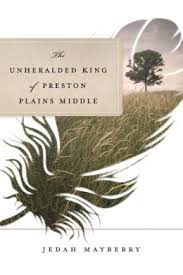
Jedah Mayberry's debut novel The Unheralded King of Preston Plains Middle is out now from River Grove Press.

Jedah Mayberry’s debut novel The Unheralded King of Preston Plains Middle is out now from River Grove Press. You can read the opening pages here.

Jedah Mayberry is the only writer-engineer combination that I’ve ever met. He holds degrees in engineering from Georgia Tech and North Carolina A&T, and amassed several US and foreign patents before returning to his first love, fiction writing. His debut novel, The Unheralded King of Preston Plains Middle, is set in southeastern Connecticut, where he spent most of his youth. He lives with his wife and teenage daughters in Austin, TX.

In this interview, Mayberry discusses country-boy/city-boy story lines, the influence of Edwidge Danticat, and how he’s built a writing community without an MFA.

Michael Noll

I  really like the opening paragraph from the chapter titled Turnabout. You manage to tell us the history and geography of the town of Preston in a way that gives it a personality. You do this, in part, by focusing on what the town is not. How did you approach this passage?

Jedah Mayberry

It was primarily a way to place Preston on the map: north of this, west of that, removed from the other. I started with a hill-and-dale, stroll-through-the-meadow description, and then decided that approach wouldn’t work for what I wanted to accomplish. First, there is very little mass to Preston itself. The town literally sits at the intersection of a couple of two lane roads leading off in either direction through farmland and cow pastures. Second, the contrast between Preston and the surrounding urban centers is where the story derives much of its energy, placing Langston and Trajan outside their element when the time comes to venture to Norwich or New London. The setting introduces a new wrinkle on the country-boy/city-boy encounter when the country-boy would appear,at least by skin tone, more at home with his city counterparts. Yet, quite the opposite is true, giving the brothers a fish out of water feel when they start high school. Focusing attention on what Preston is not underlines the gap the boys need to cross, uneasy footing in part contributing to the various difficulties each encounters along the way.

Michael Noll

The novel approaches an intimate story about a family from the viewpoint of history and migration. How does the large-scale world of the story inform the events that take place? Why start with the broad view of history and geography?

Jedah Mayberry

Rearranging things to preserve a linear progression in scope is the single most outstanding contribution the substantive editor made.

The Unheralded King of Preston Plains Middle is the debut novel from Jedah Mayberry.

The Unheralded King of Preston Plains Middle follows the story of Trajan Hopkins, an African-American teen in a small Connecticut town and the tragic accident that forever changes his life and that of his brother, an Olympic-hopeful athlete whose dreams come to an end.

I invariably encounter people who are surprised to learn that I grew up in CT, that people of color actually live there. I felt it was important to trace the roots a bit to lend credible explanation as to how this family tree grew into (and out of) CT in the first place, how these two boys wound up in close proximity to Norwich yet still managed to fall culturally outside the reach of the kids whom they most resembled.

(Interesting to note, the boys’ appearance is only the surface telling to the story. Later in the narrative, we learn that Langston’s name originated with Langston Hughes, a deep cultural root that ultimately bridges his connection with one of the first Norwichton girls he encounters.) As the story progresses, I introduce a friend/turned villain as well as a suspected villain/turned pseudo-savior. I weave their threads in a similar way using a bit of family history to explain how they wound up in the River Valley as well.

Michael Noll

I know that you’re a fan of the work of Edwidge Danticat. How has her writing influenced your own? Do you at all borrow from or find inspiration in her language, voice, structure, or mixture of biography and fiction?

Jedah Mayberry

I have certainly tried to emulate her voice, speaking as plainly as possible while attending to the world surrounding the characters, working to provide a somewhat out-of-the-ordinary description of a scene without it seeming outlandish or overly ornate, e.g. melding the interrelationship between tribes in molten lava, characterizing the arrival of New Yorkers and Bostonians as a Martian Landing. I’ve gotten lots of feedback on those passages, how they stuck with the reader. I also worked to have something of interest going on in the background to help propel the story: the Eastern Pequot’s petition to be recognized as a sovereign state (which incidentally is still ongoing, not to mention the casino’s impact on the surrounding area). This isn’t quite as traumatic an uprising of one people against another as the one that plays backdrop in Danticat’s The Farming of Bones, ultimately resulting in the massacre of scores of Haitians working as laborers and domestics on the Dominican side of the island. But, based in truth nonetheless, the Native American sub-theme lends color to the region, contributing to the story in its own right.
Michael Noll

There is sometimes an expectation among aspiring writers that they must attend a MFA program. But many writers find different routes to becoming published. That was the case for you. As a result, I’m curious what your writing community looks like? What has helped in your development as a writer?

Jedah Mayberry

I read somewhere recently that a stocked bookshelf is a poor man’s approximation of an MFA. I spend lots of time reading, working to identify what in a particular piece worked for me, how the author succeeded in connecting me to his/her characters, to the story line.

Connect with Jedah Mayberry and find out what he's reading at Goodreads.

Connect with Jedah Mayberry and find out what he’s reading at Goodreads.

Right now, I’m reading Ghana Must Go (Taiye Selasi) as part of a goodreads book group I joined. She uses a lot of singsong in her language, which I worry some might find distracting. However, her description of things (various degrees of snowfall most notably, how the most crippling blizzard starts with a flutter of the first few flakes) is remarkable. She deals with some very complex human interactions, starting with a father to his children, a pair of twins, the connection between which always seems fascinating. She gives each character a special ability to read people or see people or appease people, and then works those characteristics consistently throughout the book. I look at it as an intense study in character development.

So, my community consists of book groups enabling me to discuss openly my take on a piece we’ve read alongside oftentimes differing opinions. A bunch of people from my undergrad (I have a masters in science as opposed to fine arts) started a group on Facebook that caters to alumni in the arts. There are a half-dozen published authors in the group, mostly spiritual-based or strongly Afrocentric. My aim is to push the literary bent first, undoubtedly with a strong cultural base. I’ve gotten lots of insights from them on things related to the publishing industry itself if not actual writing content.

There is an active Tumblr community out there as well, though I’m finding its somewhat diffuse. I’ve discovered a few literary sites. I was recently “followed” by a member funded library based in Brooklyn, NY (mellowpageslibrary). I sent them a copy of the book over the weekend to add to their collection. (BTW, they posted a picture of Amelia Gray with a copy of Threats in recent weeks. She’s someone I met at an ASF sponsored reading a year or so ago. Seeing her photo solidified credibility for me in what mellow pages is doing.)

I also claim the short fiction workshop you facilitated as invaluable in my establishing confidence in my voice. I recognize there were a couple of people in the group who didn’t really dig what I was sharing (as well as one who pretended to). But, a couple others really resonated with it and shared with me at the conclusion of the workshop how much they looked forward to seeing me do something with it. And, you were the first person to tell me that I wasn’t a short story writer necessarily, that I should focus on scene, but write longer, put the story down end-to-end then work to fill in detail. That’s essentially the formula I followed with this latest project. So thank you for that.

May 2013

Profile pic

Michael Noll is the editor of Read to Write.