Tag Archives: Texas Writers

An Interview with Rene S. Perez II

16 May
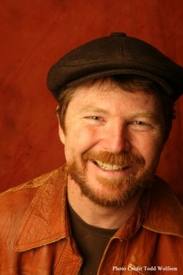
Rene S. Perez II

“Lost Days” by Rene S. Perez II first appeared in The Acentos Review and is included in his debut collection, Along These Highways, which won the Alfredo Cisneros Del Moral Prize and was published as part of the Camino del Sol series by the University of Arizona Press.

The stories in “Along These Highways,” the debut collection from Rene S. Perez II, might best be described by that famous quote from Flannery O’Connor: “Anybody who has survived his childhood has enough information about life to last him the rest of his days.”

Like many writers, Perez sets his stories in the place of his youth. What makes Perez unusual, however, is that those places are Corpus Christi, Kingsville, and South Texas, a part of the country rarely seen in literature. That is why the writer Dagoberto Gilb praises the book by writing, “Rene Perez’s collection is much more than a fine first book by an enormously gifted young writer, it is one marking trail for an ignored culture to find its way to the nation’s center.”

In this interview, Perez discusses writing flawed characters, the challenge of writing about a place where you haven’t lived in years, and the importance of small presses to Latino writers.

Michael Noll

The story is about a woman whose son, Bobby, treats her as if she’s intellectually inferior . As I read, I found myself both disliking Bobby but also understanding his actions. How did you approach the balancing act of creating character who is at once unlikable but also understandable?

Rene S. Perez II

This is something I try to do with my fiction, to create characters who, despite however flawed (arrogant, violent, ‘crazy’) they are, are justified. While it may not be apparent in the prose I write, one of my greatest influences, perhaps one of the only writers I can directly cite as being an influence, is Toni Morrison. What she does in all of her texts, starting with The Bluest Eye and Cholly and Pauline Breedlove, is create lives as contexts for her characters’ later flaws and sins. She does this with acts of infidelity, murder, infanticide, and planned terrorism, to name a few throughout her books. In each instance, she provides causal underpinnings for her characters’ actions.

My goal is never really to write crazy or depressed or, as in Bobby’s case, intellectually condescending characters, but when a plot unfolds, if the events are anything outside of the mundane, there has to be some reason for a character to have set them in motion, and in trying to create a believable reality, there has to be a believable causal chain leading characters to act as they do. That’s, really, how I approached Bobby, even with the stakes being as, seemingly, small as they are.

Michael Noll

Starbucks is central to the story. Bobby’s shifting attitudes can be traced by his reaction to the absence or presence of Starbucks. It’s a really succinct, efficient way to show a character’s development over time. Was this an intentional move on your part? Or did you discover it through revision?

Rene S. Perez II

I set out to write the story of the mother. Of course it’s about her relationship with her son, but I wanted her to be on the upswing from a dark time. I also specifically wanted this to be a story very much informed by being set in Corpus Christi. I last lived there over 10 years ago, so my Corpus stories are really of that time.

Rene Perez

To learn more about the geography of South Texas, check out this great interview with Rene S. Perez II that appeared in Critical Mass, the blog of the National Book Critics Circle Board of Directors.

Should anyone from Corpus read it and cry foul over the fact that there’s been a Starbucks (now two), not counting the stand in the Barnes and Noble, in town for over ten years, I would point out that this story is about a time when there wasn’t. I bring that up because it was a natural before-and-after time marker. There would naturally have been a time when this particular character (Bobby), at 16 or 17, likely smoking friend-bought Clove cigarettes, would have complained about the absence of a Starbucks in town. That same kid leaving for Stanford and ending up seeking out a PhD in Lubbock, now smoking rightly attained American Spirits, can be expected to have come to be above the idea of Starbucks. In seeking to have something small resulting in something very big, the idea of Bobby came to me. The Starbucks angle came naturally from that.

Michael Noll

The story is, in terms of plot, very simple: A woman walks into Starbucks, sits for a while, orders coffee, and drives away. Altogether, the events take about an hour. Yet the story is much vaster than that hour, encompassing entire lives and histories. How did you maintain the immediate story arc—woman goes into Starbucks—while at the same time developing the larger histories of the characters?

Rene S. Perez II

This story is all about the histories of the characters. A thing that I do, outside of any writing exercise, is observe people and assume a context for them. I can guess that this is something all people do to some extent, but I lose myself in it sometimes. If I am at the movies and I see someone sitting and watching alone, I guess at a set of circumstances that has put that person there alone. For some reason my imagination always takes it to a place that makes me feel crassly presumptuous—I mean, I go to movies alone all the time for reasons completely unrelated to loneliness and freakish anti-social tendencies (mostly), but I always paint sad pictures of these lives that don’t give any credit to the people actually eating a small popcorn and enjoying a matinee feature.

In setting out to write this story, I let my mind run in that familiar direction. I had a lady taking a day off. Why? How often does she do this? How has her life changed in the time since she first started taking her days? This is her first time in a coffee shop. What has happened in her life that has brought her to this new place? What brings any person into a Starbucks who isn’t a coffee person? We know what would have put Bobby there, but what would have put her there? That’s what the story is about—those things that have brought her to this hour. So it was naturally going to be a small story. I think big truths about characters can be best examined in small stories. Instead of exploring what a character would do when encountering life’s plot turns, I think a small story–woman walks into a Starbucks, gets a coffee, leaves–allows for exploring who a character is when no one else is watching. I didn’t plan it this way, but I think that’s why the story takes place during her private me-time.

Michael Noll

The PEN/Faulkner Award for Fiction was recently announced, and the winner was Benjamin Alire Sáenz. His selection was noteworthy because he is the first Latino to win the award, but he’s been nominated for other awards, so it’s not like he’s been pulled from obscurity. What I found surprising is that he’s published by Cinco Puntos, a small press in El Paso that publishes books primarily about the borderlands and the people who live there. Your book was also released by a small press and your stories have appeared in journals focusing on Texas/Latino/Southwest writers. Is it the case that Latino writers are struggling to break into the big, national presses? Or are small presses with thematic listings (regional, cultural, ethnic) simply doing a better job of discovering and promoting Latino writers? 

Rene S. Perez II

I can’t speak to big presses, breaking into them, struggling to do so. I know of the great work small presses are doing to discover and promote Latino writers. It is a great service to Latino literature. There are stories to be told—truths and lives worth documenting and representing. These small presses are doing pretty heavy lifting as far as Chicano Literature goes, because it’s pretty easy to look around and see that the big presses aren’t publishing too many Chicanos. There are many theories as to why these big presses are skewing toward Dominican and Cuban other such Latino books to publish. Most obviously, they are more traditionally present on the East Coast. I have to believe that with all of the migration of new-comers from Mexico all over the country, there will be new generations of Chicanos born and raised here, with their own stories to tell of their Mexican American existences as I have tried to do with my Texan upbringing. The aforementioned growing demographic that will soon be too big to ignore will only add to families like mine who have been here for generations, living and working for the same American dream, shaded the exact same red white and blue as anyone else’s, no part immigrant to speak of. Until the tide turns and this group that already makes up something like 60% of all American Latinos becomes more evident to those who make the big decisions for the big presses, I am glad to know that there are these small presses doing big work. Already they are reaping big rewards.

May 2013

Profile pic

Michael Noll is the editor of Read to Write.

An Interview with Kelly Luce

2 May
Kelly Luce's debut collection of stories will be released in October by A Strange Object.

Kelly Luce’s debut collection of stories, Three Scenarios in Which Hana Sasaki Grows a Tail, will be released in October by A Strange Object.

Not many writer biographies can go toe-to-toe with the condensed history of Kelly Luce: She once attended a fiction seminar in Bulgaria, she was the writer-in-residence at the house where Jack Kerouac lived while writing Dharma Bums, and her forthcoming collection of stories has the knockout title Three Scenarios in Which Hana Sasaka Grows a Tail.

In this interview, Luce discusses first sentences, the challenge of finding the right publisher, and books that make her say, “Oh! Oohhhhh!”

Michael Noll

The story has a perfect first sentence: simple, yet absolutely essential to the story. It accomplishes in seven words what some writers spend paragraphs doing: creating and then breaking a routine in order to find where the story begins. What was your approach to writing this opening?

Kelly Luce

It’s funny; when I read this question I thought about the first sentence (“Since Rooey died, I’m no longer myself.”) and felt sure that it had been there since the start, from draft one. It seems like such an obvious opening. Maybe too obvious, you know? Then I dug up my early drafts. After having a drink to brace myself, I was able to face them…and I discovered that that line didn’t show up until draft 7. I don’t remember what the process was like that brought me to write it. Maybe this is a testament to how hard it is to put into words what is simple and true.

Michael Noll

Very early in the story, this paragraph appears:

“Here’s a story: two people are in trouble and the wrong one dies. There’s been a cosmic mix-up, but there’s nothing anyone can do about it, and they all live sadly ever after. The end.”

I love this paragraph because of its speed. The distance between “two people are in trouble” and “the wrong one dies” is vast—an entire story lies in between—and yet the paragraph doesn’t bother with any of that. It keeps rushing along, moving from the comedy (in the Shakespearean sense) of “cosmic mix-up” to the tragedy of “they all live sadly ever after.” Is this speed something you purposefully strive and revise for, or is it present in the earliest drafts?

Kelly Luce

Thank you. Though this paragraph also came fairly late in the drafting process, after I decided to try introducing the cover-story subplot, it came out fully formed in one of those rare moments when the writing goes on auto-pilot for a few lines. Rhythm and sound is one of my favorite things about writing, the way syllables and commas pile up and suddenly stop, the way long sentences full of short words interact with short ones made of long words, the interplay between vowels and consonants, the way internal rhyme can create gravity. It becomes very physical. So I feel like the answer to your question is, both: I strive and revise for appropriate rhythm, and sometimes it happens in draft one; other times the conditions aren’t right for it to show up until draft ten.

Michael Noll

When I was in graduate school, the term “magical realism” was popular, mostly due to the work of Gabriel Garcia Marquez and Salman Rushdie. There weren’t a lot of American writers working in that style, and some critics wondered if it was possible to use it in this country. Yet here we are a few years later, and the most influential American short story writers are Aimee Bender and George Saunders, whose absurdist, fantastical stories are perhaps an American adaptation of magical realism. Your writing also seems to fall into this category, so I’m curious how you would explain its appeal. How did the American short story move from the dirty realism of Raymond Carver to the contemporary mixture of fantasy/comic-book/genre/absurdist/supernatural elements?

Kelly Luce

I’d love to know more about this, myself. I have no idea why the American short story has moved beyond Carver’s realism, other than to say that things always change, and what’s fashionable in one era is sort of inevitably not in the next. I mean, what made Carver who he was as a writer (other than Gordon Lish)? What was he shifting away from? That might help us figure out why we’ve moved on from his example, at least somewhat. It could be that this generation of writers and readers is reacting to that generation, looking for something different, or at least being willing to consider something different. Certainly other countries have not suffered as much (I consider it a suffering) from a dearth of imaginative/non-realistic writing during this time. What was it about America, specifically, that made realism the desired form of expression during that time?
Still, from what I’ve read of lit mags and recently released collections, as well as at workshops I’ve participated in during recent years, I’d say the dirty realist story still has quite a following. Maybe, with the advent of online publishing, magazines have been able to take a few more chances on what they publish, so there’s both more supply and demand of the weirder stuff. Or maybe the rise of the reputable online venue let publishers who were outside the box get a foot in the box. A story from my collection, for example, was published by the Kenyon Review Online, which purports to publish more experimental work than the regular KR. Would they have printed my story five, six years ago, in KR proper? I don’t know. But a lot of readers have been able to connect with that story and say, hey, this is my kind of thing and I want more, and we’re lucky that there are places like Fairy Tale Review and KRO and Unstuck and a ton of others meeting that demand.
We all loved reading as kids, and kids’ books are often extremely imaginative. In this age of extended adolescence and “be yourself” messages, maybe those writers who wanted to play a bit more with fantasy/genre/supernatural stuff felt free enough to do so. Or maybe like me, they read Girl in the Flammable Skirt or Pastoralia and went, Oh! Oohhhhh!
Michael Noll

You’re a really talented writer with an enviable body of work—stories in reputable journals, prestigious fellowships. Your debut collection of stories, Three Scenarios in Which Hana Sasaki Grows a Tail, will be released in October, and reviewers will almost certainly compare the writing to that of Aimee Bender and Karen Russell, two highly regarded and popular writers.

A Strange Object is an independent press in Austin that publishes books that take risks, buck form, and build warm dwellings in dark places.

A Strange Object is an independent press in Austin that publishes books that take risks, buck form, and build warm dwellings in dark places.

As a result, your book seems like it would be awfully desirable from a publisher’s perspective.

Yet when readers open it, they won’t find the name of a major, New York-based publisher. Instead, they’ll see the name of a new independent press based in Austin—A Strange Object. Can you write a little about how this relationship with A Strange Object came about? What makes A Strange Object a great partner for your collection?

Kelly Luce

Will you marry me? Or can I pay you to come over every day and tell me nice things?

The relationship with A Strange Object started a few years ago, when Jill Meyers was editor of American Short Fiction and accepted a short-short of mine for a series on their website. That’s how I met her and Callie Collins, who worked at ASF as well. When they started A Strange Object, I was one of the writers they contacted about submitting a MS.

I always had a sense that I wanted this book to go to an indie press, and that my novel, which I’ve been at for a few years, would be the New York book. Maybe it’s because I heard so many rumors about story collections being treated like redheaded step-kids by the big house publishers, or maybe it’s because I never had the guts to push my agent, who represented my novel, to do anything with the stories. A\SO is the place for this book, absolutely. They get the strangeness, they love things about it I’d forgotten, and through editing they’ve made it a way better book than it was when I submitted it to them. The design is gorgeous, smart, clean. The cover artist is incredible. When you’re working with a small press, you’re pressed right up against the taste of the people who run it. And these guys are like…I don’t know. They’re not like anybody, which is the point. I have a crush on them.

May 2013

Profile pic

Michael Noll is the editor of Read to Write.

An Interview with Stacey Swann

4 Apr
Stacey Swann's story "Pull" appeared in Freight Stories.

Stacey Swann’s story “Pull” appeared in Freight Stories.

Stacey Swann has been a Stegner Fellow at Stanford University and a contestant on Jeopardy!. Her fiction has appeared in Epoch, Memorious, Versal, The Saint Ann’s Review, and The Good Men Project, and she has served as editor of the journal American Short Fiction. She also edited the mixed-art project, The OwlsShe lives in Austin, Texas.

In this interview, Swann discusses her approach to “Pull,” which offers a contemporary Texan take on the age-old subject of unrequited love. A writing exercise inspired by the story—especially the way Swann traps together two incompatible characters—can be found here.

Michael Noll

Did you purposefully pair the characters from “Pull” to highlight their incompatibility? Or did Lou and Jo simply find their way to the page?

Stacey Swann

When it comes to drafting fiction, I always like to say that my subconscious is way smarter than my conscious brain. I didn’t set out to make Jo and Lou incompatible, but I suspect that my subconscious, after so many years of writing, tends to maximize tension when it can. I did intentionally want the relationship to make Jo feel trapped and limited, though. Can a person feel trapped and limited by someone they are essentially compatible with? I’m a pessimist by nature, so I’d probably say yes. I’d have to write another story, though, to figure out whether that scenario would have as much tension!

Michael Noll

The parallel between the human couple and dog couple—the dogs can’t help fighting—is very clear and seems intentional, and yet it’s not at all awkward or forced. Perhaps it’s the old saw about dog owners resembling their dogs, but I never thought, “Oh jeez, give me a break.” In fact, the story seems much richer because of the dogs’ presence. The beautiful final line couldn’t work otherwise. How did you make the parallel, highly literary and artificial by nature, seem so natural?

Stacey Swann

Jo’s dog Spider is actually based closely on my real dog (King) that I had as a child, right down to being shot by a neighbor. Funnily, he’s the only “real” character in the whole story. (Most of my settings are autobiographical in my fiction, but almost none of my characters are.) I’m glad you found the parallel natural! The naturalness probably stems from the fact that I didn’t start out with the dog/people parallel in mind. I started with Spider and this idea of Jo returning home to a depressed ex-boyfriend. I didn’t know yet how the story would end, that Jo’s actions would parallel Spider’s and Lou would suffer like his own dog. If I had, I fear the build-up might have been much more heavy handed.

Michael Noll

The first paragraph of the story is quite clear about how Jo feels about home. You write that Jo “doesn’t like what home turns her into. She’s less herself in the place where she should most be herself—if we are what we come from.” A lot of beginning writers would shy away from defining a characters’ feelings so clearly, yet you do it right away. How did this early, clear definition affect how you wrote the story?

Stacey Swann

The final version of that paragraph is actually not that different from how it came out on the first draft. It’s likely that I was nailing down the character for myself, as the writer, before I let her loose in a scene.  When I look at my short stories as a whole, I tend to think of them as pretty pared down and minimal. I suspect this is because of the short fiction I was reading at the time and the overall atmosphere of my MFA program, where I got my “training” as a short story writer. A lot of what was getting workshopped was dirty realism in the Raymond Carver vein. Always favor showing over telling. Now that I’m working on a novel, I find myself telling all over the place and those tend to be the sentences with the most heat.  Overtly dealing with my characters’ psychology is what I really want to write about, I just used to tamp it down more. I think that opening paragraph is an example of my natural inclinations. Of course, I still worry that once my novel is drafting, I’m going to have to edit down like Lish did to Carver. Maybe my natural inclinations are still wrong inclinations.

But I digress! As to the question of how it affected how I wrote the story, I think that by stating that Jo doesn’t feel like herself at home, it established a tension in the reader that Jo didn’t belong there. This tension is directly at odds with her stated intent to move back home, and so the engine of the story starts moving from that first page. Perhaps opening with “telling” is more effective if what the author is telling feeds straight into the central conflict of the story?

Michael Noll

In the story’s fourth section (the one that begins with “Lou’s depression started after they left for college”), you quickly sum up months and years of their relationship. Again, this is something that beginning writers often struggle with. How do you know what to summarize and what to dramatize?

Stacey Swann

I had a lot of trouble with the backstory in “Pull.” If you compare my earliest drafts to the final product, you’ll find much of the present day story is the same.  However, the backstory wound up changing quite a bit as I tried to make Lou a more sympathetic character. I knew I wanted the story to have two narrative arcs: Jo after she returns home alternating with the story of both their prior relationship and what happened to Spider. I like symmetry, so I wanted to balance those as equally as possible. Because the present day story was pretty short, covering just a day, I had to compress as much as possible of the backstory. I only put things in scene if they were hugely important. I think the key to good summary is still relying on specific details. It can almost trick you into thinking what you’ve read was really in scene. Stuart Dybek’s “We Didn’t” does this masterfully.

Michael Noll

I’m curious how editing other writers’ work affects your own work. Do you ever read a story and think, “Well, I won’t do that” or “That’s amazing, and I’m going to steal it?” It’s become a cliche that we should keep our editing brains and freewriting brains separate, but it also seems inevitable that the two will affect each other. What do you think?

Stacey Swann

I think my time at American Short Fiction had a huge impact on my learning curve as a writer. I started volunteering as a reader there while I was still in grad school and for the next seven or so years, I read dozens of submissions a month. For some reason, it is so much easier to see the flaws in our own work after we’ve seen them in someone else’s. And I likely picked up the good stuff simply by osmosis. My primary agenda was always whether or not I thought the story would be a good fit for ASF. But subconsciously, I was probably filing away plenty of things to steal.

I tell my writing students that while they are drafting, they should lock their internal critic in the trunk of their car and just drive. I find revision easier and more enjoyable than drafting, and that’s mostly because that internal critic is such a jerk while I draft. If I don’t put him in the damn trunk, he’ll drive me away from the computer. Of course, that also means my first drafts are huge messes, and it can take me multiple revisions to even pin down the basic plot arc. I used to think revision was 100% about the critical brain because that’s the only part I use when editing others. I certainly wouldn’t want to let my freewriting brain loose on someone else’s work, but I’m starting to think there may be room for it when I revise my own.

April 2013

Michael Noll is the editor of Read to Write.

An Interview with Meghan McCarron

21 Mar
Meghan McCarron's story "Swift, Brutal Retaliation" won a 2013 Nebula Award. It was published at Tor.com.

Meghan McCarron’s story “Swift, Brutal Retaliation” was nominated for a 2013 Nebula Award. It was published at Tor.com.

Meghan McCarron is a writer based in Austin, TX. She grew up in the Philadelphia suburbs and has lived in Los Angeles, rural New Hampshire, and Brooklyn. A former Hollywood assistant, boarding school English teacher, and independent bookseller, she is one of the fiction editors at Interfictions and an assistant editor at Unstuck. She and her girlfriend live in the same neighborhood as the flying burger monster.

In this interview with Michael Noll, McCarron discusses her approach to “Swift, Brutal Retaliation,” which asks the surprising question, “Can you contact a dead person on Facebook?” A writing exercise inspired by the story—especially the way the supernatural premise is combined with a realistic world—can be found here.

Michael Noll

My favorite part of the story is when Sinead decides to send her ghost brother a message on Facebook. The sheer impossibility of it made my day—not just that it’s impossible for a ghost to log on to Facebook, but the fact that Sinead would even think to try. For me, it was the moment when the story left the stomping grounds of the traditional ghost story and became something fresh and new, something I’d never read before. What led you to write that scene?

Meghan McCarron

I have always been fascinated by the internet presence of the dead. Blogs that have gone dark and silent facebook walls seem to serve as a space where people leave messages that they hope will reach beyond the grave. It makes sense – on the internet we post words in the ether and miraculously, sometimes capriciously, they are received! As a result, these frozen internet spaces feel haunted to me, more so than, say, a room where someone died.

The internet shows up a lot in my fiction in general, especially when my protagonists are kids or teenagers. I spent a few years teaching at a boarding school in New Hampshire, and I was fascinated by how my students structured their lives between in-person and online interactions. I’ve had a social life split between the internet and IRL since I was twelve, but I was a dorky outlier. It was fascinating to see “popular” kids using social media as obsessively as everyone else.

Ian created a life outside of his home that he far preferred, and the internet was an essential part of it. Sinead’s instinct to contact him over Facebook seemed natural – he was never reachable in their home, but perhaps he could be reached online. I’m saying all of this as if I had it figured it out at the time. Really, picture me huddled in my old apartment in Brooklyn thinking, “Hmmm what now?”, my feet pressed against the space heater.

Michael Noll

Your story does such a wonderful job of giving the ghost objects to play with—the mirror, obviously, but also the lasagna and the Nair. The story pivots very cleanly from the mirror, which we’ve seen before and expect (the mirror almost allows us to settle in, to say, “Okay, I know this story, and I like it”) to details we’ve likely never seen in a ghost story. The details work—and become spooky—because they fit the living characters so well. The world makes perfect sense. It seems real. How did you create this world? Did you start with the characters and populate the house with objects they’d likely use? Or did you have a particular scene in mind and build the world around it?

Meghan McCarron

You know, I have no idea how I started this story. I knew I wanted to write a ghost story – I’d never written one before. I’d been reading a great deal of classic ghost stories, hence the mirror. I also really admire the way the writer Kelly Link makes mundane physical objects creepy and strange. Her story “The Hortlak” features pajamas of lovecraftian horror, and in “Stone Animals,” familiar objects become “haunted” and no one wants to touch them anymore. So perhaps I was thinking a little about that.

My mother had a dusty bottle of Nair hidden in a medicine cabinet, and once someone told me about the prank of putting it in someone’s shampoo. From that moment on, I was terrified of that bottle of Nair. It seemed like a gun on the mantlepiece of my life: sooner or later, someone was going to sneak it into MY shampoo and my hair would fall out. I have no idea why I was obsessed with this – something something fear of puberty?

The lasanga – well, lasanga is disgusting, and delicious because it is so disgusting. It just seemed obvious.

Michael Noll

I love ghost stories. I’ve been hearing them—actual encounters with actual ghosts—ever since I was a kid. As a literary genre, it’s one of the world’s oldest. Even Shakespeare uses ghosts (and witches), and not infrequently. Ghosts—and the supernatural in general—seems to be innately interesting to most of us, even though we’ll likely never encounter an actual ghost–and likely do not (if pressed) believe they exist. Why do you think we are we so attracted to the idea of ghosts?

Meghan McCarron

I recently finished John Crowley’s Little, Big, which has a big section devoted to the magic of memory palaces. Basically, there’s an ancient system of memorizing that involves “putting” pieces of information in various rooms of a remembered house. The memory palace is a perfect metaphor for how our imagination mirrors the physical world. Our memories are always haunted, aren’t they? Ghosts seem like a useful way of externalizing that haunted feeling, of expressing the obsession of grief. If we’ve all got houses in our minds full of wandering people, dead and alive, but only the living ones wander around in the physical world – well, wouldn’t the dead ones be there, too?

March 2013

Michael Noll is the editor of Read to Write.

An Interview with Owen Egerton

28 Feb
Owen Egerton's novel The Book of Harold has been called...

Owen Egerton’s novel The Book of Harold walks “the fine line between hilarity and heart” according to one reviewer.

Now that Lance Armstrong is disgraced, the title of Most Interesting Person in Austin may belong to Owen Egerton. Here are a few reasons why: His short film, Follow, is debuting at the South by Southwest Film Festival in March, he’s a regular performer in one of the most popular comedy tickets in town, and his book launches are standing-room only. It’s no wonder the Austin Chronicle routinely names him the city’s favorite local writer. With his most recent novel, The Book of Harold: The Illegitimate Son of God, and his soon-to-be-released Everyone Says That at the End of the World, the rest of the world is discovering what Austin has known for a long time.

Pick up any of Egerton’s books, and you’ll find the rare combination of humor and spirituality. As a result, The Book of Harold has been called beautifully-crafted, wise, and poignant, but it’s also very funny. The promotional video for the novel even caught the interest of late-night host Jimmy Fallon, who linked to it on his website.

Egerton was kind enough to answer a few questions about this comic-religious novel.

Michael Noll

The chapter shows us the basic events of the Christmas pageant multiple times. It’s almost like you’re using dress rehearsals to make the reader familiar with how the scene will play out–only to surprise them with the actual events. Was this repetition intentional, or did you find that the practice runs through the pageant wrote themselves onto the page?

Owen Egerton

I’m a fan of theme and variation, of establishing what should be and then sharing what is. We see it in jazz, in comedy and in narratives. As Robert McKee likes to say, story is found in the gap between expectation and actuality. Your buddy Jim comes over for dinner every Friday at 7 pm. He always brings a bottle of wine and bag of day old donuts. 6:55 pm on Friday there’s a knock on the door. You open it expecting Jim. Instead a beautiful woman in a long black dress stands with a severely cut hand. There’s a story there. We are more aware of the gap – the space where the story lives – when we have some detail of the expectations.

Michael Noll

Most of your readers have likely seen a Christmas pageant–and perhaps appeared in them–and most of those pageants probably followed a similar storyline. All pageants are basically the same, in other words. That sameness would not seem like a great premise for a story, yet the every element of this novel’s pageant seems fresh and new. How did you approach telling the pageant story so that it escaped our expectations for pageants-past.

Owen Egerton

Point of view and characterization are keys to making the familiar fresh. Every wedding looks the same, basically. But it’s not the same old wedding for the secretly pregnant bride or the jilted lover in the back row or the groom who is in love with bride’s mother.

You can even get away with describing monotony if you allow at least one character to be passionate about the monotony.

It also helps if you hint or tell the reader that this is going somewhere. In my chapter, the narrator shares that the event he’ll be describing led him to believe God was hunting him down like a “pissed off loan shark.” The reader is willing to wait through some of the less fascinating details because they feel it building towards something. We’ve promised a payoff. Now we must deliever.

I’m also eluding to those all too familiar pageants for a reason that touches on the novel as a whole. The novel, like the pageant, is a story they do not know based on a story they do know. I’m retelling the gospel—I even begin with a nativity, but the nativity goes wonderfully astray. Hopefully this tells us that the story we’ll be reading will continue to surprise us. But also that the story we know – that pageant we’ve seen or participated in – is as different from the actual birth of a impoverished baby to unmarried parents in Roman-occupied Israel two thousand years ago as it is from the series of missteps in the story. We think we know the story, but we don’t.

 Michael Noll

In his New York Times essay "Has Fiction Lost Its Faith?" Paul Elie compares Christian belief in American fiction to "a dead language or a hangover."

In his New York Times essay “Has Fiction Lost Its Faith?” Paul Elie compares Christian belief in American fiction to “a dead language or a hangover.” Owen Egerton disagrees.

In a recent New York Times piece, Paul Elie argued that religion (especially Christianity) no longer plays a role in American literature. In Elie’s words, the role of Christian belief in fiction is “something between a dead language and a hangover…if any patch of our culture can be said to be post-Christian, it is literature.” Your novel would seem to refute this claim. Do you see questions of Christian or religious belief reflected in much of the literature you read? Is Elie simply reading the wrong books, or does he have a point?

Owen Egerton

I love reading Paul Elie. Amazing insight and warm passion. But I think he is mistaking a change in religious focus for death. Elie correctly recognizes that fewer and fewer “believers” populate modern literature. And that there appear to be fewer writers with Flannery O’Conner’s goal to “make belief believable.” Elie’s conclusion that religion no longer plays a role in American literature is based on the premise that the center of religion is belief. He feels one’s beliefs – not one’s actions or the tradition in which one participates – define one’s religious identity. But a Passover Seder can be impacting even if one doesn’t believe in a literal God sending plagues to ancient Egypt. And the power of the passion and death of Jesus is not limited to only those who believe in a historical, literal resurrection.

What Elie’s sees as a shrinking of religious themes, I see as an expansion past a narrower definition of religious devotion. I’d argue that we’ve lost some interest in the dogmatic discussion and distinctions, which for O’Conner and Percy Walker separated the saved and unsaved. We are less concerned in what a person or character believes and more interested in what they do. The beauty of a Catholic mass and the themes of community, sacrifice, and transcendence are not dependent on the doctrine of transubstantiation. More and more of us recognize this. Many moderns have a religious life free of belief.

And literature is a perfect vehicle for pondering the questions of religion without being moored on the dichotomy of belief and disbelief. We are moved by the characters and story and images of a novel without ever having to declare that we believe the events of the novel to be factually true. In fact, we recognize that our fiction by definition is not fact, but it no way limits the power.

The stories and rituals of faith traditions – whether you hold them to be history, myth, or both – are still often the language we use to wrestle with themes of mortality, morality, and meaning. Whether in James Reich’s dark, poetic 2012 novel I, Judas or the Christ imagery rampant in the final Harry Potter book, religion is still very much a living language.

I am not a believer, but I return again and again to religious themes in my writing. I see the shared power of these stories, the universal appeal to these themes, and perhaps I’m searching – and my readers along with me – for something beyond belief.

Michael Noll

In addition to writing, you’ve built a reputation as an improv-comedy performer. In some ways, improv seems like an imperfect match with writing. One requires spontaneity, and the other favors revision. Do you find that improv has influenced, and perhaps even helped, your writing?

Owen Egerton

Improv and writing are wonderful bedfellows. Long before I revise, I must create! In that place – that hot cauldron of creating, that hunt for self-surprise – the revising mind is an enemy. That part of my mind questioning my choices, correcting my spelling or simply asking “what are you doing here?” – that part must be shut up if I’m to thrill the page. I leave the revising for tomorrow. It’s the same in improv comedy. In improv we train ourselves to say “yes” to the wild, untested, unwritten ideas. We do not stop to ask, is this the best idea? It is the idea! So we play with it, we build upon it. So when I write, I tap into this mode. I splatter my pages with messy ideas and fractured sentences and fantastic surprises! Fire doesn’t think. It burns. Lovers don’t plan. They fuck.

February 2013

Michael Noll edits Read to Write Stories. A writing exercise based on the first chapter of The Book of Harold is available here.

An Interview with Manuel Gonzales

21 Feb
Manuel Gonzalez's story "Farewell, Africa," was published in Guernica and the inspiration for this writing exercise. His new collection of stories, The Miniature Wife, is being mentioned in the same breath as George Saunders and A.M. Holmes.

Manuel Gonzales’s story “Farewell, Africa,” was published in Guernica and is included in The Miniature Wife, a new collection of stories that has been compared to the work of George Saunders and Aimee Bender.

Manuel Gonzales’s debut collection of stories, The Miniature Wife & Other Stories, has been called “extraordinary” by the LA Times. A review in The New York Times reveled in the stories’ “delightful freakishness.” His writing can also be found weekly on the 1000 Words project, where he writes and posts a weekly story inspired by an image created by the photographer Emily Raw. Gonzales serves as the Executive Director of Austin Bat Cave, a writing & tutoring center for kids located in Austin, Texas.

In this interview with Michael Noll, Gonzales discusses his approach to “Farewell, Africa,” which tells the unexpected story of a pool malfunction set against the backdrop of the destruction of the entire continent of Africa. A writing exercise inspired by the story—especially the immediate suspense created in the first line—can be found here.

Michael Noll

In the first sentence of the story, you introduce a problem (the pool didn’t work), but you don’t reveal what happens until several paragraphs later. Was this an intentional move on your part to create suspense in the reader, or did the opening paragraphs come about gradually, over the course of revision?

Manuel Gonzales

When I write these stories that have a sense of non-fiction to them, I always approach them with this idea in my head that the audience already knows the larger points of the story. So with this, I assumed that the imagined reading audience for this piece would already know that the African continent has sunk into the sea. So the world I created that would contain this essay had to be larger than the essay itself, because otherwise the essay wouldn’t work, and that world included an audience for the essay. And since everyone who was going to read this essay would already know about Africa, the starting point had to be something small and specific, this based on the kind of New Yorker article made popular by Talk of the Town contributors and Malcolm Gladwell that I had in mind as my model. So really, how I started the piece was determined as much by the structure of it as anything else, and the fact that this also developed a sense of tension in the real reading audience was a side-effect—a good one—of the early decisions I made about what kind of story I wanted to write.

Michael Noll

I’ve heard some writers claim that funny stories are impossible to write. But this obviously isn’t true for you. One of the best parts of this story is the weirdly detached tone the characters have toward the sinking of Africa. For instance, the first thing Owen Mitchell says about his famous speech “Farewell, Africa” is that it was fifteen minutes too long. But even the name of the speech itself seems oblivious to any sense of real tragedy. The disconnect works so well. Was it part of the story from the beginning, or did you have to figure out the right tone? Comedy (even black comedy) and the loss of civilizations wouldn’t seem like an obvious starting point for a story.

Manuel Gonzales

The comedy is generally there at the beginning all of my stories. I had this title in my head long before I wrote the story. I’d misread a NY Times headline (Farewell, Africa) as us saying goodbye to the African continent, as if it had gone away, and that made me think of the idea that we would have written a speech to work against the tragedy of the African continent sinking into the sea—because we turn to speeches in almost all times of crisis—and that struck me as sad and absurd and really funny because of the absurdity and futility of it. I think that comedy has to be paired with tragedy in order for both of them to achieve the effects you want them to achieve.

Michael Noll

At your book launch in Austin, you mentioned your love of stories that sound like nonfiction. This story seems to fit that description–journalistic in tone and approach. It’s almost possible to imagine this story appearing as a magazine profile. What draws you to the voice or style of the essay?

Manuel Gonzales

I really like reading essays, the New Yorker profile or a good GQ essay by Wells Tower or Rolling Stone piece by Mark Binelli or the old profiles and essays about New York written by Joseph Mitchell, and I liked the idea of using the techniques of a nonfiction piece in fiction. For one, you can get away with a lot of different things—exposition, for instance. You can load a nonfiction piece with exposition (telling instead of showing) without a lot of consequence, and then you also can use the tone and form to sidestep a number of obstacles that otherwise might gum you up when writing a piece of fiction. The tone gives you a certain kind of pre-set credibility, in fact, in the same way that medical language or legal language or scientific language can. Because when we read something in this tone and style, our expectations become set to ‘nonfiction’ almost subconsciously.

For this story specifically, I tried a few times to write about the guy who wrote the Farewell, Africa speech as a straightforward short story but found every time that the focus would become him and his small and narrow personal investments, and the story never achieved the tone or the largeness I wanted it to, never became the thing I wanted to read. So, after a few false starts, I decided to try writing a Talk of the Town piece about that guy, and that led me to the idea that what I would write about would be a fundraiser party for a museum dedicated to these continents that had sunk into the sea, and from there, everything else fell into place.

The other thing about using this kind of form is that you can break out of it and by breaking out of the form, for just a moment, in the middle of the piece, you create a space that’s a little surprising and potentially more emotional because of how and when it arrives.

Michael Noll

Here’s sort of a weird question: Lots of writers/people apparently send Bill Watterson their work, simply because they loved his comic strip Calvin and Hobbes. They don’t expect a response from him. They’re just happy knowing that he might see their work. If you could send your story or your collection to any writer, living or dead, just in the hope that he or she would read it, who would you send it to?

Manuel Gonzales

Joss Whedon. I could go on and on about his work and how he creates story and how he moves in and out of genres, uses various compelling and fascinating forms, and how he works from a very emotional and very relatable starting point with all of this, which is what makes the stories work the way they do. As a writer, he’s been one of my bigger influences. He was one of the first in television to create season-long story arcs. Buffy the Vampire Slayer and The X-Files (not a Joss Whedon show but the two overlap a little) you could say led to, ultimately, shows like The Sopranos, Alias, The Wire, and Lost—full of complicated storylines, deeply felt and inhabited characters. He also traffics in a mix of genres. He’s worked in horror and in space westerns and in sci-fi thrillers, but what makes them successful, when they are their most successful, is his investment in character-driven stories. He and his writing staff are great at plotting but the plots serve the characters and their growth, helps complicate our understanding of these people and the worlds they inhabit, which has always struck me as a literary approach to storytelling.

February 2013

Michael Noll is the editor of Read to Write.