Tag Archives: writing exercises

An Interview with Karen Ranney

24 Mar
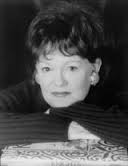
Karen Ranney is the bestselling author romance novels. Her most recent book is An American in Scotland.

Karen Ranney is the bestselling romance author whose most recent book, An American in Scotlandtakes place during the American Civil War.

Karen Ranney wanted to be a writer from the time she was five years old and filled her Big Chief tablet with stories. People in stories did amazing things and she was too shy to do anything amazing. Years spent in Japan, Paris, and Italy, however, not only fueled her imagination but proved she wasn’t that shy after all. Now a New York Times and USA Today bestseller, she lives in San Antonio, Texas.

To read an exercise on giving characters the opportunity to change and act dramatically and an excerpt from An American in Scotland, click here.

In this interview, Ranney discusses setting as character, the difference between love and sex scenes, and straddling the needs of historical narratives and contemporary readers.

Michael Noll

I want to say up front that Romance isn’t a genre I know very well, and so I was excited to read your novel because I wanted to learn how it works. To that end, I was surprised at how much the novel contained beyond what the cover might suggest: shirtless guy and beautiful woman. Or, to put it another way, the term romance is a lot bigger than I imagined. Setting is as important as love. For lack of a better word, there is something romantic about place, which I guess should make sense given that the title suggests more about place than anything else. What’s your approach to the setting and world of your novels? Are you trying to make readers fall in love with them as much as with the characters?

Karen Ranney

Place is very important to me. In some books it has a greater impact on me than on others. For example, A Scotsman in Love was set in a once deserted manor house that intrigued me. Another example is the MacIain trilogy that revolves around a house outside Edinburgh. In those books the setting was almost another character.

I enjoy placing my books in Victorian Scotland because, to me, it was the era of inventions and scientific achievement.

In An American in Scotland, I had to give readers a flavor of each locale, but I had three major settings, so I couldn’t linger too long in any one place. (Why make it easy on myself when I could visit Scotland, Nassau, and America all in one book?)

Michael Noll

The novel is quite chaste. The prelude to the kiss seems to be much more important than the kiss itself—and it takes up a great many pages. How do you maintain and gradually increase the tension between two characters who we know will eventually fall into each other’s arms?

Karen Ranney

I have always maintained that it’s easier to write a sex scene than it is a love scene. I always try to have the characters fall in love with each other before they actually consummate that love. It seems to me that emotions are more important than physical activity.

Also, putting sex in the context of 19th century mores, even kissing someone was a great moral leap. Each step toward the journey to bed is a form of commitment.

Michael Noll

Along those same lines, I admire the way that the novel draws out its sex scenes. For example, there’s a scene when Rose and Duncan bathe together, which leads toward what such baths tend to lead to, but then something interrupts them—Duncan sees something that distracts him. How do you know how much you can draw out such as scene before readers begin skimming to get to the stuff they know is coming and really want to read?

Karen Ranney

Again, it’s a love scene as opposed to a sex scene—or at least that’s how I hope the reader interprets it. Everything that goes on in that scene is both an act of revelation and one of commitment. The characters give of themselves not just physically but emotionally. Maybe even spiritually if I write it correctly. You can’t skip through the scene because it’s pivotal in the give and take between the characters. It shows why they’re falling in love and how.

Michael Noll

Karen Ranney's novel An American in Scotland follows an American woman who sails through the Union blockade of Charleston in order to pursue a sale and romance in Scotland.

Karen Ranney’s novel An American in Scotland follows an American woman who sails through the Union blockade of Charleston in order to pursue a sale and romance in Scotland.

The novel contains a fair bit of language about sin and virtue, and because it’s set in the mid-1800s, there are some time-appropriate ideas about gender. I bring this up because I heard a review the other day of the Downton Abbey finale, and the reviewer said that historical dramas are always more about the audience than the age and characters they’re portraying. Do you think this is true of your novel as well?

Karen Ranney

If I understand what you’re asking, let me answer this way: Robert Burns wrote poetry in the vernacular Scots. If I wrote a book like that today no one could understand it. Consequently, I interpret Scottish English with an ear/eye toward my readers. They’re 21st century women. Similarly, interpreting the mores of the 19th century means I have to straddle a line. I have to correctly depict the customs/manners/thinking of the day while interjecting some viewpoints that might be more acceptable to a 21st century reader.

For example, in An American in Scotland, Rose does a lot of things that would have horrified her neighbors in New York and scandalized her neighbors in South Carolina. She would probably have been ostracized in both communities for her abolitionist views. Yet we, being 21st century people, wish she went farther to oppose slavery.

A reviewer chided me for writing about mills in Scotland that were pro-slavery. No, they weren’t pro-slavery. It’s that American slavery was “just business”. They might have personally abhorred it, but they tolerated doing business with the American South because they needed their cotton. That review was a case of our 21st century values colliding with history.

March 2016

Michael Noll Michael Noll is the Editor of Read to Write Stories.

An Interview with Chinelo Okparanta

17 Mar
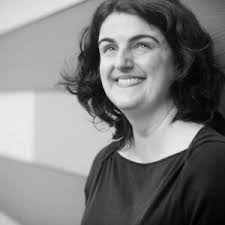
Chinelo Okparanta is the author of the novel Under the Udala Trees and the story collection Happiness, Like Water

Chinelo Okparanta is the author of the novel Under the Udala Trees and the story collection Happiness, Like Water.

Chinelo Okparanta is the author of the story collection Happiness, Like Water and the novel Under the Udala Trees. Her stories have appeared in The New Yorker, Granta, Tin House, The Kenyon Review, among others, and she was short-listed for the 2013 Caine Prize in African Writing. She won the 2014 O. Henry Award and the 2014 Lambda Literary Award for Lesbian Fiction. She has been awarded fellowships and residencies by Bread Loaf, the Jentel Foundation, the Hermitage Foundation, the Civitella Ranieri Foundation, and Hedgebrook. She was born and raised in Port Harcourt, Nigeria.

To read an exercise on manipulating chronology in order to create character, click here.

In this interview, Okparanta discusses finding the emotional heart of a story, writing within an omnipresent past, and whether a writer’s present location affects her writing.

Michael Noll

The novel has an interesting sentence in its first chapter: “So, the story begins even before the story, on June 23, 1968.” It comes after a quick overview of the war and is accompanied by this sentence: “There is no way to tell the story of what happened with Amina without first telling the story of Mama’s sending me off.” And this: “If I had not met Amina, who knows, there might be no story at all to tell.”

It seems that you’re directly addressing a problem that a lot of writers have with novel drafts: where to begin the story? Were these sentences the result of your own process of finding the story, or were they designed for readers, to help guide them from war in general to a particular story about particular individuals?

Chinelo Okparanta

I already knew where the story would begin, and those sentences were simply a natural aspect of the storytelling. Back in the day when my mother used to tell us folktales, sometimes she grounded the folktales in this sort of language, just a natural set up to the story, and perhaps also a signal for us children to know what we should be listening for (i.e. the emotional heart of the story). In the case of Under the Udala Trees, these sentences do signal to the readers where the emotional heart of the story lies.

Michael Noll

I’m curious about your sense of the novel’s audience and how it affects the story you tell. Obviously, the book was published in the United States, where you live, and in English. Some Igbo words and phrases appear, but they’re often translated, either directly, like this (Chineke bi n’eli! God in Heaven! How can this be?) or through context. How aware are you of audience, that it’s primarily American/Western? Can the novel be separated from this audience? In other words, how different would it be if you were writing for a Nigerian or Igbo audience?

Chinelo Okparanta

While writing the novel, I kept in mind various possible audiences, but my main audience was not American/Western. My main audience was my fellow Nigerians. In some ways it was just incidental that it got published in the West first. The truth is that current physical location is oftentimes irrelevant to the story that a writer tells. I have written about Nigeria from Nigeria. But I have also written about Nigeria from Greece, the Philippines, the USA, France, Italy, Uzbekistan and Turkmenistan. When I write many of my stories, regardless of where I am, my mind very often is back home in Nigeria.

Chinelo Okparanta's novel Under the Udala Trees tells the story of a young girl displaced by the Nigerian Civil War and the love affair that she begins.

Chinelo Okparanta’s novel Under the Udala Trees tells the story of a young girl displaced by the Nigerian Civil War and the love affair that she begins.

Which is all just to say that the book is exactly what it is—and exactly what it should be—for having been written primarily for a Nigerian audience. We Nigerians speak in a natural mélange/interspersing of our traditional languages and English. This is exactly what the book does. It’s important to keep in mind that Nigeria is a country in which hundreds of languages are spoken. The purpose of the book is to open conversation amongst all ethnic groups within the country, so it would have made no sense for me to write the entire thing in Igbo, with no context clues at all, thereby alienating quite a large segment of the nation’s population. There are also Hausa words in the book, and of course, there is Pidgin. But English is Nigeria’s lingua Franca. As such, it also the novel’s lingua Franca, and the language that best serves the purpose of the book: unity, rather than division.

By extension, because the purpose of the book is to be accessible to all of Nigeria, it also winds up being accessible to Western audiences, and hopefully to audiences all over the world. Sure, I wanted to write a book that invited Nigerians to have this LGBTQ conversation amongst themselves. But of course, it’s a good thing that the book is accessible to non-Nigerians. It’s always a good thing when literature speaks to universal human experiences, but it is an even better thing when the language of the literature facilitates a reader’s engagement with those human experiences.

Michael Noll

The chapters in the novel are fairly short, often a few pages long. It seems that some revolve around particular scenes, but there are many that move through time or move beyond scenes in various ways. What was your approach to chapter structure?

Chinelo Okparanta

I was going through a phase where I enjoyed reading books with shorter and more straightforward chapters. I decided to write the kind of book I enjoyed reading. Maybe for my next project I’ll be enjoying a different kind of book–the kinds with long, sprawling chapters, or those with no chapters at all. If that winds up being the case, I might also write that sort of book.

Michael Noll

The novel begins with the Biafran War, which ended 45 years ago, but now there are new protests in the region, to the point that, at least in the news outlets that I read and listen to, there’s some concern that they might lead to another civil war. Is this something that you thought about as you wrote the novel? Does the past of the novel seem truly past to you? Or were you trying to capture tensions that remain?

Chinelo Okparanta

Look at the United States and its history of slavery. That history haunts all Americans even today–at least, it haunts any socially aware American with an active conscience. Recently in the US, racial tensions have triggered worries of civil unrest. The past always leaves its stamp and oftentimes the stamp is waterproof. Maybe it fades a bit, but it is still there. So, yes, our past is the past, but it is also the present, and it will likely affect the decisions we make for the future. Which is why I’m always thinking about the nation and ways in which to flip our history of colonialism, and ways in which to better deal with the division caused by the British geo-political division of the country. We don’t have to be beholden to the past. We don’t forget—and perhaps we should not forget—but we certainly owe it to ourselves to rise above it. It seems to me that all of us have the power to flip unfortunate aspects of our pasts and use them positively, constructively, to make ourselves stronger. It’s just a matter of how. A united body people who are sincerely in it for the common good. Good leadership. A well thought out and thoroughly outlined plan. Expert organizational skills. These are some of what all healthy nations need.

March 2016

Michael Noll Michael Noll is the Editor of Read to Write Stories.

An Interview with Daniel Oppenheimer

3 Mar
Daniel Oppenheimer's book Exit Right has received glowing reviews, like this one from the Washington Post: "This book proves so satisfying precisely because it leaves you wanting much more."

Daniel Oppenheimer’s book Exit Right has received rapturous reviews, like this one from the Washington Post: “This book proves so satisfying precisely because it leaves you wanting much more.”

Daniel Oppenheimer’s articles and videos have been featured in The New York Times, The Atlantic, Tablet Magazine, and Salon.com. He earned a BA in religious studies from Yale and an MFA in nonfiction writing from Columbia. He lives in Austin with his wife, the historian and psychotherapist Jessica Grogan, and his kids Jolie and Asa. He is Director of Strategic Communications for the Division of Diversity and Community Engagement at the University of Texas at Austin. Exit Right: The People Who Left the Left and Reshaped the American Century is his first book.

To read an exercise about revealing tension indirectly, inspired by Exit Right, click here.

In this interview, Oppenheimer discusses quoting versus paraphrasing, the most under-recognized tool in the nonfiction writer’s trade, and the most insightful comparison of Donald Trump and Ted Cruz I’ve seen yet.

Michael Noll

I love the passage about Whittaker Chambers’ parents, the way they used everything in the world as a proxy battle for their mutual dislike of each other: the house that Chambers’ father allowed to go into disrepair, the way they treated their kids. You quote Chambers on this subject, but you also write about it in your own words. How did you know what to quote and what to summarize, what to footnote and what to pass by un-noted?

Daniel Oppenheimer

When it comes to quoting vs. paraphrasing or characterizing, I’m always trying to balance a few considerations. I like quoting, and particularly with someone like Whittaker Chambers, who was such an evocative writer, there’s great value in quoting him directly. He gives a good quote.

At the same time I think readers, for whatever reason, tend to zone out and begin to skim if you quote at too great length. I don’t usually love it, as a reader, when I encounter too many or too lengthy quotations. It feels like the writer fell too much in love with the material and lost sight of the reader—maybe also like they’re wanting the quotes to do their work for them. There are exceptions to that generalization. I think of someone like Janet Malcolm, who will quote from her interviews for pages, or of WG Sebald, who will also quote for pages. I’ll follow them anywhere, including into incredibly long quotations.

But they’re brilliant, and there’s also something about what they’re trying to do, as writers, that’s well served by their techniques. Malcolm is fascinated by the stories people tell about themselves, and so it makes sense that she shows that process at length. Sebald is trying to blur boundaries between himself and others, and the present and the past, so it serves that end for him, particularly since (if memory serves) he usually doesn’t even use quotation marks to signal that he’s begun quoting. It all kind of blends together.

I haven’t yet hit upon a method that feels organic that allows me to quote at great length, so I treat quotations in a more conventional way, and in general try to be somewhat sparing. In practice, I tend to include more quotes in the early drafts and then pare away as I revise, leaving only the ones that really work and seem really necessary in terms of giving a flavor of who the person was and how they saw the world.

I also like summarizing, paraphrasing, and distilling for their own sakes. Or at least I like having done it well. Some of my best writing happens, I think, when I’m trying to sum up what someone else thinks or has said. I’m trying to inhabit them, and at the same time to overlay in a subtle way the additional perspective that I bring to their story. In truth it can be a pretty sneaky thing to do, when I pull it off. I make it seem like I’m just paraphrasing or summarizing, but I’m actually inflecting the readers’ interpretation of what’s going on in a rather manipulative way.

In terms of footnoting, it’s less complex. I’m not an academic, so I don’t feel the need to footnote everything or list every source. I needed to do some of it for a few reasons: to legitimize myself, to serve that academic purpose at a basic level, and also to occasionally draw attention to other books or articles or writing that deserve to be read. I also, like a lot of writers, use the footnotes as a basin of last resort for passages that it made sense to cut from the main text, for reasons of flow and space, but that feel too good to just get rid of entirely.

Michael Noll

Many of the reviews (New Yorker, AtlanticNew Republic, Washington Post, Barnes & Noble) of the book have noted its terrific prose, and I agree. For example, you write this about the 1920s: “Any kind of sickness—an infected hangnail, a fever, a cough—might be the first domino in a short cascade that led to death. Epidemics and pandemics rolled across the populace like stampedes. Fires took out cities.” This is such vivid language, active and compelling for what is essentially a passage with a mechanical role: give the reader a sense for Chambers’ world. What was your process for writing the book? Did you research and take notes and then write? Or did you write as you researched? I guess I’m wondering at the head space that passages like this one came out of.

Daniel Oppenheimer

I’m glad you like that passage. I’m happy with myself every time I read it. My wife will laugh when she sees you quoting that, and will probably make an obscene joke about how happy it must have made me.

Daniel Oppenheimer's political biography, Exit Right, tells the story of six men who converted from the American left to American Conservatism—with an eye toward what the history and experience that set the stage for their conversions.

Daniel Oppenheimer’s political biography, Exit Right, tells the story of six men who converted from the American left to American Conservatism—with an eye toward what the history and experience that set the stage for their conversions.

I think I have a few other passages in the book that do that same kind of thing, distilling a lot of historical or social background into a few tight, evocative paragraphs, and I’m excessively proud of them. This kind of distillation has to be among the most under-recognized and under-theorized tools of the nonfiction writer’s trade. There should be entire craft classes on how to do this, because you need that background in a lot of historical and journalistic writing, and yet it’s so tempting to do it in a half-assed way, to knock it out in workman-like prose so you can get back to the sexy stuff. And I get it. It’s hard work, and when you do it well it’s pretty self-effacing. You’ll rarely be recognized for doing it well (unless you get interviewed by Michael Noll, apparently). But it’s so important. And if you do it poorly, it just slows the narrative down so much.

In answer to your specific questions, I started out the book doing a whole bunch of research before I began writing. That was a good way to go, in terms of writing passages like that one, but it was a bad way to go in terms of finishing the book in anywhere near a reasonable amount of time. So for Hitchens (which I wrote first even though it’s the last chapter chronologically), Chambers, and Burnham, I did it that way. Then I realized I needed to speed up if I was ever going to finish the book, so with Reagan, Podhoretz, and Horowitz it was more the latter strategy, researching and writing at the same time. I’d do a bit of reading in advance, usually the main biographies and autobiographies, and then I’d begin writing while also delving into the rest of the material (their writings from the time, what their colleagues had to say, other people’s memoirs, etc.). My guess is that these latter three chapters have fewer of the kinds of passages you quoted, which is too bad. At the same time I think they’re lighter and more fluid in some appealing ways. Research can sometimes weigh you down. So I honestly don’t know which strategy worked best for me, purely in terms of the quality of the book.

Michael Noll

You write this about Chambers: “There are different ways of reading the arc of Chambers.” This is probably true about all of the men you profile. About Christopher Hitchens, who abandoned the left several decades after Chambers, you summarize the view of his conversion from the left, from the right, and from his own eyes. These different ways of reading these men can make it difficult to see them with fresh eyes, but you can hardly avoid the filters and spin. How did you find your own way of seeing the men?

Daniel Oppenheimer

I was talking to my brother the other day about why it is that no one has written this book before, about people who’ve gone from the left to the right. In a way it seems like an obvious book to write. My theory, which he liked, and which touches on this question, is that I brought to the project a rare mix of humility and arrogance (or at least confidence).

What’s humble is that I’m just taking what everyone else has already written and said on the subject and synthesizing and summarizing and distilling it. I’m not venturing any great theses about history. I’m not uncovering any new material on these people. I’m not even offering radical new takes on them. Most writers who could pull off something like this have too much ego and ambition to be so self-effacing.

The arrogance is that I trusted that there was something about the way I write, and the way my brain works, that was going to produce writing that felt fresh even though I was going over territory that has been so thoroughly gone over before. A lot of writers, I suspect, would it find it daunting to have to say something new about folks like Whittaker Chambers and Ronald Reagan and Christopher Hitchens, who’ve been written about so many times over so many years. I didn’t worry about it so much. I trusted my voice.

Michael Noll

The book is remarkably understanding of its subjects, several of whom were often not viewed charitably by the people who knew them best. In the introduction, you write, “We can make judgments—we can’t not make judgements—but they should be made with an awareness of how hard it is to be a person in the world, period, and how much more confusing that task can become when you take on responsibility for repairing or redeeming it.” As you researched and thought about these men in this humanizing light, you must have found yourself identifying with them. That is the goal of humanizing people, right? If you did identify with them, could you begin to identify with their political conversions and beliefs? In the words, did the book affect your own political views at all?

Daniel Oppenheimer

I did find myself identifying with these men. In a sense that was the method of the book. Let’s see what it looks like when I try to see as deeply into their stories as possible, through their eyes, and then complement that with the perspective I can bring to their lives as someone who is not them, who can see certain things about them more clearly because I’m not them.

Daniel Oppenheimer's essay, "What Donald Trump Learned from Ronald Reagan's Flip-Flops," appeared in the Washington Post.

Daniel Oppenheimer’s essay, “What Donald Trump Learned from Ronald Reagan’s Flip-Flops,” appeared in the Washington Post.

I was writing an essay recently on Donald Trump, whose views I find truly awful, and the more I read about him the more sympathetic I became, to the point where there’s a part of me that kind of wants him to win the Republican nomination, simply because he’s the only one to whom I’ve cathected in that basic way. I watch him up on stage, at the debates, and I feel for him when he loses control. That’s just how my brain works. It would be interesting to do an experiment in which I spent a lot of time researching Ted Cruz just to see if the same thing would happen. I suspect not. I think Cruz is empathy-proof. I think he’s done such a good job of polishing off anything in him that’s vulnerable that there are no visible cracks left. I need the cracks to get access. Donald is almost all cracks.

So does this process of identification influence my politics? Well, yes I’m sure it does, but not in a very linear way, any more than a novelist is likely to be influenced in a linear way by writing with empathy about characters who are evil, or who do evil. The novelist doesn’t become more evil as a result of that, or more likely to do evil. What they become is more able to comprehend why someone might do evil. I’m sure that could lead to more evil, depending on the novelist’s character, but my guess is that it’s more likely to result in the opposite, in a deepening of the empathizer’s humanity and capacity for goodness. I haven’t become more conservative, but I like to think that I’ve become more understanding of why someone might leave the left, and why they might embrace conservatism.

If anything, I’ve probably gotten more ruthless as a leftist. It doesn’t feel as personal anymore. It’s about power, and who wields it, and how to change the balance of power to better achieve the ends I’d like to see achieved. I have empathy for the people on the other side. I don’t think they’re bad people just because they don’t share my political priorities. If I were super rich, for instance, I’d probably persuade myself that my wealth was a manifestation of my virtue, and that a healthy society is one that celebrates the wealthy and recognizes them as the natural leaders of their fellow men and women. I can imagine that. But I think it’s a toxic perspective when it acquires too much influence in the polity, and that that’s the best reason to do what we can to diminish the power and influence of the wealthy. It’s not personal. In fact, in that project making it too personal can obscure the best strategies. I don’t need them to be evil. I just need them to lose.

I read Saul Alinsky not too long ago, and what struck me about him was how pragmatic and non-moralizing he was about what he did. He wanted the world to be a certain way. The other side wanted it to be a different way. Both sides were going to do what they could to win, and he was going to be as clever and rude and tough and sneaky as he could be to increase the odds that his side won. Of course he cared deeply, and could get angry, but he had a real ability to see his political opponents with empathy and detachment, and to imagine the world through their eyes, and that helped him enormously in defeating them.

I’m no Saul Alinsky, but I think I have some of that in me. Honestly, someone should hire me to devise strategies to take down conservative politicians. I think I’d be a brilliant, ruthless, empathetic bastard.

March 2016

Michael Noll Michael Noll is the Editor of Read to Write Stories.

An Interview with Mo Daviau

25 Feb
Mo Daviau's novel Every Anxious Wave has been called a "bittersweet, century-hopping odyssey of love, laced with weird science, music geekery, and heart-wrenching laughs" by NPR.

Mo Daviau’s novel Every Anxious Wave has been called a “bittersweet, century-hopping odyssey of love, laced with weird science, music geekery, and heart-wrenching laughs” by NPR.

Mo Daviau has performed at storytelling shows such as Bedpost Confessions and The Soundtrack Series. She is a graduate of Smith College and the Helen Zell Writers’ Program at the University of Michigan, where she won a Hopwood Award. Daviau lives in Portland, Oregon. Every Anxious Wave is her first novel.

To read an exercise about explaining away implausibility, inspired by Every Anxious Wave, click here.

In this interview, Daviau discusses making implausible stories believable, the litmus test for whether personal tastes are shared by readers, and where plot twists come from.

Michael Noll

The novel presents you with a pretty significant problem. The characters need to travel through time. How do you they do it? And how do you explain it? You tackle those exact questions in a couple of paragraphs after the time travel device is discovered. What was your approach to those paragraphs? I love how fast they move, basically telling the reader, “Some stuff with computers happens and–boom. Time travel.” But a quick look at some online reviews reveals that sci-fi purists don’t agree. Of course, this isn’t a sci-fi novel. Was this an issue you faced writing it?

Mo Daviau

This is something I worried about, that I would be displeasing hardcore sci-fi fans by not going hard and deep into the science of the wormhole. There is actual science behind the mechanics of time travel as I’ve written it in the book—it’s based on the theory of the Einstein-Rosen Bridge, which was explained to me by a post-doc in physics at the University of Michigan who I met while I was there doing my MFA. But since the novel is told from the first person perspective of Karl, who has no knowledge or interest in physics, the burden of understanding the wormhole’s mechanics fully is on Wayne and Lena, whose voices we are not privy to. Was this a cheat-out? Maybe, but I never intended the novel to be sci-fi. To me, it’s magical realism. I did not build a new world—I only added one fantastical element to the existing one.

Michael Noll

The premise of the novel (time travel to great concerts) allows you to namedrop a lot of bands and a lot of particular concerts. In terms of reader appeal, this would seem to be on the level of Ready Player One, which was adored by pretty much anyone with a particular pop culture sensibility. Did you think about this (how readers might respond to the bands) as you wrote it? Or did you simply write what you liked?

Mo Daviau

I worried that since I chose to write towards my own musical tastes, and to pay tribute to, and in some cases, satirize, the indie scene of which I was a fan in the late ‘90s, that since the vast majority of readers wouldn’t have heard of those bands, they wouldn’t really connect with the work. No one up my chain of command—agent, editorial staff at St. Martin’s Press—is a fan of the bands I name in the book, or had much knowledge of that particular scene, yet they still connected with the themes in the novel. So that was my litmus test for being able to write a novel around obscure music that bore or alienate the non-indie-fan reader.

Michael Noll

You currently live in Portland, and, before that, you lived in Austin–so, two cities with strong live music sensibilities. Did these cities have any impact on the novel?

Mo Daviau

Mo Daviau's novel Every Anxious Wave follows a bar owner who time travels to historical indie rock concerts.

Mo Daviau’s novel Every Anxious Wave follows a bar owner who time travels to historical indie rock concerts.

The short answer is no. And I feel like a jerk saying that, but it’s true. Portland more than Austin-the novel was mostly finished when I moved to Portland in 2014, and although Portland gets a few mentions, and Austin gets no mentions (there were references to clubs in Austin but they ended up getting cut in the end) I’d say that there is no true sense of place. Every Anxious Wave takes place largely in Chicago, but only in Karl’s bar and in his head. It also takes place in Seattle, though not the Seattle we currently know and love. I was writing more about time than place.

Michael Noll

My favorite thing about this book is the fact that a character accidentally travels to 10th-century Manhattan. This is just so weird and wonderful, a bit like the section in The Amazing Adventures of Kavalier and Clay when a character spends an entire section in Antarctica. In both cases, the story is doing something totally outside the bounds of what the reader probably expects given the frame of the novel. Did you always know this would happen? Or was this the result of a moment of inspiration?

Mo Daviau

I don’t remember how or why I came up with the idea of Karl leaving the number 1 off his transmission entry sending him back to 980, but that was a pretty early idea that I had in my head, the first problem Karl would face. I’d just read the book Sex at Dawn when I started writing what would become Every Anxious Wave, and the idea that among early hunter/gatherers, there was no concept of personal property and that everything was shared communally was one that I found fascinating. I’ve always enjoyed communal living, something that our society frowns upon once college is over.  When I was trying to figure out under what circumstances Wayne would return to modern times, my personal inner impulse was “I wouldn’t. I would want to stay in hunter/gatherer society.” It’s a mild social commentary, I guess, and maybe one I didn’t punch very hard, looking back on it. But that’s where that idea came from.

February 2016

Michael Noll Michael Noll is the Editor of Read to Write Stories.

An Interview with Selin Gökçesu

18 Feb
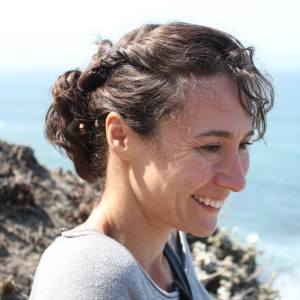
Selin Gökçesu's essay "Under the Aegean Moon" appeared in the Tin House blog "Open Bar."

Selin Gökçesu’s essay “Under the Aegean Moon” appeared in the Tin House blog “The Open Bar.”

Selin Gökçesu is a Brooklyn-based writer with an M.F.A. in Nonfiction from Columbia University. Her work has appeared on the Tin House blog, Asymptote Journal’s Translation Tuesdays and in Gingerbread Literary Magazine.

To read an exercise about creating character amid conflict, inspired by Gökçesu’s essay “Under the Aegean Moon,” click here.

In this interview, Gökçesu discusses the challenge of writing about current events before readers lose interest, not holding back on personal feelings, and knowing how much analysis to provide in an essay.

Michael Noll

I’m fascinated by essays like this one because they’re not really about a story or anecdote—or, the anecdote at the heart of them is very quick. In this case, you honeymooned in Turkey and saw, from a distance, a dinghy full of Syrian refugees. The essay is mostly setup for this moment and a meditation on understanding your experience of it. How soon after your trip did you write this? Did you need to digest the experience for a while, or were you able to quickly organize your thoughts and feelings into this essay?

Selin Gökçesu

I wrote this essay about two months after the trip. Normally, I like to let my experiences sink in longer, but when you are writing about current events, waiting is not always a good strategy. When the topic no longer seems relevant, both the writer and the audience might lose interest in it.

At first, the essay was a chronicle of all my encounters with Syrian refugees in Turkey through the summers of the past few years and my reflections on how people react to the “crisis.” The first draft was more than four times as long as the final essay. As I edited the original version, I found that the moment of watching the boat take off was the highlight of the piece. It was a surreal moment, I liked how I had written it, and I felt that it was symbolic of what I was interested in: separate lives in geographic proximity. After I decided that the essay would build up to that moment, I trimmed everything else.

Michael Noll

The essay achieves something that I think is awfully difficult to do: it captures the moment when something large that is happening in the world overtakes our private experience of day-to-day life. To that end, I’m interested in how you created that private experience. You seem to do it, in part, with a line like this:

“Because I had recently watched a video on Facebook of a plastic straw being pulled out of a turtle’s nose, every time a plastic object flew past me, I begrudgingly left my chaise longue in pursuit of it.”

The refugee crisis was happening, but you were thinking about something quite different. As you wrote the essay, were you conscious of trying to convey that gap between what you thought about versus what was happening around you?

Selin Gökçesu

A personal essay has to start at a private point because that is what the writer understands or can hope to understand. The duality of the personal and non-personal emerges as the narrative shifts from showing to telling—you can only “show” what you have experienced first-hand.

The emotional gap between myself and what was happening around me was the heart of the essay. Emotionally isolating yourself from other people’s tragedy is both a callous way of evading negative emotions and an inevitable human response when your own life is not struck by disaster. Your day-to-day commitments, events that you are personally engaged in gain precedence over events that you are simply witnessing from the outside. I think of the essay as a partial analysis of the factors that contributed to this dissociation.

Michael Noll

You take a risk in the essay. It’s about something awful—the horrible plight of the Syrian refugees—and so I would think it might be tempting to portray yourself as caring deeply about it. And you do that, but you also do something else. For example, you write, “My mind and my body conspired to keep my honeymoon normal, one by being willfully unimaginative and the other by holding back the emotions that it so readily displays at home.” An Internet-troll type of reader might say, “Oh, well, your honeymoon was more important than the refugees.” But I don’t think that’s what saying. Instead, you seem to be writing about the complex way we interact with such news, which is usually safely at a distance. Did you worry about how people might read this essay?

Selin Gökçesu

I don’t think that goody-two-shoes, self-protective personas serve the personal essay very well. Although readers might not pick up on it when a writer fudges facts, emotional and intellectual dishonesty are very easy to detect. When I find that I am holding back in my writing to protect my ego or my privacy, I take it as a sign that I’m not ready to handle that particular topic yet.

I also don’t find predictable responses to events intellectually appealing—“I saw something tragic and I was really sad” is not an interesting premise for an essay. No matter what the topic is, I’m more interested in the unpleasant things that crawl under rocks. Especially when it comes to human nature.

Michael Noll

The essay in intensely personal, except for one paragraph, this one:

When large scale violence strikes, it’s a given that the victims suffer and die where they are; involvement of the nonvictims is usually optional.  The order of the things was disturbed this summer when Syrians fleeing the war in their country spread out into the world and started appearing on the Aegean coast—the affordable and sufficiently exotic vacation spot of choice for many Europeans.

It’s the one moment where you pull back and try to give context to your experience. Was this passage ever longer? Did you have more than you wanted to say (clearly, you’ve given the experience in the essay a great deal of thought), or did you always know how much explanation was needed?

Selin Gökçesu

This passage was longer, and there were more passages like it in the original version of the essay. Having gone through the nonfiction workshop in an MFA program, I know that most readers don’t care for the passages where the narrator steps back and analyzes her experience. So, I’ve learned to self-censor and keep these to a minimum. My strategy in this particular essay was to keep sight of the fact that I was building up to a specific point and eliminate everything that didn’t serve my purpose.

February 2016

Michael Noll Michael Noll is the Editor of Read to Write Stories.

An Interview with Garth Greenwell

4 Feb
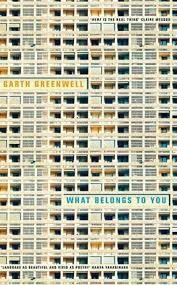
Garth Greenwell is the author of the novel What Belongs to You, a novel of "originality and power" according to the New Yorker's James Wood.

Garth Greenwell is the author of What Belongs to You, a novel of “originality and power” according to The New Yorker‘s James Wood.

Garth Greenwell is the author of Mitko, which won the 2010 Miami University Press Novella Prize and was a finalist for the Edmund White Award for Debut Fiction Award and a Lambda Award. A native of Louisville, Kentucky, he holds graduate degrees from Harvard University and the Iowa Writers’ Workshop, where he was an Arts Fellow. His short fiction has appeared in The Paris Review and A Public Space. What Belongs to You is his first novel.

To read an exercise on describing a character’s sense of consciousness, inspired by What Belongs to You, click here.

In this interview, Greenwell discusses feeling his way into the novel sentence by sentence, the traffic between the physical world and the abstract realm of consciousness, and why he doesn’t care for the annual award for bad sex writing.

Michael Noll

The book is written in a distinctive style: long paragraphs with nuanced descriptions of glances and other physical details of interactions between characters—and little dialogue. It reminds me, in a way, of Henry James’ novel The Beast in the Jungle, that is if James had been willing or able to use the word cock. It also reminds me a bit of Ben Lerner’s novels, which contain much more dialogue but are similarly interested in the experience of human interactions. I guess this is a long-winded way of asking this: As you wrote the novel, did you feel that you were writing in a style that you were seeing in books that you were reading, or did you feel that you were doing something different—in either a small or significant way?

Garth Greenwell

I think the truest answer is that I didn’t have any idea what I was doing. The first section of the novel was the first fiction I had ever written–before that I had only ever written poetry. That said, James has been a hero of mine since I read The Turn of the Screw in high school. And he has a pretty central place in a tradition of novel writing I’ve always loved, a line that includes Proust and Mann and Woolf and, more recently, Bernhard and Sebald and Marías. I admire Ben Lerner’s work a lot, and I think he’s following some of those same currents in his fiction.

So: none of those writers served as a model, really, but they were all in my head, knocking around with other things. As I wrote I was really feeling my way forward sentence by sentence, working without much idea of the shape it might take. The book begins and ends with place, I think, and I wanted to be true both to my experience of Bulgaria (where I wrote the novel) and to the relationship between the characters. I don’t think I was concerned at all about how what I was doing stylistically or formally might fit into any kind of tradition or field of practice

Michael Noll

One of my favorite sentences in the novel is this one:

“For all his friendliness, as we spoke he had seemed in some mysterious way to withdraw from me; the longer we avoided any erotic proposal the more finally he seemed unattainable, not so much because he was beautiful, although I found him beautiful, as for some still more forbidding quality, a kind of bodily sureness or ease that suggested freedom from doubts and self-gnawing, from any squeamishness about existence.”

It follows a line stating that the conversation between these characters lasted only a few minutes, and yet this sentence makes clear why the conversation occupies so much space in the novel. What I find interesting about the sentence is how much it operates without specific detail. Mitko is well-described, of course, but phrases like “some still more forbidding quality, a kind of bodily sureness or ease” are more about impressions than specific traits. What makes a sentence like this work? Does it depend on details that have come before? Or does the reader simply understand and fill in the spaces around words like beautiful, forbidding, and sureness?

Garth Greenwell

I like literature—in poetry and prose—in which there’s a constant traffic between the physical world and the more abstract realm of consciousness and feeling. I worked hard to make the physical world of the novel as concrete and fully realized as I could, but I also wanted the experience of the book to be the experience of consciousness, of having that reality filtered through the perceptions and ratiocination of the narrator. He tries throughout the book to understand and track his own feeling as carefully as he can, which leads him into rabbit holes of ambivalence and doubt and second-guessing–precisely the sort of thing Mitko’s physical demeanor seems to deny. This sentence does come after a good bit of physical description of the setting and of Mitko, which I hope grounds this more abstract bit of thinking.

Michael Noll

Garth Greenwell's novel What Belongs to You tells the story of a young American man teaching in Bulgaria and his complicated relationship with Mitko, whom he meets in a public restroom.

Garth Greenwell’s novel What Belongs to You tells the story of a young American man teaching in Bulgaria and his complicated relationship with Mitko, whom he meets in a public restroom.

The opening of the novel contains several sex scenes, and it seems at first that you tend toward the literal and specific in describing them. But then the novel offers this image: “clasping his hips with both my hands like the brim of a cup from which I drank.” That’s a bold image—effective and terrific, of course—but also noteworthy because it’s figurative. Every year, an award is given for bad sex writing, and some of the worst tends to involve metaphor and simile: a body part like ____. Were you nervous at all about writing the sex scenes, about creating images that readers might be inclined to read more closely and critically than a description of, say, eating a hamburger?

Garth Greenwell

For the narrator, sex is endlessly alluring and endlessly frustrating because it’s constantly gesturing toward metaphysics. I’ve always been interested in sex as a writer, in both poetry and prose. I think sex is almost uniquely useful for a novelist because of the opportunity it gives a character to be intensely focused on the experience of another while also thrown back onto his or her own sensations. I’m also interested in the social implications of sex, the ways communities form around it and are disrupted by it—communities like those in the cruising bathroom the novel begins in.

I’m not a huge fan of the bad sex writing award. I think it’s a myth that sex is harder to write well than most other things, and I think it’s a shame to give so much attention to less successful writing when there’s so much extraordinary writing of the sexual body being done right now. Just in the last couple of years, books by Alissa Nutting, Merritt Tierce, Lidia Yuknavitch, and Colm Toibin (in The Empty Family)—just to name a few—have used sex in ways that are revelatory to me for their dramatic and psychological force. I want to talk about and learn from those writers. It seems ungenerous to ridicule a few bad sentences or clumsy metaphors, often in books that are otherwise very fine.

Michael Noll

I believe that this book started out as a novella, and so I’m curious about your process in developing it into a much longer story. Was it a matter of adding complications to the set of characters you had already established? Or did you add characters and broaden the world that you were writing about?

Garth Greenwell

The novel did start out as a novella. When I finished the first section, I didn’t have any idea that it was part of a larger project: I thought the story was done. It wasn’t until I was about half-way through the second section, “A Grave,” that I realized how it was exploring the narrator’s childhood as a way of trying to understand some peculiarities of his character, especially the way he seems both to long for intimacy and hold it at arm’s length. It wasn’t until I was finished with that section that I realized that the narrative of the first section—the relationship between the narrator and Mitko—would continue. And it wasn’t until I finished the whole manuscript and could see certain thematic and structural echoes across sections that I began to trust my feeling that there was a kind of gravity holding the book together. I moved through the whole book sentence by sentence, paragraph by paragraph, section by section, without looking very far ahead. I tricked myself into writing a novel, I guess, without ever really realizing what I was doing.

February 2016

Michael Noll Michael Noll is the Editor of Read to Write Stories.

An Interview with Debra Monroe

28 Jan
Debra Monroe's memoir, My Unsentimental Education, tells the story of how she left a small town in Wisconsin to pursue a degree, and, she thought, a life as a Midwestern housewife.

Debra Monroe’s memoir, My Unsentimental Education, tells the story of how she left a small town in Wisconsin to pursue a degree, and, she thought, a life as a Midwestern housewife.

Debra Monroe is the author of four books of fiction and two memoirs. She is a “fierce” writer who presents “ever-hopeful lost souls with engaging humor and sympathy” (Kirkus Reviews), who writes prose that’s “rangy, thoughtful, ambitious, and widely, wildly knowledgeable” (The Washington Post), also “fine and funky, marbled with warmth and romantic confusion, but not a hint of sentimentality” (The Boston Globe). Her books have won many awards, including the Flannery O’Connor Award, and she’s published stories in over 50 magazines. Her essays have appeared in the New York Times, Salon, and The American Scholar, and have been cited for Best American Essays. Her most recent book is the memoir My Unsentimental Education. She lives in Austin, Texas and teaches at Texas State University.

To read an exercise on using dialogue, inspired by an excerpt from My Unsentimental Education, click here.

In this interview, Monroe discusses juggling multiple story threads, the challenge of publishing excerpts from a book, and her approach to dialogue

Michael Noll

In “You’re in Trouble, Am I Right?“, the excerpt from My Unsentimental Education, there are several narrative arcs. On one hand, there is the story of your relationship with James, a drug dealer. There is also a narrative about trying to earn A’s and understanding your intelligence. Finally, there’s another narrative (related to the others) about becoming more independent and, for example, dressing for yourself, not others. Were all three of these arcs always present in this essay? Or, did you start with one, and as you followed the thread, the others appeared?

Debra Monroe

At this point—this is my 6th book—related ideas present themselves more or less simultaneously in early drafts. All three plot arcs were present as I began. Years of practice and years of teaching writing make me know I want several balls in the air at the same time because multiple dilemmas coalescing is good for tension and complexity. The second and third story arcs are synonymous, and the first one serves as a counterpoint. Learning to understand and refine my intelligence is not unlike learning to understand and refine my self-presentation, or what you call “dressing myself.” I was trying to be a good student with limited resources (my background made me unprepared), and I was trying to dress with panache with limited resources (no money). In both cases, I got a “D” before I started getting “A’s.” Learning to trust my gut instinct but to improve on it too, both in terms of my work as a student and in terms of how I dressed in cast-off clothing, combine to make a single arc toward self-betterment on my terms, even if it is a jagged arc full of mistakes and wrong turns before I gain a sense of direction. Being with James is the counterpoint to that. He distracts me from school; he urges me away from clothing I like and hopes I’ll dress like a rock and roll girlfriend, like arm candy. So there’s a narrative tension between self-betterment on my terms (becoming a scholar and writer with unique sensibilities) and bettering myself on his terms (becoming a standard party girl). Yet it’s not as if my version of self-improvement (a point) and James’ version (a counterpoint) don’t both make sense in the same situation. I was an outsider finding my way. One option was to go it alone. The other was to be accepted by another outsider. Stoners are more accepting than college students whose childhoods prepared them for higher education. So all three plot arcs are about finding a way to survive college, and two constitute the difficult, authentic way, and the other constitutes a retreat from the difficult, authentic way.

Michael Noll

Perhaps my favorite parts of the essay are the bits of dialogue. They’re not extended conversations, by and large. Instead, they drop us into a moment and seem to focus on revealing a character’s voice. I’m particularly taken with the voice of Kristine, the cafe owner. How do you know when to move from narration or scene to dialogue? Do you write more dialogue than you eventually need and cut the extraneous parts, or do you already have a sense for the best lines of dialogue when you begin writing?

Debra Monroe

A reviewer for the Atlanta Journal Constitution wrote that “when Monroe highsteps through danger; it’s like watching Wonder Woman fend off attacks with her magic bracelets.”

This is memoir, of course, not fiction, but my fiction is pretty autobiographical, and my memoir is, as a reviewer noted, “novelish,” so I’ll generalize about how I do dialogue in both genres. Though I invented dialogue in fiction, I was always recalling a real person who inspired a character. And when I’m writing a memoir, a real person is generating ideas about the dialogue. To return to the dialogue with Kristine, this scene took place 30-some years ago. It’s not verbatim. I wasn’t walking around with a tape recorder on. But it’s the sort of thing she would say, and we had at least truly similar conversations. Writing good dialogue is a bit like having a knack for doing imitations, for channeling voices, for doing impressions. I think of the real person I’m depicting, or who’s informing the character I’m depicting, and I put in dialogue only the most distinctive, most unparaphraseable things they’d have said or in fact did say. I don’t give Kristine any lines of dialogue that can be paraphrased. I give her lines only Kristine would say in her singular Kristine-fashion. This isn’t so different from that tip you get in Freshman English about when to quote a source and when to paraphrase it. Paraphrase it whenever you can, and use a direct quote only when it’s so well-expressed that a paraphrase won’t do it justice. In this way, dialogue truly builds character, makes your characters distinctive.

Michael Noll

I love how you write about your drug experience. You describe the visuals of it (“I looked like the Wicked Witch in the Wizard of Oz”) but also the experience of trying to act normal while high: “The hardest part about doing drugs was the acting-upon-acting, I decided.” You go on to explain how the acting required by drug use was simply another layer added onto the acting you were already doing as you learned how to be in the world. I love this because it makes the drug use so much a part of your character as opposed to a weird, wacky tangent away from the real you. As you wrote this essay, did you have a clear sense of who you were at that time, the same as you’d need to have a clear sense of a character? Or did you discover this person named Debra as you wrote?

Debra Monroe

Did I have a clear sense of who I was at that time, or did I discover this Debra as I wrote? Both. Hindsight does give you a clear sense of who you used to be (distinct from who you are now), but once you start writing and keep the psychological register consistently deep, delving far below the surface into the perspective of your old self, that old self does become a construct, something created. To say “a construct” is not to say the old self is fake. As I dug deeper into what I’d done, I was discovering: I knew what I’d done, the ill-judged decisions I’d made, but I didn’t know the minutiae of why I’d done it, the nuances of what passed for logic then. My old self exists at a far remove from who I am today; she’s a stranger now. And you’re right that the drug use isn’t a merely ambient detail but a motif that amplifies the theme: that learning to make your way in the world is an act at first, a “fake it until you make it” act, and pretending not to be high when I was added to an already omnipresent pressure.

Michael Noll

This essay was published and then republished online, and both times it was different (mostly shorter) than the version in the book. What was your approach to adapting the essay for its online, stand-alone life? Obviously, you took out parts and moved some parts around, especially at the end. Was the biggest challenge finding a new opening and a new end?

Debra Monroe

I wrote it first as a chapter for the book. When the editor of Inside Higher Ed asked if I had a short piece about the unique anxieties of first-generation college students, I knew I wanted to include the most dramatic section of the chapter, and that was when I was doing LSD while also trying to be an A student. In the book chapter, the night of doing LSD, and the following day while coming down, occurs in the middle of the chapter. Then the chapter cuts away and depicts a condensed version of the next two years, and then, for the climax of the chapter, I flash back to the day after the LSD-taking, when I’m in the professor’s office still coming down. I’d saved that scene for the climax of the chapter, even if it was chronologically out-of-order (a flashback), because it contains the “message” about the entire chapter, that pressure about “acting-upon-acting.” For the short piece, I wanted just the LSD episode. Making an excerpt required cutting everything not pertinent to the LSD episode, so I started the excerpt as I met James, including the “first date,” then cut several more pages until I got to the week when I was writing the term paper and, afterward, doing LSD with James. Then I cut the pages that covered the next two years to move straight to the climax (a flashback in the chapter, but in chronological order in the excerpt). In the chapter, there’s an epilogue after the climax that transitions toward the chapter that follows, so I cut that too as not pertinent to the smaller story. Excerpting means deciding that inside the longer chapter is a shorter story, and chiseling away everything that isn’t germane to it. In this case, it was the LSD story. I’ve excerpted other chapters too. There’s an excerpt from the first chapter in Longreads, and that required cutting only secondary characters who didn’t pertain because it’s an excerpt from early in the book. There’s another book excerpt in Texas Monthly, a 6000-word chapter condensed to just 1500 words. There, I decided the kernel story would be “taming wildness” (in myself, my dog, on my land), and I deleted everything that didn’t pertain to that. So excerpting is finding a smaller story inside a larger story and deleting to isolate it, then finessing a few transitions. It’s tricky, but it’s easier than writing a whole new piece.

January 2016

Michael Noll Michael Noll is the Editor of Read to Write Stories.

An Interview with Eli Saslow

14 Jan
Eli Saslow is a Pulitzer Prize winning journalist for the Washington Post.

Eli Saslow is a Pulitzer Prize-winning journalist for the Washington Post.

Eli Saslow is a reporter at the Washington Post, where he covered the 2008 presidential campaign and has chronicled the president’s life inside the White House. He won the 2014 Pulitzer Prize for Explanatory Reporting for his year-long series about food stamps in America. Previously a sportswriter for the Post, he has won multiple awards for news and feature writing. Two of his stories have also appeared in Best American Sports Writing. He is the co-founder of Press Pass Mentors, a program that pairs professional journalists with low-income high school juniors and seniors to help them become great writers.

To read an exercise about adding physical description to dialogue, inspired by Saslow’s article, “A Survivor’s Life,” click here.

In this interview, Saslow discusses finding the central source of tension in a story, the gray area of attributing feelings to people, and reading Tim O’Brien’s novel The Things They Carried as he reported on the mass shooting in Roseburg, Oregon.

Michael Noll

The article is titled “A Survivor’s Life,” and yet it begins with a focus on that survivor’s mother struggling to interact with her daughter as she recuperates from the attack. It’s a subtle move, but it really shifted my perspective on the story. I guess it’s tempting to think purely in terms of shooter/victim, but this story makes clear that there are many people who are affected. Why did you choose to start with the mother instead of the survivor from the title?

Eli Saslow

I knew pretty early on that the mother was going to be a major character in the story. In some ways, she is the most active character—she is doing everything in her power to love her kid back to normal, and her efforts drive a lot of the action. Plus, there is so much tension between Bonnie and Cheyeanne, and I thought that tension could help drive the story forward. Also, I thought that Bonnie was also the most redeeming aspect of the story. She is trying so, so hard.

When I write, I always want to know exactly how a story ends. I find that I write toward that ending, like a destination on a map, and if I don’t know the ending of a story, I get lost along the way. I knew that this story was going to end in that moment of terror for Cheyeanne, with her calling out for her mom. That also reinforced that Bonnie needed to be a big part of the beginning of the piece as well.

Michael Noll

When the article shifts to the survivor, Cheyeanne, you write this:

By then, the college had reopened. What remained of her Writing 115 class had been moved across campus to an airy art building with windows that looked out on Douglas firs. They were forging ahead and coming back stronger, always stronger. That’s what the college dean had said.

I’m interested in this line: “They were forging ahead and coming back stronger, always stronger.” One of the things that I’ve heard journalists say in the past is that every line must be attributable and verifiable. Yet this line seems to fall into a gray area. It’s the words of the college dean and something that Cheyeanne might remember hearing with some bitterness—but it also seems like an inference you’re making about the distance between official statements and people’s reality. What is your approach to a line like this?

Eli Saslow

Very good question. You are right that this is more of a gray area line. It is Cheyeanne’s recollection, but I went back and checked her memory against what the college dean had actually said, which was not verbatim but pretty close. In this case, the most important thing was to give readers a feeling of how those words felt to Cheyeanne—and not necessarily tell readers the exact thing the college dean said. His exact words weren’t important or memorable—but the memory of them had stuck with Cheyeanne. I think that’s more important and also does more to put readers inside her head and honor her experience.

Michael Noll

Your physical descriptions are outstanding. For instance, when Cheyeanne is talking about the shooting, you describe her mother this way:

Bonnie shifted on the couch. She flicked dust off the armrest. She noticed a dirty plate on Cheyeanne’s bedside table and reached over to grab it.

These are small details, especially the flicking of the dust. I would imagine that it’s difficult to notice such things when you’re first meeting people, that it’s easy to become overwhelmed by what you’re hearing, seeing, and inferring. Had you spent a lot of time with Cheyeanne and Bonnie before this moment arrived? If not, how do you settle into a moment of time so that you can notice details like the ones above?

Eli Saslow

Pulitzer Prize-winning journalist Eli Saslow wrote a lengthy feature on Cheyeanne Fitzgerald, one of the survivor's of the mass shooting at Umpqua Community College in Roseburg, Oregon.

In “A Survivor’s Life,” Pulitzer Prize-winning journalist Eli Saslow wrote  about Cheyeanne Fitzgerald, one of the survivor’s of the mass shooting at Umpqua Community College in Roseburg, Oregon.

Thanks for that. I think all narrative stories rise and fall on small, observed details. The goal with these stories is to make readers feel like they are in the room with Bonnie and Cheyeanne, and it is the details that make people feel real. I spend a lot of time with the subjects of my stories to get the details right. I might not notice something on the first day, or the third day, or the fifth, but maybe I will notice in the second or third week. I spent dozens of hours sitting in Bonnie and Cheyeanne’s living room with them. Some of those hours are quiet, and there is nothing to do but look around and pay attention to the details that bring scenes to life.

Michael Noll

When Cheyeanne tells the story of the shooting to her brother, he struggles to know what to say or how to act. He’s not the only one. Cheyeanne’s mom doesn’t want to hear the details, and her brother’s friend asks about it but then seems to forget that he asked. I was struck by the similarity of this situation with fictional stories like “Speaking of Courage” in Tim O’Brien’s novel The Things They Carried and Ernest Hemingway’s story, “Soldier’s Home.” In both, soldiers come home from a war and find that they can’t talk to anyone about what they experienced and that people can’t understand the stories or don’t want to hear them. Did you research survivor’s experiences before talking with Cheyeanne so that you could anticipate certain behaviors or feelings? Or did you go in with a blank slate, so to speak, to avoid developing preconceptions of what you might find?

Eli Saslow

I actually reread The Things They Carried as I was writing this story. I think it is important to have a bigger context of a person’s experience. I always want to know as much as I can. I’d also written a good bit about trauma and isolation before (most recently in this piece), and I carried those reporting experiences into this piece as well.

January 2016

Michael Noll Michael Noll is the Editor of Read to Write Stories.

An Interview with Tristan Ahtone

7 Jan
Tristan Ahtone rode Greyhound busses across America and wrote about it in a series for Al Jazeera America.

Tristan Ahtone rode Greyhound busses across America and wrote about it in the series, America by Bus, for Al Jazeera America.

Tristan Ahtone is an award-winning journalist and member of the Kiowa Tribe of Oklahoma. Born in Arizona, raised across the United States, and educated at the Institute of American Indian Arts and the Columbia School of Journalism, he has worked as a door-to-door salesman, delivery driver, telemarketer, and busboy. Since 2008, Ahtone has reported for The Newshour with Jim Lehrer, National Native News, Frontline, Wyoming Public Radio, Vice, the Fronteras Desk, NPR, and Al Jazeera America. He serves as Treasurer for the Native American Journalists Association and lives in Albuquerque, New Mexico.

To read an exercise about writing character descriptions based on Ahtone’s essay on riding Greyhound busses across America, click here.

In this interview, Ahtone discusses the role of human and technical limitations on writing and choosing what makes the cut in a piece of journalism.

Michael Noll

It seems like something you’re trying to convey in these pieces is the fleeting nature of encounters on a bus. So, for example, your description of Russell Hall focuses on only a few seconds of observation: Hall on the phone, a glance given to him by a woman sitting nearby, a look that he gives to something he set out the window, the condition of the Bible he’s holding. Was it tempting to try to make more of this encounter? Or was the opposite true: was the challenge instead trying to build a vignette out of only a few details?

Tristan Ahtone

Each encounter we had during this story could have been expanded to a feature-length story. The challenge was having so much detail and condensing it into a vignette. However, in Mr. Hall’s case, the simple nature of his story stemmed from a technical error, embarrassingly enough: the recorder we used to interview our subjects decided to become uncooperative, so there were no accurate quotes save for what I caught in my notes when first observing him. It would have been great to get his backstory in—he worked for the Los Angeles public school system as a truancy officer and had been involved in the church for years traveling the country by bus—but when I sat down to write about him, I found that the brief encounter offered more with less dialogue. So in short, Mr. Hall’s story functions as a fleeting encounter but its creation stems from a technical problem and having to make due with good note taking to replace missing quotes.

Michael Noll

I love the dialogue that you capture. In the piece about Hu Li, the dialogue isn’t really conversation so much as different people talking at the same time. You must have overheard or participated in so many conversations. How did you decide which ones to write up?

Tristan Ahtone

There are about half a dozen interviews we did that never made it to the final product and many never even made draft form. In each case my partner Tomo Muscionico and I would strike up conversations with people, feel out whether we wanted to continue the conversation for a story, and eventually asked to mic them up so we could record that interview. Sometimes it worked, sometimes it didn’t. In the end, a lot of people we took photos of and interviewed didn’t make it in usually because their narrative wasn’t as strong when putting it in short form. For instance, there was a woman named Dianne Whitlock, who showed up briefly in Rosalinda’s vignette – she had a wonderful story and had a great conversation with another gentlemen that had his own vignette that was also eventually cut. The primary reason was because in short form, we couldn’t do them justice. Essentially, we gathered as much material as we could, and when we sat down to write and edit it, a lot of people washed out.

Michael Noll

Tristan Ahtone rode Greyhound buses around America and wrote about it for Al Jazeera America.

In his essay on riding Greyhound busses, Tristan Ahtone met a woman named Rosalinda who was traveling from Guatemala to Florida and who spoke neither English nor Spanish.

In the piece about Rosalinda, you write, “She and her baby had matching yellow wristbands, the kind one gets in a hospital or a prison.” This description has two parts: the detail (matching yellow wristbands) and the interpretation (the kind one gets…). How much of your task as a journalist, as a writer, is helping the readers understand the details you show them?

Tristan Ahtone

I’d say most of my job is helping readers understand details. Context is what makes people’s stories real and relevant. One of the nice thing about long-form journalism is that you have the opportunity to see and write about details like that and offer them to the audience. We spent a long time with Rosalinda and ran into her twice: once at the Phoenix bus station and again on a bus we boarded in El Paso. I think I can speak for my partner, Tomo, that we’re not the superstitious types, but we knew we had to write her story when we ran into her again. We had to do something. She was too special and too important to let drive off without trying. That meant we had to get really creative, though: we couldn’t talk to her, nobody could really, so we had to take a lot of pictures and extensive notes so that we could make her a real person to our audience, and that meant keeping an eye to detail and interpreting who she was, where she was going, and what her situation was based on physical information that was available.

Michael Noll

In that same passage about Rosalinda, you have the problem of not being able to communicate with her. So, you approach the description through the other passengers’ eyes and knowledge about her. As a result, the passage becomes not just about Rosalinda but also everyone else on the bus, the community they form. Was that approach a matter of simply using the information available, or had you sketched out a variety of approaches to these passages before the trip?

Tristan Ahtone

The only thing we had sketched out prior to going on the trip is where we would leave from and where we would end up and even that changed mid-way through. Originally, I wanted Rosalinda’s story to be weaved in throughout the entire piece with other passengers narratives. The original structure I sketched out more closely resembled a Robert Altman film with a number of different characters all overlapping at various places. I couldn’t get it to work though, one reason being that while we have rich detail on everyone we spoke with, there wasn’t enough information to support a story that long. It also felt confusing, so we scrapped it. One of the only variations of that idea that remains in the final piece is the interaction between Lonnie Head and Christopher Nyman in Nashville. Had we stuck with the original structure, you likely would have seen a lot more interactions like that between a lot of the people we met. As I mentioned before, Dianne Whitlock makes an appearance in Rosalinda’s vignette: originally she had her own story, which is part of the reason she’s even named at all in this one instead of just identified as another passenger. In the end I really liked how Rosalinda’s story came to embody a greater sense of community. I think that people deride and criticize people who ride busses, but I have to say, I’ve never seen people on a plane act so kindly to each other. In Rosalinda’s case, we observed how people behaved toward her and reported it. If she had been treated poorly, we would have written it that way instead.

January 2016

Michael Noll Michael Noll is the Editor of Read to Write Stories.

An Interview with Mario Alberto Zambrano

31 Dec
Mario Alberto Zambrano is the author of the novel Lotería and recently won a prestigious NEA Fellowship.

Mario Alberto Zambrano is the author of the novel Lotería and recently won a prestigious NEA Fellowship.

Mario Alberto Zambrano was a contemporary ballet dancer before writing fiction. He has lived in Israel, The Netherlands, Germany, Spain, and Japan, and has danced for Hubbard Street Dance Chicago, Nederlands Dans Theater, Ballet Frankfurt, and Batsheva Dance Company. He graduated from The New School and the Iowa Writers’ Workshop. His debut novel Lotería was named to many lists of the best books of 2014, and this month, Zambrano received a prestigious NEA fellowship to work on his new novel.

To read an exercise on creating structure with images and an excerpt from Lotería, click here.

In this interview, Zambrano discusses how he began writing based on Lotería cards, the You that his narrator Luz speaks to, and how the Pedro Infante film Nosotros Los Pobres influenced the novel.

Michael Noll

The most distinctive aspect of the novel, and it’s no surprise given it’s title, is the way you use Lotería cards to organize the chapters and the novel as a whole. You’ve discussed in other interviews how and why you chose lotería, but what I’m really curious about is how it impacted your process for writing the novel. A lot of novel drafts get stuck at various points, often about 70 pages in, because the novel expands or changes in those moments. Was Lotería helpful to you in the middle of the book, in terms of maintaining and advancing the story?

Mario Alberto Zambrano

Honestly, the way I started writing the book was mostly a game for myself, to create vignettes of a young girl’s life. Though I knew the story in my head from the beginning, I used the cards as a vehicle to explore other parts of her life that I didn’t yet know anything about. I would shuffle the deck and flip over a card as a way to prompt me into a scene that might reveal something about her and the story she was trying to tell. The obstacle wasn’t so much how to propel the narrative forward, as sometimes is the case, but rather, how to arrange the cards in a sequence that could feel organic yet carry a narrative thru-line from beginning to end. Near the end of the editing process, I would lay out the cards on my table and rearrange them. With 53 cards, the options were endless. It did teach me however, that even when you’re working on a novel that doesn’t deal with cards, but rather with scenes, chapters, acts, what have you, the sequence in which the story is being told can disrupt or heighten the dramatic tension that fiction relies on.

Michael Noll

The novel is addressed to You, to God. Was this always part of your sense of the novel, that Luz would be writing/talking to a particular person/entity and not just in general?

Mario Alberto Zambrano

Because Luz suffers from a traumatic event at the start of the book and is suffering from selective mutism because of said event, I felt it was important for her to address the narrative to someone she was comfortable with, someone who might help her find solace in the devastating aftermath of what happened in her family. The act of prayer is a means to achieve grace, especially in the face of loss. But even though the You in the book is addressed to a divine other, in some way it’s also addressed to herself, so that in having a dialog with God she’s having a dialog with herself too, in the way prayer can be a form of mediation.

Michael Noll

The novel begins with a passage about what kind of story this isn’t. A counselor visits Luz and brings Fama magazines because she thinks they are “going to open me up like some stupid jack-in-the-box.” She also tends to stare at Luz in a kind of incomprehension, which prompts Luz to think this: “¿Y? It’s not like I’m a piece of news in the Chronicle she can pick up and read.” Luz goes on to explain how her story is more like a telenovela or the film Nosotros Los Pobres. Was it important to you, or did it seem necessary, to tell readers in advance, look, here’s the kind of story this is? Was there a genre or form of storytelling that you wanted to avoid or distance the novel from?

Mario Alberto Zambrano

Part of the cultural background to the story comes with the popularity of telenovelas, this melodramatic genre invigorated by the music that propels it. So, in a way, I wanted to reference it.

Personally, when I read a novel I always get a sense of what kind of music is playing in the background, whether it’s alluded to in the text or not. Voice and tone, along with style, is usually what creates this kind of sound for me. In Lotería, I wanted a kind of ranchera-soundtrack, a resonant yet sweet pitch that is similar to the voices of Lola Flores or Rocio Durcal, or even Selena. It’s this kind of music that runs in Luz’s mind, and I wanted it to be on the page as a form of reflection, whether spoken or not.

Michael Noll

In this 1948 film, A poor carpenter (Pedro Infante) is framed for the murder of his employer and sent to prison.

In the 1948 film Nosotros Los Pobres, a poor carpenter (Pedro Infante) is framed for the murder of his employer and sent to prison.

That early passage about the film and the kind of story this is stands out to me because the novel returns to it. For example, in the El camarón chapter, Luz watches her father punch a wall, and she understands this action by thinking about Nosotros Los Pobres, in which a character does something similar. Did you have that film in mind as you wrote, or did you discover that it had resonance for the novel at some point as you were thinking and writing about Luz and figuring out that she would be thinking about the film?

Mario Alberto Zambrano

Nosotros Los Pobres is a film with Pedro Infante, the very actor that Pancho Silva is a double for. In Luz’s youth, she grows up with this figure on the screen. To her, it’s a symbol similar to the greatness of God. By way of attention, the family adores and glorifies the altar almost as much as what’s on screen, and so these two figures, the divine and commercial, make up a kind of confused representation of what her family and community turn their attention to. As a young girl, she almost overlaps them so that they each represent a similar importance. The film is also a story about a father and daughter living without a mother. In the scene of the movie you mentioned, when Pedro Infante punches the wall, he slaps his daughter, then feels guilty, and therefore slams his hand against the wall due to his profound guilt. What I love about that scene, and why it’s in the book, is that it represents the complexity of action and consequence. Yearning for redemption even though guilt is an insufferable truth. It’s something Luz is aware of, and in many way, how she exonerates her father even after all of his abusive tantrums.

December 2015

Michael Noll Michael Noll is the Editor of Read to Write Stories.