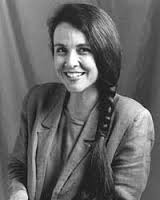
An Interview with Tristan Ahtone

7 Jan
Tristan Ahtone rode Greyhound busses across America and wrote about it in a series for Al Jazeera America.

Tristan Ahtone rode Greyhound busses across America and wrote about it in the series, America by Bus, for Al Jazeera America.

Tristan Ahtone is an award-winning journalist and member of the Kiowa Tribe of Oklahoma. Born in Arizona, raised across the United States, and educated at the Institute of American Indian Arts and the Columbia School of Journalism, he has worked as a door-to-door salesman, delivery driver, telemarketer, and busboy. Since 2008, Ahtone has reported for The Newshour with Jim Lehrer, National Native News, Frontline, Wyoming Public Radio, Vice, the Fronteras Desk, NPR, and Al Jazeera America. He serves as Treasurer for the Native American Journalists Association and lives in Albuquerque, New Mexico.

To read an exercise about writing character descriptions based on Ahtone’s essay on riding Greyhound busses across America, click here.

In this interview, Ahtone discusses the role of human and technical limitations on writing and choosing what makes the cut in a piece of journalism.

Michael Noll

It seems like something you’re trying to convey in these pieces is the fleeting nature of encounters on a bus. So, for example, your description of Russell Hall focuses on only a few seconds of observation: Hall on the phone, a glance given to him by a woman sitting nearby, a look that he gives to something he set out the window, the condition of the Bible he’s holding. Was it tempting to try to make more of this encounter? Or was the opposite true: was the challenge instead trying to build a vignette out of only a few details?

Tristan Ahtone

Each encounter we had during this story could have been expanded to a feature-length story. The challenge was having so much detail and condensing it into a vignette. However, in Mr. Hall’s case, the simple nature of his story stemmed from a technical error, embarrassingly enough: the recorder we used to interview our subjects decided to become uncooperative, so there were no accurate quotes save for what I caught in my notes when first observing him. It would have been great to get his backstory in—he worked for the Los Angeles public school system as a truancy officer and had been involved in the church for years traveling the country by bus—but when I sat down to write about him, I found that the brief encounter offered more with less dialogue. So in short, Mr. Hall’s story functions as a fleeting encounter but its creation stems from a technical problem and having to make due with good note taking to replace missing quotes.

Michael Noll

I love the dialogue that you capture. In the piece about Hu Li, the dialogue isn’t really conversation so much as different people talking at the same time. You must have overheard or participated in so many conversations. How did you decide which ones to write up?

Tristan Ahtone

There are about half a dozen interviews we did that never made it to the final product and many never even made draft form. In each case my partner Tomo Muscionico and I would strike up conversations with people, feel out whether we wanted to continue the conversation for a story, and eventually asked to mic them up so we could record that interview. Sometimes it worked, sometimes it didn’t. In the end, a lot of people we took photos of and interviewed didn’t make it in usually because their narrative wasn’t as strong when putting it in short form. For instance, there was a woman named Dianne Whitlock, who showed up briefly in Rosalinda’s vignette – she had a wonderful story and had a great conversation with another gentlemen that had his own vignette that was also eventually cut. The primary reason was because in short form, we couldn’t do them justice. Essentially, we gathered as much material as we could, and when we sat down to write and edit it, a lot of people washed out.

Michael Noll

Tristan Ahtone rode Greyhound buses around America and wrote about it for Al Jazeera America.

In his essay on riding Greyhound busses, Tristan Ahtone met a woman named Rosalinda who was traveling from Guatemala to Florida and who spoke neither English nor Spanish.

In the piece about Rosalinda, you write, “She and her baby had matching yellow wristbands, the kind one gets in a hospital or a prison.” This description has two parts: the detail (matching yellow wristbands) and the interpretation (the kind one gets…). How much of your task as a journalist, as a writer, is helping the readers understand the details you show them?

Tristan Ahtone

I’d say most of my job is helping readers understand details. Context is what makes people’s stories real and relevant. One of the nice thing about long-form journalism is that you have the opportunity to see and write about details like that and offer them to the audience. We spent a long time with Rosalinda and ran into her twice: once at the Phoenix bus station and again on a bus we boarded in El Paso. I think I can speak for my partner, Tomo, that we’re not the superstitious types, but we knew we had to write her story when we ran into her again. We had to do something. She was too special and too important to let drive off without trying. That meant we had to get really creative, though: we couldn’t talk to her, nobody could really, so we had to take a lot of pictures and extensive notes so that we could make her a real person to our audience, and that meant keeping an eye to detail and interpreting who she was, where she was going, and what her situation was based on physical information that was available.

Michael Noll

In that same passage about Rosalinda, you have the problem of not being able to communicate with her. So, you approach the description through the other passengers’ eyes and knowledge about her. As a result, the passage becomes not just about Rosalinda but also everyone else on the bus, the community they form. Was that approach a matter of simply using the information available, or had you sketched out a variety of approaches to these passages before the trip?

Tristan Ahtone

The only thing we had sketched out prior to going on the trip is where we would leave from and where we would end up and even that changed mid-way through. Originally, I wanted Rosalinda’s story to be weaved in throughout the entire piece with other passengers narratives. The original structure I sketched out more closely resembled a Robert Altman film with a number of different characters all overlapping at various places. I couldn’t get it to work though, one reason being that while we have rich detail on everyone we spoke with, there wasn’t enough information to support a story that long. It also felt confusing, so we scrapped it. One of the only variations of that idea that remains in the final piece is the interaction between Lonnie Head and Christopher Nyman in Nashville. Had we stuck with the original structure, you likely would have seen a lot more interactions like that between a lot of the people we met. As I mentioned before, Dianne Whitlock makes an appearance in Rosalinda’s vignette: originally she had her own story, which is part of the reason she’s even named at all in this one instead of just identified as another passenger. In the end I really liked how Rosalinda’s story came to embody a greater sense of community. I think that people deride and criticize people who ride busses, but I have to say, I’ve never seen people on a plane act so kindly to each other. In Rosalinda’s case, we observed how people behaved toward her and reported it. If she had been treated poorly, we would have written it that way instead.

January 2016

Michael Noll Michael Noll is the Editor of Read to Write Stories.

How to Describe a Character from the Perspective of Others

5 Jan
Tristan Ahtone rode Greyhound buses around America and wrote about it for Al Jazeera America.

Tristan Ahtone rode Greyhound buses around America and wrote about it for Al Jazeera America‘s project, “The United States of Bus Travel.” Photo credit: Tomas Muscionico, Al Jazeera America

The easiest and most common way to describe a character is directly, like this: She’s tall and loves Adele but believes people who sing along with the music are disrespecting the artist. The first part of that description (she’s tall) can be deduced from observation, and perhaps the second part (loves Adele) can be as well if the music is audible. But the final part (disrespecting the artist) requires knowing her thoughts, which means that she speaks them aloud. For most characters, this isn’t a big deal. But what about characters who can’t or won’t speak?

A good example of using every  available resource to describe a character can be found in a recent series, “The United States of Bus Travel,” from Al Jazeera America. Journalist Tristan Ahtone traveled the United States by Greyhound bus and wrote short vignettes about the people he encountered. You can read the entire project here.

How the Essay Works

The final part of the series, “The Mother,” is about a passenger named Rosalinda who spoke no English. (You can find it by scrolling all the way to the bottom of the page.) Normally Ahtone’s approach was to strike up a conversation, but, in this case, that wasn’t possible because Rosalinda didn’t speak English. Watch how Ahtone builds that inability to communicate into the first part of the description:

Rosalinda had all her possessions in two bags: a trash bag and a giant resealable storage bag with the Homeland Security logo on it. She and her baby had matching yellow wristbands, the kind one gets in a hospital or a prison. She spoke no English and only a touch of Spanish and, from what passengers could gather, had taken a bus from Guatemala to Arizona 13 days before and was now bound for Florida.

Notice how Ahtone starts with what can be observed: what Rosalinda carries with her and the wristbands she shares with her baby. At that point, he’s run out of what can be learned directly, and so he finds a way to learn information indirectly: “from what passengers could gather.” In short, Ahtone is using the impressions and knowledge of the people around Rosalinda as a source of information rather than Rosalinda herself.

The rest of the vignette becomes as much about those people around her as about Rosalinda herself. Here’s the bus driver:

“She’s probably Central American or something,” said the bus driver. “I think she’s going all the way to Miami. That happens all the time on this schedule. We get a lot of Central Americans probably getting sent from one detention area to another, and they’re being processed.”

Through this quote, we learn something about the route and the people who tend to travel it.

Here’s another passenger on the bus:

“I want to get her something to eat when we stop, but I don’t know how to communicate with her,” said Dianne Whitlock as Rosalinda’s baby cried. “She’s not eating.”

And here is how the passage ends:

At the next stop, passengers in her section pooled their resources for water, soda, chips, diapers, baby food and a cheeseburger with a side of fries.

By looking beyond Rosalinda for information about her, the writer has also opened up the vignette to the world around the person he is ostensibly focused on. We learn about her, but we also learn about the kind of route she’s on and the way that a temporary community develops on the bus. All of this is built from statements made about Rosalinda by the other people on the bus.

The Writing Exercise 

Let’s describe a character from the perspective of others, using “The United States of Bus Travel” by Tristan Ahtone as a model:

  1. Describe the character using what can be observed. Ahtone describes what Rosalinda is carrying with her and one notable part of her wardrobe: the matching yellow wristbands. The key is to choose details that convey something about the character. It’s actually a good exercise to pretend that you’re viewing your character while riding on a bus. In that situation, it’s natural to draw conclusions about people from what they’re wearing or carrying or from their posture or behavior. So, choose one or two basic details that allow the reader to infer some basic aspects of the character’s life, background, or situation.
  2. State the impediment to knowing more about the character. In Ahtone’s case, he didn’t speak Rosalinda’s language. But language isn’t the only possible impediment. Perhaps a character doesn’t want to talk or cannot talk due to a physical cause or due to the situation (no one or someone isn’t allowed to speak). There are many situations that we encounter where speaking openly or at all isn’t possible or socially acceptable (like on an elevator). Don’t be coy. State clearly the reason the characters cannot talk.
  3. Look for other sources of information. The most obvious, of course, are other people, but in the absence of people, you can study the character’s relationship to her possessions or surroundings. (Think of the Sherlock Holmes line about watching what a woman first rescues from a burning home.) If other people are present, consider the difference in their perspective compared to your own (or your narrator’s). For example, on Ahtone’s bus trip, the other passengers had been riding the bus with Rosalinda for a while, and in that time, they’d observed her acting or not acting in ways that stood out to them. They’d likely tried to talk to her in Spanish and failed at that. Like Ahtone, you can use these different perspectives and levels of knowledge/experience to convey information that is not directly accessible to you or your narrator. What do other people think or see or notice or say?
  4. Look to the setting for information. Ahtone gets a crucial piece of information from the driver, who has seen many passengers like Rosalinda. So, think of your character as being part of a trend or demographic. We draw conclusions about others based on age, gender, dress, race, ethnicity, language, etc, all of the time. What conclusions can/would your characters draw based on their own experience and the setting where the story occurs?
  5. Consider how the other perspectives interact. On the bus, the other passengers worry about Rosalinda and eventually pool their money to buy her food and diapers. Of course, the other perspectives don’t need to react positively. We’re all coming out of the holidays, and so we’ve perhaps been reminded that not all personalities gel or work well together. If a character has drawn many people’s interest, how does that shared interest cause them to behave?

The goal is not only learn about a character who cannot or will not speak but also to learn about the surrounding characters and world.

Good luck.

An Interview with Mario Alberto Zambrano

31 Dec
Mario Alberto Zambrano is the author of the novel Lotería and recently won a prestigious NEA Fellowship.

Mario Alberto Zambrano is the author of the novel Lotería and recently won a prestigious NEA Fellowship.

Mario Alberto Zambrano was a contemporary ballet dancer before writing fiction. He has lived in Israel, The Netherlands, Germany, Spain, and Japan, and has danced for Hubbard Street Dance Chicago, Nederlands Dans Theater, Ballet Frankfurt, and Batsheva Dance Company. He graduated from The New School and the Iowa Writers’ Workshop. His debut novel Lotería was named to many lists of the best books of 2014, and this month, Zambrano received a prestigious NEA fellowship to work on his new novel.

To read an exercise on creating structure with images and an excerpt from Lotería, click here.

In this interview, Zambrano discusses how he began writing based on Lotería cards, the You that his narrator Luz speaks to, and how the Pedro Infante film Nosotros Los Pobres influenced the novel.

Michael Noll

The most distinctive aspect of the novel, and it’s no surprise given it’s title, is the way you use Lotería cards to organize the chapters and the novel as a whole. You’ve discussed in other interviews how and why you chose lotería, but what I’m really curious about is how it impacted your process for writing the novel. A lot of novel drafts get stuck at various points, often about 70 pages in, because the novel expands or changes in those moments. Was Lotería helpful to you in the middle of the book, in terms of maintaining and advancing the story?

Mario Alberto Zambrano

Honestly, the way I started writing the book was mostly a game for myself, to create vignettes of a young girl’s life. Though I knew the story in my head from the beginning, I used the cards as a vehicle to explore other parts of her life that I didn’t yet know anything about. I would shuffle the deck and flip over a card as a way to prompt me into a scene that might reveal something about her and the story she was trying to tell. The obstacle wasn’t so much how to propel the narrative forward, as sometimes is the case, but rather, how to arrange the cards in a sequence that could feel organic yet carry a narrative thru-line from beginning to end. Near the end of the editing process, I would lay out the cards on my table and rearrange them. With 53 cards, the options were endless. It did teach me however, that even when you’re working on a novel that doesn’t deal with cards, but rather with scenes, chapters, acts, what have you, the sequence in which the story is being told can disrupt or heighten the dramatic tension that fiction relies on.

Michael Noll

The novel is addressed to You, to God. Was this always part of your sense of the novel, that Luz would be writing/talking to a particular person/entity and not just in general?

Mario Alberto Zambrano

Because Luz suffers from a traumatic event at the start of the book and is suffering from selective mutism because of said event, I felt it was important for her to address the narrative to someone she was comfortable with, someone who might help her find solace in the devastating aftermath of what happened in her family. The act of prayer is a means to achieve grace, especially in the face of loss. But even though the You in the book is addressed to a divine other, in some way it’s also addressed to herself, so that in having a dialog with God she’s having a dialog with herself too, in the way prayer can be a form of mediation.

Michael Noll

The novel begins with a passage about what kind of story this isn’t. A counselor visits Luz and brings Fama magazines because she thinks they are “going to open me up like some stupid jack-in-the-box.” She also tends to stare at Luz in a kind of incomprehension, which prompts Luz to think this: “¿Y? It’s not like I’m a piece of news in the Chronicle she can pick up and read.” Luz goes on to explain how her story is more like a telenovela or the film Nosotros Los Pobres. Was it important to you, or did it seem necessary, to tell readers in advance, look, here’s the kind of story this is? Was there a genre or form of storytelling that you wanted to avoid or distance the novel from?

Mario Alberto Zambrano

Part of the cultural background to the story comes with the popularity of telenovelas, this melodramatic genre invigorated by the music that propels it. So, in a way, I wanted to reference it.

Personally, when I read a novel I always get a sense of what kind of music is playing in the background, whether it’s alluded to in the text or not. Voice and tone, along with style, is usually what creates this kind of sound for me. In Lotería, I wanted a kind of ranchera-soundtrack, a resonant yet sweet pitch that is similar to the voices of Lola Flores or Rocio Durcal, or even Selena. It’s this kind of music that runs in Luz’s mind, and I wanted it to be on the page as a form of reflection, whether spoken or not.

Michael Noll

In this 1948 film, A poor carpenter (Pedro Infante) is framed for the murder of his employer and sent to prison.

In the 1948 film Nosotros Los Pobres, a poor carpenter (Pedro Infante) is framed for the murder of his employer and sent to prison.

That early passage about the film and the kind of story this is stands out to me because the novel returns to it. For example, in the El camarón chapter, Luz watches her father punch a wall, and she understands this action by thinking about Nosotros Los Pobres, in which a character does something similar. Did you have that film in mind as you wrote, or did you discover that it had resonance for the novel at some point as you were thinking and writing about Luz and figuring out that she would be thinking about the film?

Mario Alberto Zambrano

Nosotros Los Pobres is a film with Pedro Infante, the very actor that Pancho Silva is a double for. In Luz’s youth, she grows up with this figure on the screen. To her, it’s a symbol similar to the greatness of God. By way of attention, the family adores and glorifies the altar almost as much as what’s on screen, and so these two figures, the divine and commercial, make up a kind of confused representation of what her family and community turn their attention to. As a young girl, she almost overlaps them so that they each represent a similar importance. The film is also a story about a father and daughter living without a mother. In the scene of the movie you mentioned, when Pedro Infante punches the wall, he slaps his daughter, then feels guilty, and therefore slams his hand against the wall due to his profound guilt. What I love about that scene, and why it’s in the book, is that it represents the complexity of action and consequence. Yearning for redemption even though guilt is an insufferable truth. It’s something Luz is aware of, and in many way, how she exonerates her father even after all of his abusive tantrums.

December 2015

Michael Noll Michael Noll is the Editor of Read to Write Stories.

How to Create Structure with Images

30 Dec
Mario Alberto Zambrano's novel Lotería uses a deck of cards to chart the story of a young girl's family and its demise.

Mario Alberto Zambrano’s novel Lotería uses a deck of cards to chart the story of a young girl’s family and its demise.

When working on a novel, writers often reach a point where the thrill is gone. Whatever impulse that kicked off the project has vanished, and all that is left is plot: who did what, what they will do next. The novel begins to resemble an outline. One way to solve this problem is to create a structure that doesn’t hinge on the next plot point. This is why you often see flashbacks and backstory at the beginning of chapters: that information provides an emotional context for the present action that follows. Another strategy to provide that same context is to use images.

There is probably no novel that demonstrates this approach more clearly than Lotería by Mario Alberto Zambrano. You can read an excerpt here and see a preview with images here.

How the Novel Works

The novel is structured around images from the game lotería. It’s a Mexican game, played like bingo but with illustrations called out (through the recitation of riddles) rather than numbers. In the novel, each chapter begins with one of these lotería images, for instance La araña (the spider) and La sirena (the mermaid). The result is one of the most beautiful books you’ll ever see and a strategy that offers the writer as many possibilities for structuring chapters as there are cards.

The novel begins with La araña and this opening:

This room has spiders.

¿Y? It’s not like You don’t see them. The way they move their legs and carry their backs and creep in the dark when you’re not looking. You see us, ¿verdad? You see what we see? It’s not like You don’t know what we’re thinking when we lie down at night and look up at the ceiling, or when we crawl in our heads the way these spiders crawl over furniture. It’s never made sense why people think You’re only there at church and nowhere else. Not at home or in the yard or the police station. Or under a bed.

The card is used to create setting (the room with spiders) but also a metaphor for the character’s mind. Because the narrator is talking to a specific entity (the You in the passage is God), the introduction of spiders colors that conversation. If God can see spiders, then He can also see everything (like what goes on in police stations, a place the novel will quickly move to).

Sometimes the image doesn’t enter the chapter until the end. For example, in El cantarito (the water pitcher) the chapter is about the narrator interacting with social worker, and the imagine arrives in the last paragraph:

Standing there, all of a sudden, I was like a jug of water trying to be taken from one place to another, and little by little, I was spilling. The nurses didn’t even look at me anymore.

At times, the image informs the novel in the lightest way. In El alacrán (the scorpion), the image is never referenced directly. But the word sting appears.

Some images inform characters or their actions, as does El borracho (the drunk).

And, of course, the cards can inform plot. The El pino chapter (the pine tree) begins like this:

“The truck is a piece of shit,” Papi said. He’d bought it from someone he worked with. I liked it because it had a handle for the window to go up and down instead of a button. So the window was going up and down, up and down, and Rocío Dúrcal was on the radio, a cassette we listened to all the time of a live performance in Acapulco. It was Sunday, early morning, and while most people were headed to mass we were going to buy a tree. Just the two of us. It was going to be the first Christmas without Mom. It had been awhile since she’d disappeared and it seemed okay to talk about her.

The cards give the novel a way to resist or slow down plot, which gives it room to develop place, character, and voice.

The Writing Exercise 

Let’s use image to structure passages, using Lotería by Mario Alberto Zambrano as a model:

  1. Choose a series of images. Zambrano has used the images from a game, but your images don’t need to have an official connection. They could be connected by theme or place or geography or culture or job. Think of the way that children’s vocabulary books (or chapters of a foreign language textbook) introduce words: restaurant, home, workplace, shopping, animals, things in the sky. Give yourself a filter so that you can quickly choose an image rather than starting from scratch each time you need one.
  2. Use the image to inform setting. Zambrano does this with the spider. Because the room has spiders in it, he’s able to assume other things about this place: not just the room but the world around it and the characters within it. Every place has spiders, of course, but focusing on them in the first sentence creates a very different passage than if the first image was a bottle of champagne. So, insert the image directly into your prose and create a passage around it.
  3. Use the image to inform emotion. At the end of the water pitcher chapter, the narrator explains how she feels like a jug of water. You don’t need to wait until the end of a passage. Choose an image and force yourself to connect it to emotion or sensation—what things feel like. You may end up writing a sentence that begins like this: It was like a _____ (image)…
  4. Use the image to inform diction. The only presence of the scorpion in Lotería is the word sting. Yet that’s a powerful word. Try word-association. Choose a few that seem loaded in some way (charged, not neutral) and give yourself the goal of working them into the passage.
  5. Use the image to inform character. If your image is a drunk, the possibilities are clear. We do this all the time: pig, dog, even the word animal. What does it mean for a character to be ____ (image)?
  6. Use the image to inform plot. Obviously, if your image is a gun, then the plot possibilities are clear. But it might be more useful to choose an image that doesn’t seem directly connected to dramatic action. Zambrano uses the pine tree and turns it into a trip to buy a Christmas tree. This trip provides his characters an opportunity to interact away from others. In a way, the image inserts a kind of detour into the plot, which is often where the most interesting moments of a story appear.

The goal is to use image as a structuring devices and create space for play and imagination within plot.

Good luck.

12 Exercises Inspired by the Best Writing from 2015

22 Dec

The time of resolutions is upon us, and for writers, this usually means re-committing ourselves to projects that have stalled and gathered dust. We sit down at our computers, excited, and then realize that we’re still stuck. We need help. Like kids on swings, we need a push to get started; after that, we can take care of ourselves.

For the past 51 weeks, this blog has shared exercises based on some of the best writing from the most interesting, best-written stories, novels, and essays of the year. Here are twelve of those exercises to give your writing momentum as we enter 2016.

1. Withhold Crucial Plot Information

8769008

Sarah Layden is the author of the novel Trip Through Your Wires.

When I was a kid, I devoured Agatha Christie novels, despite knowing that Christie was not showing me everything I needed to solve the mystery. But instead of getting frustrated, my inability to outwit her detective actually made me love the books more. I was in the hands of someone smarter than me, and I knew that not only would all would become clear by the final page, but it would also be shocking.

As writers, we sometimes want to withhold information, but it’s not easy to do. The readers know we’re messing with them and can see the strings being pulled. In Sarah Layden’s, “Bad Enough With Genghis Khan,” she sets up the surprise with lines like this:

Blushing, I delete the history from my browser but forget to delete it from my secret backup location, in case I want to remember the things we’ve deleted. My husband throws something away and thinks it disappears. Images I can never erase.

Find the entire exercise here.

2. Write from Multiple Points of View

Unknown-1

Scott Blackwood is the author of the novel See How Small.

The challenge in writing from multiple points of view is to make each POV sound different. In Scott Blackwood’s See How Small, he follows a lot of different characters, and each POV sounds and feels slightly different. However, Blackwood doesn’t accomplish this by trying to mimic the character’s natural voice. Instead, he plays with different storytelling styles. For instance, the novel begins with a chapter that mixes third-person and first-person plural POVs (they and we), but what’s more important is how it focuses on some details and not others:

Another remembered the pride she’d felt the day before, riding a horse no one in her family could ride, a horse that had thrown her older sister. He knows your true heart, her father had said. The horse’s shoulders were lathered with sweat. He had a salty, earthy smell she’d thought of as love.

The men with guns did things to us.

Find the entire exercise here.

3. Make the Most of a High Concept

Unknown

Dina Guidubaldi is the author of the story collection How Gone We Got.

The term high concept simply means any story whose premise can distilled to a tagline that often serves as a title, as in George Saunders’ CivilWarLand in Bad Decline, Kelly Link’s The Faery Handbag, Michael Crichton’s Jurassic Park, or Gabriel Garcia Marquez’s One Hundred Years of Solitude. The challenge with high concept stories is make the story as interesting as its title, to advance the conceit in surprising ways. This means that the story may repeat itself or follow a predictable path but that it should have moments of surprise built into that path.

This is exactly what Dina Guidubaldi does in her story “What I Wouldn’t Do.”

I wanted to love you better so I bought a city. It was small but shaped like your fingerprint, with a mansion for you in the middle of the whorl. It was hard to find, your mansion, but since I’d mapped it, troweled cement for the foundation, chopped logs for the beams, hammered and nailed and sanded until my hands fell off, lugged stones in a canvas sling with my teeth when they did, hung tapestries and draped velvet, since I did all of that, I had a pretty good idea where it was. I landscaped your rose garden and made your maze. I scissorhanded some topiaries for you in the shape of hearts and souls and kept up with their maintenance too; I was on a tight schedule and you were my hours and my half-pasts.

Find the entire exercise here.

4. Use Scenes to Show the Passage of Time

images

Rene S. Perez II is the author of the YA novel Seeing Off the Johns.

Some famous writer once said that stories and novels don’t portray a life but, rather, a glimpse of one part of the life that suggests the entirety of the whole. It’s a true statement that makes you wonder, “Which snapshot is the right one?” or “What part of my life suggests the whole thing? I hope it’s not the part where I forgot to put on deodorant.” It can be an impossible question to answer. A better question might be this: How can a particular scene or moment reveal the constant process of change that is part of any life This is what Rene S. Perez II does in his debut novel, Seeing Off the Johns.

In one scene, the novel uses a dinner as a touchstone for the entire 20-year relationship between two couples. In that history, we learn not just the differences between the couples but how they’ve navigated those differences, and it’s that struggle that reveals the life and makes for interesting drama:

The Mejias had felt a sting of embarrassment when they went to the first of their dinners with the Robisons. They knew the Robisons were well off—Arn was the youngest grandchild and sole remaining Greentonite of Samuel and Wilhelmina Robison, who’d made a small fortune on a ranch outside of town. Arn had inherited money from them. He’d worked hard all his life as a horse doctor and hit big on some investments. But the Mejias weren’t prepared for the kind of food the Robisons were used to.

Find the entire exercise here.

5. Show Things Twice

Nicole Haroutunian

Nicole Haroutunian is the author of the story collection Speed Dreaming.

When working on plot, we tend to think in terms of major scenes: singular moments of tension and drama when significant character traits are revealed. That’s the idea, anyway. When we actually write these moments, we often discover that we’re burdening them with too much expectation. A scene can only do so much work, and that’s why it’s often a good idea to write a scene into your story twice. It gives you twice as much dramatic space to work within and, thus, the potential to reveal a lot more about a character.

A great example of showing a scene twice can be found in Nicole Haroutunian’s story, “Youse.” It is included in her debut collection, Speed Dreaming. In the story, a man catcalls two young women from his car:

“Next time that dude drives by,” Joanna says, “let’s make sure he knows that one of us is a pro.”

Of course, this means we’re expecting the man to drive by again, and, of course, he does (it’d be a tremendous missed opportunity if he didn’t). That scene begins in the same way:

Then the bronze SUV—the same one, it has to be—is slowing down beside them. They hear a familiar voice. “How about youse…” he starts.

Find the entire exercise here.

6. Write a Fast-Starting First Paragraph

Bess Winter

Bess Winter is a Ph.D. student at the fiction program at the University of Cincinnati.

Literary journals receive hundreds, sometimes thousands, of submissions every year. These submissions are read by busy volunteers, making their way through stacks of stories at night and on weekends. As a writer, these are not the ideal conditions for appreciating your carefully crafted manuscript. But this is the world you’re sending your stories into, and so it’s important to consider the audience. What will make your work easier to read? What will catch this busy volunteer’s attention? One answer: a quick-starting opening paragraph. Watch how fast this first paragraph from Bess Winter’s “Are You Running Away?” gets the story moving:

Val says, fuck school. She eats another cracker. Wouldn’t it be great if school were cancelled? And I say, Yeah, it would be great. And she says, I know a way. She scrapes her shoed feet along her parents’ couch. And I say, How? And she says, There are these pipes.

Find the entire exercise here.

7. Create Moments of Intense Emotion

RuizCamacho007B

Antonio Ruiz-Camacho is the author of the story collection Barefoot Dogs.

Robert Olen Butler has a theory that stories are written from a white hot center. Your job as a writer is to find it. But what happens when you do? That center often carries significant emotion, and the challenge is how to dramatize that emotion without verging into sentimentality or melodrama. In other words, you need to hit the note at the right pitch and for the right amount of time. A story that hits that moment just right is Antonio Ruiz-Camacho’s story, “Madrid,” from his collection Barefoot Dogs. The moment comes at the end, in a ghostly encounter with the narrator’s father:

He clears his throat, and my stomach cramps for everything looks and feels so real, his voice, his gestures, his presence around me, that always soothed me, regardless.

Find the entire exercise here.

8. Use Forbidden Acts to Create Plot

M-McFawn

Monica McFawn is the author of the Flannery O’Connor Award-winning story collection Bright Shards of Someplace Else.

Chekhov famously wrote that if a story puts a gun on the wall in the first act, the gun needs to be fired by the third act. In other words, if a story presents something as dangerous, then it must face that thing directly, not avoid it. Of course, not every story needs a gun. The danger can be located in anything—even things that aren’t necessarily dangerous in every circumstance. All you need is for a character to say, “Don’t do that” or “That’s off-limits” or “Be careful” and you’ve got your dangerous element. A good example of using something forbidden to create plot is Monica McFawn’s story, “Out of the Mouths of Babes.” It’s included in her collection, Bright Shards of Someplace Else, which won the 2014 Flannery O’Connor Award for Short Fiction.

The story is about Grace, a woman who is babysitting Andy Henderson, a precocious nine-year-old boy. By the end of the first page, the story introduces something forbidden, through the instructions of Andy’s mother:

“I said, keep him off the phone. He doesn’t need to be on the phone today.”

By the story’s end, this rule will have been broken multiple times, with increasingly high stakes.

Find the entire exercise here.

9. Structure a Story around a Fairy Tale

Kseniya Melnik

Kseniya Melnik is the author of the story collection Snow in May.

Many writers will eventually try to write a story based on a fairy tale or folk tale. There are some powerful examples of such adaptations: Angela Carter’s The Bloody Chamber, Aimee Bender’s stories, and Gabriel Garcia Marquez’s One Hundred Years of Solitude. But writing a modern fairy tale can be easier said than done. How do you capture the essence of the original tale while also creating a story that fulfills our sense of a modern story?

Kseniya Melnik’s story, “The Witch,” achieves that balance beautifully. It was included in her collection Snow in May. The story lays out its fairy tale inspiration in the second paragraph. The narrator is being taken to a witch for help with her headaches and, on the way, thinks about the most famous witch she knows:

I kept picturing the fairy-tale Baba Yaga, who lived deep inside a dark forest in a  cabin held up by chicken legs. Her home was surrounded by a fence of bones, on top of which human skulls with glowing eye sockets sat like ghastly lanterns. Baba Yaga flew in a giant iron mortar, driving it with a pestle and sweeping her trail with a broomstick, on the hunt for children to cook in her oven for dinner.

Find the entire exercise here.

10. Write Dialogue that Creates Conflict

laila

Laila Lalami is the author of the novel The Moor’s Account.

In real life, we strive for understanding, but in stories, conflict often works best when characters speak as if they don’t hear one another. A great example of dialogue without understanding can be found in Laila Lalami’s novel The Moor’s Account. The novel re-imagines the expedition of Cabeza de Vaca, the Spanish explorer who shipwrecked in Galveston and traveled across Texas, the American Southwest, and Mexico. Lalami tells this story from the perspective of a Moroccan slave who was one of four people to survive the journey

Early in the novel, de Vaca’s expedition claims the land of La Florida for Spain. The expedition is alone on a beach, in the middle of an empty indigenous village. In other words, the only people present are the conquistadors, and yet the notary unrolls a scroll and reads a long declaration claiming the land. The narrator listens and thinks this:

Until Señor Albaniz had arrived at the promises and threats, I had not known that this speech was meant for the Indians. Nor could I understand why it was given here, on this beach, if its intended recipients had already fled their village. How strange, I remember thinking, how utterly strange were the ways of the Castilians—just by saying that something was so, they believed that it was. I know now that these conquerors, like many others before them, and no doubt like others after, gave speeches not to voice the truth, but to create it.

Find the entire exercise here.

11. Use an Omniscient Narrator

Ru Freeman

Ru Freeman is the author of the novel On Sal Mal Lane and the editor of the anthology Extraordinary Rendition: (American) Writers on Palestine.

One of the most tempting points of view for a novel is the omniscient, godlike POV. It’s also, perhaps, the most difficult to pull off. The literary critic James Wood has called it almost impossible. Yet, it’s also the case that certain stories require a narrator who exists on a different plane than the characters, who can focus on a few of them for a while but can also speak authoritatively about very large groups of them (entire countries, even). A novel that both requires and uses an omniscient POV is Ru Freeman’s On Sal Mal Lane.

This omniscient voices takes different forms, sometimes becoming embodied in a kind of we:

God was not responsible for what came to pass. People said it was karma, punishment in this life for past sins, fate. People said that no beauty was permitted in the world without some accompanying darkness to balance it out, and, surely, these children were beautiful. But what people said was unimportant; what befell them befell us all.

Find the entire exercise here.

12. Defamiliarize the Familiar

Sequoia 2

Sequoia Nagamatsu is the author of the forthcoming story collection Where We Go When All We Were Is Gone.

Any discussion of writing horror, sci-fi, or fantasy fiction will inevitably arrive at the phrase “defamiliarize the familiar.” In short, stories aim to make readers pay attention to something they’d normally not give a second glance. For example, the film The Shining transformed a kid on a tricycle into the stuff of nightmares. All writing can do this, not just genre fiction. A creepy example of a straight realism that does this is Sequoia Nagamatsu’s story, “Placentophagy.” By the end of its first line, the familiar has been totally upended:

My doctor always asked how I would prepare it, the placenta.

Find the entire exercise here.

How to Create a Literary Touchstone

15 Dec
In his essay, "The Rebirth of Black Rage," Mychal Denzel Smith uses Kanye West's statement, "George Bush doesn't care about black people," as a touchstone for discussing black political rhetoric.

In his essay, “The Rebirth of Black Rage,” Mychal Denzel Smith uses Kanye West’s statement, “George Bush doesn’t care about black people,” as a touchstone for discussing black political rhetoric.

If we’ve learned anything from the climate-change debate, it’s that humans are, in general, pretty awful at thinking about large spans of time. So, you regularly hear statements that defy evidence, like, “Record snowfall. Nice job, global warming,” or “If you think this drought is bad, you should have been around during the 1950s.” Our trouble with scale isn’t limited to discussions of climate change but is, in fact, present in almost all of our public discourse. I teach college composition classes, where students like to write “in today’s society” or “nowadays,” as if what follows could possibly sum up all of society or these days. It’s not just college freshmen, either. When faced with difficult-to-visualize things like societal trends, most people fall back on generalizations or false comparisons. (Someone, right now, is almost certainly comparing something to socialism or someone to Hitler.) Our impulse is good. Comparison is an incredibly useful tool for understand the world. Mathematically speaking, it’s how we figure out how far away the stars are. The key, though, is in finding the right touchstone for a comparison and in convincing your audience that it’s applicable.

A terrific example of a touchstone being used to make a comparison and, thus, an argument can be found in Mychal Denzel Smith’s essay, “The Rebirth of Black Rage.” It was published at The Nation, where you can read it now.

How the Essay Works

In the essay, Smith argues that black rage had fallen out of favor as a political movement. In its place was electoral politics, in which electability is strategically chosen over anger. For anyone born after, say, 1980, this new political discourse was the only discourse. However, as the essay’s title suggests, Smith wants to show how black rage has returned and that there is now a tension between practitioners of rage and those that would prefer to focus on electability. To convince his readers that such a conflict exists—and that black rage is truly back—Smith needs a touchstone, a moment to show that here is when the discourse changed. He finds that moment in a speech by Kanye West during a televised fundraiser for the victims of Hurricane Katrina:

Speaking as if he were reading from the teleprompter, his cadence straddling the line between stiff and natural, he looked straight into the camera and said, “George Bush doesn’t care about black people.”

This moment is well-chosen for a couple of reasons. First, everyone saw it or heard about it. Second, West’s statement is clearly made in anger. Third, it came from an unlikely source. West had talked about race before this speech, but he wasn’t known for it like an activist. For example, if Smith had chosen Cornell West instead of Kanye West, his argument wouldn’t have been as strong. Readers could say, rightly or wrongly, “Cornell West has always been talking like that. What’s new?” The speech by Kanye is important because it made people pay attention. It was something that seemed new.

Once Smith sets up this touchstone for black rage, he uses it to show how different electability sounds. As a primary example, he discusses President Obama’s Philadelphia speech, the now-famous speech in which then-candidate Obama addressed the inflammatory remarks of Reverend Wright, the preacher at the church the Obama family attended in Chicago. In the speech, Obama specifically addressed black rage and said this:

That anger is not always productive; indeed, all too often it distracts attention from solving real problems; it keeps us from squarely facing our own complicity within the African-American community in our own condition; it prevents the African-American community from forging the alliances it needs to bring about real change.

This excerpt can’t be farther from the Kanye West statement. The phrase “forging the alliances it needs” is pure electability politics. But that’s only clear—or, it’s clarified—because Smith has juxtaposed it with Kanye West’s claim, “George Bush doesn’t care about black people.”

The Writing Exercise

Let’s create a touchstone, using “The Rebirth of Black Rage” by Mychal Denzel Smith as a model:

  1. Decide what your point is. This goes for fiction as well as nonfiction. In an essay, your point is likely an argument, usually some version of this is how the world works, or this is what exists. You’re pointing to something and telling the reader to take a second, closer look. In fiction, your point is more likely to be connected to experience: this is crazy, this is funny, this is sad, this is sweet, this is big or small or rich or poor. This often applies to character and setting descriptions.
  2. Figure out what is noteworthy about your point. In his essay, Smith nails what is noteworthy in a single word: rage. So, think about your point in terms of adjectives: size, color, normality, intensity.
  3. Choose a touchstone. The original touchstones were pieces of jasper used for testing whether something was gold or not. In writing, a touchstone plays a similar role. You’re looking for something that clarifies or reveals or highlights your point. In comedies, we accept this strategy without thinking; it’s called the “straight man.” In procedural police dramas, there is almost always a good cop and a bad cop. The point of the bad cop is to make the person being interrogated realize what a sweet deal the good cop is offering. In his essay, Smith uses Kanye West’s statement about Bush to the same effect. That statement clearly doesn’t care what people think; it’s simply expressing his anger. When juxtaposed with other statements, it will reveal even the slightest effort at rage-minimization, the least bit of trying to get along. In fiction, we put big characters into tight spaces and outlandish characters into serious situations, neat freaks with slobs, and sweet employees with horrible bosses. So, try to find a character or setting that will highlight whatever you’re trying to show the reader.
  4. Prove that your touchstone is a good one. When people talk about global warming and use the Texas drought of the 1950s, they’re using a touchstone. The problem is that it isn’t evidence based. Just because something stands out to you doesn’t mean it stands out empirically. In an essay, it’s important to prove to the reader that your touchstone isn’t simply idiosyncratic. In fiction, we often use descriptions to prove things. If something is small, we show how small it is. Try to write a sentence or paragraph that proves that the touchstone is as revelatory as you think it is.

The goal is to accentuate whatever is naturally occurring in your writing, to make it stand out even more so that the reader better understands your point and is more engaged.

Good luck.

An Interview with Chaitali Sen

10 Dec
Chaitali Sen is the author of the novel The Pathless Sky.

Chaitali Sen is the author of the novel The Pathless Sky.

Chaitali Sen was born in India and raised in New York and Pennsylvania. Her short fiction, reviews, and essays have appeared in New England Review, New Ohio Review, Colorado Review, The Aerogram, Los Angeles Review of Books, and other journals. She is the author of the novel The Pathless Sky.

To read an exercise about giving jobs to characters, inspired by The Pathless Sky, click here.

In this interview, Sen discusses how playing with time can inject energy into a novel, why she invented a country for The Pathless Sky, and the challenge of avoiding a checklist of elements for certain types of stories.

Michael Noll

The novel begins with a dramatic opening chapter and then, in the next chapter, moves back in time. Most of the novel, then, is spent on the path back to that opening event. Did you begin with this structure, or did you come to it with an eye toward hooking the reader as firmly as possible?

Chaitali Sen

I wrote that prologue (though it’s not technically a prologue – a flash forward?) after I completed the first draft and was taking a break from the novel. During that time, I read a craft book about different narrative structures which suggested the linear, chronological structure was the most plodding way to telling a story, basically the least energetic. I don’t think I agree with that anymore but at the time, I was feeling that the build-up to the central conflict in my story was too slow. My first draft was doggedly chronological, starting with the characters meeting in college and concluding with an ending that has since changed. I did need to fix some pacing issues, but at the same time I felt the slowly rising action was important and I didn’t want to rush it. That opening flash-forward was the first thing I wrote when I started the second draft, and immediately I did feel the energy coming back into the novel, which I needed for the writing of a new draft. That prologue ended up being an important touchstone for me during the revision process. It kept reminding me of where the story was headed – of its dramatic arc and its themes – and I hoped it would do that for the reader as well. Once I wrote that opening chapter, I never considered taking it out.

Michael Noll

I love the descriptions of the characters, especially how much joy they seem to carry with them. For instance, when John introduces himself to Mariam and walks with her, you write, “Her step was so exuberant that he had trouble keeping up with her.” Dr. Malick is described like this: “Dr. Malick of the University of Sulat Province was a spry, wiry man in his fifties, with thin strands of hair that seemed drawn to some heavenly body wanting to lift him upwards.” This is beautiful writing, but it’s also in sharp contrast to the urgent, oppressive, uncertain opening chapter. Was this intentional?

Chaitali Sen

I love that you used the word “joy.” I don’t think this contrast was intentional. At least, I wasn’t aware of it as I was writing. But I was trying to examine how these larger political and historical forces seep into our daily lives and wear away at people’s joyful aspirations. This is something I’ve witnessed and experienced in my adult life. It has become an essential part of my worldview, so I think it comes out in my writing on a subconscious level.

I once heard an interview with the African-American painter Jacob Lawrence in which he said the most important thing for an artist to do was to figure out their worldview. At the time I thought he was simply stating that the artist needed to be engaged with the world and responding to it with their art, but now I think he was also saying that the way you see the world becomes a kind of muse, providing inspiration and motivation that you can’t always access on an intellectual level.

Michael Noll

Chaitali Sen wrote about her decision to invent a country for her novel at The Asian American Writers' Workshop.

Chaitali Sen wrote about her decision to invent a country for her novel at The Asian American Writers’ Workshop.

When it comes to writers of color or writers from certain countries, there’s an expectation, at least among American readers,that the writers will serve as a kind of authentic guide to their community and place. In an essay for The Asian American Writers Workshop, you write, “I had been aware of these expectations, and felt a crippling pressure to write exclusively about my experience as a child of Indian immigrants.” I’m curious about that word: crippling. The Native American writer David Treuer wrote in his book Native American Fiction: A Users Manual about the memoir, The Education of Little Tree. When it was published, it was beloved by the Native American community—until it was discovered that the author was a white former Klansman. The problem, Treuer wrote, wasn’t so much the authorship of the book but the fact that there seemed to be a genre of Native American stories, easily imitated because it had a checklist of common plots, characters, and settings (for instance, spiritual characters or characters who are purely and wholly “Indian” live far from the village, away from other people). Given your choice to set the novel in an invented country, I wonder if you felt something similar. As you tried to conceive of a story to write, did you feel that to write about your experience as a child of Indian immigrants meant to tell that story in a particular way, to craft your story to fit a kind of checklist or genre?

Chaitali Sen

This is such a complicated issue for me. The body of work by South Asian Americans has been extremely limited until the last couple of years, when there has been a sudden flourishing (which may be an overly generous word to describe a handful of books) of quite varied and remarkable narratives. I think South Asian American literature is suddenly opening up and it just can’t be defined narrowly anymore. Authors such as Nina McConigley, Bushra Rehman, Tanwi Nandini Islam, Mira Jacob, A.X. Ahmad, Sharbari Ahmed, Nayomi Munaweera – and many more are certainly showing me that what I once perceived to be the narrow expectations of South Asian American writers is perhaps not true anymore.

Having said that, there have been writings, discussions, and inside jokes that a book by a South Asian writer must have certain elements – a checklist of sorts – including lots of mentions of food, intergenerational cultural conflicts, identity crises, colorful clothing, etc. And while I think writers like Bharati Mukherjee and Jhumpa Lahiri who were the early pioneers of South Asian American literature wrote multi-layered narratives, the critics tended to focus on themes of difference and the struggle of immigrants to adapt. Along with that comes this troubling oversimplification about the contrast between American culture and South Asian culture. In reality, culture and society in both the United States and the countries of South Asia are extremely complex and multi-faceted. I think that was the trap I felt more crippled by, of having my writing become a representation of all Indian Americans or speaking for the Indian American or South Asian American experience, and of drawing pat conclusions about either place that I am not meaning for the reader to draw. When there are so few writers of a certain background, that writer has the unnecessary burden of speaking for his or her race. I do find that when I write stories about Indians and Indian Americans, there is always some mention of the cultural aspect when people are responding to it, even though I’m not thinking of a particular detail in the story as a cultural detail. I don’t think people respond to white American writers in the same way. The details in their stories are not considered to be cultural markers. So that’s part of the crippling aspect. However, my current novel is about an Indian American woman and I’m really enjoying writing it.

Michael Noll

The novel is, at it’s heart, a romance, and the obstacle to that romance is politics. Mariam comes from an area of the country that once rebelled and where the locals are mistrusted by the government. This conflict grows throughout the novel, but the details about it are spare. We don’t learn, for instance, a great deal about the culture of English Canal and Sulat Province or about the nature of the resistance. In that way, the novel seems to have something in common with dystopian science fiction/fantasy: what’s important is the impact of oppression, the struggle to live under it, and that struggle is common to all places and people. Is that a fair statement about the novel? Did you ever try to invent a more in-depth culture for Sulat?

Chaitali Sen

Wow, this is a hard question. In short, I think it is a fair statement about the novel, and I would have to say I never did try to invent a more in-depth culture for Sulat. In building up this imaginary country, I think culture was the hardest for me to invent, because as you can probably tell from my response to the previous question, my relationship with the concept of culture is somewhat troubled. : ) So I focused on things like geography, geology, and on perceptions of characters about these places. For example, the perceptions other characters have of Sulat may or may not be accurate according to Mariam’s or John’s experience there. But I think you hit the nail on the head when you say, “what’s important is the impact of oppression, the struggle to live under it, and that struggle is common to all places and people.”

December 2015

Michael Noll Michael Noll is the Editor of Read to Write Stories.

How to Give a Character a Job

8 Dec
Chaitali Sen's The Pathless Sky updates the star-crossed lovers tale with a novel set amid political turmoil and the possibility that geography and politics might still be overcome.

Chaitali Sen’s The Pathless Sky updates the star-crossed lovers tale, in a novel set amid political turmoil and the possibility that geography and politics might still be overcome.

Just as oceans cover 71% of the Earth’s surface, so do jobs occupy the vast majority of our waking hours. Yet in novels and stories, we tend to write about only the dry land—the family members, relationships, and conflicts that we often view as separate from work. Some critics claim this is due to the novel’s bourgeois roots. In this view, writers (for instance, Henry James) have often been people with wealth, who never had to get a “real job,” and so their novels reflect their lives of leisure. The opposite approach is to give characters low-paid, backbreaking jobs that reveal the oppression of society, as in Stephen Crane’s Maggie: A Girl of the Streets.

It’s true that jobs carry social connotations and political implications (today as ever), but this is not the only way to view work. What if the character likes the job? Or, what if a job is neither terrible nor great but, simply, part of the fabric of the character’s life? To write about work in this context, we need a different approach than ignoring labor altogether or using it as a metaphor for society.

Chaitali Sen demonstrates how this approach might work in her novel The Pathless Sky. You can read an excerpt from it here.

How the Novel Works

The Pathless Sky is set in an invented country, a purposeful and careful choice made by Sen (which she wrote about here). In her essay, “Why I Set My Novel in an Unnamed Country,” Sen writes, “My fictional setting was some sort of strange hybrid that probably revealed more about my own psychology than a singular geopolitical entity.” As with Naomi Shihab Nye’s poem “Before I Was a Gazan,” which I wrote about last week, the goal is to view a character not as a political entity but as a unique individual. The politics don’t disappear, but they are no longer foregrounded. As American readers, we tend to view characters from non-Western countries as representatives of an entire group of people, just as we tend to view characters who are restaurant servers and cooks, farm workers, and bankers as representatives of their work groups. The challenge is to allow readers to see character first and then the character’s job.

Watch how Sen does this:

Dr. Malick of the University of Sulat Province was a spry, wiry man in his fifties, with thin strands of hair that seemed drawn to some heavenly body wanting to lift him upwards. His papers were mostly technical, minor in scope. He seemed to relish the practice of geography, the tools, the products, the meditative fieldwork, the craft rather than the theory, as if he wanted to know only what was there and capture it with an artist’s hand, with little interest in the forces that created it. His talks were so tightly focused, so fixed on one object, in this case a single, intensely detailed map of English Canal illustrating the difficulties of mapping around an urban center where the geology is often obscured, that he often left his listeners wondering if he’d been speaking in a long, extended metaphor and they’d failed to grasp it.

The passage begins with details that have nothing to do with the character’s work as a geology professor. Instead, they’re focused on his appearance and what it reveals about his personality (spry, wiry, attracted to heavenly bodies). These traits are immediately juxtaposed with the nature of his work (technical, minor). It’s an unlikely pairing that leads to unexpected phrases (“relish the practice of geography”) and the terrific image of his students “wondering if he’d been speaking in a long, extended metaphor and they’d failed to grasp it.”

Sen has given her novel room to create character and a job for that character. Neither is a manifestation of the other. Each has the integrity of its own existence, and when they’re brought together, tension is created.

The Writing Exercise 

Let’s give a character a job, using The Pathless Sky by Chaitali Sen as a model:

  1. Describe some aspect of the character’s physical existence. This could mean appearance: how he looks or how she carries herself. It could also be a reflection of the character’s interior life. For example, how often have you read a book with a dreamy character who sits and reads in the midst of some social gathering? You can do better. In the film Breach, Chris Cooper plays a FBI agent who sold secrets to the Russians, and when he walks down the hall with a coworker, he leans into the other man, continually pushing him into the wall. The character’s internal life is given external force. This is what Sen does with Dr. Malick’s hair. The force of his personality becomes externally animated: his hair seems to attempt to leave the Earth’s orbit. So, try to see your character as active, rather than passive (or with passivity that is consciously chosen). What details would the character’s acquaintances notice? How would they finish this sentence: Whenever we ___, she always ____?
  2. Attach adjectives to the character. I know that Ye Olde Workshop Rules ban adjectives, but that’s a bit like banning salt from food. Over-seasoning can ruin the product, of course, but a little bit can accentuate the natural flavors. In Sen’s passage, spry and wiry highlight the description of hair that follows. Without the adjectives, the image might pack less punch. So, try making a list of adjectives that might match the trait or description you’ve just written. How can you add one or two of these words to a sentence about the character?
  3. Introduce the job. Keep in mind that the job is not entering a neutral space. You’ve given it a charge with the description of the character. How does the job react? Is it charged a similar way? Does it carry an opposite charge? We think in similar terms in real life. When we learn someone’s job, we think, “Yeah, that makes sense,” or we’re befuddled. It doesn’t really make a difference which option you choose. What matters is that you’re conscious of the choice. Whether the job is a neat fit or an unlikely one, make the nature of the pairing clear to the reader.
  4. Develop the relationship between character and job. If the job is a neat fit for the character, describe the ease with which the character goes about her work. Or, describe how the meets the characters needs, whatever they are or how the character excels at the job. If the job is an unlikely pairing, describe, as Sen does, how the character surprises people in that workplace with how he carries out his duties. Or, how do the character’s traits make him unexpectedly good at his job?

The goal is to give a story space to create both character and a job, opening up more possibilities for tension and conflict.

Good luck.

An Interview with Ru Freeman

3 Dec
Ru Freeman is a Sri Lankan born writer and activist whose latest book is the anthology, Extraordinary Rendition: (American) Writers on Palestine.

Ru Freeman is a Sri Lankan born writer and activist whose latest book is the anthology, Extraordinary Rendition: (American) Writers on Palestine.

Ru Freeman is the author of the novels A Disobedient Girl and On Sal Mal Lane and, most recently, the editor of the anthology Extraordinary Rendition: (American) Writers on Palestine. She was born in Sri Lanka and is a contributing editorial board member of the Asian American Literary Review. She has been a fellow of the Bread Loaf Writer’s Conference, Yaddo, Hedgebrook, and the Virginia Center for the Creative Arts, and was the 2014 winner of the Janet Heidinger Kafka Prize for Fiction by an American Woman.

To read an exercise about avoiding ideological and biased language, click here.

In this interview, Freeman discusses the eye-opening possibilities of faith, the responsibility to try to understand the incomprehensible, and why Edward Said’s daughter, Najla Said, loved the play Joseph and The Amazing Technicolor Dreamcoat.

Michael Noll

Identity plays a significant role in the book. Naomi Shihab Nye in particular hones in on this with her poem, “Before I Was a Gazan,” which asks the reader to see the speaker first as a human. In the poem, Gazan is a political term. As I read this poem, I couldn’t help thinking of when Mike Huckabee said there is no such thing as the Palestinian people. How important was it to you for this book to fight for a particular way of seeing this conflict and the people within it?

Ru Freeman

When you ask 65 writers to speak of anything, you cannot inflict an agenda on them; writers are, by nature, both opinionated and in flux at all times. My editorial statement made the point that we were at a historic moment where it was impossible to say nothing, and asked each writer to consider what their response could be, what form it might take. Definite and specific or diffuse and searching? Did a lack of knowledge prevent any of them from speaking and did having deep familiarity with Palestine have the effect of paralyzing them? If there was a fight, it was only to make the book itself, to create a solid, unassailable, complex work of collective art about a topic, a word even, that we had avoided for far too long.

Michael Noll

There’s a particularly bitter poem by Alicia Striker (who is Jewish), “The Story of Joshua,” in which God tells the children of the Jewish slaves who escaped from Egypt, “Here is what to do, to take/This land away from the inhabitants: Kill their men/Kill their women/Consume the people utterly. God says: is that clear?/I give you the land, but/You must murder for it.” In short, the poem is asking us to reconsider what is probably the central narrative for those who support Israel’s right to build settlements. It’s also a central narrative for Americans in general, not just because it’s the basic story most Christian kids are taught but also because a lot of us grew up watching that very American movie The Ten Commandments every Easter. How difficult is it to get people to reassess a narrative that they’ve been taught basically from birth?

Ru Freeman

Well, if we were robotic entities, it would be very difficult, but we are not. We are human beings whose learning comes from living, from adaptation, from withstanding, and from engagement. Alicia’s poem is particularly salient because, as you say, it speaks to a certain interpretation of God’s word. A different reading of that story would maintain that God did not “give” the land to anybody, but rather that “He” asked that work be done upon land which belonged to “Him.” To claim ownership of that land could be considered as ludicrous as tenant-farmers fighting over the earthly spoils of the land-owning class. But more than that, of course, is the absurdity of the notion that any single system of belief can dictate our human relationships with each other. Faith ought to open our eyes to the existence of faith in others even if they do not believe what we believe. Any other practice of it would make small what should in fact be vast.

I am reminded by your question of Edward Said’s daughter, Najla Said, who has a beautiful performance piece where she talks about how much she loved the play, Joseph and The Amazing Technicolor Dreamcoat, and how she would stride about the house singing “for we have been promised a land of our own,” while her brother railed at her. So yes, we pick these things up, even the best of us, the most unlikeliest of us. Still, religion is, in the end, a story we tell ourselves, but unless we are psychologically aberrant, it ought not to persuade us to murder.

Michael Noll

Extraordinary Rendition: (American) Writers on Palestine, edited by Ru Freeman, follows a vision of art stated, here, by Edwidge Danticat: "It is both the artist’s burden and duty to witness what is going on in the world."

Extraordinary Rendition: (American) Writers on Palestine, edited by Ru Freeman, follows a vision of art stated, here, by Edwidge Danticat: “It is both the artist’s burden and duty to witness what is going on in the world.”

The book draws many parallels, comparing or juxtaposing the Palestinian conflict with, for example, racial conflicts in the United States and Mexico’s struggles with narcos. On one hand, the introduction of these other conflicts could potentially distract from the book’s subject: Palestine. On the other hand, it seems that the book is making an argument about injustice in general—about conflict and racism and bigotry and violence in general. When you first began putting the book together, did you expect Ferguson and Tijuana, for example, to appear in it? Or was the scope of the book shaped by the writers within it?

Ru Freeman

Oh, absolutely! The line between what happens in Ferguson and what we as a nation are comfortable with allowing to continue to happen in Palestine is crystal clear. Tracing that line in words and images is an acknowledgement of how deeply these things are connected, and certainly brings it to light for people who may not have been paying attention. Some of these pieces actually talk about the responsibility, as writers, certainly, to stay open to what we see, to listen, to report back, no matter how incomprehensible a situation might be to us, or how divorced from our own realities, like in Leslie Jamison’s essay, “La Frontera.” That whole essay ends with the request that people try to listen above “the clattering of your own guilt.” The book, too, aims to overcome that sense people have when they hear of the magnitude of suffering (in Palestine, elsewhere), of shutting down. It says, listen to what is being explored here by these many voices, let in the nuance of feeling that is missing when you just read of numbers in a newspaper.

Michael Noll

As I write this, Israeli Prime Minister Benjamin Netanyahu is speaking in Washington D.C., a day after meeting with President Obama. Relations between the two leaders are not warm, to put it mildly. Netanyahu is saying that he still supports a two-state solution, but the consensus seems to be that there is not presently any conceivable plan to achieve that solution. It’s also the 20th anniversary of the assassination of Yitzhak Rabin by an Israeli religious extremist who did not believe in negotiations with Palestinians. On this anniversary, several newspaper columnists have asked the question, “Would Rabin have brought peace?” It’s an impossible question to answer, of course, and any answer says more about the person asking than what might have happened. Given that, here is what a writer for the Jerusalem Post had to say on the matter: “Palestinians will always oppose a peace agreement with Israel regardless of who the prime minister is…Any compromise by Israel is viewed by Palestinians as demonstrating weakness. Any concessions only encourage more violence.” This is a pretty common point of view. I won’t ask how peace can occur when two sides are so apart. But I will ask this: This is the chasm of perception that Extraordinary Rendition enters. What effect do you hope the book will have?

Ru Freeman

Always, never, forever: this is the terminology of kindergarteners, not great leaders and certainly not great literature. The writers in this anthology engage at a deeply personal level, bringing the weight of their art and their own history to bear upon the idea of solidarity with our fellow human beings. They explore the connection between grief and grievance (as Tom Sleigh does), between Palestine and Ferguson (as Kiese Laymon does), between travel and return (as Jane Hirshfield does), and on from there into what they have seen, what they imagine, what they hope. Yes, we enter a chasm of ignorance, but we come bearing news of other ways of seeing. It’s a victory, don’t you think?

December 2015

Michael Noll Michael Noll is the Editor of Read to Write Stories.

How to Escape the Trap of Ideological Language

1 Dec
Extraordinary Rendition: (American) Writers on Palestine, edited by Ru Freeman, follows a vision of art stated, here, by Edwidge Danticat: "It is both the artist’s burden and duty to witness what is going on in the world."

Extraordinary Rendition: (American) Writers on Palestine, edited by Ru Freeman, follows a vision of art stated by Edwidge Danticat: “It is both the artist’s burden and duty to witness what is going on in the world.”

In the novel 1984, George Orwell famously coined the term newspeak: language that is manipulated to reinforce the beliefs and ideology of the ruling party. The most famous example of newspeak is blackwhite, which has multiple meanings, the most important being “the ability to believe that black is white, and more, to know that black is white, and to forget that one has ever believed the contrary.” This ability is an example of doublethink, which begins as the capacity for holding in one’s mind two incompatible ideas (black and white) but becomes a kind of mental self-erasure: “consciously to induce unconsciousness, and then, once again, to become unconscious of the act of hypnosis you had just performed.” In other words, a person knows one thing to be true (black is black) but consciously tells a lie stating otherwise (black is white)—and then willingly forgets both the act of lying and the original, actual truth. Black becomes white.

Many people before me have pointed out the relevance of newspeak and doublethink in today’s public discourse. Our political beliefs are often revealed by the terms we use: illegal or undocumented, unborn child or fetusmigrant or refugee, terrorist or gunman. These words color our perception and are consciously chosen: black lives matter or all lives matter. The real danger comes when we forget that these terms were created for a purpose and that we’ve chosen to use them. When they become as essential to how we view the world as floor or sky, then we’ve become victims of doublethink.

Writers are as susceptible to doublethink as anyone else, and so it’s crucial to be thoughtful about what terms we use—in fiction as well as in nonfiction. The choices matter. After all, we craft narratives that shape how our readers see the world. Using words thoughtlessly can lead to narratives that unintentionally reflect a particular rhetoric more than any reality.

A timely reminder of the dangers of doublethink and the importance of choosing the right word can be found in the new book, Extraordinary Rendition, an anthology of Americans writing about Palestine, edited by Ru Freeman. You can read an excerpt from the book here.

How the Book Works

Naomi Shihab Nye's poem, "Before I Was a Gazan," can be read in full at the Academy of American Poets website.

Naomi Shihab Nye’s poem, “Before I Was a Gazan,” can be read in full at the Academy of American Poets website.

Extraordinary Rendition brings together poems and essays by sixty-five writers. One of them is the poet Naomi Shihab Nye, whose poem “Before I Was a Gazan,” which begins like this:

I was a boy

The poem cannot be read without the title, and so it effectively begins with this construction: “Before I was a Gazan/I was a boy.”

The distinction between Gazan and boy matters. The first is a political term, indicating that someone lives in the Gaza Strip, a small area of Palestinian territory along the Mediterranean Sea, between Israel and Egypt. To call someone a Gazan highlights geography, something we do on a daily basis. I am an American. Since I was born in Kansas, I consider myself a Kansan. I live in Texan and can probably be called a Texan—though “real” Texans might disagree with this statement (and now we can begin to see how fraught such simple geographic terms can be).

Someone’s identity as a Gazan can be important to know, but it can also color everything that we see, hear, or read next. Shihab Nye’s poem is about a bombing, and its title and first line point out the fact that, for many of us, these two sentences will not be read the same way: “Some Gazans died in an explosion” and “A boy’s uncle and teacher died in an explosion.” For most American readers, the word Gaza almost always appears alongside a report of violence. As a result, when we see the word Gazan, we anticipate violence. We expect it and are not shocked by its presence.

But if, instead, the violence happens to a boy, we’re more likely to pay attention. As writers, it’s important to understand the associations that readers have with the words we use. If we want our characters to be viewed as people, not political furniture, then we should use terms that highlight humanity, not politics: boy, not Gazan.

That’s the first step. The next requires that the writer invest the character with the texture of humanity, as Shihab Nye makes clear in the poem’s next lines:

I was a boy
and my homework was missing,
paper with numbers on it,
stacked and lined,
I was looking for my piece of paper,
proud of this plus that, then multiplied,
not remembering if I had left it
on the table after showing to my uncle
or the shelf after combing my hair

The boy is not doing anything political. He’s being a boy, a child, and so that is how the reader sees him, as a person doing things that all people do. When the politics arrives in the poem, when the boy becomes a Gazan, we experience the violence differently than if we’d only viewed the boy as a political figure. He isn’t collateral damage or any of the other dehumanizing terms we invent to reduce our guilt over the victims of war. He’s a person. We’re invested in the boy’s humanity. This is one of the purposes of art, to combat the dehumanizing effects of political language and make us see people as people.

On Pandering

Claire Vaye Watkins’ essay, “On Pandering,” is based on a lecture she gave during the 2015 Tin House Summer Writers’ Workshop.

Of course, endowing our characters and writing with humanity isn’t easy. We often use words and phrases without thinking about their source or the intent behind their creation. So, we must be thoughtful and self-aware. Thanks to writers like Junot Diaz and Matthew Salesses, among others, there is now an active conversation about the experience of writers of color in writing workshops. Claire Vaye Watkins’ recent essay, “On Pandering,” has reminded us that women are part of that conversation as well.

Anyone who has read student writing has, no doubt, seen a story with a black or Hispanic character or a female character who acts, talks, and thinks like a Black or Hispanic Character or Female Character. (Many of us have written drafts of such stories and then shelved them.) It’s been my experience that the authors of such stories don’t usually mean to fall into cliché. They may even be actively writing against it. But the characters never realize any kind of humanity. Instead, they’re representatives for the beliefs and attitudes of the writer or the discourse informing the writer’s prose. If you believe that art has any mimetic property—that it’s intended, on some level, to represent or reveal or portray the world around us—then these purely ideological characters are an artistic failure.

This failure can impact an entire story, novel, or essay. Plot is determined by characters: they make choices that are influenced by their circumstances, personalities, preferences, vices, virtues, and desires. If a character represents an ideology or bias, then that character will make a choice or act in a way that fits within that ideology or bias. The plot becomes a kind of ideological allegory and, as a result, predictable and clichéd. Prose that thoughtlessly parrots politically-created language is bad prose. A novel, story, or essay that reinforces or follows ideology, even unconsciously, is almost always bad art.

Of course, some will say, well, what about this book, Extraordinary Rendition? Doesn’t it have a clear political bent? It’s true that some readers will take issue with some of the essays or poems. But it’s also true that the overriding ideology in the book is the need to recognize the humanity of the Palestinians. This means actively dismantling the language of politics and ideology, seeing black as black.

So, how can we write prose that escapes the trap of ideology, bias, and politics?

  • First, to create “real” characters, the writer must be willing to imagine how the world might look from those characters’ eyes. This means stripping away received rhetoric and its corresponding ideology. It also means filling in the gap left by that rhetoric, whether by research or observation or by the general trappings of humanity: “paper with numbers on it,/stacked and lined.”
  • Then, the writer must re-examine what he or she has written—this potentially “real” character. I give some strategies for this below, and some of these constitute a kind of test. Just because a writer—and, let’s say it, a white writer or a white male writer, like myself—has tried to escape bias and create, for example, a “real” African-American character doesn’t mean that he has succeeded. Trying doesn’t guarantee success. As with all aspects of writing, sometimes we fail, and we need to learn to recognize those failures, especially if they reinforce a bias. Sometimes this means scrapping a novel, story, or essay.

No writer is perfect, but, as writers, we have an obligation to ensure, to the best of our abilities, that our failures don’t advance beliefs that contribute to oppression and human misery.

The Writing Exercise

Let’s try to escape ideological or biased language, using “Before I Was a Gazan” by Naomi Shihab Nye as a model:

  1. Avoid words that can’t be drawn as a picture. Gazan can’t be drawn. Boy can, as can a stack of paper. This is an old idea. In his novel A Farewell to Arms, Ernest Hemingway’s narrator expresses disgust at the language that brought him to war. He says, “Abstract words such as glory, honor, courage, or hallow were obscene beside the concrete names of villages, the numbers of roads, the names of rivers, the numbers of regiments and the dates.” Glory cannot be drawn in a picture. Courage cannot be sketched. The point of much of Hemingway’s early writing was to escape such abstractions, as he most successfully did in “Big Two-Hearted River,” which contains a two-page passage about making coffee, pancakes, and onion sandwiches and ends with the sentence, “It was a good camp.” The language is aggressively plain and concrete. I’m not saying to never, ever use abstractions, but there’s a real risk that a story that begins with such words may never become more specific and concrete.
  2. Consider your audience. Certain words are used by politicians like dog whistles. Some of them are invented terms, like Islamofascism. Others invoke real things but with a consistent connotation, like welfare. Some, like mugger or terrorist, have been given racial associations—not for everyone, but certainly for some people. If your readers may have such associations, you should be careful about using words that trigger those associations. An interesting test is to find a purely biased website, something that every reasonable reader would identify as biased. Read it for a few minutes and then read a passage from your novel, story, or essay. Does any of the language get repeated? If so, you don’t necessarily need to cut those words, but you should be aware that they have been politicized. Or, simply imagine that you’re a reader with a particular set of beliefs. Read your passage with that reader’s eyes. Are there words or images that trigger a kind of automatic ideological or biased response? If so, you might consider revising those words in order to complicate that response.
  3. Build a character with mundane details. Characters need to inhabit a concrete world, whether that world resembles ours or is some invented world. The character should take up space in that world. The dust should get kicked up when your characters walk across it. The boy in Shihab Nye’s poem is looking for his homework, “papers with numbers on it/stacked and lined.” In his novel Long Division, Kiese Laymon (whose work is included in Extraordinary Rendition) begins with a sentence that focuses on race (“LaVander Peeler cares too much what white folks think about him.”) In that same first page, though, we also learn that Peeler wears “blue-black patent leather Adidas” and has “an ellipsis tattoo on the inside of his wrist.” He “smells so good that sometimes you can’t help but wonder if a small beast farted in your mouth when you’re too close to him.” Writing about race, ethnicity, gender, religion, geography, and politics doesn’t require generalization. Specific details drawn from the mundane grit of the character’s world give breath and odor to the character and bring him or her to life.
  4. Put your character into a scene with other similar characters. A scene with all white characters and one character of color carries a great deal of risk. It’s true that such scenes exist in life, but it’s also true that these scenes are often the only times that white people encounter people of color. In these scenes, as in life, it’s tempting to make the token character a standard-bearer for his or her race, ethnicity, or gender. No real person can bear the weight of such expectations, and neither can a fictional character. So, to test whether your character is merely a standard-bearer, put him or her into a scene with other black characters, other Latino characters, other women, other Muslims, etc. Make them argue about something simple: where to eat, what to watch on TV. Can you write that scene? If not, you may need to re-conceive the character as something more than a manifestation of a group or ideology. Political figures, such as Gazans, are framed by politics; it’s what they talk and think about. Humans, such as boys, are not restricted by frames. They worry about where their homework has gone, who farted, and what’s for dinner.
  5. Identify what your characters believe. Some writing teachers like to say that no character should voice the writer’s own views—or that you should put your opinions into the mouth of the worst character in the story. That’s not bad advice, though I’d add something to it. If the characters who most resemble you consistently believe things that you don’t or act in ways that you wouldn’t, and if the characters who don’t resemble you consistently state things that you do believe or act in ways that confirm your beliefs, you may have a problem. We tend—both as writers and humans—to endow the other with our hopes and fears. If the other in your work always confirms something you believe to be true or that you find comforting, then that character may be an ideological construction, not a fully realized character. A good example of this is the magical negro, a term for a black character who exists primarily to teach a white character a lesson. If characters who don’t resemble you exist mostly to impart some knowledge or experience on the character who more closely resembles you, you may need to re-conceive of both characters and the narrative itself.

The goal is to use language that is free from politics and ideology and to create characters that have the idiosyncrasies of humanity, not the consistency of bias.

Good luck.