How to Write with Negative Capability

12 May
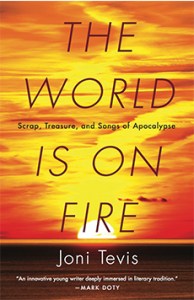
Joni Tevis' nonfiction collection The World Is on Fire is a collection for a future culture, with references to atomic bombs, Buddy Holly, the Alaskan wilderness, Liberace, and that old time religion.

Joni Tevis’ nonfiction collection The World Is On Fire is a collection meant for some future race, with references to atomic bombs, Buddy Holly, the Alaskan wilderness, Liberace, and that old time religion.

One of the most famous terms in literature is negative capability, coined by the poet John Keats. It’s so important that it even gets its own Wikipedia entry—not bad for a term that Keats mentioned once, and only once, and not in a poem or essay but in a letter to his brothers. So, if it’s such a big deal, then we probably ought to know what it means and how to use it or make it happen in our writing.

A recent essay that uses negative capability in a dramatic way is Joni Tevis’ “Fairy Tales of the Atomic Age (Rock City).” It is included in her new collection The World Is On Fire and was originally published in Orion, where you can read it now.

How the Essay Works

Probably no term has been more analyzed than negative capability, so let’s just start from the beginning, with Keats’ own words:

“it struck me what quality went to form a Man of Achievement, especially in Literature, and which Shakespeare possessed so enormously – I mean Negative Capability, that is, when a man is capable of being in uncertainties, mysteries, doubts, without any irritable reaching after fact and reason”

Here’s an even shorter version, as restated by F. Scott Fitzgerald:

“The test of a first-rate intelligence is the ability to hold two opposing ideas in the mind at the same time, and still retain the ability to function.”

So, the short answer to the question, “What is negative capability?” is that it’s the ability to give equal consideration to (or even believe) two contradictory ideas. So, what’s this have to do with writing great prose? Take a look at this passage from “Fairy Tales of the Atomic Age (Rock City)”:

I loved the world, believed its every inch paved with treasure, but knew it could be ripped away at any moment. Death was real; the preaching we heard every Sunday underscored that. A farm accident instantly killed my grandfather. A girl my own age, eight or nine, lost her mother one Friday night when her car was forced off a bridge. You’re no different, the preachers said, and I had to admit their logic. They’d start in on the scary parts of the Bible: Ezekiel, Daniel, Revelation, the moon turning red on that great and fearsome day. The Battle of Armageddon could start at any moment, the preachers would say, even now, while we’re sitting here in this big beautiful sanctuary, and are you right with God? Well, who could be? There will be a blast of wind, the rivers will turn to blood, the preachers said. Matthew 24:29, The stars shall fall from heaven, and the powers of the heavens shall be shaken. What a relief when we could all file out of the barnlike church, shaking the preacher’s hand on the way into the bright sun, past the blooming crepe myrtles and the old crabapple tree. How could we go out for fried chicken after that? How could I lie on the living room floor and read the funnies or look at the paper’s boring pictures of boring debutantes? I asked my parents about the end of the world, and they said, Try not to worry about it too much.

Tevis has set up contradictory ideas, a contradiction that is set up in the first sentence: 1) the world is beautiful and amazing, and 2) all of that beauty can be taken away. In other words, as the next sentence states, we’re all going to die. This might not seem contradictory. After all, both things are true. The world can be pretty great (though it’s not always), and everyone now living will die. Put that way, most of us will likely say, “Sure. Of course.” But what the paragraph does is make us feel the contradiction. It’s the same feeling that we often get at funerals or after hearing about some tragedy or horrible act in the world. We’re going to die, and it might be really terrible. That’s the message the preacher has, and when Tevis walks out of the church, she blinks at the light and delivers a line that I absolutely adore: “How could we go out for fried chicken after that?”

We know the passage has worked because there’s no good answer to the question. Her parents say, “Try not to worry about it too much,” which is no kind of answer. Or, it’s almost exactly the definition of negative capability, a term that is often considered a goal for good writing. In “Fairy Tales of the Atomic Age (Rock City),” Tevis suggests that believing in contradictory things is an inevitable and natural part of the human experience and that drama, the stuff of good writing, comes from a character’s inability to tie together those contradictory elements. The goal shouldn’t be, as Keats puts it, to avoid “irritable reaching after fact and reason.” Instead, it should be to reach for that fact and reason and find it missing. As with all writing, you want the reader to ask, in some form, the question, “Now what?”

The Writing Exercise

Let’s create tension with negative capability, using “Fairy Tales of the Atomic Age (Rock City)” by Joni Tevis as a model:

  1. Set up the conflicting ideas. Tevis uses “life is beautiful” and “we’re all going to die.” This isn’t so different from what Stuart Dybek does in his famous story, “We Didn’t.” He pairs sex and death. If you wish, you can stick to religion: “Jesus loves me” and “sinners in the hands of an angry god.” Or, you can move toward a personal conflict with others: “I’m a good person” and “everyone hates me” or “I’m horrible” and “everyone loves me.” Or, you can create an internal conflict: “I want to do good” and “I love doing bad” or “I love my children” and “I want to be free.” The goal is to put two incompatible ideas or beliefs in the same place, at the same time. It doesn’t really matter how small or large, personal or cosmic those ideas are. The important thing is that they should resist being held together.
  2. Make the reader believe one of those ideas. Tevis does this beautifully with the sentences about deadly accidents and the quotes from the preacher. The deadly accidents give us visceral proof of the idea. How can we argue that we all die when it’s happening in front of us? The preacher creates a philosophical framework around that proof; he’s telling his congregation how to think about the proof that they witness. This two-part structure is important. If anything that happens to a character/person/narrator is worthwhile, then that person has given it significant thought and has formulated a story to tell about it or mental approach to it. How we think about something is just as important as the reason we believe it.
  3. Introduce, quickly, the other idea. This is what happens when Tevis brings us out of the church, into the beautiful world and asks how we can bear to eat fried chicken. She’s juxtaposing the beliefs. She sets beauty (sunlight and crepe myrtles) against the preacher’s version of the world, with its real proof (untimely accidents). If the juxtaposition is sharp or harsh enough, the reader will understand, on a visceral level, the impossibility of both things being true. We will question (or understand the characters when they question) how both can be true at the same time.
  4. Answer the question with negative capability. Have someone say, as Tevis’ parents did, “Try not to worry about it too much.” If you have any experience with Christianity, you may be attaching a word to this dilemma: faith. We accept, on faith, things that we cannot understand or that seem not to be possible. But faith cannot exist without a crisis of faith (otherwise, it wouldn’t be a matter of faith; it’d just be obvious). What you’re setting up is a moment where the narrator or character understands that two ideas cannot be held together, but there they are, together, and they must deal with the mental trauma of trying to make congruous this incongruous pairing. In other words, someone must say, “Don’t think about it too much,” and that mental avoidance must come to seem impossible or undesirable. When that happens, the reader will automatically want to know, “Then what?”

Good luck.

An Interview with Melissa Falcon Field

7 May
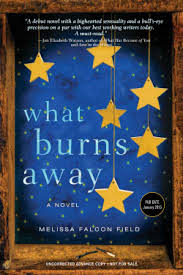
Melissa Falcon Field's debut novel, What Burns Away, explores the narrator's sudden isolation after having a child and finding her marriage in trouble.

Melissa Falcon Field’s debut novel, What Burns Away, explores the narrator’s choices after finding herself suddenly isolated after having a child and finding her marriage in trouble.

Melissa Falcon Field is the author of the novel, What Burns Away. She was born in Hartford, Connecticut, and earned her MFA in Fiction Writing from Texas State University. She has been the writer-in-residence at the Katherine Anne Porter and a Bread Loaf fellow, worked as an inner-city teacher with Teach for America and AmeriCorps, and helped develop and pioneer the YEAR UP writing curriculum used nationally. Her writing has appeared in various literary magazines and journals, including Hip Momma: The Parenting Zine, Kaliope Literary Journal, The Portland Phoenix, Across Curriculums, The Austin American Statesmen, The Ballantine Books Reader’s Circle, The Hartford Courant, and The Maine Scholar. She lives in Madison, Wisconsin with her young son, her husband, and four chickens.

To read an exercise on creating tension in a story and an excerpt from Falcon Field’s novel, What Burns Awayclick here.

In this interview, Falcon Field discusses her approach to space breaks, love triangles, and sex scenes.

Michael Noll

I’m interested in your use of space breaks, something that a lot of beginning writers struggle with. For instance, early in the novel, you begin a passage with the sound of the narrator’s son waking her and then move into a flashback about the narrator’s childhood. When the flashback ends and the scene returns to the present scene with the son, the move is punctuated with a space break. The next section uses a similar structure: son as window to something else—in this case, the narrator’s husband. What is your approach to space breaks? Is it about thematic structure? Is it to help the reader avoid confusion?  

Melissa Falcon Field

In the novel, I use space breaks for a variety of reasons, first and foremost, as a way of showing readers a normal break in the narrative, but here, in the sections you reference, because so much of this early part of the novel toggles between back story and the present timeline, space breaks work to clarify those shifts, and they also serve to re-direct the reader in and out of Claire’s reflections, helping to avoid reader confusion with those time shifts. At other times, later in the novel, space breaks serve as a breather from the continual present time narrative, and allow Claire’s reflection and internal world to stand alone, giving them weight, and a wink a their importance, when punctuated by the space break.

Michael Noll

One of the so-called rules promoted by writing workshop is to eschew adjectives. However, your use of the adjective “steadfast” in describing the narrator’s husband (“the steadfast Dr. Miles Bancroft”) is pretty sharp, in part because it comes from a first-person narrator. The description of the husband is pretty spare. Besides this line, there is only one other descriptive phrase early on: “a new breadbasket of weight pooled at his waist.” How did you approach this all-important description? Were you aiming for a particular attitude toward the husband?

Melissa Falcon Field

Great question, Michael. I would say that, in general, the eschewing of adjectives in a novel is to foster finer writing and to encourage streamlining of sentences, avoiding language that reads as clunky, or feels heavy. But when a confessional is being written, as it is here in What Burns Away, Claire is zooming in on her husband, observing him, and so those adjectives work to establish her voice and are the adjectives that she, as the narrator has chosen, thus giving the reader access to her perception of her husband, Miles, guiding the reader to view him within the portrait of their marriage. So, although I prefer to keep the use of adjectives relatively limited in my fiction, I do find them necessary in some places to invoke decisive descriptions in sections where the pacing needs to be slowed down, with intention, as it is in the sections you have pointed to here.

Michael Noll

The novel pretty quickly sets up the triangle between the narrator and her husband and her former boyfriend. Was it difficult to get both of those men into the novel quickly—to basically juxtapose them on the page? I’m curious how much revision was required to make that juxtaposition happen.

Melissa Falcon Field

That triangle was there in my earlier conception of the novel when I knew I wanted to write from the vantage point of a new mother, who feels like everything desirable about her has moved past. So it was my hope that by incorporating Dean, a former lover, juxtaposed with Miles, Claire’s absentee husband, I could better capture that moment in a woman’s life when she feels desperate to reclaim her girlhood-self, just as she realizes her youth is more behind her than it is in front of her, which in this case, forces Claire to decide what and who she must let go of, and what and whom she must hold close. Because the story is ultimately about the ways characters redefine themselves, I sketched out that triangle for the first draft very loosely. That said, it was Dean who I focused on first, as I worked to establish the backstory of the novel.  Later, in second, third and fourth drafts, I worked more specifically to redefine Claire inside her family dynamic and within her marriage, in relation to her husband Miles. And because the two male characters work in polar opposition, I was able to play-out Claire’s surrender, which is both brutal and transformative, and why I felt compelled to capture that tension of a love triangle in What Burns Away.

Michael Noll

I’m always curious how writers handle sex scenes, and so I was interested in the flashback about the narrator’s first time with Dean, her high-school boyfriend. Other than a reference to rough palms, there’s almost no physical description. Instead, the passage focuses on what the sex and intimacy meant to the narrator. Did you play around with other ways of writing this scene? Did you always keep the physical description spare? 

Melissa Falcon Field

What Burns Away, the debut novel by Melissa Falcon Field, has been called "thrilling" and "perceptive" by Tin House executive editor Michelle Wildgren.

What Burns Away, the debut novel by Melissa Falcon Field, has been called “thrilling” and “perceptive” by Tin House executive editor Michelle Wildgren.

Sex that is any good is characteristically over the top, so I have always been more interested in redirecting readers beyond the obvious, toward the more unique secrets of the act, focusing on the minutia of rough palms, a freckle at the curve of a lover’s hip, or the tiniest bead of sweat on the tip of a nose. I did experiment with how to write those scenes, and at first it all read a bit more like pornography, which don’t get me wrong, has its place, but it wasn’t in that moment. So, I stepped back and thought more about the importance of that scene, which for Claire is a memory about desire and intimacy, and what being wanted felt like, so I focused on that, which is, after all what she has been missing and yearning for and what, in the end, gets her into big trouble, leading to later sex scenes with a more physical quality to them—cast into another kind of heat.

Michael Noll

You’ve spent years working as a teacher and writing coach. How does this work inform your writing? Writers often complain that the time demands that teaching places on them takes away from their writing, but given how much teaching you’ve done, I’m curious if you feel differently.

Melissa Falcon Field

Teaching, if you do it well, requires a huge amount of creative energy. But I love it. And, I do believe that for the most part, excluding midterms and final papers, it feeds my writing life. Over the years, teaching the craft and working along with my students, writing and revising and remembering how it is to first read, or conceive of a character, plot, or setting has been a source of great joy, and has always driven me to better hone my work and my ability to talk about narrative. Selfishly, I gain as much from the fresh perspectives of my students, as I give them back. It’s a wonderful kind of relationship, and one of the most important roles I play. And, I should also say that I would never have written a word without those who taught me, and the idea of being that person for someone else motivates me to read and write harder for my students, and to continue to learn more to be the best version of reader, writer and teacher for my students, as we all do the hard work together.

May 2015

Michael Noll Michael Noll is the Editor of Read to Write Stories.

How to Create Friction Between Character and Scene

5 May
What Burns Away, the debut novel by Melissa Falcon Field, has been called "thrilling" and "perceptive" by Tin House executive editor Michelle Wildgren.

What Burns Away, the debut novel by Melissa Falcon Field, has been called “thrilling” and “perceptive” by Tin House executive editor Michelle Wildgren.

In life, people tend to work together. At weddings, when the crazy uncle is drinking too much and telling offensive jokes, the rest of the family negotiates this behavior gently, distracting the uncle and muting him. Everyone is on the same page. If life didn’t work this way, we’d spend all of our time screaming at each other. In fiction, however, characters shouldn’t work together, at least not all of them. When a scene gathers momentum and begins to take on rules for how to act, a character needs to refuse or fail to play along. That friction between character and scene can be a great source of tension.

Melissa Falcon Field’s novel What Burns Away has this tension in spades. You can read the opening of the novel here.

How the Novel Works

The novel opens with a scene that may feel familiar to parents of young children. It’s morning, the baby is awake and screaming, and one of the parents is getting ready for work. The other is staying home. So, the scene is set:

Jonah hollered again, his breathing gone fierce: “Mama! Come!

Such hollering tends to create a particular mood in a house, in a scene. Think about the last time you were around tired people while a child screamed. What was the mood? Frustrated? Frantic? Now, watch the book’s narrator (Jonah’s mother) look at her husband:

I eyed my husband through the open bathroom door, watching as he tapped his razor against the edge of the sink.

Already, you can see a distance open up between the sensibility of the scene (screaming child) and the response of the character “tapped his razor.” Imagine how else this description of the husband could have been written. He could have become as frantic as the child (parents often do). He could have snapped at his wife. He could have rushed out the door. Instead, he moves methodically. Now, watch how the sensibility of that tapping razor gets stretched along:

Miles kept his back to me. A new breadbasket of weight pooled at his waist, and I studied his face in the mirror. His steady surgeon’s hand took a straight edge to the beveled cleft of his chin.

All desperation and hysterics, Jonah screamed. “Please, Mama!”

Every sentence contains a key detail: Instead of turning to his wife to see if she hears the baby, Miles keeps his back to her. He has gained weight, which has pooled (note the inertia implied in that word choice) at his waist. We learn that he’s a surgeon with a steady hand. In short, his refusal to get sucked in to the household drama is an essential part of his nature and evident in his actions, his physical appearance, and his career.

Now, watch what happens next:

Miles turned to face me as I stood, a dollop of shaving cream above his lip. “Claire, go get the baby.”

That’s a cold line. He’s asserting himself and his sensibility upon the drama around him. It’s a line that you can feel like a punch in the gut.

The Writing Exercise

Let’s write a gap between scene and character using What Burns Away by Melissa Falcon Field as a model:

  1. Set the tone of the scene. Often, this is done by introducing a particular force. In What Burns Away, it’s a screaming baby. In my earlier example, it was an uncle acting inappropriately at a wedding. Both are characters who can’t be tamed, at least not easily. This week’s episode of Mad Men had a great example of this. Don’s in a meeting with a table full of creative directors, listening to a pitch about beer. The company is impressively huge, and so everyone is listening intently. But not Don. In short, walk something into the scene that cannot be ignored, that must be dealt with.
  2. Create the character who will not play along. In What Burns Away, the husband refuses to quicken his morning routine for a screaming child. In Mad Men, Don refuses to listen. At the wedding, a character could egg the uncle on, rather than tamping down his behavior. If you know what the best or necessary behavior is, think about what it would mean for a character to A) do the opposite or B) disregard the thing that cannot be ignored.
  3. Be subtle. Miles eventually tells his wife to get the baby, which is highly dramatic, but before we get to that moment, we see him resisting or ignoring in a very small way: tapping his razor. In Mad Men, Don looks out the window before he walks out of the room. Don’t jump directly to the drama. Set it up by giving the character the smallest possible physical action that reveals or embodies his or her sensibility or behavior in general. Give the character a way to not play along that no one but the reader and maybe one other character will notice.

Good luck.

An Interview with Ru Freeman

4 May
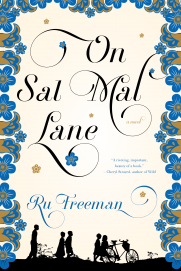
Ru Freeman's novel On Sal Mal Lane was called, by Cheryl Strayed,

Ru Freeman’s novel On Sal Mal Lane was called, by Cheryl Strayed, “Piercingly intelligent and shatter-your-heart profound.”

Ru Freeman was born in Colombo, Sri Lanka, and is the author of the novels Disobedient Girl and On Sal Mal Lane. She is also the editor of the forthcoming anthology, Extraordinary Rendition, a collection of the voices of American poets and writers speaking about America’s dis/engagement with Palestine. She has worked in the field of American and international humanitarian assistance and workers’ rights, and her political writing has appeared in English and in translation. Her creative work has appeared or is forthcoming in VQR, Guernica, World Literature Today and elsewhere. She is a contributing editorial board member of the Asian American Literary Review and a fellow of the Bread Loaf Writer’s Conference, Yaddo, Hedgebrook, and the Virginia Center for the Creative Arts. Freeman won the 2014 Janet Heidinger Kafka Prize for Fiction by an American Woman. She calls both Sri Lanka and America home.

To read an exercise on using an omniscient narrator and an excerpt from Freeman’s novel, On Sal Mal Laneclick here.

In this interview, Freeman discusses the challenges of explaining historical context in a novel and creating an omniscient narrator and the politics of Sri Lanka and On Sal Mal Lane.

Michael Noll

On Sal Mal Lane begins with a prologue that functions very much like the infamous prologue to Star Wars. It sets up the politics, geography, and history of the place—and also indicates that, in the story’s beginning at least, the major conflict is some miles away from the main characters. What was your approach to this prologue? Do you think it would have been written the same if you could assume that your readers knew a lot about Sri Lanka and its civil war?

Ru Freeman

I like the way you use that to discuss the book. The prologue in this form was added after I had written the first draft. The original prologue, several pages longer, focused mainly on the characters, and all of it eventually got whittled down to that last paragraph. When I finished writing the book, I felt that there was a sense of longer-term history that couldn’t be contained within the main text of the book without burdening it with those kinds of explanatory treatises on history that can kill momentum. It was necessary that people understood that there was this regional and international context, this history of colonization and brutality, but also that, in the end, none of those things were relevant to the daily lives of ordinary people like those who lived on Sal Mal Lane. As a way of tracing immediate history to a pivotal moment, I included the murder of Alfred Duraiappah and the call to war by Prabhakaran. Whether people knew this history or not, setting it down with those few brushstrokes helped to establish the voice of the narrator who is, to continue with your image, a Yoda like character who knew all that came before and all that was to come to pass and could maintain both warmth and distance from every composite part of the story—the human and the inanimate.

Michael Noll

The prologue also has this remarkable pair of sentences:

“And who, you might ask, am I? I am nothing more than the air that passes through these homes, lingering in the verandas where husbands and wives revisited their days and examined their prospects in comparison to those of their neighbors.”

In essence, you have created an omniscient narrator and then embodied it in something of the novel’s world. Was this a conscious decision—in response, perhaps, to readers or yourself wondering who was speaking? Or did these sentences arise spontaneously in an early draft?

Ru Freeman

Ru Freeman's novel On Sal Mal Lane

Ru Freeman’s novel On Sal Mal Lane “soars [with] its sensory beauty, language and humor,” according to a New York Times review.

It was an asking of myself as I tried to wrap my head around this voice that had come into being while writing the earlier version of the prologue, and the novel itself. It occurred to me that the narrator here was someone (or in this case perhaps something, the road), who was intimately familiar with the this place, with compassion for everyone, but a particularly keen fondness for two of the characters, Mr. Niles, and Nihil. In the scheme of things there is no one main character here, but the ties that bind these two are elevated above all the other bonds that form—and are broken— between the people of Sal Mal Lane. Why this voice lingered over those two characters got me thinking about the entity to whom the voice belonged. So, it was spontaneous, in one sense, but also deliberate.

Michael Noll

Each chapter gets a title. Obviously this is something that some books do and some don’t. What made you choose to title them?

Ru Freeman

In my first novel, I alternated the story between Biso (an older woman leaving an abusive husband, taking her three children with her on a journey that lasts just about 36 hours, all related in the first person), and Latha (a little girl who comes to live in a house as a companion to a girl her own age who lives there, and whose story covers about three decades and is told in the third person). When I began this book, I imagined that I’d write it by alternating the voices of the children, staying close to each in turn, sort of like what Barbara Kingsolver did with Poisonwood Bible. I must have written about a third of the book when I began to feel oppressed by this framework. I abandoned it as a strict guideline and began to simply write the story, though, as you can perhaps tell, I do concentrate on one or the other of the children as I go along, at least in certain parts. I decided to break the book up by year into sections, and then title the chapters. I enjoyed coming up with those titles. It’s not something people do too often, as you point out, but it is a lot of fun and if I’m having fun then the writing tends to be better than when I’m straining.

Michael Noll

At the risk of veering into politics, I was reading this novel when Sri Lanka held its presidential election in January, and so I couldn’t help holding the two events (the events of the novel and the election) side by side. In the novel, animosity is rising between Tamils and Sinhalese. Now, the war is over, and the minority groups (including the Tamils) who suffered during it have managed to vote out the president who claimed credit for ending the war. Do you imagine Sal Mal Lane today? Do the current events cause you to think about the years of the novel in a different light or way?

Ru Freeman

Freeman's website contains what is, perhaps, the most comprehensive list in existence of Sri Lankan writers.

Freeman’s website contains what is, perhaps, the most comprehensive list in existence of Sri Lankan writers.

There is never a veering into, I think. We are always situated quite firmly and centrally in the middle of politics. As far as the election goes, while it is true that many ordinary citizens came together to vote out the former president, there were machinations that went beyond Sri Lanka, including the United States, to bring the current one into power. When I hear the rhetoric from the new leadership, I don’t feel optimistic; the alignment of the new president is with the United National Party, which in its time of power reigned over the massacre of more than 60,000 youth. The language used is old, it panders to American interests, and it is, frankly, disorderly. That combination can be deadly in a country like Sri Lanka, with a highly educated, enfranchised, and engaged civil populace.

Be that as it may, the Sal Mal Lanes of my country never disappeared. They went on through another quarter century of war, they mended fences, came apart, celebrated and mourned. There was a weight felt by everybody as they did these things, that was only lifted in May 2009, when the war officially ended, when the walls and barricades and checkpoints were dismantled, and the soldiers went to work on reconstruction and other support work. Devi, therefore, was a symbol to me of a fragile beauty that underlined all life in Sri Lanka, as well as a stand-on for the country itself. How people dealt with her presence and absence was and is similar to how they dealt with what happened during those decades of war.

May 2015

Michael Noll Michael Noll is the Editor of Read to Write Stories.

An Interview with Stefanie Freele

30 Apr
Stefanie Freele

Stefanie Freele “recasts suburban ennui as existential terror,” according to J. Robert Lenon. Her latest story appeared in Tahoma Literary Review.

Stefanie Freele is the author of two short story collections: Surrounded by Water and Feeding Strays. Her story “While Surrounded by Water” won the Glimmer Train Fiction Award and “Us Hungarians received second place in the Glimmer Train Family Matters Contest. Stefanie’s short stories have appeared or are forthcoming in Mid-American ReviewWitness, Western Humanities Review, Sou’westerQuarterly WestThe Florida ReviewNight TrainAmerican Literary Review and Edge. Her work has twice been nominated for the Pushcart Prize.

To read an exercise on writing descriptive passages and Freele’s story, “Davenports and Ottomans,” click here.

Michael Noll

I’m interested in the story’s approach to close description. The first paragraph focuses on Maribel’s shoes and purse and then zooms in on her tights, particularly on the crotch. The language seems meant to make the reader feel claustrophobic (and from your blog post for Tahoma Literary Review, I know that feeling is intentional). I’m curious in the last sentence of that paragraph:

She hates these ill-fitting tights, the crinkly dress, the stiff polished shoes, and her mother for making her wear all of this nonsense. 

It’s a line that seems to sum up the details that we just read. This is a strategy that I actually teach in writing classes: present details and them sum them up by telling the reader what they mean. Did you wrote this sentence with any purpose in mind or were you were simply following the rhythm of the prose?

Stefanie Freele

Typically I don’t intentionally tell the reader what I’ve meant, because I assume they’ve caught what I mean, but in this case I think you are partially right: I was following the rhythm of the prose. Also, I think having this list emphasizes that for Mirabel, she is counting and focusing on her discomforts. While another child might be proud of this attire and show it off to the aunties, Mirabel is physically sensitive – pride and appearances aren’t her vices.

Michael Noll

In this story, the dialogue is italicized and not broken out into separate paragraphs. There are no quotation marks. This is a technical question that comes up a lot in drafts and in writing classes. Did you format it this way to avoid slowing down the prose? Were you trying to embed the dialogue within the voice, rather than getting caught up in prolonged scenes?

Stefanie Freele

Both. I very much enjoy prose that doesn’t break dialogue into paragraphs by quotes. I find it a distracting break from the story and I often jut out of the dream to inquire, who is talking now? I realize that some people abhor italic dialogue, but I may unapologetically continue writing this way.

Michael Noll

The narrator is listening to the grown-ups in the room and noticing them “using adult words like Naugahyde and paisley,” This is a recurring idea in the story, the distinctions marked by particular words and phrases: “something special” and “smile and shape up” and “smirk.” This seems like a really useful way to clue readers in to the narrator’s age and relationships with the other people in the house. Is it something you fell into—one of those happy accidents in writing—or was it an effect you were intentionally trying to achieve?

Stefanie Freele

Let us go with the happy accident theory. I think I am watcher, like all writers I suppose, and a collector of the phrases people say. There can be a ton of dialogue between people, but there are those certain words that will stand out and directly indicate something about the character. I try not to waste any words that don’t have to do with the revealing the character, the story or some sort of underlying message.

Michael Noll

I guess this story would be classified as “flash fiction,” both because of its length but also because it takes place in an instant. Was it always confined to this particular moment in time? Or, was it carved out of a longer piece of writing?

Stefanie Freele

Ray Vukcevich's story

Ray Vukcevich’s story “The Sweater” is included in his collection Meet Me in the Moon Room from Small Beer Press.

It isn’t yet carved out of a longer piece of writing. I was exploring the idea of anxiety in children and what adults might miss or can’t see. I was also recalling certain memories (will never forget the awful tights) and that sensation that one feels like they might burst or rip apart due to discomfort from all angles.  To the other characters in the story, they have no idea what is going on with Mirabel, with that explosive distress. She has made some connections and decisions including that stealing what is forbidden is acceptable. So much is happening to her in a few minutes, in one room, in one scene, and nobody one knows. I love the idea of exploring what is happening to someone in an iota of time. Ray Vukcevich did this in his story “The Sweater” where the entire story is told while a character is trying on a sweater. A must read.

April 2015

Michael Noll Michael Noll is the Editor of Read to Write Stories.

How to Direct the Reader’s Attention

28 Apr
Stefanie Freele's story, "Davenports and Ottomans" was published in Tahoma Literary Review.

Stefanie Freele’s story, “Davenports and Ottomans” was published in Tahoma Literary Review.

In his epic story, “Hurricanes Anonymous,” Adam Johnson uses a strategy for writing descriptions that has fundamentally influenced how I write my own. It’s also a strategy that I see everywhere, in books of all kinds, and I recently came across it once again in Stefanie Freele’s story, “Davenports and Ottomans.” It was published in a relatively new journal that is already developing a reputation for quality work, Tahoma Literary Review. At the TLR website, you can read the story, and the entire issue of the journal, as a pdf.

How the Story Works

In some ways, Johnson’s story, one of the longest (maybe the longest) story ever published in Tin House, has little in common with Freele’s story, which clocks in at just three pages. Yet both stories use the same approach to description.

Here is a passage from the beginning of Johnson’s story:

The boarded-up Outback Steakhouse next door is swamped with FEMA campers, and a darkened AMC 16 is a Lollapalooza of urban camping. It’s crazy, but weeks after losing everything, people seem to have more stuff than ever—and it’s all the shit you’d want to get rid of: Teflon pans, old towels, coffee cans of silverware. How do you tell your thin bed sheets from your neighbor’s? Can you separate your yellowed, mismatched Tupperware from the world’s? And there are mountains of all-new crap. Outside the campers are bright purple laundry bins, molded-plastic porch chairs, and the deep black of Weber grills, which is what happens when Wal-Mart is your first responder.

In this passage, a pattern develops: give details and then tell the reader how to understand those details. So, we see the parking lots full of campers and then get the line, “It’s crazy, but weeks after losing everything, people seem to have more stuff than ever—and it’s all the shit you’d want to get rid of.” The same thing happens at the end of the passage. We see the laundry bins, porch chairs, and grills, and then we get this line: “which is what happens when Wal-Mart is your first responder.”

Of course, Johnson reverses the pattern as well: “it’s all the shit you’d want to get rid of: Teflon pans, old towels, coffee cans of silverware.” In that line, he tells us how to understand the list that follows. Mostly, though, throughout the story, a list of details is summed up with a line that indicates how to understand those details. It’s an incredibly effective strategy, as the paragraph from “Hurricanes Anonymous” makes clear.

Now, here is a passage from Freele’s story, “Davenports and Ottomans”:

The crotch in Maribel’s white tights scoots even lower, half-way down her thighs as she enters the hot holiday-decorated living room. The insides of her legs itch and are already chafing from the short walk across the icy parking lot and up the green carpeted stairs that smell like mold and rain, a confining smell she will forever associate with Great Aunt Agnes. She hates these ill-fitting tights, the crinkly dress, the stiff polished shoes, and her mother for making her wear all of this nonsense.

The description is no longer about setting, as it was in Johnson’s story. Instead, it’s become personal, a description of a character’s clothes and the way they make her feel. Still, the strategy is the same: details and interpretation. We see the tights and her thighs, the itching and chafing, and the claustrophobia of these details is connected to setting with the moldy carpet. Then, we get that last line, which adds the character’s thoughts: “She hates these ill-fitting tights, the crinkly dress, the stiff polished shoes, and her mother for making her wear all of this nonsense.”

The details probably made you feel a certain way, but the words hates and nonsense point us in a clear direction for understanding this feeling and these details. There are, in fact, many ways to feel about ill-fitting tights, and the story, in a line, dispatches with all but one, which allows the story to move forward with a clear sense of purpose.

The Writing Exercise

Let’s write a description using “Davenports and Ottomans” by Stefanie Freele as a model:

  1. Decide what to describe. Johnson describes setting: a place. Freele mostly describes a person, though that description eventually brings in some details about place. It doesn’t really matter what you want to describe, only that it (place, person) should be connected to some feeling. That feeling may be vague, but it should be there. When you think about the place/person, you should feel excited or uneasy or something. In stories, neutral is almost never good. We want characters and places that are charged with emotion or sensation.
  2. Describe it with specific details. Eventually, you’ll want details that cohere into a whole that is larger than the parts, but, first, you just need to get some details onto the page. Be as specific as possible. Use the sort of nouns that have adjectives attached to them (“white tights…half-way down her thighs” or “bright purple laundry bins, molded-plastic porch chairs, and the deep black of Weber grills”). You’re giving the reader something to see, an image that may be familiar or surreal. Either way, it’s specific.
  3. Interpret the details. Try using the phrasing from either of Johnson’s sentences as models: “People seem…” or “which is what happens when…” Or, use Freele’s phrasing: “She (emotion verb) (things we just saw). The goal is to not only tell the readers what we just saw/read but also how to think about it.
  4. Revise the passage for coherence. Once you have a line of interpretation, you may find that some details fit better than others. So, cut the ones that don’t fit, add more that do fit, and tweak the interpretive line so that the entire passage makes as much sense as possible.

Good luck.

An Interview with Sora Kim-Russell

24 Apr
Sora Kim-Russell lives in Seoul, where she writes and works as a teacher and translator.

Sora Kim-Russell lives in Seoul, and her translations of the Korean writer Bae Suah are among the first of that form-breaking writer’s work to appear in English.

Sora Kim-Russell is a literary translator based in Seoul. Her translations include Shin Kyung-sook’s I’ll Be Right There and Gong Ji-young’s Our Happy Time, as well as Bae Suah’s Highway with Green Apples and Nowhere to Be Found. Her translation of Hwang Sok-yong’s Princess Bari will be available on April 27, 2015 through Periscope (UK).

To read an exercise on characterizing an entire society and Bae Suah’s novella, Nowhere to Be Found, and also an interview with Bae, click here.

Michael Noll

The style of the language in Nowhere to Be Found is plain and direct. There are moments of metaphor and some lovely writing, of course, but from the first page, the narrator’s voice is very matter-of-fact. I’m not a translator myself, but I can imagine the difficulties of trying to find a match in English for the tone of the original prose. Did you have a strategy for this? Did you play around with different approaches until you found one that was right?

Sora Kim-Russell

I did play around with the narrator’s voice, especially in the opening pages. It was important to me to capture the narrator’s tone and attitude right from the get-go. Korean-to-English translation has an innate tendency to veer abstract and indirect, so I really tried to push against that and keep the language clear and direct. That way, when the story later takes its flights of fancy, those parts would have room to shine. As for capturing tone and voice, I think my approach is a combination of text analysis and method acting. In terms of text analysis, I look for rhetorical patterns—words or images or emotions that reappear, particular sentence styles and shifts in sentence structure, anything at all that gets repeated—in order to pin down how the narrator is telling her story. As for the “method acting” part, I thought about my own experiences in my twenties and tapped into those memories of dead-end jobs, dead-end relationships, fear of the future, and so on, in order to channel those emotions into my translation. By that, I don’t mean that I wrote myself into the character—it was more like orienting myself emotionally onto the narrator and mapping where our choice of words and phrasings aligned and diverged.

Michael Noll

I’m curious about challenges you had as a translator in finding English equivalents for basic aspects of the Korean setting. There aren’t very many well-known Korean writers in America and certainly not many who are being translated. As a result, I found myself realizing as I read how little I know about Korea, especially as it was during the 80s. In some ways, the narrator seems like any young, single person. In other ways, though, the effect that poverty and the cultural expectations for single women feels quite different from what an American might experience. Does the prose in Korean take for granted certain things that had to be illustrated or explained a bit for an American audience?

Sora Kim-Russell

There were a few “taken for granted” parts, though to be fair, at least one of those references would be just as tricky for young Korean readers today—namely, the “officer-in-training” system that Cheolsu was in. I got really stuck on how to translate Cheolsu’s rank (silseupsodaejang). I guess it’s very roughly analogous to the ROTC system in the US, with the critical difference being that most Korean men don’t choose to go to the military. In South Korea, all able-bodied men have to undergo two years of military service, usually right in the middle of their college years. Cheolsu’s situation is different because he goes into the service after college, his stint is very short, and he starts at a higher rank than other men. He has it easy, in other words. The writer explained to me that, back in the ‘80s when the novella takes place, the officer-in-training system offered a loophole intended to benefit men from elite families, but as the man on the phone (towards the ends of the book) explains, some lower-class men were able to take advantage of it if they could pass the exam. So that was a very specific historical detail that is not explained in the original but which sheds light on who this Cheolsu guy is. I opted to add in a brief explanation, because there was no way to pack all that context into a single word translation.

Also, more broadly, the whole system of military conscription and the idea of women providing support and encouragement (from food, visits, and letters to perhaps more than that) to men undergoing military service is a ubiquitous part of modern Korean culture. If you know that, then it might be easier to understand why the female protagonist resists it. It also helps with understanding South Korea in general, though I would argue that this notion of women feeling pressured to provide “comfort” to men in the military is close to universal and no doubt found in every patriarchal, militarized culture around the world.

Another “taken for granted” part worth pointing out is the title itself. The original title was “Cheolsu,” but it didn’t work in translation because Cheolsu is an extremely common male name in Korea, comparable to “John.” In English, the name comes across as exotic and foreign, which is exactly the opposite of its intended effect in the original, so we opted to change the title in order to convey that sense of ordinariness and anonymity in a different way.

Michael Noll

How much freedom did you take in structuring sentences? For instance, a street in Uijeongbu is described this way: “A perfectly gray street. An old and dirty street.” Were the original lines fragments as well, or is that a construction you used in order to achieve a particular effect?

Sora Kim-Russell

I actually stuck very close to the author’s original sentence structures. There’s something jarring about her sentences in Korean, especially the shifts from long, antithetical sentences where she takes a phrase and turns it back and forth before moving on, to abrupt fragments where the speaker seems to have run out of breath. If I changed anything, it was because it didn’t work grammatically in English, but wherever possible I followed the author’s lead. There were a few places where I had copy editors suggest changes, either deleting a fragment or changing a word choice that seemed out of place, but I stuck to my guns and insisted on keeping them, or looked for ways to smooth them out just enough to allow them to fold into the text but still assert their presence. Whenever there was any doubt, I checked with the writer, and she gave me her opinion on what she thought could be changed or deleted without hurting the text, and which things needed to stay in place. She likes to jar her readers, but the challenge was to find the right words in English that jar without completely unseating the reader.

April 2015

Michael Noll Michael Noll is the Editor of Read to Write Stories.

An Interview with Bae Suah

23 Apr
Bae Suah is a Korean writer living in Germany whose books set in South Korea are finally being translated for English-language audiences.

Bae Suah is a Korean writer living in Germany whose books set in South Korea are finally being translated for English-language audiences.

Bae Suah was born in Seoul and has published seven books in Korean, three of which have been translated into English: the novellas Highway with Green ApplesTime in Gray, and, most recently, Nowhere to Be Found. She currently lives in Berlin and translates German literature into Korean, including Martin Walser’s Angstblute and two works by W. G. Sebald. She is currently translating the Portuguese writer Fernando Pessoa’s The Book of Disquiet.

To read an exercise on characterizing an entire society and Bae’s novella, Nowhere to Be Foundclick here. The following interview was translated by Sora Kim-Russell.

Michael Noll

The narrator in this novella—as well the narrator in your story “Highway with Green Apples”—seems to be struggling with what it means to be a young, single woman in a place where the expectation of marriage is quite strong. Given that expectation, I was sometimes surprised at how “liberated” she sometimes sounded. For instance, in a passage about what makes a relationship special, she casually mentions watching porn. Even in the present American culture of TV shows with strong, sexually independent female characters like Girls and Broad City, this reference to porn still took me by surprise. Is it something that would have surprised Korean readers in 1998 when it was first published?

Bae Suah

Well, in that particular passage, the viewer of porn isn’t specified as either male or female, but I do think women watch porn. Of course, men probably watch it for different reasons… In this case, some readers may wonder why the act of watching porn in particular would remind a person (male or female) of someone. It’s not about porn, per se, but about the way a certain someone can suddenly come to mind when you’re busy doing something. I think most of the Korean readers of this novella have been young women, and they didn’t seem put off by this passage. Or at least, I don’t think they were. I don’t think they were surprised by it either.

Michael Noll

Near the end of the novella, there’s a jump in time. You write:

“That year was my beginning and my end. It was one year of my life that was neither particularly unhappy nor particularly happy. It wasn’t so different from 1978, and it wasn’t any more or less memorable in comparison to 1998. The things that happened in 1988 had also happened in 1978 and would happen again in 1998.”

The passage continues on that way. It’s a bleak sense of an absence of logic and progress that you end up calling “third person random.” It’s something that appears in “Highway with Green Apples” as well, a sense of disorientation and disconnectedness, not just between the narrator and her life but among almost all aspects of life. There’s a kind of cruel senselessness at work. It makes me wonder at the reception of these stories in Korea when they were first written. Did readers say, “Oh yeah! This is how it is.” Or did they bristle at the portrayal of their world and the people in it?

Bae Suah

As with the first question, I think that young female readers responded positively to this novella. I guess you could say that what I portrayed in this novella is a kind of volcano inside women’s hearts—volcanoes that threaten to, but never actually, erupt. However, older readers and male readers reacted differently. Male readers bristled at this book, and specifically said that they felt put off by the narrator. The female protagonist is not very nice to the male protagonist; she throws his food in a latrine just to dramatically demonstrate how she is feeling (one younger male reader told me that chicken was highly prized in the army back in the ‘80s); and she has a brusque way of speaking (in fact, she tends to be curt, unfriendly, and rude with others). In other words, she’s the opposite of what’s expected of a woman in Korean society, and that made older readers and male readers uncomfortable. Plus, the novella doesn’t take a delicate approach to emotion and makes no attempt to appeal to universal sentiments. It tosses out unfamiliar and idiosyncratic words and expressions without pampering the reader, and it offers no cause-and-effect explanation in a way that could be understood by anyone and everyone, and I think that is why Korean (male) critics weren’t too happy with this book.

Michael Noll

The novella contains a Kafka-esque moment when the narrator visits Kim Cheolsu at the army base. She ends up running around, being misinformed about his whereabouts, being told that there is more than one person by that name. Was it difficult to find scenes or actions that would convey that sense of “third person random” that is subtly present in so much of the novella?

Bae Suah

The events in the story are all based in reality: the fear a young woman feels as she’s on her way to visit a boyfriend in the army, the anxiety of an uncertain future, the terror of love, and so on. That fear and anxiety is not something that can be overcome simply by escaping poverty. As soon as one insecurity dissipates, another drops before us like a curtain. The young woman on her way to meet her boyfriend doesn’t know this yet, but the older woman narrating the story does. She’s no longer troubled by the pain and uneasiness that follows love (i.e. relationships with men), and she doesn’t regard it as the source of her misfortune. She accepts this anxiety as part and parcel of life and love. While writing this novella, I recalled how I felt back in my twenties, so it really wasn’t that difficult to follow the narrator’s emotional trajectory.

April 2015

Michael Noll Michael Noll is the Editor of Read to Write Stories.

How to Capture an Entire Society

21 Apr
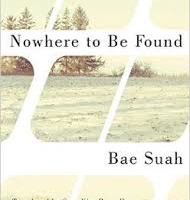
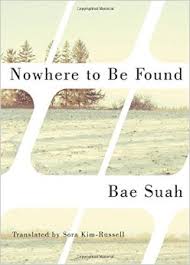
Nowhere to Be Found by Bae Suah tells the story of a young woman trying to make sense of her life and world in South Korea.

Nowhere to Be Found by Bae Suah tells the story of a young woman trying to make sense of her life and world in South Korea.

Some stories are about individuals, and the drama between them is so intense that the backdrop could be the Death Star or a blank wall and it wouldn’t matter. In other stories, the backdrop matters. Take it away, and the story vanishes. Whether the story is about a society as a whole or a particular town or neighborhood, the challenge is to establish the backdrop as quickly as you’d establish a character. This is, of course, not easy.

One story that shows how it can be done is Bae Suah’s novella Nowhere to Be Found. It was originally published in 1998 in Korean and was recently translated into English by Sora Kim-Russell and published in the United States. You can read the opening pages here.

How the Novella Works

Here is how the novella begins:

In 1988 I was temping at a university in Gyeonggi Province.

Mostly what I did there was send lecture requests to part-time instructors, make adjustments to their class schedules, mail them their paystubs, and field complaints from students. As far as the work went, I didn’t have any major complaints of my own. It was the kind of clerical work that anyone could have done without any special qualifications or expertise.

Many readers will likely be familiar with the tedium of such work and also the way it was done:

At this job we could chew gum or do our nails while answering the phones and take over two hours to type even the sparest syllabus. We weren’t lazy or indifferent or anything. It was just the nature of the work…I didn’t have too many tasks, but I also wasn’t so idle that I could have passed the time knitting. When I was working, the hours went by at what I can only call a measured pace.

Another writer might have dug into the absurdities that are intrinsic in such work, but Bae has something different in mind:

We got a month off while classes were out of session. I spent that month working part-time in a dye factory close to my house. My job was to screw caps onto tubes of dye using a mechanical device. That was a long time ago. I’m sure that dye factory has since found a more modern solution to that primitive final step of production. But then again, if they had modernized any earlier, I wouldn’t have spent that summer wrapped in the suffocating smell of acrylics.

Bae is up to something larger than the story of a single person stuck in a soul-killing job. The novella’s target is 1980s-era South Korean society as a whole, and, as you might expect given the nature of the work, there is some large, inhuman imagery:

“That’s how things get done, just as the less delicate components of a machine submit to the will of the machine without any conscious thought or shred of volition while being ground down.”

What makes this novella bold and interesting is that it finds perverse ways of bringing the machinery of society to bear on the components. Here is a great example from early on:

Even now I think maybe my family is just a random collection of people I knew long ago and will never happen upon again, and people I don’t know yet but will meet by chance one day.

These are recurrent themes in the novella: larger, impersonal forces and disconnection. They’re powerful and interesting, and yet they have the potential to lose their power as soon as the reader becomes used to them. And so Bae introduces the novella’s first dialogue, between the narrator and a “guest lecturer on criminal sociology”:

“This week’s topic is murder.”

“Oh.”

When I was an undergrad, one of my literature professors made fun of 1920s political poetry, with its predictable imagery of downtrodden masses and greedy capitalists. This novella is different because it so often jolts the readers out of their expectations—causing them to lean forward to really pay attention and setting them up to be smacked down by the societal machinery all over again. Nowhere to Be Found manages to replay that cycle—beat-down, jolt, beat-down, jolt—for 100 pages. It’s an impressive feat.

The Writing Exercise

Let’s try writing about society (without becoming predictable) using Nowhere to Be Found by Bae Suah as a model:

  1. Create a machine for the society. Another way to put this is this: Create a metaphor. In Nowhere to Be Found, the jobs are clearly representative of the society as a whole. The jobs are noteworthy because of how they reveal the mechanics of the society. While you can create a metaphor by thinking, “I’m going to create a metaphor now,” you can also approach the task from another angle. Try finishing this sentence, “When I think about (the place), I immediately think of _____.” Trust your imagination to fill in the blank with a job or hobby or whatever. Don’t worry about if it’s a good metaphor. If it’s an essential part of the place—not to everyone but to you—it will eventually take on the role of a metaphor.
  2. Acknowledge the machinery. In other words, give the narrator or characters some awareness of the situation. (Without that awareness, you risk writing a morality play.) There are different levels of acknowledgment. The highest level requires a statement like this: “The whole society was about _____.” While this is possible (Bae writes sentences like this), it’s also difficult to pull off. It’s often more manageable to let the characters think practically about their immediate surroundings, as the narrator does in this sentence: “It was just the nature of the work…” Try using that word, nature. Let the character ponder or make a statement about the nature of whatever surrounds her. You may find yourself working up the scale to the nature of the society as a whole. Or, you won’t. Stop when the writing begins to crumble under its own weight.
  3. Give the characters agency. Part of the reason that Albert Camus’ The Stranger is so powerful is that the narrator acts. He chooses to do things. The motive behind those actions isn’t always clear, but the action is dramatic. This is an important lesson to remember: even if characters are just floating along, they need to occasionally act as if they have some control over themselves. (In The Stranger, the narrator chooses to help set up his friend’s girlfriend for a cruel joke.) In Nowhere to Be Found, some of the moments of highest tension occur when the narrator behaves in ways that grind against the machinery she’s caught in. A good rule of thumb is this: When a scene feels like it’s about to end on a down note, keep writing. What if the character suddenly pushed back and refused to accept that down note? What would happen then?
  4. Reveal the machine at work in a surprising way. Machinery tends to work on several levels: the obvious one and the less obvious one. In Bae’s novella, the machinery is the economics of South Korea: the way that low-paid, tedious work turns people into laborers and into automatons. In other words, the machine is exterior to people. What’s surprising is when Bae makes the machinery interior as well, as in the passage about family members seeming like random people. Don’t create an impermeable wall between a character’s interior and exterior. How can her thoughts or actions reveal the presence of the forces she tries to resist?
  5. Throw a wrench into machine. Make the readers believe that the machine can be broken or that it’s possible to step outside of it for a period. Again, there are obvious and less obvious ways to do this. There’s the V for Vendetta method: bomb Parliament. Then, there’s the Nowhere to Be Found method: introduce a wild card: “This week’s topic is murder.” These wild cards don’t need to become part of the plot, they only need to throw askew the reader’s expectations. No society is totally flat. Every place contains pockets of unexpected absurdity or evil or goodness. Create those pockets in your story. How can you introduce a character, even momentarily, who is working not against the system but on a different plane altogether? He or she may still be part of it, but the level of acknowledgement or the choices he makes are different and upend our perhaps simplified ideas of the place.

Good luck.

How to Use an Omniscient Narrator

14 Apr

Ru Freeman's novel On Sal Mal Lane "soars [with] its sensory beauty, language and humor," according to a New York Times review.

Ru Freeman’s novel On Sal Mal Lane “soars [with] its sensory beauty, language and humor,” according to a New York Times review.

One of the most tempting points of view for a novel is the omniscient, godlike POV. It’s also, perhaps, the most difficult to pull off. The literary critic James Wood has called it almost impossible. Yet, it’s also the case that certain stories require a narrator who exists on a different plane than the characters, who can focus on a few of them for a while but can also speak authoritatively about very large groups of them (entire countries, even).

Not many novels actually attempt an omniscient point of view. One that does is Ru Freeman’s On Sal Mal Lane. It was published by Graywolf, and you can read an excerpt at that its website.

How the Novel Works

The novel is set in Sri Lanka, just before its recent civil war. Such a premise poses a particular challenge: the novel must focus on a few people who are affected by the war and also explain the origins, politics, and geography of the war. This can be difficult for any war but is especially difficult for a war that most Americans know little about. That ignorance is important because the novel is not a translation. Freeman was born in Sri Lanka but lives primarily in the U.S. and writes in English; the novel was published by an American independent press. So, how does Freeman convey the basic outline of the war? With an opening worthy of Star Wars.

As everyone knows, Star Wars begins with a two-paragraph intro that scrolls up the screen, prefaced, famously, with the line, “A long time ago in a galaxy far, far away…” Just as the text that followed laid out the basics of the war (who is fighting, what’s at stake, and one of the characters), the opening paragraphs of On Sal Mal Lane lay out the basics of Sri Lanka’s civil war. The problem, though, is that a novel is not like a film, or, at least a literary novel is not like a B movie (which Star Wars absolutely was). If the voice that opens the novel vanished suddenly like the text that opens Star Wars, the reader might close it and walk away. It would be like a film changing from color to black and white, which can be done, but only under very special circumstances. Rather than risking that readers might not make the jump, the novel creates a narrator that can handle both the large scale of the war and the small scale of a few characters affected by it.

Of course, many readers will encounter that narrative voice and quite naturally ask, “Who is telling this story?” So, the novel provides an answer:

And who, you might ask, am I? I am nothing more than the air that passed through these homes, lingering in the verandas where husbands and wives revisited their days and examined their prospects in comparison to those of their neighbors. I am the road itself…

This self-identification goes on for a bit and ends this way:

To tell a story about divergent lives, the storyteller must be everything and nothing. I am that.

You can’t state the problem and solution more neatly than that. Now, how does such a voice operate, on a practical level?

Mostly, it follows different groups of characters, with each getting their own sections in the novel. In these sections, characters will be spoken about as groups (an entire family, for instance) and as individuals. But the voice will occasionally speak about things in general, as it does here:

God was not responsible for what came to pass. People said it was karma, punishment in this life for past sins, fate. People said that no beauty was permitted in the world without some accompanying darkness to balance it out, and, surely, these children were beautiful. But what people said was unimportant; what befell them befell us all.

So, it operates by speaking in a kind of godlike voice but also, quickly, zooming down to a more human perspective—a perspective that we’re more comfortable with, being, as we are, humans and not gods.

The Writing Exercise

Let’s try writing from an omniscient point of view,  using On Sal Mal Lane by Ru Freeman as a model:

  1. Create a reason for such a point of view. The reason should be practical: what about your novel cannot be conveyed by a narrator with a limited point of view? Freeman’s reason is the complexity of explaining the context and development of a civil war. Your reason may be similarly political. Does the novel’s conflict involve parties larger than a single person or handful of individuals? Does it involve groups and national or international politics or movement (like migration)? Does writing the book require the occasional use of a kind of professorial or journalistic mode? If so, you might need an omniscient narrator.
  2. Identify the registers the narrative voice must hit. What is the range the voice must cover? Every novel (at least every one that I can think of) follows individual characters. But what is the opposite end of the spectrum? To use the language of film, how far out must the camera move? Will the voice talk about a community as a whole? About a region or country? About the entire world? The universe? The range doesn’t really matter; the important thing is to know in advance how much ground you must cover.
  3. Identify the voice. This may be the trickiest part. Freeman writes that the voice is the wind and the road (in other words, the world itself and also the people as a whole). Some reviewers have found this identification awkward. You can probably imagine how such a move would be met in workshop: “How can the wind talk?” But the move is probably also necessary. Without the identification, the same reviewers might ask, “Who is telling this story?” There’s no perfect solution. The short passage about the narrator’s identity is a bit like the scene from the original Rocky, when Apollo Creed is choosing his challenger, eventually picking Rocky Balboa. It’s the most contrived part of the film, a scene where the mechanics are laid out in the open, and yet it’s necessary because, without it, Rocky will keep collecting debts and will never meet Apollo. In short, without that scene, one of the most iconic American films of all time doesn’t exist. In the same way, without the passage about the narrator’s identity, Freeman’s great novel might not have come together. So, think about the identity of your narrator. Is it God? Is it some manifestation of the world? If so, what manifestation would make sense for your novel’s particular world?
  4. Write from the broadest register. What is the grandest, largest scale the voice can manage? Think about the Book of Genesis: “In the beginning when God created the heavens and the earth…” Or think about Star Wars: “A long time ago in a galaxy far, far away…” How can you craft a voice that is vast enough to make such statements?
  5. Transition to a more narrow register. Unlike Star Wars, a novel must make this transition as smooth as possible. This is where Freeman’s novel really shines. In two sentences, she moves from “God was not responsible for what came to pass” to “surely, these children were beautiful.” The first part is vast and the second is beginning to focus on specific characters: these children. Freeman links the two with a single world: surely. It’s not a causal connection but a logical one. Here’s the full sentence: “People said that no beauty was permitted in the world without some accompanying darkness to balance it out, and, surely, these children were beautiful.” Basically, the sentence says, “Beauty exists in the world, and these children are beautiful.” It’s moving from a general statement to an illustration of the statement. This is a great way to transition. Make a general statement and then illustrate it: “and here they are.”

Good luck. Take risks. Have fun with the exercise.