Archive | Writers on Writing RSS feed for this section

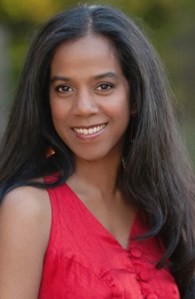
An Interview with Selin Gökçesu

18 Feb
Selin Gökçesu's essay "Under the Aegean Moon" appeared in the Tin House blog "Open Bar."

Selin Gökçesu’s essay “Under the Aegean Moon” appeared in the Tin House blog “The Open Bar.”

Selin Gökçesu is a Brooklyn-based writer with an M.F.A. in Nonfiction from Columbia University. Her work has appeared on the Tin House blog, Asymptote Journal’s Translation Tuesdays and in Gingerbread Literary Magazine.

To read an exercise about creating character amid conflict, inspired by Gökçesu’s essay “Under the Aegean Moon,” click here.

In this interview, Gökçesu discusses the challenge of writing about current events before readers lose interest, not holding back on personal feelings, and knowing how much analysis to provide in an essay.

Michael Noll

I’m fascinated by essays like this one because they’re not really about a story or anecdote—or, the anecdote at the heart of them is very quick. In this case, you honeymooned in Turkey and saw, from a distance, a dinghy full of Syrian refugees. The essay is mostly setup for this moment and a meditation on understanding your experience of it. How soon after your trip did you write this? Did you need to digest the experience for a while, or were you able to quickly organize your thoughts and feelings into this essay?

Selin Gökçesu

I wrote this essay about two months after the trip. Normally, I like to let my experiences sink in longer, but when you are writing about current events, waiting is not always a good strategy. When the topic no longer seems relevant, both the writer and the audience might lose interest in it.

At first, the essay was a chronicle of all my encounters with Syrian refugees in Turkey through the summers of the past few years and my reflections on how people react to the “crisis.” The first draft was more than four times as long as the final essay. As I edited the original version, I found that the moment of watching the boat take off was the highlight of the piece. It was a surreal moment, I liked how I had written it, and I felt that it was symbolic of what I was interested in: separate lives in geographic proximity. After I decided that the essay would build up to that moment, I trimmed everything else.

Michael Noll

The essay achieves something that I think is awfully difficult to do: it captures the moment when something large that is happening in the world overtakes our private experience of day-to-day life. To that end, I’m interested in how you created that private experience. You seem to do it, in part, with a line like this:

“Because I had recently watched a video on Facebook of a plastic straw being pulled out of a turtle’s nose, every time a plastic object flew past me, I begrudgingly left my chaise longue in pursuit of it.”

The refugee crisis was happening, but you were thinking about something quite different. As you wrote the essay, were you conscious of trying to convey that gap between what you thought about versus what was happening around you?

Selin Gökçesu

A personal essay has to start at a private point because that is what the writer understands or can hope to understand. The duality of the personal and non-personal emerges as the narrative shifts from showing to telling—you can only “show” what you have experienced first-hand.

The emotional gap between myself and what was happening around me was the heart of the essay. Emotionally isolating yourself from other people’s tragedy is both a callous way of evading negative emotions and an inevitable human response when your own life is not struck by disaster. Your day-to-day commitments, events that you are personally engaged in gain precedence over events that you are simply witnessing from the outside. I think of the essay as a partial analysis of the factors that contributed to this dissociation.

Michael Noll

You take a risk in the essay. It’s about something awful—the horrible plight of the Syrian refugees—and so I would think it might be tempting to portray yourself as caring deeply about it. And you do that, but you also do something else. For example, you write, “My mind and my body conspired to keep my honeymoon normal, one by being willfully unimaginative and the other by holding back the emotions that it so readily displays at home.” An Internet-troll type of reader might say, “Oh, well, your honeymoon was more important than the refugees.” But I don’t think that’s what saying. Instead, you seem to be writing about the complex way we interact with such news, which is usually safely at a distance. Did you worry about how people might read this essay?

Selin Gökçesu

I don’t think that goody-two-shoes, self-protective personas serve the personal essay very well. Although readers might not pick up on it when a writer fudges facts, emotional and intellectual dishonesty are very easy to detect. When I find that I am holding back in my writing to protect my ego or my privacy, I take it as a sign that I’m not ready to handle that particular topic yet.

I also don’t find predictable responses to events intellectually appealing—“I saw something tragic and I was really sad” is not an interesting premise for an essay. No matter what the topic is, I’m more interested in the unpleasant things that crawl under rocks. Especially when it comes to human nature.

Michael Noll

The essay in intensely personal, except for one paragraph, this one:

When large scale violence strikes, it’s a given that the victims suffer and die where they are; involvement of the nonvictims is usually optional.  The order of the things was disturbed this summer when Syrians fleeing the war in their country spread out into the world and started appearing on the Aegean coast—the affordable and sufficiently exotic vacation spot of choice for many Europeans.

It’s the one moment where you pull back and try to give context to your experience. Was this passage ever longer? Did you have more than you wanted to say (clearly, you’ve given the experience in the essay a great deal of thought), or did you always know how much explanation was needed?

Selin Gökçesu

This passage was longer, and there were more passages like it in the original version of the essay. Having gone through the nonfiction workshop in an MFA program, I know that most readers don’t care for the passages where the narrator steps back and analyzes her experience. So, I’ve learned to self-censor and keep these to a minimum. My strategy in this particular essay was to keep sight of the fact that I was building up to a specific point and eliminate everything that didn’t serve my purpose.

February 2016

Michael Noll Michael Noll is the Editor of Read to Write Stories.

An Interview with Garth Greenwell

4 Feb
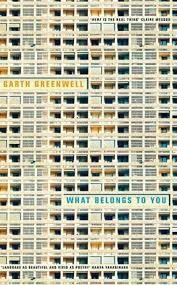
Garth Greenwell is the author of the novel What Belongs to You, a novel of "originality and power" according to the New Yorker's James Wood.

Garth Greenwell is the author of What Belongs to You, a novel of “originality and power” according to The New Yorker‘s James Wood.

Garth Greenwell is the author of Mitko, which won the 2010 Miami University Press Novella Prize and was a finalist for the Edmund White Award for Debut Fiction Award and a Lambda Award. A native of Louisville, Kentucky, he holds graduate degrees from Harvard University and the Iowa Writers’ Workshop, where he was an Arts Fellow. His short fiction has appeared in The Paris Review and A Public Space. What Belongs to You is his first novel.

To read an exercise on describing a character’s sense of consciousness, inspired by What Belongs to You, click here.

In this interview, Greenwell discusses feeling his way into the novel sentence by sentence, the traffic between the physical world and the abstract realm of consciousness, and why he doesn’t care for the annual award for bad sex writing.

Michael Noll

The book is written in a distinctive style: long paragraphs with nuanced descriptions of glances and other physical details of interactions between characters—and little dialogue. It reminds me, in a way, of Henry James’ novel The Beast in the Jungle, that is if James had been willing or able to use the word cock. It also reminds me a bit of Ben Lerner’s novels, which contain much more dialogue but are similarly interested in the experience of human interactions. I guess this is a long-winded way of asking this: As you wrote the novel, did you feel that you were writing in a style that you were seeing in books that you were reading, or did you feel that you were doing something different—in either a small or significant way?

Garth Greenwell

I think the truest answer is that I didn’t have any idea what I was doing. The first section of the novel was the first fiction I had ever written–before that I had only ever written poetry. That said, James has been a hero of mine since I read The Turn of the Screw in high school. And he has a pretty central place in a tradition of novel writing I’ve always loved, a line that includes Proust and Mann and Woolf and, more recently, Bernhard and Sebald and Marías. I admire Ben Lerner’s work a lot, and I think he’s following some of those same currents in his fiction.

So: none of those writers served as a model, really, but they were all in my head, knocking around with other things. As I wrote I was really feeling my way forward sentence by sentence, working without much idea of the shape it might take. The book begins and ends with place, I think, and I wanted to be true both to my experience of Bulgaria (where I wrote the novel) and to the relationship between the characters. I don’t think I was concerned at all about how what I was doing stylistically or formally might fit into any kind of tradition or field of practice

Michael Noll

One of my favorite sentences in the novel is this one:

“For all his friendliness, as we spoke he had seemed in some mysterious way to withdraw from me; the longer we avoided any erotic proposal the more finally he seemed unattainable, not so much because he was beautiful, although I found him beautiful, as for some still more forbidding quality, a kind of bodily sureness or ease that suggested freedom from doubts and self-gnawing, from any squeamishness about existence.”

It follows a line stating that the conversation between these characters lasted only a few minutes, and yet this sentence makes clear why the conversation occupies so much space in the novel. What I find interesting about the sentence is how much it operates without specific detail. Mitko is well-described, of course, but phrases like “some still more forbidding quality, a kind of bodily sureness or ease” are more about impressions than specific traits. What makes a sentence like this work? Does it depend on details that have come before? Or does the reader simply understand and fill in the spaces around words like beautiful, forbidding, and sureness?

Garth Greenwell

I like literature—in poetry and prose—in which there’s a constant traffic between the physical world and the more abstract realm of consciousness and feeling. I worked hard to make the physical world of the novel as concrete and fully realized as I could, but I also wanted the experience of the book to be the experience of consciousness, of having that reality filtered through the perceptions and ratiocination of the narrator. He tries throughout the book to understand and track his own feeling as carefully as he can, which leads him into rabbit holes of ambivalence and doubt and second-guessing–precisely the sort of thing Mitko’s physical demeanor seems to deny. This sentence does come after a good bit of physical description of the setting and of Mitko, which I hope grounds this more abstract bit of thinking.

Michael Noll

Garth Greenwell's novel What Belongs to You tells the story of a young American man teaching in Bulgaria and his complicated relationship with Mitko, whom he meets in a public restroom.

Garth Greenwell’s novel What Belongs to You tells the story of a young American man teaching in Bulgaria and his complicated relationship with Mitko, whom he meets in a public restroom.

The opening of the novel contains several sex scenes, and it seems at first that you tend toward the literal and specific in describing them. But then the novel offers this image: “clasping his hips with both my hands like the brim of a cup from which I drank.” That’s a bold image—effective and terrific, of course—but also noteworthy because it’s figurative. Every year, an award is given for bad sex writing, and some of the worst tends to involve metaphor and simile: a body part like ____. Were you nervous at all about writing the sex scenes, about creating images that readers might be inclined to read more closely and critically than a description of, say, eating a hamburger?

Garth Greenwell

For the narrator, sex is endlessly alluring and endlessly frustrating because it’s constantly gesturing toward metaphysics. I’ve always been interested in sex as a writer, in both poetry and prose. I think sex is almost uniquely useful for a novelist because of the opportunity it gives a character to be intensely focused on the experience of another while also thrown back onto his or her own sensations. I’m also interested in the social implications of sex, the ways communities form around it and are disrupted by it—communities like those in the cruising bathroom the novel begins in.

I’m not a huge fan of the bad sex writing award. I think it’s a myth that sex is harder to write well than most other things, and I think it’s a shame to give so much attention to less successful writing when there’s so much extraordinary writing of the sexual body being done right now. Just in the last couple of years, books by Alissa Nutting, Merritt Tierce, Lidia Yuknavitch, and Colm Toibin (in The Empty Family)—just to name a few—have used sex in ways that are revelatory to me for their dramatic and psychological force. I want to talk about and learn from those writers. It seems ungenerous to ridicule a few bad sentences or clumsy metaphors, often in books that are otherwise very fine.

Michael Noll

I believe that this book started out as a novella, and so I’m curious about your process in developing it into a much longer story. Was it a matter of adding complications to the set of characters you had already established? Or did you add characters and broaden the world that you were writing about?

Garth Greenwell

The novel did start out as a novella. When I finished the first section, I didn’t have any idea that it was part of a larger project: I thought the story was done. It wasn’t until I was about half-way through the second section, “A Grave,” that I realized how it was exploring the narrator’s childhood as a way of trying to understand some peculiarities of his character, especially the way he seems both to long for intimacy and hold it at arm’s length. It wasn’t until I was finished with that section that I realized that the narrative of the first section—the relationship between the narrator and Mitko—would continue. And it wasn’t until I finished the whole manuscript and could see certain thematic and structural echoes across sections that I began to trust my feeling that there was a kind of gravity holding the book together. I moved through the whole book sentence by sentence, paragraph by paragraph, section by section, without looking very far ahead. I tricked myself into writing a novel, I guess, without ever really realizing what I was doing.

February 2016

Michael Noll Michael Noll is the Editor of Read to Write Stories.
An Interview with Debra Monroe

28 Jan
Debra Monroe's memoir, My Unsentimental Education, tells the story of how she left a small town in Wisconsin to pursue a degree, and, she thought, a life as a Midwestern housewife.

Debra Monroe’s memoir, My Unsentimental Education, tells the story of how she left a small town in Wisconsin to pursue a degree, and, she thought, a life as a Midwestern housewife.

Debra Monroe is the author of four books of fiction and two memoirs. She is a “fierce” writer who presents “ever-hopeful lost souls with engaging humor and sympathy” (Kirkus Reviews), who writes prose that’s “rangy, thoughtful, ambitious, and widely, wildly knowledgeable” (The Washington Post), also “fine and funky, marbled with warmth and romantic confusion, but not a hint of sentimentality” (The Boston Globe). Her books have won many awards, including the Flannery O’Connor Award, and she’s published stories in over 50 magazines. Her essays have appeared in the New York Times, Salon, and The American Scholar, and have been cited for Best American Essays. Her most recent book is the memoir My Unsentimental Education. She lives in Austin, Texas and teaches at Texas State University.

To read an exercise on using dialogue, inspired by an excerpt from My Unsentimental Education, click here.

In this interview, Monroe discusses juggling multiple story threads, the challenge of publishing excerpts from a book, and her approach to dialogue

Michael Noll

In “You’re in Trouble, Am I Right?“, the excerpt from My Unsentimental Education, there are several narrative arcs. On one hand, there is the story of your relationship with James, a drug dealer. There is also a narrative about trying to earn A’s and understanding your intelligence. Finally, there’s another narrative (related to the others) about becoming more independent and, for example, dressing for yourself, not others. Were all three of these arcs always present in this essay? Or, did you start with one, and as you followed the thread, the others appeared?

Debra Monroe

At this point—this is my 6th book—related ideas present themselves more or less simultaneously in early drafts. All three plot arcs were present as I began. Years of practice and years of teaching writing make me know I want several balls in the air at the same time because multiple dilemmas coalescing is good for tension and complexity. The second and third story arcs are synonymous, and the first one serves as a counterpoint. Learning to understand and refine my intelligence is not unlike learning to understand and refine my self-presentation, or what you call “dressing myself.” I was trying to be a good student with limited resources (my background made me unprepared), and I was trying to dress with panache with limited resources (no money). In both cases, I got a “D” before I started getting “A’s.” Learning to trust my gut instinct but to improve on it too, both in terms of my work as a student and in terms of how I dressed in cast-off clothing, combine to make a single arc toward self-betterment on my terms, even if it is a jagged arc full of mistakes and wrong turns before I gain a sense of direction. Being with James is the counterpoint to that. He distracts me from school; he urges me away from clothing I like and hopes I’ll dress like a rock and roll girlfriend, like arm candy. So there’s a narrative tension between self-betterment on my terms (becoming a scholar and writer with unique sensibilities) and bettering myself on his terms (becoming a standard party girl). Yet it’s not as if my version of self-improvement (a point) and James’ version (a counterpoint) don’t both make sense in the same situation. I was an outsider finding my way. One option was to go it alone. The other was to be accepted by another outsider. Stoners are more accepting than college students whose childhoods prepared them for higher education. So all three plot arcs are about finding a way to survive college, and two constitute the difficult, authentic way, and the other constitutes a retreat from the difficult, authentic way.

Michael Noll

Perhaps my favorite parts of the essay are the bits of dialogue. They’re not extended conversations, by and large. Instead, they drop us into a moment and seem to focus on revealing a character’s voice. I’m particularly taken with the voice of Kristine, the cafe owner. How do you know when to move from narration or scene to dialogue? Do you write more dialogue than you eventually need and cut the extraneous parts, or do you already have a sense for the best lines of dialogue when you begin writing?

Debra Monroe

A reviewer for the Atlanta Journal Constitution wrote that “when Monroe highsteps through danger; it’s like watching Wonder Woman fend off attacks with her magic bracelets.”

This is memoir, of course, not fiction, but my fiction is pretty autobiographical, and my memoir is, as a reviewer noted, “novelish,” so I’ll generalize about how I do dialogue in both genres. Though I invented dialogue in fiction, I was always recalling a real person who inspired a character. And when I’m writing a memoir, a real person is generating ideas about the dialogue. To return to the dialogue with Kristine, this scene took place 30-some years ago. It’s not verbatim. I wasn’t walking around with a tape recorder on. But it’s the sort of thing she would say, and we had at least truly similar conversations. Writing good dialogue is a bit like having a knack for doing imitations, for channeling voices, for doing impressions. I think of the real person I’m depicting, or who’s informing the character I’m depicting, and I put in dialogue only the most distinctive, most unparaphraseable things they’d have said or in fact did say. I don’t give Kristine any lines of dialogue that can be paraphrased. I give her lines only Kristine would say in her singular Kristine-fashion. This isn’t so different from that tip you get in Freshman English about when to quote a source and when to paraphrase it. Paraphrase it whenever you can, and use a direct quote only when it’s so well-expressed that a paraphrase won’t do it justice. In this way, dialogue truly builds character, makes your characters distinctive.

Michael Noll

I love how you write about your drug experience. You describe the visuals of it (“I looked like the Wicked Witch in the Wizard of Oz”) but also the experience of trying to act normal while high: “The hardest part about doing drugs was the acting-upon-acting, I decided.” You go on to explain how the acting required by drug use was simply another layer added onto the acting you were already doing as you learned how to be in the world. I love this because it makes the drug use so much a part of your character as opposed to a weird, wacky tangent away from the real you. As you wrote this essay, did you have a clear sense of who you were at that time, the same as you’d need to have a clear sense of a character? Or did you discover this person named Debra as you wrote?

Debra Monroe

Did I have a clear sense of who I was at that time, or did I discover this Debra as I wrote? Both. Hindsight does give you a clear sense of who you used to be (distinct from who you are now), but once you start writing and keep the psychological register consistently deep, delving far below the surface into the perspective of your old self, that old self does become a construct, something created. To say “a construct” is not to say the old self is fake. As I dug deeper into what I’d done, I was discovering: I knew what I’d done, the ill-judged decisions I’d made, but I didn’t know the minutiae of why I’d done it, the nuances of what passed for logic then. My old self exists at a far remove from who I am today; she’s a stranger now. And you’re right that the drug use isn’t a merely ambient detail but a motif that amplifies the theme: that learning to make your way in the world is an act at first, a “fake it until you make it” act, and pretending not to be high when I was added to an already omnipresent pressure.

Michael Noll

This essay was published and then republished online, and both times it was different (mostly shorter) than the version in the book. What was your approach to adapting the essay for its online, stand-alone life? Obviously, you took out parts and moved some parts around, especially at the end. Was the biggest challenge finding a new opening and a new end?

Debra Monroe

I wrote it first as a chapter for the book. When the editor of Inside Higher Ed asked if I had a short piece about the unique anxieties of first-generation college students, I knew I wanted to include the most dramatic section of the chapter, and that was when I was doing LSD while also trying to be an A student. In the book chapter, the night of doing LSD, and the following day while coming down, occurs in the middle of the chapter. Then the chapter cuts away and depicts a condensed version of the next two years, and then, for the climax of the chapter, I flash back to the day after the LSD-taking, when I’m in the professor’s office still coming down. I’d saved that scene for the climax of the chapter, even if it was chronologically out-of-order (a flashback), because it contains the “message” about the entire chapter, that pressure about “acting-upon-acting.” For the short piece, I wanted just the LSD episode. Making an excerpt required cutting everything not pertinent to the LSD episode, so I started the excerpt as I met James, including the “first date,” then cut several more pages until I got to the week when I was writing the term paper and, afterward, doing LSD with James. Then I cut the pages that covered the next two years to move straight to the climax (a flashback in the chapter, but in chronological order in the excerpt). In the chapter, there’s an epilogue after the climax that transitions toward the chapter that follows, so I cut that too as not pertinent to the smaller story. Excerpting means deciding that inside the longer chapter is a shorter story, and chiseling away everything that isn’t germane to it. In this case, it was the LSD story. I’ve excerpted other chapters too. There’s an excerpt from the first chapter in Longreads, and that required cutting only secondary characters who didn’t pertain because it’s an excerpt from early in the book. There’s another book excerpt in Texas Monthly, a 6000-word chapter condensed to just 1500 words. There, I decided the kernel story would be “taming wildness” (in myself, my dog, on my land), and I deleted everything that didn’t pertain to that. So excerpting is finding a smaller story inside a larger story and deleting to isolate it, then finessing a few transitions. It’s tricky, but it’s easier than writing a whole new piece.

January 2016

Michael Noll Michael Noll is the Editor of Read to Write Stories.

An Interview with Tom Hart

21 Jan
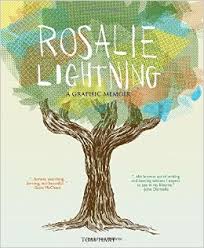
Tom Hart is a cartoonist best known for the comic strip Hutch Owen. His new book is the graphic memoir Rosalie Lightning.

Tom Hart is creator of the comic strip Hutch Owen. His new book is the graphic memoir Rosalie Lightning.

Tom Hart is a cartoonist and the Executive Director of The Sequential Artists Workshop, a school and arts organization in Gainesville, Florida. He is the creator of the Hutch Owen series of graphic novels and books and has been called “One of the great underrated cartoonists of our time” by Eddie Campbell and “One of my favorite cartoonists of the decade” by Scott McCloud. His strip, Ali’s House, co-created with Margo Dabaie, was picked up by King Features Syndicate. His newest book is the graphic memoir Rosalie Lightning, about his daughter Rosalie who died just before turning two years old.

To read an exercise about giving characters a frame of reference and an excerpt from Rosalie Lightning, click here.

In this interview, Hart discusses loosening structure to escape strict chronology, editing out details to create an intended effect, and finding an ending buried in the middle of a book.

Michael Noll

The book contains several storylines: your grieving, the sale of your apartment in Brooklyn, your move to Florida, moments with Rosalie. But it also contains moments that stand alone from these narratives—events or thoughts or images that exert a gravitational force on your memory beyond their place in the sequence of events. For example, there is a single frame with this text: “Before we leave for New Mexico, I will pay for my daughter’s cremation with an ATM card like I’m buying a bag of bananas.”

You mention in the book and on your blog that you wrote and drew constantly after Rosalie’s death and the you had to piece those disconnected writings and drawings into a book. Was it difficult to find the right spot for moments like the one above? How did you find a structure that could contain both narrative and individual moments that stood out from whatever story they were apart of?

Tom Hart

At some point (when I drew a panel of me saying “This would be the only thing in my head when I entered the funeral home”) it occurred to me I could jump forward in time and never worry about revisiting the moment again. Previously I thought I was on a straight ahead chronology and that if I foreshadowed or even detailed something, I would revisit it when it’s time in the story had come (to some grand effect). Then I realized I didn’t have to do this. It was a loosening of the structure that I thought I needed, one which already was unraveling as I was working.

So in answer to the question, the structure is incredibly organic, and really I just followed my natural slow-moving thoughts. Since I’m telling a story, chronological became a sort of default, but I always welcomed digressions from the main story for thought. So, in the case you mentioned, I thought, “How am I going to get this atm/banana incident in there so it reacts against this moment I just drew out?” and then the answer was, “Put it in now.”

Michael Noll

Rosalie Lightning is cartoonist Tom Hart's graphic memoir about the death of his infant daughter Rosalie and the struggle to understand how to live in her absence.

Rosalie Lightning is cartoonist Tom Hart’s graphic memoir about the death of his infant daughter Rosalie and the struggle to understand how to live in her absence.

Throughout the book, you quote or paraphrase books, comic strips, songs, and films. Some, like the Beatles songs, are things that you encountered unexpectedly, and others are encountered intentionally, like the Herzog film. And then there are others, like the book about Louis, that are important from the beginning but whose emotional resonance changes over time. In these moments, your touch is so light. With the Beatles, for example, you give no explanation, only saying that you heard the song on the plane and didn’t recognize it. Then you give a snippet of the lyrics. But with the Louis book, you show Rosalie engaging with it. In other words, sometimes you let these other narratives and pieces of art speak for themselves, without explanation, and other times you engage with them. Did you have an approach in mind for each, or did you have to figure out for each one how much or little to explain?

Tom Hart

Thank you.

Each one was handled singly except for the ones that were stories that informed Rosalie’s imagination. I wanted to draw those out more fully, in time and faithfulness but also visually: most of the redrawn cartoons have a consistent, clean greyscale under the lines. Elsewhere in the book there is a larger attempt at visual expressionism—come what may.

But in the other instances, again, I just followed the thoughts and edited out anything that was too much.

(Side note—the Beatles line needed a light touch partially for legality sake! I think in my original draft I had a line or two more of the first song. The Tim Buckley song near the end was intentionally elided for the same reason, but I think it worked best this way.)

There were times when I had to edit down my real-time impressions and go for a literary rendition. For instance, the Titian painting is a painting of St. Christopher (I think) carrying the Baby Jesus. It’s all about Jesus, but I wanted to focus on the thought I had, which was about the heaviness. Removing some of the words from the myth. So I purposely never mention Jesus, which is quite a fib since it is very clearly a painting about Jesus.

Michael Noll

Because you’re writing about grief and shock, you’re inherently writing about things that defy an easy, simple portrayal. I really admire the way you capture this, especially how abruptly feelings can change or appear. For example, you spend several pages describing your trip to New Mexico to stay at a retreat for people who’ve experienced sudden loss. The weather is terrible, you’re filled with despair, the logistics seem overwhelmingly complicated. In one panel, there is only one word—“Malfunctioning”—and an image of a steering wheel within what appears to be a brick wall. And then, at the end, you and your wife Leela rush into the motel “and try to make a baby.” It’s a stunning, devastating switch. How do you carry the reader with you as you make decisions when the logic of them is so intensely personal and, perhaps, not fully understood even by you and your wife?

Tom Hart

Thanks for being such a rigorous reader.

That switch was just descriptive, I just described it exactly as it occurred. Or at least it felt that fast. Again, I edited out what was unnecessary (presumably we took our winter clothes off).

Like most writers, I thought only what would be the most effective language to me and assumed there would be readers like me to follow it.

It’s certainly true that scene was set up by the previous mention of a baby—as it was in life.

In this instance, though there also may be more specific answers. For instance, I think I wrote that minimalistic “malfunctioning” line in there much later, not really knowing what to do with the text in that panel. And the image in the final panel was increasingly abstracted over iterations as I realized no representation was needed. So, there was some intention there—the text becomes more short and abbreviated, and a wildly unreadable drawing is the climax of that whole scene.

Michael Noll

Since the book begins with the death of your daughter, it’s natural for the reader to assume that it will end with some kind of emotional resolution. Yet the resolutions that we often expect in books don’t always exist in life. So, I was interested in how you end on two difference scenes, one (the kiss) that is, in a way, more emotionally satisfying and one (the call from your friend) that resists resolution. How did you find these endings? Was it a matter of writing until you found them, or did you know, at some point in the process of writing the book, where you were headed?

Tom Hart

That kiss came in real life, exactly when I detailed, and at that moment I knew it was time to stop “collecting material”—to stop writing. I knew that was the end of the book. After that, I tried to put my more meditative, less shocked brain onto the larger problem of the book, which itself was a method of deepening my understanding of the event and events. So, presented with some short-term revelations and intellectual understandings, I took to the longer, slower task of internalizing them.

The second part of the ending—the phone call—was edited out of the darker (visually so), chapter early on (Chapter 5). It was too long, too different in tone and didn’t say anything about our state of mind. But it was a powerful moment I thought should be in the book. Eventually, far into the writing, I realized that the connection to the outside world it brought, the contrast to another way of grieving—and just the use of her name—made it the right springboard into the final pages.

January 2016

Michael Noll Michael Noll is the Editor of Read to Write Stories.

An Interview with Eli Saslow

14 Jan
Eli Saslow is a Pulitzer Prize winning journalist for the Washington Post.

Eli Saslow is a Pulitzer Prize-winning journalist for the Washington Post.

Eli Saslow is a reporter at the Washington Post, where he covered the 2008 presidential campaign and has chronicled the president’s life inside the White House. He won the 2014 Pulitzer Prize for Explanatory Reporting for his year-long series about food stamps in America. Previously a sportswriter for the Post, he has won multiple awards for news and feature writing. Two of his stories have also appeared in Best American Sports Writing. He is the co-founder of Press Pass Mentors, a program that pairs professional journalists with low-income high school juniors and seniors to help them become great writers.

To read an exercise about adding physical description to dialogue, inspired by Saslow’s article, “A Survivor’s Life,” click here.

In this interview, Saslow discusses finding the central source of tension in a story, the gray area of attributing feelings to people, and reading Tim O’Brien’s novel The Things They Carried as he reported on the mass shooting in Roseburg, Oregon.

Michael Noll

The article is titled “A Survivor’s Life,” and yet it begins with a focus on that survivor’s mother struggling to interact with her daughter as she recuperates from the attack. It’s a subtle move, but it really shifted my perspective on the story. I guess it’s tempting to think purely in terms of shooter/victim, but this story makes clear that there are many people who are affected. Why did you choose to start with the mother instead of the survivor from the title?

Eli Saslow

I knew pretty early on that the mother was going to be a major character in the story. In some ways, she is the most active character—she is doing everything in her power to love her kid back to normal, and her efforts drive a lot of the action. Plus, there is so much tension between Bonnie and Cheyeanne, and I thought that tension could help drive the story forward. Also, I thought that Bonnie was also the most redeeming aspect of the story. She is trying so, so hard.

When I write, I always want to know exactly how a story ends. I find that I write toward that ending, like a destination on a map, and if I don’t know the ending of a story, I get lost along the way. I knew that this story was going to end in that moment of terror for Cheyeanne, with her calling out for her mom. That also reinforced that Bonnie needed to be a big part of the beginning of the piece as well.

Michael Noll

When the article shifts to the survivor, Cheyeanne, you write this:

By then, the college had reopened. What remained of her Writing 115 class had been moved across campus to an airy art building with windows that looked out on Douglas firs. They were forging ahead and coming back stronger, always stronger. That’s what the college dean had said.

I’m interested in this line: “They were forging ahead and coming back stronger, always stronger.” One of the things that I’ve heard journalists say in the past is that every line must be attributable and verifiable. Yet this line seems to fall into a gray area. It’s the words of the college dean and something that Cheyeanne might remember hearing with some bitterness—but it also seems like an inference you’re making about the distance between official statements and people’s reality. What is your approach to a line like this?

Eli Saslow

Very good question. You are right that this is more of a gray area line. It is Cheyeanne’s recollection, but I went back and checked her memory against what the college dean had actually said, which was not verbatim but pretty close. In this case, the most important thing was to give readers a feeling of how those words felt to Cheyeanne—and not necessarily tell readers the exact thing the college dean said. His exact words weren’t important or memorable—but the memory of them had stuck with Cheyeanne. I think that’s more important and also does more to put readers inside her head and honor her experience.

Michael Noll

Your physical descriptions are outstanding. For instance, when Cheyeanne is talking about the shooting, you describe her mother this way:

Bonnie shifted on the couch. She flicked dust off the armrest. She noticed a dirty plate on Cheyeanne’s bedside table and reached over to grab it.

These are small details, especially the flicking of the dust. I would imagine that it’s difficult to notice such things when you’re first meeting people, that it’s easy to become overwhelmed by what you’re hearing, seeing, and inferring. Had you spent a lot of time with Cheyeanne and Bonnie before this moment arrived? If not, how do you settle into a moment of time so that you can notice details like the ones above?

Eli Saslow

Pulitzer Prize-winning journalist Eli Saslow wrote a lengthy feature on Cheyeanne Fitzgerald, one of the survivor's of the mass shooting at Umpqua Community College in Roseburg, Oregon.

In “A Survivor’s Life,” Pulitzer Prize-winning journalist Eli Saslow wrote  about Cheyeanne Fitzgerald, one of the survivor’s of the mass shooting at Umpqua Community College in Roseburg, Oregon.

Thanks for that. I think all narrative stories rise and fall on small, observed details. The goal with these stories is to make readers feel like they are in the room with Bonnie and Cheyeanne, and it is the details that make people feel real. I spend a lot of time with the subjects of my stories to get the details right. I might not notice something on the first day, or the third day, or the fifth, but maybe I will notice in the second or third week. I spent dozens of hours sitting in Bonnie and Cheyeanne’s living room with them. Some of those hours are quiet, and there is nothing to do but look around and pay attention to the details that bring scenes to life.

Michael Noll

When Cheyeanne tells the story of the shooting to her brother, he struggles to know what to say or how to act. He’s not the only one. Cheyeanne’s mom doesn’t want to hear the details, and her brother’s friend asks about it but then seems to forget that he asked. I was struck by the similarity of this situation with fictional stories like “Speaking of Courage” in Tim O’Brien’s novel The Things They Carried and Ernest Hemingway’s story, “Soldier’s Home.” In both, soldiers come home from a war and find that they can’t talk to anyone about what they experienced and that people can’t understand the stories or don’t want to hear them. Did you research survivor’s experiences before talking with Cheyeanne so that you could anticipate certain behaviors or feelings? Or did you go in with a blank slate, so to speak, to avoid developing preconceptions of what you might find?

Eli Saslow

I actually reread The Things They Carried as I was writing this story. I think it is important to have a bigger context of a person’s experience. I always want to know as much as I can. I’d also written a good bit about trauma and isolation before (most recently in this piece), and I carried those reporting experiences into this piece as well.

January 2016

Michael Noll Michael Noll is the Editor of Read to Write Stories.
An Interview with Tristan Ahtone

7 Jan
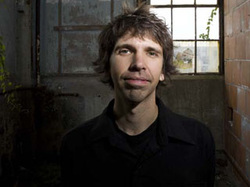
Tristan Ahtone rode Greyhound busses across America and wrote about it in a series for Al Jazeera America.

Tristan Ahtone rode Greyhound busses across America and wrote about it in the series, America by Bus, for Al Jazeera America.

Tristan Ahtone is an award-winning journalist and member of the Kiowa Tribe of Oklahoma. Born in Arizona, raised across the United States, and educated at the Institute of American Indian Arts and the Columbia School of Journalism, he has worked as a door-to-door salesman, delivery driver, telemarketer, and busboy. Since 2008, Ahtone has reported for The Newshour with Jim Lehrer, National Native News, Frontline, Wyoming Public Radio, Vice, the Fronteras Desk, NPR, and Al Jazeera America. He serves as Treasurer for the Native American Journalists Association and lives in Albuquerque, New Mexico.

To read an exercise about writing character descriptions based on Ahtone’s essay on riding Greyhound busses across America, click here.

In this interview, Ahtone discusses the role of human and technical limitations on writing and choosing what makes the cut in a piece of journalism.

Michael Noll

It seems like something you’re trying to convey in these pieces is the fleeting nature of encounters on a bus. So, for example, your description of Russell Hall focuses on only a few seconds of observation: Hall on the phone, a glance given to him by a woman sitting nearby, a look that he gives to something he set out the window, the condition of the Bible he’s holding. Was it tempting to try to make more of this encounter? Or was the opposite true: was the challenge instead trying to build a vignette out of only a few details?

Tristan Ahtone

Each encounter we had during this story could have been expanded to a feature-length story. The challenge was having so much detail and condensing it into a vignette. However, in Mr. Hall’s case, the simple nature of his story stemmed from a technical error, embarrassingly enough: the recorder we used to interview our subjects decided to become uncooperative, so there were no accurate quotes save for what I caught in my notes when first observing him. It would have been great to get his backstory in—he worked for the Los Angeles public school system as a truancy officer and had been involved in the church for years traveling the country by bus—but when I sat down to write about him, I found that the brief encounter offered more with less dialogue. So in short, Mr. Hall’s story functions as a fleeting encounter but its creation stems from a technical problem and having to make due with good note taking to replace missing quotes.

Michael Noll

I love the dialogue that you capture. In the piece about Hu Li, the dialogue isn’t really conversation so much as different people talking at the same time. You must have overheard or participated in so many conversations. How did you decide which ones to write up?

Tristan Ahtone

There are about half a dozen interviews we did that never made it to the final product and many never even made draft form. In each case my partner Tomo Muscionico and I would strike up conversations with people, feel out whether we wanted to continue the conversation for a story, and eventually asked to mic them up so we could record that interview. Sometimes it worked, sometimes it didn’t. In the end, a lot of people we took photos of and interviewed didn’t make it in usually because their narrative wasn’t as strong when putting it in short form. For instance, there was a woman named Dianne Whitlock, who showed up briefly in Rosalinda’s vignette – she had a wonderful story and had a great conversation with another gentlemen that had his own vignette that was also eventually cut. The primary reason was because in short form, we couldn’t do them justice. Essentially, we gathered as much material as we could, and when we sat down to write and edit it, a lot of people washed out.

Michael Noll

Tristan Ahtone rode Greyhound buses around America and wrote about it for Al Jazeera America.

In his essay on riding Greyhound busses, Tristan Ahtone met a woman named Rosalinda who was traveling from Guatemala to Florida and who spoke neither English nor Spanish.

In the piece about Rosalinda, you write, “She and her baby had matching yellow wristbands, the kind one gets in a hospital or a prison.” This description has two parts: the detail (matching yellow wristbands) and the interpretation (the kind one gets…). How much of your task as a journalist, as a writer, is helping the readers understand the details you show them?

Tristan Ahtone

I’d say most of my job is helping readers understand details. Context is what makes people’s stories real and relevant. One of the nice thing about long-form journalism is that you have the opportunity to see and write about details like that and offer them to the audience. We spent a long time with Rosalinda and ran into her twice: once at the Phoenix bus station and again on a bus we boarded in El Paso. I think I can speak for my partner, Tomo, that we’re not the superstitious types, but we knew we had to write her story when we ran into her again. We had to do something. She was too special and too important to let drive off without trying. That meant we had to get really creative, though: we couldn’t talk to her, nobody could really, so we had to take a lot of pictures and extensive notes so that we could make her a real person to our audience, and that meant keeping an eye to detail and interpreting who she was, where she was going, and what her situation was based on physical information that was available.

Michael Noll

In that same passage about Rosalinda, you have the problem of not being able to communicate with her. So, you approach the description through the other passengers’ eyes and knowledge about her. As a result, the passage becomes not just about Rosalinda but also everyone else on the bus, the community they form. Was that approach a matter of simply using the information available, or had you sketched out a variety of approaches to these passages before the trip?

Tristan Ahtone

The only thing we had sketched out prior to going on the trip is where we would leave from and where we would end up and even that changed mid-way through. Originally, I wanted Rosalinda’s story to be weaved in throughout the entire piece with other passengers narratives. The original structure I sketched out more closely resembled a Robert Altman film with a number of different characters all overlapping at various places. I couldn’t get it to work though, one reason being that while we have rich detail on everyone we spoke with, there wasn’t enough information to support a story that long. It also felt confusing, so we scrapped it. One of the only variations of that idea that remains in the final piece is the interaction between Lonnie Head and Christopher Nyman in Nashville. Had we stuck with the original structure, you likely would have seen a lot more interactions like that between a lot of the people we met. As I mentioned before, Dianne Whitlock makes an appearance in Rosalinda’s vignette: originally she had her own story, which is part of the reason she’s even named at all in this one instead of just identified as another passenger. In the end I really liked how Rosalinda’s story came to embody a greater sense of community. I think that people deride and criticize people who ride busses, but I have to say, I’ve never seen people on a plane act so kindly to each other. In Rosalinda’s case, we observed how people behaved toward her and reported it. If she had been treated poorly, we would have written it that way instead.

January 2016

Michael Noll Michael Noll is the Editor of Read to Write Stories.
An Interview with Mario Alberto Zambrano

31 Dec
Mario Alberto Zambrano is the author of the novel Lotería and recently won a prestigious NEA Fellowship.

Mario Alberto Zambrano is the author of the novel Lotería and recently won a prestigious NEA Fellowship.

Mario Alberto Zambrano was a contemporary ballet dancer before writing fiction. He has lived in Israel, The Netherlands, Germany, Spain, and Japan, and has danced for Hubbard Street Dance Chicago, Nederlands Dans Theater, Ballet Frankfurt, and Batsheva Dance Company. He graduated from The New School and the Iowa Writers’ Workshop. His debut novel Lotería was named to many lists of the best books of 2014, and this month, Zambrano received a prestigious NEA fellowship to work on his new novel.

To read an exercise on creating structure with images and an excerpt from Lotería, click here.

In this interview, Zambrano discusses how he began writing based on Lotería cards, the You that his narrator Luz speaks to, and how the Pedro Infante film Nosotros Los Pobres influenced the novel.

Michael Noll

The most distinctive aspect of the novel, and it’s no surprise given it’s title, is the way you use Lotería cards to organize the chapters and the novel as a whole. You’ve discussed in other interviews how and why you chose lotería, but what I’m really curious about is how it impacted your process for writing the novel. A lot of novel drafts get stuck at various points, often about 70 pages in, because the novel expands or changes in those moments. Was Lotería helpful to you in the middle of the book, in terms of maintaining and advancing the story?

Mario Alberto Zambrano

Honestly, the way I started writing the book was mostly a game for myself, to create vignettes of a young girl’s life. Though I knew the story in my head from the beginning, I used the cards as a vehicle to explore other parts of her life that I didn’t yet know anything about. I would shuffle the deck and flip over a card as a way to prompt me into a scene that might reveal something about her and the story she was trying to tell. The obstacle wasn’t so much how to propel the narrative forward, as sometimes is the case, but rather, how to arrange the cards in a sequence that could feel organic yet carry a narrative thru-line from beginning to end. Near the end of the editing process, I would lay out the cards on my table and rearrange them. With 53 cards, the options were endless. It did teach me however, that even when you’re working on a novel that doesn’t deal with cards, but rather with scenes, chapters, acts, what have you, the sequence in which the story is being told can disrupt or heighten the dramatic tension that fiction relies on.

Michael Noll

The novel is addressed to You, to God. Was this always part of your sense of the novel, that Luz would be writing/talking to a particular person/entity and not just in general?

Mario Alberto Zambrano

Because Luz suffers from a traumatic event at the start of the book and is suffering from selective mutism because of said event, I felt it was important for her to address the narrative to someone she was comfortable with, someone who might help her find solace in the devastating aftermath of what happened in her family. The act of prayer is a means to achieve grace, especially in the face of loss. But even though the You in the book is addressed to a divine other, in some way it’s also addressed to herself, so that in having a dialog with God she’s having a dialog with herself too, in the way prayer can be a form of mediation.

Michael Noll

The novel begins with a passage about what kind of story this isn’t. A counselor visits Luz and brings Fama magazines because she thinks they are “going to open me up like some stupid jack-in-the-box.” She also tends to stare at Luz in a kind of incomprehension, which prompts Luz to think this: “¿Y? It’s not like I’m a piece of news in the Chronicle she can pick up and read.” Luz goes on to explain how her story is more like a telenovela or the film Nosotros Los Pobres. Was it important to you, or did it seem necessary, to tell readers in advance, look, here’s the kind of story this is? Was there a genre or form of storytelling that you wanted to avoid or distance the novel from?

Mario Alberto Zambrano

Part of the cultural background to the story comes with the popularity of telenovelas, this melodramatic genre invigorated by the music that propels it. So, in a way, I wanted to reference it.

Personally, when I read a novel I always get a sense of what kind of music is playing in the background, whether it’s alluded to in the text or not. Voice and tone, along with style, is usually what creates this kind of sound for me. In Lotería, I wanted a kind of ranchera-soundtrack, a resonant yet sweet pitch that is similar to the voices of Lola Flores or Rocio Durcal, or even Selena. It’s this kind of music that runs in Luz’s mind, and I wanted it to be on the page as a form of reflection, whether spoken or not.

Michael Noll

In this 1948 film, A poor carpenter (Pedro Infante) is framed for the murder of his employer and sent to prison.

In the 1948 film Nosotros Los Pobres, a poor carpenter (Pedro Infante) is framed for the murder of his employer and sent to prison.

That early passage about the film and the kind of story this is stands out to me because the novel returns to it. For example, in the El camarón chapter, Luz watches her father punch a wall, and she understands this action by thinking about Nosotros Los Pobres, in which a character does something similar. Did you have that film in mind as you wrote, or did you discover that it had resonance for the novel at some point as you were thinking and writing about Luz and figuring out that she would be thinking about the film?

Mario Alberto Zambrano

Nosotros Los Pobres is a film with Pedro Infante, the very actor that Pancho Silva is a double for. In Luz’s youth, she grows up with this figure on the screen. To her, it’s a symbol similar to the greatness of God. By way of attention, the family adores and glorifies the altar almost as much as what’s on screen, and so these two figures, the divine and commercial, make up a kind of confused representation of what her family and community turn their attention to. As a young girl, she almost overlaps them so that they each represent a similar importance. The film is also a story about a father and daughter living without a mother. In the scene of the movie you mentioned, when Pedro Infante punches the wall, he slaps his daughter, then feels guilty, and therefore slams his hand against the wall due to his profound guilt. What I love about that scene, and why it’s in the book, is that it represents the complexity of action and consequence. Yearning for redemption even though guilt is an insufferable truth. It’s something Luz is aware of, and in many way, how she exonerates her father even after all of his abusive tantrums.

December 2015

Michael Noll Michael Noll is the Editor of Read to Write Stories.

An Interview with Chaitali Sen

10 Dec
Chaitali Sen is the author of the novel The Pathless Sky.

Chaitali Sen is the author of the novel The Pathless Sky.

Chaitali Sen was born in India and raised in New York and Pennsylvania. Her short fiction, reviews, and essays have appeared in New England Review, New Ohio Review, Colorado Review, The Aerogram, Los Angeles Review of Books, and other journals. She is the author of the novel The Pathless Sky.

To read an exercise about giving jobs to characters, inspired by The Pathless Sky, click here.

In this interview, Sen discusses how playing with time can inject energy into a novel, why she invented a country for The Pathless Sky, and the challenge of avoiding a checklist of elements for certain types of stories.

Michael Noll

The novel begins with a dramatic opening chapter and then, in the next chapter, moves back in time. Most of the novel, then, is spent on the path back to that opening event. Did you begin with this structure, or did you come to it with an eye toward hooking the reader as firmly as possible?

Chaitali Sen

I wrote that prologue (though it’s not technically a prologue – a flash forward?) after I completed the first draft and was taking a break from the novel. During that time, I read a craft book about different narrative structures which suggested the linear, chronological structure was the most plodding way to telling a story, basically the least energetic. I don’t think I agree with that anymore but at the time, I was feeling that the build-up to the central conflict in my story was too slow. My first draft was doggedly chronological, starting with the characters meeting in college and concluding with an ending that has since changed. I did need to fix some pacing issues, but at the same time I felt the slowly rising action was important and I didn’t want to rush it. That opening flash-forward was the first thing I wrote when I started the second draft, and immediately I did feel the energy coming back into the novel, which I needed for the writing of a new draft. That prologue ended up being an important touchstone for me during the revision process. It kept reminding me of where the story was headed – of its dramatic arc and its themes – and I hoped it would do that for the reader as well. Once I wrote that opening chapter, I never considered taking it out.

Michael Noll

I love the descriptions of the characters, especially how much joy they seem to carry with them. For instance, when John introduces himself to Mariam and walks with her, you write, “Her step was so exuberant that he had trouble keeping up with her.” Dr. Malick is described like this: “Dr. Malick of the University of Sulat Province was a spry, wiry man in his fifties, with thin strands of hair that seemed drawn to some heavenly body wanting to lift him upwards.” This is beautiful writing, but it’s also in sharp contrast to the urgent, oppressive, uncertain opening chapter. Was this intentional?

Chaitali Sen

I love that you used the word “joy.” I don’t think this contrast was intentional. At least, I wasn’t aware of it as I was writing. But I was trying to examine how these larger political and historical forces seep into our daily lives and wear away at people’s joyful aspirations. This is something I’ve witnessed and experienced in my adult life. It has become an essential part of my worldview, so I think it comes out in my writing on a subconscious level.

I once heard an interview with the African-American painter Jacob Lawrence in which he said the most important thing for an artist to do was to figure out their worldview. At the time I thought he was simply stating that the artist needed to be engaged with the world and responding to it with their art, but now I think he was also saying that the way you see the world becomes a kind of muse, providing inspiration and motivation that you can’t always access on an intellectual level.

Michael Noll

Chaitali Sen wrote about her decision to invent a country for her novel at The Asian American Writers' Workshop.

Chaitali Sen wrote about her decision to invent a country for her novel at The Asian American Writers’ Workshop.

When it comes to writers of color or writers from certain countries, there’s an expectation, at least among American readers,that the writers will serve as a kind of authentic guide to their community and place. In an essay for The Asian American Writers Workshop, you write, “I had been aware of these expectations, and felt a crippling pressure to write exclusively about my experience as a child of Indian immigrants.” I’m curious about that word: crippling. The Native American writer David Treuer wrote in his book Native American Fiction: A Users Manual about the memoir, The Education of Little Tree. When it was published, it was beloved by the Native American community—until it was discovered that the author was a white former Klansman. The problem, Treuer wrote, wasn’t so much the authorship of the book but the fact that there seemed to be a genre of Native American stories, easily imitated because it had a checklist of common plots, characters, and settings (for instance, spiritual characters or characters who are purely and wholly “Indian” live far from the village, away from other people). Given your choice to set the novel in an invented country, I wonder if you felt something similar. As you tried to conceive of a story to write, did you feel that to write about your experience as a child of Indian immigrants meant to tell that story in a particular way, to craft your story to fit a kind of checklist or genre?

Chaitali Sen

This is such a complicated issue for me. The body of work by South Asian Americans has been extremely limited until the last couple of years, when there has been a sudden flourishing (which may be an overly generous word to describe a handful of books) of quite varied and remarkable narratives. I think South Asian American literature is suddenly opening up and it just can’t be defined narrowly anymore. Authors such as Nina McConigley, Bushra Rehman, Tanwi Nandini Islam, Mira Jacob, A.X. Ahmad, Sharbari Ahmed, Nayomi Munaweera – and many more are certainly showing me that what I once perceived to be the narrow expectations of South Asian American writers is perhaps not true anymore.

Having said that, there have been writings, discussions, and inside jokes that a book by a South Asian writer must have certain elements – a checklist of sorts – including lots of mentions of food, intergenerational cultural conflicts, identity crises, colorful clothing, etc. And while I think writers like Bharati Mukherjee and Jhumpa Lahiri who were the early pioneers of South Asian American literature wrote multi-layered narratives, the critics tended to focus on themes of difference and the struggle of immigrants to adapt. Along with that comes this troubling oversimplification about the contrast between American culture and South Asian culture. In reality, culture and society in both the United States and the countries of South Asia are extremely complex and multi-faceted. I think that was the trap I felt more crippled by, of having my writing become a representation of all Indian Americans or speaking for the Indian American or South Asian American experience, and of drawing pat conclusions about either place that I am not meaning for the reader to draw. When there are so few writers of a certain background, that writer has the unnecessary burden of speaking for his or her race. I do find that when I write stories about Indians and Indian Americans, there is always some mention of the cultural aspect when people are responding to it, even though I’m not thinking of a particular detail in the story as a cultural detail. I don’t think people respond to white American writers in the same way. The details in their stories are not considered to be cultural markers. So that’s part of the crippling aspect. However, my current novel is about an Indian American woman and I’m really enjoying writing it.

Michael Noll

The novel is, at it’s heart, a romance, and the obstacle to that romance is politics. Mariam comes from an area of the country that once rebelled and where the locals are mistrusted by the government. This conflict grows throughout the novel, but the details about it are spare. We don’t learn, for instance, a great deal about the culture of English Canal and Sulat Province or about the nature of the resistance. In that way, the novel seems to have something in common with dystopian science fiction/fantasy: what’s important is the impact of oppression, the struggle to live under it, and that struggle is common to all places and people. Is that a fair statement about the novel? Did you ever try to invent a more in-depth culture for Sulat?

Chaitali Sen

Wow, this is a hard question. In short, I think it is a fair statement about the novel, and I would have to say I never did try to invent a more in-depth culture for Sulat. In building up this imaginary country, I think culture was the hardest for me to invent, because as you can probably tell from my response to the previous question, my relationship with the concept of culture is somewhat troubled. : ) So I focused on things like geography, geology, and on perceptions of characters about these places. For example, the perceptions other characters have of Sulat may or may not be accurate according to Mariam’s or John’s experience there. But I think you hit the nail on the head when you say, “what’s important is the impact of oppression, the struggle to live under it, and that struggle is common to all places and people.”

December 2015

Michael Noll Michael Noll is the Editor of Read to Write Stories.

An Interview with Ru Freeman

3 Dec
Ru Freeman is a Sri Lankan born writer and activist whose latest book is the anthology, Extraordinary Rendition: (American) Writers on Palestine.

Ru Freeman is a Sri Lankan born writer and activist whose latest book is the anthology, Extraordinary Rendition: (American) Writers on Palestine.

Ru Freeman is the author of the novels A Disobedient Girl and On Sal Mal Lane and, most recently, the editor of the anthology Extraordinary Rendition: (American) Writers on Palestine. She was born in Sri Lanka and is a contributing editorial board member of the Asian American Literary Review. She has been a fellow of the Bread Loaf Writer’s Conference, Yaddo, Hedgebrook, and the Virginia Center for the Creative Arts, and was the 2014 winner of the Janet Heidinger Kafka Prize for Fiction by an American Woman.

To read an exercise about avoiding ideological and biased language, click here.

In this interview, Freeman discusses the eye-opening possibilities of faith, the responsibility to try to understand the incomprehensible, and why Edward Said’s daughter, Najla Said, loved the play Joseph and The Amazing Technicolor Dreamcoat.

Michael Noll

Identity plays a significant role in the book. Naomi Shihab Nye in particular hones in on this with her poem, “Before I Was a Gazan,” which asks the reader to see the speaker first as a human. In the poem, Gazan is a political term. As I read this poem, I couldn’t help thinking of when Mike Huckabee said there is no such thing as the Palestinian people. How important was it to you for this book to fight for a particular way of seeing this conflict and the people within it?

Ru Freeman

When you ask 65 writers to speak of anything, you cannot inflict an agenda on them; writers are, by nature, both opinionated and in flux at all times. My editorial statement made the point that we were at a historic moment where it was impossible to say nothing, and asked each writer to consider what their response could be, what form it might take. Definite and specific or diffuse and searching? Did a lack of knowledge prevent any of them from speaking and did having deep familiarity with Palestine have the effect of paralyzing them? If there was a fight, it was only to make the book itself, to create a solid, unassailable, complex work of collective art about a topic, a word even, that we had avoided for far too long.

Michael Noll

There’s a particularly bitter poem by Alicia Striker (who is Jewish), “The Story of Joshua,” in which God tells the children of the Jewish slaves who escaped from Egypt, “Here is what to do, to take/This land away from the inhabitants: Kill their men/Kill their women/Consume the people utterly. God says: is that clear?/I give you the land, but/You must murder for it.” In short, the poem is asking us to reconsider what is probably the central narrative for those who support Israel’s right to build settlements. It’s also a central narrative for Americans in general, not just because it’s the basic story most Christian kids are taught but also because a lot of us grew up watching that very American movie The Ten Commandments every Easter. How difficult is it to get people to reassess a narrative that they’ve been taught basically from birth?

Ru Freeman

Well, if we were robotic entities, it would be very difficult, but we are not. We are human beings whose learning comes from living, from adaptation, from withstanding, and from engagement. Alicia’s poem is particularly salient because, as you say, it speaks to a certain interpretation of God’s word. A different reading of that story would maintain that God did not “give” the land to anybody, but rather that “He” asked that work be done upon land which belonged to “Him.” To claim ownership of that land could be considered as ludicrous as tenant-farmers fighting over the earthly spoils of the land-owning class. But more than that, of course, is the absurdity of the notion that any single system of belief can dictate our human relationships with each other. Faith ought to open our eyes to the existence of faith in others even if they do not believe what we believe. Any other practice of it would make small what should in fact be vast.

I am reminded by your question of Edward Said’s daughter, Najla Said, who has a beautiful performance piece where she talks about how much she loved the play, Joseph and The Amazing Technicolor Dreamcoat, and how she would stride about the house singing “for we have been promised a land of our own,” while her brother railed at her. So yes, we pick these things up, even the best of us, the most unlikeliest of us. Still, religion is, in the end, a story we tell ourselves, but unless we are psychologically aberrant, it ought not to persuade us to murder.

Michael Noll

Extraordinary Rendition: (American) Writers on Palestine, edited by Ru Freeman, follows a vision of art stated, here, by Edwidge Danticat: "It is both the artist’s burden and duty to witness what is going on in the world."

Extraordinary Rendition: (American) Writers on Palestine, edited by Ru Freeman, follows a vision of art stated, here, by Edwidge Danticat: “It is both the artist’s burden and duty to witness what is going on in the world.”

The book draws many parallels, comparing or juxtaposing the Palestinian conflict with, for example, racial conflicts in the United States and Mexico’s struggles with narcos. On one hand, the introduction of these other conflicts could potentially distract from the book’s subject: Palestine. On the other hand, it seems that the book is making an argument about injustice in general—about conflict and racism and bigotry and violence in general. When you first began putting the book together, did you expect Ferguson and Tijuana, for example, to appear in it? Or was the scope of the book shaped by the writers within it?

Ru Freeman

Oh, absolutely! The line between what happens in Ferguson and what we as a nation are comfortable with allowing to continue to happen in Palestine is crystal clear. Tracing that line in words and images is an acknowledgement of how deeply these things are connected, and certainly brings it to light for people who may not have been paying attention. Some of these pieces actually talk about the responsibility, as writers, certainly, to stay open to what we see, to listen, to report back, no matter how incomprehensible a situation might be to us, or how divorced from our own realities, like in Leslie Jamison’s essay, “La Frontera.” That whole essay ends with the request that people try to listen above “the clattering of your own guilt.” The book, too, aims to overcome that sense people have when they hear of the magnitude of suffering (in Palestine, elsewhere), of shutting down. It says, listen to what is being explored here by these many voices, let in the nuance of feeling that is missing when you just read of numbers in a newspaper.

Michael Noll

As I write this, Israeli Prime Minister Benjamin Netanyahu is speaking in Washington D.C., a day after meeting with President Obama. Relations between the two leaders are not warm, to put it mildly. Netanyahu is saying that he still supports a two-state solution, but the consensus seems to be that there is not presently any conceivable plan to achieve that solution. It’s also the 20th anniversary of the assassination of Yitzhak Rabin by an Israeli religious extremist who did not believe in negotiations with Palestinians. On this anniversary, several newspaper columnists have asked the question, “Would Rabin have brought peace?” It’s an impossible question to answer, of course, and any answer says more about the person asking than what might have happened. Given that, here is what a writer for the Jerusalem Post had to say on the matter: “Palestinians will always oppose a peace agreement with Israel regardless of who the prime minister is…Any compromise by Israel is viewed by Palestinians as demonstrating weakness. Any concessions only encourage more violence.” This is a pretty common point of view. I won’t ask how peace can occur when two sides are so apart. But I will ask this: This is the chasm of perception that Extraordinary Rendition enters. What effect do you hope the book will have?

Ru Freeman

Always, never, forever: this is the terminology of kindergarteners, not great leaders and certainly not great literature. The writers in this anthology engage at a deeply personal level, bringing the weight of their art and their own history to bear upon the idea of solidarity with our fellow human beings. They explore the connection between grief and grievance (as Tom Sleigh does), between Palestine and Ferguson (as Kiese Laymon does), between travel and return (as Jane Hirshfield does), and on from there into what they have seen, what they imagine, what they hope. Yes, we enter a chasm of ignorance, but we come bearing news of other ways of seeing. It’s a victory, don’t you think?

December 2015

Michael Noll Michael Noll is the Editor of Read to Write Stories.

An Interview with Megan Kruse

28 Nov
Megan Kruse is the author of Call Me Home, which Elizabeth Gilbert called "a most unlikely tale of hardness and hustle, of grace and loss, of painful love and tough breaks."

Megan Kruse is the author of Call Me Home, which Elizabeth Gilbert called “a most unlikely tale of hardness and hustle, of grace and loss, of painful love and tough breaks.”

Megan Kruse grew up in the Pacific Northwest and currently lives in Seattle. She studied creative writing at Oberlin College and earned her MFA at the University of Montana. Her work has appeared widely in journals and anthologies, and her debut novel, Call Me Home, was released from Hawthorne Books in March 2015, with an introduction by Elizabeth Gilbert. She teaches fiction at Eastern Oregon University’s Low-Residency MFA program, Hugo House, and Gotham Writers Workshop. She was one of the National Book Foundation’s 5 Under 35 for 2015.

To read an exercise about creating internal dialogue, click here.

In this interview, Kruse discusses the larger whole of multiple perspective novels, queer sex scenes, and the importance of rural queer narratives.

Michael Noll

The novel is told from multiple perspectives, and I recently heard an agent say that readers tend to struggle to connect emotionally with characters in multi-perspective novels. I guess this makes sense in a way: just when things get tense for a character, the novel often cuts away to a different character. Was this something you thought about as you worked on the novel?

Megan Kruse

One of the things that I love about multiple perspectives is that the result seems greater than the sum of the parts; the reader gets to connect with the individual characters, and in addition, the reader comes to understand the bigger picture. I’ve always written family stories, and I think often about how in any family or group, there is no one on the inside who can fully see the whole story. So many family sorrows—our slights and misunderstandings and our greater rifts and losses—come back to our inability to see outside ourselves, to take into account all of the different narratives and histories that coexist in a family universe. I wanted to write a novel where the reader has the privilege of knowing the family’s story more fully than any of the individual characters. I understand what you’re saying about the potential for the reader to feel less connected to a single character, but I also think that the task of a successful novelist is to keep those threads feeling alive, to keep the reader tracking all of the characters even as the perspective shifts. My hope for my own fictional family was that their emotional ties to each other, the way that they’re searching and echoing off each other, would keep them present even when they weren’t on the page.

Michael Noll

You write a pretty explicit sex scene between Jackson and Don. In general, sex scenes give writers fits. There’s even an award given out annually for the worst sex writing, and very good writers often end up on the list. What was your approach to that scene?

Megan Kruse

I really loved writing those sex scenes! I wanted to write a queer story, to write characters that are so rarely visible in contemporary fiction. Jackson is coming of age, falling in love for the first time, and I don’t think you can separate that experience from the physicality of it. To be young and queer in a place where you don’t have other queer people to talk to, where you don’t have any models for how to live, means that your experience of sexuality is isolated, speculative, and lonely. The double whammy of emotional and physical connections makes that first love so wrenching and impacting when you finally experience it. Don is also Jackson’s boss, which adds another level of power and fear to the exchange. I loved writing into that murk—to put these two characters in a room together and consider how Jackson might feel, with all of these different elements trembling on the line.

Michael Noll

Megan Kruse's novel Call Me Home left the writer Dan Chaon "astonished by her talent."

Megan Kruse’s novel Call Me Home left the writer Dan Chaon “astonished by her talent.”

I love the dialogue in the novel, especially a scene between Jackson and Honey, when Honey is driving Jackson to see the crew boss. In it, Honey resists understanding. He says, “Bet yer scared, huh?” but when Jackson says, “I’m scared,” Honey answers, “Don’t worry. They’re just probably needing more help on this side.”

“You asked if I was scared.”

“Nah,” Honey said.

It makes no sense that Honey says this, or at least not immediate sense. Was this a lucky accident, the sort of thing that pops up as you write. Or did you have a sense of this character and set out to write dialogue that would reveal that sense?

Megan Kruse

I don’t remember exactly how I put that scene together, but I wanted to show through that exchange how adrift Jackson is in the fictional town of Silver, where he’s working on a construction crew. He’s trying to get his feet in a world where action speaks, where the currency is work and productivity, and so I wanted his interactions to mirror his confusion. He feels like he doesn’t know how to speak “man,” in other words, and so when he tries, he flounders. There’s another scene where he is at a bar in town with the men on his crew and he over-speaks, revealing too much about himself. He doesn’t know the rules of the world he’s in, and I wanted to capture how he is working to navigate that uncertain terrain.

Michael Noll

In an interview at The Rumpus, you talked about the importance of writing queer, rural narratives and how it’s not enough to portray non-urban places as only dangerous. Why do you think that particular narrative has taken hold? It’s true, of course, that some very bad things have happened to gay people in rural places, but I wonder if there isn’t a certain urban bias at work. I think of the scene in the film Milk when a kid calls from Minnesota or somewhere, wanting to come to San Francisco, saying that he’s scared of his father, but then the camera pans out and we see that he’s in a wheelchair. And, the new film Stonewall is about a gay Midwestern boy who moves to New York and finds himself. This is a common storyline in novels, too—that the city is safer and better, not just for queer people but for everyone. Is it inevitable that the rural, queer narrative will become more commonplace now that marriage equality is national law? Or do you think this narrative lags behind reality?

Megan Kruse

The narratives we hear about queerness are so often about departure—about leaving rural places for the city, for urban places with queer communities (San Francisco in Milk, as you mention—that’s a place where there is finally a critical mass, and you can imagine the joy of that). I don’t think that departure is about safety so much as it is about community—which then becomes safety. My experience has been that to find other people who share your experience, other people who want to live and love like you, is what feels most important, beyond physical safety. It feels safer because you have your people. But things are changing, rapidly, and the world feels different now that it did when I was younger. We’re at a moment in time when our narratives of queerness are being heard more than ever, and we need narratives now of queers everywhere, of those who’ve gone to the city and those who have made communities where previously there were none, of queers thriving and creating the worlds they want to live in. There are so many people who haven’t had a chance to tell their stories, or to read stories that speak to them of their experiences. And those are the stories that light the path for the people coming behind us.

November 2015

Michael Noll Michael Noll is the Editor of Read to Write Stories.